Last week you may have missed Mayor Emanuel's latest city privatization deal. The Chicago Reader reports on the recent agreement Emanuel presented to "rent public space to a private billboard company for a guaranteed $155 million over the next 20 years." Concerns from aldermen, particularly from the practically-tenured Ed Burke, centered around the confusing legal documentation and the fact that the deal was struck without a proper structured bidding process.
Privatization is the modus operandi of the Emanuel administration, inherited from a clear precedent set forth by former Mayor Daley's policies. The city is broke and many private businesses are ready to put the capital up front to solve our problems -- for a small profit, and sometimes a large cost for us. Several of these recent privatization contracts stand to outlive the people who signed them as well. The Reader reminds of the 99-year-long lease of the Skyway. There's others too. Such as the parking meter deal -- just a few years into a 75-year contract and already the city and the company Chicago Parking Meters LLC have begun to sue each other. At least we only have 71 more years to go.
Chicagoans ought to be concerned about Emanuel's deal to sell off more parts of the city to advertisers for two reasons. One, because of the familiar sentiment that it was brokered under questionable circumstances. And two, because we should start discussing how far we want this city-brought-to-you-by-our-sponsors to go. That second part isn't an easy discussion to frame; calling that process nebulous would be putting it mildly.
Continue reading this entry »
— Christopher Jones /
At first blush, Vallejo, Calif. and Chicago couldn't seem more different.
The most immediately noticeable difference is in population. The official city website of Vallejo lists its population at 117,798. Chicago's website lists a population of 2,695,598 -- nearly 23 times that of Vallejo.
Physically, the city of Chicago is also bigger. According to the cities' respective websites, Chicago covers 237 square miles of land, while Vallejo only covers 53.58.
But while these two cities, separated by half a country and 2,103 miles (according to Google Maps), seem almost polar opposites, they do share at least one common trait: participatory budgeting.
Continue reading this entry »
— Bill Mayeroff
 In the wake of Greece's economic meltdown, several factions have jockeyed for power amid social unrest, soaring debts and austerity measures both complicated and controversial. Perhaps the most notorious of these groups is the increasingly popular far-right, anti-immigrant Chrysi Avgi (Golden Dawn) Party, which won 18 seats in the country's Parliament back in June 2012, despite (or because of) their neo-Nazi imagery, hardline nationalism, and links to attacks on Asian and African migrants.
Not content to proselytizing in their homeland, Golden Dawn has started to expand worldwide.
Continue reading this entry »
— Jason Prechtel /
GLBT Mon Dec 10 2012
By Rachel Angres
With the recent Lambda Legal lawsuit filed against the Cook County Circuit Court on behalf of 25 gay couples who wish to be married in Illinois and the Supreme Court's clandestine meetings over the Defense of Marriage Act (DOMA) and Proposition 8, the path for legalizing same sex marriage in Illinois is far from clear. Proponents of same-sex marriage are in most cases liberal organizations and individuals, with one exception: The Log Cabin Republicans.
 The Log Cabin Republican Group is a national grassroots organization made up of conservative to moderate libertarian Republicans in the LGBT community and their "straight allies," who fight for equal rights. Based on their motto that "inclusion wins," LCR members share the common understanding that the GOP is stronger without alienating its LGBT members along with their friends and family through antigay ideologies and policies.
I recently spoke with Caitlin Huxley, president of the Log Cabin Republicans of Illinois, about the organization's role in the GOP and its position on DOMA and civil unions.
Continue reading this entry »
— Mechanics /
 By Julia Gray
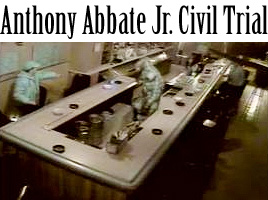
Two lawyers who handle cases of police misconduct were given the go ahead by a federal judge on Friday to intervene on behalf of the public good to stop the City of Chicago's attempt to have the "code of silence" judgment of the notorious videotaped assault on a bartender by an off-duty Chicago police officer vacated.
The City of Chicago argued that the case as it stands would be detrimental to the public, taxpayers and the city, because it would open the floodgates of litigation against the City and the police department. City attorney Scott Jebson argued that the "risks of misusing the judgement in future cases" could be costly.
"We don't want the judgment improperly used," Jebson said.
Continue reading this entry »
— Mechanics
By David Stieber
To be honest and straight to the point, closing a neighborhood school means the city has failed that neighborhood. It should come as no shock then that all the school closures in Chicago over the past decade have been in black and latino areas of the city. Many of these neighborhoods, like Englewood where I teach, have been ignored, underfunded, and blamed for their own problems for decades.
Logic dictates that CPS should be trying to help improve struggling schools, but using logic and CPS in the same sentence is a mistake. As CPS Chief Operating Officer Tim Cawley said publicly, "If we think there's a chance that a building is going to be closed in the next five to 10 years, if we think it's unlikely it's going to continue to be a school, we're not going to invest in that building." So CPS admits that if a school needs help there is no way that they are going to fund that school. Since the vast majority of underperforming schools are in poorer communities, CPS has, through its own policies, decided to give up on the schools in those communities. They look at a school as a business investment, not a community investment.
Continue reading this entry »
— Mechanics
Crime Sat Dec 01 2012
Humor is the best way to maintain one's sanity when analyzing the consistent and intimate relationship that Illinois elected officials seem to have with federal investigations, corruption, and/or the inside of a jail cell. Here's the latest on the people we voted for currently fighting the law.
Jesse Jackson Jr., who was re-elected despite being on leave as he seeks treatment for bi-polar disorder and under federal investigation for alleged misuse of campaign funds, finally resigned from congress last week, breaking his pre-election promise to return to duty once he dealt with his medical issues. Chris Good of ABC News thinks the re-election could cost Illinois $5.1 million. While we wait for another election to fill the seat of the 2nd district, several possible candidates have already thrown their hat in the ring. One of them is former 90's congressman, and former state and federal convict Mel Reynolds. He served state time for 12 counts of sexual assault, obstruction of justice and child pornography. He would have served more time in federal prison for unrelated bank fraud, but his sentence was commuted by President Clinton. You would wonder if the constituents of the 2nd district would vote for a former felon, but they did just elect an absentee congressman who is currently under federal investigation -- by a landslide no less. Other candidates that may be interested in the seat range from the bombastic -- former Rod Blagojevich and R.Kelly attorney Sam Adam Jr., to the more expected such as former representative Debbie Halverson (who unsuccessfully tried to unseat Jackson in the primary), or State Senators Donne Trotter and Toi Hutchinson. We hope whoever is elected can serve their term without being investigated by the Feds, but this is Illinois after all.
The Tribune reports that in another part of Chicagoland, state legislature LaShawn Ford was indicted on "federal charges he made false statements to a bank to obtain a $500,000 increase on a line of credit." Allegedly the money was used for credit cards and casino debts when it was supposed to be used for real estate rehabilitation. He has told the media that he is innocent of the charges. Though we have to wait for the judicial process to determine his guilt, it's difficult to suppress the cynicism. Illinoisans have heard "I'm innocent" many times before.
Derrick Smith, the state representative who was expelled from the Illinois General Assembly because of his federal indictment for alleged bribery has his trial date scheduled for October of 2013. In September I wrote about Smith being projected to win his seat for re-election, and despite his obvious ethical concerns, he was in fact re-elected. Though he won't be able to serve in the General Assembly, his seat won't technically be given up unless he's convicted of the bribery charge. Until then, it will be another constituency without representation.
If Jackson, Ford, and Smith do find themselves incarcerated as a result of their respective federal charges, they'll at least be in familiar company. George Ryan will be in prison at least through next July, and Rod Blagojevich will be there for quite some time.
— Christopher Jones