 I met with skepticism the Tribune's report that Mayor Emanuel responded to CTA riders' consternation over hikes to the cost of daily, weekly and monthly passes by suggesting they can choose to either drive or use public transit:
The mayor suggested commuters who don't like the new fare structure are free to get behind the wheel, setting aside the fact many Chicagoans who rely on the CTA to get to and from work don't have cars. "Now you, as a commuter, will pick. You can either drive to work or you can take public transportation, and the standard fare will stay the same," Emanuel said.
This is a stupendously politically tone-deaf thing to say. But forget about the politics of it; it's wrong on the supposed policy justifications as well.
Actually, let's go back to the politics of it. Mayor Emanuel has faced a persistent perception that he's more friendly to big business interests than to working class Chicagoans. Two reports -- one from the Reader and one from the Trib -- have focused on the mayor's meeting agendas, full as they with millionaires and lacking in community voices. The first teachers' strike in a generation aided in this perception, particularly given articles like this one from Reuters pointing out how out-of-town wealthy donors were bankrolling his fight against teachers. Early in his Mayoralty he faced outrage over the closure of mental health clinics for poor Chicagoans.
Whatever the reality of his concern for working-class Chicagoans, the perception isn't great.
Continue reading this entry »
— Ramsin Canon /
In a city whose public education problems make national headlines, last Friday was an opportunity to step back and celebrate people who represent the best in Chicago Public Schools. The Dolores Kohl Education Foundation recognized three outstanding CPS teachers for their achievements in education: Abigail Weber from Horatio May Community Academy, Folasade Adkeunle from Northwest Middle School, and John Kuijper from Bronzeville Scholastic Academy. Diane Ravitch was also honored--she won the Kohl Education Prize.
These three teachers were selected from a group of candidates nominated by local education leaders. They underwent a lengthy interview process and classroom visits from the nominating committee. They posses five selection criteria: dedication, innovation, leadership, respect for children and families, and commitment to professional growth. They were also selected for their ability to speak comfortably with the media in order to expand public awareness of the importance of quality education. The awards were given out during a ceremony held Friday November 16 at the River North Marriot. During the ceremony WGN shared video of the three Teacher Award winners learning they had won.
Continue reading this entry »
— Julie Davis
Op-Ed Wed Nov 21 2012
By David Stieber
When I was in high school, in a white middle class area, three consecutive junior classes lost someone in a car crash. During my sophomore year conversations would sometimes turn to, "Who do you think will die when we are juniors?" Morbid? No doubt, but these accidental deaths caused students to worry about their own mortality.
Fifteen years later, as a high school teacher in Englewood, I see the same worry in my students -- but it's not about car accidents. Growing up black, on the South Side, my students are guaranteed to experience a tragic event to someone that they know and care about. Let me repeat this, my students are guaranteed to experience a tragedy. Many of them have already experienced the loss of multiple tragic and violent deaths of their classmates and loved ones.
Continue reading this entry »
— Mechanics /
Column Thu Nov 15 2012
By Dick Simpson
Election 2012 brought both change and continuity.
It was a wave election. In 2010, the Republican wave rolled. The Tea Party movement and reactions to the Great Recession combined to bring Republican control of the House of Representatives. It brought many Republican governors and Republican-controlled state legislatures. This year, that wave rolled back out and the new tide has brought Democrats back to power.
The winner and losers are clear. President Barack Obama won both the popular vote and the Electoral College vote.
Democrats gained seats and continued their control of the U.S. Senate. In the House of Representatives, they made gains but Republicans continue to have a safe majority.
Continue reading this entry »
— Mechanics
 By Julia Gray
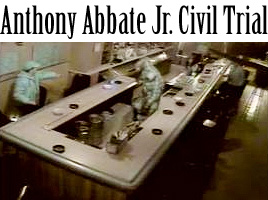
When a federal jury on Tuesday found in favor of Karolina Obrycka and found the City of Chicago and Anthony Abbate, Jr. responsible, and awarded her $850,000 in compensatory damages, Obrycka said she was glad that justice had been served.
Her plans now are to get on with her life and put the incident behind her, her lawyer Gustavo Munoz said. Munoz added that she's still terrified of Abbate, even though she hasn't had any contact with him except during legal proceedings. In fact, she's terrified of the police and of men she doesn't know, Munoz said.
"She'll only deal with cops in a public setting with other people around," Munoz added.
Continue reading this entry »
— Mechanics
Housing Wed Nov 14 2012
The Architects Newspaper recently reported on the latest controversy in the ongoing saga of the Lathrop Homes. With new designs pending, community groups and the aldermen associated with the project are in arms. They feel that the Chicago Housing Authority (CHA) has pulled a "bait and switch" for their input in the future of Lathrop. Initially accelerated towards renovation with Lathrop's recent induction into the National Register of Historic Places earlier this year, it appears that all three proposed plans don't reflect the desired number of units or a satisfactory level of historic preservation for the CHA's critics.
The CHA seems eager to move forward with one of the proposed plans, not just because the restoration has dragged on since 2001, but because it means they can move on to 21st century developments that favor mixed-income and scattered site properties, and away from the bleak memories of the old projects. To Lathrop's credit, they don't come loaded with terrible memories of other sites such as former Mayor Jane Byrne's failed stint at Cabrini-Green, the stories of police officers fearful of gang barricades in the Robert Taylor Homes, or "Girl X." In fact, in many ways the Lathrop Homes have experienced some levels of success--mainly stemming from the fact that they are surrounded by an affluent community on the North Side of Chicago, and were designed as low-rise units with lots of green space. The Architects Newspaper also points to its diverse population as one of the success factors too, as Lathrop has an even "mix of white, black, and Hispanic residents."
Lathrop's challenges in the past decade have come more from bureaucracy and funding issues than gang violence. The CHA made plans to restore the nearly 75-year-old community back in 2001, but to what degree and ultimate result have still been undetermined. Only now does it seem that action on actually doing something with the project is imminent: completing a restoration or a renovation plan that ultimately puts more residents in homes.
That's the biggest issue with Lathrop. Vacancy. For a big public housing community in Chicago, one regarded as one of the better ones, there just aren't enough people living there. Earlier this year Chicago Magazine wrote about the vacancy issues at Lathrop, where they noted that 82 percent of the units were unused. Many residents have complained that the CHA has purposefully left those units empty, as it's easier to redevelop the site if there's only a small population to displace. Though this policy may be intentional, it also reflects the catch-22 the CHA has been in since it was made clear in 2001 that a major renovation (or demolition) would be on the horizon. As a recent CHA promotional video shows, many units are unlivable. In order for the CHA to lease out these units, they need to get brought up to code. But what's the sense in spending the resources to fix up apartments that might not be around for much longer? The question is how much longer--currently the CHA has a list of residents looking for housing that well exceeds the available units. Every day a vacant unit goes unused at Lathrop that could go to a family in need.
Now, with the recent vote from the CHA board towards construction the homes may be one step closer to having a desirable occupancy.
One thing's for sure. The public housing era that erected developments of towering monolith apartment structures is over. Part of the reason for that is the success that was seen in the Lathrop Homes. Whatever plan the CHA chooses, we're going to see something different and hopefully something remarkable in the next iteration of this community. If you'd like to see for yourself, the CHA will be having open houses this week at the Lathrop Homes to solicit community ideas and feedback.
— Christopher Jones
Participatory budgeting, at least at the moment, is not what you would call a widespread phenomenon.
Only four of the city's 50 wards -- the 5th, 45th, 46th and 49th -- are taking part in the process, wherein ward residents -- rather than aldermen -- get the chance to decide what to do with $1 million of aldermanic discretionary funds, which are known as "menu money."
But Ald. John Arena, whose 45th Ward encompasses a large chunk of the Northwest side from Nagle to Elston and from Devon to Waveland, thinks that more aldermen could soon jump on board.
"I think it will spread some more," Arena said Tuesday. "I think it'll expand over time."
The 49th Ward has gone through the participatory budgeting process every year since 2009, but the other three are new to it this year. Arena, who was elected last year, said that from almost the beginning of his term, he was thinking about bringing participatory budgeting into the ward.
"I was intrigued by it because it's a very transparent process," he said.
Participatory budgeting is a four-step process. Last month, each participating ward held several community meetings where residents could spitball ideas for how to spend the money. Step two will take place between now and March, when residents who asked to be community leaders will meet to decide which projects will wind up on the final list for residents to vote on. Step three will be the vote in May and the final step is implementation of the projects residents voted for.
Arena believes the process could work in other wards, though he was unsure about whether it could work at a citywide level. While he doesn't know if any aldermen are thinking about jumping on the participatory budgeting bandwagon any time soon, he knows at least one alderman -- Scott Waguespack of the 32nd Ward -- did consider it.
Arena does believe, however, that residents would like to see participatory budgeting expand into other parts of the city.
"I think the city of Chicago is engaged in their government," he said.
— Bill Mayeroff
By Julia Gray
Holding up a DVD of the infamous bar beat-down as a reference, the plaintiff's attorney, Pat Provenzale, stated that the city "came this close to walking away from getting one of the biggest black eyes in its history."
During the next two very long hours, Provenzale discussed the case at length against both the City of Chicago and Anthony Abbate, Jr., reiterating how there is allegedly a code of silence ensconced within the police department and how that code was enacted immediately following the attack on Karolina Obrycka by then-police officer Abbate in February 2007. The second part of the suit claims that Obrycka's First Amendment rights were violated when Abbate and his friends allegedly attempted to block her from releasing the video of her attack, which, if released, could damage the reputations of both the police department and Abbate.
Continue reading this entry »
— Mechanics
By Julia Gray
During the past two weeks, the Anthony Abbate, Jr. civil trial has kept an audience of three to 15 people riveted with sparkling testimony peppered with more answers of "I don't recall" and more sidebars than seemed humanly possible. What was presented that wasn't dull was mounds and mounds of evidence — or not — depending on which side you're on.
The focus of this trial is whether or not a code of silence was at play immediately following the incident at Jesse's Shortstop Inn in February 2007.
We've heard the testimony of both the main people in this trial: Anthony Abbate, Jr. and Karolina Obrycka. Also, we've heard the testimony of friends and former coworkers of Abbate, which caused a few watching to ponder why the former Chicago police officer had such lousy friends.
Continue reading this entry »
— Mechanics /
Police Mon Nov 05 2012
The Chicago Police Department is ending CAPS.
Also known as the Chicago Alternative Policing Strategy. The Chicago Reader reports the city will be slowly zeroing out the budget for CAPS over the next year according to the recent city budget testimony from Police Superintendent Garry McCarthy. This announcement came shortly before Chicago hit another grim milestone in a particularly bloody year of violence in the city. The homicide total for this year, with two more months to go, has just passed the total for all of 2011. Though homicide has been down for October, it's too early to tell if Chicago has finally found the right formula to reduce the murder epidemic. All year we've been told by Mayor Emanuel, McCarthy and other city officials that new policing strategies and policies are working in spite of the yearlong violence. With a constant media cycle reporting on daily shootings, it's difficult to say if we are in fact, making progress.
Continue reading this entry »
— Christopher Jones
My friend and much-beloved one-time political consultant Mike Fourcher published an editorial in the Center Square and Roscoe View Journals urging voters to vote against a non-binding advisory referendum on the ballot in many Chicago precincts: whether there should be an elected, representative school board (ESRB).
Mike makes some compelling but ultimately unsatisfying arguments as to why voters should reject this referendum. His arguments, both in the piece and in the comments, are compelling enough to merit a response.
The thrust of the argument against the school board is three-pronged; first, direct elections of technically- or specialty-oriented board are not desirous because of the outsize influence of interested parties; second, more democracy can cut against efficiency; and finally, there is sufficient control over the school board via election of the Mayor.
Continue reading this entry »
— Ramsin Canon /
 While "Dogcatcher" isn't on the ballot in Chicago, there are several positions that may leave you wondering, "What exactly do these people do?" In particular, the heads of several county-wide agencies that will be up for a vote next week. While some of these positions may seem obscure, they actually do play a major role in the day-to-day life of Chicagoans, especially when it comes to legal or property-related issues. Here's an explanation of what they do and who the candidates are.
Continue reading this entry »
— Mike Ewing
 If you're registered to vote in Chicago, you won't just be selecting candidates. In addition to national, state and local office holders, you will also directly vote on at least four ballot measures: one that could alter the state constitution, one that could lower your monthly electric bill, and two non-binding, advisory votes of debatable significance. Depending on where you are registered in Chicago, you may even get to vote on additional neighborhood-specific questions.
So here's an explanation of each referendum that could appear on your ballot.
Continue reading this entry »
— Jason Prechtel