Gapers Block published from April 22, 2003 to Jan. 1, 2016. The site will remain up in archive form. Please visit Third Coast Review, a new site by several GB alumni. ✶ Thank you for your readership and contributions. ✶
Since I last wrote about Ventra back in February, a lot has happened...mostly at the local commuter's expense.
During the past several months, CTA riders have dealt with a botched transition from city-issued magnetic strip passes and Chicago Cards (and ticket packs and cards for Pace riders), to an outsourced fare collection system based around a hybrid transit/prepaid debit card. This has been overseen by Cubic Transportation Systems, a subsidiary of a defense contractor and wireless data technology firm.
While Mayor Rahm Emanuel has both downplayed the problems and acknowledged the complaints, several alderman have called for an official hearing to demand explanations. Meanwhile, the CTA has announced a delay in the deadlines for fully transitioning to Ventra and proclaimed their refusal to pay Cubic until the issues are addressed.
In the face of public scrutiny, Cubic has ensured that these problems will be solved (though its boss "can't guess" when). However, what Cubic isn't telling Chicagoans is that the company has experienced all of Ventra's problems before... in the other smart card systems it has built for cities across the world.
Last week, the Chicago Board of Education closed 50 schools, including 10% of the city's elementary schools. More than 80% of the students impacted are black. About 42% of CPS students are black.
A lot of emotions and outrage get ginned up. The CEO of the Chicago Public Schools was outraged, because she had supposedly been called a racist in pushing a policy of mass closure of public schools. Schools CEO Barbara Byrd Bennett was outraged that "as a woman of color," she could be accused of racism. Also, how could the Chicago Teachers Union and its allies in the parent and student community call the school closure plan "racist" when its purpose is purportedly to get kids out of failing schools? (As one of several rationales.)
There are two parts to the answer here, and they're very important, and each deserves its own, focused article, so let's do one at a time. The one of interest right now is the nature of a discriminatory policy; one for another day, is the conditions that result in discrimination.
Racist can be a tough word to hear or to understand. The school closure plan is absolutely not racist in the way we think of Archie Bunker (that's old-timey Eric Cartman for you youths) as being racist — that is, fueled by conscious hatred for a group, or subconscious fear of that group. But that is not the only definition of racist. Many a racist remark has been made with good intentions, for example; we can all think of cringe-inducing incidents of those from our personal experience. So perhaps it'd be better to call the school closure policy discriminatory. Oh, CPS's school closure plan is plainly discriminatory. The only open issues are whether the government had no choice but to be discriminatory. To date, CPS has not made that case.
This isn't controversial, in fact. Discrimination based on race is not about the intent of the discriminator. It's about the effect of the policy. This isn't Leftist race theory, this is taken directly from the United States Congress. Even to the Congress it's long been understood that a private employer or a government body can be guilty of discrimination even with a pure heart. Several pieces of long-standing legislation bear this out: the Civil Rights Act's "Title VII," which bars discrimination in employment; the Fair Housing Act, which bars discrimination in housing; and the Americans with Disability Act among others. These statutes all, either on their face or through interpretation by courts, contemplate that a policy can be discriminatory — have discriminatory effects — even absent any discriminatory motives.
In such scenarios, intent is immaterial. Motive is immaterial. What matters is, when a powerful actor (an employer, a government) acts, it has to be sensitive to the impact of that policy on protected classes — whether they be women or people of color or religious minorities or the disabled — and aware of possible disparate impacts. If they aren't sufficiently careful to justify or mitigate those impacts, then they have discriminated. Again, don't ask me, ask Congress — and take an example.
Mayor Rahm Emanuel is truly king of Chicago's rubber stamp City Council.
In his first two years in office, he enjoyed more support than Boss Richard J. Daley or his legacy, Mayor Richard M. Daley.
Mayor Emanuel has more control over the council than even Mayor Edward J. Kelly, a co-founder of the Cook County Democratic Machine.
This is counter to his claim a year and a half ago: "I said we were going form a new partnership between... the mayor and the city council — that voters didn't want Council Wars and they also didn't want a city council that would be a rubber stamp." But despite his claim, we got a rubber stamp council.
When Seth Lavin asks questions, he gets answers. Lavin is a local teacher, parent, and education observer, and briefly published a newsletter following Chicago education news. He's a thoughtful man who has recently been active in the school closure process -- or, "process" -- surrounding Brentano School in Logan Square. Frustrated with the Chicago Public Schools' posture during the closures, Lavin recently posted 10 questions to Twitter meant to question CPS's assertion that its school closure process and the related charterification was purely data-motivated (what I and others would refer to as "technocratic").
CPS felt the need to respond to Lavin's thoughtful questions. Their responses are forceful, but hardly get to Lavin's essential point: if school closures don't really save money, if the past closures haven't improved outcomes for children, and if the main criteria for closing schools, "underutilization," doesn't itself harm student outcomes, why is CPS causing these communities so much pain, ignoring the outrage in the community, and undermining community schools?
One could add: and why are they doing it to support and institutionalize a program of charterification when charters can't be said to be as efficacious as they claim, and scandals like the United Neighborhoods Organization (UNO) scandal are becoming more frequent and acute?
I envy Lavin. I doubt CPS would have answered my 10 questions. I don't need to doubt actually; these are precisely the questions critics of the privatization of the Chicago school system have been raising at least since 2005.
Last week my high school students decided, on their own, to have a protest. They were upset about how cold our building has been this relatively mild winter. So after first period many of the students put hoodies and sweaters over their short sleeve uniform polo (which is a violation of the dress code) and marched loudly into the hall. They had signs, some had chants, and one even had an American flag. These 16- and 17-year-old Englewood students were organized. Their downfall was they didn't fully think through how to explain this plan to the 9th grade students, who just thought the protest was fun and were running around getting into trouble instead of helping the cause.
Security, teachers and administration intervened, the kids stopped the protest and went back to class. A few kids got in trouble. Being a history teacher, I was impressed by the students planning, but I realized they needed help understanding the purpose of a protest and steps involved in order to get what they wanted, without having to protest. So I did a mini-lesson the rest of the day that included discussing the following steps.
Photo by Joselito TagaraoEmpathy, which lets us understand and experience others' feelings, including anguish and grief, is a critical definer of our humanity, pivotal to our civilization. So are the impulses to protect children, to want to right wrongs, and to be outraged at unfairness. It's both natural and appropriate that in the wake of horrors such as the recent Sandy Hook massacre, we privately and publicly give voice to our empathy, and to our protective, outraged, and corrective impulses. Yet it's also important to check these impulses as the basis for policy when their cause is an outlier, an extreme. Emotion drives poor governance. Policy needs to have a cool head as well as a warm heart.
Multiple shootings by deranged individuals inevitably command enormous media and public attention. In such cases, heart tends to shove head out of the way. That's apparent when mothers in the midwest say they rushed to pull their children out of school when they heard of the carnage in Connecticut 1,000 miles away, organizational leaders propose stationing armed guards at schools, or otherwise reasonable commentators say we need to jettison part of the Constitution, just to cite three examples. The circumstances make such reactions fathomable emotionally, but the facts don't support them logically. Overall, our schools are very, very, safe, and violent gunplay is a sensational but statistically small threat to our children.
It was a wave election. In 2010, the Republican wave rolled. The Tea Party movement and reactions to the Great Recession combined to bring Republican control of the House of Representatives. It brought many Republican governors and Republican-controlled state legislatures. This year, that wave rolled back out and the new tide has brought Democrats back to power.
The winner and losers are clear. President Barack Obama won both the popular vote and the Electoral College vote.
Democrats gained seats and continued their control of the U.S. Senate. In the House of Representatives, they made gains but Republicans continue to have a safe majority.
Anthony Abbate Jr. said he felt threatened by Karolina Obrycka when he pummeled and threw her around Jesse's Shortstop Inn in Chicago on February 19, 2007. But, as City attorney Matthew Hurd explained at the beginning of Abbate's civil trial today, he doesn't remember because he was drunk.
But, on the same night roughly around the time Obrycka was about to get her beat-down, Abbate does remember moving a barstool from one side of the bar to the other because it was more comfortable than the stools on that side of the bar. But he doesn't remember punching his friend three times, according to Abbate's testimony today.
Just a couple days prior, the also-controversial Vice magazine posted the first episode of their two-part documentary, Chicago Interrupted, about the organization on their website. Like last year's critically-acclaimed documentary, The Interrupters, the web mini-series interviewed local "violence interrupters" Tio Hardiman and Ameena Matthews while showing raw footage of their attempts to mitigate brewing street conflicts. After playing audio of off-camera gunfire at the end of a botched interruption attempt, the second part (released Monday) ended with Matthews expressing hope to Vice's film crew that their documentary would start conversations and compel people to stand up against the cycle of violence. She added, "I don't want people, America, Chicago to get desensitized...to what's not right."
As it turns out, Vice is using Chicago Interrupted to start conversations. Unfortunately, those conversations are less about Chicago violence and more about a fantasy action video game called Dishonored. In fact, the CeaseFire doc is a prominent part of a special multimedia program Vice created just to market the game.
You have undoubtedly heard the news reports, radio attack ads, CPS representatives, the "CEO" of Chicago Public Schools, and the Mayor saying how teachers are walking out on the students if we strike. Parents, students, residents of this city, as a teacher let me tell you, comments like that rip teachers to our core. As cliché as it sounds teaching is a calling. It's not as if one day we just said, "I guess I'll just be a teacher." It takes skill and dedication to stand in front of 30 (sometimes more) young people in a classroom and truly care and be able to teach every one of them. It is not possible to just be mediocre when it comes to teaching students. A young person is the first to let you know if you aren't doing a good job at teaching the lesson, not getting graded work passed back quickly enough, heck, they will even let you know if you look bad that day.
Teachers just can't punch in, start thinking about kids then punch out and stop. Teachers are always trying to improve our lesson plans, grade, figure out ways to reach the students who are withdrawn, quiet, confrontational or disrupting class. We just can't shut our students out of our lives when the bell rings.
On July 23, 10 aldermen tried to help some educational reform groups. They wanted to get a non-binding referendum on the upcoming November 6 ballot in which voters would be asked whether Chicago should switch to an elected school board.
Ald. Joe Moore (49th), chairman of the City Council's Committee on Human Relations, ruled that this legislation was submitted three minutes too late to allow the vote.
Since then the two organizations, Raise Your Hand and Communities Organized for Democracy in Education, have submitted petitions separately to the Board of Elections to put the question on the ballot in some wards.
Leaving aside the battle to get the referendum on the ballot in the first place, the greater issue is whether having an elected school board is a good idea.
On Monday, Aug. 6, nearly 200 members and supporters of St. Sylvester Parish marched from their church at 2157 N. Humboldt Blvd. to 35th Ward Alderman Rey Colón's office at 2710 N. Sawyer Ave. Holding signs and singing songs of solidarity in English and Spanish, the group picketed for nearly an hour in front of Colón's office, while the alderman held his monthly ward night for constituents.
Claiming their religious freedom had been violated, the protesters rallied over Colón's alleged refusal to help the parish find a way to remove the official Chicago Landmark status of their rectory. While the rectory was designated as a landmark as part of the Logan Square Boulevards District established in 2005, the parish said it never wanted the building in the district, can't afford to maintain it, and would rather tear it down, but can't due to the building's legal protection as a landmark. Furthermore, the parish alleged that the alderman had purposely left his house out of the district, and should use his power as alderman to help St. Sylvester do the same. Meanwhile, a dozen counter-protesters from a group called Logan Square Preservation stood in front of the alderman's office with their own signs and slogans, calling for the preservation of the St. Sylvester rectory's landmark status - and the building itself -- at all costs.
To understand what exactly took place, and why a building typically used to house clergy members even became a historic Chicago landmark, it's necessary to go all the way back to the early history of Logan Square.
Those of us who live in city neighborhoods know that Chicago is politically corrupt. There are figures in our neighborhood's history like former Ald. Fred Roti of the old 1st Ward who fixed a murder case and did the mob's bidding at city hall before going to prison. In Ravenswood on the North Side, there is the famous residence of former governor, now inmate, Rod Blagojevich whose spectacular court case has just concluded. Nearly every Chicago neighborhood has its famous rogues -- some with colorful nicknames like Bathhouse John Coughlin and Hinky Dink Kenna.
The usual story has been that big bad Chicago is corrupt but the suburbs are examples of clean, honest, effective government whose citizens are not troubled with the graft and corruption that plague the evil city. Next week, with University of Illinois at Chicago colleagues and students, I am releasing an Anti-Corruption Report that proves that popular image false. In February, we released a report showing that Chicago is the most corrupt metropolitan area in the country and Illinois is one of the most corrupt states. This time we zero in on the suburban ring around the Chicago.
We found that since the 1970s there are more than 60 suburban villages, towns, and counties around the city with more than 100 convicted corruption felons in the last two decades alone.
Distinctive patterns of corruption in the suburbs include officials with ties to organized crime, nepotism and patronage; police officers aiding criminals; kickbacks and bribes to public officials; large economic developments profiting officials along with their families and friends; and outright theft of public funds. Corruption in all its various forms impacts many local governments throughout the metropolitan region.
For example, corruption in Cicero goes back to the days of Al Capone and famously includes Frank and Betty Loren-Maltese (Cicero's mayor just released from prison). In Rosemont the Stephens family seems to control nearly all government contracts and Rosemont was not allowed to have a casino because of mob ties.
Throughout the region there have been nearly two dozen mayors along with several dozen police chiefs and other policemen convicted of various corruption schemes. Racketeering, extortion, the sale of police badges, protection of drug dealers, and protection rackets are more common in the suburbs than most people realize.
Many contracts and businesses in the suburbs have bribery and corruption as part of business expense. And large economic development projects like Toyota Park, the home of the Chicago Fire soccer team in Bridgeview, have provided lucrative contracts to political family members and more than $170,000 in campaign contributions from vendors and contractors to Bridgeview's Mayor and State Senator Stephen Landek's various campaign funds.
Altogether there are 1,200 separate taxing bodies in the Chicago Metropolitan Region with 540 in Cook County alone. And many of these smaller units of government have had large amounts of money stolen from them outright, including $500,000 from the Dixmoor Park District which oversees only one tot lot. The new champion of corruption from further downstate is the comptroller of Dixon, who is currently charged with stealing $53 million. Ironically, Dixon is the home of the fiscally conservative President Ronald Reagan.
In our anti-corruption report, which will be available online after June 25th here, we detail the crimes in the more than 60 suburbs and recommend ways this public corruption can be cured. We also point out that corruption is costing us taxpayers in Illinois at least $500 million a year.
One starting point in fixing all this is to recognize that corruption is not just a Chicago problem. The culture of corruption is an Illinois problem. While some individual suburbs may be exempt from this epidemic, many suburbs are not. Those of us in the neighborhoods have to hold our aldermen, city government, and other local officials accountable and enact reforms like those proposed by Mayor Emanuel's Ethics Reform Task Force. But our friends in the suburbs need to recognize their problems and demand reforms by both local and state governments if corruption is to be cured.
There are just faces. No sign. No numbers. No flag.
In the windows above the Chicago Printmakers' Collaborative a powerful memorial to the United States servicemen killed in the War in Iraq is fading. Six hundred forty-eight faces fill three stories of windows. Some are now torn, faded, water-stained, or simply falling down.
"We have to keep repairing it," says the Collaborative's owner, Deborah Lader. "We go up and tape pieces back up."
Each piece is the face of a soldier who lost their life serving in Iraq. The Façade Project, created in August of 2004 by artist Carrie Iverson, abuts the tracks of the Brown Line's Western stop in Lincoln Square at 4642 Western Ave. There, the faces of the fallen peer out at the thousands of riders who pass through the stop every day.
By the time the project was completed in August of 2004 it was clear the war would not be the tidy six-month engagement that former Defense Secretary Donald Rumsfeld infamously predicted. The deaths of soldiers were no longer getting front-page hero treatment. As the death toll climbed, the faces slipped deeper and deeper into the paper and out of newscasts.
"Loving Chicago is like loving a woman with a broken nose."
—Nelson Algren
"Do you want a beer?" Rebecca Reynolds, campaign manger for Will Guzzardi, shouted at me from across the back room of Cole's bar on Milwaukee Avenue. "I usually buy so many beers for people during a campaign, but I haven't this time. I need to catch up!" Last week, 20 days before Election Day, the Guzzardi campaign, an agile, grass roots operation that is fighting for its life against the Berrios family and the Chicago machine, held one of its final fundraisers. Between the craft brews and the Guzzardi supporter wearing magenta velvet, a campaign button and stilts, the mood could best be described as jubilant.
Six months ago, Will Guzzardi announced his candidacy for state representative in the 39th District in that very same room. That night, the bar was filled with his friends, a large group of 20-somethings, and Will Guzzardi, with a new haircut, a red tie and a pressed suit, became a candidate.
Guzzardi, looking eminently more comfortable but infinitely more tired up on stage Thursday night, drew a narrative of how far he and his staff had come since he called the incumbent Representative Toni Berrios and told her he'd be challenging her in March.
"I sat down with a lot of people when I was getting started," Guzzardi said, "And I remember one of those conversations like I was yesterday. Someone said to me, 'You'll get 20-30 percent, and you'll be out of Chicago in three months.'"
Everyone booed. One of the most noticeable differences between this crowd and the one that gathered back in September are the call-and-response style shout-outs. The noticeably older, new supporters come from political organizing backgrounds, from groups like the Illinois chapter of Democracy for America and the local Democratic organization, 1st Ward First. That group, a project of Alderman Proco Joe Moreno, assembled at Cole's as a tacit endorsement of Guzzardi. With the alderman's blessing, they will continue to work with the campaign through Election Day, shoring up Guzzardi's efforts to Get Out the Vote.
In the last election, the first two viable Latino candidates in Chicago's history, Gery Chico and Miguel del Valle, made a strong race for mayor. Recently, new Latino aldermen and county commissioners like Jesus Garcia have been elected and moved important legislation forward.
In the ward remap battle, Latinos successfully remapped the wards to gain seats in the City Council. But not all Latino empowerment is positive.
For instance, Joe Berrios is the first Latino boss of the Cook County Democratic Party. He is also County Assessor and a throwback to the bad old days of assessor Parky Cullerton — nepotism, patronage, corruption and machine politics.
For progressives, two important races are shaping up. One is the second run of the very attractive young progressive Latino candidate, Rudy Lozano. Lozano came within a few votes of defeating veteran State Rep. Dan Burke in the 2010 election. He is running this time in the newly remapped 21st legislative district against Latina former journalist Silvana Tabares. She is supported by machine aldermen Ed Burke, George Cardenas, Michael Zalewski and Speaker Mike Madigan.
There are a lot of fascinating sights to be seen at Occupy Chicago's new indoor space at 500 W. Cermak Ave., but perhaps the most striking is the painting of "King Rahm" and the Aldermanic puppet figures who hang from his fingers.
Four members of the City Council have been singled out for this dubious honor: Carrie Austin (Ward 34), Walter Burnett, Jr. (27), Joe Moore (49), and Joe Moreno (1).
Moreno's relationship with Occupy Chicago is complicated. Always active on Twitter, he expressed support there early on and has retweeted calls to donate coffee to Occupiers at LaSalle and Jackson — and in an email conversation, he told me he is still "absolutely sympathetic to Occupy."
Easy to say, but when I asked Moreno what the issues are on which he and the movement agree, he laid out a pretty spot-on diagnosis of the malaise to which Occupy is a response:
The priorities of our nation have been upside down for the last 30 years. Since Ronald Reagan, it seems we have somehow legitimized greed; somehow made this most negative of things seem patriotic.
Thankfully, since Occupy began, people have started to question these assumptions. The 2008 economic crisis was a much-needed slap in the face to our citizenry.
The people who caused this near-Depression are today back to doing the same things, which caused it. Occupy helps (and sometimes forces) people to recognize the economic injustice, which is now so metastasized within our system that no one seems to know how to kill it.
Shelly Friede, a single mother of three, looked a high-ranking member of the conservative Vice Lords street gang in the eye and asked a question.
"Are you trying to shoot my children?"
That was seven years ago, when Friede first moved into subsidized housing in the 4400 block of North Magnolia in Uptown. Her 24-unit courtyard building stood in Black P Stone Ranger territory and had been riddled with bullets from a drive-by shooting by the rival Vice Lords.
Two years later, Friede was pregnant with her youngest child, Sebastian, when her family came under fire again. This time, it was an internal dispute among the P Stones as "they shot down the gangway, then shot over my head," she recalled.
The physical landscape of Uptown has changed a great deal since Friede's first run-in with violence there. Wilson Yard, a former CTA rail storage and maintenance facility destroyed by fire in 1996, has been redeveloped to include residential apartments, a Target and an Aldi supermarket. Nearby, a mid-rise residential condominium sits on the former site of the 46th Ward office in the 1000 block of West Montrose Avenue.
Earlier this year, Tio Hardiman saved the life of a young man who was about to be murdered by an elder member of his own gang. There was a miscommunication when the young man abruptly disappeared to care for his ailing mother; at the same time, his gang was raided by the police, leaving the gang to suspect they'd been sold out. Hardiman got word of the execution that was about to take place and literally talked the elder gang member down — but not after having his own life threatened.
"He told me he was going to put me to sleep," Hardiman said.
For some, this intervention would be heroic act of courage; for Hardiman, it's another day at the office.
Hardiman is an "interrupter" for — and director of — CeaseFire, a non-violence organization based out of the University of Illinois at Chicago campus. The role of an interrupter is exactly what it sounds like — Hardiman, and others like him, work to prevent retaliatory violence.
"People can change, that's what we believe," Hardiman said. "We're in the business of changing behavior and mindsets associated with violence."
by Dick Simpson
Seismic political changes are occurring unnoticed. Racial minorities have always been important in Chicago elections, but population changes now have profound effects on national politics as well. Minorities helped Barack Obama win the White House and Democrats control Congress until their setback in 2010 midterm elections.
In 2008, nearly one in four voters was a racial minority. Whites still made up 76 percent of the 131 million people who voted nationally, but blacks were 12 percent, Latinos 7 percent and Asians 2.5 percent.
In the 2010 election 6.6 million Latinos voted, again representing 7 percent of all voters. But they are predicted to cast as many as 12 million ballots in 2012. They continue to grow more rapidly in population and in voters than any other segment of society.
These trends are being played out even faster in Illinois. In 2008, 11 percent of the Illinois electorate was Latino, 13 percent was black and 6 percent was other (mostly Asian). With over 708,000 eligible Latino voters in Illinois, they are enough to swing any statewide election and many local ones.
"OK, so these are the things converging with us," Annabel Park says over the phone from suburban Washington, DC. "One is the corruption, the level of corruption in Washington that really is impeding progress on just about every single issue that concerns the American people. So I think from climate change to campaign finance to Wall Street reform, all these issues that progress is desperately needed, is impeded by the influence of money in our government."
Park is a documentary film maker who in 2010 turned a primal scream of a Facebook post about incivility at Congressional town hall meetings into a national organization called the Coffee Party movement. In less than two years the Coffee Party movement claims to have an e-mail list of 75,000 people and 378,158 Facebook participants.
The Coffee Party has taken up the cause of bringing individuals back into the political process through what they consider to be a more civil and reasoned approach to discussing and advocating for issues. As Park sits down to talk, the Coffee Party has taken on the issue of getting banking watchdog Elizabeth Warren nominated to head the new federal Consumer Financial Protection Agency.
"Look how numerous and powerful the Israelite people are growing, more so than we ourselves! Come, let us deal shrewdly with them to stop their increase..."
Exodus 1:9-10
Rosanna Pulido is stabbing at me with her finger. After talking about illegal immigration for almost an hour now, she is both more comfortable and more agitated. Pulido says everything with some kind of emphasis.
What is it about illegal immigration that makes someone, a latina no less, an activist? Pulido answers by singing, not just quoting, America, the Beautiful. "You know the song, America? America, America God shed His grace on thee...o.k., there is a line in that song...in liberty in law. That's how you and I have so much freedom and liberty and prosperity."
Freedom, liberty, and prosperity are pretty much universal aspirations. They have moved people to action since Moses led the Israelites out of Egypt up until the protests in Tahrir Square. America has, throughout its history, been a place where people have fled in order to live their aspirations. That history is filled with the brutal struggle over who belongs and who decides.
"You put laws down and if you don't obey them, you know what? You're going to pay for it," Pulido says. But who decides crime and punishment?
American immigration law has always been tied closely to race and ethnicity. The nation's first immigration law, the Naturalization Act of 1790, was passed only a year after the constitution and allowed for the immigration and naturalization of "free white persons" of "good moral character."
On any given night there's an estimated 2,000 homeless youth on Chicagoland streets, according to a University of Illinois at Chicago report in 2005. When many people think of youth, they might not consider its definition extending to age 24. But homeless youth that make up emerging adults are also vulnerable to a lack of services and the attention they need while living on the streets. While help in Chicago offers youth a variety of services including food, bedding, showers and support groups, there's not enough to accommodate the need. And many youth have a difficult time adjusting to the responsibilities of this coming of age.
This feature is supported in part by a Community News Matters grant from The Chicago Community Trust and the John S. and James L. Knight Foundation. More information here.
Throughout 2002, Mayor Richard M. Daley waged a public and backroom battle with federal aviation officials to expand the no-fly zone around the city's central business districts. He was met with resistance by bureaucrats and the business users of Meigs Field, who argued that the restrictions would hamper the ability of pilots to use the typical approaches to Meigs and potentially make it more hazardous. The Mayor didn't let up, and pressed the issue; he was granted some temporary restrictions on flights around the CBD, but didn't get the scope he wanted.
The mayor pressed the issue, insisting the CBD was under threat and that Meigs essentially represented a security threat by its mere existence. He responded to the protests of Meigs Field users dismissively, characterizing them as millionaire vanity pilots whose selfish concerns were irrelevant to the average Chicagoan.
Friends of Meigs Field, an advocacy group composed primarily of the little airport's heaviest users, smelled a rat. Meigs was not a big money maker for the city, and Daley clearly had designs on the prime lakefront property. They lobbied furiously to keep the field open and operating, meeting rank indifference, to say the least, from the mayor.
At the same time, Daley was trying to get federal approval for the expansion of O'Hare Airport. His biggest stumbling block was the stubbornly independent junior senator from Illinois, Republican Peter Fitzgerald. Throughout 2002, Fitzgerald was considered a top-tier target for national Democrats, and his reelection chances were in jeopardy. Throughout the last few months of 2002 and the first months of 2003, rumors swirled that Fitzgerald would not run again. Fitzgerald stubbornly refused to permit expansion of O'Hare, and Governor George Ryan walked a compromise path that demanded that any expansion of O'Hare be conditioned on the continued operation of Meigs; Daley agreed to some nominal concessions the Friends of Meigs characterized as minor or hollow. Their saving grace was that they had friends in Governor Ryan and Senator Fitzgerald.
The Little Airport that Could, in other words, was proving to be a pain in the mayor's ass.
Zabrina Worthy frets when she talks about losing her house. She never saw how it could happen to her the way it did. Her voice cracked with tears at the first words she spoke to me, over the telephone: "I completely lost everything I had." When they boarded her house, she didn't just lose her home. Her computer, her furniture, her business — all the things she and her three children owned — were locked inside.
Zabrina stands about 5'8". She's 36, her face is round and coffee-colored, and when I visit her, she often smiles, in spite of her ordeal. She bought the two-story bungalow at 72nd and Sawyer in Chicago Lawn for just over $200,000 in 2004, and moved there with her three children after divorcing her second husband.
By 2008, she was making $4,000 a month, filling two jobs — nights as a security guard at McCormick Place and days as a school bus driver. She needed to keep both jobs till her small business transporting social service clients for the state of Illinois got off the ground. She employed her son, Bruce, and her new husband to drive two vans, chauffeuring her customers. "The transportation business could have been big. Chicago is a big place — they are overloaded getting people around," she said.
By the summer of 2008, the money from her business loan ran out, and the state had fallen three months behind in paying her. In August, her Wells Fargo home loan suddenly shot up from $1,500 to about $2,200, and she couldn't make up the difference. That fall, she put her house on the market, and she says she tried to get Wells Fargo to modify her loan. She geared herself for a move she did not want to make.
One morning in December 2008, four months later, the kids left for school, and she left to drive her school bus route. When Zabrina came home from work, her windows were boarded up, the locks on the doors were changed; she had no way to get in. "When I left, I just had my clothes on my back for work," she says. Her two younger children were left in their school uniforms. Her computers and paperwork for her business were also lost inside. "I had never been homeless in my life, but after that, I was." They never lived in the house again.
In most communities, residents who see the need for an infrastructure project must send letters, make phone calls and attend meetings. In the 49th Ward, they simply need to vote.
The North Side neighborhood uses a process known as participatory budgeting, which puts the fund allocation decisions in the hands of the community itself.
In 2007, Ald. Joe Moore first learned about the concept from a presentation by Josh Lerner, director of the Participatory Budgeting Project. Over the next few years Moore further researched the potential to use the process for city funds known as menu money. In fiscal 2010, his ward became the first jurisdiction in the United States to implement participatory budgeting.
Each ward receives the same amount of menu money, last year that amount was about $1.3 million, and it can be used for any infrastructure projects the Alderman's office chooses. Ald. Moore created a four-step election process whereby any resident who is 16-years-old or older can propose and ultimately vote for expenditures, regardless of citizenship or voting eligibility.
This article was submitted by freelance journalist Shane Shifflett.
After seven years and thousands of cameras, neither Chicago's police nor its public officials can claim that their video surveillance program, Police Observational Devices (PODs), is effective at stopping and preventing crimes. This shouldn't be a surprise, though. After sifting through mountains of crime data provided by the police and observing two Chicago neighborhoods, the Urban Institute, a public policy think tank in Washington D.C., couldn't say how well the cameras were working. What may be surprising, however, is that the police department looked into this twice before; they never shared the findings and evidence suggests no one will ever know if the system is truly effective.
In 2005, a group of Northwestern University students led by Dr. Mark Iris, professor of law and politics and former head of the semi-independent Chicago Police Board, examined 137 cameras throughout the city to conclude the system has "mixed levels of effectiveness." Which is more or less what the Urban Institute has said. Just one year later, in 2006, the Chicago Police Department evaluated 111 of its own cameras to uncover a measurable 13.7 percent decrease in reported crime incidents near cameras. Iris' study contained 100 pages of detail and analysis (with 42 pages of crime data provided by the police) while the police department's examination consisted of eight pages of findings and an additional 18 pages of crime data. But both of these studies have remained under the lock and key of the police department since they were conceived.
This article was written by freelance journalist Samantha Winslow.
Juan Calderon sips coffee at Café Colao on Division Street in the historic center for the Chicago's Puerto Rican community. This part of Humboldt Park is marked by red and blue metal banners on each end in the shape of the Puerto Rican flag. The café, known for Puerto Rican style coffee and pastries, is a block from where he works at the Vida/SIDA center inside the Puerto Rican Cultural Center.
Calderon begins to talk about why he and fellow Humboldt Park activist Roberto Sanabria published a letter in the Windy City Times, a Chicago publication for the gay and lesbian community, voicing their concern and anger over Equality Illinois firing Rick Garcia, the political director and co-founder of the state's largest advocacy organization for gay, lesbian, bisexual and transgender equality.
"Firing Rick Garcia was a slap in the face to the Latino community," Calderon says.
By Katherine Tellez, Julie Sammarco and Mollie Zubek
NOTE: Children's names have been changed to protect their identities.
Kindergartner Nina Phillips uses the whiteboard to do her work. Adam Conway says HOPES tries to provide as many learning materials as they can, though says, it's not the ideal situation. Photo by Julie Sammarco
On a typical weekday, Chicagoans will pass dozens of children with their backpacks heading to school.
Find a profile of Mayor Richard M. Daley. In it, you'll find a sentence about how the Mayor wrested control of the schools from special interests to institute reforms that special interests had been resisting for years. For "education reformers" fixated on introducing market pressure into public schools, "mayoral control" is a dream, a way to accelerate all the subsequent reforms they so badly want.
By introducing mayoral control first, it becomes much easier to institute the various "reforms" beloved of groups like Broad-Gates and Stand for Children. Despite claims to rampant grassroots desire for the types of reforms they espouse, efforts to shut down neighborhood schools in favor of charters, break down parental control of schools through privatization, and otherwise subject public education to market forces often face resistance from parents and community groups. Mayoral control of schools makes it possible to push through reforms quickly and with fewer regulatory and democratic hurdles.
As part of an effort to re-brand itself, Loyola University Chicago launched a clever ad campaign in 2006 called "Loyola Values," consisting of bold, simple ads that usually contained no more than one sentence. "It's Always Cooler By the Lake," reads one that can be seen on the sides of CTA buses, referencing the main campus's lakefront location; "Learn to Use Your Ethics As Much As Your Blackberry," implores another posted around campus.
Another can be recited by heart by almost any student activist on campus: "Social Justice Isn't Just for Rock Stars." The implication, of course, is that students should join celebrities in concern with the "least of these," to use a biblical aphorism. Indeed, there is a social justice component in the school's core curriculum, required for every student, and the school has one of the few masters programs in social justice in the country.
Which seems to make it all the more strange to some students that a vital part of the school community, the cafeteria workers, have recently come forward with tales of low wages, prohibitively expensive health insurance, dangerous working conditions, and an atmosphere of intimidation. A recent headline in the school newspaper quoting a cafeteria worker read, "You're talked to as if you're an animal."
We are none of us either angels or devils, and that fact is where the best stories live.
Teachers are wrongly lauded as heroes and demeaned as Those Who Can't.
At Mechanics we've been covering the struggle of educators and parents to overcome a rigid bureaucracy and a generation of onslaught on the public schools. We can lose our heads -- we all of us can -- and begin taking sides that refuse nuance.
How around that?
We decided to go out and talk to teachers -- public and charter, neophytes and seasoned, currently working and laid off -- and bring their own voice to the discussion. We weren't interested in hearing about the wild regrets and the bloody sweats, but the day to day. What it takes to teach, what a teacher faces, and how they're rewarded and punished.
This project is ongoing. Over the next few months we want to bring as many teacher voices to you our readers as we can get to. If you are yourself an educator, a student, a parent, or just know someone who'd be interested in participating or who should participate, please, get in touch.
Wherever you are in the debate on the future of education, you must agree that we have to all of know us what it means -- and what it takes -- to teach, first. Let's not reduce things to abstractions or absurdities. Let's not exalt angels and condemn devils that after all are neither.
Our first history will go up tomorrow, Wednesday, October 20.
With an open Mayoral seat, Chicagoans a generation removed from the last competitive election for that office are unsure of their footing. The media is either causing or reflecting that confusion, unsure where to start an analysis of what this election "means," what will determine its outcome, who the players are. Path of least resistance: we focus on the personalities running, the staff they're hiring, the money they're raising. Is this a new chance at democracy? Have we had democracy all along? Does Chicago need a strong hand? Or are we looking for the next Harold? White? Black? Latino? Man? Woman? Gay? Straight? Machine? Progressive?
The cat's away. The mice are frantic.
"Progressives" are eager to make this election a change election, to "take the city back" from what they perceive as decades of corporatist policies under Daley's leadership. Their archenemy is Rahm Emanuel, the insider's insider who has openly mocked progressive leadership nationally and who made a curious insta-fortune on Wall Street after his years in the Clinton White House. And, it should be noted, who made his bones raising money for Mayor Daley. Whet Moser of the Reader directs us to a painfully prescient piece by David Moberg from those days, wherein Moberg by simply looking at Daley the Younger's fundraising deduces that the "new Machine" will be run by big money rather than neighborhood patronage.
The parents of students at Whittier Dual Language School have been fighting for seven years to get a library built for the school. They learned about Tax Increment Financing (TIFs), they created petitions, they called press conferences. And 12 days ago, after finding out about a demolition order for the field house that parents call "La Casita," the parents decided occupying the field house on school property to prevent it from being torn down, was the only way they may be able to get the library they felt their children deserved. So they've spent the night in the field house to prevent it from being demolished and have started taking book donations (with a great deal of help from Chicago Underground Library) to create the library on their own.
Most of the attention has been focused on the parents, the sturdiness of La Casita, and the lack of response given by Chicago Public Schools to the parents. But I was curious how much the children at Whittier actually cared about having a library. Statistics show us that kids aren't reading for fun as much as they used to, kids spend more time playing video games than reading, and getting boys to read just isn't going to happen.
So with the permission from their parents, I sat down and talked with four students at Whittier Dual Language Elementary School. Their parents weren't present for the interview and seemed quite comfortable trusting me to talk with their children within eyesight, but not earshot. Most of the parents did tell their children to only talk to me about "la biblioteca." Most of the kids nodded serenely and politely before moving to the playground to talk with me. Raul rolled his eyes when his back was turned to Guadalupe, his mother, and said to me, "It's like she can read my mind sometimes! How did she know I was going to tell you all our family secrets?" He then laughed and said, "I'm just kidding with ya."
Several dozen parents and students completed the third night of an occupation of a Pilsen elementary field house Friday night, protesting the planned demolition of the allegedly dilapidated structure. The sit-in has withstood several visits by the police - at one point they threatened arrests then abruptly left after more than 100 students, parents and community members pushed past barricades to support the protesters - and scored the promise of an interview with Ron Huberman to discuss turning the field house into a library for the school.
The field house of Whittier Dual Language School, at 1900 W. 23rd St., has been used as a center for after-school programs and community meetings. According to Gema Gaete, an activists with Teachers for Social Justice and Pilsen resident, parents found out that the building was set to be demolished in November 2009, when a budget detailing the proposed spending of Tax Increment Financing (TIF) money allotted to Whittier was released.
[Editor's note: This story was submitted by freelance writer Michael Volpe.]
It was the end of January 2009 and things were looking up for Mario Benitez. His employer, Pan American Mortgage, had recently promoted him from a reverse mortgage specialist to head of the reverse mortgage department. That also meant a bump in pay that would finally end his days of living paycheck to paycheck. Since the mortgage market tanked in 2008, Benitez, like most mortgage professionals, struggled mightily with his own finances. Furthermore, he had made inroads in Chicago's Hispanic Republican community and was in the beginning stages of forming a political consulting firm dedicated to reaching the Hispanic community.
But his outward good fortune was masking an internal terror. For the last year and a half, Benitez was on the wrong end of a criminal proceeding. He had broken into his neighbor's home and stolen $130 almost twoyears prior when he was living in Florida. It was the sort of crime that would usually get a slap on the wrist had it happened in Chicago, but it happened in Brevard County Florida. He was dealing with it almost entirely alone. He didn't tell any of his co workers or friends. In fact, when he walked into the Brevard County courtroom on January 31st, 2009, he was still expecting to fly back home to Chicago at the end of the weekend. His expectations were wrong. For the next year and a half, Benitez would become a resident of some of the toughest prisons in Florida. He'd wind up in solitary confinement, in the crosshairs of a vicious gang, about to be deported, and he'd also wind up teaching mysticism to murderers, thieves and rapists. It's a journey borne out of recklessness, alcoholism and stupidity, but it's turned into a unique journey into America's underbelly.
[This piece was submitted by freelance journalist Shane Shifflett, photos by Andrew Huff]
Millions of federal dollars have been invested in miles of fiber optics in Chicago and more than 1,000 surveillance cameras to create one of America's most sophisticated crime-fighting networks. There is, however, a problem: No one knows how well it actually works.
Nancy La Vigne, the director of the Criminal Justice Policy Center at the Urban Institute, and her team of researchers want to rectify this.
Their conclusion, which has yet to be publicly released, seems unique among the small number of similar studies conducted in other U.S. cities.
"The use of cameras is cost beneficial," La Vigne said.
To reach their conclusion, researchers compared the number and types of crimes in Humboldt Park and West Garfield Park to other neighborhoods that were statistically similar but without cameras. They discovered that for every $1 spent on cameras, the city saves $2 by preventing crimes, she said. By reducing the burden on the legal system society saves money, La Vigne said.
Chicago Math and Science Academy is a charter school on Chicago's far north side neighborhood of Rogers Park, an ethnically and economically diverse community that has struggled to have quality public schools. Community residents were pleased when the charter school was founded in 2004. Its first two graduating classes, in 2009 and 2010, had college acceptance rates of 100 percent.
I vaguely knew about the school because one of my choir members attended and graduated in its 2010 class. She spoke highly of the school and the teachers. She got lots of help from the school in applying for colleges and tuition assistance.
The school loomed larger in my life when it moved last year from its original location to a spot about five houses down from where I live. Chicago Math and Science Academy bought and renovated what had been a run-down shopping area. The renovation is an attractive addition to the neighborhood and I enjoy seeing the children and parents streaming around the school every morning. Although I had been inside the school once, I had never met its leadership or teachers. Nor did I know much about its philosophy. I just knew it was doing a good job. Chicago Math and Science Academy, as its website touts, is one of the top three charter schools in Chicago. It's clearly doing something right for the students and their families. This is clearly the good.
The bad is a function of the failure of the public schools to establish learning environments in which all children can learn. Into this void has entered a collection of for-profit charter schools that are only marginally accountable to local communities. Some would argue that this outside control, without having to mess with community politics, is why they are succeeding. Perhaps. But there is some weirdness here.
Chicago Math and Science Academy is a part of Concept Schools. According to its website, Concept Schools is a management organization founded in 2002 to support and develop charter schools that seek to integrate the best aspect of the Turkish and American educational systems. Concepts Schools have grown from two to 19 schools, of which 16 are in Ohio, and one each in Indiana, Michigan and Illinois. Concept Schools bring in teachers from Turkey, Russia and other European countries to help teach math and sciences. Currently, approximately 25 percent of the faculty are international teachers.
This is an Op-Ed by UIC Professor and former Lakeview Alderman Dick Simpson, courtesy of the Chicago Journal
Reading the tea leaves suggests Mayor Richard M. Daley will run for reelection this fall, asking for a seventh term from Chicago voters.
He hasn't announced his intentions yet, but the mayor is unlikely to decline taking another shot to sit in the big chair on the fifth floor of city hall for a simple reason: getting out now means leaving the city's top job and leaving Chicago in the lurch.
Getting out now means finishing his tenure scarred by the Olympic collapse. Getting out now means leaving while some of Daley's biggest projects -- the transformation of public housing perhaps most prominently -- remain incomplete, stalled out like a car with a shot carburetor.
Despite his demurrals and recent above-the-fray attitude toward the grit of electoral politics, politics courses through the mayor's bloodstream. He won't leave, at least not yet.
This September 22-24, architects, affordable housing activists, developers, educators and government officials will be gathering at the University of Illinois at Chicago for the Architecture for Change Summit. Aimed at addressing the affordable housing crisis, the summit will be linking together affordable housing design advocacy with the affordable housing movement.
I discussed some of the pressing issues to be addressed at the Architecture for Change Summit and how they relate to Chicago with Roberta Feldman, an architectural activist, educator, co-author of The Dignity of Resistance: Women Residents Activism in Chicago Public Housing, and one of the summit's main organizers.
Your background is in architecture and you teach in the architecture school at the University of Illinois at Chicago, and you also have a rich background in activist architectural practice. But architects usually aren't viewed as activist. What attracted you to the idea of activist architectural practice?
Most people aren't activists, architects included.
[This article was submitted by freelance journalist Michael Volpe.]
"Nigger boy, you gonna cooperate?" a 220lb. Chicago police officer screamed as he pounded on the chest of 16-year-old, 120lb. Mark Clements. As the beating continued, pain shot out from Clements' chest and exploded into the rest of his body. He gasped for air, struggling to breathe, in excruciating pain. Clements say the officer, whom he identifies as John McCann, had a way of getting his knuckles to the tenderest part of the bone.
Clements could barely read. He hadn't even finished seventh grade but he was smart enough to know what the cops wanted. They wanted Clements to confess to an arson that occurred at 6600 S. Wentworth six days earlier. The beating went on like this for nearly 30 minutes, but still Clements remained stubborn. He'd gotten into enough fights in the neighborhood to be able to withstand a beating.
Clements remained quiet and refused to give in even as welts grew in his chest from the officer's fists cracking his bones. Then, they stopped hitting Clements. Instead, Clements says, McCann grabbed his balls and squeezed. This was a pain he'd never experienced before. There was only one thing that would stop it.
"Yeah, yeah, I'll cooperate," Clements said, in unbearable pain. That's how Mark Clements remembers and recounted that night nearly 30 years after it occurred (neither the Chicago Police Department nor the Cook County State's Attorney's office would respond to requests for comment for this article). A few hours later, at about 2am on the morning of June 26th 1981, Mark Clements would sign a confession to an arson at 6600 S. Wentworth six days earlier that killed four people. A year and a half later he'd get four life sentences and become the youngest person in the history of the state of Illinois to receive a life sentence without the possibility of parole.
Op-Ed Contributed by GB Contributing Writer Bob Quellos
Last week, the Chicago City Council approved a $96 million TIF for the South Works development site, the largest ever given to a private developer in the City of Chicago. The plan for South Works calls for the eventual building of over 17,000 dwelling units on the 500-acre site at the location of the former U.S. Steel South Works, near 79th Street and east of U.S. 41. The project is to be run by a development group that includes the Chicago-based McCaffery Interests. The first phase of construction is scheduled for groundbreaking in 2012; located on a 77 acre portion of the site, it will compromise an astounding million square feet of retail space alongside residential dwellings. Decades from now if the project eventually is completed, it will create an entirely new neighborhood along Lake Michigan on Chicago's South Side.
But if you had $96 million dollars to invest in the City of Chicago what would you do with it? Would you build the infrastructure for a new neighborhood, or perhaps take a shot at filling the ongoing budget hole that is wrecking havoc on the Chicago Public School system. Perhaps you would find a way to put the over 1,100 employees at the CTA who were recently laid off back to work and restore transit services that were axed. Or maybe (hold on to your seat, this is a crazy one), reeling with disgust from the BP oil spill in the Gulf of Mexico you decide to make a ground breaking attempt to move Chicago away from a dependance on non-renewable resources and invest the $96 million dollars in wind power that would provide free and clean energy to some of Chicago's poorest neighborhoods.
At October's National Equality March for equality for lesbian, gay, bisexual and transgender (LGBT) people in Washington, DC, a tall, fit woman with a quantity of curly gray hair strode to the microphone and gripped both sides of the podium.
"I hope Glenn Beck is watching," she began in a powerful voice, "because for the record, my name is Sherry Wolf, and I am a socialist!"
Her name was not as well-known to the crowd of 200,000 as some of the day's other speakers, like NAACP chair Julian Bond and pop star Lady Gaga, and her proclamation of socialist politics was not echoed in the day's additional speeches.
But much of the crowd would not have been present without this socialist's efforts. Sherry Wolf, a Chicago author and LGBT activist, was an organizer for the first mass gay rights march in a decade and the first mass protest to pressure President Obama to act on his campaign promises on any issue.
Despite her lack of name recognition, Wolf's activist history for LGBT equality and socialism spans the course of several decades. As gay and lesbian interests become institutionalized, she remains firmly outside the LGBT establishment -- and that's the way she wants it.
Less than a year from now, Chicagoans will decide whether or not to re-elect Mayor Richard M. Daley -- assuming he throws his hat back in the ring one more time -- and the incumbent aldermen who take another shot at city council.
Voters need a reliable scorecard to grade the performance of city government and a way to track when the mayor and the aldermen agreed and disagreed on the most important issues that came before city council during this past legislative term.
These two tallies are now available in an easy-to-use online format. Click over to to ChicagoDGAP check the Developing Government Accountability to the People Web site, a project for which I provided analysis of aldermanic voting patterns and served as a voting member of the citywide report card committee.
And the grades we gave out to our city government were not encouraging -- overall, the City of Chicago received a D.
Maggie crosses herself as we drive past St. Rita's on 63rd Street. She is taking me around the neighborhood to see the board ups.
Maggie Perales is an organizer with the Southwest Organizing Project (SWOP). Her work for SWOP connects the divergent interests throughout the southwest side of Chicago. She has advocated for educational initiatives, immigrant rights, violence reduction and most relevant now, mortgage reform.
This is ground zero for the financial meltdown. Over the past two years, four zip codes in the southwest side have seen 6,100 foreclosures. The wreckage is everywhere. Every block seems to have a least one house boarded up by the bank; the previous owners long since gone.
Some blocks have five or more board ups. One block; the houses abandoned and cringing as the streets take over.
Update: The Vialdores family had their day in court--and won.
Carol Vialdores and her children have lived in Rogers Park for 16 years. Currently residing near the Chicago-Evanston border off of Howard Street, the family has never lived anywhere besides the Far North Side.
"The kids have never changed schools," she says. "It's where they've spent their whole lives."
Vialdores and three of her children. Photo by Megan Cottrell.
Vialdores, 41, and her five children, ages five to 19, live at the Northpoint Apartments. For now. The Vialdores family is facing an eviction. Northpoint management claim Vialdores violated several aspects of her lease, including threatening a manager, and are attempting to remove her and her children from their home. She and the Chicago Anti-Eviction Campaign (CAEC) say her eviction is a response to her active role in organizing with a tenants union at Northpoint for better living conditions, and are mobilizing with community members and other tenants to demand the family be left in their home.
Vialdores and Northpoint began their trial this week. The verdict will determine whether or not the family will get to keep a roof over their heads.
Editor's note: This is part two of a two-part series on housing by Keeanga-Yamahatta Taylor. Read part one.
In the spring of 1968, in Presentation Church on the West Side of Chicago, a Black woman named Ruth Wells became known as the "Rosa Parks of Lawndale."
In a hastily organized meeting by Jesuit seminarians, Wells stood up and told of how she and her husband were being financially crushed under the burden of trying to keep up with monthly contract payments to pay off their house.
In Chicago, as a result of racism and redlining, it was virtually impossible for African Americans to get a standard mortgage with affordable interest rates. Instead, Blacks were often forced to purchase their homes "on contract" -- the way one would buy a refrigerator or television. Unlike mortgage holders, who build equity in their homes, contract buyers were considered tenants. If they missed a payment, they could be evicted.
Victor Hernendez addresses a rally in the state capital in Springfield. Hernendez was a victim of wage theft.
You work assuming you'll be paid, but too often, workers are simply denied what they're owed. It happened to Kim Kambra who worked at Jericho Products in Springwood. "They didn't pay me. I worked over 55 hours a week and they paid me for one week out of the last 10 weeks. My house went into foreclosure and I lost the legal rights to my house even though I still live there."
Kambra was one of many Jericho employees who were not paid. Computer programmer Bill Van Dusen worked for 12 years at Jericho but for three months in 2008 and another three months in 2009, Dusen was not paid. "I had to use the money we saved for our kids' education to pay our bills."
Jericho went beyond not paying their employees. The company "stole our deductions for health insurance and child support. They collected that but didn't pay it to the proper person they needed to pay it to," according to Van Dusen.
However, Jericho's owners have been paid handsomely. Kevin Lynch, one of the owners of Jericho Products would have wild venison for his dogs and chrome parts for his car delivered to the company while three employees' homes went into foreclosure.
The growing number of mortgage foreclosures in African American communities has not only created a housing crisis among Black homeowners, but one for Black renters in properties where the owner has defaulted as well.
According to several recent news reports, the number of foreclosures on multifamily rental dwellings across the country is growing. The Washington Post noted that in Washington, D.C., some 475 foreclosure proceedings were initiated against owners of multifamily rental properties during the first three quarters of 2009, versus 458 for all of 2008.
In Los Angeles, 78 buildings with five or more units--a total of 1,344 units--were in foreclosure in the first three quarters of 2009, versus 49 buildings with 432 units in all of 2008 and 13 buildings in 2007.
In New York City, housing experts predict that between 50,000 and 100,000 units of housing are at risk because of "upside down loans"--that is, when owners owe more on their mortgages than the value of the property.
The Post also noted that across the country, between 65 and 75 percent of multifamily buildings could "face problems refinancing at their current rates," raising the specter of a wave of foreclosures directly affecting the rental market. In Chicago, the Chicago Reporter found that two of every three small apartment buildings foreclosed upon are in African American neighborhoods.
Of course, the wave of foreclosures has already had a particularly harsh impact on African American renters. Blacks, especially women, are especially vulnerable to the perils of evictions, and the foreclosure crisis has made that danger even more acute.
For example, the research of sociologist Mathew Desmond on evictions in Milwaukee has shown that while Black women make up 13 percent of the population in the city, they account for more than 40 percent of those who are evicted from rental residences. The New York Times noted similar numbers in other cities.
Many of these evictions of renters are the result of unemployment and other problems created by the recession. But the foreclosure crisis has affected renters who are able to pay their rent.
[Editor's note: This article was submitted by freelance writer and occasional GB contributor Edward McClelland.]
If the Asian carp ever manages to colonize Lake Michigan, it will join a long roster of ugly foreign marine life that has invaded the Great Lakes in the last 50 years: the hard-shelled zebra mussel, which clings to boat hulls and water intake pipes from Toronto to Chicago; the sea lamprey, which has been attaching its sharp-toothed orifice to salmon in Lake Huron for years; and the viral hemorrhagic septicemia (VHS) virus, infecting fish that wash up dead on Lake Huron beaches.
This winter, as the carp slithered upstream, the Army Corps of Engineers considered closing the Chicago River locks four days a week, to prevent the Oriental aquanaut from swimming into Lake Michigan. The Obama Administration announced a $2.2 billion plan to clean up the Great Lakes [PDF]. Its "zero tolerance" policy toward invasive species included funding for electric barriers to block the Asian carp, and ballast treatments to kill off creatures that stow away in the holds of European ships, or "salties."
Maria is lying on the bed. She's been trying to get up, lifting her head, maybe rolling over onto an elbow, but she's gotten nowhere. Another half attempt to sit upright. She reaches in her pocket and fumbles with a cell phone. She wants to call her best friend Tammy, but her fingers forget where they're going and never make it past the US Cellular logo above the keypad. "Tammy, you wouldn't believe what I'm about to do," she'd tell her. But she can't get as far as calling her.
[The following piece was submitted by John Niederkorn, Maham Khan and Irakli Gioshvili.]
Judith Mayard was resting on her bed on a Tuesday afternoon in January, when she felt the room begin to shake. As the walls around her began to collapse, the days after led her through a rubble-filled maze of mass confusion. All Judith could think about was her mother in Chicago.
On Jan. 12 an earthquake with the magnitude of 7.0 shook the Haitian city of Port-au-Prince and surrounding areas, forever changing the small Caribbean country. (For author photos of some of the devastation, click here).
Global efforts by individuals and organizations alike have been important in providing Haitians relief at their weakest moment -- including Chicagoans.
Chicago became involved almost instantly after the crisis occurred. On Jan. 20, a flight of 83 Haitian earthquake survivors landed at O'Hare International Airport, according to the Chicago Department of Family and Support Services. In the days and weeks that followed, nearly 300 evacuees came to Chicago. Some stayed, others moved on.
"Ninety-five percent of the evacuees departed Chicago on connecting flights within 48 hours of their arrival," said Anne Sheahan, director of public information at the DFSS, "some within less than eight hours. The remaining 5 percent connected with family or friends in Chicago."
When Raul Real decided he and his co-workers needed a union, he knew his bosses wouldn't be happy. He didn't realize, however, that his organizing would eventually cost him his job and lead to his arrest at his former place of employment.
Real is one of a number of former workers at the Chicagloand grocer Pete's Fresh Market who are levying charges against the company including firings for union activity, threats based on immigration status, and gender and pregnancy discrimination. Company officials say they have engaged in no wrongdoing, and that the majority of workers have no desire to be represented by the United Food and Commercial Workers Local 881.
But workers who claim the company abused them have begun to speak out, pressuring the company to recognize the union. Real claims his organizing first led to his firing, and that his participation in a recent protest at a southwest side Pete's resulted in his arrest.
"The Parking Meters" will not mean just "the parking meters" in Chicago for at least another generation. The popular outrage over privatization of the city's parking meters was one of the largest expression of popular discontent of the Daley era, and caused a crack, albeit a fine one, to appear in the Mayor's monolithic governing coalition. Given as we are to think of government and politics as a collection of personalities, the Daley administration's ham-handed negotiation and rolling out of the parking meter privatization have taken center stage. The concession agreement has been treated as a political disaster, with reports that the entire lease was undervalued adding to rage over an opaque process.
But are the projected sharp increases in parking costs and the potential coming of variable or market rate pricing projected over the coming years really a blessing in disguise?
Indeed, urban planners have been arguing for more realistic parking costs in cities for years, and market pricing is increasingly looked at as a critical component to make cities more "sustainable" -- that is, more efficient, less dependent on exhaustible sources of energy, more carbon-neutral, and more conducive to healthy lifestyles. These (largely academic) planners looked at the abundance of cheap parking and deduced that the prevalence of cheap parking stimulated demand, and that the abundance was a result of direct and indirect government intervention. This is primarily in the form of mandated creation of parking in the zoning code. As a result, non-drivers end up subsidizing drivers, since developers build the cost of parking construction and maintenance into their business models. What's more, in outlying areas mandatory parking lots create expanses that incrementally push commercial and residential districts further and further apart, making alternatives to driving -- particularly walking and biking -- less feasible.
A two for one solution appears: make parking sensitive to demand (i.e., increase the rates) and reinvest the revenue in foot and bike friendly urban design and public transportation. Result: efficiency and diversity of transportation options.
The epic spree of corruption exposed in Illinois in recent years have us confirmed as national laughingstock.
Who can blame television viewers for chuckling and shaking their heads when watching indicted ex-Governor Blagojevich perform on the Today Show? A New York Times columnist says our political culture is the "most awful." Expect more of the same with the stalled Blago trial begins this summer.
While this sort of coverage continues, let's get specific for a moment, and talk about solutions for one section of local government that doesn't get much play on the cable networks or other national outlets: Cook County.
Whenever the weather cooperates, Blue Island resident Marci Frederick rides her bicycle from her home to her job as director of the library at Trinity Christian College in Palos Heights. The 49-year-old has been in a few small car crashes in her lifetime, so she prefers the serenity of a bike ride to the frustrations of a car any day. But without a strong trail infrastructure nearby that allows her to ride on bike paths or trails, Frederick mapped out her own route, where she purposefully avoids a more direct path along West 127th Street, a high-traffic road she stopped riding on after battling intense traffic and a chasing dog.
In order to get to work, she crosses four sets of railroad tracks and winds her way down around nine different streets before arriving at Trinity about 40 minutes later. While she's generally happy with her current work commute, Frederick is one south suburban resident who is eagerly awaiting the opening of the Calumet-Sag Trail, a proposed 26-mile multi-use path that will be built along the banks of the Calumet-Sag Channel and Calumet River. The trail will run through many of Chicago's southern suburbs ("the Southland"), from Lemont all the way east to Burnham. The trail also will connect with other existing trails, including the Centennial Trail, creating a 150-mile trail system around the Chicago Southland.
With the trail, estimated at a cost of $20 million, Frederick and other Southland bike commuters will be able to ride their bikes to work with more ease, and recreational trail users will finally have a continuous path to exercise on and enjoy nature.
"As a first step towards making the Southside bike friendly, I think it's a great thing," Frederick says. "If it gets people out on trails so that they can appreciate what bicycling does and how much more efficient bicycling is than driving, I think that's great. For myself, the prospect of a practically door-to-door commute on the trail is wonderful."
Editor's note: This article was written by Sofia Resnick. Multimedia slideshow by Chris Neary.
Starting this week, getting around on city buses and trains will be challenging to those who value efficient and reliable public transportation. If they're to believe the Chicago Transit Authority's promise for 18 percent less service on buses and 9 percent less service on trains, riders can expect to wait longer for even more crowded buses and trains. Who knows how many riders will abandon public transit for the warmth and comfort of their cars, the speed of their bicycles or the self-reliance of their own feet.
Not every commuter in Chicago has the luxury of choice when it comes to transportation.
People with disabilities who depend on an alternative door-to-door service — what's known as paratransit — can't alternate their plans when service plummets or fares climb, as they did at the end of 2009. Pace, the transportation agency most people associate with suburban buses, runs Chicago paratransit. As with the CTA, a troubled economy has driven Pace's budget so far into the red, riders have become accustomed to almost yearly declines in efficient, affordable service.
One paratransit rider, Dr. Ayo Maat, has a plan to bring affordable, reliable and eco-friendly transportation to Chicago's disabled community. Maat is proposing an alternative to the current paratransit system that would bring independence to riders with disabilities, by having them run their own service.
I'm not entirely sure how I should feel after Tuesday's elections. Over a year of work on behalf of Rudy Lozano's state legislative campaign culminated in the single most bizarre Election Day I've ever experienced. Being there, at the Strohacker Park Field House at 4am on that snowy Tuesday morning was just the latest in a long list of "being there" days. Being there meant endless meetings plotting strategy, developing platforms, and setting up committees and what not to get the petition drive going. Being there meant the thrill of hearing words I wrote delivered in front of over 300 volunteers and supporters at Little Village High School on a warm August evening. Being there that day also meant having to go to the bathroom for 2 hours while collecting signatures and singing every Billy Idol song I knew waiting for the light at 25th and Pulaski to turn green before I wet myself. Being there meant days when we had big groups of volunteers knocking on doors for signatures and nights when it was just me, my 6 month old in a Baby Bjorn and Manny walking around Archer Heights. It was about late nights updating databases, running over to the Chicago Board elections for data CDs and ultimately, serving as a precinct captain on Election Day.
Feel free to chip in on local races, too. On election night, join me and other local political types over at WBEZ where we'll be liveblogging the results.
U.S. Senate Races
Democrats
Alexi Giannoulias
David Hoffman
Cheryle Jackson
Jacob Meister
GOP
Mark Kirk
Pat Hughes
Illinois Governor
Democrats
Pat Quinn
Dan Hynes
GOP
Kirk Dillard
Bill Brady
Andy McKenna
Jim Ryan
Dan Proft
Adam Andrzejewski
Cook County Board President
Democrats
Todd Stroger
Dorothy Brown
Toni Preckwinkle
Terry O'Brien
Htun-Htun Thing (pronounced: toon-toon ting), a 16-year-old refugee from Burma, spent a recent Sunday afternoon chatting with friends online. His friends are in New York and Florida, Australia and Kuala Lumpur -- anyplace that has taken in members of the ethnic Chin population who have fled the country in the face of human rights violations. Communication is filtered through the standard QWERTY keyboard, so not only are Htun Htun and his friends connecting and preserving a sense of community, they're also becoming more literate, strengthening their written and spoken English with every keystroke, whether they realize it or not. He lives on the North Side of the city, in Albany Park, a neighborhood scattered with immigrant populations from Sarajevo to Seoul, and where broadband access is plentiful.
When Htun Htun was done talking to friends on Sunday, his 10-year-old brother Jacob used the computer to stream episodes of "South Park" online. Later, they used Google and YouTube to teach me about Burma and the Chin population there. Like most people reading this, they know how to search for and find information online.
But just a couple miles to the south, in Humboldt Park and Pilsen, the computer access and fiber optic networks that connect much of the North Side to the opportunities inherent in Web 2.0 dry up. Mexican-born Alfonso Vargas doesn't have a computer or an internet connection. More importantly, he doesn't see the benefit to be gained by having either. He travels from the Humboldt Park studio he shares with his brother and cousin to Truman College, in Lakeview, four days a week for English classes and works in a kitchen in the Loop. "The job is good," he says, "but I need something more. More hours, more money." He makes $8 an hour and found the job by walking the Loop and filling out applications; he has no idea there's a website of classified ads listing jobs by the hundreds, or that he could learn and practice English from his couch, saving on the bus fare to Lakeview.
An exclusive interview with a reform Republican candidate for governor
I heard an all too familiar sound Monday morning as I rode the bus to Dan Proft's downtown office. On February 7th, the robotic PA announced, the CTA will begin service cuts to cope with a $100 million budget shortfall.
"Here we are again," I thought.
An hour later, Proft and I watched as a group of protestors carrying a banner reading "No cuts! No layoffs!" marched past his office as we discussed his plan to reform Illinois's public school system.
"There you go," he said. "Teachers' unions."
In reality, teachers' unions were marching with other government employee groups to protest a wide range of policies, including CTA service cuts, health care, and education. They want to increase government spending and prevent government employee downsizing during a recession and an ever-deepening hole in the state's budget.
Dorothy Brown, Todd Stroger, and Terry O'Brien all began their campaigns for Cook County Board President with previous county-wide campaigns under their belt. Brown and Stroger hold executive-level positions in County government currently and enjoy considerable name recognition advantages.
The following maps were generated using contribution searches through the Illinois State Board of Elections website and a date range of January 2009 to January 15th 2010. Note that not all campaigns (particularly O'Brien and Stroger) are fully up-to-date with contribution reporting. A few dozen contributions were unmappable, but otherwise all available contributions have been mapped.
Click on the map to see it in full size. Regional detail maps after the jump.
KEY:
Red, Toni Preckwinkle;
Purple, Todd Stroger;
Blue, Dorothy Brown;
Green, Terry O'Brien
Crains' Greg Hinz covered a new website, Next Chicago Mayor, that calls whence the next local executive. There's much fun to be had in voting for Bill Murray to run for Mayor, but that the site is getting mainstream coverage is telling of the fatigue people are beginning to feel for the Mayor's brand of power politics. But is Richard M. Daley the problem? Would just replacing him at the ballot box really fix any long-term problems?
Richard M. Daley infuriates people. Frustration mounts: the Mayor's long tenure in office and the unwillingness of elected officials and high-profile institutional leadership to frontally challenge him makes his critics feel helpless. Helplessness contributes to anger, to the point it becomes irrational. That element of the so-called "anti-Daley crowd" allows the Mayor's supporters to color all opposition as unserious, jealous, or neophytic.
Mayor Daley is powerful, but he isn't the problem, and the focus on him makes true grassroots democracy difficult to build. He has with the help of a diverse group of institutions and organizations rebuilt the Machine, though it looks quite different from the classical city Machine associated with his father. It's Machine Lite, and it doesn't wholly fit any particular political ideology or specific set of interests. Nor is it a reflection of one individual's thirst for political power: undoubtedly, the Mayor and his allies perceive the current political system as the best--or only--way to govern a city with a painful history of racial turmoil and class warfare. When the Mayor gets flustered and denies he controls a "machine" he isn't being duplicitous, he honestly believes it. He is surrounded by powerful people from different racial and ethnic groups, business and labor interests, who willingly cooperate with him precisely because they see a benefit to the concentration of power in the Fifth Floor.
[Ed. Note: This is an editorial by UIC professor and former alderman Dick Simpson] When it comes down to voting patterns, Chicago aldermen are easily dominated by Mayor Richard Daley, who has ensured the city council serves as a rubber stamp of his policies.
The reverse happens when the president of the Cook County Board of Commissioners, Todd Stroger, gavels a meeting into session. Members of the county board are in full-scale rebellion with Stroger at the helm, sharpening their rhetorical weapons and casting, more often than, nay votes on his priorities.
As he wades into a reelection campaign that could make or break his political career, Stroger must contend with the realities of his diminished executive power. He can't wield the bully pulpit like other politicians and he can't browbeat commissioners into sticking with him.
Take a look at the numbers my colleagues at the University of Illinois-Chicago and I recently compiled.
Since 2007, 23 of Chicago's 50 aldermen agreed 100 percent of the time with Mayor Daley's take on controversial issues that divided the council and required a roll call vote. Another seven aldermen cast their ballots with the mayor more than 90 percent of the time on such votes.
In other words, for the past two years, the mayor has been able to count on two-thirds of aldermen agreeing with his positions on the most contentious issues that come before city council the vast majority of the time. Stroger's hard-core supporters on the 17-member county board are few, however. Just four commissioners supported Stroger on divided roll call votes more that 75 percent of the time. They are William Beavers (100 percent), Jerry Butler (93 percent), Deborah Sims (92 percent) and Joseph Moreno (93 percent).
The trend is particularly evident in the battles to pass and then repeal an increase in the county share of retail sales taxes.
[Editor's Note: This article was submitted by Caleb Melby]
One war, four wounds, 13 years in a Communist prison. These were the numbers that defined Francis Khuc's life before he immigrated to the United States in the 1990s. Now, the spry 60-year-old is a proud American with service awards that hang above his desk at The Vietnamese Association of Illinois on N. Broadway in Edgewater.
Khuc's transition to an American way of life was difficult. He faced challenges common to the immigrant experience - culture shock, a new language and the absence of a typical Vietnamese family support structure. The shift is an especially difficult one for the elderly, says Khuc, who now helps Vietnamese seniors prepare for citizenship tests.
"Some seniors, they told me I am blind when I come to America, I am crippled when I come to America, I am deaf when I come to America. I say why? I am a mute because I do not speak English. I am a deaf because I cannot hear someone speak English. I am a crippled because I cannot drive," Khuc says.
It was in the face of stories like these that The Vietnamese Association of Illinois and other organizations like Chinese Mutual Aid, Asian Human Services and The Filipino American Council of Greater Chicago were founded.
[Editor's note: This op-ed was submitted by Patrick F. Kelly]
Gays and lesbians can go ahead and scratch Civil Unions off their holiday wish list this season, as a Nov. 30 deadline for moving on Civil Unions legislation passed with almost no action by the Democratic-controlled Illinois legislature -- except to create a new deadline nearly half a year away.
The fact that the deadline was missed comes as no surprise, considering the state legislature has been adjourned for weeks and is not scheduled to meet again until Jan. 12. Still, this is just one more turn in a complex holding pattern the state Democrats have locked this bill into.
The Nov. 30 deadline was set near the end of the Spring legislative session. For months prior to that, the state House had sat on HB2234, a Civil Unions bill proposed by Rep. Greg Harris, an openly gay Democrat serving Chicago's North Side.
Then all the sudden on May 26, there was a political earthquake in California. The California Supreme Court upheld Proposition 8, a controversial ballot initiative that banned gay marriage in the state. Gays and lesbians throughout the nation were stunned, frustrated, even angry. In Chicago's Lakeview neighborhood, the heart of Chicago's gay community, protesters gathered on the streets and demanded justice.
Editor's Note: This article was submitted by Chris Gray, an independent journalist in Chicago.
The north end of Michigan Avenue boasts the Magnificent Mile, where on Friday shoppers will clog the sidewalks aside the gilded skyscrapers as they seek the perfect gifts.
At the south end of Michigan Avenue, the Kids Off The Block will be happy just to have a warm turkey dinner for Thanksgiving on a normally somber, city-owned lot.
Dozens of plaques like headstones are stacked in a pyramid across from the Kids Off The Block youth center. The plaques start with Blair Holt, shot to death when a gangbanger aimlessly opened fire on the 103 bus in Roseland in May 2007.
Mechanics listened in to hear what the experts had to say about the health care (or lack thereof) that inmates receive in prison. The short answer: it doesn't look pretty and the problem stems from the same hurdles free citizens face in receiving proper health care. Here are some highlights as to why health conditions in prisons are so poor:
Puisis: In 48 states, convicted persons can't vote. In 33 states, if you're on parole you can't vote. And in 28 states, if you're on probation you can't vote. That totals about 13 percent of African Americans and about 5.3 million people are disenfranchised. So indeed, this a closed society that has not many alternatives to pressure politicians to make choices. Because prisons are closed, it's tough for them to make movement. In addition, there's very little sympathy for inmates. So the first question is whether a shrinking budget actually affects medical care for inmates? The answer is 'Yes, it does.' And there's not a lot that can be done about it. The prison population wasn't always as high as it is today. America incarcerates at a higher rate than any country in the world. I just want to put in some historical context to keep it local:
In 1975, the Cook County Department of Corrections was formed by the merger of the House of Corrections and the Cook County Jail. The combined population of that jail in 1980 was 3,800 people. So for half a century, the population of the jail increased by 200. Well, over the next 20 years - and I was at the jail during some of that time - the population of the jail increased from 3,800 people to over 11,000. That's a 189 percent increase. At the same time, over the past 30 years, the population of jails in America has increased over 500 percent. Now, we have 2.3 million people incarcerated and many millions more either on parole or probation. So that's a significant number of people who are disenfranchised. That explosion in jail population has meant that the existing population has to be cared for in the older facilities that existed. What's that meant practically is that many of the clinics and medical facilities in jails are really in...rooms that were not meant for their intended purposes. These are not meant to be healthcare facilities. So sometimes, you'll walk into a clinic, and it's an old property room. In the Cook County Jail, the inmates' center was a property room and it wasn't meant to accommodate those kinds of activities and it doesn't have the necessary plumbing, etc.
I want to state unequivocally that federal intervention really is, in my opinion, responsible for improvement in health care for the last 30 years. And it's only through that intervention that medical care in this population has improved. So what is the solution? Should we have mass incarceration forever? I would prefer not to incarcerate at all...there's no question that federal intervention is going to be the primary mover to improved inmate health care. [In addition] we are faced with an increasing inmate population based on drug laws and mandatory drug sentencing that has resulted in huge population swelling. But we can change it and it doesn't have to go through the federal courts [if we] can go through laws that change the way we incarcerate people.
EDITOR'S NOTE: This story was submitted by journalist Christopher Gray.
The roof leaks and large, brown circles mar the ceiling where the panels aren't missing entirely. People for Community Recovery is used to shabby quarters in the Altgeld Gardens housing project at the southern end of Chicago.
The environmental justice group's small office is crammed with desks and cluttered with papers. People for Community Recovery shares a mostly vacant commercial strip with a liquor store and a fried chicken outlet, set in the middle of a labyrinth of the identical barracks-style row houses of the Chicago Housing Authority project.
But lately, the office has a new feature: electric space heaters — after People's Gas turned off the organization's heat for non-payment.
People for Community Recovery, along with other South Side non-profit organizations, is fighting for its survival as the recession continues to bear down.
Almost one year ago -- on December 5, 2008 -- 250 workers who had just been laid off from their jobs at the Republic Windows and Doors factory on Chicago's Goose Island secured their place in labor history. The workers refused to leave the factory until they received what was theirs: 60 days of federally mandated severance pay and compensation for accrued vacation time. While workers were told that Bank of America had cut off the factory's line of credit, the bank had received $25 billion in federal bailout money before the Republic closed.
Furthermore, for more than a month, workers had noticed management quietly emptying the factory in the middle of the night -- a corporate scheme that ended with Republic CEO Richard Gillman being held on $10 million bond and accused of stealing factory equipment and attempting to set up a new operation in Iowa.
Mechanics sat down with Lydersen, a staff writer for the Midwest bureau of The Washington Post and a frequent contributor to several other publications, including the Chicago Reader (where she recently had twogreat cover stories) and In These Times. Over drinks at Argo Tea, she discussed her book, the factory takeover and its lasting impact.
To say the least, Erica Bledsoe has had a tough year. Last September, her 48-year-old mother, Rosetta, died suddenly of a massive stroke, leaving Erica as the new legal guardian to her nephew and two nieces -- ages 14, 12 and 9. A month after her mother's death, Erica received an eviction notice from Northpoint, the company that leases her Section 8 apartment in Rogers Park. The letter stated that the family must leave the apartment because the lease is under Rosetta's name, even though Erica's nephew and nieces are listed as tenants.
After more than a year of courageous fighting, Erica's year finally got a little better -- she received word Monday that HUD has stepped in, and arrangements are being made so that her family will be able to stay in her apartment. A court hearing is still scheduled for October 8 on the issue, but Erica, speaking outside of HUD's offices at 77 W. Jackson Blvd., told a crowd of supporters Monday that, "It's been a long struggle, but for the best, so I can't complain. I'm glad it's over with...I never thought so many people cared. So many people showed support, and I want to say thank you to people in my community and outside my community."
Today the Illinois Policy Institute is releasing a new short film about charter schools and their success in Chicago.
Entitled 'Charter Schools: Changing Lives,' the documentary profiles students, teachers and administrators in three Chicago charter schools: Chicago International Charter School's Ralph Ellison campus, Noble Street Charter School's Pritzker College Prep, and the Urban Prep Academy for Young Men.
It's been over a decade since parishioners at St. Francis of Assisi church broke into the historic cathedral to halt its demolition in 1996. It was neither the first nor the last time that Gerardo Reyes felt that his church was threatened by its neighbor - the University of Illinois at Chicago.
As UIC has developed and expanded its south campus, Reyes and others feel there has been a pattern of deception and unfriendliness that is designed to chase out the St. Francis community. These machinations are surfacing once again, say members of The St. Francis of Assisi Preservation Committee, this time in the form of parking fees.
"UIC says they are a good neighbor," said Reyes, head of the preservation committee, "but if they are a good neighbor, why did they close and narrow the roads? And why are they taking away the parking that they promised us?"
The parking in question was allotted by UIC for the St. Francis Community before south campus construction began. Parking was free in designated university parking lots on Sundays for parishioners attending mass.
The promise that Reyes cites is documented in the Jan. 24 edition of The Chicago Journal, in which UIC spokesman Bill Burton is indirectly quoted as having said that "university officials plan to make room there for parishioners indefinitely."
There was never any written agreement, however. The lack of such documentation made Reyes and other preservation committee members nervous from the get-go. Now their worries have come to fruition.
Mark Rosati, a spokesperson for the university, says that parking was provided to the parish to minimize disruption to the community during the construction phase.
"But now that the construction is over, we cannot continue to allow free use of public property to an outside party, under state law," Rosati said.
Rosati describes the fee, two dollars for two hours, as being "very reasonable."
But a press release issued by the St. Francis Preservation Committee states that it will be two dollars for parking permit-holders, and eight dollars for those without permits. This worries Reyes, who says that, as The Mother Church of Mexican Immigrants, St. Francis attracts people passing through town; people without permits who may now attend mass elsewhere.
"I don't know anything about that," Rosati said of eight dollar parking ticket.
Admittedly, it can be hard to see what the big deal about a parking fee could possibly be.
"[The parking fees] eventually will drastically reduce church attendance and lead to its shut down," said Steve Balkin, a professor of economics at Roosevelt University, in a recent letter.
Balkin's argument goes like this. The St. Francis community is largely blue collar, with little money to spare. Put that money toward parking, it comes out of the collections plates. Less money in the collection plates means less money for the church, which may mean that the Catholic Archdiocese might try to close the church again, like they did in 1995 and 1996.
"A supposed need for parking space is the pretext for getting rid of poor and working class immigrants whose presence does not fit into UIC's vision for a homogeneous campus and gentrifying condo development," wrote Balkin.
The parking fees were first implemented during mass last weekend, and it has yet to be determined what effect they will have on the parish in the end. Reyes remains hopeful.
"This is our home. We've defended it before, and we can do it again," Reyes said.
Caleb Melby is a journalism student at the Medill School.
UPDATE: Mechanics received the following reply from Mark Rosati, associate Chancellor for Public Affairs at UIC.
Dear [Mechanics]:
Regarding the recent Gaper's Block item about parking at UIC, the Chicago Journal article which reported that the campus would provide free parking to St. Francis Church parishioners "indefinitely" was from January of 2002, not 2009.
As for the quote in your story from an individual alleging that UIC has a vision of a "homogeneous campus," it is unfortunate that your reporter didn't ask me for a response. If he had, he would have learned that UIC has for many years been among the most diverse university campuses in the country (check the annual US News & World Report rankings) and that many of our 26,000 students come from families of limited financial means, recent immigrants or their children, and are the first generation in their families to attend college. To give just two examples of the diversity of our campus, UIC educates more Latinos at the undergraduate and graduate level combined than any university in Illinois, and we are No. 1 in the Midwest in baccalaureate degrees earned by Latino students.
In education, healthcare, economic development and community engagement UIC is a good neighbor - and that will continue to be the case.
Governor Quinn and the local leadership of AFSCME Council 31, which represents the largest proportion of state workers, have been unable to reach a deal that would avert over a thousand layoffs. The Governor was asking for concessions that the union said amounted to a 15% pay cut. This is a combination of cuts: deletion of promised raises, reduction of health care benefits and pension contributions, and unpaid furlough days. Quinn has announced that he will have to move forward with over a thousand layoffs as a result of the refusal of AFSCME locals to accept the cuts. Quinn sees the roaring budget deficits we all see. The assumption is that spending needs to be cut to reduce and eliminate this deficit; but it doesn't necessarily follow that cutting programs will have that effect. Cf., Adam Doster's "Civic Fed Rule."
And of course there is the fact that many state programs actually "save" the state, or the people, money from the services they provide. Either by addressing a problem that effects productivity (road congestion, child care for working class families, subsidies for health insurance that reduce sick days and unemployment), or by providing a service that indirectly raises revenue (subsidies for jobs programs; maintaining regulatory standards that protect consumer confidence). This isn't controversial; Illinois' conservatives would look at a list of state activities and approve of way more state activities than they disapproved of. Licensing, regulation of professions, capital projects that increase mobility, building institutions of higher learning, etc. We need correctional officers and child safety case workers; we need inspectors to check that our bridges aren't falling down, and to monitor water pollution levels. That's what a "state worker" is.
Knowing this, how about the fact that Illinois has the lowest state worker-to-resident ratio in the country? The problem is not the size of government, the problem is that politicians refuse to pay for the services Illinoisans demand. Cutting deeper into the bone won't make Illinois better; it'll make the quality of life worse. Even were our budget to be balanced, basic services will disappear. We know we're talking about basic services because Illinois has a tiny state government:
If Illinois state budget is "bloated," as many charge, these numbers would seem to indicate that the state's employees are not the cause of that bloat.
That former Inspector General David Hoffman is working with AKPD Media, the political consulting shop of David Axelrod, which counts the Mayor as a client, in his bid for the Democratic Senate nomination raised questions about just why he chose now to leave the IG's office and run for the US Senate. Such speculation is going to happen--"promote him out of here" is a perceived modus operandi of the Cook County Democrats. The last thing the Daleys and Madigans and Strogers of the world want is a local politician with a wide base outside of party auspices. There is rarely much evidence to prove that such "promote them out" schemes were intended or orchestrated.
Let's wish him well and appreciate the fact that he raised the stature and importance of a critical government office. And look to the future.
The sensitivity many may feel to Hoffman's departure is that, given his public disputes with powerful City Council factions and the Mayor himself, attacks on his budget or independence would have been politically risky. Hoffman seemed uniquely positioned to take on the powerful precisely because he had so publicly taken them on. This makes accusations of limelight-seeking easy, though perhaps paradoxical. High-level criticisms are what was needed, and would earn high-level attention. That very attention is what would have protected his office. Undermining his office would have been seen, quite rightly, as political retribution and would have outed those undermining him as being opposed to good and ethical government.
That is why it's up to "us"--the media, new and old, and the activists, left and right, and the people--to make sure that the Office of Inspector General, which clearly has enormous potential to be a force for local democracy and transparency, doesn't lose its increasing relevance simply because it lost its temporary caretaker.
So let's take a look at some of the potential replacements:
Government transparency: realm of nerds? Or power politics?
America's post-war political tradition has been one of transactional politics. People measure their government less on ideology and more on "results", typically meaning, "what they provide". One of the side effects of this is that advocates for government transparency--who come from all points on the ideological spectrum, in equal degrees of vociferousness--are seen as process-oriented and, well, nerds. Transparency in government, however, isn't just something for good government hobbyists or hard-bitten cynical journalists. "Realists" on transparency argue that the desire to know everything the government does ignores the reality that in order to get things done, Serious People need to negotiate behind closed doors (Cf., privatizing parking meters; Chicago's stimulus list). Transparency--the state erring on the side of openness and making all of its institutional processes immediately available for public inspection--doesn't necessarily need to make government operations impossible. Quite the contrary, actually; foreknowledge of public scrutiny could act as a form of disarmament. Over time, the presumption of openness could disarm cynics and foster a mode of interaction between the state and private actors that eliminates the competitive pressure to hide things from the public.
Or, instead of using ridiculous jargon like I did in that last sentence, I can use a series of cliches; if Information is Power, then true and full transparency is an immediate way to give Power to the People.
Recently, two major government transparency issues have come (close to) the public eye: an amendment to the state Freedom of Information Act (FOIA) and the City of Chicago's new TIF transparency website. A look at these two issues below.
The New York Times published an article Tuesday regarding the upcoming auction of the 2.7 million square feet Post Office building that rests on top of the Congress Expressway. The auction price of $300,000 comes along with $2.5 million in annual operating expenses, even as the building sits unoccupied. However, the city has previously pledged $51 million dollars in TIF financing to assist the developer with the puzzling property. It is unclear if there will be any takers, given the condition of the downtown real estate market. As the ubiquitous John Buck states, "There's nothing developable downtown for the foreseeable future in any category. There's no retail market, no office market and no residential market." Given that rosy outlook, I'd like to propose an alternative to selling the building to a private developer; the city should buy it and lease it for free to start-up companies and small businesses.
Rich Miller wrote a syndicated column about the current state Senate Majority Leader that he posted onto his blog on Monday. Last year when then Senate Pres. Emil Jones (you may know him as Obama's political mentor when our current president was in the Illinois state Senate) announced his retirement, I outright hoped that Clayborne could become the new Senate president. One reason I would have been OK was because he was a downstater, every leadership position was taken by someone who lived in the Chicago area. The fact that he was also black should've sweetened the deal somewhat.
It didn't, hence the fact that Clayborne is the majority leader in the state senate. It was sort of a deal, a consolation prize for not being Senate President. But it seems he wants another prize, our state governorship.
Perhaps since 1994, Illinois has seen a black person (well it has often been black males) who have attempted to run for Governor. I often mentioned Roland Burris (Illinois current US Senator) who ran for Governor on three occasions between 1994 thru 2002. Then there was state Sen. James Meeks who mulled a run against Ousted governor, but decided against it because Ousted governor seemed to become serious about the issue of education funding.
Now it could be Clayborne! I did just mention that Clayborne is from downstate, but that is certainly a contrast to Burris and Meeks who reside in the city of Chicago. Sometimes I forget that there are blacks in other parts of the state, in fact I think I have relatives in East St. Louis (well that's about the area Clayborne resides) or at the very least a familial connection to that city. Still I wonder what that means if he's serious about his gubernatorial bid.
Rich Miller has this about him:
On paper, Clayborne would be a fascinating candidate, especially if he is the only African-American in the contest.
Sen. Clayborne is not the sort of Democrat that Chicago media types are accustomed to seeing. He's a downstate attorney with a pretty solid pro-business voting record who is also regularly endorsed by organized labor.
He's pro-gun, but he's also pro-choice. He ran and lost for senate president last year, and the campaign exposed some rifts with his fellow black senators, partly over his strong rating from the National Rifle Association.
Well as a Chicago Black, I have no problem with his support for Gun Rights, Miller however, brings up some recent gubernatorial history:
Gun owner rights are not usually very popular with Democratic primary voters, and particularly with Chicago blacks. Pro-gun southern white Glenn Poshard was able to win the Democratic nomination in 1998, although that issue was used against him in the fall by Republican George Ryan. Just about every likely Republican nominee strongly favors the National Rifle Association's view of things, so that issue might not hurt Clayborne as much as it did Poshard if he manages to win the primary.
We'll see, but the entry of a downstate Black in the Gubernatorial race is going to be interesting. Besides this race is about excitement with the idea being that our next governor might take this state into another direction. Perhaps a break from our most recent past with two recent governors running afoul of the law. One was arrested and sent to a federal pen, and the other arrested by federal agents then impeached and Ousted from office.
I outlined the idea of a 2010 gubernatorial candidate with a bold vision in another post largely about Dan Profit (running as a GOP candidate for Governor). I would like to see a bold vision perhaps a man like Clayborne, who is said to have pro-business credentials, might be an answer. I hope to see what he may run on, if he does run.
You know I should just dust off my post about looking like a Governor. I should ask this question about Clayborne, does he look like a Governor. What do you think out there?
Tribune statehouse reporter Ray Long had a commendable piece in the Sunday Trib about how state cuts will affect the state's most vulnerable residents. To wit:
Illinois might have a working budget in place, but there is a broader story behind the numbers: Real people are hurting.
If they have not lost care, they worry the thin reed of stability provided by non-profit, community-based organizations will disappear without state support. Cuts at social service agencies are tearing holes into safety nets for the state's most vulnerable residents.
People who need medication are not getting it. Single parents are thinking about quitting jobs, unsure whether they can count on state assistance for day-care costs. Families that depend on counseling for mental health, substance abuse and other social ills are finding, at least in some places, they are out of luck.
....
Quinn has pushed for a 50 percent income-tax increase he said would better fund social services, but lawmakers have not agreed with him. Some opponents say the state should tighten its overall spending, and many predict a taxpayer backlash in the 2010 elections. Lawmakers are expected to consider a tax increase later this year, after they know whether they will face primary opponents in February.
Long's story highlights the fact that a government's budget is not the caricature of waste and hilarious programs that conservatives have fabricated. It is collective spending determined by the public. Yes, much waste and abuse is in there, too. But in highlighting that waste and abuse disproportionately, the right has made it all too easy to talk about "cutting spending" while disconnecting that from the human cost.
Kudos to the Trib for running a story proving that they know exactly what a shortfall of revenue leads to. Where were their editorials insisting on raising revenues to make sure they wouldn't have to run these human interest stories? Why wasn't the Tribune supporting an alternative, like Sen. James Meeks HB 174, which would have raised revenues to pay for these things (not that Meeks' plan is a cure-all)? Now that there's a budget deal and lawmakers have refused to face economic reality, the Tribune bawls for the people negatively impacted by the failure to raise a commonsense level of revenue?
An Op-Ed submitted to GB Mechanics by 5th District Democratic Congressman Mike Quigley.
New threats call for new strategy. The wars in Afghanistan and Iraq have taught us that the weapons of the Cold War are not well suited to the asymmetric challenges our nation faces around the world.
But the recent defense authorization bill to come out of the House of Representatives suggests that some haven't learned that lesson. It allocates funding for twelve F-22 fighter jets beyond what was requested by President Obama and the Department of Defense. These twelve unrequested jets, costing $140 million each, come on top of the 187 F-22s already provided for in the bill, which is now before the Senate. President Obama is so concerned by the inclusion of the unrequested F-22s that he has issued a preemptive veto threat.
A well-reasoned (and researched) post by EveryBlock (and Chicago City Payments) co-founder Daniel X. O'Neil plunges into the Homero Tristan affair, separating fact from narrative and going to the heart of exactly why we should care about things like this, even when we're all scandal fatigued. If you've read James Merriner's great book Grafters and Goo Goos, you know that the modern era's reform efforts have become institutionalized and prone to make-workism. This has the dual effect of boring the general population, and eliciting backlash from the political class who see "reform" as just a cover for political ambition by outsiders. O'Neil's exploration of what the actual ethical lapses were in the Tristan "scandal" is instructive: it was a failure of protocol as a symptom but not an example of power politics, and our reaction to it should be calibrated as such (and, we should also think about why we have these protocols in the first place).
On June 26th, the city's inspector general, David Hoffman, put out a report criticizing the behavior of Human Resources Commissioner Homero Tristan, and calling for him to be sacked. Tristan subsequently resigned. The news reports focused on the fact that a "former top aide" to Mayor Daley has resigned in a "hiring scandal". But, as always, it's important to know exactly what happened, before a scandal turns into A Scandal, where everybody knows the personalities but not the facts. Tristan's resignation and reporters' questions about it caused much Mayoral huffing and puffing, with the Mayor claiming Tristan had done nothing seriously wrong, and insinuating that the IG was running wild.
The Mayor sounding a note like that means something, and there has been a subsequent pushback against Hoffman from several quarters. Tristan's lawyer, Bill Coulson (husband to state Representative Elizabeth Coulson) wrote a publicized letter to the Mayor defending Tristan's conduct in the matter and accusing the IG of being irresponsible in making his report public and playing fast and loose with the facts (Hoffman didn't respond). Rumors of Hoffman's political aspirations, always the best way to cast doubt on a civil servant ("He just wants to be one of the cool kids, like us!") have begun to leak.
it seems Chicago's inspector general, David Hoffman, is intent on turning everyday networking into guilt-by-association, as well as casting clouds of suspicion on those engaged in the civic arena as if it were a criminal act. My intention here is not to defend the commissioner, but to sound the alarm on the death of civic participation.
Hoffman's most recent report is the latest example of an investigator run amok. Never mind him tarnishing the career and damaging the reputation of Tristan, his newest target. Hoffman is a reformer's reformer. Democracy be damned!
As he pauses at the corner of 31st Street and Central Park in Little Village, Rafael Hurtado can only think about factories. Turn any way, and they're all he sees, and on the worst days, they're all he smells. On a drizzly April morning, the smell isn't nearly as repugnant as it is on unbearably hot summer days, but Hurtado still has a message for anyone listening. Hurtado, an 18-year-old Little Village resident, volunteers as a tour guide for Toxic Tours, which guide people around the load of manufacturing plants and chemical sites that have been polluting the community for years.
The Little Village Environmental Justice Organization (LVEJO) started the tours about seven years ago as a way to educate the community and others about the looming toxic presence of several industries right in their backyards.
On this April morning, in the midst of the murmuring steady rainfall, the noise of sirens, trains and cars passing through puddles briefly disturbs his message, but Hurtado continues with his story. He became involved with LVEJO in 2002 after noticing a rally outside his home protesting for more parks in the area.
"We only have one park in Little Village, and it's only accessible to one-third of the community because it's all the way on the west side," he says. "For you to go over there, you don't have to be part of a gang... they'll harass you."
My favorite thing about right wing bloggers who are part of the anti-Employee Free Choice Act Talking Point Repetition Brigade is that they don't oppose EFCA for any sound reason--or any reason they could defend past stereotypes of "bullying" by union organizers that hasn't been a thing since On the Waterfront--they oppose it because they've been told that if enacted it will help the Democratic Party as it will "fill union coffers". So they don't oppose it because they're so worried about the working class and the (internationally recognized) human right to organize your workplace. They hate it because they hate the Democratic Party and want to make sure that Democrats won't be able to raise more money from a constituency group. The pretend fear of Italian-Mafia-stereotype organizers "bullying" millions of workers into joining unions (who bullied all those auto and mine workers into those sit down strikes again?) is completely ginned up and, frankly, offensive. Unions don't have the resources or power to "bully" any significant number of individuals into doing anything, much less force a nation of workers to join their unions.
This is not to mention that there is exactly zero evidence of systematic intimidation by union organizers (who tend to be young, post-college idealists and/or former rank-and-file "member organizers"), while there is a resplendent banquet full of meaty, fragrant evidence for initimidation by employers (who hold all the power in the employee-employer relationship).
That's pretty disgusting. And the Chamber of Commerce, which is going to end up spending well over the $100,000,000 they've committed to defeating EFCA, is being looked to by these bloggers, editorialists, and "activists" as their solemn leader in this fight on behalf of statutory non-supervisors in the workplace. Which is unbelievably stupid.
The Chamber of Commerce fights Family and Medical Leave. Fights the minimum wage. Fights OSHA standards that protect coal miners from being maimed and crushed. Argues for gutting the contract rights of guys like Sully the Magical Pilot, who rely on the protections of seniority and employer investment in training to become, you know, good at their jobs.
Do these right wingers actually believe the Chamber of Commerce cares about workers' rights? Maybe. More likely, they are just anti-union in general and are using an affected concern over "workers' rights" to continue the assault on this basic human right (which, if you think about it, is gross). They just wanna hurt the demmy'crats, cuz the demmy'crats are bad.
Personally, I would be all for unions never contributing another penny to national Democrats; but whether or not they do or don't, it doesn't change the fact that the employer-employee relationship is wildly imbalanced, and that American workers do not enjoy a reasonable right to organize their workplace. When Democrats try to defend workers' rights to organize, it's "payback" to their union buddies to "fill their coffers". But when conservatives deregulate every industry, appoint industry officials to oversee the departments that regulate those same industries, create gigantic tax loopholes and massive regressive tax cuts, it's not "payback" or "filling coffers", is it? No, it's celebrating the free market.
With Sen. Kwame Raoul (D-Chicago) saying, "we're approaching George Orwell's '1984' right now,"HR0935, a bill that would would require the involuntary surrender of DNA information from anyone arrested for a felony, was narrowly voted down this week. After passing by a wide margin in the Illinois House, where it had been introduced by Susana Mendoza, the Illinois Senate, where Matt Murphy was the chief proponent, showed more respect for civil liberties.
Never mind that many felonies have absolutely nothing to do with physical crimes or bodily fluids, where DNA evidence could neither incriminate nor exculpate the accused. The more troubling suggestion is the repetition of that old canard, "the innocent have nothing to fear." Under that same Orwellian illogic, we might as well repeal most of the fourth amendment to the United States Constitution.
Editor's Note: This article was submitted by Chris Gray, an independent journalist in Chicago.
They're calling it a telephone blitz. The Altgeld Gardens Housing Project has been without its public library for almost two months and lifelong resident and activist Cheryl Johnson has had enough.
Her environmental justice group, People for Community Recovery, is trying to set up a day when the whole neighborhood calls up the city of Chicago's complaint hotline, 311, as well as Ald. Anthony Beale (9th), demanding that someone reopen the library at 132nd Place and Ellis Avenue in the Far South Side housing project.
"We're going to flood his office, interrupt his day, because we need to have our library reopened," Johnson said.
The arts have been brutally hit by this severe economic downturn. The creative sector of the economy is caught in a double-bind. It's suffering from lower revenues like many industries, because consumers treat art as discretionary spending rather than a necessity. But arts also have taken a hit because, in recessionary times, private donors, who provide up to 40% of arts funding, tend to scale back their generosity more for arts than for, say, a soup kitchen. Government, too, has been yanking back its dollars.
The result has been that artists are losing jobs fast and furiously. The National Endowment for the Arts ("NEA") estimated that roughly 129,000 U.S. artists were unemployed during the fourth quarter of 2008, a rate twice that of other professional workers. Unemployment in the arts is also growing faster than in other sectors - many artists are simply calling it quits. In the fourth quarter of 2008, the national artist workforce shrank by 74,000 workers.
On June 19, 1973 I was brought into the world in a delivery room at Michael Reese Hospital. Eight years later my little sister did the same. In between those years my mother, Barbara, conductedresearch on infant development at the hospital's Child Development Center.
From my childhood I remember an enormous campus, dozens of buildings, underground tunnels, bustling with activity and life. My mother and her colleagues lectured me on how Reese had the first neonatal ICU, developed the first preemie delivery methods, had the first real cancer treatment centers and was a light of hope and medical greatness for the world -- not just Chicago's South Side.
I would like to take a moment from my current leave-of-absence to comment on Ben Joravsky and Mick Dumke's extraordinary piece from this week's Chicago Reader. Joravsky and Dumke's piece is in fact a perfect case study of much larger issues, namely, the utter failure of neoliberal public policy and the accelerating erosion of Mayor Daley's precarious political order. Both are implicated in an exhaustive piece that demonstrates how and why decisions that affect millions of human begins are made.
And I would like to direct this piece not just to our wonderfully loyal Mechanics readers, but also to the current under-class of political professionals, legislative and district staffers, public policy Masters students, and the rest of the "next generation" of leadership that think leadership means gripping the pant legs of today's elected officials and auctioning the public good off to private interests. And also to elements of the city's so-called "progressive leadership", which are, like Dorian Gray's portrait, at risk of transmogrifying themselves into the shakedown artists the hard-core right always accuses us of being.
The following is an op-ed by Edwin C. Yohnka, director of communications and public policy for the American Civil Liberties Union of Illinois. Yohnka is the primary spokesperson for the most prominent civil rights and civil liberties advocacy organization in the State of Illinois, an organization with more than 23,000 members.
As policy-makers and special interest groups in Washington debate various proposals to extend health care to millions of uninsured Americans, the Illinois General Assembly has an opportunity during its current session to expand reproductive health care in the state. House Bill 2354 — now on the floor of the House of Representatives — reflects an effort by a broad coalition of organizations (the Campaign for Reproductive Health and Access) to move beyond the decades-long, contentious debate in our society focused on abortion and engage a more comprehensive discussion about the need to expand access to reproductive health care for all women in Illinois.
The Illinois Reproductive Health and Access Act offers a woman a continuum of choices throughout her reproductive life — from honest, medically accurate, age-appropriate sexual health education to access to quality birth control, prenatal care, information about adoption and, if necessary, the right to choose abortion based on her individual circumstances and concerns. It is clear that we need to ensure that a woman has as many responsible options as possible when it comes to making important decisions about her reproductive health care.
In an organized effort to reduce unintended pregnancies, House Bill 2354 requires that all public schools teach medically accurate, age appropriate, comprehensive sexual health education. Such education is needed in our public schools to reverse the dangerous effects (including skyrocketing rates of sexually transmitted disease among teenagers) that have resulted from an overuse of abstinence only until marriage programs funded with federal taxpayer dollars. Any parent in Illinois would be allowed to remove their children from the sexual health education classes if they do not want them to participate.
Additionally, the RHAA guarantees everyone in our state the ability to use or refuse contraception without government interference. It puts control over reproductive health care in our state clearly and directly in the hands of women, rather than in the hands of politicians driven by ideology.
The RHAA is both comprehensive and popular. A recent poll of 600 registered voters in Illinois found that 71 percent of all voters support the measure — a broad consensus with strong support among many demographic groups.
Despite this broad support, we have seen a good deal of hyperbolic, highly rhetorical language aimed at this legislation. Some have claimed that the bill would force health care workers who are morally opposed to abortion or contraception to leave the practice or perform abortions they oppose. This is not true. Instead, the act protects both patients and doctors. It allows individual health care professionals to object to providing certain services, while still ensuring that patients receive timely, accurate and complete services as well as information about care options.
Others have claimed that the bill would strip away any regulation of abortion and allow for late term or so-called partial birth abortion. But the truth is that these regulations still will apply, including the ban on so-called partial birth abortion that was adopted at the federal level and upheld by the Supreme Court of the United States.
This measure is an important move forward in our state. We hope that all persons in our state will reach out to their state representative and urge support of House Bill 2354. You can find more information by going to illinoisreproductivehealth.org.
Mechanics checked in with the Chicago Coalition for the Homeless, who have the challenging task of fighting for the people who are probably most at risk during this economic recession -- the homeless.
On its Web site, the Coalition is urging people to contact their State Representative and express their opposition to HB0955, which would require students who move in the middle of the academic year to leave school at the end of a grading period as defined by the local school board. This bill doesn't specifically target homeless students, so what's the connection to the homeless?
"I dislike, and strongly dislike... the abandonment in every instance of the principle of rotation in office and most particularly in the case of the President. Reason and experience tell us that the first magistrate will always be re-elected if he may be re-elected. He is then an officer for life. This once observed, it becomes of so much consequence to certain nations to have a friend or a foe at the head of our affairs that they will interfere with money and with arms."
-- Thomas Jefferson to James Madison, 1787
Watching coverage of the increasing authoritarianism of the Chavistas in Venezuela, it occurred to me that despite all of the contrived consternation by talking heads and editorialists, the fact that the vast majority of our government has no term limits never seemed to come up. But it is a fact that American governments, from the municipal to the state to the federal level, operate nearly unfettered by "rotation in office" rules that would go a long way to breaking not only dynastic holds on office, but also the pattern of social and professional networks growing around individuals with lifetime holds on those offices. How can Chicagoans, who have lived 41 years under Daley-family rule in the last 53 years -- 75 percent of the last half-century -- be expected to feel outrage at popular foreign leaders who undermine the clearly democratic principle of term limits?
The Employee Free Choice Act, or EFCA, will trigger a massive confrontation between the small but growing labor movement and the largest business institutions in the country. EFCA would change profoundly over sixty years of labor law by forcing employers to recognize that a union has been formed whenever fifty percent plus one of the workers in a given workplace sign an authorization petition or authorization cards. The employer would then be forced to negotiate a contract with those workers within a short time frame, and suffer treble damages for firing union activists. In one bill, labor would address three of the biggest obstacles to organizing a union: the NLRB election, the first-contract stall (which should be self-explanatory), and the threatening and firing of union activists to chill organizing efforts. Here's the thing, though: business groups, and their conservative and libertarian representatives in government and media, claim these problems are exaggerated. They also raise the specter of On the Waterfront-style intimidation of workers by union organizers, browbeating and threatening workers in order to get their signatures and essentially force a union on them. As a final jab, they say the effect would be bad for business. Take as an example this article from the Heritage Foundation.
So what's the truth? It's hard to say -- but it isn't somewhere in the middle. And there are some issues raised by opponents of EFCA that labor has a duty to answer.
This Saturday evening, Chris Shaw, author of the book Five Ring Circus: Myths and Realities of the Olympic Games, will be taking part in a panel discussion at UIC entitled "Why we should say 'NO' to the Chicago 2016 Olympics Bid." A professor of ophthalmology at the University of British Columbia, Chris Shaw is also a founding member/lead spokesperson for the No Games 2010 Coalition and 2010 Watch. He recently discussed his book Five Ring Circus with Mechanics contributor Bob Quellos.
BQ: Your book is subtitled "Myths and Realities of the Olympic Games," but Five Ring Circus is not about Greek mythology, correct?
CS: No, sadly it's not ancient Greek myths that are the problem with the modern Olympics; rather, it's the corruption at all levels and the massive debt that cities incur holding the Games that are the problems.
BQ: How did you become interested in this subject?
CS: My interest began when I heard Vancouver was likely to be short-listed and about to submit their detailed bid. It was the period in 2002, very much where Chicago is now in its bid process. We tried our best to prevent Vancouver from getting the bid. Sadly, we failed and all the negative consequences that we predicted came to pass. Chicagoans have the opportunity to prevent the same mess from occurring in their city, but the time to stop the bid is short.
Contrarians are going to have a rough go of it for a while. That's OK, though; skepticism is easy when everybody agrees with you. It only counts when nobody wants to hear you.
IT'S OFFICIAL. If Chicago gets the 2016 Summer Olympics, portions of the project will be paid for with Tax Increment Finance (TIF) money, of an unspecified amount. Dedicated to covering infrastructure improvements, the TIF will come out of the City's revenue -- on top of a $500 million guarantee to the International Olympic Committee for potential cost overruns.
Chicagoans will also be footing the bill for an estimated $45 million in extra police patrols, street cleaning and other municipal services. However, one would have to conclude that this is a cruel underestimation given that the city of London has projected $2 billion for just the security at their 2012 Summer Olympics.
And all of this passed unanimously -- without any debate or discussion. Judging by the silence in the room it seems that this deal was put to bed a long time ago. Certainly, Daley and Chicago 2016 knew all along that a portion of the Olympics would be funded with a TIF. They just chose to be tightlipped about the deal because it would have looked bad to put forward the $87 million Michael Reese deal or the TIF this past fall -- when the city was facing a budget gap of over $600 million.
Your cuspid, or canine, before your adult teeth come in, just inside your cheek — so hidden from view — it was the perfect loose tooth. It wouldn't leave a noticeable gap when it fell out, and while you waited for it to do so, you could clandestinely rock it back and forth with your tongue. Even though it hurt — and felt a little gross, the roots sliding against your soft gums — you couldn't stop. The pain — unique, more or less under your control, not enough to paralyze — became mildly addictive. You almost couldn't stop yourself from playing with it, more and more roughly.
That impulse, to enjoy something painful or disgusting or annoying — it's "loose tooth love."
Where does it come from, loose tooth love? Who knows. But it comes in many forms.
I had a roommate who would go crazy whenever this certain breakfast cereal commercial would come on — "Got your fiber?" It was the way the actor said "fiber." He couldn't stand it; it drove him absolutely nuts. Whenever he'd hear it, he'd convulse. But he also wouldn't change the channel. In fact, when it came on, he wouldn't let anybody change it. He had to sit through it, in visible pain. Why?
It's loose tooth love.
Not to be confused, of course, with "loving to hate" something. Loose tooth love is self-inflicted.
Which brings us naturally back to Governor Rod Blagojevich.
Over the weekend, I ran into a former coworker, a great union organizer at one of the largest unions in the state. After exchanging some pleasantries, he couldn't resist ribbing me.
"Hey, how about your buddy Blagojevich?" He was referring to the fact that despite intense collective hatred of Blagojevich by the union's rank and file and staff back in 2006, I still voted for (and wrote in favor of) Blagojevich's re-election. After decades of Republican dominance over state government, it seemed a no-brainer to support the party's standard bearer. But now, of course, I had no answer and could only shrug. What could I say? Blagojevich has made fools of millions of Illinoisans, me well included. Partisan attitudes like mine have permeated media, with reporting often reduced to simply repeating (or "evaluating") partisan-generated "narratives." Our public intellectuals and opinion leaders, with not unimportant exceptions, have succumbed to the false equivalencies that enable moral relativism.
After spending not quite two weeks digesting the details of the City of Chicago's 75-year lease of their entire parking meter system for a paltry $1.16 billion, there is no other way to describe it.
It's not that your humble Parking Ticket Geek is against privatization. He is not. In fact, as someone who almost always embraces free market principles, I think government privatization of some public services and assets can be a very good thing.
However, in this particular case, Mayor Daley, and the Chicago City Council, screwed up and did it in a big way.
Perhaps while watching yesterday's breaking news regarding the arrest of Illinois Governor Rod Blagojevich you said to yourself, "Surely Chicago politics couldn't get more absurd." Well, try this one on for size.
As the U.S. housing market leads the global economy into its greatest crisis since the Great Depression, that whip-smart team over at the Mayor's Office has decided to bet our futures on yet another condo development. But this isn't just any condo development — this is an Olympic Village.
That's right. The deal to obtain the land underneath Michael Reese Hospital for Chicago's 2016 Olympic bid is back on. And the City of Chicago is about to take out an $86 million loan to acquire the land that is currently occupied by the functioning hospital.
Once they acquire that land, they plan to demolish the hospital and build housing for athletes who will participate in a two-week sporting event that may occur in Chicago eight years from now. How's that for absurd?
I went to college in Madison, Wisconsin, where owning a car meant a choice of grocery stores, access to the better thrift stores, and at least a shot at summer jobs that weren't at the library. I expected to be working around Madison after graduation, so I bought a used Volvo during my senior year. That didn't pan out, and I moved to Chicago, where I kept my car — first, because I needed it to move; then, because I didn't know where I'd be working; and then, just because I already had it. Five years later, it's still with me. My girlfriend and I, along with my Volvo and her Ford, live in Logan Square in scenic Residential Parking Zone 274, a pitiful 0.2 miles of street lined exclusively with high-density housing without off-street parking spaces. We both work in Hyde Park and carpool every day, there's an El stop at the end of the block, and we complain to one another about driving and parking on a daily basis, but we've hung on to both of our cars even though I keep finding articles like this one, which estimates that a household like ours would save about $5,000 annually (to say nothing of the stress related to car ownership) by getting rid of one car and making greater use of multi-modal mass transit. But, so far, we just haven't been able to do it.
Our folly, alas, has a name — "status quo bias," as explained by University of Chicago professors Richard Thaler and Cass Sunstein in Nudge: Improving Decisions about Health, Wealth, and Happiness. Consider this familiar-sounding example, which well captures our dilemma:
Consider the example of members of an urban family deciding whether to buy a car. Suppose their choices are to take taxis and public transportation or to spend ten thousand dollars to buy a used car, which they can park on the street in front of their home. The only salient costs of owning this car will be the weekly stops at the gas station, occasional repair bills, and a yearly insurance bill. The opportunity cost of the ten thousand dollars is likely to be neglected .... In contrast, every time the family uses a taxi the cost will be in their face, with the meter clicking every few blocks. So a behavioral analysis of the incentives of car ownership will predict that people will underweight the opportunity costs of car ownership, and possibly other less salient aspects such as depreciation, and may overweight the very salient costs of using a taxi.
43rd Ward Alderman Paddy Bauler famously said, "Chicago ain't ready for reform," after residents defeated a popular referendum to lower the standard aldermanic bribe from $10 to $7.50. Just kidding. He said it when Mayor Richard J. Daley beat a good government (or "goo-goo") candidate in the 1955 mayoral election. In 1983, Harold Washington's victory over Jane Byrne and Bernie Epton demonstrated that Chicago could be ready for reform; his re-election in 1987 confirmed it. The impressive electoral victories of Richard M. Daley in the face of mounting scandal (G.F. Structures, Remedial Environmental Manpower, Hired Trucks, Sorich, and so on) seem to have vindicated Bauler all these years later.
Mayor Daley has his strengths and his faults. But there is little doubt that Chicago's democracy has retarded under his mayoralty. If you respect democracy, though, how can you argue with the fact that the mayor has regularly won enormous margins, including in wards he is "supposed" to do poorly in, such as majority black or "lakefront liberal" wards? While Mayor Daley never wins the eye-popping vote totals his father was able to bring in, he has won stunning majorities. And at the end of the day, the will of the people at the ballot box is the only real measure of a politician's worthiness to serve. The caricatures of Chicago as a uniquely corrupt city and Mayor Daley as an omnipotent operator of a vast, nefarious Machine are less relevant than the fact that Mayor Daley is seen as an effective, if uncharismatic and authoritarian, manager of a complicated city.
Mayor Daley has also benefitted, however, from an appearance of invincibility. If a mayoral challenger were to put up a real fight, Mayor Daley's wide but shallow support could dry up quickly; the extremely low voter turnout in municipal elections suggests that it's a lack of a viable alternative, rather than partisan support for the incumbent, that drives the mayor's drubbing of his "opposition." Is there an analysis of recent election patterns in the city that indicates a path to mounting credible opposition to the mayor in 2011? There are three recent contests to look at.
First, there is the Constitutional Convention vote from this past election. The Con Con was a good government issue in its most distilled form; a vote for the Con Con was a vote against the status quo. Given that there was little effective organized support for a "yes" vote and a well-financed disinformation campaign for a "no" vote, it is surprising that Chicago over-performed the rest of Illinois by 13 percent. Particularly considering that Illinois' entire power structure comes from Chicago — every constitutional officer, and both legislative leaders — that Chicagoans expressed a greater will for reform than the rest of the state indicates something.
"Yes" won eight wards: all of them majority black or Latino. A total of 18 wards came in within two and a half points. All 16 are majority black or Latino. The 1st Ward, which is plurality Latino, was within six. The "yes" vote's best white ward was the Lakefront liberally-est of them all, the 49th Ward, East Rogers Park. It went 53-46 against. But citywide, only two wards didn't over-perform the state's "yes" vote: the 41st Ward, which is represented by the City Council's only Republican, and the old Machine's holdout ward, the far southwest side 19th. (Surprisingly, Mike Madigan's 13th Ward over-performed the state). Looking at suburban Cook County, the pattern holds; the strongest "yes" townships were Cicero, Calumet and Thornton, all three with large minority populations.
Is there a reasonable conclusion to draw from these results? One interpretation is that minority voters are ahead of a generational and demographic shift in the city electorate that is less constrained by traditional voting patterns and willing, if not eager, to remake the political establishment. This is amplified by the results of the 2007 aldermanic elections, which saw incumbents lose at a greater clip than they had in a decade. The Reader's Ben Joravsky, in a short exploration of the results of the Con Con vote, points out that only two-thirds of voters who voted in the city even bothered to vote on the Con Con issue. Considering the lopsided spending of the two sides of the issue, and the heavy-hitters pushing for a "no" (not to mention the natural constituency the anti- forces had: pensioners), it is even more surprising that Chicago voters voted for reform at a greater rate than Illinoisans generally.
Second, though less compelling, are the results of the Forrest Claypool/John Stroger primary. In that case, we can expect black wards to have come in strong for Stroger, a pillar of the black political establishment in Chicago for a generation. Stroger also had the backing of the then still kind of popular governor and the nominal support of the mayor. But Stroger was utterly rejected at the polls in 17 wards, where he lost to Claypool by a 60-40 margin or worse — in 10 wards, the difference was 70-30 or greater. Overall, Claypool won 20 wards — including three majority or plurality Latino wards, and was competitive in another three, two of which are majority Latino. It is not possible to simply attribute Stroger's losses in these wards to voting along racial lines; of the "ethnic white" wards, Stroger won two and was competitive in two more.
Voting "yes" on Con Con and voting for Claypool against Stroger are both acts of a sort of political leap of faith. In both cases, voters were acting more as a rejection of the status quo than in support of a positive alternative. They were willing to invite the unknown out of disgust with what they saw.
The third case would be the 2007 aldermanic elections. Nine new aldermen were elected, and a few more came within a hair's breadth. The 32nd Ward should provide an ominous example for the status quo: it was the mayor's own decades-long policy of gentrification and open development that weakened the once-fearsome Regular Democratic Organization in that ward. High resident turnover and a new crop of residents with no personal or political ties to the alderman's office or the party committee were easy picking for a good-government, slow-development message. But more importantly, competitive elections for alderman pin down money, volunteers and regular election workers. While voter turnout actually decreased between 2003 and 2007, it increased in the most competitive wards. The mayor's strongest wards — on the Southwest and Northwest Sides, a few on the mid-north and mid-south — regularly turn out at the same levels across elections; there may not be much capacity for increase there. But the "Daley-weak" wards turn out at among the lowest levels citywide, and therefore have the greatest room for growth.
Taken together, the 1-2-3 punch of these elections may indicate that the mayor and aldermanic incumbents are susceptible to a challenge from candidates willing to make a citywide case for a new direction; the North Side "Claypool" wards — many of which overlap with recently competitive aldermanic wards — and the black and Latino majority wards that voted for Con Con represent the mayor's "shallowest" support, presumably all persuadable. But the lack of continuity between the three — there is no geographic or demographic correlation between the Claypool-Con-Con-contested aldermanic "reform" votes — would make that argument difficult to make, but not impossible. They said Harold Washington represented a unification of man, movement and moment. If 2011 is not the year, it will definitely forge the men and women and the movement for dramatic change to come in 2015.
Chicago attorney and victim's rights advocate Tamara Holder is the bearer of bad news, and fresh lawsuits, for embattled former Area 2 Commander Jon Burge. Holder is preparing to file new federal lawsuits against Burge, his associates (or "henchmen," as she termed them to me), the city, the Chicago Police Department, and the office of the State's Attorney of Cook County — the office occupied by one Richard M. Daley at the time Burge was allegedly torturing confessions out of Chicagoans. Burge's recent indictment on perjury and obstruction of justice charges by Northern District Attorney Patrick Fitzgerald dragged him out of his Florida retirement and put him back on display, and cops across the city squirmed to see one of their own facing a judge.
Holder, an expungement specialist who owns the domain xpunged.com, was contacted by a Latino man who claims he was held and brutally beaten by Burge and his associates in 1983, when he was 14 years old, in order to extract a confession to a murder.
"He contacted me to clear his name, because I specialize in expungements," she told me. "But his story is really just terrible."
Holder would not release the name of the man, as the lawsuit has not yet been filed, but she shared some of the details of the case. Holder alleges that her plaintiff had a co-defendant whose confession bore a statement by the State's Attorney's office clearly outlining that the document was for the purpose of a confession to a crime and that the attorney present was not the suspect's attorney. Her client's statement, however, did not feature any such disclaimer. According to Holder, the plaintiff's attorney at the time moved to have the confession suppressed on the grounds that it was coerced, but the judge refused.
As an unfiled suit, obviously all skeptical instincts should kick in. These are allegations relayed by the attorney representing the plaintiffs in a suit. The legal process will ferret out the truth, hopefully. Further, neither nor Burge nor any of his associates have been convicted of the crimes now indelibly associated with their names.
Holder appeared with Rep. Danny Davis, Jesse Jackson, and others at a Rainbow-PUSH event to highlight the ongoing Burge controversy in late October. Holder, who runs an expungement clinic through Rainbow-PUSH, expressed a desire to see not only Burge but his associates brought to justice. Rep. Davis made police abuse an issue in the 1991 mayoral election, a particularly thorny issue for Mayor Daley, who was the State's Attorney for much of the period in question, and, therefore, the prosecutor who benefitted from the extraction of confessions from murder suspects. Then-mayoral candidate Daley obviously greatly benefitted from a "law-and-order" image at a time, the late 1980s, when the city was mired in the crack wars and Chicago approached 1,000 homicides a year. That systematic abuse may have taken place, and convictions followed, is an understandable outrage in Chicago's minority, low-income communities. It is a twofold outrage: first that basic human rights could be so baldly violated, and second that the search for the actual perpetrators took a back seat to "juking the stats."
Ms. Holder's client's suit and its details could be explosive for the city and our police department, at a time when morale is rumored to be at its lowest point in years. The torture and forced confession of a minor is a human rights violation that simply cannot be shrugged off. Meanwhile, Chicago's homicide rate is still at twice that of New York City and nearly twice that of Los Angeles, and has seen a steep increase as the economy has declined. For cops on the beat, there is a dangerous tipping point between public confidence in the law and an assumption that the law is corrupt. When that tipping point is reached is when the tenuous peace of the streets turns into chaos. That is when cops start dying.
Jon Burge's alleged treatment of Chicagoans for nearly 20 years as a detective in Area 2 is a horrific story. Phony tough guys who abuse their authority on defenseless people are parasites on a law-and-order society. And unfortunately, the story of torture under Burge has been reasonably well established; the report by Special Prosecutor Ed Egan, released in 2006, found improprieties that could not be prosecuted due to the applicable statutes of limitations. In 2005, after years of brilliant reporting on the issue, the Chicago Reader ran a story linking Burge's alleged torture techniques to interrogation methods used in Vietnam. Burge has maintained his innocence.
In our outrage at the treatment of suspects in police custody, it is easy for a "people against the police" framework to develop. This is not the only way to think about it. The fact of torture is, of course, abhorrent, but Burge's alleged conduct should be considered in a different light. Torture of suspects in police custody — and any undue treatment of suspects in police custody — demeans our police officers, too. It corrupts good police work, it provides cover or comfort to legitimate criminals, and it undermines public confidence in working men and women who put their lives on the line every single day to keep the peace in our communities. Good cops doing hard work are kneecapped by stories like these, and a tendency to heap unction on lowlifes and career criminals emerges, making life on the street even harder for cops. This is not just a "few bad apples" argument, but something deeper. Top-heavy political control of the police force leads to a lack of transparency and a fiendish need for "better numbers."
Many CPD officers have a reflexive defensiveness when it comes to issues like this. They argue that the fear of lawsuits and a lack of backup from political leadership makes cops unwilling to do the rough police work necessary to get information from the streets and keep run-of-the-mill hoods in line. And seeing the media and the public through them swoon in defense of roughed-up hoods can be extremely isolating for the boys and girls in blue who day in and day out deal with the worst in human nature.
Rank-and-file cops themselves realize that that atmosphere makes good police work difficult, or impossible. As we find with most public service, a combination of transparency and peer control of policy, rather than increased politicization through increased bureaucracy, would do more to "clean up" the force than anything else. Instead, accusations of "police torture" pinions rank-and-file cops into "defending" a torturer, and pointing out that, hey, some of these guys may have been guilty anyway (and, indeed, Patrick Fitzgerald has reopened a case against Madison Hobley, who won a lawsuit against Burge and the city), and very few of them were angels. None of this, of course, justifies robbing any U.S. citizen of his/her Constitutional rights.
As a public that relies on the police for our own peace of mind and body, we should never forget that it is almost always political leadership and a politicized bureaucracy, not rank-and-file cops, who must be the focus of our rage when the rule of law breaks down and scandals like this become apparent.
The ongoing Burge case is complicated psychologically, if not ethically. No Burge apologist — including cops — can reasonably claim to be for "law-and-order." If the allegations against Burge and his unit in Area 2 are true, they are criminals themselves and, therefore, cannot by definition be on the side of law. By the same token, nobody indicting the CPD or "cops" in general can claim to be on the side of "the victims," because only the police can fairly deliver justice for victims, and undermining confidence in the police force weakens the social order. We have to find a way to be advocates for rank-and-file cops while unreservedly condemning the types of inhumane activities Burge has been accused of.
While Burge's most immediate victims would be the men he may have tortured, his fellow officers are not far behind.
Welcome to Mechanics, the political section of GapersBlock.com. There are some great writers, activists, and thinkers who are going to be contributing to bring a lively debate to you, our loyal readers.
For today, check back for election coverage and notes.
When we first discussed launching a political blog, we felt strongly that it should reflect not one political viewpoint, but rather be a place to unify the political viewpoints and debates of all Chicagoans and Illinoisans. Because the reality is that we share a city and share a state, and by virtue of the community we share, what we have in common confounds our trivial differences of opinion. Partisan media may have its purpose, but if we really believe the point of political discourse is to both find the truth and convince our fellow citizens, then a forum for diverse writers and activists can better serve our community.
I think second amendment rights are a perfect example. Here was an issue on which I generally toed the party line, but exposure to ideas and arguments from different parts of the political spectrum, particularly in the course of political and organizing work, got me thinking a different way; got me to finally really consider the disparate legal and philosophical arguments. I began to hear the same arguments "my side" was making differently. But this would never have happened if that argument was being made only by strictly partisan thinkers for a strictly partisan audience. It took a community setting for me to even entertain the fact that there were multiple sides to the issue, and that "my" side was wrong.
I hope Mechanics can serve that purpose.
We have Republicans, Democrats, conservatives, liberals, libertarians, leftists, and others lined up to contribute pieces. Our only rule is that they be related to state and local issues, and that they not be the same old talking points. Intellectual honesty is our first principle..
Launching on this historical election day is an added bonus. No matter what the results today, if our candidates' rhetoric is at all to be believed, we're headed towards a change in our nation's direction. Hopefully this site can be a place where our corner of the country can come to debate the direction of that change.
Our Latin slogan you see on the banner, Dubitando ad veritatem venimus, means "Through skepticism, we arrive at truth." Truth is much more fun than spin.
It's now been 11 days since the carbon monoxide leak which sent over 80 Prussing Elementary School students and staff to the hospital. While officials from Chicago Public Schools have partially answered some questions, and CPS CEO Forrest Claypool has informed that he will be visiting the school to field more questions on Nov. 16, many parents remain irate at the CPS response to date. More...
It's not surprising that some of Mayor Emanuel's sympathizers and supporters are confusing people's substantive disputes with the mayor as the effect of poor marketing on his part. It's exactly this insular worldview that has gotten the mayor in hot... More...





 A lot of emotions and outrage get ginned up. The CEO of the Chicago Public Schools was outraged, because she had supposedly been called a racist in pushing a policy of
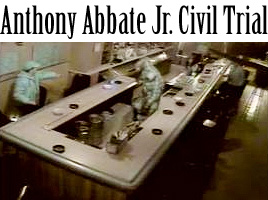 By Julia Gray
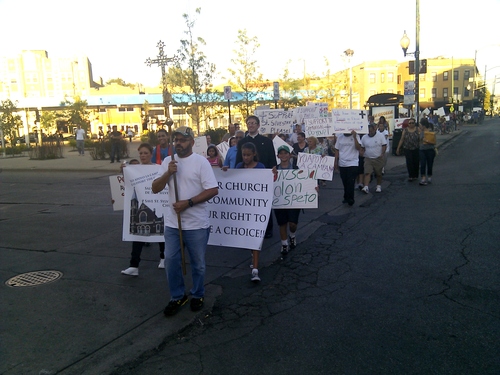
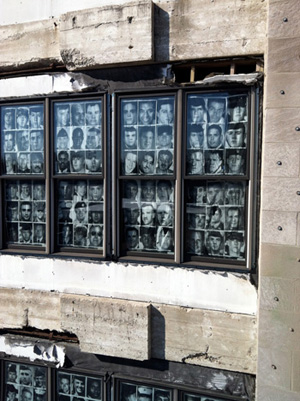 In the windows above the
 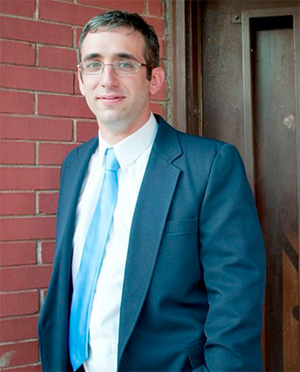 "Do you want a beer?" Rebecca Reynolds, campaign manger for Will Guzzardi, shouted at me from across the back room of Cole's bar on Milwaukee Avenue. "I usually buy so many beers for people during a campaign, but I haven't this time. I need to catch up!" Last week, 20 days before Election Day, the Guzzardi campaign, an agile, grass roots operation that is fighting for its life against the Berrios family and the Chicago machine, held one of its final fundraisers. Between the craft brews and the Guzzardi supporter wearing magenta velvet, a campaign button and stilts, the mood could best be described as jubilant.
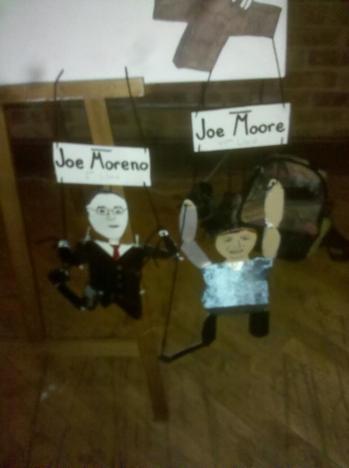
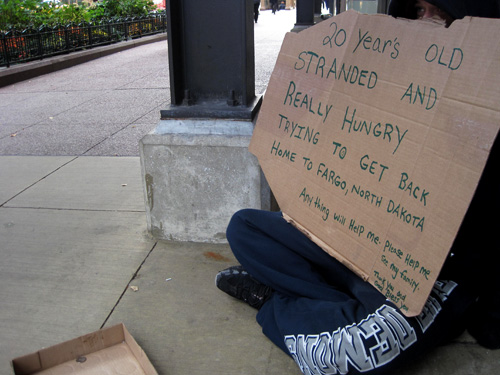
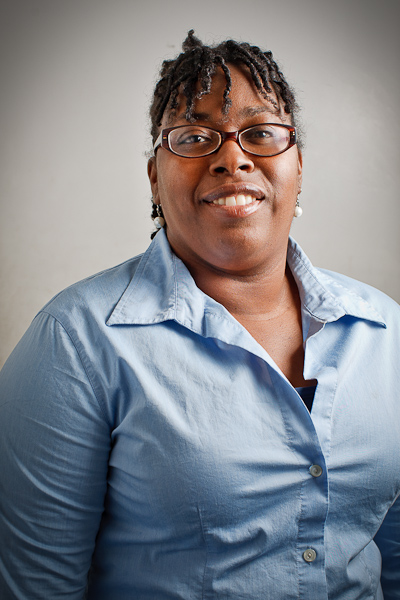 Zabrina Worthy frets when she talks about losing her house. She never saw how it could happen to her the way it did. Her voice cracked with tears at the first words she spoke to me, over the telephone: "I completely lost everything I had." When they boarded her house, she didn't just lose her home. Her computer, her furniture, her business — all the things she and her three children owned — were locked inside.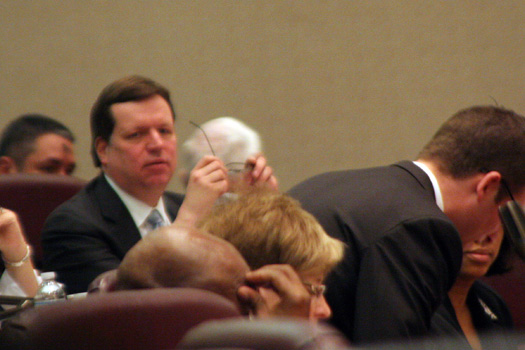


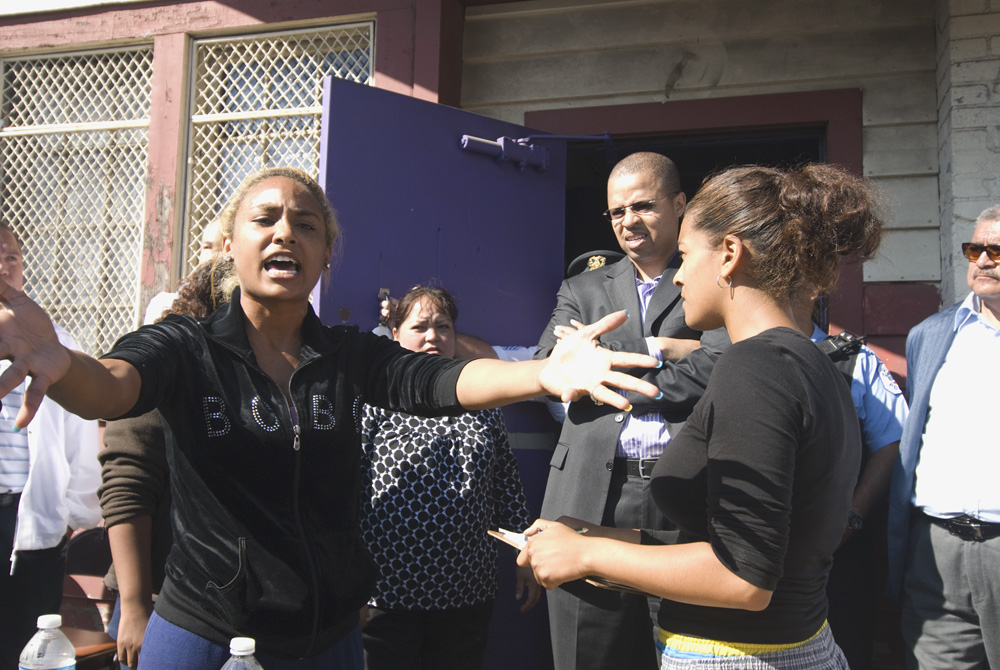
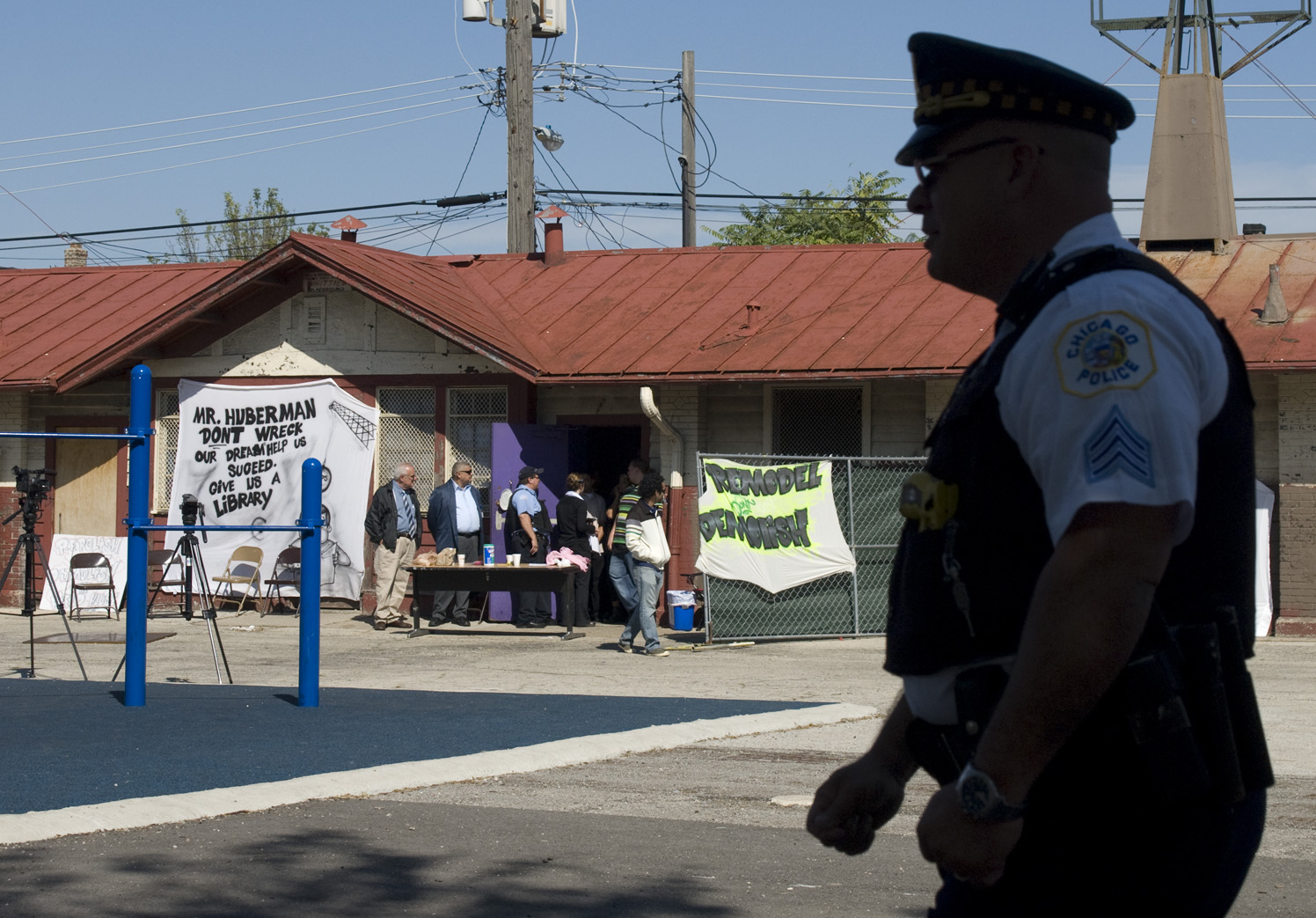
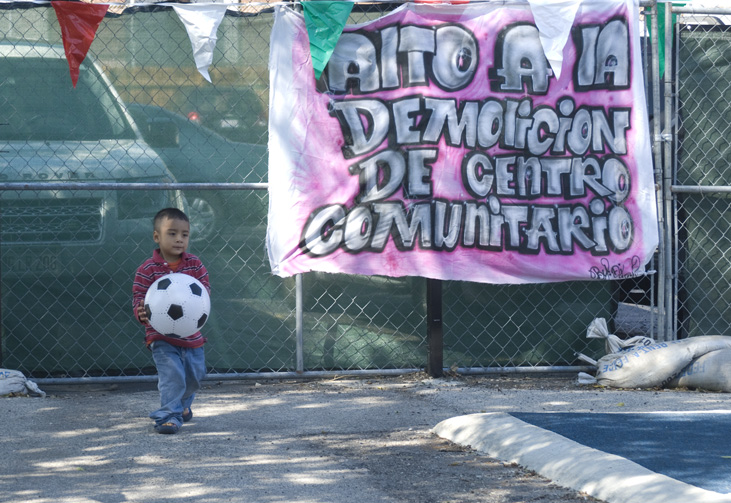

 This September 22-24, architects, affordable housing activists, developers, educators and government officials will be gathering at the University of Illinois at Chicago for the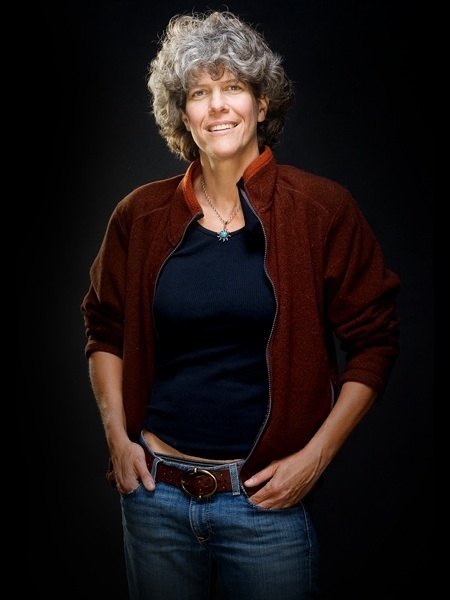

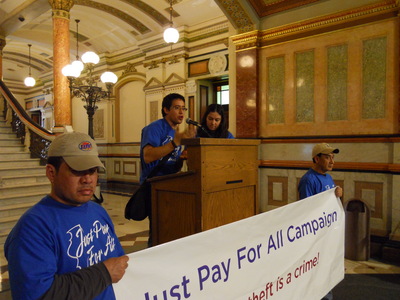
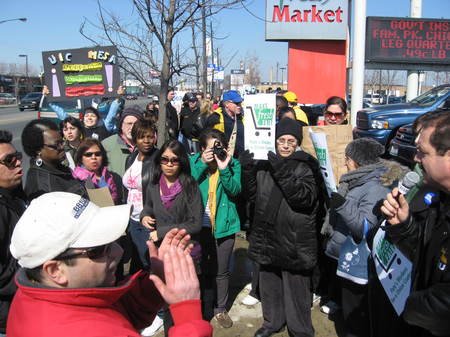
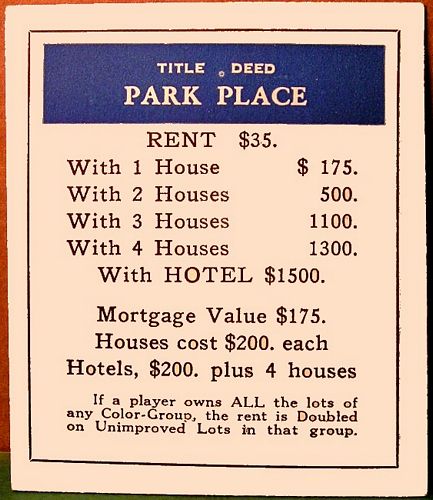 "The Parking Meters" will not mean just "the parking meters" in Chicago for at least another generation. The popular outrage over privatization of the city's parking meters was one of the largest expression of popular discontent of the Daley era, and caused a crack, albeit a fine one, to appear in the Mayor's monolithic governing coalition. Given as we are to think of government and politics as a collection of personalities, the Daley administration's ham-handed negotiation and rolling out of the parking meter privatization have taken center stage. The concession agreement has been treated as a political disaster, with reports that the entire lease was undervalued adding to rage over an opaque process.
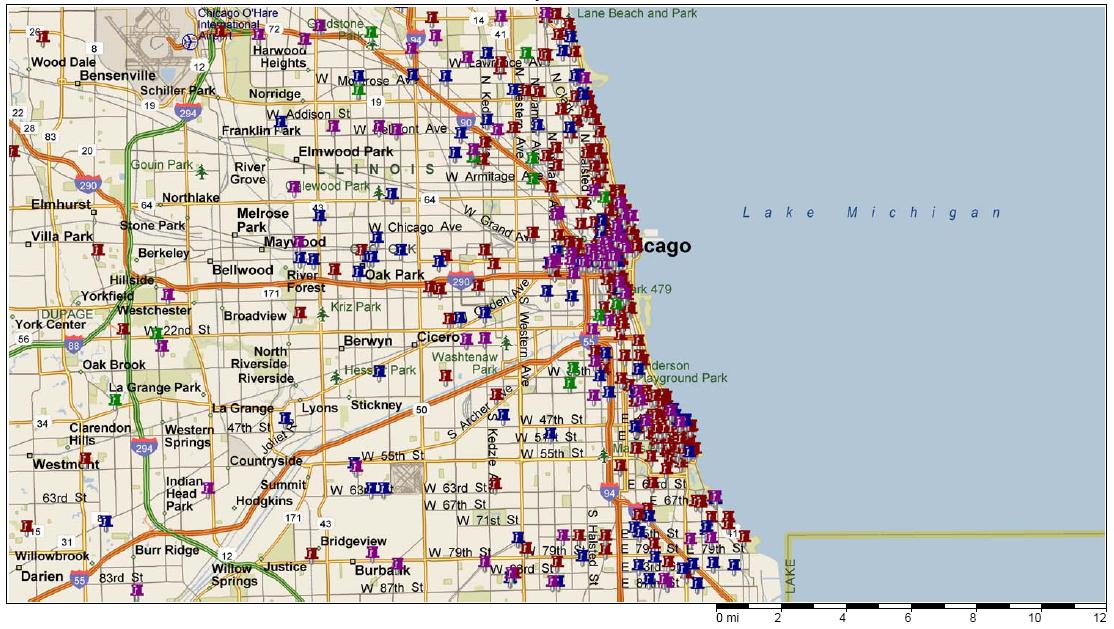
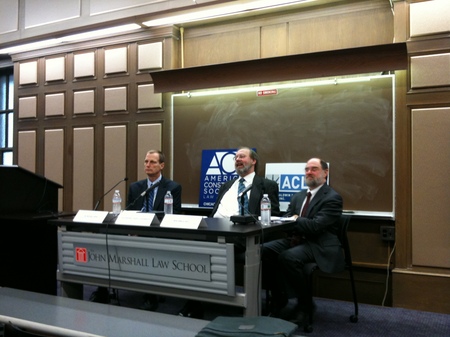
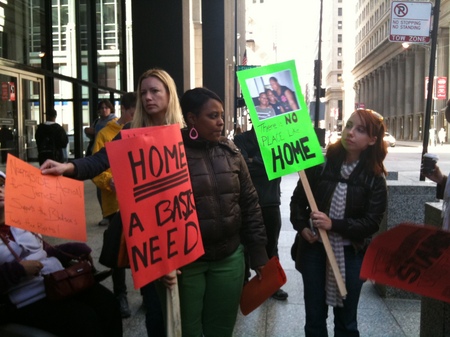
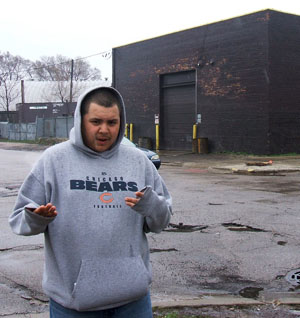 As he pauses at the corner of