Gapers Block published from April 22, 2003 to Jan. 1, 2016. The site will remain up in archive form. Please visit Third Coast Review, a new site by several GB alumni. ✶ Thank you for your readership and contributions. ✶
A downstate lawsuit filed shortly before Thanksgiving sums up what's wrong with Illinois government right now. Hitting local radar via a press release suggesting an action by SEIU Healthcare, the request for a temporary restraining order against the State was brought by more than a dozen public employee unions, including lead plaintiff AFSCME Council 31, nurses, and police officers, over the State of Illinois's failure to pay for health insurance for state employees.
The suit may have been overlooked here due to more sensational events, or because lawsuits against the State over its fiscal mess are no longer news; half a dozen have been filed, and court orders are part of how Illinois keeps spending money despite no budget in place. However, unusual in this case is the judge's language used in granting a TRO. In his order, Judge LeChien wrote on Nov. 25 that the inability of "the Governor and the General Assembly to perform duties makes essential services and assistance headed for a chaotic bust." The court charged both the executive and legislative branches of Illinois government with adopting a "fiddling while Rome burns posture" that forces the courts to act.
Recently Governor Rauner said, "...the Chicago Teachers Union shouldn't have dictatorial powers, in effect and causing the financial duress that Chicago Public Schools are facing right now."
This statement from Rauner comes just a few days after Forrest Claypool, our newest CEO, said that teachers need to have "shared sacrifice" by taking a 7 percent pay cut.
The shared sacrifice Claypool speaks of means that my wife (also a CPS teacher) and I would lose about $11,000 in combined income for this year alone.
I could go on and on about how Claypool is just another puppet of Rahm, in a long line of puppets appointed by the mayor, or how Chicagoans demand an elected school board (remember Chicago is the only district in the entire state without an elected school board). But since Rauner thinks a union run by 40,000 teachers is a dictatorship and Claypool says teachers need to sacrifice, I will share my stories, so that maybe, just maybe, they both (along with Rahm) will realize what it means to really sacrifice.
A lot of taxes are being proposed — sales taxes, property taxes, income taxes — as the state's budget stalemate grinds on and the city's financial crisis metastasizes.
But the powers that be have taken one tax off the table, and it's one that would target the very wealthy — the only ones benefiting from economic growth in recent decades: a financial transaction tax.
Aaron Schock's sudden yet not-so-sudden fall from grace has provided a lot of fodder for columnists and editorial boards -- and for good reason. There's the "Downton Abbey" office. There's the rippling abs cover of Men's Health. There's the endless discussion about his sexual orientation. And then there's the infamous Stephen Colbert interview. The congressman has sought, and received, a whole lot of attention over time. And now he's received more, but not in the way he would have preferred.
It's tempting to write 10 pages about Schock's background, as his early political history is almost as fascinating as everything swirling around his recent surprise announcement that he would be resigning his seat as Illinois' 18th District Congressman at the end of March. But many others have had their say on Schock. For a nice primer on the 33-year-old's meteoric rise, the Peoria Journal-Star offers a very nice time line. For in-depth reporting on the immediate scandal that appears to have brought Schock down, Politico is your bet, as they broke possibly the most damning evidence of financial impropriety, and have followed up with other insightful pieces about what's going on in Washington.
I have figured out how Chicago can get an Elected School Board, how the election laws can stop being endlessly rigged, how actual campaign finance reform can become a possibility, how incessant Pay to Play scams can largely be shut down, and how maybe some smidgen of democracy can visit the good people of Illinois.
And get this: all it will take is for just 12 State Representatives to have some guts and stand up for their constituents!
[At this time there will be a short pause to allow the readers to regain their composure.]
In an unexpected, under-the-radar move, Speaker of the House Michael Madigan has taken action to eliminate the long-standing practice of slating in Illinois.
The word "slating" has a lot of meanings in Illinois politics, but the practice described here is the one whereby an established political party can fill a vacancy in nomination after a primary election for which no candidate filed.
This appears to be the latest in a long series of moves over time to help ensure that incumbents -- especially incumbent state legislators -- need not face any opposition on the general election ballot.
To say Illinois is in a broken state and needs fixing is to state the obvious. The state has a $47.2 billion debt and is often the butt of jokes when it comes to corruption. In James D. Nowlan and J. Thomas Johnson's new book Fixing Illinois: Politics and Policy in the Prairie State, there are 98 suggestions given as to how to solve and lessen the problems in Illinois, but many of them don't feel feasible in the current political climate for the state.
The book covers a variety of topics in Illinois policy including education, budgeting, economic development, transportation, health care and human services. Outside of the section on transportation, many of these ideas ring as absurd for implementation in Illinois. Some of these may be more feasible in states other than Illinois, but could never work in this particular state.
There's a good chance that, right this very minute, you've clicked on a link from Facebook or Twitter, and gotten to this article, while enjoying some sort of hot caffeinated beverage at a local establishment. Maybe you're seated at some sort of weird little round antique table, and you've got some paper to research, or some spreadsheet to format, or just some "work" to "do"... but you're easily distracted, and, hey, you secretly like being easily distracted.
Clearly, you should be running for Governor.
Or, if you're not feeling quite that ambitious, just run for Comptroller.
I'm serious here. Who would joke about something like Illinois state government?
If you received Illinois State Representative Maria Antonia "Toni" Berrios's campaign mailers this past week, you might think she's defending her seat against Ted Bundy. But no, her opponent in the March 18 primary elections is Will Guzzardi, a journalist and Springfield outsider who came within 125 votes of ousting her in 2012, campaigning with a fraction of her funding and political connections.
An Ethernet cable. Carrie Underwood's career. What Derrick Rose does to people at the top of the key. That Nissan with the really stupid commercials. They're all crossovers. And the next big crossover is coming our way.
They'll go by a lot of different names. You can call them Grand Old Party Crashers, or One Trick Pachyderms, or maybe just Those Meddling, Conniving Democrats.
They're the Elephants for a Day. And they're diabolically plotting to pull Republican primary ballots this March even though they're not really Republicans.
It was Friday night, around 6, at the Washington Blue Line stop. A man -- let's call him Fred -- approached me with a clipboard and asked if I would like to sign a petition to place a proposed amendment to the state constitution on the ballot.
The people around us didn't seem too familiar when Fred launched into his spiel. They will be. Fred was their first contact with what may well become the hottest issue of the 2014 election. Not only might this question have huge effects on Illinois government over the long term, it could also lead to the election of a conservative multimillionare Republican as our next governor.
The entity behind the proposed amendment is The Committee for Legislative Reform and Term Limits, and its chair is Republican gubernatorial hopeful Bruce Rauner. Rauner has already put up $250,000 of his own money to push the amendment, plus $749,000 of his own money to his campaign committee. Both the committee formed to support the amendment and Rauner's committee have also racked up numerous donations of $100,000 or more, including several from out of state donors.
Much has been said and written about Rauner trying to buy the gubernatorial election. Some people have also written about how the term limits push may greatly benefit Rauner's campaign. What's been harder to find is a more detailed evaluation of the proposed amendment itself, precisely how the amendment can help Rauner get elected, and how Rauner's opponents might effectively try to hold off his multifaceted strategy.
Water resource management, with impacts sweeping across public health, food production, security, energy, industry, and environmental sustainability, is one of the most consequential economic and societal drivers today.
Legislation currently on Governor Quinn's desk could dramatically alter the way Illinois manages its own water resources. House Bill 1379 would allow Illinois American Water and Aqua Illinois, two of the state's largest private water companies, to expedite acquisitions of municipal water systems and increase customer rates to fund their expansion.
A coalition of groups throughout the state has announced the creation of the campaign Yes for Independent Maps. Yes for Independent Maps seeks to reform the legislative redistricting process in Illinois through a ballot initiative.
Yes for Independent Maps will begin today with the collection of more than 298,000 signatures on a petition to have the initiative appear on the ballot for the 2014 general election. They will collect signatures up until May 4, 2014.
"We are excited to launch this campaign to fix Illinois' broken, behind-closed-doors redistricting process and put the voters back in charge," said Ryan Blitstein, Yes for Independent Maps' senior advisor in a press release. "Our coalition members have been working for more than two years to reach this point. With their help, and with support from a diverse group of volunteers and activists across the state, we will gather the necessary signatures to place this measure on the November 2014 ballot."
At a press conference Tuesday, Governor Pat Quinn announced what he called "common sense changes" to the General Assembly's concealed-carry bill. The governor vetoed several specific measures in the proposed legislation, citing "serious safety problems" and too many provisions "inspired by the National Rifle Association, not the common good."
Quinn's revisions include a move to ban concealed weapons inside places that serve alcohol, and to limit permitted gun owners only one concealed weapon, holding a maximum of 10 rounds of ammunition, to be carried at a time. The governor also nixed a provision to prevent home-rule towns from passing assault weapon bans, tightened a partial-conceal provision to complete-conceal, and moved to give employers more regulatory discretion over guns in their businesses.
Chicago schools have seen reductions at almost every level over the past couple years. Cuts to teacher salaries, jobs, and benefits, student arts and athletics programs, and even entire school budgets have created a new austerity within CPS. Amidst all the downsizing, however, one educational element has been growing in stark contrast. Teach For America recruits are teeming into Chicago schools like never before.
Teach For America, a branch of AmeriCorps, is the largest school reform not-for-profit organization in our country. On a mission to improve education and break the cycle of poverty, TFA recruits elite college graduates, gives them about a month of intensive training, and places them in two year termed teaching positions at low-income schools across the country.
What would happen if a tornado hit a million-gallon tank full of fracking wastewater in southern Illinois? I don't know for sure, but I suspect the result would be to spray the countryside with poisonous waste. If legislators don't know, they need to pass a fracking moratorium, as five Illinois counties have already called for, alongside any bill that would open up Illinois to fracking.
House Bill 1 may not be the top priority for the General Assembly when it comes to passing legislation before the summer recess, but it's on its way to Gov. Pat Quinn's desk and, with it, medicinal marijuana appears to be on its way to legalization in Illinois.
Here's a quick overview of the bill and some context in medicinal marijuana laws across the United States.
• It's gonna happen.
Illinois has been working toward legalization of medicinal marijuana for the better part of the last decade, and it's going to pass this year, barring a big surprise from Gov. Quinn.
The big move came last Friday, when the State Senate passed the legislation by a 35-21 margin. The bill becomes law when Gov. Quinn signs it, although he is expected to sit on it for a bit before giving it the green light. Still, a conversation he had with the Chicago Tribune this week indicated he'll almost certainly give it the go-ahead in the coming weeks.
Illinois will become the 20th state to approve medicinal marijuana, and there's little question that this is the right thing to do, both from a democratic standpoint and in observation of studies on the issue. Various polls show that more than 60 percent of Illinois voters approve, and the bill has support from a wide variety of groups in the medical community. Additionally, studies show that the concerns of critics (such as increased usage among youths) have not materialized in other states with similar laws.
But while House Republican Leader Tom Cross (also a co-author of the bill, along with Rep. Elaine Nekritz) called it "the meat and potatoes of pension reform," it doesn't seem so clear that today's step is actually one in the right direction.
The Illinois pension problem has heated up in a major way over the past several weeks, with Standard & Poor downgrading the state's credit rating back in January and the SEC announcing charges against the state for misleading bond investors regarding the implications of unfunded pension obligations. Some lawmakers have even called for--gasp--skipping the upcoming break from session in order to settle the pension mess.
But while today's bill has the right idea (i.e. something has to happen), it doesn't seem likely that the bill will make it past (1) the Senate or (2) the Supreme Court. Yesterday, the Senate shot down a bill that was similarly far-reaching regarding pension reform. And even if the bill does pass the Senate, as CapitolFax guru Rich Miller put it on Monday, the Nekritz-Cross pension bill "makes almost no pretensions of being constitutional."
The argument over gun control is not, as some want to frame it, primarily partisan, let alone a battle between those opposed to violence and those OK with it. It's as much a geographic and cultural divide as anything else. Understanding the different perspectives stemming from the very different homicide rates in very different areas is key to overcoming simplistic sloganeering or unfounded assumptions, and is critical to basing policy on evidence. Consider Chicago and Iowa, for starters.
While Congress ponders a "pathway to citizenship" for some of the millions among us who arrived in the country under the radar, Illinois has forged ahead, sending waves of ecstasy through some constituencies and outraging others, by providing a pathway to the highway for those in the same boat. Or sedan.
Yes, for those who were under a rock or asleep, the State of Illinois last week put aside that annoying chatter about pensions and bond ratings for a while so we could concentrate on getting some documents for those who claim to lack them. Governor Quinn this week signed a bill that will allow illegal (and some legal) immigrants to get special Illinois Temporary Visitor Drivers' Licenses, although it may be a year before the Secretary of State's office figures out how to implement it. Supporters claim this will make our roads safer . Opponents fling their hands in the air (but not while driving, we hope) at the idea of "rewarding" those who are in Illinois only by virtue of their own, or someone else's violation of federal immigration law.
This site hasn't touched this hot topic since the bill signing, and so it was shoved my way like a bowl of cereal toward Little Mikey. So here's a short column about traffic -- probably mainly website traffic, since anything touching on immigration brings out sloganeers from all corners.
If you're registered to vote in Chicago, you won't just be selecting candidates. In addition to national, state and local office holders, you will also directly vote on at least four ballot measures: one that could alter the state constitution, one that could lower your monthly electric bill, and two non-binding, advisory votes of debatable significance. Depending on where you are registered in Chicago, you may even get to vote on additional neighborhood-specific questions.
So here's an explanation of each referendum that could appear on your ballot.
The Illinois General Assembly is considering legislation, known as SB3261, to require hospitals that receive property tax exemptions to provide more than stabilization care (already required by the federal Emergency Medical Treatment and Active Labor Act, or EMTALA) to people who earn 125% or less of the federal poverty level in rural areas, and 200% or less in urban areas. The amount of free and subsidized care provided by hospitals has been a hot button issue in Illinois, and across the country, at least since 2007, when the U.S. Senate began a series of hearings on charity care, and in Illinois since a high-profile case involving Provena health care put hospitals' tax exemptions in limbo. The legislation is an interesting approach to solving the problem of health care provisioning for low-income residents, given the immense shortfalls in Medicaid funding states have been facing since the freefall in tax revenue brought on by the Great Recession.
The precinct captains, who had been preparing for election day for weeks, arrived at headquarters at 5:30am. A box of Dunkin Donuts, a campaign staple for liberals and conservatives, incumbents and challengers alike, was already waiting. Polls would open at 6 and not close for 13 hours; the day ahead would be long. Each captain was given a stack of door hangers, a list of addresses and a few volunteers while coffee brewed. The sole goal was to find as voters who had said they would support Will Guzzardi for state representative and ensure that they went to the polls.
To have informed the group of people assembled at Guzzardi headquarters that morning that voter turnout in the 39th District would be a record low this year would not have disheartened them. A low turnout rate could actually have been in their favor, because it meant that the machine operation of incumbent State Rep. Toni Berrios and her father Cook County Democratic Party chairman Joe Berrios, was underperforming.
Tellingly, it was not with voters on the street who campaign workers had the most fraught interactions last Tuesday, but with election judges at the polls. From reluctantly reported voter lists to lost tape to delayed results, many of the individuals who were voting and campaigning in the 39th district last Tuesday pointed to gross mismanagement on behalf of the Board of Elections. This claim made the final count, with Berrios leading Guzzardi by 111 votes, suspect to a number of Guzzardi supporters. The slim margin is frustrating to volunteers, some of whom have found it difficult not to want to find a connection between the strangely unprofessional behavior of the election judges and a loss that was just too close.
"Loving Chicago is like loving a woman with a broken nose."
—Nelson Algren
"Do you want a beer?" Rebecca Reynolds, campaign manger for Will Guzzardi, shouted at me from across the back room of Cole's bar on Milwaukee Avenue. "I usually buy so many beers for people during a campaign, but I haven't this time. I need to catch up!" Last week, 20 days before Election Day, the Guzzardi campaign, an agile, grass roots operation that is fighting for its life against the Berrios family and the Chicago machine, held one of its final fundraisers. Between the craft brews and the Guzzardi supporter wearing magenta velvet, a campaign button and stilts, the mood could best be described as jubilant.
Six months ago, Will Guzzardi announced his candidacy for state representative in the 39th District in that very same room. That night, the bar was filled with his friends, a large group of 20-somethings, and Will Guzzardi, with a new haircut, a red tie and a pressed suit, became a candidate.
Guzzardi, looking eminently more comfortable but infinitely more tired up on stage Thursday night, drew a narrative of how far he and his staff had come since he called the incumbent Representative Toni Berrios and told her he'd be challenging her in March.
"I sat down with a lot of people when I was getting started," Guzzardi said, "And I remember one of those conversations like I was yesterday. Someone said to me, 'You'll get 20-30 percent, and you'll be out of Chicago in three months.'"
Everyone booed. One of the most noticeable differences between this crowd and the one that gathered back in September are the call-and-response style shout-outs. The noticeably older, new supporters come from political organizing backgrounds, from groups like the Illinois chapter of Democracy for America and the local Democratic organization, 1st Ward First. That group, a project of Alderman Proco Joe Moreno, assembled at Cole's as a tacit endorsement of Guzzardi. With the alderman's blessing, they will continue to work with the campaign through Election Day, shoring up Guzzardi's efforts to Get Out the Vote.
This week Governor Quinn signed into law special tax incentives for the insanely profitable Chicago Mercantile Exchange and the poorly run Sears. The Associated Press offers a sort-of warning: that scores of companies have tax "packages" that are to expire over the next few years. If you are a shareholder in any of those companies, would you expect anything less than threats to relocate from your CEO? And if you're a government affairs person representing a business in Springfield, what would your attitude be towards a legislator who voted for this tax package but won't put forward one for you?
I never bought for a minute that CME and Sears were actually going to leave. Nor do I suspect that Mayor Emanuel, who helped engineer the cuts for CME, or most of the legislators who voted for the cuts, actually bought the threats either. But the threat to leave is a formality that gives cover to politicians who want to hand their political supporters a nice plum but want to obscure the quid pro quo. Seeing now that the tactic works, we should fully expect a tidal wave of employers demanding incentives to stay in the state.
You know, if we cut our tax rates to 0%, we'll get all the businesses. All the businesses!
The good news, as far as it goes, is that CME at least is in a pretty unique sectors and dominates its market in the state, so there is a superficially rational argument for why they should receive breaks but nobody else should. But as the Daily Herald reports, Community Unit School District 300 is going to be feeling some hurt for a generation thanks to the cut for Sears. If legislators are willing to make trades like that, it isn't clear where or why they'll draw a line.
A familiar trope in the wake of a high-profile institutional failure, whether private or public, is the suggestion or outright assertion that the disaster was the fault of a lone gunman, a "bad apple" whose actions shouldn't be allowed to spoil how we view the rest of the bunch. Messrs. Cheney and Wolfwitz rolled out this cliché when the horrors of Abu Ghraib surfaced. We were told that Enron was, similarly, an outlier of financial fraud, rather than emblematic of how regulatory schemes (or the lack thereof) are too often purchased in what Greg Palast has called "the best democracy money can buy." In the wake of a major environmental disaster the prompts for the "bad apple" defense are sometimes audible. And, of course, when an official misbehaves, others in the arena are always ready with the singular-fruit metaphor.
Illinois' foster care system is responsible for approximately 15,000 children. The Department of Child and Family Services (DCFS) contracts with agencies to provide case workers for the children and find, process, and work with willing foster families to place children under their care. It is one of the most humane and important functions of the state, protecting children and finding homes for those in the unimaginably painful condition of being without a loving family. It is an awesome responsibility for any organization to assume, and the public is rightfully grateful for it.
This summer, the state of Illinois informed one of its oldest partners in the foster care program, Catholic Charities, that it was going to terminate its decades-old contract with them. The Catholic Charities' strictures against placing children with homosexual couples conflicted with the civil unions bill, 750 ILCS 75, passed earlier in the year. The statute provides in pertinent part,
Sec. 20. Protections, obligations, and responsibilities. A party to a civil union is entitled to the same legal obligations, responsibilities, protections, and benefits as are afforded or recognized by the law of Illinois to spouses, whether they derive from statute, administrative rule, policy, common law, or any other source of civil or criminal law.
Is it worse to get elected as a candidate who says he is going to jerk over public employee unions or get elected with union support and then jerk over public employee unions?
Pat Quinn, who spent a decent amount of time giving Governor Walker flackoverwhat Wisconsin did to public employees under the guise of budget issues. Governor Quinn has not even paid off his bet with Governor Walker over the Bears/Packers NFC Championship Game.
Governor Quinn, who cut a concession deal with AFSCME shortly before getting their endorsement, has since the election turned around and decided that due to budgetary reasons, the union's members should not get the raises specified in their contract.
It seems to me that in many ways, going back on a union contract with a union that endorsed you and worked hard to get you elected in a close election would be worse than having a governor who you knew was going after you from the start.
Suffice to say, AFSCME does not seem real happy about all this and I got to talk to AFSCME Council 31 Executive Director Henry Bayer about Governor Quinn's move and next steps.
For political junkies like myself there is little better than watching politicians subvert the electorate every ten years through the process of redistricting.
It happens every ten years after the constitutionally mandated census and requires states to reapportion Congressional districts. Watching how this ritual plays out suggests that maybe allowing elected officials to draw their own districts is not the best idea. They carve out neighborhoods and towns like turkey, looking for the juiciest bits of meat.
With Democrats controlling both chambers of the legislature as well as the Governor's mansion, the state party has redrawn the proposed map to benefit themselves. That is, after the 2012 elections.
Now that we have the mayor inaugurated and our federal and state income taxes paid, we can turn our attention to the political circus of figuring out which elected officials represent us. Legislative redistricting occurs in three rings and it is hard to keep your eye on all three at once.
The three redistricting arenas are congressional districts, state legislative districts and Chicago's aldermanic wards. Theoretically, four legal principles apply:
Districts must be equal in size.
Protected minorities cannot be gerrymandered to prevent them from electing members of their own race.
Districts should be contiguous.
Districts should be compact.
But redistricting is governed even more strongly by two political principles: incumbent protection and partisan advantage.
Karl Klockars of Chicagoist looks at the potential for dire gerrymandering to protect Illinois' Congressional Democrats and "deTea" (Karl's great neologism) those districts where "Tea Party" candidates knocked out Democrats. The map below was generated by a user at Swing State Project.
Image via Chicagoist
This map is speculation based on available data. Few things in politics frustrate me more than this kind of chicanery, deterministic redistricting. Other than basic safeguards (prohibiting "cracking" and "packing") ensuring that minorities are not actively denied meaningful representation, redistricting should be wholly free of any political consideration whatever. Otherwise, government is merely artfully arranging the polity to preserve itself, rather than the public artfully arranging government to serve them.
The Better Government Association recently made some significant changes to its board of directors -- and its overall governance structure -- in an effort to broaden and strengthen its connection to Chicago's minority communities and to expand its reach in Illinois beyond the collar counties.
"We passed a package pertaining to the roles of board members, and added job descriptions for board members and for officers, and the board voted to elect new officers for the beginning of 2011," said Andy Shaw, president and CEO of the BGA. "We spent the fall coming up with a new list of board officers, new committee chairmen and a new list of board prospects that we could recruit and ask to join us, and several weeks ago we approved seven new board members, the most so far. We can add five to 10 more, I believe. The seven we approved are very formidable, it's a very impressive group."
At its last meeting, the BGA board of directors voted to add seven new board members, including David Hoffman, former Chicago inspector general and senate candidate; Graham C. Grady, partner at the law firm of Bell, Boyd & Lloyd; Robin Steans, executive director of Advance Illinois; Tamara Edmonds Askew, director of the American Bar Association's Section on State and Local Government; M. Hill Hammock, former chief administrative officer of Chicago Public Schools and former vice chairman and COO of LaSalle Bank; Mary Lee Leahy, influential Springfield attorney; and Jack Modzelewski, president of client relations at Fleishman-Hillard. An eighth new member, DePaul University general counsel Jose Padilla, is expected to be confirmed at the next board meeting January 21, when the others will be seated for the first time.
Additionally, Rod Heard, partner at law firm Barnes & Thornburg, was named chairman of the board, Phil Clement, global chief marketing and communications officer of Aon, was named vice chair. And Shaw's title was changed from executive director to president and CEO.
The BGA also created a new tier to its oversight structure: "life trustees," which is made up of former board members who have each served for several decades. Moving these senior board members to the life trustee board made room for new blood, Shaw said, "people who understand government, are committed to improving it, and have the contacts and resources to carry on our mission."
Hey everybody! Thanks for stopping by Mechanics in between booking one-way tickets to Ottawa on Priceline in anticipation of the proto-fascist Republican takeover of the federal government or researching your upcoming blog post, "The Democratic Party is Toast (For Real This Time)."
I joined Lenny McAllister of WVON and Nenna Torres of UIC to talk about last night's election results with Alison Cuddy of WBEZ's 848. Highlights include me calling Pat Quinn "a tough dude." For the record, I was this/close to calling him "one tough motherflipper." You're welcome, BEZ. Check it out.
Two sons of Irish immigrants, mutual childhood friends from the old neighborhood, are in a close, nasty fight for a state Senate seat on Chicago's Far Northwest Side.
John Mulroe (next to the young woman) at a party in the North Austin neighborhood in 1979. Photo courtesy of Brendan Egan
Like me, both Brian Doherty - for the past 19 years the city's sole Republican alderman--and his foe in the November 2 election, John Mulroe--appointed to the seat in August after a long-serving fellow Democrat resigned from it--graduated from St. Angela School, in the North Austin neighborhood on the West Side. I am SAS '74, Mulroe is '73 and Doherty, '71.
Neither candidate for 10th District senator--Doherty, 53, a standout amateur boxer as a young man, who started in politics as a volunteer to a Northwest Side state representative 30 years ago; Mulroe, 51, a mild-mannered but tough and tenacious accountant-turned-lawyer, who is a relative political neophyte--is pulling many punches in the bout, which has been heavily financed by both party organizations.
Both candidates, like me, are from big Irish Catholic families.
Mulroe was the third of five children, all boys. The family, like mine, lived for several years in a two-bedroom apartment in a two-flat with relatives occupying the other flat, near tiny Galewood Park, a North Austin neighborhood hangout for countless youths, including me and several of my nine siblings.
Mulroe's father, a longtime laborer with Peoples Gas, often carted a gang of us kids in his station wagon to various sporting events.
On the campaign trail, Mulroe often recounts how he began his work career at age 13 as a janitor's assistant at St. Patrick High School, an all-boys Belmont Avenue institution, where I was a year behind him, just as I had been at SAS, where he later was a director of the St. Angela Education Foundation.
In the 1980s, while Mulroe was working days at Arthur Anderson as an accountant, he attended Loyola University law school at night. Then he served as a Cook County prosecutor for six years before, in 1995, opening a small, general legal practice in an office that is a block from Doherty's aldermanic office, down Northwest Highway in the Edison Park neighborhood, where the senator and his wife, Margaret, live with their two sons and two daughters.
Similarly, Doherty, the third of nine children, was a presence in my youth. My father, the late Jack Jordan (SAS '38), St. Angela's longtime volunteer athletic director, became close to the future alderman while working as a manager for the Chicago Park District boxing program.
At the time, the future alderman was in the midst of his amateur boxing career, in which I remember seeing the slim Doherty out-pound heavier boxers on his way to a 19-2 record and Park District and Golden Gloves championships.
I won't wade into the political operative-fabricated "who should apologize for what" media bullshit back-and-forth, nor will I link to it, but I do want to take a moment to address Rickey Hendon. Feel free to go make some soup.Unless you are State Senator Rickey Hendon. You stick around.
Rickey. Mr. Hendon, rather. Senator Hendon. State Senator Hendon. Whatever. I find you oft-hilarious. You're clearly a very clever man who can turn a phrase. However, don't say shit like this:
"Let me tell you a couple things. I've served with Bill Brady. I've never served with such an idiotic, racist, sexist, homophobic person in my life," Hendon told the crowd. "If you think that the minimum wage needs to be $3 an hour, vote for Bill Brady. If you think that women have no rights whatsoever except to have his children, vote for Bill Brady. If you think gay and lesbian people need to be locked up and shot in the head, vote for Bill Brady."
I believe, like I think you do, that Senator Brady is opposed to the concept of a minimum wage. Certainly, Brady has shown little interest in actively addressing racial disparities in income or prison sentencing. I also believe, like you apparently do, that Brady's position on gay marriage amounts to homophobic policy even if he isn't personally homophobic. Brady's positions on reproductive rights are far from enlightened. However, I don't know if he wants the women of Illinois to bear his children. Nor do I think that even in his fevered fantasies, he thinks we should imprison gay people and execute them NKVD style. Nor do I think you actually believe those things.
Given these facts, do you think that maybe your point would have been better served sans the accusations of murderous impulses and harem-lust? Maybe taken more seriously?
I guess what I'm trying to say, Rickey--Senator Hendon--what I'm trying to say is, you know, take it easy.
Be Well,
Ramsin Canon
P.S. I believe the proper Chicago elocution is "couple of two, three things." Let's keep it professional.
Hey everybody, you can come back now. You're welcome for the soup.
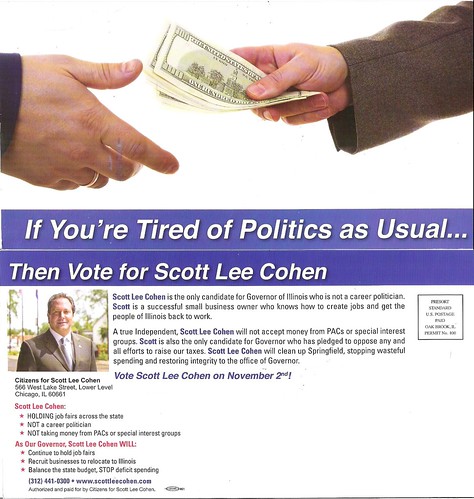
Oh wow, talk about the irony of this mailer by Scott Lee Cohen. If you need a refresher, Cohen was the Democratic lieutenant governor nominee who was forced to drop out of the race. Now he's running for governor as an independent. Apparently his campaign has been putting up a lot of signs in mostly minority -- black -- areas of Chicagoland.
Why the irony? Well didn't we see on CapFax yesterday that a couple of Black ministers have come out and said that Cohen offered them cash money if they supported him in his bid?
UPDATE 1:39 PM -- Well the Cohen campaign has responded to one of the minister's -- one Rev. Gregory Lee -- allegations. Cohen's finance director Kelly Tarrant calls Rev. Lee "an extortionist." Found on the Capitol Fax, where Rich Miller linked to this post.
On the rooftop of the Harris Theater last Wednesday, over 800 people overcame the torrential rains to witness the adoption of the Chicago Metropolitan Agency for Planning's GO TO 2040 plan. CMAP, as it's colloquially called, is the regional planning organization of Chicagoland, and GO TO 2040 is their official, three-years-in-the-making guidebook that intends to serve as a road map for Chicagoland's growth and development over the course of the next 30 years. Paring its ambitious mission down to four main themes -- Livable Communities, Human Capital, Efficient Governance, and Regional Mobility -- the GO TO 2040 plan offers holistic prescriptions for the region as a whole, recognizing structural fixes are needed across all platforms.
Within its analysis, illustrations, and recommendations, CMAP, while never overtly saying so, lays claim to the argument that Chicago is effectively the main remaining relevant economic factor in the State of Illinois. (Obviously, the city is the largest and most influential in the Midwest as well.) And hence, given Springfield's antagonistic inability to recognize this, Chicago's relation to its state is simply a restraint on growth. It's Chicago's connection to Beijing, Sao Paulo, Shanghai, London, Dubai, almost anywhere but Springfield, that serves as the springboard to success for the region. Essentially, CMAP's plan is an argument that says in order maximize the global connectivity of Chicagoland to other global centers, the region's ability to successfully do so is directly correlated to the strength between its regional connections. With over 1,226 government units in the Chicagoland region due to myriad metropolitan agencies and functions, there is much room to streamline services and improve efficiency. And efficiency, used in the economic sense to mean the production of a good at the lowest possible cost that still provides benefit, plays directly into CMAP's call for sustainability.
Sustainability and tangibility are the two pillars on which GO TO 2040 rests. The plan promotes sustainability in its Livable Communities initiatives through the development of local food production, retrofitting programs to make older buildings better users of energy, and crafting local zoning laws to encourage mixed-use development of land. The Regional Mobility portion of the plan aims to improve mobility by increasing intermodal effectiveness, micromanage the budgeting process to bring transit agencies into fiscal well-being, and the implementing of five major capital projects, including extending the CTA Red Line south to 130th St, building the West Loop Transportation Center, and creating suburban highway connectors that flank the city and beyond. The Efficient Governance focus of GO TO 2040 is perhaps the crux of the entire plan. Any aspect of any plan must start with making access to government process and information more open and available, as CMAP outlines, and as detailed here in a earlier post, refocusing our taxing bodies into common sense vehicles.
I have one question that I believe should be used to disqualify people from running for executive office. It is, "Do you accept the theory of evolution?" Anybody who says no should be disqualified. No, it's not a religious test that would violate the Article VI prohibition. It's a moron test. We could also ask, "Are you a moron?" but then we'd be less likely to get an honest response. This way we could actually root out the morons.
This has nothing to do with conservative/liberal, Democrat/Republican. Evolution is a fact--in fact, it's more than a fact. It is a theory built upon literally millions of facts. Believe whatever other thing you want, but denying that evolution took place--maybe not exactly how science now conceives, but that it took place in some way--is absolutely no different than denying gravity. Newtonian physics got the mechanics of gravity wrong, but that didn't make gravity itself wrong. If you think "the jury is out" on evolution, you're not particularly bright, willfully ignorant, or poorly educated (which may not be your fault, but still--probably shouldn't be elected to executive office).
Bill Brady thinks it's okay to teach Creationism in schools. By doing so, he betrays his claim that he accepts "both" creationism and evolution. Accepting both as equivalent to be taught is like saying you accept "both" the theory of electromagnetism and fish are delicious. I don't care about any of the rest of his politics. How can you vote for a person like that? Creationism in schools? Really? We want the US to create well-educated kids prepared to tackle the most significant problems of the future--not to mention stay on the cutting edge of science--and we're going to allow school districts to teach Creationism? How stupid is this guy?
The perpetual election cycle is a cause for consternation on many fronts. While news today that Cook County property tax bills will not be delivered to taxpayers till sometime near Thanksgiving isn't really all that surprising, the consequences of this stalling tactic have far greater reach and implications than our elected officials intend. Cook County Assessor candidate and current tax appeals board member Joseph Berrios can point the finger at outgoing Assessor James Houlihan all he wants, saying Houlihan's failure to assess property in a timely fashion has in turn pushed back the appeals schedule, but engaging in this futile blame game is too transparently cynical to work to anybody's advantage. Perhaps Berrios can adopt the campaign slogan: "If nobody notices, nobody gets hurt."
Except, in reality, all of us do.
Without property tax bills, homeowners obviously cannot pay their property taxes. Without the funds from these taxes arriving into municipality's coffers (coupled with the permanent vacation of due monies from Springfield) and then being applied to pay for essential services, governing bodies will have to operate from a dearth of funds to provide any services at all. To fill that hole, the cities and towns will have to look towards borrowing money just to be able to keep the lights on. And of course, borrowing will eventually cost extra money. It's not too difficult of an equation to figure out where taxing bodies will look towards to get that extra money in servicing this new debt.
It seems as if there's a systemic condition throughout Cook County that plagues it citizens to either not notice, not care, or remain too numb to machinations such as these. But it is exactly these type of small procedural missteps that make it so difficult to enact long-lasting and meaningful reform. It's these type of blatant and short-sighted maneuvers that initially make privatization of public services look attractive (as governing bodies force the hand of other bodies who effectively are unable to follow through on their essential functions), but then also make privatization something to vilify, when the same cycles repeat itself, and there's either a raid on reserve funds or nothing else to sell.
Cook County- its government, its citizenry, all of us- needs to start sweating the small stuff.
As you may be aware, there has been significant growth in the rates of diabetes, for example more than 15,000 children a year are diagnosed with type 1 diabetes. As anyone who has this disease or someone who has had to care for them knows, it can be a very difficult disease to manage (FYI, insulin is not a cure).
In order to try to improve the care that students receive in school with this disease, the Illinois General Assembly passed (after failing to act on it for five years). HB6065, The Care of Students Diabetes Act, passed the House 104-1-2 and the Senate 34-8-3).
So you think, "taking care of kids, it passed with large margins with bi-partisan support," what's the problem?"
So you would think it's a slam-dunk -- this is going to scare suburban women and they will end up not voting for Bill Brady.
Social issues may not be the key to the suburban mom vote this time around. The question is going to be what will tick off suburban women more?
Will it be Bill Brady's stance on social issues or the millions of dollars the state is behind in paying local school districts? Which is going to have the bigger impact on the moms vote come election day?
When kids return to no music programs and larger classes, will that trump social issue concerns?
I think the school funding issue puts the suburban mom vote into play. It will be interesting to see if the campaigns attempt to capitalize on that.
While this was a law that was recently signed isn't a constitutional amendment necessary to change this?
Gov. Pat Quinn signed legislation on Saturday that requires candidates of the same party to be nominated jointly instead of letting voters pick each nominee separately.
Under the new law, a gubernatorial candidate would select a running mate for the primary election. Voters would either support the pair or reject them over a different team.
The change comes after Illinois Democrats were embarrassed in this year's primary election. Scott Lee Cohen was the nominee for lieutenant governor who had been arrested previously for domestic violence. He was soon pressured into dropping out of the race.
The new law will go into effect on Jan. 1.
I wonder how it even came to be that voters individually selected both the gubernatorial nominee and lieutenant governor nominee? If I recall correctly, once upon a time the governor and lieutenant governor candidates were elected separately in a general election. Then at some point the the candidates were nominated separately in a primary, then forced to run as a ticket in the general election. I'm sure the point of this was to insure that both the top two executive officers of Illinois were of the same party, but I'll bet money that this wasn't thought out very well for some reason.
I wonder how that legislation (or amendment) to eliminate the lieutenant governor position is going. To be sure, I still don't support its elimination.
Although action was expected Monday, Gov. Pat Quinn has not yet put pen to paper on the McCormick Place overhaul legislation recently approved by the general assembly, and his hesitation has begun to make exhibitors skittish. Both the National Restaurant Association and the International Home and Housewares Show have threatened to withdraw their business from the convention center if the legislation is not signed soon.
Exhibitors have frequently complained about how costly and complicated it can be to hold conferences at the McCormick center, and the overhaul legislation aims to correct some of these issues. It cuts profits made by McPier, the agency that runs McCormick Place, from foodservice, reworks the laws governing floor workers to make conventions run more efficiently and at lower cost, and eliminates McPier's chief executive position in favor of a more autonomous trustee position.
Illinois passed a pretty impressive Freedom of Information law last year. The act went into effect this year, to the tempered joy of journalists and transparency reformers everywhere.
Now a bill has been sent to Governor Quinn by the General Assembly (HB 5154) that would prohibit release of personnel records of government employees. This is of particular concern to police department watchdogs, since those records would contain evidence of discipline for abuse of power or abuse, critical tools for independent police oversight. Having a strong FOI law is so critical to transparency and so clearly in the public interest, that something like personnel records becoming public has to be considered at worst a necessary evil, and at best, a key component of improving operations in government.
That's on the one hand. On the other, even government employees should have some reasonable expectations of privacy, particularly those who are not in a significant policy-making or implementing area. These are not elected officials who opened themselves up to public evaluation. The fact that their personal performance reviews will be fully available to the public upon written request may deter ambitious climbers and subject long-time employees to invasions of privacy. That said, the Springfield Journal-Register has a pretty convincing Op-Ed that falls on the first hand: there is such a huge public interest in keeping this law strong that significant evidence should be required to constrict it, and there simply is little evidence that the disclosure of evidence would lead to abuse.
Financially over the long haul increasing the age in which people can retire at full retirement benefits will reduce the overall financial impact of state pensions over time.
The big question is how is the state going to recognize the savings.
Under Governor Blagojevich, when changes were made in the financing of the state pension systems the legislature would recognize multiple years worth of "savings" in a single year and use that "savings" to shore up a current budget.
Back in 2005 they made some changes to pension financing and used the "savings" to avoid making payments into the system even though the savings would be realized until several years down the road.
Gov. Rod Blagojevich has a plan for reforming teacher pensions that he says will save millions -- millions the state can begin spending to balance next year's budget.
That idea, says the head of the Illinois Teachers' Retirement System, sounds more like it came from the mouth of a teenager.
"It's kind of like as if my 17-year-old daughter says to me, 'Dad, I might have a baby-sitting job a week from Tuesday, so could you give me 40 bucks now?'" TRS's Jon Bauman said. "It just never makes sense to spend money before you have it. And that, in effect, is what this is all about."
So it's a positive step in the right direction.
The question will be how the state legislature decides to handle the "savings" when it is budget crunch time.
Apparent gubernatorial candidate and poor black child Dan Proft faced off with Hank Scheff of the American Federation of State, County, and Municipal Employees (AFSCME) Council 31 to talk about Quinn's reform. While I agree with Scheff generally, both he and Proft are very smart guys and come from a sincere (non-partisan) place. That makes this very worth a watch:
Progress Illinois has a close look at the pension system reforms that Democrats quickly passed through both houses of the Assembly in the last twenty four hours:
In the blink of an eye yesterday, the General Assembly passed (by a wide margin) a historic overhaul of Illinois' public employee pension system. Facing the possibility that the state's bond rating might be downgraded next month when the state borrows about $1 billion to fund a portion of the capital construction plan, the Democratic leadership whipped into action, tossing together legislation that whizzed through the Statehouse in less than 12 hours.
It's important to remember that these cuts do not effect current employees; opening those contracts (the benefits are outlined here) would likely violate the state's constitution. The changes only apply to new hires in 13 of the state's systems. So let's review what the bill does and how much money the Pension Modernization Task Force estimates the changes will save between 2010 and 2045:
Follow the link for a thorough analysis by PI's Adam Doster.
Republicans often criticize Illinois Democrats for running a patronage army of loyal state employees. However this website is encouraging loyal republicans to be given state jobs as well.
Of course new administrations are able to appoint people to implement their vision for the state, to implement the policies that they campaigned on and were elected to enact. What is odd about this website is its tone, a confidence that the GOP will win Springfield back, and a gleeful lust for 6 figure jobs. In particular the site exhibits a tendency towards the corrupt and a disdain for "the awshucks-we're-sorry-for-having-principles-types."
When you click on the Jobs List, it lists different state departments that the Governor is able to appoint heads of. What is disturbing is the partisan descriptions for the jobs. Is the head of the Historic Preservation Society a partisan position?
The site implies that Republicans would only be interested in jobs enforcing Human Rights because, "Check out the pay scale here!"
It describes Homeland Security as "the new patronage place to be." A scary thought that our security and safety be entrusted to partisan hacks instead of trained and specialized experts.
It describes positions on the Illinois Gaming Board as though it were a casino, "Great spot to meet people and make money, come to work every once and a while, too!"
In what should be a scary comment to organized labor, the site claims that the GOP will, "rebuild [the Department of Labor] and remake it so that it is more efficient. Get on board and help."
The site is run by a woman named Jenifer Sims. It is unclear if she has any connections to the Brady campaign, the state GOP, or if she is just a crank writer. Attempts to gain quotes from the Brady for Governor campaign and the Tea Party Patriots were made. Neither gave any quotes.
Paying increased costs for employee pensions, health care for the poor and debt service will eat up virtually all new money the state can expect to bring in over the next three years, Comptroller Dan Hynes said Monday.
The state faces "a serious crisis" by 2010 unless lawmakers take a long-term view of state finances, Hynes told a business group in Chicago.
But this is a problem that has been brewing for years and years. The current economic situation may have hastened it, but this day has been coming for a long time and a large number of different issues have contributed to it.
UIC Students, Faculty and Staff Rally Against Budget Cuts.
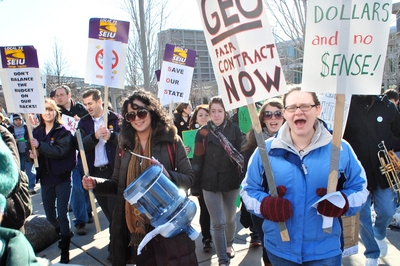
Several hundred students, faculty and staff rallied at the University of Illinois Chicago campus on March 4th, to demand an end to budget cuts that target the poor. They rallied in the Quad, before marching around campus and marching to University Hall where the administrative offices for the school are. It was part of a national day of action to defend public education.
SEIU Local 73 chief Steward Joe Iosbaker led the crowd in chants, "They Say Furlough Day, We Say No Way! They Say Cut Back, We Say Fight Back!" and the sarcastic, "They Say Fee Hike, We Say, Yea, Right!"
At University Hall SEIU members served Soup to passer-by's "to prepare us for what we'll be eating if the budget cuts go through." They then sang a parody of Gnarls Barkley's Crazy, "Is UIC crazy? They must be crazy,to think that they can defeat, local 73."
The Chicago News Cooperative looks at the Service Employees International Union's state council and their growing importance in state and local politics.
SEIU was a major backer of Rod Blagojevich and the Democratic caucus in Springfield, and was the cash and manpower engine behind the 2007 challenges to incumbent alderman after the big box living wage ordinance fight. With CFL president Dennis Gannon easing out the door, SEIU State Council President Tom Balanoff is left standing as arguably the most high profile labor leaders in local politics.
The piece is worth a read for background on an organization that will undoubtedly have a large impact on the 2011 elections; though I would think they would have mentioned that the state council was a founding sponsor of Progress Illinois, which has done yeoman's work in reporting on complex state and regional policy issues.
An early supporter of Barack Obama's White House aspirations, the service employees union also backed the winners in the three highest-profile state primary races this year. Besides Mr. Quinn, it sided with Alexi Giannoulias, the Democratic nominee for Mr. Obama's former United States Senate seat, and Toni Preckwinkle, who toppled Todd Stroger, the Cook County Board president.
"It was a good day for us," Tom Balanoff, president of the union's state council, said in an interview last week.
The union's successes culminated a long push for prominence that has seen it become the biggest financial contributor to Illinois political campaigns. Its campaign committees, which were only bit players in local politics a decade ago, have spent more than $10 million across Illinois in the past six years, a Chicago News Cooperative analysis of state campaign finance records found.
In case you haven't noticed yet, you can now submit your resume to be considered by the Illinois State Democratic Central Committee to be slated and become the nominee for Lt. Governor. You can find detailed instructions at http://www.ildems.com/ltgovnominees.htm
Perhaps more entertaining than applying yourself, is sorting through the resumes and applications of those who think that they can achieve what Scott Lee Cohen could not. Over 40 applications have been submitted so far and are posted on the Illinois state Democrats website. What seems to jump out to me is that many of these candidates, with little experience with elected office, seem to think they can play in the big leagues without going to training camp.
Because, for one thing, the lieutenant governor in Illinois has virtually no power outside waiting for the governor to be in a position not to be governor anymore.
The Lieutenant Governor shall perform the duties and exercise the powers in the Executive Branch that may be delegated to him by the Governor and that may be prescribed by law.
That's it in terms of explicit duties.
So how do I have more power than the Lt. Governor?
In the Democratic party, the voters elect the folks who will serve as state central committeemen and committeewomen (the elect one of each gender from each congressional district). These are the folks who will decide who is going to replace Scott Lee Cohen as the Lt. Governor candidate.
On the Republican side, however, the central committee members are elected using a weighted vote of the elected precinct committeemen within the congressional district based off of the number of Republican ballots cast in the last primary in that precinct. So therefore I have about 50 votes to decide who will be elected one of these committeemen. This is the same group that decided that Alan Keyes for Senate was a good idea...
There is a move afoot to change the process on the Republican side (SB 500), but for now it is what it is.
So thanks to the rules of the Republican party, I have more power than the Lieutenant Governor.
Tammy Duckworth, an assistant secretary at the U.S. Department of Veterans Affairs, said today she was removing herself from consideration to be the Democratic nominee for Illinois lieutenant governor.
I made a commitment to President Obama and our nation's veterans to serve at the Department of Veterans Affairs, and I want to fulfill my promise before returning home," she said in a statement. "As an Illinoisan, I'm proud to continue to serve in the Illinois Army National Guard and I know that real work lies ahead as the state recovers economically."
...
Quinn said he met with Duckworth when he was in Washington last weekend for National Governors Association meetings and that she called him this morning to say she was staying put.
"I think it was an agonizing decision for her," Quinn said.
Was this a smart move on her part? Would there have been any controversy by not choosing any of the other candidates from the Feb. 2nd Primary, namely the man who came in second place State Rep. Art Turner?
BTW, the state's Democratic leadership will meet March 15 to decide the new lieutenant governor nominee for November.
So having recovered from spending the last couple weeks shaking and crying in a dark corner somewhere in Pilsen after the Hoffman defeat, and bringing all of you down with me in my last post, I'm back to depress the masses yet again with a Chicago tale.
I was reading this article today, written back in January, about state House speaker Michael Madigan. It was filed in the Tribune's "Watchdog" category, which I was browsing in need of some civic inspiration--something I've been severely lacking as of late. It's about Madigan trying--and, of course, succeeding--in using his influence to drum up business for his tax law firm. See, after a developer sought and received zoning changes for his newly acquired downtown property, Madigan swung by his office to see what other properties might need his firm's services.
"When Mike Madigan calls and asks for a meeting, you meet with him," the developer says. "I mean, I was born and raised in this town."
The Responsible Budget Coalition is taking to the capitol on Wednesday to advocate on behalf of social service providers and their clients who have taken a beating over the last few years as the state Democratic leaders refuse to deal with the budget because of the perceived electoral consequences (if only we could indefinitely suspend elections--maybe then we can get some action).
More than three thousand service providers and clients will be making their case in Springfield, representing groups like this:
Participating organizations include AARP, AFSCME, Chicago Coalition for the Homeless, Citizen Action/Illinois, the Hope Institute, Illinois Action for Children, Illinois Coalition for Immigrant and Refugee Rights, Illinois Education Association, Illinois Federation of Teachers, Illinois Network of Centers for Independent Living, Jane Addams Senior Caucus, Lake County Center for Independent Living, Lutheran Social Services of Illinois, SEIU Health Care, Voices for Illinois Children, Williamson County Early Childhood Cooperative, Women Employed, YWCA Metropolitan Chicago and many more.
Those evil special interests. The RBC is specifically pushing for new revenues for radical programs such as paying past due bills to non-profits.
UPDATE: Internet truism: The punishment for overly-dry sarcasm is angry comments. I don't consider the Williamson County Early Childhood Cooperative and their clients a "special interest" group, nor do I think the state paying its bills to social service providers is a radical idea.
This is going to be a bad year for public education.
After the State of the Union address and GOP response, there was a lot of back and forth about different policy points and the challenge the President laid down and the people standing behind Bob McDonnell and the number of times the President used certain words. What nobody commented on was that the two men agreed enthusiastically on exactly one thing: the need to privatize public education.
The take away from that night is that the American political duopoly supports the privatization of public education. They honestly believe that injecting the profit motive into education is the way to make sure that all American children get a decent education. That is a major policy shift that is so harmonious with the corporate policy tune that no news operations expressed any surprise or outrage.
But, of course, it is an outrage. The privatization of schools is sold as "ingenuity" and as a way of "leveling the field" by offering that cornerstone of free market fundamentalist mythology, "choice". Give parents choice and all problems go away. Because education is like used cars.
Well, after spending almost a week after the election with the revelations against Scott Lee Cohen over what occurred in the years before he became the Democratic nominee for lieutenant governor, we have seen Cohen drop out of the race. It was a very interesting ride while it lasted. It seemed for a while that he had no intention of stepping down and would continue to draw out whether or not he would leave the race.
It seemed this time that the pressure brought to bear on this man actually worked. We had others who probably should have let go in the best interest of Illinois and they wouldn't. Yeah, I would point to Rod Blagojevich and his senate appointment before his removal from office Roland Burris.
I will give Cohen credit for his attempts to bear (link to Chicago Tonight video 15:38) through the pressure. He even attempted to be honest, but his PR initiative seemed to have gone flat. He expected some of the women in his life, especially the one who he had allegedly assaulted and threatened with a knife, to speak up for him. Unfortunately that too fell flat when she declared him unfit to be lieutenant governor.
Feel free to chip in on local races, too. On election night, join me and other local political types over at WBEZ where we'll be liveblogging the results.
U.S. Senate Races
Democrats
Alexi Giannoulias
David Hoffman
Cheryle Jackson
Jacob Meister
GOP
Mark Kirk
Pat Hughes
Illinois Governor
Democrats
Pat Quinn
Dan Hynes
GOP
Kirk Dillard
Bill Brady
Andy McKenna
Jim Ryan
Dan Proft
Adam Andrzejewski
Cook County Board President
Democrats
Todd Stroger
Dorothy Brown
Toni Preckwinkle
Terry O'Brien
First thing accept the fact that the gloves are totally and completely off now and you can't put them back on. It has gone in the words of CBS 2, nuclear.
The Washington ad is huge for Hynes, he has gotten free media off of the ad. Any rational ad that gets free media play is something you have to reply to and address.
Remember one of the lessons from the Kerry campaign, you can't let this stuff go. You have to hit back and hit back hard. Yes, it's the primary and you are all supposed to be loving Democrats and negative campaigning is bad, yadda, yadda, yadda...
Remember, you have to win the primary to make it to the general and at this point your only focus needs to be on winning the primary, it's a long time between Feb and November, wounds will heal, losing the primary lasts forever.
This has got to be a very harsh ad! This happened at least 20 or so years ago and it comes right back to haunt the Governor.
To be sure, I would rather Pat Quinn be governor right now than our Ousted governor. In fact I think of Gov. Quinn as an honest man. Unfortunately Quinn's adminstration of the state leaves a lot to be desired.
Chicago and Illinois suffered a serious blow over the weekend with the loss of CLTV political reporter Carlos Hernandez Gomez. He was the type of reporter with such a sharp mind and wealth of knowledge that he made you want to know more, do more, be better. Head over to Capitol Fax for reminisces and obituaries of a great reporter and wonderful human being.
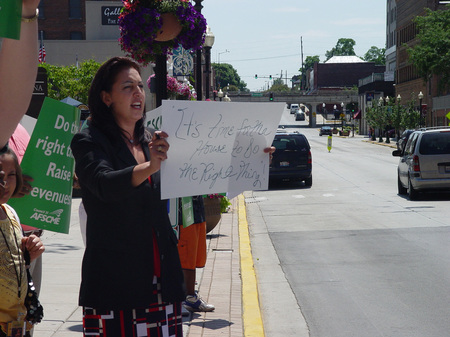
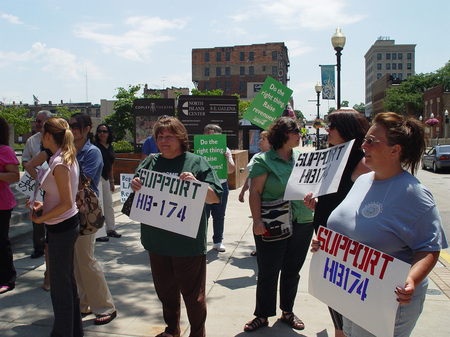
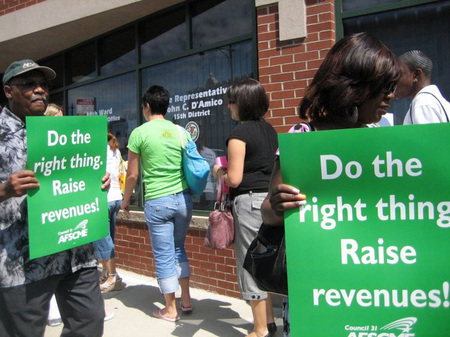
"The governor spoke today about the Illinois budget, what we believe is the most urgent issue facing our state. That broken budget is now a full-blown crisis. Each day we hear of new, devastating cuts to schools, health care, human services and public safety in every part of the state. Basic services for every Illinois resident are on the brink of collapse, more than 100,000 jobs providing those services in the public and private sectors are threatened, and lawmakers will return to Springfield in February to an even bleaker picture. We have to confront this crisis--not with more painful cuts and payment delays, but with a balanced approach that includes responsible tax reform. Responsible reform like House Bill 174 will raise adequate revenue and make taxes fairer. It is essential to protecting public services, jobs and our economy, and it has to be Job One."
If you've read American Pharoah, a biography of the late great Mayor Richard J. Daley, there were tales of the machine running a paper Republican against a Democrat. Not saying that's the case here, but that's what this story reminded me of:
With tongue planted firmly in cheek, the Illinois GOP has launched a public hunt for one Patrick John Ryan, who has filed as a Republican to run against Illinois House Speaker Mike Madigan next year.
In a press release Monday entitled "Has anyone seen Patrick John Ryan?" the GOP notes that though Mr. Ryan filed as a Republican, he lives in Mr. Madigan's home 13th Ward and pulled a Democratic ballot in the past three primary elections.
Yet, the release adds, Mr. Ryan "is now a Republican who believes in less government, lower taxes, true ethics reform and the need to end business as usual" in Illinois.
Given all of that, "Will Patrick John Ryan call (312) 201-9000 to discuss this historic opportunity?" the GOP asks. "We look forward to providing him the necessary support to win this election."
I saw that very press release in my e-mail this morning. It was just the most unusual thing I have ever seen.
Could this mean that the state Republican Party might out anyone who just so happen to run against powerful Democrats who aren't running very serious campaigns?
I've written a post or two about him here at Mechanics. He's a community organizer who left his job as head of this group National Block Club University in order to run for state representative for the 32nd District. Unfortunately he withdrew from the race according to the Illinois Board of Elections after various petition challenges.
In these series of videos posted around December 7th on YouTube, Smith takes the fight directly to the state House Speaker Michael Madigan. This first video shows him leaving a letter at his doorstep.
Then he talks about his activities in Speaker Madigan's neighborhood:
Understanding that the period for petition signatures and filing has passed as of this past Monday, I wanted to show two videos of candidates running for state offices making their filings in Springfield .
This video from the Quinn campaign is a bit more "glamorous." The production values are very nice, although it doesn't seem to convey how long they've stood in line to turn in the petitions. Found this via Capitol Fax in discussing an asset the Quinn campaign doesn't utilize or even publicize enough.
This video may not score much as far as production values, but it sure does convey how serious the petition filing process is at the state level! This video was by Syron Smith running for state representative in the 32nd District. I posted another video featuring him earlier.
Well, hopefully the candidate of your choice has put in all the hard work to file his/her petitions, whether on the federal, state, or even county levels. Hopefully the candidate of your choice will have solid petitions to remain on the ballot in 2010. I think we'll have some interesting elections to watch next year!
I've argued in the past in favor of term limits, and addressed the concern that the government bureaucracies, or career staffers, would simply come to dominate government, and that legislators, seeing their pending unemployment, would spend the bulk of their time in office jockeying for private sector jobs or higher office. (The response was that, of course, legislators are kind of putty in lobbyists' and bureaucratic operators' hands now). I do think that the argument around unintended consequences is a good one and worth keeping in mind.
Larry at Archpundit sums it all up in a characteristically succinct line:
Does it happen in Illinois too-sure, but experienced legislators are the best defense against determined lobbyists.
While I agree with Larry (and the Rich Miller piece he cites) that term limits could likely end up having unintended consequences, like shifting power to the executive bureaucracy and lobbyists who are permanent residents of state government, I don't think this rules out term limits completely. It only rules out unreasonably short term limits (like Michigan's).
What makes a state Representative "seasoned" or experienced enough to know the players in government and how to move a piece of legislation? A combination of natural instincts, political influence, and relationships with legislators built on mutual respect and trust. Those latter two can only develop with time. So having a one-, two-, or three-term limit on legislators (particularly with no similar limit on the governor) is not a good idea.
But what about five, or ten? At some point, there is diminishing return, and legislators accrue power based on their seniority and immobility out of proportion to their legislative prowess or willingness or desire to move legislation at all (Cf., Phil Crane).
As I stated in that earlier piece, lobbyists thrive on long-standing personal relationships, not cyclical bullying. Who do we see going down for scandals with lobbyists? Is it more often some fresh faced legislator with no influence? Or their relationships with powerful, long-serving legislators? Tom Delay, Ted Stevens, Randy Cunningham, Dan Rostenkowski, potentially Charlie Rangel--these are scandals that come about because people have accrued power over time, not the result of powerful lobbyists preying on the uninitiated.
I understand the point of view of those, like Larry and Rich, who oppose term limits: there is a distaste for "naive" reformism that paints with a broad brush. But surely limiting one person to a decade in office as one piece of reform to chip away at dynastic politics would do more good than harm. The organization put Bilandic in there to replace Daley; even with a strong organization "controlling" the office, eventually the bench depletes and elections can become more competitive.
You might have seen Syron Smith in a post on The Capitol Fax blog earlier this month as the subject of a "Question of the Day". At this moment we look at Syron Smith as he runs for state representative for the 32nd District. He is to run against Andre Thapedi who currently holds that seat. Thapedi is a "rookie" having assume the seat of Milt Patterson who stood down at the end of his term having not run for re-election.
He ran against Thapedi last year in the primary and was forced to run as a write-in candidate after his petitions were successfully challenged by Thapedi. If your petitions to run for election are rejected then that only means that you won't be on the ballot, but most of us already know that right. All the same this time Mr. Smith is coming to this election ready!
This video is by CAN-TV personality Marc Sims. Also watch part 2 & part 3.
This video from the Bob Schillerstrom for Governor campaign is straightforward. It makes it plain that he wants the state to stop spending. I just found this to be the goofiest video ever. Could you imagine SNL writing a skit like this?
Well of course I can be wrong on this. What do you think of this vid? Is it effective or might you find it to be goofy?
Check out friend of Mechanics and neighbor to me Josh Kalven of Progress Illinois discussing the state budget (along with Mechanics contributor Richard Lorenc's boss John Tillman of the Illinois Policy Institute) on Chicago Tonight:
Well, if you want to save video poker and the funding for the capital plan, I think it is still possible, but you would have to try and do it during the veto session and time is running short.
A "solution" would have to provide a better cut to the state and a better cut to local governments. If a local government was able to get a better cut I suspect they would be less likely to vote it down. It's one thing if video poker could pay for one cop, it's different if it could pay for five.
The Solution
Take the machine owner cut of out the system by having the state lottery own and operate the machines.
Today the Illinois Policy Institute is releasing a new short film about charter schools and their success in Chicago.
Entitled 'Charter Schools: Changing Lives,' the documentary profiles students, teachers and administrators in three Chicago charter schools: Chicago International Charter School's Ralph Ellison campus, Noble Street Charter School's Pritzker College Prep, and the Urban Prep Academy for Young Men.
So Andy McKenna is going to run for governor as a Republican.
Well if you want my post-mortem on his senate run back in 2004 you can go here. Suffice to say I wasn't real impressed with Andy's senate run back in 2004.
I guess I don't understand why he wants to run. Did he look at the field and see some sort of chance to win against guys with bigger organizations? Does he see a chance of winning against guys who in some cases have been running for months? If he does he is seeing something I must be missing (big time).
To win in this primary and to win in the general a successful candidate is going to have to be aggressive. In the primary you are going to running against candidates who have built up statewide followings, who have spoken at Republican events at all ends of the state. When they and finished speaking at these events they have had people think 'hey I wish that guy would run for governor'. I have heard Andy speak at more than one Republican event over the years, nice guy, but he wouldn't stand out at a convention of stereotypical accountants. I doubt anyone has heard Andy speak at a Republican event and thought "I wish this guy would run for governor."
SEIU's Illinois State Council--representing some 170,000 workers and a sophisticated political operation--endorsed Pat Quinn for Governor. Good news for Pat Quinn.
Will the other big labor growler--AFSCME's Council 31--jump in on Hynes' side? Quinn made a pitch to the Council today.
QUINN: I want to say a word about the American Federation of State, County and Municipal Employees. They're my good friends. They've been my friends since 1972, when I helped them organize the union and get recognized by the state of Illinois. ... I like all the leaders and members of AFSCME. I want to work with them on solving a tough problem. As Tom said, we need to have more revenue in our state government to balance the budget and pay for fundamental things like education and public safety.
Governor Quinn and the local leadership of AFSCME Council 31, which represents the largest proportion of state workers, have been unable to reach a deal that would avert over a thousand layoffs. The Governor was asking for concessions that the union said amounted to a 15% pay cut. This is a combination of cuts: deletion of promised raises, reduction of health care benefits and pension contributions, and unpaid furlough days. Quinn has announced that he will have to move forward with over a thousand layoffs as a result of the refusal of AFSCME locals to accept the cuts. Quinn sees the roaring budget deficits we all see. The assumption is that spending needs to be cut to reduce and eliminate this deficit; but it doesn't necessarily follow that cutting programs will have that effect. Cf., Adam Doster's "Civic Fed Rule."
And of course there is the fact that many state programs actually "save" the state, or the people, money from the services they provide. Either by addressing a problem that effects productivity (road congestion, child care for working class families, subsidies for health insurance that reduce sick days and unemployment), or by providing a service that indirectly raises revenue (subsidies for jobs programs; maintaining regulatory standards that protect consumer confidence). This isn't controversial; Illinois' conservatives would look at a list of state activities and approve of way more state activities than they disapproved of. Licensing, regulation of professions, capital projects that increase mobility, building institutions of higher learning, etc. We need correctional officers and child safety case workers; we need inspectors to check that our bridges aren't falling down, and to monitor water pollution levels. That's what a "state worker" is.
Knowing this, how about the fact that Illinois has the lowest state worker-to-resident ratio in the country? The problem is not the size of government, the problem is that politicians refuse to pay for the services Illinoisans demand. Cutting deeper into the bone won't make Illinois better; it'll make the quality of life worse. Even were our budget to be balanced, basic services will disappear. We know we're talking about basic services because Illinois has a tiny state government:
If Illinois state budget is "bloated," as many charge, these numbers would seem to indicate that the state's employees are not the cause of that bloat.
I like Dan Proft. I mean, I disagree with practically every single one of his dearly held beliefs, find his analysis of political events cleaved to a broken ideology, and probably hate whatever is his favorite food. But, he definitely believes what he believes and doesn't hide it.
He used to address his campaign emails, "Dear Unapologetic Conservatives." More recently, his emails have read, "Dear Conservatives, Republicans, and Independents Looking For Reform." Proft is an opinionated guy who has had an extremely entertaining on-going feud with boyish Tribune columnist Eric Zorn (it involves the phrase "put-down books for first graders"). He also is not particularly fond of Carol Marin. Please watch the below video (h/t Josh).
Things are finally looking up for ol' Dan Seals. Chris Cilizza has the scoop:
Seals Far Ahead in IL-10 Survey: Dan Seals, the Democratic nominee against Rep. Mark Kirk (R) in 2006 and 2008, holds a wide lead in the 2010 Democratic primary, according to a survey done for his campaign and obtained by the Fix. Seals takes 63 percent of the vote compared to to just eight percent for state Rep. Julie Hamos and two percent for attorney Elliot Richardson in a hypothetical Democratic primary matchup. The survey, which was conducted by Anzalone-Liszt Research for Seals campaign, also showed Seals -- not surprisingly -- as by far the best known candidate in the Democratic race with 83 percent name identification. Hamos, who won the endorsement of Rep. Jan Schakowsky (D-Ill.) last Friday, has a meager 18 percent name identification. And, roughly two-thirds of voters agreed with the statement that Seals had earned the right to a third run for the seat while 23 percent said it was time to give someone new a chance. With Kirk leaving the 10th to run for Senate, Democrats have a very good chance of taking over this North Shore district.
Mick Dumke has some nice things to say about Illinois Comptroller Dan Hynes who announced yesterday that he will campaign against Gov. Quinn for the Democratic gubernatorial nomination. Dumke says that Hynes seems like a "decent" fellow if not a little dull compared to other politicians (to be fair, there aren't a lot of people who are more exciting than Barack Obama). Dumke also notes that Hynes has an impressive warchest and Quinn has a platform that needs work:
Yes, there's already a Democrat in that office, but Pat Quinn has struggled to lay out a clear, viable plan for confronting the state's budget or ethics messes, and he's widely viewed as little more than a caretaker. That's undoubtedly hurt his fund-raising--his campaign raised about $860,000 in the first half of 2009, leaving him with about $702,000 in the bank. Hynes brought in $905,000 and has $3.5 million to spend.
All good points. It's going to be a good election.
Rich Miller wrote a syndicated column about the current state Senate Majority Leader that he posted onto his blog on Monday. Last year when then Senate Pres. Emil Jones (you may know him as Obama's political mentor when our current president was in the Illinois state Senate) announced his retirement, I outright hoped that Clayborne could become the new Senate president. One reason I would have been OK was because he was a downstater, every leadership position was taken by someone who lived in the Chicago area. The fact that he was also black should've sweetened the deal somewhat.
It didn't, hence the fact that Clayborne is the majority leader in the state senate. It was sort of a deal, a consolation prize for not being Senate President. But it seems he wants another prize, our state governorship.
Perhaps since 1994, Illinois has seen a black person (well it has often been black males) who have attempted to run for Governor. I often mentioned Roland Burris (Illinois current US Senator) who ran for Governor on three occasions between 1994 thru 2002. Then there was state Sen. James Meeks who mulled a run against Ousted governor, but decided against it because Ousted governor seemed to become serious about the issue of education funding.
Now it could be Clayborne! I did just mention that Clayborne is from downstate, but that is certainly a contrast to Burris and Meeks who reside in the city of Chicago. Sometimes I forget that there are blacks in other parts of the state, in fact I think I have relatives in East St. Louis (well that's about the area Clayborne resides) or at the very least a familial connection to that city. Still I wonder what that means if he's serious about his gubernatorial bid.
Rich Miller has this about him:
On paper, Clayborne would be a fascinating candidate, especially if he is the only African-American in the contest.
Sen. Clayborne is not the sort of Democrat that Chicago media types are accustomed to seeing. He's a downstate attorney with a pretty solid pro-business voting record who is also regularly endorsed by organized labor.
He's pro-gun, but he's also pro-choice. He ran and lost for senate president last year, and the campaign exposed some rifts with his fellow black senators, partly over his strong rating from the National Rifle Association.
Well as a Chicago Black, I have no problem with his support for Gun Rights, Miller however, brings up some recent gubernatorial history:
Gun owner rights are not usually very popular with Democratic primary voters, and particularly with Chicago blacks. Pro-gun southern white Glenn Poshard was able to win the Democratic nomination in 1998, although that issue was used against him in the fall by Republican George Ryan. Just about every likely Republican nominee strongly favors the National Rifle Association's view of things, so that issue might not hurt Clayborne as much as it did Poshard if he manages to win the primary.
We'll see, but the entry of a downstate Black in the Gubernatorial race is going to be interesting. Besides this race is about excitement with the idea being that our next governor might take this state into another direction. Perhaps a break from our most recent past with two recent governors running afoul of the law. One was arrested and sent to a federal pen, and the other arrested by federal agents then impeached and Ousted from office.
I outlined the idea of a 2010 gubernatorial candidate with a bold vision in another post largely about Dan Profit (running as a GOP candidate for Governor). I would like to see a bold vision perhaps a man like Clayborne, who is said to have pro-business credentials, might be an answer. I hope to see what he may run on, if he does run.
You know I should just dust off my post about looking like a Governor. I should ask this question about Clayborne, does he look like a Governor. What do you think out there?
Talk about good things happening to a good guy. Disgraced former governor Rod Blagojevich writes a book, reads it himself for the audiobook, and you could feel the warm mirth emanating from Capitol Fax publisher Rich Miller's blog comments.
- Rich Miller - Monday, Jul 27, 09 @ 3:32 pm:
Notice that the book's price has already been marked down by one-third.
- Rich Miller - Monday, Jul 27, 09 @ 4:01 pm:
...But, I may buy the CD anyway in order to excerpt the best parts here. lol
- Rich Miller - Monday, Jul 27, 09 @ 4:16 pm:
Just pre-ordered the audio book. Ringtones for everybody!!!
Tribune statehouse reporter Ray Long had a commendable piece in the Sunday Trib about how state cuts will affect the state's most vulnerable residents. To wit:
Illinois might have a working budget in place, but there is a broader story behind the numbers: Real people are hurting.
If they have not lost care, they worry the thin reed of stability provided by non-profit, community-based organizations will disappear without state support. Cuts at social service agencies are tearing holes into safety nets for the state's most vulnerable residents.
People who need medication are not getting it. Single parents are thinking about quitting jobs, unsure whether they can count on state assistance for day-care costs. Families that depend on counseling for mental health, substance abuse and other social ills are finding, at least in some places, they are out of luck.
....
Quinn has pushed for a 50 percent income-tax increase he said would better fund social services, but lawmakers have not agreed with him. Some opponents say the state should tighten its overall spending, and many predict a taxpayer backlash in the 2010 elections. Lawmakers are expected to consider a tax increase later this year, after they know whether they will face primary opponents in February.
Long's story highlights the fact that a government's budget is not the caricature of waste and hilarious programs that conservatives have fabricated. It is collective spending determined by the public. Yes, much waste and abuse is in there, too. But in highlighting that waste and abuse disproportionately, the right has made it all too easy to talk about "cutting spending" while disconnecting that from the human cost.
Kudos to the Trib for running a story proving that they know exactly what a shortfall of revenue leads to. Where were their editorials insisting on raising revenues to make sure they wouldn't have to run these human interest stories? Why wasn't the Tribune supporting an alternative, like Sen. James Meeks HB 174, which would have raised revenues to pay for these things (not that Meeks' plan is a cure-all)? Now that there's a budget deal and lawmakers have refused to face economic reality, the Tribune bawls for the people negatively impacted by the failure to raise a commonsense level of revenue?
When Rod Blagojevich ran for Governor, his website was "Rod For Us". Alexi Giannoulias is running as Alexi For Illinois; the Illinois Comptroller's race, which will be an interesting little battle among the next generation of Illinois pols and operatives, Raja Krishnamoothri is running. And it's Raja For Illinois.
If Alexi Giannoulias is our Senator, Raja Krishnamoothri is our Comptroller, Lisa Madigan our AG and Dan Hynes is our Governor, then we will have the Baby-Faced Elected Officials All Star Team. Seriously, look at Giannoulias' splash page. I wanna pinch those cheeks. That big boy tie. Aww.
Of course, noted dentist (and he has something to do with the state legislature too) David Miller is also eying a run. Miller is known for among other things his championing of payday lending reform and having a name that makes google searches for him basically impossible. Also, were he to win and Raja lose, he'd have no trouble fitting into the starting line-up of aforementioned Baby Faced All Star Team.
Levi Moore who is the "statehouse examiner" at examiner.com talks about the position of Illinois Lt. Governor's office. It's up for election next year and currently it's vacant since our current Governor, Pat Quinn, ascended to the office of Governor upon the removal of Rod Blagojevich in January. Vacant because apparently there is no provision such as the US Constitution's 25th Amendment to provide for succession to the Lt. Governorship.
I saw on Eric Zorn's blog in a recent post that there have been proposals to either eliminate the Lt. Gov. post or at the very least allow gubernatorial candidates to be able to select their running mates. You know almost similar to the process that a Presidential candidate make to select a running mate who will run with him as the Vice-Presidential nominee. Currently voters choose the ticket for both Gov. or Lt. Gov on a primary ballot and the winners of this primary become the Gubernatorial ticket in the general election.
Here's another Zorn post from this past May on this very subject. That is the arguments to eliminate this position were outlined, but one minor thing keeps Lt. Gov. post alive. This office and another non-essential office, Comptroller (the office that Sen. Roland Burris was elected to in the late 70s to become the first black to win election statewide in Illinois) or even Treasurer, are used as stepping stones. To create a minor-league of sorts for those who have aspirations for higher office in this state.
In Illinois, you might be considered a big deal if you run the offices at least of Secretary of State or Attorney General. While it was noted on Zorn's blog again that no one went from state Attorney General to Governor, I do know that two recent Governors, Jim Edgar and George Ryan, were elected directly from the office of Secretary of State. Both of those offices have significant staff and responsibilities.
BTW, the office is significant only that the Lt. Gov. is second in succession to the state Governorship when a Governor dies, incapacitated, or removed from office. There is some responsibility given to the office although these responsibilities may only be provided by the Governor himself (or herself) of course that is provided that these two individuals who had no choice since the voters essentially put them together have a decent working relationship.
Once upon a time before the enactment of the 1970 constitution of Illinois, Lt. Gov could actually preside over sessions of the state Senate. There wasn't always the position of Senate President unless you want to count the position of President Pro-Tempore. Remember the structure of government in most state matches somewhat loosely the structure of the federal government, especially as established in the US Constitution. Thus up until 1970 the Lt. Governor had a responsibility similar to that of the Vice President of the United States and the state Senate had their own President Pro-Tempore just like the US Senate.
Anyway, the structure of state government in Illinois is what it is today and there are those who advocate for the restructuring of offices or even how they are elected or still the elimination of that position. Perhaps it was a mistake to put both offices up for election in a primary and keep them together in a general election. Perhaps it was a mistake to remove the Lt. Governor's role as the presiding officer of the state Senate.
Still I wouldn't advocate for it's elimination. There are probably better more numerous aspects of government that can be cut that maybe a couple of statewide offices. Perhaps Cook County government could use some contraction in executive elected officials or there have been discussions of say consolidating school districts in the state.
Still, there is a virtue to having offices that may not have the importance of either Governor, Secretary of State or Attorney General that may allow an aspiring politician to move up in state politics. The minor-league system or bench that allows a very ambitious pol to make of their position what they will and not merely draw a paycheck. In doing so such a person hopefully with have the ability to advance themselves as a future candidate for much higher office.
Can it be so? Via Rich Miller's Capitol Fax Blog, video of House Minority Leader Tom Cross (Oswego) emerging to say that pending caucus meetings, a budget agreement has been reached:
For info on the caucus meetings, head over to the Illinois Policy Institute's Tweet Illinois; legislators will surely be tweeting.
Speaking of PI, and the budget, Josh & Friends (specifically, Adam Doster, I hasten to add) provide a nice history of how we get where we got with this years budget in Springfield.
They hit on the tactical mistake Quinn made at the outset--sadly, it seems that trying to propose something that asks all major power players to make sacrifices for the general good is the quickest way to failure.
But by crafting a compromise budget, Quinn found himself without any political support from those constituencies that can actually move an agenda forward in Springfield. His plan to reduce pension benefits for incoming state workers, increase employees' pension contributions and health care payments, and require state employees to take four unpaid furlough days frustrated public employee unions. Social service providers also criticized the proposed cuts to their critical programs.
Not all the blame, of course, is Quinn's. On House Speaker Mike Madigan's role:
House Speaker Michael Madigan had different ideas, however. Convinced, apparently, that a 67 percent income tax hike would endanger members of his majority at the ballot box next year, he pushed a modified version of Gov. Quinn's initial tax hike proposal. This measure temporarily raised the income tax rate from 3 percent to 4.5 percent while permanently doubling the EITC. But beyond saying that he himself would vote for it, Madigan made little effort to whip up support for the bill, knowing full well that no GOP members were willing to make the measure "bipartisan." As a result, the temporary plan went down in flames by a vote of 42-74-2 on May 31. The Meeks plan passed the House Education Committee that same day, but never came up for a full vote in the House.
Anders Lindall, a spokesperson for the American Federation of State, County and Municipal Employees (AFSCME) sent us these photos from Monday's "send off" outside Rep. John D'Amico's offices at 4404 W. Lawrence Ave. UPDATE: I mistakenly thought the first pictures were from the D'Amico event. They are actually from the "send off" outside of Representative Linda Chapa LaVia's office (83rd District) in Aurora. The bottom two, which I just added, are from the D'Amico event.
Progress Illinois' effort to track exactly how the budget debacle in Springfield is impacting Illinoisans--both in number of individuals left unserved and number of private sector employees laid off--has gained lots of attention, and deservedly so. This effort at crowd-sourcing may just become the next tool for activists of all ideological stripes to document exactly what the state is doing and how it impacts you locally.
Progress Illinois, a website supported by the Service Employees International Union, is trying to track cutbacks at the organizations that state government uses to deliver services at the local level. As of Friday, it reported, 68 agencies had cut at least 1,420 jobs and halted services for nearly 13,500 people.
It is extremely easy (and, as is often the case with extremely easy things, wildly irresponsible) to just flog the putrid "wasteful government spending" horse corpse to win votes and sound like a good government watchdog. So it's important to make direct connections for people about what exactly we spend our money on, and how the constant assault on public goods and public spending ends up not only harming the disadvantaged but also, in the medium and long term, all of us (well, except the extremely priveleged who are never harmed by anything). At the same time, I imagine such a project flipped backwards (as with Chicago City Payments) could be a valuable way to highlight government waste where it does occur.
Here in Chicago, it's easy to forget how big Illinois really is, and unfortunately, how the same state budget cuts affecting us are also affecting people living 300 miles southwest of the city, in cities like Alton, Edwardsville and Collinsville, which are all considered suburbs of St. Louis but are in Illinois. This column by the St. Louis Post-Dispatch'sPat Gauen -- about state budget cuts affecting the little guy and gal -- made me get some watery eyes. As Gauen eloquently writes:
In our mind's eye, we often think of people in need of such services as looking strange and acting oddly. When we notice them, it's usually at a physically safe distance through some kind of glass -- a car windshield, perhaps, or a restaurant window or a television screen.
Looking at ordinary Sharon is emotionally dangerous, because the glass you're using could be a mirror.
So I posted something earlier about Mark Kirk's chances in a GOP primary, and in the comments made clear the fact that I wasn't defending his vote on cap-and-trade--it's not an issue I really know much about, nor do I claim any particular knowledge about Kirk's intellectual honesty in voting for it--and stressed that I certainly wouldn't consider myself a Kirk "supporter". With each passing election cycle, in fact, I find there are fewer and fewer politicians worth straining my fingers typing in support of; a function of my advanced, jaded, late-20s worldview, I'm sure.
However, as the widely acknowledged leader of Local-Chicago-Political-Writers-Who-Are-Also-First-Generation-Iraqi-Assyrian-Americans, this will no doubt get me in trouble with my fellow Assyrian-Americans, because Congressman Kirk has been outstanding in his support of minorities in Iraq, particularly the targeted and harassed Assyrians and Chaldeans of the so-called "Nineveh Plains" region. Kirk has fought tirelessly on behalf of those minorities, taking the US ambassador to task for not acting on programs created by the US Congress to ensure local security for those populations, and championing and passing an amendment to an appropriations bill ensuring funding for local security force to protect internally displaced people (IDP).
"Congressman Mark Kirk is most certainly a champion who believes we cannot allow Iraq to fail. His measure will help to ensure that Iraq remains ethnically and religiously plural by aiding IDPs in the Nineveh Plain" said Michael Youash, Project Director of the Iraq Sustainable Democracy Project (a special project of the Assyrian Academic Society). ISDP is a Washington-based policy institute providing research and analysis on the situation of Iraq's most vulnerable minorities.
Those in the know know that Kirk's district contains an enormous Chaldo/Assyrian-American population; the Chicagoland Assyrian Diaspora population is considered the largest in the world, with its roots in Andersonville, and its biggest population centers in West Ridge ("the old neighborhood"), Lincolnwood, Skokie, and the suburbs north of there. You may also know us from our many cable access television shows.
Rep. Kirk has taken his advocacy on behalf of Assyrians and internal refugees in Iraq well beyond the typical politician's talk-big pandering and actually accomplished things that have made life for the internally displaced peoples materially better.
Not that this has any bearing on whether he could survive a GOP primary or the conservative rectitude of his vote on Cap'n Trade, just something that warranted mentioning. It's only fair to point out something good about a guy you shrugged off as just another politician. Also, I don't want to get served the last bowl of kubba at our next monthly meeting; this is a mark of great shame in my culture. (Not really).
Well thank god. Roland Burris isn't going to run for reelection. It's not such big news since his polling indicated he had a steep climb to retain the senate seat. That leaves Mark Kirk as the probably Republican contender and who knows for the Democrats. Maybe Chris Kennedy? We'll see.
I actually had a crazy thought today: What about Illinois Cook County Sheriff Thomas Dart? You may recall Dart as that Sheriff from around Chicago who got fed up with evicting people from their houses. Yup, that's the guy I'm talking about. In the process he also stood up to banks who had been critical of him for not enforcing the law. In short, Dart disagreed.
So basically, this sheriff stands up to banks, he's a Democrat, he's popular, and he's a law abiding citizen. That's a pretty rare combination in Chicago and Illinois and a pretty appealing resume these days.
Poor Mark Kirk (R-IL10). Conservatives aren't crazy about him, considering a defector on cap-and-trade and coloring him as a Democrat-lite--or worse, a "coward". But Democrats aren't exactly fond of him, as Progress Illinois argues, he's "no moderate". So which is it?
The open primary system makes the life of a moderate difficult, if not impossible. And given that Illinois' Republican Party has shrunk, particularly in the interior Chicagoland suburbs, it means that the more ideologically committed Republicans--the more conservative ones--are disproportionately (to the population) represented in the primary electorate. That's not necessarily bad; a primary isn't meant to get the temperature of the population, it's meant to get the temperature of the party. If the party's temperature is further right (or left) than that of the population, so be it. On the one hand, Kirk would probably be Republicans' best shot at taking the Senate seat; Kirk has a good reputation in his district for constituent services, and while he's no progressive he's no reactionary and probably in line ideologically with lots of Illinoisans. On the other hand, he would be instantly alienated by his party's conservative activist base, particularly the strong abortion activist organizations in the collar counties and central and downstate Illinois county organizations that may not be willing to ignore his carbon cap'n trade cap-and-trade vote and friendly posture to GLBT issues.
Let me start by saying I went to this being rather skeptical about the issue to say the least. Walking up to the protest I felt my skepticism would be well justified, looking at the pins some of these folks were wearing and some of the signs they were holding I was confident these were folks who felt all prisons were bad and that there was no reason to put someone into a limited access prison....
Yep, these folks would never be able to appeal to my Republican law and order sensabilities...
Then I made the mistake of talking with a couple of the protesters.
it turns out they were not against all prisons. I had quite the little discusion with one of them and she made some intelligent points about how keeping someone in Tamms as long as some of these folks are kept there doesn't do the state, prisoner or the correction system any good. Not sure if I agree with her, but they are legitimate questions that need to be asked.
I suspect on most issues we would disagree and I suspect their vision of incrasaration and corrections is different than mine.
But even from my perspective some questions come up. For what we spend on Tamms are we getting our money worth? Could the same thing be done on a smaller scale at an existing jail in the system? We have a tight budget right now is this really the best way for DOC to be spending money? Why are prisoners spending years at a jail that was not intended to be used for stays over a year? I think there is a need for a prison for the 'worst of the worst' but is this the most cost effective way to do it?
I think these are the sort of questions the Tribune should be looking at with even a quarter of the vigor they are going after the U of I with right now.
For such a slight woman, AG Lisa Madigan sure was a big gorilla. Her deciding to stay put has set in motion a series of decisions not dissimilar to what we saw after Senator Obama became President Obama and Congressman Emanuel became Chief-of-Staff Emanuel. Rep. Hamos was a likely candidate for the Attorney-General seat had Ms. Madigan chosen to run for the governorship or the Senate. Staying put means Rep. Hamos has a decision to make regarding her own future. Is there a statewide seat for her to pursue?
"Over the past few months I have met with Democratic and community leaders and heard the concerns of voters across Illinois. In the coming days I plan to revisit those supporters and ask for their best ideas on how I can work for the people of Illinois. I look forward to hearing their ideas and input as I discuss my next steps with my family."
I'm not going to speculate on what she'll do, because I honestly have no idea whatsoever, and we all know what statewide seats exist as competitive (Treasurer, Junior Senate, Comptroller, and Governor) and I see no reason why she would be more likely to run for one and not another; I know her as being active on health care and transit, and there's no "natural" office for that.
There's a bunch of "nested Ifs" as we say in logic: If Hynes runs for Senate or Governor, then that leaves his seat open; the Treasurer's seat will be competitive, as Alexi is running for Senate; maybe she'll want to take on the Senate race. If Jesse White decides to make a full-time return to tumbling, then she could go for Secretary of State.
There's one thing we can all agree on: DuPage County State's Attorney Joe Birkett has just lined up to run against Lisa Madigan again, which could end up being his third straight statewide loss. He's flirting with Oberweis territory there.
The Washington Post's Chris Cillizza is reporting that Attorney General Lisa Madigan will announce that she will seek reelection to her incumbent post rather than run for Senate or the Governor's mansion. That's a surprise...kinda. She may be waiting for pops to resign before she makes any jump.
Illinois Attorney General Lisa Madigan (D) will run for re-election to her current post in 2010, according to a Democratic source aware of the decision, ending months of speculation about whether she might make the leap to a Senate or gubernatorial bid.
Madigan is expected to make her decision public later today.
It'd be great if there was one person or group of people we could blame for the budget impasse (I guess, on a grander scale, the people to blame would be our legislators--but then again, we elect them, so there you go), but the problem is more with the system that creates disincentives for political courage. Paul Simon wrote about this in his book Our Culture of Pandering, a great book with an unfortunate cover (no better way to say "cutting edge solutions" than a bow tie and a rocking chair). But while legislators jockey to avoid being the first ones to plunge into the abyss of a tax hike, our communities face serious disruptions.
Yes government creates many stupid programs; but by far the vast majority of things we spend our money on we spend our money on because there is some direct or indirect benefit to the entire community. Unemployment benefits keep people spending money and keeps them off the street. Substance abuse programs and clinics keep drug addicts from descending into criminality. And programs like CeaseFire keep people alive.
Right now bullets are flying fast on the South and West sides, where a majority of this city's black and brown populations live. This weekend, depending upon whose numbers you listened to, there were somewhere between 22 and 63 observed incidents of gunfire ripping through parts of Little Village, Englewood, North Lawndale, Austin, Bethany Yards and Brighton Park.
This isn't "throwing money at deadbeats". When violence explodes in a neighborhood, that affects the entire city. We can't keep pretending we live in vacuums where as long as we're doing okay, nothing else matters. The individual only makes sense as part of a community that sustains them. Understanding that as a first step may make it easier for people to stop posturing about "cutting spending" as though that's a solution to every problem.
This is why stuff like the Progress Illinoiscrowdsourcing project are so important. Seeing where services are falling apart might make it more clear just how fragile the social fabric can be.
January 2009 Quinn: "Yay, I'm Governor!"
June 2009 Quinn: "Damnit, I'm Governor."
Check out Rich Miller's coverage of the Governor's press conference here. Via Rich, from the Governor's office:
HB 2145 appropriates $3.8 billion to fund state operations. However, HB 2145 fails to adequately cut the cost of state operations, including the budget of the General Assembly and other Constitutional Officers, including the Attorney General, Treasurer, Comptroller and Secretary of State.
Translation: "Hey, remember these other people that have statewide office!? Why don't you harass them for a while!?"
Here's AFSCME Council 31 spokesman Anders Lindall talking about state Senator James Meeks' solution to the boondoggle, House Bill 0174.
Those who follow the labor movement in Illinois probably know of the bad blood that was engendered between two of the state's largest public sector unions, SEIU and AFSCME, when former Governor Rod Blagojevich signed executive orders giving collective bargaining rights to home health care workers (2003) and child care workers (2005). In both cases the unions competed to organize the workers, resulting in intense and often times ugly confrontations. Journalist David Moberg covered the latter fight, which coincided with the big 2005 AFL-CIO split:
Out on the streets of Chicago, organizers from the two sides--boosted with staff from outside the state--became increasingly confrontational, and tires of AFSCME organizers were even slashed. SEIU, which had nearly 500 organizers of its own from around the country, brought in nearly 200 organizers for a weekend from several of its allies in the contest within the AFL-CIO--UNITE HERE, Teamsters, Laborers and United Food and Commercial Workers.
The good folks over at Progress Illinois are doing yeoman's work: they are tracking just how the budget impasse in Springfield is in fact harming actual real people, not just abstract line items. They are mapping the programs and organizations impacted, and asking for your help in tracking just who is being hurt.
One of my favorite weekly rituals happens about midway through the Sunday service at Hyde Park Union Church. The service leader steps to the altar microphone and says some variant of "we have come to the time in our service where we share our joys and concerns with the congregation and before God." I wish that Tom Cross, Pat Burke, Mike Madigan or any number of Springfield politicians were sitting in the pews of the gorgeous red stone church at 56th and Woodlawn the last two weeks. Despite their ridiculous assurances that the cuts were only temporary and (in Burke's words) "no one should be laid off because this will all work out," the congregation at Hyde Park Union knows better. We know that Ann, a social worker working with the indigent mentally ill working for a non-profit dependent on state contracts is now laid off. We know that her patients and clients dependent on state aid for psychotropic medicines are now without services. Given that even 48 hours without psychotropic medicine is dangerous for those with severe mental illness, the "short" week or two delay promised by our state leaders is unconscionable. We heard how Center for New Horizons, one of the last remaining social service non-profits left standing in Bronzeville has put 100 staff on furlough. We heard about how David, a CPS teacher during the year, will no longer be working for the PEP project because it has shuttered its doors due to uncertainty over funding. I'm pretty sure that the situation on the mid-South Side of Chicago is not unique (I would link to the Chi-Town Daily New's coverage, but they're in pledge drive mode).
It is relatively unsurprising, but still disturbing, that state legislators have no real understanding of the consequences of their actions. The idea that non-profits, many of whom already struggle with late payments and uncertain levels of compensation from state contracts can weather a month, or even a couple of weeks without knowing if they'll receive any funds is a serious misunderstanding of the situation of non-profits. Ground level social service agencies rarely have a bunch of money lying around for a rainy day.
But I guess I shouldn't expect state legislators to know that, or even if they do to value the lives of their constituents over winning silly political games. While I imagine few state reps and senators have the gall to not even locate their office in district (like Dan Burke, state rep in the 23rd), but I wonder how many of them really engage with constituents or have any idea of the real world consequences of their political brinksmanship. Maybe it's time for them to get some religion and head off to church, to listen to the prayers of the people.. and then go to confession.
I found this op/ed at Instapundit that describes the current situation with the budget battles between Gov. Quinn and the General Assembly:
The governor's attempts to create political chaos by placing high-profile, "feel good" programs on the chopping block is disingenuous. By failing to address the state's fundamental spending and inefficiency problems, Quinn is setting up Illinois taxpayers for even greater future fiscal disasters.
While closing the state's budget deficit won't be a painless process and some programs should be cut, that need not mean doomsday cuts. Programs that are well intended or sound good on paper aren't necessarily effective or even valid functions of government.
Perhaps the biggest deception in Quinn's budget gambit, however, is his claim that he is trying to protect lower-income families and children. In fact, they're the ones who will be most harmed by his tax hikes. Raising taxes on small-business owners and workers will decrease the amount of money they can spend, invest, and hire workers with. Low-income and low-skilled workers will have to pay more in taxes and will typically be the first laid off when businesses have to cut costs.
Taking even more money out of the private sector, where it could be used to prevent job cuts, and instead putting it into Illinois' bureaucratic money pit is a blueprint for disaster.
The main link at Instapundit analyzes why three of our nation's largest and prosperous states (California, New York, and New Jersey) are now struggling because they have more of their general economic policies such as taxes, super minimum wages, powerful unions, or even government health care.
Another link offers a place that's doing well even in this current economic climate, Texas. Of course they're bouncing off of this aformentioned main link to the Wall Street Journal article.
Five local transit and planning advocates held a media briefing via conference call on June 25 to elevate the attention level of House Transportation Committee chairman James Oberstar (D.-MN)'s $500 billion surface transportation stimulus/funding bill, as well as to call for improvements in the bill. The consensus of the panel was that the bill provides much needed funding but still lacks some key elements, most prominently performance measures and a heavier mass transit emphasis, to effect meaningful change in national transportation policy.
Oberstar and Rep. John Mica (R.-FL) released the full draft text of the 775-page Surface Transportation Authorization Act of 2009 ("STAA") on Monday, June 22. A shorter 17-page summary was made available the week before. Fuller account below.
TV typically only carries a few seconds of action from an event. One or two pictures in print media are all that we can usually expect. This is not a rap on those media, just acknowledgment of their limits, especially in an economy this stressed.
Since I was downtown at the Responsible Budget rally last week, I thought I'd post this short (3-min.) clip, which gives more of the real size and flavor. It was the biggest rally I've ever seen for a tax increase. No doubt there are still places to cut the budget, but that doesn't negate the reality of needing to do something responsible to prevent the hurt that will occur if the draconian cuts threatened take place.
The video includes the remarks by Bill McNary of Citizen Action as well as those of working mother Gloria Gonzalez. You may have better luck viewing without interruption if you go directly to YouTube.
I watched another protest at the Thompson Center today. This time the folks protesting seemed to less folks who might lose a paycheck due to the budget cuts and more folks who will lose services due to the budget cuts.
I know that the states deficit is too big to be addressed by budget cuts alone so some sort of significant revenue enhancement is going to be needed to prevent cuts to all sorts of things in the state budget that are going to be penny dumb and pound really stupid.
Fortunately I am in position where the proposed tax increase is going to cost me more than a the price of a pizza a week (it was used on one of the posters at the protest to illustrate the cost to the average family), so before I give the state some more of my money every year I have a few conditions I want to put on the state budget.
If this is going to happen I know we need to put some Republican votes on the tax increase and that will likely lead to some primary challenges to some Republicans. Why, there are folks in this state who think we can just cut our way out of this or if we just eliminated the pork we would be fine. Some people in the Republican party feel any tax increase is evil and must be stopped.
So if the Republicans are going to put votes on a tax increase they should reasonably expect something in return. You can't basically ignore the Republicans for most of the session and then ask them to help save your bacon without having to give them something in return.
I think Redistricting Reform is a good first step, there are a few other changes I think we should push for as well.
As for the stuff the governor is looking for like recall, I would say that is not really a pressing issue. The deficit that keeps on growing is the problem.
So fine raise my taxes, they may take away my GOP card for that. If you are going to let them do it, lets get something else for the people of Illinois that isn't going to really cost anything in return.
Oh yeah, and remind the voters in 2010 what party was running things when we got into this mess...
The state of the Illinois budget continues to be at the first stage of grief, denial. What we are denying is that some form of tax increase is inevitable.
What Illinois has, and would have no matter who is governor, is this: (1) a structural deficit, because our current tax structure just doesn't generate enough to fund the total state budgets and pension obligations at the rate we spend; (2) years of avoiding this through creative accounting such as fund sweeps and, in effect, using the pension funds as a credit card; (3) an overall tax system that is regressive, and arguably one of the more regressive in the nation; and (4) a huge revenue shortfall due to the recessionary economy, which has dramatically lowered revenues from income, from sales, and from the transfer of real estate. This last is what tipped the deeply troubling into the truly alarming.
Given how much Schakowsky has flogged her early support of now-President Obama, I wonder if his close relationship with state Treasurer Alexi Giannoulias, the other prominent Dem candidate (besides the--supressed chuckle--incumbent) weighed on her decision? Having months of leaked quotes stating that President Obama preferred his former basketball buddy would surely be humiliating. That is 100% speculation--I'd bet the President will avoid getting involved in any public way. But this is home state and his former seat; how absent can he really be?
UPDATE, 6/9: After getting some feedback from readers, my speculation doesn't seem to be the case. An interesting argument was made that, in fact, spots in Alexi Giannoulias' record--the Broadway bank loans to shady characters--could be a headache for the administration or state Democrats. That stuff was hashed through in '06, but obviously given the intervening humiliation of a Democratic governor getting indicted, it could have new teeth. In any case, the prospect of facing two immensely rich dudes (Chris Kennedy and Alexi) is more logically the overwhelming reason for Rep. Schakowsky's decision.
It appears that at least for today the Illinois House has not acted on HB0007, the shell bill being used to carry the key campaign finance reform provisions of the ethics package. Because hardly anyone in Chicago has actually seen what is being debated and reported on, I have included here in several places the link to the actual bill.
I traded e-mails with my state rep, Julie Hamos, today, trying to keep up on what's going down, and advised that I'd probably vote against the bill if I was there, if it was a pure up-or-down. Often, any progress is better than none, but if Cindy Canary says a bill is "phony reform," I'd be pretty reluctant to give it my stamp of approval, because Ms. Canary lives and breathes the real thing, rip-snortin', no-holds-barred, tell-it-like-it-is passion for The Change We Need around here. And sometimes a half-measure is not half a loaf, it acts as a block to real reform, sometimes while making matters even worse.
I know this isn't exactly Roland Burris yelling at Chris Matthew or anything, but I do wish that our local news outlets--the Grown Up Important ones--would spend any meaningful time covering Springfield for something other than budget fights and corruption scandals.
Thankfully, there's Progress Illinois, which has been keeping a close eye on the effort to reform the usurious payday lending industry. They've got some bad news for us today:
On Tuesday evening, the industry won out again as the House Executive Committee rejected Rep. Julie Hamos' (D-Evanston) SB 1435, which would have established reasonable interest rate caps and fair finance charges on these largely-unregulated loans. Eight members of the committee voted "Present." "It's a big disappointment for those who have been working hard on the issue for years," Hamos told us from the House floor yesterday.
With Sen. Kwame Raoul (D-Chicago) saying, "we're approaching George Orwell's '1984' right now,"HR0935, a bill that would would require the involuntary surrender of DNA information from anyone arrested for a felony, was narrowly voted down this week. After passing by a wide margin in the Illinois House, where it had been introduced by Susana Mendoza, the Illinois Senate, where Matt Murphy was the chief proponent, showed more respect for civil liberties.
Never mind that many felonies have absolutely nothing to do with physical crimes or bodily fluids, where DNA evidence could neither incriminate nor exculpate the accused. The more troubling suggestion is the repetition of that old canard, "the innocent have nothing to fear." Under that same Orwellian illogic, we might as well repeal most of the fourth amendment to the United States Constitution.
State Representative Julie Hamos (D-Chicago/North Shore) has started a petition to build public support for contribution caps. Currently Illinois is the Wild West of campaign finance, with no real meaningful restrictions of any kind--only disclosure requirements. Hamos wants limits of $2,400, a significant decrease from the current limit of $Infinity.
She's sent an email out to her list asking people to sign the petition and pass it on. (No doubt such an effort also beefs up her reformer cred as she probes a run for Attorney General in the Democratic primary.)
Contribution caps are a favored tool to limit the influence of single individuals or organizations on state policy, but they aren't quite foolproof. A couple Tribune reporters looked into the impact such caps would have had on curtailing Rod Blagojevich's (alleged) corruption, and found it lacking (h/t to Rich Miller at TheCapitolFaxBlog):
Here's one more irony from the downward spiral of Rod Blagojevich: The former governor, brought down by an insatiable hunger for campaign cash, could have played by tight fundraising rules and still had plenty left over to clobber rivals.
The anything-goes campaign finance system in Illinois has become a prime target for reformers, who argue that restricting donations would help level the playing field among candidates and restore confidence in cleaner government.
But a Tribune analysis of tens of thousands of contributions from the last decade illustrates the limits of plans designed to rein in fundraising inequities in a state where the candidate with the thickest wallet usually wins.
Please click through and read the whole Tribune piece, because there's also a good argument made about how the contribution caps could minimize the influence of the House and Senate leaders, who currently hold most of the power in Springfield and raise money by wheelbarrow full, sometimes in 6-figure clips.
American Federation of State, County, and Municipal Employees (AFSCME) Council 31 Executive Director Henry Bayer knocks one out of the park in an editorial going after the Civic Federation for their loopy contention that legislators can cut $4bn out of the state budget and should go after public employee pensions. Bayer makes the point that people in labor are constantly trying to communicate to the public: that it serves no one to keep attacking the comparatively minor benefits other working people get through unionization, that the goal should be raising the standard of living for all working people, not trying to snatch hard-earned benefits away.
Meanwhile, the Civic Federation types get golden parachutes and have eliminated defined benefit pensions for everybody but themselves. Defined benefit pensions are good enough for the Masters of the Universe, for geniuses who lose billions of dollars like Bank of America chief Ken Lewis, but not good enough for a state social worker who has spent thirty years helping tens of thousands of families be more productive members of our society (as an example). These union members are not getting rich on these pensions--they have to get up and go to work every single day, they worry about making ends meet, they live the life that most Americans live, but they've bargained for a little better compensation and benefit.
I was fortunate to be able to spend a little time at Windpower 2009, the just-concluded 4-day expo at McCormick Place. There was surprisingly scant local coverage of the world's largest windpower conference being held here in the Windy City, of all places, so I'm posting these notes, because it was an amazing event. From a gathering that, longtime attendees told me, had about 200 people here 10 years ago, and only 1,000 attendees as late as 2001, this has grown into a massive conference, sprawling across the entire South Hall of the expo center. According to The American Wind Energy Association, the conference had 23,200 attendees, close to double the size of last year's gathering, and over 1,200 exhibiting companies.
In keeping with the green theme of the conference, I took a multimodal route to get there: I biked to the Metra, took the train downtown, walked to a bus stop, then took the CTA to McCormick Place. I was glad I made the effort. Any policymaker, activist, reporter, or general member of the public who stopped by this show would have come away convinced that wind is no longer, in any fashion, an "alternative" energy source or science fiction. Rather this is a burgeoning industry with tremendous growth ahead.
In addition to the five governors who came by the conference, speakers included Secretary of the Interior Ken Salazar, financier T. Boone Pickens, FERC Chairman Jon Wellinghoff, and Energy Secretary Steven Chu (via video). Illinois Governor Pat Quinn used the conference to announce an agreement by which the Illinois Department of Central Management Services (CMS) will purchase all of its energy for facilities in the capitol from wind-generated sources, through the city of Springfield.
The arts have been brutally hit by this severe economic downturn. The creative sector of the economy is caught in a double-bind. It's suffering from lower revenues like many industries, because consumers treat art as discretionary spending rather than a necessity. But arts also have taken a hit because, in recessionary times, private donors, who provide up to 40% of arts funding, tend to scale back their generosity more for arts than for, say, a soup kitchen. Government, too, has been yanking back its dollars.
The result has been that artists are losing jobs fast and furiously. The National Endowment for the Arts ("NEA") estimated that roughly 129,000 U.S. artists were unemployed during the fourth quarter of 2008, a rate twice that of other professional workers. Unemployment in the arts is also growing faster than in other sectors - many artists are simply calling it quits. In the fourth quarter of 2008, the national artist workforce shrank by 74,000 workers.
Here's the story: Governor Quinn originally promised to use some stimulus funds both on roads around Illinois and on city transit mainly in Chicago. Both could use some funding. A little while ago, Governor Quinn went back on his original promise saying that funding public transit wasn't quite possible and then committed the majority of the money to the roads instead.
Quinn's office is arguing that there are financial constraints from putting the money to fixing the CTA (does that make any sense to you because it's not supposed to). Greg Hinz has the details:
Mr. Quinn's spokeswoman says road work can begin right away because the state's road fund has existing revenue sources that can support $640 million appropriated for road projects. Mr. Quinn "believed it was critical to pass the Jump Start Capital Plan to get shovel-ready roads projects going in May so we can start putting people to work," she says.
But the transit work is different, according to the governor's office. It requires the Legislature to pass "revenue enhancements" to pay off the bonds, and that has not yet occurred, the spokeswoman says. The transit agencies can use the time to get their projects shovel ready, she says.
Notice the last part which I bolded and underlined. I did that because in actuality the transit agencies DO have shovel ready projects. Now, I accept that there are some things that I, a humble college student miles away from his Hyde Park, Chicago home, does not know that the Illinois Governor very well might. But Michael Madigan says Quinn is wrong too (quote from Hinz's story):
As the media caught on Quinn's office backtracked and said, basically, that the Governor has every intention of eventually putting much needed money into rails. I'm going to go out on a limb here and by bet that every intention means never.
Adam Doster at Progress Illinois points out that this is yet another example of how state governments are set up in a way that transit funding gets to city transit agencies the long way. It's not at all unusual. New York is having a very similar problem right now. What would make more sense would be if public transit funding went to the areas of a state where the public transit is used most (cities).
Gimbu Kali in this video discusses the possibility of concealed carry in Illinois. It's a good discussion even with the typical cliche in support of concealed carry. That is gun control makes it easier for the criminal element to have guns and victimized those who aren't armed.
What do you think? Should citizens of Illinois be allowed to carry a gun for their own self-defense?
To Blagojevich's credit, he decided as a final act it was important to appoint someone with an exceptional reputation of integrity and superior public service to the U.S. Senate seat. Blagojevich gave Illinois the chance to accomplish three worthy goals -- save the taxpayer's (sic) an expensive special election, give the state a representative of proven experience, and show the rest of the world Illinois has good officials to take us beyond our tainted image. His last words were, 'Please don't let the allegations against me taint this good and honest man,' Blagojevich said at the time.
So let me get this straight...Sen. Burris is praising Blagojevich for picking Sen. Burris? How noble...
The 15-member Illinois Reform Commission convened by Gov. Pat Quinn, after plowing through an extremely rapid and ambitious schedule of meetings and hearings, today announced, in press conferences both in Chicago and Springfield, its preliminary proposals designed to reform multiple aspects of Illinois's culture of political corruption. Although scheduled to work through the end of April, the IRC wanted to get its key proposals, targeting "Pay to Play," into the legislative hopper before the consideration of bills gets set in stone.
I like this idea of gun safety education, but reading this story from Newsradio 78 it appears Daley doesn't even want that! Most of us already knows Daley's position. Guns are bad no matter what and I suppose one can conclude that if Daley had his way no one would even know what a gun is.
Well let's start with the legislation in question:
State Rep. Annazette Collins (D-Chicago) said she believes that education is the key to gun safety, and said a hands-on approach is the key to taking away the mystery and allure of guns.
"Downstate they teach you that guns are meant for hunting, for protection," she said. "Here in the urban cities, all they see are guns on TV and they gun down people."
...
Collins said she suggested gun education to help gain passage of House Bill 48, a measure that would require universal background checks prior to the purchase of guns and would ban private handgun sales.
Like was already stated Daley was opposed to it:
"It's the silliest position I've ever heard taken," Daley said.
Daley said putting guns in the hands of more children is the last thing the city of Chicago needs.
"It would be different if they have an interest and the family takes them so they're going out hunting," he said. "Don't you think we should concentrate on math, science, reading, attendance, keeping children in school, after-school programs? I think the representative should put her priorities in order."
Daley said there is already too much gun violence on Chicago's West Side, and said he believed Collins' proposal would only fuel it.
"If (she thinks) more guns on the West Side is going to help those people, she is greatly mistaken," Daley said.
I could agree, but Daley seems to assume that anyone with a gun=automatic criminal. That's not true, but it has been argued that gun control can only benefit those who choose not to obey them anyway. A person who is without a gun to protect themselves or their home might largely be defenseless against a criminal who would do great harm to them.
The Mayor doesn't appear to have great faith in this idea of a responsible gun owner. If Daley doesn't have faith in the citizen then does he have faith in his police? They carry guns and every now and again we hear stories that might cause people to lose faith in the police. Such as this story about the cop who loses it at a bar and he's about to go on trial.
Anyway, let's hear from you. Might it be beneficial to teach gun safety to young people? If we can educate them now, perhaps, they might be more reticent in pulling a gun on anyone. Hopefully they'll know that this isn't Hollywood and a gun is a very dangerous tool.
Let's not misunderstand guns are dangerous. They certainly don't belong in everyone's hands, but is it smart to not even allow some people an opportunity to understand gun safety?
Via 2nd City Cop who titles their entry "Common Sense Rejected".
It's easy to forget that the Senate Ethics Committee is still in the midst of investigatingCrazy Old Man Sen. Burris's appointment by former Gov. Rod Blagojevich but it's true, it's still going on and Harry Reid and Sen. Durbin are cooperating with the investigators.
Something tells me though that the entire Burris-appointment story is over. Generally, Chicagolanders have given up hoping to have a normally corrupt political system. We're far more corrupt than your average state. I'll bet that even if Burris is found guilty (which I'm pretty sure he is) Illinoisians will shrug and say 'well, that's how the state is.'
This morning, the Environmental Health Committee of the Illinois House will hold a hearing on HB0422, the Illinois Clean Car Act. This bill, cross-introduced in the Senate as SB 1941, on which hearings are occurring in the Energy Committee this morning, essentially gives Illinois the same automobile mileage/emissions standards as California, phasing in from 2012 to 2020.
Environmental groups such as the Sierra Club and others have made this a priority for this year, on the theory that if enough large car-buying states adopt these higher standards, manufacturers will make all their cars cleaner, not just the products destined for California.
While a similar bill came up short last year, advocates have higher hopes this time around, with public awareness of the importance of lowering greeenhouse gas emissions growing. Significantly, on Feb. 19, House Speaker Michael Madigan switched his status on the bill from "co-sponsor" to "chief co-sponsor." All things being equal, this would indicate that the bill is a priority and has strong leadership backing.
In the Illinois state senate, there are only four sponsors: Jacqueline Y. Collins, Iris Y. Martinez, Michael Noland, and Kwame Raoul. The Illinois Climate Action Network working for this bill is urging constituents to contact their state senators and ask them to co-sponsor SB 1941.
Today, IL-05 Congressional candidate Tom Geoghegan filed a lawsuit against Governor Pat Quinn, claiming Quinn has failed to uphold the Seventeenth Amendment to the United States Constitution. I could parse the suit and bore you to tears, or you can check out the complaint yourself here (PDF).
It's an interesting strategy for Geoghegan to go after Quinn on reform. It's debatable whether Quinn should lose his street cred as a reformer just yet. The newly sworn in Quinn has only just started to make heads or tails of the mess left by everyone's favorite impeached, potty-mouthed Elvis fan. Should Quinn really be spending his time and political capital throwing out Burris and forcing a special election when the primary is just under fourteen months away? Should this be a top priority while our state is basically on the verge of shutting down?
Certainly, if Geoghegan is successful in forcing special elections for appointments permanently, the people of Illinois are better off. But I wonder if this leaves Geoghegan better off politically? Will voters in IL-05 see this as an attack on Quinn? Will the five billion other IL-05 candidates jump in on this issue and accuse Geoghegan of attacking Quinn?
And the biggest question of all: Do voters in IL-05 even care? I guess we'll find out soon enough.
Sen. Richard Burr (R-N.C.) said Burris should stay where he is.
"He came nominated by a governor who was in office, he came with the paperwork, the Senate seated him, and anything outside of that is something for Sen. Burris to think about," Burr said.
Likewise, Sen. Lindsey Graham (R-S.C.) called on Burris's critics to stop their calls for his resignation at least until the Senate Ethics Committee completes its investigation. Graham said that to do otherwise would be to judge the Illinois senator prematurely.
But then after some thought (and consultation with a close friend) I realized that, realistically, Illinois Republicans are still pretty unlikely to win a special election. Their brand is just too unpopular right now. Better to wait until some of the crap blows over while a walking embarrassment to the Democrats keeps the chair warm.
Given the incrediblestubbornness of politicians today has anybody considered that it might be unwise to keep asking Burris to resign? I mean after all that we've seen of Burris I'm starting to think he's more likely to keep the seat just to spite everyone. Remember, this is the guy who accepted Blago's nomination and even after it resulted in plenty of boos on his part he kept the seat. What makes us think he'll change because everyone is telling him to give it up now? I think the calls are pissing ol' Roland off so badly that he's going to make a run for the seat again in 2010 --it's being reported that he's considering it now. (sigh)
"I dislike, and strongly dislike... the abandonment in every instance of the principle of rotation in office and most particularly in the case of the President. Reason and experience tell us that the first magistrate will always be re-elected if he may be re-elected. He is then an officer for life. This once observed, it becomes of so much consequence to certain nations to have a friend or a foe at the head of our affairs that they will interfere with money and with arms."
-- Thomas Jefferson to James Madison, 1787
Watching coverage of the increasing authoritarianism of the Chavistas in Venezuela, it occurred to me that despite all of the contrived consternation by talking heads and editorialists, the fact that the vast majority of our government has no term limits never seemed to come up. But it is a fact that American governments, from the municipal to the state to the federal level, operate nearly unfettered by "rotation in office" rules that would go a long way to breaking not only dynastic holds on office, but also the pattern of social and professional networks growing around individuals with lifetime holds on those offices. How can Chicagoans, who have lived 41 years under Daley-family rule in the last 53 years -- 75 percent of the last half-century -- be expected to feel outrage at popular foreign leaders who undermine the clearly democratic principle of term limits?
Quinn, who called Burris an "honorable" man, is now asking state lawmakers to set a special election, but a similar bill stalled in the legislature late last year and led to Burris' appointment by the impeached Gov. Rod Blagojevich.
Under Quinn's proposal, within 72 days a primary would occur -- and there would be another six weeks until a special general election is held. In meantime, Quinn would appoint a temporary senator, but to avoid picking a favorite, he said he would only appoint a caretaker, not someone who would run in the special election.
When asked if Burris could be that temporary senator, Quinn said: "I don't think so."
His plan doesn't come without caveats. For one, there's always the possibility that the Senate seat could switch parties and, for another, it could prove rather costly (the most common projection I've heard is around $50 million). But I say it's worth it as it's more democratic and less opportunistic than the present system.
I've got an idea for stemming the corruption associated with money in politics. How about stopping the politicians from asking for it so much?
Among the many topics never taught in high school civics, and rarely in college political science, is begging. The "beg." The "pitch." The "ask." Otherwise known as the direct solicitation of money, by an officeholder or would-be officeholder.
The uproar over the Blagojevich-Burris follies might lead some to believe that the constant "touch" put on friends, acquaintances, and the not-so-well-acquainted was some freakish aberration on the part of the governor and his henchmen. Hardly so.
By the way, if Obama's seat goes Republican it'll be the first time in the 20th century, as best I can tell, that a president will have seen his party lose his seat while he's in office. Harding's Republicans held his Senate seat when he was elected president in 1920. Jack Kennedy's Senate seat stayed in Democratic hands. Vice presidential seats have flipped. Gerald Ford's house seat went to a Democrat in a special election after he was confirmed as Nixon's second veep. It would be pretty embarassing for the Republicans to pick up Obama's senate seat but if in the unlikely event Burris manages to stay in until 2010, can anyone doubt that's likely? That would be one more legacy of this weird season.
Listening to the rhetoric from the state senate chamber in Springfield, you might think that we should consider ordering a few million caplets of Prozac from Canada.
Let's refrain, shall we?
I won't go so far as to say it's the state's finest day -- it most certainly wasn't -- but former Governor Blagojevich's unanimous conviction on impeachment charges today should be a proud moment for anyone who believes that the General Assembly has the sworn duty to remove a governor when he or she has lost the confidence of the people.
I never thought I'd find myself thinking this, but I agree with what Senator Meeks of Chicago said on the senate floor earlier today. "This is not a sad day for me," Meeks said. "This is a great day. We are not ruled by angels. We are not ruled by super-humans. We have, unfortunately, as our leaders of our state, city, country, people with flaws -- human beings, just like the rest of us who are prone to mistakes. We have leaders who make errors. However, when those errors drift into criminal activity or abuse of power -- when that happens and a leader oversteps his or her boundary, what a joy that we don't have to form a militia, that we don't have to form an army -- an upstate army and a downstate army -- and go down to the second floor, and get grenades and guns, and bomb the governor out of the second floor."
"What a joy we have a process," Senator Meeks said.
I know Fox News is the television equivalent of a sandwich-board-wearing street crazy, but I couldn't resist watching paunchy propagandist Neil Cavuto's show to see State Rep. John Fritchey discussing the Governor's intensely delusional "media blitz." Boy am I glad I watched -- because Geraldo Rivera absolutely lost his mind. Can he read? Can he use a phone? Does he know that the Governor's approval ratings were nearly in the single digits BEFORE the revelations about the Senate seat?
The Illinois legislature is impeaching the Governor on behalf of the pharmaceutical lobby because of a botched importation fiasco from nearly five years ago? And when he's called on the fact that he doesn't know what he's talking about, he flips his shit.
Our embattled Gov. Blagojevich's recent jawdropping media blitz is worth a listen, for anyone who hasn't had the pleasure. Among the many interesting tidbits was the Guv, on his own, bringing up the parallel of impeached President Nixon, but comparing himself, instead, to Teddy Roosevelt. Did anyone else find it bizarre to hear an elected Democratic governor saying, "I like to see myself more like a Teddy Roosevelt Republican?" Note to Guv: the last politician to claim that mantle was John McCain. How did that work out?
It may be true that Blagojevich has not yet reached the "pray with me, Henry" stage. But the bunker mentality of the last days of the 37th president seems a far more apt match than the populist progressivism of our 25th. Teddy Roosevelt, instead of opposing tax increases across the board, argued for a more progressive tax structure; instead of raking in millions from favor-seekers, Roosevelt railed against the role of special interests, corporations, and money in politics. Consider these words from TR's famous "New Nationalism" speech in Kansas nearly a century ago:
If our political institutions were perfect, they would absolutely prevent the political domination of money in any part of our affairs. We need to make our political representatives more quickly and sensitively responsive to the people whose servants they are. [A] step in this direction . . . [is] a corrupt-services act effective to prevent the advantage of the man willing recklessly and unscrupulously to spend money over his more honest competitor. It is particularly important that all moneys received or expended for campaign purposes should be publicly accounted for, not only after election, but before election as well. Political action must be made simpler, easier, and freer from confusion for every citizen. I believe that the prompt removal of unfaithful or incompetent public servants should be made easy and sure in whatever way experience shall show to be most expedient in any given class of cases.
The "game" of politics is always interesting for various reasons, and the jockeying of personalities and organizations can fixate us. So it's occasionally easy to forget that politics is ultimately about governing, and governing impacts people's day to day lives -- not just big general social patterns we read about, for example, in the Chicago Community Trust's great Vital Signs series, but in so many personal, material ways.
WBEZ's Gabriel Spitzer filed a great story illustrating just how the mess at the top of our state government is having real, disastrous effects on your friends and neighbors. While insulated politicians stick and move, babies go without formula in the wealthiest nation on Earth. Whatever your views on the services government should provide, there is a real material situation in front of us and when government fails to meet its responsibilities, we are all indicted in the failure as the ultimate source of government.
I don't know about you, but I don't want to be on the hook for failing to provide promised care to children or the elderly.
Besides paying nurses, Bethel also buys formula for babies, meals for needy families and books for teens. Right now, the state is almost 3 months behind in paying Bethel back- last fall, the lag stretched to 5 or 6 months. That means Bethel doesn't have cash to pay the light bill or make payroll. The agency has cut almost a fifth of its staff and lately, they've even been running out of the basics. Margaret Daniels works with new mothers.
DANIELS: It's really disheartening when a parent comes to you and say, I need Pampers for my baby. Then you gotta go home thinking I'm not able to provide this service we're supposed to provide because of the state funding.
Now take that dilemma, and multiply it by about 50-thousand. That's how many invoices the state is sitting on from childcare providers, nursing homes, hospitals and others all over Illinois. In the past, those places could just go to their banks and borrow money to get by. But now, for many agencies, that safety net has been yanked away. Steven McCullough says Bethel can no longer borrow against what it's owed.
UPDATE: Missed it this morning, but Angela Caputo has a post up about this same issue at Progress Illinois, which rules.
Ed Genson, lawyer of the usually guilty, will stop representing Blagojevich concerning his impeachment, but he'll still represent the Governor on corruption and criminal charges. Honestly, this is probably better for Blago given Genson's past clients (R. Kelly and Conrad Black). Blago really doesn't know how helpful or unhelpful associations can be for appearances.
Check out a good profile of Genson written by Steve Rhodes in Chicago magazine.
I attended the Rockford School Board's meeting on Tuesday and witnessed their unanimous approval for the first charter school in the city. The Legacy Academy of Excellence will be a K-5 school for "at-risk" students.
Charter schools are public schools open to any families who wish to apply. Charters design their own curricula, hire their own teachers and need to meet certain student achievement standards set forth in their agreements with state and local officials. If they don't meet these standards, the school must close, and students return to their local traditional public school.
In other words, Legacy will have freedoms that other public schools lack. From flexible work rules that allow charters to hire and retain the best teachers, to their independence to design curricula without mandates from Springfield or Washington, charters are fundamentally different than traditional public schools, and results in Chicago and elsewhere prove their high worth.
As a Republican I have been thinking a bit about what our ideal candidate would look like and I have to admit I am of two very different minds.
Option One:
A statewide known entity, ideally a pro-choice woman: Judy Baar Topinka.
Yes, I think Judy Baar Topinka might be an answer. Yes, I understand that she would face a real primary battle but that being said I think this state may have a bit of 'buyers remorse' when it comes to Judy thanks to Rod, something we might be able to take advantage of.
Yes, a portion of the Republican party thinks Judy is the 3rd horseman of the RINO apocalypse. Yes, I wish she would be a better campaigner, but we don't have a host of other options.
Option Two:
A wealthy unknown or known who has been vetted in some way shape and form to avoid a Jack Ryan, Blair Hull surprise.
If you assume that Burris is going to be seated (and at this point I think it is going to happen) then you would assume that he is going to run for a full term. With Bobby Rush's recent statements it would be hard for a mainstream Democrat to challenge him when it comes time for the full term. Burris may face a primary challenge, but it will be a B-lister at best.
If we got a wealthy unknown, they could self fund and could use that as a tool against Burris in the general election.
Burris is going to face some fund raising challenges and could end up being in the unusual situation of being a sitting senator at a significant financial disadvantage. Who will have the 'taint' of political fund raising in this state.
We can have a candidate who would could say I will not take more than $150 from anyone running against someone who owes significant money to folks from previous state races.
I think a fresh face would be a good idea but if not I wonder what Jack Ryan is up to these days?
I seem to like visual aids so how about a pair of videos and them some other pertinent articles.
This video with State Journal-Register reporter Bernard Schoenberg talks about the significance of yesterday's vote but offers one tidbit as to why this occurred. It's probably safe to say the Governor caused this by his combativeness and distance from the General Assembly. Better yet some could charge his lack of a relationship with the state House of Representatives or even his feud with Speaker Madigan.
I would honestly like to see more pieces with regards to the Governor's temperament. I like to compare him to former New York Gov. Eliot Spitzer. Yeah they did get caught up in different types scandals but the questions that were raised about Spitzer as far as temperament could almost parallel the Governor's. If Spitzer had friends in the NY establishment who knows he might still be Governor although his crimes were serious.
The next visual aid is a very artful video of Illinois' state House of Representatives debating whether or not to impeach the Governor. I almost wonder if these speeches could inspire some of you to make a political run!
Want to know about two state reps who didn't vote for this impeachment resolution. Milt Patterson voted no and Elga Jeffries voted present. You don't have to look far to see how they framed their decisions especially if all you have to do is go on this site to Merge. The links are all there.
Also we're at the end of the current General Assembly and this is probably the last new business that will be taken up by the outgoing 95th General Assembly. Next week we will see the new General Assembly convene and be sworn in. That also means that there will be another vote on Blagojevich's impeachment and then send it on towards the state Senate. Clout City talks about that more!
You know what might happen when the state Senate convenes next week with a new Presiding Office in John Cullerton? I understand that the Governor's role is to convene and inaugurate the state Senate, but what will happen if he chooses to sit this one out? Might the state Senate inaugurate itself? Could the Lt. Governor, Pat Quinn, inaugurate the state Senate? Might the state Police force the Governor to preside over the state Senate?
Well we do know that the state Senate will preside over the "trial" of the Governor, but what might the continuation of this drama bring?
BTW, I got most of these questions or scenarios from last night's edition of Chicago tonight with such columnists as Carol Marin, Laura Washington, and Greg Hinz.
Impeachment is only a legal statement of charges, analogous to a criminal indictment. The Illinois House investigative committee is currently trying to decide what suffices to send this to the Illinois Senate for trial.
Statements to the effect that Illinois has "no standards" for impeachment wrongly suggest unbridled legislative discretion. Few impeachment statutes offer bright line tests. But Illinois has a constitution and a long history of due process. Even the constitution's vaguest clauses did not arise in a vacuum. A basic principle of constitutional construction is to look at the document as a whole so as to exhibit some consistency. Besides the clause empowering the House to impeach, numerous other provisions, as well as an historical look at impeachment, provide some guidance. I'd argue that some functional equivalent of "high crimes and misdemeanors" be applied. Based on evidence I've seen so far -- and none of us have seen it all, as Mr. Genson correctly reminds us -- that standard can likely be met.
Over the weekend, I ran into a former coworker, a great union organizer at one of the largest unions in the state. After exchanging some pleasantries, he couldn't resist ribbing me.
"Hey, how about your buddy Blagojevich?" He was referring to the fact that despite intense collective hatred of Blagojevich by the union's rank and file and staff back in 2006, I still voted for (and wrote in favor of) Blagojevich's re-election. After decades of Republican dominance over state government, it seemed a no-brainer to support the party's standard bearer. But now, of course, I had no answer and could only shrug. What could I say? Blagojevich has made fools of millions of Illinoisans, me well included. Partisan attitudes like mine have permeated media, with reporting often reduced to simply repeating (or "evaluating") partisan-generated "narratives." Our public intellectuals and opinion leaders, with not unimportant exceptions, have succumbed to the false equivalencies that enable moral relativism.
Reason.tv's Michael C. Moynihan talks about the long history of corruption in Chicago politics and the current troubles of Illinois Gov. Rod Blagojevich with Terry Michael, former press spokesman for the Illinois House Democrats and former press secretary for Sen. Paul Simon, and Mike Flynn, Director of Government Affairs at the Reason Foundation.
We've been artificially stimulating consumption for decades now. Isn't it time we stopped and thought about what we should be "stimulating?"
I think "stimulus packages" are nonsense, but if we are going to go down that path, shouldn't we rethink what we should be stimulating? We ought to be stimulating the production of value, and nothing else. Perhaps more importantly, stimulating the production of value goes hand-in-hand with preventing (current and future) the unnecessary destruction of value, which comes in the form of waste, corruption, duplication of effort, and any other misallocation of resources in both the public and private sector.
The '08 election taught us many things, not the least of which was the role of digital media and digital advocacy. Whether it was a text message announcement, unprecedented online fundraising and volunteer networking, the speed-to-market of a YouTube video, or this blog, we saw traditional tactics playing out on a whole new plane.
At a certain point, it's hard not to take these efficiencies, products, and services for granted. Like anything else, be it mobile access or internet taxes, technology is subject to public policy debate, and should be.
Lots of local groups count tech policy advocacy among their efforts, and one new nonprofit group has made it its core mission -- the Illinois Technology Partnership.
I'm very fortunate to serve as the organization's executive director, and wanted to take this opportunity to share some ITP opportunities with my bloggie friends.
You can find info on recent policy positions, events, news, and our partners onour Web site. As a quick reference, here is the basic gist of what we do:
ITP monitors and assesses legislation and shares that information with our members, policy makers, and the public. By working together, we can ensure that next-generation technology will thrive and Illinois tech consumers will have access to the cutting-edge products and services they demand.
It's free to join to receive tech updates and advocacy action alerts. And get this -- if you sign up this week, you're automatically entered to win an iPhone. Cool, huh?
And hey, if you're in Springfield this week for veto session, stop by our reception -- Tech & Tonic-- and hear more about what we do.
The presidential race has been cast, at least by the Obama campaign, as one between hope and fear Here in Illinois, however, where blue v. red is in no doubt, voters still confront a ballot question that truly represents the same dramatic choice: yes or no to a constitutional convention (PDF)? Proponents hope for change and real reform. Opponents want to scare voters into rejecting a rare shot at democracy.
It's now been 11 days since the carbon monoxide leak which sent over 80 Prussing Elementary School students and staff to the hospital. While officials from Chicago Public Schools have partially answered some questions, and CPS CEO Forrest Claypool has informed that he will be visiting the school to field more questions on Nov. 16, many parents remain irate at the CPS response to date. More...
It's not surprising that some of Mayor Emanuel's sympathizers and supporters are confusing people's substantive disputes with the mayor as the effect of poor marketing on his part. It's exactly this insular worldview that has gotten the mayor in hot... More...




 By Curtis Black
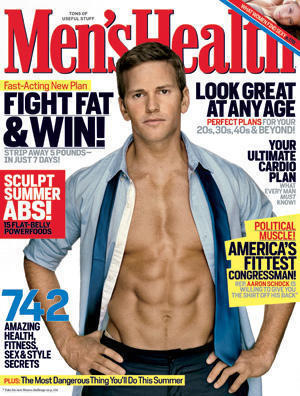 Aaron Schock's sudden yet not-so-sudden fall from grace has provided a lot of fodder for columnists and editorial boards -- and for good reason. There's the
 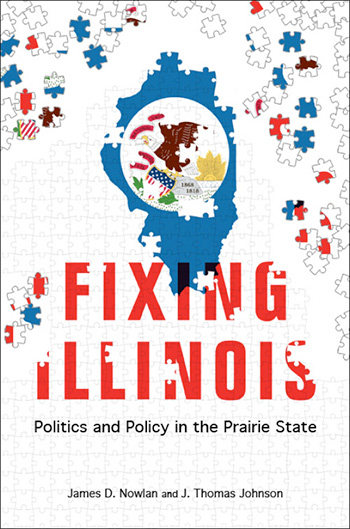 To say Illinois is in a broken state and needs fixing is to state the obvious. The state has a
 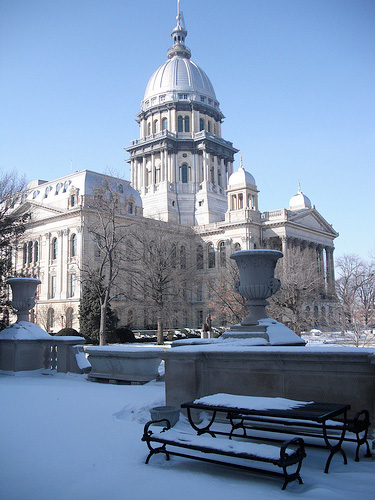 It was Friday night, around 6, at the Washington Blue Line stop. A man -- let's call him Fred -- approached me with a clipboard and asked if I would like to sign a petition to place a proposed amendment to the state constitution on the ballot.
 A coalition of groups throughout the state has announced the creation of the campaign
 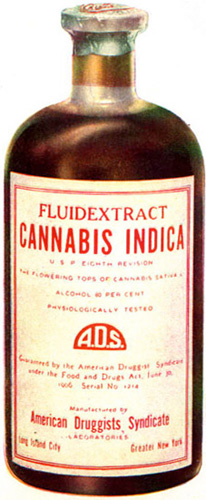 House Bill 1 may not be the top priority for the General Assembly when it comes to passing legislation before the summer recess, but it's on its way to Gov. Pat Quinn's desk and, with it, medicinal marijuana appears to be on its way to legalization in Illinois.
 If you're registered to vote in Chicago, you won't just be selecting candidates. In addition to national, state and local office holders, you will also directly vote on at least four ballot measures: one that could alter the state constitution, one that could lower your monthly electric bill, and two non-binding, advisory votes of debatable significance. Depending on where you are registered in Chicago, you may even get to vote on additional neighborhood-specific questions.
 "Do you want a beer?" Rebecca Reynolds, campaign manger for Will Guzzardi, shouted at me from across the back room of Cole's bar on Milwaukee Avenue. "I usually buy so many beers for people during a campaign, but I haven't this time. I need to catch up!" Last week, 20 days before Election Day, the Guzzardi campaign, an agile, grass roots operation that is fighting for its life against the Berrios family and the Chicago machine, held one of its final fundraisers. Between the craft brews and the Guzzardi supporter wearing magenta velvet, a campaign button and stilts, the mood could best be described as jubilant.