Gapers Block published from April 22, 2003 to Jan. 1, 2016. The site will remain up in archive form. Please visit Third Coast Review, a new site by several GB alumni. ✶ Thank you for your readership and contributions. ✶
Mayor Rahm Emanuel says he didn't watch the video of a Chicago police officer shooting a citizen in cold blood because he then couldn't be asked about it. Which is the perfect Chicago move. In fact, it crystallizes the city's longstanding attitude toward police abuses: if nobody has access to information, nobody can be expected to act.
The body that's supposed to be keeping police accountable, the Independent Police Review Authority, does almost nothing to track patterns of police misconduct and brutality. When reviewing a complaint, it does not make inquiries into any previous complaints against the same officer. Although the agency says it now has an early warning system for repeat offenders, that system identified only six percent of the officers with 11 or more complaints.
Last night I read an article in the Chicago Tribune in which the columnist and editorial board member Kirsten McQueary "metaphorically" wished a Hurricane Katrina would wipe out Chicago. I wish I were making this up, please read this piece. Even while I and many others were tweeting her about how offensive her column is, she sent out the following tweet:
What Hurricane Katrina did was kill nearly 2,000 people and displace and relocate 1 million people throughout the Gulf Coast. In New Orleans the population of the city fell by half due to loss of homes and displacement. Fifty percent of the city's residents' homes were uninhabitable or lost, and multiple generations of New Orleanians were forced to move. Historical and proudly black communities were wiped out.
Now some people like McQueary will likely say, but New Orleans is back! Who is New Orleans back for? For people who look like me (i.e. white people). Not the people who lived in those predominantly black precincts.
Recently Governor Rauner said, "...the Chicago Teachers Union shouldn't have dictatorial powers, in effect and causing the financial duress that Chicago Public Schools are facing right now."
This statement from Rauner comes just a few days after Forrest Claypool, our newest CEO, said that teachers need to have "shared sacrifice" by taking a 7 percent pay cut.
The shared sacrifice Claypool speaks of means that my wife (also a CPS teacher) and I would lose about $11,000 in combined income for this year alone.
I could go on and on about how Claypool is just another puppet of Rahm, in a long line of puppets appointed by the mayor, or how Chicagoans demand an elected school board (remember Chicago is the only district in the entire state without an elected school board). But since Rauner thinks a union run by 40,000 teachers is a dictatorship and Claypool says teachers need to sacrifice, I will share my stories, so that maybe, just maybe, they both (along with Rahm) will realize what it means to really sacrifice.
In the last year we in America have seen a slew of race related crime. The subsequent deaths of Rekia Boyd, Eric Garner, Tamir Rice, Mike Brown, Freddie Gray and others have been the focal point of many conversations. Unfortunately most of those conversations don't end well. I have had many conversations about issues that plague the black community, ranging from police brutality to the common misconceptions that are often spread through bad media representations. From these many conversations I have come to one conclusion. It is nearly impossible to have white friends while living in a white supremacist country.
I am not against the prospect of interracial friendship, but such friendships are hard to maintain when so many of your white friends have diminished your entire culture to rap music, twerking, and the myth that is black on black crime. Navigating race talk is a choreographed chaos of toe stepping and boundary crossing. I often find that white people are more likely to listen to other white people on Fox News about black people than are to listen to me, an actual black person.
A lot of taxes are being proposed — sales taxes, property taxes, income taxes — as the state's budget stalemate grinds on and the city's financial crisis metastasizes.
But the powers that be have taken one tax off the table, and it's one that would target the very wealthy — the only ones benefiting from economic growth in recent decades: a financial transaction tax.
Riot Fest, the increasingly popular punk-themed festival, recently made the decision to move from Humboldt Park to Douglas Park in North Lawndale. The move comes after Ald. Roberto Maldonado vowed to keep Riot Fest from returning, which spurred neighborhood residents to stand their ground and protect the park, which was heavily damaged after the most recent festival.
The conflict is possibly being reduced to just fighting gentrification, but that is not the only problem.
An awakening... to summer festivities and the anticipation of warm weather and fun, picnics, a holiday — that's what Memorial Day is for most. Some will march in parades or stand on the sidelines waving flags and unwittingly support the military model of conflict resolution by violence. There will be words like "heroes" and "bravery" and "God bless America."
The Chicago Memorial Day parade is Saturday, May 23. It's billed as the largest Memorial Day parade in the nation. As an Army infantry veteran of the U.S. war against the people of Vietnam, I attended the parade in 2013 with several members of Veterans For Peace. We were expecting to see a somber memorial parade that recognized the death and destruction caused by war. Instead we saw militarized police and fire departments, military groups and military vehicles. At least 80 percent of the parade was hundreds and hundreds of children, in military uniforms, proudly marching behind military banners. We were overwhelmed with sorrow.
In Elizabeth Kolbert's great and tragic book The Sixth Extinction, Svante Pääbo, a Swedish biologist and one of the founders of paleogenetics, muses on what drove modern humans as opposed to archaic humans like Homo Erectus and the Neanderthals to journey to Madagascar:
It's only fully modern humans who start this thing of venturing out on the ocean where you don't see land. Part of that is technology, of course; you have to have ships to do it. But there is also, I like to think or say, some madness there. How many people must have sailed out and vanished on the Pacific before you found Easter Island. I mean, it's ridiculous. And why do you do that? Is it for the glory? For immortality? For curiosity? And now we go to Mars. We never stop.
Kolbert goes on to explain that Pääbo thinks it should be possible to identify a freak mutation in our DNA that makes this type of strange, even beautiful, human insanity possible. I think he is onto something here. I can think of far too many people I know who would be among the first to go to Mars if they could.
Last week Republican Senator Mark Kirk said that the citizens of Chicago should "re-elect Rahm or Chicago could end up like Detroit." Now the on the surface the comment seems to just imply that for whatever reason Senator Kirk believes that Rahm Emanuel will be more able to help with our city's finances than his challenger Chuy Garcia. It is odd that Senator Kirk believes this, because since Mayor Emanuel took over our city's bond rating has dropped five times. Clearly the mayor is great at raising money for his own re-election campaign, but raising money to help the city... not so much.
So let's go a little deeper into Mark Kirk's comments threatening that if Garcia is elected Chicago will become like Detroit.
Let's just get the following truths about the Chicago School Board out of the way:
It is appointed by the mayor and not elected by the people of Chicago. It is the only school board in the entire state of Illinois that is not elected.
It closed the most schools in the history of the United States.
It allows our neighborhood schools to be criminally underfunded.
Let's be honest, the word white often makes white people uncomfortable. Many of us who are white, when asked to describe ourselves, do not include our race in our personal descriptions. A typical white person's description of their self will likely include their gender, their ethnicity, and their looks. For example, my description would sound something like this, "I am male, of Italian and German descent, 5' 8" and bald." Notice how race is not mentioned.
The reason many white people don't often think in terms of our own race is privilege. It is privilege that makes it so we don't have to think about our race every single minute of every single day.
In 1989 a professor named Peggy McIntosh wrote a paper titled White Privilege: Unpacking the Invisible Knapsack. [PDF] In this document she lists many privileges that white people have been taught to ignore and just accept as normal without even thinking twice about them.
Bruce Rauner has been running on a promise of shaking up Springfield, which is not shocking from any political candidate. Candidates often run on the promise of making progress or taking back the seat they are running for.
Rauner seems to be using particularly strong rhetoric about how he will change Illinois. His slogan is "Shake up Springfield. Bring back Illinois." He once put together a campaign ad where he picks up a sledgehammer after picking up a tiny hammer, which feels more like performance art than a serious campaign ad from someone who wants to be the next Governor of Illinois.
For the past several months, Chicago has been electrified by the prospect of a clash between two of the strongest personalities in city politics: the brash, business-first mayor Rahm Emanuel, and the outspoken, social justice-oriented union president Karen Lewis. For spectators in the media, and in the city's neighborhoods, the clash between these two contenders, both bold in presentation and opposing in ideology, promised to be the electoral matchup of a generation.
But Monday's announcement by Lewis's team showed that this contest is not to be. Lewis, who has flirted with a formal announcement and has been recently beset by serious health concerns, declared what many of late had feared: that the fiery labor leader won't be throwing her red CTU cap into the race.
Earlier this month, fast food workers in the Fight for $15 walked off their jobs in 150 cities throughout the country. Here in Chicago, workers at McDonald's, Taco Bell and more left work and engaged in civil disobedience in front of the McDonald's at 87th and State Street. Nineteen protestors were arrested, and they were joined by figures such as State Representative Luis Gutierrez and U.S. Representative Jan Schakowsky.
Fight for $15 is a national movement of workers in the service sector, mostly in the fast food industry. Their main demands are a $15 minimum wage and the right to form a union.
"It's just such a relief that people of quality are coming to the neighborhood," a woman sighed to me at my coffee shop. "I never thought I'd see a BMW parking on Howard. My property value must be going up!"
This woman, who I will call Kim, is a neighbor of mine. One of the few actual property owners in my neighborhood, Rogers Park/South Evanston, she owns a condo on the lake at Juneway Terrace, a posh residential development on a block that used to be sneeringly referred to as "The Jungle" by people farther up the North Shore. She is speaking, of course, about two new restaurants on the Evanston side of Howard, Ward 8 and Peckish Pig. Both of these restaurants are a couple blocks from my house. They both advertise "New American" menus with farm-to-table ingredients, cocktails that are barely 6 oz, craft beers, etc. Since they have opened, many people immediately ask me what I think about these restaurants and "how nice it is to finally have some place to go around there." Many of the comments people make about Howard street these days sound a lot like Kim's; it's hard to put a finger on why it makes your stomach wrench. Is it offensive? Kinda racist? Classist? Am I supposed to be agreeing that this is a good thing? Should I print t-shirts that say Saving Howard, One $18 Cheese Plate at a Time?
Initially I didn't know how to respond to her comment. My face flushed and I pressed my lips together and all I could think to say was, "Well, I live around here. And I grew up here, so..."
I hadn't given my philosophy towards women much thought recently; my immediate aim was to finish my graduate classes, grab my Master's, and find a job. My wife and I were also busy filling out reams of paperwork in the hopes that we may be able to adopt a baby soon. We're buried in questions about both: should we stay in the city, or move to the suburbs? When I get a job, should we buy a car? What about good day care on the North Side? Under these circumstances, I hadn't given my feminist beliefs much thought.
Then came the terrible shooting in California and the response of the #YesAllWomen hashtag. My wife, frustrated with the male side of humanity like so many other women, posted her own tweets, and we discussed them. She expressed her fears, her frustrations, and who need, like so many other women, for men to simply shut up and listen. I did so, I read other tweets, and in the process I mentally traced my own feminist beliefs. What I ended up with were some unpleasant realizations about myself, particularly about my undergraduate years two decades ago. Yes, I was a feminist then, but I was also an incredible asshole, and my attitudes towards women were just as corrosive as my more misogynistic peers.
In Chicago, we have not seen riots since the assassination of Martin Luther King, Jr. in 1968. During those riots, one event -- Dr. King's death -- sent black Chicagoans over the edge. Yet it was not this tragedy in isolation that caused black Chicagoans to take to the streets and commit violent and destructive acts. Rather, it was the history and continued reality of violence and oppression they had faced here ever since the first black Americans began to move en masse to Chicago during the Great Migration.
On Sunday night Ferguson, Missouri (a St. Louis suburb) saw riots and looting. Like the MLK riots in Chicago, the rioting was set into motion by another devastating death -- the police killing of Michael Brown just days before he was supposed to begin college. And just like in Chicago, it was not this one event alone that caused the protests. Rather Brown's death was a tipping point. It was too much for people who have been systematically oppressed and dehumanized to take sitting down.
Over this Fourth of July weekend in Chicago, 84 people were shot and 16 killed. Over 1,000 people have been shot in the city since the beginning of the year, and almost all of them were black and Latino men under the age of 35. Shedding light on these numbers is important, but numbers on their own are not enough. A shallow focus on statistics and short-term solutions consistently dominates media coverage of violence in Chicago. This insubstantial, fleeting reportage ignores the deeper societal inequalities that continue to spur violence in the city's most marginalized black neighborhoods.
The Chicago neighborhoods that have the highest violent crime rates are the same that have the greatest concentrations of poverty, incarceration, unemployment and failing schools. And while violent crime has fallen in Chicago (as in all major American cities) since the 1990s, Harvard sociologist Robert Sampson found that the same neighborhoods have remained the most violent.
Chicago Mayor Rahm Emanuel's plunging popularity was reflected in a recent Sun-Times poll, in which just 29 percent of respondents reported that they would support Emanuel if the election were held today. The results confirmed what was already obvious to most Chicagoans--a vast majority of the city dislikes our mayor.
What still remains to be seen is whether a candidate will emerge who has the ability to successfully rally that energy and unseat him.
War — conflict resolution by violence. Memorial day — a day to remember those killed in wars. More than remembering, Memorial Day is reality for me. That reality began in 2003 and was amplified in 2013.
In 2003 my military experience burst into my consciousness after 32 years. Late one night I turned on the TV. The movie "Platoon" was playing. I had never watched any violent shows nor read anything about war or Viet Nam since I left there and my role as an Army infantryman in March of 1971. The scene was a U.S. patrol entering a village. I saw the dark skinned children with their big dark eyes, skinny bodies and ragged clothes — and it all came back like a lightening bolt. The sights, the sounds, the smells. Stunned, I turned off the TV and sat in a darkened room.
Chicago Public Schools just announced that it will build a new high school and name it after our current president, Barack Obama.
This announcement of the building of a new high school is about a year after the announcement by the unelected, mayorally appointed CPS Board of Education to close the most schools in the history of the United States amidst massive community protests.
This announcement also comes about one month after this same board of education agreed to give themselves $5 million to buy brand new furniture for their new offices.
Just last month, Chicago Mayor Rahm Emanuel bragged in a statement that, "By delivering on free Sunday parking in the neighborhoods...we're able to make a bad deal better." Apparently, making a "bad deal better," and keeping his word to his constituents, does not mean much to Emanuel. This was showcased in his recent announcement that he supports the reinstatement of paid Sunday parking in neighborhoods throughout the city.
Sunday parking fees were previously eliminated outside downtown as part of Emanuel's renegotiation of Chicago's contract with Chicago Parking Meters, LLC (CPM).
The Illinois gubernatorial race is now officially between incumbent Pat Quinn and Republican Bruce Rauner. Rauner's political strategy seems to be a focus on the economy and budget, with the hope that social issues will not come to the forefront. Yet the electorate deserves to know where both candidates stand on all issues that impact their everyday lives, and this undoubtedly includes social issues. Additionally, our state's economy and budget do not operate in a vacuum--financial and social are inherently tied in politics. A look at the little he has said reveals that Rauner's election would have disastrous impacts for the 99 percent in Illinois.
Democratic governors in Illinois admittedly do not have the best record when it comes to the law. With the economy still struggling, it is not surprising that voters may be susceptible to bids for a change in Springfield. This means that Rauner has a dangerously realistic shot at beating Governor Quinn in the elections this November. Some influential Democrats have even come out in support of Rauner. This is shameful. For those of us who value the progressive laws Quinn has passed, along with those such as raising the minimum wage that will inevitably come up in the near future, it is vital that Quinn is reelected.
For some who have worked for the city their entire lives, the news that the city's credit rating has been lowered yet again hits close to home. They know that in the discourse around balancing the budget, slashing pensions inevitably takes front and center. Yet neither politicians nor the dominant media seem to call into question whether it is the retirements of hardworking people that should be one of the first budget items to get sacrificed when we fall on hard times.
Moody's Investor Service downgraded Chicago's bond credit rating last week to Baa1, giving Chicago the second lowest credit rating of any major city in the country. Detroit has the lowest. This single level downgrade was made all the harsher because it followed an unexpected triple bond level downgrade in 2013. Now, Chicago's bond rating is classified as just three levels above a junk bond.
We teachers teach, because we love the kids we work with. Yes, we may complain about the kids at times, but they are the reason we stay late, bring work home and get up early. Thousands of teachers in Chicago put up with bad administrators or broken copy machines, because we love the students that we work with so much that we try to block out all the things that "leadership" of Chicago Public Schools does wrong.
It doesn't matter where in the city you teach or the "types" of kids that you work with, teachers come to school to enrich the lives of our city's children.
It is with this love at the absolute forefront, that what the teachers at Saucedo, Drummond, and many other schools are doing truly proves the love teachers have for their students.
The teachers that are refusing to give the ISAT have been threatened to have their Illinois Teaching Licenses revoked. There is no worse threat than that. The threat of taking away the thing we have dedicated our lives to....the ability to teach our students.
Imagine that you were born in the Chicago area. You were raised here, went to school here, and you see Chicago as your home. This is true for me, and I am guessing many readers. Then imagine that, through no fault of your own, one or both of your parents is undocumented. You are forced to live with a constant fear that one of your parents could be taken away from you at any time and your family could be wrenched apart. Then one day, your mother or father is gone with no warning--deported to a place you may have never even visited.
This might also be true for some readers; and it is precisely this everyday reality that is revealed as all too common through a report recently released by the Illinois Coalition for Immigrant and Refugee Rights. [Editor's note: The author of this piece is currently interning with the ICIRR.] The report, Illinois' Undocumented Immigrant Population: A Summary of Recent Research by Rob Paral and Associates, reveals the extent to which undocumented immigrants in Illinois are deeply integrated into families and communities, and thus the extent of our population that immigration reform would truly impact.
The believed reason as to why Jane Byrne won the 1979 mayoral primary is almost the stuff of Chicago legend. Not too long before the primary, a large blizzard occurred in Chicago and the city did a terrible job of responding to the blizzard, largely in the form of not plowing the streets. The next month, Byrne won the primary with 51 percent of the vote, defeating then-Mayor Michael Bilandic and then won the mayoral election in April 1979 with 82 percent of the vote, becoming the city's first and only female mayor.
Why Byrne won is actually rooted in reasons much deeper than Bilandic's administration doing a horrible job responding to the blizzard. Bilandic was the first post-Richard J. Daley mayor and as a result, the Chicago government was in shambles.
I'm one of those people who always thinks, "Maybe I should trek out to Working Bikes and buy a bike because I'd love to commute along Lake Michigan," but never actually goes and buys a bike. It's partially due to the worry of someone stealing my bicycle even if I used four different u-locks, as well as deciding to buy more books with the money I could use to buy a bike.
I love bicyclists in Chicago.
These are people who have found another way to commute, one that is possibly better than how we often think of commuting in Chicago. The CTA--which I will say more about later--is not always the most reliable to commute and no one wants to be stuck in a car in traffic. Bicyclists are the people who can easily speed past the throngs of people crushed together on the bus, who never have to hear an announcement regarding a delay for the CTA.
Cook County Jail has drawn attention to itself lately for collecting large amounts of Chicago's mentally ill, so much so that it has become the largest mental health facility in Illinois.
The story is particularly inflammatory given Gov. Pat Quinn's corresponding funding cuts to Illinois mental health facilities, and the closing of six Chicago mental health clinics last year.
Cook County Sheriff Tom Dart has been vocal in condemning the incarceration of Chicago's mentally ill, who he says are regularly falling through the cracks of an at-capacity (and underfunded) prison system despite his best efforts to provide therapy and medication to those in need.
"This is a population that people don't care about and so as a result of that there are not the resources out there to care for them," Dart said in an interview on CBS 60 Minutes Sunday night.
In saying this, Dart touches on an even larger issue with the U.S. criminal justice system -- it has become a place for unwanted members of society to collect. Of course, those suffering from mental illnesses are but one group who, as we regretfully phrase it, "fall through the cracks." One could easily add to this list the poor, those with drug or alcohol addictions and a heartily disproportionate number of African-Americans and Hispanics.
Demolition crews arrived at Whittier Elementary on Friday night to demolish the field house, also known as La Casita. The Chicago Public Schools made the decision to demolish the field house based on safety concerns. The CPS was so concerned about the safety of school children they skipped applying for a demolition permit and obtained an administrative order from the Department of Buildings, allowing for an emergency demolition.
Meanwhile, two shootings have occurred in the past month along "Safe Passage" routes. The most recent one occurred on Aug. 19 at Sheridan and Wilson, injuring five people. If these are supposed to ensure the safety of CPS students as they walk to welcoming schools on Aug. 26, how can people be confident students will be safe if shootings occur along the routes?
Over the past six years I have seen the public high school I work at on the South Side, TEAM Englewood, lose funding little by little, that is until this year. Our school was part of Arne Duncan's Renaissance 2010 plan which was based on the faulty premise that one could simply make education better by closing schools, firing everyone that worked in the building and opening a new school. Being new to Chicago and not knowing anything about this plan, school closings and turnarounds I decided to work at TEAM Englewood (which replaced Englewood Tech Prep). I chose to work in the Englewood community, not because I didn't have job options of where to work, but because I wanted to work in the Englewood neighborhood.
Our school's motto is simply "Opportunity." We want to give our students in Englewood the same opportunities that students all across the city get. I am one of the original teachers who started at this school when it first opened.
During the past six years I have seen our school do amazing things. Maybe the most impressive is that we average about a 93% graduation rate for our senior classes. However, the opportunities that we are able to give our kids are slowly dwindling and being taken away by CPS and this city in the name of "mandatory" budget cuts.
Former State Rep. Deb Mell became Ald. Deb Mell on July 24, filling the city council seat made vacant by the retirement of her father, Ald. Dick Mell. Chicago has a history of nepotism, but since the big piece of news around the world is the birth of Prince George Alexander Louis, the son of the Duke and Duchess of Cambridge, people seem to be jumping on the idea that Chicago is in fact a monarchy.
As we've learned over the past week and as we're reminded every day, injustice is not only alive and well but thriving here in the United States. Just as with people from other minority groups, people with disabilities face discrimination every day, even in a "progressive" city like Chicago. Discrimination in terms of housing, employment and medical care. Discrimination in terms of marriage equality and the right to bear and raise children. Discrimination in terms of the right to control or even have a say in matters regarding their own bodies.
In 2013, people with disabilities are openly mocked and made fun of in front of their friends, their partners, their families, in front of strangers. In 2013, many still find it acceptable to use the word "retarded" to describe something — or someone — they view as stupid. As ugly. As inferior. As not equal. Terms like "midget," "crip" and "vegetable" are still thrown about, with the users often not even beginning to fathom that what they're saying is offensive. That it's hurtful. That it's cruel.
The first time someone invited me to the Disability Pride Parade, my first reaction was "Well, I don't have a disability, so why would I go?" Though I do feel a sense of embarrassment over this now, I think it's common to feel that issues related to disability don't really apply to the non-disabled community. I've always felt an opposition to any sort of discrimination, but I felt that as someone who defines as "abled," this was not really my battle to fight.
It's a challenging time to be a Chicago educator. In the days ahead, those of us in Chicago Public Schools and classrooms will grapple with the implications of school closings, layoffs and the reality of a system that continues to fail too many students across our city. As I reflect on my last ten years as a Chicago Public Schools teacher and all the up-hill ahead, the need to come together to deliver on the promise of equal educational opportunity for the children of Chicago has never been more pressing.
On Wednesday, I, a Chicago Public Schools history teacher, a father and husband, was arrested for sitting down on La Salle Street in front of City Hall and refusing to move when asked to do so by the police. I along with nearly 150 others was taking part in an act of civil disobedience against the school closing policies implemented by Mayor Emanuel, CPS CEO Barbara Byrd-Bennett and the Board of Education.
You see, those of us who chose to get arrested and the other couple thousand marching legally against the CPS plan to close over 54 public schools are beyond frustrated that we live in a city that is governed by lies and press releases.
Once again the Chicago City Council proved it's not ready for reform. Recently, the council voted unanimously to pass the second set of reforms proposed by Mayor Rahm Emanuel's Ethics Task Force, except as the reforms would apply to them.
Under the new ordinance, Mayor Emanuel's newly appointed Ethics Board is granted more power to approve investigations and punishments for ethics violations. But instead of being accountable like all other city employees, aldermen created their own legislative inspector general. They did this instead of allowing the effective city inspector general, Joe Ferguson, to investigate them or their staffs.
The council's special legislative inspector general can only investigate on sworn complaints approved by the Ethics Board, not on his own initiative or from anonymous complaints. It does not matter what evidence is provided in support of the complaints. And making false claims against aldermen will bring a $2,000 fine to anyone who dares to challenge them without sufficient evidence.
Their legislative inspector general is given no staff or enforcement powers. With such a limited budget and authority, in his first year in office he has brought no cases to the Ethics Board or to state and federal prosecutors.
First, let's look at the parking receipts themselves -- stickers mounted on plastic-coated paper. The stickers are meant to accommodate the small number of motorcyclists who must affix the receipt to their headlamp. According to the EPA, most stickers cannot be recycled due to the "pressure sensitive adhesive" backing. (One exception being Post-It Notes, which have a lighter coating of adhesive that can be removed in the recycling process.) Similarly, coated paper may or may not be recyclable depending on the coating used. LAZ Parking would not discuss details, citing company policy against sharing "proprietary information."
When I was in high school, in a white middle class area, three consecutive junior classes lost someone in a car crash. During my sophomore year conversations would sometimes turn to, "Who do you think will die when we are juniors?" Morbid? No doubt, but these accidental deaths caused students to worry about their own mortality.
Fifteen years later, as a high school teacher in Englewood, I see the same worry in my students -- but it's not about car accidents. Growing up black, on the South Side, my students are guaranteed to experience a tragic event to someone that they know and care about. Let me repeat this, my students are guaranteed to experience a tragedy. Many of them have already experienced the loss of multiple tragic and violent deaths of their classmates and loved ones.
This strike is not a public relations campaign. While I appreciate the attention the issue of inequity in education received this week, I did not leave my classroom in the middle of our first quarter to shed light on this issue. I did so because CPS has refused to negotiate on the issues that matter most in this contract. I stand on the picket line each morning and march each afternoon to put pressure on the mayor and the Board of Education to negotiate on issues they have ignored for the past nine months at the bargaining table.
The use of the word apartheid conjures up blatant injustice and horrible conditions. As a history teacher I was selected to travel to South Africa a few years ago to study Apartheid and how its effects still impact much of South Africa. I traveled to schools in wealthy suburbs both public and private and to public schools in incredibly poor townships. I was able to see the outrageous differences between the haves and the have nots. In the United States we do not have people living in shacks in huge numbers as all too many do in the townships of South Africa. However, we do have huge differences between fully funded schools and school districts and the schools and school districts that are not fully funded.
You have undoubtedly heard the news reports, radio attack ads, CPS representatives, the "CEO" of Chicago Public Schools, and the Mayor saying how teachers are walking out on the students if we strike. Parents, students, residents of this city, as a teacher let me tell you, comments like that rip teachers to our core. As cliché as it sounds teaching is a calling. It's not as if one day we just said, "I guess I'll just be a teacher." It takes skill and dedication to stand in front of 30 (sometimes more) young people in a classroom and truly care and be able to teach every one of them. It is not possible to just be mediocre when it comes to teaching students. A young person is the first to let you know if you aren't doing a good job at teaching the lesson, not getting graded work passed back quickly enough, heck, they will even let you know if you look bad that day.
Teachers just can't punch in, start thinking about kids then punch out and stop. Teachers are always trying to improve our lesson plans, grade, figure out ways to reach the students who are withdrawn, quiet, confrontational or disrupting class. We just can't shut our students out of our lives when the bell rings.
A tactic employed by TV attorneys, maybe even real ones, entails burying their opposition in paperwork when they want to conceal the important facts. I think a lot of us can understand how effective such a tactic would be, with the proliferation of constant news feeds and information of all varieties available at all times, it's hard to consume information responsibly. This is especially true when the loudest voices — mainstream media — are sucking up all the bandwidth with easily digested and polarizing drivel.
On the last day of 2011 President Obama, whom I voted for and may again, signed into law the National Defense Authorization Act (NDAA) [PDF]. Who isn't for national defense?... that's being authorized for sure. The problem lies with section 1021 of this law described by the ACLU:
"The NDAA's dangerous detention provisions would authorize the president — and all future presidents — to order the military to pick up and indefinitely imprison people captured anywhere in the world, far from any battlefield."
The wording of this law is so vague as to who may be detained and why, such that prolific author Noam Chomsky, former NYT foreign correspondent and Pulitzer recipient Chris Hedges and several other professors and journalists filed a lawsuit against the US government back in January 2012. The suit sought to clarify that by doing their jobs they wouldn't be considered to be "associates of terrorists" or "substantially supporting" terror, as the NDAA allows for indefinite incarceration without trial in these cases. An article dissenting against the government might be interpreted as substantially supportive based on sources or the stories themselves simply because the terms "supporting" and "associated" are never defined. The attorneys representing the government could make no such assurances. In fact they argued that section 1021 is of no consequence because prior law had already stripped the protections the journalists were seeking to assure.
In May, Federal District Judge Katherine Forrest of the Eastern District of the US Circuit Court stood up and ruled section 1021 unconstitutional, reasoning:
"Section 1021 lacks what are standard definitional aspects of similar legislation that define scope with specificity. It also lacks the critical component of requiring that one found to be in violation of its provisions must have acted with some amount of scienter — i.e., that an alleged violator's conduct must have been, in some fashion, "knowing." Section 1021 tries to do too much with too little — it lacks the minimal requirements of definition and scienter that could easily have been added, or could be added, to allow it to pass Constitutional muster."
This ruling effectively prevents the law from being enforced as it is currently written, although two weeks ago, without any noticeable media attention, the US government began an appeal hearing to overturn Judge Forrest's decision.
Why is no major media covering what is possibly the single greatest removal of a citizen's right to free speech? Why is no major media reporting on a citizen's freedom to present their own dissenting viewpoint? Whatever the reason may be, it leaves independent media and people like me and you to shout loudly.
~*~
Jason Neill is the co-founder of a small software company involved in futures industry in Chicago, who has two dogs and one lovely woman in his life.
On July 23, 10 aldermen tried to help some educational reform groups. They wanted to get a non-binding referendum on the upcoming November 6 ballot in which voters would be asked whether Chicago should switch to an elected school board.
Ald. Joe Moore (49th), chairman of the City Council's Committee on Human Relations, ruled that this legislation was submitted three minutes too late to allow the vote.
Since then the two organizations, Raise Your Hand and Communities Organized for Democracy in Education, have submitted petitions separately to the Board of Elections to put the question on the ballot in some wards.
Leaving aside the battle to get the referendum on the ballot in the first place, the greater issue is whether having an elected school board is a good idea.
As it turns out Romney made a killing from his time as CEO of Bain, but he was far from a job creator. Through his work thousands of people lost their jobs. The corporation uses a "Corporate Reform" model that looks a lot like the current model being used by billionaire-backed Astroturf groups claiming it will fix schools. Bain's a private equity firm that specialized in "leveraged buyouts." According to Slate.com:
Leveraged buyouts, which are what private equity firms do, load companies with debt, extract value for middlemen, and displace workers.
The company profits off of lowering the standard of living for workers It cuts middle-class jobs and funnels wealth upwards, much like the way education is being done in Chicago.
Today Wheaton College became the first Evangelical organization to join Catholics in filing suit over the HHS contraception mandate. At particular issue is the mandate's requirement that institutions provide their employees with access to contraceptive drugs, such as the "morning after" or "week after" pill. While these drugs do not terminate pregnancies once the egg is implanted, Catholics and some Evangelicals argue that preventing implantation is tantamount to abortion, making these pills abortifacients. While Catholics and Evangelical positions do not completely match on all aspects of contraception (views vary widely throughout Protestant denominations), they do agree on one thing — they want to right to have a position at all.
Those of us who live in city neighborhoods know that Chicago is politically corrupt. There are figures in our neighborhood's history like former Ald. Fred Roti of the old 1st Ward who fixed a murder case and did the mob's bidding at city hall before going to prison. In Ravenswood on the North Side, there is the famous residence of former governor, now inmate, Rod Blagojevich whose spectacular court case has just concluded. Nearly every Chicago neighborhood has its famous rogues -- some with colorful nicknames like Bathhouse John Coughlin and Hinky Dink Kenna.
The usual story has been that big bad Chicago is corrupt but the suburbs are examples of clean, honest, effective government whose citizens are not troubled with the graft and corruption that plague the evil city. Next week, with University of Illinois at Chicago colleagues and students, I am releasing an Anti-Corruption Report that proves that popular image false. In February, we released a report showing that Chicago is the most corrupt metropolitan area in the country and Illinois is one of the most corrupt states. This time we zero in on the suburban ring around the Chicago.
We found that since the 1970s there are more than 60 suburban villages, towns, and counties around the city with more than 100 convicted corruption felons in the last two decades alone.
Distinctive patterns of corruption in the suburbs include officials with ties to organized crime, nepotism and patronage; police officers aiding criminals; kickbacks and bribes to public officials; large economic developments profiting officials along with their families and friends; and outright theft of public funds. Corruption in all its various forms impacts many local governments throughout the metropolitan region.
For example, corruption in Cicero goes back to the days of Al Capone and famously includes Frank and Betty Loren-Maltese (Cicero's mayor just released from prison). In Rosemont the Stephens family seems to control nearly all government contracts and Rosemont was not allowed to have a casino because of mob ties.
Throughout the region there have been nearly two dozen mayors along with several dozen police chiefs and other policemen convicted of various corruption schemes. Racketeering, extortion, the sale of police badges, protection of drug dealers, and protection rackets are more common in the suburbs than most people realize.
Many contracts and businesses in the suburbs have bribery and corruption as part of business expense. And large economic development projects like Toyota Park, the home of the Chicago Fire soccer team in Bridgeview, have provided lucrative contracts to political family members and more than $170,000 in campaign contributions from vendors and contractors to Bridgeview's Mayor and State Senator Stephen Landek's various campaign funds.
Altogether there are 1,200 separate taxing bodies in the Chicago Metropolitan Region with 540 in Cook County alone. And many of these smaller units of government have had large amounts of money stolen from them outright, including $500,000 from the Dixmoor Park District which oversees only one tot lot. The new champion of corruption from further downstate is the comptroller of Dixon, who is currently charged with stealing $53 million. Ironically, Dixon is the home of the fiscally conservative President Ronald Reagan.
In our anti-corruption report, which will be available online after June 25th here, we detail the crimes in the more than 60 suburbs and recommend ways this public corruption can be cured. We also point out that corruption is costing us taxpayers in Illinois at least $500 million a year.
One starting point in fixing all this is to recognize that corruption is not just a Chicago problem. The culture of corruption is an Illinois problem. While some individual suburbs may be exempt from this epidemic, many suburbs are not. Those of us in the neighborhoods have to hold our aldermen, city government, and other local officials accountable and enact reforms like those proposed by Mayor Emanuel's Ethics Reform Task Force. But our friends in the suburbs need to recognize their problems and demand reforms by both local and state governments if corruption is to be cured.
I met with a man who works with the Mexican community to raise money to build hospitals and schools. His job sounds charitable, but it can be tense and dangerous when he works with Mexican towns that are occupied by drug cartels. He would not talk to me about the violence he's encountered.
He was apologetic. He explained that the drug cartels had already approached him and given him two choices: If he does not speak about the drug cartels, they promised they would leave him alone to do his work. If he does speak about them, they promised they would come and "get him." He has stayed silent since.
He has stayed silent, even though he doesn't live in a Mexican city controlled by drug cartels. He actually lives in Chicago. My conversation with him took place in a restaurant in Pilsen.
According to an article posted Tuesday by Crain's, Chicago was ranked 215th out of 306 health care markets by a report from the Commonwealth Fund. According to the article, it was ranked so low due to "high costs, high rates of uninsured, very high rates of potentially preventable hospital admissions and low rates of preventative care such as screening for breast and colon cancer."
For context, Boston, Philadelphia, Manhattan, Atlanta, Detroit and the Bronx ranked higher at 41, 101, 127, 166, 189 and 206 respectively. Among the cities that ranked lower were Los Angeles, Miami, Dallas and Memphis.
City Clerk Susana Mendoza withdrew 15-year-old Herbie Pulgar's entry into the annual contest to design Chicago's city sticker yesterday after fears that the sticker design contained gang affiliated symbols and threats to the Chicago Police Department. This action and the controversy surrounding Pulgar's design leaves me with some questions and thoughts:
First, Jody Weis is still in Chicago? After a not so glamorous stint as head of the CPD, it seemed like Jody Weis had finally been run out of town. Apparently not. Perhaps Weis put himself forward as head interpreter of the city sticker as a way of letting us know he's still in Chicago where he's been working hard to put together a coloring book about Chicagoland gangs for the Chicago Crime Commission.
This week, Mayor Rahm Emanuel announced that he will be immediately implementing some of the reforms proposed by his Tax Increment Financing (TIF) Reform Panel five months ago. All of the proposed reforms are necessary to fix TIF and need to become law before more of our tax dollars are wasted.
Every year, $500 million worth of property tax revenue collected from Chicago taxpayers flows into a funding pool that, up until very recently, has been completely off the books--allowing for an out-of-control spending spree to well-connected developers and other special interests.
As many cities face both costly aging infrastructure and looming budget deficits, public administrators are turning to fee increases to finance system fixes. Most recently, Chicago Mayor Rahm Emanuel's proposed 2012 budget outlines an up-to-25% increase in the annual fee for water and sewer services. The Congress for the New Urbanism supports Chicago's water modernization efforts, but the Mayor's proposed fee lacks a direct connection to urbanism and green infrastructure.
A rate increase that only patches sewer pipes will flush taxpayers' money down the drain. If this water rate increase only helps the City rebuild - instead of renew - water infrastructure, the same stormwater problems will plague the City's streets. Innovative and context-sensitive rainwater systems are not only sustainable and environmentally friendly, but also cost-effective. Green water infrastructure, the type(s) as proposed in CNU's Rainwater-in-Context initiative, helps reduce stormwater runoff and its stress on the sewer system. Permeable pavement, alternative street design, and other context-sensitive rainwater systems protect urban watersheds like Chicago's - undoubtedly one of the city's greatest assets.
The current state of disrepair of Chicago's water infrastructure should be viewed not as a liability that can only be remedied through higher rates for fixes, but rather as an opportunity to create longer-lasting, more sustainable systems that securely plant Chicago at the forefront of green design. As the Mayor is wont to say, "You never want a serious crisis to go to waste." Dense urban areas like Chicago have inherent environmental strengths (especially when compared to conventional sprawl patterns), and incorporating urban-minded water infrastructure can only enhance this standing. In committing to both green infrastructure and new urbanism, Mayor Emanuel has the opportunity to realize sustainable practices that reinforce the urban environment and protect the City's and taxpayers' assets for the long term.
Chicago helped pioneer interdisciplinary water and street planning, such as its Green Alley program. Dedicating water rate increases to broadly implementing urbanist green infrastructure keeps Chicago a leader in sustainable water policy. Mayor Emanuel's budget proposal to address inefficient water pricing is only part of a more comprehensive solution to better managing Chicago's watershed. Green - and urbanist - water infrastructure will shower rewards on both local government's coffers and taxpayers' pockets.
John Norquist is the CEO & President of the Congress for the New Urbanism, served as Mayor of Milwaukee from 1988-2004, and is the author of the book The Wealth of Cities
Caitlin Ghoshal is the Program Manager for the Congress for the New Urbanism, and served as a Mayoral Fellow in the Office of Mayor Rahm Emanuel during the Mayor's first 100 days of office.
Part of the challenge in assessing the Occupy protests is that it requires one to separate the optics of the moment and the media narrative that follows, from the substance of the positions being put forward by the group.
The people involved that I have spoken to have varying degrees of economic comprehension, but there are some points that have merit. For each "End the Fed" sign that hints at a certain level of sophistication and understanding the role of central bankers in our economic malaise, there is a "Tax the Rich" slogan that cheapens the debate to the point of indifference.
I'm skeptical about the Occupy protests. They have a staged feel to it; long on theatrics, short on a primary focus. If this was ever a grass roots movement, it is no longer. As I write this, there are now fundraising efforts on the back of the protest. The unfortunate involvement of unions, socialists, communists and anarchists will likely end any meaningful contribution by the more rational part of the protest. If there was a time for this movement to advance ideas that would be met with agreement by the majority of Americans, it has passed, and has now devolved into an expression of left-wing politics that could have been transplanted from any recent year.
As a result of the incoherence, the best way to describe this nascent scene is by the cognitive dissonance found in its message.
This Op-Ed was submitted by Celeste Meiffren, Field Director of Illinois PIRG
No one will argue with the fact that Chicago's budget situation is dire--and has been for some time now. But Mayor Daley masked the drastic fiscal situation in Chicago with year after year of short-term budget gimmicks. The hope now is that, as he puts forth his first budget proposal next week, Mayor Emanuel will learn from his predecessor's mistakes, and avoid a lot of the budget shenanigans that Mayor Daley was known for.
On Tuesday, the Cook County Board of Commissioners will vote on the upcoming budget for the Cook County Health and Hospitals System (CCHHS). Tensions have arisen In the weeks since the CCHHS Board of Directors released their budget and the Cook County Board President Toni Preckwinkle informed the CCHHS Board of Directors that they could not request the required county subsidy because of what is set in the planned County Budget.
As explained in a previous Gapers Block piece examining the Fantus Health Center, the CCHHS receives a county subsidy that helps with their funding. The rest of their funding comes from insurance, Medicaid, Medicare, and patients paying for their treatment.
The current budget that will go before the board would ask for a $283 million subsidy; Preckwinkle has said that the maximum subsidy the CCHHS can receive is $248 million.
Like some ne'er-do-well nephews whose rich aunt just died, the bosses at CPS headquarters are suddenly flush with cash. And from the looks of things, that newfound dough is rapidly burning holes in the pockets of the folks who occupy the corner offices down on Clark Street.
Talk about a sudden reversal of fortune. On June 15, Mayor Emanuel's hand-picked Board of Education voted (unanimously, of course) against paying CPS teachers the 4% contractual raises they were scheduled to receive this year. At that time, the board claimed it did not have "a reasonable expectation" of finding the money -- roughly $80 million -- to cover those raises.
What a difference a couple of months make. On Tuesday, CPS CEO J.C. Brizard became a one-man stimulus package, offering to pay each of the city's 482 elementary schools $150,000, if the teachers at those schools quickly agree to extend the length of the school day by 90 minutes. If all the schools sign on, Brizard's so-called "incentive" payments will add up to about $72 million.
But just in case $72 million isn't enough to seal the deal, Brizard is also offering each of the roughly 13,600 teachers at those elementary schools a lump-sum payment of $1250 -- you know, just to show he cares. That's another $17 million in newly discovered greenbacks.
I did not know where I wanted to go with the story on the Congress Hotel strike when I first started doing some research. I knew it had been eight years, strikers are typically still on the picket line and little of the negotiations are known. I wanted to treat it more as a piece of objective journalism instead of throwing my opinion around as I tend to do. So if you could follow me below I will divert and offer it here.
Sheriff Arpaio of Maricopa County, Arizona, has been invited to the Kendall County Republican Party's annual picnic this Saturday in Yorkville as the event's keynote speaker. Arpaio has made a name for himself around the country and the world for his consistent willingness to degrade the prisoners under his watch--especially immigrants.
Rather than respect the image of God present in all people regardless of their country of origin, the sheriff has singled out immigrants as a population that is less than human, thus undeserving of basic human dignity.
By inviting Arpaio to their picnic, the Kendall County Republican Party is endorsing the dehumanization and degradation with which Sheriff Joe's name has become synonymous.
My nine-year-old daughter was excited to get up in the morning and go to school last year, thanks in large part to the energy and efforts of her third-grade CPS teacher.
CPS CEO Jean-Claude Brizard has now decided to harness even more of that teacher's seemingly boundless energy. In fact, earlier this week he asked her to spend some extra time in the classroom during the 2011-12 school year.
Brizard was even willing to put a price tag on that love.
He said he'd break out his checkbook and sweeten this particular teacher's $52,400 salary with a 2% kicker. And all she needs to do is spend an extra 90 minutes in the classroom on each of the school's 170 instructional days.
You read that right. Just for her putting in a paltry 255 additional hours (a little over 6 extra weeks for those of you who remember the old 40-hour work week), Brizard will show his love to the tune of $1048. That, my friends, represents a pre-tax hourly wage of nearly $4.11. Not too shabby in the age of 9% unemployment.
Sure, it's a bit below the $4.25/hour minimum wage that a lot of fast food workers enjoyed back in 1991, but how many Burger King managers actually celebrated and loved their employees back then? (Before you answer, let's remember that President Clinton was not yet in the Oval Office.)
Since I started teaching, I've always looked forward to the first day of the year. I never sleep the night before, but it is not an anxious time, it is an exciting time. I am even a little jealous of Track E teachers that get to start a month earlier than I.
The anxiety doesn't come in September, but it usually begins in January, and that doesn't have to do with the end of winter break, but rather a beginning of the "Testing Season." Testing Season, formerly known as "spring," is the time of the year when all the really valuable learning that had been going on through December is then set aside for preparing students to take high stakes exams. These tests tests do not inform instruction - we do not see results until the following autumn- they only serve to incorrectly label what students in a certain zip-code cannot do.
It is a time-wasting disjuncture of the school year calendar that tells us nothing about what our students really know and really can do. Teachers know this; students and parents know this. However, it seems that the U.S. Secretary of Education Arne Duncan still doesn't get it.
When the CME announced that the exchange was considering leaving Chicago because of the recently imposed Illinois tax increase, it was disappointing to hear the tepid response of Chicagoans. Sure, you had knee-jerk reactionaries claiming that the CME wasn't paying its "fair share" (sadly, coming from the educators of our children), even though the exchange pays one of the highest, if not the highest, effective tax rates of all IL corporations. But moreover, the news was met with indifference — just another corporation looking for a handout from the government.
We tend to underestimate the economic engine that the exchange and investment community provide, and assume the static view — it was here before me, and it will remain so. When something is so woven into the fabric of a culture, it is hard to recognize and envision the magnitude of its absence. It is this way with Chicago and the exchanges. Nothing is ever static, and a brief look into our history provides an interesting perspective.
Time is a valuable thing. I often wish I had more of it. I can pretty much say with confidence that you, Reader, probably wish you had some more too.
I don’t like to waste people’s time. I don’t believe that any of us who engage in something we love want to either. When I form my lessons, teach a classroom full of high school students, or present information to my colleagues, I don’t want others to wish they were somewhere else. Learning is at its best when students are engaged. Engagement can look like a variety of things: a student hard at work on his or her own composition, a thoughtful classroom discussion about ethics, participation in the school science fair, or designing an exercise regimen in P.E.
Teachers do not believe that what we teach is a waste of time. We can engage students easily when things are important to us.
This editorial was submitted by Cali Slaughter and Harishi Patel.
If anyone reminded young, progressive Chicagoans of the potential of the underdog in our most recent election cycle; it was Ameya Pawar. Pawar, an Indian-American, just 29, is not only going to be the youngest member of the Council when inaugurated on May 15; he is the first Asian-American elected to the City Council.
His rival, Tom O'Donnell, was personally selected by incumbent Eugene Schulter, who boasted a solid (albeit rusting) thirty-six year rule over Chicago's 47th.
O'Donnell was buttressed by loads more money and he possessed that inevitable confidence accompanied by the endorsement of a handful of Chicago's old guard. It seemed that minimal effort would be necessary for a landslide victory.
In late 2010, Democrats and Republicans in Washington recently reached a grand bargain on the Tax Cuts. Included in the deal is a temporary provision to reduce the Social Security payroll tax to provide working Americans with a little more tax home pay every week, and so spur economic growth. A couple months ago a bipartisan debt commission told us that we need to reform Social Security, lest it lead to massive shortfalls, and eventually bankruptcy, over the coming decades. Thankfully a simple, common sense fix exists to the dual problems of our anemic economic growth and Social Security financing.
Two of us Gapers Block Mechanics section writers were invited to the Chicago premier of Waiting for Superman, by filmmaker Davis Guggenheim. I am not sure if we got our invitations because we write for Mechanics or have blogged about education in other places. Regardless, we thought it might be interesting to post our thoughts on the movie separately.
In order to understand my viewpoint on the movie, I think I should provide some background about myself...
I am a Republican who is in favor of vouchers. I attended public schools though my undergraduate degree (In Dolton, IL for K-12 and then NIU for my BS); my graduate education is from two private universities in the western suburbs (Aurora and Lisle). I have a MS in MIS. I have taught for credit classes (part-time) at the community college level (Introduction to Windows, Introduction to Windows 95) and a database class for credit for the on-line component of The University of Phoenix. I currently work as a computer professional. Finally, because I think it is relevant to the discussion, I grew up in a union household: my dad was a union member and, at one time, the shop steward.
I'm going to relate a story to you for the sole reason of awareness. I know I'm not the only person that this sort of thing has happened to, but I happen to have access to an outlet through which my story can be heard by a larger audience than most.
I was laid off from my job in February of this year. The money had run out, they told me, and in a month they'd have more contracts and I'd be able to come back to work. So I laid low, kept the spending down, and waited until the furlough was over. I returned to work promptly in March, happy to be back. It wasn't always the most enjoyable job, but having been laid off a year before from another job, I was well aware that to have is better than to have not.
At the end of the week the business manager pulled me aside. Bad news. The contracts they had anticipated fell through. It had nothing to do with me or my performance, he said. It was just a lack of money. They were going to have to lay me off indefinitely.
I grew up in what is referred to as "extreme" or "deep" South Texas, in a city called McAllen, right on the border with Mexico. For me, illegal immigration is an issue that hits, quite literally, close to home. Having lived in Chicago-land for the past six years, I have been made painfully aware of the ignorance and misunderstanding that people in the North can have regarding this contentious subject. It makes sense; Chicago is roughly 1500 miles away from my home town and, other than time zones, the similarities between both places are pretty non-existent. That is why it is frustrating to hear the incessant barking from both sides about Arizona's recently-passed immigration legislation.
Talking heads are yapping away about "racial profiling," Facebook groups are blowing up with hipsters that are eager to slap on the badge of the downtrodden, and racist bigots are yelling even more about all those Mexicans stealing our jobs. Along with most of the population and Congress, I haven't read the legislation. It sounds controversial, which makes for some sexy television; but is it really equitable to Nazi Fascism, as some have said? Call me a skeptic, but I just don't believe that cops will be running around the street asking every brown person that they see for their green card. That sounds good on MSNBC, but it's just not reality. Arizona may be far away from the pontifications of the Northeastern literati, but it is still a reasonable place and a state in the Union.
This is an Op-Ed by UIC Professor and former Lakeview Alderman Dick Simpson, courtesy of the Chicago Journal
Reading the tea leaves suggests Mayor Richard M. Daley will run for reelection this fall, asking for a seventh term from Chicago voters.
He hasn't announced his intentions yet, but the mayor is unlikely to decline taking another shot to sit in the big chair on the fifth floor of city hall for a simple reason: getting out now means leaving the city's top job and leaving Chicago in the lurch.
Getting out now means finishing his tenure scarred by the Olympic collapse. Getting out now means leaving while some of Daley's biggest projects -- the transformation of public housing perhaps most prominently -- remain incomplete, stalled out like a car with a shot carburetor.
Despite his demurrals and recent above-the-fray attitude toward the grit of electoral politics, politics courses through the mayor's bloodstream. He won't leave, at least not yet.
On Thursday, two national environmental groups, the Sierra Club and Greenpeace, joined Alderman Toni Preckwinkle and the Chicago Clean Power Coalition in their effort to pass an ordinance that would limit the emissions of two South Side coal-fired power plants by 90%. At the press conference, held in Pilsen's Dvorak Park, with Midwest Generation's Fisk plant looming in the background, included several aldermen and community supporters, Sierra Club Executive Director Michael Brune, and Global Warming Campaign Director Damon Moglen. All gave the Chicago Clean Power Ordinance their support.
The proposed ordinance, introduced by Alderman Joe Moore (49th Ward), would have the two coal-fired power plants in Chicago limit their emissions of "particulate matter" (or soot) and carbon dioxide.
An Op-Ed Submitted by Rev. Dr. Clare Butterfield and Herman Brewer
Some experts and policymakers believe our country could do more to prevent problems before they occur. In particular, instead of postponing our response to the nation's budget problems, we should use our resources today to prevent them from becoming worse. New reports show that current patterns in U.S. spending and revenue can't be continued in the long run. Decisions must be made about the goals we want our country to meet and how we raise the money to meet them; there are steps we can take today to prevent fiscal problems from becoming bigger and more costly to fix. The solutions we come up with will be important to all Americans.
Maybe it was the policy postures of Clinton era--I don't know--but for some reason, this mythology that all social problems can be solved through the awesome force of "markets" and a business ethos has been wholly absorbed by liberals, particularly big city liberals. We can all agree that capitalism has created an awesome amount of wealth and raised the quality of life for many people. Isn't that enough? Do we have to admit the profit motive and corporate governance to every area of human relations? Does it mean corporate CEOs know the solutions to all our problems? Must we be thankful, rather than terrified, that JP Morgan Chase is trying to underwrite our schools?
The littlelocalkerfuffle over the failure of Chicago's pilot teacher merit pay program is another example of petty liberals assuming "seriousness" by just accepting that a corporate approach can solve social problems if only properly designed. Can't it be that some things aren't like profit-seeking entities, and therefore those models can't be transposed onto them? Isn't it possible that some things we as a society want are going to be expensive, big, and not anything like, say, Wal-Mart?
The fact is, Chicago's merit pay experiment failed not because of some illicit design flaw, but because pay for performance for teachers is fundamentally flawed, from its head to its toes. It's nothing new. It's been tried since the 18th Century--yes, the 18th Century--and has failed fairly consistently. In fact as cited in that report, the sole serviceable model--the one in Denver--is even low-rated by its supporters in that school system, who admit that lots of other expensive things are required for even modest improvements.
Among the small network of Jewish mothers in suburban Detroit that all played a part in raising me (my mother, my best friend's mothers', my mother's best friends) an email made the rounds last week. It contained a video of some young people at a Trader Joe's somewhere boycotting the sale of Israeli-made goods. The young people posted stickers with images of bombs on the products and informed shoppers about their boycott, asking that they not support a nation who occupies and oppresses a people.
Of course, this being an email circulating among middle-aged suburban Jews, the comments on the video were filled with vitriol. "How could Trader Joe's let this happen," "This is hard to believe and harder to watch."
I don't know what the moment feels like when a generation reaches the point that it turns to its progenitors, at eye level and not looking up, and engages as an equal in dialog. In fact, I suspect that that may never fully feel right. The reverence and respect I have for the mothers in my life makes it even harder to think they are wrong. But I think in the Jewish community--at least in my Jewish community--there is a divide between the ages that needs to be discussed. Many of our parents refuse to see the err in any Israeli action. Many of them are far closer to the pain that brought about the state of Israel.
We can argue over the use of words like apartheid and occupation--and certainly those are arguments that ought to be had--but to become enraged at a boycott of a controversial nation that the international community has routinely condemned is to act blindly and of the same base sense of identity the worst acts have been done to us.
I have much family and many friends in Israel, which makes it even the more painful to see the logic in criticisms of Israel. Harder, in fact, than to challenge my mothers. It is also painful to hear the opinions of those living in Israel when speaking about certain other human beings. There is a deep and pervasive sense of racism in daily life in Israel, and I suspect that's a fact more widely known in my community than revealed. Those ties--familial, religious, emotional--should not cloud discussions of justice and policy. We sit on a priviledged perch, us American Jews, the better to see the world and its shades of gray (not my line), a luxury spared most Israelis.
Anyway, Neve Gordon is an Israeli that is trying valiantly to help Israel treat all people justly. A lot of Israelis don't like him for that. He will be at the Oak Park Public Library tonight, and was on Worldview earlier today. Please go listen to him, and hear about the important "binational solution."
[This is an Op-Ed submitted by GB contributor Cliff Etters]
I'm not sure if it's me or not, but this past year seems to be chock full of body blows and the occasional groin shot to the city of Chicago. Cop beatings, patronage issues, CPS school beatings, another CTA Doomsday proclamation and bailout, an exorbitant amount spent on a failed Olympic bid that the majority of the city didn't want, the demolition of Bauhaus architectural master works, and the privatization of the city parking meters for about $1.2b, of which we've already spent nearly $1b due to budget mismanagement.
And these are only the ones that I can think about without delving into a fast Google search of "Chicago Political Scandals 2009" which provided 1,410,000 hits but included stuff like Blago, and the nimrod who took photos for Lashkar-e-Taiba's 2008 Mumbai attacks. Dumbasses.
It was a no-brainer. Conservative GOP dinosaur Phil Crane was trending unpopular in the far north suburban Eight Congressional District, made up of parts of Cook and much of Lake Counties, up to the Wisconsin border. Crane's misfortunes telegraphed the strong "Blue" trend in Illinois. In 2002, he had barely faced down a spirited campaign by newcomer and Barringtonian Melissa Bean. In 2004, he was on the top of the DCCC's list as a potential Democratic get. A chance to unseat a longtime Republican in my home state? Of course I was going to volunteer my time.
Phil Crane with Lake County Young Republicans, 1997
Indeed, I traveled up to the campaign office--taking the CTA, Metra, Pace, and feet to Lake Zurich (I think)--and asked what I could do to help. Two young staffers chatted with me and gave me some volunteer work. I spent hours editing names and titles in a database. I offered to organize some Chicagoans to come up and canvass a few weekends closer to election day, coordinating with their field director. I even got a nice personal letter from the staff thanking me for my help.
I recently came across that letter, and felt that mix of shame and embarrassment that usually comes with finding an old overwrought love letter you never sent.
As a McCarthy, it is in my blood to hate communism. Don't you dare try to tell me that my blood is red, you commie bastards! My blood looks like God Bless America and nothing else. What? That sentence didn't make sense? Not to a communist it doesn't. (I'm looking at you, Ramsin)
I recently witnessed the communists' secret weapon of mass destruction - a poison that has infected our very culture - and I'm here to expose it for what it is. This is the key to truly subduing the proletariat. Worried about the bourgeois coming to the realization that this life is the ultimate exercise in absurd mediocrity? Take a hint from us capitalists and simply give them a taste of this wonderful, pseudo-Floridian opiate.
Most bad government has grown out of too much government.
-John Sharp Williams in a speech about Thomas Jefferson
I have a friend who is in the process of obtaining a student visa in order to attend an a university here in Chicago. The loopholes that they require you to jump through are extensive and often ludicrous, but nothing has been quite as amusing in its absurdity as the questions on a mandatory questionnaire. I've included some of my favorites:
Do you have a communicable disease of public health significance such as tuberculosis (TB)?
Have you ever violated, or engaged in a conspiracy to violate, any law relating to controlled substances?
Are you coming to the United States to engage in prostitution or unlawful commercialized vice or have you been engaged in prostitution or procuring prostitutes within the past 10 years?
Do you seek to engage in espionage, sabotage, export control violations, or any other illegal activity while in the United States?
Hey there Chicagoans. Go ahead and pause all your Kazaa, Limewire, and BitTorrent downloads for a second. I want the page to load quickly as this is something you're going to want to read.
If you haven't heard yet, it's "illegal" to download music online without "paying" for it. It's hard to believe, but being a fan isn't accepted as legal payment anymore. They call it "piracy," and the consequences for it can be very, very dire. Therefore, I've compiled a list of other crimes that I suggest you look into before you decide to download "Sweet Child of Mine" or "Poker Face."
First, let's look at the fines in the only two music piracy trials that have taken place to date. The first is the case of Jammie Thomas, a single mother of four from Minnesota. She downloaded 24 songs off of Kazaa. A jury of her peers decided that she owed the RIAA (Recording Industry Association of America) almost $2 million for her crimes, a ruling which the Obama Administration recently told a federal judge was constitutionally sound. The second is the case of Joel Tenenbaum, a young grad student at Boston University. He downloaded 30 songs and was slapped with a fine of $675,000. If the verdicts stand both will file for bankruptcy.
I found this op/ed at Instapundit that describes the current situation with the budget battles between Gov. Quinn and the General Assembly:
The governor's attempts to create political chaos by placing high-profile, "feel good" programs on the chopping block is disingenuous. By failing to address the state's fundamental spending and inefficiency problems, Quinn is setting up Illinois taxpayers for even greater future fiscal disasters.
While closing the state's budget deficit won't be a painless process and some programs should be cut, that need not mean doomsday cuts. Programs that are well intended or sound good on paper aren't necessarily effective or even valid functions of government.
Perhaps the biggest deception in Quinn's budget gambit, however, is his claim that he is trying to protect lower-income families and children. In fact, they're the ones who will be most harmed by his tax hikes. Raising taxes on small-business owners and workers will decrease the amount of money they can spend, invest, and hire workers with. Low-income and low-skilled workers will have to pay more in taxes and will typically be the first laid off when businesses have to cut costs.
Taking even more money out of the private sector, where it could be used to prevent job cuts, and instead putting it into Illinois' bureaucratic money pit is a blueprint for disaster.
The main link at Instapundit analyzes why three of our nation's largest and prosperous states (California, New York, and New Jersey) are now struggling because they have more of their general economic policies such as taxes, super minimum wages, powerful unions, or even government health care.
Another link offers a place that's doing well even in this current economic climate, Texas. Of course they're bouncing off of this aformentioned main link to the Wall Street Journal article.
I love democracy, don't you? I've been following the Iranian election pitting (primarily) Ahmadinejad (Bush) versus Mousavi (Anybody But Ahmadinejad) pretty closely. It's funny--the conservative Iranian elements are saying similar things to what the most conservative American elements were saying in 2004--the enemy wants the challenger to win because it'll make us weaker and more rife for takeover. A vote for Mousavi (Kerry) is a vote for the Americans (terrorists)! (Please don't construe that as a defense of John Kerry's shitty campaign).
I hope Iranians don't fall prey to fear mongering.
5.10pm:
President Obama said that his government was "excited" about the debate surrounding the elections, Reuters report. "Whoever ends up winning, the fact there has been a robust debate hopefully will advance our ability to engage them in new ways," he said.
4.50pm:
Update: Voting has been extended for a third time, Reuters reporters. Polls will now close at 9pm (5.30pmBST).
3.50pm:
Polling time has been extended until 8pm (4.30pmBST) AP confirmed, in another sign of the huge turnout.
3.35pm:
The Ahmadinejad camp claims their man is winning.
"Based on the evaluation of Ahmadinejad's position he is ahead ... with 60% of the votes and we are certain that the election will end in the first round in his favour," Ali Asghar Zarei told Mehr News Agency, according to Reuters.
Libertarianism died a death with this latest global economic crisis ("The Great Financial Kerfuffle" if you will) just as socialism, its juvenile Utopian counterpart, did with the fall of the Berlin Wall. Now we can happily insult and ridicule libertarians and their free market fundamentalist fellow travelers forever. Ha-ha!
The arts have been brutally hit by this severe economic downturn. The creative sector of the economy is caught in a double-bind. It's suffering from lower revenues like many industries, because consumers treat art as discretionary spending rather than a necessity. But arts also have taken a hit because, in recessionary times, private donors, who provide up to 40% of arts funding, tend to scale back their generosity more for arts than for, say, a soup kitchen. Government, too, has been yanking back its dollars.
The result has been that artists are losing jobs fast and furiously. The National Endowment for the Arts ("NEA") estimated that roughly 129,000 U.S. artists were unemployed during the fourth quarter of 2008, a rate twice that of other professional workers. Unemployment in the arts is also growing faster than in other sectors - many artists are simply calling it quits. In the fourth quarter of 2008, the national artist workforce shrank by 74,000 workers.
The following op-ed is by Tammy Terwelp, traffic director at Chicago Public Radio and a graduate student studying geography at Northeastern Illinois University. Lately she's been wondering how Chicago would handle an emergency evacuation. Take her survey and let her know what you think.
If 9/11 or worse happened in the City of Chicago, what do our leaders have planned to help citizens evacuate and where can I get that information? If you are like most Chicagoans, you don't have a clue. Being a grad student at NEIU gives a person a great excuse to try and unearth some answers. My spring semester research paper is on our city's plan and why it doesn't seem to be accessible. The policy appears to be "You'll know when you need to know." I don't know about you, but given our city and state's reputation, I am not so confident in trusting officials with my life. There isa public document [PDF] outlining some response tactics for the Central Business District (CBD), which is a good start. I understand it better than I did when I first read it a few months ago because I have been neck deep in acronyms of city and county departments, learning what they do. They seem to have a workable plan for disseminating instructions in an emergency -- but what are those instructions so they can be in my head before the freak out happens? And what about us schlepps outside of the CBD but still in the city?
Philadelphia has a lot of information available online. Maps, instructions and routes are all viewable. Yes, they do have a "private" plan for officials only, but the public plan at least allows people to have an idea of what to do and where to go and a chance to convey that to their families. Even Cleveland has a brochure [PDF] that outlines the obvious questions with more relevance than Chicago's version.
There may be more detailed Chicago information out there that I can't seem to find, but if I can't find it in two months of researching, how are you going to find it to potentially save your life? I certainly don't know how to get everyone out of here, but do you believe anyone has an idea? Take my survey -- maybe I am wrong in assuming Chicagoans are in the dark. I certainly hope I am.
The following is an op-ed by Edwin C. Yohnka, director of communications and public policy for the American Civil Liberties Union of Illinois. Yohnka is the primary spokesperson for the most prominent civil rights and civil liberties advocacy organization in the State of Illinois, an organization with more than 23,000 members.
As policy-makers and special interest groups in Washington debate various proposals to extend health care to millions of uninsured Americans, the Illinois General Assembly has an opportunity during its current session to expand reproductive health care in the state. House Bill 2354 — now on the floor of the House of Representatives — reflects an effort by a broad coalition of organizations (the Campaign for Reproductive Health and Access) to move beyond the decades-long, contentious debate in our society focused on abortion and engage a more comprehensive discussion about the need to expand access to reproductive health care for all women in Illinois.
The Illinois Reproductive Health and Access Act offers a woman a continuum of choices throughout her reproductive life — from honest, medically accurate, age-appropriate sexual health education to access to quality birth control, prenatal care, information about adoption and, if necessary, the right to choose abortion based on her individual circumstances and concerns. It is clear that we need to ensure that a woman has as many responsible options as possible when it comes to making important decisions about her reproductive health care.
In an organized effort to reduce unintended pregnancies, House Bill 2354 requires that all public schools teach medically accurate, age appropriate, comprehensive sexual health education. Such education is needed in our public schools to reverse the dangerous effects (including skyrocketing rates of sexually transmitted disease among teenagers) that have resulted from an overuse of abstinence only until marriage programs funded with federal taxpayer dollars. Any parent in Illinois would be allowed to remove their children from the sexual health education classes if they do not want them to participate.
Additionally, the RHAA guarantees everyone in our state the ability to use or refuse contraception without government interference. It puts control over reproductive health care in our state clearly and directly in the hands of women, rather than in the hands of politicians driven by ideology.
The RHAA is both comprehensive and popular. A recent poll of 600 registered voters in Illinois found that 71 percent of all voters support the measure — a broad consensus with strong support among many demographic groups.
Despite this broad support, we have seen a good deal of hyperbolic, highly rhetorical language aimed at this legislation. Some have claimed that the bill would force health care workers who are morally opposed to abortion or contraception to leave the practice or perform abortions they oppose. This is not true. Instead, the act protects both patients and doctors. It allows individual health care professionals to object to providing certain services, while still ensuring that patients receive timely, accurate and complete services as well as information about care options.
Others have claimed that the bill would strip away any regulation of abortion and allow for late term or so-called partial birth abortion. But the truth is that these regulations still will apply, including the ban on so-called partial birth abortion that was adopted at the federal level and upheld by the Supreme Court of the United States.
This measure is an important move forward in our state. We hope that all persons in our state will reach out to their state representative and urge support of House Bill 2354. You can find more information by going to illinoisreproductivehealth.org.
It's now been 11 days since the carbon monoxide leak which sent over 80 Prussing Elementary School students and staff to the hospital. While officials from Chicago Public Schools have partially answered some questions, and CPS CEO Forrest Claypool has informed that he will be visiting the school to field more questions on Nov. 16, many parents remain irate at the CPS response to date. More...
It's not surprising that some of Mayor Emanuel's sympathizers and supporters are confusing people's substantive disputes with the mayor as the effect of poor marketing on his part. It's exactly this insular worldview that has gotten the mayor in hot... More...




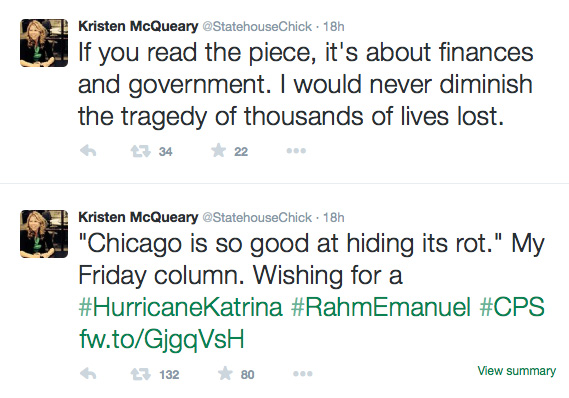
 By Curtis Black
 Riot Fest, the increasingly popular punk-themed festival, recently made the decision to move from Humboldt Park to Douglas Park in North Lawndale. The move comes after Ald. Roberto Maldonado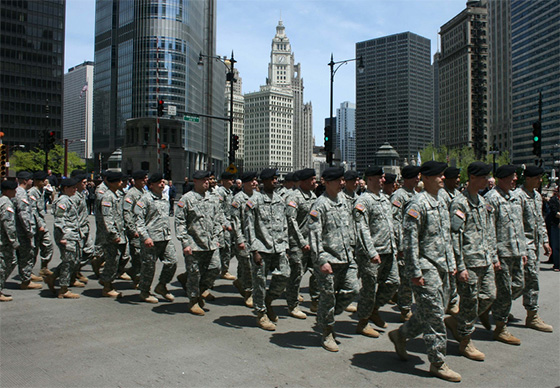

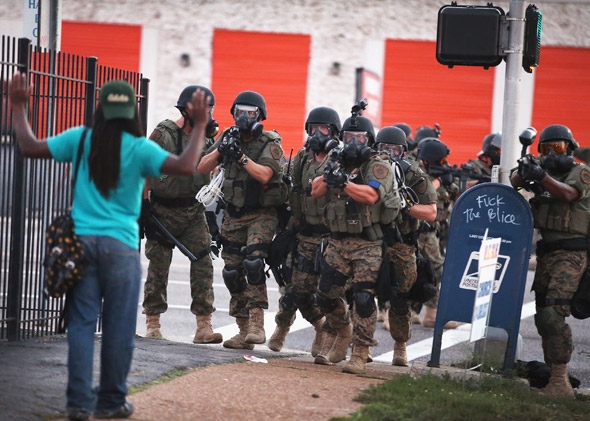

 Chicago Mayor Rahm Emanuel's plunging popularity was reflected in a recent
  By Arnold Stieber
 Just last month, Chicago Mayor Rahm Emanuel bragged in a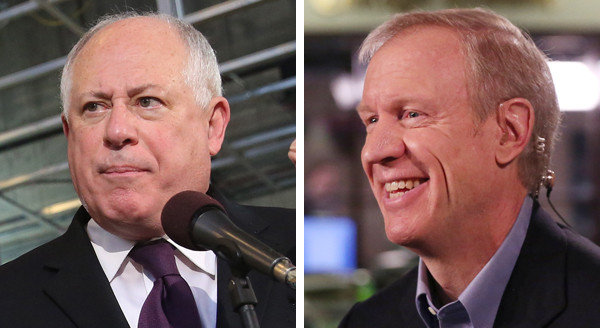
 For some who have worked for the city their entire lives, the news that the city's credit rating has been lowered yet again hits close to home. They know that in the discourse around balancing the budget, slashing pensions inevitably takes front and center. Yet neither politicians nor the dominant media seem to call into question whether it is the retirements of hardworking people that should be one of the first budget items to get sacrificed when we fall on hard times.
 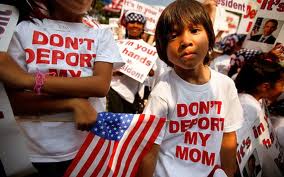 Imagine that you were born in the Chicago area. You were raised here, went to school here, and you see Chicago as your home. This is true for me, and I am guessing many readers. Then imagine that, through no fault of your own, one or both of your parents is undocumented. You are forced to live with a constant fear that one of your parents could be taken away from you at any time and your family could be wrenched apart. Then one day, your mother or father is gone with no warning--deported to a place you may have never even visited.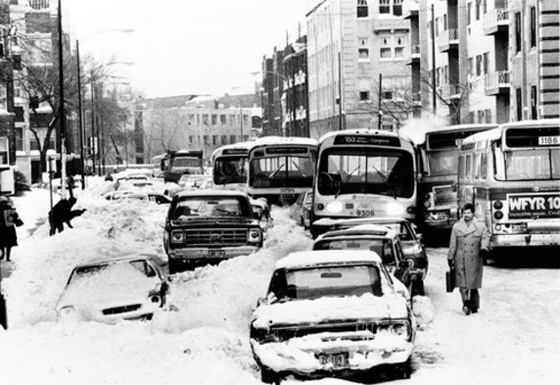
 On Wednesday, I, a Chicago Public Schools history teacher, a father and husband, was arrested for sitting down on La Salle Street in front of City Hall and refusing to move when asked to do so by the police. I along with nearly 150 others was taking part in an act of civil disobedience against the school closing policies implemented by Mayor Emanuel, CPS CEO Barbara Byrd-Bennett and the Board of Education.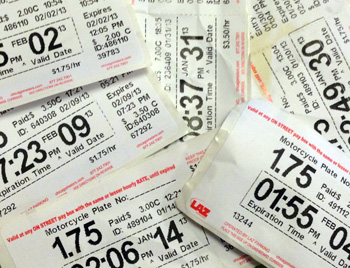
 I met with a man who works with the Mexican community to raise money to build hospitals and schools. His job sounds charitable, but it can be tense and dangerous when he works with Mexican towns that are occupied by drug cartels. He would not talk to me about the violence he's encountered.