Gapers Block published from April 22, 2003 to Jan. 1, 2016. The site will remain up in archive form. Please visit Third Coast Review, a new site by several GB alumni. ✶ Thank you for your readership and contributions. ✶
Branden Johnson's Heaven's Forgotten begins with the story of Moira, a young single mother, and her daughter, Penelope running from the fallen angel who is the girl's father. As the novel progresses, it becomes clear that Penelope is more than she seems and her father is not the only fallen angel looking for them.
The plot is structured much like an action movie complete with cross country road trips (I counted two per character), casually graphic murder, and amateurs picking up firearms. The bright side of the action movie structure is that the pacing keeps the story moving along. The main conflict represented by the fallen angel, Michael, resolves itself one third of the way through the book with minimal fanfare, leading the larger conspiracy to take the stage. The last two thirds of the book feel like an entire season of "Supernatural" minus Jensen Ackles and Jared Padalecki eye candy.
Earlier this year, I put together a list of the Best Chicago Novels by Neighborhood, tying the city's greatest works of fiction to their geographical settings. But during my research, I wound up with a handful of great books set just outside city limits.
Here is that list, the best novels (and one novel-esque memoir) set in Chicago's suburbs. You may notice most of them were published in just the past 15 years. It's not that no one was writing about Chicago suburbs before 2000 (see The Chicago of Fiction: A Resource Guide for proof), it's just that most of those books are out of print. If I've missed any great still-in-print books set in the suburbs, let me know in the comments.
According to Frank Sinatra, "Chicago is the Union Stock Yards" (see "My Kind of Town", the hit song from 1964's criminally underappreciated Robin and the 7 Hoods). Chicago's been known for a lot of things: the Great Fire, the World's Fairs and Al Capone, for example, but for more than a century most Americans knew Chicago as "Hog Butcher for the World."
Despite reading Upton Sinclair's The Jungle in high school or college, most Chicagoans don't realize the Union Stock Yard was one of the biggest tourist attractions in the nation, nor that it was almost a self-sustaining city unto itself, full of hotels, taverns, and 40,000 people.
All Lit Up features Chicago's "literati" discussing their work, lives, and favorite Chicago books at their favorite Chicago bookstores. This is the second part in a two-part conversation with Mare Swallow, Andersonville-based writer, public speaking coach, and founder of the Chicago Writers Conference. Read the first part here.
Because of your work as founder and director of the Chicago Writers Conference, you're very involved in the Chicago writing world. What are your hopes for our literary community, and what do you hope the conference can do for the community?
Another Chicago author once asked me, "Why is it so important to you that Chicago gets attention?" The only answer I can come up with is love. I'm from here. It pisses me off that Tina Fey, who got her chops here, didn't stop here on her book tour for Bossypants. A lot of times people will tour in New York and Los Angeles, and then stop in Minneapolis instead of stopping here. Honestly, I don't think Minnesota has more of a robust community than we do. My hope for the community is that it will keep growing and becoming stronger. Chicago has this huge literary community. There are over 50 publishers here, but people don't know that. Some of them are very tiny, and some of them only put out chapbooks, but there are big ones too. I'm tired of Chicago being flyover country.
The live lit show You're Being Ridiculous will celebrate its fifth anniversary with three knockout shows on November 21, November 28, and December 5 at the Mayne Stage (1328 W. North Avenue). The shows will feature true stories performed by Megan Stielstra, Carly Oishi, Keith Ecker, and many others. Tickets are $15 and can be purchased here.
We talked to founder and performer Jeremy Owens via email to find out more about the past, present, and future of the show.
This month, University of Chicago Press published City Creatures: Animal Encounters in the Chicago Wilderness, a book of essays, poetry and art collected by Gavin Van Horn and David Aftandilian springing from the Center for Humans and Nature's City Creatures Blog. Book and blog work in tandem to advocate for the appreciation of nature within the city, conservation of threatened habitats and species, and ecology education for all. In his essay "A Tale of Two Squirrels and One City," Joel S. Brown writes that his students "...could see the concepts of ecology in action; they could see the relevance of the formerly abstract discussion of adaptations in the very characteristics and behaviors of the squirrels around them." City Creatures calls attention to the animals we share Chicago with and solidifies abstract concepts surrounding ecology and conservation.
All Lit Up features Chicago's "literati" discussing their work, lives, and favorite Chicago books at their favorite Chicago bookstores. This is the first part in a two-part conversation with Mare Swallow, Andersonville-based writer, public speaking coach, and founder of the Chicago Writers Conference. She brought Sin in the Second City by Karen Abbott and The Hundred Year House by Rebecca Makkai. We sat down for coffee at The Book Cellar in the heart of Lincoln Square.
I'm so glad you chose to meet here at The Book Cellar, my local bookstore. Why is this your favorite bookstore in Chicago?
I started coming here since they first opened in 2004. At the time, I lived in Ravenswood, and like you, it was nice to have something close to my house. When I suggest this to people, I always say "You know they have a wine bar there!" The owner, Suzy Takacz, has always been supportive of us. We're going to have two more events here in 2015. They host Essay Fiesta, they have local author nights, so that really speaks to me. I get a coffee and buy a book and close out the world.
And it has such a cozy atmosphere.
Yes, and it's smaller. It's like a curated bookstore. I tell my friends, "Imagine if there was a bookstore, and they got rid of all the crappy books. That's The Book Cellar." I like that their selection is great, and if they don't have a book they'll order it for you.
(As if on cue, Suzy appears to hand Mare an order of books.)
The most interesting investigator in Chicago's strong tradition of crime fiction isn't a detective, a lawyer, or even a journalist. Mark Angelotti, the wisecracking protagonist of Lynne Raimondo's Dante series, is a blind psychiatrist turned expert legal witness. Instead of Michael Harvey and Sara Paretsky's blue-collar gumshoes, Angelotti is an eloquent, overeducated mix between Matthew Murdock (Netflix's "Daredevil") and Will Graham (NBC's "Hannibal").
Angelotti's third mystery in Dante's Dilemma (after Dante's Wood and Dante's Poison) takes him to the South Side, where a professor infamous for pushing a misogynistic brand of sociology has been found murdered on the University of Chicago campus in Hyde Park during the annual scavenger hunt. The chief suspect: his estranged wife, Rachel Lazarus, who supposedly suffered a long history of domestic violence at the professor's hands.
Just in time for Halloween, Chicago's own Audrey Niffenegger has edited and illustrated a collection of her favorite ghost stories from Edgar Allan Poe to Kelly Link in Ghostly, a fairly nostalgic take on the genre featuring a lot of familiar names.
"No, this isn't heaven. It isn't hell. It's high school."
- C.L. Gaber, Ascenders
Walker Callaghan is your average 17-year-old suburban Chicago girl; she just happens to be dead. After a car crash, she finds herself in a middle realm that looks a lot like Michigan, where she attends The Academy, a school intended to teach the "Unformed" enough so they can ascend. In a world where there are no rules because you can't die twice, Walker falls for her classmate, bad boy Daniel Reid, and grapples with how to cope with loss--of life, and of those she cares about most.
Jim Falls never expected a miracle. At age 71, his family is broken and his farm isn't far behind. "Already he had a presentiment--an unconscious belief--that the country, the world, was coming to an end." But one morning in mid-July, a stranger arrives on the farm with a bright silver trailer. Inside, a gift. A white mare, beautiful and healthy as a racehorse.
"But...but what for?" Jim asks the stranger. "I just get paid to deliver it," the man answers.
In his gritty new novel, Marvel and a Wonder, Chicago writer Joe Meno has reinvented himself again, exploring the haunting human and natural landscapes of the rural Midwest in the vein of the Coen brothers' Fargo and No Country for Old Men.
Last week, the New York Public Library released its list of the Best New York City Novels by Neighborhood, pairing the city's best works of fiction with the neighborhoods in which they take place, from Henry James to Teju Cole. Since Chicago's literary history is just as impressive, I thought I'd take a crack at the City of Big Shoulders' best novels, neighborhood by neighborhood, from Henry Blake Fuller to Sandra Cisneros.
While the world contemplates whether poetry is relevant or dead, the Poetry Center of Chicago revives an event to celebrate 40 years of history and connect the history of the organization to contemporary Chicago.
In 1974, the Poetry Center hosted its first live event, Poets Look at Paintings, in the Museum of Contemporary Art. Today, the revival of Poets Look at Paintings makes an effort to connect two seemingly disparate art forms and create something new and beautifully intricate.
To assemble a line-up for the event in November, the Poetry Center calls for poems that are "rooted in visual art in some way, whether that be in response to a piece, in narration, in action, in reflection, etc." These art-inspired poems are referred to as "ekphrastic poems," which according to The Poetry Foundation, seek to describe a scene or a work of art. One of the most famous examples of ekphrastic poetry is John Keats' "Ode on a Grecian Urn," but just as art continues to change and evolve, the Poetry Center's event and call for submissions challenges today's poets to match the evolution of art.
The deadline to join the event as a reader is September 21. You can submit in a .doc, .docx, or PDF attachment up to three poems rooted in visual art to danielle@poetrycenter.org with the subject line "Poets Look at Paintings." Title your attachment "LAST NAME_PLAP." You can find more information about submitting on the Poetry Center's website.
The Poets Look at Paintings event will take place on Nov. 18 from 6 to 7pm in the Garland Room at the Chicago Cultural Center. The event is free, so come support the Poetry Center of Chicago and the history of literary Chicago!
Storytelling makes people vulnerable. In the context of a stage show where the teller stands in front of blinding lights, they can pretend the audience isn't quite there while the audience pretends that they're watching a performance. At A Month Of, there are blinding stage lights, but the people telling stories sit right next to you or just across the table. All you need to do is lower your own boundaries for a couple hours to listen and tell.
The concept of A Month Of is that the theme changes every month. To give you an idea of how widely themes may range, Kim Campbell talked about a past month's show in an Arts and Culture post from May. A Month Of is task-based, which means that participants/audience members/hosts accept a challenge that is decided during the previous month's show.
Book Club is looking for new contributors to help us cover all things literary in Chicago. We're looking for general Book Club writers, but also those interested in covering specific beats, such as: poetry, live lit previews and reviews, classic Chicago book reviews, bookstore profiles, author profiles, local indie publishing and more.
If you're passionate about Chicago's lit scene, we'd love to have you join us. As a contributor to Gapers Block, you would be expected to write at least one post a week for the A/C page, plus items for the Slowdown event calendar. Please note: this is not a paid position; we're all volunteers here on Gapers Block. Send a couple writing samples (links are OK) along with a bit about what you'd like to cover to ah@gapersblock.com. Look forward to hearing from you!
Lori Rader-Day is one of Chicago's most exciting and talented writers, having won massive praise last year for her first novel, The Black Hour, a murder mystery set in Chicago. On July 7 her second novel, Little Pretty Things, will be published by Seventh Street Books, and it's one of the best books I've read in 2015.
Set in the farthest reaches of Chicagoland -- a fictional small town called Midway in the cornfields of northwestern Indiana -- Little Pretty Things centers on a bizarre murder at a roadside motel, when a maid named Juliet Townsend discovers the body of her best friend from high school. It's creepy, clever, and full of surprises, the kind of book you stay up all night to read in one sitting.
Rader-Day completed her MFA in Creative Writing here in Chicago at Roosevelt University, under the mentorship of another great Chicago writer, Scott Blackwood. She was kind enough to chat with me at length about her new book.
Get ready, Book Club, because it's almost time to descend upon Dearborn Street for the Midwest's largest outdoor literary festival. That's right, the Printers Row Lit Fest is merely hours away--and with a lineup featuring over 200 events, there will be something for every book lover.
Now in its 31st year, the Printers Row Lit Fest runs from June 6-7, celebrating all things literary with an unparalleled book fair and schedule of performances. Show up with a tote or two (or three) to stock up on summer reading material, or purchase tickets to panels on fiction writing, papal ponderings, or humorous fashion blogging.
If you're hungering for a more savory experience, there are several events that blend culinary and literary inspiration, including cooking demonstrations by Rick Bayless and Mexique's Carlos Gaytan, as well as wine pairing tips from journos.
For the more raucous among us, Lit After Dark will return on Saturday with Bob Saget discussing his memoir at Jones College Prep. There will also be a special Lit Fest installment of monthly storytelling series, This Much Is True, and a C2E2 Drink & Draw event where you can mingle with local comic book artists.
Here's just a taste of the panels and discussion that will take place this year. Please note that there are multiple venues and tents. But if you feel your FOMO coming on, relax--Printers Row Lit Fest and Tribbooks have ways to keep you organized, from sorting through events by stage and time online, to offering an app that will make sure you don't miss out on a single word. Well, you can try not to.
Printers Row Lit Fest kicks off at 10am on Saturday, June 6 and runs through 4 p.m. on Sunday, June 7. Festival passes (which include a digital membership to Printers Row Journal) have sold out, but you can still purchase individual tickets.
Saturday suggestions:
Curbside Splendor author Cyn Vargas is part of the First Fiction panel at 10 a.m. at Jones College Prep, Room 5006.
Levar Burton will be presented with the Chicago Tribune Young Adult Literary Award at 12 p.m. at Jones College Prep.
Have "lunch" with Tavis Smiley at the Harold Washington Library's Pritzker Auditorium at 12:30 p.m.
At 3 p.m., join WRITE CLUB Overlord Ian Belknap and co-producer Lindsay Muscato for some bare-knuckled lit.
The Hoy tent hosts their editors Beatriz Rivas and Gisela Orozco for a conversation on women in literature at 3:30 p.m.
Sunday suggestions:
Early birds: have coffee at 10 a.m. with John Kass, William Lee, and Trevor Jensen at the Good Eating Stage.
The RedEye tent will hold a Writers Challenge panel at 11 a.m. with host Mason Johnson; hilarity may or may not ensue.
At 12 p.m., check out Cassandra, a "comedy collective that seamlessly weaves outrageous characters, storytelling, live lit, and music into one hilarious live show," at the RedEye Tent as well.
Tribune Books Editor Jennifer Day chats with local authors Rebecca Makkai and Vendela Vida at the Harold Washington Library Center at 2 p.m.
At 2:15 p.m., Alison Cuddy talks with music journalist Jessica Hopper about her new book, "The First Collection of Criticism by a Living Female Rock Critic."
Head to Jones College Prep at 4 p.m. to hear James McGrath Morris discuss his biography of Ethel Payne, "The First Lady of the Black Press."
Get ready to fan the flames of your fandom this weekend at Wizard World Fan Fest Chicago 2015. It's the first fan convention of its kind in Chicago, and is a "Fang (or Thank) You" to devoted Wizard World fans and con attendees. It's loaded with enough celebs and artists to ensure that everyone will geek out on the convention floor. Fan Fest Chicago runs March 7-8 at Donald E. Stephens Convention Center, 5555 N. River Rd. in Rosemont. Here's the event and panel schedule for the weekend.
Aside from stars like "The Walking Dead's" Norman Reedus and "Orange Is The New Black's" Taryn Manning, Fan Fest Chicago will feature local artists like Justin Castaneda. Castaneda, who is a writer/illustrator from the south side of Chicago, is the creator of the When I Was Little picture book series and HEART. He is currently the illustrator for Wonder Care Presents: The Kinder Guardians with writer Victor Dandridge and Vantage InHouse Productions. He is also a featured artist in comic properties such as Aw Yeah Comics, Omega Comics Presents, and Scratch 9.
I asked Castaneda about his work and upcoming convention trips. Read on to learn more about this homegrown talent.
Call it a mixture of high and low culture: online literary magazine Chicago Literati is looking for your stories about your "stories." Television is the theme for the January issue, so dust off your fan fiction or petition to get Mr. Belvedere in syndication and submit.
The lit community, including CL contributors, has responded with everything from Barney Miller portraits to posts about the comforting nostalgia afforded by sitcoms from the last millennium ('90s TGIF lineup forever). Founder and editor-in-chief Abby Sheaffer even shared an exclusive interview with Wendy Robie, who played Nadine Hurley on cult favorite Twin Peaks.
The deadline for submissions is February 5, and Chicago Literati is looking for "your best art, essays, fiction and photography depicting your love and fascination with TV." And who knows--that just might include your compilation of Arrested Developmentchicken dance gifs.
Non-profit tutoring and creative writing center 826CHI has officially re-located and is open for business! Better yet, to celebrate the auspicious new turf, author and 826 co-founder Dave Eggers will be stopping in for an Open House. Friday, Jan. 16, come to 826's new digs (1276 N. Milwaukee Ave.) and meet the author, enjoy a tour of the new space, refreshments and live music. On top of that, find your family's storyteller with collaborative writing exercises for all ages.
While you're at it, donate to Scrabble for Cheaters teams as they prepare for the sneaky scrabble tournament of a lifetime. As these teams go head-to-head, all raised funds will help them cheat against their opponents, and help 826 continue tutoring, publishing, and having a grand old time. Sound fun? Feel free to start a team of two today and contribute to a fantastic cause.
Christmas is coming and the geese are getting fat; people are also getting into fist fights on Black Friday (or better yet, protesting corporate greed) or feigning illness to avoid their "loved" ones. Let's face it, the holiday season doesn't elicit the same kind of merriment in people across the board. So because your heart might not grow three sizes this time of year (at least, it really shouldn't), Story Club is hosting a grumpus gathering worthy of the Krampus.
This Thursday, join host Dana Norris at Holiday Club for stories of holidays gone wrong. The evening's featured performers are Jen Bosworth, James Gordon aka G.P.A, and Jared Crum. As usual, there will be three open mic spots (eight minutes a piece or 1300 words) for a brave few, so happy holidays.
Doors and open mic sign-up will open at 7:30pm, and there's a $10 suggested donation.
Washington University Professor William J. Maxwell dropped a few bombs last weekend at his Chicago Humanities Festival lecture, "FBI as Literary Critic." Abandoning his Powerpoint-style slideshow for a "fuck it...what do you wanna know?" approach, Maxwell's open-endedness miffed some festival subscribers but opened the floodgates for a more expansive dialogue. He began talking of J. Edgar Hoover's interest in authors of the Harlem Renaissance and the Black Arts movement.
The subject led to unexpected side streets of death threats and latent homosexuality. His opening anecdote involved a white FBI agent named William C. Sullivan, a professorial type and liberal arts graduate, who wrote a letter to Martin Luther King Jr. in an implied black voice. "Like all frauds," Sullivan wrote, "your end is approaching." Gasps rippled through the audience.
The letter ended, "there is but one way out for you, you better take it before your filthy, abnormal fraudulent self is bared to the nation."
A man in a starched shirt raised his hand. "This sounds something like a death threat!" he exclaimed. Maxwell had assumed that this, and Hoover's 40-year homosexual marriage, were common knowledge.
Unlike a public lecture, critically-acclaimed author Jamaica Kincaid's conversation with CHF Emeritus Artistic Director Lawrence Weschler covered a wide-ranging variety of topics. The conversation, which was held at Northwestern University's Cahn Auditorium, was held on Oct 25 in front of an almost-full theater.
This year's Chicago Humanities Festival revolved around the theme of "Journeys," and Kincaid's discussion reflected on her own. Born in Antigua, Kincaid moved to New York at the age of 17 to become an au paire. After working her way through college, Kincaid became a staff writer at The New Yorker. Today, Kincaid is a professor at Harvard.
Much of the hour-long discussion was spent on Kincaid's childhood in Antigua and her days at The New Yorker. She had many humorous things to say about her relationship with her mother, her early years in New York, and her experience working with George Trow, who helped Kincaid secure a job at The New Yorker. According to Kincaid, Trow hired her because he "doesn't hire reporters, [he] hires voices."
In case you've decided to call it quits on the drinking for a while after having too many jägerbombs on Halloween, here's something to do rather than stare out the window and watch the leaves die. It's called National Novel Writing Month (NaNoWriMo), and it's an online and local community that supports writers as they attempt to write a 50,000 word rough draft of a novel by the end of November.
Each week in November, there are going to be weekly write-in events at libraries, cafes, and book stores throughout Chicago, where fellow NaNoWriMo participants meet up to work and discuss their novels. In addition to this, there are inspirational lectures and a final celebration at the end of the month. To get involved, visit NaNoWriMo.org and sign up.
Chicago Reader is now accepting submissions for its 2015 Pure Fiction issue, which will be published January. Local writers of all backgrounds can submit as many entrees as they want so long as they're anywhere up to 3,000 words. Winners of the contest will be paid for their work.
Not sure what to write? Check out the archive of previous Pure Fiction issues for some inspiration. The collection boasts a number of stories from writers such as Ben Greenman and Jonathan Messinger (former Time Out Chicago editor).
Submissions for the 15th Pure Fiction issue must be turned in by Nov. 15 to fiction@chicagoreader.com. Good luck!
It's the 50th anniversary of Shel Silverstein's The Giving Tree -- perhaps the world's most contentious story of a sentient tree. It's a classic story -- boy meets tree, tree falls in love with boy, boy strips tree bare of apples, branches, and finally trunk until tree is just a stump and boy is a lonely, bitter old man. As a kid, I thought the book was sad and sort of uncomfortable for reasons I couldn't quite put a finger on; as an angry 20-something I thought the tree was a sucker, and the boy was your typical, selfish tree-killing man. But I've come around to thinking this is a subtly brilliant indictment of some of the things we value the most.
The New York Times ran an article in their Book Review section last week: two writers debated "whether the book is a tender story of unconditional love or a disturbing tale of monstrous selfishness." Frankly, it's neither. Silverstein wasn't a dummy. He put the meaning of the book right there in the title. It's about giving. And giving, being generous, makes us very uncomfortable. Because giving, really giving, feels like losing. To give something to someone else, you must lose something of yourself. This is a very American way to look at generosity. Some of us (me) were taught very young to gird our loins against those who wanted stuff from us, and according to paranoid '80s parents, everyone wanted stuff from us. But even beyond that, for me, at least, real generosity was portrayed as martyrdom, death -- with reward, sure, but still death.
One man's trash is another man's treasure; one town's failed utopian experiment is a Chicago storyteller's ideal setting for a storytelling experiment. Such is the case for PleasureTown, created by live lit stalwarts Keith Ecker and Erin Kahoa. Originally a live stage production, PleasureTown has evolved into a bi-weekly podcast (in the vein of the radio serials of old), as well as a "national platform" for local writers and performers.
PleasureTown was inspired in part by the Homestead Acts of the late 19th-early 20th centuries, wherein the U.S. government offered as many as 160 acres of land to families of settlers who were willing to "go west." It's set in PleasureTown, Oklahoma, a fictional town whose rise and fall is documented by the vignettes created, and voiced, by members of Chicago's live lit and storytelling communities, such as Ian Belknap, Don Hall, and Willy Nast. But the show isn't resting on the laurels of its established performers: there's an interactive element on the website, and even a call for submissions.
Did you enjoy Chicago's first Independent Bookstore Day, or take in a reading at the Book Fort at Pitchfork? Well, the literary love fest continues in Chicago this weekend, thanks to the efforts of The Newberry Library. You'll have a chance to shop--and shout--till you drop. Never has "you can't have too much of a good thing" seemed like a real possibility.
The Newberry Library kicks things off with its 30th Annual Book Fair, which runs from July 24 through July 27. Thursday is the Preview Night for members only, but don't worry, there will be plenty of books left for Friday through Sunday. Most books are $2 each, and psst, become half off on Sunday. It's the perfect time to build your personal library with fiction, cookbooks, or art books, as well as to track down rare collectibles: you could snag a first edition of The Lord of the Rings, or get an autographed copy of one of President Obama's works.
Image courtesy of Chicago Independent Bookstore Day
Chicago works, Chicago writes, and Chicago reads, which is why we don't need any calls (or hashtags) to "Cut down the Amazon" and support our local bookstores, even if they do come from one of our favorite adopted sons. Nine local bookstores have banded together to bring you the first Chicago Independent Bookstore Day on Saturday, July 12, so get ready for the best kind of treasure hunt.
The nine participating bookstores have put together a day of events that will appeal to book lovers from all over the city, and will move book lovers all over the city. Head from Andersonville to Hyde Park, from Lakeview to Logan Square, and make a pit stop in the South Loop to scoop up free (sometimes book-filled) tote bags and take advantage of special discounts and promotions. You can also meet some of your favorite local authors and take in a reading or two, as well as graze on tasty pastries and veggie treats.
iStockPhotoThe arrival of summer generates a lot more than heat: it's also the time to churn out oh so many lists. You need to know where the best sidewalk cafés, the best margarita bars, or best urban hideaways are. In short, you need advice on the best way to spend your time outdoors. And at first glance, a rundown of the best books to pick up seems counterintuitive, but the people have spoken: summer reading lists are no longer just for bridging the gap between school years.
All Weekend! Printers Row Lit Fest rings in its 30th year at the historic printers' hub on Dearborn with hundreds of booksellers, over 200 authors, and a wide array of readings and workshops. If you are interested in literature and you live in Chicago, Lit Fest is where you need to be. Check out the schedule here and start planning your weekend. The festival is free, though indoor talks and events require tickets or a Printers Row Lit Fest Pass, which comes with two complimentary tickets for up to five programs, plenty of commemorative swag, and a 1-year digital subscription to Printers Row Journal.
Saturday! Thea Goodman reads from her debut novel, The Sunshine When She's Gone at Seminary Co-op Bookstore, 1 pm.
Saturday! Maya Lang stops by City Lit Books to discuss her book, The Sixteenth of June-- a loose adaptation of James Joyce's Ulysses-- with Borrowers author Rebecca Makkai, 5 pm.
All Weekend! C2E2, the Chicago Comic and Entertainment Expo, returns to bring you all things comics, comedy, and nerd.
Saturday! The Poetry Foundation hosts Children's Poetry Day, a full day of merriment including children's films, scavenger hunts, and other lyrical adventures! Free, 10 am.
Saturday! Powell's Bookstore hosts an artsy spin on those literary shapes we take for granted with The Adventures of Letterpress, an Expo of the work of local letterpress artists. 2 - 6 pm.
Saturday! Local publishing house Curbside Splendor celebrates its authors with readings and signings at City Lit Books. 5 pm.
Saturday! In its 32nd iteration, The Dollhouse Reading Series brings you readings from Nate Pritts, Jennifer H. Fortin, Adam Fell and Zach Savich, 7 pm.
Saturday! 826CHI presents Prom 9 From Outer Space. Buy your tickets to benefit the tutoring center and its efforts to make writing fun for kids all over Chicago! 8 pm.
Sunday! Make your way to the Harold Washington Library for Poetry Fest: a day jam-packed with readings, workshops, open mics and more! 10 am - 4:30 pm.
Invisible: Personal Essays on Representation in SF/F, an anthology about the importance of representation in science fiction and fantasy edited by Jim C. Hines, was released earlier this month (all e-book proceeds will go to Con or Bust). The collection is made up of heartwarming, and heartbreaking, posts on inclusion and exclusion, many of which originally appeared on Hines' blog. Michi Trota, a Chicago writer, speaker, community manager/organizer, geek, and -- what's the word? oh, yeah -- badass, contributed "I Don't See Color," an excellent essay about how her fandom(s) helped her to recognize how much she has struggled with her relationship with race. I recently asked Trota some questions (one for every panel she's appearing in at C2E2 this weekend -- well, almost) about her piece for Invisible, and her involvement in the geek community.
Saturday! Alexander Eisenschmidt and Jonathan Mekinda discuss Chicago's architectural future through their essay, "Chicagoisms," at the Graham Foundation, 2 - 4 pm.
Saturday! Make your way to City Lit Books to join author Scott Jacobs as he discusses his latest book, Famous Ski Hills in Wisconsin (And Other Delusions of Grandeur), 5 pm.
Saturday! The Book Cellar presents the second annual "Ladder to the Moon" reading, featuring readings by Andrew Squitiro, Naomi Washer, Howard Simmons, Amy Giacalone, and Joe Meno, 7 pm.
Sunday! Stop by Logan Squre's Uncharted Books to lend an ear to Napkin Poetry, an open mic and reading, surrounding this month's theme: "EXILE." 7 pm, free.
Sunday! Stage 773 brings you another installment of LiveLit series and potluck, "Here's the Story." Listen up and then chow down with featured readings from Irv Levinson, Angelique Nelson, Nick Johne, Kelsie Huff, and Tim Witting. 8 pm, $8 OR free with a potluck dish!
Edward Gorey fans abound in Chicago, the author's hometown, and yet Elegant Enigmas: The Art of Edward Gorey at the Loyola University Museum of Art (from February 15-June 15, 2014) is the first exhibition dedicated to his work. Over 170 of Gorey's collected works (on loan from the author's charitable trust) are on display, including "original pen-and-ink illustrations, preparatory sketches, unpublished drawings, sketchbooks, illustrated envelopes, book-cover ideas, theatrical costume designs, and ephemera."
Goreyesque, the online literary journal that features contemporary work inspired by Gorey, celebrates this "homecoming" with a reading at LUMA on April 29, 2014 at 6pm. Created by Kenneth Gerleve, Todd Summar, and Sam Weller, in collaboration with editors Howard Simmons, Jess Millman, and Corey Klinzing, and co-sponsored by Columbia College Chicago'sDepartment of Creative Writing and Loyola University Chicago, the journal seeks to highlight the author's "cross-disciplinary influence." With two issues under their belts, they are putting together an event that will feature local authors, and Goreyesque alums, Joe Meno and Adam McOmber.
You can help round out this roster by submitting your Gorey-inspired writing and artwork to goreysubmissions@gmail.com. To be considered for participation in the reading event on April 29th, you must submit your work by April 4, as well as be in Chicago on the night of the event. Poems, essays, short stories, photographs, and illustrations will all be considered. Click here for more info. Please note that the literary journal accepts Gorey-inspired submissions on an ongoing basis for future publication, so feel free to mine your macabre side even as the seasons (attempt to) change.
We may not be able to import West Coast temperatures, but we can certainly "borrow" some of their talent. LA writer Amelia Gray visits Cole's Bar, 2338 N. Milwaukee Ave., this Sunday and joins some great local authors for a night of readings. Gray is the author of the story collections AM/PM (featherproof) and The Museum of the Weird (FC2), which won the Ronald Sukenick/American Book Review Innovative Fiction Prize. Her first novel, Threats (FSG Originals), was nominated for the PEN/Faulkner award.
Lindsay Hunter (Don't Kiss Me) hosts the event and describes Gray as "brilliant and insane. She's mesmerizing. She's fashionable and a huge nerd. She's a bona fide literary celebrity who'll flick her eyes at a new zit you're cultivating in the same way your own mother would, then offer you the perfect salicylic-acid soaked organic face-moisturizing cloth. No one writes like she does. She knows the right word for everything you could imagine. I've selected local writers who I think have a prayer of keeping up with her--the surreal and crazy charming Beau Golwitzer and the hilarious, surprisingly-soulful-at-times, great-haired Mason Johnson. And me, the Midwestern-by-way-of-Florida mom-writer who can't wait for Sunday. It's going to be a very fun reading, Chicago."
Spring hasn't sprung so much as limped into action, which means we're all still dealing with cabin fever. Get out of the house and get inspired this Thursday at StoryStudio Chicago'sOpen House & Free Class from 6pm-8pm at the Chicago Studio at 4043 North Ravenswood, Suite #222.
Join StoryStudio Chicago staff and prospective students for refreshments and conversation, and then stay for True or False, a free class that will have you experimenting with fiction and nonfiction. You can check out the studio and classrooms and, most importantly, the spring course catalog.
Mr. Carter has spent much of the last thirty years on diplomatic missions and in humanitarian work. He is also the author of over twenty books on subjects such as his presidency, his faith, and his work in the Middle East. His latest book, A Call To Action, focuses on the subjugation of women, which he deemed the "worst and most pervasive and unaddressed human rights violation on Earth" in a recent interview with NBC News' Andrea Mitchell.
Please note that this is a book signing only; Mr. Carter will not be giving a talk. Pre-order the book online for admission to the event, or call 773-769-9299.
Poets & Writers recently helped organize the Barry Gifford reading for Story Week at Columbia College. After hearing Barry speak, I wanted to find out who it was on the East Coast who had made the event happen. Who was "Poets & Writers"?
In my search, I found Program Associate Cathy Linh Che. I read some of her poetry online; "Doc, there was a hand" and "Split" I realized quickly I wasn't tracking down an administrator, but a poet.
The tacitly-titled Two Cookie Minimum (Is it a band? An improv troupe? A deep-dish pizza? No, no, much better...) is back this month with a celebration of Polish Writers and (you guessed it) cookies. The zinesters-only reading series has been a staple of Chicago's self-publishing community since 2011, bringing together emerging writers and self publishers for a conversation that cannot be rivaled on a Tuesday night at 9pm.
Literally. New City rated Two Cookie Minimum 2013's "Best Reading Series at 9pm on a Tuesday".
This April, TCM is celebrating local Polish writers. No joke, the reading will be on April 1st at the Hungry Brain, 2319 W. Belmont Ave for those approaching by land by-way-of car, bus, bike, biped or skateboard.
Readers include Kate Sierzputowski, co-founder of InsideWithin; Daniella Oiszewska, author of poetry chapbook Citizen J; Adam Lizakowski, Director of the Polish Arts and Poetry Association in America; Joshua Piotrowski, zinester and musician; Columbia College creative writing students Alison Grabowski and Karolina Stepek; and JoAnne Gazarek Bloom, writer of Bridgeport on Arcadia Publishing.
The evening will be hosted by the indomitable Johnny Misfit aka John Wawrzaszek, one of Gaper's Block's own staff writers.
After last week's Story Week at Columbia and Zine Fest the weekend prior, surely some of you have caught the self-publishing bug. This is a showcase of one of Chicago's most interesting and independently minded publishing communities.
Chicago is home to a thriving independent press scene, and StoryStudio Chicago wants to help you make the most of it with Editors Speak: Literary Magazine Panel. Join publishing insiders at the Chicago Studio this Saturday, March 22 for a free Q&A; you can ask for advice on getting your submissions accepted (or at least an upper-tier rejection letter), or just chat about the literary community.
Three local editors/writers will be on hand to answer all of your "why me?" and "why not me?" questions: Brian Solem of Graze, Sarah Dodson of MAKE Magazine, and Ben Tanzer of Curbside Splendor.
The panel discussion is from 12pm-1pm at 4043 North Ravenswood. Admission is free with a canned good donation (all collections will go to a local food pantry). Please RSVP by email to info@storystudiochicago.com. If you're unable to make the event, but have a burning question, you can tweet it to @storystudio, and the moderator will do his/her best to have it answered for you.
It's Wednesday, and it's after 5pm, so we're already 60% done with the work week--congratulations! To celebrate, consider taking in one of tonight's Story Week events, or get a jump on your Thursday plans by checking out the schedule.
We'll close out the festival this Friday with two amazing events: first up, Jeff Toth hosts the "Come One, Come All" open mic at 11am at Columbia College Chicago, 623 South Wabash. And from 6pm-8pm, Rick Kogan presents "Chicago Classics," with special guests who will read works by their favorite Chicago authors. "Chicago Classics" will be held at the Chicago Cultural Center Preston Bradley Hall, 78 East Washington. Both events are free and open to the public.
The reading room at the Poetry Foundation is filled a quarter-way with quiet reverent conversation.
It is March's Open Door Series, featuring Brett Foster and Srikanth Reddy and the room seems intentionally wanting. An open podium stands dramatically lit at its head; scattered lights give the illusion of luminescence but it's a dim, half-hearted brightness, and the blue dusk outside seems brighter.
Beyond the podium stands a courtyard of saplings that further indict anticipation itself as the prologue to the evening. Beyond that, an impossible wall of books.
Under their seats, the March issue of the Foundation's poetry magazine. A cleaner exits a distant doorway guiding a wheeled trashcan and disappears once again, marring and complicating the shelf of numerous journals and novels and anthologies and likely many editions of To the Lighthouse.
When Robert Polito, the Poetry Foundation president, took the stand to introduce Mr. Foster and Mr. Reddy, we were at attention.
The monthly Open Door series is a means of focusing the community and celebrating specific mentors and students from Chicago's many graduate and undergraduate programs. Tonight's event attracted a fair crowd -- the applause was loud and filled the space; the laughter was real and complete; the silences were heavy and concentrated. There seems no better mascot for events like these than the Pegasus of the Poetry Foundation's logo: muscle, winged and flying.
I watched the man I thought was Barry Gifford talk to another, much quieter man, who really was Barry Gifford. The first Barry Gifford moved his hands eloquently and drew curtains in the air with his fingers. The real Barry Gifford said nothing and blinked politely.
A moment later, Barry looked me in the face.
I was a staff writer for Gaper's Block, I said. "A web publication," Joe Mino intoned with a smile.
"I'll only have a few minutes," Barry said, glancing with apology to Joe, then Kara, then me.
"That's alright," I said. "I won't need long."
His eyes are milk-white in places; not cataracts, I am sure. He gazes harder in spite of them; perhaps to spite them. As I shake his hand my wrist is limper, my voice more boyish, my smile less genuine than I'd like. I am struck by Barry Gifford. I struggle for words and thank him.
"Thank you, Mr. Gifford," I say, and age myself. I shuffle into the anonymous deck of the auditorium and hide with my iPhone set to record. I listen to Barry Gifford and I watch him, and this is what I see and hear:
If you're still bummed about missing out on AWP last month, or you're still nursing a hangover from AWP last month, Story Week Festival of Writers has a cure for what ails you. Presented by the Columbia College Chicago Department of Creative Writing, Story Week brings together emerging and established authors to discuss their works in various venues, and neighborhoods. This year's theme is DiverCity: Urban Stories, and will focus on how words have built (and rebuilt) the city of Chicago. Randy Albers, founder of Story Week and chair emeritus of the fiction program at Columbia College says that this year's festival will share "stories that shape our understanding of the city and the wider social and historical context of which we are a part."
The festival is in its 18th year, and will include highlights such as a conversation and reading with screenwriter/novelist Barry Gifford (Lost Highway, Wild at Heart), a panel featuring Latino authors hosted by the Guild Literary Complex, and boot camps for aspiring and working publishing professionals. As always, events are free and open to the public (and most will include ASL interpretation).
Story Week kicks things off tonight at 6pm at Martyrs' with a special presentation of 2nd Story, featuring Darwyn Jones, Julia Borcherts, Nicole Chakalis, and Sahar Mustafah. 2nd Story is hosted by Megan Stielstra and Bobby Biedrzycki, with live music by the Harold Washington Trio.
Gina Frangello is something of a powerhouse in Chicago's literary scene. She's co-founder of Chicago-based publisher OV Books, where she's edited novels by local authors like Zoe Zolbrod and Billy Lombardo; runs Other Voices Querétaro, an international writing program; is the Sunday editor for The Rumpus and the fiction editor for The Nervous Breakdown; teaches at Columbia College and Northwestern University; and is writer of three works of fiction, the novel My Sister's Continent, the short story collection Slut Lullabies, and her latest novel (published today), A Life In Men.
Impressed? Or at least curious about how she does it all? You can ask her in person this Friday, February 7 at Women & Children First at 7:30pm for a release party for A Life in Men, a book that explores love, sex and illness through the lens of best friends Mary and Nix. Refreshments will be served.
The Chicago Writers Association has announced the winners of its 3rd Annual Book of the Year Awards. Categories included Traditional Fiction; Non-Traditional Fiction; Traditional Non-Fiction; and Non-Traditional Non-Fiction.
Just in time for Thanksgiving, I'd like to point out my new favorite true crime book: Survived By One: The Life and Mind of a Family Mass Murderer by Robert E. Hanlon with Thomas V. Odle. It's much more than a true crime book. After my thoughts, please read on for an interview with Dr. Hanlon.
In 1985, Thomas Odle killed his parents and three siblings at the age of 18 in southern Illinois and is now serving life in prison. This book is from the perspective of both Dr. Hanlon, a neurologist, and Tom Odle, the murderer himself. Tom reflects on his childhood in a first person point-of-view, while Dr. Hanlon assesses Tom's life experiences and how they led him to murder.
This book is haunting. Tom Odle's childhood was hell. His mother abused him, chained him to his bed, made him raise his three younger siblings, and constantly told him how much she hated him and how she wished he'd never been born. He wasn't allowed to go anywhere other than school and wasn't allowed to have anybody over, so his social skills lacked heavily. In kindergarten, Odle went to school with a shirt soaked in blood from the whip marks on his back. It wasn't until he was strong enough to fight back that she stopped the physical abuse, but the emotional and verbal abuse never ceased. Tom never had confidence or self-worth. His dad stood by and did nothing, as if he too feared Tom's mother.
Paranormal enthusiast Bielski is best known as the author of the Chicago Haunts book series, as well as the founder of Chicago Hauntings ghost tours. Photographer Hucke has visited and taken pictures of over 1,000 graveyards and mausolea.
The event takes place on Thursday, November 14, from 6 to 9 pm. The Nisei Lounge is located at 3439 N. Sheffield. A portion of the drink and book sales will support the restoration efforts of the historic Bachelors Grove Cemetery. The event is free, but please RSVP here.
On Wednesday, Oct. 30, Elizabeth Gilbert visited Trib Nation's Printers Row to promote her new book -- and her return to fiction -- The Signature of All Things. The event took place in the Grand/State ballroom at the Palmer House Hilton and Gilbert was interviewed by Manya Brachear Pashman, the Chicago Tribune's religion reporter.
Signature tells the tale of Alma Whittaker, a 19th century botanist. At the time, botany was one of the rare sciences to which women, society's own beautiful flowers, had access. However, it was also the science of explorers, men who risked life and limb on the high seas to bring back plants from the darkest corners of the earth, especially tropical orchids. Whittaker, however, specializes in the decidedly unsexy study of moss. That's right. Moss. Gilbert realized that as a single woman, Alma wouldn't have had the freedom to travel to exotic locales. So she arranged for Alma to stumble on a great scientific discovery right outside her father's door, something that was "manageable and also enormous" and eventually allows Alma to reach the same conclusions about evolution as Charles Darwin before Darwin ever published his theories.
The University of Chicago presents a three-day conference, Forms of Fiction: The Novel in English this week from Wednesday, November 7 through Friday, November 9. Literary heavy hitters A.S Byatt (Possession: A Romance), Tom McCarthy (C), and others will discuss the novels Middlemarch, Pride and Prejudice, Ulysses, and The Golden Bowl (sample Pride and Prejudice discussion: "A Pudding or a Machine". TELL ME MORE). Readings, book signings, and "coffee and light breakfasts" will also be on offer. The event takes place at the Reva and David Logan Center for the Arts, 915 East 60th St. Advance registration is suggested for each event; the conference is free and open to all. Seriously: A.S Byatt breaking it down about Middlemarch? Stars in my eyes, you guys. Stars.
On Sept. 30, the University of Chicago Press published Personae, the ambitiously genre-blending, polyvocal second novel by Sergio de la Pava, author of last year's award-winning, 698-page surprise hit A Naked Singularity. Initially self-published, ANS became the first novel the UCP has reissued in the entirety of its prestigious 100+ year history. And so, this second novel's publication strikes at least one curious Chicagoan as significant, since UCP had all but sworn off altogether risky indie fiction reprints.
"This is it," Levi Stahl, a publicity director at UCP, had promised his editorial staff, according to a longish review in the Trib. A Naked Singularity was brilliant, sure, but a fluke nonetheless. "This doesn't change anything," Stahl says, in an invented movie version of events (perhaps scripted by De la Pava, himself). Initially, Stahl discovered De la Pava's debut via literary critic Scott Bryan Wilson, who reviewed ANS over at The Quarterly Conversation, where Stahl serves as a poetry editor. Stahl handed the manuscript to UCP editor Maggie Hivnor, also a fan of the book, who then faced the task of convincing the imposing Board of University Publications that De la Pava's scrappy, sprawling, self-published first novel indeed carried literary merit. Fortunately, the case had quite a few things in its favor: an additional favorable review by Steve Donoghue, support from critics Steven Moore and Brian Evenson, plus the author's own unlikely back story.
"You should always have a phallic microphone," joked Isabel Allende as she switched out a dead lavalier microphone for a handheld one. So began Allende's half-hour talk at the Harold Washington Library on Tuesday, Oct 22. Allende was in town to accept the Chicago Public Library Foundation's Carl Sandburg Literary Award. Allende, whose 19 books have been translated into 35 languages and have sold 57 million copies around the world, was interviewed by Univision's Angelica Atondo.
Perhaps the most personally influential book for Allende is Paula, which Allende described as the most memorable book she has produced, "written with tears and blood." It was written as her daughter Paula was in a coma, never to wake up, due to complications from the disease porphyria. Coincidentally, Allende's talk took place on Paula's birthday. While Allende generally considers herself a happy person, she maintained that her kind of sadness at losses such as Paula's death is "a softness of the heart that is always under the surface." Allende has received thousands of letters in response to Paula, and has started a foundation in Paula's honor that focuses on reproductive rights, healthcare, and "the poorest of the poor, illegal immigrants."
Allende acknowledged that while the world is a sometimes a sad place, a sense of humor is one way to make it a brighter. However, she worries that the humor from her native Chile doesn't translate well into English. It's too dark and not politically correct, especially in California, where she has resided since 1989. Allende relayed the story of how when dogs training as service animals for the blind do not pass the final test, they are put up for adoption. Allende requested one of the rejected dogs, and received a letter from a sensitive writer reminding her that the dogs are not rejected; they have simply made a career change.
Allende ended her talk by reading from her latest work, Ripper, her first foray into mystery writing. Attending a mystery writers' conference with "the loveliest people, usually these middle aged ladies in Birkenstocks...who only talk about autopsies and murders and how to dispose of cadavers" not only proved a quick education for Allende, but gave her the skills "so I could kill anybody and never get caught."
The interview is available in its entirety on Univision's website. (Though the website is in Spanish, the interview is in English.)
Last Wednesday's 7th Annual Witty Women Writers Night opened with a song. More specifically, it began with Book Cellar owner Suzy Takacs welcoming Stacey Ballis (Good Enough to Eat, Off the Menu), Amy Guth (Three Fallen Women), Jen Lancaster (Bitter is the New Black, Here I Go Again: A Novel, The Tao of Martha) and Claire Zulkey (AN Off Year) with an original composition set to the tune of The Archies' "Sugar, Sugar":
"Witty, ah, witty women,
You are my author girls,
And you've got me readin' you."
Nikky Finney, whose poetry collection Head Off & Split won the 2011 National Book Award for poetry, will read her work at the Poetry Foundation this Wednesday, October 30. Finney's powerful poems often explore the intersection between art and the political; one poem, "The Condoleezza Suite", brings Condoleezza Rice to life, while another, "Left", evokes scenes from the aftermath of Hurricane Katrina. Finney is also a founding member of The Affrilachian Poets, a collective of writers committed to illustrating the diversity of the Appalachian region. The event takes place at the Poetry Foundation, 61 West Superior Street, at 7pm (admission is free).
How many times have you used the old "dust in my eye" excuse after listening to a StoryCorps interview? Keep those hankies handy because StoryCorps has released a book in honor of its tenth anniversary titled Ties That Bind: Stories of Love & Gratitude from the First Ten Years of StoryCorps. StoryCorps founder, Dave Isay, dug into the archives to find stories that celebrate the human connection through one-on-one conversations. (StoryCorps has archived 50,631 of them - and counting!)
Isay's U.S. tour will stop in Chicago to celebrate StoryCorps' anniversary and promote the book on Friday, October 25 at 7pm. The event will take place at the Chicago Cultural Center's Preston Bradley Hall (78 E. Washington St).
Story Corps is an independent nonprofit whose mission is to provide people of all backgrounds and beliefs with the opportunity to record, share, and preserve the stories of our lives - and make us cry.
A full house turned up at Logan Square's City Lit Books Saturday night to hear author Chris L. Terry read from his new young adult novel, Zero Fade, (read our review here) and to bid him farewell on his last night in Chicago--Terry would board a plane to join his wife in Los Angeles the next morning as the couple relocates to California.
But for one last night Terry (who earned an MFA from Chicago's Columbia College) was a Chicago writer, and he entertained the local audience with a funny and poignant selection from his debut novel, as well as a new nonfiction piece about his own childhood, "Hair Metal Dreams."
I have to be honest--it's been awhile since I've read an entire collection of poetry, but The Waiting Tide, the first book published by Curbside Splendor's poetry imprint, Concepción, was so worth it. I read it in one sitting. Twice, actually.
In the introduction, Bradley says, "I found myself compelled to write about love, lust, and the sea. All forms of escape, all symbols of our primal wishes. I found myself in dialogue with the master of love poetry." This book is a conversation with Chilean poet, Pablo Neruda.
The books is split into four sections: Waiting Tides, Love, Desire, and Your. Bradley's poems no doubt evoke feelings of love, longing, and lust. Bradley said in an interview, "...as embarrassed as my wife gets that people are reading poems that are at times very intimate and are written by her husband, they are really a testament to her and her inherent ability to keep me alive and kicking." The poems are affectionate and sensual and intimate, but written in a way that only a poet can write about these things. You'll read this collection and wish that someone would write poems like this about you.
To put it mildly, Greece is a country in chaos. As a result of its severe debt crisis, it struggles with austerity measures, labor strikes, bloated government institutions, and an unemployment rate of 27.6 percent.
But this is not the first time Greece has encountered political pandemonium. Natalie Bakopoulos' debut novel, The Green Shore, harkens us back to a similarly tumultuous time in Greek history. In 1967, a group of Greek military colonels executed a coup d'etat under the cover of night. Democracy would not be restored until seven years later.
The aftermath of the coup is seen through the eyes of four characters: French literature student Sophie, her doctor mother Eleni, her poet uncle Mihalis, and her younger sister Anna. Each character copes with the sweeping and often brutal political changes while continuing their personal stories, following dreams and passions, and experiencing new vistas physically, emotionally and politically.
After a 14-year hiatus, Bridget Jones is back in book form. This Friday, October 18, Helen Fielding--the author of Bridget Jones's Diary and Bridget Jones: The Edge of Reason--will speak about the most recent addition to the Bridget Jones verse, Bridget Jones: Mad About the Boy in an event presented by Trib Nation Events: Printers Row; Fielding will be featured in conversation with the Chicago Tribune "Lessons for Life" columnist Jenniffer Weigel.
Bridget Jones: Mad About the Boy follows Bridget as she navigates the modern dating world, with all its shiny new bells, whistles, and ways to communicate (it's not the '90s anymore). I can't bring myself to discuss the major plot twist that's been revealed online in the past few weeks; suffice it to say that, if you'd like to remain unspoiled and un-heartbroken, don't ask the Internet. The event takes place in the Grand Ballroom of the Hotel Intercontinental, 505 N. Michigan Avenue, at 7pm. Tickets for this event are $25; tickets for the event plus a copy of the book are $48.50.
Turkish poet, author and columnist Bejan Matur will read her work at the Poetry Foundation (61 W. Superior St.) on Wednesday, October 16. A reception will be held from 6pm to 7pm and the reading will follow. The event is co-sponsored by the Poetry Foundation and Amnesty International.
Born in Southeast Turkey, Matur was raised speaking Kurdish, which was officially banned in the region for many years. Though she writes in Turkish, she says that her writing is strongly influenced by the cadence and rhythm of her mother tongue. Her award-winning poetry has been described as shamanist, dark and mystic, and draws heavily from her experiences of village life. Her poems have been translated into 24 languages.
Trained as an attorney, Matur never practiced law and instead found her way to journalism. She regularly tackles issues such as Kurdish politics, Armenian news and women's issues. Matur is also the former director of Diyarbakır Cultural Art Foundation, and in 2011 joined the Council of Experts for the Democratic Progress Institute, whose main focus is conflict resolution.
Kathleen Wheaton knows how it feels to be an outsider. She spent twelve years in Spain, Argentina, Brazil, and Mexico working as a journalist and travel writer before returning to the U.S. with her husband, NPR reporter David Welna, and their two sons. Wheaton now resides in Bethesda, Md., and has released a book of travel-inspired short stories called Aliens and Other Stories. Aliens and Other Stories is a loosely linked collection of tales about characters in exile, whether it be physical or emotional. They were inspired by the time Wheaton spent writing a guidebook in Argentina, which was then still emerging from the shadow of its Dirty War, a brutal military dictatorship during which as many as 30,000 people disappeared. She was struck by the nonchalance with which people recounted the traumatic experiences of being arrested, going into hiding or having relatives disappear; she wrote short stories based on these interactions.
Tonight! Welcome to Pleasure Town: A Story-Based Performance at Stage 773.
Saturday! Curbside Splendor celebrates an evening of fall book releases with Samantha Irby (Meaty), Chris L. Terry (Zero Fade), and Daniela Olszewska (Citizen J) at The Book Cellar.
Saturday! 12 Weeks of Quimbus: A Christmas Story at Quimby's.
Sunday! Scholar and author Dr. Richard Benson II discusses his new book Fighting for Our Place in the Sun: Malcolm X and the Radicalization of the Black Student Movement 1960-1973 at Woodson Regional Library.
Cultural duality is a common theme in Lahiri's work, and The Lowland is no exception. The Lowland follows the divergent paths of two brothers who were once inseparable, one an earnest college student who ends up in the U.S. and the other a revolutionary with the Naxalites, a far-left radical communist movement originating in West Bengal. Lahiri's inspiration for the novel came from a story she heard as a teen from her father about a pair of brothers who were killed due to their Naxalite affiliation. The movement was particularly active -- and violent -- in Kolkata, where Lahiri often visited relatives and would overhear gossip about the Naxalites.
This Thursday, October 10, former poet laureate Robert Pinsky and musician Laurence Hobgood come together to present PoemJazz for the 59th annual Poetry Day, a reading series founded by Robert Frost. (Previously featured Poetry Day poets include W.H Auden, Gwendolyn Brooks, Seamus Heaney, Anne Sexton, et al.-- in other words, you're in good company.)
PoemJazz blends music and poetry, playing off their commonalities and exploring the dynamic that's created when the two forms become one (click here to watch a video of Pinsky performing).
The event will take place at 6pm in the Cindy Pritzker Auditorium at the Harold Washington Library Center, 400 South State Street; admission is free, on a first come, first served basis, and doors open at 5pm. Come and get down.
Max and the Wild Things will be wreaking delightful havoc at Open Books (213 W. Institute Place) on Saturday, October 5, from 10am to 1pm. Wild Things Day is a one-day event for children and families. It celebrates Maurice Sendak's classic tale, Where the Wild Things Are, with art projects, face painting, story time, raffles, and cake. Special guests include The Big Draw Chicago and art studio The Paintbrush. This event is recommended for kids ages three and over.
In the foreword to Manuel Abreu Adorno's posthumously-published novel No todas las suecas son rubias (Not all Swedes are blonde), globetrotting professor and crazy prolific writer Saúl Yurkievich celebrates the "distinctly Caribbean accent" of Adorno's work, the raw tenor of his talent, the strong appetite for recognition in a marketplace dominated by North American surnames. So it's only fitting that Adorno made his U.S. debut via local translating house 7Vientos, since it shares so many of these traits.
It's an oft-repeated refrain these days, but it bears repeating nonetheless: the art of letter writing is slipping inexorably away from us, and in many ways--alas and alack!--it may be gone already. Future generations just won't be able to peruse a stack of Grandma and Grandpa's love letters. (Cue my cantankerous, pre-emptively elderly fist-shaking.) For the time being, however, all's not lost; we're still within striking distance of the days where handwritten letters were the standard, so they're still around to access and enjoy.
Willy Nast and Karen Shimmin host September's edition of the live lit series Essay Fiesta at the Book Cellar on Monday, September 16 at 7pm.
Readers include:
Write Club Overlord Ian Belknap
8BitBro Writer Jackie Koester
Social Psychologist (and Gaper's Block Book Club Staffer) Erika Price
Comedian Dave Stinton
Actor/Storyteller Paul Whitehouse
All voluntary donations from Essay Fiesta benefit 826 CHI, a nonprofit writing and tutoring center.
Good spies aren't born; they're made. Such is the case for the genetically altered spies in The Orphan Trilogy, a series of international conspiracy thrillers by New Zealand authors James Morcan and Lance Morcan.
Chicago is featured prominently as the site of the Pedemont Orphanage, where 23 orphans acquire the skills to become stealthy, cold-blooded killers. James Morcan was happy to shed some light on how the city's famed work ethic influenced the decision to begin the story here, and to discuss whether we'll see any Pedemont Orphanage alums skulking around Chicago corners in the near future.
If you're an avid reader of the GB Book Club, you probably are a fan of storytelling and live lit events in Chicago. Perhaps you also read memoirs and creative nonfiction, or enjoy storytelling podcasts like The Moth and This American Life.
But with a love of live literature and personal storytelling, there also comes an aversion to certain topics. We've all been there. One minute you're laughing along to a hilarious, madcap story from a talented storyteller, the next you're rolling your eyes and uncomfortably shifting in your seat while someone blubbers creepily about stalking their ex-boyfriend or describes a bodily function in stomach-churning detail. Whether we are sick of a topic because it is too common or because it's just personally off-putting, we all have some storytelling pet peeves. So let's talk about a few, and then open the floor for you to share yours in the comments.
Zero Fade, the debut novel by Chicago's own Chris L. Terry, is released by Curbside Splendor today. (Buy it, watch the live action video trailer, read our Q&A with Terry.) Just coming off a real-world book tour, Terry has begun a blog tour, stopping today at Book Club to share a hilarious account of band life versus author life. Read on, and check out the details of the Terry's entire virtual tour.
Last month, I did a book tour to promote my novel, Zero Fade. My wife Sharon and I rented a car and drove from Chicago to the East Coast, where I did readings at independent bookstores in Richmond, Philly, New York, Boston, Rochester and Pittsburgh. I set it up through friends in each city. It was a success. I sold over a hundred books, and since I only hit places where I'd lived or knew people, I constantly had the overwhelming, birthday-party-feeling of being surrounded by friends without the time to really talk to them. A nice problem to have. I felt like a rock star.
The Poetry Foundation kicks off their fall season of programming on Wednesday, September 11 at 7pm (reception at 6pm) with an evening devoted to the music of the British composer Benjamin Britten; specifically, music inspired by the poets W.H Auden and Edith Sitwell. Presented in partnership with the Collaborative Arts Institute of Chicago (kicking off their own second annual Collaborative Works Festival, "The Heart of the Matter: 100 Years of Benjamin Britten"), performers include soprano Kiera Duffy, pianist and CAIC executive director Shannon McGinnis, and tenor and CAIC artistic director Nicholas Phan. John Wilkinson, a poet and professor at the University of Chicago, will be on hand to provide some context. The event is free, though the limited number of advance tickets are now gone, so make sure to arrive early for this one, music and poetry lovers. And did I mention that there are refreshments being served? It's all happening at the Poetry Foundation, 61 West Superior Street.
The Book Cellar and Sulzer Regional Library co-host Chicago native Peter Orner for a discussion and book signing of his second collection of short stories, Last Car Over the Sagamore Bridge. The event takes place at Sulzer on Monday, September 9 at 6:30pm.
Described by Booklist as "an undisputed master of the short short story," Last Car Over the Sagamore Bridge consists of 51 stories, ranging in length from a paragraph to several pages. Though Orner skips through different cities and eras, the question of the reliability of memory provides the stories' unifying thread.
Orner is a past Guggenheim fellow and two-time Pushcart Prize award-winner whose recently reissued debut collection of short stories, Esther Stories, was a 2001 New York Times notable book. He has also written two novels and two works of non-fiction, and has appeared in Atlantic Monthly, the New York Times, the San Francisco Chronicle, The Paris Review, Granta, and McSweeney's.
"There is nothing like staying home for real comfort."
- Jane Austen, Emma
From Mr. Darcy's Pemberley to Fanny Price's Mansfield Park, the homes in Jane Austen's novels are nearly as important as the characters themselves. Growing up on the fringes of the landed gentry and relocating frequently as an adult due to uncertain financial circumstances, Austen observed and absorbed the details of homes that would become cornerstones of her novels.
The Chicago Architecture Foundation is offering a series of discounted tours and free lectures in collaboration with One Book, One Chicago through spring 2014. The tours and lectures are in support of the 2013-14 One Book, One Chicago selection, The Warmth of Other Suns by Isabel Wilkerson, and the theme, "Migration - how has it shaped Chicago?"
The first tour is a Ukranian Village Walking Tour on Saturday, September 21, at a discounted rate of $5, while the first free lecture is a Discover Pilsen Talk on Saturday, November 16. For more information or to buy tickets, visit the Chicago Architecture Foundation or One Book, One Chicago.
Knuckles will soon be bare again. Trouble will once more be eaten and money once more shat. That's right, Book Clubbers. Starting on Monday, September 9 at 7pm, Write Club will return to Chicagoland for another season of literature as bloodsport, hosted by founder and "Overlord" Ian Belknap.
One of the driving forces behind the local and international "live lit" movement, which is growing fast, Write Club was named earlier this year the "Best Literary Event" by the Chicago Reader and the "Best Reading Series" by Chicago magazine, and for good reason. Back when the show first started in 2010, Belknap told TimeOut Chicago, "I want the show to take a can opener to my skull and punch me in the brain." And he meant it. Write Club packs one hell of a gray matter wallop.
Family history is its own unique animal--stories about love, loss and mayhem at funerals, weddings, or just dinnertime resonate more deeply when you're related to the participants by blood. (Of course, we're living history every minute, though that rarely occurs to us in the moment; the march of time is something that happens to other people.) In The Distancers, Lee Sandlin's wonderful ode to decades of familial lore, the reader experiences the narratives of Sandlin's clan, but I'd be surprised if they didn't recognize their own family members among the many portraits he draws.
Originally published in twelve installments in the Reader, The Distancers introduces us to four great-aunts and uncles in the preface: Hilda, Helen, Marty, and Eugene. They live together in Edwardsville, Ill., in a home that's been in the family for generations, and the young Lee Sandlin visits them every summer. (I was instantly transported back in time to week-long summer trips to my grandparents' home in Missouri.) Back then, he knows nothing about them; the rest of the book traces their journey, and the journeys of those who came before them, over a span of time that begins in 1850 and ends in the present day. We're taken everywhere from a late nineteenth century family-run hotel and saloon, to Sacramento Avenue in Chicago, to the battlefields of World War II.
One of the most fascinating aspects of the book is the way in which major world events are viewed through the prism of one family's experience; for example, tradition held that Sandlin's great-great-great grandfather, Peter, was so removed from the rest of the world that he never knew that the Civil War took place until he heard church bells ringing one morning in the fields, celebrating its end.
We follow along as Sandlin tries to peel back the layers around his childhood summer caretakers. Eugene, in particular, is a figure steeped in mystery--he creates a world of self-imposed isolation for himself, riding the rails as a hobo and devoting years to the creation of a sprawling, magnificent garden outside the Edwardsville home. But Hilda, Helen, and Marty's stories also defy the more straightforward aspects of the marriage-and-children arc that typifies the life stories of many of the other characters we meet. Their lives, seemingly simple and largely circumscribed by the boundaries of Edwardsville, seem out of the ordinary. And while Sandlin makes it clear that they would brook no personal discussions, this book is a reminder that everyone's life is an amazing story. And to go and ask Grandma whatever happened to Uncle Joe.
If you regularly attend live lit events in Chicago, you've probably considered contributing your own work at least once. Maybe you've been lurking in the back of the audience for years, longing to join in. Maybe you're an aspiring writer with no performance experience. Maybe you're a fan of a particular series, but just have no clue how to get involved.
If you fall into any of these categories, this guide is for you. No matter your level of experience or expertise, you can break into Chicago's live lit scene. All it takes is a little persistent effort and an intelligent use of your time. Here are some pointers.
Step #1: Find a "Home"
There are many, many live literary events in Chicago spanning a variety of topics, settings, and audiences. If you're new to the scene, it's tempting to adopt a scatter-shot approach, applying willy-nilly to any and every show you can think of. But if you're a new writer/performer, cool your jets. Focus on shows that are amenable to your own style and topics of interest.
Do you like to write personal creative essays? Story Club, Essay Fiesta, or This Much is True might be the place for you. Do you prefer to tell a story off the cuff, free of notes? Go for The Moth or Do Not Submit. Do you prefer nonfiction that covers current events or pop culture? The Paper Machete is your bag. Do you have a gritty, explicit tale to tell? Guts & Glory or The Sunday Night Sex Show are your spots. Choosing an appropriate setting for your work is absolutely essential.
Step #2: Become a Regular
Establish a rapport with the show (or shows) you'd like to submit to. Each show is its own microcosm within the live lit community, and to become a member of that community you must show your face. Hang around and chat with contributors after the show, or send the show's organizers a nice email or Facebook post.
Attend a show multiple times before submitting your work to its hosts. This will improve your chances in two ways. First, it will allow your to learn the show's unique style, and second, it will convince the show's hosts that you are a thoughtful, decent member of the live lit community (and not a foaming psychopath)-- both of which will vastly improve your odds.
Step #3: Learn the House Style
Every live lit series has its own unique style, and the only way to master the style is to attend regularly and pay close attention. Before submitting work to a series, ask yourself the following: How long is the average piece? Do contributions ever contain explicit content? Do contributors use the first person, or is it more journalistic? Do readers use notes or do they speak extemporaneously? Is work laugh-a-minute, or more subdued and serious? How irreverent are the stories? How conversational are they?
Once you have a good sense of a series' style (and what distinguishes it from other shows), you are ready to start writing. As you write your piece, never lose track of the desired tone, length, and style. The ideal submission should be a perfect amalgam of the show's overall sensibility and your own unique voice.
Step #4: Find the Appropriate Submission Channel
Live lit shows accept new work in a variety of ways. Make sure you play by a show's particular rules so you don't irritate the hosts and organizers with emails or in-person queries that don't follow the standard procedure. Usually you can find the appropriate submissions method on the series' website or on their social media pages.
Some shows, like Do Not Submit, Story Club, and The Moth run on an open-mic basis, in which case the only way to participate is to show up early, put your name in, and wait for the opportunity to share. Other shows, like Essay Fiesta, Fictlicious, and Write Club accept online submissions. In some cases, shows have dedicated open mic nights that are distinct from the main show, but give new writers the opportunity to try out material and eventually snag a spot at the main event. For example, The Paper Machete, runs an open-mic writing group the first Wednesday of every month that occasionally feeds new writers into the main show.
Step #5: Be Not Afraid!
Even if you carefully study the show you are submitting to, attend it often, schmooze with the hosts, and craft a piece you are utterly happy with, you might face disappointment. Before you swear off live lit entirely, remember that work is rejected for all kinds of reasons. Maybe your story wasn't appropriate for the venue or the event. Maybe the hosts have a big backlog of performers on their schedule. Maybe you're close to the appropriate style or tone, but haven't quite perfected it.
A rejection does not mean that your writing is terrible or that the hosts dislike you. Try again! Almost no one gets a story into a show the first time they try. Learning to respond to criticism or rejection is a crucial stage of development as a writer or a performer.
Anecdote in point: Earlier this summer, I sent a few samples to Karen and Willy at Essay Fiesta. At first they gave me the kindest, most encouraging rejection ever. The pieces I sent just weren't right, but they were close, and I was encouraged to submit again. I spent more time editing some other work and attending Essay Fiesta, then I submitted two more pieces a few months later and got into the show. I'm sure most writers have had similar experiences with live lit shows (or lit mags). Tenacity and sensitivity to criticism can really pay off in both cases!
Step #6: Do it! Now!
There you have it! You now have the tools to begin a foray into live lit. Actually, you probably had all of these tools before you even clicked on this piece. If you're an avid attendee of lit events in Chicago, you already know a great deal about what works and what doesn't in live storytelling. So use your knowledge, write a piece, and take it out on the town.
No matter how old I get, the end of summer will always mean the sound of school bells, the smell of sharpened pencils, and the thrill of tearing open a shiny new Trapper Keeper. It's back-to-school time! What better way to celebrate than with an installment of Story Sessions that is themed "Schooled"? Story Sessions is a monthly storytelling series that presents true personal stories, and it's been selling out since it debuted in April. (We Chicagoans like our stories.) Hosted as always by Deanna Moffitt, this month's show will feature performances by Heather Schwartz, Darwyn Jones, Arlene Malinowski, Linda Montgomery, Shannon Cason, Stephanie Rogers and Molly Meacham, as well as house band Dog 1 and the artistry of Betsy Cypert. If you're interested, don't just show up The Dog's Bollox on Sunday, August 25 at 7pm. Buy your $7 tickets in advance, get there early, and be prepared to laugh and aww and maybe even learn something.
Beginning next week, Chicago public school bells across the city will ring in the beginning of a fresh school year. To celebrate this season of new beginnings (and to relive the excitement of that English class reading list), we at Book Club have compiled a list of our favorite "back-to-school books": stories that capture, with breathtaking accuracy, the friendships, romances and, in some cases, the cockroach butlers that fill the semesters of our characters' lives. Read on, and don't forget to comment on your faves!
Writers, rejoice! As the summer days dwindle, the dreadful season of literary magazine "reading periods" is finally ending, too. Usually spanning the months of May-September, reading periods give editors the opportunity to shutter their doors, shut down their online submissions pages, and catch up on the manuscript backlog. For aspiring authors, summer means a dry spell of no submission opportunities and numerous rejection emails from magazines they don't even remember sending work to.
But fear not! The following awesome Chicago-based lit mags are now open for business and accepting new work:
No Assholes! is a zine-like publication based informally out of DePaul, featuring poetry of all styles and the occasional smattering of fiction. The editors also hold relaxed, approachable reading events in their personal residences, and I've always been dazzled by the caliber of their work and the speed at which they churn out new issues. They are currently accepting submissions for their sixth and seventh issues; check out their Tumblr for more info.
Chicago Quarterly Review is a slightly more highbrow but still very accessible publication seeking full-length short stories, creative nonfiction, poetry, and even photography! They've recently switched to online submissions and are now open, so float them a piece of up to 5,000 words.
Literary Orphans is completely online, but don't let that deter you: their taste is top-notch. Each month's issue is named after/inspired by a prominent author of days gone by (this month is Wordsworth), and the work they publish is contemporary yet classic. Submissions are always open for new flash fiction, nonfiction, and poetry, and there is currently a call out for superhero-inspired stories.
Curbside Splendor is a gritty, witty press that publishes long works as well as its own monthly e-zine. In fact, they're about to release Samantha Irby's new book of essays, Meaty, in September (and eleven other titles this fall). This is definitely a wagon you want to hitch yourself to. Submission are currently open for their magazine, including poetry and fiction under 3,000 words.
Chicago Review is also welcoming new work, so if "traditional" literary fiction is your bag, it's time to polish up a story of under 5,000 words and ship it off for consideration. Since this magazine is among the top 50 literary publications in the country according to EveryWritersResource.com, it's definitely not one to pass up. Submit poetry and fiction under 5,000 words.
Of course, this is a small selection of the numerous fantastic literary magazines produced in Chicago. Which excellent publications (large or small) did I overlook? Any tips for writers looking to find a home for their work? Hit me up with comments.
I don't know about you, but to me, an event that combines art, complimentary cocktails, and--by virtue of the venue--the potential for a bro-down about experimental hairstyles essentially sounds like the white-hot center of the universe. Salon Strange Beauty Show and Quimby's Bookstore are partnering up to present On the Wall: Zine Art Meets Gallery Art on August 15th from 7-10 pm (take heed, readers: the event is at Strange Beauty Show [1118 N. Ashland] and not Quimby's). Check out work from artists Jami Sailor, Danielle Chenette, Lyra Hill, and Book Club's own John Wawrzaszek, and--if the spirit moves you!--sing a song with Shameless Karaoke. I know I'll be there.
Heavyweight Champion of Nothing is a novel by local author Zak Mucha and is published by local Wicker Park publishing company, Ten Angry Pitbulls.
The story, set primarily on the North Side of Chicago, is captivating and thought-provoking, capturing Chicago's vivid scenery. Johnny, our late-20-something narrator, is a gritty, blue collar guy employed by a moving company, alongside characters with names like Paulie, Dolly, and Irish Jay. While reading, I could picture every corner, dive bar, and neighborhood Mucha describes. The story mostly takes place in Roger's Park and Edgewater, just off Broadway Avenue, though you don't need to know Chicago to understand and enjoy, because Mucha details and captures every aspect of what Chicagoans already understand the neighborhood to look and feel like.
The unique story illustrates the blue collar lives of native Chicagoans, immigrants, poor people, and guys just trying to get by. An adult version of The Outsiders is what comes to mind, but now our version of Pony Boy is all grown up and telling his story from a new perspective. Mucha's real and captivating prose explores the universal themes of morality, the struggle to get by, family issues, romance, sex and guilt with a new and gritty spin.
Readers can identify easily with Johnny, the moral dilemmas he faces when broke and desperate, his relationship with his family, and most of all, his love and sometimes hate for Chicago as he tries to figure it all out.
Heavyweight Champion of Nothing is one of the best books I have read this year. Mucha deserves to be recognized far beyond my little review in Gaper's Block. I am looking forward to Mucha's next book, to be published later this year. Read this book, Chicago! Pick it up here.
Title onward, the theme of H. Melt's SIRvival in the Second City: Transqueer Chicago Poems is not subtle. This is a book that is emphatically about being trans. But it is also about being cisgender. (For the unfamiliar: this is simply the counterpart to transgender. As trans people identify as a gender other than the one assigned to them at birth, so cis people identify as the same gender the delivery-room nurse dealt them.) As Melt says in the book's introduction: "It is not public knowledge that trans people exist. And that cisgender people exist as well."
I've chanced occasionally on a certain strain of Internet comment in which a cisgender person encounters this term for the first time and expresses deep outrage at its existence. The default state is suddenly delineated; it turns out that it has boundaries. Such commenters may feel that their gender is now subject to some unwelcome question, however tacit. What's the point of being normal if you have to think about it?
Too bad for them. Melt writes: "This book is my attempt to stare back at those who never question gender." And if such readers are ruffled by this, they may be further irked by the place from which they (Melt's preferred pronoun) stare: these very broad-shouldered streets, home of the regular guy.
Let's say you live in Chicago, and you'd like to go get a taste of the city's abundant literary culture, but it's oppressively hot or mind-numbingly cold outside. Thankfully, you can take in some of Chi-town's best literary events without ever leaving your apartment. How? Through the magic of podcasting. Shut-ins, rejoice! Here's a list of some of the city's best literary podcasts.
All Write, Already!
Hosted and curated by Essay Fiesta hosts Willy Nast and Karen Shimmin, AWA! is a delight for aspiring writers and devoted readers alike. The bi-monthly podcast consists of three parts: first, Karen and Willy discuss a piece of recent literary news; then the hosts throw the mic to a Chicago author, who reads an excerpt of their work; finally, the cast closes with an interview with the author. This show is enlightening, inspiring and informative.
The Paper Machete
Each week, WBEZ podcasts a selection from The Green Mill's weekly, rip-roarious live magazine, The Paper Machete. Each week's episode features a short snippet from the previous week's live music performance, followed by a short, select essay from the show's full program of humorous, on-point cultural criticism. It's a great way to keep up with the show if you miss a week, and the music recording and mixing is high caliber.
Fictlicious
Chicago's one-and-only fiction reading series, Fictlicious had a delightful podcast covering the full length of each live show. Since the show only occurs four times a year, this is a fantastic way to stave off your cravings until the next live event. The show's awesome live music is included, too!
Chicago Humanities Festival
Every year, the Chicago Humanities Festival delights and frustrates the city's denizens with a massive list of amazing events headed by famous authors, artists, and commentators. While the selection is always dazzling, the sad reality cannot be ignored: no one has the money or time to attend every event. Thankfully, the Chicago Humanities Festival podcast makes it possible for the broke or time-starved Chicagoan to catch up on their culture.
Which podcasts did I miss? Hit up the comments section with suggestions.
Innis-Jiménez's presentation of Steel Barrio, a history of the thousands of Mexican-Americans who lived, worked, and formed communities in South Chicago's steel mill neighborhoods in the 20th century, is sponsored in partnership with the Southeast Chicago Historical Society and the City's popular "One Book, One Chicago" program. This year's "One Chicago, One Book" selection, Isabel Wilkerson's Pulitzer Prize-winning The Warmth of Other Suns, explores the Great Migration, when millions of African-Americans moved out of the rural South to Chicago and other urban areas in the Northeast, Midwest, and West between World War I and the 1970s.
Innis-Jiménez is assistant professor and director of graduate studies at the University of Alabama. His research focuses on Latino/a immigration to the American Midwest and South, Latino/a labor, and urban studies.
You might expect a book with the title Sad Robot Stories to make you laugh. Sure, a robot with human emotions is nothing new. But wouldn't it be kind of funny if C3PO sang the blues? You know, if his verses were written by, say, Mason Johnson, one of the Chicago writers most likely to make me ROTFLMAO? This was my thinking, and if you're anything like me, you're already hunting-and-pecking your way through this review to find a release date (August 12th) and some purchasing information (CCLaP). Turns out, though, in Mason Johnson's Sad Robot Stories, a fictional novella rather than a blues song, we see that there's a great deal more than laughter to be found in the woes of a machine.
The title character of this book is Robot with a capital R, and he's sad because there are no more people on Earth. Some unnamed cataclysmic event wiped us all out. "Even the minute sound of blood rushing through veins and arteries, speeding through the heart and up to the brain--which sounded to Robot's technologically advanced thingymajigs like a warehouse filled with porcelain toilets constantly being flushed--was gone. Robot missed the toilet sound that was the human race." He means this in the nicest way possible. Really. Unlike many of his "siblings," or fellow robots, he seems to have genuinely liked people, more than spiders or flies or even cats. It's because of people--or, to be specific, because of a guy named Mike--that Robot is not just sad, but also has sad stories to tell, that he even knows what a story is.
You see, a couple of pages into the book, we double back; we're taken to "before the end of everything." We learn that, like his literary predecessor, Frankenstein's creature, Robot once observed life from a distance with sweet, childlike innocence, curiosity, and sensitivity, qualities you wouldn't expect from a walking heap of metal. However, unlike Frankenstein's creature, Robot is not the only one of his kind, and he didn't have to hide in the shadows for long, either. Mike came along and taught him about the ups and downs of life, and about stories and storytelling.
Later, when Robot shares some of Mike's detective novels with a new friend, a robot friend, she tells him, "These books feel so familiar. Each book feels like a piece I'd been missing. As if there were a lost screw that was suddenly found." For book lovers like myself, the same can be said about Sad Robot Stories, a book that, despite its premise, reads more like fable and allegory than campy science fiction. It may playfully explore a host of complex, timely issues, such as the mechanization of the workforce, gender nonconformity, and the looming threat of extinction. It may give us a fun, fresh, and surprisingly moving view of human nature and the human condition. But at its core it's about the magic of storytelling, a celebration of how the best stories, the "honest" stories, can make us feel whole, sustain us, connect us, and give us hope--even in our darkest hour. No matter how pressing and suspenseful the physical needs of this post-apocalyptic world, it seems the only real currency here, the only real power, is the story. And that makes Robot a superhero of sorts. That's way better than C3PO singing the blues.
In the potluck of fun and creativity that is this year's Printers Ball, Elastic Arts is bringing the music. We're talking free jazz performances by Michael Zerang, Fred Longberg-Holm, and Paul Giallorenzo & Aaron Zarzutzki. It's what you would expect from an arts foundation that champions "innovative, non-conventional artists and art forms." If a taste of Elastic's sweet jazzy goods leaves you wanting more, you may want to visit their intimate space in Logan Square for one of the many different types of events and programs they host, including music, theater, film/video, art exhibitions, readings, and multi-disciplinary performances. Upcoming shows include a rare Chicago appearance by Bay Area saxophonist Larry Ochs and an improvised musical performance by legendary East Coast guitarist Joe Morris. This summer, in addition to performances every Wednesday at the Logan Square Night Market, Elastic is also joining forces with the Chicago Park District and Kuumba Renaissance of Madison, Wis. to bring us its "Nights Out in the Park" Culture Coach series, a traveling pop-up stage that provides music and hands-on art experiences (more than 750 activities) to ten parks on the south and west sides of Chicago.
This Thursday, Acts of Love, an international book-giving charity, will be kicking off its second-annual "Love Young People" tour by distributing over 1,000 books to children and young adults in Chicago's Englewood neighborhood. This event is the first of twelve such occasions slated to occur in Chicago throughout this month and August, in which 10,000 total books will be given to residents of various troubled communities.
Beginning at 6:30pm in Hamilton Park (513 W. 72nd Street), a team of volunteers will scour Englewood, one Chicago's most under-privileged communities, giving out book bags full of donated books to local residents. Adult residents will also be asked to take the "Acts of Love" pledge to support children in their communities and promote reading in their homes. According to the organization's Facebook page, volunteers for this kick-off are still needed, and are welcome to check-in at the Hamilton Park Play Lot at 6:30pm the night of the event.
In addition to its neighborhood visits, Acts of Love will have tents set up at several festivals in the next month, including Family Fun Fest and the Chicago Westside Music Festival. The organization will be accepting book donations at all these events, as well as distributing book gifts to local children and families in attendance.
Here is Acts of Love's full schedule:
July 25th - Englewood (Hamilton Park)
July 27th - Taste of WVON
July 28th - Garfield Park
August 1st - North Lawndale
August 9th - Humboldt Park
August 10th - Altgeld Gardens
August 11th - Roseland
August 12th - Washington Park
August 13th - Bronzeville
August 14th - Dearborn Homes
August 17th - Family Fun Fest
August 25th - Chicago Westside Music Festival
On July 17th, author Kate Christensen read from her book Blue Plate Special at Women and Children First Bookstore. I'm going to be honest and say I've never read a food memoir. And again when I admit I've never read Kate Christensen's work, although she's published seven books now.
Attending readings is the perfect way to find out if you want to hear more of what the writer has to say, and when it comes to Kate Christensen, I most definitely do. Kate was engaging and hilarious. Before she began reading, she spoke about living in East Village in New York City. She was post-MFA, working crappy jobs and had no book published. Her thirtieth birthday was approaching and having accomplished none of the things she'd hoped for, she was depressed. This is when she began reading food memoirs, and she says reading about food made her feel safe.
Kate talked about the process of turning a blog about her life and love of food into a book, and about telling her story as if she herself were a fictional character. One of the chapters she read described her time in France as an eighteen year old. She was fresh out of high school and became an au pair to four boys. Learning to cook French food when she didn't know the language was a challenge. When baking a birthday cake, she put in salt instead of baking soda because she couldn't read French labels.
Kate told the audience, "My relationship with food has been rocky. It has gone back and forth from aestheticism to overindulgence many times throughout my life." She said Blue Plate Special is "what food has been and is for me."
This book is not just a food memoir. It's about the life of a passionate and funny writer struggling toward success. It's about family and being abandoned by a parent. It's about sex, alcohol, writing, and yes, it's about food. And who doesn't love food?
Chicago is replete with live lit events and reading series. Nearly any weekday of the month, you can spit and land on a bookstore, bar, coffee shop, or combination thereof full of writerly-performery people reading things they've created. These events span all topics and probe all levels of analysis: there's the personal but professional-grade creative nonfiction of Essay Fiesta; the witty sort-of journalism of The Paper Machete; the personal, confessional narratives of Story Club, Guts & Glory and The Moth; there's the eclecticism of Seven Deadly Sins and Tuesday Funk; the vigorous debate of Write Club. Hell, there's poetry too, in the form of Uptown Poetry Slam.
But in this performative literary oasis, there are barely any fiction reading series to be found. The one exception is Fictlicious, which delivers original fictional work from Chicago-area writers with a side of live music, but sadly, it's only a quarterly event. You can find fictional pieces in, for example, Seven Deadly Sins; there is character work in The Paper Machete. And if you really are starved for fictional narrative, you can always go to a book signing at Women & Children First or The Book Cellar and find an author reading a snippet. But there is no regularly-schedule sample platter of fictional literary creations.
Richard Nash (former runner of Soft Skull Press, now a consultant/guru of sorts for Publishing At Large), has written an illuminating essay called "What is the Business of Literature?"
In the essay, Nash projects broad, provocative, conceptual contemplations across the history of one the strangest industries known to modern man: publishing. Among many revelations, Nash points us to how the invention of copyright law helped to rein in an otherwise unwieldy proliferation of texts; and how it, thus, helped to move control of the literature market into certain hands.
Nash's thinking should be at the forefront of many a small, formally ambitious publisher (ofwhichChicagohasmany) confused about how to proceed as the cost and means of dissemination are made ever easier in the hyper-digital age; as the public's love for text objects is reconsidered, and as productive, distributive, curatorial, and community models of literature must be thought of anew.
While reading Sarah Bruni's debut novel The Night Gwen Stacy Died, I remembered, quite wistfully, all the stupid things I did when I was 17. Granted, I was no Sheila Gower, Bruni's bored teenage protagonist who allows herself to be kidnapped at gunpoint by a restless, cab-driving stranger who calls himself Peter Parker (as in Spider-Man). But thanks to Bruni's thoughtful prose and carefully-drawn characters, I can understand why she goes for it, absconding with him for weeks in Chicago, where neither knows exactly what they're doing, or why (until a wild coyote Sheila is drawn to begins to clear that up for them).
I like Bruni's Sheila -- she has no friends (except for the equally marginalized Anthony Pignatelli ("The 'G' is fucking silent anytime it comes before an 'N'," he says; I wished there was more of him!), she works in a gas station in small-town Iowa, and she confides in a taxidermied museum coyote, whom she'll probably miss when she finally delivers herself to Paris after graduation. She's the quintessential unimpressed-romantic-loner-teenage girl, and if a movie based on this book is ever made, Christina Ricci should totally teleport the 1998 version of herself to play the role.
One of Bruni's deftest moves was her choice of title. The Night Gwen Stacy Dies is also the name of issues #121-122 of The Amazing Spider-Man comic book series, in which Spider-Man battles the Green Goblin and -- spoiler alert! -- his girlfriend Gwen Stacy dies at the end. When Peter begins to refer to Sheila as Gwen Stacy and she goes along with it, even wearing a Gwen-esque dress and doing comic book-y things, my concern for her fate kept me turning the pages right through an unpredictable, impressionistic, and lyrical denouement.
You don't have to know the Spider-Man story, or even be curious about it, to enjoy this book. Read it if you have a soft spot for teenage loners and star-crossed lovers, or for coming-of-age novels that are not your typical coming-of-age novel.
You can pick up a copy of The Night Gwen Stacy Died this Friday, July 12 at 7:30pm at Women & Children First Bookstore, 5233 N. Clark St., where Bruni will read and sign books.
Do you find yourself wandering the aisles of Chicago book stores, looking for your next great read? Do you seldom need to be convinced to go to an author reading or a live lit event? Is Chicago's great literary tradition what keeps you from booking it to California every winter? Then we want to hear from you!
Book Club is looking for new contributors to help beef up our coverage of all things literary in Chicago. We're looking for general Book Club writers, but also those interested in covering specific beats, such as: poetry, live lit previews and reviews, classic Chicago book reviews, bookstore profiles, author profiles, local indie publishing, and any other beat you can drum up!
If you're able to write about Chicago's lit scene a couple times a week, plus a monthly feature-length piece, we'd love to have you join us. (Please note: this is not currently a paid position; we're all volunteers here on Gapers Block.) Send a few writing samples along with a beat preference (if you have one) to lara@gapersblock.com. Don't delay!
Sunday! Rixonland: Author Rick Perlstein (Nixonland: The Rise of a President and the Fracturing of America) in conversation with writer Claire Conner at Seminary Co-op Bookstore.
I love the library. Always have. I love rows and rows of books and the silence, pierced by the occasional beep of a scanned barcode. When Chicago library hours were reduced, I was really, really sad, and still am. Perhaps irrationally, I worry for the future of libraries. That's why it's heartening to know that the American Library Association will bring its annual conference and exhibition to McCormick Place this Thursday, June 27 through Tuesday, July 2.
But let's face it, if you're not already registered, you're probably not going to pop $150 for a one-day pass. It's still pretty awesome to recognize that this conference signals a thriving library industry. This week the Tribune's Christopher Borrelli wrote a nice article on the flourishing reference desk at the Mount Prospect Public Library.
It's also pretty cool to note that Alice Walker (read Donna Seaman's interview), Oliver Stone, Temple Grandin, Giada De Laurentiis and a whole lot more will be in town for the Auditorium Speaker Series-- but even cooler to know that local authors like Chris L. Terry (who I previously interviewed here) and Samantha Irby will be present at "Meet the Author" events.
For more details visit the ALA Conference website at www.ala.org/annual.
If Saturday's Blackhawks game inspires you, submit a written ode to Stymie online magazine, a sports and games themed literary journal with a penchant for David Foster Wallace.
StoryStudio, a center for writing and writers located at 4043 N. Ravenswood Ave., #222, is hosting a free class Wednesday, June 5 as part of an Open House. The class, Create A Character, promises tips on creating vivid characters, a discussion of literary archetypes, and writing exercises to help develop your own memorable cast.
The Open House is from 6-8pm, class is from 6:45-7:15pm. All are welcome, but visit the registration page to RSVP.
The class is taught by historical romance novelist Jennifer Ann Coffeen, who is also an original member of the female-only comedy group, the kates.
Ever been in the middle of your latest read and wondered, “What was the author thinking when they wrote that?” Well, now ShelfPleasure.com provides you with the rare opportunity to ask the author yourself! Shelf Pleasure invites you to join them in reading this month’s book club selection, The Year of the Gadfly, where they will be joined by the author, Jennifer Miller.
Miller will be popping into the book club forum to discuss her debut novel through July 10th, when she will conclude the book club with a live chat at 6 pm E.T. (RSVP to the chat here.)
It is Miller’s personal goal to set the world record for most book clubs visited by an author in one month. Help her reach that record by visiting the Shelf Pleasure forum and following the “Summer 2013 Book Club” conversation thread.
Shelf Pleasure co-founder Kristen Weber says of Miller’s involvement with the site, “We are so excited to introduce our audience to Jennifer, and we know they will love The Year of the Gadfly as much as we did. This unique format will allow our site visitors to connect with Jennifer so that in addition to sharing insights and opinions with other readers, they can actually obtain insight directly from the author. We are honored that she agreed to participate and give our audience this special experience.”
“I won’t lie to you. Before your kid is born, you aren’t expecting it to be pretty. You know the birth will be a little messy. But it’s fairly shocking when the doctor holds up your baby and it looks like a prop from one of those horror flicks that gets called a ‘cult’ flick because 42 fat dipshits on the internet like it a lot. The baby was covered in blood, head to toe, screaming. Screaming, I assume, for a shower.”
According to his first blog, Father Knows Shit, this is how, one day in 2006, Drew Magary became a father. And then proceeded to document said fatherhood in accounts both heartfelt and unflinchingly sassy*.
Though that blog has since been put on permanent hiatus, Magary’s parental musings took no such break. Rather—somewhere amidst two other books and extensive work as a writer for GQ and Deadspin—they’ve accumulated and make up his latest work, Someone Could Get Hurt: A Memoir of Twenty-First-Century Parenthood.
This Thursday, May 23, at 7 pm the father himself will be stopping into the Book Cellar (4736-38 N. Lincoln Ave.) to share some pearls of parental wisdom from his new book. Whether you are a parent, a babysitter, or have just seen a baby before in passing, Magary’s work is brimming with wit, and definitely worth a listen.
*”Sassy”, you may think, is a flippant or sarcastic choice here. But read any one of Magary’s GQ articles and you’ll find it’s the only word astute in assessing his deft mockery talents. I revere his sass. He is a SassMaster.
Every few mornings, my mom will e-mail me my horoscope.
It's not that we take serious stock in the just-vague-enough-to-be-accurate predictions. We know it's silly. It's just a nice tradition; our kooky way of keeping in touch. I don't believe in what the horoscopes say, and that is the truth.
The truth, nine tenths of the truth, almost entirely true, so help me Libra.
Okay, I don't open those e-mails expecting to learn exactly what my day holds. It's only that, after reading them, they tend to sit in the back of my mind. If my horoscope tells me my "patience will be tested," and later that day I have to wait twenty minutes for the bus, a small part of me will think, "Oh! Thanks for the heads up, Mom/Universe!"
The reason my subconscious clings to the horoscope isn't that I actually believe it, nor is it a predictive measure comparable to data-based statistical forecasting (no offense, Cosmos). Rather, this behavior, and the popularity of astrology in general, is a prime example of the way in which we as a species tend to despise uncertainty.
In his book The Signal and the Noise: Why So Many Predictions Fail - But Some Don't, statistician Nate Silver pinpoints this very aversion to uncertainty as a major cause of faulty predictions. We are wired to detect patterns. We are predisposed to lean towards our subjective bias. We tend to see in the data what we want to see. And considering the ever-amassing amount of information available, it is not difficult to lose the signal (true, relevant data) amidst the noise (everything else).
Horoscopes may be a hoax, but when it comes to predictions, Mr. Silver is the next best thing. He has gained notoriety throughout his career for the astoundingly accurate predictions of the 2008 and 2012 presidential elections, various senatorial elections, as well as the performance of many Major League Baseball players. He was named one of "The World's 100 Most Influential People" by Time magazine, and his blog, FiveThirtyEight.com, was licensed for publication by the New York Times.
Be sure to stick around for the 5pm announcement of a commissioned performance piece to be created collaboratively between artist Adkins and poet Kearney with a demonstration to follow.
I know I’m to blame for this recent rift. I’ve been absent, unavailable—and even when I am around, our encounters are brief and unsatisfying. I look back longingly on all those wonderful Sunday mornings we spent together; those brief, flirtatious meetings on the El; the five alarms I snooze most mornings just to be with it…
It’s not that I don’t love Sleep. It’s just that for the past two days I’ve been distracted by the latest book occupying my nightstand: The Way We Sleep. An anthology of short and flash fiction, comics, and interviews, Sleep examines those moments in which the waking and sleeping life collide. The collection, at once comical and poignant, contains stories dynamic enough to stand alone, yet all the more enticing in their juxtaposition. From page to page the reader unfolds a richer, more complex notion of sleep; what it means to us, and the culture that surrounds it.
Some say I need a solid eight hours; I say I need a less interesting book.
If you, like me, are looking to catch a good read about catching z’s, The Book Cellar (4736-38 N. Lincoln Ave.) will be honoring the recent publication of The Way We Sleep with a reading from the collection this Saturday, April 13, at 7pm. The reading will feature contributors Billy Lombardo, Ben Tanzer, Dakota Sexton, and Natalie Edwards, as well as a shadow puppet show presented by Jill Summers and Susie Kirkwood.
Copies of the anthology, and other books by contributors, will be available for sale at the event. RSVP at their event page.
Celebrate the official start of spring with poetry! Queer poets Jen Besemer, Richard Fox and Robert McDonald will read at City Lit Books, 2523 N. Kedzie Blvd., Thursday, March 21 at 6:30 p.m. The event is free.
Besemer is featured in the new anthology Troubling the Line: Trans and Genderqueer Poetry and Poetics (Nightboat Books). The book, which features the poems and poetic statements of 55 poets, sold out at Nightboat's table at the AWP Conference last week. According to Besemer, Troubling the Line is the first anthology focused on "making space" for poets who identify as trans or genderqueer.
"This is a book that is not just for us, but for the young trans and genderqueer writers looking for mentors and role models," Besemer said. "It's important for our allies and families, too, because it helps to illuminate what being trans, being genderqueer, could mean."
Fox and McDonald are contributors to the 2011 Windy City Queer anthology.
The books will not be available for purchase at the event, but may be ordered through City Lit.
You always meant to go to one of those One Book, One Chicago discussions, right? Now that the "citywide book club" has expanded from a monthly, twice-a-year offering to a yearlong event, you'll have no excuse not to check out some of the excellent programming offered by the Chicago Public Library sponsored initiative.
The new format kicks off this April with Isabel Wilkerson'sThe Warmth of Other Suns: The Epic Story of America's Great Migration. In Other Suns, Wilkerson, the first black woman to win a Pulitzer Prize in the history of American journalism, and the first black American to win for individual reporting, explores the Great Migration of black Americans from the American South to the North and West, changing the cultural and political landscape of America.
According to CPL Commissioner Brian Bannon, the book inspired the expansion of One Book, One Chicago. "The ideas and discussions [the book] sparks are simply too big to be contained in a single month," Bannon stated in a press release. "We look forward to engaging with all Chicagoans to hear their story, to hear how they helped to create the tapestry of our city."
Check out CPL's list of discussions, workshops, performances, and exhibits--many of which focus on migration in Chicago and civil rights-- for details on how you can get involved. (And save the date for October 1, when Wilkerson will speak at the CPL's Cindy Pritzker Auditorium.)
Activist authors Dan P. Moore and Becky Dernbach will read at No Nation Gallery (formerly Happy Dog Gallery) at 1542 N. Milwaukee Ave. on Sunday, March 10, at 2pm hosted by Book Club.
We're thrilled to have the opportunity to showcase Moore's graphic novel, Mark Twain Was Right, which describes the author's experience living through the Cincinnati riots as a high school student and blossoming activist in 2001.
Mark Twain Was Right is both intimate and educational, capturing the rise and climax of racial tensions in Cincinnati following the police murder of an unarmed 19-year-old black man. Moore presents the story as literary journalism, interweaving retrospective interviews with prominent locals with his experience.
"I know I am not alone in saying that the week of the riots had a profound impact on how I see the world around me," Moore said. "It's always been my dream to retell the stories of that week, because they are stories that could easily be told in communities all over America."
Moore is now a social justice activist based in Minneapolis.
The White Forest by Adam McOmber, published by Touchstone, is a tale set in the late 19th century in England, centralized on the life of a young teenage heroine, Jane Silverlake, and her two companions, Maddy and Nathan.
Jane is a young woman possessing magical talents she inherited from her mother. She experiences an alternate dimension, can hear inanimate objects hum, moan, and speak to her, and sees imagery in her world that she alone can see. The heroine is a mixed combination of Regan of The Exorcist, Hermione from the Harry Potter series, and a young Miss Havisham living in a crumbled estate. Early in the text, the character is intriguing. We learn about her "talents", her upbringing, her tragic, yet interesting life. But soon enough, I became bored and unsympathetic to her. She is a tragic figure, anti-social, and odd. I did not find myself rooting for her, but rather tired of listening to her perspective. As a heroine, she falls flat. The character lacks dimension and personality, and as she serves as the narrator of the text, the entire story becomes tiresome.
Louder Than a Bomb, the city wide slam poetry festival with over 750 teenagers and college students participating, will be hosting the preliminary, semi-finals, and finals over the next week.
Louder Than a Bomb, or LTAB, was founded in 2001 by poet Kevin Coval and Ana West through Young Chicago Authors. It has now become the largest youth poetry festival in the world. The festival was created to give Chicago youth the stage and the space to tell their own stories. Both teams and individuals compete in the festival.
WRITE CLUB, Inc. will host the "1st Ever War on Xmas Benefit Show," on Friday, Dec. 28, at 6:30pm at the Hideout, located at 354 W. Wabansia Ave. Hosted by founder Ian Belknap, a line up of readers will read seven minutes on opposing ideas. Naturally, this edition is Christmas themed, with prompts such as Naughty vs. Nice, Santa vs. Jesus, and Giving vs. Receiving. The lineup includes Jen Ellison, Lisa Buscani, Robbie Q. Telfer, Megan Stielstra, and Mike O'Connell. The audience votes to choose a winner of WRITE CLUB glory.
Madame Tracey Devlyn and Madame Adrienne Giordano aren't characters from that Jane Austen novel you always meant to read; they're the hosts of Lady Jane's Salon, a bi-monthly romance fiction reading series that celebrates one of the publishing industry's most popular genres.
Inspired by Lady Jane's Salon New York, Devlyn and Giordano--both of whom are romance novelists--combined their energies to develop a local version of the Salon, which features a gamut of romance writers, from newbie to well-established.
While listening to tales of love and lust you can enjoy a hot chocolate, "choctail", or a dessert likely to involve the word "sinful" from the Le Chocolat du Bouchard menu (the reading is on the second floor of the chocolaterie); but feel no guilt--the suggested $5 donation goes to Celebrate Differences, a non-profit supporting individuals with disabilities. Or you may pay your admission with one gently-used romance novel.
The Harold Washington Library, located at 400 S. State St., welcomes author Marie Tillman on Tuesday, December 4 at 6pm. Tillman will discuss her new book The Letter: My Journey through Love, Loss, and Life. The love story and inspirational tale of recovery and self-discovery chronicles Tillman's experience losing her husband, ex-NFL star Pat Tillman, who declined a multi-million dollar NFL contract to join the U.S. Army in Afghanistan, where he eventually lost his life to friendly fire in 2004. The "just in case" letter Pat had written Marie before his deployment provided the strength she needed to rebuild her life in a world without her husband.
Following Pat's death Marie established the Pat Tillman Foundation, which provides educational scholarship support to veterans, active service members and their spouses.
Tillman will be joined by Jon Krakauer, author of Where Men Win Glory: The Odyssey of Pat Tillman, "a stunning account of a remarkable young man's heroic life and death, from the bestselling author of Into the Wild, Into Thin Air, and Under the Banner of Heaven."
Journalist and CBS anchor Jeff Glor will moderate. The event is free, seating is provided on a first-come first-serve basis, and Tillman and Krakauer will sign books at the end of the program.
Brooklyn-based Akashic Books--whose tagline is "reverse-gentrification of the literary world"-- announces the next installment of the new Akashic Digits Series: an e-collection of extended excerpts from Chicago's own Joe Meno, author of Office Girl.
You can download the Joe Meno Digit for free and read selections from Meno titles Office Girl, Hairstyles of the Damned, The Boy Detective Fails, Demons in the Spring, and Tender as Hellfire on your Kindles or other major e-readers. And through October 28 you can download each title for the reduced price of $4.99 from Amazon Kindle, Kobo, Barnes and Noble Nook, Sony Reader Store, or iTunes. Kindle also has Hairstyles for $2.99 until the end of the month.
The Digits Series is Akashic's monthly, themed e-book promotion that features selections from Akashic's titles, with exclusive links to digital and print editions. Other Digits include the Historical Digit, including excerpts from Cervantes Street by Jaime Manrique, and the Jamaican Digit, including excerpts from Kingston Noir edited by Colin Channer.
As you may already know, the selection for the Chicago Public Library's One Book, One Chicago program this fall centers on Markus Zusak's The Book Thief. The novel tells the story of a young foster girl who steals and reads books aloud to her neighbors during bomb raids in World War II Germany. With its serious subject matter the book asks many questions of its readers, including: How do we respond to war time injustice?
The Chicago Public Library presents two free events relating to the book, both taking place in the Cindy Pritzker Auditorium at the Harold Washington Library Center, 400 S. State St.:
On Tuesday, October 16 at 6pm, WBEZ's Worldview host Jerome McDonnell will talk with humanitarian Paul Rusesabagina, who will speak from personal experience on some of the themes explored in The Book Thief. The film Hotel Rwanda, nominated for three Academy Awards in 2004, documents Rusebagina's struggle to shelter Tutsis and moderate Hutus during the Rwandan genocide of 1994.
On Monday, October 22 at 6pm, The Book Thief author Markus Zusak will join Chicago Tribune columnist Dawn Turner Trice for a conversation about the book and his reaction to its success.
The Chicago Office of Tourism and Culture, former home to Chicago Publishes, a non-profit housed under the City department, is closing as of today, June 29 (In the interest of full disclosure, I was co-web editor of Chicagopubishes.com). What will come of this shift remains to be seen, but what is certain is that coverage of the literary and publishing community is as critical a matter as ever before. Participants in this one of the many vibrant arts communities in Chicago know that ferver won't wane and the readings, live lit shows, and release parties will still go on, just as local publishers will continue to crank out the great works of our neighbors.
Check out the post announcing the hiatus here, which includes numerous alternative sources for literary news. Book Club is quite interested to see how the City's connection to literary Chicago develops, and of course, to continue to be a part of your connection.
We hope to see all of you at the release party for Patrick Somerville's new book, This Bright River, on Tuesday, June 26, at 7pm at the Book Cellar Bookstore. The book has been lauded by critics already, including Kirkus, and Oprah herself...okay, maybe not Oprah per se, but O Magazine had some lovely things to say about the book. And really, the book is a lovely, touching, and addictive collection of life's riddles -- the kinds many of us humans have percolating on some mental back burner everyday, making life at once heart wrenching and significantly more interesting.
For a bit more about the book, and for a sense of Somerville's voice, read this interview conducted with the author by Gina Frangello for The Rumpus.
Book Club is thrilled to present the release of Patrick Somerville's new book, This Bright River, at the Book Cellar Bookstore, 4736-38 N. Lincoln Ave., at 7pm on June 26. The celebration will include a reading plus a moderated question and answer period with the author.
This Bright River takes place in Wisconsin, Somerville's home state, where his characters' lives intersect and become intertwined. In both The Cradle and The Universe, lives are woven together by the subtleties of insecurities in common as well as through running themes. Those connections are at once impressive from a technical point of view and believable as true to life despite slight stretches from realism.
Keep your eye out for opportunities to get your own copy of the book before the release!
The Chicago Literary Alliance in partnership with Chicago Publishes of the Department of Cultural Affairs is inviting all of you bookish Chicagoans to air your thoughts and concerns at a meeting on Wednesday, June 13 at Powell's Bookstore. From 6-7:30pm the future of publishing and literary programming in Chicago--quite the crucial question if you ask us at Book Club--will be on the table for discussion. The gathering is set to take place at the UIC neighborhood shop located at 1218 S. Halsted St. RSVP for the event at info@chicagopublishes.com.
I am Logan Square is debuting a new exhibit this Friday, June 8, with literary roots. The show, Inspired by the Book of Imaginary Beings by Jorge Luis Borges, features the work of seven artists taking inspiration from the creatures depicted and described in the 1957 publication. The book is a compilation of 120 "strange creatures conceived down through history by the human imagination." The work, meant to be consumed piece meal rather than in one sitting, is ripe for the visual reinterpretation taken on by this group of local crafts people.
ChicagoPublishes promotes Chicago's publishing scene with articles and events, has a relatively new and profoundly exciting regular feature that might be coming to a neighborhood near you. The From the Neighborhoods section spotlights a different Chicago neighborhood on most weeks, and tends to focus on those less obvious literary destinations as much as possible. The features offer as much about the literary scene in a given neighborhood as possible, and often offer bits of history fascinating local history.
Neighborhoods already covered include Albany Park, Chatham, Oak Park, and a literary look at Chicago's Cemeteries. If you feel there's a dearth of activity in your community, look out for a segment on your turf; it might bring some surprises to light. If you're familiar with little known or under celebrated literary haunts around the corner, the writers at ChicagoPublishes happily accept suggestions. Just email the staff at info@chicagopublishes.com.
"We may agree on the premise that each work of art is at least in part perfect, while each critic is at least in part imperfect. We may then look to each work of art not for its faults and shortcomings, but for its moments of exhilaration, in an effort to bring our own imperfections into sympathetic vibration with these moments, and thus effect a creative change in ourselves. These moments will of course be somewhat subjective, and if we don't see one immediately, we will out of respect look again, because each work contains at least one, even if by accident. We may look at the totality of the work in the light of this moment - whether it be a moment of humor or sadness, an overarching structural element, a mood, a personal association, a distraction, an honest error, anything that speaks to us."
-Matthew Goulish, 39 Microlectures.
SAIC Professor Matthew Goulish's new book The Brightest Thing in the World: 3 Lectures from The Institute of Failure contains what seems like millions of those moments of exhilaration--too many to report here. Like much of Goulish's work the book is a series of lectures that weave together seemingly disconnected scraps of real life; Dick Cheney's fateful quail debacle, the development of the Fibonacci series, pets abandoned in the aftermath of Hurricane Katrina, and death as we relate to it either viscerally or with detached fascination. He investigates what one's death can say about one's life, or not.
The collection, published by Green Lantern Press earlier this month, was drawn from Goulish's existing work, each piece selected for its resonance on the page. These works, Goulish explains in the book's introduction, stand the test of time, context, and medium, extending beyond the room in which they were first delivered, and on to the page. He asks, "Can a book make the room larger?" which for me, means that the book is part of the performance, an experiment of sorts, investigating whether text built for a particular moment in history, engineered for speaking aloud, can make the private act of reading an extension of that performance.
Appropriately, in the first lecture, "Audience Failure Index," Goulish describes the ways an audience can fail to properly consume a performance--be it a movie, or a piece of theater--according to social expectation. It is described in the early pages as, "...watching the show as the show intends itself to be watched. As such the lecture was to provide a reverse-engineered instruction manual for the intentional enactment of audience failure; a how-to guide for the unsatisfied." (15) Here, Goulish refers to a project he embarked on with friend and colleague, Tim Etchells, called The Institute of Failure, which operated on precisely this basis. As a reading audience we too are implicated here as consumers of the work in its new medium. From here, the lecture moves to new terrain, in a way that seems both highly calculated and like a stream of consciousness. Goulish's language is poetic and conversational at the same time, occasionally edging towards something clinical and journalistic. It seems to tell us he is actively processing his thoughts and that we are witnessing something as it unfolds anew, like a series of summersaults, much as one might feel at a live lecture.
Goulish performs one of those summersaults early on in "Audience Failure Index," moving from a direct examination of the audience via his own ideas and passages of other's work (Proust, Camus) to Dick Cheney's quail hunting incident. He says, "The apotropaic audience, that looks away at the threshold, turns its attention elsewhere, foregrounding a negative space and backgrounding the performance, and in the act harnesses the force of time. Thus was the extent of my thought on the subject at the moment when Vice President Dick Cheney shot a man in the face." (19) He describes the narrative with which the general public was presented, followed by a diagram of the scene and what he perceives as a truer account of the afternoon's events. Many more well architectured shifts follow and move the lectures forward.
The Final Lecture, "The Brightest Thing in the World: A Portrait of Visionary Naturalist W.N.P. Barbellion & Tribute to Historian and Teacher George Roeder," we're told, was intended to examine the last days in the life of Barbellion. The scientist's exhaustive daily journal keeping transports easily and lends to interesting conjecture. At the time that Goulish began this piece of writing though, he suffered the great loss of a close friend and colleague, which derailed him from his academic pursuit. Here, in alternating snippets between history and real loss, Goulish bares himself, letting us in on the nature of this interruption in writing and in life. The most emotionally jarring of the three lectures, this one succeeds on an entirely different avenue.
Jane Blocker writes in the book's introduction of Goulish's performance project Goat Island, "As Charles Garoian (writing about a Goat Island workshop....) has noted about these pedagogical practices, the curriculum is constituted by interruptions, based on interventions designed to break continuity and disrupt the conventional linearity of time and space." Goulish's reader audience may approach this work with a series of expectations based on what is understood as a lecture, what results the solitary act of reading usually delivers, and likely much more. Goulish's work is to disrupt those pressures, acknowledging and ultimately deconstructing the potential impact those burdens have on art. Readers may feel unsteady at first, but it is not difficult to delve completely into Goulish's world and to feel certain guidelines of readership recede, giving way to his utterly unique voice.
The Printers Row Lit Fest is upon us, scheduled to take place on June 9 and 10. There's a plethora of programming open for the RSVPing now, right now. It's actually kind of dizzying.
As always there will be hundreds of tents, occupied by publishers, big and small alike, plus literary organizations. Buy books, hear wisdom, enjoy being outside. My eyes started to hurt before I reached the end of the list, but here are some programming highlights, in my humble opinion:
With giants like Houghton Mifflin Harcourt declaring bankruptcy, and so many others going the way of eBooks, it's no surprise that indie booksellers are working to sharpen the process for getting self published authors on their shelves. After all, self publishing these days means less and less about a book's quality.
One of Watermark's programs simply offers a little coveted shelf space. "No questions asked, we'll take five copies of a book on consignment," said Sarah Bagby, owner of Watermark Books and Cafe in Wichita, Kansas. The terms are 60/40, and the store keeps the books on the shelves for 90 days. "If they sell, we'll get back to the author right away and reorder. If they don't, the author needs to pick up their books." Staff reconciles the section every month. Contracts for the authors are kept at the cash wrap, and staff is trained on the programs that Watermark offers.
Writer Molly Backes will be celebrating the release of her young adult novel The Princesses of Iowa this Friday, May 18, at 7pm at StoryStudio's Chicago location. In addition to her work as a writer and as a teacher at the North side school, Backes works as its assistant director. The event billed as both celebration and networking opportunity, is open to the public and free of charge.
Backes is gearing up for the approaching chaos of her book tour, but managed to set aside time for us to discuss the task of writing a young adult novel. She spoke to the particular challenge of depicting the in between place that we all occupy at one time or another in which we figure out that adults aren't always right and begin to discover who we want to become.
"It's about my protagonist going from being a young woman shaped by society's idea of perfection and, by the end, she's leaning to listen to her own voice," Backes said. "That's the crux of the teenage experience."
Unlike some writers whose work is reformulated and marketed towards a young adult audience, Backes, a former middle school teacher, set out to appeal to the junior high crowd. While teaching 7th and 8th grade English in rural New Mexico, Backes became uniquely attuned to the complicated dynamics that define teenage life.
"I wanted to write something challenging, literary, and realistic," Backes said. "As a teacher I saw all these girls who woke up at 5am to curl their hair to look perfect. I got really interested in the idea of how we forget that there's something under the surface. No one is perceiving anyone else correctly; that's how high school feels."
When the story begins we find Paige, presumably living a life that's as close to perfection as one in his or her formative years could possibly imagine. A "could have been so much worse" car accident following a night of partying ends all of this, however, and leaves her shunned from the social scene she'd been so successful at navigating. Left without options, Paige locates comfort and a newfound interest in figuring herself out apart from the social hierarchy in her creative writing class.
"As I was trying to publish it everyone was saying, 'why do I care about a spoiled princess?'" Backes said. "But that's the point. It's interesting that people can't get passed their prejudices. So much of how we behave towards people is based on who we think they are, and when they don't live up, we're uncomfortable with that to varying degrees."
The book, published by Candlewick Press, is set in Iowa, the site of Backes's student teaching career, as well as her college state. She wrote it while isolated in New Mexico, still adjusting to the move.
"I felt homesick," Backes said. "I grew up in the Midwest and part of me always wants to write about the place I love. Having gone to college in Iowa, it's where I feel like I really came of age and figured out who I was. In retrospect, it's very appropriate that I wrote a coming of age story set there."
StoryStudio is located at 4043 N. Ravenswood Ave., #222.
Robin Hustle is prose editor of The Land Line, a literary endeavor she embarked on with close friend Edie Fake who has since split due to his packed schedule. The Land Line is still hard at work, though, producing a cross section of content that marries comics and long form essay in a way that's all its own. Hustle also maintains her own blog, which offers a mixed media of long form essay, artwork, and sometimes video.
"We're trying to break down the line between these different disciplines, especially in terms of bringing interesting nonlinear comics together with long form essays," Hustle said. "We're balancing out the seriousness of some of the writing with the weirdness of the comics."
As a very much inexperienced party when it comes to the world of Chicago's comics, Hustle was the perfect source for me as she's attune to the literary and the comic art community alike. With Free Comic Book Day around the bend on Saturday, I decided to ask what she could tell me about Chicago's comic landscape, particularly what women are doing in the scene, in time for the day of freebies.
"I do think that there's a pretty amazing queer feminist angle to the comics being made here that's not really present in a lot of places," Hustle said. "Edie and I were just talking about this the other night; we both love and support the making of queer comics, but a lot of the stuff isn't really pushing the aesthetic boundaries of what can happen within a comic."
Chicago, however, is home to a collection of innovators, many of whom are female, producing work that functions in a cross discipline format, like The Land Line. Chicago's lit performance scene is unmatched, even on a national level according to organizers, but there's a less widely known comic performance culture changing the way readers access the art form.
"Lyra Hill puts together a comic reading series called Brain Frame and it's totally one of the most exciting things going on in comics," Hustle said. "Sara Drake is another woman making really gorgeous, incredible comics. For the last Brain Frame she did a live overhead projection using transparency. It was unbelievably intricate. Every single little movement was perfectly timed."
Drake's work took her to Cambodia where she taught classes to some of the first Cambodian women to attend college alongside writer and fellow SAIC graduate Anne Elizabeth Moore. It's a bit of an aside, but it's an inspiring story that speaks to the wide reach Chicago comics have.
Brain Frame is giving comics an alternative ground to stand on in Chicago--a stage. And with the city's background in improvisational theater, perhaps this doesn't come as a surprise. Hustle also discussed comics as playing a major role in the visual art world.
"Ruby Thorkelson, who makes really incredible comics of her own, is also a curator at Woman Made Gallery, and last spring she put together a show there called Underground that was all women and queer artists," Hustle said. "It was an incredible blurring of the comics world and the fine arts world. The exhibit also had a reading library put together with the help of Spudnick Press, which is a woman run collective print studio."
Gary Krist's latest book City of Scoundrels:The 12 Days Of Disaster That Gave Birth To Modern Chicago was released April 17, 2012. He is the author of The White Cascade, and has written for the New York Times, Esquire, Salon, and the Washington Post Book World. His book covers the 12 days in Chicago in 1919 when a blimp crash in the Loop, the murder of a little girl, transit strikes, and a flurry of race riots sent the city into frenzy.
In the early 1900's things were changing across America as a whole. Why did you choose Chicago as a focus for this change?
I'm really interested in big cities and how they change over time, how they evolve, because it's always a very tumultuous, almost Darwinian process with groups being in competition with each other. I wanted to look at it as almost a test case of the whole American idea of can we build a Democratic society based on this collection of people of all colors, races, creeds, nationalities. And so the question was, could this group of people from all over the world come together and put aside racial hatreds, put aside ethnic hatreds, and cultural differences, and build the city into an economic powerhouse. We know now that the answer is yes, but there were times as in 1919 when it looked like the experiment was not going to work.
Your previous book The White Cascade focused on the early 1900's as well. Is there a particular fascination with this time period?
I think of this era, the Progressive Era, the first two decades of the twentieth century as really being the adolescence of modernity. Technologically I think it was an adolescence, and also socially. I think cities were growing and they were growing faster than they could really adapt. That's what really interests me about this era. It really seems that change is happening so quickly and our ability to control the change has not gotten there yet so you get all kinds of excitement.
Why did you decide to make Chicago's mayor William Hale Thompson, or Big Bill as he was known, the focus of your book?
First of all, he is God's gift to any narrative history; he is just so colorful, so corrupt, with the big cowboy hat, and he was the leader of the city. I think he represented the force by which the city's various groups were going to have to accommodate each other. He was a master at getting groups that should not be on the same side on the same side. A city has to change, and his changes of course were superficial, more often than not.
Big Bill had his good and bad parts in shaping Chicago. But, what part do you think Big Bill played during those 12 days?
I think the mayor's performance was bad during the crisis, but he really aced the recovery from the crisis. Because of the resolution of both the transit strike and the race riot investigation by Governor Lowden and by the Democratic States Attorney-they both just made a hash of the recovery, and Big Bill was able to use the resulting outrage to build a powerbase. So this created another upset among commuters and people who have to get to work. Big Bill was able to take advantage of that with his "save the five cent fare." So really the crisis harmed him, but the recovery from the crisis really brought him back to the fore and he was able to dominate Chicago politics for most of the '20s.
How do you think Big Bill's reaction or lack there of, affected how people in Chicago reacted to these 12 days?
He was a charmer and he was very interested in distraction, so he was able to distract people and say, look the Chicago Plan ordinances. He arranged for that ceremony to sign one of the important Chicago Plan ordinances on the day the riot ended. So, he knew that what he had to do was get peoples' minds on something else. He was a master of doing that.
Your book has some pretty extensive historical sources. How difficult was it to find the testimonies and witness accounts of these 12 days?
I spent a lot of time at the Chicago History Museum research center, the Newberry Library, and reading the newspaper microfilm. I'm always looking for specifics because I'm a narrative historian; I have to bring scenes to life. I'm always looking for somebody describing the scene, actually quoting what was actually said, what the room looked like, so I'm constantly looking for that kind of detail.
That must be difficult at times.
It is, but, having written novels and short stories, fiction, I was really sensitive to, I have to bring this alive and the thing you need to bring it alive is concrete detail. And since you can't really make it up, I have to find that in a historical record.
When you started doing research for this book, what findings inspired you the most? And how did this shape the way you wrote the book?
I was most inspired by the whole idea of the plan of Chicago. This idea that you can take a city that had grown up very chaotically and marshal the support in the city to do this thing, to remake the city from top to bottom to make it better.
In the end do you think Bill Big helped shape Chicago to make it what it is today? And if he did, what part did he have in it?
I think he was both good news and bad news for Chicago, perhaps more bad news than good news. He allowed crime to flourish in the city, which gave Chicago this reputation as a gangster town that it still really has in certain places. When you go to Europe and you say "Chicago," they say "Al Capone." People have called him the worst mayor ever and there is a lot of justification for that. But, I do think that he really did imagine himself as a builder, "Big Bill the Builder" as he called himself. So, I do think that a lot of the architectural gems that make Chicago such a showpiece today really came about under Big Bill's administration, so you have to give the guy credit for that.
Last night authors Etgar Keret and Nathan Englander allowed the audience at Chicago Sinai Congregation Temple in on a conversation between friends. It was precisely the sort of conversation you'd imagine--casual, fluid, at once philosophical and effortless. The two know one another well, and it showed.
The conversation began on the subject of Keret's lost luggage, and the generally grueling book tour schedule. He joked that he began bribing his driver, agreeing to get in the car only in exchange for a pair of clean underwear, and in some cases, socks, too.
The Chicago Humanities Festival organized the event, which was a stop on a long line of lectures Keret is giving around the country to promote his sixth bestselling story collection, Suddenly a Knock at the Door, translated into English by Englander. In typical Keret fashion many of the stories are a blip in word count terms, coming out to less than three small pages. In impact, they are small worlds, containing characters as real and human as you or me. The audience was privileged to learn how it all comes together.
"For me writing is a place of ultimate freedom," Keret said. "When I write I don't have any idea what I'm writing. It's like trust falls--couples go to counseling and do those trust falls. I close my eyes and fall back and I hope the story will catch me, and when it works, what comes out is me."
For those of us with aspirations of becoming famous enough that our work might one day be translated, this method is a bit overwhelming. It hinges on one's natural abilities and doesn't bode well for what can be learned in class rooms. But that's his point. We all need to let loose a little and just write. Englander was as much in awe as Keret's fans despite his own success as a short story writer, novelist, and playwright.
"The stories I love most are the ones I can't understand why they're working for me, but when I finish I'm filled with such a deep and beautiful sadness, or belief, or love," Englander said of Keret's work. "The rules in his works are impeccable; the emotions are real. It's almost like hyperrealism to me. You can see yourself in the character, just maybe in another dimension."
Keret discussed the way he became a writer, or more accurately realized he could be one while doing his compulsory service in Israeli army in his early twenties. While in training he read Kurt Vonnegut and Franz Kafka, the writers he is often compared to today.
"All these soldiers were much better people, better soldiers, than me," Keret said. "But Slaughterhouse 5 made me think, there are worse than me. I always thought writers have answers, but really they are the hysterical people who say, 'holy shit, what should we do?' That's me."
The act of translation was discussed at length as both Englander and Keret have taken on the project of translating one another's work. Both were equally honored to work with the other.
"The act of translating is unbelievably moving to me," Englander said. "That you can take every word in someone's book and replace it with another and still laugh in the same spot is the most beautiful thing about fiction."
Keret addressed the subject, too, and got laughs from the audience when he noted that in his opinion Englander is not a typical translator, in that he "upgrades" the work.
"The word mind doesn't exists in Hebrew," Keret said. "You have head and brain, but no mind. So the act of translation is reinventing the story and a good translator will ask you, 'in English this word has three meanings, how did you mean it?' It's like having juice in a Hebrew glass and you spill it in another glass. It's the same juice."
To learn about future Chicago Humanities Festival programming check out the event calendar, here.
With Free Comic Book Day on the horizon many of us are taking an extra look-see into the city's vibrant industry. There's quite a bit going on, but an interesting new venture is looking to find legs on Kickstarter right now.
The Illustrated Press: Chicago is a journalistic endeavor that fuses accurate reporting with the panel visuals and narrative style of comics. The duo behind the Chicago-centric publication produced twofeatures for Gapers Block last year, and is still looking for a hefty chunk of change to fund a publishing project that aims to bring together some of the best stories from 2011 in a single bound volume. Four days to go!
Tonight! MAKE Magazine hosts MAKE DO: exformation, featuring paintings by Patrick McGee, readings from Thomas Mundt and Mike Zapata, and music from Reid Coker.
Sunday! Readings by teenage contributors to the anthology We Are Girl/Friends! Art on Community Violence, Justice, and Healing at Women and Children First.
It's never occurred to me to ask why old books smell like old books. I associate that lovely, musty, and somewhat addictive smell with age and therefore seek little more explanation. The logic stands; they're old, so they smell. Apparently, however, there is a deeply scientific explanation for the scent, and it has to do with the reactions that take place amongst the many chemicals used in the book making process.
This article from the Atlantic , which includes an informative video, brought to us by AbeBooks, explains the reactions with some (fairly goofy) pop-up graphics.
I suspect that Anthony Grafton, covered in Book Club last week, might have something to say about the powerful sensory reaction that the scent of an old book, or an entire shop full of them, can conjure. The E-book surely has some appeal, but pleasantly olfactive it is not.
Gary Krist, author of The White Cascade, writer for the New York Times, Esquire, Salon, the Washington Post Book World, among others, is releasing his latest novel on Tuesday, Apr 17. City of Scoundrels: The 12 Days of Disaster That Gave Birth to Modern Chicago, is a historical account of the twelve days in the summer of 1919, and the disaster and shock that Chicago endured.
The novel begins with the nation's first aeronautical disaster, the Wingfoot Express blimp, which crashed into the Illinois Trust and Savings Bank in Chicago's Loop on Monday, July 21, 1919. Krist uses eyewitness accounts to retell the tale of the inferno of horror that the Wingfoot created when it crashed into the bank and burned the workers alive.
After the graphic prologue, Krist cuts to Chicago's mayor William Hale Thompson, or "Big Bill," as he was better known. Krist shares the life of "Big Bill", an over-the-top character who succeeded in making a name for himself as the city's worst mayor. The culmination of "Big Bill's" failures as a leader to the people of Chicago took place during those riotous twelve days in 1919 when the city endured its first major aviation disaster, the murder of a six-year-old girl named Janet Wilkinson, race riots & bombings, and a transit strike.
Through this turmoil "Big Bill" and his cronies neglected the city in order to concentrate on the matters they considered most important, namely, votes. But, despite "Big Bill's" hands off approach during what could have ended Chicago, the city pushed on through the tragedy and came out on top, with a new alias, the "City of Scoundrels," characterized by historically greedy politicians, and the spirit and perseverance of its people.
Yesterday's Mini Tools of Change affair at the Cultural Center was absolutely too informationally massive to give you a properly comprehensive account of the day. I will, however, attempt to provide the general gist of the all day whirlwind of publishing tech lectures, Powerpoints--one of which included a photo of a pizza with hotdog-filled crust--and eye opening dialogue.
O'Reilly Media's Tools of Change Conference, the non-mini one that is, takes place annually in New York, heading out on the road in miniature to bring the new fangled stuff of publishing to the discussion around the country. Yesterday's conference, put on in partnership with Chicago Publishes, hosted 250 publishing pros, writers, editors, newspaper folk, and more. Speakers included Chicago literary regulars like JC Gable behind The Chicagoan magazine, Doug Seibold of Agate Publishing, Dominique Raccah of Sourebooks, Nick Disabato of brand spanking new Distance, and Founder of the Read/Write Library Nell Taylor, among many others.
Clay Johnson, author of The Information Diet: A Case for Conscious Consumption, spoke on the topic of his book, which served to infuse the day's many discussions with a particular urgency. The diet refers to weaning ourselves off of what Johnson suggests is our country's dependence on media outlets that present diluted coverage on the national level that operates on assumption and inference rather than the facts of actual events. Instead, he says, we should focus our attention at the local level and work to effect politics at home.
"We industrialize agriculture and they produce what we want the most and it makes us fat," Johnson said. "We've also industrialized media, and these companies have a responsibility to create cheap popular media. These are the people who tell us what we want to hear not what we need to hear. If you're working under these guidelines the only chance you have of getting paid is to sensationalize and write as quickly as you can."
Johnson provided national scope for the importance of the work attendees and many of the other speakers do on a regular basis--producing much of the written matter of our generation, providing the narratives that we live by. Other speakers offered insights based on their experiences in the field.
Dominique Raccah took a technical, though unimaginably engaging, angle in her lecture about better publishing tactics. She cited The Lean Startup by Eric Reis as providing some of her inspiration to treat every book like its own startup venture.
"We started by thinking how to develop reader centric models developed around key verticals, which means based on your readers needs," Raccah said.
On this note, Raccah discussed several methods through which Sourcebooks is improving, including getting to know the target community of readers and developing books they want, plus creating a better (i.e. less frustrating) experience for authors. More than one speaker focused on generating online based discussion between authors and readers by posting pieces of books online before they are published to get a sense of reader response before too much time and money is invested in a project.
Though this account of the day is arguably bare bones, I hope it serves to provide some sense of the wonderful work being done in Chicago to fine tune the craft of publishing.
"Chicago gets this second city syndrome tying to compare itself to New York and it's really moot," JC Gabel said. "We deserve substance and style and there's never been a more interesting time since I've been alive, and I grew up here, than now. How can we make this different?"
The Chicago Humanities Festival tends to attract the most passionate among us, those who cling to a chosen humanities field with vigor and the enthusiasm of a kid in front of an ice cream sundae. I am lucky that I'm not starved for the company of "book bums," the term Princeton Professor Anthony Grafton used to describe himself and the subjects of his studies at his lecture, "The Book: Past, Present, and Future." (You can listen to the full audio recording here.)
"As a book bum I often find myself wondering what my current students will look back to as they sit in our beautiful smooth libraries seamlessly downloading PDFs from websites all over the world," Grafton said. "Texts with no ink, with no smell, with no signs of use."
Grafton is a book historian, studying scholarly tendencies of generations of book bums before him, usually via the marginalia of 16th century texts. His knowledge is so exacting, so intimate, that he was even able to casually refer to one subject's bathroom habits. And in addition to delving deeply into the worlds of past readers, Grafton is busy considering what legacy the next generation--one that studies in digital libraries and seldom sets foot amongst the stacks--will leave for future scholars like himself who revel in the physicality of libraries.
"I came to know books not as texts, as we say in university, but as materials objects printed on creamy paper with type that left an actual impression, bound in solid leather or vellum and then marvelously scarred like human beings by all the bumps and rattlings inflicted by life," Grafton said. "The stigmata that meant they'd meant something to someone in the past, books that bore marginalia that wound up the sides of pages of renaissance books draped up like ivy, magnificent and old facades. Even the books that had been damaged by little animals, even they gave the sense of their rich materiality."
See, that's passion.
The Festival's springtime programming will conclude with a presentation by Etgar Keret and Nathan Englander on Thursday, April 26. On May 2, their annual international theater and performance festival Stages, Sights, and Sounds kicks off with family appropriate programming that will appeal to anyone with an interest in avant-garde and experimental performance. Looking forward some more, the Festival just announced its plans for fall program, which is America. Events and lectures will engage the topics surrounding America as a literary and cultural theme from local and global points of view. Full listing will be available in August.
That Transistor in North Center is more than a bookstore is immediately obvious to anyone entering the shop. And according to owner Andy Miles, the store is the sum of four counterparts.
"We're equal parts art gallery, bookstore, music store, and specialty electronics boutique," Miles said. "I didn't want to open a store that would be any one of those single components. It's too limiting for my interests."
The store made its move from Andersonville, where it opened in 2009, to North Center last July, and has carried on in much the same way as before. Transistor represents 70 some visual artists, mostly photographers, along with some painters and print makers. They also sell handmade jewelry that Miles said is "very Transistor," like bracelets made from old film strips. And of course, books.
"I view the shop as something that's here to serve a community that's definitely not underserved online, but a lot of the stuff we sell you're not gonna find at any big box retailer," Miles said. "The internet has created a lot of niches that people might not have otherwise been aware of."
Visually, the store is as appealing as a well curated art gallery crossed with a thoughtfully decorated apartment. A black couch in the book section at the front of the store is a perfect vantage point from which to view everything available in the long narrow shop. Tin ceilings, painted silver are set off by black walls, lined with framed work. Miles said he doesn't aim to attract one particular kind of person, and instead, he's more concerned with quality merchandise that represents a broad range of interests.
"I like the fusion of the different things we're carrying," Miles said. "Somebody might come to the counter with this book about Gil Scott Heron, but also, this Thinking With Type book, and you know, a book about how to make specialty electronics. That really speaks to that person's diverse interests, and I don't think other stores can do that in the same way."
In addition to carefully selected merchandise, Transistor hosts weekly movie screenings and musical entertainment, the recordings of which can be found at Transistor's website. There's also a photo class every Saturday, two sound classes every month, and a live ambient music yoga session once a month. Miles is perhaps most proud of a radio podcast, The City Life Supplement, that records in the store.
"We host a group that comes in and records a radio podcast in front of a live studio audience in front of a live studio audience of about 30 people, and it's patterned after A Prairie Home Companion for young urbanites in Chicago," Miles said. "The made-up Chicago neighborhood that they live in is called Ravens Park, and there's a musical guest. It's very funny. That's something that I'm incredibly proud to be hosting."
Wendy McClure's The Wilder Life is taking on new forms, of the paperback and e-book varieties. She's set to appear at Women & Children First at 7:30pm on April 4 to give a reading in honor of the paperback release.
The book is a tribute to Laura Ingalls Wilder of "Little House on the Prairie." In it, McClure writes about striving to glimpse prairie living in the midst of her utterly modern existence. She describes her experiences--churning butter, traversing South Dakota by foot in inclement weather--in search of Laura's, to get a sense of childhood, and particularly girlhood, in Laura's America.
McClure was born in Oak Park and lives in Chicago proper these days. Her writing is nothing if not prolific; her words have appeared in the likes of The New York Times Magazine, The Chicago Sun-Times, and a number of anthologies, including Love Is A Four-Letter Word (Plume), Feed Me (Ballantine) and Sleepaway: Writings on Summer Camp (Riverhead). She's been heard on radio shows, too, including Writers Block Party on WBEZ, and has spoken at literary events at The Chicago Tribune Printers Row Book Festival and StoryStudio Chicago. She has an MFA in poetry from the Iowa Writer's Workshop.
See her wednesday at 5233 N. Clark St., Women & Children First.
Unfortunately I speak from experience when I say that it's no picnic making friends in Chicago. And I take comfort in the fact that it's not just this Windy City transplant who's found it rather challenging.
Like me, writer Rachel Bertsche moved to Chicago with an impressive friend-making track record. She discovered, however, that this sprawling city doesn't afford the friendless with easy platonic match making opportunities; you've got to be willing to put in some work. And work she did, embarking on a long line of friend dates--52 to be exact--in search of friendly connection. These stories make up the bulk of her book, MWF Seeking BFF. Berstche will appear at The Open Books Store, located at 213 W. Institute Place, on March 22 at 7pm to read from her book, and discuss her often-hilarious experiences.
My mom sends me mail regularly, usually snippets of newspaper and magazine articles she thinks I'll find interesting--and she's usually spot on.This morning I opened up a piece of mail and found an obituary that remembers the life, however briefly, of Florence Wolfson Howitt. She died last week at 96.
She lived in Manhattan, and wrote articles for Ladies' Home Journal and Cosmopolitan like, "How to Behave in Public Without an Escort"--not such a far cry from the articles in Cosmo these days--and dreamed of becoming a famous author. When she was in her 90s an old diary she'd kept as a teenager was unearthed through somewhat bizzarre circumstances and later published in 2006 as, The Red Leather Diary: Reclaiming a Life Through the Pages of a Lost Journal, delivering the recognition about which she'd dreamed all her life. The book is a collection of original diary entries, plus interviews with Howitt conducted by New York Times writer Lily Koppel.
Despite the lack of direct connection to our metropolis, which is full of writers who share that very ambition, the ways she pursued it are very much in tune with today's Chicago. Howitt transformed her parents' living room into a salon and hosted literary events there for friends, she edited literary magazines, including the one at Hunter College, her alma matar, and lived an overall literary life. Perhaps fame can creep up on us writers no matter how dismal the scene may appear, and Chicago certainly isn't lacking opportunity.
Criminal Class Press is holding an "Engines of Deceit" story contest. They encourage entires on the darker side of writing, and work that writers are hesitant to publish. They accept fiction, non-fiction, poetry, and art with a dark twist.
The contest began Feb 1 and will run till July 1. There is a $10 entry fee and prizes range from $25 to $200 with the winners announced in September. The story should be a max of 2500 words. It and should be a "story noire," and must take place between 1939 and 1950.
If you have a flair for the dark side, go to Criminal Class Press for more information on the contest.
Plenty of small booksellers across the country are likely in the midst of a period of recovery in the wake of notoriously slow January and February sales. Crunched numbers probably tell numerous stories about the impact of ebooks, or the allure of Amazon convenience, but whatever those narratives suggest, publisher of Black Ocean, Janaka Stucky is hopeful. In an essay published by the Poetry Foundation in January, Stucky responded to two heated arguments, one published by The New York Times and another in Slate. Those articles were answers to an Amazon promotion that had shoppers scanning bar codes on their cell phones to find out what better deals they might get by choosing to purchase on Amazon versus the store in which they were browsing.
Janaka's central argument is worth taking a look at for those of us concerned with the longevity of independent booksellers. He argues, that readers of poetry, few though they may be, might be the saviors of the small shops because their interests are satisfied by the act of browsing, their fascinations especially small and seldom glorified. Of course, we can all work to ensure the identity of the small book store as a gathering center for small communities does not fade into the past, poetry fans or not. Adult hardback sales were down almost 21 percent as of this past November. It's hard to say what that number means for the rest of the industry, but it's not difficult to see that things are changing.
There's a quite a bit of negativity being hurled at women in the public sphere these days, so it seems particularly pertinent that we who identify as females should be writing from a female focused perspective as much as possible. It's important not just to drown out some small bit of middle aged male discussion about our bodies, of course--our messages are invaluable everyday.
That being said, Two Serious Ladies, a new online magazine is now accepting submissions. Its mission is simple; "to promote writing by women." Chicago native Kate Zambreno gave the mag a shout out on her blog. She'll be in town for AWP doing a reading on March 1 at Neo at 10pm (2350 North Clark St.) as well as at the Beauty Bar (1444 W. Chicago Ave.) after party on March 2.
David Foster Wallace would have turned 50 years old on Tuesday, and it is worth taking pause for those of us with bookish interests, and for all of us, really. It is a sad reminder that his genius, of which so many have enjoyed the fruit, tortured him, and that the world will never see another new word penned by this master of footnotes, save for the unlikely event that another posthumous work comes to light.
Whether or not you are a regular Wallace consumer, or entirely new to his uniquely sensitive text, here's a small round up of his work that you can read or watch online:
4. The Atlantic published "The Host" by Wallace in 2005.
5. You can watch him speak at a literary festival in Italy, Le Conversazioni, where he appeared alongside Jonathan Franzen, Jeffrey Eugenides, Zadie Smith, and Nathan Englander. He draws laughter from the crowd, discussing a sense of disorientation (feeling like a "baby") being in a foreign country where he does not speak the language.
6. He also appeared with Franzen on the "Charlie Rose show" to discuss what the future holds for the novel in the internet age. This one's from 1996.
Prestiges British magazine Granta will be featuring it's 2012 Winter issue "Exit Strategies" at Women & Children First bookstore. Reading from their work will be Chinelo Okparanta, and Nami Mun. Chinelo Okparanta studied at the Iowa Writer's Workshop and her work is featured in Granta's Winter issue. Nami Mun is the award winning author of Miles From Nowhere, and a professor at Columbia College in Chicago.
Come see Chinelo Okparanta and Nami Mun read as part of Granta magazine's debue of their Winter issue. The event will be held at Women & Children First, 5233 N. Clark St., Friday, Feb 10 @ 7:30pm.
Get some poetry in before the Super Bowl with the Myopic Poetry Series. Resident Chicagoan and author of The Fraud of Good Sleep, Catherine Theis, will be joined by Rebecca Lehmann author of Between the Crackups, to read their poetry.
Listen to Catherine Theis and Rebecca Lehmann read at Myopic Books, 1564 N. Milwaukee Ave, Saturday, Feb 4@7pm.
Though powerfully transporting, reading can also be a grounding force, pivoting us to attention. Two events Thursday, Feb. 2, are prime examples of those that demand we pay notice where it's due. First, check out the Hidden Expressions release party, at the Jane Adams Hull-House Museum. The Transformative Justice Law Project of Illinois is responsible for this new zine, focused on publishing the work of incarcerated transgendered people. The multimedia project includes written work, as well as visual art. The group, which consists of lawyers, social workers and community driven activists, works to promote community driven alternatives to what it describe as "punishment based institutions," that perpetuate institutionalized racism and contribute to oppression of specific groups. The notion that we're no longer living in a race-based society garners deserved opposition from the Law Project. Hop on the Blue Line from here and head to another eye opening event:
With a similar interest in drawing attention to institutionalized forms of racism that often go unacknowledged, Northwestern Law Professor Dorothy Roberts will speak on her book Fatal Invention: How Science, Politics, and Big Business Re-create Race in the Twenty-First Century, this Thursday at Revolution Books. Beginning at 6:30, Roberts will address the notion that seeking genetic distinctions on the molecular level is creating a science founded on race that legitimizes institutional violence against minority communities.
Stop by the Hidden Expressions release party from 5pm to 8pm at the Jane Adams Hull House Museum, and then head to Revolution Books at 1103 N. Ashland Ave. to catch Roberts' discussion.
Wael Ghonim is not your typical bloody knuckled revolutionary; he's a computer engineer and he works for Google. In the context of protests against the Egyptian regime last year, however, Ghonim's tech tendencies were precisely the means necessary. He'll be discussing his new memoir, Revolution 2.0, in the next Trib Nation Printers Row Live event on February 4. The book describes Ghonim's role as an online activist and his urge, even on the front lines, to rush to Facebook and update the digital audience. Catch Ghonim at the Art Institute of Chicago at 111 S. Michigan Ave. at 3 P.M. on February 4. Entry costs $15.
If you're seeking some mid-week excitement, Mexican-American poet and novelist Luis Urrea will speak on his book, Queen of America, at the Tribune Tower tomorrow night. The 2005 prequel, The Hummingbird's Daughter, for which Urrea was a Pulitzer Prize finalist, came together only after years of digging into his family's history via letters and oral histories. Queen of America follows the story of his great aunt Teresa, The Most Dangerous Girl in Mexico by the end of the book, to the United States after she's banished from Mexico.
Catch Urrea tomorrow night, Jan. 11, in The Tribune Tower at 435 N. Michigan Ave. at 6:30pm. Tickets cost $15.
It's not easy making friends--particularly as an adult. It seems counter intuitive, doesn't, it? That we should become less equipped to fend for ourselves in the realm of friendship forming once we're theoretically more fully formed versions of ourselves makes little sense. But for many, a lack of institutional commonality like school or summer camp, makes adult bonding rather tricky. Rachel Bertschke will be reading from her memoir, MWF seeking new BFF, on this struggle precisely at the Book Cellar next week. She moved from New York to Chicago when she got married and took little pause in considering the task of making new friends in her new city. Foibles ensued, and she reasoned to go on one friend-date a week in hopes of meeting some ladies with whom to "click." Even if you're secure in your social circles, there's plenty to be enjoyed about Bertsche's perspective.
Come give her a listen at The Book Cellar on January 12 at 7 P.M.
Hey, feminists (and everyone else, too)! In case you've been in search of the perfect book group to join, one offered at Women & Children First might be right up your alley. Not surprisingly, selected texts center on the political and social issues that fascinate, impact, and inform modern feminists. This week's text, The Face of War, written by long-time war correspondent Martha Gellhorn, features a compilation of the writer's vivid war coverage of the Spanish Civil War in 1937 through wars in Central America in the 1980s. Historically, women factor into war narratives as those holding down the homeland despite the numerous and various roles they've played--Gellhorn gets right into the thick of things.
The group gets together on the third Monday of every month at 7:30 P.M in the shop at 5233 N. Clark Street.
On Wednesday night a group of people--some strangers and some friends--gathered in the very cozy, very lovely apartment of Time Out food critic Julia Kramer. With her, they excavated moments of her life, from little girl-hood to now, via a few carefully selected books from her personal library. It's difficult to consider Kramer, or anyone else from the tightly packed group, a stranger now.
The intimate gathering is one of many to come as part of Sara Knox Hunter's new event series entitled, Hearth + Shelf. Knox Hunter will find one new host a month to open his or her home to groups like this one--anywhere from 10 to 20 people--and speak on any topic they choose using any books that work within it.
"I leave it to the host," Knox Hunter said. "It's a casual lecture--it's approachable and informative. There's a void in the real world for people who want to engage in in depth conversation about what they're reading and what they're interested in."
Knox Hunter aims to fill the same void with her newly created artist residency, Summer Forum for Inquiry and Exchange, which will have its first session in July of 2012. The weeklong escape centers around core texts to be assembled by a panel this winter in keeping with the week's theme, Community, Utopia, and the Individual Subject. Hearth + Shelf works to generate a similar text driven dialogue and taps into a certain voyeuristic urge another person's bookcase so often conjures.
"Every time you go into someone's house you love looking at their bookcase," Knox Hunter said. "It's a collection of their interests plastered on the wall."
Surprisingly, Julia Kramer's presentation entitled, "This Means Nothing to Me Now," involved little mention of food--save for the compliments she received for the sandwiches she prepared. Instead, the conversation centered on her relationship to the act of reading and literature itself at different stages in her life, and her tendency to abandon the passions that momentarily defined her. In this sense, the texts she chose were landmarks for significant shifts in her thinking through time.
"My older sister loved to read," Kramer said. "It defined her. So when I got to high school and we got closer, the only books I liked were the books she liked." We went on to read the Lawrence Ferrlinghetti poem, "I Am Waiting." "This poem exemplifies tonight's title more than anything else."
Kramer explained that until going to college she did not consider herself someone who enjoyed reading. Once a student at Pamona College, however, studying history and creative writing, things changed. She found she enjoyed reading female writers and attributed her former disinterest to the fact that she'd been exposed to mostly male writers to whom she didn't relate. The group read "How to Be An Other Woman," from Lorrie Moore's Self Help to illustrate this one of many stages in Kramer's life as a reader.
Hosts to come include comic artist Jeremy Tinder, founder of Featherproof Press, Zach Dodson, and co-director of InCUBATE, Abby Satinsky.
A Long Walk Home, an art therapy based organization designed to combat violence against women, kicked off in 2003 after one of its founders, Scheherazade Tillet, learned that her sister (and soon-to-be co-founder) had been the victim of rape. She set out to capture the stages of her sister's recovery through photography, which lead the sisters to direct a play and ultimately found the group. A Long Walk Home's young leaders compiled and helped to write We Are Girl/Friends! Art on Community Violence, Justice, and Healing, which they hope will become a central text in their mission to expose and dismantle tendencies towards violence against women and girls. The book's release party will be going on tomorrow at the Newberry Library located at 60 W. Walton Street from 12 to 2P.M.
We're all told not to "judge a book by its cover" from a very young age, and though it's an appropriate warning to young readers, the book is usually a metaphor for something else. During last night's edition of Artists at Work, entitled, "What makes a beautiful (and marketable) book?" books were definitely books, and listeners learned to toss that aging adage out the window.
The panel discussion was held at the Cultural Center, and moderated by the head of Publishing Industry Programs for the Department of Culture and Tourism, Danielle Chapman. The prestigious panel ran the gamut from a marketing expert to those on the creative end; Design Director for the MCA James Goggin; University of Chicago Press Marketing Manager Ellen Gibson; and founder of Stepsister Press, artist, and book designer, Annie Heckman weighed in on the fundamental importance of book design.
Heckman projected multiple covers for Albert Camus' The Stranger to highlight the role a book designer plays in selectively relaying content to potential readers, or at times withholding everything.
"You're a translator, translating the interior world of the book," Heckman said. "You work with the author directly on their vision, and then there's the moment that someone sees it and wants to pick it up. You're a translator between these two sides."
In one cover of The Stranger displayed on the projector, the designer chose to focus on the quality of the translation, while another featured a drawing of a man on a beach, depicting the narrator at a pivotal moment. Heckman pointed out that these choices are about the audience the particular publisher is looking to attract.
Goggin described his methods for developing cover concepts while working in the design department at Random House. While freelancing, he said he insisted on reading every book he was assigned to design, much to the surprise of many of his colleagues.
"The crucial starting point is to read the book," Goggin said. "Then I would search for the little detail [for the cover] that two thirds in, the reader would understand. It must be inviting to pick up in the first place, and in this way, the form is the function."
The conversation turned to technology with digital printing. Gibson discussed the Print on Demand side of digital printing using the example of Academically Adrift, which received loads of attention after having posited that children no longer really learn anything in school. The unexpected high demand for the book, Gibson said, hammered home the potentials of on demand printing.
"Our print on demand facility works well for books that have gone out of print," she said. "It also helped us meet customer demand with Academically Adrift. We sold out immediately but we were able to get books in customers' hands."
Goggin added to the discussion noting that digital printing is inexpensive compared to offset printing, which requires pricey plates. He said it is a particularly useful avenue for self-publishers who cannot afford traditional print methods.
Such changes, all three agreed, alter their respective roles. Goggin mentioned having a publisher question his book design based on its effectiveness when viewed in miniature on Amazon.com. No matter the medium, Heckman said there is a special equilibrium that book designers seek.
"There's an expectation that is should stand out, like junk mail," Heckman said. "Junk mail shouts at you. On the other hand, there's a possibility of picking a book up and having no idea what it's about. It's a balancing act."
In a perfect world, all books would be made of compostable, eco-friendly materials, and if we're talking seriously ideal here, the world itself would be made of those things, too. Seeing as we're a ways away from perfect, Grow Books Press, which specializes in children's books set in Chicago, is busy building miniature worlds out of the same sensible materials in which their books are produced. Grow Books will inhabit Logan Square's Comfort Station at 2579 N. Milwaukee Ave., housing a collection of models of the very Chicago homes their characters live in. These will be accompanied by some mini Logan Square Landmarks like Revolution Brewery, Lula Cafe, Longman & Eagle, and Play toy store. In the interest of fundraising, the homes will be for sale, along with copies of Grow Press' books. Come check out the December 9 opening reception, going on from 5 to 9pm. Growers hope festive guests come decked out in fancy vintage garb.
Lesbian and feminist literature is by no means a booming business in the United States, but the foothold it has gained is due, in part, to writer and publisher Barbara Grier, who passed away on November 10 at 78. When Grier began Naiad publishing in 1973 with her partner, Donna McBride, and two other women, she set out to offer an alternative to predominant narratives that subscribed to the notion that lesbian sexuality existed to please men, or that it was just a passing phase in the life of otherwise "normal" women. That their work drew such an audience is a testament to the fact that their readers were indeed seeking legitimate representations of themselves in literature.
In the wake of Grier's death, it felt pertinent to speak with a Chicagoan who had both a professional and personal connection to her mission. Ann Christopherson co-owns Andersonville bookstore Women & Children First, alongside Linda Bubon. The store opened in 1979, not long after the birth of Naiad, and has faithfully stocked Naiad Books, now Bella Books, from the beginning. Christopherson said her store and Naiad came to be during an encouraging time for feminist literature.
"When we opened there was an ecology of women's publishing and women's bookstores," Christopherson said. "I liked to call it the 'women in print movement.'"
Naiad was the answer when it came to romance novels, however the house's most successful book was a nonfiction work entitled Lesbian Nuns: Breaking the Silence. Written by two former nuns, it included interviews with a number of nuns who identified as lesbians. It garnered some unfavorable attention from the Catholic Church.
Though political in nature, the movement was indelibly personal to its participants, Christopherson said. The women dedicated to the circulation of lesbian and feminist literature were in the business to deliver comfort to like-minded individuals whose identities were virtually unacknowledged in the media.
"Donna McBride said Barbara's goal was to help lesbians be comfortable with who they were," Christopherson said. "I think that's a pretty good summary definition of Barbara. Romance is genre fiction and you know, it sells, but it has the political ramifications of speaking to an audience that did not see themselves reflected in the rest of literature."
The beauty of poetry is that it can take innumerable forms, conjuring its own brand of intrigue in each unique phrase. Th!nkArt's exhibition of work by Iwona Biedermann and Arica Hilton, "Between the Lines of Beauty," on display at their Hubbard Street Salon, will be accompanied by three different styles of poetry, by three vastly different poets for "An Evening of Words." Poets Kevin Coval, Mary Dean Cason, and Elise Paschen will read their work amidst the exhibit's visual offerings tomorrow (11/16) from 5pm to 9pm. Kevin Koval, seasoned Def Jam poet, will present works from his book of poetry, L-vis Lives!: Racemusic Poems. His words take up the political and the artful, and provide his commentary on numerous facets of American culture -- his website currently features a poem about the Occupy Movement. Expect an evening of ruminations and examinations on this contemporary America. It all takes place at Th!nkArt Salon, 670 W. Hubbard St., First Floor.
Winter's approaching, and as the weather becomes varying degrees of inhospitable, a cab is more and more an appealing option. There are stories behind the yellow and white vehicles that dot the city, and Russian-born cab driver, artist and writer Dmitry Samarov captures some of them in Hack: Stories from a Chicago Cab. On Dec. 8 at 7pm, come talk to the author about what goes into his mobile vision of the city -- or any other questions you might have had about the book or his experiences. Free.
Here's what you do:
1. Read the book sometime in the next few weeks.*
2. Come to The Book Cellar, 4736 N. Lincoln Ave., with your comments and questions, and share them with Dmitry Samarov and the group. Get your book signed if you feel like it.
3. Hang out with other readers, meet the the Book Club editors, feel part of a greater reading community.
Questions? Let us know in the comments. Thanks, and hope to see you there!
*You can still come if you haven't read the book, but we really, really encourage it -- discussions are way more fun when everyone's on the same page (har har).
Humorist and former Chicagoan Larry Doyle recently dropped into Lincoln Square neighborhood Book Cellar for a reading from his latest title, Deliriously Happy. Doyle, known for his writing in publications including the New Yorker and Esquire, as well as for a stint on the comedy writing team behind the Simpsons, gave a hilarious reading. We managed to capture some of it on video, and thought we'd share a little of our audience-eye view on the event:
The Tribune's Heartland Prize for fiction and non-fiction is for work that conveys the spirit of the Midwest. It isn't an easy riddle, because the essence of this place we live is often stamped by its very lack of character. Some writers are apt in displaying the complicated matters that inject life amongst the cornfields with a haunting reticence that lacks the banality of other attempts. This year's award recipients, Jonathan Franzen and Isabel Wilkerson, spoke to a packed auditorium on The University of Illinois at Chicago campus Sunday as part of the Chicago Humanities Festival. In a conversation lead by the Tribune's Literary Editor, Elizabeth Taylor, the two spoke with these literary feats in mind.
Franzen, who was born in Webster, Illinois, was recognized for his book Freedom, which tells the story of the Berglund Family in St. Paul, Minnesota. Husband and wife arrive in their swiftly gentrifying neighborhood with the expectation that their transference will lead to a refashioning of their identities. That prospect is designed by imagined views of the Midwest that suggest neighborliness and simplicity. While the shifts are profound, as they'd hoped, the deleterious results are wholly unanticipated.
"The Midwest is an idea that exists in duality with the coasts, and especially the East," Franzen said. "The boundaries themselves are in dispute. Freedom is the story of a New York Girl going to the Midwest to be renewed, with unforeseen consequences."
Wilkerson's The Warmth of Other Suns: The Epic Story of America's Great Migration, for which she conducted 1,200 interviews, discusses the relocation of African-Americans from the South beginning during World War 1. On Sunday, Wilkerson described the migration as an agent of change that reformulated the trajectory of history for the entire country.
"Migration changed American culture as we know it," Wilkerson said. "Toni Morrison wouldn't have had the opportunity to go into a library if her parents hadn't taken her out of Alabama where it would have been illegal. This story is an American story, a universal story of longing and fortitude."
Through these works belong to vastly different genres, they each examine the inextricable bond between identity and place, and the common human inclination to merge the idea of home with a proactive reshaping of the self.
"Place is everything," Wilkerson said. "On their way of going they start to become the place they're going to adopt. That's where you meld the idea of identity with what you hope to be."
Young Chicago Authors may be short in years, but they are not lacking in creativity or, apparently, event planning skills. The organization will hold their Keeping It Lit Benefit tonight to raise money to keep young Chicagoans with pens, or let's face it, computers, in hand. Attendees will enjoy a screening of Louder Than a Bomb, a documentary by Jon Siskel and Greg Jacobs about the world's largest high school poetry slam. Close to the mission of Young Chicago Authors, the documentary sets out to show the impact writing sometimes has on the lives of young people looking for an outlet. After the screening, author, reporter, and radio host Rick Kogan will moderate a discussion with filmmakers on the unheard ins and outs of making the film. The screening will begin at 6:30 at the Victory Gardens Biograph Theater, located at 2433 N. Lincoln Avenue. The discussion will begin at 8:30 following post film refreshments. Tickets to this event cost $50 for regular admittance, and $25 for students and individuals who need financial assistance.
Fifth Wednesday Journal will celebrate the release of its fall 2011 issue at The Book Cellar on November 9 at 6:30pm. Several issue contributors will be in toe to provide samplings from the issue, no doubt a fine pairing with Book Cellar's ample wine selection. Poets Harriet J. Melrose and Roger Reeves, along with Chicago poets Ed Roberson and Packingtown Review's poetry editor Chad Heltzel will read their work for the crowd. The Journal never fails to serve up content diverse in both form and tone, and this group of readers will no doubt follow suit. The Book Cellar is located at 4736-38 N Lincoln Ave.
Quimby's, Chicago's source for quirky, edgy, and independently published books, comics, and zines, celebrates its 20th anniversary this year with a limited edition of 500 five-color silkscreen prints of renowned Chicago artist Chris Ware's blueprint for its storefront sign.
The store's founder, Steven Svymbersky, had been publishing zines for six years when he opened the first Quimby's in Wicker Park in 1991. "I really want to carry every cool - bizarre - strange - dope - queer - surreal - weird publication ever written and published and in time Quimby's will. Because I know you're out there and you just want something else, something other, something you never even knew could exist," Svymbersky says on Quimby's website. Quimby's is now owned by Eric Kirsammer, who is also proprietor of its sister store, Lakeview landmark Chicago Comics.
Quimby's offers Chicago artists and writers a place to hawk their wares with a non-curated assortment of independently published books and zines sold on consignment. The store also curates an extensive collection of non-consignment publications. According to their website, "We tend to order stuff that deals with topics that in some way relate to outer limits, carnies, freaks, conspiracy theory, lowbrow art, miscreants, mayhem, that kind of stuff." And we love them for it.
The Bird Machine screenprint shop in Skokie, Illinois produced the 20th anniversary print, which measures 19" across and 13" high, and features hand-ripped edges. The prints run $50 apiece, and a limited number of signed prints are available for $100.
As you may have noticed on our right sidebar, we've got a new Book Club event coming up and it's full of history, revelations (both funny and serious), and many miles of prairie.
Wendy McClure will join the GB Book Club staff at Sheffield's on July 27 to discuss The Wilder Life, her story of a road trip through the land of Little House on the Prairie, and the actual events, culture (remember the TV show?) and ideas that entails -- both for the book's characters and real-life inspirations, the author, and the people that feature in her journey into the life and times of Laura Ingalls Wilder.
Sheffield's is located at 3258 N. Sheffield Avenue. The event starts at 7:30pm. There will be some sort of Little House-themed surprise for attendees. Email rl@gapersblock with any questions.
The summer edition of our quarterly author discussion series goes in a sequential direction with cartoonist Paul Hornschemeier's latest, Life with Mr. Dangerous. The story of a young woman in the Midwest wading through the morose, hopeful, and quietly funny waters of her late 20's, the full-color drawings highlight both the gray and colorful moments in Amy Breis' life.
There will be an author discussion and signing on Thursday, June 30, 7:30pm-9pm. Free!
Here's what you do:
1. Read the book sometime in the next month.*
2. Come to The Book Cellar, 4736 N. Lincoln Ave., with your comments and questions, and share them with Paul Hornschemeier and the group. Get your book signed if you feel like it.
3. Hang out with other readers, meet the the Book Club editors, feel part of a greater reading community.
Questions? Let us know in the comments. Thanks, and hope to see you there!
*You can still come if you haven't read the book, but we really, really encourage it -- discussions are way more fun when everyone's on the same page (har har).
As we mentioned awhile back, the physical Book Club is not gone but changing forms: from a monthly, more traditional book club to a quarterly author discussion. We're excited to be kicking off this new format with local and national favorite Joe Meno and his latest novel, The Great Perhaps! There will be an author discussion and signing March 24, 7:30pm-9pm, at Sheffield's (3258 North Sheffield Avenue). Free!
Here's what you do:
1. Read the book sometime in the next month.*
2. Come to Sheffield's with your comments and questions, and share them with Joe Meno and the group. Get your book signed if you feel like it.
3. Hang out with other readers, meet the the Book Club editors, feel part of a greater reading community.
Questions? Let us know in the comments. Thanks, and hope to see you there!
*You can still come if you haven't read the book, but we really, really encourage it -- discussions are way more fun when everyone's on the same page (har har).
The Book Club staff's compiled a list of our favorite titles this year -- not necessarily published in 2010, or even Chicago-centric, just what we liked, loved, and appreciated, and why.
What book did it for you this year? Why? Drop us a line in the comments.
Rosamund Lannin: The Manual of Detection, Jedediah Berry
This appealingly odd and existential detective story navigates a city of curious horrors and delights, its uncertain protagonist working to the heart of a mystery as shadowy, ambiguous, and fantastical as the players behind it. Reminded me of Ray Bradbury but sparser, in a really good way. Fans of magical realism, eccentric heroes, or just a good puzzle, this book could be your latest literary pal, or maybe new best friend.
Emily Wong: The Girl Who Fell from the Sky, Heidi Durrow
This book has a bit of everything: tragedy, the pain of racism, coming-of-age. The writer uses an interesting voice with short sentences that cut right to the chase. I couldn't put it down!
Ruthie Kott: What Was She Thinking? Notes on a Scandal, Zoë Heller
I have a thing for unreliable narrators. And characters with creepy obsessions.
Rebecca Hyland: The Brief Wondrous Life of Oscar Wao, Junot Diaz
The Brief Wondrous Life is in fact a history-packed epic, told from multiple points of view. The story unfolds in an engaging, slang-y style sprinkled with kitchen-sink pop cultural references. He makes it all work. The novel is quite an achievement yet he makes it all seem effortless, like late night confessional tales unspooling at a memorable party. (read more about Rebecca's favorite after the jump)
Our last Book Club meeting is this Monday, November 8. We will be meeting at The Book Cellar at 7:30pm to talk about The Cradle by Patrick Somerville. Below are some questions to kick off our discussion. Questions marked with an asterisk are taken from the publisher's reading guide, which you can download in its entirety here.
*In your opinion, what is the significance of the cradle?
*Renee's story occurs more than a decade after Matt's, and in many ways the two characters exist in different worlds. How are their respective quests similar? How are their journeys different?
*Why do you think Matt rips the showerhead out of the wall?
*In the novel's first chapter, Marissa claims, "There are two kinds of people in the world. There are people who understand that everything matters and people who don't understand that everything matters". What does she mean by this? Is she serious?
*Matt comes to the realization that "the world never just happened but rather was made by people, each and every aspect of it". What does he mean by that, and how does this realization affect his sense of personal responsibility?
*Why do you think that, following Matt's return, Marissa never again asked about the cradle?
Are the characters and their relationships believable or realistic? Could you identify or relate to any character in particular?
The novel has two intersecting storylines that occur more than a decade apart. Was this story structure effective? Why or why not?
What was more important, the characters or the plot?
On Monday, November 8, we'll gather together for our final Book Club meeting to discuss Patrick Somerville's The Cradle. The past five-and-a-half years have been fantastic and you, our readers and meeting participants, have been a very large part of that. We thank you for joining us on this literary journey and making each book discussion meeting a lively and intellectually satisfying event. Although this will be the last Book Club meeting in its current incarnation, you can look forward to special event announcements in the future.
As we bid the Book Club farewell, let's take a look back at the Chicago reads that have crossed our paths, all 63 of them:
The November book for the Gapers Block Book Club is The Cradle by Patrick Somerville. This compelling first novel begins with the story of Marissa Bishop, who is pregnant with her first child. She sends her husband, Matt, on a mission to reclaim an antique cradle from the mother who abandoned Marissa years ago. Along the way, Matt will embark on his own journey of self-discovery.
Find some additional resources below to start exploring this novel:
Our next meeting is Monday, November 8, at The Book Cellar in Lincoln Square. The discussion begins at 7:30pm, and new members are always welcome. This is our last book club meeting for 2010, and the very last monthly book club meeting in its current incarnation. Stay tuned to this blog for announcements about new book club events in 2011.
I hope you all have enjoyed reading about Alaa al Aswany's band of Egyptian immigrants living and learning in Chicago. Below are the questions we'll use to start our discussion of the novel when we meet on Monday, October 11, at 7:30pm at the Book Cellar. New members are always welcome to show up at the meeting and join us.
How are the females portrayed in this novel? What sense do you get of what life is like for females in Egypt? What does the author seem to think about the differences between Egyptian and American women?
Did the author's portrayal of Chicago feel true? What impression do you think it gives to Egyptians reading about it for the first time? Conversely, what impression of Egypt did the author give you?
At the beginning of the novel, Tariq is very opposed to getting married and is appalled at the thought of possibly marrying Shaymaa. What changed for him? Why did he let the relationship go further? What do you think his final decision will be at the end?
Dr. Salah goes through a major crisis throughout the story. What brought him to this point in his life? Would he have been happier staying in Egypt? Why does he go back on his promise to denounce the Egyptian president?
Ra'fat Thabit has enormous pride in being able to say that he's an American. How does his distancing himself from Egypt affect his family life? Is his inability to accept his daughter's boyfriend based on the difference between the two cultures or is it something instinctual from the beginning? Why is his American wife more willing to let their daughter move in with her boyfriend?
What place does John and Carol's story have in the novel? Were you sympathetic to Carol's plight? Did you find this to be realistic?
Could these stories have happened anywhere or are they dependent on Chicago as a setting? Does the title of the represent the stories inside?
How did the structure of the novel affect your reading of it? Did the constantly shifting lens enhance or harm your ability to follow the storylines?
Does each storyline have a satisfying resolution? Does the conclusion to the novel, as a whole, feel cogent?
Below are the questions we'll use to start our discussion of Young Lonigan, the first part of the classic Studs Lonigan trilogy by James T. Farrell. As usual, we'll meet at the Book Cellar at 7:30pm to talk about the book on Monday, September 13. New members are always welcome to join.
How would you descibe Studs Lonigan? How does his age factor into his behaviors? Are you able to relate to him as a character? Is he someone you'd want to know?
What kind of reputation does Studs have among the neighborhood boys? Does he live up to his own impressions of himself? Does he have the reputation he wants to have?
What are the differences between Studs and his father? What kind of person does Mr. Lonigan believe his son to be? What does he want for him?
How are women portrayed in the book? What does Studs's attitude toward his mother and sister reveal about how women are valued in the book?
What are the differences between Studs's various relationships with girls? How does he act differently with Lucy vs. Helen vs. Iris? Does he learn anything from any of these relationships? Why does his attraction to Helen confuse him?
What role does education play in the boys' lives? Do any of them believe in the value of education? Do their parents? Do you think Studs will end up going to high school?
What do you think is the author's impression of this time period and of Studs? How does he work to idealize and romanticize the two?
How does the story end? Has anything about Studs changed? Is there a satisfying resolution to his wandering summer?
The home of the GB Book Club, the Book Cellar, won a 2010 Reader's Choice Shopping Award from Time Out Chicago. Announced in TOC's Aug 19-25 issue, the Reader's Choice award winners also include the MCA Store (for Best Museum Gift Store), the Pleasure Chest (for Best Sex Shop), and Neil Patrick Harris the Cat, of Doggy Style Pet Shop (for Best Store Mascot).
Thanks to everyone who came out for our August meeting to talk about Loving Frank by Nancy Horan. Below are a few more resources related to the people and events in the novel.
Swedish feminist writer Ellen Key plays a significant role in the novel. If you are interested, Mamah Borthwick's translation of The Woman Movement by Ellen Key, which is discussed in Loving Frank, is available to download and read, in its entirety, through Google Books. You may find it here.
A couple people at our meeting brought the following Youtube videos to our attention. Both provide insight into the character and personality of Frank Lloyd Wright, which Horan captures so well in her novel.
First is Frank Lloyd Wright's 1955 appearance on the TV quiz show "What's My Line?":
Then, watch Frank Lloyd Wright in conversation with Carl Sanburg, talking about Thomas Jefferson:
This month we have been reading Loving Frank by Nancy Horan. Our August meeting is Monday, August 9. I realize this is last minute, but here are some additional resources about Frank Lloyd Wright and the novel, and some discussion questions we will use at the meeting. Hope to see some of you there.
Resources
Loving Frank
The official website for the novel. Includes trivia about the Frank Lloyd Wright, photo galleries, interviews with author Nancy Horan and more.
Frank Lloyd Wright Foundation
This nonprofit organization was established by the architect and currently maintains both Taliesin and Taliesin West, the Frank Lloyd Wright Archives and much more.
Discussion Questions
These questions are taken from the publisher's reading guide which you can download from the Random House website here.
Do you think that Mamah is right to leave her husband and children in order to pursue her personal growth and the relationship with Frank Lloyd Wright? Is she being selfish to put her own happiness and fulfillment first?
Why do you think the author, Nancy Horan, gave her novel the title Loving Frank? Does this title work against the feminist message of the novel? Is there a feminist message?
Do you think that a woman today who made the choices that Mamah makes would receive a more sympathetic or understanding hearing from the media and the general public?
If Mamah were alive today, would she be satisfied with the progress women have achieved or would she believe there was still a long way to go?
Is Mamah's story relevant to the women of today?
Is Frank Lloyd Wright an admirable figure in this novel? Would it change your opinion of him to know that he married twice more in his life?
What about Edwin Cheney, Mamah's husband? Did he behave as you might have expected after learning of the affair between his wife and Wright?
In analyzing the failure of the women's movement to make more progress, Mamah says, "Yet women are part of the problem. We plan dinner parties and make flowers out of crepe paper. Too many of us make small lives for ourselves." Was this a valid criticism at the time, and is it one today?
Why is Mamah's friendship with Else Lasker Schuler important in the book?
Ellen Key, the Swedish feminist whose work so profoundly influences Mamah, states at one point, "The very legitimate right of a free love can never be acceptable if it is enjoyed at the expense of maternal love." Do you agree?
Another of Ellen Key's beliefs was that motherhood should be recompensed by the state. Do you think an idea like this could ever catch on in America? Why or why not?
Is there anything that Frank and Mamah could have done differently after their return to America that would have ameliorated the harsh welcome they received from the press? Have things changed very much in that regard today?
Our July book is The Wild Things by Dave Eggers, a novel based on the children's book Where the Wild Things Are by Maurice Sendak and the screenplay Eggers co-wrote with Spike Jonze for the 2009 film based on the same.
Our July meeting is coming up this Monday, July 12, at The Book Cellar in Lincoln Square. The fun begins at 7:30pm and, as always, new members are welcome.
We will be using the Random House reading guide questions to start off the discussion. The questions below are excerpted from the publisher's guide, but you can find the complete guide here.
• Maurice Sendak's classic children's story, first published in 1963, is extremely brief, containing only nine sentences, just over 300 words, and a series of wonderfully expressive illustrations. How is Eggers able to get inside such a compressed story and extend it into a novel? In what ways does the novel stay close to Sendak's story? In what ways does it imaginatively expand upon Sendak's story?
• How is the adult world depicted in the novel?
• How should the beasts be understood? Are they projections of Max's fantasy life--aspects of his character or unconscious? Are they manifestations of his own uncivilized, destructive urges, his wish to be an animal?
• What is the significance of Max's relationships with Carol and Katherine? How does he relate differently to each of these characters?
• Why was Max's final act on the island necessary? What is the symbolic significance of this act?
• Does The Wild Things have an implied moral? What does Max learn from his experience with the beasts?
• Dave Eggers co-wrote (with Spike Jonze) the screenplay for the film version of Where The Wild Things Are. If you have seen the film, how does the novel differ from the movie? Which form seems closer to Sendak's original story? How do the film and novel compliment each other?
The Gapers Block Book Club is kicking off the summer months this Monday, June 14, at The Book Cellar with our discussion of Jimmy Corrigan: The Smartest Kid on Earth by Chris Ware. Below are some the questions we'll use to get the conversation started. Join us starting at 7:30pm. New member are always welcome!
1. How does Chris Ware's illustration style support the story?
2. How do you feel about the balance of dialogue/text and descriptive images? Is one more important than the other in telling the story?
3. How would you describe the family dynamics of the Corrigan men throughout the generations?
4. Is Jimmy Corrigan a hero of his own story? How does the book redefine the nature of heroism?
5. What role does the superhero play in the story? How does Ware play with the traditional comic book superhero clichés in Jimmy Corrigan?
6. Is it possible to tell the difference between dream and reality in Jimmy Corrigan?
7. How is the passage of time depicted in the novel?
8. What role does Chicago as a place fit into the story?
9. Throughout Jimmy Corrigan, Ware repeats images, panels and characters' actions in the story. How is repetition a theme of the novel?
10. What other themes does Ware keep coming back to?
Below are the questions we'll use to start our discussion of James Kennedy's The Order of Odd-Fish on Monday, May 10. I'm looking forward to hearing your reactions to the fantastical Eldritch City, the uppity cockroaches and Jo Larouche's battle with the legend of the All-Devouring Mother. Don't forget that James will also join us for our discussion, so come prepared to ask him any questions you have on the book. New members are always welcome to join us at meetings at the Book Celler: 7:30pm at 4736-38 N. Lincoln Ave.
Jo spends much of the story trying to defy the pronouncement that she is dangerous. Why is it important to her to prove this wrong? How does Jo both live up to and reject this claim?
Ken Kiang syas that "any idiot can be good...but it would take a special kind of genius...to be thorougly, intentionally, EVIL." Does this belief about good and evil ring true? Why does Ken decide to be evil and why does he fail so miserably at it? How does this compare with Jo's fight to be unequivocally good?
Eldritch City's inhabitants are obsessed with rituals and traditions. What purposes do these rituals and traditions serve? Do they have meaning beyond their rhetorical significance? Think of the dueling scene and the ritualized insults each fighter hurls at the other--how is this a reflection of how rituals and traditions work in our society?
Why does Fiona take it upon herself to be Jo's adversary? What is she trying to prove? Why does Jo feel the need to prove her integrity in return? How does Fiona compare to the Belgian Prankster as Jo's antagonist?
Does Sir Nils consent to becoming the Belgian Prankster or is he drawn beyond his will? How is this like or unlike Jo's own struggles in becoming the All-Devouring Mother?
When Jo visits the Belgian Prankster in his cell, he tells her that she came to him to find out who she is. In what way is this true? What are Jo's true intentions in confronting the Belgian Prankster? Has she fully realized yet why she's there?
How do people react when they learn Jo is the All-Devouring Mother? Why do they so quickly turn against her and why is Audrey the only person to help Jo escape? Why does Jo relent and turn herself over to the Silent Sisters after this?
Is there a true hero to this story? Is there a true villain? How are the lines between the two blurred?
What sort of transformation has Jo, as a character, gone through by the end of the story? How has defeating her legacy allowed her to become a different person and given her a different sense of what "home" is?
Author James Kennedy's Apr. 17 Dome of Doom party started off calmly enough with a gallery show, featuring fan art inspired by Kennedy's 2008 book The Order of Odd-Fish (the May Gapers Block Book Club selection).
But the event later transformed into a costumed dance-off -- those brave enough to enter the PVC-pipe Dome of Doom as dance-fighters got in for free. See Time Out Chicago for a photo gallery.
If you missed the insanity, there's a possibility that there will be a repeat next year. If Chicago theater group Collaboraction -- who helped organize the event -- has its way, says Kennedy, "I think it will become an annual thing (though not always Order of Odd-Fish themed). They've even kept the Dome!"
Photo courtesy jameskennedy.com, and thanks to designer Erick Delgado for photo resizing.
Our May Book Club selection is the wonderfully imaginative The Order of Odd-Fish by James Kennedy. The young adult novel follows protagonist Jo on her fantastical journey into Eldritch City where three-foot cockroaches serve as uppity butlers, knights persue studies as varied as esoteric weaponry and bizarre smells and Jo must come to terms with the horrible legend surrounding her birth. It's a great read and I hope you all enjoy it. In a stroke of good timing, Saturday, April 17, also sees the opening of The Dome of Doom, a combination art show, dance party and fight inspired by the Odd-Fish fan art James has received. The opening gallery show is free and lasts from 7pm-9pm, while the costumed dance party and fight are $20 for general admission ($25 if you purchase your tickets after April 15). The show is put on in partnership with Collaboraction and will be held at 437 N. Wolcott. Get an idea of what the fighting will be like here and check out some of the great art that will be on display here.
As a special offer to Book Club members, James will give a tour of the gallery, discuss the book and give a short reading on Monday, April 19, at 7:30pm. Just tell them you're with the Gapers Block Book Club and you'll be admitted. Can't make it on Monday? Fret not, as James will also join us at our meeting on May 10 when we discuss The Order of Odd-Fish. New members to the Book Club are always welcome to join--no special actions needed other than showing up and stating your affiliation with us. I hope to see many of you at both the gallery show and our discussion!
To get a feel of the novel, read my original review and check out my interview with the author.
I hope you've been reading Gang Leader for a Day by Sudhir Venkatesh along with us this month. What an incredible story. We'll be meeting at The Book Cellar this Monday, April 12, at 7:30pm to talk about the book. New members are always welcome!
How would you respond if a graduate student from an elite university turned up at your door and announced his intention to study you? How would your reaction differ from what Sudhir Venkatesh encountered in Gang Leader for a Day?
Give a character sketch of J.T. What are his particular strengths and weaknesses as a leader?
In Gang Leader for a Day, Venkatesh continually compares the Black Kings' drug trafficking with more conventional forms of American business. To what extent are you persuaded by these comparisons?
What strategies does Venkatesh use to gain the confidence of J.T. and the other people he meets at Robert Taylor? Does he ever completely gain their trust? Why are issues of trust so difficult in this book?
In chapter two, Venkatesh and J.T. argue about whether a "culture of poverty" exists among poor blacks in America. In your opinion, does Gang Leader for a Day do more to confirm or to dispute that there is such a culture?
Why is J.T. so anxious and controlling with regard to where Venkatesh goes and whom he talks with at Robert Taylor? Whom or what is he really protecting?
On pages 146 through 149, Ms. Bailey blames the conditions at Robert Taylor on a larger society that has denied opportunities to the poor. To what extent do you consider her arguments persuasive?
J.T. constantly rationalizes the activities of the Black Kings and maintains that the gang confers more benefits than detriments on the community. Is there any truth to his self-justifications? Are there ways in which the community would be worse off if the BKs were suddenly to disappear?
Venkatesh's portrayal of the Chicago police and other "legitimate" institutions of power is less than wholly complimentary. To what extent do you think the city's institutions helped to create and maintain the conditions that allow gangs to flourish?
Why do Venkatesh's efforts to educate the young women and children of the project fail so miserably? Why does he find it so difficult in general to help the people he encounters?
How does a powerful woman like Ms. Bailey exert influence over the housing project? How does the exercise of female power in this book differ from the wielding of male power?
As you read Gang Leader for a Day, were you troubled by the ethics of Venkatesh's research? Was he, as he himself sometimes worried, as exploitative and manipulative in his own way as J.T. was in his?
Did reading Gang Leader for a Day make you more or less sympathetic to the problems of America's urban poor? Why?
Below are the questions we'll use to discuss Red Azalea, Anchee Min's memoir of her life in Communist China. I'm looking forward to hearing everyone's thoughts, especially from those of you who are familiar with this particular period and culture. Join us on Monday, March 8, at 7:30pm when we'll discuss the book together at the Book Cellar at 4736-38 N. Lincoln Ave. New members are always welcome to take part in the discussion.
How does Min present her childhood and herself as a child? Why does she choose to denounce her teacher Autumn Leaves? Did that incident have any effect on the way she perceived the workings of the Party?
How does what happened to Little Green illustrate attitudes about women in Communist China? What affect did these events have on Min? How did they shape her relationships from that point forward?
What role does sexuality play in the story? How does Min present her own sexuality? How do her relationships with Yan and with the Supervisor shape the reader's view of her sexuality? Why does she help Yan build a relationship with Leopard, knowing her own feelings for Yan?
What ideas about the Party was Min trying to convey to her American audience?
Why does Min's family depend on her so much? How can she best help them and how does she feel about doing that?
What significance does playing Red Azalea have for Min? Given the Supervisor's explanation of who Red Azalea is, does this seem like a good fit for Min? How does the story of Red Azalea appear in contrast with what happens to Madam Mao after the Chairman's death? What effect do these events have on the way Min perceives the Party?
After Min is demoted part of the "Red Azalea" production team, Min's mother chastises her for not "learning" and preventing the direction her life took. Min tells her mother "I don't want to inherit your life. It is a terrible, terrible and terrible life...Your philosophy does not work for me. My mother refused to give up. She said she didn't believe that evilness should rule. I said, It's ruling. She said, It's impossible. I said, I mop floors, don't you see? She said, What did you do wrong? I said, I wish I knew the answer. My mother started her repetition: Then that should have happened to you. I said, It's happening to me. She said she would like to have a talk with my instructor. I laughed" (258) How do Min's philosophies differ from her mother's? Does this difference represent a generational difference or are Min's ideas unique to her?
Shortly thereafter, Min writes "I looked at my mother and suddenly found that I was much like her. I had inherited her stubbornness. I inherited her passion. That I must live for myself was in my veins. Even if it were only a dream, so be it" (285). What brought about this change in her opinion of her mother? How does this reflect on Min's perception of herself?
Why does Min decide to leave China at the end of the book? Did you feel that that was the logical conclusion to the story she told?
Were you able to sympathize with Min as a character or as an author? What sort of tone does her memoir have?
From the story of a dysfunctional family in The Corrections to the story of one woman's atypical life in The Stone Diaries, I think we have inadvertantly picked the perfect second book for the year. I'm very interested to hear what everyone thought of this pseudo-autobiography and how Carol Shields writes women's lives. Below are the questions we'll use to start off the discussion when we meet next Monday, February 8, at the Book Cellar. New members are always welcome to join us.
Who is telling Daisy's story? The first chapter is told in a first-person narrative, but the majority of the book is told in the third-person with the first-person narrator occasionally interjecting. What effect did this have on how you read the story and what you thought of Daisy as an autobiographer (if she really is one)?
From the passionate Cuyler Goodwill to Barker Flett, who is smitten with Daisy while she is still a child, the men in this novel are both erotically enthralled by women and fulfilled by their relationships with them. In contrast, their wives seem bewildered by, indifferent to, or at best serenely tolerant of their husbands' ardor. Does The Stone Diaries subvert traditional sex roles? Where do Daisy and the novel's other female characters derive their greatest pleasure and fulfillment? How badly do Shields's women need men?*
What role does memory - either the desire to remember or the desire not to remember - play in the novel? How does it drive Daisy's motivations?
Would you describe this as a functional or dysfunctional family? Is Cuyler a good father? Is Daisy a good mother and wife?
Compare Daisy's marriage to Harold to her marriage with Barker. Is there love in either of these marriages? What are her motivations for marrying the two men?
In the chapter titled "Love," Daisy writes: "Men, it seemed to me in those days, were uniquely honored by the stories that erupted in their lives, whereas women were more likely to be smothered by theirs. Why? Why should this be? Why should men be allowed to strut under the privilege of their life adventures, wearing them like a breastful of medals, while women went all gray and silent beneath the weight of theirs?" (121). What implication does this statement have when taken in the context of her life and her autobiography? What does it reveal both about our protagonist and about the author?
In the chapter titled "Sorrow," we're given first person accounts from Daisy's family and friends on what they think is the cause of her malaise. How does this form another picture of Daisy? Are these accounts to be trusted and do they seem to fit in a book that is mostly autobiography?
In the final chapter, after speaking to her daughter Alice, Daisy writes: "Does Grandma Flett actually say this last aloud? She's not sure. She's lost track of what's real and what isn't, and so, at this age, have I" (329). What does this admission mean in terms of the record we're reading? Does it affect your ability to trust Daisy as the narrator of her own life? What might be the author's motivation in writing this statement?
How well do we know Daisy by the time the book ends? Better or worse than her family and friends? Better or worse than she seems to know herself?
What effect do the photos in the center of the book lend to the story? Does it make it more believable or less believable? Do you question any of Daisy's descriptions of her family members after seeing the pictures?
I hope all of you have had a great time reading Jonathan Franzen's The Corrections and are as excited to discuss it next week as I am. Below are some questions we'll use to get the discussion going. Post your thoughts in the comments or join us on Monday, January 11, at the Book Cellar to discuss it in person. New members are always welcome to join us.
• If you had to describe this book to another person, what would you say it is about?
• What is the significance of the author's decision to name the Lamberts' hometown St. Jude? What is this saying about the family? How are the characters shaped by the fact that they keep being pulled back to this town?
• What kind of mother is Enid ? How accurately do her beliefs about her children mirror their realities? Why is this last Christmas in St. Jude so important to her?
• What is the marriage between Enid and Alfred like? How does this affect their children's abilities to have meaningful relationships? Would you say any of them, Enid and Alfred included, have been able to have successful relationships?
• How does Enid 's life change once Alfred is hospitalized at the end of the book? Was getting rid of Alfred the key to her happiness? How does the hospitalization affect each of the children, Chip in particular?
• Is there a hero or a villain in this story? Were you able to sympathize with any of the characters or did you find them all unlikable? Do any of them evolve or change throughout the story's timeline?
• Who is the narrator of this story? Is there only one or more than one? Do you trust that the story you're presented with is accurate? For example, think about the fight between Gary and Caroline regarding her hurt back - whose version of the story do you think you're supposed believe and whose version of the story do you actually believe? Can you think of any other instances where you're unsure of the narrator's trustworthiness?
• What does the title "The Corrections" mean? What are these "corrections" and what are they correcting? How does this idea play out for each character? What are their failures and how are they corrected?
• What do you believe the author was trying to say about the generic American family? Is there any truth to this story?
Today's Fuel question asks "What was the best book of 2009?" Your answer can either be the best book published in 2009 or the best book you read in 2009. Go see what everyone else has read and then post your own favorite read of the year!
Why does Peter Ferry become obsessed with Lisa Kim's death?
What is true/ not true in this story? Does it matter?
Are we supposed to believe this story?
In the novel, Peter Ferry tells his class, "very often illusion is all we have." Do you believe that?
What do you think Travel Writing says about memoir and fiction? How are we constructing stories of our own lives?
We know memoirs can be fictionalized, but can fiction act as memoir?
Why is the book titled Travel Writing? Who is traveling? How?
The UK edition of the novel is titled None of This Ever Really Happened. Does that change your perception of the novel? Which title do you prefer?
Part of the book concerns Peter Ferry telling his story to his high school English class and instructing them in creative writing. What "lesson" do you think the author hopes we, as readers, will take away from the novel?
Tonight's Book Club meeting is a special one--author Peter Ferry will join us to discuss his meta-fictional book Travel Writing. Whether you loved the book, want to challenge the work or simply want to hear Ferry talk about the art of merging fiction and fact, the meeting promises to be an engaging and lively one. As always, 7:30pm at the Book Cellar, 4736-38 N. Lincoln Ave. We look forward to seeing many of you there.
The Gapers Block Book Club is ready for another year. For the 2010 book list, Veronica and I not only considered some of the most current reading suggestions from the group, but we also looked back at previous book suggestions that had not yet been selected. Once again, we thank everyone for their input.
And, the 11 finalists are:
January The Corrections by Jonathan Franzen (Picador USA, 2002; 576 p.)
As she loses her husband to Parkinson's disease, Enid Lambert is determined to bring her adult children together for "one last Christmas." The Corrections is a winner of the National Book Award. (Born in Chicago.)
February The Stone Diaries by Carol Shields (Penguin, 1995; 361 p.)
This epic novel details the life of Daisy Goodwill from her birth in Manitoba in 1905 to her death nearly a century later. Winner of the Pulitzer Prize for Fiction. (Oak Park native.)
March Red Azalea by Anchee Min (Anchor, 2006; 306 p.) Red Azalea is Min's critically acclaimed memoir of growing up in the last years of Mao's China, ending with her emigration to the U.S. in 1984. (Earned MFA at the Art Institute of Chicago.)
April Gang Leader for a Day by Sudhir Venkatesh (Penguin, 2009; 302 p.)
Gang Leader for a Day is the powerful story of how a graduate sociology student at the University of Chicago befriended a leader of the Black Kings and gained unprecedented access to the inner working of Chicago's street gang and drug-dealing operations.
May The Order of Odd-Fish by James Kennedy (Laurel Leaf Library, 2010; 416 p.)
Thirteen-year-old Jo lives with her Aunt Lily in California, but Jo and her aunt are taken to the fantastic world of Eldritch City, where Jo must discover who she is and fulfill her destiny. (Chicago resident.)
June Jimmy Corrigan: The Smartest Kid on Earth by Chris Ware (Pantheon, 2003; 380 p.)
At age 36, Jimmy Corrigan meets his father for the first time in this acclaimed first graphic novel by cartoonist Chris Ware. (Oak Park resident.)
July The Wild Things by Dave Eggers (McSweeney's, 2009; 288 p.)
Novelization based on the children's book Where the Wild Things Are by Maurice Sendak and Spike Jonze's screenplay for the film based on the same. (Former Lake Forest resident.)
August Loving Frank by Nancy Horan (Ballantine, 2008; 377 p.)
Fictional account of the true story of Mamah Borthwick Cheney and her love affair with architect Frank Lloyd Wright. (Oak Park native.)
September Young Lonigan by James T. Farrell (Penguin, 2003; 224 p.)
Originally published in 1932, this is part one of the classic Studs Lonigan trilogy, which covers five months of Lonigan's life in 1916, when he is sixteen years old. (Chicago native.)
October Chicago: A Novel by Alaa Al Aswany (Harper Perennial, 2009; 352 p.)
An ambitious story following a short period in the lives of several students and faculty at the University of Illinois in post-9/11 Chicago. (Former Chicago resident.)
November The Cradle by Patrick Somerville (Little Brown, 2009; 203 p.)
Matthew Bishop leaves on an impossible quest to recover an antique cradle once belonging to his wife Marissa, who is pregnant with their first child, but his fool's errand becomes a journey of self-discovery as mysteries unfold and long-held secrets are revealed. (Chicago resident.)
As we embark on our final Book Club selection for the year, Alice and I are preparing to pick our books for 2010 and we'd love to hear from you about what you're interested in reading. Remember that authors of fiction books must be connected to Chicago in some way and that non-fiction books must be about Chicago. Take a look at the sidebar to refresh your memory on all of our past reads, then put your suggestions in the comments or send them to bookclub[at]gapersblock[dot]com.
Our October meeting is coming up this Monday, Oct. 12. Below you will find some sample questions for our discussion.
1. How has Lords of the Levee changed your perspective of early 20th century Chicago?
2. How well do authors Wendt and Kogan convey the setting of this period in Chicago's history?
3. How would you describe John Coughlin and Michael Kenna?
4. How well did you understand the events in the book? How do Coughlin and Kenna fit into Chicago's history? Have they had any lasting impact on the city? On history?
5. What did you learn from reading Lords of the Levee that you didn't know before about this time period? What events in the book stand out the most for you?
6. How would you describe the writing style?
7. The authors use a lot of dialect in the speech of the characters. What did you think of the dialogue in the book?
8. How do the authors feel about their subject? Are they biased?
9. How does Lords of the Levee compare to other books we have read for the book club, especially Boss by Mike Royko and Sin in the Second City by Karen Abbott?
The Book Club was featured in the Tribune this weekend as part of their series on Chicagoland book clubs. Here you'll find some basics on how we operate and some books that provoked good discussions. For further enlightenment on why these books, out of all of the ones we've read, were picked, here's the full answer to that question:
• The first one that comes to mind is Passing by Nella Larsen, a Harlem Renaissance writer who focused on two light-skinned African-American women, one of whom chooses to "pass" as white. It's a short novel, but there's so much to unpack about society and culture and how we decide who belongs to which group that we could have easily discussed this book for several hours without having touched on everything.
• Along the same lines, Richard Wright's Native Son made for a rousing discussion. My favorite comment from that evening came from an attendee who said that his experience reading the book now, while living in Chicago, was vastly different from his experience reading it in his Indiana high school. It is indeed shocking to realize that a story set in the 1930s can be still be so relevant today and it's uplifting to see that books like this still have the power to change someone's worldview.
• Water for Elephants by Sara Gruen, however, is one of those books that almost everyone deeply loved. The fantastical situation of the main character literally running away to join the circus combined with a frustrated love story made for a satisfying and endearing read.
• Joe Meno's Hairstyles of the Damned was our first selection and it was a very memorable one. The premise of two punk teenagers living out their adolescence in Chicago may not have seemed immediately relatable to everyone, but the beauty of Meno's writing is that it very much was. I don't think everyone who attended that meeting would have read that book if it hadn't been selected, but I'm fairly certain no one left having regretted it.
• I must, of course, mention Dreams from My Father by Barack Obama. The general consensus on this book was that even senators need good editors. While we enjoyed learning more about the man that would become our President, the wealth of information Obama packed into his book brought up very good questions of truthfulness in memoirs and the degree to which we can trust the author's memory.
I think many of our attendees would agree that even if not everyone loved these books, the discussions that came out of them were intellectually stimulating and very spirited. (In fact, one thing we've realized that it isn't those books that everyone loves that make for the best discussions, but the ones that provoke a variety of opinions.)
Also, over the weekend the Tribune profiled the Book Cellar, our Book Club home. Be sure to check that out too.
Our September meeting is coming up this Monday, Sept. 14. Below you will find some sample questions for our discussion. These questions are taken from the publisher's reading group guide, which you can download in .pdf format here.
1. What echoes do the cranes create throughout the novel? What do the cranes signify to those who admire them--tourists, environmentalists, local residents along the Platte River? What parallels exist between the echo of the migrating birds and the echoes lurking in Mark's shattered memory?
2. How would you characterize the sibling dynamics between Mark and Karin? How much of their former relationship remains intact after his accident?
3. What is Bonnie's stake in helping Mark heal? Is her perception of the world distorted, like Mark's, or is she actually his best chance for returning to rational thinking? How does she cope with Dr. Weber's assertion that faith in God has a neurological component?
4. Which segments of Mark and Karin's childhood do they most want to recall? Which memories of their parents continue to hurt them? Is either sibling on a path, perhaps even unwittingly, of carrying on their parents' legacies?
5. Were you suspicious of Barbara in the novel's early chapters? How did your perception of her shift? How would you have responded if you had been in her position on the night of the accident?
6. In part three, Karin tells Daniel she thinks Mark might have been better off if she had stayed away. How can we know the difference between selfless and self-serving caregiving? In the end, was Karin right to remain in Mark's life to such an intense extent?
7. In what ways did Gerald take on a fatherly role for Karin and Mark? Was their perception of him any more accurate than that of the fans who attended his lectures or saw him on television? What aspects of his true self was Gerald able to reclaim in Nebraska? What do you predict for his future with Sylvie and Jess?
8. Did Capgras syndrome make any aspects of Mark's perception crystal clear or even closer to reality than his caregivers' view of life? What universal experiences are reflected in his inability to accept the identity of someone who loves him, or, near the end, to acknowledge that he is fully alive?
9. How did you ultimately interpret the note? For each of the main characters, what did it mean to be no one? In the end, who else was brought back?
Our September book is The Echo Maker by Richard Powers, an engrossing novel about the mystery of the human brain. On a lonely stretch of highway in Nebraska on a cold February night, twenty-seven-year-old Mark Schulter is in a near-fatal car accident. He survives, but the accident leaves him with a brain injury that causes him to believe his older sister, Karin, is an imposter.
Karin enlists the help of Dr. Gerald Weber, a well-known neurologist and author of several popular books about patients living with rare neurological conditions. But Weber's most recent book is a flop, and as his career declines, Weber finds himself ill-equipped to help Mark.
Throughout the book, the point-of-view shifts between Karin, Weber and Mark. Karin struggles to recover the brother she seems to have lost; Mark delves into the mystery of the circumstances of his accident; and Weber sheds light on the fragility and resiliency of the human mind through his recollection of case histories. This complex and compelling narrative is part drama, part science and part detective story, all leading to a surprising conclusion.
In an interview with Powell's Books, Powers described the novel this way:
"The prose is an attempt to recreate that return from a complete loss of conscious mental functioning, or any sense of anchored self. Yes, and there is a way in which it's a recapitulation of the original process of self-assembly. There's a lot of suggestion on the part of the different stories of the characters in the books that baseline consciousness is always just a step away from other, stranger, earlier, lower processes that are part of us, but that we have to do a whole lot of footwork in order to hide, to keep invisible."
Ultimately, The Echo Maker is about how we make sense of ourselves, our past and our present.
The Echo Maker won the 2006 National Book Award for fiction and was a Pulitzer Prize finalist.
About the Author
Richard Powers was born in 1957 in Evanston, IL, and spent most of his formative years in the north suburbs. When he was fifteen, his family resettled in DeKalb, IL, after spending four years in Bangkok, Thailand, where Powers' father was an administrator at the International School of Bangkok. Powers earned both his bachelor's and master's degrees in English at the University of Illinois at Urbana-Champaign. In 1992, Powers began a long association with the U of I, first as a writer-in-residence. He is currently the Swanlund Chair and Center for Advanced Study Professor of English at the university.
Resources Richard Powers: American novelist
An authorized website dedicated to the author. Everything you wanted to know about Richard Powers. The site includes an extensive bibliography of articles by and about Powers, plus citations and links to interviews, reviews, criticism and more.
Richard Powers' Narrative Impulse
This interview with Powers from Powells.com was conducted shortly after the publication of The Echo Maker. In it, Powers provides plenty of insight into the novel.
Author Richard Powers
Listen to an interview with Richard Powers from NPR, which first aired on December 12, 2006, just after The Echo Maker had won the National Book Award.
Below are the questions we'll use to start discussing Jessica Abel's La Perdida. Feel free to post answers in the comments or join us on Monday, August 10, when we'll discuss the book in person at the Book Cellar. New members are always welcome to drop in.
How do you feel about Carla? Is she a likeable character? What are her motivations throughout the story?
How are Carla and Harry different? How are they similar? Why do they have a clash of ideals?
Why does Carla trust Memo and Oscar so much? Why is it important for her to spend more time with that group of people rather than with the people Harry introduces her to?
On p. 105 Memo tells Carla, "You don't know what it is to be a conquistadora. But here you are." What does he mean by that? What is he saying about American attitudes toward Mexicans? How does this help explain the inherent difference between Carla and Harry's group and Oscar and Memo's group?
Oscar's dream is to move to the US to be a DJ. Is this similar or dissimilar to Carla's aspirations? Why is Carla able to see the futility in Oscar's plan but not her own?
Why does Carla tear down her poster of Frida Kahlo? What is she trying to prove by this action?
Carla's brother Rod feels much more comfortable in Mexico than Carla does, but Carla admits that she was embarrassed for her brother when they were younger. What does this say about Carla's ability to accept her ethnicity when she was younger? How does this drive her actions in the present? Why does this make her jealous of Rod?
Why does Oscar get involved in the plan to kidnap Harry and Carla? What does he think he'll gain? Why does Carla try to talk him out of it?
At the end, Carla says, "The thing is, I thought the rules were different in Mexico, but they're not different." What rules is she talking about? How did she break the rules and how did that result in her participation in the kidnapping?
Has Carla changed at all by the end of the book? How does the author juxtapose scenes from Carla's early days in Mexico with her days since her return to Chicago? What point is she making by doing this?
What is ethnicity? What is nationality? And where do the two intersect and diverge? These are some of the questions Jessica Abel explores in her graphic novel La Perdida, the story of Carla, a young woman who travels to Mexico to delve into her paternal roots and find someplace where she feels she truly belongs. After crashing in the apartment of her sometime-lover Harry, a fellow expatriate intent on living out the dreams set forth by beat writer William S. Burroughs, Carla is immediately put on the defense when her stereotypical love of Frida Kahlo, her shaky grasp on the Spanish language and her inability to eat a taco without spilling the contents out of the backside of her tortilla relentlessly pegs her as an American.
For Carla, Frida Kahlo serves as a defining mark of what it means to be Mexican. "She was more than my ideal of an artist," Carla expounds. "All I wanted was to be more like her. But I was faced with a lot of obstacles. Not being able to draw, for one. Not being Mexican, for another. Not really. Sure, she was half-Mexican, half-German like me, but she grew up there, and that's what counts." It is this desperation to convince herself and those around her of her natural fit in Mexico that drives Carla's through the story and leads her to naively put her trust in less-than-exemplary "natives." The cast of characters is undoubtedly colorful: from Memo, the Marxist enthusiast who spouts diatribes attacking the American elite, to Oscar, the hanger-on and would-be DJ who is more than content to live off of Carla's meager salary once they embark on a questionable relationship, to Liana, Carla's one-time roommate and co-teacher at school where they both teach English, to El Gordo, the drug lord who takes an unseemly interest in Carla, Abel imbues her story with a wide range of characters who convey the idea of what it means to be Mexican to varying degrees.
Carla's dependence on the suspicious individuals she meets on her own and her rejection of the American friends to whom she's introduced through Harry work to complicate her character and make us question her motivations. At times it is possible to understand this desire to leave one's identity behind and at other times it is impossible not to look upon her naiveté with scorn, sure that we would never put such blind trust in those who are, essentially, strangers, but it is these complications and shifts in beliefs that keep Carla from simply being an ignorant American and make her a believable person struggling with the implications of her father's last name. Who are strangers and who are our countrymen? Which of the two has our best interests at heart and which will pursue the chance to take advantage of our willingness to belong? Those are the questions Carla struggles with in La Perdida, and though the answers may not always be so clear, Carla is fortunate to come out of her excursion a little bit wiser, a little bit more worldly and, perhaps, knowing who she really is just a little bit more.
* * *
Jessica Abel grew up in Chicago and started making comics during her time at the University of Chicago. She lived in the city until leaving it for a two-year stay in Mexico with her now husband. La Perdida is not, however, autobiographical. Abel has won the Harvey and Lulu awards for "Best New Talent" and a "Best New Series" Harvey Award for La Perdida. To learn more about Abel, visit her website and be sure to check out her Mexico diaries for more background information on her graphic novel.
Our July meeting is this Monday, July 13. We will be getting together to talk about Every Crooked Pot by Renee Rosen. I will be using the following questions for our discussion guide. Questions followed by an asterisk (*) are from the reading group guide on author Renee Rosen's website.
1. How would you describe Nina?*
2. How would you describe Nina's relationship with her father? Do you think Artie was too hard on Nina while she was growing up? Do you approve or disapprove of his brand of tough love?*
3. Why do you think Nina's father plays such a huge role in this story? Who is the dominate character in the book: Nina or Artie?
4. How does Nina's birthmark affect her self-perception? Could you relate to her feelings?
5. Nina also exhibits some extreme behavior in her attempts to fit in with her peers at school. Were her actions realistic? Could you relate to her behavior from your own experiences growing up?
6. The story is set in Akron, Ohio, from the late 1960s through the 1970s. How important in the setting and period to the story?
7. At the end of the book, Nina comes to the realization that the childhood she thought she'd had was not the one she'd actually lived. Why do some people tend to block the good experiences while growing up and focus only on the negative ones?*
8. Do you believe "every crooked pot has a crooked cover"?*
Our next meeting is coming up this Monday, June 8. We will be talking about Cat's Cradle by Kurt Vonnegut. Following are some of the discussion questions I may be springing on the group:
Why does the narrator, John, start the novel by saying, "Call me Jonah"? How does his story relate to the Biblical story of Jonah?
Is John any better (more intelligent, moral, responsible, etc.) than the other characters in the novel?
Was Felix Hoenikker an evil man? Are any of the Hoenikkers evil?
Why does Vonnegut tell us about the train model Frank constructs while working at Jack's Hobby Shop? What does it say about Frank's character?
How would you describe Julian Castle? Mona? H. Lowe and Hazel Crosby? What purpose do they serve in the story?
How would you describe Bokononism?
What do you think the cat's cradle symbolizes in the novel?
Why is the book titled Cat's Cradle?
How does Vonnegut use irony throughout the novel? For example, the story of George Minor Moakley (ch. 13) or the Hundred Martyrs to Democracy.
Is humanity inevitably doomed, according to the novel? Why or why not? What are the biggest problems facing humankind?
Below are the questions we'll use to discuss Nella Larsen's Passing. Join us next Monday, May 11, to discuss the book in person at the Book Cellar at 7:30pm. I'm looking forward to hearing all of your thoughts!
What are your first impressions of Clare when she is described at the hotel having tea? What does this tell you about how Irene views Clare?
What is Irene's first impression of Clare when they reunite at tea? Why is Irene hesitant to spend more time with Clare after this meeting? What does this tell you about Irene's character?
Why does Clare decide to pass as white? Why does Irene decide not to pass? Is Irene interested in learning about Clare's life or does she disapprove of her choices?
What do the women's husbands tell us about them and what they value? Why did Clare decide to marry a white man and not reveal her racial background? What effect do you think this will have on her daughter? Why did Irene marry a black man with a dark complexion? What effect do you think this has on her sons?
What role does Gertrude play in the story? How is the author using her to express another view of "passing"? Is this view similar to or different from the ones expressed by Irene and Clare?
After meeting Clare's husband, Irene regrets not speaking out against his racist remarks. Why did she keep quiet in the moment and why does she regret it later? Is it concern for Clare or is it a failing in her own confidence?
Why does Clare begin to insert herself into Irene's life? What are her motivations and how does Irene react to these actions?
What causes Irene to become suspicious of her husband and Clare? Are her suspicions merited or is it merely her own insecurities? What interest might Irene's husband have in Clare?
What do you think happened at the end of the story? Did Clare jump out the window? Did Irene push her? Was it an accident? What effect does the author's ambiguity regarding this final scene have on your interpretation of the story?
What is the theme of this story? What is the author trying to say about race and the society she lived in? Do you find it an effective way to discuss the ideas and problems of race?
I made a quick mention of this at our last meeting and the details are now official -- we are teaming with the non-profit organization Open Books to hold our very first Book Swap/Drive! It'll be held on Thursday, May 14, from 6pm-9pm, at Black Rock, 3614 N. Damen. The way it will work is that everyone will be allowed to bring in as many books as they'd like, everyone will be allowed to swap and take as many books as they'd like, and any books left over will be donated to Open Books who will sell them and use the proceeds to fund their literacy programs. It's a great excuse to comb through your shelves and weed out those books you no longer need and pick up some new, free ones in exchange. And you'll be helping improve literacy while you do it! Whether you've been a regular at the meetings or just following us on the mailing list, all of you are welcome to come and join in the book swapping fun. Feel free to spread the word to friends, family, co-workers, or whoever else loves books, too.
Of course, such events cannot take place without the help of lovely volunteers. We've already got a few people on board to help us out, but we can certainly use more, so if you're interested in lending a hand for all or part of the night we'd love to have you there too. Just fill out the volunteer form on the Open Books website (link above) to let us know you'll be there.
We're very excited about this event and hope that you all enjoy it. If you have any questions, feel free to send us an email at bookclub[at]gapersblock[dot]com.
In Chicago in the 1920s, two women sit down at separate tables at a fancy hotel dining area, sipping cool drinks on a hot day. Both are elegantly dressed, are of upper middle-class appearance, fair-skinned women, comfortable at their tables and both are certain that no one at the hotel will suspect that they should feel otherwise. But when the two women recognize each other as childhood friends, the truths about their pasts and the presents, however well they are concealed from the unknowing eye, can no longer remain secret. Both women are African-American and both are "passing" as Caucasian, but with one key difference between the two: one has chosen to leave her home community to "pass" as Caucasian permanently.
For Irene Redfield, Clare Kendry's decision to "pass" is baffling. She's always wondered what became of Clare after Clare's father died and she was pulled away from the community in which she grew up to live in the care of her aunts. Irene, who maintains that she has always been proud of her heritage, is living in New York in Harlem with her black husband and their two sons and she is surprised to learn that the rumors she's heard of Clare's life are actually true: she has married a white man, together they have a fair-skinned daughter and she consistently upholds the appearance of being white, even to her husband who has no knowledge of her racial background. Irene is extremely curious about Clare's life under these circumstances, she "wished to find out about this hazardous business of 'passing,' this breaking away from all that was familiar and friendly to take one's chance in another environment, not entirely strange, perhaps, but certainly not entirely friendly. What, for example, one did about background, how one accounted for oneself. And how one felt when one came into contact with other Negroes." Though Irene does not get up the courage to ask Clare these questions at their first meeting, she soon finds herself exposed to parts of Clare's life that make her wonder which one of them has truly got the right idea about race, identity and the need to belong.
Passing's ending remains ambiguous and arguments for various interpretations can be seen as equally valid. As Clare begins to insert herself into Irene's life, without Irene's willing invitation, Irene begins to begrudge the ease with which Clare seems to regard the problem of their shared race: "What she felt was not so much resentment as a dull despair because she could not change herself in this respect, could not separate individuals from the race, herself from Clare Kendry." Though the truth about Irene's and Clare's final actions are never revealed by the author, they are fraught with the anguish and hopelessness reflected by a society who has yet to find a place for all those they deem as "other."
Born in Chicago in 1891, Nella Larsen was the product of an interracial union, with a Danish mother and a father from the Virgin Islands . As a brown-skinned child born to fair-skinned parents, Larsen's ideas on race were heavily influenced by her parents' decision to refashion their family as part of the white American majority. As a result, Larsen's novels depict the challenges facing women of color in the twentieth-century, exploring ideas of biraciality, the denial of existing racial mixes and the psychological conditions of women of color in modern society. For this, Larsen was nominated for a Harmon Award for Distinguished Achievements Among Negroes in 1928 and Passing was heralded as "new and thoroughly modern" in its representation of races and its opposition to racial stereotypes.
Below are some sample questions for our April book, Then We Came to the End by Joshua Ferris. Feel free to comment below, and come join us on Monday, April 13, at The Book Cellar for our in-person discussion.
Why do think the book is titled Then We Came to the End?
What is the tone of the book? Is it more humorous or dramatic? How does Ferris balance the two?
Most of the novel is told in first person plural. Why do you think Ferris wrote the story this way? Does it work? Who is telling this story?
How would the novel be changed if Ferris had used a third person point-of-view?
What about a first person point-of-view? Which character would you like as a narrator? Who would be the most reliable narrator?
Ferris notably departs from the first person plural to describe Lynn Mason's state of mind on the eve of her surgery. Why does he change perspective here? Does it work?
Does this story have a hero? A villain?
How accurate or convincing is the description of the workplace? Could this novel have been set somewhere else?
How well do the characters communicate with one another?
What does the novel say about how well one person can know another? How well do we know the people with whom we spend the most time?
What are the themes of this book? What do you think Ferris is trying to say about work, co-workers, life?
"You don't know what's in my heart." That's what Tom Mota tells co-worker Benny Shassburger in the opening pages of Then We Came to the End when Benny questions Tom's recent practice of wearing three company polo shirts at the same time, one layered on top of another. But Tom's lament is also a reminder that sometimes the people with whom we spend the most time—our co-workers—are the ones we know the least.
Then We Came to the End is a darkly funny debut novel set in an unnamed Chicago ad agency. And although it is set during the dot-com bust of the turn of the twentieth century, the fear and insecurity of the characters in an atmosphere of corporate layoffs is timely and relevant.
Tom Mota, the office jerk, and Benny Shassburger are just two of the office mates we meet in the novel. There's also Janine Gorjanc, who is grieving her murdered daughter, Carl Garbedian, who is stealing Janine's anti-depressants, Joe Pope, who locks up his bicycle inside his office, and Chris Yop, who shows up to an input meeting after he's just been laid off because the "meeting's been on [his] calendar for a long time." They, plus several others, work under Lynn Mason, who everybody "knows" has been diagnosed with breast cancer, and Lynn has them working on a pro-bono ad campaign for a breast cancer fund-raising event. This assignment is their only remaining job in the economic downturn, and they are all trying to stay employed.
The novel is narrated in the first-person plural. The first paragraph starts, "We were fractious and overpaid. Our mornings lacked promise...We loved free bagels in the morning. They happened all too infrequently." Stories are related through the office grapevine, as folks gather around each other's cubicles. But rather than being distracting or difficult, the "we" narration has the effect of drawing us into this circle of co-workers, until we the readers feel part of the group, too, hanging out in Benny's office or talking in conspiratorial whispers in the break room.
At first glance, it might seem easy to compare Then We Came to the End to the television show "The Office" or the 1999 film Office Space for the way all three dissect modern office life, but that does the book a disservice. This novel not only brilliantly captures the absurdity of white-collar work, but also delves deeper to reveal one's co-workers as members of the most dysfunctional family of all.
Then We Came to the End was a 2007 National Book Award Finalist. Ferris is also a winner of the Barnes and Noble Discover New Writers Award and the winner of the 2008 Hemingway Foundation/PEN Award for a distinguished book of first fiction.
Joshua Ferris was born in downstate Danville, Ill. He graduated from the University of Iowa before moving to Chicago where he worked—wait for it—at an advertising agency. He currently lives in Brooklyn.
Additional Resources
Be sure to visit the very clever website for the book from publisher Hachette Book Group. The site includes a virtual office where you can eavesdrop on office gossip in the conference room, kitchen and copy room, plus learn more about the characters, including links to their MySpace pages. Guess who has a photo of a totem pole for his profile picture.
Powells.com also has a great interview with Ferris in which he provides compelling reasons for writing the novel in first-person plural.
According to this BookPage interview, Ferris wrote Then We Came to the End in just 14 weeks, working on the novel 14-16 hours a day.
Below are the questions we'll use to discuss John McNally's The Book of Ralph. Feel free to post answers in the comments section or join us on Monday, March 16 to discuss it in person at the Book Cellar. I look forward to hearing all of your thoughts then!
Who is this story really about - Hank or Ralph? What effect is created by having Hank narrate the story and not Ralph? What might it be like if Ralph were the narrator?
Why does Hank continue to remain friends with Ralph? Why does Ralph continue to remain friends with Hank? Is either one of them a positive influence on the other?
How does Hank's family life contribute to his continuing friendship with Ralph? How does it shape his reactions to the events that occur in the story?
Was it Hank's mother who agreed to meet him over the CB radio? If so, what would be her purpose in having him watch her get on a bus and ride away? What effect does this have on Hank?
How would you describe this story? Is it a comedy? A tragedy? A coming-of-age story?
How do you perceive the women in the story? What roles do Hank's mother, sister, wife, and girlfriend Janet play?
What effect does the author's decision to break up the chronology of the story have? Does the flashback to Hank and Ralph in fifth grade and the flash forward to them as adults add anything to the story? Would it have been complete if we had ended with the boys in the police station knowing their friendship had ended?
Is the flash forward believable? Is Hank's reunion with Ralph and joining his business venture in keeping with his character?
Do you trust Hank as a narrator? Do you feel he is keeping anything from us? How do you feel about the story tells involving his supposed battering of a squirrel?
Is the ending satisfying? Do the characters end up where you thought they would? Did you expect more from the story or did you find that it ended on a conclusive note?
Hank Boyd is in fifth grade when he first meets Ralph. Known for that fact he's been held back for two years, and later given the legacy of being the oldest student to graduate from their school, Ralph is the sort of student who finds himself passed around from teacher to teacher, from the librarian to the principal, yet seems barely conscious of the emotional havoc he's wreaking. Hank has no interest in befriending the odd boy who he remembers as always having had the sproutings of a moustache, but three years later, when this book begins, it would seem that Hank and Ralph have been an inseparable pair for all of their short years.
The Book of Ralph is Hank's story of a tumultuous childhood with a far from well-meaning friend. Shortly after we meet Ralph, he presents Hank with an unusual price list: "Punching - $2; Ear chawed off - $15; Doing the big job (murder) - $100 and up." While Hank is appalled that the list is composed on the back of a torn off page from a library book, Ralph is proud of his carefully written out list of services, crowing, "You won't find it any cheaper." But the list, and the fact that Ralph actually accepts money for the services on this list, is just the beginning of the debauchery the year will bring Hank. From a grandmother who's arrested for stealing shoes to a teen-controlled X-rated CB radio channel to a junk-filled Christmas display on his family's lawn, debauchery enters Hank's life from every side, with or without Ralph.
But, this one year that consumes more than half the book brings much more than this simple, comedic loss of innocence. It is also a year in which Hank witnesses the potential dissolution of his family, one in which he is hired for his first job and learns the dubious ways of shady businessmen, one in which he learns a little bit more about sex than he would have wished, and one, at the end of which, he and Ralph will part ways. His continuing friendship with Ralph is something Hank reconsiders often: "There were pluses to both sides. With Ralph, no one would mess with me; they'd know better. Without Ralph, I might stay alive longer, and my chances of doing any serious jail time would be kept to a minimum. There were the benefits, short- and long-term, and though the decision should have been easy, I knew it wasn't going to be. I liked Ralph. That was the sad part."
Of course, the story does not end there, at Hank's eighth grade graduation. In a coda set 21 years in the future, Hank and Ralph meet again under strange circumstances, only to embark on even stranger endeavors. In this period Hank will reunite with his grade school classmates and ignite the relationships that were just beginning to bud in their prepubescent lives. He will come to depend on Ralph far much more than he would have ever expected - or perhaps even wanted - all those years ago. And he will find himself in situations far more bizarre, and of far more consequence, than he did in those grade school days. Hank's adult life bears a distant resemblance to the futuristic 2001 that both he and Ralph were assigned to create in that fateful fifth grade class, but the one constant is that the two are as inseparable as ever. It is a coming of age story, a tragedy and a buddy comedy rolled into one - a fitting combination for the story of two teenage boys growing up in 1970s Chicago who rediscover each other in their not so grown up adult lives.
Below are the questions we'll use to discuss Norman Maclean's A River Runs Through It. If you've read the two stories that accompany the title story in the book, we'll briefly discuss our reactions to them, however the majority of the discussion will focus on A River Runs Through It (so don't worry if you haven't read them). Feel free to post answers in the comments -- we'll meet next Monday, February 9, to discuss it in person at the Book Cellar. As always, new members are welcome to drop in.
In the very beginning, the author states that there was no clear line between fishing and religion. Does this mean that they're on equal standing or does it elevate one above the other?
How does fly fishing support the Maclean men's view of life? Why does Maclean spend so much time detailing it in the story?
What has Neal done wrong and how is it a sin the Paul's and Norman's eyes? How do the women's reactions reflect on Norman 's feelings about Paul's situation? Should he be held responsible for Neal's actions?
How do you feel about the way in which women are portrayed in the story? Is it a fair portrayal or are the women a marginal part of the story?
There is a scene toward the end in which Norman 's father is reading a bible and says that he used to think that water came first, but "if you listen carefully you will hear that the words are underneath the water." Norman says that this is because he is a preacher first and a fisherman second, but his father disagrees and says that Paul will tell him the same thing: "The water runs over the words." What does he mean by this? What does it say about Paul and how he and Norman are different?
What does the "river" in this book symbolize? For what is it, and fishing, a metaphor?
By the end of the story, does Norman feel that he's failed Paul? How could he have possibly helped him? Does he believe he could have helped him?
How successfully does Norman insert himself as a character in the story? Is he a trustworthy narrator or do you question the accuracy of the story?
How do the book and the movie compare? In what ways does the movie remain true to the book and in what ways does it stray? Does one enhance your understanding of the other?
When he was past the age of 70, Norman Maclean published his first novel. Though he worked on other literary ambitions and served as a professor of English at the University of Chicago for the preceding forty-some years, it wasn't until Maclean recounted the stories about his brother and father that he used to tell to his children that the novel came to fruition. A River Runs Through It focuses on the male Macleans' shared passion for fly fishing, told from Norman's point of view and providing a vivid portrait of his troubled younger brother Paul. Through much of story Norman questions whether there is something more he can offer Paul, whether there is something else he can do to help him get his life back on track, but much like the battles they forge together in the waters, he can do no more than let Paul flow whichever way he chooses.
As the sons of a Presbyterian minister, the idea of fishing was never far from the idea of piety - Christ's followers were, after all, fishermen. The elder Maclean's passion for religion was matched only by his passion for fly fishing and Norman recalls that he and his brother received as many hours in fishing instruction as they did in "all other spiritual matters." Much of the story centers around these fishing experiences where Maclean often applies the perils and pitfalls of fishing to his greater worldview: "Poets talk about 'spots of time,' but it is really fishermen who experience eternity compressed into a moment. No one can tell what a spot of time is until suddenly the whole world is a fish and the fish is gone. I shall remember that son of a bitch forever." A pretentious and inexperienced brother-in-law serves as a bit of comic relief on one of the Maclean brothers' trips, but mostly it is Maclean's thoughts on life, the waters, and his brother's clear need for help that carry us through this narrative.
At barely over a hundred pages, A River Runs Through It is a brief but intense journey into the mind of a lifelong fisherman. Each reader's acquaintance with and interest in fishing may differ, but Maclean's descriptions of the glorious landscapes around him and his tugging family concerns will be attractive and familiar to all. A River Runs Through It is frequently published with two additional stories* - "Logging and Pimping and 'Your pal, Jim'" and "USFS 1919: The Ranger, the Cook, and a Hole in the Sky." In the former, Maclean recounts the summer of 1928 while he was in graduate school and working as a logger for the Anaconda Company with the best logger in the company, Jim Grierson. This very short story details Jim's certain needs. The latter story focuses on the summer of Maclean's seventeenth year, which was spent working for the United States Forest Service in Elk Summit, Idaho. Here he was tasked with building trails, packing horses and mules and putting out wildfires.
In 1992, Robert Redford directed the film version of A River Runs Through It, starring Brad Pitt, Craig Sheffer and Tom Skerritt. It was nominated for the three Academy Awards and won for Best Cinematography.
Below are the questions we'll use to discuss A Raisin in the Sun. Feel free to post thoughts in the comments (spoilers allowed here) or join us next Monday at the Book Cellar when we'll discuss the book in person. I'm looking forward to hearing everyone's thoughts on this classic play.
Before there is any dialogue, the author goes to great lengths to describe the furnishings in the Younger's home. Why does shes do this and what does it say about the family's life?
Is Walter a sympathetic character? How does he change throughout the course of the play? Have your feelings about him changed by the end?
What can you deduce about the character of Mr. Younger? What does his memory mean to the members of the family?
What does the Younger's new house signify to Lena? To Ruth? Why is Walter so strongly against he idea of moving to the new neighborhood?
As a young black woman in the 1950s, what does Beneatha's desire to become a doctor say about her character? What does it say about Lena's character that she is completely supportive her daughter's wishes? Why is Walter resentful of this?
Was Lena right to spend the money the way she wanted to? Should she have considered Walter's wishes first?
Why do you think Lena changes her mind and gives Walter the responsibility of handling the money? Regardless of Walter's subsequent actions, was this a smart decision?
Compare the personalities of Walter, George Murchison, and Asagai; how they different? Are they at all similar? How do they represent different archetypes of the "black man"? Would Beneatha be happy with either George or Asagai?
What is Karl Lindner's goal? Do you think he believes that what he's doing is right? How do the members of the Younger family react to his suggestions?
What is Beneatha's reaction when she realizes that she will not be able to go to medical school? How does her attitude and her wishes change?
Is the ending a happy one? Is there any hope that the Younger family will prosper in their new neighborhood? Is it realistic to think that they will?
How much of a difference can $10,000 make? For the Younger family, $10,000 will give them the chance to change everything. When the patriarch of the family passes away, Lena, his wife, Walter Lee and Ruth, their son and daughter-in-law, Beneatha, or Bennie, their daughter, and Travis, their grandson, eagerly await the life insurance check that they are certain will alter the course of their working class lives. Set inside a small apartment in the impoverished South Side Chicago neighborhood of Woodlawn, this 1959 play evokes the feelings of desperation, oppression, hope and opportunity that consume each member of the family and their own particular wishes for the insurance money.
The $10,000 offers the chance for each of them to do something great. For Bennie, it is the chance to pay for medical school. Never satisfied with the idea of marrying rich, Bennie is set upon making something of herself through hard work and education. For Walter, it is the chance to make the business investment he is sure will take care of him for life. He dreams of being able to leave his job as a chauffeur, a servant, and provide a good home and luxuries to his wife and son. For Ruth, it is the hope that she will be able to care for her son and the new baby growing inside her. The tension has been thick between Ruth and Walter and she begins to contemplate drastic measures to maintain what they already have. For Lena, this money is not only the chance to purchase something to better their lives - for she is the only one who successfully acts upon the money - but the chance to move her family up on the social ladder, to finally be able to show something for all the hard years they've worked. It is the chance to, for once, move past the racial boundaries that have kept them immobile for so long. Though hasty decisions and poor judgment prevent these other dreams from coming to fruition, it is Lena's dream that the family is able to rally around and defend and make a reality, even when others try their best to knock it down.
A Raisin in the Sun was the first play written by a black woman and directed by a black man to be produced on Broadway. The original cast included Sidney Poitier as Walter Lee Younger, Ruby Dee as Ruth Younger and Louis Gossett, Jr., as George Murchison, one of Bennie's potential suitors. The play made Lorraine Hansberry the first black person to be awarded the New York Drama Critics' Circle Award. In 1961, a film version of the play was released featuring the Broadway cast and several different film versions have been released since then, most recently starring Sean Combs and Phylicia Rashad. The play is loosely based on author Hansberry's family's own dealings with racial discrimination and segregation in Chicago. In the spring of 2003, A Raisin in the Sun was selected to be part of the Chicago Public Library's One Book, One Chicago program.
Goodreads is a social networking website for book lovers, where users can track which books they've read, let people know what they're currently reading, create wishlists, rate books, write reviews, see what their friends are reading, plus a whole lot more.
Although the site is rather bland, and the navigation is sometimes confusing at best, Goodreads is one of the fastest growing social sites around, currently boasting more than 1.5 million users. The site is free to join and use.
And now the Gapers Block Book Club is on Goodreads. If you're using the site, join our group here. Introduce yourself, start a new discussion or rate the books we've read. We hope this group will be one more way we can get to know each other.
Here are some sample questions for our November 10 book club meeting:
1. Who are the heroes and who are the villains in this story?
2. Do you empathize with Minna and Ada? With the reformers? With the prostitutes?
3. Why do you think the Everleigh sisters got into the business they did?
4. What kinds of double standards existed regarding the sexuality of men and women during this time period?
5. Did this book change your understanding of women's lives at the beginning of the twentieth century? How do their lives/roles/opportunities compare to women's lives today?
6. In what ways has our culture changed since the events of the book, and how is it the same?
7. How would you describe Karen Abbott's attitudes towards her subjects?
8. Sin in the Second City is best described as a work of creative nonfiction, blending fact with creative flourishes to imagine certain scenes. Does this style work for this book?
9. Early twentieth century Chicago is vividly brought to life in Sin in the Second City. Could the events of this book have happened anyplace else?
10. What do you think is the most important thing to know about the social world the Everleigh sisters lived in?
11. Abbott calls Charles Washburn's biography of the Everleigh sisters, Come into My Parlor, "slightly flawed," yet she heavily relies on it as a source. Does this affect your reading of the book?
12. What is the purpose of the book? Why do think Abbott chose to write about this subject? What are the central problems she raises in the book regarding prostitution, white slavery and reform?
13. What did you find most surprising about the book?
Sound the trumpets. Here are the official selections of the Gapers Block Book Club for 2009. Even if we do say so ourselves, Veronica and I believe we have another strong reading list, which includes a mix of classics, new titles, award winners, bestsellers and lesser-known works. We received a number of excellent book suggestions from our members, and tried to incorporate as many as possible. Special thanks to everyone who submitted ideas for the book club.
January A Raisin in the Sun by Lorraine Hansberry (Random House, 1994; 106 p.)
As a work written by a female, African-American playwright, this play was groundbreaking when it was first produced in 1959. A Raisin in the Sun tells the story of the Younger family. Lena Younger's husband has passed away, and as Lena and her family wait for a $10,000 life insurance check, they dream of leaving their tiny Chicago apartment and starting new lives. The play went on to win a New York Drama Critics Circle Award and has been adapted for TV and film several times.
February A River Runs Through It by Norman Maclean (University of Chicago Press, 2001; 239 p.)
Maclean taught English at the University of Chicago for 45 years, but he didn't publish his first novel until after he retired at age 70. A River Runs Through It was first published in 1976. It gained critical praise and later became an enduring bestseller after Robert Redford's 1992 film adaptation. The story is about two brothers growing up in rural Montana, who share a passion for fly fishing.
March The Book of Ralph by John McNally (Free Press, 2005; 287 p.)
This collection of intertwined short stories chronicles the comic misadventures of eighth grader Hank Boyd and his trouble-making friend, Ralph. This coming-of-age tale is set during the late 1970s and early 1980s in southwest suburban Chicago.
April Then We Came to the End by Joshua Ferris (Back Bay, 2008; 385 p.)
The debut novel by Joshua Ferris is set in an unnamed Chicago advertising agency and brilliantly dissects office life as the employees of the firm face the threat of layoffs. Then We Came to the End is a 2008 Hemingway Foundation/PEN Award winner and a National Book Award Finalist.
May Passing by Nella Larsen (Random House, 2002; 304 p.)
First published in 1929, Passing tells the story of two light-skinned African-American women who try to pass for white in order to escape racism in 1920s New York. Born in Chicago to Danish mother and African-American father in 1891, author Nella Larsen was the first African-American woman to be awarded a Guggenheim fellowship in creative writing.
June Cat's Cradle by Kurt Vonnegut (Random House, 1998; 304 p.)
Vonnegut's trademark satire is in full force in this science-fiction tale originally published 1963 about a young writer doing research for a book on the history of the atomic bomb, who discovers the existence of "ice-nine", an even more deadly threat to the planet.
July Every Crooked Pot by Renee Rosen (St. Martin's Griffin, 2007; 227 p.)
Nina Goldman was born with a strawberry birthmark that covers one eye. This coming-of-age novel set in 1970s Akron, Ohio, is written in the form of a memoir, revealing Nina's struggles with self-acceptance and her love-hate relationship with her eccentric father. Author Rosen grew up in Akron but currently lives in Chicago.
August La Perdida by Jessica Abel (Random House, 2008; 275 p.)
In this highly regarded graphic novel, Carla Olivares, a twenty-something Mexican-American woman, leaves the U.S. and heads to Mexico City in a misguided attempt to get in touch with her roots. Unfortunately, her life goes from bad to worse when she falls in with a group of drug dealers and wannabe revolutionaries.
September The Echo Maker by Richard Powers (Picador, 2007; 451 p.)
Twenty-seven-year-old Mark Schluter is in a near fatal car accident that leaves him with a rare brain disorder that causes him to believe his sister is an imposter. As Mark's sense of identity unravels, he becomes determined to discover the truth about his accident. The Echo Maker won the 2006 National Book Award.
October Lords of the Levee by Herman Kogan and Lloyd Wendt (Northwestern University Press, 2005; 384 p.)
This engaging nonfiction work tells the story of "Bathhouse" John Coughlin and Mike "Hinky Dink" Kenna, the notorious First Ward aldermen who ruled Chicago at the start of the twentieth century. Originally published in 1943, Lords of the Levee is the perfect complement to our November 2008 selection, Sin in the Second City.
November Travel Writing by Peter Ferry (Harcourt, 2008; 294 p.)
In this work of metafiction, Ferry acts as both author and character, telling the story of a high school English teacher named Peter Ferry who witnesses a fatal car accident that he becomes convinced he could have prevented. As a result, Ferry develops an obsession with learning about the life of the victim, the young and beautiful Lisa Kim.
Interested in reading what others think of our current Book Club selection? Here are some reviews and blog posts of varying opinions on Sin in the Second City:
Blog Critics: "Abbott writes the non-fiction book almost like a novel, with rich descriptions and an eye towards character. Sin in the Second City never gets salacious, though the author sometimes gets flowery with her descriptions."
New York Times: "'Sin and the Second City' is assiduously researched. And it is well put together, mixing brief and longer chapters rather than striving for a more arbitrary format. But Ms. Abbott has to narrate and debunk, and her task is complicated...It's no small matter to sift the facts from the hyperbole."
My Individual Take: "The author clearly sympathizes with the Everleigh sisters' shrewd business sense while raising an eye-brow at the male-dominated society that alternately condoned then condemned the sexual exploitation."
Steven Levitt's Freakonomics Blog: "Rarely do I get to the end of a book and wish that it had still more chapters. On the rare occasion when this does happen, the feeling usually passes quickly. When my longing for a book persists, I know I really liked the book." (Don't miss the accompanying New York Times Q&A with Abbott.)
Pop Matters: "You can almost see the jerky movements on an old-time cinema screen as Abbott parades her cast of often questionable characters: the shady politicians, the criminal and political bosses, the cops, the pimps, the patrons, the troubled sons of wealthy men. With real people like on-the-take aldermen Michael 'Hinky Dink' Kenna and 'Bathhouse John' Coughlin, who needs fiction?"
Claire Zulkey interviews Abbott: "I've seen your book linked with The Devil in the White City: what do you think it is about Chicago's sordid history that's captured more than the local imagination?"
Book Dork: "So: the first half of the book is all fanciful demimonde, with these bizarre unique characters flitting around in absurd amounts of jewelry and utterly invented personas (complete with birth dates moved up more than a decade), encouraging men to drink champagne out of their harlots' shoes and linger in tackily elegant rooms paneled entirely with mirrors or done up to resemble all the regions of the world or decorated entirely in monochrome...It's fantastic."
Chicago Daily Observer: "The story has been chronicled before, but never in such explicit detail. Despite the lurid subject matter, Abbott labors to make the operators of the Everleigh Club look as refined and respectable as members of the Junior League. Surprisingly enough, some people are buying into this revisionist argument."
Mark Bernstein: "The whole White Slavery question strikes us today as a strange mix of naïveté and hypocrisy, mixed with prudery and class friction. This is, pretty much, Abbott's diagnosis, and because she has little real sympathy with the reformers, nearly half of her book is devoted to preachers and reformers she clearly views as colorless and dull. I think more could be done with this material."
Wall Street Journal: "One doesn't hear much nowadays about bordellos, also known as cathouses, brothels, houses of ill repute or simple whorehouses. When I was an adolescent in Chicago, in the early 1950s, the trip to such a place was a rite de passage for nearly every male youth of unambiguous appetites."
You can also hear what Abbott has to say about the book herself:
Karen Abbott's Sin in the Second City will be our final selection for 2008. Alice and I will soon meet to decide what we'll read in 2009, but first we want to know what you want to read. Links to lists of all of the books we've read in the past can be found on the bar to the right - take a look at these first and then email us at bookclub[at]gapersblock[dot]com with your suggestions. The only requirement is that the book's subject must be Chicago-related or the author must have some ties to the city or the suburbs. Fiction, non-fiction, and comic suggestions are all welcome.
We look forward to another year of discovering great Chicago literature with all of you.
Interested in hearing Ayun Halliday talk about the food adventures she recorded in Dirty Sugar Cookies? Head over to Hungry Magazine to listen to a podcast of their 2006 interview with the author. (Thanks, Anne!)
I hope you all were able to find copies of Ayun Halliday's Dirty Sugar Cookies. For those that weren't but still want to come to the meeting, perhaps we can read aloud some of our favorite passages so that everyone can get an idea of what this memoir is all about. Below are the questions we'll use to discuss the book at our meeting next week.
What do you think is Halliday's idea of comfort food? What do you think she means when she writes "No matter what the Thanksgiving issue of Gourmet would have us believe, comfort food is not always what one grew up eating or, more accurately, refusing to eat" (p. 3)? Do you agree? What does "comfort food" mean to you?
In "Courtesy Bite" (p. 25), Halliday remembers her grade school lunch room politics. How do mealtimes create a social hierarchy? How does that change when she gets to seventh grade and has an unmonitored lunch period?
How do Halliday's experiences at the cafeteria with her grandparents work as a sort of coming of age? How does this work to grow her food adventurousness?
What happens when Halliday first eats spanakopita? Have you ever had a similar food epiphany?
How does Halliday link her food advertures to her life adventures? It this way of recounting her travels and past relationships through the food that was shared an effective way to convey the tone of the memory?
What did you think of Halliday's affair with vegetarianism? Did it have anything to do with concern for animals or was it something different? What does the vegetarian lifestyle mean to her?
How does Halliday deal with food restrictions during her pregnancies? Is there any vindication in her reading about the listeriosis outbreak?
In "A Different Kind of Chicken," what is the importance of finding her grandmother's recipe box? What do the recipes inside tell her about her grandmother?
If you're tired of reading foodie books where the author's roast lemon-thyme chicken, creamy mashed Yukon gold potatoes and crisp steamed asparagus come out perfectly just as his or her family or date or group of witty friends sits down to an elegant, yet bohemian, perfectly set table, then Ayun Halliday's Dirty Sugar Cookies is the perfect anti-foodie book for you. Filled with culinary mishaps, battles with picky eaters and reminiscences of morning meal with past romances, Dirty Sugar Cookies is a memoir of a woman's life with a truly universal love: food.
While much food-based literature may incite jealously over perfectly planned and enjoyed meals as well as a piqued interest in whatever succulent dish is being written about, Halliday's take on food is a far more honest and relatable one. She starts by admitting that she was not always adventurous with food and, indeed, her refusal to eat the canned pears and cottage cheese she prepared for her family - "Bunny Salad" from a Betty Crocker cookbook - is met jarringly by later confessions of her love affair with mangosteens in Bangkok. However, this admission is not delivered without an acknowledgment of irony - the now adventurous, food-loving traveler has become the mother of a girl whose finicky eating habits is a match for those of her own childhood.
Perhaps one of the most powerful elements of this memoir is the fact that food has the power to stir up great memories in us all. Halliday's recounts of eating dinner out with her grandparents at the cafeteria by their house will surely mesh with readers' memories of meals with their own grandparents. The brownies she baked with her school friends served as a ritual that kept them together and, when other girls were discovering alcohol, their hand-packed picnics were a failed attempt to catch the boys of their own desires. Halliday's foray into vegetarianism is filled with laughingly reported failures, from the lentil burgers that were never solid enough to form into patties to the suspicious pots of unidentifiable leftover brown stews and soups that filled her refrigerator for weeks. Her relationships are remembered by the shared breakfasts at greasy local diners where a true shot to the heart is seeing your ex bring a new fling to the site of your "postcoital breakfasts." For Halliday, food is not just what keeps you living - it's what's worth living for.
No foodie book would be complete without a few recipes sprinkled in for authenticity and Halliday does not disappoint. From veggie burgers (thankfully not the lentil ones that failed her so miserably) to watermelon with basil and feta to the eponymous dirty sugar cookies, Halliday's recipes are easy to follow and offer the same wit with which she peppers all of her writing: "Better taste some to make sure nobody poisoned it," she says of her friend's famous brownie batter; and "Stir the wet into the dry. Get your mind out of the gutter," she directs in her recipe for Postcoital Pancakes. A fun, touching and wholly absorbing read, Dirty Sugar Cookies is a perfectly mixed combination of food and memoir writing, leaving the reader wishing for just one more morsel to savor.
* * *
Ayun Halliday was born in Indiana, attended Northwestern University and was a member of the Neo-Futurists. She is the author of her own zine, The East Village Inky, a columnist for Bust magazine, and is the author of three additional books: The Big Rumpus, No Touch Monkey! and Job Hopper. She and her family currently live in New York. You can visit her food blog here.
Below are the questions we'll use to discuss Richard Wright's Native Son. Feel free to post answers in the comments (spoilers are allowed) or join us on Monday, September 8, when we'll discuss it in person at the Book Cellar.
Is Bigger Thomas a character we are supposed to pity or sympathize with? How does the brutality of his acts affect your feelings toward him?
What effect does the author create with the opening scene? How does this enhance your knowledge of Bigger's life? What effect, if any, does the black rat add?
Was Mary's death an accident or murder? Does Bigger act "smart" in how he attempts to conceal it? Does he have any other real way he could have gotten out of the situation?
Is what Bigger does to Bessie worse than what he does to Mary? Do you think he will be tried for his crimes against Bessie?
Is Bigger's trial a fair one? How does racism affect the judicial process in the book? What role does the media play in determining "justice"?
What role does blindness play in the story? Is there anyone other than Mrs. Dalton that you would say is blind?
Much of the story is very monochromatic - Wright describes characters and objects as black or white in many scenes. How does affect your reading of the story?
Why does Max choose the line of defense that he does? What are his goals? How does he try to implicate Mr. Dalton as a contributor to the crime?
Why does the preacher attempt to bring Bigger closer to God and why does he fail?
Has Bigger changed at all by the end of the book? Is there anything to admire about him? Does the author intend for us to relate to Bigger as a human or has he made him an embodiemnt of social and political forces?
Does the book seem dated in its depiction of racism? Have we moved beyond the rage and hostility that exists between whites and blacks in the book? Could our culture still produce a figure like Bigger Thomas?
After a brief hiatus, all hail the return of Quotable Friday , where we highlight a notable passage from a book with a Chicago connection. This week's quotable is from Then We Came to the End by Joshua Ferris:
"We didn't know who was responsible for putting the sushi roll behind Joe Pope's bookshelf. The first couple of days Joe had no clue about the sushi. Then he started taking furtive sniffs at his pits, and holding the wall of his palm to his mouth to get blowback from his breath. By the end of the week, he was certain it wasn't him.We smelled it, too. Persistent, high in the nostrils, it became worse than a dying animal. Joe's gorge rose every time he entered his office. The following week the smell was so atrocious the building people got involved, hunting the office for what turned out to be a sunshine roll- tuna, whitefish, salmon, and sprouts. Mike Boroshansky, the chief of security, kept bringing his tie up to his nose, as if he were a real cop at the scene of a murder."
Bigger Thomas - a criminal at heart or a victim of environment? This is one of the questions we're forced to ponder while reading Richard Wright's groundbreaking Native Son, but even more, Bigger Thomas's story shines a harsh light on the social, economic and racial disparities present in the 1930s in Chicago, making modern readers question how far we've truly come. Excited to be able to help his impoverished family earn some money, 20-year-old Bigger begins a job as a chauffeur for the upper-class, white, Dalton family, a family that has made its riches dealing real estate in poor black neighborhoods. Despite boastful plans with his friends to rob a white-owned store, Bigger finds himself shy, afraid and, ultimately, angry in the presence the kind and gracious Dalton family. When their daughter Mary grills Bigger on his allegiance to unions and calls her father a capitalist, his nervousness increases and he realizes how much his own silence will help him.
It is Mary's outspokenness that will be Bigger's undoing. After driving Mary and her boyfriend Jan through the city, joining them and their friends at dinner despite his unease and partaking in a bottle of rum, Bigger finds himself in Mary's bedroom, both scared and lustful. Though Mrs. Dalton is blind, Bigger panics when she enters her daughter's room to check on her and struggles to keep Mary quiet by holding a pillow over her face. Confronted with Mary's lifeless body, Bigger must devise a plan to preserve the appearance of his innocence - a plan that will, unfortunately, go horribly awry when the public and the press decide his guilt even before he is caught and tried. Furthermore, the search for Bigger as he tries to escape his crime gives the white authorities an excuse to plunder and terrorize the South Side black neighborhoods. It is calamity that is clearly reflective of the social unrest of 1930s Chicago.
Native Son was an immediate best-seller when it was published in 1940 and made Richard Wright the wealthiest black writer of his time. Wright was also the first black American writer to have a publication chosen for the Book-of-the-Month club. It was during Wright's stay in Chicago that he joined the Communist Party and after he moved to New York he published reviews and political essays Communist publications. He remained a member through the 40s before leaving over ideological issues. Wright's Communist affiliations are apparent throughout the third book of Native Son, where much of the dialogue is spent on the Communist oratories of Bigger's lawyer who also argues that while Bigger is responsible for his crime, he is also a product of his fearful, desperate environment. In an essay on the creation of his most well-known protagonist, Wright explained that Bigger was a combination of men he had known during his childhood in Mississippi, men confronted by racism and oppression, resulting in antisocial and violent behavior. While in Chicago, Wright saw that this was not strictly a black phenomenon and came to believe that the structure of American society was at the root of this suffering. Bigger Thomas's story in Native Son serves as Wright's warning that without social and economic change, the oppressed masses will soon rise up violently against those in power.
You can connect with us online here anytime, but remember you can also connect with us in-person this Monday, August 11, when we meet at The Book Cellar to talk about our current book, The Wonderful Wizard of Oz. Hope to see you there.
Below are some of the questions we'll use to discuss L. Frank Baum's The Wonderful Wizard of Oz next week. I'm looking forward to hearing what everyone thought about the book and how childhood familiarity with the story or sole familiarity with the movie affected your readings. It's a fast read, so if you haven't picked it up yet, you still have plenty of time to get through it and join us for discussion.
The Wonderful Wizard of Oz has been called the first American fairy tale and Baum's intentions were to write a fairy tale that differed from the older, European ones. How is this story different from other fairy tales you've read or are familiar with? Would you call Oz particularly American?
Baum is said to have disliked the way traditional fairy tales taught morals and values. Does Oz express any particulary values or moral lessons? How does Baum communicate them in the story?
Is this story accessible to a modern audience? Is there anything dated about it? Do you think it will continue to appeal to children in future generations?
The Scarecrow yearns for a brain, but he's actually the most intelligent and logical person in the group. Is this irony present elsewhere in the story? What purpose does it serve?
Why does the Wizard behave the way he does? Is his behavior excusable or not? He describes himself as a good man but a bad wizard - do you agree?
Do money and capitalism play any roles in Oz? What is valued in the land of Oz compared to what is valued in the real world?
In his Preface to The Wonderful Wizard of Oz, Baum says that he aimed to create a tale in which "wonderment and joy are retained and the heart-aches and nightmares are left out." Do you think he succeeded? Do you think that this type of optimism and pure entertainment are valuable?
What are the power dynamics in Oz? How does one get and lose power in Oz?
Baum's mother-in-law was a feminist and a suffragette. Do you think the ideals of feminism influenced Baum's writing of Oz? In particular, how would you view Dorothy and the witches in a feminist context?
Every Friday is Quotable Friday on the book club blog, where we highlight a notable passage from a book with a Chicago connection. This week's quotable is by Morris Markey, writing about Chicago for McCall's magazine in March 1932:
"The thing was explosive in its effect upon the eye—more the fabulous projection of a city than a city itself. New York and London, Paris and Berlin and Vienna suddenly became old-fashioned in the memory. This was like a monstrous theatrical spectacle, when the curtain first goes up and you are a little dazed and you say, 'But heavens! It's more stunning than the real thing!' I felt as if the fireworks would commence at any instant, with rockets soaring and terrible detonations shaking the air, and that a flaming screen a mile high would begin to spell in red and white and blue: 'Chicago—World's Greatest City.'"
Every Friday is Quotable Friday on the book club blog, where we highlight a notable passage from a book with a Chicago connection. This week's quotable is from our August Book Club selection, The Wonderful Wizard of Oz by L. Frank Baum:
"Dorothy lived in the midst of the great Kansas prairies, with Uncle Henry, who was a farmer, and Aunt Em, who was the farmer's wife. Their house was small, for the lumber to build it had to be carried by wagon many miles. There were four walls, a floor and a roof, which made one room; and this room contained a rusty-looking cooking stove, a cupboard for the dishes, a table, three or four chairs, and the beds. Uncle Henry and Aunt Em had a big bed in one corner and Dorothy a little bed in another corner. There was no garret at all, and no cellar—except a small hole dug in the ground, called a cyclone cellar, where the family could go in case one of those great whirlwinds arose, mighty enough to crush any building in its path. It was reached by a trap door in the middle of the floor, from which a ladder led down into the small, dark hole."
Come join us this month as we take a trip down the Yellow Brick Road to a place that many of us are already familiar with and love - the wonderful world of Oz. While most of us are well acquainted with the movie The Wizard of Oz, fewer people have been introduced to the book that originally inspired Judy Garland's famous performance. Written by L. Frank Baum in 1900, The Wonderful Wizard of Oz broke sales records and was made into a play and the famous musical, all of which turned the author into a celebrity. After the success of this first book, Baum went on to write fourteen other books in the series as well as over 35 other non-Oz books, none of which were ever as successful as the original Oz book and its immediate successor, The Marvelous Land of Oz.
Set in Kansas, the orphan Dorothy lives with her Aunt Em, Uncle Henry, and dog Toto on a small farm that is one day hit by a horrible cyclone. Dorothy and Toto are carried away to a strange land where they are greeted by the Good Witch of the North and the Munchkins, the inhabitants of the land. Soon after landing, Dorothy is told that her house has killed the Wicked Witch of the East and only her silver shoes (not red!) remain. After imploring the Good Witch for directions on how to get home, she gives Dorothy a protective kiss on her forehead and sends her on her way, down the Yellow Brick Road, to find the Wizard in the Emerald City of Oz. It is along this way that she meets three characters she will never forget: the Scarecrow, the Tin Man and the Cowardly Lion.
It is a great example of Baum's wit that the very characteristics Dorothy's friends most desire are also the ones they most exemplify. The Scarecrow yearns for a brain, yet he is the one who constantly provides well-thought, logical solutions for the obstacles the group faces on the way to Oz. The Tin Man wants nothing more than a heart, but it is his great empathy for all living things that makes him noble and virtuous. The Cowardly Lion may believe his fear warrants him his name, but it is his ability to carry forth in the face of his fears that makes him truly courageous. Just as Dorothy was always able to find her way home, the story holds up the notion that everything you need is already inside you.
Born in New York, Baum moved to Chicago after the birth of his third son where he worked as a reporter for the Chicago Evening Post, a salesman and editor of a magazine for window decorators. He began publishing children's stories at the encouragement of his mother-in-law and first collaborated with Chicago illustrator W.W. Denslow in 1898. Denslow served as the original illustrator of the The Wonderful Wizard of Oz. Baum never intended to write more than one Oz book, however financial difficulties later in his life prompted him to continue the series. A dispute with Denslow over the first book's royalties resulted in John R. Neill serving as the illustrator for all the subsequent books. The Oz books have since become the subject of much critical analyses, from political, gender, commercialism, exchange theory and more.
Every Friday is Quotable Friday on the book club blog, where we highlight a notable passage from a book with a Chicago connection. This week's quotable is from An Autobiography by Frank Lloyd Wright:
"We do not choose the style. No. Style is what is coming now and it will be what we are in all this. A thrilling moment in any architect's experience. He is about to see the countenance of something he is invoking with intense concentration. Out of this inner sense of order and love of the beauty of life something is to be born — maybe to live long as a message of hope and be a joy or a curse to his kind. His message he feels. None the less it will be "theirs," and rather more. And it is out of love and understanding that any building is born to bless or curse those it is built to serve. Bless them if they will see, understand and aid. Curse them as it will be cursed by them if either they or the architect fail to understand each other. This is the faith and the fear in the architect as he makes ready — to draw his design."
Every Friday is Quotable Friday on the book club blog, where we highlight a notable passage from a book with a Chicago connection. This week's quotable is from Our America: Life and Death on the South Side of Chicago by Lealan Jones and Lloyd Newman. The authors were 13 years old when they conducted two award-winning National Public Radio documentaries in 1993 and 1995 about their experiences growing up in Chicago's Ida B. Wells Homes. This book is comprised of unused material from those broadcasts.
"Our neighborhood is a fun neighborhood if you know what you're doing. If you act like a little kid in this neighborhood, you're not gonna last too long. 'Cause if you play childish games in the ghetto, you're going to find a childish bullet in your childish brain. If you live in the ghetto, when you're ten you know everything you're not supposed to know. When I was ten I knew where drugs came from. I knew about every different kind of gun. I knew about sex. I was a kid in age, but my mind had the reality of a grown-up, 'cause I seen these things every day!
"Like when I was eight years old, my cousin Willy had a friend named Baby Tony and another friend, Little Cecil. They used to hang out—watch TV, go to the park and hoop, sell drugs. They all went to jail. When Baby Tony acme out he was walking through the park when a boy lit him up and blew his face off. His face was entirely blown off. And then a couple of days later Little Cecil sold somebody a dummy bag of plaster from off the walls, so the man who was using it came back and asked for his money back. Little Cecil took off running and the man shot him. And Cecil was dead. That was both of my cousin's friends that died in one week!"
Every Friday is Quotable Friday on the book club blog, where we highlight a notable passage from a book with a Chicago connection. This week's quotable is from our current book club selection, Free Burning by Bayo Ojikutu:
"Over here is nothing like the strips downtown, where folks march fast as legs move them—fast and slow all at once. Those people are headed where they don't want to be without any other choice in life but going there. Marching lines straight and ordered. Northbound against the curbside, southbound against the buildings, marching and hustling in their own way, to some bosses' time.
But 79th Street's sidewalks are too narrow for such downtown order. Our blocks were built for Jews and Germans and Polish long ago, those tiny, straight-line folk. Now just one jive soul heads east, walking directly toward another headed west. Folk dip and limp and slide their way through just in time, some imagined time. When the sidewalk becomes too clogged, the hustlers walk out in the middle of the street and force the cars to limp and slide on by."
Free Burning, the second novel by local author Bayo Ojikutu, is the July 2008 selection of the Gapers Block Book Club. It was first published in 2006 and takes place on Chicago's South Side in the fictional Four Corners neighborhood, which roughly translates to the South Shore area. Four Corners is beleaguered by poverty, gangs and drugs, among a host of other social and economic problems.
The protagonist is Tommie Simms, who, as the book's jacket copy declares, "was supposed to be the community's hope, the young man from the neighborhood who made good." Simms went to college and graduated from Southern Illinois University. He landed a corporate job with Global Mutual IndemCorp, a downtown insurance firm, with an office on the 32nd floor. But Simms is laid off from his job after 9/11, and he becomes desperate for a way to support his wife, Tarsha, and their baby daughter. He turns to his drug-dealing cousin Remi and begins selling pot to help pay the bills and make ends meet. The novel focuses on his quick descent into Chicago's underworld, as Simms finds himself on the wrong side of a crooked cop and crosses paths with loan sharks, rival drug dealers and others looking to get a piece of him. Ojikutu reveals how easy it is for a good man to fall on hard times, and how difficult it is to escape and climb back out of the hole.
Library Journal said, "Ojikutu's harsh and often violent depiction of the street life, where everyone has developed his or her own hustle to get by, is riveting." And Kirkus gave Free Burning a starred review, calling the story gritty, lyrical and intense, and describing Ojikutu's writing style as "a cross between James Baldwin's soulful song and the nightmare poetry of Louis-Ferdinand Cline." And in Black Issues Book Review, Denolyn Carroll summed up the novel as "a powerful work of urban fiction."
About the Author
Bayo Ojikutu was born in 1971 and is a Chicago native, born and raised. His father, Owolabi, is from Nigeria, and his mother originally hails from Louisiana. Ojikutu attended the University of Illinois, and earned his master's at DePaul University. He still lives in the city and teaches in the English department at DePaul. His first novel, 47th Street Black, published in 2003, was a winner of the Washington Prize for Fiction and the great American Book Contest. Ojikutu is definitely a local author to watch, as his star continues to rise.
Every Friday is Quotable Friday on the book club blog, where we highlight a notable passage from a book with a Chicago connection. This week's quotable is from The Sweetheart Is In by S.L. Wisenberg:
"Ruthie imagines sex without pain. She imagines it the way she tried to reconstruct dreams, really reconstruct. Or builds an image while she is praying. She imagines a blue castle somewhere on high, many steps, a private room, fur rug, long mattress, white stucco walls, tiny windows. She imagines leaving her body. It frightens her. If she leaves her body, leaves it cavorting on the bed/fur rug/kitchen table (all is possible when there is sex without pain), she may not get it back. Her body may just get up and walk away, without her, wash itself, apply blusher mascara lipstick, draw up her clothes around it, take her purse and go out to dinner. Big Ruthie herself will be left on the ceiling, staring down at the indentations on the mattress and rug, wishing she could reach down and take a book from a shelf."
Every Friday is Quotable Friday on the book club blog, where we highlight a notable passage from a book with a Chicago connection. This week's quotable is from Battleground Chicago: The Police and the 1968 Democratic National Convention
by Frank Kusch:
"At issue was the belief that anyone donning counterculture dress was a threat. There were no more 'innocent flower children.' Former cop Norm Nelson, for example, viewed the Yippies as what the hippies had become, having now abandoned all pretense of flower power and peace. Nelson had read about them in the local papers. 'We knew who they were—they had metamorphosed into the real thing. Yippie was the myth. It was the coming of war; from ’67 on it was a battle, and they were showing their true colors in the weeks and months leading up to the convention in our city.…Let’s put it this way, we were ready for those SOBs.'”
Below are some questions we'll use to discuss David Sedaris's Naked at our meeting next week. I can't wait to hear everyone's opinions on this unique form of memoir.
How would you describe Sedaris's style? How does it compare to other memoirs you've read?
Do you trust Sedaris as the narrator of his own story? Do you question the veracity of any of his stories?
How are the essays in the book linked together? Did they flow together well or did you feel they were distinct and separate?
Is Sedaris's portrayal of his family fair? Does it seem honest to you or do you think some of their characteristics were embellished?
How does Sedaris deal with his sexuality in these essays? Do you find it an important element or do you think it could have been omitted or toned down?
Do you find Sedaris as the narrator a sympathetic "character"?
Do you think Sedaris is trying to elicit a certain response from his readers? Has the book changed or enhanced your view of the author?
Sedaris uses a comic tone to deal with several sensitive topics. Does this tone take away from these issues?
Every Friday is Quotable Friday on the book club blog, where we highlight a notable passage from a book with a Chicago connection. This week's quotable is from our current book club selection, Naked by David Sedaris:
"Growing up in Raleigh, North Carolina, one of the worst things you could say about a person was that he or she had a family member at Dix Hill, the common name for Dorothea Dix Sanitarium, the local state mental hospital. Designed by the same people who brought you Dreary Orphanage for Forsaken Children and Gabled House Haunted by Ghost of Hatchet Murderer, Dorothea Dix was a bleak colony of Gothic buildings perched upon a hilltop near the outskirts of town. In the winter its surrounding tree limbs resembled palsied fingers of mad scientists tapping against the windows in search of fresh brains. Come summer these same trees, green and leafy, served to hide something unspeakably sinister. Whenever we passed by the place, my sister and I would stick our heads out the car window, expecting to hear a hysterical voice cackling, 'I'm mad, I tell you, MAD!'"
David Sedaris has gained much popularity from his witty personal essays, many of which have been published in magazines and read on NPR's "This American Life" before being collected into books for publication. Naked, his second books of essays, does not focus on any one particular period of time in the author's life, but flits through a variety of ages. From the peculiar tics he was prisoner to as a child to the birth of his younger brother – the family's sixth and final child – to the time he spent picking apples in Oregon to the impending death of his mother from cancer, Sedaris manages to capture a wide range of his experiences viewed through the lens of seemingly trite occurrences. This ability to take what we would merely see as bizarre or funny and extract a profound sense of value and significance – not only for himself but also for his readers – is perhaps Sedaris's greatest gift and the reason behind his incredible success.
The title of the book comes from its final essay, "Naked," which recounts the week Sedaris spent at a nudist colony. Apprehensive about appearing completely nude in public, Sedaris at first confines his nudity to his trailer, commenting on how accustomed to clothes he is: "I realize that it has long been my habit to stretch my T-shirt over my knees while sitting alone at a table. I'm also used to pulling my pants above my navel and tightening my belt to diminish my gut. Jangling the keys in my pocket, thoughtlessly gnawing at the collars of my shirts: these things are lost to me now. It feels dangerous to drink a cup of hot coffee, and twice in the last hour I’ve hopped up to brush glowing cigarette ash off what I once considered to be my private parts." Instead of freeing or exciting, Sedaris learns that seeing everyone naked is much more of a burden - even when he returns to clothed society he can't help imagining what everyone looks like underneath, something akin to a superpower gone bad.
The essays become longer and more involved as the book progresses, changing from simple memories to poignant ruminations on the universals of life. "I Like Guys" describes the moment when Sedaris knew he was gay. Stuck in Greece at a summer camp just before high school, a sexually-charged friendship with a campmate leads Sedaris to realize how, in insulting and ridiculing each other to appear part of the rest of the group, they only ended up further alienating themselves. "The Women's Open" is a sweet and sympathetic chance to explore his sister's feeling on the day she got her period and, later, how she must have felt upon delving into their mother's last gift, a tape of movies she recorded just before she died. "The Incomplete Quad" focuses on the cross-country hitchhiking trip Sedaris took with a college friend suffering from muscular dystrophy. Using her illness to mooch off innocent travelers, the two learn that it's not what you can take from others that's important, but what others are willing to give. Part autobiography, part comedic tale, Naked is fast, but absorbing and entertaining and can serve as the perfect light read while offering so much more.
* * *
David Sedaris was born in New York, was raised in Raleigh, North Carolina, and earned a degree at the School of the Art Institute. His other books include Barrel Fever, Holidays on Ice, Me Talk Pretty One Day, Dress Your Family in Corduroy and Denim, and the upcoming When You Are Engulfed in Flames, scheduled for release on June 3. You can listen to Sedaris read some of his pieces on the NPR website.
Every Friday is Quotable Friday on the book club blog, where we highlight a notable passage from a book with a Chicago connection. This week's quotable is from The Sea Fairies by L. Frank Baum:
"Why hasn't anybody seen a mermaid and lived?" asked Trot again.
"'Cause mermaids is fairies, an' ain't meant to be seen by us mortal folk," replied Cap'n Bill.
"But if anyone happens to see 'em, what then, Cap'n?"
"Then," he answered, slowly wagging his head, "the mermaids give 'em a smile an' a wink, an' they dive into the water an' gets drownded."
"S'pose they knew how to swim, Cap'n Bill?"
"That don't make any diff'rence, Trot. The mermaids live deep down, an' the poor mortals never come up again."
Here are just a few sample discussion questions for our upcoming meeting to talk about The Grass Dancer by Susan Power.
1. Why is the book titled The Grass Dancer? Who is the true grass dancer in this book?
2. What role does Pumpkin play in Harley's life?
3. How does Margaret Many Wounds' idea of walking on the moon differ from NASA's?
4. Is Anna/Mercury Thunder a villain or a heroine?
5. Susan Power dedicates the book to her grandmothers, who gave her the "keys to two cities." How do the characters in the novel live between these two cities—one Native American and the other white?
6. What role does the modern world play in the novel?
7. How does Power's choice of using multiple points of view affect the story?
8. Why does Power tell this story in the order she does? How does the reverse chronological order influence the story?
9. A lot of this novel deals with memory. What happens when we forget the past?
10. Is The Grass Dancer a work of "magic realism"? Why or why not?
Remember our May meeting is this Monday, May 19 at The Book Cellar, starting at 7:30pm. Hope to see you there.
Humans ventured into the Chicagoland area approximately 12,000 years ago as the glacier receded and the climate became more inviting to plants and animals. Their successive cultures adapted to the changes in the landscape as the lakes ancestral to Lake Michigan varied in size.
If man or animal lived here before the Wisconsin glacial episode, all evidence was removed by the action of the ice. Huge animals came in as soon after the glaciers as the area was habitable for them. It is hard to imagine the immense woolly mammoth, a beast with long shaggy hair and huge curved tusks, grazing here in the meadow, while its smaller but still enormous reddish cousin, the mastodon, browsed on trees and in the grasslands, perhaps in the neighborhood of your own backyard. Both animals, relatives of the elephant, were probably common, and both were ideally suited to the cold climates that followed in the wake of the glaciers.
Every Friday is Quotable Friday on the book club blog, where we highlight a notable passage from a book with a Chicago connection. This week's quotable is from our current book club pick, The Grass Dancer by Susan Power:
Frank Pipe would never forget the sound of glass exploding in the dark room. Something had burst through the window behind him, and he was lucky for a hanging quilt, which stopped most of the spinning glass that flew through the air like shrapnel. In the sudden moonlight, Frank identified the creature as the largest coyote he had ever seen, tall as a pony. It lunged for one of the participants, and though hands stretched to hold him, the man was carried off like a bone, his head cracking against the window frame as the coyote leapt into the night with its victim. Leo Mitchell's body was found the next day at the foot of Angry Butte, punctured by incisors thick as pencils.
Herod said: "The spirits weren't satisfied with just identifying the person who did those terrible things. They wanted justice."
Every Friday is Quotable Friday on the book club blog, where we highlight a notable passage from a book with a Chicago connection. This week's quotable is from the autobiography American Daughter by Era Bell Thompson, which was first published in 1946:
Cranks, philanthropists, or plain, everyday Americans, I like them all. For every bad one, there are twenty good ones. We can't always find jobs for them, we aren't always successful at getting them to take the jobs we find, but we can give them a kind and sympathetic audience. It is surprising to know how many people in the world are hungry for kindness, to have someone believe in them. And I do believe in them.
When a forelady in a box factory asks, "Isn't it wonderful to live in a country where you can sit down and tell your troubles to someone and have them listen?"
The May 2008 selection of the Gapers Block Book Club is The Grass Dancer by Susan Power, her magical debut novel that was first published in 1994, won the Ernest Hemingway Foundation Award for first fiction for that year, and was also named an American Library Association notable book in 1995.
The Grass Dancer is a collection of interwoven stories about the residents of a Sioux reservation in North Dakota, but while each chapter can stand apart as a separate story, together the stories create a complex portrait of Native American history and culture. The stories move seamlessly back and forth through time beginning in 1981 and reaching back to 1864 before returning full-circle to 1982.
Pumpkin is the title character, an 18-year-old Menominee woman from Chicago who wants to spend her summer dancing in as many powwows as she can. She is a talented grass dancer, a role traditionally performed by men. She meets the troubled 17-year-old Harley Wind Soldier at an inter-tribal powwow in North Dakota, and the two quickly fall in love. But Pumpkin's tragic fate early in the story sets the rest of the novel into motion as we gradually discover the intertwined lives, dreams and histories which led to the present events. The Grass Dancer is a vivid and magical novel in which spirits from the past continue to exert powerful influence over the present.
About the Author
Susan Power was born in Chicago in 1961 and is a member of the Standing Rock Sioux tribe. Her mother founded Chicago's American Indian Center, which is still located on Wilson Ave. in the Ravenswood neighborhood. When she was 17, Power was named Miss Indian Chicago, but then she left the city to attend Radcliffe College and Harvard University Law School, where she earned her J.D. Power only practiced law a short time, however, before she decided to pursue writing and returned to school to attend the Iowa Writers Workshop. In addition to The Grass Dancer, Susan Power is also the author of the novel Strong Heart Society and Roofwalker, a collection of short stories and essays.
Further Reading
Find out more about Susan Power at the Voices from the Gaps website, which includes a short biography and a 2000 interview with the writer.
Read The Grass Dancer and then join us on Monday, May 19, at 7:30pm at The Book Cellar in Lincoln Square to discuss the book. No RSVP is required, and new members are always welcome.
Every Friday is Quotable Friday on the book club blog, where we highlight a notable passage from a book with a Chicago connection. April is National Poetry Month, so this week's quotable is Carl Sandburg's poem "At a Window" from Chicago Poems.
At a Window
Give me hunger,
O you gods that sit and give
The world its orders.
Give me hunger, pain and want,
Shut me out with shame and failure
From your doors of gold and fame,
Give me your shabbiest, weariest hunger!
But leave me a little love,
A voice to speak to me in the day end,
A hand to touch me in the dark room
Breaking the long loneliness.
In the dusk of day-shapes
Blurring the sunset,
One little wandering, western star
Thrust out from the changing shores of shadow.
Let me go to the window,
Watch there the day-shapes of dusk
And wait and know the coming
Of a little love.
Quotable Friday is back! every Friday on the book club blog we highlight a notable passage from a book with a Chicago connection. This week's quotable is from our current book club selection, Middlesex by Jeffrey Eugenides:
"The most famous hermaphrodite in history? Me? It felt good to write that, but I've got a long way to go. I'm closeted at work, revealing myself only to a few friends. At cocktail receptions, when I find myself standing next to the former ambassador (also a native of Detroit), we talk about the Tigers. Only a few people here in Berlin know my secret. I tell more people than I used to, but I'm not at all consistent. Some nights I tell people I've just met. In other cases I keep silent forever."
First, a note: next week's meeting marks the third anniversary of the GB Book Club and we hope to celebrate it with all who come with some tasty treats and drinks on us! Whether you're only able to follow us online or whether you've become one of our regular meeting attendees, we're very glad to have had you along for this literary ride.
Below are the questions we'll use to discuss Jeffrey Eugenides's Middlesex, in which I hope you're all thoroughly and wonderfully engrossed. Feel free to post answers, thoughts or additional questions in the comments. Remember - spoilers are allowed.
Do you trust Cal as a narrator? How you feel about the parts where he was narrating his grandparents’ and his parents’ pasts? Were these truthful?
Do you feel the author wrote Callie as a woman well? Were her thoughts and actions believable?
What role does fate play in the story? How do people either depend on it or challenge it?
What is Dr. Luce’s role in the story? Did you find him villainous or merely someone doing their job? What reaction did you have to Luce’s theories as influenced by current beliefs about gender?
Why did Callie feel the need to run away after reading Dr. Luce’s report? Do you think Milton and Tessie would have accepted her decision not to have the surgery? Would Callie have been able to transform into Cal within her family or was it necessary for her to go out on her own?
Is Cal being exploited during his time in San Francisco? What allows him to put his body on display when all of his life he’s made efforts to hide it?
Both Cal and his grandparents are strangers in a strange land. How does Cal’s shift in gender compare to his grandparents’ shift in space? Are they similar experiences of immigration or are they different? How does Cal compare his own changes to that of his grandparents’?
How does history shape the lives of these characters? How do the burning of Smyrna, the rise of Islam, the Detroit riots, etc., force the characters to go through their own transformations?
What does America represent for these characters – for Desdemona and Lefty, for Milton and Tessie, and for Cal and his brother? Do their visions of America differ based on their status as first-, second- and third-generation immigrants?
What do you think of Cal’s current relationship with Julie? How do you think the author wants us to believe it ends?
Every Friday is Quotable Friday on the book club blog, where we highlight a notable passage from a book with a Chicago connection. This week's quotable is from Lake Effect, a memoir by Rich Cohen:
In the autumn of 1972, my family moved to Glencoe from Libertyville, a farming town in northern Illinois. We were the only Jewish family in Libertyville. When I asked my father if he had met with much anti-Semitism, he smiled and said, "Are you kidding? When we moved in, the neighbors shook my hand and said, 'Thank God, we were afraid they would sell to Catholics.' They hadn't even worked their way down to us yet."
Every Friday is Quotable Friday on the book club blog, where we highlight a notable passage from a book with a Chicago connection. This week's quotable is from Lost in the Forest by Sue Miller:
"As soon as Mark shut the door to his room, Emily sat down heavily at the foot of his rumpled bed and said, 'Oh, Daddy, it's John. John's dead.' Her face twisted, and tears immediately began sliding down it, as though she'd been waiting until this moment to allow herself her full measure of grief.
"'What do you mean?' John was Eva's husband, the girls' stepfather. Theo's father.
"'He's dead, Daddy.' Her hands came to her face now and covered her opened mouth. She inhaled sharply through her fingers, and then closed her eyes. 'He got hit…by a car. A car hit him.'
"Mark pictured it. He pictured it wrong, as it turned out, but he saw John then—his large body, bloody, slumped behind the wheel of his ruined car. He saw him dead, though he didn't believe it."
“My genitals have been the most significant thing that ever happened to me,” writes 40-something Cal Stephanides as he looks back on his life. The same might be said for all of us. From the way we walk, talk, think and construct our identities, gender plays an immeasurable role in shaping our social beings. For many of us the meddling hand of gender may appear only in the background, but for Cal, born Calliope Helen, daughter to Milton and Tessie Stephanides, the role of gender is unmistakable in its ability to shape every aspect of a life.
Jeffrey Eugenides’s Middlesex is much more than the story of a fictional pseudo-hermaphrodite. It is also a sweeping epic of three generations of the Stephanides family as they move from their Grecian homeland to settle in a deteriorating Detroit. To escape the Turkish invasion, Desdemona and Eleutherios (Lefty) Stephanides sail to the United States to live with their cousin Sourmelina and her husband Jimmy in Detroit. It is here that Lefty embarks on a brief stint as a Ford autoworker, defies prohibition by running alcohol across the Canadian border, and eventually sets up his business running a speakeasy called the Zebra Room from his family’s basement. It is also during this time that Desdemona becomes pregnant with Milton, always fearful that the choices she’s made in her life will prove harmful to her children. Fate, however, does not show its head here, as both Milton and his younger sister prove to be healthy children. Fate reserves itself for the next generation
Throughout the narrative, Cal is very conscious of the role fate played in his creation. Were it not for the fact that both his parents carried the same mutation on the same chromosome, his life would have differed greatly. Perhaps, if it were not also for his parents’ attempts to cheat God by timing their sexual encounter to conceive a girl – however scientifically valid their attempts may be, their intention stands firm – Cal’s life may have also been very different. But fate reveals itself on a summer day when a run-in with a tractor lands Calliope in the emergency room: blood tests reveal the presence of an XY chromosomal pairing. From the start of the book, Cal makes clear that he is not sexually androgynous - what he has is an inability to produce dihydrotestosterone (DHT) called 5-alpha-reductase deficiency syndrome and it is DHT that plays a crucial part in the development of male genitalia. Thus, while Cal possesses all the secondary sex characteristics of a man, his underdeveloped genitals allowed his gender identity to go unknown for fourteen years. Whether this genetic abnormality is merely a confluence of random events or a matter of fate is something Cal ponders for much of his adult life.
The world of sexual ambiguity is perhaps so fascinating because for many of us it is simply unfamiliar and new. It would be easy for Cal’s story of a man raised as a girl to be conflated into tabloid fodder, but Eugenides’s attention to detail, his ability to capture what it means to feel different and draw us completely into Cal’s head makes this so much more. This is a story as much about history, place, family, secrets and love as it is about one person’s unusual life. Far from a sensational account of Cal’s abnormalities, Middlesex serves as a beautiful and grand (fictional) autobiography of a person on a search for something that captivates us all: identity.
* * *
Jeffrey Eugenides is also the author of The Virgin Suicides, which was made into a film by Sophia Coppola. It was not for another nine years that Middlesex, his second book, would be published and win the Pulitzer Prize. Though Eugenides shares many traits with Cal – right down to the Musketeer-style mustache – he has made clear that he does not possess Cal’s hormone deficiency. He is currently living in Chicago.
For more information on 5-alpha-reductase deficiency syndrome, click here.
You can also read more on Eugenides and Middlesex on Oprah’s website.
Every Friday is Quotable Friday on the book club blog, where we highlight a notable passage from a book with a Chicago connection. This week's quotable is from The Book of Ralph by John McNally:
"Ralph ran a hand up and over his head, flattening his hair before some freak combination of wind and static electricity blew it straight up and into a real-life fright wig.
"We were standing at the far edge of the blacktop at Jacqueline Bouvier Kennedy Grade School, as far away from the recess monitor as we could get. It was 1978, the year we started eighth grade, though Ralph would have been in high school already if he hadn't failed both the third and fifth grades. He was nearly a foot taller than the rest of us, and every few weeks new sprigs of whiskers popped up along his cheeks and chin, scaring the girls and prompting the principal, Mr. Santoro, to drop into our homeroom unexpectedly and deliver speeches about personal hygiene.
"'Boys,' Mr. Santoro would say. 'Some of you are starting to look like hoodlums.' Though he addressed his insult to all the boys, everyone knew he meant Ralph."
Every Friday is Quotable Friday on the book club blog, where we highlight a notable passage from a book with a Chicago connection. This week's quotable is from Selling the Race: Culture, Community, and Black Chicago, 1940-1955 by Adam Green:
"When asked in 1955 to account for the successes of Black Chicago's music, guitarist Bill Broonzy remarked that it was 'just born in us to sing and play the blues.' Naturalizing genius in this way remains the signature of most accounts of African-American music in the Windy City. Black music, by most lights, signifies the staying power of blackness itself: LeRoi Jones once described it as 'the one vector out of African culture impossible to eradicate.' Given Chicago's historic representation as the site of change and even destabilization for its black inhabitants old and new, such promises of enduring nature held special attractions. Little wonder then that accounts of Black Chicago so often present musical culture and community as synonyms for one another, reminding us of Jones's further variation on Bill Broonzy's theme: 'the song and the people is the same.'"
Every Friday is Quotable Friday on the book club blog, where we highlight a notable passage from a book with a Chicago connection. This week's quotable is from our current book club selection, Fire Sale by Sara Paretsky:
"I hadn't expected the fire—I hadn't expected anything when I came here. It was only some prickling of unease—dis-ease—that sent me back to Fly the Flag on my way home. I'd actually made the turn onto Route 41 when I decided to check on the factory. I'd made a U-turn onto Escanaba and zigzagged across the broken streets to South Chicago Avenue. It was six o'clock then, already dark, but I could see a handful of cars in Fly the Flag's yard when I drove by. There weren't any pedestians out, not that there are ever many down here; only a few cars straggled past, beaters, people leaving the few standing factories to head for bars or even home."
Earlier this month, one of the the Book List book groups read Sara Gruen's Water for Elephants, our own Book Club selection back in August of last year. Like most of us, the group loved it and offered some interesting opinions on the characters, the idea of family in the story and how the narrative itself was arranged like a three-ring circus. Most interesting was the moderator's thoughts on the group after someone confided they didn't feel smart enough to join in the discussion: "Yes, I am impressed by the intelligence and the thoughtfulness of many of the readers in the group," she admits. "But it's about so much more...it's about bringing your whole self to the reading of the book and sharing with the group...a book group should be like a circus - it should be a place where we can all be different and all fit in." My thoughts exactly.
Every Friday is Quotable Friday on the book club blog, where we highlight a notable passage from a book with a Chicago connection. This week's quotable is from The Public Dance Halls of Chicago by Louise de Koven Bowen, an investigation into and condemnation of Chicago's dance halls, circa 1910. You may read the complete text online at the Library of Congress website. It is part of the online exhibit, "An American Ballroom Companion: Dance Instruction Manuals, ca.1490-1920"
:
"All the investigators report that up to about eleven p.m., generally speaking, the dances are well conducted; the crowd then begins to show the effect of too much liquor. Men and women become intoxicated and dance indecently such dances as 'Walkin' the Dog,' 'On the Puppy's Tail,' 'Shaking the Shimmy,' 'The Dip,' 'The Stationary Wiggle,' etc, In some instances, little children—of whom there are often large numbers present—are given liquor and become intoxicated, much to the amusement of their elders. Many of them are forgotten by their parents in the excitement of the dance, and play upon the filthy floor, witnesses of all kinds of degradation.
"At most halls the crowds begin drinking their liquor from glasses, then later they take, it from bottles and toward the close of the evening it is brought in by cases. One investigator counted one hundred empty cases of beer bottles and a large number of empty cases of wine bottles in one room at a recent North Side dance."
For our March meeting we are reading Fire Sale by Sara Paretsky, the twelfth novel in her bestselling V.I. Warshawski mystery series.
For those who have never read any of the Warshawski novels, Fire Sale is a great introduction to the character. Readers learn a lot about her background in this story as she returns to the South Chicago neighborhood where she grew up in order to help an old friend who has been stricken with cancer. Warshawski agrees to coach the girls' basketball team at her former high school, Bertha Palmer High, but she finds the facilities are dilapidated and the girls are struggling with poverty, gangs and single motherhood. Undaunted by the challenge, the tough private investigator approaches the owner of By-Smart, the local megastore and largest employer in the neighborhood, in the hopes of securing some much-needed funding for the beleaguered team. Instead, Warshawski becomes involved in an elaborate mystery involving corporate sabotage, murder and the disappearance of the teenaged grandson of By-Smart's founder. Paretsky deftly combines social criticism and mystery in Fire Sale to reveal a portrait of a crumbling community still reeling from the loss of Chicago's steel industry and struggling to survive on minimum wages.
Warshawski is one of the best-known and strongest female detectives in the genre, and the books in the series have been translated into more than twenty languages. The character was introduced in Indemnity Only, first published in 1982. Indemnity Only was also the basis of the V.I. Warshawski film released in 1991 starring Kathleen Turner in the title role.
Sara Paretsky is an award-winning writer whose recent memoir, Writing in an Age of Silence, is currently a finalist for a National Book Critics Circle award. She is also the founder of Sisters in Crime, an organization dedicated to fostering support for women mystery writers. She lives in Chicago.
She also writes for the excellent Outfit Collective blog. The Outfit Collective is a group of local mystery and crime writers including Paretsky, Barbara D'Amato, Libby Hellman, Kevin Guilfoile, Michael Allen Dymmoch, Marcus Sakey and Sean Chercover.
~*~
Read Fire Sale by Sara Paretsky, and then join us on Monday, March 10 at 7:30pm at The Book Cellar to discuss the book. No RSVP required, and new members are always welcome. Hope to see you there.
This month's Book Club author recently did an interview with the BBC's World Book Club. It is well worth listening to -- she discusses Chicago, as well as her desire to create a female private eye. Here's a link to the mp3.
Every Friday is Quotable Friday on the book club blog, where we highlight a notable passage from a book with a Chicago connection. This week's quotable is from Seven Moves by Carol Anshaw:
"Chris and Taylor hope to eventually join the ranks of the renovators, but have had the house only a few months and so far have been able to afford only the most meager and necessary improvements. This is the first house either of them has ever owned, and it makes them feel as though they've moved to America. After years of apartments with stairwells full of peculiar cooking smells, ceilings throbbing with other people's stereos, discouraging connections with the flooding bathrooms and stray roaches of strangers, they are now blessed with autonomy and silent nights, and a backyard for grilling and letting the dog out in the morning, for planning a garden. They no longer have to lug everything long blocks from parking spaces in their former, high-density neighborhood."
Time for another Quotable Friday on the book club blog, where we highlight a notable passage from a book with a Chicago connection. This week's quotable is from "Puzzle Man" by Asa Baber:
"I'm not crazy, no matter what people say. I have valid reasons for everything I did, and I am at peace. My complete story will never be told, but when my heart is stopped by Uncle Sam's pharmaceuticals, my spirit will ascend like a white balloon over the Wabash River and fly up to heaven. God will welcome me into his house, saying, 'Well done, my good and faithful servant. You followed your beliefs and acted on them. You have been a steadfast patriot to your cause, and I hereby place you at my right hand.'"
Every Friday is Quotable Friday on the book club blog, where we highlight a notable passage from a book with a Chicago connection. This week's quotable is from our current book club selection, The Enchanters Vs. Sprawlburg Springs by Brian Costello. Narrator Shaquille Callahan tells us how it felt to play for The Enchanters:
"The practices were played like shows in front of thousands of people, and the shows were played like practices where it was just us. There was no difference. We were always fully in the moment, and the songs never got old because we played them differently each time, always caught up on that thin line between creation and falling on your face. Me and that red sparkly drum set exploded and reformed continually, my head swimming in the wine and cough syrup torpor. Donald leapt around and smashed the guitar into his head and smiled, and Mickey stared at the floor in dextrapamorphanic ecstasy. It was the best."
The February book for the Gapers Block Book Club is The Enchanters Vs. Sprawlburg Springs, the debut novel by Brian Costello. And, when it was released at the end of 2005, Enchanters was also the first book published by local press Featherproof Books.
The Enchanters Vs. Sprawlburg Springs tells the story of Shaquille Callahan, a twenty-something musician living in the fictional Florida suburb of Sprawlburg Springs. One summer he becomes the new drummer for a local garage band, The Enchanters. The first time he meets his new band mates is when he plays at a local party with them attended by a dozen teens. Shaquille doesn't know his band mates — or the songs, but with The Enchanters none of that matters.
Shaquille falls for Renee, the flamboyant lead singer of the band, and the novel charts their relationship and the meteoric rise — and inevitable fall — of The Enchanters over that one magical summer. When not rehearsing, getting high on cough syrup or drinking cheap red wine, the band members work minimum wage jobs to make ends meet. Shaquille cuts squid at Cleveland Steamerz Good Time Bar and Grille World while Renee sells shampoo at a shop at the Perimeter Square Circle Centre Mall. They all dream of making enough money over the summer to move to Brooklyn and take the New York City music scene by storm. Their dreams are nearly realized when The Enchanters land a gig at the Latent Republican Hipster Music Club, but the concert turns out to be the beginning of the end for the band that dared challenge the middle-class sensibility of Sprawlburg Springs.
The Enchanters Vs. Sprawlburg Springs is a free-spirited novel with a punk attitude, and it comes as no surprise that writer Costello counts Lester Bang and Hunter S. Thompson among his influences. Enchanters especially evokes Thompson in the novel's Ralph Steadman-inspired illustrations by Mark Dunihue McKenzie.
Brian Costello grew up in Orlando, and Sprawlburg Springs certainly reflects his own suburban Florida adolescence (two of the characters are named Mickey and Donald — get it?), even while the town is depicted as a kind of suburban American anywhere. Costello moved to Chicago in 1997 and currently teaches at Columbia College Chicago. He also plays drums for the Functional Blackouts, and his obvious passion for and knowledge of music give the story its authentic punch.
But the most fitting review of the novel comes from punknews.org, in which the reviewer enthusiastically writes that the book "made me want to bore a hole through 174 of its 193 pages and just have sex with it." (emphasis his) If you can identify with that sentiment, then Enchanters is just the book for you.
So, read The Enchanters Vs. Sprawlburg Springs, and then join us on Monday, February 11 at The Book Cellar (4736 N. Lincoln Ave.) at 7:30pm to talk about the book. New members are always welcome.
Every Friday is Quotable Friday on the book club blog, where we highlight a notable passage from a book with a Chicago connection. This week's quotable is from Hunting for Frogs on Elston by Jerry Sullivan, a collection of nature essays Sullivan wrote for the Chicago Reader during the 1980s and '90s. I pick this paasage this week because orientation for the Chicago Wilderness Calling Frog Survey starts next week, and volunteer frog monitors are still needed. Visit the website to find out how to get involved.
"We didn't hear another frog until the last stop on our itinerary, a former forest preserve north of Oakton Street along the North Branch of the Chicago River. These were chorus frogs again, and we sat along the roadside to enjoy the music. Our presence attracted the police, but after Laurel offered the sensible explanation that we were counting frogs, the policeman drove off, his expression suggesting that we were nuts, but probably harmless nuts."
Every Friday is Quotable Friday on the book club blog, where we highlight a notable passage from a book with a Chicago connection. This week's quotable is from And Then They All Sang by Studs Terkel, as he writes about Mahalia Jackson:
"On Sunday mornings, I visit the Greater Salem Baptist church. It is on the city's West Side. There are intimations of rubble arouns and about. urban renewal is just getting under way. here are parishoners, bone-weary after a week of unsung work, for a wage not worth singing about; here they are, listening to song, such as I, whose work is so much easier and whose wage is so much better, have never heard. It is at such time and circumstance that I become aware of my own arrogance. For a stupid moment, I had thought I discovered Mahalia Jackson. On occasion, I run into somebody who obtusely insists it is so. Most disheartening are those quite gifted singers of gospel music in this city who, God help us all, attribute Mahalia's 'success' to me. It is cause for tears as well as laughter. The people of Greater Salem know better."
On Monday, January 14, the GB Book Club will be kicking off a new year with our discussion of Never a City So Real by Alex Kotlowitz. Join us at The Book Cellar (4736-8 N. Lincoln Ave.) at 7:30pm to participate. Below are some questions, co-written by Brian Sobolak and Alice Maggio, that we will use to start talking about the book.
1. Who is the audience for this book? Or, how would you categorize this book?
2. Is this a fair and accurate portrait of Chicago?
3. Is the format of the book a good one for telling the story as compared to one with a more linear time line?
4. Who is better placed to write a portrait of a place: someone who was born there and has a native connection to the place, or an outsider who has a different perspective?
5. Kotlowitz lives in Oak Park. Was it fair to exclude the suburbs from his story, esp. considering most people that consider themselves "Chicagoans" now actually live outside the city?
6. "This city is the story of newcomers, the Irish, Poles, Croats and Serbs, Mexicans, and more recently, Asians and Africans, but in the end it's defined by race, by a history that is by turn ugly and celebratory, from the 1919 race riots to the 1983 election of the city's first black mayor, Harold Washington." Did he
get it right — is Chicago defined by race?
7. Kotlowitz quotes sociologist Marco d'Eramo saying, "Chicago expresses the truth about the United States." What do you think he means by that?
8. Which was your favorite story? Why?
9. What themes tie the stories together?
10. Why doesn't Kotlowitz include photos? Would they help readers understand the book better or are the words enough?
11. Do you think this book, like other books about Chicago we've read, will stand the test of time?
Add your questions or thoughts about the book in the comments!
Every Friday is Quotable Friday on the book club blog, where we highlight a notable passage from a book with a Chicago connection. This week's quotable is from "The Cold War", just one of the stories collected in Trouble by Patrick Somerville:
"When he woke up Saturday morning, Dr. Richard Eaves took a shower, dressed, found his red hat, and went out to the driveway to shovel. It had snowed overnight. Freezing wind and gray, dead grass had mutated into a pleasant landscape of quilted houses and frozen lawns. He sometimes wondered whether the winters were really getting warmer, whether corroded layers of gases were allowing more insidious gases into the planet. It sounded unlikely, and political, but he didn't know. He didn't have the information. He had once cared about science, and intellectual honesty, and empirical data, but his love for these things had slowly faded over the years, and now he cared mainly about shoveling."
This month the Gapers Block Book Club is reading Never a City So Real by Alex Kotlowitz. Book club staffer Brian Sobolak writes the introduction below. Read Never a City So Real, and then join us on Monday, Janury 14 at The Book Cellar at 7:30pm for our first meeting of 2008.
Introduction
Who is best qualified to lead you on a tour of a place: a native-born resident or someone who's shown up later, someone who's seen something of the world and decided to stay?
Alex Kotlowitz explains in his introduction to the short and delightful Never A City So Real that he only planned to stay in Chicago for a year or two and instead stayed for twenty. And in this series of vignettes highlighting different corners of Chicago, Kotlowitz shows us the city he has come to know and love.
The city presented in Never A City So Real is very different from Kotlowitz's first draft on Chicago, the powerful There Are No Children Here, a book that followed a family in Chicago's squalid public housing. For many, it was a detailed portrait of a Chicago seen but not heard.
Never A City So Real employs the same techniques. Kotlowitz introduces us to Chicagoans who operate well outside of the traditional picture of a Cubs fan drinking beer or tourists taking pictures of the Bean. Piecing together many stories—a labor historian from the South Side, a diner owner in Albany Park, a muralist who paints panthers in living rooms, an artist who works in dive bars—Kotlowitz begins to explain the city in a way that the Not For Tourist's guide to Chicago
couldn't.
Along the way Kotlowitz drops hints that slowly reveal the character of the city and its history. "There's much history here," he writes. "The Pilgrim Baptist Church, formerly a synagogue (in this city of ever-changing neighborhoods, churches adorned with stars of David are a common sight), was designed by Dankmar Adler, whose father was the synagogue's rabbi, and Louis Sullivan, with a helping hand from a young Frank Lloyd Wright (who worked for Adler and Sullivan's firm at the same time." [1]
That's a lot to pack in to a single sentence. But these breadcrumbs of history along the way show us where the city came from without forcing us to use it to define the present. Kotlowitz often reminds us of where the city came from without a nostalgia for a previous, better Chicago; it's a refreshing view and different from too many other published works about our city.
This casual blending of past and present, showing a city by revealing its characters, works well. A faithful portrait of Chicago emerges, and Kotlowitz's command of all sides of the city and his engaging prose make for a very readable portrait.
My only criticism of the book is perhaps one of the items that makes it engaging: it's short. The quick portraits of Chicagoans might not work in a longer book, but I did wish for a few more stories, or more of a meditation on some aspects of the city. (By way of comparison, Suketu Mehta's Maximum City was a length that worked.)
Did he get it right? That was what I felt myself wondering as I read through the book. While no work of a scant 150 pages can attempt to cover the lives and history of 3 million people, Kotlowitz got it about as right as you can get. It's a book certainly worth reading.
Note: I happen to live two blocks from the subject of one of the chapters, GT's Diner. For the book club, I'll bring some pictures of what this area looks like and an update on the story he writes about.
[1] An aside: The grandeur of this church is no longer, as it burned down in 2006 and awaits restoration.
Every Friday is Quotable Friday on the book club blog, where we highlight a notable passage from a book with a Chicago connection. This week's quotable is from our current book club selection, Never a City So Real by Alex Kotlowitz. In this excerpt, Kotlowitz relates his first meeting with one of the Chicagoans profiled in the book, artist Milton Reed:
"I first met Reed in 1999, while visiting a woman in the Stateway Gardens Public Housing complex, which was then a collection of eight seventeen-story high-rises. He was in the living room of my hostess, where he was painting a gold-trimmed black panther on the cinderblock wall. He had a forty-ounce bottle of Colt 45 beside him, and he was so completely engaged in his work that he didn't say a word. There was nothing out of the ordinary about the rendering, though it was clear that Reed had taken great care with it. He had first sketched the outlines of the panther in pencil, using a ruler and right angle, and then had gone to work with oil-based house paint. Because of its permanence, there was little room for error. I assumed at the time that the panther was meant to conjure up more radical days. I later learned, however, that a number of years before a woman had asked Reed to paint a black panther with gold trim on her kitchen wall to match her black and gold furniture, a common color pairing among public-housing residents. ('They all follow that same tradition,' Reed told me.) word quickly spread, and soon Reed had a reputation. Public-housing residents came to know him as 'Mr. Artist — as in 'Mr. Artist, how much you charge for one them murals?'"
Every Friday is Quotable Friday on the book club blog, where we highlight a notable passage from a book with a Chicago connection. This week's quotable is from The Common Lot by Robert Herrick (1863-1938). Herrick was an English professor at the University of Chicago who wrote more than a dozen novels, most written in the tradition of social realism. The Common Lot was first published in 1904.
"Business was war, he said to himself again and again, and in this war only the little fellows had to be strictly honest. The big ones, those that governed the world, stole, lied, cheated their fellows openly in the market. The Bushfields took their rake-off; the Rainbows were the financial pimps, who fattened on the vices of the great industrial leaders. Colonel Raymond might discharge a man on his road who stole fifty cents or was seen to enter a bucket shop, but in the reorganization of the Michigan Northern ten years previously, he and his friends had pocketed several millions of dollars, and had won the lawsuits brought against them by the defrauded stockholders.
"It was a world of graft, the architect judged cynically. Old Powers Jackson, it was said in Chicago, would cheat the glass eye out of his best friend in a deal. He, too, would follow in the path of the strong, and take what was within his reach. He would climb hardily to the top, and then who cared? That gospel of strenuous effort, which our statesmen and orators are so fond of shouting forth, has its followers in the little Jackson Harts. Only, in putting forth their strong right arms, they often thrust them into their neighbors' pockets. And the irresponsible great ones, who have emerged beyond the reign of law, have their disciples in all the strata of society,—down, down to the boy who plays the races with the cash in his employer's till."
Every Friday is Quotable Friday on the book club blog, where we highlight a notable passage from a book with a Chicago connection. This week's quotable is from Dutch Chicago: A History of the Hollanders in the Windy City by Robert P. Swierenga:
"The lives of Chicago Dutch Calvinists revolved around their churches. The church stood at the center of the community and defined the religious culture that differentiated the Dutch from other groups. While mannerisms, dress, lace curtains, and a miniature windmill on the front lawn might betray their Dutchness, it was in the religious realm that it came to fullest expression. The church was the one institution brought from the motherland that they could preserve. The Dutch language almost immediately gave way to English in the streets and workplace, as did American style dress and demeanor. But within the ethnic community and its many societies, services, and extended families, one could live from the cradle to the grave among fellow believers and enjoy a measure of security not available to those outside the pale."
Every Friday is Quotable Friday on the book club blog, where we highlight a notable passage from a book with a Chicago connection. This week's quotable is from Humboldt's Gift by Saul Bellow:
"The temperature was in the nineties, and on hot nights Chicagoans feel the city body and soul. The stockyards are gone, Chicago is no longer slaughter-city, but the old smells revive in the night heat. Miles of railroad siding along the streets once were filled with red cattle cars, the animals waiting to enter the yards lowing and reeking. The old stink still haunts the place. It returns at times, suspiring from the vacated soil, to remind us all that Chicago had once led the world in butcher-technology and that billions of animals had died here. And that night the windows were wide open and the familiar depressing multilayered stink of meat, tallow, blood-meal, pulverized bones, hides, soap, smoked slabs, and burnt hair came back. Old Chicago breathed again through leaves and screens."
Every Friday is Quotable Friday on the book club blog, where we highlight a notable passage from a book with a Chicago connection. This week's quotable is from The Pit: A Story of Chicago by Frank Norris, which was first published in 1903.
"But when at last Laura entered upon possession of the North Avenue house, she was not—after the first enthusiasm and excitement over its magnificance had died down—altogether pleased with it, though she told herself the contrary. Outwardly it was all that she could desire. It fronted Lincoln park, and from all the windows upon that side the most delightful outlooks were obtainable—green woods, open lawns, the parade ground, the Lincoln monument, dells, bushes, smooth drives, flower beds, and fountains. From the great bay window of Laura's own sitting-room she could see far out over Lake Michigan and watch the procession of great lake steamers from Milwaukee, far-distant Duluth, and the Sault Sainte Marie—the famous "Soo"—defiling magestically past, making for the mouth of the river, laden to the water's edge with whole harvests of wheat. At night, when the windows were open in the warm weather, she could hear the mournful wash and lapping of the water on the embankments."
Every Friday is Quotable Friday on the book club blog, where we highlight a notable passage from a book with a Chicago connection. This week's quotable is from The Spook Who Sat by the Door by Sam Greenlee:
"Spring ended abruptly. A hot, moist air mass moved up from the Gulf of Mexico across the plains and into Chicago, smothering the city and turning the night into a furnace, the brick buildings radiating the heat collected from the sun during the day. Life in the ghetto moved outside, onto the door steps of the houses, into the air-conditioned bars and the cinemas that sold cool air and Doris Day dreams. On the South Side there was Washington Park, and families moved at night into its cool greenness, sleeping on blankets under the stars until the first rays of the sun, returning to their stifling rooms to snatch a few more minutes of sleep before meeting the hot, humid day. Beer, watermelon, ice cream, anything cool, but there was no way to leave the engulfing heat. The city lay gasping like a big beast, tempers shortened, and the ghetto lay like a bomb waiting to explode."
Below are the questions we'll use to discuss Disgrace, by J.M. Coetzee. Feel free to post any responses in the comments - spoilers are allowed and exist below - or share your thoughts with us at our meeting on November 13 at the Book Cellar. It's a complex story that doesn't have the happiest of outlooks, so I'm looking forward to hearing all of your thoughts on it.
Can David’s affair with Melanie be considered abuse? How do you read her character? Does Coetzee give us enough of her character to be able to make an informed decision?
Why do you think David immediately relinquishes his teaching position upon hearing that charges are being brought against him? Why does he accept all responsibility without even hearing what those charges are?
Why do you think David chooses to have an affair with Bev Shaw? How is it different from his previous affairs as they’re described in the book?
Do you think Petrus had anything to do with the attacks? Does he believe that Lucy and David, being white, owe a debt to the society in which they live?
Does Lucy’s homosexuality affect David’s perceptions of her decisions? Why do you think she’s so bent on staying in her house?
Why does Lucy take Petrus up on his offer of marriage? Is this a rational decision? Are we meant to understand her reasons?
How do David’s views of women change throughout the book? Think of his interactions with different women – Soraya, Melanie, Bev, and Lucy. How does his opening thought of having solved the problem of sex prove troublesome for him?
What does David’s visit to the Isaacs’s house accomplish, if anything? What is he hoping to accomplish by visiting Melanie’s family?
Is it possible to sympathize with David? Does Coetzee write him as a sympathetic character or are we supposed to feel something else toward him?
How is David affected by his work in the animal hospital, taking it upon himself to put the deceased dogs in the incinerator? Why does Coetzee choose to end the book on this note? Did you find it a satisfying ending or were you looking for more?
By the end of the book, what do you think is meant by the word “disgrace”? Who experiences the greatest disgrace in the book – David, Lucy, Bev, Melanie or anyone else?
Is there a purpose in any of the suffering David has endured? Has he changed at all by the story’s end?
Every Friday is Quotable Friday on the book club blog, where we highlight a notable passage from a book with a Chicago connection. This week's quotable is from Peel My Love Like an Onion by Ana Castillo, our September 2007 Book Club selection:
"For some reason looking Mexican means you can't be America. And my cousins tell me, the ones who've gone to Mexico but who were born on this side like me, that over there they're definitely not Mexican. Because you were born on this side pocha is what you're called there, by your unkind relatives and strangers on the street and even waiters in restaurants when they overhear your whispered English and wince at your bad Spanish. Still, you try at least. You try like no one else on earth tries to be in two places at once. Being pocha means you try here and there, this way and that, and still you don't fit. Not here and not there."
We received many excellent suggestions for our 2008 book list (thank you!), but from the dozens and dozens of titles on our list of potential selections, we had to whittle it down to just 11 books. This task gets harder every year as more great new books get published, and we keep discovering classic titles that shouldn't be overlooked. But, decisions had to be made, and without further ado, here is the complete reading list for the 2008 Gapers Block Book Club.
January Never a City so Real by Alex Kotlowitz (Crown, 2004)
Explore Chicago in this collection of essays in which Kotlowitz profiles of some of the city's uncelebrated citizens.
February The Enchanters vs. Sprawlburg Springs by Brian Costello (Featherproof, 2006)
Costello's debut novel is a comic story about a garage band called The Enchanters and their fictional suburb of Sprawlburg Springs.
March Fire Sale by Sara Paretsky (Signet, 2006)
In the 13th book of Paretsky's celebrated V.I. Warshawski mystery series, the detective finds herself coaching basketball at her former South Chicago high school and investigating sabotage at a local factory.
April Middlesex by Jeffrey Eugenides (Farrar, Straus, and Giroux, 2002)
This coming-of-age story about a hermaphrodite growing up in Michigan in the mid-20th century won the 2003 Pulitzer Prize for fiction.
May The Grass Dancer by Susan Power (Berkley, 1997)
Power weaves a unforgettable portrait of the Dakota Sioux Indians in this collection of inter-related stories that draw from contemporary life on the reservation and Dakota Sioux legends. This book won the Hemingway Foundation/PEN Award in 1995 and was named an ALA Notable Book.
June Naked by David Sedaris
A collection of autobiographical essays from one of this country's most well-known humorists.
July Free Burning by Bayo Ojikutu (Three Rivers, 2006)
This powerful second novel from Ojikutu continues the story of Tommie Simms. When Simms loses his job at an insurance firm, he begins selling pot to make ends meet and quickly spirals downward into Chicago's dark underbelly.
August The Wizard of Oz by L. Frank Baum (Scholastic, 2001)
Harmless children's fantasy or dark political allegory? Let's discuss.
September Native Son by Richard Wright (Harper Perennial, 2005)
First published in 1940, Native Son tells the story of Bigger Thomas, a young African-American man living on Chicago's South Side in the 1930s who becomes swept up by forces of fear, violence, racism and hopelessness after he accidentally kills a white woman.
October Dirty Sugar Cookies by Ayun Halliday (Seal, 2006)
A light-hearted culinary memoir from a self-described "anti-foodie."
November Sin in the Second City by Karen Abbott (Random House, 2007)
The true story of Ada and Minna Everleigh, the two sisters who ran the infamous Everleigh Club brothel on Chicago's Near South Side at the beginning of the 20th century.
Every other Tuesday we ask a new lit-inspired question in Ink.
Reading and writing go hand in hand (here at the book club, we should know). So, there have got to be some budding and aspiring novelists among our ranks. National Novel Writing Month begins November 1. Has anyone here participated? Let us know above in Ink.
Every Friday is Quotable Friday on the book club blog, where we highlight a notable passage from a book with a Chicago connection. This week's quotable is from Coffee Will Make You Black by April Sinclair, our August 2006 book club selection. The narrator, Jean "Stevie" Stevenson, is a young woman growing up on Chicago's South Side in the mid-1960s in this coming-of-age tale.
"I still thought breasts might be more trouble than they were worth. Growing up reminded me a little bit of Hide and Go Seek. When it was your time to grow up, Nature said, 'Here I come, ready or not.' And Nature could always find you."
Could a story like Disgrace have taken place in the United States? One thinks immediately of the ongoing social-economic and racial strife that plagues our nation and is tempted to say yes. In a story that focuses on the disparities between black and white and male and female, America would be the perfect backdrop to explore social inequalities. After all, who among us has not had first hand experience with at least one form of social injustice? But there is something else fueling the story of David and Lucy Lurie that is unique to their environment. Author J.M. Coetzee is famed for his focus on the change in social relations in post-apartheid South Africa and, as such, it is important to take in a bit of South Africa’s history to better understand the perils of Coetzee’s characters.
* * *
“It was history speaking through them. A history of wrong. Think of it that way, if it helps. It may have seemed personal, but it wasn’t. It came down from the ancestors.” – David Lurie to Lucy
* * *
South Africa has held a long history of racial segregation, far before apartheid became an official government policy. Though whites have always been the minority -- with nonwhites making up the majority of South Africa’s population -- parliamentary membership was limited to whites in the early 20th century and black land ownership was restricted to a small percentage of South Africa’s total area. In 1948, the National Party introduced apartheid as a part of their campaign and, with their win, apartheid became the governing political policy for South Africa. The word itself means “separateness” in Afrikaans and with its implementation, laws were introduced to classify citizens into three major racial groups – white, black, or colored/mixed descent. These laws determined where members of each race could live, what level of education they could receive and what jobs they could hold, going so far as to limit most interracial social contact. Nonwhites were denied any form of representation in the national government and people who openly opposed apartheid were considered communists. These policies would be in effect through the end of the 20th century.
The African National Congress (ANC) was founded in 1912 to fight unjust and segregationist government policies. As a nonviolent civil rights organization, the ANC worked to promote the interests of black South Africans through the use of delegations, petitions and peaceful protests. In the 1940s, younger and more outspoken citizens joined the group and the ANC Youth League was formed by new members Oliver Tambo, Walter Sisulu and Nelson Mandela. The ANC actively opposed apartheid and in 1955 issued its Freedom Charter, stating that “South Africa belongs to all who live in it, black and white.” Those ANC members who believed that South Africa belonged only to black Africans formed a rival organization called the Pan-Africanist Congress (PAC). In an effort to overthrow the ANC, the PAC led mass demonstrations that resulted in the Sharpeville Massacre of 1960, during which police opened fire on black protestors, some of whom were burning the identity papers they were forced to carry. Sixty-nine people were killed and many more were injured. As a response to the massacre, the South African government declared a state of emergency and banned all black political organizations. In the following years Oliver Tambo left South Africa to create an external faction of the ANC; Walter Sisulu and Nelson Mandela were sentenced to life in prison.
* * *
“In the old days one could have had it out with Petrus. In the old days one could have had it out to the extent of losing one’s temper and sending him packing and hiring someone in his place. But though Petrus is paid a wage, Petrus is no longer, strictly speaking, hired help…Petrus is a neighbor who at present happens to sell his labour, because that is what suits him. He sells his labour under contract, unwritten contract, and that contract makes no provisions for dismissal on grounds of suspicion. It is a new world they live in, [David] and Lucy and Petrus. Petrus knows it, and [David] knows it, and Petrus know that he knows it."
* * *
The ANC continued operating in secret while Mandela and other leaders were in prison. It was during this time that Mandela wrote much of his autobiography, Long Walk to Freedom. A 1976 revolt outside Johannesburg led to the reemergence of black politics and renewed the fight against apartheid. In 1984 the South African constitution opened up parliament to Asians, who were then classified as the fourth major racial group, and coloreds, but despite making up 75% of the population, blacks continued to be excluded. It wasn’t until 1990 that, in response to international and domestic pressure and under the leadership of new president F.W. de Klerk, the South African government officially lifted the ban against black political groups, released Mandela from prison, and formally ended apartheid. Four years later, millions of South Africans of all races participated in their first democratic elections and Nelson Mandela became the country’s first black president.
* * *
“What if that is the price one has to pay for staying on? Perhaps that is how they look at it; perhaps that is how I should look at it too. They see me as owing something. They see themselves as debt collectors, tax collectors. Why should I be allowed to live here without paying?” – Lucy Lurie to David.
* * *
The effects of apartheid can still be felt in South Africa today and Coetzee makes this clear in the interactions between the white David and Lucy and the black Petrus, a man who helps on Lucy’s farm, and the three men who attacked them. It is David’s belief that they are not responsible for any feelings of animosity between the races, that they should not be made to pay for what history has done, but Lucy takes a more sensitive approach, conceding that this is something with which she must deal to live in the country of her choosing. Coetzee does not provide an answer as to whether these black attackers came to claim a debt or were simply acting out of random violence, or whether David and Lucy, as white South Africans, owe black citizens a form of payment, but these questions are pervasive throughout Disgrace. For his American readers, for whom race relations continue to be in a state of upheaval hundreds of years after the abolition of slavery, Coetzee forces us to wonder if there are any answers at all.
Every Friday is Quotable Friday on the book club blog, where we highlight a notable passage from a book with a Chicago connection. This week's quotable is from The Year of Pleasures by Elizabeth Berg, our May 2007 Book Club selection. Betta tries to deal with her husband's terminal cancer in this excerpt:
"Near the end, I started looking for signs that the inevitable would not be inevitable. I watched the few leaves hat refused to give up their green to the demands of the season. I took comfort in the way the sun shone brightly on a day they predicted rain—not a cloud in the sky! I even tried to formulate messages of hope in the arrangements of coins on the dresser top—look how they all landed heads up, what were the odds?"
Just a reminder: We're at the end of our 2007 Book Club picks and we're still in the process of selecting what we'd like to read for next year. That means this is the perfect time for you to tell us what you want to read. Whether it's something you've read and loved and want to share with others, or something you've heard about and are interested in reading, send us your book club requests and recommendations at bookclub[at]gapersblock[dot]com. The only requirement is that the books be somehow related to Chicago (and if you're not sure how your book relates, send us the title anyway and we'll do a little research to see if we can make it work). We're definitely looking forward to another year of great reads.
Every other Tuesday we post a new literary discussion question in Ink. This time I'd like to know if you have a favorite place to read. Do you read in bed? Have a special reading chair? Prefer to head out to a particular café or coffeehouse? Where do you like to read? Tell us above in Ink.
Every Friday is Quotable Friday on the book club blog, where we highlight a notable passage from a book with a Chicago connection. This week's quotable is from The Chicago Produce Market by Edwin Griswold Nourse (Houghton Mifflin, 1918). This passage describes the great produce market that used to exist right along the south side of the Chicago River downtown:
"South Water Street is a short east-and-west street, which
lies between the downtown business district ("the Loop")
on the south and the Chicago River on the north. The
portion used for produce-market purposes is a scant half-
mile in length — from State Street west to the turn of the
river. Since the re-numbering of the city a few years ago,
this has become officially West South Water Street, but,
in common usage, little or no attention is paid to this distinction. In fact, to those most concerned it is — and probably will always remain — simply "the Street." Generally
speaking, fruit and vegetable dealers are located in the
eastern part of the district, while the western end contains
the establishments which specialize in meat, poultry,
and dairy products. Likewise, the initiated observe a distinction
between the north and the south sides of the
street, the latter being known as the "busy side." It has
the obvious advantages in summer of being the shady side,
and stores on this side of the street run back to an alley,
which is convenient for handling goods, whereas those on
the other side, besides being quite shallow in depth, back
up to the Chicago River, from which no goods are received.
Both sides of the street are lined with low brick stores,
none of them new and many of them dating back to the
days just following the great fire of '71."
A man who brings his own shame upon himself; a woman who must live with the indignities forced upon her – these are the fates of the characters in J.M. Coetzee’s Disgrace. Though set in a world unknown to most of us, Coetzee’s David Lurie and his daughter Lucy engage in a universal exploration of what it means to be a man and a woman, a father and a daughter. Their story is one of opposing ideas – learning, outrage, indignity, tolerance, disbelief – at discovering the cruel nature of the world in which they live.
For David Lurie, a communications professor who teaches at Cape Technical University in South Africa, disgrace happens when his affair with a student is found out and he does nothing to save himself from the worst fate possible. It’s never clear who leaked the information about the affair and whether the girl in question truly wants him punished, but Lurie refuses to make excuses for his behavior when tried by his peers and is subsequently fired from his teaching position. With little more to keep Lurie going than the his suppressed love of Romantic literature and his work on a book about Lord Byron, he leaves Cape Town to spend some time with his daughter on her farm in the Eastern Cape. It is here that Lurie undergoes an event that forces him to examine what disgrace and punishment really are.
Lurie is a man dissatisfied with his place in life. He’s been married and divorced twice, his passion for literature has been whittled down to a single class he’s allowed to teach at the university and he uses women for sex while never once offering them love. “Yet the old men whose company he seems to be on the point of joining, the tramps and drifters with their stained raincoats and cracked false teeth and hairy earholes – all of them were once upon a time children of God, with straight limbs and clear eyes,” he thinks, pondering the type of man he sees himself becoming. His affair with his student has nothing to do with love, but rather is a product of how seducing and exploiting a young girl - both physically and, as he would like to believe, intellectually - makes him feel. Little does Lurie know that his move to rural South Africa will teach him more about what it means to have the passion for subjugation dominate one’s life.
A product of Lurie’s first marriage, Lucy lives, by Lurie’s own comparison, a more-small minded and simpler life. She walks barefoot to greet him, keeps dogs in a kennel on her farm, and maintains friendships with people who are unattractive to him. This simplicity is part of reason he chooses to spend time with her following his hearing, hoping that he’ll be able to complete his Byron book, but it is also something he tries to change in her. “And this? Is this what you want in life?” he asks Lucy, gesturing toward her house. “It will do,” she replies. When the two are later confronted by a group of men who not only rob them of their possessions, but also rob them of their dignity and, for Lurie, social power, they find themselves dealing with the calamity in very different ways. While Lucy’s method of coping is one of quiet acceptance, Lurie is outraged that such things can happen with little recourse for justice. This is the first time he truly knows what it means to be used and exploited and to be left in a state of disgrace.
Though the novel’s outlook and central story may be grim, Coetzee’s sparing and exacting prose wonderfully complicate an otherwise depressing tale. Disgrace could easily be read as little more than a depiction of political unrest in post-Apartheid South Africa, but the trials undergone and perspectives gained by the father and daughter make their plight universally recognizable. Disgrace was awarded the Booker Prize in 1999 and was named as the “greatest novel of the last 25 years” written in English outside the United States by The Observer. A film starring John Malkovich as David Lurie is currently in post-production and is scheduled to be released this year.
* * *
John Maxwell Coetzee was born in Cape Town, South Africa where he received degrees in both Mathematics and English at the University of Cape Town. He has worked in London as a programmer for IBM, received his PhD in Linguistics at the University of Texas, Austin and served as a professor on the Committee on Social Thought at the University of Chicago. Coetzee won his first Booker Prize for Life & Times of Michael K in 1983, making him the first author to have been awarded the Booker Prize twice. In 2003 he was the recipient of the Nobel Prize in Literature. Currently he maintains Australian citizenship.
Every Friday is Quotable Friday on the book club blog, where we highlight a notable passage from a book with a Chicago connection. This week's quotable is from Chicago and Its Suburbs by Everett Chamberlin, which was published in 1874. You can read the book in its entirety through Google Book Search, but the following passage is from a description of Lake View, which was then a suburb of Chicago:
"This is a large township, extending north from the city limits, a distance
of over 5 1/2 miles, and from the lake shore west from two to three miles.
The south boundary is but two and a half miles from Clark street bridge.
Its natural features are among the best in the vicinity of Chicago. The wooded
section, in the southern edge of which Lincoln Park is situated, extends along the
lake shore, far to the north, and many miles beyond the northern limits of Lake
View. This gives the place the very desirable advantage of grove lots throughout
its length and breadth and affords many very pretty residence sites which have been
largely taken advantage of by citizens of Chicago whose means enabled them to
enclose large lots and build handsome homes upon them. The place is thickly settled
as a consequence of these advantages, and its nearness to business centers in
Chicago. The area of the township is about ten square miles. The lands in Lake
View attracted early attention. The settlement dates back over a period of
twenty years, and many of the lots having, during this long stretch of years, been
subjected to constant improvement, the place bears something of the appearance
of the older suburbs about the cities in the East. Viewed from the observatory of
the new United States Marine Hospital, the whole village resembles a beautiful
park."
Here are some sample questions for you to think about before our discussion coming up this Monday, October 8. If you have not yet finished the book, beware of possible spoilers. Yes, even nonfiction works can have spoilers. If you cannot join us on Monday, please share your thoughts about the book in the comments!
1. Why do you think Obama begins his memoir with him learning of his father's death?
2. How does his father's absence from much of his life affect Obama?
3. When Obama's father visits him in Hawaii, how does the man compare to Obama's prior image of him?
4. Why did he title the first section of the book "Origins"?
5. What roles did his other family members play in shaping Obama's youth, especially his grandparents, mother and stepfather?
6. In the first section of the book, Obama writes, "I learned to slip back and forth between my black and white worlds, understanding that each possessed its own language and customs and structures of meaning, convinced that with a bit of translation on my part the two worlds would eventually cohere." How does he "slip back and forth" between his worlds, and is he ever successful at making them cohere?
7. As a child, how does Obama come to learn about the existence of racism?
8. Why does Obama decide to become a community organizer?
9. What problems does he encounter in the Altgeld Gardens project? What factors does he talk about that contribute to these problems?
10. What successes do Obama and his group achieve in Chicago?
11. What does he learn during his years as a community organizer?
12. How does the visit from his sister Auma affect Obama's understanding of and attitude towards his father?
13. When Obama visits Trinity church, he picks up a brochure that makes a distinction between "middleincomeness" and "middleclassness." What is meant by those terms, and why is the distinction important? Why do you think Obama includes this?
14. What does he mean by the phrase "the audacity of hope"?
15. Why does he decide to go to Harvard law school?
16. When Obama goes to Kenya, what does he learn about his father's family?
17. How is his relationship with his African family the same or different from his relationship with his American family?
18. About his stay in Kenya, Obama writes that he felt that "a sense that everything i was doing, every touch and breath and word, carried the full weight of my life; that a circle was beginning to close, that I might finally recognize myself as I was, here, now, in one place." What does he mean by this?
19. How does his trip to Kenya change him?
20. Why do you think he titled the book Dreams from My Father? What dreams does he feel he received from his father? How did these dreams shape him?
21. Bonus question: Some editions of the book include Obama's keynote address from the 2004 Democratic Convention. How do the themes in that speech reflect the themes in his memoir?
Note: Many of these questions are borrowed or adapted from the excellent discussion guide for this book created by the Truman College library.Thank you.
Every other Tuesday we post a new literary discussion question in Ink. This time I want to know who your favorite fictional bad guy, or bad lady, is. Captain Hook? Dracula? Sauron? Iago? The Wicked Witch of the West? Tell us your favorite above, in Ink.
Every Friday is Quotable Friday on the book club blog, where we highlight a notable passage from a book with a Chicago connection. This week's quotable is from The Hummingbird's Daughter by Luis Alberto Urrea, our March 2007 book club selection. In this passage the old healer, Huila, is trying to teach Teresita how to pray one morning:
"Should we have brought God coffee?" Teresita asked.
This caught Huila up short. Did God take coffee? And if He did, would He want it black, or did He enjoy milk and sugar — all items He, in His own wisdom, had made in the first place? It was obvious God enjoyed wine — only red wine — but coffee, that was altogether a mystery.
Every Friday is Quotable Friday on the book club blog, where we highlight a notable passage from a book with a Chicago connection. This week's quotable is from Chicago: City on the Make by Nelson Algren:
"Chicago...forever keeps two faces, one for winners and one for losers; one for hustlers and one for squares. One for the open-eyed children of the thousand-windowed office buildings. And one for the shuttered hours. One for the sun-lit traffic's noontime bustle. And one for the midnight subway watches when stations swing past like ferris wheels of light, yet leave the moving window wet with rain or tears. One face for Go-Getters and one for Go-Get-It-Yourselfers. One for poets and one for promoters. One for the good boy and one for the bad."
Every other Tuesday we post a new literary discussion question in Ink. This week is the "liar, liar, pants on fire" question. I want to know if you've ever faked reading or finishing a book. What book(s) have you only pretended to have read? Leave your comments above in Ink.
Our October 2007 Book Club selection is Dreams from My Father by Barack Obama. And, although the upcoming primary elections influenced our decision to add this book to our book list this fall, as Mary Mitchell wrote for Black Issues Book Review in 2005, "Obama may be the first candidate whose political campaign sparked interest in his memoir, rather than the other way around." Dreams from My Father is not a campaign book, and readers expecting an account of his seemingly meteoric rise in politics will be disappointed. But, that is exactly why we chose it over his second, more politicized book, The Audacity of Hope, or even Living History, the memoir of Chicago-area native Hillary Clinton.
Dreams from My Father was originally published in 1995, two years before Obama first took office as an Illinois state senator. It received favorable reviews, but was not exactly a bestseller, for the 34-year-old attorney was then best known as the first African-American president of the prestigious Harvard Law Review. But the book was reprinted in 2004 to coincide with his run for U.S. Senate and after his keynote speech at the Democratic National Convention had everyone wondering who he was.
Instead of a campaign book, we get a thoughtful, engaging memoir that chronicles Obama's struggle to understand himself within his ethnically and racially diverse family. The story begins in New York, where Obama, then just a 21-year-old Columbia University student, learns that his father was killed in a car accident in Kenya. He barely knew his father, who left him and his mother when Obama was a toddler. He met him once after that, at age ten, during a brief visit his father made to his maternal grandparents' house in Hawaii.
The first section of the book traces Obama's mother's family from Kansas to Hawaii, where his mother, who is white, and father, a black man from Kenya, met as fellow students at the University of Hawaii. It also tells the story of his own childhood and upbringing in Hawaii and Indonesia, and his growing awareness of racial divisions, both in the world and within himself.
As a young adult, his father's death fuels Obama's determination to understand his complex heritage. The second part of Dreams from My Father chronicles his work in Chicago as a community organizer in the troubled Altgeld Gardens neighborhood on the South Side, where he learns some hard truths about Chicago-style politics and confronts this city's own poverty and racial strife.
Then, in the final part of the memoir, Obama travels to Kenya to connect with his father's family and encounters the bitter tribal conflicts and poverty of his father's country. But through all these episodes, Obama finds community within these common struggles and is able to begin to heal the divisions of racial identity within himself.
Dreams from My Father is well-written, has a wonderful narrative flow and has been compared to the writings of Frederick Douglass and W.E.B. DuBois. But Obama's reflection on race and identity transcends race, teaching all of us how to navigate a world that is neither black nor white, but many shades of grey.
So, read the book, and then join us on Monday, October 8 at The Book Cellar in Lincoln Square to talk about it. And, audiobook fans, remember Barack Obama won a Grammy Award in 2006 for his recording of Dreams from My Father. So, tune in.
Every Friday is Quotable Friday on the book club blog, where we highlight a notable passage from a book with a Chicago connection. This week's quotable is from Encyclopedia of an Ordinary Life, "Happiness" entry, by Amy Krouse Rosenthal, our June 2006 Book Club selection:
"I'm turning left. Look, everyone, my blinker is on, and I'm turning left. I am so happy to be alive, driving along, making a left turn. I'm serious. I am doing exactly what I want to be doing at this moment: existing on a Tuesday, going about my business, on my way somewhere, turning left."
Below are the questions we'll use to help us discuss Ana Castillo's Peel My Love Like an Onion at next week's Book Club meeting. Feel free to start forming your answers now or to come up with questions of your own - both questions and answers can be posted in the comments and everyone is welcome to start a discussion there. Spoilers are allowed, so keep that in mind if you haven't finished the book. I look forward to hearing what you all thought of the book on Monday!
Do you trust Carmen as a narrator? Do we get to have any objective views of Manolo and Agustin or are they all clouded by her love for them?
Are Manolo and Agustin simple or complex characters? How do you think they would be different if the story were told in the third person?
Do you sympathize with Carmen or just pity her? What do you think the author intended for you to feel? How does it differ from how you actually felt?
Is Carmen’s sharing of Agustin believable? Does it give any strength to her claim of love for him or does it take away from it?
How does Carmen’s parents’ marriage affect her relationships with Agustin and Manolo?
Does Carmen’s pregnancy fit into the story? How does it affect your feelings about Carmen and Agustin?
Much of the story is concerned with how Carmen identifies herself, whether she’s hiding her disability or revealing it. How do her two loves help her delineate those identities? Do they help at all? How much does the return of Carmen’s polio affect the identity she’s created?
Would Carmen’s story be any different if she were not a legal US citizen? Think about the scene in the factory where her friend Vicky calls the INS (p. 125). How would Carmen feel about making a living if she could have been deported? How would that have affected her passion for flamenco?
“Dignity is the sexiest thing a woman can learn,” Carmen says (p. 51). How does she incorporate this belief into her life? Do you think she managed to maintain her dignity throughout her trials with Manolo, Agustin and her polio?
Why do you think the author chose to write the novel as a series of short stories? How does it affect your reading of it? Would the story be any different if it were told more linearly?
Does the ending of Carmen’s new life as a famous singer fit? How important is her fame to the way she deals with her lost loves?
Is there any sense of satisfaction or closure with Carmen’s relationships by the end of the novel? Has anything really changed? Has Carmen learned anything in her time apart from her loves?
Every other Tuesday we post a new literary discussion question in Ink. This week I want to know if you've ever read an entire book in one sitting. I think the last book I read in one day was Stardust by Neil Gaiman, but it wasn't quite in one sitting since I started it at the laundromat one morning and finished it at home later that day. What about you? Let us know at the top of the blog in Ink.
Every Friday is Quotable Friday on the book club blog, where we highlight a notable passage from a book with a Chicago connection. This week's quotable is from Memory Mambo by Achy Obejas, our April 2006 book club selection:
"Although no one would admit it, Tio Pepe's passing seemed to free Tia Celia. She foundered a bit at first. For instance, she said she wanted to re-decorate the house but didn't know how, then felt guilty and worried that people might think she was trying to erase Tio Pepe from her life. Eventually, she bought new curtains and painted the bedroom an off-white that showed off the new pictures of Rosa on the wall and on her bureau. Tia Celia hadn't had citrus fruit for more than thirty years because Tio Pepe was horrifically allergic to them and now, without him to worry about, she gorged on oranges and pineapples, grapefruits and mangoes. When she served water at her house, lemon slices floated with the ice."
Whether you just joined the Gapers Block Book Club, missed these books the first time around, or are just curious about what we've read, here is the complete book list from 2006.
January
Bellow, Saul. The Adventures of Augie March. (Penguin, 2006; 566 p.) Augie March was first published in 1953 and tells the sprawling story of a young man growing up in Depression-era Chicago.
February
Terkel, Studs. Division Street: America. (New Press, 2006; 381 p.)
Terkel's first collection of oral history tackles the issues of race and class in Chicago, and, by extension, throughout the country. It was originally published in 1967.
March
Dybek, Stuart. I Sailed with Magellan. (Picador, 2004; 307 p.)
Eleven loosely connected short stories create a revealing portrait of Chicago's South Side.
April
Obejas, Achy. Memory Mambo. (Cleis Press, 1996; 200 p.)
Juani is a Cuban American living in Chicago with her family and struggling with her identity and trying to discover what is true and what isn't in her family's past.
May
Eastwood, Carolyn. Near West Side Stories: Struggles for Community in Chicago's Maxwell Street Neighborhood. (Lake Claremont Press, 2002; 355 p.)
Eastwood chronicles the lives of four community leaders, including Florence Scala and Nate Duncan, in their own words in this oral history. Carolyn Eastwood joined us for our discussion in our second author event.
June
Rosenthal, Amy Krause. Encyclopedia of an Ordinary Life. (Three Rivers Press, 2005; 225 p.)
A touching memoir written in an encyclopedia format with alphabetized entries.
July
Algren, Nelson. Man with the Golden Arm. (Seven Stories Press, 1997; 348 p.)
This dark novel about the downward spiral of Chicago card dealer Frankie Machine was the first winner of the National Book Award when it was first published in 1949.
August
Sinclair, April. Coffee Will Make You Black. (Harper Perennial, 1995; 256 p.)
Jean "Stevie" Stevenson is a young woman growing up on Chicago's South Side in the mid-1960s in this coming-of-age tale.
September
Larsen, Erik. Devil in the White City. (Vintage Books, 2004; 464 p.)
The gripping true story and best-selling account of the 1893 World's Columbian Exposition and Chicago serial killer H.H. Holmes.
October
Cisneros, Sandra. House on Mango Street. (Vintage Books, 1984; 128 p.)
The young Esperanza Cordero is a sharp observer of her Pilsen-area neighborhood in this modern classic, told in a series of vignettes.
November
Guilfoile, Kevin. Cast of Shadows. (Vintage Books, 2006; 320 p.)
This fast-paced, genre-bending novel (part mystery, part thriller, part sci-fi and more) tells the story of Davis Moore, a Chicago fertility doctor who clones his daughter's killer. Author Kevin Guilfoile joined us for our discussion.
As the book club continues to move forward, it is helpful to look back and remember what we have already read. Whether you just joined the book club, missed these books the first time around, or are just curious about what we've read, here is the complete book list from 2005, the first year of the GB Book Club.
April
Joe Meno. Hairstyles of the Damned. (Akashic Books, 2004; 290 p.)
Joe Meno's third novel was our first book club selection. Hairstyles of the Damned is a coming-of-age story filled with punk music and mix tapes, about Brian Oswald and his friend Gretchen, two teenagers growing up on Chicago's South Side in the early 1990s.
May
Upton Sinclair. The Jungle. (Penguin Books, 2006; 388 p.)
We dove right into the classics with our second book. The Jungle, first published in 1906, is a novel about social injustice and the plight of the working poor at the turn of the twentieth century, told through the story of Jurgis Rudkus, a Lithuanian immigrant who comes to Chicago and finds work in the city's infamous stockyards.
June
Audrey Niffenegger. The Time Traveler’s Wife. (Harcourt, 2004; 546 p.)
An unusual love story about Henry, a Chicago librarian who travels through time as a result of a genetic abnormality, and Clare, the woman he is destined to love.
July
Adam Langer. Crossing California. (Riverhead Books, 2005; 512 p.)
The story of the intersecting lives of three families living in West Roger's Park in the late 1970s. Although the novel is filled with memorable characters, it is the touching, heartbreaking friendship between the young Jill Wasserstrom and Muley Wills that lingers long after the book is finished.
August
Eric Klinenberg. Heat Wave: A Social Autopsy of Disaster in Chicago. (University of Chicago Press, 2003; 320 p.)
On the 10th anniversary of the deadly 1995 heat wave that swept Chicago, we read sociologist Klinenberg's devastating account of the social and political conditions that contributed to the deaths of 700 people during that fatal week in July.
September
Ray Bradbury. Dandelion Wine. (Bantam, 1985; 256 p.)
This semi-autobiographical work tells the story of 12-year-old Douglas Spaulding and a magical summer in 1928 in fictional Green Town, Illinois. Dandelion Wine is the perfect end-of-summer book.
October
Aleksander Hemon. Nowhere Man. (Vintage Books, 2004; 256 p.)
An extraordinary novel about Jozef Pronek, a young Bosnian who visits the United States and becomes stranded here as war breaks out in his own country.
November
Wendy McClure. I’m Not the New Me. (Riverhead Books, 2005; 308 p.)
Our last book for 2005 also marked our first author event. Wendy McClure joined us to talk about her memoir about losing weight and finding oneself.
Next week I will post the complete 2006 book list.
Am I the only one with a stack of books on the bedside table these days? I am reading three different books right now, and I have two more that I should read in the next few weeks. So, this week in "Ink" I want to know what's on your "to-read" pile. Leave your comment above.
"Then the party became aware of another strange thing. This, too, like the odour, was a thing elemental; it was a sound — a sound made up of ten thousand little sounds. You scarcely noticed it at first — it sunk into your consciousness, a vague disturbance, a trouble. It was like the murmuring of the bees in the spring, the whisperings of the forest; it suggested a world in motion. It was only by an effort that one could realize that it was made by animals, that it was the distant lowing of ten thousand cattle, the distant grunting of ten thousand swine."
Upton Sinclair writes about life near the Chicago stockyards in The Jungle, our May 2005 Book Club selection.
“When you are in love no single metaphor is enough. No metaphor appears just a tad clichéd. You are dizzy with desire. Yes, dizzy, virtual vertigo. Someone catch me, I’m falling in love. Nothing too serious, no ambulance will be necessary. Just a few days of bed rest is needed, I’m sure. With him.”
So begins Ana Castillo’s Peel My Love Like an Onion, the story of Carmen Santos, a woman with not one, but three great loves of her life. Carmen is six years old when she’s struck with polio, the disease leaving her left leg undeveloped and weak, and it’s in her Physical Rehabilitation class at her School for the Handicapped that Carmen meets her first great love. A vibrant and inspiring teacher, Miss Dorotea, encourages Carmen to stand up in front of the class, forget her disabilities and dance flamenco. After some initial misgivings and efforts to compensate for her left leg, Carmen ends up studying flamenco with Miss Dorotea for five years, the intense practice eventually allowing her to walk without her crutches. It is this dance and her passion for it that brings Carmen to her two other loves: Agustin and Manolo.
The leader of a dance troupe, Agustin is a gypsy who travels back and forth between the States and his self-proclaimed native Spain (Agustin was actually born in Cleveland). The two carry on a love affair for seventeen years, even while Carmen is fully aware that Agustin’s Spanish travels are for the purpose of visiting the wife he keeps back home. Carmen’s affair with Manolo is much shorter by comparison, spanning only one year of their lives, but the eventual loss of both is devastating to Carmen. As a fellow flamenco dancer and godson to Agustin, Manolo comes in to Carmen’s life suddenly and their love is intense and instantaneous: “I am dead,” Carmen says to a friend after recounting her first kiss with Manolo. “It’s the beginning of the end. That boy is my destiny and I am his.” The affairs carry on simultaneously and while it may be Manolo for whom Carmen feels that sharp, vise-like grip of love and lust, it’s Agustin who is her teacher in life and in love, who watches her grow up into a woman and whose far-away wife still manages to incur her jealousy. They are “two faces of the same ancient coin,” and they are both the best and the worst of her worlds.
The point at which the reader is introduced to Carmen is after both relationships have ended. Both Agustin and Manolo have left Carmen and the country and, in her 40s, Carmen’s polio has come back and robbed her of her last true love. She’s living at home with her parents, at first making some money in an airport pizza shop and later sewing at home after her pain gets so bad she’s unable to stand for long periods of time. Her depression is palpable, the overflowing emotions of a woman who feels she’s come to an end long before she’s due: “I tell my mother one day that I feel just lousy, lousy all the time, even in my sleep and when I wake I feel worse, and then I just look over at her and start crying.” For a woman who has lost all that she lived for and all that composed the identity she claimed, it is not difficult to sympathize with the heart of this otherwise exotic tale.
Castillo tells Carmen’s story in a series of short chapters, vignettes that could very well stand on their own. Every one is a whole thought unto itself, but together they work to pull the reader deeper into Carmen’s narrative, each peeling away to reveal the next affecting layer until the heart is reached, much like the image the novel’s title evokes. Peel My Love Like an Onion is undoubtedly a story about love – clichéd and unique, owned and shared, found and lost. It’s a story about knowing oneself and reinventing oneself when all aspects of that former self have gone. It is a story about the intersection of passion and reality and what one woman must do when she realizes the two no longer meet.
* * *
Ana Castillo was born and raised in Chicago and her novels, essays and poems have won many awards, including the Carl Sandburg Literary Award in Fiction, the American Book Award and fellowships from the National Endowment for the Arts. She is the co-founder of the literary magazine Third Woman and a contributing editor to Humanizarte magazine. She has been a writer in residence for the Illinois Arts Council and has Master’s degrees in Latin American and Caribbean Studies from the University of Chicago; she later earned her Ph.D. in American Studies from the University of Bremen in Germany. Castillo currently lives in New Mexico. For more on Ana Castillo, visit her website at www.anacastillo.com.
We had one of our biggest turnouts ever last night at The Book Cellar as people came from all over Chicago, and even from the suburbs, to talk about Water for Elephants by Sara Gruen. Thanks to everyone who came out. It was so much fun to see so many new faces, and wonderful to see our returning and regular members, too. Thanks also go to the staff at The Book Cellar for putting up with us and taking such good care of everyone. We will post some photos from the event later this week.
"Thinking this, he wondered if Mozart had had any intuition that the future did not exist, that he had already used up his little time. Maybe I have, too, Rick though has he watched the rehearsal move along. This rehearsal will end, the performance will end, the singers will die, eventually the last score of the music will be destroyed in one way or another; finally the name 'Mozart' will vanish, the dust will have won. If not on this planet then another."
Protagonist Rick Deckhard thinks about entrophy in this passage from Do Androids Dream of Electric Sheep? by Philip K. Dick, our June 2007 Book Club selection.
The Gapers Block Book Club always welcomes new members. If you're thinking about joining, you might have a few questions about the group. The answers to the following questions should give you a better idea of who we are and what we're about.
Who are the book club members?
The group includes men and women of all ages and backgrounds. On average, those who come to the discussions are mostly in their 20s and 30s, although we have many active members who fall outside that range.
How do I join?
Joining is easy. Just read our current book and come to the discussion (and be ready to talk!). You might also like to sign up for the book club mailing list to receive meeting reminders and other alerts about the group. See the sign-up box in the right column.
What kinds of books does the group read?
We read both fiction and nonfiction, and we aim for a variety of subjects, genres, writing styles and literary voices. But all of the selections have a couple things in common: We only read nonfiction books about topics related to Chicago, and fiction by local writers. The primary focus of the Gapers Block Book Club is learning about our city and the great literary talents with local roots. Past selections have included classics (The Jungle), best-sellers (The Time Traveler's Wife; Devil in the White City), memoirs (I'm Not the New Me) and first novels by major emerging talents (Crossing California; Cast of Shadows).
When, where and how often does the group meet?
We read one book each month, and we meet on the second Monday of the month at The Book Cellar bookstore in Chicago's Lincoln Square neighborhood (4736-8 N. Lincoln Ave.). During December, however, the group takes a break, so December has no book and no meeting.
How do the discussions work?
GB Book Club staffers Alice Maggio and Veronica Bond take turns moderating the discussions. We start with introductions, so everyone has a chance to speak and get to know each other a little. Veronica and I prepare questions to get the conversation going, but we encourage everyone to jump in with their own questions at any time. The group is very laid-back and informal, and the conversation is free-flowing. Discussions typically last between 60-90 minutes.
Those are the basics. If you have additional questions, feel free to contact us at bookclub{at}gapersblock.com. And, maybe we'll see you at an upcoming meeting!
"Ink" is our section for discussing random reading-related questions. This week in Ink, we want to know: What is the worst movie ever made that was based on a book? Which film do you think messed up the original book the most? Tell us what you think above in Ink!
Water for Elephants
by Sara Gruen
(Algonquin Books of Chapel Hill, 2006)
Our August book is Water for Elephants by Sara Gruen, a novel about life in a Depression-era circus.
The story is told from the point-of-view of the 90-something-year-old Jacob Jankowski, who is living in a nursing home in the present day, and remembering the time he spent with the Benzini Brothers Most Spectacular Show on Earth in 1931. Jacob joins the circus almost accidentally when he drops out of veterinary school at Cornell and hops on a train, which happens to be a circus train. When the circus' owner, "Uncle Al" Bunkel, finds out about his veterinary training, Jacob is put to work caring for the troupe's substantial menagerie. The collection of animals notably includes an elephant named Rosie who only responds to commands in Polish. While working for Benzini Brothers, he falls in love Marlena, one of the circus' star performers, but she is married to August, the abusive head animal trainer. The ensuing love triangle forms the heart of the novel. But this old-fashioned romance is also an engrossing, fast-paced page-turner.
Author Sara Gruen grew up in Canada, but has lived in north suburban Grayslake since 1999. She spent months researching Water for Elephants, visiting circus museums, hunting down rare books and talking to circus historians and former performers. As a result, the novel is a seamless blend of fact and fiction that vividly brings to life the world of the circus and Depression-era America. The book is even illustrated with historical circus photos.
Water for Elephants became a surprise bestseller for indie publisher Algonquin Books when it was published last year. It was chosen by Book Sense as the top pick for June 2006, and was later named the 2007 Book Sense Book of the Year.
So read Water for Elephants and join us to talk about the book on Monday, August 13, at 7:30pm at The Book Cellar in Chicago's Lincoln Square neighborhood. New members are always welcome! Hope to see you there.
For July 2007, we are shaking things up a little and reading our first graphic novel for the book club: Ghost World by Daniel Clowes.
Ghost World tells the story of Enid and Becky, two friends facing the uncertainties of life after high school. Enid is the bold one, seemingly fearless in her experimentation. In the eight interconnected stories that make up the graphic novel, Enid is trying on a new look and new hairstyle in each one. Her more forceful personality typically drives the narrative. Becky is her foil, getting caught up in Enid's schemes and adventures. But Becky is no mere follower either, just more cautious.
They hang out at a faux '50s diner, make crank calls, mock the people around them, and mercilessly tease their friend Josh. And although they are navigating their way towards adulthood, Enid and Becky still cling to childhood things, like a favorite toy or children's album. But when Becky finds out Enid may be leaving for college, they are forced to learn that growing up means allowing each other to grow and change, even if it risks their friendship.
The dialogue in Ghost World is pitch-perfect. Clowes has an uncanny way of capturing the way teenagers really talk. The language is frequently raunchy – Enid and Becky don't talk like "nice" girls – but it is authentic for the characters.
And the artwork of Ghost World is beautifully drawn, consisting of simple, elegant illustrations. Yet Clowes has an eye for ugliness – either for finding ugliness in beauty, or beauty in the ugly. His characters are tinged with strangeness and are frequently depicted with slack lips, bulbous noses, lank hair, beady eyes and prominent teeth.
Clowes does not even exclude himself from this treatment. When Enid goes to Zine-A-Phobia to meet famous cartoonist "David" Clowes, he turns out to be a leering, balding, creepy guy sitting alone at a table. Enid leaves without speaking to him.
About the Author
Daniel Clowes was born in Chicago in 1961. His parents divorced when he was still a baby. About a year later his mother remarried. Her second husband was a stock-car racer, but he was killed in a racing accident when Clowes was just four years old. Then he was sent to live with his grandparents. His grandfather, James Cate, was a medieval history professor at the University of Chicago, and Clowes spent his formative years among distinguished visitors like Norman Maclean, Saul Bellow and John Hope Franklin. Clowes left Chicago after high school and currently lives in Oakland, California.
Imagine a world where most of the population has taken off for another planet, where all animals are endangered and where robot servants come to escape their human masters. This is the world in which Rick Deckard lives in Do Androids Dream of Electric Sheep?, Philip K. Dick's post-apocalyptic vision of a war-torn earth. Set in a future and desolate San Francisco, Androids follows Deckard's job as an android bounty hunter and the one day that determines the course of his life.
After World War Terminus, the earth is left mostly barren. The United Nations has encouraged people to emigrate to Mars where they'll be free from the radiation poisoning and, as an extra incentive, all emigrants receive an android servant. Most people who remain on earth are the "specials" who were deemed unfit to emigrate. Taking care of an animal is an almost noble act, bestowing a certain amount of social status among the caretakers, and animals can be bought and sold through a catalog for high prices. Those unable to afford a real animal often turn to purchasing electric animals in the hopes of keeping up their social standing.
As technology has progressed, androids have become more and more like humans, making them difficult to detect by the normal person. The current test used by bounty hunters is the Voigt-Kampff Empathy test, which doesn't detect intelligence but relies on certain reactionary measures such as blushing and pupil dilation in response to emotional questions, most of which involve harm to animals. A number of androids have returned to Earth from Mars, breaking free from the role of humans' slaves, making it necessary for android bounty hunters to search them out and "retire" them. When the foremost bounty hunter in San Francisco is done in by one of the androids he's pursuing, Rick Deckard gets his chance to go after the six remaining androids in the area, the bounty from which will enable him to get rid of his electric sheep and buy a real animal.
In an interesting juxtaposition, humans are also very much in need of the emotion and empathy lacking in the escaped androids. Emotions can be conjured up through the use of a mood organ – by dialing in a certain code the user can feel depression, satisfaction, the desire to watch television or any other emotion possible. Similarly, Mercerism has taken over as the dominant religion/philosophical belief and involves the use of an empathy box. By gripping the handles of the box, the user is pulled into the world of Wilbur Mercer, a man who lived before the war and is believed to have the power to bring animals back to life. While watching the monitor of the empathy box, the user views Mercer's Sisyphusian ascent up a hill while his adversaries hurl rocks at him. All those who are using the empathy box inhabit Mercer's mind, feeling the emotions of every other person using the box at that time as well as receiving physical injuries from the thrown rocks. Much like every other religion, whether Mercerism is based on a real man or only manages to stay alive through the power of a zealous audience is up for debate.
By retiring six androids in one day Deckard will become one of the most successful bounty hunters in history, but he finds himself struggling with his growing feelings for them. He admires the efforts of some to become to more than the slaves they were on Mars and even allows himself to get close to one working for the Rosen Association, the manufacturers of the latest and most sophisticated androids. In short, his inherently human ability to empathize is getting in his way. Through encounters with another bounty hunter who thoroughly enjoys the kill, an attempted romance with a female android and a fusion with Mercer that convinces him that sometimes he has to do what's wrong to ultimately do what's right, Deckard's life and belief system is forever changed. Whether for the better or for the worse, neither he nor us really know.
* * *
Philip K. Dick was born in Chicago in 1928, was raised in California and became one of the most prolific and influential writers in science fiction. He produced thirty-six novels and five short story collections, winning the 1962 Hugo Award and 1974 John W. Campbell Memorial Award. A number of Dick's novels have been translated into memorable films including Blade Runner, Total Recall, Minority Report, A Scanner Darkly and, most recently, Next. Dick died in 1982 of heart failure. To learn more about the author, visit his official website at www.philipkdick.com.
Have you been reading The Year of Pleasures by Elizabeth Berg along with us this month? Our May meeting is just around the corner, coming up this Monday, May 14 at 7:30pm at The Book Cellar.
And, if you want a few things to get you thinking before the meeting, check out the sample discussion questions from the publisher's website. [If you have the paperback edition, these are the same questions found in the back of the book.]
This could be a very simple story, and in a sense it is. A woman, not too old but not young either, loses her husband to a devastating sickness and is left to pick up the pieces of her once secure and comfortable life. This is what’s happened to Betta Nolan, and as we’re introduced to her as she picks out an ice cream cone in a small town shop we’re immediately set to wonder what she’s doing, where she’s going and what brought her to this town of Stewart, Illinois, just outside Chicago.
Before her husband John’s cancer diagnosis, Betta’s life seemed perfect. She recounts the trips they took together, the pictures they took, the food they ate, the wildflowers he used to pick for her at a moment’s notice and even their seemingly sparse fights take on the role of the ideal push and pull of a perfect relationship. Betta’s marriage to John is so great that she practically envelops herself in him, cutting herself off from the rest of the world. While John may be all Betta needs, his death leaves her completely alone, wishing she had even just spent more time getting to know the neighbors. A promise to John during his last few days of life is what drives Betta to sell their Boston home to seek refuge elsewhere –- after retirement they’d always planned to move out to a small town in the Midwest, with John running a little neighborhood grocery store and Betta maybe opening a luxury store for women, filled with candles, bath scents, stationery and other items of indulgence. Betta’s promise to John is that after he dies she will follow through on the plan.
At times The Year of Pleasures seems predictable. There is no dearth of stories about women learning to live and love again after the loss of a husband, whether through death or infidelity or just sheer boredom, and Betta’s story travels dangerously close to these tracks. After appearing on the local early-morning radio show, a man interested in writing contacts Betta to discuss her work as a children’s book author and the two explore the option of romance; a college boy turns to her for inspiration and comfort just as he provides the same for her; the young son of the single mother next door looks up to her as a friend and teacher; and three friends who Betta hasn’t seen since college all rush to gather around her the second she reaches out to them. In her way, Betta is “getting her groove back,” but what keeps this story from becoming another Lifetime special is Elizabeth Berg’s talent for capturing emotion and detailing it in ways those who have felt it know to be true. Beyond the immediate anguish of John’s death, Betta finds grief popping up in the most normal of circumstances: “Who would I tell my old-lady fears to now?” she wonders. “Who would tell me I had lipstick on my teeth, or that the story I was telling, I’d already told? Who would, sotto voce, suggest a mint and not have it embarrass me?” Far from letting Betta wither up without her husband or do the character a disservice by having her discover she was always whole without him, Berg takes the time to explore what happens to a person when they fill themselves up with the love of their lives and later find them gone.
“Love what you love without apology.” This is one of John’s final messages to Betta and a fitting theme for the book. In what is usually a mourning period, Betta decides that the year after John’s death will be devoted only to those things that bring her pleasure. Betta’s never quite sure how to do that and some steps take her forward while others take her back, but this uncertainty is what makes Betta real. “This was the way we all lived,” she muses on the ebb and flow of hope and grief, “full to the brim with gratitude and joy one day, wrecked on the rocks to the next. Finding the balance between the two was the art and the salvation.” With Berg’s rich writing, Betta’s struggle to find that balance and end up on top makes The Year of Pleasures a worthwhile and heartwarming read.
A Chicago Tavern: A Goat, a Curse, and the American Dream
by Rick Kogan
(Lake Claremont Press, 2006) 115 p.
In a recent interview for the Chicago Writers Association, author Rick Kogan said, "It's kind of amazing that no one thought to write this story before Sam Sianis sat me down and, God love him, asked me if I'd be interested." I agree. The Billy Goat Tavern is so much a part of the Chicago consciousness and, thanks to Saturday Night Live, the national consciousness, that it does seem incredible that this story has not been told until now. But, what a story it is.
In its scant 115 pages, A Chicago Tavern: A Goat, a Curse, and the American Dream tells the stories of tavern founder William "Billy Goat" Sianis, who arrived in Chicago from Greece in 1912; his nephew and current tavern owner, Sam Sianis; the whole story of the goat and the fabled Cubs curse; the Saturday Night Live skit that made the tavern famous; and stories of the journalists, newspaper people and other regulars, such as Tim Weigel and Mike Royko, who have inhabited the Billy Goat over the years.
Throughout A Chicago Tavern, Kogan employs the present tense, even when describing events that occurred 30, 50 or 70 years ago. Although unusual, it gives the stories a strong feeling of immediacy and intimacy. As readers, we're not just reading about the Billy Goat — we become one of its patrons, sitting alongside the bar, listening to these stories as if we were shoulder to shoulder with Rick, Mike, Sam or Billy. At its heart, A Chicago Tavern is about family, both the Sianis family and the family of the tavern's regulars. Reading this book, for a few hours we feel like part of the family, too.
A Chicago Tavern: A Goat, a Curse, and the American Dream by Rick Kogan is the April book for the Gapers Block Book Club. Read the book, and then come to The Book Cellar in Lincoln Square (4736 N. Lincoln Ave.) on Monday, April 9 at 7:30pm for our discussion. Author Rick Kogan is scheduled to join us, so it promises to be a special evening.
About the Author
Kogan is a senior writer at the Chicago Tribune and writes the "Sidewalks" column for the Tribune's Sunday magazine. He is also the host of "Sunday Papers with Rick Kogan" on WGN radio and the author of several books, including America's Mom: The Life, Lessons, and Legacy of Ann Landers and, most recently, Sidewalks: Portraits of Chicago, a collection of his columns accompanied by photos by Charles Osgood. In 1999 New City named Kogan Chicago's Best Reporter, and he was inducted to the Chicago Journalism Hall of Fame in 2003 by the International Press Club of Chicago.
The book club mailing list is currently down, so I cannot send out my usual reminders to everyone, but, yes, the GB book club is meeting this evening (Monday, March 12) at The Book Cellar at 7:30pm to talk about The Hummingbird's Daughter by Luis Alberto Urrea. Did you finish it? Heh, heh. I finished it just in the nick of time, although I thought for sure I would be frantically skimming the last 50 pages on the CTA just before the meeting.
You can also find the publisher's reading group discussion questions online here, or in the back of the book if you have the paperback edition. These publisher reading group guides are always a bit odd, but the questions may get you thinking about some of the themes in the book.
Veronica and I have been talking and emailing each other back and forth the past couple weeks trying to put together the rest of our 2007 booklist, and we are finally ready to reveal the results. Here is what we'll be reading for the rest of this year:
[January's book was Boss by Mike Royko and February's book was All This Heavenly Glory by Elizabeth Crane.]
Now:The Hummingbird's Daughter by Luis Alberto Urrea
This is our current book, which we'll be meeting to talk about on Monday, March 12.
April:A Chicago Tavern: A Goat, a Curse and the American Dream by Rick Kogan
We'll be kicking off baseball season by reading this new book about Chicago's Billy Goat Tavern, written by one of Chicago's most celebrated journalists. Don't miss this meeting on April 9 because Mr. Kogan is scheduled to join us for our discussion.
May:The Year of Pleasures by Elizabeth Berg
A novel about a woman who moves to a small town to try to rebuild her life after the death of her husband, written by best-selling author Elizabeth Berg.
June:Do Androids Dream of Electric Sheep? by Philip K. Dick
First published in 1968, this classic work of science-fiction tells the story of Richard Deckard, a bounty hunter for the San Francisco Police Department in the year 2021, who is charged with the job of finding rogue androids passing for humans on Earth. The 1982 film Blade Runner was adapted from this novel.
July:Ghost World by Daniel Clowes Ghost World is one of the most popular graphic novels of all time, and the basis for the 2001 film of the same name, about two teenagers struggling through life after high school.
August:Water for Elephants by Sara Gruen
This historical novel about one man's career in a Depression-era circus was a surprise indie bestseller last year.
September:Peel My Love Like an Onion by Ana Castillo
A passionate novel about love and flamenco dancing by an award-winning writer.
October:Dreams From My Father by Barack Obama
The critically-acclaimed memoir about race and identity by our popular Illinois senator and current presidential hopeful.
November:Disgrace by J.M. Coetzee Disgrace, which won the Booker Prize in 1999, tells the bleak story of one man's downfall in post-apartheid South Africa. Coetzee, a former U. of C. professor, was also awarded the Nobel Prize for Literature in 2003.
That is the complete list for this year, and we will have more about all these books in the coming months. Happy reading!
The Hummingbird's Daughter
by Luis Alberto Urrea
(Back Bay Books, 2005; 499 pages)
Our March book is The Hummingbird's Daughter by Luis Alberto Urrea, an epic novel about the life of Teresita, the Saint of Cabora. The story is a fictionalized biography of the author's real-life great aunt, a woman some regard as Mexico's Joan of Arc.
Teresita was born in Mexico in the late 19th century, the illegitimate daughter of a powerful rancher, Tomás Urrea, and a 14-year-old Indian girl, Cayetana Chávez, who works on the ranch. Teresita grows up on the ranch and shows a great gift for healing. An old Indian midwife and healer, Huila, takes Teresita under her care and tutelage. One day Teresita is brutally assaulted and murdered by miner, but she rises from the dead at her memorial, and her healing powers only seem to multiply. As her story spreads, she attracts thousands of pilgrims who declare her a saint, even as the Church denounces her as a heretic. Finally, when the government blames her for inciting an Indian uprising, Teresita must flee her country or face a death sentence.
This is not a short book. The Hummingbird's Daughter is fully 500 pages long, but the pages fly past rather quickly. (I promise.) Urrea's prose seems effortless. The narrative is straightforward, yet graceful, and the imagery is vivid. The world of late 19th century Mexico rises up from the pages and surrounds the reader like a dream.
The Hummingbird's Daughter received much critical acclaim when it was first published in 2005. The New York Times Book Review said, "Teresita is a saint we could really use right now, and I fervently hope she can be summoned to save the universe." Publisher's Weekly gave it a starred review, saying, "The book is wildly romantic, sweeping in its effect, employing the techniques of Catholic hagiography, Western fairy tale, Indian legend and everyday family folklore against the gritty realities of war, poverty, prejudice, lawlessness, torture and genocide." And, the book has drawn frequent comparisons to the work of Gabriel García Márquez. Last fall, the city of San Francisco even chose the novel for its "One Book, One City" program.
Author Luis Alberto Urrea was born in Tijuana, but currently lives in suburban Chicago and teaches creative writing at the University of Illinois at Chicago. The Hummingbird's Daughter is his eleventh book, but Urrea spent 20 years researching and writing the story. It is clearly a labor of love, and his affection for his subject contributes to the charm of the novel. His last book, The Devil's Highway, told the tragic true account of a group of men who tried to cross the border from Mexico into the Arizona desert. It was nominated for a Pulitzer Prize. His other previous works include three collections of poetry and two novels. For more information about the author, visit his website at luisurrea.com.
Read The Hummingbird's Daughter and then join us on Monday, March 12, at The Book Cellar (4736-38 N. Lincoln Ave.), beginning at 7:30pm, to talk about the book. New members are always welcome, and, if you don't quite finish the book in time, that's perfectly understandable. Join us and share how far you got.
Memoirs are hot right now, especially quirky ones with nonlinear narratives and secondary characters who speak the memoirist's thoughts. It's getting easy to dismiss the latest trendy autobiographical efforts, but in some cases the writings merit a second look. Elizabeth Crane's All This Heavenly Glory is one of these. Not quite a memoir, and yet with a feeling too real to believe completely fictional –- one can't help but wonder how much Crane gleaned from her own life -– All This Heavenly Gloryi is every bit as experimental and unusual as any other chic, personal tell-all out there, but with one important difference: It's also very good.
Charlotte Anne Byers is the subject of the book, told in part by an omniscient third person narrator and in part from the first person viewpoint of Charlotte Anne herself. We follow Charlotte Anne from the age of six to the age of forty, following her as she begins a short lived opera career as a numbered character in La Boheme through ill-advised relationships and alcoholism through her father's remarriage and her mother's death through a failed name change, and finally to love. Don't let the love part deter you – in Charlotte Anne's world, this is perhaps the most suspect of all human emotions and is not spared from the cynicism she applies to the rest of her life. Charlotte Anne may find love in the end, but her life in interim is wonderfully fleshed out, making her eventual recognition of love far from the neatly tied up, sappy endings most contemporary literary heroines are given.
Charlotte Anne is a highly flawed character whose awkwardness and uncertainty speak to an audience who never had the newest shoes or the latest toys or knew the right and cool things to say. Charlotte Anne may even be a bit naïve, but her acute and interesting observations serve her well for a social education. Two stories deal directly with her "perversions," describing certain incidents with childhood friends that introduced her to some of the less fine life experiences. Although she's never personally hurt in either of these instances, she comes out feeling that a when a friend, however flippantly, accuses a father of displaying his genitals to her, or when a friend outfits her Barbie dolls with hidden books so as to be prepared for the inevitable parental belt-beating, something just isn't right. Best friend Jenna is present throughout the book and she acts as both a foundation and a source of antagonism for Charlotte Anne, as only the people closest to us can be. Jenna is just as flawed with her own set of troubles and her, at turns, loving and heartbreaking relationship with Charlotte Anne is far more realistic than female friendships are usually portrayed.
Heavily employing run-on sentences and speech disfluencies, Crane joins the new generation of stream-of-consciousness writers who perfectly capture their characters' thoughts. By the end of the book we know Charlotte Anne not as others know her, but as she knows herself, which is to say, in a self-deprecating, doubting, questioning, hardened, vulnerable, yet ultimately self-assured way. The realism with which Crane writes Charlotte Anne is a refreshing turn from the hordes of young women characters whose only problems are which stilettos will match their new designer bag. All This Heavenly Glory is also in possession of perhaps the most subtle, best-worded September 11th recollection in new writing. Owing to its quiet existence, this may not be the first passage that will comes to literary critics' minds when picking out early 21st century historical references to the day. Without mentioning the date once, Crane writes it as merely a day in a life –- a day on which innocence was lost, but still a day in a life, which, for many of us, is what it was.
The book's title refers to Charlotte Anne's filmic accomplishment, but it could also refer to Crane's own literary accomplishment. It is a glorious portrait of a genuine individual, indeed.
We want to know, "What was your favorite book that you read this year?" Maybe you rediscovered an old classic, were introduced to a great new writer, or read the book you think should have won that fancy literary award. Whatever it was, tell us about your favorite book read in 2006. Just tell us the title, the author and why you liked it in 150 words or less, and send it to bookclub[at]gapersblock.com before December 25. Responses will be published in our December 27 book club feature.
In 2007, we are starting the New Year right by reading Boss: Richard J. Daley of Chicago by legendary Chicago journalist Mike Royko. Boss paints a scathing portrait of one of Chicago best-known mayors. But even more than that, Boss may be one of the few biographies written in which the subject is only slightly better known than the author. Is the book biased? Yes. Is it entertaining? Absolutely.
When Boss was published in 1971 Richard J. Daley was serving his 16th year as mayor of Chicago. Daley Sr. had long been a target of Royko's wrath in the writer's newspaper column. But in Boss, Royko's "steely contempt for his subject," as one reviewer put it, was given free reign. The book is a thoroughly researched and compelling account of Daley, his administration and his political machine.
Boss was a national bestseller when it was released, although reviewers were divided in their criticism. One reviewer wrote that Royko's "intense dislike of Mayor Daley is clearly evident on nearly every page" and dismissed the book as "simply an extended attack on a public official." A second reviewer felt Royko characterized Daley as "a two-dimensional villain, a man of bad will, bad manners, bad grammar, and — one feels certain by the end — bad breath." Ouch. But many more critics praised the book as a "well-directed, devastating attack on the mayor and his machine." A review that appeared in the Tribune acknowledged that, while Royko "does not even pretend to be fair," Boss is an "impassioned portrayal of the arrogance of power, of the curious mixtures of innocence and cynicism, wisdom and stupidity, loyalty and nepotism, honesty and corruption, principle and expediency through which the last of the great city bosses gained control of the nation's most powerful political machine."
Perhaps not coincidentally, Mike Royko earned the Pulitzer Prize for commentary in 1972, just one year after the publication of Boss.
Mike Royko was born in Chicago in 1932 and grew up in Wicker Park, which was then a predominately Polish neighborhood. He was an indifferent student, and his school career was spotty. He dropped out of at least three different high schools before graduating from the Central YMCA High School in 1951. The following year he joined the U.S. Air Force. His newspaper career began a couple years later when Royko volunteered for the job as editor of the base newspaper while stationed at the air force base at O'Hare.
Royko went on to become on of Chicago's most celebrated journalists. He wrote more than 8,000 columns over his career, and his column was, at one point, syndicated in more than 600 newspapers. Some of his columns are collected in separately published anthologies, copies of which can often be found in local bookstores. Mike Royko died in 1997 at the age of 64.
Below you’ll find the questions we’ll use to guide our discussion of Cast of Shadows. Use the comments screen to answer one, answer them all, or answer them in any order you’d like. Spoilers are allowed, so please keep that in mind when looking through the comments if you have yet to finish the book. Feel free to post your own questions or bring up any aspect of the book you’d like to discuss; this is just a guide and, like our monthly meetings, the discussion is free to go in any direction we choose.
The driving force of the book is Davis’s intense desire to look into the eyes of his daughter’s killer. Is this desire is normal or realistic? Are his actions?
Do you think that by taking these extreme actions Davis will bring an end to his grief? Does Davis believe they will?
In regards to their use in the story, how do you feel about the acceptance of genetic cloning and impregnating women with cloned cells? Does this plot device work in the book?
In his meeting with Martha and Terry Finn, Davis goes over some of the legal and physical restrictions and ramifications of cloning. Do these explanations adequately cover the consequences of birthing a cloned child? Did your thoughts on this change over the course of the story?
Does your opinion of Davis change throughout the story? Do you find him a sympathetic character or a person fueled by negative emotions?
The Hands of God denounce the idea of reproductive freedom and a woman’s right to carry cloned children. How do their ideals affect your views of cloning in the novel? What parallels can you draw between their tactics and current anti-abortion activists?
Is it possible for Davis to be objective about nature vs. nurture? Which side does he fall on?
Early on, the Finns start to wonder about Justin’s genes, for example when he starts swearing and later when he becomes interested in philosophy at a young age. After knowing Davis’s secret, Joan also starts questioning Justin’s past, but Davis assures her that there’s no hereditary link for violence. Does Davis remain firm on this issue throughout the story? How does he feel about it by the end?
What role does Shadow World play in the book? How does it help us learn about Justin?
How well does Shadow World mirror current video and computer games and can you imagine a similar game in our future? How would it affect our society?
What roles does the Wicker Man play? Are the Wicker Man and Shadow World successful plot devices?
When Justin finally confronts Davis, does Davis owe it to him to tell him the truth? Knowing how the story ends, would Justin have been better off not knowing the secrets of his past?
Is there any ethical or scientific merit to what Davis has done? Is it all for selfish reasons?
Both Davis and Mickey the Gerund go to extremes to do what they believe is right. In what ways are their quests similar? Dissimilar?
Do you sympathize with one of the men, Mickey or Davis, more than the other? Why or why not?
Was the ending satisfying? Did you already have it all figured out or were you shocked?
Cast of Shadows is a lot of things. It's a mystery story, a sci-fi thriller, a troubling tale of murder and revenge, and a heartbreaker about loss of purpose and love. When Dr. Davis Moore's daughter, Anna Kat (AK), is found raped and murdered in the dressing room of the Gap where she worked, Davis embarks on a maddening trail to avenge her death. He will stop at nothing and will let no one keep him from bringing her killer to justice. This is Davis Moore's story.
Cast of Shadows takes place somewhere slightly in the future when cloning has become an acceptable practice for couples who can't conceive naturally or don't wish to pass on their genes. Although the practice is still a bit questionable to most of the public, it's become something of a savior to those couples in need. As one of the nation's leading doctors and proponents of the practice, Davis Moore finds himself in a sticky situation when the authorities bungle the evidence from AK's crime scene and accidentally leave him with a vial of semen and a lock of hair from the man who took AK from his life. Davis wants nothing more than to look into the eyes of his daughter's killer and with these genetic tools literally at hand the temptation is too great to resist. Davis follows his callous desires and the result is Justin Finn, a physical testament to AK's meaningless death who, under the guise of scientific study, Davis can follow throughout his life.
The story follows its characters all over the city, from north side neighborhoods to the suburbs to the University of Chicago to even the intensely fictional "Shadow World," a Sims-like computer game where players are encouraged to create double lives for themselves. With the very real "Wicker Man" taking lives in Wicker Park, Justin and a Tribune reporter embark on their own murder hunt, following the killer's online avatar throughout "Shadow Chicago" to discover clues to his identity. The game gives Justin a chance to create some purpose for his life, to do something more than serve as the flesh and blood that will give Davis peace. As Justin grows up and grows into the man he's destined to become, it's unclear how his life will proceed. Although genetic cloning is less a product of science fiction and more of a reality in Davis Moore's world, the nature/nurture debate is alive and well and no one knows when or if Justin will become the cold-hearted killer determined by his genetic predecessor.
Cast of Shadows raises many questions about scientific integrity and the meaning of personal justice, but more than anything it's a well-crafted story with full-bodied characters whose intentions, however despicable they may be to the reader, are completely understandable. If the idea of genre fiction –- whether it be science fiction, mysteries, or crime noir –- isn't instantly appealing, take note that Cast of Shadows is more about these characters' lives and the consequences they must pay for their decisions than it is about fitting into any one literary subset. If anything, it's an incredibly gripping read that leaves the reader questioning the degrees of right and wrong and wondering how far they would go for something in which they believed.
~*~
For more information on Kevin Guilfoile and Cast of Shadows, visit the official website at www.castofshawdows.net. You can also read my original Detour review here.
A mere one hundred and ten pages is the totality of this book. Comprised of short vignettes, this is a year in the life of Esperanza Cordero, a young girl coming of age in the Mexican neighborhood of Pilsen. Narrated by Esperanza, The House on Mango Street follows her mother, father, brother and two sisters as they restart their lives in a new house with new hopes and new experiences awaiting them. Though the book may be short in length, the strength and meaning gleaned from these snippets of Esperanza's life are never compromised for their brevity.
The Cordero family is after little more than the American Dream: to do well by their family and to have a house of their own. In Esperanza this dream becomes something more; it's a belief in a story repeated time and again and a disappointment when each new house falls short of her built-up expectations. "They always told us that one day we would move into a house," Esperanza says, "a real house that would be ours for always so we wouldn't have to move each year. And our house would have running water and pipes that worked. And inside it would have real stairs, not hallway stairs, but stairs inside like the houses on T.V. And we'd have a basement and at least three washrooms so when we took a bath we wouldn't have to tell everybody. Our house would be white with trees around it, a great big yard and grass growing without a fence." It's a simple dream, nothing elaborate or beyond middle class means, but within the course of this narrative it's a dream that Esperanza does not get to experience.
Soft and sweet, sentimental but not without purpose, this is the story of a girl growing up, and it's not without some sadness that she enters adulthood. Esperanza is incredibly precocious and articulate in her thought, moving easily from the joy of high-heeled shoes to trepidation about what awaits her as a woman. Several women act as cautionary tales for Esperanza, serving as markers of what she is certain she does not want to become. When describing her great-grandmother, her namesake and a once wild woman who entered a depression in her marriage, Esperanza expounds that though she's inherited the woman's name, she does not want to inherit her place by the window, staring out at the world as it passes her by. Sally, a boisterous friend, runs off and gets married in effort to escape her abusive father. Unfortunately, her husband is not much better and in restricting contact with her friends and leaving physical destruction in the wake of his anger, Sally is no less afraid in this new life. Alicia, a neighbor, takes care of her family after her mother dies and divides her time desperately trying to educate herself because she is "afraid of nothing except four-legged fur. And fathers." Marin, another neighbor, exemplifies the stagnancy of existence, always dreaming of joining her boyfriend in Puerto Rico. After Marin is gone, Esperanza is sure that she's just somewhere else, "waiting for a car to stop, a star to fall, someone to change her life."
This story is full of these snapshots of characters, capturing the people who play some role in Esperanza's life. They are as clear and as quick as a Polaroid, but with within these pages they are preserved in this girl's memory. Cisneros is very apt at describing the human consciousness, in one moment portraying the feeling when one realizes their father is not as strong as he used to be and in another accurately depicting the internal struggle with class and race when one "drive[s] into a neighborhood of another color and our knees go shakity-shake and our car windows get rolled up tight and our eyes look straight…that is how it goes and goes." The simplicity of The House on Mango Street is both startling and emotional, as it deftly encapsulating the surprise of growing up, the longing to know more and to be more, and the realization that one day all things could be taken away and lost. For Esperanza this is a dream of growing up strong and powerful, not passive like the other women she encounters, but "beautiful and cruel." This is a dream every bit as American as a home to call one's own and every bit as worthwhile an endeavor.
Sandra Cisneros was born and raised in Chicago, studying English first at Loyola University and earning her M.F.A. in Creative Writing at the University of Iowa. She has published poetry, short stories and a children's book. Both The House on Mango Street and Caramelo, her second novel, have been chosen by various cities for their "One Book" programs. To learn more about the author, visit her website at www.sandracisneros.com.
"Its official name was the World's Columbian Exposition, its official purpose to commemorate the four hundredth anniversary of Columbus's discovery of America, but under Burnham, its chief builder, it had become something enchanting, known throughout the world as the White City."
--Erik Larson, The Devil in the White City
This month the Gapers Block Book Club is reading The Devil in the White City: Murder, Magic and Madness at the Fair That Changed America by Erik Larson, the best-selling book about the World's Columbian Exposition of 1893 and America's first urban serial killer, H.H. Holmes. And, as Larson is quick to point out in the beginning of the book, "However strange and macabre some of the following incidents may seem, this is not a work of fiction."
Although the gruesome facts of H.H. Holmes’s story may be what readers remember, The Devil in the White City is a book about two men: Holmes and Daniel Hudson Burnham, the architect of the world's fair. In fact, Larson dedicates most of the book to the planning, construction and impact of the fair under Burnham's leadership.
But, if the White City represented Chicago at its best, the horrific killing spree of H.H. Holmes surely characterized the city's darkest side. His mansion at 63rd and Wallace, which Holmes operated as a hotel during the fair, was a real-life house of horrors. Young women, attracted to Chicago by the fair and the prospect of jobs, came to stay at his hotel, and were never seen again. Larson identifies at least nine victims, but Holmes boasted he had murdered at least 27 people in his lifetime.
Throughout the book, chapters alternate between the two stories. One could conceivably read only every other chapter and believe The Devil in the White City is only about the world's fair or only about H.H. Holmes. Together, however, these two separate stories reveal Chicago as a city of contrasts, filled with both darkness and light. One might easily argue the city has not changed in that respect.
But The Devil in the White City is ultimately about more than just a brief moment in the history of Chicago. The World's Columbian Exposition of 1893 was the focus of national and international attention. Many products and innovations we have long taken for granted were introduced at the fair. From Cracker Jack to electric lighting, and from the Ferris wheel to Juicy Fruit gum, Larson reveals, in his story of the fair, a broad portrait of America on the verge of the 20th century. And, reading the book now, one might even see some parallels between the proposal and construction of the 1893 fair and Chicago's current bid for the Olympics. Will the city become the focus of international attention again in 2016?
Larson performed thorough research for The Devil in the White City, and it shows. But, he does take a number of liberties with his sources, and some may object to the way he sometimes gets inside the heads of his "characters." For example, when Larson seems to ask the reader to believe he can know what a victim was thinking when she was cornered by Holmes, he stretches his credibility. Yet, despite these occasional lapses into fictionalization, The Devil in the White City is an engaging account of a sensational period in our city's history.
For more information about the book, visit the official website for The Devil in the White City, which includes an excerpt from the book, an interview with the author and more.
We asked, you answered, and now we are ready to share what books we will be reading through March 2007. Here is the complete and updated list of upcoming selections in the Gapers Block Book Club.
August 2006 Coffee Will Make You Black by April Sinclair
Don't forget our August meeting is just around the corner, and it's not too late to read this short novel about a young woman growing up in Chicago in the late 1960s. See above for complete meeting details.
September 2006 The Devil in the White City by Erik Larson
Next month we will be meeting to talk about the best-selling true story of serial killer H.H. Holmes and the World's Columbian Exposition of 1893.
October 2006 The House on Mango Street by Sandra Cisneros
This modern classic novel about Esperanza Cordero, a young woman growing up in Chicago's Pilsen neighborhood, has been one of the most popular suggestions from book club members. We are finally going to read it!
November 2006 Cast of Shadows by Kevin Guilfoile
Guilfoile's acclaimed debut novel is a gripping story about a Chicago doctor who clones his daughter's killer. We are also thrilled to announce that Kevin Guilfoile is scheduled to join us on November 13 for our book club discussion. Don't miss it!
December 2006
No book this month. The Gapers Block Book Club will not meet in December as most of us have more than enough to do between Thanksgiving and New Year's.
January 2007 Boss: Richard J. Daley of Chicago by Mike Royko
C'mon, you knew we would be reading this one sooner or later, right? Boss was suggested by a couple of people at our July meeting, and we thought it was a great idea.
February 2007 All This Heavenly Glory by Elizabeth Crane
In February we will be reading this critically acclaimed novel tracing the life of heroine Charlotte Anne Byers.
March 2007 The Hummingbird's Daughter by Luis Alberto Urrea
Finally, we travel back to 19th-century Mexico for this historical novel based on the life of the author's great-aunt Teresita, the "Saint of Cabora."
So, those are the picks. Thanks again to everyone for their suggestions and recommendations.
Did you know that the book club blog has a feed? Whether you use Bloglines or some other news aggregator, you can subscribe to the book club blog's Atom feed and know that you'll never miss a post. Yay!
We are coming to the end of our current group of books very quickly. Right now our September book, Devil in the White City by Erik Larson, is the last book we have picked. So we need to select some new books fast! Veronica and I have lots of ideas, but we'd rather hear what you want to read. So help us out by recommending titles you think the book club might like in the book club forums.
We just have two basic guidelines for book club selections. The books should either be:
1. works of fiction by authors with some past or present connection to the Chicago area, or
2. non-fiction works that have something to do with Chicago.
There’s just something about a really good coming-of-age story. The good ones have the ability to talk for all others who have found themselves in a similar space in time or state of being, and April Sinclair’s Coffee Will Make You Black is a classic coming-of-age story through and through. The novel belongs to Stevie, born Jean Stevenson, who makes her way through junior high and high school in the city, finding new friends and succumbing to their influences both good and bad, experimenting with boys and her feelings toward both genders, and coming to terms with the changes in her body. What sets this apart from other stories is that, growing up in the late ‘60s, Stevie has one more demographic to factor into her journey into impending adulthood: race.
Race, much more than sexuality, is the driving force of Stevie’s growth. From childish insults – saying someone’s mother is so black that when she sweats she sweats chocolate – to memories of a grandmother who lost time with her own family to serve in a white family’s home to the riots that ran through Chicago’s streets when Martin Luther King was assassinated, Sinclair shows just how difficult finding one’s identity can be when saddled with more than the typical teenage miseries. This isn’t to say that sexuality doesn’t play a large part in Stevie’s adolescence, as it does for everyone, but all that Stevie experiences with men, money and education is foreshadowed by the color of her family’s skin.
In many ways, however, Stevie’s upbringing is not unlike thousands of others. She doesn’t know much about sex, even asking her mother if she’s a virgin and not receiving a clear answer. Most of what she picks up is from her friends and the boys she experiments with; it’s impressive that she doesn’t end up pregnant at her age like the two sisters of her close friend. But Sinclair is very careful to make Stevie not one of those who always follow the crowd, although she does possess a natural desire to be friends with the popular girls. Instead, Stevie is intelligent and questioning. The decisions she makes – who she becomes friends with, how far she goes with boys – are all her own and not at the goading of peers who may not have her best interests in mind. Stevie even fights her mother when she’s punished for giving her spot in the school chorus to another girl, and she wins because her impassioned plea incorporates everything she knows about freedom and fairness and reveals exactly the kind of person she’ll always be.
Coffee Will Make You Black is a quick read, taking not much time or effort to pass through the five years of Stevie’s life. This is perhaps the book’s one flaw, that there is not enough writing dedicated to chronicling Stevie’s growth. Sinclair touches on some very weighty topics that don’t get enough attention in the end. Subverting the straight-haired norm and choosing to wear one’s hair in a “natural” (an afro); fighting for the knowledgeable white school nurse who is in danger of being replaced simply because she’s white; watching one’s neighborhood being destroyed when a man who championed freedom is killed – these are all experiences that strongly shape one’s identity, yet we don’t get much more than simple exposition on these topics. One could write pages and pages on contemplating the subjects and never run out of things to say, so it’s unfortunate that Sinclair didn’t take the opportunity to delve a bit deeper into what these experiences mean to Stevie. Don’t let that stop your enjoyment of the story, though. Stevie’s story is one of strength and knowledge and, like any good coming-of-age story, makes you reflect on how these same elements came to make you who you are today.
More information:
April Sinclair grew up on the south side of Chicago, receiving her BA from Western Illinois University. The year of its publication, Coffee Will Make You Black was named Book of the Year in the Young Adult Fiction Category by the American Library Association. For more information on Sinclair and her work, visit her website at www.aprilsinclair.net.
Here's one last Nelson Algren post before our July book club meeting to talk about The Man with the Golden Arm. The Nelson Algren Committee, a group of fans dedicated to promoting Algren's work, has a nifty map on their website that highlights dozens of places around the city that mark either fictional places in Algren's stories or real places significant during Algren's life. Many of the locations are in the Wicker Park area, so print out the map to create your own walking tour of Algren's Chicago.
I sent this message out to the book club mailing list, but, for those who may have missed it, I wanted to let everyone know that The Book Cellar now has copies of our current book club pick, The Man with the Golden Arm, in stock. Look for them in the "Chicago" section of the store. Yay! It's not too late to start reading. At least I hope not, because otherwise I'm in trouble.
Welcome to the new home of the Gapers Block Book Club! Here you can find out what we're reading now and all the latest book club news. Plus, the new book club homepage has its own weblog dedicated to news about local authors, the city's literary scene and books with a Chicago focus. So, take a look around and check back often. And, if you are not already a subscriber, sign up for the book club mailing list to receive reminders about upcoming meetings and other special announcements.
In 1955 Nelson Algren was interviewed by Alston Anderson and Terry Southern for The Paris Review, and they asked him what has got to be the best interview question ever: "Did you ever feel that you should try heroin, in connection with writing a book about users?"
What?
Find out the answer to that question and read Algren's other thoughts about The Man with the Golden Arm by visiting The Paris Review website to download the entire interview in .pdf format.
Those who read our June 2006 book, Encyclopedia of an Ordinary Life by Amy Krouse Rosenthal, may be interested in visiting the book's official website. True to the conversational style of her memoir, Rosenthal encourages readers to become engaged with the book online. Contribute a moon description, share your "purple flower moment," or receive a personal thank you from the author for reading the book.




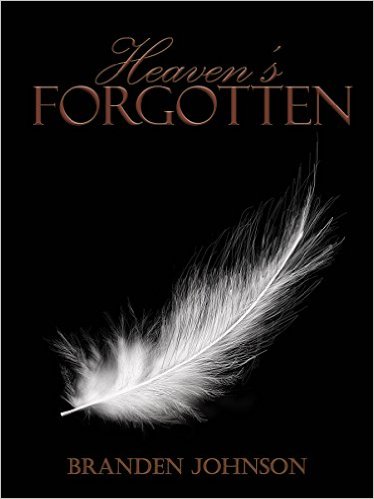
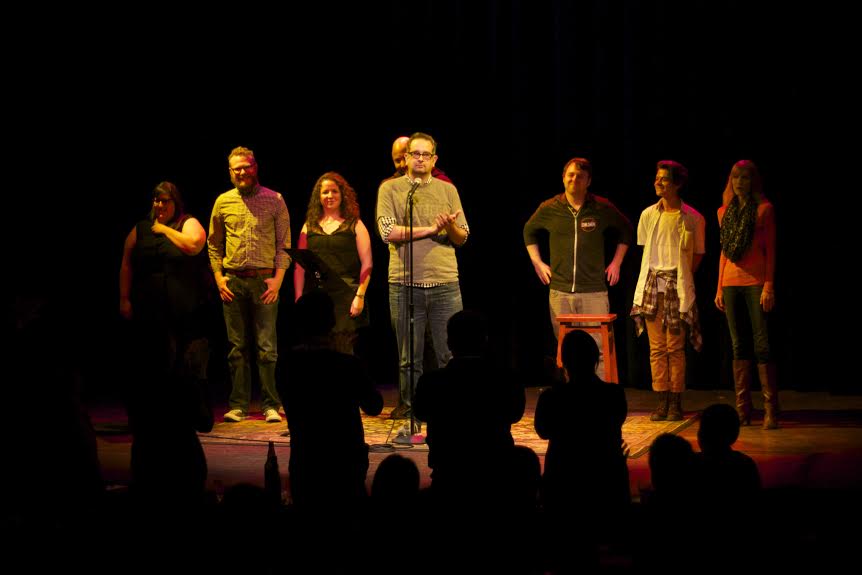 The live lit show
 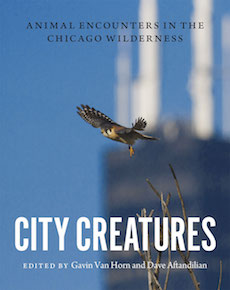 This month, University of Chicago Press published
 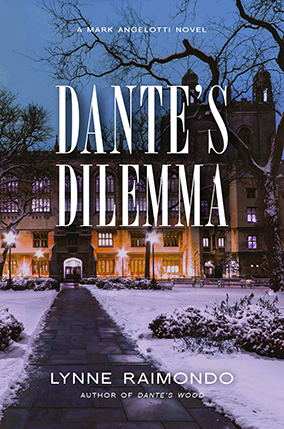 The most interesting investigator in Chicago's strong tradition of crime fiction isn't a detective, a lawyer, or even a journalist. Mark Angelotti, the wisecracking protagonist of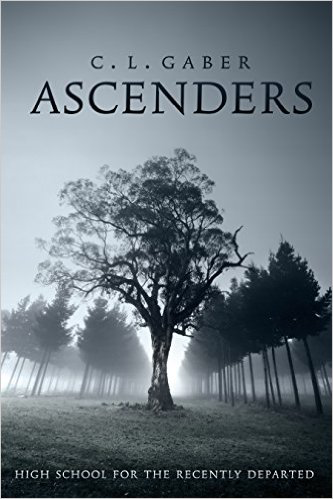
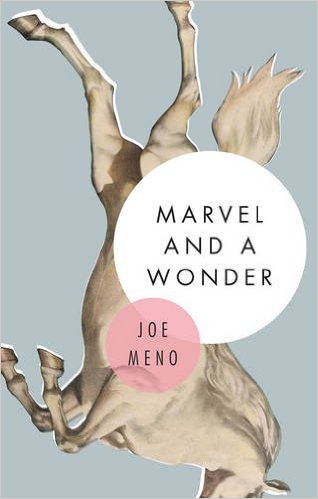

 Book Club is looking for new contributors to help us cover all things literary in Chicago. We're looking for general Book Club writers, but also those interested in covering specific beats, such as: poetry, live lit previews and reviews, classic Chicago book reviews, bookstore profiles, author profiles, local indie publishing and more.
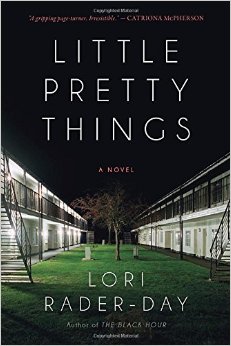 Set in the farthest reaches of Chicagoland -- a fictional small town called Midway in the cornfields of northwestern Indiana -- Little Pretty Things centers on a bizarre murder at a roadside motel, when a maid named Juliet Townsend discovers the body of her best friend from high school. It's creepy, clever, and full of surprises, the kind of book you stay up all night to read in one sitting.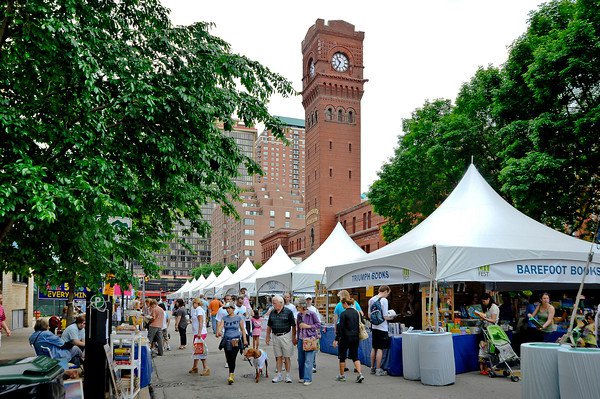
 Non-profit tutoring and creative writing center 826CHI has officially re-located and is open for business! Better yet, to celebrate the auspicious new turf, author and 826 co-founder Dave Eggers will be stopping in for an Open House. Friday, Jan. 16, come to 826's new digs (1276 N. Milwaukee Ave.) and meet the author, enjoy a tour of the new space, refreshments and live music. On top of that, find your family's storyteller with collaborative writing exercises for all ages.
 Washington University Professor William J. Maxwell dropped a few bombs last weekend at his
 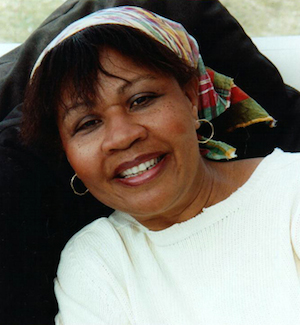 Unlike a public lecture, critically-acclaimed author Jamaica Kincaid's conversation with CHF Emeritus Artistic Director Lawrence Weschler covered a wide-ranging variety of topics. The conversation, which was held at Northwestern University's Cahn Auditorium, was held on Oct 25 in front of an almost-full theater.

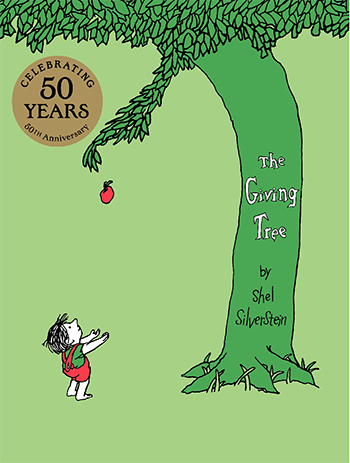 It's the 50th anniversary of Shel Silverstein's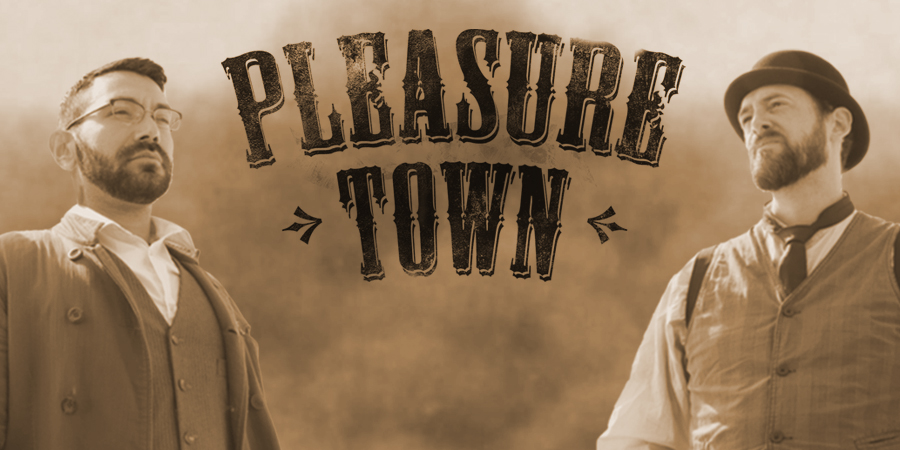
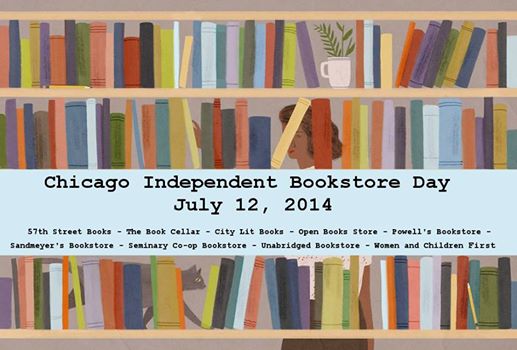
 If you're still bummed about missing out on AWP last month, or you're still nursing a hangover from AWP last month,

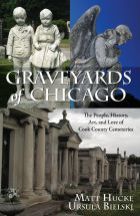

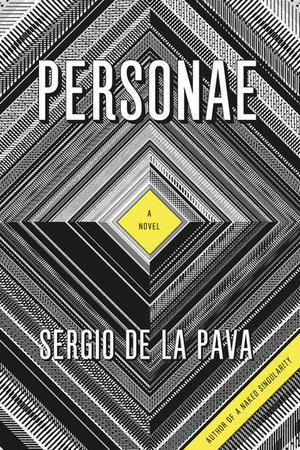 On Sept. 30, the University of Chicago Press published
 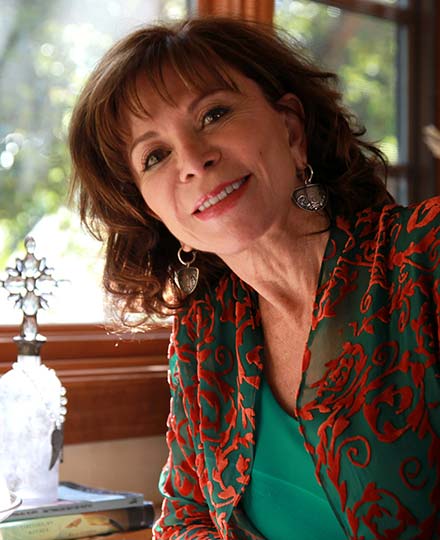 "You should always have a phallic microphone," joked
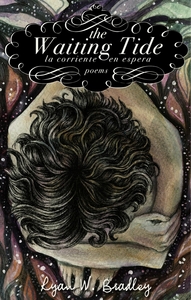 I have to be honest--it's been awhile since I've read an entire collection of poetry, but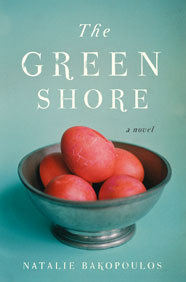
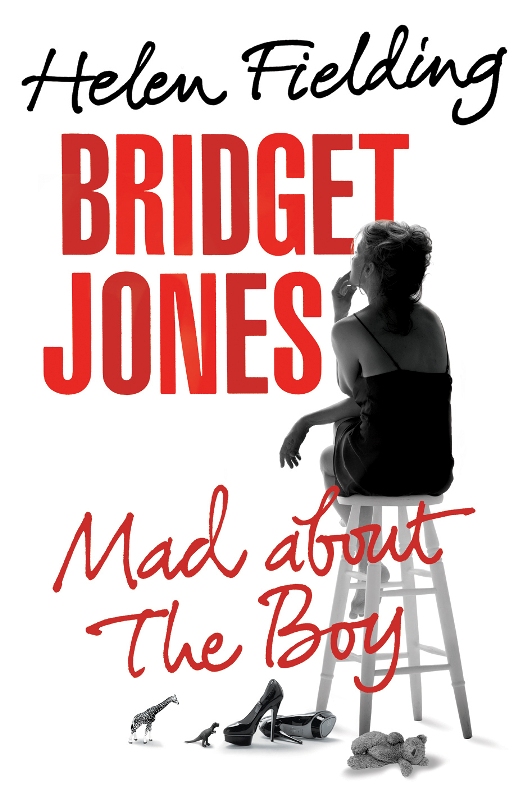
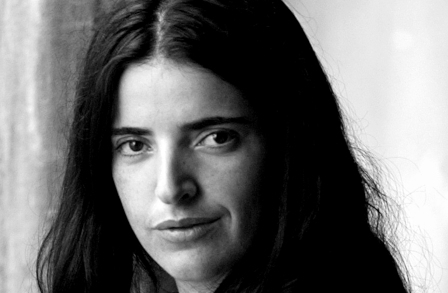 Turkish poet, author and columnist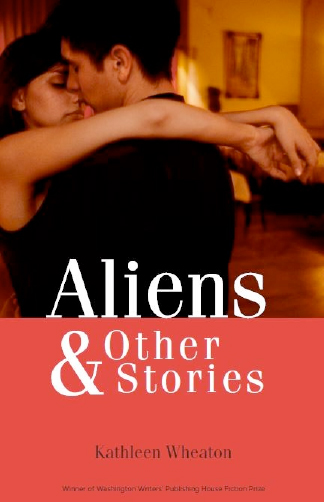
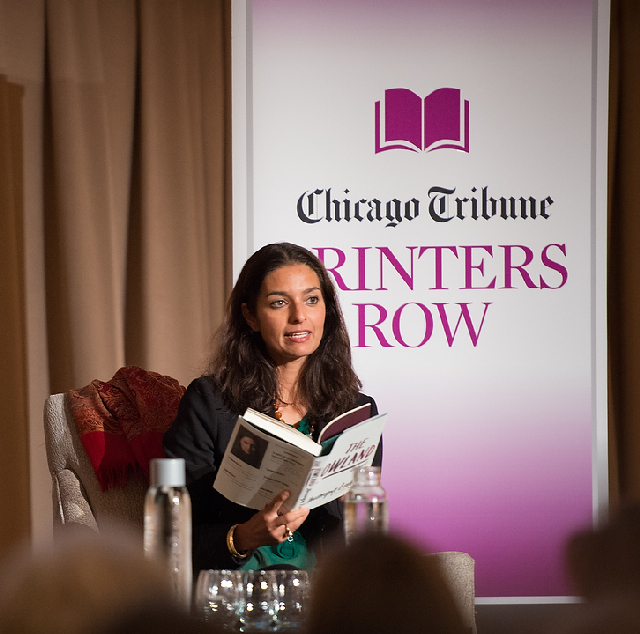

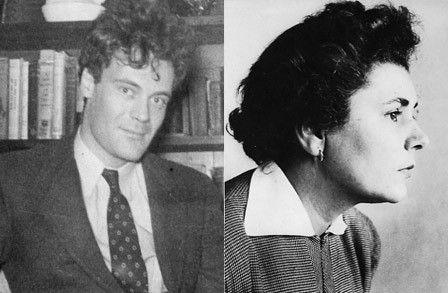
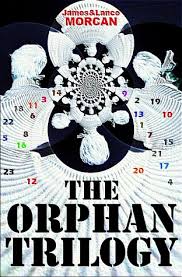 Good spies aren't born; they're made. Such is the case for the genetically altered spies in The Orphan Trilogy, a series of international conspiracy thrillers by New Zealand authors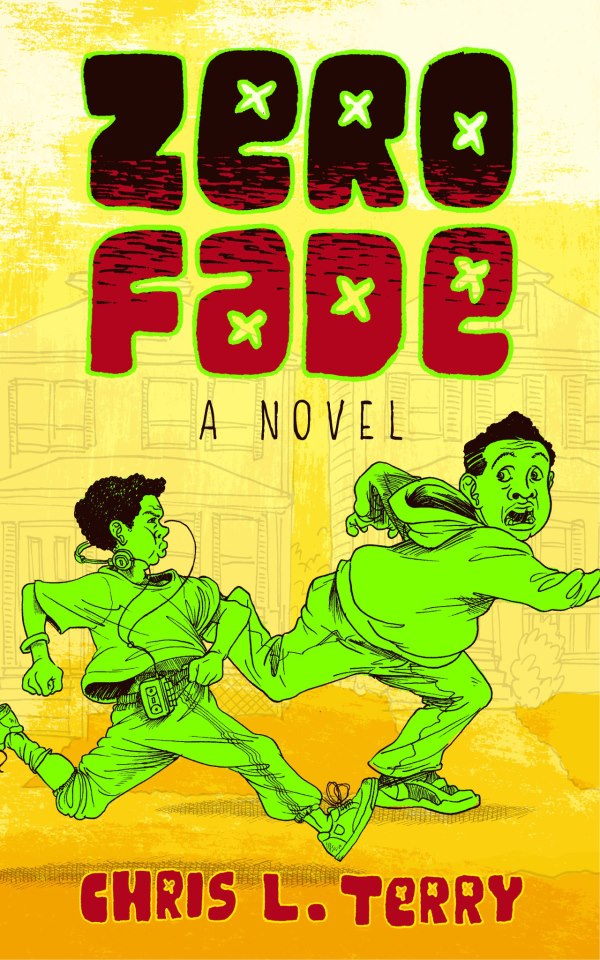
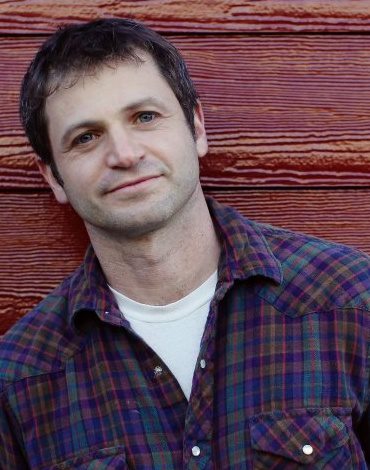 The
The 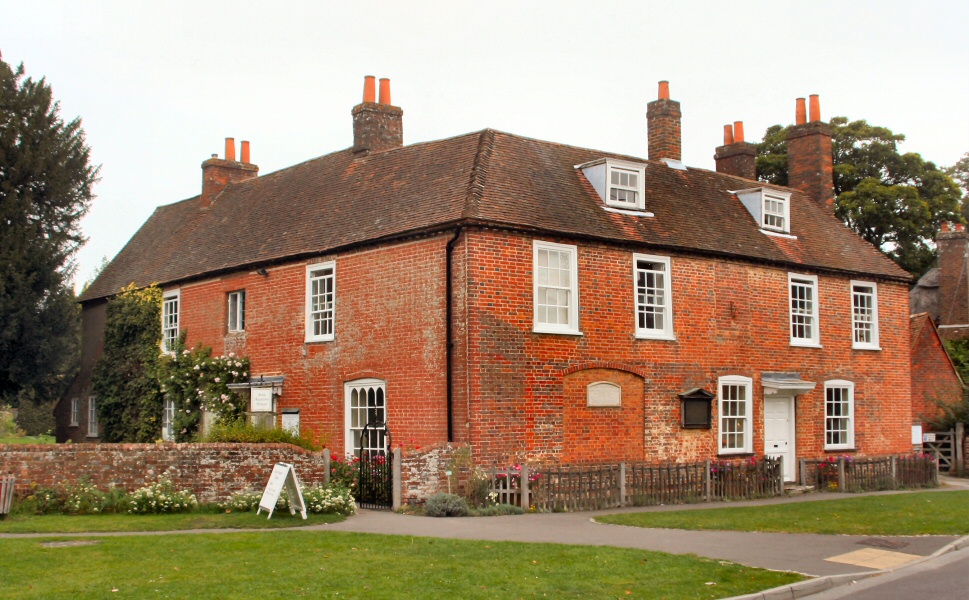
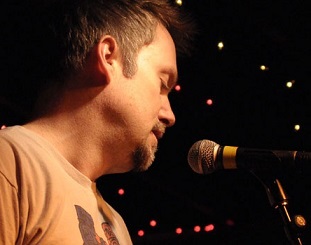 Knuckles will soon be bare again. Trouble will once more be eaten and money once more shat. That's right, Book Clubbers. Starting on Monday, September 9 at 7pm,

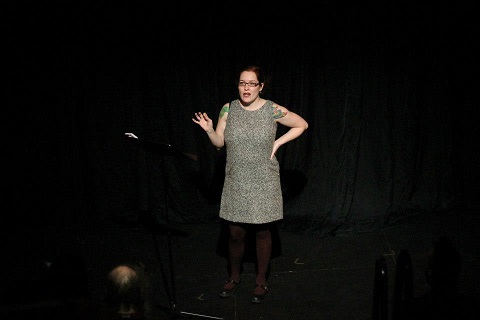
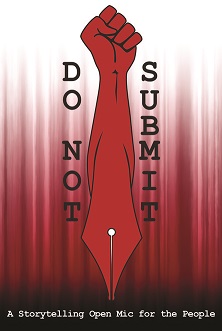
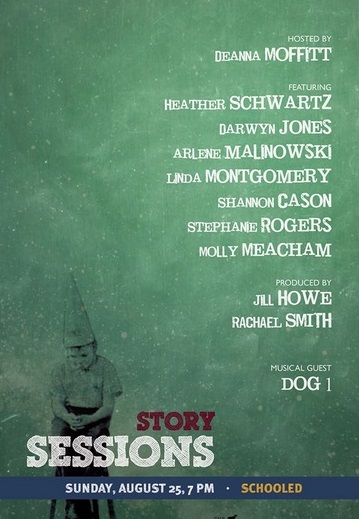 No matter how old I get, the end of summer will always mean the sound of school bells, the smell of sharpened pencils, and the thrill of tearing open a shiny new Trapper Keeper. It's back-to-school time! What better way to celebrate than with an installment of
 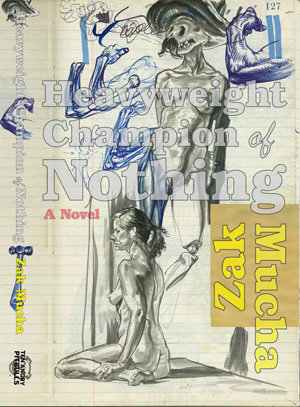 Heavyweight Champion of Nothing is a novel by local author
  Title onward, the theme of H. Melt's
 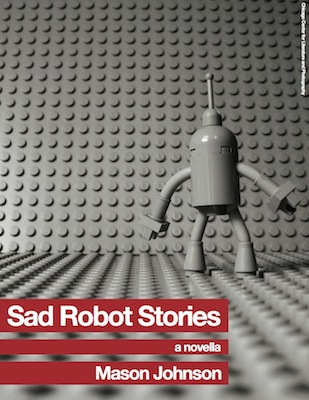 You might expect a book with the title
 Ever been in the middle of your latest read and wondered, “What was the author thinking when they wrote that?” Well, now
 Every few mornings, my mom will e-mail me my horoscope.
  Besemer is featured in the new anthology
  Wilkerson's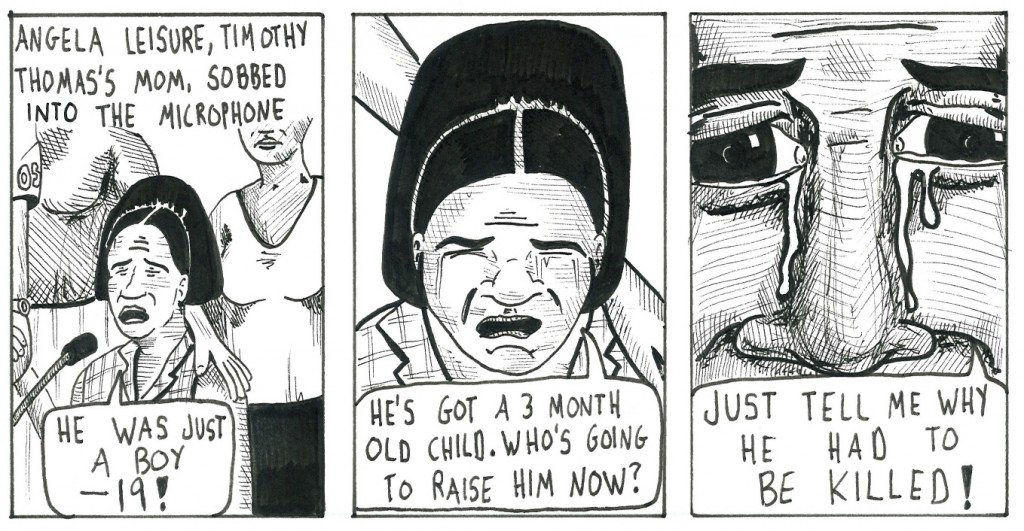
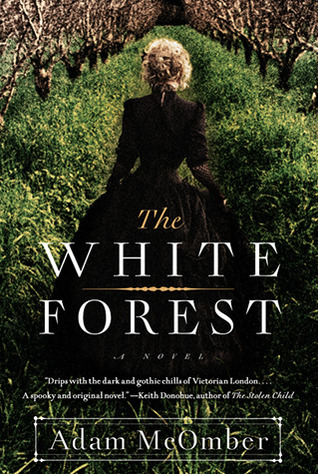

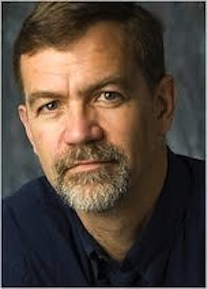
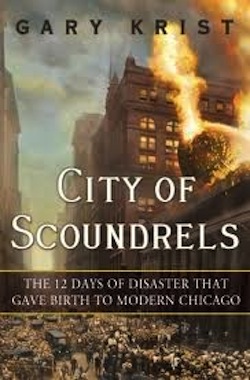
 Prestiges British magazine
  Winter's approaching, and as the weather becomes varying degrees of inhospitable, a cab is more and more an appealing option. There are stories behind the yellow and white vehicles that dot the city, and Russian-born cab driver, artist and writer Dmitry Samarov captures some of them in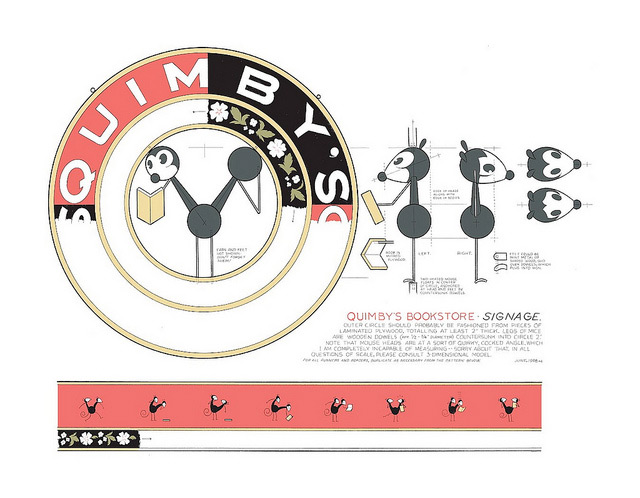


 I made a quick mention of this at our last meeting and the details are now official -- we are teaming with the non-profit organization