Gapers Block published from April 22, 2003 to Jan. 1, 2016. The site will remain up in archive form. Please visit Third Coast Review, a new site by several GB alumni. ✶ Thank you for your readership and contributions. ✶
Popular young adult authors Ally Condie, Jandy Nelson, and Meg Wolitzer bring their nationwide book tour to the Skokie Public Library (5215 Oakton Street) on Thursday, November 5 at 7:00pm. The Penguin Random House authors are on tour together promoting the releases of their new paperbacks: Atlantia by Ally Condie, I'll Give You the Sun by Jandy Nelson, and Belzhar by Meg Wolitzer. The moderated panel discussion will take place in the Petty Auditorium of the Skokie Public Library, and books will be available for purchase courtesy of The Book Stall. This event is free and open to the public. Registration is available online to those with a current library card from the Skokie or other suburban public libraries. If you do not have a library card or if you live in Chicago, call (847) 673-7774 to sign up by phone.
"Beyond Lolita" brings writers and editors together for a discussion on sex and sexuality in literature. Participants will reflect on their own work as well as the work of a diverse array of modern and contemporary writers. Topics may include: craft considerations; the impact writing on these topics has on the culture and on writers themselves; the challenges authors have in writing their own experiences and writing beyond their own experiences; the importance of writing diverse sexuality; aspects of LGBT culture; and more.
The Chicago stop is one of five events being held around the country (Boston, Los Angeles, New York, and Portland) to benefit the PEN America's Writers' Emergency Fund. This event is free and open to the public, reservations are not required.
Award-winning playwright and former Lifeline ensemble member James Sie returns to Lifeline Theatre (6912 N. Glenwood) on October 4 from 6:30 to 8pm to celebrate the release of his debut novel (with illustrator Sungyoon Choi), Still Life Las Vegas: A Novel.
Sie was a member of the Lifeline Theatre artistic ensemble from 1985 -1997, where he served as a playwright (Island of the Blue Dolphins - Non-Equity Jeff Award: New Adaptation, The Road to Graceland - After Dark Award: New Work, Dracula - Non-Equity Jeff nomination: New Adaptation, A Wrinkle in Time - Non-Equity Jeff nomination: New Adaptation), director and actor. In addition to writing, Sie is also a voiceover artist, known for Jackie Chan Adventures, Kung Fu Panda: Legends of Awesomeness and Ice Age: The Meltdown.
The evening will include a wine and cheese reception, a concert reading selection from the novel featuring current Lifeline Theatre ensemble members, and a Q&A session moderated by Lifeline Artistic Director Dorothy Milne, followed by a book signing with Sie. Copies of Still Life Las Vegas will be available for sale in the Lifeline lobby. This event is free and open to the public, but reservations are required. Please contact Lifeline at info@lifelinetheatre.com or call 773-761-4477 to reserve your seat.
Women & Children First bookstore will host an intimate conversation between feminist icons Gloria Steinem and Roxane Gay on October 29 at The People's Church in Uptown. This one night only event celebrates the release of Steinem's forthcoming memoir, My Life on the Road.
Gloria Steinem, best known for her outspoken advocacy on behalf of women, was a founding editor of, and political commentator for, New York Magazine, and founding editor of Ms. Magazine. She is the recipient of many accolades, including the Presidential Medal of Freedom in 2013.
Roxane Gay, critic, and commentator is the author of the 2014 bestselling essay collection Bad Feminist. She is a professor of English at Purdue University and her writing has appeared in The New York Times, Time, The Los Angeles Times, The Nation, The Rumpus, The Butter, and many others.
My Life on the Road details Steinem's life of travel, activism and leadership and how those experiences helped her to inspire change and revolution. This event will be a rare and great opportunity to hear from two different generations of important feminist leaders
The conversation will be held at The People's Church (941 W. Lawrence). Doors open at 6:15pm and the program begins at 7pm with a book signing following from 8 to 10pm. One ticket is included with the pre-order purchase of Gloria Steinem's My Life on the Road from Women & Children First. Tickets are also available in-store, or by calling 773.769.9299.
The book tells the story of Jim Falls, a Korean War veteran, and his 16-year-old grandson Quentin, who he is raising on a farm in southern Indiana. In the summer of 1995, they unexpectedly receive a beautiful quarter horse, whose arrival draws the interest of a pair of meth-addicted brothers, who steal and sell the horse. The Falls must descend into the seedy underbelly of the horse world to get their horse back. You can read an excerpt of Marvel and a Wonder on The Rumpus.
To celebrate the book's release, Meno is throwing a party and reading at the Book Cellar on Thursday, Sept. 10, sponsored by Gapers Block and lit journal Goreyesque. In addition to reading from and signing his new book, Meno will be joined by Jan-Henry Gray, Amy Giacalone, Jan Bottiglieri and Julia Fine, who will each read a short piece of their own. We hope you'll join us there -- RSVP on Facebook.
Gapers Block has a pair of signed hardcover copies of Marvel and a Wonder to give away to two lucky readers. To enter, send an email with the subject line "Joe Meno" and your name and address in the body to contests@gapersblock.com. We'll select the winners at random from all entries received by 5pm Thursday, Aug. 27, and will mail the books out on Friday so they'll hopefully arrive by the 1st. Good luck!
Lori Rader-Day is one of Chicago's most exciting and talented writers, having won massive praise last year for her first novel, The Black Hour, a murder mystery set in Chicago. On July 7 her second novel, Little Pretty Things, will be published by Seventh Street Books, and it's one of the best books I've read in 2015.
Set in the farthest reaches of Chicagoland -- a fictional small town called Midway in the cornfields of northwestern Indiana -- Little Pretty Things centers on a bizarre murder at a roadside motel, when a maid named Juliet Townsend discovers the body of her best friend from high school. It's creepy, clever, and full of surprises, the kind of book you stay up all night to read in one sitting.
Rader-Day completed her MFA in Creative Writing here in Chicago at Roosevelt University, under the mentorship of another great Chicago writer, Scott Blackwood. She was kind enough to chat with me at length about her new book.
Get ready to fan the flames of your fandom this weekend at Wizard World Fan Fest Chicago 2015. It's the first fan convention of its kind in Chicago, and is a "Fang (or Thank) You" to devoted Wizard World fans and con attendees. It's loaded with enough celebs and artists to ensure that everyone will geek out on the convention floor. Fan Fest Chicago runs March 7-8 at Donald E. Stephens Convention Center, 5555 N. River Rd. in Rosemont. Here's the event and panel schedule for the weekend.
Aside from stars like "The Walking Dead's" Norman Reedus and "Orange Is The New Black's" Taryn Manning, Fan Fest Chicago will feature local artists like Justin Castaneda. Castaneda, who is a writer/illustrator from the south side of Chicago, is the creator of the When I Was Little picture book series and HEART. He is currently the illustrator for Wonder Care Presents: The Kinder Guardians with writer Victor Dandridge and Vantage InHouse Productions. He is also a featured artist in comic properties such as Aw Yeah Comics, Omega Comics Presents, and Scratch 9.
I asked Castaneda about his work and upcoming convention trips. Read on to learn more about this homegrown talent.
Zine Fest has announced today that they will be returning in 2015 with a few tweaks, more space, and many more artists and authors. This year's festival for self-publishers will take place on Friday, May 8 and Saturday, May 9 in Plumbers Union Hall just off the Ashland/Lake Pink and Green Line stop. The hall, a new choice for the Fest, will be able to hold over 200 exhibitors, meaning this year's will be the biggest Zine Fest to date.
Years past the Fest has topped off its wealth of exhibitors with readings, panels and classes, and this year is no different. Though specifics are forthcoming, expect plenty of workshops on the DIY of self-publishing, and panels featuring the industry's greats.
Want to exhibit? Submissions for Zine Fest 2015 open on February 22 at noon sharp (central time). Either way, make your way to 1340 W Washington Blvd. on May 8 and 9 for the best self-publishing the scene has to offer!
Donna Seaman was happy to speak with me. It was a surprise; her reputation preceded her. I knew Seaman was the woman who'd interviewed Martin Amis at this year's Chicago Humanities Festival. She is also a senior editor of Booklist.
These facts alone I describe as a "reputation": leafing through its pages on the bus downtown, I recognized Booklist as the answer to my past weekend's wondering, of literature's fading importance; and Amis was the coy and mellifluous knight at the masthead of that importance. We had all cheered, in the audience, when he came on stage. Because in his dry wit and Swansean tone we all thought we were hearing something of the truth.
She had a hand in both worlds and that fact alone led me to anticipate she'd be a little bit scary. She wasn't.
Washington University Professor William J. Maxwell dropped a few bombs last weekend at his Chicago Humanities Festival lecture, "FBI as Literary Critic." Abandoning his Powerpoint-style slideshow for a "fuck it...what do you wanna know?" approach, Maxwell's open-endedness miffed some festival subscribers but opened the floodgates for a more expansive dialogue. He began talking of J. Edgar Hoover's interest in authors of the Harlem Renaissance and the Black Arts movement.
The subject led to unexpected side streets of death threats and latent homosexuality. His opening anecdote involved a white FBI agent named William C. Sullivan, a professorial type and liberal arts graduate, who wrote a letter to Martin Luther King Jr. in an implied black voice. "Like all frauds," Sullivan wrote, "your end is approaching." Gasps rippled through the audience.
The letter ended, "there is but one way out for you, you better take it before your filthy, abnormal fraudulent self is bared to the nation."
A man in a starched shirt raised his hand. "This sounds something like a death threat!" he exclaimed. Maxwell had assumed that this, and Hoover's 40-year homosexual marriage, were common knowledge.
The Chicago Humanities Festival begins celebrating its 25th anniversary on Saturday, October 25th. This year's theme, "Journeys," has been in the works for a while, so get ready to visit various nooks of the city for a few (dozen) of the 80 events, which will be concentrated at cultural institutions in the downtown area, but will also branch out to Northwestern University and the University of Chicago.
We recommend starting with a jaunt to Evanston for a panel with renowned essayist, Eula Biss. Biss is the author of the award-winning Notes from No Man's Land, a collection of essays exploring race and racial identity that Biss compiled while traveling across the country. Her latest work, On Immunity: An Inoculation, spans less geography, but tackles no less controversy; prompted by the anxiety of new motherhood, Biss takes a harrowing look at the science and history of immunizations. The author will be joined by Katie Watson, a professor of medical humanities and bioethics at Northwestern.
The panel will run from 2:30pm-3:30pm on Saturday at the Owen L. Coon Forum inside of the Donald P. Jacobs Center at 2001 Sheridan Rd, Evanston. Tickets will be available at the door (cash only), and are $5 for students/teachers, $9 for CHF members, and $12 for the general public. For more information, call the box office at 312-494-9509.
The Chicago Humanities Festival begins full-swing this weekend, and four BC staff writers are first in line. Check out where we're headed this Saturday, Oct. 25, and why you should tag along!
Jack @ Jamaica Kincaid (11:00 am)
In college, I accidentally signed up for a literature class entitled "Caribbean Literature." Thinking it'd be sort of a blow off course, I quickly found out I was dead wrong. The lit that we read, although there was an overwhelming amount of it, was incredibly enjoyable and included writers such as Sam Selvon, Edwidge Dantecat and Nobel Prize-winner V.S. Naipaul.
Of all the books we read during that semester, there's one that stands out above all else: Lucy by Jamaica Kincaid. I read the text front to back in one sitting, which was admittedly no real feat, the novella being somewhere around 100 pages. However, it was my favorite out of all the quality books that we read.
Much of Kincaid's work reflects on the disorienting experience of moving from one place to another, a perfect companion for many a Chicagoan. A widely-acclaimed writer for her fiction, nonfiction, and work as a staff writer at The New Yorker, Kincaid has done it all and won many prizes in the process. Check out her talk with CHF Emeritus Artistic Director, Lawrence Weschler, on Oct. 25, 11am-12pm at Cahn Auditorium. Tickets are $15 for CHF Members and $20 for the general public.
Dannette @ Eula Bliss (2:30 pm)
Biss is the author of the award-winning Notes from No Man's Land, a collection of essays exploring race and racial identity that Biss compiled while traveling across the country. Her latest work, On Immunity: An Inoculation, spans less geography, but tackles no less controversy; prompted by the anxiety of new motherhood, Biss takes a harrowing look at the science and history of immunizations. The author will be joined by Katie Watson, a professor of medical humanities and bioethics at Northwestern.
Alex @ Wallace Shawn (5:00 pm)
Whether your memories of Wallace Shawn are at dinner with Andre Gregory, shouting "inconceivable!" into the ironic abyss of The Princess Bride or starring in Jonathan Demme's newest film, The Master Builder (an adaptation by Shawn of Ibsen's play), it is certain that this Saturday's Chicago Humanities Festival event would be silly to miss.
The iconic actor and playwright has been featured in nearly 100 films (including 7 in 1995 alone). He was awarded the PEN/Laura Pels International Foundation for Theater Award in 2005 as a Master American Dramatist.
Miden @ Gary Shteyngart (7:30 pm)
Even if one hasn't heard of Gary Shteyngart, bookstore loiterers would doubtless recognize the polka-dotted jacket of his bestselling novel Super Sad True Love Story. When I first started reading Love Story, I underlined every phrase that made me laugh out loud. Now, my copy is so dense with stripes one could feasibly call it nautical.
Of course I can't help but wonder about the author of a book that so strikes me with its wit. Now I need not wonder at all: Shteyngart's memoir, Little Failure employs both wit and heart in detailing his childhood; from the transition from Soviet Russia to America, to his extreme childhood asthma, to the climactic unveiling of his first unreleased work -- a 100-page novel about Lenin and a magical goose that he wrote for his grandmother in exchange for slices of cheese.
This Wednesday, Oct. 22, Printers Row presents a luncheon at The Union League Club (65 W. Jackson Blvd.) in honor of Pulitzer Prize-winner and nationally renowned columnist Clarence Page, wherein he will discuss his new anthology of work, Culture Worrier, Selected Columns 1984 - 2014, Reflections on Race, Politics and Social Change.
In the 30 years since his first column in The Chicago Tribune, Page has witnessed a multitude of American milestones; his commentary on which has rightfully earned Page a revered place in the journalistic community. The anthology traverses decades and topics alike, as his interests, though always built around a core of cultural analysis, are truly varied. (Perusing his latest posts on Page's Page you'll find articles regarding President Obama's second term, the food gentrification of collard greens, and the American response to the ebola virus, to name a few.)
Page will be joined in discussion by Bruce Dold, editorial page editor of the Chicago Tribune. The event kicks off with a reception at 11:30am, with the discussion set to begin at noon. Admission is $35, and copies of Culture Worrier will be available for sale at the event.
John Lahr, veteran writer and biographer, sat on the Steppenwolf Theatre stage Monday night to discuss his definitive and intimate biography of Tennessee Williams, one of America's greatest playwrights.
His book, Tennessee Williams: Mad Pilgrimage of the Flesh (Norton 2014) is one of the five nominees for the nonfiction National Book Award.
Lahr and Martha Lavey, Steppenwolf artistic director, were seated on a stage dressed for the cluttered Irish bachelor-hoarder's apartment for the current Steppenwolf production, Conor McPherson's The Night Alive. Lavey, whose departure as artistic director was recently announced, was prepared with her own advance copy of the book stuffed with fuchsia post-it notes. She asked short, pointed questions and let Lahr warm to his subject.
Williams, born Thomas Lanier Williams in 1911, adopted the name Tennessee early in his writing career. He wrote some 70 plays including masterpieces such as The Glass Menagerie, Streetcar Named Desire, Cat on a Hot Tin Roof, The Night of the Iguana, The Rose Tattoo and Summer and Smoke.
Who better to discuss journeys than Jamaica Kincaid, Cheryl Strayed, Marjane Satrapi or Philippe Petit? Than those makers who traversed oceans, countries, revolutions; who proved that the most harrowing journeys can occur within just two hundred feet of tightrope?
The much-anticipated Chicago Humanities Festival returns for its 25th year with an extraordinary line-up of events, all centered around the theme of "Journeys." The tremendous talent includes, in addition to the aforementioned, writers like Ben Marcus (Leaving the Sea, Flame Alphabet), Eric Schlosser (Fast Food Nation), Eula Bliss (On Immunity), Gary Shteyngart (Little Failure), and Jesmyn Ward (The Men We Reaped) to name only a few. Sit in on conversations with these authors and more as they recount journeys actual and notional; from the adventures that inspired their books to the very personal journey of writing them.
The festival kicks off on Oct. 21 with a Benefit Gala featuring The New York Times Op-Ed Journalist, David Brooks. Then, on Oct. 25, CHF begins full swing, with such a wide array of event topics as to make traveling to one program after another a journey in and of itself. In short, if you were looking for something to do between Oct. 25 and Nov. 9, Chicago Humanities can ensure that you will never be bored [PDF].
With each gust of wind the weary thought of winter gets stronger in our heads and suddenly we're all thinking about taking extended vacations in Mexico. Well, for those that can't get away, there's Lit & Luz: a festival featuring visual art, performances, and, of course, readings (how could we forget the readings?) with artists and authors from Chicago and Mexico City. The festival kicks off today at various locations throughout Chicago.
Lasting for four days, (Oct 15-18), Lit & Luz has lectures, interviews, and readings from strong, up-and-coming novelists and poets, such as Álvaro Enrigue, Valeria Luiselli, and Luis Felipe Fabre. Most of the readings are free, although tickets to the closing party, "A Live Magazine Show Extravaganza" put on by MAKE Literary Magazine are going for $15.
Set in 1920's London, The Paying Guests examines the social shift that followed the First World War: the extraordinary moment of transformation for women's role in society. Sarah Waters' much-anticipated novel has been hailed as absorbing, compelling, and eloquent; and now copies are coming to you!
Unabridged Books has just heard word that they will be receiving limited signed copies of The Paying Guests and the only proper vessel for their vast enthusiasm is, of course, a party! Featuring complimentary brew from neighboring DryHop Brewers, snacks, jams, and what promise to be "adorable lit-themed photo ops," this Monday's festivities are not to be missed. In addition to Waters' autographed arrivals, Unabridged will be celebrating Margaret Atwood's new collection, Stone Mattress, and Ian McEwan's new novel, The Children Act. In honor of all three authors, for Monday night only 100% of their works in the store will be available at a 20% discount.
Once you've sunk your teeth into old favorites and new releases, get a sneak peek at what Unabridged has in store for their stock; you might just win advanced copies of upcoming releases.
The festivities are this Monday at 10:30 pm. Come on out for your chance at winning a signed copy, and for the plethora of party perks!
Saturday! Feast on franks with your favorite inter-dimensional travelers at Chowdown at Sundown(ers), Challengers Comics' cook out with special guests, and creators of the Sundowners comic series, Sean Dove, Tim Seeley, and Jim Terry, 4 - 8 pm.
Saturday! Make your way to Quimby's to enjoy Lane Milburn's new graphic novel, Twelve Gems, described by Robot 6 as "'80s-indie black-and-white space-opera," 7 pm.
Glancing at Roxane Gay's latest title, Bad Feminist, I cannot help but imagine someone with a rolled up newspaper, whapping well-meaners on the nose: "Bad feminist! Baaad feminist. Look what you did!"
Now take that picture and imagine that, instead of a newspaper, Gay is wielding a rolled up zeitgeist: all the news, TV, film, music, and literature that have managed to slip through the cracks. (To pull an example from the book, Robin Thicke's "Blurred Lines" became a song. A popular song. Let's all take a moment to wonder how that happened.)
Wrapped in hilarious prose, Bad Feminist is a lab experiment in media dissection. Throughout the anthology, Gay employs dry wit to pick apart thirty-plus essays worth of cultural phenomena; and when not making case studies of Girls or The Help, she analyzes feminism as a whole and its exclusionary tendencies. What does it mean, she asks, to be a woman of color and a feminist? What does it mean to be queer and be feminist?
This Wednesday, August 27th, Roxane will be reading and discussing Bad Feminist at Women & Children First (5233 N. Clark St.) at 7:30 pm. Stop by to chip away at those pieces of culture that subtly undermine feminism -- and maybe to love-bash The Bachelor.
Image courtesy of Uncanny Magazine and Katy Shuttleworth
"Is that a unicorn...in space?" you might ask, staring at the logo (created by Katy Shuttleworth) for Uncanny Magazine, the latest endeavor by geek culture mainstays Lynne Thomas and Michael Damian Thomas. And indeed it is--the drawing symbolizes the close relationship between the science fiction and fantasy (SF/F) genres, a relationship that the Thomases will highlight in their new magazine, along with original artwork and literature. But it also represents the proximity of fandom and art, of passions and professionalism.
Uncanny will feature stories, prose, poetry and cover art in, and inspired by, the realms of science fiction and fantasy. The online magazine will be available as an eBook (.mobi, .pdf, . epub) on a bimonthly basis (first Tuesday of the month) at all major eBook stores. Each issue will be made up of original short stories, reprinted stories, poetry, interviews, and nonfiction essays. Because it will be a professional magazine, non-fiction and art work will be solicited, and paid by direct commission. The editors will publish work that reflects their commitment to diversity and representation, and will even have an open call for submissions (for fiction and poetry).
Lyra Hill, creator of the anarchic and elaborate live comics series Brain Frame, has dark hair and round eyes. She often looks tired as she is, often, tired these days.
She speaks with her hands clasped, and looks at those who speak to her with expectation and attention. Standing atop the stage at the historic, newly restored Thalia Hall she is unmistakably a person in charge.
The interior is massive and neo-gothic. The theater chairs that make up its balcony once belonged to a middle school auditorium. The folding chairs above, rumor has it, were at one point courtside seats for the Lakers. Its stage recalls the Phantom of the Opera and Amadeus - in fact, the entire structure has the feel of Prague's neo-everything city center. No mistake, as it was modeled in 1892 after the Prague Opera House, a romantic, expensive-looking venue in the midst of a burgeoning, colorful neighborhood - in this case, Pilsen. Lawn chairs, plastic cones and colorful rope often impede parking on side streets.
Soon the theater will fill with people of all ilk and experience. Fans of Brain Frame are diverse: in the hour Lyra and company scout the space, most mention is made of whose parents are coming (5 of 8 performers present). However, Brain Frame's 3rd Anniversary/Grand Finale show (Brain Frame 19) will likely draw a crowd larger than the average middle school recital. This "homage to ancestral experimentation" is a sort of rite in Chicago. Commonly acknowledged as a "live comix reading", BF nevertheless doesn't shy from ambiguity.
At lunch months earlier, I offer Gertrude Stein as a comparison.
"It's like a salon," I propose. She shrugs.
"Yeah."
"A writer," Thomas Mann once noted, "is someone for whom writing is more difficult than it is for other people." For me, at least, the blank page is a tundra, inhospitable and endless, and one inches toward it only while calculating escape routes -- I can go back to this minimized Chrome window at any time; if I get stuck I can stop at 9 o'clock.
To help generate the courage needed to charge across it, local author Jac Jemc (My Only Wife) has devised a workshop called Fooling Ourselves (Into Writing), which she'll offer this Saturday, August 9, at the Chicago Publishers Resource Center (858 N. Ashland) at 1 p.m. Over the course of three hours, she'll delve into tactics such as creating "language banks" and accessing "gluts of memory" to get unstuck. The workshop fee is $25, although another generous source of writerly bravery -- Jemc's own rejections blog -- is free.
Lawrence P. Santoro, the amicable and talented creative man-about-town who worked in Chicago theater as a director, actor and dramaturge until finding his distinct voice as a writer of dark fiction died on Friday, July 25 in his Chicago apartment. He was 71.
He died from cancer of the duodenum, a rare and aggressive form of cancer.
"Larry was patient and a great teacher, and he made lifelong friendships with our motley crowd (of amateurs)," said Ted Allen, host of the TV series "Chopped," who was directed by Santoro as a key cast member of the Chicago Gridiron Show, an annual benefit for the scholarship fund of the Society of Professional Journalists. "I'll always miss him and think of him fondly, and will always remember the Gridiron show as one of the most fun times of my life, largely because of him."
Did you enjoy Chicago's first Independent Bookstore Day, or take in a reading at the Book Fort at Pitchfork? Well, the literary love fest continues in Chicago this weekend, thanks to the efforts of The Newberry Library. You'll have a chance to shop--and shout--till you drop. Never has "you can't have too much of a good thing" seemed like a real possibility.
The Newberry Library kicks things off with its 30th Annual Book Fair, which runs from July 24 through July 27. Thursday is the Preview Night for members only, but don't worry, there will be plenty of books left for Friday through Sunday. Most books are $2 each, and psst, become half off on Sunday. It's the perfect time to build your personal library with fiction, cookbooks, or art books, as well as to track down rare collectibles: you could snag a first edition of The Lord of the Rings, or get an autographed copy of one of President Obama's works.
Local author Lori Rader-Day, crime writer extraordinaire and vice president of the Midwest Chapter of the Mystery Writers of America, will be celebrating the launch of her new novel, The Black Hour at the Book Cellar in Lincoln Square -- 4736-38 N Lincoln Ave. This event is as homegrown as it gets -- the novel is a dark mystery that takes place on a Chicagoland college campus, is written by a Chicago native and celebrated at a Chicago independent bookstore.
The event will be held on Saturday, July 19, starts at 7:00pm, and is free! Support your local bookstores and your local authors!
Image courtesy of Chicago Independent Bookstore Day
Chicago works, Chicago writes, and Chicago reads, which is why we don't need any calls (or hashtags) to "Cut down the Amazon" and support our local bookstores, even if they do come from one of our favorite adopted sons. Nine local bookstores have banded together to bring you the first Chicago Independent Bookstore Day on Saturday, July 12, so get ready for the best kind of treasure hunt.
The nine participating bookstores have put together a day of events that will appeal to book lovers from all over the city, and will move book lovers all over the city. Head from Andersonville to Hyde Park, from Lakeview to Logan Square, and make a pit stop in the South Loop to scoop up free (sometimes book-filled) tote bags and take advantage of special discounts and promotions. You can also meet some of your favorite local authors and take in a reading or two, as well as graze on tasty pastries and veggie treats.
iStockPhotoThe arrival of summer generates a lot more than heat: it's also the time to churn out oh so many lists. You need to know where the best sidewalk cafés, the best margarita bars, or best urban hideaways are. In short, you need advice on the best way to spend your time outdoors. And at first glance, a rundown of the best books to pick up seems counterintuitive, but the people have spoken: summer reading lists are no longer just for bridging the gap between school years.
All Weekend! Printers Row Lit Fest rings in its 30th year at the historic printers' hub on Dearborn with hundreds of booksellers, over 200 authors, and a wide array of readings and workshops. If you are interested in literature and you live in Chicago, Lit Fest is where you need to be. Check out the schedule here and start planning your weekend. The festival is free, though indoor talks and events require tickets or a Printers Row Lit Fest Pass, which comes with two complimentary tickets for up to five programs, plenty of commemorative swag, and a 1-year digital subscription to Printers Row Journal.
Saturday! Thea Goodman reads from her debut novel, The Sunshine When She's Gone at Seminary Co-op Bookstore, 1 pm.
Saturday! Maya Lang stops by City Lit Books to discuss her book, The Sixteenth of June-- a loose adaptation of James Joyce's Ulysses-- with Borrowers author Rebecca Makkai, 5 pm.
All Weekend! Don't forget that CAKE: Chicago Alternative Comics Expo will be holding events throughout this upcoming week! Check out the schedule here to peruse an array of events, all free and open to the public.
Tonight! City Lit books hosts Diane Raptosh and Roger Bonair-Agard in a poetry reading, 6:30 pm.
Tonight! Daisy Rockwell reads from her new novel, Taste at Women & Children First, 7:30 pm.
Saturday! Powell's Bookstore receives a visitb from author Bonnie ZoBell to discuss her debut short story collection, WHAT HAPPENED HERE, 7 pm.
Sunday! Woman Made Gallery's reading series returns with poets Renny Golden, Vandana Khanna, Mary McMyne, Janeen Pergrin Rastall, Yunuen Rodriguez, and Erika Sanchez; all discussing a theme bound to send you spinning in Derrida logic circles: "The Other," 1:30 pm.
All Weekend! For those James Joyce fans out there, a theatrical adaptation of one of his classic novels entitled ULYSSES 101goes up this weekend at Cafe Logan. (Don't worry -- the 265,000 words have been slightly abridged, so it shouldn't be 8 hours long.)
Poet and author Maya Angelou died at the age of 86 today, May 28th, in North Carolina. Angelou's work has been a guiding light for many poets, authors, artists and musicians.
She has published multiple poetry collections, plays, and several autobiographies most notably I Know Why the Caged Bird Sings (1963). She was nominated for a Pulitzer Prize, a Tony Award and won three Grammys for spoken word albums. Angelou was the first woman and African American to read at a Presidential inauguration, for President Bill Clinton's first term in 1993.
The outpouring of sympathy is hitting the internet, in tweets from Chicago rapper and musician Common and musician Wynton Marsalis.
Locally, Chicago's Poetry Foundation celebrates the life of Angelou on their blog.
If you haven't yet befriended Charles Cake, you should. Not only is Charles a top-notch Facebook friend and all around stand up guy, but he also has the full scoop on his not-to-be-missed namesake, CAKE: the Chicago Alternative Comics Expo.
Chicago has long been a hub of underground comics, and this week CAKE is rolling out a schedule of events -- all of which are free and open to the public -- that will do that history proud. The expo's third year kicks off with a live comic reading sponsored by Minneapolis-based comics publisher 2D Cloud. These works, imagineered by Edie Fake, Anna Bongiovanni, Sam Alden, Andy Burkholder, Mark Connery, Sarah Ferrick, John Holden, Scott Longo and Annie Mok -- liberally linked here for your viewing pleasure -- are intricate, expressive and beautiful. Head over to Galerie F (2381 N. Milwaukee Ave.) this Thursday at 7 pm to hear these stories told in the authors' own voices.
After the 2D reading, gear up for whole other slew of CAKE-sponsored goodness this Friday. Artist Tony Millionaire will be doing a signing at Graham Cracker Comics (77 E. Madison Ave.) from 5 - 7 pm. According to advertising, he'll sign anything, so get creative. Quimby's Bookstore (1854 W. North Ave.) will host three of CAKE's exhibitors: Elisha Lim, MariNaomi, and Mike Dawson. These critically acclaimed authors and illustrators will read from selections of their latest work. In case that isn't enough hooplah for one evening, the third option for your Friday is an Artist's Panel at DePaul's School of Cinema (14 E. Jackson St.), featuring the story artists of beloved late-night cartoon nonsense, Adventure Time: Jesse Moynihan, Michael DeForge and, making a second appearance, Sam Alden. The panel, which begins at 6 pm, will discuss how Adventure Time's collaboration with alternative comic artists has breathed new life into the form and content of animated narrative.
This June 7th and 8th, the intersection of Polk and Dearborn will be overflowing, bubbling, bursting with books. That's right, Printer's Row Lit Fest is back, and its 30th year features a schedule that would whet any literary palette. With all that to offer on top of featuring over 200 booksellers (for the low, low price of Free), Printers Row is going to need a little help.
Get involved with the festival by signing up to volunteer here! With tons of positions available, you may find yourself greeting visitors, escorting authors-- or just sticking by the good eats. Either way, a day spent surrounded by books sounds like a good day to Book Club!
Tonight! Author James Fearnley discusses his book, Here Comes Everybody at the Book Cellar, 7 pm.
Saturday! JaQuavis discusses his new book Whitehouse at CPL's West Englewood Branch, 2 pm.
Saturday! Take your self-started project to the next level with The Propeller Fund, an organization dedicated to stimulating creative growth in Chicago. Attend a workshop at Mana Contemporary Chicago to learn how to apply, 2233 S. Throop St., 1 pm to 6 pm.
Saturday! David Grubbs reads from his book Records Ruin the Landscape: John Cage, the Sixties, and Sound Recording, featuring musician John Corbett, at Corbett vs. Dempsey, 3 pm.
Sunday! Mike O'Flaherty reads from his new novel Where do You Run? at 57th Street Books, 3 pm.
The Book Cellar (4736 N. Lincoln) describes its monthly Local Authors Night as one of the shop's "most satisfying and eclectic events." This Wednesday, May 21, at 7 p.m., they'll present four writers who have, at least, a broad genre (fiction) and a general location in common--beyond that, it's hard to say. (And picking up on unexpected connections should be half the fun.)
Eric Charles May's debut novel, Bedrock Faith, sets the newly religious ex-con Stew Pot Reeves back in the South Side neighborhood where he grew up--a neighborhood which, May told the Chicago Tribune, is based on his own native Morgan Park. In her own entree into the form, Kathleen Rooney takes on a higher-profile part of the city's landscape in O, Democracy!, the tale of an aide to Illinois's Democratic senator (not that one) watching the events of 2008 unfold from a surreal distance. Lynne Raimondo's Dante's Poison--the second in her Mark Angelotti series--amps up the drama with a murder mystery concerning a controversial psychotropic drug. Finally, Kodi Scheer breaks from realistic convention in her volume of stories Incendiary Girls, filled with humans morphing into animals and even less-recognizable beings.
Writers Megan Milks and Cris Mazza both have ties to UIC, but more importantly, they both do strange things with genre. In her debut collection, Kill Marguerite and Other Stories, Milks gets messy with forms including erotica, choose-your-own-adventure books, and the Sweet Valley High series, just to name a few. On Thursday, May 8, at 7:30pm, she'll join Mazza for a reading at Women & Children First, 5233 N. Clark St. As for Mazza, she's celebrating a new edition of the novel Various Men Who Knew Us as Girls and this year's Something Wrong with Her, a "real-time memoir" exploring anorgasmia through musical scores and a companion CD in addition to more straightforward diary entries. Audiences shouldn't be surprised if the evening strays a bit from the standard literary reading.
Detroit Rock tours the Chicago lit scene this Wednesday, April 30, when author Sean Madigan Hoen reads from his memoir, Songs Only You Know (Soho Press) at City Lit Books, 2523 N. Kedzie, at 6:30pm.
Hoen, who was raised in Dearborn, Michigan, now resides in Brooklyn, NY where he teaches creative writing. He is known for his work in the bands Thoughts of Ionesco, The Holy Fire and Leaving Rouge. In his memoir, Hoen talks about his experience in the Detroit punk scene, and how he hid this lifestyle from his family. His father was also leading a second life, one in which he was a crack addict. Hoen's memoir walks through the adventures of him as a teenager, juggling his obsession with music and his sordid family life.
Following the reading, stick around to chat with Hoen, or buy your own copy of the memoir, available for purchase at the event. The reading is free and open to the public.
Invisible: Personal Essays on Representation in SF/F, an anthology about the importance of representation in science fiction and fantasy edited by Jim C. Hines, was released earlier this month (all e-book proceeds will go to Con or Bust). The collection is made up of heartwarming, and heartbreaking, posts on inclusion and exclusion, many of which originally appeared on Hines' blog. Michi Trota, a Chicago writer, speaker, community manager/organizer, geek, and -- what's the word? oh, yeah -- badass, contributed "I Don't See Color," an excellent essay about how her fandom(s) helped her to recognize how much she has struggled with her relationship with race. I recently asked Trota some questions (one for every panel she's appearing in at C2E2 this weekend -- well, almost) about her piece for Invisible, and her involvement in the geek community.
Tonight! Author Rosalind Cummings-Yeates and musician Billy Branch come together at City Lit Books to discuss book Exploring Chicago Blues, 6:30 pm.
Saturday! Tribune reporter Liam T. A. Ford discusses his book Soldier Field: A Stadium and its City at Logan Square Library, 1 pm.
Saturday! Join New Yorker musica nd rock critic Sasha Frere-Jones as he discusses his work. 3 pm at Corbett vs. Dempsey.
Saturday! Enjoy bite-sized musings with 20x2! A transplant from SXSW, 20x2 features 20 writers, artists, musicians, filmmakers and even chefs, each with two minutes to answer the same question: "Where are we?" 7 pm at Schubas, $10.
Saturday! Quimby's Bookstore hosts Hillary Chute, long-time interviewer of contemporary cartoonists, in a discussion of her new book, Outside the Box, wherein she dishes all her insider's scoop. 7 pm.
Everyone from People Magazine to NPR has been posting on their twitter accounts the passing of renowned Columbian author Gabriel Gracia Marquez who died yesterday, April 17, 2014 at the age of 87 in Mexico City, Mexico.
Marquez was best known for his novels One Hundred Years of Solitude (1967) and Love in the Time of Cholera (1985). He won the Nobel Prize in Literature in 1982. Marquez has been called one of the world's significant authors of the 20th century and one of the most popular Spanish-language authors since Cervantes.
See how Chicagoans are honoring his life and work via their Twitter accounts.
It's safe to say that practically none of us in the U.S. are reading enough literature in translation. And should you protest, well: what's the last novel you read from, say, Bulgaria? (For real, tell me about it in the comments!) This Friday, April 18, at 6pm, Seminary Co-op Bookstore (5751 S. Woodlawn) and the University of Chicago's Center for East European and Russian/Eurasian Studies bring together two prominent Bulgarian authors with their translators. In addition to reading from their novels, Virginia Zaharieva and Albena Stambolova will discuss what it was like to collaborate on their translations with Angela Rodel and Olga Nikolova, respectively.
Zaharieva's Nine Rabbits came out in Bulgaria in 2008, and immediately won praise for its eclectic blend of memoir, feminist meditation, and even recipes, letting ambitious readers can experience the story in a sort of taste-o-vision. It tells the story of a middle-aged artist and her childhood being raised by her grandmother, a woman of "monstrous energy," on the coast of the Black Sea.
Stambolova is a somewhat weirder writer. Her debut novel, Everything Happens as It Does (originally published in 2002), does the opacity of its title justice with quotations from Wittgenstein, psychoanalytical archetypes, and elements of fairy tales. Her prose, at least as filtered through Nikolova's, is both destabilizing and humorous--for instance: "Wearing glasses had the effect of calming the vague fears the family harbored about Boris. Not that now they knew him better than before. But an introvert boy with glasses was less worrying than an introvert boy without glasses." It ought to be a joy to hear in person.
Waters will be discussing her new book, Art of Simple Food II: Recipes, Flavor, and Inspiration from the New Kitchen Garden, and the Edible Schoolyard Project, whose mission is to build and share an edible education curriculum for kindergarten through high school.
Both Waters and Reichl began their culinary careers in 1970s California at the beginning of a food revolution based on fresh, local and seasonal ingredients. Waters is often credited as the mother of American food, starting with Chez Panisse, one of the most highly regarded restaurants in the world. Waters is also recognized for bringing the Slow Food Movement to the United States, as well as being an advocate for organic foods for more than 40 years.
Reichl is the past editor of Gourmet magazine and a former restaurant critic for the New York Times and the Los Angeles Times, as well as the author of numerous memoirs and cookbooks. Her most recent book, a novel set for release in May 2014, is titled Delicious!.
Although tickets to the program are sold out, tickets to a reception following the event are still available here.
In The Bright Continent: Breaking Rules and Making Change in Modern Africa, Nigerian-American journalist Dayo Olopade trains her sights on "the gap between foreign perception and African reality." In the Western media, Africa often exists primarily as an "underdeveloped" destination for foreign aid, with little attention paid to the ways in which Africans are already shaping their countries. From a temporary home base of Nairobi, Olopade spent time observing everyone from modest urban farmers to Ushahidi, a Kenya-founded company that develops web tools for communities to map things like incidents of violence or election fraud. Indeed, The Bright Continent frames what she learned in terms of various "maps"--the different kinds of networks that give modern African ingenuity its character and context.
On Thursday, April 3, at 6pm, Olopade will visit the Harold Washington Library Center, 400 S. State, to discuss what the rest of the world might be able to learn from these novel methods of progress. Admission's free, and books will be available for signing afterward.
We may not be able to import West Coast temperatures, but we can certainly "borrow" some of their talent. LA writer Amelia Gray visits Cole's Bar, 2338 N. Milwaukee Ave., this Sunday and joins some great local authors for a night of readings. Gray is the author of the story collections AM/PM (featherproof) and The Museum of the Weird (FC2), which won the Ronald Sukenick/American Book Review Innovative Fiction Prize. Her first novel, Threats (FSG Originals), was nominated for the PEN/Faulkner award.
Lindsay Hunter (Don't Kiss Me) hosts the event and describes Gray as "brilliant and insane. She's mesmerizing. She's fashionable and a huge nerd. She's a bona fide literary celebrity who'll flick her eyes at a new zit you're cultivating in the same way your own mother would, then offer you the perfect salicylic-acid soaked organic face-moisturizing cloth. No one writes like she does. She knows the right word for everything you could imagine. I've selected local writers who I think have a prayer of keeping up with her--the surreal and crazy charming Beau Golwitzer and the hilarious, surprisingly-soulful-at-times, great-haired Mason Johnson. And me, the Midwestern-by-way-of-Florida mom-writer who can't wait for Sunday. It's going to be a very fun reading, Chicago."
Spring hasn't sprung so much as limped into action, which means we're all still dealing with cabin fever. Get out of the house and get inspired this Thursday at StoryStudio Chicago'sOpen House & Free Class from 6pm-8pm at the Chicago Studio at 4043 North Ravenswood, Suite #222.
Join StoryStudio Chicago staff and prospective students for refreshments and conversation, and then stay for True or False, a free class that will have you experimenting with fiction and nonfiction. You can check out the studio and classrooms and, most importantly, the spring course catalog.
Mr. Carter has spent much of the last thirty years on diplomatic missions and in humanitarian work. He is also the author of over twenty books on subjects such as his presidency, his faith, and his work in the Middle East. His latest book, A Call To Action, focuses on the subjugation of women, which he deemed the "worst and most pervasive and unaddressed human rights violation on Earth" in a recent interview with NBC News' Andrea Mitchell.
Please note that this is a book signing only; Mr. Carter will not be giving a talk. Pre-order the book online for admission to the event, or call 773-769-9299.
Poets & Writers recently helped organize the Barry Gifford reading for Story Week at Columbia College. After hearing Barry speak, I wanted to find out who it was on the East Coast who had made the event happen. Who was "Poets & Writers"?
In my search, I found Program Associate Cathy Linh Che. I read some of her poetry online; "Doc, there was a hand" and "Split" I realized quickly I wasn't tracking down an administrator, but a poet.
John F. Hogan establishes a couple of his credentials right at the outset of his new book: "I come from a police family and worked a summer break from college on the open-hearth furnaces at Republic Steel's South Chicago plant," he writes. Even given this background, though, he says it took years for him to first happen across the 1937 Republic strike's essential stats: 40 men wounded by police fire; 10 killed, most shot in retreat; dozens more beaten by clubs. In The 1937 Chicago Steel Strike: Blood on the Prairie, he reminds us of this deadly episode in labor history and opens a window into a time when any given strike was not just a bargaining tactic but potentially a life-and-death battle.
Metaphors of war are not even a little hyperbolic here. As steel companies and other manufacturers quaked before the tide of union organization rolling through the 1930s, they accumulated massive arsenals of clubs, live ammunition, and, especially, the then-recent innovation of tear-gas grenades. These armed not just the plants' guards, but often the local police forces as well, in line with a cooperative spirit that also occasionally found police enjoying free lunches and other perks at the expense of the companies they were protecting.
It's Wednesday, and it's after 5pm, so we're already 60% done with the work week--congratulations! To celebrate, consider taking in one of tonight's Story Week events, or get a jump on your Thursday plans by checking out the schedule.
We'll close out the festival this Friday with two amazing events: first up, Jeff Toth hosts the "Come One, Come All" open mic at 11am at Columbia College Chicago, 623 South Wabash. And from 6pm-8pm, Rick Kogan presents "Chicago Classics," with special guests who will read works by their favorite Chicago authors. "Chicago Classics" will be held at the Chicago Cultural Center Preston Bradley Hall, 78 East Washington. Both events are free and open to the public.
The reading room at the Poetry Foundation is filled a quarter-way with quiet reverent conversation.
It is March's Open Door Series, featuring Brett Foster and Srikanth Reddy and the room seems intentionally wanting. An open podium stands dramatically lit at its head; scattered lights give the illusion of luminescence but it's a dim, half-hearted brightness, and the blue dusk outside seems brighter.
Beyond the podium stands a courtyard of saplings that further indict anticipation itself as the prologue to the evening. Beyond that, an impossible wall of books.
Under their seats, the March issue of the Foundation's poetry magazine. A cleaner exits a distant doorway guiding a wheeled trashcan and disappears once again, marring and complicating the shelf of numerous journals and novels and anthologies and likely many editions of To the Lighthouse.
When Robert Polito, the Poetry Foundation president, took the stand to introduce Mr. Foster and Mr. Reddy, we were at attention.
The monthly Open Door series is a means of focusing the community and celebrating specific mentors and students from Chicago's many graduate and undergraduate programs. Tonight's event attracted a fair crowd -- the applause was loud and filled the space; the laughter was real and complete; the silences were heavy and concentrated. There seems no better mascot for events like these than the Pegasus of the Poetry Foundation's logo: muscle, winged and flying.
I watched the man I thought was Barry Gifford talk to another, much quieter man, who really was Barry Gifford. The first Barry Gifford moved his hands eloquently and drew curtains in the air with his fingers. The real Barry Gifford said nothing and blinked politely.
A moment later, Barry looked me in the face.
I was a staff writer for Gaper's Block, I said. "A web publication," Joe Mino intoned with a smile.
"I'll only have a few minutes," Barry said, glancing with apology to Joe, then Kara, then me.
"That's alright," I said. "I won't need long."
His eyes are milk-white in places; not cataracts, I am sure. He gazes harder in spite of them; perhaps to spite them. As I shake his hand my wrist is limper, my voice more boyish, my smile less genuine than I'd like. I am struck by Barry Gifford. I struggle for words and thank him.
"Thank you, Mr. Gifford," I say, and age myself. I shuffle into the anonymous deck of the auditorium and hide with my iPhone set to record. I listen to Barry Gifford and I watch him, and this is what I see and hear:
Next week marks the return of one of Chicago's most beloved literary events, Columbia College Chicago's Story Week Festival of Writers. Beginning on March 16 through the 21, Story Week aims to build "a city of words" says Randy Albers, founding producer of the festival and writing faculty at Columbia College, in the Story Week welcome message. This year's theme is DiverCity, the connection between diversity and the urban landscape and how they come together to celebrate the power of urban stories.
Chicago has a great many writers who exemplify this festival's theme. One of Chicago's notable writers Stuart Dybek, will be featured at the festival. He is author of the fiction Childhood and Other Neighborhoods, The Coast of Chicago, I Sailed with Magellan, and the poetry collections Brass Knuckles and Streets in their Own Ink. He has two upcoming story collections, Ecstatic Cahoots and Paper Lantern, which will be released in June. In his writing, the city acts as a back drop, a kinetic character. Dybek will help Albers vision this year in building a 'city of words'.
I got to ask Dybek a few questions about his new books, his events at Story Week and about the short story in general.
You will be on the Story Week panel, "Why the Short Story". You're definitely an authority on the subject with your previous fiction collections and your upcoming releases. What draws you to writing in that format?
Let me preface my answer by saying that some of the aspects that draw me to the short story are certainly not exclusive to the short story. There's a considerable overlap between literary genres and its far more accurate to see genres as arranged along a continuum rather than to treat them as if they inhabit separate gated communities. For me the short story is a good form in which to work with a kind of literary version of chamber music. Because of the scale of the story one can crank up and try to sustain intensity without fatiguing the reader. One might, of course, say the same about poetry, and an often heard observation about the short story form is that the compression it demands gives it a closer kinship to the poem than to the novel. I've long been fascinated by story collections that have some kind of unity--unity of place like Dubliners or Winesberg, Ohio , for instance, or unity of characters and action such as The Things They Carried. Sometimes such collections are given the paradoxical name, the novel in stories, which is misleading. The so called unity of such books actually emphasizes the fragmentary nature of personal life and of community. That sense of finding order, or at least patterns, within fragmentation is central to modernism.
Don't let green sprouting up around the city fool you; there's much more going on this weekend than St. Patty's Day. Friday, March 14th marks the beginning of fifth annual self-pubstravaganza Chicago Zine Fest, a weekend-long showcase dedicated to celebrating the work of small presses and independent publishers.
There are few instances in which so many creatives occupy a single space, and the effect at Zine Fest is awe-inspiring, as one might guess just taking a look at the Fest's impressive exhibitor line-up; bursting with stories, illustrations, and the powerful perspectives unique to zine work. Absorb their work through readings and exhibitions throughout the weekend, and jump into the process yourself with any of the many workshops and discussions scheduled for Saturday, March 15!
The festival kicks off this Friday at 1 pm at Columbia College's Conway Center (1104 S. Wabash Ave.) with an opening panel entitled In it for the Long Haul: A Discussion on Longevity in Zines with Cindy Crabb (Doris), Tomas Moniz (Rad Dad), and Alex Wrekk (Brainscan). The panel will be moderated by Quimby's Bookstore's own Liz Mason (Caboose)
There's something magical about a live reading. This one will not disappoint. The Open Door series, produced by Chicago's own Poetry Foundation, is a unique showcase of both students and mentors, nicely highlighting Chicago's diverse avenues of recognition, publication and growth. This Tuesday, March 18th, Open Door showcases Brett Foster, his recent student Dayna Clemons and Srikanth Reddy and his current student Clara Mitchell.
Foster is the author of two poetry volumes, The Garbage Eater (Triquarterly Books/Northwestern University Press, 2011) and Fall Run Road (recipient of Finish Line Press' 2011 Open Chapbook Prize); he is a professor of Renaissance literature and creative writing at Wheaton College, where Clemons studies.
Reddy's poems have appeared in the anthologies Asian American Poetry: The Next Generation and Isn't It Romantic: 100 Love Poems by Younger american Poets. He has received awards from the Whiting Foundation, the Wisconsin Institute for Creative Writing and the Mellon Foundation. He is the literacy director for the Mahatma Gandhi Memorial Trust and teaches in the creative writing program at the University of Chicago, where Mitchell studies.
Readings will begin at 7pm, and are held at The Poetry Foundation (61 W. Superior St.). Admission is free to these hour-long readings.
For the last five years March has brought the Chicago Zine Fest, a celebration of independent self-published work. Being the fest's fifth anniversary, the programming commemorates other zinesters who have been publishing zines for a even longer. The festival begins with a Friday afternoon panel entitled, In it for the Long Haul: A Discussion on Longevity in Zines. Among the panelists is Tomas Moniz, writing faculty at Berkeley City College and publisher of the zine Rad Dad. He has been putting out that title for 10 years. In it, he deals with the ideal of radical parenting from various perspectives outside of the societal norms of parenting. And he should know what he's talking about, Moniz is a father of three. He has a new novella Bellies and Buffalos, a tender though chaotic story about friendship, family and Flammin Hot Cheetos.
I got to talk with Moniz and ask him a few questions about his writing and his upcoming visit to Chicago.
What was the initial motivation that prompted you to write Rad Dad?
I was going through a difficult time with my then teenage son, and reaching out for information that didn't repeat the same conversation around punishment and discipline all the books were talking about. Then I discovered The Future Generation by China Martens, a zine about parenting and anarchism. It changed everything. I wrote a letter, she answered, and then I just started a zine for fathers to talk about fathering in meaningful, feminist, anarchist ways. I started the zine I longed to read.
Recently you've decided to re-launched Rad Dad. What did was that process? Rad Dad is relaunching as a full-color, large-format magazine to push past the patriarchy with even more stories from the frontier of radical parenting. There is so much more than the mainstream representations of fathering, which are mostly white and middle class. I've learned so much from queer fathers, from trans fathers, fathers of color. Through Rad Dad, I am trying to represent fathering as a holistic, vulnerable thing. Fathers need to change--not just diapers.
One of my earliest memories of consuming media is watching barely-understood but scary news reports about AIDS in the late 1980s; today, it's conceivable that many young people might not learn about the disease until they have to take sex ed. The lower profile of AIDS today is, of course, due largely to vastly improved treatment options, but it's also dangerous, says activist Sean Strub in his new book, Body Counts: A Memoir of Politics, Sex, AIDS, and Survival. He contracted HIV right around the time the epidemic hit America, and spent the next years simultaneously battling the disease and, through activist organizations such as ACT UP (where, as he puts it, "high camp and high seriousness [were] uniquely compatible"), the indifference or hostility of the institutions that might have been able to help. As he sees it, allowing this history to fade from view interferes with effectively treating a disease that is still far from cured.
Body Counts is more given to lively narrative than to polemic, but Strub's seriousness of mission is clear even in his choice of reading venues: on Wednesday, March 12, he'll discuss the book at Center on Halsted (3656 N. Halsted, at 2pm) and then at the Test Positive Aware Network (5050 N. Broadway, at 6:30pm). Attendees can expect to hear not only about the battle against AIDS, but about the contours of an energetic life that's included working the elevators at the U.S. Capitol, running as the first HIV-positive candidate for the U.S. Senate, and crossing paths with figures as diverse as Keith Haring and Jesse Helms. Both events are free.
Last year marked the release of author Chris L. Terry's debut novel Zero Fade with Curbside Splendor publishing. Though Terry has since left Chicago for sunny California, this Saturday March 8th, the city welcomes him back for a leg of his Midwest book tour. (Touring is nothing new to Terry, he writes in his guest post for Gapers Block).
Terry will be part of a Curbside Splendor sponsored Meet the Authors panel at 826CHI, 1331 N Milwaukee Ave. at 5:30pm. The panel is geared towards students grades 7-12, giving young writers the opportunity to hear from established authors about the publishing process. Students will then work on their own writing, with time for feedback from the panelists. Joining Terry on the panel will be fellow Curbside authors Ben Tanzer (Lost in Space) and Bill Hillmann (The Old Neighborhood). Registration is required.
The tour doesn't end there. Terry and Tanzer follow up 826 CHI with a reading at Uncharted Books, 2630 N Milwaukee Ave. at 8pm. Stick around to buy a book, or chat with the authors and get them to sign a copy.
Within minutes of our first conversation, Karen Russell was describing the antics of a hypothetical sentient mustache. It would hail a cab and hop a flight around the world, she decided, sneaking away from its given face in the dark the night. We agreed it seemed a very mustacherly thing to do. "The mustache is not, like, paying its taxes."
WHAT KAREN RUSSELL WRITES ABOUT IN HER BOOKS
Russell's first two books, St. Lucy's Home for Girls Raised by Wolves and Swamplandia! skim along the murky waters of the Florida Everglades. Her latest short story collection, Vampires in the Lemon Grove, leaves the Swamp for a wider array of worlds. "It was fun to hop around like a weird divorceé, just jumping into different situations" she elaborated to Time Out Chicago reporter Laura Pearson at a Chicago Humanities Festival talk-back earlier this month-- one of many exciting events in the festival's winter line-up.
Many readers know author Karen Russell as their tour guide through a more whimsical Florida Everglades, both in her Pulitzer-Prize-nominated novel Swamplandia! and the preceding short story collection, St. Lucy’s Home for Girls Raised by Wolves. Her most recent collection Vampires in the Lemon Grove may leave the swamps, but it certainly does not stray from Russell’s signature style.
Featuring protagonists like 19th American president Rutherford B. Hayes reincarnated as a horse, a factory worker transformed into a human-silkworm hybrid, and a titular lemon-grove-dwelling vampire, Russell’s collection asks readers to surrender the distinction between animal and human, and enter worlds so confidently magic that one cannot help but suspend disbelief. Whimsical premises aside, Russell’s prose packs such punch that single sentences will stop you in your tracks.
Many wonder how Russell manages to concoct such clear and earnest fantasies, and now we get to hear the word from the non-presidential horse’s mouth. This Thursday, February 13th, the Chicago Humanities Festival will be hosting Karen Russell in a discussion of Vampires in the Lemon Grove. Make your way to the First United Methodist Church at The Chicago Temple (77 W Washington St.) at 6 pm, and you may find yourself transported.
Writer Jonathan Eig's taken on some big personalities in the course of his career: Jackie Robinson, Lou Gehrig, Al Capone. Sure, those guys all happen to be real, but the New York Times best-selling author's insights on bringing characters to life on the page ought to apply just as well to fiction writers. On Thursday, February 13, at 6:30pm, he'll visit the Lincoln Belmont branch library's monthly writer's group (1659 W. Melrose St.) and present a workshop complete with handouts and writing exercises, all focused on building characters that are both compelling and realistic. After the presentation, attendees can stick around for a free-writing session. The event is free and open to all.
Lynn Povich started work at Newsweek as a secretary fresh out of college in 1965, when a woman's career trajectory in journalism might take her from the mailroom to the fact-check department, but rarely further. Increasingly fed up with the magazine's continual refusal to promote women, in 1969 she and some fellow female colleagues sought the help of the ACLU and got (young, black) attorney Eleanor Holmes Norton to represent them. (Norton's a fascinating figure in her own right: having come of age as a civil rights activist before becoming a lawyer, she's been the District of Columbia's delegate to Congress since 1991.) The group sued in 1970, and one measure of the suit's success is the fact that five years later Povich became Newsweek's first female Senior Editor.
Now Povich has written an account of the experience, entitled The Good Girls Revolt: How the Women of Newsweek Sued Their Bosses and Changed the Workplace. On Thursday, February 13, she'll appear at Kirkland & Ellis (300 N. La Salle Dr., 6th floor) in a reading and discussion sponsored by Women Employed. She won't be presenting the Newsweek 46's fight against gender discrimination as a fight that's been fully won: former Newsweek writer Jesse Ellison will join Povich to discuss the subtler forms in which sexism impacts journalism and other careers today.
The event runs from 5:30pm to 7:30pm, with time for drinks and hors d'oeuvres included. Admission is $10, or make it $25 and get a copy of the book to boot.
Gina Frangello is something of a powerhouse in Chicago's literary scene. She's co-founder of Chicago-based publisher OV Books, where she's edited novels by local authors like Zoe Zolbrod and Billy Lombardo; runs Other Voices Querétaro, an international writing program; is the Sunday editor for The Rumpus and the fiction editor for The Nervous Breakdown; teaches at Columbia College and Northwestern University; and is writer of three works of fiction, the novel My Sister's Continent, the short story collection Slut Lullabies, and her latest novel (published today), A Life In Men.
Impressed? Or at least curious about how she does it all? You can ask her in person this Friday, February 7 at Women & Children First at 7:30pm for a release party for A Life in Men, a book that explores love, sex and illness through the lens of best friends Mary and Nix. Refreshments will be served.
As I was reading it or mentioning it to friends, I kept forgetting what, precisely, debut author Alex Garel-Frantzen's new book was called. It does feel a bit like a subtitle in search of a title, an absence of flash that's emblematic of the style of Gangsters & Organized Crime in Jewish Chicago, now out from The History Press. The writing is reminiscent of a masters thesis, although apparently it's not; the precocious Garel-Frantzen is a law student at the University of Illinois. His core assertion--that organized crime shaped the development of Chicago's Jewish community from the mid-19th century through the 1920s--is a modest one, made methodically. Fans of, say, Devil in the White City-style dramatization and trans-temporal mind-reading will not find much to engage them here.
But if Garel-Frantzen is more the meticulous academic than a natural-born storyteller, his brief volume still touches on a number of striking stories. Rather than focus on characters affiliated with big shots such as Al Capone who simply happened to be Jewish--and there certainly were a few--Garel-Frantzen spends most of his time examining forms of organized crime that were particularly bound up with Jewish community life, first in the Maxwell Street ghetto on the near South Side, and later in Lawndale.
Foley is a writer and artist living on an avocado ranch with her family in Southern California. She is the author of the poetry chapbook Epileptic and her writing has appeared in Wired, The New York Times and elsewhere. She received a Master of Fine Arts in prose from Naropa University, and now teaches creative writing, visual art and bookmaking in Santa Barbara County.
Women Float touches on female relationships and the drama of becoming an adult. Protagonist Win, a lesbian pastry chef in California, is afraid of swimming, a phobia underscored by the fact that her absent mother was a professional surfer. Win's journey takes her from her mother's abandonment at age 9, into her adulthood struggle to overcome hydrophobia. Mix in a relationship with her New Age neighbor and a penchant for pathological lying, and you've got an entertaining romance with none of the cheesiness of a supermarket paperback.
We're honored to feature Foley's essay Who Says Who Writes What below.
In it she discusses her choice to address gender and sexuality in her work, which is new territory for her. This personal narrative focuses as much on Foley's choices as a writer as it does on the meaning of being a contemporary female author. Enjoy!
For gardeners especially, Chicago winters have to be tough: all the gleaming polar vistas of the lakefront can't entirely make up for the months of bare branches and frozen ground. Normally devoted to beautifying its neighborhood, The Historic Pullman Garden Club keeps itself and the public busy this time of year by putting on an annual Winter Lecture Series. The first of the year will be held Sunday, January 26, at 3pm at the Historic Pullman Center, 614 E. 113th St. Local author and public historian Cynthia Ogorek will shine a spotlight on first ladies with Midwestern roots and trace their connections to Chicago. The series will continue on February 28 and March 28 and refreshments will be served at each event. Those who plan to attend should RSVP by calling 773-568-2441 or emailing historicpullmangardens@gmail.com.
Photo/reminder of what flowers look like courtesy of The Historic Pullman Garden Club.
Ishmael Beah's Radiance of Tomorrow is a return in a few different ways. It's the Sierra Leonean's second book; it revisits the war-torn homeland he first wrote about in memoir A Long Way Gone; and it tells the tale of Sierra Leoneans coming back to their country and trying to rebuild. This time around Beah's working with fictional characters rather than his own incomprehensibly brutal adolescence, and as the title suggests, there's more room for optimism. In interviews, he's suggested that former child soldiers like himself may gain less from forgetting and "rehabilitation" than from simply refocusing the survival skills they've had to learn.
In the intro to Radiance of Tomorrow, Beah mentions being inspired by his homeland's oral tradition--making the public reading a natural form for him. He'll talk about the book on Tuesday, January 21, at 6pm at the Harold Washington Library Center's Cindy Pritzker Auditorium, 400 S. State. Audiences will get a glimpse not only into Sierra Leone's tragic history, but into the arresting beauty of its native narrative forms--for instance, Beah notes, "In Mende, you wouldn't say 'night came suddenly; you would say 'the sky rolled over and changed its sides.'" Admission is free, and Beah will stick around to sign books afterward.
Fun facts about Gary Shteyngart, author of The Russian Debutante's Handbook, Absurdistan, Super Sad True Love Story and most recently, the memoir Little Failure:
He was born Igor Steinhorn (which means "stone horn") in the city formerly known as Leningrad in 1972. After he and his parents moved to America his name was changed to Gary so he wouldn't be mistaken for "Frankenstein's assistant."
And perhaps the most fun fact of all, Shteyngart will be appearing in conversation with another brilliant writer of the immigrant experience, Aleksandar Hemon, in our fair city next week!
As part of a great line-up of winter author talks, the Chicago Humanities Festival, in partnership with Unabridged Bookstore, hosts Shteyngart and Hemon on Wednesday, January 22 at 6pm at First United Methodist Church at The Chicago Temple, 77 W. Washington St. General admission is $15, and book and package deals are available (see the website for more info).
To whet you appetite, view the hilarious book trailer for Little Failure featuring James Franco, Rashida Jones and a few more famous hotshots.
You may know him best as the author of sci-fi classics such as Dhalgren and the Return to Nevèrÿon series. Or you may have encountered him (as I did) through works that provocatively mix memoir and queer theory, such as Times Square Red, Times Square Blue. (His beard alone probably qualifies as a major artistic contribution to American society.) Chicago audiences get to see a few of Samuel R. Delany's many sides with a pair of upcoming public readings at the University of Chicago's Harper Memorial Library, 1116 E. 59th St. They're sponsored by Critical Inquiry, the interdisciplinary journal of theory based at U of C.
The first reading, held on Friday, January 17, will focus on Delany's recent fiction. Then, on Friday, January 31, he'll return to share insights from the writing course he's been teaching, entitled The Mirror and the Maze: Scenes and Sentences in Flaubert's 'Sentimental Education' and Moore/Campbell's 'From Hell.' Both lectures start at the somewhat inconvenient hour of 4:30pm, perhaps banking on the likelihood that some people will be curious enough to find out what connects Gustave Flaubert to a graphic novel about Jack the Ripper to sneak out of work early. Both events are free.
The holidays are upon us, which means it’s time to be merry, show love to all mankind, and freak out about what to gift to the people in your life.
But before you panic and commit to the first gift that comes to mind…
…maybe let someone else do the crafting. This Sunday, December 15 from 12:30-6:30 pm, Quimby’s Bookstore will be hosting six local comic all-stars, pens at the ready to doodle the image of your choice! Sketch-ravaganza is part of ongoing Quimbas (“Christmas with a Quimb’”) festivities taking place all season long.
Artists will be holding hour-long sketch sessions in the following order:
Snoop their sites for some amazing illustrations, and come out this Sunday to put the maestros to the test! After all, it’s not often you can give your loved ones a personalized work of art. Merry Quimbas, one and all!
You may not be able to jet over to the Greek island of Mykonos anytime soon, but international mystery writer Jeffrey Siger's latest novel, Mykonos After Midnight, just might be the next best thing. (As Mary Schmich said, reading is your discount ticket to anywhere!)
Siger will be in town on Thursday, Dec. 5 to promote Mykonos at the National Hellenic Museum, 333 S. Halsted St., 6:30-8pm.
The novel is the fifth installation in the author's series featuring Chief Inspector Andreas Kaldis. (The first, Murder in Mykonos, was Greece's #1 best-selling English-language novel.) After the murder of a legendary Mykonos nightclub owner, Inspector Caldis must prove there's a far more complex solution to the murder than robbery. Caldis's ensuing struggle with a powerful, clandestine international force mirrors Greece's own struggle, amid its economic crisis, between its past and present.
Siger, a former New York lawyer who graduated to writing full time about Mykonos, is also a weekly contributor to Murder is Everywhere, a blog about the venues where ten mystery writers place their novels. (Read his post on Greek Thanksgiving cooking. Octopus and potatoes? Yes! I think?)
The event is free with museum admission ($10 for adults, $8 for seniors, faculty, students and museum members are free), light refreshments will be served, and books will be signed. Make your reservation here.
Just in time for Thanksgiving, I'd like to point out my new favorite true crime book: Survived By One: The Life and Mind of a Family Mass Murderer by Robert E. Hanlon with Thomas V. Odle. It's much more than a true crime book. After my thoughts, please read on for an interview with Dr. Hanlon.
In 1985, Thomas Odle killed his parents and three siblings at the age of 18 in southern Illinois and is now serving life in prison. This book is from the perspective of both Dr. Hanlon, a neurologist, and Tom Odle, the murderer himself. Tom reflects on his childhood in a first person point-of-view, while Dr. Hanlon assesses Tom's life experiences and how they led him to murder.
This book is haunting. Tom Odle's childhood was hell. His mother abused him, chained him to his bed, made him raise his three younger siblings, and constantly told him how much she hated him and how she wished he'd never been born. He wasn't allowed to go anywhere other than school and wasn't allowed to have anybody over, so his social skills lacked heavily. In kindergarten, Odle went to school with a shirt soaked in blood from the whip marks on his back. It wasn't until he was strong enough to fight back that she stopped the physical abuse, but the emotional and verbal abuse never ceased. Tom never had confidence or self-worth. His dad stood by and did nothing, as if he too feared Tom's mother.
That medicine is highly political stuff is no secret to anyone who happened to glance at a news source during the past autumn's government shutdown. But few people know it as viscerally as Dr. Quentin Young. Now 90 years old and still going strong as one of Chicago's foremost public health experts, Dr. Young's commitment to merging healthcare with social justice dates back to treating fellow workers during the Freedom Summer of 1964 and even, at one point, working as personal physician to Dr. Martin Luther King, Jr.
For the last several decades, he's been most active as a tireless advocate for a single-payer national healthcare system. And, as it turns out, putting some of his vast life experience on paper: in September, he published Everybody In, Nobody Out: Memoirs of a Rebel Without a Pause. On Saturday, November 16, at noon at Powell's Bookstore (1218 S. Halsted), Young will read from the book; one imagines he'll also be open to some spirited discussion of the current state of healthcare legislation.
Photo of Dr. Young and then-Senator Barack Obama courtesy of Physicians for a National Health Program.
Donna Tartt's three novels have been published across the span of three decades--one for each. Her first novel, the wildly successful A Secret History was published in 1992, and her second, The Little Friend, rolled around in 2002. (Almost) right on time arrives her latest, The Goldfinch, which Tartt was in town to discuss with Jennifer Day, editor of Printer's Row literary journal, for the Chicago Humanities Fest on Saturday, November 2.
When discussing why it takes 10 years to write a book, Tartt partially attributed it to her willingness to wait for surprises. "[Some of the best ideas] come quietly to the back door," she said onstage at the Thorne Auditorium at Northwestern University Law School. (We can only hope that Tartt will deliver yet another masterpiece of moody genius come 2020-something.)
Paranormal enthusiast Bielski is best known as the author of the Chicago Haunts book series, as well as the founder of Chicago Hauntings ghost tours. Photographer Hucke has visited and taken pictures of over 1,000 graveyards and mausolea.
The event takes place on Thursday, November 14, from 6 to 9 pm. The Nisei Lounge is located at 3439 N. Sheffield. A portion of the drink and book sales will support the restoration efforts of the historic Bachelors Grove Cemetery. The event is free, but please RSVP here.
Move over, James Franco. He might not be an A-list Hollywood celeb, but Jacob M. Appel holds nine graduate degrees, is a bioethicist, a physician, a lawyer and a social critic, not to mention a licensed NYC tour guide. And if that isn't enough to make you wonder what you've been doing with your life, he's an extremely prolific and award-winning author of plays, short stories and novels. His latest, The Biology of Luck (Elephant Rock Books), tells the story of Larry Bloom, a NYC tour guide who writes a book about his first date with a woman named Starshine Hart before actually going on that date. (We've all been there, right?)
Donna Seaman says The Biology of Luck is a "nimbly satiric variation on Joyce's Ulysses....In Appel's clever, vigorously written, intently observed, and richly emotional tale, hilarious mishaps are wildly complicated by the intersections between life and Larry's novel about Starshine."
Appel will be in town to host a discussion on the literary marketplace at The Writers WorkSpace, 5443 N. Broadway on Sunday, November 17 from 2-3:30pm. The $18 ticket gets you a copy of the book and the opportunity to submit 500 words of your own prose for Appel's take on where you might submit your work. Tickets are limited, so get yours now. (Coffee and light refreshments will be served.)
If you can't make Sunday, catch Appel reading alongside Allison Lynn, author of The Exiles, at City Lit Books, 2523 North Kedzie Blvd., on Saturday, November 16 at 4pm.
On Wednesday, Oct. 30, Elizabeth Gilbert visited Trib Nation's Printers Row to promote her new book -- and her return to fiction -- The Signature of All Things. The event took place in the Grand/State ballroom at the Palmer House Hilton and Gilbert was interviewed by Manya Brachear Pashman, the Chicago Tribune's religion reporter.
Signature tells the tale of Alma Whittaker, a 19th century botanist. At the time, botany was one of the rare sciences to which women, society's own beautiful flowers, had access. However, it was also the science of explorers, men who risked life and limb on the high seas to bring back plants from the darkest corners of the earth, especially tropical orchids. Whittaker, however, specializes in the decidedly unsexy study of moss. That's right. Moss. Gilbert realized that as a single woman, Alma wouldn't have had the freedom to travel to exotic locales. So she arranged for Alma to stumble on a great scientific discovery right outside her father's door, something that was "manageable and also enormous" and eventually allows Alma to reach the same conclusions about evolution as Charles Darwin before Darwin ever published his theories.
On Sept. 30, the University of Chicago Press published Personae, the ambitiously genre-blending, polyvocal second novel by Sergio de la Pava, author of last year's award-winning, 698-page surprise hit A Naked Singularity. Initially self-published, ANS became the first novel the UCP has reissued in the entirety of its prestigious 100+ year history. And so, this second novel's publication strikes at least one curious Chicagoan as significant, since UCP had all but sworn off altogether risky indie fiction reprints.
"This is it," Levi Stahl, a publicity director at UCP, had promised his editorial staff, according to a longish review in the Trib. A Naked Singularity was brilliant, sure, but a fluke nonetheless. "This doesn't change anything," Stahl says, in an invented movie version of events (perhaps scripted by De la Pava, himself). Initially, Stahl discovered De la Pava's debut via literary critic Scott Bryan Wilson, who reviewed ANS over at The Quarterly Conversation, where Stahl serves as a poetry editor. Stahl handed the manuscript to UCP editor Maggie Hivnor, also a fan of the book, who then faced the task of convincing the imposing Board of University Publications that De la Pava's scrappy, sprawling, self-published first novel indeed carried literary merit. Fortunately, the case had quite a few things in its favor: an additional favorable review by Steve Donoghue, support from critics Steven Moore and Brian Evenson, plus the author's own unlikely back story.
"You should always have a phallic microphone," joked Isabel Allende as she switched out a dead lavalier microphone for a handheld one. So began Allende's half-hour talk at the Harold Washington Library on Tuesday, Oct 22. Allende was in town to accept the Chicago Public Library Foundation's Carl Sandburg Literary Award. Allende, whose 19 books have been translated into 35 languages and have sold 57 million copies around the world, was interviewed by Univision's Angelica Atondo.
Perhaps the most personally influential book for Allende is Paula, which Allende described as the most memorable book she has produced, "written with tears and blood." It was written as her daughter Paula was in a coma, never to wake up, due to complications from the disease porphyria. Coincidentally, Allende's talk took place on Paula's birthday. While Allende generally considers herself a happy person, she maintained that her kind of sadness at losses such as Paula's death is "a softness of the heart that is always under the surface." Allende has received thousands of letters in response to Paula, and has started a foundation in Paula's honor that focuses on reproductive rights, healthcare, and "the poorest of the poor, illegal immigrants."
Allende acknowledged that while the world is a sometimes a sad place, a sense of humor is one way to make it a brighter. However, she worries that the humor from her native Chile doesn't translate well into English. It's too dark and not politically correct, especially in California, where she has resided since 1989. Allende relayed the story of how when dogs training as service animals for the blind do not pass the final test, they are put up for adoption. Allende requested one of the rejected dogs, and received a letter from a sensitive writer reminding her that the dogs are not rejected; they have simply made a career change.
Allende ended her talk by reading from her latest work, Ripper, her first foray into mystery writing. Attending a mystery writers' conference with "the loveliest people, usually these middle aged ladies in Birkenstocks...who only talk about autopsies and murders and how to dispose of cadavers" not only proved a quick education for Allende, but gave her the skills "so I could kill anybody and never get caught."
The interview is available in its entirety on Univision's website. (Though the website is in Spanish, the interview is in English.)
"I felt like a failure," Laymon says of hearing her reaction. "And then I felt angry. And then I felt compelled to prove her wrong."
And prove her wrong he did. Evanston-based publisher Agate had published work by National Book Award-winning author Jesmyn Ward, a fellow Mississippi writer and inspiration to Laymon. "[Knowing that], I knew they'd at least partially get what I was trying to do," he said. This year Agate released not only Long Division, but also Laymon's essay collection, How to Slowly Kill Yourself and Others in America, the title essay of which went viral after it was posted on Gawker last year.
"I think [Agate's] surprised the books are doing so well," Laymon said. "They believed, but I know they're shocked at some of what we've done. That's a good thing. I like shocking people who care for me."
Most people know Elizabeth Gilbert as the author of Eat, Pray, Love, a memoir that recounts her globe-hopping recovery from a devastating divorce. However, before Gilbert became an icon for women seeking greater self-awareness (or a self-indulgent navel gazer, depending on who you ask), she was an award-winning fiction writer. Her short story collection Pilgrims was the winner of a Pushcart Prize, as well as a finalist for the PEN/Hemingway Award. Her first novel, Stern Men, garnered rave reviews from the likes of the New York Times. Tomorrow, Gilbert will discuss her return to fiction after more than a decade with her new novel, The Signature of All Things.
A work of historical fiction set in the 19th century, The Signature of All Things tells the story of botanist Alma Whittaker. Whittaker's devotion to an as-yet-unstudied phylum of moss, as well as the decidedly unscientific pursuit of love, takes her and the reader around the world from London to Peru, to Amsterdam and Philadelphia and finally Tahiti. Gilbert conducted three years of research to create Alma's world, and skillfully weaves historical events, such as the murder of Captain Cook, into the narrative. Barbara Kingsolver in her New York Times book review describes the novel as "a bracing homage to the many natures of genius and the inevitable progress of ideas, in a world that reveals its best truths to the uncommonly patient minds." And for the naysayers who have relegated Gilbert strictly to the domain of chick lit, Aimee Levitt of the Chicago Reader grudgingly admits, "All this would be worth nothing, of course, if Gilbert couldn't write. But she can. Extremely well. Goddamn it."
Elizabeth Gilbert will appear on Wednesday, Oct. 30 at 7pm as part of Trib Nation's Printers Row series. The event takes place in the Grand/State ballroom at the Palmer House Hilton (17 E. Monroe St). Admission is $25 per ticket or $53 for a ticket plus a copy of the new book.
Last Wednesday's 7th Annual Witty Women Writers Night opened with a song. More specifically, it began with Book Cellar owner Suzy Takacs welcoming Stacey Ballis (Good Enough to Eat, Off the Menu), Amy Guth (Three Fallen Women), Jen Lancaster (Bitter is the New Black, Here I Go Again: A Novel, The Tao of Martha) and Claire Zulkey (AN Off Year) with an original composition set to the tune of The Archies' "Sugar, Sugar":
"Witty, ah, witty women,
You are my author girls,
And you've got me readin' you."
Religious Scholar Reza Aslan made headlines last summer when Fox News anchor Lauren Green asked him, essentially, why on earth a Muslim would write a book about Jesus Christ, the founder of Christianity. According to The Nation, "the story was quickly framed as a battle between the right-wing Islamophobes of Fox News and Aslan, the defender of intellectual life and scholarship"-- and the author of those words has her own opinion of Aslan's credentials.
The book in question is Zealot: The Life and Times of Jesus of Nazareth, and you can form your own opinion of Aslan and his work this Wednesday, October 30 at the Cindy Pritzker Auditorium, Lower Level, at the Harold Washington Library Center, 400 S. State St. at 6pm.
Aslan will discuss the #1 New York Times Bestseller Zealot, which frames Jesus as a rebel in the "age of zealotry" in first-century Palestine, a wandering miracle worker whose mission was "so threatening to the established order that he was captured, tortured, and executed as a state criminal."
I have to be honest--it's been awhile since I've read an entire collection of poetry, but The Waiting Tide, the first book published by Curbside Splendor's poetry imprint, Concepción, was so worth it. I read it in one sitting. Twice, actually.
In the introduction, Bradley says, "I found myself compelled to write about love, lust, and the sea. All forms of escape, all symbols of our primal wishes. I found myself in dialogue with the master of love poetry." This book is a conversation with Chilean poet, Pablo Neruda.
The books is split into four sections: Waiting Tides, Love, Desire, and Your. Bradley's poems no doubt evoke feelings of love, longing, and lust. Bradley said in an interview, "...as embarrassed as my wife gets that people are reading poems that are at times very intimate and are written by her husband, they are really a testament to her and her inherent ability to keep me alive and kicking." The poems are affectionate and sensual and intimate, but written in a way that only a poet can write about these things. You'll read this collection and wish that someone would write poems like this about you.
Rebecca Skloot is best known for her #1 New York Times bestseller, The Immortal Life of Henrietta Lacks. But before becoming a writer, Skloot earned a degree in biomedical sciences and worked as a veterinary technician. For more than a decade, she worked in private practices, research labs, veterinary schools, animal morgues, and emergency rooms, among other places.
Inspired by these experiences and the ethical questions they raised, Skloot is currently working on an as-yet-untitled second book that will explore the science and ethics of the roles animals play in our lives and we in theirs. Skilled at combining science with a compelling narrative, Skloot intends to show how our relationship with animals is both beneficial and complicated - and not nearly as clear-cut as it first appears. Would someone who refuses to wear leather decline a cancer treatment based on animal research? What makes one animal a suitable service animal while another is deemed inappropriate? Why do we rescue some animals and kill others?
Rebecca Skloot will be sharing more about her new project in the program "Rebecca Skloot: Creatures Great and Small" as part of the Chicago Humanities Festival on Sunday, October 20 at 1pm at the University of Chicago. For tickets and more information, visit the Chicago Humanities Festival website.
I recently had the opportunity to chat with Rebecca about her upcoming book, tricking people into learning science, wild dogs, and frontal lobes.
Jonas Cannon has been releasing zines since the mid-nineties, including the semi-autobiographic perzine Cheer the Eff Up (now on issue 5) since the summer of 2011. But Cannon's next work, a fiction collection titled The Greatest Most Traveling Circus will be published by Olympia, Washington based Sweet Candy Press , marking a big departure from his zine's do-it-yourself aesthetic: black and white copies on horizontally folded legal sized paper.
Cannon isn't the only zinester moving from the copy machine to the printing press. Many long time zine makers are opting for hard bound copies of their works. Philly-based comics artist and zinester Ramsey Beyer released her memoir, Little Fish, on Zest Books earlier this year. Chicago zinester Dave Roche self-released his first novel, If Nothing Else the Sky, this spring. Going the "professional" route can seem like a leap from the do-it-yourself mentality, but the process invites a new audience via internet marketplaces like Amazon.
"It's really just the format that's different," said Cannon. "Working with Sage Adderly and Sweet Candy Press didn't really feel removed from the zine community."
To put it mildly, Greece is a country in chaos. As a result of its severe debt crisis, it struggles with austerity measures, labor strikes, bloated government institutions, and an unemployment rate of 27.6 percent.
But this is not the first time Greece has encountered political pandemonium. Natalie Bakopoulos' debut novel, The Green Shore, harkens us back to a similarly tumultuous time in Greek history. In 1967, a group of Greek military colonels executed a coup d'etat under the cover of night. Democracy would not be restored until seven years later.
The aftermath of the coup is seen through the eyes of four characters: French literature student Sophie, her doctor mother Eleni, her poet uncle Mihalis, and her younger sister Anna. Each character copes with the sweeping and often brutal political changes while continuing their personal stories, following dreams and passions, and experiencing new vistas physically, emotionally and politically.
Turkish poet, author and columnist Bejan Matur will read her work at the Poetry Foundation (61 W. Superior St.) on Wednesday, October 16. A reception will be held from 6pm to 7pm and the reading will follow. The event is co-sponsored by the Poetry Foundation and Amnesty International.
Born in Southeast Turkey, Matur was raised speaking Kurdish, which was officially banned in the region for many years. Though she writes in Turkish, she says that her writing is strongly influenced by the cadence and rhythm of her mother tongue. Her award-winning poetry has been described as shamanist, dark and mystic, and draws heavily from her experiences of village life. Her poems have been translated into 24 languages.
Trained as an attorney, Matur never practiced law and instead found her way to journalism. She regularly tackles issues such as Kurdish politics, Armenian news and women's issues. Matur is also the former director of Diyarbakır Cultural Art Foundation, and in 2011 joined the Council of Experts for the Democratic Progress Institute, whose main focus is conflict resolution.
Last Sunday evening, as part of this year's Chicago Humanities Festival, Pulitzer-Prize winning author Junot Diaz sat down with Wait, Wait... Don't Tell Me! host Peter Sagal to a packed audience at Northwestern's Cahn Auditorium. "Welcome to the presentation of two bald guys from Jersey," said Sagal.
If only conversations with bald guys from New Jersey were always this intellectually stimulating.
Kathleen Wheaton knows how it feels to be an outsider. She spent twelve years in Spain, Argentina, Brazil, and Mexico working as a journalist and travel writer before returning to the U.S. with her husband, NPR reporter David Welna, and their two sons. Wheaton now resides in Bethesda, Md., and has released a book of travel-inspired short stories called Aliens and Other Stories. Aliens and Other Stories is a loosely linked collection of tales about characters in exile, whether it be physical or emotional. They were inspired by the time Wheaton spent writing a guidebook in Argentina, which was then still emerging from the shadow of its Dirty War, a brutal military dictatorship during which as many as 30,000 people disappeared. She was struck by the nonchalance with which people recounted the traumatic experiences of being arrested, going into hiding or having relatives disappear; she wrote short stories based on these interactions.
There's clearly an accord between John Freeman (until recently editor of Granta) and Aleksandar Hemon--the latter gets one of the longest profiles in the former's new collection of interviews with modern authors, How to Read a Novelist. On Tuesday, October 15, at the Harold Washington Library Center (400 S. State) at 6pm, the two will convene to talk about the book and other literary matters. Of course, any book entitled How to Read a Novelist is bound to touch on the question of why to read a novelist, and Freeman plans to make a forceful case for why "the novel is far from dead"--if the presence of the masterful author of The Lazarus Project wasn't evidence enough.
Cultural duality is a common theme in Lahiri's work, and The Lowland is no exception. The Lowland follows the divergent paths of two brothers who were once inseparable, one an earnest college student who ends up in the U.S. and the other a revolutionary with the Naxalites, a far-left radical communist movement originating in West Bengal. Lahiri's inspiration for the novel came from a story she heard as a teen from her father about a pair of brothers who were killed due to their Naxalite affiliation. The movement was particularly active -- and violent -- in Kolkata, where Lahiri often visited relatives and would overhear gossip about the Naxalites.
Promotional material for last week's Nick Offerman event at The Music Box Theatre was hesistant to call it a reading. Unabridged Bookstore, one of the organizers, went so far as to say it was "in support of his forthcoming book, Paddle Your Own Canoe" but gave little detail as to what that entailed. After the Friday evening event, it was easy to see why. Unlike most book presentations which follow a predictable template of introduction-reading-applause, the Parks and Rec star offered, in true patriotic form, an American vaudevillian experience that included music, stories, and a little bit of dance.
In her new zine Spider Teeth, Ellie June Navidson calls it simply "the surgery"--an operation she traveled to Thailand to obtain, and which other similarly situated women might call gender confirmation surgery or medical transition. But for Navidson, those terms suggest a straight-line journey that doesn't reflect her own messier experience. In Spider Teeth's 90 pages, she has plenty of space to complicate the cultural picture of trans womanhood with precise descriptions of the shifting gender boundaries she inhabits.
Navidson will read from the zine at Quimby's Bookstore (1854 W. North) on Thursday, October 10, at 7pm, joined by other trans women with deep roots in performance art. Anyone who's attended the Northern Lights queer variety show at Parlour more than a couple of times is likely to recognize A.J. Durand, who only recently hung up the otherworldly mantle of her character Trandroid. Also on the lineup is Kokumo, a South Side native who's not only a writer but a musician, publisher, and community-builder focusing on black transfeminine perspectives.
Navidson's been doing some impressive community-building herself--this will be the second Spider Teeth reading she's put together in a week, with different supporting readers each time. One suspects they're just beginning to build momentum toward bringing a profusion of complex, underexplored perspectives on femininity to a wider audience.
The late-season warmth means it might just be possible to squeeze in one last barbecue or two... why not make it a literary barbecue? In addition to his harem of six-toed cats and the honor of being born in Oak Park, the other thing Ernest Hemingway is known for, apparently, is his special hamburger (that and some books, or so I hear).
Food writer and self-proclaimed Hemingway acolyte Cheryl Lu-Lien Tan went in search of the famous recipe when she found out that 2000 digitized documents from Hemingway's time in Cuba had been donated to the John F. Kennedy Memorial Library -- not his scholarly or literary musings, no, but things like passport copies, good driver discounts, and household recipes. Some might call these documents insignificant, but Tan was determined to unearth the Hemingway hamburger, and unearth (and make) she did.
The article in the Paris Review is a great read and includes the recipe. Why not give it a shot, and while you're at it, pair with Sylvia Plath's famous tomato soup cake?
If you convened a Barry Gifford fan club, the members might not have much to say to each other. Throughout his long career, the Chicago-born writer has worked in many different--sometimes startlingly different--modes. He's probably best known for the surreal American violence of the seven-book Sailor and Lula saga, the first of which, Wild at Heart, caught the eye of David Lynch and sparked a collaborative friendship that went on to produce the screenplay for Lost Highway.
It's this side of Gifford audiences will see on Wednesday, October 9, at 8:15pm when he stops by the Gene Siskel Film Center (164 N. State) for a screening of the two episodes of Lynch's miniseries Hotel Room he wrote. Mysterious deaths, dark secrets, and mistaken (or are they?) identities will abound. After the screening, he'll stick around for a Q&A with Huffington Post arts writer Elysabeth Alfano, then sign books, including the recently collected Sailor & Lula: The Complete Novels.
Max and the Wild Things will be wreaking delightful havoc at Open Books (213 W. Institute Place) on Saturday, October 5, from 10am to 1pm. Wild Things Day is a one-day event for children and families. It celebrates Maurice Sendak's classic tale, Where the Wild Things Are, with art projects, face painting, story time, raffles, and cake. Special guests include The Big Draw Chicago and art studio The Paintbrush. This event is recommended for kids ages three and over.
This year, Chicago authors have been releasing books faster than you can count. One of the brightest and hardest working in the pack is Lindsay Hunter; she'll be reading on Monday October 7, 5pm at Roosevelt University's Gage Gallery, 18 S. Michigan Ave.
Hunter's newest book Don't Kiss Me (Farrar, Straus and Giroux) was released this summer; a recent tour's had her reading at The Pygmalion Literature Festival in Urbana, Illinois, and at the reading series Functionally Literate in her hometown of Orlando, Florida.
"We couldn't be more excited to be hosting Lindsay Hunter," says Christian TeBordo, Director of the MFA Program in Creative Writing at Roosevelt. "She's one of the freshest, most honest voices in contemporary fiction, and she's also an incredible performer."
Read up on Hunter's creative process and other insights in interviews with Tin House and Vol. 1 Brooklyn. Hard at work on a new novel as well as being a first time mother, it seems Hunter doesn't have time to juggle much else. Catch her now before she really doesn't.
Free and open to the public, the reading is presented by the MFA in Creative Writing Program at Roosevelt, the university's literary magazine, Oyez Review, and the Department of Literature and Languages at Roosevelt University.
If you’re anything like me, you’ll pounce on any chance to set foot in the awesomely elegant Music Box Theatre. But, seeing as you’re here perusing Book Club, you may think that you’d rather cozy up with your latest tome than sit in the dark and watch a movie.
Well it’s time these worlds collided! This Thursday, September 26, at 7:30pm The Book Cellar will be hosting National Book Award recipient Alice McDermott at none other than the Music Box Theatre. McDermott will be discussing her latest book, Someone, a chronicle of protagonist Marie Commeford’s lifelong search for, well, someone. The book has been hailed as masterful in its account of human life as at once ordinary and miraculously intimate; to quote The New York Times, “Almost pointedly unremarkable”. Devoid of bells and whistles, the narrative is a refreshing diversion from novels overwrought with twists, turns, and the occasional vampire.
Sound like a good read? Grab a copy of Someone at the event, available for purchase courtesy of The Book Cellar. Tickets are a well-spent $5.
This is how Hannah Pittard describes learning that her first novel, The Fates Will Find Their Way, (Ecco, 2011) was being published. Sounds dangerous, but Pittard is a dangerously talented writer.
Fates tells the story of a missing teenage suburban girl and the group of neighborhood boys who becomes enraptured by her disappearance. It's been compared to The Lovely Bones and The Virgin Suicides (not bad, especially for a first novel).
Pittard's fiction has won several awards. She is a graduate of the University of Chicago, got her MFA at the University of Virginia, teaches at DePaul, and is currently at work on her second novel, Reunion, (Grand Central) out in 2014. Read on, and get to know Hannah Pittard.
Birthplace: Atlanta, Georgia Star sign: Sagittarius
What drives you to write?
A feeling in the pit of my stomach. A feeling in my chest. You know that time of night when it's pink? It's not every night, but some nights there's this pinkness in the air and I can feel it my chest -- this bigness, this need to capture it. Which isn't to say I'm trying to capture the night or its beauty. There's just a similarity between that feeling of pinkness and the need to write.
As a Chicagoan of about six years' standing and a Michigander by birth, I've lived most of my life on the slightly shinier edges of the Rust Belt. That's meant watching with interest as some of its old industries have coughed out their final breaths and others (tech for Chicago, medicine for Grand Rapids) started to gain force. The institutional memory of The Society of Midland Authors, of course, reaches back much farther--all the way to 1915, when it was formed by a Chicago-centered group of writers including Clarence Darrow, Harriet Monroe, and Vachel Lindsay. On Thursday, September 19, at 6pm, president Robert Loerzel brings together three writers with a lot to say about the region's economic machinery at the Harold Washington Library Center, 400 S. State, in a discussion on the theme "Reviving the Rust Belt: The Future of the Industrial Midwest and Chicago."
Longtime Gapers Block readers might recognize panelist Edward McClelland--in 2006, parts of his book The Third Coast were serialized here. His most recent release is Nothin' But Blue Skies: The Heyday, Hard Times, and Hopes of America's Industrial Heartland, which traces not only the Midwest's industry but the way it's shaped the character of its residents. Larry Bennett's The Third City: Chicago and American Urbanism uses a similar lens to focus more closely on the town whose very nickname evokes reinvention. And going broader than either of the two, Edward E. Gordon's Future Jobs: Solving the Employment and Skills Crisis looks for the root causes of the entire country's declining economic power and finds it in a failure to educate workers for the kinds of jobs that are most needed now. With Loerzel as moderator, the three authors will combine their perspectives to try to sketch a picture of the Midwest's economic landscape as it will look in future decades.
"Feminism--and feminists--have a bad rap when it comes to fashion," notes Marjorie Jolles in the 2012 collection of essays Fashion Talks: Undressing the Power of Style (co-edited with Shira Tarrant). But whether she assiduously follows current feminine trends or tries to distance herself from them entirely, a modern American woman has no real way to opt out of the world of fashion--any look is invariably read as a statement. The writers in Jolles' and Tarrant's collection touch on the statements made by subjects ranging from Andrea Dworkin's trademark overalls to Japan's "Lolita" subculture to the plight of the nontraditional bride. At a talk titled "Gender and Style, Fashion and Feminism" at Women and Children First (5233 N. Clark St.) on Thursday, September 19, at 7:30pm, Jolles will join fellow panelists and writers Deborah Siegel and Veronica Arreola for an equally wide-ranging "conversation about the politics of what we wear, from birth on."
Siegel is equally steeped in the gender symbolism of clothing--the writer and public speaker's current project is called Tots in Genderland, a multimedia rethinking of the way children's genders are (over)determined by their guardians and cultures from infancy on. (As she related in a TEDx talk and an interview with Gapers Block earlier this year, her thinking has been informed by her own kids--twins, a boy and a girl.) The third panelist, Arreola, has been blogging for more than a decade on Latina feminism, currently at Viva la Feminista.
Photo of Deborah Siegel courtesy of the author's website.
It's not some post-apocalyptic sci-fi sequel. The setting of Huffington Post criminal-justice reporter Radley Balko's new book, Rise of the Warrior Cop: The Militarization of America's Police Forces is the streets of America's average, present-day cities, where he's noticed police being trained to use ever more-aggressive techniques. He's noticed it in the war on drugs, in which raids not infrequently turn fatal, and in responses to political protests, in which riot gear is de rigeur no matter how the crowd behaves. On Wednesday, September 18 at 6:15pm, Balko will discuss the book at Roosevelt University Library's Angel Reading Room (430 S. Michigan).
If you find yourself inspired to action by the book's arguments, you'll have a few guides on hand. The event will conclude with a panel of local activists from community organizations including the People's Law Office and Women's All Points Bulletin. Admission is free.
Tickets to the Chicago Humanities Festival go on sale to the public today. The theme this year is "Animal: What Makes Us Human", and we're going ape for the literary line-up (sorry, couldn't resist). Here's a quick rundown of the superstars shooting our way this October and November. (This list is not exhaustive, so check the site for deets, and grab your tix before they sell out!)
Pulitzer Prize-winning author Junot Diaz discusses his life and work on Sunday, October 13.
Politician and former Secretary of State Hillary Clinton once said, “Women are the largest untapped reservoir of talent in the world.”
Fictional Parks and Recreation politician Leslie Knope once said, “Maybe it’s time for more women to be in charge.” And then probably said something about waffles.
While perhaps the real-world influence of these two women is disparate (one a fictional* television character, the other a diplomat who has traveled to and managed relations in over 112 countries), the messages of both ring true. As of 2011, only 18.3% of the seats in Congress were held by women; a percentage whose growth has slowed significantly over the last decade. Considering that women constitute more than half the U.S. population, it’s past time that we achieved proportionate representation.
Sarah Aronson is presenting her new novel, Believe, at an event that doubles as a fundraiser for Curt's Cafe. Though new to the Chicagoland area, YA aficionados might recognize her as the author of the acclaimed novels, Beyond Lucky and Head Case. Her latest book tells the story of Janine Collins, who is thrust into the spotlight for being the sole survivor of a suicide bombing. Ten years after the terrible attack, and much to Janine's discomfort, she has become a symbol of hope. Friends want her to use her fame for a cause and the media is eager to revisit her story. Even worse, Dave Armstrong, the man who saved her from the rubble, believes she has healing powers. Could he be right?
The launch party is on Sunday, Sept. 15 at 11am at Curt's Cafe, 2922 Central St. in Evanston. There will be readings by Laura Ruby, Jenny Mayerhoff, Brenda Ferber, Penny Blubach, Natalie Wainwright, Ellen Reagan, Ken Krimstein, Rachel Wilson and Ilene Cooper. If that's not reason enough to get up early on a weekend, then the raffle should do the trick. Guests have a chance to win a one month gift certificate to Bikram Yoga Evanston, Hot Spices, books, a beaded necklace, and a Believe silver necklace. The Book Stall will also be doing what it does best (i.e. sell books), and the café will provide tasty treats. All proceeds support Curt's Café, a non-profit organization provides training and job placement for at-risk-youth.
Let's give Aronson a warm Chicago welcome by helping this beloved local eatery!
Good spies aren't born; they're made. Such is the case for the genetically altered spies in The Orphan Trilogy, a series of international conspiracy thrillers by New Zealand authors James Morcan and Lance Morcan.
Chicago is featured prominently as the site of the Pedemont Orphanage, where 23 orphans acquire the skills to become stealthy, cold-blooded killers. James Morcan was happy to shed some light on how the city's famed work ethic influenced the decision to begin the story here, and to discuss whether we'll see any Pedemont Orphanage alums skulking around Chicago corners in the near future.
If you're an avid reader of the GB Book Club, you probably are a fan of storytelling and live lit events in Chicago. Perhaps you also read memoirs and creative nonfiction, or enjoy storytelling podcasts like The Moth and This American Life.
But with a love of live literature and personal storytelling, there also comes an aversion to certain topics. We've all been there. One minute you're laughing along to a hilarious, madcap story from a talented storyteller, the next you're rolling your eyes and uncomfortably shifting in your seat while someone blubbers creepily about stalking their ex-boyfriend or describes a bodily function in stomach-churning detail. Whether we are sick of a topic because it is too common or because it's just personally off-putting, we all have some storytelling pet peeves. So let's talk about a few, and then open the floor for you to share yours in the comments.
If you're like me, anything you know about Greek cuisine comes from My Big Fat Greek Wedding. Do yourself a favor, put down the remote and crack open Christopher Bakken's new book Honey, Olives, Octopus: Adventures at the Greek Table. You won't find ruminations on pedestrian hummus or cheesy saganaki in these pages. Instead, Bakken takes readers on a journey around the archipelago that gets into the nitty-gritty of Greek staples: olives, bread, fish, cheese, meat, beans, wine, and honey. The result is a mouthwatering romp around the country, which never fails to celebrate the simplicity of ingredients nor the painstaking labor that makes that simplicity possible.
Bakken will present his book at the National Hellenic Museum on Thursday, September 12 at 6pm. The event is free with museum admission ($10 for adults, $8 for seniors/students, $7 for children over 3). Light refreshments will be served, and one can only hope that they're even half as good as the dishes he describes. Before his visit to Chicago, Book Club caught up with Bakken. We discussed impractical recipes, the Midwestern and Greek value system, the importance of grandmothers and, of course, his book.
Zero Fade, the debut novel by Chicago's own Chris L. Terry, is released by Curbside Splendor today. (Buy it, watch the live action video trailer, read our Q&A with Terry.) Just coming off a real-world book tour, Terry has begun a blog tour, stopping today at Book Club to share a hilarious account of band life versus author life. Read on, and check out the details of the Terry's entire virtual tour.
Last month, I did a book tour to promote my novel, Zero Fade. My wife Sharon and I rented a car and drove from Chicago to the East Coast, where I did readings at independent bookstores in Richmond, Philly, New York, Boston, Rochester and Pittsburgh. I set it up through friends in each city. It was a success. I sold over a hundred books, and since I only hit places where I'd lived or knew people, I constantly had the overwhelming, birthday-party-feeling of being surrounded by friends without the time to really talk to them. A nice problem to have. I felt like a rock star.
The Book Cellar and Sulzer Regional Library co-host Chicago native Peter Orner for a discussion and book signing of his second collection of short stories, Last Car Over the Sagamore Bridge. The event takes place at Sulzer on Monday, September 9 at 6:30pm.
Described by Booklist as "an undisputed master of the short short story," Last Car Over the Sagamore Bridge consists of 51 stories, ranging in length from a paragraph to several pages. Though Orner skips through different cities and eras, the question of the reliability of memory provides the stories' unifying thread.
Orner is a past Guggenheim fellow and two-time Pushcart Prize award-winner whose recently reissued debut collection of short stories, Esther Stories, was a 2001 New York Times notable book. He has also written two novels and two works of non-fiction, and has appeared in Atlantic Monthly, the New York Times, the San Francisco Chronicle, The Paris Review, Granta, and McSweeney's.
As veteran authors of the romance genre, Chicago-based Sherrill Bodine and Patricia Rosemoor have been crafting entangled love affairs for over two decades. Rosemoor has written 90 (that's right, 90) novels, many for the Harlequin Intrigue imprint (among others); and Bodine has written 19 novels, as well as a co-written comic book called Whispers From the Void.
In celebration of the release of the authors' first co-written novel, Written in the Stars (available in ebook format only), the duo will host a digital launch party at McNamara's restaurant (4328 West Irving Park Rd.) on Tuesday, September 10 at 6pm. The free event will also be streamed online, and viewers may download their copy at the same time (the goal is to reach 5,000 downloads in one hour.) To watch online, tune in here at 6pm on September 10.
Book Club caught up with Bodine and Rosemoor before the big event.
After attending his 20th high school reunion, Kevin Smokler realized he hadn't paid "a lick of attention" to his teachers or the books they taught-- not helpful to someone who'd always planned on writing books.
"Knowing that I hadn't read or barely remembered some of the basic greats felt like wanting to be the world's greatest florist and not knowing what photosynthesis was," Smokler said. "It was a giant hole in my education I wanted to patch up."
Hence Smokler's latest book, Practical Classics: 50 Reasons to Reread 50 Books You Haven't Touched Since High School.
Samantha Irby's much anticipated collection of essays, Meaty, is out today. If you're not sure whether or not to purchase it, read contributor Alba Machado's and my discussion below! (Hint: Buy it.)
Mikaela: As somebody who had never read Samantha Irby's blog, Bitches Gotta Eat, I didn't know what I was in for, though I quickly found out. I feel that I know Samantha Irby better than I know most of my friends after reading this book, from her bowel movements and sex life to her experiences and hopes. I laughed a LOT and felt a bit emotional during some of the more serious essays. What was reading Meaty like for you, as someone who has read her blog?
Alba: I discovered Samantha Irby a couple of years ago, when she read for the Funny Ha-Ha series at the Hideout. She made me blush in the best way ever. It's a talent she has. It's not just that she talked about peeing on a man's face; it's that she did it in this absolutely candid, intimate check-this-freaky-shit-out kind of way that made her story seem somehow as ordinary as it was outrageous--something casual, something you'd laugh about over coffee. She has the gift that Toni Morrison says is the true test of a writer's power, to "familiarize the strange and mystify the familiar." Since then, I've gobbled up her online work, first the joke advice column that she wrote with Ian Belknap at irbyandian.com, "advice for jerks, written by assholes," then Bitches Gotta Eat. And of course, I was really excited to read Meaty. It did not disappoint. Laughs were had. Numerous times. But the book also veered into unexpectedly tragic terrain, and for that, I would have liked to have read it at a slower pace, given myself time to process and reflect on one chapter before moving onto the next. Meaty seems an appropriate name. You need time to chew on it!
Ever been embroiled in a book-club debate and wish you could just call up the author to ask what she was thinking? Oak Park's Buzz Café (905 S. Lombard) will go you one better: why not simply invite the author to the book-club meeting in person? On Thursday, September 19, at 7pm, the inaugural Community Book Club Night welcomes local author E.C. Diskin to chat about her Chicago-based legal thriller The Green Line with readers.
As readers nibble on a spread of appetizers and desserts, they'll delve into a discussion of naive lawyer protagonist Abby's quest to unravel a mystery she stumbles into late one night when she accidentally gets off the train in the Austin neighborhood. $10 gets you admission and snacks, or stop in ahead of time and pick up the book for an extra $14. The plot moves along at a clip, so attendees should still have plenty of time to read up.
Catch both of these whip-smart memoirists on Wednesday, September 4 at The Wine Goddess, 702 Main St. in Evanston at 6pm. The authors will read from and sign books at an event appropriately titled Read Between the Wines; the $5 cover includes a glass of wine that pairs with the reading. Who needs cheese when you've got great lit?
If you regularly attend live lit events in Chicago, you've probably considered contributing your own work at least once. Maybe you've been lurking in the back of the audience for years, longing to join in. Maybe you're an aspiring writer with no performance experience. Maybe you're a fan of a particular series, but just have no clue how to get involved.
If you fall into any of these categories, this guide is for you. No matter your level of experience or expertise, you can break into Chicago's live lit scene. All it takes is a little persistent effort and an intelligent use of your time. Here are some pointers.
Step #1: Find a "Home"
There are many, many live literary events in Chicago spanning a variety of topics, settings, and audiences. If you're new to the scene, it's tempting to adopt a scatter-shot approach, applying willy-nilly to any and every show you can think of. But if you're a new writer/performer, cool your jets. Focus on shows that are amenable to your own style and topics of interest.
Do you like to write personal creative essays? Story Club, Essay Fiesta, or This Much is True might be the place for you. Do you prefer to tell a story off the cuff, free of notes? Go for The Moth or Do Not Submit. Do you prefer nonfiction that covers current events or pop culture? The Paper Machete is your bag. Do you have a gritty, explicit tale to tell? Guts & Glory or The Sunday Night Sex Show are your spots. Choosing an appropriate setting for your work is absolutely essential.
Step #2: Become a Regular
Establish a rapport with the show (or shows) you'd like to submit to. Each show is its own microcosm within the live lit community, and to become a member of that community you must show your face. Hang around and chat with contributors after the show, or send the show's organizers a nice email or Facebook post.
Attend a show multiple times before submitting your work to its hosts. This will improve your chances in two ways. First, it will allow your to learn the show's unique style, and second, it will convince the show's hosts that you are a thoughtful, decent member of the live lit community (and not a foaming psychopath)-- both of which will vastly improve your odds.
Step #3: Learn the House Style
Every live lit series has its own unique style, and the only way to master the style is to attend regularly and pay close attention. Before submitting work to a series, ask yourself the following: How long is the average piece? Do contributions ever contain explicit content? Do contributors use the first person, or is it more journalistic? Do readers use notes or do they speak extemporaneously? Is work laugh-a-minute, or more subdued and serious? How irreverent are the stories? How conversational are they?
Once you have a good sense of a series' style (and what distinguishes it from other shows), you are ready to start writing. As you write your piece, never lose track of the desired tone, length, and style. The ideal submission should be a perfect amalgam of the show's overall sensibility and your own unique voice.
Step #4: Find the Appropriate Submission Channel
Live lit shows accept new work in a variety of ways. Make sure you play by a show's particular rules so you don't irritate the hosts and organizers with emails or in-person queries that don't follow the standard procedure. Usually you can find the appropriate submissions method on the series' website or on their social media pages.
Some shows, like Do Not Submit, Story Club, and The Moth run on an open-mic basis, in which case the only way to participate is to show up early, put your name in, and wait for the opportunity to share. Other shows, like Essay Fiesta, Fictlicious, and Write Club accept online submissions. In some cases, shows have dedicated open mic nights that are distinct from the main show, but give new writers the opportunity to try out material and eventually snag a spot at the main event. For example, The Paper Machete, runs an open-mic writing group the first Wednesday of every month that occasionally feeds new writers into the main show.
Step #5: Be Not Afraid!
Even if you carefully study the show you are submitting to, attend it often, schmooze with the hosts, and craft a piece you are utterly happy with, you might face disappointment. Before you swear off live lit entirely, remember that work is rejected for all kinds of reasons. Maybe your story wasn't appropriate for the venue or the event. Maybe the hosts have a big backlog of performers on their schedule. Maybe you're close to the appropriate style or tone, but haven't quite perfected it.
A rejection does not mean that your writing is terrible or that the hosts dislike you. Try again! Almost no one gets a story into a show the first time they try. Learning to respond to criticism or rejection is a crucial stage of development as a writer or a performer.
Anecdote in point: Earlier this summer, I sent a few samples to Karen and Willy at Essay Fiesta. At first they gave me the kindest, most encouraging rejection ever. The pieces I sent just weren't right, but they were close, and I was encouraged to submit again. I spent more time editing some other work and attending Essay Fiesta, then I submitted two more pieces a few months later and got into the show. I'm sure most writers have had similar experiences with live lit shows (or lit mags). Tenacity and sensitivity to criticism can really pay off in both cases!
Step #6: Do it! Now!
There you have it! You now have the tools to begin a foray into live lit. Actually, you probably had all of these tools before you even clicked on this piece. If you're an avid attendee of lit events in Chicago, you already know a great deal about what works and what doesn't in live storytelling. So use your knowledge, write a piece, and take it out on the town.
In the lit scene, Mason Johnson's is one of those faces that seem to be everywhere. The next place you might run into him is at Cole's, 2338 N Milwaukee Ave., on Saturday, August 24 for the release of his new book, Sad Robot Stories. Read a review of the novel on Gapers Block by Book Club's own Alba Machado.
Johnson started his journey at Columbia College studying fiction writing. As a student he hosted Columbia's Silver Tongue student reading series. This was the start of his love of being on stage and commanding an audience. After graduation, he started P. Fanatics, the now-defunct monthly reading series held at Cole's. His day job is writing content for CBS Chicago online, but he still finds ways to get on stage, most recently to address audiences as a co-host and judge of the Curbside Splendor sponsored Karaoke Idol.
It's August in Chicago, which means everyone is sweating. Unfortunately, there are also those among us (ehem) who not only perspire in the heat but do so in front of a prospective date, potential lover, or unrequited crush. Lucky for us, we can find solace in Solo in the 2nd City: Sweatin' in Chicago on Tuesday, August 20 at 8:00 pm at Beauty Bar, 1444 W. Chicago Avenue. The reading series, hosted by bloggers and storytellers Carly Oishi & Melinda McIntire, will highlight personal essays about summer dating, sex, and relationships. This month's readers include Tequila Tales host Isaac Paul, comedian Bobby Hill, storyteller Dena Saper, and local author Joe Meno. Meno is a fiction writer and playwright who's won multiple awards including the Nelson Algren Literary Award and a Pushcart Prize. Author of six novels and two short story collections, Meno's work has been published in the likes of McSweeney's, TriQuarterly, Chicago Magazine, and The New York Times.
The event is 21 and over and free. Donations are collected for Chicago Women's Health Center. Who knows? You might find the love of your life sitting in the crowd. At the very least, you'll fall head over heels for the night's amusing tales of woe.
Chicago meets Brooklyn this Wednesday August 21 with Two Authors Talking at City Lit Books 2523 N. Kedzie. Presented by City Lit Books and MAKE Literary Productions, the two authors representing their perspective cities are NYC based author Amy Shearn and hometown author of The Slide and Logan Square resident Kyle Beachy. Shearn is promoting her newest novel The Mermaid of Brooklyn. Beachy is a contributing editor at MAKE who's collaboration with Chicago comics artists Anders Nilsen will appear in the magazine's upcoming issue themed 'Visual Culture'.
The event will feature readings from the authors followed by a conversation covering topics such as their process and writing in their perspective cities. Gapers Block got to ask Beachy a few questions in prep for this event.
James McBride's newest historical novel is called The Good Lord Bird, which sounds like it might be a paean to Charlie Parker. It's not, but the jazz connection is no illusion. In addition to staying busy as an author and screenwriter (Miracle at St. Anna, adapted from his own novel), McBride maintains serious saxophone chops and has written material for luminaries including Anita Baker. All that will likely come out in McBride's talk at Tribune Tower (435 N. Michigan) on Tuesday, August 20, at 7pm.--he'll have Chicago Tribune jazz critic Howard Reich as an interlocutor on stage. The audience may also get a taste of Bird, a rousing tale of a young escaped slave accidentally forced into maintaining his disguise as a girl after he's taken on as a sidekick by abolitionist John Brown. Those who purchase tickets online can enter the code "BIRD" and get $5 off.
Writers, rejoice! As the summer days dwindle, the dreadful season of literary magazine "reading periods" is finally ending, too. Usually spanning the months of May-September, reading periods give editors the opportunity to shutter their doors, shut down their online submissions pages, and catch up on the manuscript backlog. For aspiring authors, summer means a dry spell of no submission opportunities and numerous rejection emails from magazines they don't even remember sending work to.
But fear not! The following awesome Chicago-based lit mags are now open for business and accepting new work:
No Assholes! is a zine-like publication based informally out of DePaul, featuring poetry of all styles and the occasional smattering of fiction. The editors also hold relaxed, approachable reading events in their personal residences, and I've always been dazzled by the caliber of their work and the speed at which they churn out new issues. They are currently accepting submissions for their sixth and seventh issues; check out their Tumblr for more info.
Chicago Quarterly Review is a slightly more highbrow but still very accessible publication seeking full-length short stories, creative nonfiction, poetry, and even photography! They've recently switched to online submissions and are now open, so float them a piece of up to 5,000 words.
Literary Orphans is completely online, but don't let that deter you: their taste is top-notch. Each month's issue is named after/inspired by a prominent author of days gone by (this month is Wordsworth), and the work they publish is contemporary yet classic. Submissions are always open for new flash fiction, nonfiction, and poetry, and there is currently a call out for superhero-inspired stories.
Curbside Splendor is a gritty, witty press that publishes long works as well as its own monthly e-zine. In fact, they're about to release Samantha Irby's new book of essays, Meaty, in September (and eleven other titles this fall). This is definitely a wagon you want to hitch yourself to. Submission are currently open for their magazine, including poetry and fiction under 3,000 words.
Chicago Review is also welcoming new work, so if "traditional" literary fiction is your bag, it's time to polish up a story of under 5,000 words and ship it off for consideration. Since this magazine is among the top 50 literary publications in the country according to EveryWritersResource.com, it's definitely not one to pass up. Submit poetry and fiction under 5,000 words.
Of course, this is a small selection of the numerous fantastic literary magazines produced in Chicago. Which excellent publications (large or small) did I overlook? Any tips for writers looking to find a home for their work? Hit me up with comments.
Mirrors for Princes is the latest release from Chicago's very small Meekling Press, and it looks great:
I got a chance to catch up through emails with Lesley Dixon, the author of this collection of bizarro micro-fictions on sale here. Dixon has recently relocated from Chicago to Austin, Texas.
You put this book out with Meekling Press. Can you explain what it's like to work with them?
It's a small operation of really talented people who are also tolerable, even charming. This is a rare thing, as talented people are usually the worst. Meekling books (and book-objects) are made entirely by hand, often with a letterpress; Rebecca does the design work and a lot of the heavy lifting, then everybody pitches in to assemble the parts. She's got a really amazing aesthetic, and everything Meekling publishes is completely unique in a way that both enriches the text and reflects the author. They're very cleverly constructed. So it was great to work with Meekling. They proposed a couple of designs, I loved it, we got some people together, we bought beer and pizza, and after a lot of diligent and tedious work with thread and glue and bone-folders, there was this awesome book with my name on it. The process was very straightforward, we didn't even have to bring lawyers into it.
Pizza and books? No lawyers? Sounds illegal to me.
It's a little known fact, but anything done without a lawyer present is actually illegal. Pizza, bookmaking, sex, everything.
I think I understand the economy much better, now, having learned this. What other projects are you involved in that we should know about?
Not much at the moment. I just moved across the country, and haven't really had time to glom onto any movements or projects yet. But my eyes are peeled for coattails to Marty McFly on. I know some talented people here and I'm excited about doing creative stuff with them. I'm also still in touch with Meekling, and I think someday it'll be a trans-national venture. I started working on a novel about a year ago because there wasn't enough futility in my life, and I'm just focused on finishing up the first draft right now. In other news, at the age of 27 with two degrees under my belt, I finally qualify for temp agencies, which I think is an important step in any writer's career.
I look forward to seeing how the spoils of bureaucracy influence your
work. Thanks, Lesley!
If art is highbrow, pornography--conventional wisdom would have it--is so lowbrow as to be practically simian, a distant and disreputable evolutionary relative. And yet there's much in its cultural condition for any artist to envy. Art is looked at, literature is read, but porn is consumed. It commands and engages the senses directly and deeply; its utility, at least, is never in question.
Curated by writer, artist and sometime sex worker Robin Hustle, Slippery Slope takes porn aesthetics and plasters them on the walls of Woman Made Gallery (685 N. Milwaukee). The show's been garnering rave reviews since it opened in mid-July, and on Thursday, August 8, at 6 pm, it expands its gloriously messy genre-mixing in an event that will include a reading from Megan Milks, chats with multimedia artists Sarah Weis and Noelle Mason, and a screening of stag-film title sequences drawn from the Chicago Film Archives' collection.
Milks plans to read from her collaborative project-in-progress Traumarama, inspired partly by the collections of fluid-centric girlhood embarrassments familiar to any reader of Seventeen magazine. (The project will soon debut on Tumblr, adding to a body of work that so far has included the Sweet Valley High riff Twins and the short book/long story Kill Marguerite, which will anchor Milks' forthcoming first collection of fiction.) Stop by what she calls "a cool mixed-media, mixed-mode feminist/queer event" and get seduced, grossed out, or moved to thought. Probably all three.
Much like the literal spring slush we all must endure to reach Chicago's few blissful summer months, so must the writer tromp through the gloomy "slush pile" if she ever wants to see her work published. The way out of the literary slush, however, is much muddier than even a Chicago April. Luckily, the Chicago Writers Conference is hosting a workshop called "Get Past the Slush Pile", in which editor, writer, and founder of Chicago's own Story Club, Dana Norris, will guide you through all its peculiarities, including what editors are really looking for, who's reading your stuff, and how to better read their minds. Spots are limited, so hie thee hence. The workshop will be held on Wednesday, August 5, at 6:30pm near Foster & Broadway (exact address will be disclosed to registered attendees via email). Cost is $45.
And once you've got all those new skills and insights under your belt, why not register for the Chicago Writers Conference eponymous conference (September 27-29), too? You'll get to rub shoulders with editors, agents, and writerly luminaries from near and far. Take a peek at the schedule and see if it don't whet your whistle.
Graphic courtesy of the Chicago Writers Conference website
Last Wednesday night at Women & Children First, Chicago-area historical writer R. Clifton Spargo read from and discussed his latest novel Beautiful Fools, a fictional imagining of Scott and Zelda Fitzgerald's final vacation.
While the biography of the Fitzgeralds has been portrayed and probed by countless authors, Spago's book examines a lesser-visited moment in the couple's tumultuous, co-dependent history. Fools follows the couple on their final trip to Cuba, which occurred mere months before Scott Fitzgerald died of a heart attack. Since Zelda was institutionalized in the periods immediately proceeding and following the trip, the jaunt to Cuba also marks the last time the two saw one another.
While Zelda and Scott typically kept up a tireless and well-documented correspondence and happily courted the public eye, this trip to Cuba remains shrouded in ambiguity. As Spargo discussed at the reading, essentially no records of the couple's trip exists, and no letters between the two reference what occurred during their eight-day stay. This period, then, is ripe for creative exploration.
The Ernest Hemingway Foundation named Winnetka poet and author Susan Hahn their first writer-in-residence. Along with bragging rights, the organization's writer-in-residence is granted use of the attic at 339 N. Oak Park Ave. for an entire year. The space, in what used to be Ernest Hemingway's childhood home, has been converted into a writer's office. Hahn is also expected to provide lectures, workshops, and other cultural programs in association with the Foundation.
A Northwestern alumna, Hahn worked at the university's TriQuarterly journal for 30 years. She's written numerous poetry collections including Incontinence, Holiday, and The Scarlet Ibis; a play titled Golf; and the novel The Six Granddaughters of Cecil Slaughter, which was published by Fifth Star Press in Chicago. She is the recipient of several awards including a Guggenheim Fellowship and two Pushcart Prizes.
Heavyweight Champion of Nothing is a novel by local author Zak Mucha and is published by local Wicker Park publishing company, Ten Angry Pitbulls.
The story, set primarily on the North Side of Chicago, is captivating and thought-provoking, capturing Chicago's vivid scenery. Johnny, our late-20-something narrator, is a gritty, blue collar guy employed by a moving company, alongside characters with names like Paulie, Dolly, and Irish Jay. While reading, I could picture every corner, dive bar, and neighborhood Mucha describes. The story mostly takes place in Roger's Park and Edgewater, just off Broadway Avenue, though you don't need to know Chicago to understand and enjoy, because Mucha details and captures every aspect of what Chicagoans already understand the neighborhood to look and feel like.
The unique story illustrates the blue collar lives of native Chicagoans, immigrants, poor people, and guys just trying to get by. An adult version of The Outsiders is what comes to mind, but now our version of Pony Boy is all grown up and telling his story from a new perspective. Mucha's real and captivating prose explores the universal themes of morality, the struggle to get by, family issues, romance, sex and guilt with a new and gritty spin.
Readers can identify easily with Johnny, the moral dilemmas he faces when broke and desperate, his relationship with his family, and most of all, his love and sometimes hate for Chicago as he tries to figure it all out.
Heavyweight Champion of Nothing is one of the best books I have read this year. Mucha deserves to be recognized far beyond my little review in Gaper's Block. I am looking forward to Mucha's next book, to be published later this year. Read this book, Chicago! Pick it up here.
Title onward, the theme of H. Melt's SIRvival in the Second City: Transqueer Chicago Poems is not subtle. This is a book that is emphatically about being trans. But it is also about being cisgender. (For the unfamiliar: this is simply the counterpart to transgender. As trans people identify as a gender other than the one assigned to them at birth, so cis people identify as the same gender the delivery-room nurse dealt them.) As Melt says in the book's introduction: "It is not public knowledge that trans people exist. And that cisgender people exist as well."
I've chanced occasionally on a certain strain of Internet comment in which a cisgender person encounters this term for the first time and expresses deep outrage at its existence. The default state is suddenly delineated; it turns out that it has boundaries. Such commenters may feel that their gender is now subject to some unwelcome question, however tacit. What's the point of being normal if you have to think about it?
Too bad for them. Melt writes: "This book is my attempt to stare back at those who never question gender." And if such readers are ruffled by this, they may be further irked by the place from which they (Melt's preferred pronoun) stare: these very broad-shouldered streets, home of the regular guy.
Let's say you live in Chicago, and you'd like to go get a taste of the city's abundant literary culture, but it's oppressively hot or mind-numbingly cold outside. Thankfully, you can take in some of Chi-town's best literary events without ever leaving your apartment. How? Through the magic of podcasting. Shut-ins, rejoice! Here's a list of some of the city's best literary podcasts.
All Write, Already!
Hosted and curated by Essay Fiesta hosts Willy Nast and Karen Shimmin, AWA! is a delight for aspiring writers and devoted readers alike. The bi-monthly podcast consists of three parts: first, Karen and Willy discuss a piece of recent literary news; then the hosts throw the mic to a Chicago author, who reads an excerpt of their work; finally, the cast closes with an interview with the author. This show is enlightening, inspiring and informative.
The Paper Machete
Each week, WBEZ podcasts a selection from The Green Mill's weekly, rip-roarious live magazine, The Paper Machete. Each week's episode features a short snippet from the previous week's live music performance, followed by a short, select essay from the show's full program of humorous, on-point cultural criticism. It's a great way to keep up with the show if you miss a week, and the music recording and mixing is high caliber.
Fictlicious
Chicago's one-and-only fiction reading series, Fictlicious had a delightful podcast covering the full length of each live show. Since the show only occurs four times a year, this is a fantastic way to stave off your cravings until the next live event. The show's awesome live music is included, too!
Chicago Humanities Festival
Every year, the Chicago Humanities Festival delights and frustrates the city's denizens with a massive list of amazing events headed by famous authors, artists, and commentators. While the selection is always dazzling, the sad reality cannot be ignored: no one has the money or time to attend every event. Thankfully, the Chicago Humanities Festival podcast makes it possible for the broke or time-starved Chicagoan to catch up on their culture.
Which podcasts did I miss? Hit up the comments section with suggestions.
What up-and-coming queer writer wouldn't want to spend a week with the likes of Sarah Schulman, David Groff, Samuel Delany and Malinda Lo? At this summer's Lambda Literary Foundation Writers Retreat in LA, a batch of LGBT talent that includes three current Chicagoans will get to do just that. Lambda Literary calls the competitive fellowship "the only residency in the world specifically for promising LGBT writers." Here's a quick look at the local attendees--you'll likely catch them reading their work around town in the months to come.
A Renaissance man of sorts, LeVan D. Hawkins uses his experience in theater and spoken-word to turn even more standard literary readings into engaging demonstrations of the storyteller's art. Taking inspiration from figures such as Bayard Rustin and James Baldwin, his works touch on family, masculinity and race.
Coming from a background that includes health-care work and an MFA in Bilingual Creative Writing, Blake Nemec writes poetry that sometimes sets the worldly, chatty vibe of Frank O'Hara bobbing through meditations on queer identity. His work has recently appeared in the anthology Captive Genders: Trans Embodiment and the Prison Industrial Complex and in the Rio Grande Review [PDF].
As her official Facebook page puts it, SJ Sindu "focuses on traditionally silenced voices--the immigrant, the poor, the queer, the female-bodied, the non-Christian, the non-white." As she earns her Ph.D. in English at UIC, she'll also be completing a novel about a married-for-convenience lesbian in Sri Lanka. Her creative nonfiction (and works that blur genre lines even further) has appeared in journals including The MacGuffin.
The photography exhibition currently at the Poetry Foundation gallery (61 West Superior Street), Shame Every Rose: Images of Afghanistan, combines poetry and imagery in a compelling way. Seamus Murphy, an award-winning photographer and filmmaker, traveled to Afghanistan with journalist Eliza Griswold, and the results of their work--featured in the June 2013 issue of Poetry, in addition to the exhibit--are both arresting and important. These aren't images you've ever seen.
Poetry's June 2013 issue is devoted entirely to a form of poetry from Afghanistan called a landay, which functions as a couplet; it's comprised of twenty-two syllables, with nine syllables in the first line and thirteen in the second. The landay is chiefly the province of the women who belong to the Pashtun people--an ethnic group within Afghanistan--and its existence goes back centuries. Accompanying these landays are images from Afghanistan captured by Seamus Murphy over an eighteen-year period. Eliza Griswold leads the reader through the history behind the landays, and the world of the women she encounters, which is often one of subjugation and silence. Landays, however, are strong stuff--the word means "short, poisonous snake", which speaks volumes about their tone and content. death, sex, sorrow, love, Americans, the Taliban--universal and specific themes alike combine to create brief, powerful poems. Poetry becomes a form of protest.
The photography exhibit pairs the pictures in twos in order to emulate the landays, and the results are beautiful (and unnerving). In one set of images, the first shows a man peeking at a woman who watches him over her shoulder from a short distance; the second shows a blood-red slab of meat slung over someone's back. In another, stacks of scrolls are paired with birds in flight. Blood, flowers, burqa-clad women: all of these and more make appearances, and the viewer is challenged to connect the emotional dots between the words of a poem and the images of a photograph. Part of the response to any work of art is an attempt to relate, and in this instance--confronted not only by the intersection of poetry and photography, but by the existence of a world so different from our own--time must be taken to stop, look, and process. The results are rewarding.
The exhibit is free and open to the public through August 24. I highly recommend not only making the trip to see it; make sure to read the June issue of Poetry, and to watch Snake, a short film Seamus Murphy created while in Afghanistan. Appreciate the artistry behind the photographs and the beauty of the landays, but appreciate, too, the opportunity to learn more about the stories that lay behind them. These are faces that should be seen and voices that should be heard.
Kevin Kane is an MFA student at Columbia College Chicago, managing editor of The Handshake, a husband, a father, and a talented Chicago writer. Last October, Kevin was diagnosed with Acute Lymphoblastic Leukemia while his wife, Kate, was pregnant with their first child. Kevin and Kate's savings -- savings meant for the birth of their daughter and Kate's maternity leave -- have been depleted due to costly medical expenses. Kevin has been unable to work, exhausted from the chemotherapy treatments, and Kate has only been able to work part time as she is busy caring for Kevin and their baby girl, Etta.
In Chicago, our writing community is strong and tight-knit. Please help Kevin and his family by attending a fundraising event at Schubas Tavern, 3159 N. Southport, July 23 at 7:30pm.
The following entertainment will be provided: readings by Joe Meno, Lindsay Hunter and Megan Stielstra; comedy performances by Liza Treyger, Kenny Witzgall and Maggie Ritchie; and music performed by Cloudbirds and DJ Doug Hall. There will also be a raffle with some major prizes. Cost of entry is $20 or $30 including a complimentary drink and raffle ticket. Buy tickets now.
Kevin is the kind of person who would attend a fellow writer's fundraiser. Please do the same for him. Let's get together for an artistic evening and help this amazing family with an unexpected financial burden. Read more about Kevin's journey and/or donate here.
On July 17th, author Kate Christensen read from her book Blue Plate Special at Women and Children First Bookstore. I'm going to be honest and say I've never read a food memoir. And again when I admit I've never read Kate Christensen's work, although she's published seven books now.
Attending readings is the perfect way to find out if you want to hear more of what the writer has to say, and when it comes to Kate Christensen, I most definitely do. Kate was engaging and hilarious. Before she began reading, she spoke about living in East Village in New York City. She was post-MFA, working crappy jobs and had no book published. Her thirtieth birthday was approaching and having accomplished none of the things she'd hoped for, she was depressed. This is when she began reading food memoirs, and she says reading about food made her feel safe.
Kate talked about the process of turning a blog about her life and love of food into a book, and about telling her story as if she herself were a fictional character. One of the chapters she read described her time in France as an eighteen year old. She was fresh out of high school and became an au pair to four boys. Learning to cook French food when she didn't know the language was a challenge. When baking a birthday cake, she put in salt instead of baking soda because she couldn't read French labels.
Kate told the audience, "My relationship with food has been rocky. It has gone back and forth from aestheticism to overindulgence many times throughout my life." She said Blue Plate Special is "what food has been and is for me."
This book is not just a food memoir. It's about the life of a passionate and funny writer struggling toward success. It's about family and being abandoned by a parent. It's about sex, alcohol, writing, and yes, it's about food. And who doesn't love food?
Chicago is replete with live lit events and reading series. Nearly any weekday of the month, you can spit and land on a bookstore, bar, coffee shop, or combination thereof full of writerly-performery people reading things they've created. These events span all topics and probe all levels of analysis: there's the personal but professional-grade creative nonfiction of Essay Fiesta; the witty sort-of journalism of The Paper Machete; the personal, confessional narratives of Story Club, Guts & Glory and The Moth; there's the eclecticism of Seven Deadly Sins and Tuesday Funk; the vigorous debate of Write Club. Hell, there's poetry too, in the form of Uptown Poetry Slam.
But in this performative literary oasis, there are barely any fiction reading series to be found. The one exception is Fictlicious, which delivers original fictional work from Chicago-area writers with a side of live music, but sadly, it's only a quarterly event. You can find fictional pieces in, for example, Seven Deadly Sins; there is character work in The Paper Machete. And if you really are starved for fictional narrative, you can always go to a book signing at Women & Children First or The Book Cellar and find an author reading a snippet. But there is no regularly-schedule sample platter of fictional literary creations.
I had never read any of Chicago native Allison Amend's work when she took over teaching my creative writing class for a legendary teacher on sick leave. Though she had rather large shoes to fill, she was unflappable, amazingly generous and available for her students. It wasn't until later that I found that that she's just as talented a writer as she is a devoted teacher. Her debut short story collection, Things That Pass for Love, won an Independent Publisher Book Award. Her first novel, Stations West, was a finalist for the Sami Rohr Prize for Jewish Literature. Her latest book, A Nearly Perfect Copy, is a brilliantly plotted character-driven novel involving con men, art forgery, DNA cloning, grief and loss.
Now an inhabitant of New York, Amend claims that Chicago will always be home. She answered a few questions about Chicago, research, and forgery.
You mention the Cubs in the first line of your official bio. Are you still a Cubs fan, and did that adequately prepare you for the pain and heartbreak that come with being a writer?
Once you are a Cubs fan, you are always a Cubs fan. It's in your blood, like that disease you caught in... like a regional accent. My grandmother was a Cubs fan until the day she died -- she did not live long enough to see the Cubs reach the World Series. I hope to live that long. And yes, the suffering of the Cubs fan, though, a unique and acute pain, does prepare you for the daily agony that is writing.
Imagine that you’re riding on top of a freight train. Behind you, rampant gang warfare, a constant threat to your life and your family. Ahead, a foreign country, where you know no one, have no prospects. You will most likely be put on trial and, if so, be expected to represent yourself.
Now imagine that you’re 15 years old. Younger.
These are the circumstances journalist Sonia Nazario describes in her recent New York Times article, “Child Migrants, Alone in Court”. The accounts within are just the latest in a long career of immigration research for Nazario, with particular emphasis on the international borders that all too often separate mothers and children. Her 2003 feature, “Enrique’s Journey,” details a Honduran boy’s Odyssean journey to find his mother in the U.S. The story earned her, among other considerable acclaim, the Pulitzer Prize for feature writing. Once adapted into a book, Enrique’s Journey went on to become a national best seller, as well as required reading at a number of colleges and high schools across the country.
Immigration is a contentious subject, especially now. What better way to gain a more informed viewpoint than to learn from the journalist herself? This Thursday, June 27 from 6 to 8 pm, DePaul University’s College of Education hosts Nazario in a public discussion on the subject of immigration. The talk is an installation in DePaul’s second annual Facing History and Ourselves Summer Institute, and will be held at Cortelyou Commons, 2324 N. Fremont St. Free!
Unabridged Bookstore welcomes Dan Savage of the internationally syndicated sex advice column and podcast Savage Love on his book tour this Thursday June 20 at Lincoln Hall, 2424 N. Lincoln Ave. Savage, a Chicago native, returns to his home town for two shows at 7pm and 10pm to support his new book American Savage: Insights, Slights, and Fights on Faith, Sex, Love, and Politics. Savage's trademark wit and sarcasm shine through in his new book concerning subjects such as healthcare, gun control, parenting and marriage equality.
Tickets grant entry and a copy of the new book. If you have a ticket and want to pick up your copy of American Savage before Friday, bring your confirmation email to Unabridged Bookstore, 3251 N. Broadway Ave.
Last weekend, Alan Sepinwall made an appearance at Printer’s Row LitFest to discuss his recent self-published book, The Revolution Was Televised. The book, an in-depth analysis of the recent evolution of small-screen entertainment, analyzes the factors that culminated to produce a higher standard of television entertainment. Such shows include “Oz,” “Friday Night Lights,” “Buffy the Vampire Slayer,” “The Sopranos” and “Mad Men,” to name a few.
When it comes to television analysis, Sepinwall is certainly a reliable source. Stemming from his days writing “NYPD Blue” reviews out of a dorm room, he is credited with having created something of a revolution himself, having pioneered a paradigm shift towards more informed viewership. Where before TV critics were primarily expected to review pilots and finales, now, following Sepinwall’s style, reviewers pick apart episodes for trends, symbolism, references, and make predictions regarding the weeks to follow. This more in-depth analysis owes a great deal of its influence to the groundswell of fan communities fostered by the rise of the internet.
Though one can certainly argue that the internet played a major role in this revolution, Sepinwall argues that the golden age of television began even before the onset of internet fandom, beginning in the late 1990s.
“Everyone had cable in their homes, and everyone had more and more channels, and that was A) splintering the audience, and B) these channels needed original programming and started doing it, HBO first and foremost among them. And so HBO started doing things like ‘Oz’ and ‘Sex and the City’ and most importantly ‘The Sopranos’ and they showed that A) you can get a pretty big audience doing this, and B) you can break all sorts of traditional storytelling rules that we had to this point held sacrosanct. And people will watch this.”
Living in a city, it’s sometimes easy to let an exciting event slip by unnoticed. I had heard of the TribunePress variety show Chicago Live! in passing, but it was mentally categorized in the column entitled “Should Go to That One of These Days.” Now, having attended the program firsthand at Printer’s Row Litfest, it has rightfully relocated to the “Must-See” list.*
With features ranging from live jazz to Second City sketches to political interviews, it’s hard to pinpoint which quality of Chicago Live! proved so engaging. Perhaps it was the nimble fingers of blues guitarist John Primer, or the refreshing candor on the part of interviewed Chicago Aldermen. Perhaps it was the wry musings of MC Rick Kogan, or his intermittent reminders to “keep in mind that it’s free” (thanks to sponsorship by Nielsen). So free in fact that you can watch a webcast of the whole show here!
Ever been in the middle of your latest read and wondered, “What was the author thinking when they wrote that?” Well, now ShelfPleasure.com provides you with the rare opportunity to ask the author yourself! Shelf Pleasure invites you to join them in reading this month’s book club selection, The Year of the Gadfly, where they will be joined by the author, Jennifer Miller.
Miller will be popping into the book club forum to discuss her debut novel through July 10th, when she will conclude the book club with a live chat at 6 pm E.T. (RSVP to the chat here.)
It is Miller’s personal goal to set the world record for most book clubs visited by an author in one month. Help her reach that record by visiting the Shelf Pleasure forum and following the “Summer 2013 Book Club” conversation thread.
Shelf Pleasure co-founder Kristen Weber says of Miller’s involvement with the site, “We are so excited to introduce our audience to Jennifer, and we know they will love The Year of the Gadfly as much as we did. This unique format will allow our site visitors to connect with Jennifer so that in addition to sharing insights and opinions with other readers, they can actually obtain insight directly from the author. We are honored that she agreed to participate and give our audience this special experience.”
Chicago author Rebecca Makkai is the latest guest on All Write Already!, a locally-produced podcast that promises to be literary "without being all huffy about it."
Makkai is among the ranks of Chicago writers making waves beyond the local scene. Her 2011 debut, The Borrower, tells the story of a librarian and a young boy obsessed with reading who take to the road. The book won all kinds of recognition, including a Booklist Top Ten Debut. All Write Already! hosts Karen Shimmin and Willy Nast interview Makkai about selling short stories, stealing from Nabokov, and what reading to nine-year-old boys taught her about writing.
Listen in and you may get a chance to share prospective title ideas for Makkai's as-yet-untitled second novel, due out in summer 2014 from Viking/Penguin. New episodes of All Write Already! are published on the second and fourth Wednesday of every month.
“I won’t lie to you. Before your kid is born, you aren’t expecting it to be pretty. You know the birth will be a little messy. But it’s fairly shocking when the doctor holds up your baby and it looks like a prop from one of those horror flicks that gets called a ‘cult’ flick because 42 fat dipshits on the internet like it a lot. The baby was covered in blood, head to toe, screaming. Screaming, I assume, for a shower.”
According to his first blog, Father Knows Shit, this is how, one day in 2006, Drew Magary became a father. And then proceeded to document said fatherhood in accounts both heartfelt and unflinchingly sassy*.
Though that blog has since been put on permanent hiatus, Magary’s parental musings took no such break. Rather—somewhere amidst two other books and extensive work as a writer for GQ and Deadspin—they’ve accumulated and make up his latest work, Someone Could Get Hurt: A Memoir of Twenty-First-Century Parenthood.
This Thursday, May 23, at 7 pm the father himself will be stopping into the Book Cellar (4736-38 N. Lincoln Ave.) to share some pearls of parental wisdom from his new book. Whether you are a parent, a babysitter, or have just seen a baby before in passing, Magary’s work is brimming with wit, and definitely worth a listen.
*”Sassy”, you may think, is a flippant or sarcastic choice here. But read any one of Magary’s GQ articles and you’ll find it’s the only word astute in assessing his deft mockery talents. I revere his sass. He is a SassMaster.
Every few mornings, my mom will e-mail me my horoscope.
It's not that we take serious stock in the just-vague-enough-to-be-accurate predictions. We know it's silly. It's just a nice tradition; our kooky way of keeping in touch. I don't believe in what the horoscopes say, and that is the truth.
The truth, nine tenths of the truth, almost entirely true, so help me Libra.
Okay, I don't open those e-mails expecting to learn exactly what my day holds. It's only that, after reading them, they tend to sit in the back of my mind. If my horoscope tells me my "patience will be tested," and later that day I have to wait twenty minutes for the bus, a small part of me will think, "Oh! Thanks for the heads up, Mom/Universe!"
The reason my subconscious clings to the horoscope isn't that I actually believe it, nor is it a predictive measure comparable to data-based statistical forecasting (no offense, Cosmos). Rather, this behavior, and the popularity of astrology in general, is a prime example of the way in which we as a species tend to despise uncertainty.
In his book The Signal and the Noise: Why So Many Predictions Fail - But Some Don't, statistician Nate Silver pinpoints this very aversion to uncertainty as a major cause of faulty predictions. We are wired to detect patterns. We are predisposed to lean towards our subjective bias. We tend to see in the data what we want to see. And considering the ever-amassing amount of information available, it is not difficult to lose the signal (true, relevant data) amidst the noise (everything else).
Horoscopes may be a hoax, but when it comes to predictions, Mr. Silver is the next best thing. He has gained notoriety throughout his career for the astoundingly accurate predictions of the 2008 and 2012 presidential elections, various senatorial elections, as well as the performance of many Major League Baseball players. He was named one of "The World's 100 Most Influential People" by Time magazine, and his blog, FiveThirtyEight.com, was licensed for publication by the New York Times.
Richard Hell, the punk rock pioneer and author, read from his new autobiography Thursday night at the Book Cellar in Lincoln Square. The book, I Dreamed I Was a Very Clean Tramp, begins with Hell's (born Richard Meyers) childhood in Kentucky, and later, relocates to New York to focus on his work as a poet, bass player, and singer with bands like the Neon Boys, Television, the Heartbreakers and the Voidoids.
The cozy bookstore was packed and the café's wine offerings were selling briskly. Hell's book seemed to be flying off the counter, too, at the end of the program, when the author signed books for a long line of fans. He also signed the cover of my copy of Please Kill Me: An Uncensored Oral History of Punk, right over his photo. And for the person ahead of me, he signed the jacket of a pristine vinyl copy of the Voidoids' 1977 album Blank Generation, which features a photo of Hell, shirtless, with the words "You make me _______" written across his chest.
In the opening scene of local author Chris L. Terry's debut young adult novel, Zero Fade, 13-year-old Kevin Phifer gets a haircut from his mom. What he really wants is a stylish fade, but what he gets is more accurately described as "jacked up." Later in the book Kevin's role model uncle--who eventually comes out as gay--rescues Kevin from hair hell by taking him to the barber, where "grown men who are still cool" go.
It's a vital scene, Terry explains, because it captures Kevin's struggle to confront his limiting ideas about homosexuality, coolness and manliness, themes that attract Terry to writers in what he calls the "urban nerd" genre, like Junot Diaz.
"You think of this stereotypical urban man as being black or latino, this kind of hyper-masculine, over-sexualized person," Terry said. "And I feel like a lot of the best stuff in that style of writing subverts that. Or the character is struggling with these really rigid and restrictive ideas about masculinity."
Born to a black father and an Irish-American mother, Terry is no stranger to struggles around identity and society's preconceived notions. Much of his writing, including short stories and essays, surrounds growing up in a biracial household. But in Zero Fade, which Curbside Splendor will publish this September (though you can preorder through Amazon), Terry drops his own concerns for those of his adolescent narrator, a kid who "always wants to get things right."
Terry, a graduate of the MFA in creative writing program at Columbia College, was born in Newton, Mass. (home of the famous fig cookie), and teaches creative writing and playwriting to juvenile inmates with Storycatchers Theatre. He sat down with Gapers Block Book Club to discuss writing, wiggers, and his adventures in punk rock.
Greetings from sunny Seattle, where women are “gals,” people are “folks,” a little bit is a “skosh,” if you’re tired you’re “logy,” if something is slightly off it’s “hinky,” you can’t sit Indian-style but you can sit “crisscross applesauce,” when the sun comes out it’s never called “sun,” but always “sunshine,” boyfriends and girlfriends are “partners,” nobody swears but someone might occasionally “drop the f-bomb,” you’re allowed to cough but only into your elbow, and any request, reasonable or unreasonable, is met with “no worries.”
Have I mentioned how much I hate it here?”
This excerpt, the first paragraph in a 15-page tirade against Seattle, is just a sample of the scathing witticisms Maria Semple has to offer in her recent novel Where’d You Go, Bernadette? The book is the latest in a long list of Semple’s accomplishments, including her first book, This One is Mine, as well as her work as a writer on a number of television series, including “Arrested Development,” “Mad About You,” and “Ellen.” Bernadette is also slated to be made into a motion picture, written by Scott Neustadter and Michael H. Weber ((500) Days of Summer) and produced by Nina Jacobson (The Hunger Games film series) and Brad Simpson.
I had the opportunity to sit down with Semple just before her reading and talk-back, “Printers Row: Maria Semple,” hosted at the Tribune Tower by Trib Nation. There we discussed Maria’s relationship with Seattle, her writing process, and her perspective on the success of her book.
As the bus pulls up to the curb outside Tribune Tower, I am nervous for two reasons. The first is, knowing I am about to meet face to face with a writer for “Arrested Development,” it will take every professional fiber of my being to not let this interview devolve into an episode of The Chris Farley Show. (“Remember Gob…? Yeah. He’s awesome.”)
The second reason I’m nervous I already acknowledge as ridiculous. But, having read Semple’s commentary on Seattle, I can’t help but wonder if her bite is as bad as her bark. I saw what she did to that city. Would she chew up Chicago with the same contemptuous mockery? I half expect Bernadette herself, enormous sunglasses atop her nose, to come marching in decrying our unpredictable weather and monochromatic wardrobes.
Acclaimed food writer Elissa Altman visits The Book Cellar, 4736 N. Lincoln Avenue, on Thursday, March 28 at 7 p.m.
Altman will read from her freshly-released Poor Man's Feast: A Love Story of Comfort, Desire, and the Art of Simple Cooking (Chronicle Books).
In Poor Man's Feast Altman, who won a 2012 James Beard Award for Individual Food Blog for PoorMansFeast.com, tells the story of a childhood defined by "fancy." Altman writes: "In my family, we aim for the swank and the rococo, as if this way of living offers some sort of inherent security and protection from the...more unpredictable parts of life."
Replete with 27 recipes (from Poached Asparagus with Prosciutto and Duck Eggs to Warm Tomato Sandwich), the book chronicles Altman's evolution from the little girl who dined with her "food-fanatic" father at La Grenouille in secret from her "food-phobic" mother, eventually becoming a respected food writer and editor, to the woman who found love and, consequently, peaceful un-fanciness, in the kitchen and life.
Celebrate all things literary at the 17th annual Story Week festival March 17-22. As always, this weeklong tribute to the literary arts is sponsored by the Columbia College Chicago Fiction Writing Department with help from the Chicago Public Library and the Metro.
All events are free and open to the public. Check out one of Story Week's hallmark events, Literary Rock and Roll, on Thursday, March 21 at 6pm at the Metro, located at 3730 N. Clark St.
This "Girl Trouble" themed rock and roll extravaganza will feature readings by Gillian Flynn (Gone Girl), Jane Hamilton (Laura Rider's Masterpiece), and Joe Meno (Office Girl). Settle in for a post-reading set by the female-fronted The Right Now. Get there early to snag a seat.
You always meant to go to one of those One Book, One Chicago discussions, right? Now that the "citywide book club" has expanded from a monthly, twice-a-year offering to a yearlong event, you'll have no excuse not to check out some of the excellent programming offered by the Chicago Public Library sponsored initiative.
The new format kicks off this April with Isabel Wilkerson'sThe Warmth of Other Suns: The Epic Story of America's Great Migration. In Other Suns, Wilkerson, the first black woman to win a Pulitzer Prize in the history of American journalism, and the first black American to win for individual reporting, explores the Great Migration of black Americans from the American South to the North and West, changing the cultural and political landscape of America.
According to CPL Commissioner Brian Bannon, the book inspired the expansion of One Book, One Chicago. "The ideas and discussions [the book] sparks are simply too big to be contained in a single month," Bannon stated in a press release. "We look forward to engaging with all Chicagoans to hear their story, to hear how they helped to create the tapestry of our city."
Check out CPL's list of discussions, workshops, performances, and exhibits--many of which focus on migration in Chicago and civil rights-- for details on how you can get involved. (And save the date for October 1, when Wilkerson will speak at the CPL's Cindy Pritzker Auditorium.)
The annual literary celebration Story Week Festival of Writers is next week March 17 through 22. Sponsored by Columbia College Chicago's Fiction Writing Department, the festival brings together talent from across the nation in panels, readings, and performances. The year's theme, Vision and Voice, paints writers as modern day visionaries.
Featured guests which include Saphire (Push), Joe Meno (Office Girl), Audrey Niffenegger (Her Fearful Symmetry), and T. Geronimo Johnson (Hold It 'Til It Hurts). All events are free and open to the public.
Thursday, March 21, events feature author Jane Hamilton (Laura Rider's Masterpiece), whose work has been chosen by Oprah's Book Club, adapted to film, and named a New York Times Notable Book of the Year. See Hamilton at a 1pm panel at Columbia College, located at 618 S. Wabash Ave., and later, at the festival's dynamic Literary Rock and Roll event at the Metro, located at 3730 N. Clark St. at 6pm.
Hamilton is as Midwest as they come, in fact, she grew up right in Oak Park. These days she lives Wisconsin, where most of her stories take place. Gaper's Block got to ask her some questions in preparation for her appearances next week.
The theme for Story Week this year is Vision and Voice. How did you find your voice as a writer?
I'm not a religious person per say, but in the larger realm, voice is a gift from god. In the more local realm, it's a result of a habit of being: reading, observing, listening.
How do you feel the Midwest has played an impact on your writing?
For the most part I've always lived in the Midwest. How can I step back and assess what even especially distinguishes the Midwest? I'm steeped in it; I am of it; it's in me. So, defining how it's impacted me is like having full self-knowledge, which I think is always somewhat impossible. I think one of the more defining pieces of my life is having been a deeply loved baby of the family. I am happy and trusting, and basically have the temperament of a golden retriever.
You were also a resident at the Ragdale Foundation in Lake Forest, IL. How did an experience like that help define and establish your process?
It made it possible for me to put my head down and write for weeks at a time, keep hold of the thread of the work, to sink into the pleasure of being in the work, and to feel, because of the peace and time, that all things were possible. A very heady feeling.
Having had the time to find your vision and voice as a writer, what would be one piece of advice you could share with emerging writers?
Throw away your smart phones.
What are you excited to experience during this year's Story Week?
The rock and roll night is bound to be riotous. The energy of the community will be beautiful.
Highlighting artists like Michael Jackson, Eartha Kitt, Grace Jones and Meshell Ndegeocello, Royster explores how the eccentric, offbeat or queer performances of post-civil rights black musicians were influenced by the civil rights, black nationalist, feminist, and LGBTQ movements, and how they've consequently influenced pop music today.
Sounds heady, but Royster's writing style is accessible and often playful, so fans of these artists, pop music, or African American or queer theory studies, might enjoy Royster's spin.
Logan Square's City Lit Books hits a three pointer with their night of Books, Beer, and Basketball at Revolution Brewing, 2323 N. Milwaukee Ave., on Sunday, March 3.
Sports editor and author Jonathan Eig will interview local authors Rus Bradburd (Make It, Take It) and Michael Lenehan (Ramblers: The Team that Changed the Color of Basketball) about their latest books, which deal with basketball, of course. Order up one of Revolution's craft beers and settle in for the discussion. For the game winner, pick up a copy of the authors' books. The trifecta begins at 7pm.
Author and notable force behind the literary conglomerate McSweeney's and 826 writing and tutoring centers, Dave Eggers is coming to the Chicago this Saturday, February 2, for three events! Drop by the Book Cellar, at 4736 N. Lincoln Ave., from 10am to noon, or Unabridged Bookstore, at 3251 N. Broadway Ave., at 2pm for in-store signings. The events are free, but get there early as the stores will likely fill up.
You then have one last chance of catching Eggers as he visits the Latin School of Chicago, located at 59 W. North Ave., in the Wrigley Theater at 5:30pm. This is the culminating event of the school's annual week long lit fest. Eggers will be reading from his latest book A Hologram for the King followed by a discussion about his writing by Latin School English teacher Frank Tempone. RSVPs are required as space is limited. There is a $10 donation which will benefit 826CHI.
In 2005 Bree Housley lost her childhood best friend, Shelly, to complications from preeclampsia, a potentially life-threatening disorder that occurs during pregnancy. Four years later, Housley and her sister started a blog, Fifty2 Resolutions, to chronicle their attempt to live life more like Shelly, a woman, Housley writes, with a "crazy, spontaneous crush on life."
The resolutions, which include things like "woo a stranger" and "be a tourist at home", became the inspiration for Housley's memoir We Hope You Like This Song: An Overly Honest Story About Friendship, Death, and Mix Tapes, published by Seal Press earlier this year. While the blog was a sort of first-step toward healing, the book gave Housley a forum to dig deeper, to explore the meaning behind the resolutions and how they captured Shelly's spirit. (Watch the book trailer, buy the book.)
Opening with an old note written by Shelly explaining the songs compiled on a mix CD for Housley, the book is unavoidably sad. But Housley is careful to point out that its irreverence and emotional honesty make it a far cry from Beaches. WHYLTS is written in a conversational, often hilarious tone with loads of '80s and '90s pop culture references: "Shelly's 'deathiversary' is Friday of next week, January 16. So if we're going to do this, we gotta quit do-si-do-ing around the idea. We've gotta grab it by the arms and swing it around like we're Johnny fucking Castle."
Why should New York get all the single-girl-in-the-big-city stories? Ask Katie Leimkuehler, Jennifer Yih, Kate Clinesmith and MG Wilson, and they'll tell you Chicago holds its own as a setting for urban dating adventures. The local writers have sought to capture the essence of Windy City romance in the new four-part novel series Shy Town Girls.
"The series evolved from the idea that every girl has these moments...anything from wine nights with friends, to laughing over the ridiculous pick-up lines guys throw our way," said Leimkuehler. "How many times have I heard a girl in the bathroom at the bar having the same conversation with her friends that I just had with mine? My co-authors and I wanted to capture the real essence of what it's like to be young, single, and dating in the city in the digital age."
And with a thriving fashion, food and nightlife scene, Chicago's Gold Coast provided the perfect backdrop for the trials and tribulations of fictional characters Bobbie, Ivy, Meryl, and Ella, four working friends (along with their sage landlady, Barbara) who share more than just a brownstone apartment.
Leimkuehler, founder of the website Conquer the Edge, says she's always wanted to write a novel series, and when the opportunity to collaborate with Wilson, Yih and Clinesmith arose, she embraced it. Though they developed the overarching storyline and an outline for each book together, each author adopted a character and book.
"[Collaboration] has made the process of writing, editing and marketing much easier because we act as a team," said Leimkuehler. "And working with my co-authors often feels more like hanging out with my friends than work--you can't beat that."
The authors funded the books through PubSlush, and the first is now available on Amazon. Enjoy cocktails, hors d'oevres, a raffle, and giveaways among funky fashions at the December 8 book launch party at Akira, 645 W. Diversey Pkwy. at Clark St. from 7-9pm. The event is free. RSVP here.
The Harold Washington Library, located at 400 S. State St., welcomes author Marie Tillman on Tuesday, December 4 at 6pm. Tillman will discuss her new book The Letter: My Journey through Love, Loss, and Life. The love story and inspirational tale of recovery and self-discovery chronicles Tillman's experience losing her husband, ex-NFL star Pat Tillman, who declined a multi-million dollar NFL contract to join the U.S. Army in Afghanistan, where he eventually lost his life to friendly fire in 2004. The "just in case" letter Pat had written Marie before his deployment provided the strength she needed to rebuild her life in a world without her husband.
Following Pat's death Marie established the Pat Tillman Foundation, which provides educational scholarship support to veterans, active service members and their spouses.
Tillman will be joined by Jon Krakauer, author of Where Men Win Glory: The Odyssey of Pat Tillman, "a stunning account of a remarkable young man's heroic life and death, from the bestselling author of Into the Wild, Into Thin Air, and Under the Banner of Heaven."
Journalist and CBS anchor Jeff Glor will moderate. The event is free, seating is provided on a first-come first-serve basis, and Tillman and Krakauer will sign books at the end of the program.
With the election behind us and the beginning of a new presidential term just ahead, now's a great time to get a little more educated about foreign policy. And lucky for you, there's a chance to do just that on Tuesday, November 13 as the Society of Midland Authors welcomes independent foreign policy scholar Gregory Harms to Cliff Dwellers Club for a free reading.
A Joliet resident and author of three books about U.S. foreign policy and the Middle East, Harms will read from his latest book, It's Not About Religion, published by Viggo Mortenson's (yes, that Viggo Mortenson's) Perceval Press. In little more than 100 pages, the book seeks to answer how much religion plays a role in the media's portrayal of the Middle East.
Harms will speak at 7pm, but a social hour with complimentary snacks and a cash bar begins at 6pm, and reservations are not required. Admission is free but donations are welcome.
The Cliff Dwellers Club is located at 200 S. Michigan Ave., 22nd floor.
The novel explores what happens to the Middlestein family after matriarch Edie is abandoned by her husband because she's become overweight and completely obsessed with food. Attenberg, who's written explicitly about her own "history of being fat," has covered topics like sex, technology and graphic novels for magazines like Salon and The Awl, and is a former zinester with three novels under her belt: The Melting Season, The Kept Man and Instant Love.
Author Kat Meads will read from her recently-released historical novel For You, Madam Lenin, this Thursday, November 1st at 7:30pm at Women & Children First Bookstore. The novel presents the Russian Revolution through the eyes of Nadezhda Krupskaya, the Jewish Bolshevik revolutionary and politician who married Vladimir Lenin. In the novel, Krupskaya's sharp mother is wholly unimpressed by her communist revolutionary son-in-law.
If you can't make the Thursday reading, Meads will also present at the UIC Friday Reading Series at Powell's Bookstore on Friday, November 2nd at 6pm.
Women & Children First is at 5233 N. Clark St., and Powell's is at 1218 S. Halsted St.
Brooklyn-based Akashic Books--whose tagline is "reverse-gentrification of the literary world"-- announces the next installment of the new Akashic Digits Series: an e-collection of extended excerpts from Chicago's own Joe Meno, author of Office Girl.
You can download the Joe Meno Digit for free and read selections from Meno titles Office Girl, Hairstyles of the Damned, The Boy Detective Fails, Demons in the Spring, and Tender as Hellfire on your Kindles or other major e-readers. And through October 28 you can download each title for the reduced price of $4.99 from Amazon Kindle, Kobo, Barnes and Noble Nook, Sony Reader Store, or iTunes. Kindle also has Hairstyles for $2.99 until the end of the month.
The Digits Series is Akashic's monthly, themed e-book promotion that features selections from Akashic's titles, with exclusive links to digital and print editions. Other Digits include the Historical Digit, including excerpts from Cervantes Street by Jaime Manrique, and the Jamaican Digit, including excerpts from Kingston Noir edited by Colin Channer.
To be nominated for an award in your field, is always an honor. For novelist Nami Mun to be named the recipient of this year's 21st Century Award, given to emerging Chicago authors, is more than simply an honor; it's a recognition that solidifies her place in our city's storied literary legacy with the likes of Wright, Bellow, and Algren. The Chicago Public Library Foundation presents this award annually, with past recipients including Patrick Somerville in 2009 (This Bright River) and Audrey Niffenegger in 2004 (Her Fearful Symmetry).
Mun, a Korean American who grew up in the Bronx borough of New York City, is known for her short stories, and those she skillfully weaved into her debut novel, Miles from Nowhere. She keeps busy as a full-time faculty member in Columbia College Chicago's Fiction Writing department, volunteering for National Runaway Switchboard, and writing meticulous and powerful short stories (such as The Anniversaryin Granta issue 114).
Despite her busy schedule, Mun was available to answer some questions capturing her reaction to being selected to receive this prestigious honor.
What was your first reaction when you found out you were chose to receive this award?
Stunned. I had to clean my apartment for a long while just to process the information.
The 21st Century award honors a Chicago author of significant achievement. Knowing you to be hard working and dedicated to your writing, how does it feel to receive such an award?
In many ways I feel this award is more a validating statement about Chicago than about me. During a time when the humanities are under attack, the people of Chicago and the Chicago Public Library Foundation are saying, through this award, that humanities matter. That literature matters. That understanding the poles of human experience matters. I am extremely honored and feel happy for myself, but this election year makes me realize that an award is rarely solely for the individual receiving it.
At this point in your career, does being chosen to receive this award feel as a sort of validation?
Yes and no. Recently a teacher who teaches writing to the men at the San Bruno County Jail in California wrote to tell me how much her class appreciated my novel. She said, "As you can imagine, they don't much like anything, especially anything that they are presented with at the jail." That my writing touched these men--incarcerated, possibly jaded, possibly angry at society or with themselves--absolutely affected me, told me that I was on the right track. Awards are humbling and wonderful in that they validate my work to others. But finding out that a reader has connected with my work--that lights a firecracker in my chest.
The Chicago Public Library Foundation and the Chicago Public Library will present Mun this award Wednesday October 17 at Carl Sandburg Literary Awards Dinner.
As you may already know, the selection for the Chicago Public Library's One Book, One Chicago program this fall centers on Markus Zusak's The Book Thief. The novel tells the story of a young foster girl who steals and reads books aloud to her neighbors during bomb raids in World War II Germany. With its serious subject matter the book asks many questions of its readers, including: How do we respond to war time injustice?
The Chicago Public Library presents two free events relating to the book, both taking place in the Cindy Pritzker Auditorium at the Harold Washington Library Center, 400 S. State St.:
On Tuesday, October 16 at 6pm, WBEZ's Worldview host Jerome McDonnell will talk with humanitarian Paul Rusesabagina, who will speak from personal experience on some of the themes explored in The Book Thief. The film Hotel Rwanda, nominated for three Academy Awards in 2004, documents Rusebagina's struggle to shelter Tutsis and moderate Hutus during the Rwandan genocide of 1994.
On Monday, October 22 at 6pm, The Book Thief author Markus Zusak will join Chicago Tribune columnist Dawn Turner Trice for a conversation about the book and his reaction to its success.
Hyde Park resident Blue Balliett has a new book coming out this fall under Scholastic, and although she isn't yet free to discuss the specifics of her new creation, she was most willing to tell us about her writing life. And it's one to learn from as she's found great success as a New York Times Best Seller for her first Novel Chasing Vermeer, and great success with the others, too:
How does your writing process begin?
I do a couple of years of extensive reading, poking around before each books.
Are there things you keep in mind as you're writing that you think might benefit other writers, too?
The one thing I try to keep in mind all the time when I'm writing is to make sure every detail has a reason to be in the story. You want to show people what's important through what characters are doing; what's going on will show who that person is. It's the idea of showing instead of telling, and that's why all of your details must matter. That's always one of the hardest one of the hardest things to remember because you get excited about throwing a twinkly detail in.
Women & Children First bookstore is having a poetry reading Friday, Aug. 10 featuring Daniela Olszewska, Stephanie Anderson and Melissa Severin. Daniela Olszewska, a Chicago resident has written books, chapbooks, and poetry, and is the Associate Poetry Editor for H_NGM_N and, Another Chicago Magazine. Stephanie Anderson's poetry has appeared in several chapbooks and she is the poetry editor for the Chicago Review. Melissa Severin has a chapbook available at Dancing Girl Press, and like Daniela and Stephanie she also resides in Chicago.
The reading begins at 7:30pm at Women & Children First bookstore, 5233 N. Clark St. Free.
Robert Hellenga, author of six novels including his debut national bestseller The Sixteen Pleasures, will be celebrating his birthday on Aug. 5. Consider this interview a small birthday celebration of this very accomplished Midwesterner.
Hellenga teaches English at Knox College and directed two programs for The Associated Colleges of the Midwest; one at The Newberry Library, which celebrated its 125th anniversary on July 1, and one in Florence, Italy. The Newberry Library made an appearance Hellenga's The Sixteen Pleasures, published in 1995 by Dell publishing (an imprint of Random House). The novel takes place in Florence circa 1966, when the Arno River flooded the city and destroyed an immense amount of art, books, homes, and relics. The protagonist, Margot Harrington, a book conservator at the Newberry Library, flies to Florence to lend a hand. There she stumbles upon a hidden copy of The Aretino, a book of erotic poems and drawings (essentially the first Kama Sutra), unscathed in the flood, much to the chagrin of the Church. Her trip takes a sudden turn toward adventure.
Glenn Greenwald is a political and legal columnist, blogger, and former Constitutional and civil rights litigator. He has written several books (including his newest book, With Liberty and Justice for Some), won an Online Journalism Award in 2010 for Best Commentary for his coverage of the arrest of Bradley Manning, and regularly contributes to Salon. I talked to him after his speech at the Socialism 2012 Conference, "Challenging the US Surveillance State," and we discussed his book, government monitoring in everyday life, living part-time in a foreign country, and his thoughts on Chicago's mayor.
Your speech was about what you call "The Surveillance State" - could you sum that up and give a few examples?
Yeah, it's just basically the conglomeration of government agencies and corporations which are in the business of gathering and collecting information about citizens, and what they say and what they do. And it can be anything from programs to eavesdrop on people's telephone conversations to storing their email communications to information about with whom they're communicating or [where] they're spending their money, where they go, those kinds of things.
Also known for her musical talents, Sabrina Chap with guests Kate Bornstein & Stephanie Howell will be presenting her anthology of essays, artwork, and stories in Live Through This: On Creativity and Self-Destruction. The subject matter of the anthology deals with violence against women. The various contributors to this anthology some of who include Margaret Cho, Patricia Smith, and Nan Goldin, show how they delt with the violence inflicted upon them by using art as a means to cope instead of self-destruction.
See Sabrina Chap present her latest creation on Thursday, Aug. 2 at 7:30pm at Women & Children First bookstore, 5233 N. Clark St.
The Beach Poets, a tradition since it was started in 1990 by Cathleen Schandelmeier, brings poets together on the beach every Sunday in July. This Sunday will feature the editor of SEEDS Literary Journal, Lakeesha Harris and writer Janean Watkins.
Soak up some rays and verses on Sunday, July 8 from noon to 2pm at Loyola Beach at Greenleaf Avenue & the lake. The Beach Poets tent will be south of the Heartland's Stand in the Sand and north of the restrooms.
Stacey Ballis, local Chicago author best known for her contemporary chick-lit depicting modern and identifiable women, releases her sixth novel, Off the Menu on Tuesday, July 3. Off the Menu is described by Ballis as a "foodie novel" and includes recipes for the reader's indulgence. Ballis is BFF with the likes of fellow Chicago chick-lit author Jen Lancaster and Jennifer Weiner, authors of Good In Bed and In Her Shoes, who include Ballis' new title in both of their summer reading lists. Ballis will be making her way throughout Chicagoland with events in the city and the 'burbs, including a book signing with gal pals the Jens (Lancaster and Weiner) in Lake Zurich on Friday, July 13 at Lake Zurich Middle School South. She'll also be reading and eating Tuesday, July 17 at TipsyCake in Bucktown, 1944 N. Damen Ave., at 7pm.
This week marks the first ever Chicago Alternative Comics Expo (for more fun, we'll refer to it as CAKE). This is the second installment of A Slice of CAKE, a two-part series spotlighting a local artist participating in the festival. For more insider perspectives attend the festival and enter the world of comics through panels, discussions and exhibiting artists including local, national and Canadian self publishers, professionals and educators.
In this interview, we welcome Jeffrey Brown, minicomics expert and Chicago mainstay. His works include autobiographical novels like Clumsy (2002) and Little Things (2008), published by Top Shelf Productions. Brown teaches once a semester at his alma matter, the School of the Art Institute. He lives in Chicago with his wife and son (a likely inspiration for his newest work, Darth Vader and Son).
As part of CAKE's programming on June 17, Brown will be leading a workshop in which he'll draw a mini comic in one hour. His new work Darth Vader and Son will be available at his expo table. I had a chance to talk with Brown about his impressions on the growth of the Chicago comics community, his thoughts on being part of festivals, and any advice he can impart on young artists.
Your presentation at CAKE, Jeffrey Brown Draws a Mini Comic, will reprise a workshop you did at Chicago Zine Fest in 2011. What do these workshops do to help build a relationship with your fans?
I had a lot of fun doing the workshop at Zine fest, it's a challenge. What's really great is being able to talk to the audience on a very casual level, show them part of my process firsthand, and let them become part of that process. I think because the situation is less formal and organized--I have everyone surround me and sit/stand wherever--people open up a little differently, ask questions they might not otherwise. It feels less like a "talk" and more like hanging out.
The Book Cellar's affinity for bringing great things together under the same roof to build a unique experience out of them extends beyond things (books, wine) to people (writers, readers). On Local Author Night, Chicago-based writers come to share their work and add to the mix of enjoyment. This month's guests include AGS Johnson, author of The Sausage Maker's Daugher. Wednesday, June 20 at 7pm at the Book Cellar, 4736 N. Lincoln Ave. Free; books for sale.
Poet and NAACP Image award winner Reginald Dwayne Betts will be reading from his memoir A Question of Freedom: A Memoir of Learning, Survival, and Coming of Age in Prison, as well as his book of poetry Shahid Reads His Own Palm. The Poetry Foundation will also be conducting a Q&A session with Betts and will be giving free copies of their June issue of Poetry magazine.
See Reginald Dwayne Betts on Friday, June 8 @ 6pm at Poetry Foundation, 61 W. Superior St. This event is free.
Writer Molly Backes will be celebrating the release of her young adult novel The Princesses of Iowa this Friday, May 18, at 7pm at StoryStudio's Chicago location. In addition to her work as a writer and as a teacher at the North side school, Backes works as its assistant director. The event billed as both celebration and networking opportunity, is open to the public and free of charge.
Backes is gearing up for the approaching chaos of her book tour, but managed to set aside time for us to discuss the task of writing a young adult novel. She spoke to the particular challenge of depicting the in between place that we all occupy at one time or another in which we figure out that adults aren't always right and begin to discover who we want to become.
"It's about my protagonist going from being a young woman shaped by society's idea of perfection and, by the end, she's leaning to listen to her own voice," Backes said. "That's the crux of the teenage experience."
Unlike some writers whose work is reformulated and marketed towards a young adult audience, Backes, a former middle school teacher, set out to appeal to the junior high crowd. While teaching 7th and 8th grade English in rural New Mexico, Backes became uniquely attuned to the complicated dynamics that define teenage life.
"I wanted to write something challenging, literary, and realistic," Backes said. "As a teacher I saw all these girls who woke up at 5am to curl their hair to look perfect. I got really interested in the idea of how we forget that there's something under the surface. No one is perceiving anyone else correctly; that's how high school feels."
When the story begins we find Paige, presumably living a life that's as close to perfection as one in his or her formative years could possibly imagine. A "could have been so much worse" car accident following a night of partying ends all of this, however, and leaves her shunned from the social scene she'd been so successful at navigating. Left without options, Paige locates comfort and a newfound interest in figuring herself out apart from the social hierarchy in her creative writing class.
"As I was trying to publish it everyone was saying, 'why do I care about a spoiled princess?'" Backes said. "But that's the point. It's interesting that people can't get passed their prejudices. So much of how we behave towards people is based on who we think they are, and when they don't live up, we're uncomfortable with that to varying degrees."
The book, published by Candlewick Press, is set in Iowa, the site of Backes's student teaching career, as well as her college state. She wrote it while isolated in New Mexico, still adjusting to the move.
"I felt homesick," Backes said. "I grew up in the Midwest and part of me always wants to write about the place I love. Having gone to college in Iowa, it's where I feel like I really came of age and figured out who I was. In retrospect, it's very appropriate that I wrote a coming of age story set there."
StoryStudio is located at 4043 N. Ravenswood Ave., #222.
Author and illustrator Maurice Sendak died in the early morning today. He was 83. Well known for his work Where the Wild Things Are, Sendak had a distinct style that many children came to know and love. His work had resonance that spanned over four decades.
Last night authors Etgar Keret and Nathan Englander allowed the audience at Chicago Sinai Congregation Temple in on a conversation between friends. It was precisely the sort of conversation you'd imagine--casual, fluid, at once philosophical and effortless. The two know one another well, and it showed.
The conversation began on the subject of Keret's lost luggage, and the generally grueling book tour schedule. He joked that he began bribing his driver, agreeing to get in the car only in exchange for a pair of clean underwear, and in some cases, socks, too.
The Chicago Humanities Festival organized the event, which was a stop on a long line of lectures Keret is giving around the country to promote his sixth bestselling story collection, Suddenly a Knock at the Door, translated into English by Englander. In typical Keret fashion many of the stories are a blip in word count terms, coming out to less than three small pages. In impact, they are small worlds, containing characters as real and human as you or me. The audience was privileged to learn how it all comes together.
"For me writing is a place of ultimate freedom," Keret said. "When I write I don't have any idea what I'm writing. It's like trust falls--couples go to counseling and do those trust falls. I close my eyes and fall back and I hope the story will catch me, and when it works, what comes out is me."
For those of us with aspirations of becoming famous enough that our work might one day be translated, this method is a bit overwhelming. It hinges on one's natural abilities and doesn't bode well for what can be learned in class rooms. But that's his point. We all need to let loose a little and just write. Englander was as much in awe as Keret's fans despite his own success as a short story writer, novelist, and playwright.
"The stories I love most are the ones I can't understand why they're working for me, but when I finish I'm filled with such a deep and beautiful sadness, or belief, or love," Englander said of Keret's work. "The rules in his works are impeccable; the emotions are real. It's almost like hyperrealism to me. You can see yourself in the character, just maybe in another dimension."
Keret discussed the way he became a writer, or more accurately realized he could be one while doing his compulsory service in Israeli army in his early twenties. While in training he read Kurt Vonnegut and Franz Kafka, the writers he is often compared to today.
"All these soldiers were much better people, better soldiers, than me," Keret said. "But Slaughterhouse 5 made me think, there are worse than me. I always thought writers have answers, but really they are the hysterical people who say, 'holy shit, what should we do?' That's me."
The act of translation was discussed at length as both Englander and Keret have taken on the project of translating one another's work. Both were equally honored to work with the other.
"The act of translating is unbelievably moving to me," Englander said. "That you can take every word in someone's book and replace it with another and still laugh in the same spot is the most beautiful thing about fiction."
Keret addressed the subject, too, and got laughs from the audience when he noted that in his opinion Englander is not a typical translator, in that he "upgrades" the work.
"The word mind doesn't exists in Hebrew," Keret said. "You have head and brain, but no mind. So the act of translation is reinventing the story and a good translator will ask you, 'in English this word has three meanings, how did you mean it?' It's like having juice in a Hebrew glass and you spill it in another glass. It's the same juice."
To learn about future Chicago Humanities Festival programming check out the event calendar, here.
Historian and Rolling Stone magazine columnist Rick Perlstein will discuss his upcoming book, The Invisible Bridge: The 1970s and the Rise of Ronald Reagan, on Tuesday, March 13 at 7pm at the Cliff Dwellers Club (200 S. Michigan Ave.).
The event, part of the Society of Midland Authors programming, will start off at 6pm with a social hour, with complimentary snacks and a cash bar. You don't need to register and admission is free, but the Society will appreciate donations to defray the cost of programs.
David Ansell author of County: Life, Death and Politics at Chicago's Public Hospital will be at Revolution Books. David Ansell is on the Board of Directors for the Cook County Health System, and was once training as a doctor at Cook County Hospital where he was exposed to the injustices of racial inequality of the uninsured. Ansell will discuss his novel about what he and other doctors witnessed at Cook County Hospital.
Listen to David Ansell on Thursday, Feb 16 @ 7pm at Revolution Books, 1103 N. Ashland Ave.
Activist Jay Michaelson, author of God vs. Gay? The Religious Case for Equality will be reading and discussing his novel. Founder of Nehirim: GLBT Jewish Culture and Spirituality, Michaelson was a professor at Yale University, and is an advocate for LGBT equality in religion.
Join Jay Michaelson in a discussion and reading on Thursday, Feb 16 @ 7pm at the Center on Halsted, Hoover-Leppen Theatre, 3656 N. Halsted St. There will be a $5 suggested donation.
Last night at the Women & Children First bookstore, Chinelo Okparanta and Nami Mun read from their work, and conducted a question & answer session afterward. Despite the wintery weather, a good sized crowd made it out to hear the authors read. The authors were reading to promote famed British magazine Granta. Chinelo Okparanta, a graduate from the Iowa Writers Workshop, and a professor at Iowa University, read from her story "America" in Granta's 2012 Winter edition titled "Exit Strategies." Nami Mun, a professor at Columbia College in Chicago, who's story, "The Anniversary" is in Granta's 2011 Spring issue titled, "Aliens." Nami decided to read from her 2008 novel Miles from Nowhere from a chapter called "At the Employment Agency."
Chinelo Okparanta
Nami Mun
Aspiring writers from Columbia College, where Nami Mun is a professor, and a few from Iowa, where Chinelo Okparanta teaches at Iowa University, asked the authors questions pertaining to plot line, inspiration, being put into a category, and how to know where to end a novel. When answering the questions, both authors showed their difference in style, and writing process. Chinelo Okparanta starts with a location first, while Nami Mun starts with the characters. But, the commonality they share is their enjoyment for writing, which is what keeps them writing.
Poet Vittorio Carli reads from his book, A Passion For Apathy, Saturday, February 11th, at Quimbys. Carli's book experiments with genre varying from beat to the surreal. Carli is joined by Vince Bruckert, Dave Gecic, Lynn Fitzgerald, Bradley Lastname, and others.
Go to Quimby's Bookstore at 7pm, located at 1854 W. North Ave.
Iraqi novelist, and instructor at De Paul University, Mahmoud Saeed will be reading from his latest novel, The World Through the Eyes of Angels at The Book Cellar. Mahmoud Saeed has written over 20 novels, among them, Saddam City.
Join Mahmoud Saeed at The Book Cellar, 4736-38 N. Lincoln Ave, Wednesday, Feb 8 @ 7pm.
The University of Chicago's Poem Present Reading and Lecture Series is welcoming poet Ben Lerner. The university familiarizes students, and the community with poets and their work. Since 2001 they have been giving the students the chance to direct questions to the poets regarding their work, as well as the contemporary poetry scene.
Ben Lerner will be sharing his poetry and conducting a question and answer session. This event is free and is open to the general public. It will be held on Thursday, Jan. 26 at 4:30pm at the University of Chicago in Rosenwald Hall 405, 1101 E. 58th St.
Marcus Sakey isn't just an award-winning crime novelist anymore. He's now also host of a new TV show, "Hidden City," debuting Dec. 6 on the Travel Channel. Here's a preview:
The first episode focuses, naturally, on Sakey's home town of Chicago. You can see more sample clips from the premier on the show's video page on TravelChannel.com.




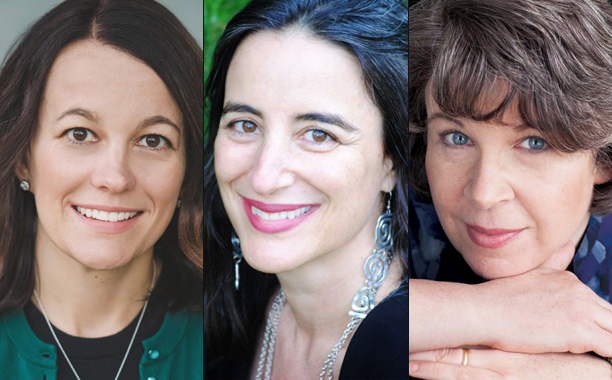 The moderated panel discussion will take place in the Petty Auditorium of the Skokie Public Library, and books will be available for purchase courtesy of The Book Stall. This event is free and open to the public. Registration is available online to those with a current library card from the Skokie or other suburban public libraries. If you do not have a library card or if you live in Chicago, call (847) 673-7774 to sign up by phone.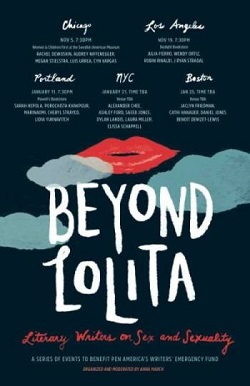
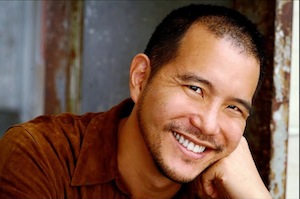 Award-winning playwright and former Lifeline ensemble member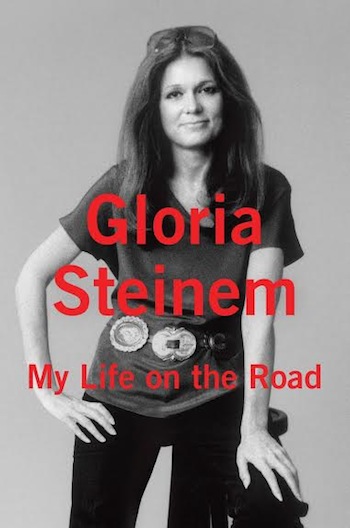
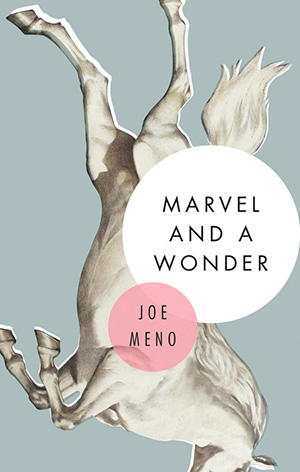 Author Joe Meno's latest novel,
 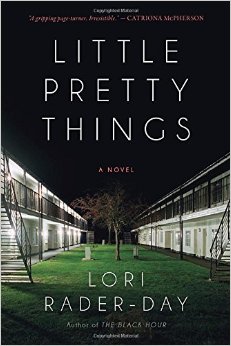 Set in the farthest reaches of Chicagoland -- a fictional small town called Midway in the cornfields of northwestern Indiana -- Little Pretty Things centers on a bizarre murder at a roadside motel, when a maid named Juliet Townsend discovers the body of her best friend from high school. It's creepy, clever, and full of surprises, the kind of book you stay up all night to read in one sitting.
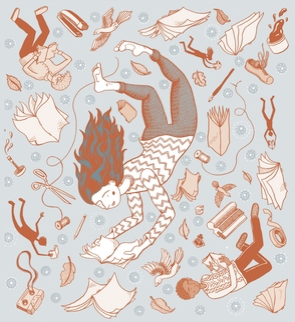
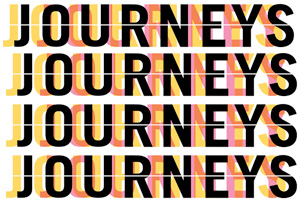 Washington University Professor William J. Maxwell dropped a few bombs last weekend at his
 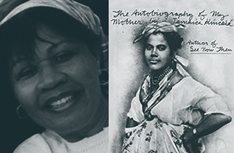 Jack @
 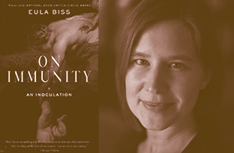 Dannette @
 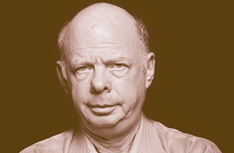 Alex @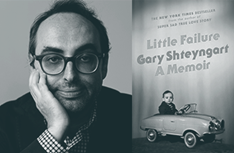
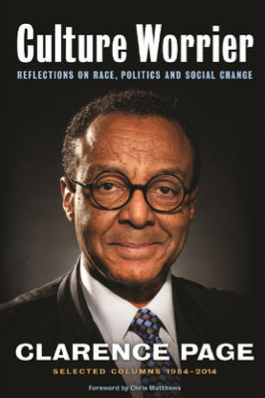
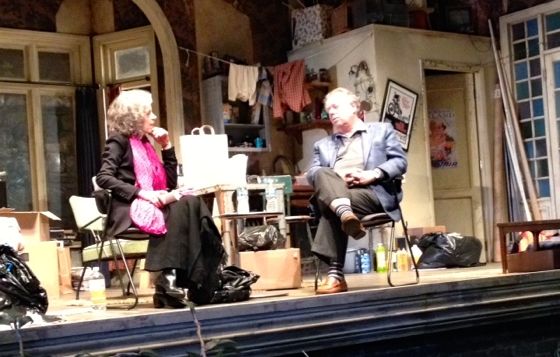

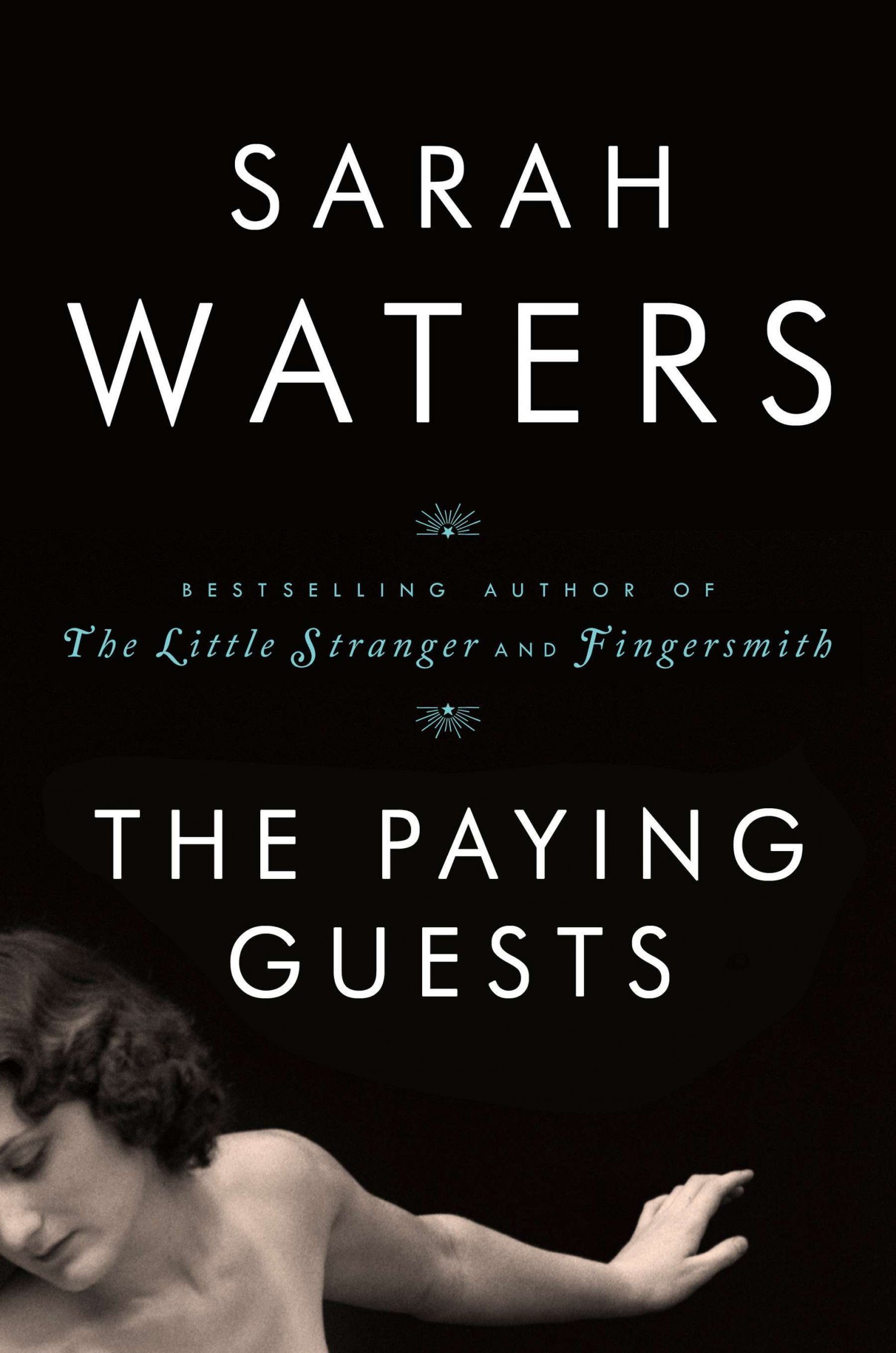
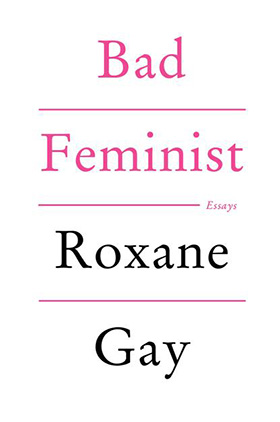

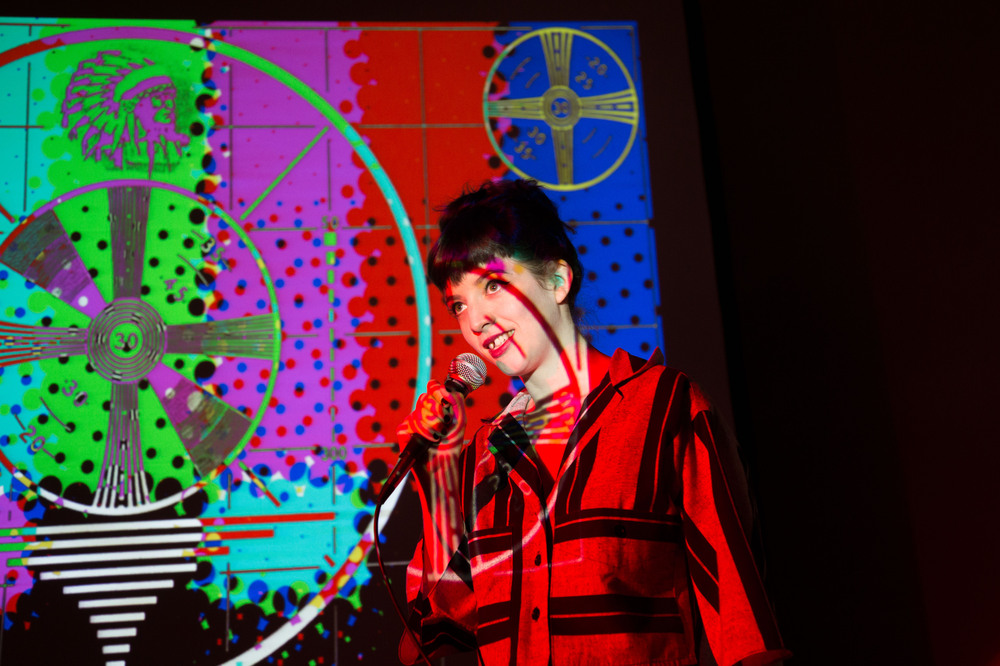

 By Sally Duros
 Local author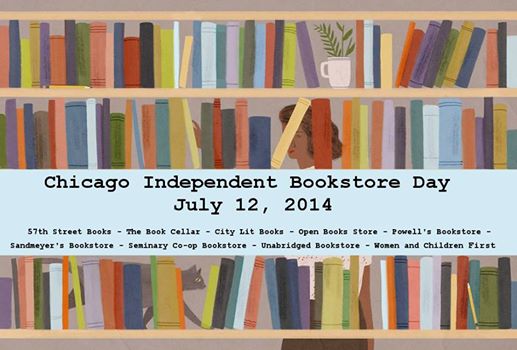
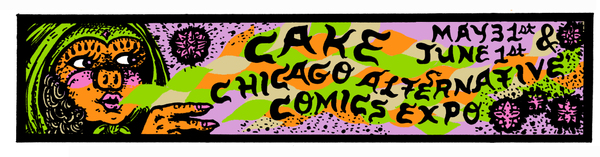
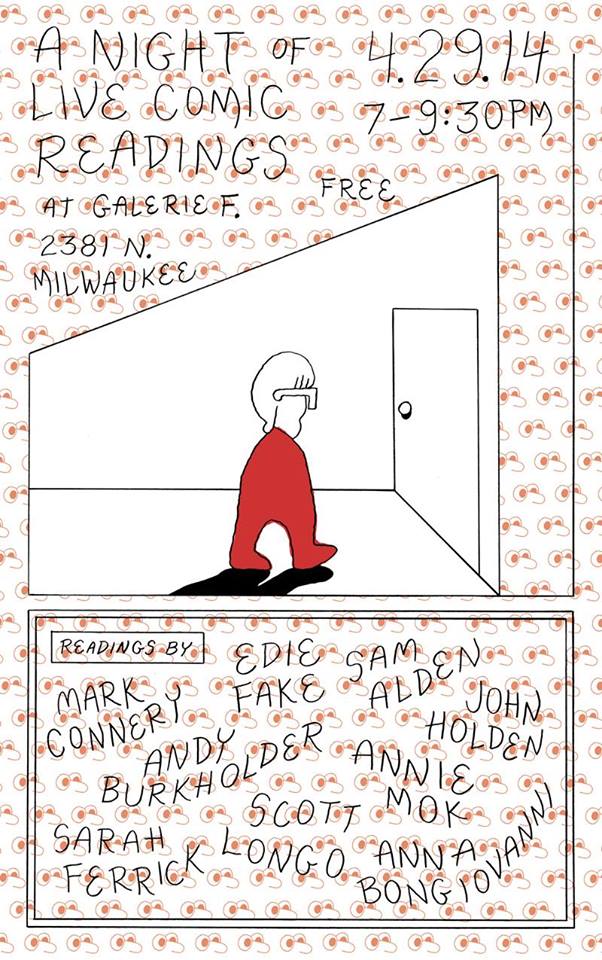
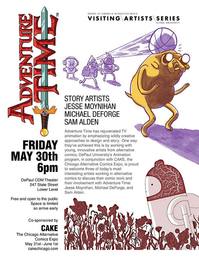

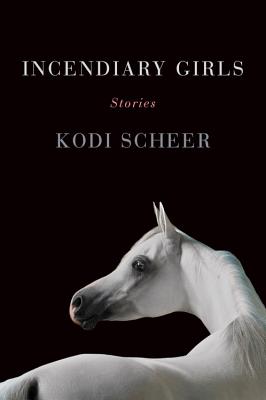
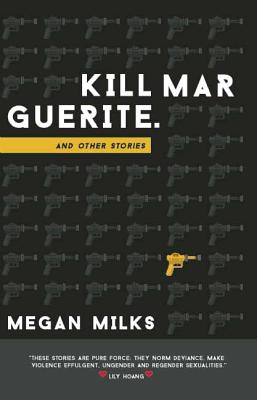
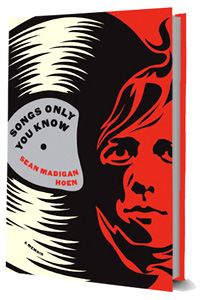 Detroit Rock tours the Chicago lit scene this Wednesday, April 30, when author


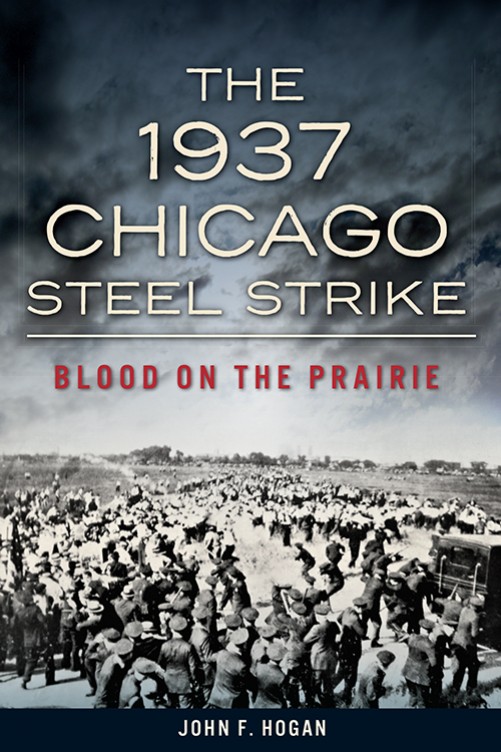
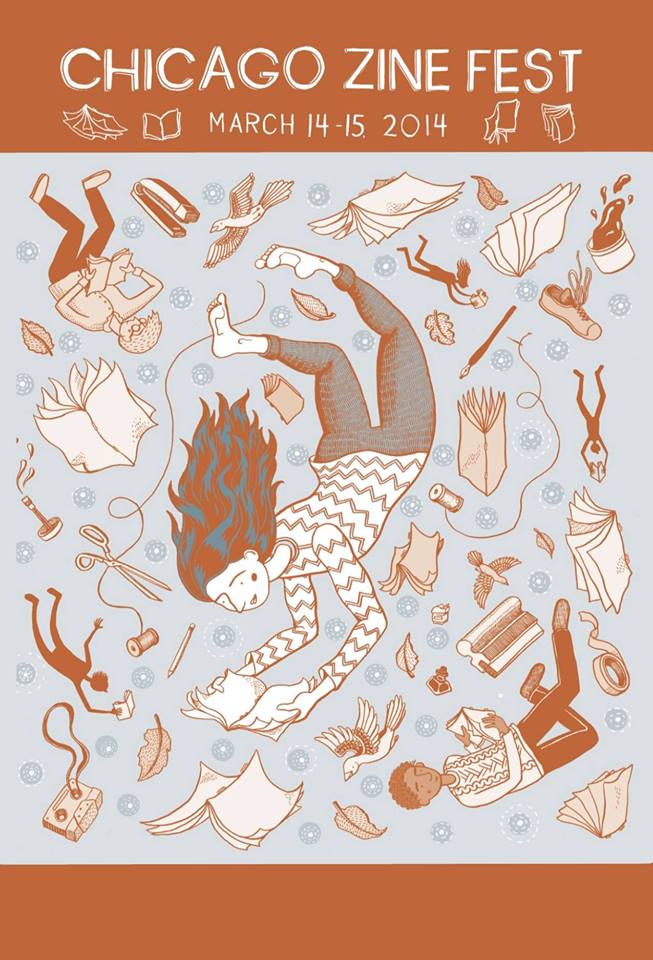
 There's something magical about a live reading. This one will not disappoint.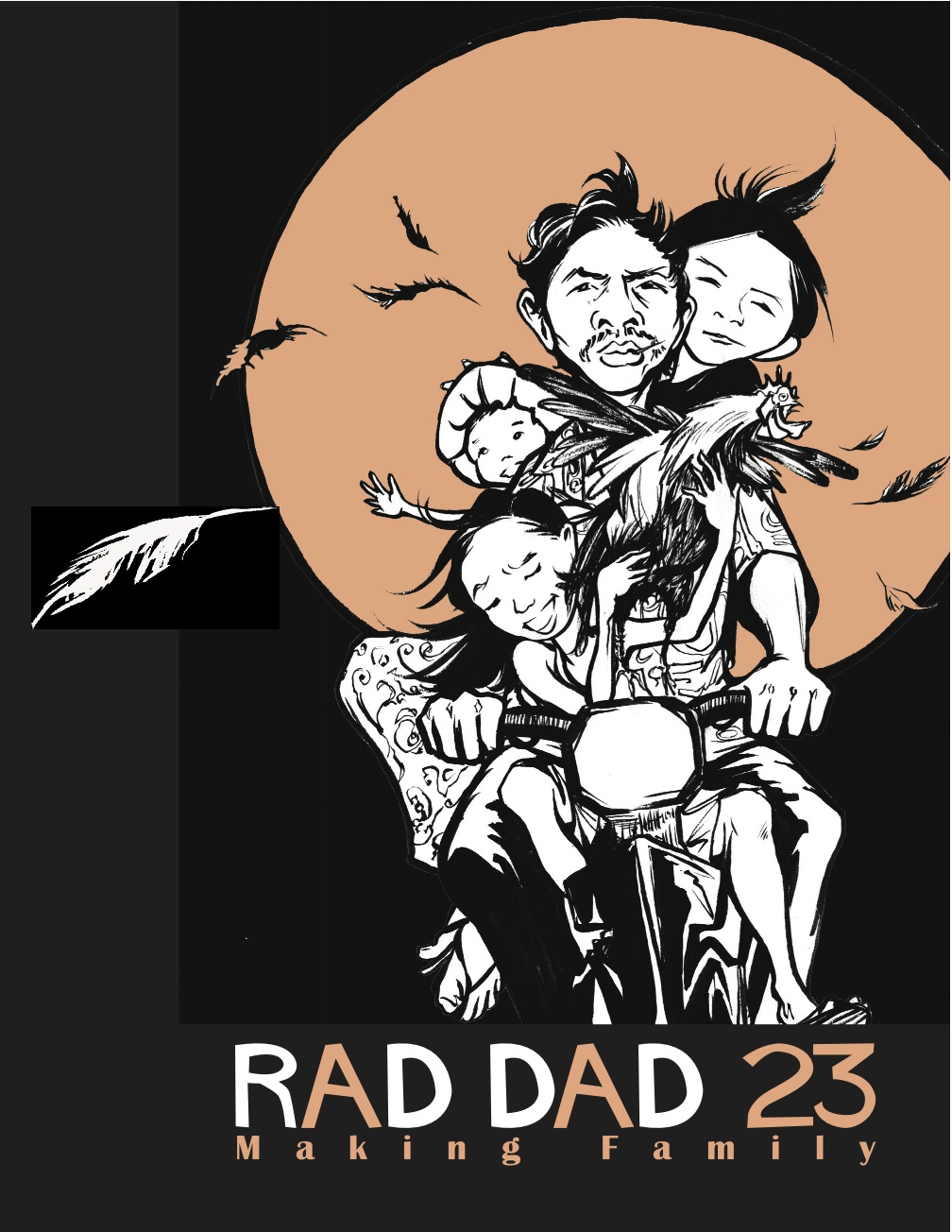
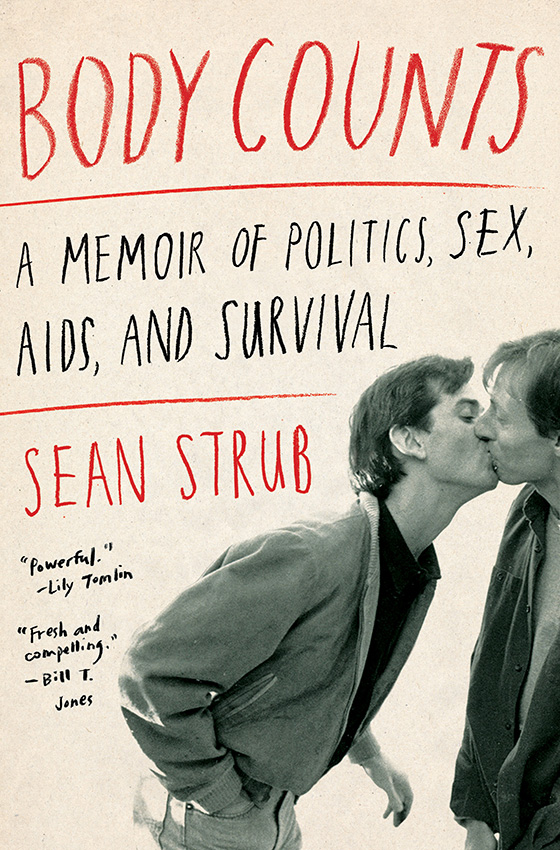
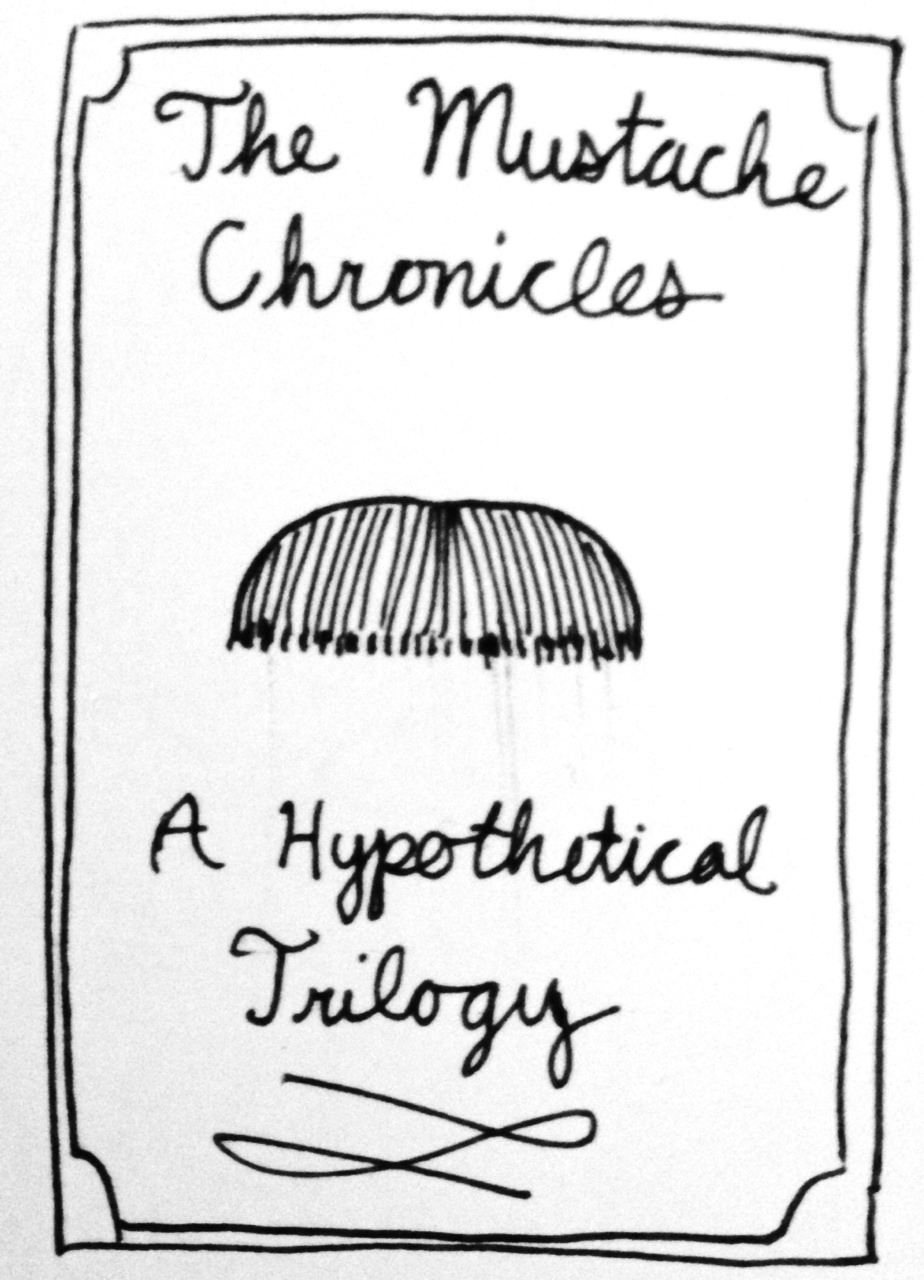
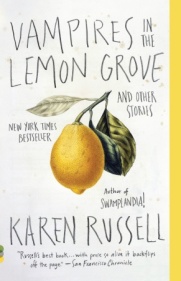
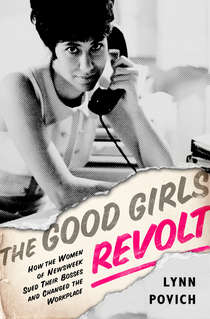

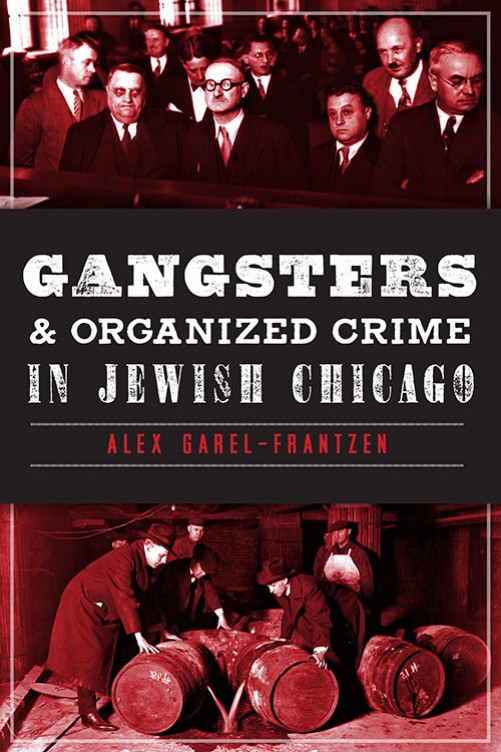
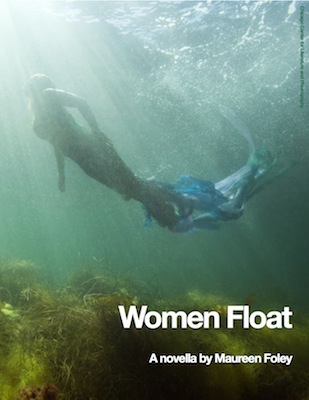
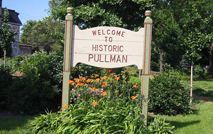 For gardeners especially, Chicago winters have to be tough: all the gleaming polar vistas of the lakefront can't entirely make up for the months of bare branches and frozen ground. Normally devoted to beautifying its neighborhood,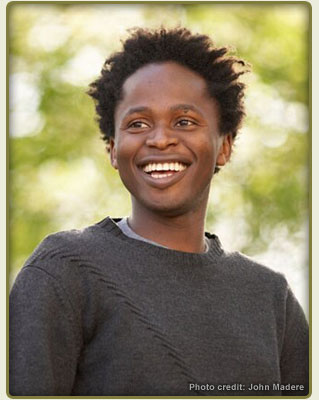

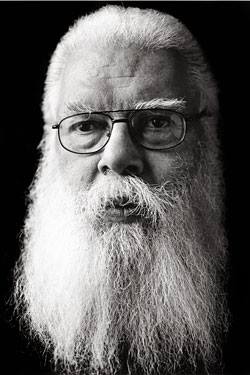

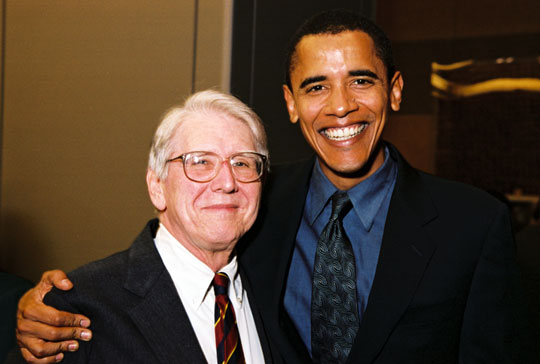
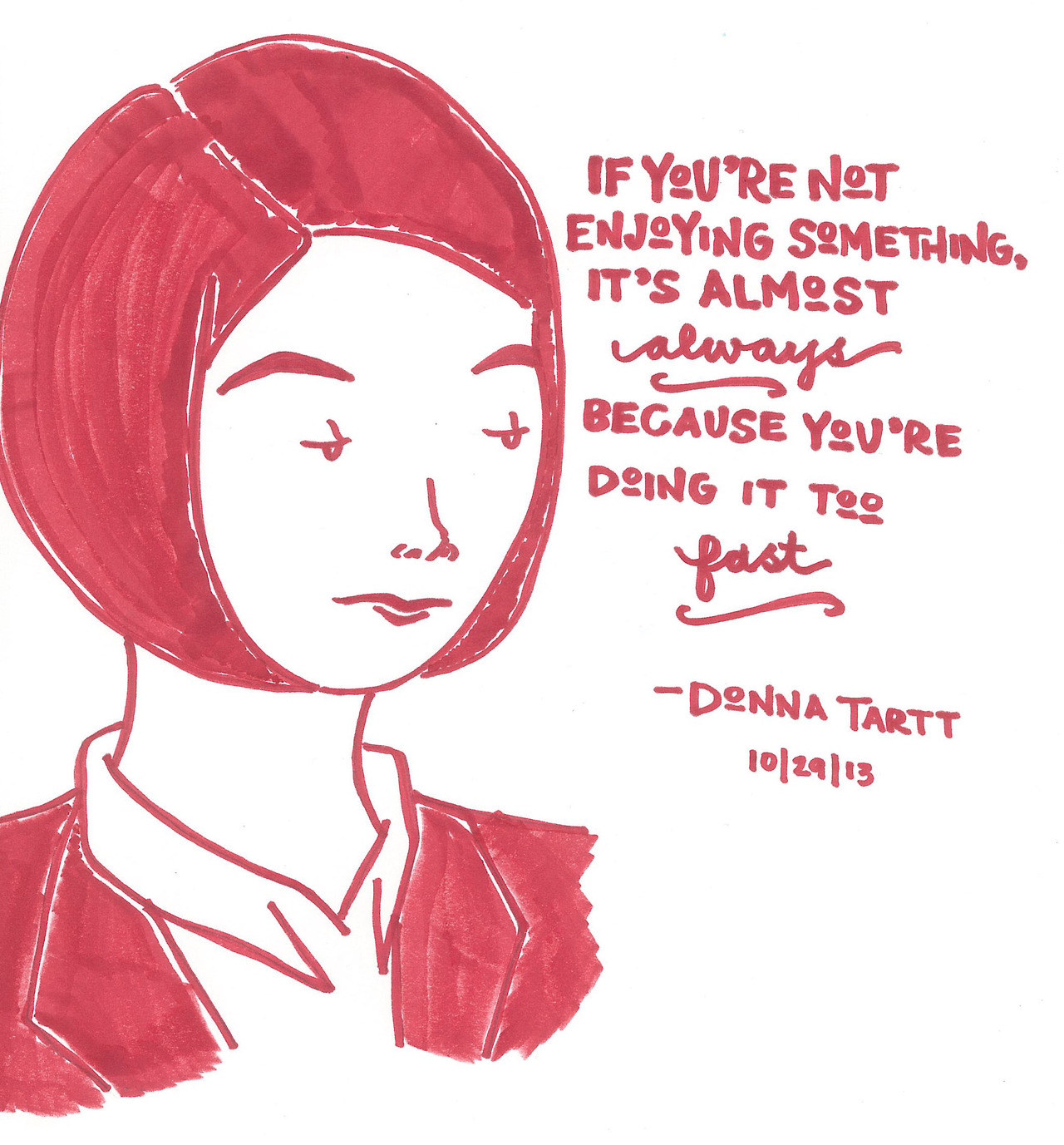
 Move over, James Franco. He might not be an A-list Hollywood celeb, but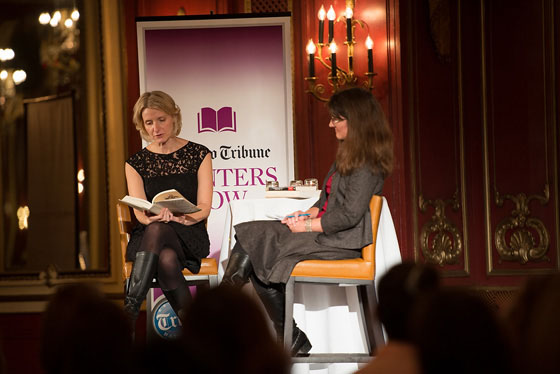
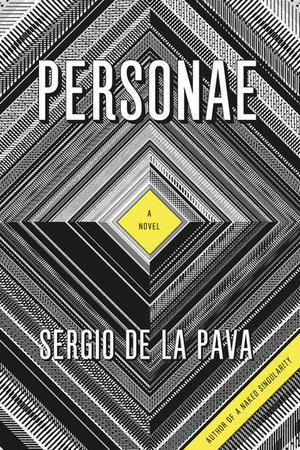 On Sept. 30, the University of Chicago Press published
  "You should always have a phallic microphone," joked
 I have to be honest--it's been awhile since I've read an entire collection of poetry, but
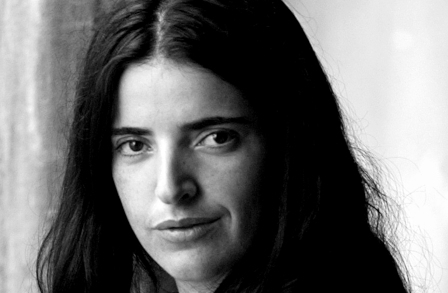 Turkish poet, author and columnist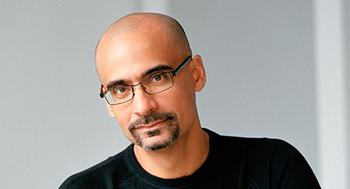
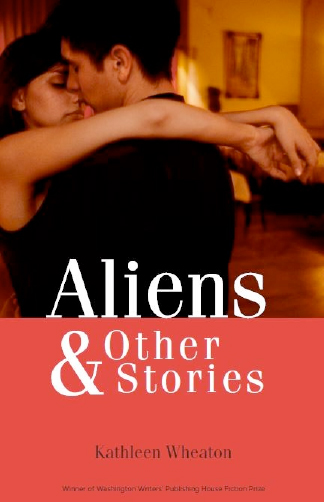
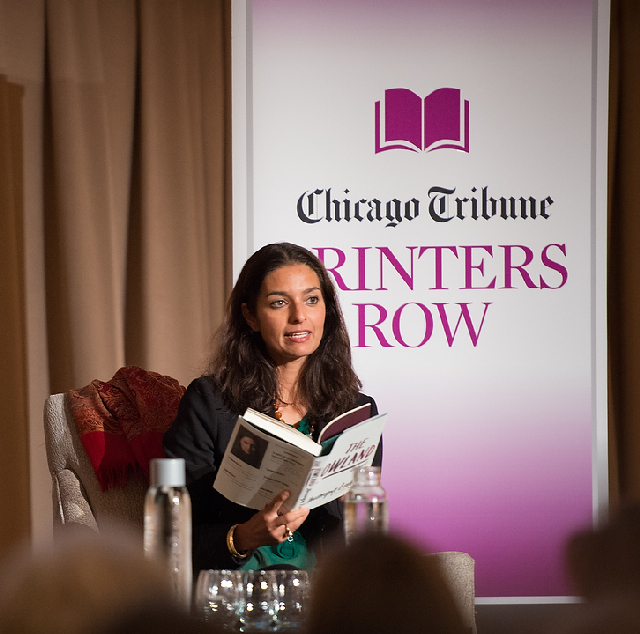
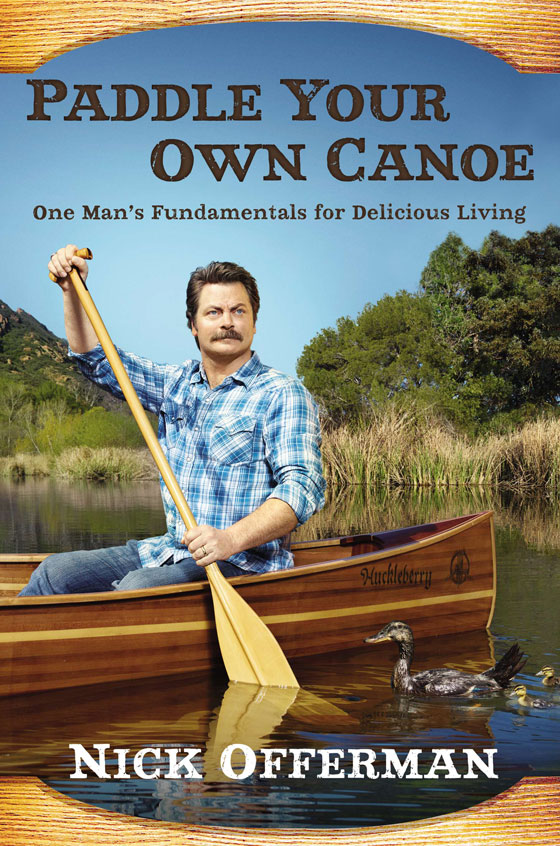
 The late-season warmth means it might just be possible to squeeze in one last barbecue or two... why not make it a literary barbecue? In addition to his harem of
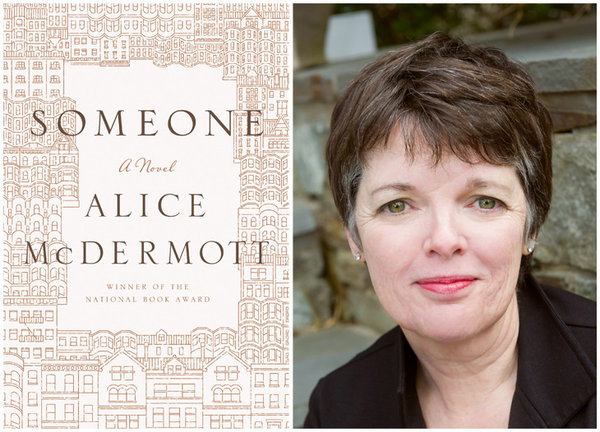
 "It was like swimming with a whale shark."

 It's not some post-apocalyptic sci-fi sequel. The setting of Huffington Post criminal-justice reporter
 Good spies aren't born; they're made. Such is the case for the genetically altered spies in The Orphan Trilogy, a series of international conspiracy thrillers by New Zealand authors
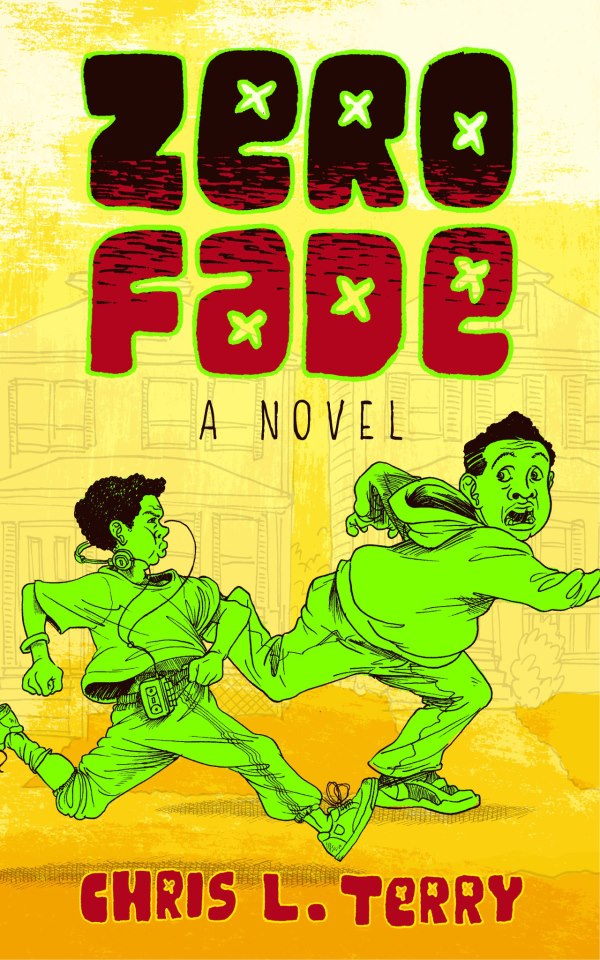
 The
The 

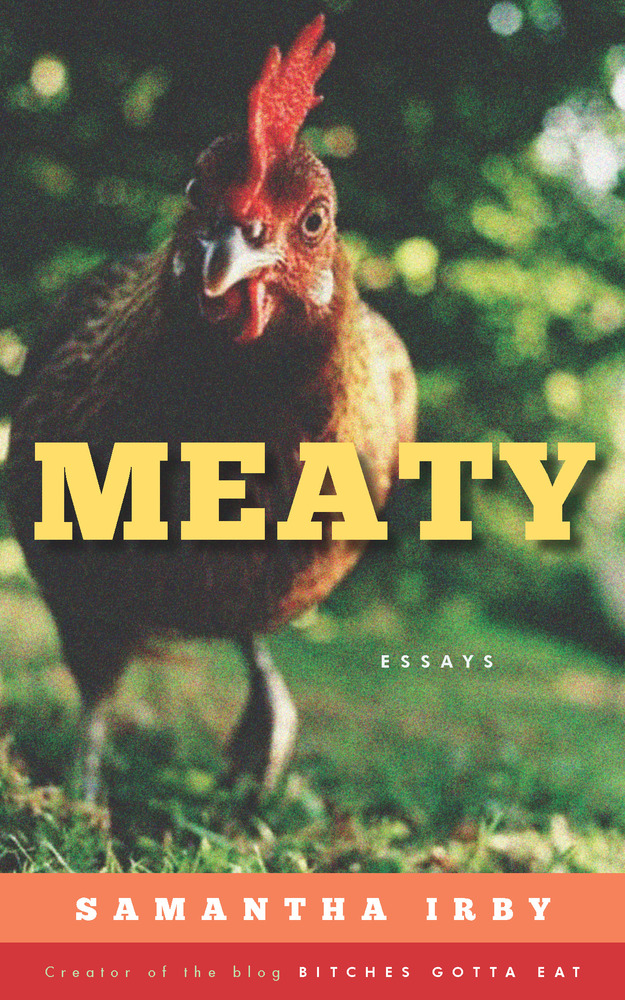 Samantha Irby's much anticipated collection of essays, Meaty, is out today. If you're not sure whether or not to purchase it, read contributor Alba Machado's and my discussion below! (Hint:
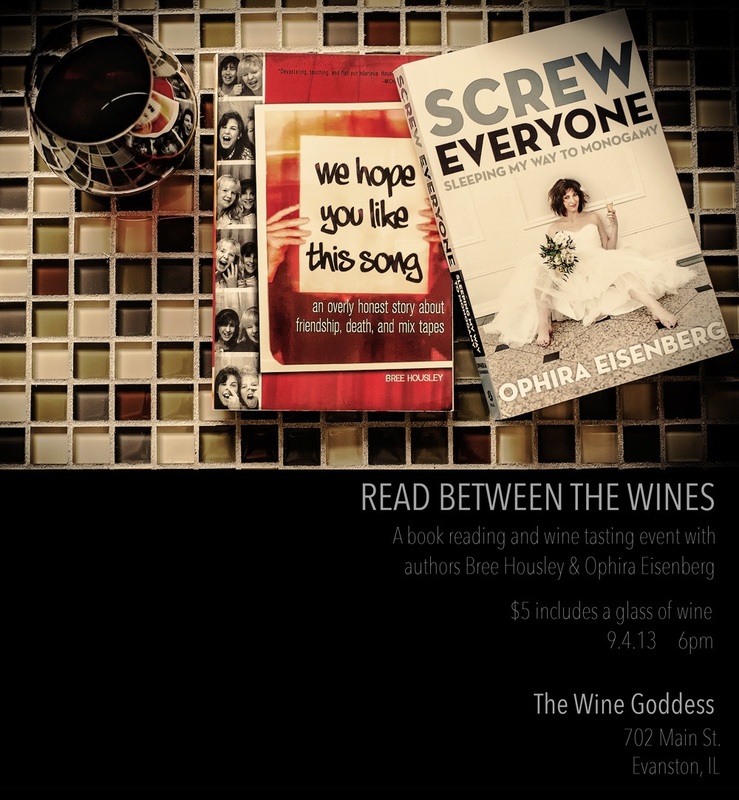

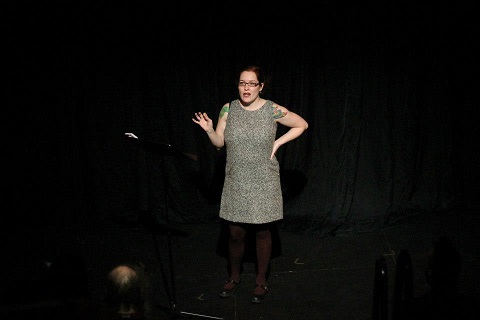


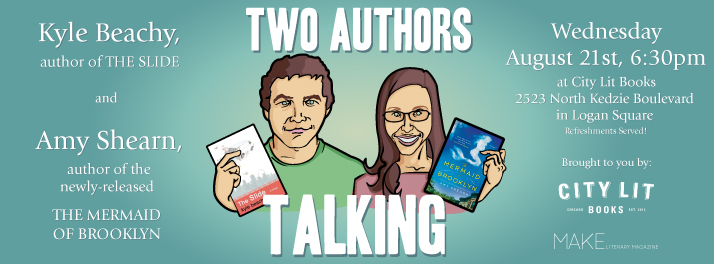
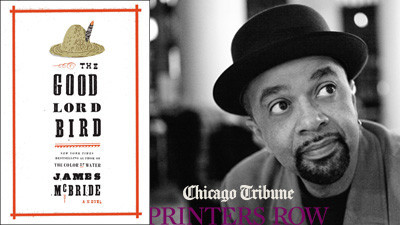
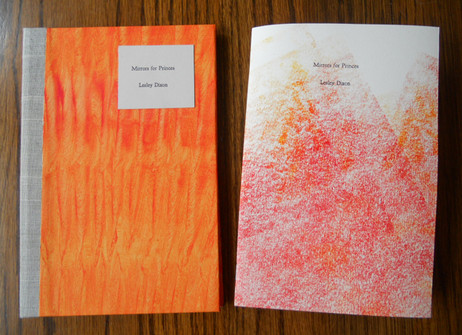
 Much like the literal spring slush we all must endure to reach Chicago's few blissful summer months, so must the writer tromp through the gloomy "slush pile" if she ever wants to see her work published. The way out of the literary slush, however, is much muddier than even a Chicago April. Luckily, the
 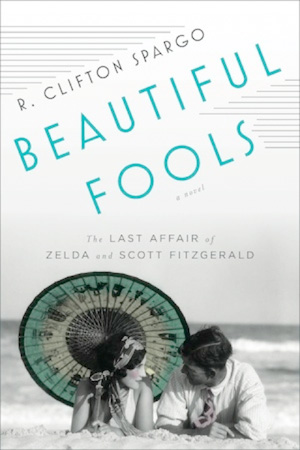 Last Wednesday night at
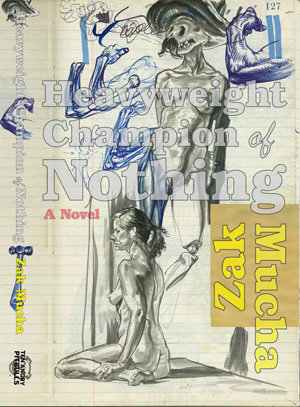 Heavyweight Champion of Nothing is a novel by local author
  Title onward, the theme of H. Melt's
  I had never read any of Chicago native
  Imagine that you’re riding on top of a freight train. Behind you, rampant gang warfare, a constant threat to your life and your family. Ahead, a foreign country, where you know no one, have no prospects. You will most likely be put on trial and, if so, be expected to represent yourself.
 Ever been in the middle of your latest read and wondered, “What was the author thinking when they wrote that?” Well, now
 Every few mornings, my mom will e-mail me my horoscope.

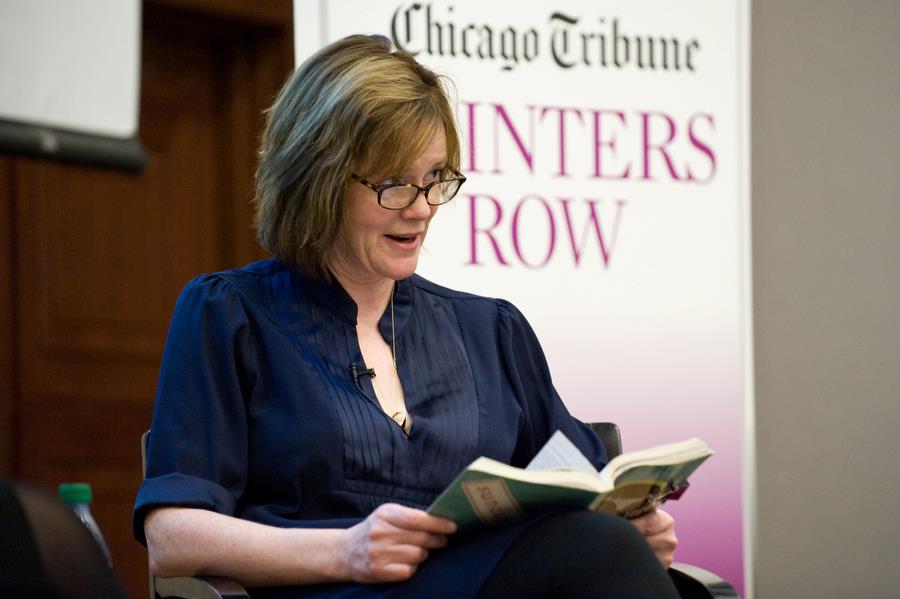
 Wilkerson's
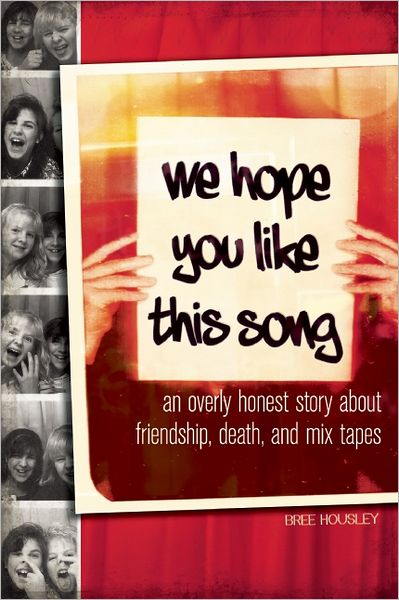
 Why should New York get all the single-girl-in-the-big-city stories? Ask
  A Joliet resident and author of three books about U.S. foreign policy and the Middle East, Harms will read from his latest book,
  The Book Cellar welcomes author
 Also known for her musical talents,
  The
The 
 Poet and NAACP Image award winner
 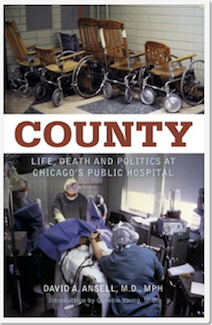 Politics at Chicago's Public Hospital
 vs. Gay? The Religious Case for Equality will be reading and discussing his novel. Founder of
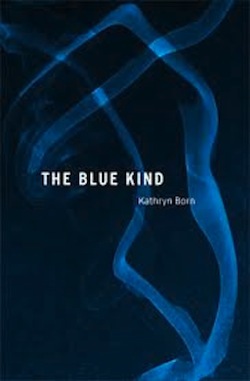 Iraqi novelist, and instructor at De Paul University,
  The University of Chicago's