Gapers Block published from April 22, 2003 to Jan. 1, 2016. The site will remain up in archive form. Please visit Third Coast Review, a new site by several GB alumni. ✶ Thank you for your readership and contributions. ✶
Everyone from People Magazine to NPR has been posting on their twitter accounts the passing of renowned Columbian author Gabriel Gracia Marquez who died yesterday, April 17, 2014 at the age of 87 in Mexico City, Mexico.
Marquez was best known for his novels One Hundred Years of Solitude (1967) and Love in the Time of Cholera (1985). He won the Nobel Prize in Literature in 1982. Marquez has been called one of the world's significant authors of the 20th century and one of the most popular Spanish-language authors since Cervantes.
See how Chicagoans are honoring his life and work via their Twitter accounts.
Imagine a short film, a minute and a half long, wherein little kids reenact their favorite children’s books. Now imagine watching a multitude of these shorts, back-to-back-to-back. Kind of triggers your ‘awww’ reflex doesn’t it?
Well such a festival isn’t hypothetical; it exists. It’s called the 90-Second Newbery Festival, and through it founder and The Order of Odd-Fish author James Kennedy challenges children to re-create Newbery-award-winning books within strict time constraints. The festival, which is only now entering its third year, has been a massive success, drawing in hundreds of submissions from around the world, all of which James watches and posts on his blog.
Even from its initial inception the concept was a hit. After losing the Newbery to Neil Gaiman in 2009, Kennedy was “embittered”. “I really wanted to win the Newbery. I really felt, in my heart of hearts, that I really deserved it [Author’s sarcasm].” After staging a fake battle with a friend dressed as Gaiman—including a series of physical challenges and ending with Kennedy’s own sacrifice at the altar of Newbery—Gaiman took notice, and took to social media about the whole spectacle. Then, when Kennedy posted the first Newbery adaptation, a 90-second A Wrinkle in Time, the concept exploded in popularity— and Neil Gaiman re-tweeting the video didn’t hurt.
After sitting down with Kennedy to discuss the upcoming festival on February 1st, it became apparent that this event is not just in it for the awww’s. “When you adapt a piece of literature, you take ownership of it,” he says of the 90-second challenge. By encouraging kids to not only read Newbery award winning books carefully, but also to pick and choose key narrative moments, they will inevitably develop opinions about that literature.
Upton Sinclair's The Jungle. Studs Terkel's Working. Alex Kotlowitz's The Other Side of the River. These are books and authors that not only shaped the story of work and class in Chicago, but the entire nation. To celebrate it's centennial, and to remind folks that we're a nation of workers (with the words to prove it), the U.S. Department of Labor has selected these and dozens more titles for an interactive, web-based project called Books That Shaped Work in America.
Planned in conjunction with the Center for the Book in the Library of Congress, the selections include fiction, non-fiction, poetry and children's books (Richard Scarry's What Do People Do All Day?, anyone?), and were chosen by U.S. Secretary of Labor Thomas E. Perez, as well as eight former secretaries of labor from both Democratic and Republican administrations, department staff, civil rights leaders, critics, authors, media personalities and staff from the Library of Congress.
And now you're invited to participate in what Perez calls "an online book club where people from all walks of life can share books that informed them about occupations and careers, molded their views about work and helped elevate the discourse about work, workers and workplaces."
Have an idea? You can add your book via this handy form. But before you do, we'd love to hear which books influenced your ideas about work. Add a title to the comments!
Since September 2012, All Write Already has covered local book events and news with their signature down-to-earth style. Hosts Karen Shimmin and Willy Nast have interviewed such Chicago wordsmiths like Christine Sneed, Samantha Irby, and M. Molly Backes. Their latest episode, however, might be its most star-powered yet. Pulitzer-prize winning author Junot Diaz, in town for the Chicago Humanities Festival, stopped by the All Write Already! studio for a lively discussion on topics ranging from Atari to heartbreak. Diaz covers a lot of ground in the thirty minute interview including writing as an extreme sport, his current work-in-progress, the lack of diversity in the publishing industry, and the problem with producing writers instead of readers. He also partakes in one of our city's oldest pastimes: complaining about Chicago-style politics. "What strikes you is how proud people are of being Chicagoans and how that pride is not matched by its elites. If it was up to the politicians, they would sell this city cheap...," said Diaz. "No city that I've been to more explicitly renders the judgment of how awful its leadership is." At the same time, Diaz admires our robust cultural scene. "I met so many people doing such fascinating stuff. That was incredibly cheering."
You can listen to this and all other episodes on iTunes, Stitcher, or the All Write Already! website.
Those who love books must also, by the rule of logic, love bookstores. And Chicago has some of the best independent bookstores in the country, at least as far as I'm concerned. It looks like I'm not the only one -- there is, in fact, a Tumblr account dedicated entirely to becoming "a comprehensive list of experiences at the 100+ small and independent bookstores in the city of Chicago."
Be still, my heart.
Bookstores of Chicago has pictures, information and comprehensive reviews of what one might expect in each of these bookstores. And the most recent review is one of my personal faves: Logan Square's terrific speculative fiction and punk rock bookstore Bucket O' Blood Books and Records. So find yourself a new bookstore, and read more books!
The late-season warmth means it might just be possible to squeeze in one last barbecue or two... why not make it a literary barbecue? In addition to his harem of six-toed cats and the honor of being born in Oak Park, the other thing Ernest Hemingway is known for, apparently, is his special hamburger (that and some books, or so I hear).
Food writer and self-proclaimed Hemingway acolyte Cheryl Lu-Lien Tan went in search of the famous recipe when she found out that 2000 digitized documents from Hemingway's time in Cuba had been donated to the John F. Kennedy Memorial Library -- not his scholarly or literary musings, no, but things like passport copies, good driver discounts, and household recipes. Some might call these documents insignificant, but Tan was determined to unearth the Hemingway hamburger, and unearth (and make) she did.
The article in the Paris Review is a great read and includes the recipe. Why not give it a shot, and while you're at it, pair with Sylvia Plath's famous tomato soup cake?
"We've got a great tradition of storytelling rooted [in Chicago], thanks to the likes of Studs and Ira and Royko and many others. But one thing that I know is on a lot of people's minds right now is where do we go from here? Now that we have created this "community" of storytelling, what do we do with it? And what do we do with the form so that it doesn't stagnate?"
So writes Guts & Glory co-host and Essay Fiesta co-founder founder Keith Ecker on his personal blog. For a look into current and future Chicago projects that are challenging, expanding, or redefining the future of live lit in our city, read on.
If you regularly attend live lit events in Chicago, you've probably considered contributing your own work at least once. Maybe you've been lurking in the back of the audience for years, longing to join in. Maybe you're an aspiring writer with no performance experience. Maybe you're a fan of a particular series, but just have no clue how to get involved.
If you fall into any of these categories, this guide is for you. No matter your level of experience or expertise, you can break into Chicago's live lit scene. All it takes is a little persistent effort and an intelligent use of your time. Here are some pointers.
Step #1: Find a "Home"
There are many, many live literary events in Chicago spanning a variety of topics, settings, and audiences. If you're new to the scene, it's tempting to adopt a scatter-shot approach, applying willy-nilly to any and every show you can think of. But if you're a new writer/performer, cool your jets. Focus on shows that are amenable to your own style and topics of interest.
Do you like to write personal creative essays? Story Club, Essay Fiesta, or This Much is True might be the place for you. Do you prefer to tell a story off the cuff, free of notes? Go for The Moth or Do Not Submit. Do you prefer nonfiction that covers current events or pop culture? The Paper Machete is your bag. Do you have a gritty, explicit tale to tell? Guts & Glory or The Sunday Night Sex Show are your spots. Choosing an appropriate setting for your work is absolutely essential.
Step #2: Become a Regular
Establish a rapport with the show (or shows) you'd like to submit to. Each show is its own microcosm within the live lit community, and to become a member of that community you must show your face. Hang around and chat with contributors after the show, or send the show's organizers a nice email or Facebook post.
Attend a show multiple times before submitting your work to its hosts. This will improve your chances in two ways. First, it will allow your to learn the show's unique style, and second, it will convince the show's hosts that you are a thoughtful, decent member of the live lit community (and not a foaming psychopath)-- both of which will vastly improve your odds.
Step #3: Learn the House Style
Every live lit series has its own unique style, and the only way to master the style is to attend regularly and pay close attention. Before submitting work to a series, ask yourself the following: How long is the average piece? Do contributions ever contain explicit content? Do contributors use the first person, or is it more journalistic? Do readers use notes or do they speak extemporaneously? Is work laugh-a-minute, or more subdued and serious? How irreverent are the stories? How conversational are they?
Once you have a good sense of a series' style (and what distinguishes it from other shows), you are ready to start writing. As you write your piece, never lose track of the desired tone, length, and style. The ideal submission should be a perfect amalgam of the show's overall sensibility and your own unique voice.
Step #4: Find the Appropriate Submission Channel
Live lit shows accept new work in a variety of ways. Make sure you play by a show's particular rules so you don't irritate the hosts and organizers with emails or in-person queries that don't follow the standard procedure. Usually you can find the appropriate submissions method on the series' website or on their social media pages.
Some shows, like Do Not Submit, Story Club, and The Moth run on an open-mic basis, in which case the only way to participate is to show up early, put your name in, and wait for the opportunity to share. Other shows, like Essay Fiesta, Fictlicious, and Write Club accept online submissions. In some cases, shows have dedicated open mic nights that are distinct from the main show, but give new writers the opportunity to try out material and eventually snag a spot at the main event. For example, The Paper Machete, runs an open-mic writing group the first Wednesday of every month that occasionally feeds new writers into the main show.
Step #5: Be Not Afraid!
Even if you carefully study the show you are submitting to, attend it often, schmooze with the hosts, and craft a piece you are utterly happy with, you might face disappointment. Before you swear off live lit entirely, remember that work is rejected for all kinds of reasons. Maybe your story wasn't appropriate for the venue or the event. Maybe the hosts have a big backlog of performers on their schedule. Maybe you're close to the appropriate style or tone, but haven't quite perfected it.
A rejection does not mean that your writing is terrible or that the hosts dislike you. Try again! Almost no one gets a story into a show the first time they try. Learning to respond to criticism or rejection is a crucial stage of development as a writer or a performer.
Anecdote in point: Earlier this summer, I sent a few samples to Karen and Willy at Essay Fiesta. At first they gave me the kindest, most encouraging rejection ever. The pieces I sent just weren't right, but they were close, and I was encouraged to submit again. I spent more time editing some other work and attending Essay Fiesta, then I submitted two more pieces a few months later and got into the show. I'm sure most writers have had similar experiences with live lit shows (or lit mags). Tenacity and sensitivity to criticism can really pay off in both cases!
Step #6: Do it! Now!
There you have it! You now have the tools to begin a foray into live lit. Actually, you probably had all of these tools before you even clicked on this piece. If you're an avid attendee of lit events in Chicago, you already know a great deal about what works and what doesn't in live storytelling. So use your knowledge, write a piece, and take it out on the town.
Richard Nash (former runner of Soft Skull Press, now a consultant/guru of sorts for Publishing At Large), has written an illuminating essay called "What is the Business of Literature?"
In the essay, Nash projects broad, provocative, conceptual contemplations across the history of one the strangest industries known to modern man: publishing. Among many revelations, Nash points us to how the invention of copyright law helped to rein in an otherwise unwieldy proliferation of texts; and how it, thus, helped to move control of the literature market into certain hands.
Nash's thinking should be at the forefront of many a small, formally ambitious publisher (ofwhichChicagohasmany) confused about how to proceed as the cost and means of dissemination are made ever easier in the hyper-digital age; as the public's love for text objects is reconsidered, and as productive, distributive, curatorial, and community models of literature must be thought of anew.
Last weekend, Alan Sepinwall made an appearance at Printer’s Row LitFest to discuss his recent self-published book, The Revolution Was Televised. The book, an in-depth analysis of the recent evolution of small-screen entertainment, analyzes the factors that culminated to produce a higher standard of television entertainment. Such shows include “Oz,” “Friday Night Lights,” “Buffy the Vampire Slayer,” “The Sopranos” and “Mad Men,” to name a few.
When it comes to television analysis, Sepinwall is certainly a reliable source. Stemming from his days writing “NYPD Blue” reviews out of a dorm room, he is credited with having created something of a revolution himself, having pioneered a paradigm shift towards more informed viewership. Where before TV critics were primarily expected to review pilots and finales, now, following Sepinwall’s style, reviewers pick apart episodes for trends, symbolism, references, and make predictions regarding the weeks to follow. This more in-depth analysis owes a great deal of its influence to the groundswell of fan communities fostered by the rise of the internet.
Though one can certainly argue that the internet played a major role in this revolution, Sepinwall argues that the golden age of television began even before the onset of internet fandom, beginning in the late 1990s.
“Everyone had cable in their homes, and everyone had more and more channels, and that was A) splintering the audience, and B) these channels needed original programming and started doing it, HBO first and foremost among them. And so HBO started doing things like ‘Oz’ and ‘Sex and the City’ and most importantly ‘The Sopranos’ and they showed that A) you can get a pretty big audience doing this, and B) you can break all sorts of traditional storytelling rules that we had to this point held sacrosanct. And people will watch this.”
Living in a city, it’s sometimes easy to let an exciting event slip by unnoticed. I had heard of the TribunePress variety show Chicago Live! in passing, but it was mentally categorized in the column entitled “Should Go to That One of These Days.” Now, having attended the program firsthand at Printer’s Row Litfest, it has rightfully relocated to the “Must-See” list.*
With features ranging from live jazz to Second City sketches to political interviews, it’s hard to pinpoint which quality of Chicago Live! proved so engaging. Perhaps it was the nimble fingers of blues guitarist John Primer, or the refreshing candor on the part of interviewed Chicago Aldermen. Perhaps it was the wry musings of MC Rick Kogan, or his intermittent reminders to “keep in mind that it’s free” (thanks to sponsorship by Nielsen). So free in fact that you can watch a webcast of the whole show here!
Anobium, an alternative Chicago-based press, is seeking writers to participate in two upcoming projects that explore the potential of creative collaboration. The first of these projects, based in Chicago though open to writers worldwide, is Middle Ground. The collaborative project is dedicated to the exploration of space, our experience of environments both virtual and actual, and the way in which such spaces inform the written word.
Anobium Editor Benjamin van Loon describes the process in his own words: “So you have a location: Middle Inlet, Wisconsin. Writer 1 will write up to 500 words about Middle Inlet, and then he/she will move onto a different ‘location,’ where 500-some words have already been written by a different writer. At the same time, a different writer will be visiting Middle Inlet, Wisconsin, adding up to 500 more words to Writer 1’s original text. Make sense? So for Middle Ground, we have a target of 15 participants, which means 15 locations. It would be impossible for all writers to visit all places, so each writer will be visiting five places, such that at the end of the project, each text written about each place will be around 2,500 words, compiled by five people. It’s like we’re all taking turns.
“The best analogy I have is this. Let’s say we’re on a tour bus. We stop at a roadside bathroom somewhere, and each of us has a big, fat permanent marker. Bathroom User 1 uses the stall, and in his/her boredom, writes ‘SLAYER RULES’ on the bathroom wall. Bathroom User 2 uses the stall next, and in his/her boredom, adds ‘THE UNDERWORLD’ to BU1’s graffiti. Bathroom User 3 uses the stall next, and he/she is kind of a prude, so he/she strikes through ‘S̶L̶A̶Y̶E̶R̶ ̶R̶U̶L̶E̶S̶ ̶T̶H̶E̶ ̶U̶N̶D̶E̶R̶W̶O̶R̶L̶D̶’ and writes ‘Stop drawing on bathroom walls.’ And so on and so forth.”
The second project, which will be based in New York, is Rescriptions II. A reincarnation of a previous project, Rescriptions is dedicated to the revival of lost stories through the injection of fresh perspectives. The process is simple: each writer brings to the group an old, tired story; one that doesn’t seem to be working. That story is handed to a second writer, whose task is to enhance and embellish the story’s strengths. After Writer 2 has tweaked the piece, it is passed along to Writer 3, Writer 4, Writer 5 and so on. By project’s end, the once-washed-up story is alive with the varied styles of a multi-minded author.
I had the opportunity to ask Mr. van Loon a few questions about both projects, and gain insight on the value of collaboration, the importance of place, and why you should get involved.
Ever been in the middle of your latest read and wondered, “What was the author thinking when they wrote that?” Well, now ShelfPleasure.com provides you with the rare opportunity to ask the author yourself! Shelf Pleasure invites you to join them in reading this month’s book club selection, The Year of the Gadfly, where they will be joined by the author, Jennifer Miller.
Miller will be popping into the book club forum to discuss her debut novel through July 10th, when she will conclude the book club with a live chat at 6 pm E.T. (RSVP to the chat here.)
It is Miller’s personal goal to set the world record for most book clubs visited by an author in one month. Help her reach that record by visiting the Shelf Pleasure forum and following the “Summer 2013 Book Club” conversation thread.
Shelf Pleasure co-founder Kristen Weber says of Miller’s involvement with the site, “We are so excited to introduce our audience to Jennifer, and we know they will love The Year of the Gadfly as much as we did. This unique format will allow our site visitors to connect with Jennifer so that in addition to sharing insights and opinions with other readers, they can actually obtain insight directly from the author. We are honored that she agreed to participate and give our audience this special experience.”
The city's literary community welcomes a new addition with Chicago Literati, part of Tribune Media's ChicagoNow blogger union. Chicago Literati captures the essence of the lit scene with book reviews, live reading reviews, event postings, reading lists, creative nonfiction essays, and even a bit of fiction and poetry every now and again. The site began last November as an independent project of recent Columbia College Chicago fiction writing graduate Abby Sheaffer. As acting editor-in-chief, Sheaffer wears many hats to maintain the site. She writes articles, reviews content, edits submissions, and solicits new contributors.
"I really work hard to make Chicago Literati feel like a community," says Sheaffer. "I think the greatest part of the Chicago literary community is the sense of family and how open everyone is to expression."
A community is building around the site's growing content. This includes the dedicated staff Sheaffer has amassed. "They're all so unique and talented," she says.
Many are students or recent graduates who are looking for a place to share their work. Even as young writers they are tackling subjects that apply to writers at most any level of experience. A recent post discussed how writers combat writers block.
Chicago author Rebecca Makkai is the latest guest on All Write Already!, a locally-produced podcast that promises to be literary "without being all huffy about it."
Makkai is among the ranks of Chicago writers making waves beyond the local scene. Her 2011 debut, The Borrower, tells the story of a librarian and a young boy obsessed with reading who take to the road. The book won all kinds of recognition, including a Booklist Top Ten Debut. All Write Already! hosts Karen Shimmin and Willy Nast interview Makkai about selling short stories, stealing from Nabokov, and what reading to nine-year-old boys taught her about writing.
Listen in and you may get a chance to share prospective title ideas for Makkai's as-yet-untitled second novel, due out in summer 2014 from Viking/Penguin. New episodes of All Write Already! are published on the second and fourth Wednesday of every month.
“I won’t lie to you. Before your kid is born, you aren’t expecting it to be pretty. You know the birth will be a little messy. But it’s fairly shocking when the doctor holds up your baby and it looks like a prop from one of those horror flicks that gets called a ‘cult’ flick because 42 fat dipshits on the internet like it a lot. The baby was covered in blood, head to toe, screaming. Screaming, I assume, for a shower.”
According to his first blog, Father Knows Shit, this is how, one day in 2006, Drew Magary became a father. And then proceeded to document said fatherhood in accounts both heartfelt and unflinchingly sassy*.
Though that blog has since been put on permanent hiatus, Magary’s parental musings took no such break. Rather—somewhere amidst two other books and extensive work as a writer for GQ and Deadspin—they’ve accumulated and make up his latest work, Someone Could Get Hurt: A Memoir of Twenty-First-Century Parenthood.
This Thursday, May 23, at 7 pm the father himself will be stopping into the Book Cellar (4736-38 N. Lincoln Ave.) to share some pearls of parental wisdom from his new book. Whether you are a parent, a babysitter, or have just seen a baby before in passing, Magary’s work is brimming with wit, and definitely worth a listen.
*”Sassy”, you may think, is a flippant or sarcastic choice here. But read any one of Magary’s GQ articles and you’ll find it’s the only word astute in assessing his deft mockery talents. I revere his sass. He is a SassMaster.
If you owe the city a pretty penny in library fines, it might behoove you to enter the Tribune's Library Amnesty contest in honor of its literary insert's one-year anniversary. Five winners will get $100 towards library fines as well as a one-year digital subscription to the Printers Row Journal, which regularly goes for $29.
The final stretch for entries is upon us with just a few days before the April 1 deadline. Entering is simple; just email your explanation of 50 words or less to printersrow@tribune.com, including the phrase "Library Amnesty" in the subject line. Be sure to let them know how much you owe and at which libraries you're in the red.
The cost-benefit analysis seems promising, so why not give it a shot?
Open Books carries out a variety of volunteer-driven literacy programs in Chicago Public Schools and in its bookstore all the time. As an organization, Open Books reaches everyone from infants through high school seniors, and maintains strong relationships with the passionate volunteer base that fuels the work. Currently, the store is searching for male role models to support its daytime literacy/mentorship program, understanding the power that a male mentor can have in a young person's life, as well as, to address the lower number of male volunteers on regular rotation.
Open Books always accepting applications for new female volunteers too!!
Back in November, I reviewed Rose Metal Press founder, Katheleen Rooney's, Robinson Alone, a novel in poems commemorating the life of poet Weldon Kees. Rooney brings Kees back through Robinson, a character of his own making, who featured prominently in Kees's most famous poems.
I thoroughly enjoyed the book as well as this interview with Rooney by James Reidel, Kees's biographer and author of Vanished Act: The Life and Art of Weldon Kees (University of Nebraska Press, 2003), conducted for the Poetry Foundation.
Reidel and Rooney discuss Kees's relationship to Robinson, the Nickelodeon show The Adventures of Pete & Pete, and the way incompleteness and imperfection bring us together. Rooney says in one response:
In an interview at the end of her memoir The Chronology of Water, Lidia Yuknavitch says, "I've never met anyone who hasn't fucked up in their life a time or two. Royally. I'm pretty sure that's what keeps us connected to one another," and I'm inclined to agree. In much the same way, I suppose, that incompleteness engages the imagination, imperfection and fallibility make people more human, more like individuals we'd actually want to know. Perfect, or perfectly successful, people are not so interesting, not so instructive.
The Chicago Zine Fest is one of many wonderfully free cultural offerings available to Chicago's reading public. This year's fest is scheduled for March 8 and 9 and will involve much of the programming repeat attendees have seen in the past like panels, workshops, trades, storytelling, readings, skill sharing, and more.
Zine Fest is requesting donations to ensure that things remain as free and dynamic as ever for 2013. There are about 33 hours left on the funding site, so if you're feeling inspired this is the time to make your move. Gifts for all donators are detailed on the fundraiser page and include zines, totes, prints, and even a free tattoo.
Many of us have a brand new stack of books to add to our shelves, carefully selected, or in some cases, re-gifted, by well meaning relatives. Whatever the case may be for you, we hope you're getting a couple of minutes to get started.
If your holiday bounty is devoid of at least a few page turners, here are a few best of lists to spend your Chanukah gelt on:
NPR has a whole collection of lists from romance to young adult reading that never gets old, no matter how hold you are.
The first stirrings of Fifth Star Press began in 2010, when founders Jason Stauter and Ian Morris, longtime editor of TriQuarterly Review, got to thinking there might be a place for contemporary and republished works of fiction among Chicago's many small press publications.
Fifth Star's most recent project, out last week, is the first in a series releases of little known Chicago fiction; Diversey, by MacKinlay Kantor, was published in the Chicagoan Magazine in 1928. Fifth Star provides a brief synopsis on its website:
"A saga of love and betrayal in the age of Prohibition. The novel traces the intersecting lives of three young residents of a boarding house on Chicago's North Side."
The next installment in this series of revisited works is a collection of fiction by novelist and storywriter Henry Blake Fuller. Keep an eye out for this release in 2013.
D.T. Max's biography of David Foster Wallace, Every Love Story Is a Ghost Story, bares unbecoming skeletons, according to Ryan Bloom of The American Prospect. Some of those darker stories, though, are indicative of the relatable parts of Wallace through which the late writer tried to communicate at the end of his life.
According to Bloom's November 26 piece, the biography makes apparent Wallace's "quest to connect with other minds, to make people feel less alone," and says that his time growing up in Champaign, Illinois may have informed his later writing. Bloom writes that "it was in the Midwest that Wallace grew up amid strips of modest homes, ever-present neighbors, packs of kids on bikes, and endless fields of soy and corn, absorbing the value of community and normalcy."
Brooklyn-based Akashic Books--whose tagline is "reverse-gentrification of the literary world"-- announces the next installment of the new Akashic Digits Series: an e-collection of extended excerpts from Chicago's own Joe Meno, author of Office Girl.
You can download the Joe Meno Digit for free and read selections from Meno titles Office Girl, Hairstyles of the Damned, The Boy Detective Fails, Demons in the Spring, and Tender as Hellfire on your Kindles or other major e-readers. And through October 28 you can download each title for the reduced price of $4.99 from Amazon Kindle, Kobo, Barnes and Noble Nook, Sony Reader Store, or iTunes. Kindle also has Hairstyles for $2.99 until the end of the month.
The Digits Series is Akashic's monthly, themed e-book promotion that features selections from Akashic's titles, with exclusive links to digital and print editions. Other Digits include the Historical Digit, including excerpts from Cervantes Street by Jaime Manrique, and the Jamaican Digit, including excerpts from Kingston Noir edited by Colin Channer.
This article, published by Forbes earlier this summer, discusses the fact that creative careers, hard to come by as they are, weed out lower and middle income writers for the simple fact that they don't have the luxury of building a resume of unpaid internships. There's also the obstacle of supporting one's self as a freelancer without some sort of disposable income to pick up the rent checks and other such necessities of survival.
Alexandra Kimball's article from around the same time, published by Random House Canada, talks about the writer's well timed and completely unanticipated inheritance, which keeps her afloat while she writes.
All this considered, here are some lovely local endeavors, moving forward thanks to the sacrifices and grit of some seriously determined creative types in Chicago. However they manage to swing it, we support them:
MAKE Magazine's next issue is coming out and will be available for purchase soon. In the mean time, check out the fabulous online book reviews.
Damask Press is trying to raise money for its next chapbook with three days to go on its Kickstarter.
Guild Literary is hosting a series of October events at the Hairpin Gallery called Unnatural Spaces where poetry meets the stage to look at the ways urban living impacts the natural environment.
At least that's the idea. This week sees the launch of the new social media platform Togather, a "fansource" site for authors. Authors post their availability for readings and fans can request an author reading in their town and essentially make it happen with enough interest.
Togather was co-founded by authors Andrew Kessler and Aaron Shapiro. "Our goal is to make being an author a viable career and democratize the market for speakers," Kessler said in an official press release. "Book tours and speaking gigs are time-consuming and costly to arrange, yet they make a real impact in terms of book sales and audience reach. Togather allows authors to put the planning of these events in the hands of their fans, engage their platform in a meaningful way and never speak to an empty room."
Membership is free. Authors interested in joining must have an invitation code (that's how new it is), but can request one at the website.
A couple of weeks ago WBEZ aired a broadcast discussing the little known Black Chicago Renaissance in time for the publication of a new anthology on the subject, simply titled, The Black Chicago Renaissance.
The book, published under the University of Illinois Press, address the onslaught of cultural material produced by black Chicagoans in the 1930s, the quality and quantity of which is on par with that seen in Harlem in the 1920s. The essays, edited by Darlene Clark Hine and John McCluskey Jr., explore the unique social and economic circumstances that defined Chicago at this point in history as they influenced artistic expression among Black Chicagoans.
The Huffington Post recently published a list of 9 Books that Make You Undateable. This article screamed out to me because I'm single woman who loves to read -- and in fact I write about books and dating.
On my completed and read list was only The Great Gatsby and Confederacy of Dunces, which should only declare me 2/9 undateable. I read The Great Gatsby in high school American Literature, so does that really count? Yes, I am quite embarrassed to confess I have not read On the Road or Anna Karenina (I blame my public schooling). Recalling how my college boyfriend was obsessed with Atlas Shrugged, I do see how that could have been a red flag waving to me. Our relationship did not work out -- "Enough said," as the Huffington Post points out.
The Rumpus covered this juicy tidbit a couple of weeks ago, and generously included some quotations. Perhaps for those who found 50 Shades, riddled as it is with its grammatical errors--or so I'm told--a bit underwhelming, Wharton's stint in erotica will prove more fascinating.
Chicago is a food city, as much as it is a literary destination and lately, those local interests have popped up in tandem. Three new food publications are helping to define this particular unity:
More about experiences surrounding food than food itself, Graze Magazine, came out with Issue 1 in April. It's one to keep your eye on, deftly fusing literary interest with the colorful language of food. The mag has also already managed to organize two events that rival those coordinated by well established publications. Most recently, it put together a conversation with local food writers that featured the likes of Martha Bayne, moderator and creator of Soup and Bread, Louisa Chu of WBEZ, Steve Dolinsky from ABC7, Modern Baking magazine's Maggie Hennessy, Ed Marszewski of the beloved Maria's Packaged Goods and Community Center, Heather Sperling from Tasting Table, Time Out Chicago writer David Tamarkin, and Julia Thiel of the Chicago Reader. It's safe to assume the magazine will not stop there.
There's The Snackpot, too, which brings together consistently funny snack reviews that discuss matters ranging from the orange tinted to all-natural fare, and well drawn personal essays. Jacob Daneman is managing editor and Keith Ecker of Essay Fiesta fame had a major role in getting Snackpot going, plus he has a running column.
There's also Mash Tun Journal, which focuses on craft beer and the community that produces it. Like The Snackpot and Graze, Mash Tun is as much concerned with the way craft beer enriches lifestyles and possesses its own aesthetic values, as it is with the elixirs themselves. The journal is available at Quimby's and Maria's Packaged Goods and Community Bar (owned by journal editor Ed Marszewski).
ChicagoPublishes promotes Chicago's publishing scene with articles and events, has a relatively new and profoundly exciting regular feature that might be coming to a neighborhood near you. The From the Neighborhoods section spotlights a different Chicago neighborhood on most weeks, and tends to focus on those less obvious literary destinations as much as possible. The features offer as much about the literary scene in a given neighborhood as possible, and often offer bits of history fascinating local history.
Neighborhoods already covered include Albany Park, Chatham, Oak Park, and a literary look at Chicago's Cemeteries. If you feel there's a dearth of activity in your community, look out for a segment on your turf; it might bring some surprises to light. If you're familiar with little known or under celebrated literary haunts around the corner, the writers at ChicagoPublishes happily accept suggestions. Just email the staff at info@chicagopublishes.com.
With giants like Houghton Mifflin Harcourt declaring bankruptcy, and so many others going the way of eBooks, it's no surprise that indie booksellers are working to sharpen the process for getting self published authors on their shelves. After all, self publishing these days means less and less about a book's quality.
One of Watermark's programs simply offers a little coveted shelf space. "No questions asked, we'll take five copies of a book on consignment," said Sarah Bagby, owner of Watermark Books and Cafe in Wichita, Kansas. The terms are 60/40, and the store keeps the books on the shelves for 90 days. "If they sell, we'll get back to the author right away and reorder. If they don't, the author needs to pick up their books." Staff reconciles the section every month. Contracts for the authors are kept at the cash wrap, and staff is trained on the programs that Watermark offers.
It's never occurred to me to ask why old books smell like old books. I associate that lovely, musty, and somewhat addictive smell with age and therefore seek little more explanation. The logic stands; they're old, so they smell. Apparently, however, there is a deeply scientific explanation for the scent, and it has to do with the reactions that take place amongst the many chemicals used in the book making process.
This article from the Atlantic , which includes an informative video, brought to us by AbeBooks, explains the reactions with some (fairly goofy) pop-up graphics.
I suspect that Anthony Grafton, covered in Book Club last week, might have something to say about the powerful sensory reaction that the scent of an old book, or an entire shop full of them, can conjure. The E-book surely has some appeal, but pleasantly olfactive it is not.
What's the value in a book tour? I have no idea. I've never gone on tour, nor have I written a book for that matter, but I do love to go to readings. That much I know. The Hairpin, one of my favoriate blogs, published a rather large article asking 9 writers, publicists, and event organizers the same question.
According to my experience as a listener at such events, author readings succeed insofar as they almost always motivate me to buy the book if I have some cash in my pocket. And if I don't, I borrow some from my boyfriend and repay him by asking him to help me put up shelves because my books no longer fit in my bookcases.
It seems that perception has been changing in the last few years, though. Why? Well, obviously, most unknown writers' odds of getting picked up by a major publisher are a long shot, particularly in an economy where publishing houses are forced to cut expenses to stay competitive, according to the New York Times. Self-publishing has definitely grown in popularity in the last few years. Kevin Weiss, president and chief executive of Author Solutions (which owns, among others, iUniverse, AuthorHouse and Xlibris) told the New York Times they published 26,000 new books in 2011, as compared to 13,000 in 2007. In the same article, Brittany Turner of CreateSpace (the self-publishing arm of Amazon.com) reported an 80% increase in books published between 2009 and 2010. As for proof of quality, self-publishers have gone on to become best-sellers and some have gone on to get picked up by traditional publishers, such as Louise Voss and Mark Edwards, whose expertly self-marketed book Catch Your Death went on to snag a six-figure advance from HarperFiction, according to the marketing website expertmessagegroup.com.
The latest self to traditional publishing Cinderella story is Sergio De La Pava's A Naked Singularity, to be published by the University of Chicago Press in May. Levi Stahl, promotions director for U. of C. Press told mediabistro.com "I read a review in the Quarterly Conversation that said the novel was the best [the reviewer] had read all year, maybe the best of the decade. ...I discovered...it was brilliant, and it was a shame that no publisher had signed it. I started rattling cages here at Chicago to convince people we should publish the book. Without cheap digital publishing technology, the book would never have existed; without the Web, I would never have heard about it."
John Cook of Gawker takes on the Mike Daisey scandal (the author whose story was retracted from This American Life) by playing devil's advocate with the work of David Sedaris and David Foster Wallace:
If the false parts are essential to making the whole thing work, then the whole thing doesn't really work. Shave those little cheats out of the "narrative," and Wallace's artful accounts of neurosis in the heart of consumer culture lose their edge. Sedaris' escapades become commonplace. And Daisey's indignation becomes sanctimony. And if the false parts aren't essential -- why are they there?
Open Books is more than just a bookstore, for many reasons. Here's one reason, which you may not expect: this winter, twoseparate marriage proposals have taken place among the stacks.
Kevin Elliott, the bookstore's manager, talked with Gapers Block about what makes Open Books a great proposal venue.
Why do you think Open Books is a great place for proposals?
It's a home to true book lovers, and there is an inherent romanticism in books--they can take your mind and imagination to very personal and intimate places. We aren't a store with dusty stacks and piles. There are cozy couches in the lounge, vibrant colors, and soft lighting that all work together to create an intimate setting that really draws people to the store. When you walk into the store, you immediately feel this sense of joy, awe, and comfort, the same feeling you get when you're around your significant other.
When you get engaged, you're getting ready to begin a new chapter with the person you love. You may not know what's next, but you are excited to find out. That, mixed with the magical atmosphere of our bookstore, definitely makes for an intimate, symbolic place for engagement.
Seth Godin's e-Book Stop Selling Dreams was recently rejected by Apple iBooks. The offending content in question? Links to recommended books - on amazon.com.
"I think there's nothing much wrong with merchants and vendors working hard with exclusives and deals to increase market share," Godin said. "When it comes to a content screen, though, I get nervous, particularly when the device is part of the store. Once you are reading your books on a device that is hooked into a store, the person curating the store has a great deal more power than a local bookseller ever did." Read more here.
Godin is a marketing specialist and public speaker who launched the websites Yoyodyne (later purchased by Yahoo) and Squidoo. He describes Stop Stealing Dreams as a "30,000 word manifesto" on the state of modern education. He is not charging for the book and offers several options to download it for free.
Try a heartfelt love poem. These poems range in topic from classic and romantic to erotic and break-up. You're sure to find something to please your Valentine!
100 years ago, Harriet Munroe founded Poetry in Chicago (above: first issue of Poetry, October 1912, courtesy of Poetry magazine). Since then, the magazine has come out with an issue every month, publishing some of the greats (E.E. Cummings, Frank O'Hara, Sylvia Plath, Elizabeth Bishop...just to name a few) as well as fresh, new voices. Check out what Poetry has been up to all these years, look through the archives, and plan your year around the many Poetry centennial events!
Leopold 'Lee' Froehlich, editor of Playboy, talks with the Chicago Reader about his history at the magazine, journalism, and the print vs. digital debate.
This October 31 isn't just Halloween, it's also the deadline for submissions to Ink Well Magazine and Ledge Poetry and Fiction's Poetry Chapbook competition. For Ink Well's fifth volume, they're giving you an "Obsession/Compulsion" theme, and they're accepting pretty much any medium you can think of. For Ledge Poetry and Fiction's contest, sacrifice $18 for the reading fee--because the winner will receive, not only 25 copies of his/her chapbook, but $1000! Click here for more info on Ink Well submissions and here for Ledge Poetry's contest guidelines.
From now 'til midnight on October 31, check out the Coffin Hop Horror Web Tour. The site serves as a meet 'n greet/virtual open house for hungry young horror writing talent and their url links. Plus, each "coffin" you "hop" has a contest with prizes; the more site links you visit, the more chances you have to win.
Can't get enough of the strange and macabre illustrations of Chicago native Edward Gorey? Author and Gorey-collaborator Peter F. Neumeyer is publishing a book of his correspondence with the artist. Floating Worlds: The Letters of Edward Gorey and Peter F. Neumeyer is a collection of typewritten letters, illustrated envelopes, postcards, and illustrations exchanged between the two. The book also serves as a memoir, focusing on the friendship that developed between the two artists. Check out some of the illustrations here.
Have you ever wished Ray Bradbury could be the guest speaker in your writing class? (I personally couldn't imagine anything better.) Well, you may not be able to get him into your classroom, but you can watch this hour-long video of his 2001 keynote address for the Six Annual Writer's Symposium by the Sea. He is humorous, direct, honest, and, as always, a complete inspiration. [via]
Powell's talks to Roger Ebert about his new memoir Life Itself. The book follows Ebert's childhood, career, and battle with cancer to present a full portrait of what life is like for him now. Read the interview to find out why Ebert structured the book the way he did, how social media allows him to keep in touch, and his secrets to reviewing and interviewing.
Local photographer Megan Byrd is the creator of Comic Book Candy, where she reviews X-men (and occasionally other) titles, issue by issue, interspersed with updates about stores and events.
Interested in expanding your knowledge and reading a few highly acclaimed nonfiction books? You could do worse than visit Time Magazine's list of All-Time 100 Best Nonfiction Books. You'll find some notable Chicagoans on there, from Richard Wright's Black Boy to Barack Obama's Dreams from My Father to Studs Terkel's Working.
In a ranking of the top 15 Creative Writing Doctoral Programs of 2012, the University of Illinois at Chicago comes in at #6! Click here to see more details.
Poets&Writers asked publishers, editors, authors, etc. all over the United States to give them a literary tour of their city. Chicago's guide is none other than cofounder of Featherproof Books, Zach Dodson. Take a look at where he tells you to go, and what he tells you to see!
Dan Sinker's publication of his faux-Rahm Emanuel mayoral quest is slated for release on September 13. If you can't wait that long to read a dated Twitter feed in book form, Simon and Schuster has an excerpt up now:
Some mornings coffee is like standing underneath a tw*t-rainbow while f***ing a thousand puppies in the mouth. 08:22:32 AM
The first, and most graphic, of @MayorEmanuel's many coffee Tweets. Over the course of the feed, @MayorEmanuel would tweet about coffee another 69 times. Some of this was character logic: he's passionate about everything, so why not coffee too? Some of it was to help spread the account around Twitter: people would pass the coffee Tweets around rapid-fire. And part of it was that I really, really like coffee.
Wanna know what Chicago papers have been in print for over 50 years? Check out Stanford University's new interactive map that shows what papers have been published where throughout history.
Can the robots at the University of Chicago's Mansueto Library really find a book faster than a person going about it the old-fashioned way? Find out who prevails below:
(Okay, it's no surprise who wins, but with robots you don't get to have fun interactions with librarians! That seems like a loss to me.)
Speaking of Ray Bradbury, the Guardian's online book club has chosen Fahrenheit 451 for their first read. If you've never read it, or never had the chance to discuss it with others, now would be a good time to pick it up. The club will reconvene on September 5 to start discussing Montag, the seashell, and how little has changed in the half-century since the book was published.
YoYoMagazine is an online journal of art, narrative, and poetry made up of artist, professor and writer Rebecca Keller, artist and educator Amber Ginsburg, and editor and writer Kristin Ginger. Their newest issue, At Zero: Part II, is available right now, with accompanying audio content.
Welcome a couple of Chicago's new literary endeavors...
1) Anobium: As described by Editor-in-Chief Benjamin van Loon, "Anobium is an answer to Reality. It's an experiment." Check out Chicago Publishes interview with van Loon here and then take a look at Anobium for yourself.
2) Grow Books: Started by Alyson Beaton, Grow Books features eco-friendly books for kids. Learn a little about Grow Books from Beaton here and then see what the publisher has to offer!
If you missed the Poems While You Wait booth at Wicker Park Fest last weekend, the good people behind it promise to have most, if not all, of the sun-soaked verse online by the end of July. Click here for the results.
If you love fanfiction, spending money and Young Chicago Authors, a crafty YCA alum has set up a site for auctioning off original commissioned writings and is donating the proceeds to Young Chicago Authors. Typical wares include Dr. Who, Hawaii Five-O, Glee and Veronica Mars fanfiction (mmm...Veronica and Logan...). Offer said to run until August 16. Click here for more info.
Newcity talks to University of Chicago and DePaul faculty Bayo Ojikutu on writing routines, what he would be doing if he weren't a writer, and what book he wish he'd written. On the best place to get inspired in the city, Ojikutu says, "The Green Line ride in its entirety, from 63rd/Cottage (nearest our home), through Washington Park, Bronzeville, the 'Near' South Side, turning at the Loop bound through the West Side, before ending in Oak Park...Stay on these trains in this city, end-to-end, north-to-west, south-to-east, ride with eyes open, there and back again, and you will see things for what they are. Blinking and shining and flinching and blue and bruised and blitzed and sagging and brilliant and swinging low and ever bombastic." Ojikutu is author of 47th St. Black and Freeburning.
We're on Twitter, and more content-rich than ever -- in addition to the Twitter-only odds and ends we post from time to time, the @GBBookClub parses posts from our section on Gapers Block. Perfect for those of you who prefer your literary updates in under 140 characters. Follow us!
Fifty years after Ernest Hemingway's suicide, author and friend AE Hotchner (Papa Hemingway and Hemingway and His World) is suggesting that a contributing factor to the author's death was his knowledge of being watched by J. Edgar Hoover. Previously dismissed as paranoia, Hotchner writes in the New York Times that he "regretfully misjudged" Hemingway's fear of the FBI. Hotchner recounts his final days with his friend in this chilling essay:
This man, who had stood his ground against charging water buffaloes, who had flown missions over Germany, who had refused to accept the prevailing style of writing but, enduring rejection and poverty, had insisted on writing in his own unique way, this man, my deepest friend, was afraid -- afraid that the F.B.I. was after him, that his body was disintegrating, that his friends had turned on him, that living was no longer an option...In the years since, I have tried to reconcile Ernest's fear of the F.B.I., which I regretfully misjudged, with the reality of the F.B.I. file. I now believe he truly sensed the surveillance, and that it substantially contributed to his anguish and his suicide.
Here at the Book Club we're big proponents of the independent bookstore and Dwell magazine's map of indies across the country comes at a perfect time for like-minded folks who want to know where they can browse good stores in their vacation destinations. The list is being compiled through the help of reader comments, so if you're a regular customer of a great independent, make sure to enter your rave review for the sake of this summer's spate of Chicago visitors. Already on the map are Open Books, Myopic, Women & Children First, the Book Cellar, and the Seminary Co-op.
This amazing and more than somewhat melancholy shot from Flickr user eholubow captures the books that were left behind when the West Side's Westinghouse Career Academy was shut down in 2008.
The fabulous Newberry Library Book Fair is only a little over a month away. Here you'll get to browse several rooms filled with tons of used books, many of them for mere dollars or even cents. Do you find yourself with too much books on your shelves as it is? Consider donating some of them for the other Fair attendees to peruse. Just make sure to check out the FAQ review first (full list here...and remember to take your kittens out of your books before handing them over).
Over at Grantland, the ESPN-related site, Lake Forest native Dave Eggers waxes poetic about the experience of watching the Cubs, both in his youth at Wrigley Field and now at one of the rooftop seating areas across the street:
I grew up with the Cubs, and I don't remember the possibility of winning ever being high among the reasons we went to Wrigley. We went because the park was ragged and crumbling and lived-in, beautiful in an almost accidental way. The low brick wall behind home plate implied a game being played at the local elementary school. The ivy in the outfield hinted that the building was so old that nature was reclaiming it. We went for these reasons, and we went because the weather at Wrigley was always better there than anywhere else in Chicago. We went because you could pay $10 to park in someone's driveway and $1 to use their bathroom after the game. Speaking of too much beer being drunk from cheap plastic cups, there was Harry Caray, too.
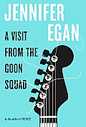
Interested in joining a book group but not able to commit to regular, physical meetings? GoodReads is starting their own book club and the first selection is Chicago native Jennifer Egan's Pulitzer Prize-winning novel A Visit From the Goon Squad. Check out the author's welcome message and then start discussing your thoughts on the book with other online readers.
Newcity's Lit 50 2011 is up now. The list breaks down all of the authors, publishers, and people in organizations doing great things for literature in Chicago. Amongst the honorees this year are Mary Dempsey, Commissioner of the Chicago Public Library, Stacy Ratner, Founder and Executive Director of Open Books, Zach Dodson and Jonathan Messinger, Co-Founders of Featherproof Books, and Suzy Takacs, owner of the fabulous Book Cellar.
Ever wish the title of a book would tell you everything you need to know about the story inside? Better Book Titles offers just that: a succinct description of the plot in the title alone. You'll find some local favorites, such as the much revered Texas Public Schools Suck (aka Fahrenheit 451) and Chicago: Home of the Worst Dads Since 1893 (aka Jimmy Corrigan), among many others.
The Chicago Poetry Brothel, which consists of poetry whores, burlesque dancers, and musicians, is featured in an Associated Press video essay. Susan Yount, brothel madam and Columbia College MFA student, and Kathleen Rooney, poet/writer and Visiting Assistant Professor of English and Creative Writing at DePaul, are interviewed. Check out the video on Yahoo! news.
CBSChicago.com has its picks for must-have beach reads. And guess who's top on the list? Chicago's Wendy McClure with her latest, The Wilder Life: My Adventures in the Lost World of Little House on the Prairie. Pick up a copy and get ready to hit the shore!
Roger Ebert asks "Does anyone want to be 'well-read?'" After coming across a list of, what some would label classic, authors in an issue of The New Republic, Ebert writes that he felt a sinking feeling wondering who, indeed, is still reading them. However, what starts as a longing for more attention to the classics becomes a heart-warming ode to the importance of all reading:
My only goal is to enjoy reading. I learn that the average American teenager spends 17 minutes a weekend in voluntary reading. Surely that statistic is wrong. Do they mean reading of "serious" novels? I would certainly count science fiction, graphic novels, vampires, Harry Potter, newspapers, magazines, blogs--anything. Just to read for yourself for pleasure is the point. Dickens will come later, Henry James perhaps never.
At the end of the day, some authors will endure and most, including some very good ones, will not. Why do I think reading is important? It is such an effective medium between mind and mind. We think largely in words. A medium made only of words doesn't impose the barrier of any other medium. It is naked and unprotected communication. That's how you get pregnant. May you always be so.
A wonderful argument for reckless reading behavior, if I ever heard one.
In a related story you may have missed, Roger Ebert was also granted his wish to win the New Yorker's caption contest. Take a look at his win and some past entries.
Riffing on the posthumous publishing trend, College Humor offers up a look into some new (made up) Shel Silverstein works. If you're one of the many whose memories off The Giving Tree aren't as fond as others, you might like this revision, The Giving Tree Gives Up:
The tree decided, "You know what? F*ck this kid.
What's he bringing to the table?
All of them, really. Ungrateful sh*ts.
I'm an award-winning playwright and lyricist.
I wrote 'A Boy Named Sue'! Did you even know that?
I feel like nobody knows that."
That was all still the tree talking, by the way.
Not so giving after all, that tree. A real posthumous, Every Thing On It, will be available in September, but I kind of want to hear more from this tree with the chip its shoulder. [via]
Color Chicago proud: Adam Levin is one of the finalists in the Indie Booksellers Choice Awards, for his debut novel, The Instructions. Booksellers are voting now, and the winner will be announced at an awards ceremony on May 23. Check out the other finalists here.
Locally based journal The Point offers up a review of Chris Ware's latest work, volume 20 of The ACME Novelty Library, which was released last November. Much more than a review, the article delves into the reasons why Ware's work resonates with so many readers and how much of an influence he's had over the genre. Writes Tim Peters, the article's author, on the intense appeal of Ware's work:
Even if much of what's going on in Ware's stories is ugly or sad, the visual style of his pages and books is just the opposite--beautiful and precious, ornate and overwhelming...if a young aspiring creative person wants to work in a personal, intimate medium these days--one that is fighting for its place in society the way only a young medium can fight for its place, one that isn't steadily and decadently and exhaustedly folding in on itself (prose fiction, poetry, painting, sculpture), one that could really speak to these twenty-first-century times in which we live--then that person should think: comics. He will find no better reference for the possibilities and potential of the form than Chris Ware and his ACME Novelty Library.
Or in other words, the bookworm. And the inspiration for Chicago's latest lit journal: Anobium. Started by Chicago editors Benjamin van Loon and Mary J. Levine, the journal embraces the "strange, surreal and exceptional." Check out Literary Chicago's interview with van Loon. And make sure to mark on your calendar that Anobium's first issue arrives in July!
More for those of you who are interested in the posthumous David Foster Wallace publication (or if you just really like Jonathan Franzen's writing [I know I do]): the New Yorker is offering the opportunity for you to read one of their subscriber-only pieces online. Franzen's essay, "Farther Away," is about his solo journey to an island in the South Pacific where he took with him a copy of Robinson Crusoe and, to help himself mourn his friend's passing, a box containing some of Wallace's ashes. If you're interested in reading the piece, which the Book Bench calls "gorgeous" and "haunting," all you have to do is "like" the New Yorker's Facebook page and this normally off-limits material will become available to you.
Happy Monday. Take a break from lolcats and check out Hey Pais, a sweet pictorial journal about the adventures of Paisley, the cat of local comicker Sara B.
Chicago-born Jennifer Egan won the Tournament of Books over at The Morning News with A Visit from the Goon Squad. Her competitor in the last round? None other than Jonathan Franzen's Freedom. If you're interested in learning more about the book, this review in the Guardian provides a nice summary and, if you head over to the New Yorker's Book Bench, you can read some quotes from the author's recent reading, dinner, and discussion appearance as part of the "Eat, Drink, and Be Literary" series.
Says ToB judge Michele Filgate on her vote for Egan: "There's no comparison. Egan's novel is innovative and playful, while simultaneously smart and captivating. I was fascinated by the way she played around with point of view. While Franzen wrote a somewhat predictable though solid novel, Egan wins for her vibrant prose and style."
The Poetry Foundation's Poetry Everywhere is starting its fourth season with Garrison Keillor. With Keillor as the narrator, this edition of Poetry Everywhere will offer short films with various poetic voices (including the likes of Galway Kinnell, Kwame Dawes, and Rita Dove) on public television as well as the web.
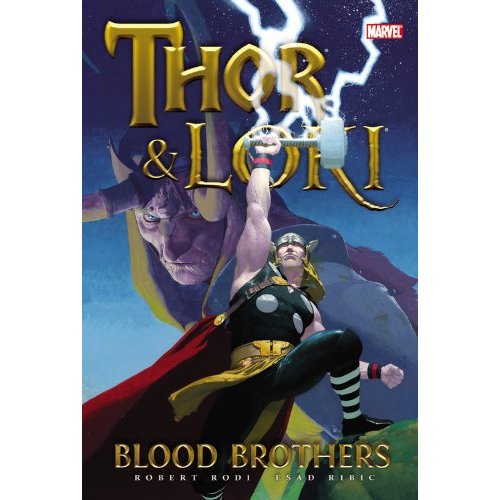
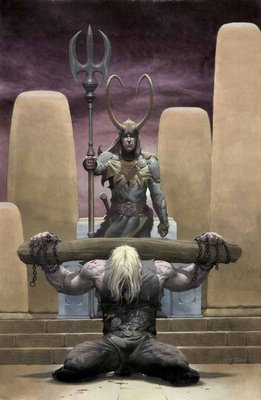
I recently spoke with Chicago writer Robert Rodi about the recent adaptation of his graphic novel Lokiinto the four part viral miniseries Thor & Loki: Blood Brothers. While more widely known as a prolific novelist, Rodi certainly is no slouch when it comes to producing poignant and engaging comics. Here is what he had to say about comics, the characters and what it felt like to have one of his favorite works translated into a different medium.
What drew you into comics in the first place? Have you always been a fan since childhood or were you introduced to them later?
I've been attracted to comics since before I could read. I love the sensual beauty of ink on paper, and I love serial fiction too, so comic books drew me in on both counts. It's been a love affair ever since--with, as in most love affairs, occasional breakups and emotional reconciliations.
Are you a fan of Thor?
Yes, big fan. Given all the pages I've written featuring him, it would be kind of perverse if I weren't.
What past or present Thor stories have affected you or at least piqued your interest in the character?
I loved the Stan & Jack era, especially when they brought in Hercules; and Walt Simonson's run, with Beta Ray Bill and the frog of thunder.
Explain the genesis behind your graphic novel with Esad Ribic. How did the two of you meet? Were you approached by Marvel or did you pitch it?
Axel Alonso approached me. I'd worked with him at Vertigo on Codename: Knockout, and when he moved to Marvel I was eager to follow him--he's a great editor. So I kept pestering him for work. Eventually Loki came along and he gave me a shot at it, which was a leap of faith because I hadn't done anything like it before--I mean, Codename: Knockout was a sex-and-spy farce; Loki was epic super-hero fantasy. No one else would've let me near it. But Axel's an excellent judge of talent.
When writing the comic, what influenced you? What did you put into this comic to make it stand apart from other tales?
I was influenced by the Shakespeare plays, mainly, because the villains are always more interesting than the heroes--more complex, more conflicted, more multi-layered. Think of Mabeth, Iago, Edmund. I thought Loki could easily be made to fit in that mold; I mean, what if he's not evil incarnate? What if he's got motivation, a point of view--what if he's essentially human, like you or me?
I was actually the second writer Axel offered the series to; the first had come up with a standard Loki-tries-to-topple-Asgard story, and Axel wanted something different--something new. So I decided to take Loki-topples-Asgard as my starting point; we've never seen Loki win before, so that would have to show him in a new and revelatory light. Also, the phrase "Be careful what you wish for, because you just might get it" came to mind. Loki wins, Loki rules Asgard--is Loki finally happy? Very, very far from it. And that forces him to look deep inside and ask himself, why not?
What do you find provocative about Loki as a character?
He's the trickster god, who graduated to god of evil. He's ambitious that way, he's driven. Gods usually aren't; they're static--that's the whole point of them. They represent universal constants, unalterable states of being. But Loki is always shifting, warping, changing. These days he's a pre-pubescent boy. You see what I mean.
Did you have any input when it came time for your comic to be adapted into a serialized animated film?
No, it all happened very quietly and secretly; I wasn't told till most of the first two episodes were in the can. One of the more pleasant shocks of my life, let me tell you. When I heard the book was being turned into a "motion comic," I expected something like the pan-and-scan method used by the old Marvel cartoons in the Sixties. When I went to the Marvel offices and Ruwan Jayatilleke showed me the footage, my jaw hit the floor. Esad's artwork doesn't just move, it lives; it has weight and texture and breath and...integrity, is the word I'm looking for. This isn't a motion comic, it's a motion picture. God knows how they did it. But there's nothing I could have contributed, beyond the source material. Everything's flawless...the voice actors, the score, every last thing is just a slam dunk.
In anticipation for the upcoming Thor movie, Marvel Knights Animation is releasing a four part viral miniseries called Thor & Loki: Blood Brothers, based off local Chicago scribe Robert Rodi's graphic novel. The first installment was launched on March 28th to iTunes, Xbox Live and PSN, with each additional installment following shortly thereafter. I had a chance to talk with producer Ruwan Jayatilleke about the genesis of the project and how one of comics' most infamous villains is simply misunderstood by his peers.
What led you to pick this particular Thor story to work with?
Thor & Loki: Blood Brothers found me. When I started at Marvel several years ago. Editor-in-chief Axel Alonso (Executive Editor then) dropped a bundle of books that he edited under the Marvel Knights banner. Within that bounty of outrageous nerdery was the gem created by Robert Rodi and Esad Ribic. And I just kept re-reading the story year after year and obsessing over how great it is.
In just a few short days, it will be the beginning of National Poetry Month. Celebrate it right by submitting your poems to Poetry Cram 11 -- they're still accepting submissions! Check out the important guidelines, as well as more information on Poetry Cram, here. Deadline to submit is April 11. Issues of Poetry Cram 11 will be given away for free on April 30, 7-9pm, at the National Poetry Month Cram at Café Ballou (939 N. Western Ave). Cram poets will read, and there will be an open mic -- so those of you who may not get your work accepted, you still have a chance to share it.
If you've been following the Tournament of Books, you'll have noted that Chicago-born Jennifer Egan's A Visit From the Goon Squad has won against Paul Murray's Skippy Dies. Says judge Anthony Doerr, who loved both books but admits to having more of a personal reaction at this particular point in his life to one over the other:
In short, Egan's book is a terrific feat of ventriloquism, composed of 13 short stories that seesaw back and forth through time and interconnect multiple characters, particularly the lives of a music producer named Bennie and his assistant, Sasha...By the time I got through the book's penultimate chapter, a breathtaking short story told entirely through PowerPoint slides, there were tears in my eyes...If Jennifer Egan writes a book about time overwhelming characters and turning them into parents, a reader like me, who feels himself being overwhelmed by time and being turned into a parent, will plug into it in a certain way...But--and only because I'm in the absurd position of saying one very good book is better than another very good book--I'll say that A Visit From the Goon Squad was a slightly more relevant book for this particular reader at this particular moment.
Doerr isn't the only one who loved Egan's work. The novel was named the winner in the fiction category for the National Book Critics Circle Award and is now on the longlist for the Orange Prize.
In Baconfest Chicago's Poetry Contest! Baconfest Chicago takes place in April this year, with lots of exhibiting restaurants and bacon-related products (Bakon Vodka anyone?) and events, including a poetry contest. It's been narrowed down to six finalists. Check out the poems and then vote for your favorite here! (Polls close this Friday at 1pm.)
Former Chicagoan Brian Dettmer recently caught the attention of the Telegraph UK with his artworks celebrating books as physical objects. "The age of information in physical form is waning," Dettmer says on his website. "As intangible routes thrive with quicker fluidity, material and history are being lost, slipping and eroding into the ether. Through meticulous excavation or concise alteration I edit or dissect communicative objects or systems such as books, maps, tapes and other media. The medium's role transforms. Its content is recontextualized and new meanings or interpretations emerge." In other words, old encyclopedias that had been collecting dust are transformed into caterpillar like creatures and elaborate dioramas in his hands. Pretty cool; check it out.
Speaking of Tournament of Books, Tournament commentator and Book Club selection author Kevin Guilfoile and former Tournament judge and local author Jonathan Eig are taking this opportunity to do some literary good. For the month of March, Kevin will donate $2 to First Book for every sold copy of his new novel, The Thousand, and Jonathan will do the same for his new book, Get Capone. First Book is a national non-profit organization that provides access to new books for children who are in need. Do them a double by clicking on title links above and find the closest independent bookstore where you can pick up your copies.
You're keeping up with The Morning News's annual Tournament of Books, right? Yesterday Chicago native and Book Club selection author Jonathan Franzen won his first round with Freedom against Teddy Wayne's Kapitoil. Says judge Sarah Manguso:
Postmodernism seems to have let the blood out of half of the bad contemporary American novels, and sentiment masquerades as depth of feeling in the other half--in a naughty moment, Patty and Walter's son refers to the latter sort of book's reliance on "descriptions of rooms and plantings." Franzen gets away with that crack, though, for what Freedom attempts is more ambitious than mere sentiment or mere intellection. It asks us to empathize with its lily-white characters, despite their Volvos and organic gardens and upper-body workouts, despite their chosen confinement in such banal surroundings. And since the book manages to render suburban St. Paul a viable setting for the full range of human emotional experience, I felt its characters' pains and joys. With firm control of its dense and rigorous sentences, Freedom hits all its marks. Despite erratic pacing and an endpoint that seems somewhat arbitrary--why not 300 more pages, or 300 less?--the book satisfies its worthy ambitions.
Stay tuned to read the judges' commentaries on the other contestants, including fellow Chicago native Jennifer Egan's A Visit from the Goon Squad, and find out who wins the tournament on April 1.
Know a great Chicago poet? Nominate him/her for Dean Rader's list of ten best poets in history. He'll take your nomination into consideration, and then post his list on SFGate.com. Flood him with Chicago greats!
Amidst all the Borders bankruptcy hubbub, Unabridged Bookstore in Lakeview takes a moment to thank their loyal customers:
While the loss of jobs to Chicago, and to the United States, is saddening, we feel this is a direct result of a book-retailer business model that just does not work.
We want to thank you, our loyal customers, patrons, and conversationalists for realizing there is an immense value in supporting a local independent bookstore.
The Poetry Foundation and the University of Utah Press have collaborated to publish Blueprints: Bringing Poetry into Communities, an e-book filled with renowned poets and community leaders talking about how they brought poetry to diverse areas. People interested in infusing poetry into their own communities will also find tips on how to do so, along with program ideas and tried-and-true methods. Download a free copy of the e-book here.
The Chicago Department of Cultural Affairs wants to know what Chicagoans have to say about their creative practices. From February 4 to 25, they'll be conducting an online survey to learn more about Chicago's creatives. Go here when the survey goes live on February 4 to give your input!
Duh -- you were born. But it was also important for tons of authors who got their books on the NYT best seller list on that day. Check out which books share your day here!
Small Beer Press, who put out Chicago native Jennifer Stevenson's Trash Sex Magic (described as ""to Chicago what The Mysteries of Pittsburgh is to Pittsburgh and A Winter's Tale is to New York -- a winning, touching, open-eyed love letter "), is offering free downloadable books by acclaimed dark fantasy author Kelly Link, myths of mothers-exploring Maureen F. McHugh, and more.
Fiesta became The Sun Also Rises (and actually, Fiesta was used for foreign editions). 1984 was almost The Last Man in Europe. Find out more famous titles that could have been.
I wasn't the kind of little girl that dreamed about my wedding day, but I have to say, these comic book-style wedding invitations by Chicago graphic designer afavorite might have made me swoon a little.
C. Max Magee, co-editor of the upcoming The Late American Novel: Writers on the Future of Books, reflects in essay form about baseball, Steve Albini, and the changing nature of the park at Leavitt and Argyle.
No, it's not for sale. But as of 5:30pm, you have just over six hours left to buy a one-year family membership to the Ernest Hemingway Museum in Oak Park, courtesy of Groupon, for $30. Check out the writer's birth home and learn about the first 20 years of his life -- I've never been to the museum, but it's possible there will be some photos of the A Farewell to Arms scribe as a toddler dressed in drag.
...to learn about William S. Burroughs. Today's Reader Real Deal is a $7.50 admission to William S. Burroughs: A Man Within at the Music Box Theatre (3733 N. Southport Ave). If you purchase the deal, you print the voucher and get your very own, special reserved seat at the Jan 21, 2011 premiere at 8pm. And that's not all! You also get a place at the Q&A session with director Yony Leyser and Ed M. Koziarski, who did a piece on the movie for the Chicago Reader. PLUS a free small box of popcorn. Scoop up the deal NOW!
WTTW's Fear No Art Chicago announces their first podcast interview. First subject is David Sedaris, discussing his years living in Chicago, his advice for young authors and his newest book Squirrel Seeks Chipmunk: A Modest Bestiary, which brings animals and illustrations to his signature sardonic style. The L.A. Times said "the animals have given Sedaris' humor some new teeth: Tiny and sharp, and sometimes even ready to draw blood." An amazon.com reviewer said "it's like a children's book for kids who drink..."
Alizah Salario delves into the origination of slam poetry in Chicago (Marc Smith, the Green Mill, the Uptown Poetry Slam) and beyond (Def Poetry Jam) -- and poses the question: What has commercialization done to slam poetry? Read all about it here!
Located in the heart of Pilsen at 1443 W. 18th St, Libreria Giron carries many of the same titles as other bookstores, but their selections are in Spanish. Here, owner Juan Giron explains how this unites the surrounding community.
Missed Corrections critiques posts on Craigslist's Missed Connections, editing them for grammar, spelling, and clarity. The mind behind it seems to be based out of Philadelphia, but there are definitely a fewhere that could use their "pretentious academic" touch.
Our fair city (well, a less-fair part of our fair city) gets a visit from Kebrouac in On the Bro'd, a retelling of the classic road-trip tale from the point of view of (wait for it) a fine gentleman.
The Chicago Manual of Style -- the I-swear-to-use-the-serial-comma-so-help-me-University-of-Chicago-Press bible for editors and writers and "everyone who works with words" -- doesn't just appear on shelves and on the internet in its pure form. It is actually written by real-live human beings, who gather in meeting rooms and debate whether blog names should be italicized or in quotes. (If I sound glib, I don't mean to -- I am honestly in awe of these editors.) Carol Fisher Saller, the "Subversive Copy Editor" and an editor of the CMOS, now in its 16th edition, has posted a list of "outtakes" from those debates, which the editor and grammar nerd in me finds wonderful. Below are my favorites:
"I agree with everyone else that it looks sufficiently ugly as is."
"I'm going to take some notes, as if we were saying important things."
"Please stop using spreadsheet as a verb. Are you gonna spreadsheet that?"
"I'm sorry, there are errors in the error messages."
"If you want to try talking the designer into using Times New Roman, be my guest, buddy."
"When you really think about it, what is an en dash good for?"
"That phrase is inherently nonprecise."
"You mean to tell me you looked at the spacing around all the apostrophes?"
Are writers more depressed than the general population? An excerpt from Sam Twyford-Moore's article "Don't Get Me Down: Reading and Writing Depression" at therumpus.net (read the whole thing here):
"Alice W. Flaherty states in The Midnight Disease that writers are ten times more likely to be manic-depressive than the rest of the population, and poets are a staggering forty times more likely. The overriding concern then becomes a variation on the classic chicken-or-the-egg: Does the act of writing invite mental illness, or does writing come from some need to cope with it? It's not as clear-cut as one or the other, but if it were solely the former, who would go into it willingly?"
Journalist Larry Fahey takes on a local legend. "Ebert is, at heart...the kind of critic that sees movies as products, like cell phones or refrigerators or spatulas." Say what? Join the comment pile-on at therumpus.net.
StoryCorps, that wonderful, large-scale oral-history project that records Americans sharing their life stories, has animated a video of oral historian Studs Terkel -- one of StoryCorps's inspirations -- speaking about the human voice in 2005.
The words all originated in our fair city, according to Chicago magazine. We would have no way to describe Jim Abbott without Chicago author Finley Peter Dunne. What would we call those tall, sky-sweeping buildings if it weren't for an 1888 article in the Chicago Inter-Ocean newspaper? And apparently, "tho" did not originate from lazy teenagers who wanted to type txt msgs faster: the Chicago Tribune spelled "though" that way between 1934 and 1975.
Sam Weller authored the critically acclaimed Listen to the Echoes: The Ray Bradbury Interviews. Missed his talk, or just share his love? The Columbia College professor details his passion on his website, a repository of photos, interviews, and literary context.
Retired FBI agent Paul Lindsay has written a debut novel (under the pen name Noah Boyd), The Bricklayer, is about a (surprise) former FBI agent working as a bricklayer who gets called back into the force to work on a case. Click on the link for a peek at the first 73 pages.
No, this blog is not about Jaws and his buddies. In Sharkforum, The Sharkpack covers everything from art and film to humor and politics. Check out the literature section, where Simone Muench does "Poetry of the Week."
On Monday, writer Amy Krouse Rosenthal started a new mission for the readers of her blog, Mission Amy K.R (hosted by vocalo.org/WBEZ): the F*ck It list. She invites people to share a list of activities that they wouldn't ever want to do again -- basically, the opposite of a bucket list.
I think commenter Pam Wolff (aka Evil Ferret) and I would get along really well, based on her list:
F*ck political correctness. Just say what you mean. Like we can't tell anyway.
F*ck not being able to write f*ck in a blog for adults. Seriously.
F*ck idiots who don't know the difference between their, there, and they're. Ditto for the morons who can't keep its and it's straight. Most of all, f*uck the brainless wonders who think it is acceptable to use an apostrophe + s to make a word plural.
F*ck Fox News.
F*ch people who think that, because they dislike something, it is bad or wrong.
F*ck people who let their kids scream in stores and don't say anything.
F*ck people who take up 3-5 seats on the bus/train with their non-folding strollers or shopping carts.
F*ck wearing a bra.
Although, I must say I can't abide by the last one.
The blog also includes a few special-guest F*ck It lists, including ones from Amy Dickinson and Torey Malatia (who, when we asked him what he thinks about women's summer wardrobes, he said, "F*ck wearing a bra").
Authors rarely talk about the strange headspace they inhabit between the time a book's been fully edited and the day it is published. Rosencrans Baldwin set out to change all that, keeping a diary for five months before the August 12 release of his debut novel, You Lost Me There.
The anxiety is palpable. Maybe he should cut down on the Diet Coke.
I receive dozens of press releases a day at my job, so I got a laugh out of this mock release from author and senior editor of Booklist OnlineKeir Graff, to promote his fourth novel, The Price of Liberty. Highlights:
Misspellings and grammatical errors throughout are should contributing to this effect.
As is customary, key information has been set in boldface.
"For my fourth novel, I wanted to try something different," Graff quotes himself as saying.
The Price of Liberty's launch party will be Thursday, September 9, 5:30-7:30pm. After Words Books, 23 E. Illinois St., 312-464-1110.
FiveBooks promises to make you an instant expert on any field--classical music, global security, chick lit--by reading five books an author recommends on that subject. Aleksandar Hemon, author of Nowhere Man and The Lazarus Project, recommends works on "Man's Inhumanity to Man," choosing texts based on their ability to complicate any emotional response, including empathy or moral superiority, to the horrors going on in the book. Two are about the Holocaust, one is about the Soviet Red Cavalry, the fourth is about scalp-hunters in Southwestern American territories, and the last is about slavery in the States. It's too easy to claim that the perpetrators are mad, says Hemon. In fact, the inhumanity is often planned, "a rational system, an economic system in which all participated in various ways."
You have nine days left to support Chicago literary publication Concisely Magazine via kickstarter.com. Help raise $300 to publish issue #4: a pledge of $10 gets you the next print issue, a collection of eight stories each under 500 words (with absolutely no advertisements), and a plethora of genuine thank yous. Spare $20 and you'll receive a full year's subscription or 4 issues. As of today, the "little guys" have met just over 50% of their goal. So help if you can, all you literary philanthropists. See? It takes less than 100 words to ask!
"No, they didn't serve coffee. Who the hell needed it?" In this video on the Chicago Underground Library's blog, one Chicagoan who stopped at the CUL's Printer's Row 2010 tent recalls her favorite bookstore, now closed: the Stars Our Destination, lined wall-to-wall with science-fiction and mystery books.
TriQuarterly, Northwestern University's literary journal, just released its latest issue -- its first in the publication's new online-only form. Among other works, it includes a short piece by Book Club-featured author Joe Meno.
No longer do you have to leave your house to get help from a reference librarian -- or even wait a few minutes for an e-mail response. The University of Chicago Libraries now offer immediate reference help via (OMG!) instant message.
Author James Kennedy's Apr. 17 Dome of Doom party started off calmly enough with a gallery show, featuring fan art inspired by Kennedy's 2008 book The Order of Odd-Fish (the May Gapers Block Book Club selection).
But the event later transformed into a costumed dance-off -- those brave enough to enter the PVC-pipe Dome of Doom as dance-fighters got in for free. See Time Out Chicago for a photo gallery.
If you missed the insanity, there's a possibility that there will be a repeat next year. If Chicago theater group Collaboraction -- who helped organize the event -- has its way, says Kennedy, "I think it will become an annual thing (though not always Order of Odd-Fish themed). They've even kept the Dome!"
Photo courtesy jameskennedy.com, and thanks to designer Erick Delgado for photo resizing.
Hear author and Chicago policeman Martin Preib read from his new book The Wagon and Other Stories from the City on podcast at The Chicago Blog, blog of the University of Chicago Press. The Wagon is set for release in May. The Chicago Reader says of The Wagon: "One thing's for sure: Preib isn't a cop moonlighting as a writer. He's a writer who happens to work as a cop."
Golf lessons with Tiger Woods would likely cost thousands -- or $13.59 -- but Debby Herbenick, Time Out Chicago sex columnist, gives away Tiger's lessons on getting hot 'n' heavy for free. Author of the 2009 book Because It Feels Good: A Woman's Guide to Sexual Pleasure and Satisfaction (Rodale Books), Herbenick draws advice from "celebrity sexperts" in a four-part CheekyChicago series (Tiger is the first).
An ad popped up on the Chicago/Creative Gigs page on Craigslist this week:
Need immediate unpublished children's stories appealing to ages 2-6, preferably with a princess, pirate, fairy or rabbit theme. Will pay generous royalties. Must have own illustrations. Call immediately 312.XXX.XXXX
In need of a little more fiction, circa 2009? The Reader's annual fiction issue is now online, featuring stories by Stephen Markley, Natalie Edwards and Robert Cass. If you find yourself in need of some more reads, you can always check out the Reader's archive which houses their fiction issues dating back to 2000.
Newcity has listed their Top 5 books of 2009, but instead of including books from all over the globe, they've also set aside two lists specifically for local reads. I wouldn't necessarily agree with all of their picks, but the local nod is always a nice thing.
The Unnamed, Book Club selection author Joshua Ferris's upcoming novel, is getting some heavy pre-publication press. Catch a glimpse of the new work in this lengthy excerpt in Granta:
Coffee and a powdered doughnut sat on his desk, the morning offering. He might have thought to get something more substantial but he didn't care to interrupt the flow of work. Night after night, he sat at this desk just as a sphere of oil sits suspended in dark vinegar - everything blotted out but his own source of light. To save on energy costs, Troyer, Barr and Atkins LLP had installed motion sensors on the overhead lights. From six in the morning until ten at night, the lights burned continuously; after ten, the sensors took over. He worked past ten most nights, and most nights found him sufficiently absorbed in something that required only the turn of a page or the click of a mouse - too little activity for the sensors to register. The lights frequently switched off on him. He'd look up, surprised again - not just by the darkened office. By his re-entry into the physical world. Self-awareness. Himself as something more than mind thinking. He'd have to stand, a little amused by the crude technology, and wave his arms around, jump up and down, walk over and fan the door, sometimes all three, before the lights would return.
As we celebrate the anniversary of Rod Blagojevich's arrest, take a moment to laugh while reading GalleyCat's list of the "worst moments in publishing in 2009." In at #4: Blago's book deal.
Chicago's own Aleksandar Hemon is the editor of this year's Best European Fiction anthology and was recently interviewed in the New York Times books blog about the process. Here's Hemon on how his work on the anthology reminded him about some major differences between American and European fiction writing:
Q. What was the biggest surprise for you, editing the collection? A. It was less of a surprise than a reminder: how unabashedly comfortable many of the writers are to engage with literary forms that would be perceived as experimental or avant-garde here. In turn, I was reminded how deeply conservative contemporary American literature is in terms of form. And that conservative bent is a recent development, I believe. The European form flexibility is not a consequence of some snotty, elitist aesthetic but rather of the fact that there are many stories to be told and many traditions to draw from.
In other Hemon news, over at Booklist Daniel Kraus takes the trailer for Hemon's The Lazarus Project to task, finding that it doesn't so much make him want to read the book as it makes him want to go back and read fellow Booklist writer Donna Seaman's review of it.
Pop Matters examines where an author's "previously unpublished" posthumous works come from, those of Kurt Vonnegut in his recent Look at the Birdie in this case:
Vonnegut was no hack, but he needed to make a living, and so he became a staple of these publications (in good company that included the likes of Louis L'Amour and Elmore Leonard, among others). In a 1951 letter included in this book, Vonnegut observes: " . . . of course, if you appear in the Atlantic or Harper's or the New Yorker, by God, you must be a writer, because everybody says so. This is poor competition for the fat checks from the slicks. For want of anything more tempting, I'll stick with money."
As is customary this time of year, publications are coming out with their "best of" lists, but with this year bringing the end of the decade near, there have been a slew of "best books of the decade lists" on which our current Book Club selection, The Corrections, features prominently. Back in September The Millions placed the book at #1 on their Best of the Millennium list (to some disagreement to their readers). Here, the Guardian reviews all those publishing smash hits and past Book Club selection author Joshua Ferris discusses what makes The Corrections so great:
It was merciless, it was skewering, the family at its heart full of bicker, betrayal, and many other varieties of familial sport - but the artist assembling and synthesising it all for the pleasure of the reader was possessed, thank God, of a voracious emotional intelligence, capable of mollifying all that was ugly and unlikable in his individual characters with empathy and humour. Oh, it's compulsive reading! The copy I have is a hardback containing 568 pages, and not one of them flags. The sentences are rollicking flickers of genius, one brilliant-dense paragraph meeting another, narratives vectoring into the outlandish and the unexpected while remaining ever committed to the realist's agenda. We might have forgotten, by the time the book landed, that a literary doorstopper of the first order of seriousness could also be unabashed entertainment. More likely Franzen simply knew that all comedy is deadly serious, and that the fraudulent online sale of post-Soviet Lithuania, for example, or a stolen salmon fillet sliding down the hero's underpants, was the low-brow fallout, the comic carryover, of a writer dividing the sadness of a declining family by the sadness of a declining culture. The book was a howl: against greed, against selfishness, against the axiom of American happiness, finally against the tyranny of family holidays.
Over at The Week Behind, Donald G. Evans discusses why Chicago needs a Literary Hall of Fame, writing "Saying nice things about Chicago's literary heroes should be a civic responsibility warmly and naturally embraced, big sloppy kisses rather than gratuitous cheek pecks on the way out the door. Like with any loved one, you want to show your appreciation, express love and gratitude, and in ways small and big cherish what you have." One of the major forces behind the project to create our Literary Hall of Fame, Evans recounts other promoters of Chicago literature, giving the Book Club a nice mention, in effort to show the vibrant literary community that already exists here. Where Evans feels having a Hall of Fame could do most good is to bring attention to such works on a greater scale, not just in the minds of the already literary conscious but in the greater Chicago community, if not the world. It is a lofty goal, indeed, but one that I can certainly stand behind. Find out more about the burgeoning Chicago Literary Hall of Fame on its facebook page.
I came across his life story in the course of research on another topic, was astonished to find there was no major biography, and set to work. Gatling was a brilliant inventor and a thoughtful individual, a man who embodied the American Dream as it was manifested in the 19th Century: One worked hard, dreamed big, and one's fortunes rose or fell according to one's own talents and efforts -- not charity, not handouts, not shortcuts or good PR. The Gatling Gun represented an intellectual shift as well as a change in armaments. For the first time, one could kill an enemy en masse, not one at a time. The Gatling ushered in a period of terrible destructiveness -- but also signaled to the world that the United States was a new world force to be reckoned with. And it all began in the mind of a man with no formal education, no training, a farmer's son who stepped forth into the world in the 1840s, determined to make his mark. And did.
The Onion AV Club interviews Superfreakonomics author and University of Chicago professor Steven D. Levitt, questioning him on the book's controversial chapter on global warming and taking him to task on other claims, such as the effects of terrorism and the size of Indian men's, um, body parts. Says Levitt in answer to the first topic:
Our chapter does not deny the existence of global warming. What we do is, we say that the current solution people are proposing is one that involves reducing carbon emissions dramatically. The problem with that solution is, it's incredibly expensive. The economists who have looked at it think it will cost trillions of dollars in reduced economic output to accomplish it. Also, it requires everyone in the world to get together and suddenly become allies and friends to try and change their behavior, to moderate how much they produce. And even if we do it, because carbon dioxide stays in the air for so long, it will take 50 years to really feel the benefits, or even know if we are getting benefits. So we take a very different approach, which says, "Let's just say the earth got too hot and we wanted to make it cooler, would reducing carbon emissions be the right way to go?" And we think the answer is no.
I could do this all day and not stop laughing--it's the Make Your Own Academic Sentence tool from the University of Chicago. Pick four hoity-toity sounding phrases and the tool will work them into a sentence for you. Here's mine: "The epistemology of consumption fuctions as the conceptual frame for the legitmation of agency." Hilarious, no? Why didn't this exist when I was writing papers there? This could have saved me a lot of work! [via]
Yeah, of course you do. The University of Chicago Press has just announced that they will begin offering one free e-book each month, starting today. This month's book of choice is the 2,000-some-year-old The Birthday Book by Roman scholar Censorinus. As described by the London Review of Books, The Birthday Book "distills the wisdom of several strains of philosophy, extracting whatever seems to have any bearing on births, days and birthdays: theories of the origin of the human species, the formation of the individual foetus, the principles of astrology, the ages of man, the nature of time, eons, centuries, years, months, days and hours." In other words, a nice, light read for your daily commute. (Oh, come on. This is the U of C. Did you really think it would be something you can buy at the airport?) Check back in December to see which gem of academia will be offered up gratis next.
Adam Langer, author of our own July 2005 selection Crossing California, gets some love in Booklist's Book Group blog where Neil Hollands calls him an author "who more people should be reading." Hollands gives a brief description of each of Langer's novels and his recent father-focused memoir, saying that his work is "easy to access, full of laughter, but worthy of careful examination as well." Having included Langer's work in our own Book Club, I wholeheartedly agree.
National Novel Writing Month is upon us again and ChiWriMo, the Chicago chapter of the month-long novel writing spree, has got you covered with write-ins scheduled throughout the city every day of the month. If you can't make it to the write-ins in person, fret not as the website's online forums provide plenty of support at your convenience and their resources give much needed direction for the gigantic task. At the end of the month, head over to the Open Books space at 213 W. Institute Pl. for a 14 hour writing frenzy, complete with baked goods. Good luck to all of our local aspiring novelists this month!
Over at the Guardian, Dave Eggers talks about novelizing a children's classic, how his version of The Wild Things diverges from the film adaptation and his love for Maurice Sendak:
So the book, I thought, would be a place where I could explore these and other ideas, and where I could bend the story toward my own interests a bit (the movie is much more Spike's than mine). Along the way the novel diverged significantly from the movie, and from Maurice's book, but all three share a basic outline - boy is confused about a home and world out of control, boy acts out, boy leaves home and becomes king of a herd of sentient beasts. And all three benefit from the pure, uncompromised vision of childhood that Maurice Sendak espoused and put on paper, again and again, in a stunning body of work that becomes more impressive and singular with every passing decade. He is the greatest living writer and illustrator of books for or about children, period, bar none, end of discussion. He also has a dog named Herman.
Continue reading the article for an excerpt from Eggers's novel and go here for the Guardian's analytical and thought-provoking review of the book.
Speaking of getting freaky, do you ever stop to wonder just how much those Newberry librarians go through to bring you an awesome book fair each year? What kinds of crazy reads they're forced to sort into one of their numerous categories? And how many of them are sex guides? Here, a librarian describes some favorite donations: "One is still in print, and can be purchased as a book alone, or in a deluxe set with book, video, and tube of massage oil. I have read the book and I have watched the video...[a]nd I can tell you something about sex you may not have known. People who have sex have very large hands, and they always spread them out flat right HERE, at waist level, whether it's a still photo or a scene in the video. Oh, and people having sex always stand, sit, or loll at a side angle to a camera, so their hands can stay just HERE. Sex, apparently, is a matter of getting really close and then holding your hands out flat just HERE." My question is, who's donating these kinds books? And why? Perhaps I don't want to know.
Granta continues their coverage of all things Chicago by asking 57th Street Books about their top five Chicago reads. Some famous names are on that list and two of the reads have been past Book Club selections.
Booklist's Book Group blog directs us to Shelf Renewal, a blog by two Chicago-area librarians dedicated to shining a light on not-so-new books instead of giving more attention to upcoming books that are already getting plenty of publicity. Blog posts so far include a list of books centered around eating habits, dysfunctional families and, inspired by the show Glee, high school novels. Part of the blog's goal is to help other librarians recommend good reads to their patrons, but for readers in general, the blog looks like it will certainly do well to branch out into lesser known books on topics of their interest. (After all, do we really need to know another person's opinion on the latest Dan Brown?) I look forward to seeing which books the pair dig up in future posts.
Not only is Granta giving our city love with their all-Chicago issue, but they're also shining the spotlight on local bookstores by asking them for their top five Chicago reads. This week it's Quimby's. Check back each week to find out a new store's favorite Chicago-related books.
Today in Silly Quizzes, can you tell the difference between Behind the Bell, Dustin Diamond's Saved by the Bell tell-all memoir, and Ernest Hemingway's For Whom the Bell Tolls? Or, more importantly, would you admit it if you couldn't?
File this one under "Um...okay...": In anticipation of the Spike Jonze/Dave Eggers Where the Wild Things Are adaptation, Opening Ceremony has a number of Wild Things inspired costumes that you can purchase just in time for Halloween. If you have an extra $600 lying around. (If I had an extra $600 to spend expressly on Halloween, I would spend it on Reese's Peanut Butter Cups. I would pile them in my living room, then climb onto one of my bookshelves to dive into them, à la Scrooge McDuck and his golden coins. But I digress.) Assuming you do have that kind of cash, you'd probably want to get more than one wear out of your costume and the AV Club has some great ideas on where such apparel might be appropriate.
(Seriously, that guy looks ridiculous, but doesn't he also look toasty? Imagine wearing that on a mid-February morning at the El station. You'd be the envy of CTA riders everywhere.)
Boing Boing is holding a poetry contest, the prize for which is a copy of Dave Eggers's Zeitoun. All you have to do is compose a haiku on why you deserve to win and enter it in the comments section of the post. The contest ends on Saturday, but there are already over 200 posts so get crackin'!
Some of my favorites so far:
#2
I choose to spend time
remembering what went wrong
to prevent repeat.
#156
Some books rot on shelves,
but were made for many reads.
We practice sharing
#224
I like Dave Eggers
Cute girls see this on my shelf
Everybody wins
Interested in which songs inspired Stephanie Kuehnert when she was writing Ballads of Suburbia? The author provides a soundtrack for her book as part of Largehearted Boy's Book Notes series. Not surprisingly there's some Johnny Cash on the list (his music plays somewhat of a role in the novel) and the combination of songs serves as a good look into how music helped shape the stories of a bunch of punk suburban kids.
Banning books is hard work. Deciding which books to keep is difficult when you can find something to disagree with in so many of them. Just ask these puppets from the American Library Association:
On a serious note though, this map shows how pervasive book censorship continues to be. Keep in mind that this shows only book bans and challenges that have been reported; many more surely slip quietly past the news radar. Banned Books Week starts tomorrow and with it we are reminded to take a moment to be grateful for our undeniable right to read.
The National Book Awards remembers Richard Powers's The Echo Maker, our September Book Club selection.
Um...perhaps Harold Augenbraum, Executive Director of the National Book Foundation, has some sort of memory issues as well. According to his description of the book, the protagonist is named "Jack"*: "He has what? Capgras syndrome, identified by Joseph Capgras in 1923. And this precipitates not only one but two family dramas, and a questioning of not only of how the mind works but what effect do changes in any natural environment have on the individual and that individual's place in the human ecology. The book's readers believe Karin is his sister, but the protagonist Jack does not. He thinks that for some reason 'an actress' has been brought in to play his sister. And even a dog that resembles his own has been found to visit him at the rehab facility. And we as readers believe he is Jack's dog even though Jack does not. They bring in the neuroscientist Weber, who resembles Oliver Sacks--at least to me, but that would make him a sort of imposter (or he may be related in some way to Ernst Weber, the psychophysicist). As much as he tries to help Jack, he ends up damaging his own marriage. He tries to decipher the case and ends up recognizing (and I use that word advisedly) his own alienation from his wife back east. I mean, this is a man who, when he writes case studies, in order to protect the patient's identity, makes up names for them. So they become imposters in their own cases. And then he develops a fascination for Jack's rehab aide, so he becomes an imposter in his previous life. And then you remember that none of these people are real, so they are all imposters, puppets, with Richard Powers the grand puppenmeister convincing you of their reality."
*Mark Schluter, not Jack, is the man afflicted with Capgras in this story.
As of Sunday, the National Book Foundation finished their salute to past winners and voting is now open for the best National Book Awards Fiction. The shortlist includes John Cheever, William Faulkner, Flannery O'Connor, Eudora Welty, Thomas Pynchon and University of Chicago visiting professor Ralph Ellison. Cast your vote here and your email address will be entered to a win two tickets to the 60th National Book Awards ceremony on November 18.
Stuart Dybek will be at the Harold Washington Library tonight to discuss his contribution to Granta, but if you can't make it to his talk, here's a video of him with Aleksandar Hemon discussing "the energy and inspiration of their home town."
This past week, the National Book Awards remembered two past winners with ties to the University of Chicago.
Says Ed Portor, contributor to this year's Best American New Voices anthology, on the 1995 winner, Philip Roth's Sabbath Theater: "Underneath all the sex and bad behavior, Sabbath's Theater is an investigation of grief--inconsolable, unsupportable grief, for the dead, and for oneself. The scene that I can never get out of my head (and I'm not alone in this) is that of Sabbath masturbating on the fresh grave of his lover Drenka, and then finding out to his horror that he's not alone in the practice. It's an outrageous scene, but its porno-slapstick is infused with terrible pain."
On Susan Sontag's In America, the 2000 winner, Columbia University graduate Elizabeth Yale has this to say: "In America is the story of a woman--a diva--and of the idea that we create ourselves by rebelling against our fate. But of the idealistic immigrants in Sontag's story, it is ultimately only the actress--the paragon of mutability--who truly achieves this self-actualized transformation. For the others, shades of their former selves inexorably seep through. The actress, practiced in performance, can achieve what the rest of us cannot because her life transpires on the stage. Maryna or Marina, the diva has no singular self; she transforms with each rise and fall of the curtain, her identity a costume she dons before every performance. The experience of reading In America is of having an intimate, visceral encounter with an actress in possession of this transformative power, of being seduced by her elusive charisma, and ultimately of being eluded by her."
Goodreads is interviewing Audrey Niffenegger for their October newsletter and they're soliciting questions from fans. If you have a question for the author about her writing or about writing or, as they say, life in general, post it on the Goodreads page and maybe yours will be selected.
Today Granta brings us a new short story by Audrey Niffenegger:
The night sky was orange then. There was no real Chicago night in the early 1980s; what with the light pollution and the sprawl, the city threw up a massive unhealthy glow. The streets were bathed in artificial light, safe-light yellow as though motorists might need to develop film while driving. Nothing had been gentrified yet, the aluminium-sided houses stood blank and sullen in unbroken rows along glass-strewn sidewalks. Darkness pooled in the alleys and collected under the el. It was a good decade in which to get mugged.
You have got to read this hilarious, rediscovered interview with Shel Silverstein in a 1961 issue of The Realist.
Shel on having a beard:
I just have the beard because I think I look better with it, and I feel better with it. It makes me look older; I don't know if that's good or bad. But it's not done out of any rebellion or anything. It's not done, I hope, to attract attention. So finally, now, when people ask, I look sort of sad and I say, "It covers the scar." It's a very romantic thing to say, isn't it? But, you know, one thing it is, it's a good conversation-starter. People who might want to talk to you normally, a stranger, and who can't - you know, people are pretty shy and reserved, mostly - they don't want to take a chance on being cut down by somebody, so they might not come up to you without an excuse; whereas, if you've got some lemon meringue pie on your shoulder, or if your fly's open, they've got an excuse to talk to you. They can say, you know, "Your fly's open," or "You've got some lemon meringue pie on your shoulder."
More from Granta, this time from Roger Ebert on the personalities to be found in the past in a North Ave. bar, telling Neil Steinberg, "you had to be there":
O'Rourke's was our stage, and we displayed our personas there nightly. It was a shabby street-corner tavern on a dicey stretch of North Avenue, a block after Chicago's Old Town stopped being a tourist haven. In its early days it was heated by a wood-burning pot-bellied stove, and ice formed on the insides of the windows. One night a kid from the street barged in, whacked a customer in the front booth with a baseball bat, and ran out again. When a roomer who lived upstairs died, his body was not discovered until maggots started to drop through the ceiling and on to the bar. A man nobody knew was shot dead one night behind the building. From the day it opened on December 30, 1966 until the day I stopped drinking in 1979, I drank there more or less every night when I was in town. So did a lot of people.
Largehearted Boy turns its focus to Claire Zulkey who provides a soundtrack to her young adult novel, An Off Year. The listing is shorter than most, but there are definitely some, um, interesting choices on there.
Many of the futuristic things Ray Bradbury has written about have come to be true (iPod, anyone?), but have you ever wondered about the plausibility of a colony of book people, as written in Fahrenheit 451? The Guardian asks several people, most of whom believe memorizing and reciting entire books could be done with sufficient practice. I have to go with the last entry, though, and admit that I too find it difficult to remember basic plots of the books I've read, let alone every word of them. I might not last so long in that colony.
Stephen Elliott's The Adderall Diaries is the latest book to get the Book Notes treatment over at Largehearted Boy. The pieces that compose the soundtrack to the book are, um, interesting..."embarrassing" is the word Elliott uses, but you'll have to judge for yourself.
Have you ever wondered what the first meeting between Nelson Algren and Simone de Beauvoir was like? The Reader gives us a sneak peek from a new biography of Jean-Paul Sartre and de Beauvoir.
Daniel Kraus, who gave an intriguing reading along with his Brothers Delacorte at the Book Cellar last night, talks to Largehearted Boy about his debut novel, The Monster Variations, and provides a soundtrack for the read. With a list of pieces that starts with Iron and Wine and ends with the Who's the Boss? theme song, you can't help wanting to know just a little bit more about this dark young adult story. I know I do.
As reported on the main page, for today only you can get a limited edition t-shirt with a Chris Ware designed print. Proceeds of the shirt benefit 826Michigan, one of the sister organizations of our own 826CHI.
Obviously we can't have a YouTube video of Shel Silverstein reading his own work, but we can have a video of Silverstein's buddy Larry Moyers reading one of his poems. The poem is titled, "The Perfect High," and, as you might infer, is a bit different from the kid-friendly Shel we grew up with:
You can also read the text of the poem here. [via]
The Millions does double duty by pointing us to a book trailer for Dan Chaon's new novel, Await Your Reply, and giving us a really in-depth interview with the author. Says Chaon of the books he loves and the audience for whom he writes:
As a writer, I feel like I'm always in conversation with the books that I've read. Occasionally, an interviewer will ask: "Who are you writing for? Who is your audience?" And in many ways the answer is that I'm writing for those authors I've loved, and the books I've loved. If you're an avid reader, and a book gets under your skin, it can affect you as intensely as a real human relationship, it lingers with you for your whole life, and there is always this desire to re-experience that amazing sense of connection you get from "your books." I understand completely why people want to write fan fiction. To me, I guess, all fiction is fan fiction at a certain level, just as it always has an element of identity theft.
Jacket Copy brings attention to the Reading in Public project taking place in San Luis Obispo. The purpose of the project is to celebrate reading by way of performance in public places, similar to Open Books's Get Caught Reading that took place earlier this year. There is an accompanying Flickr group where people all over the world can submit pictures of people reading in public, but I'm dismayed to see that there is yet to be anything tagged Chicago. Surely we're just as publically literary as any other city, right? Submit your pictures to the group and make our presence known!
Audrey Niffenegger has written a nice piece for the Guardian on her love of Wilkie Collins's The Moonstone, giving us an idea of what and how she reads:
It would be delightful to be able to read a book as its original readers did, to have the impact of the experience without knowing what would come after. Wilkie Collins's masterpiece, The Moonstone, must have seemed especially strange and new to its first readers. It was the first detective novel written in English. There are whole sections of bookstores, vast swaths of ISBNs devoted to The Moonstone's progeny. I happened to read it after the Sherlock Holmes stories, after Dracula, after Lord Peter Wimsey and Nero Wolfe and Philip Marlowe. But its first audience read it as a serial in Charles Dickens's weekly magazine All the Year Round. I suppose we could recreate this experience by reading one chapter each week and firmly putting the book away in the intervals, but I am much too impatient for that, myself.
Northwestern grad Dan Chaon has never blogged before, but gives it a shot in effort to discuss his latest book, Await Your Reply. In the process, he discusses some of the fantasy and thriller reads that influenced him as a kid, how those grew to help him appreciate character-driven works and why the difference between "genre" and "literary" fiction can be so confusing. [via]
The New Yorker's books blog holds a weekly covers contest and Book Club members might have a slight advantage identifying at least one of this week's covers:
If you know all four, email them at bookbench[at]gmail[dot]com to win a prize.
After unexpectedly seeing The Time Traveler's Wife this weekend (I was really planning on waiting until the DVD release, but found myself at the theater with a friend trying to decide on a movie for the afternoon), I find this review of the movie fitting: Not Bad. Which is to say, not as horrible as I was expecting it to be, but not great either. It was a passable, bare-bones version of a fantastic book, told in a far more linear manner, which I don't think was necessarily beneficial. Having said that, I'm forced to think back on my lit theory class where we learned that one of the bases of feminist theory is the idea that men tell stories linearly - going down a straight line until they come to a point, not unlike certain parts of their bodies - while women tell stories circularly - going around and around (think of Mrs. Dalloway for a prime example). I'm not much of a proponent of that particular theory, but it strikes me that it does seem applicable here, what with the book written in a circular manner by a woman and the movie directed in a linear manner by a man. In a story about time travel, the circularity is just more interesting. I won't review the movie in depth (I'll let our movie columnist Steve do that here, where he hits nicely on its faults and attributes), but I will say that, unlike Steve, I was emotionally touched. Ridiculously so. I have never cried during a movie while watching it in the theater (and only once before in front of another person at all), but halfway through I remembered exactly what was going to happen and how it was going to happen and I must admit that I shed some tears. I really think that had much more to do with having read the book, but in any case, that movie is freakin' sad. And while it's not nearly as great as its progenitor, it's not bad either.
In other news, the novel may be appearing as a TV show in the not too distant future.
Looking to catch to some Aleksandar Hemon today? You've got two opportunities to do so: you can listen to NPR's interview with Hemon about his latest short story collection, Love and Obstacles, and read an excerpt from one of the stories, then you can head over to the Guardian and listen to Hemon reading from the first story in the book, "Stairway to Heaven."
To brighten up your Monday afternoon, I present to you (actually, the New Yorker presents to you) an interview with Dave Eggers and an excerpt of The Wild Things:
Max knew that a bunk bed was the perfect structure to use when building an indoor fort. First of all, bunk beds have a roof, and a roof is essential if you're going to have an observation tower. And you need an observation tower if you're going to spot invading armies before they breach your walls and overtake your kingdom. Anyone without a bunk bed would have a much harder time maintaining a security perimeter, and if you can't do that you don't stand a chance.
Jacket Copy offers a look at the furry cover of Dave Eggers's upcoming The Wild Things, the novelized version of Maurice Sendak's Where the Wild Things Are. The verdict on the book's appearance? "[M]atted. And kind of creepy." Kind of true, but I also can't wait to get my hands on one. Literally.
Or, What Would Barack Obama Read? The Daily Beast collects all of the books that the President has been seen with since the campaign, saying that the list reveals a "predilection for presidential profiles, a weakness for explain-it-all bestsellers, and the occasional hankering for literary fiction." Some homeland notables on his shelf: What is the What by Dave Eggers and Lincoln: The Biography of a Writer by Fred Kaplan.
Also, the New York Times looks at how Obama is influencing pop culture creation and consumption.
I've never considered how being Jewish and a writer makes one a "Jewish writer," but it seems that Adam Langer, author of our July 2005 selection Crossing California, is asked about that very thing and is forced to wonder what that really means:
You'll offer that you were born Jewish and you've been a writer for eons, so sure, you're a Jewish writer by definition, but that's just one fact of your life. Like you're five-foot-eight or you moved out of Chicago but still enjoy double cheese dogs from Wolfy's Red Hots.
If you're feeling erudite, you'll quote Saul Bellow, an author you don't enjoy as much as people sometimes assume: "I'm well aware of being Jewish and also of being American and of being a writer. But I'm also a hockey fan, a fact which nobody ever mentions."
You'll say when you were a kid, you liked hockey too.
The rest of Langer's essay at Tablet Magazine reads as a great and amusing contemplation not just on the Jewish-ness of a writer who happens to be Jewish, but on the assumption of racial and ethnic stereotypes on the artist.
Book Club selection author (and FoBC) Wendy McClure (I'm Not the New Me) has been travelling throughout the Midwest for work on a new book about Laura Ingalls Wilder and her childhood obsession with the Little House books. Salon wonders how our culture became obsessed with Wilder's stories yet remained almost ignorant of her ambitious daughter Rose Wilder Lane. (As someone who read all the Little House books as a kid, I must admit I know nothing of Laura's daughter either.) Wendy tells Salon:
The popular conception of Laura is that she was a naturally talented late bloomer with pure intentions to simply write down her memories -- the kind of writer a lot of people think they want to be (or even think women should be). Rose, though, is the 'other' kind of writer -- ambitious, constantly concerned with money and career stuff, often ghostwriting or cranking out stuff that she wasn't proud of, so there's a pervasive belief that she was just too hard-edged to have had anything to do with the Little House books. But she did.
On her site, Wendy invites all to share their memories and experiences of Laura Ingalls Wilder with her, from the books, the actual homes and even the TV show. And if you've never seen any of Laura's homes, check out Wendy's flickr stream of her enviable research excursions.
Rebecca of The Book Lady's Blog was graced with an advance copy of Audrey Niffenegger's forthcoming novel Her Fearful Symmetry. Her immediate opinions? Yes, it does live up to the hype and it has all the great things we loved about The Time Traveler's Wife while going in a completely different direction. Color me excited.
Meanwhile, I remain trepedatious about the upcoming Time Traveler's Wife film and these articles, one saying the movie isn't science fiction but an "epic love story" and the other explaining why it was necessary to change the ending in the film, do little to calm my reservations. Sure, the story is about love, but generally "epic love story" translates to "cheese" in the movies and there's nothing I hate in movies more than cheesy, ridiculous, maudlin love. Also, I hate unnecessary ending changes, so I'm pretty much guaranteed to dislike this movie. (I also suspect that the director's insistence that this is a love story and not science fiction is in effort to draw in the female audience, which irks me because that assumes that females aren't interested in science fiction and are only interested in love. But that's another rant for another day.)
Anne Elizabeth Moore, series editor of the Best American Comics and former GB Sky in Five columnist, talks to Bitch Magazine's Pages Turned blog about the influence of Julie Doucet's Dirty Plotte comic books. Says Moore of the comics:
These were the things Dirty Plotte was about: the isolation of being a driven female creative; the jealousy in personal relationships that come out of that; the ever-present push from the outside to be maternal and nurturing, but the absolute interior knowledge that that is not your way; and the incredibly shifting sense of gender that a strong, smart woman must feel in order to move about in the world. These were all very important themes, and they still resonate with me when I get into frustrating situations.
The Washington Post reports that Amazon customers are tagging Rod Blagojevich's forthcoming book, The Governor derisively. Tags include "moron," "delusional," "crook" and "weasel," among others. My favorite? "Captain Hair." (I wonder if the underwear would be on the outside of the tights for that superhero costume...) Read the whole list of tags here and do Chicago proud by adding your own!
The Guardian's summer short story special issue is up and Dave Eggers has one of his, titled "A Fork Brought Along," included:
Edward has long been a successful man, a gentle and happy man liked by most everyone, but now he has a fork in his pocket. Blessed by good health and vast family, married 40 years, with five children, 11 grandchildren, two great-great-grandchildren on the way, Edward has considered himself lucky to be enjoying his retirement and twilight years without care or controversy. But now he is at a wedding reception, and he has a fork in his pocket, and this is threatening to undo everything. He first noticed it a second ago, when he put his hands in his pockets, looking for a mint, and instead found the sharp prongs of the fork. He quickly pulled his hand away, smarting from the pain. And then it dawned on him: there was a fork in his pocket.
Robert Duffer of the Chicago Examiner posted a lovely little piece on the significance of moving and reorganizing one's books. The categories into which Duffer divides his books will be familiar to any bibliophile faced with gathering his or her collection and deciding what will go where on the shelves in the new digs. There are those books you keep because they meant something to you at some point, even if you're not sure you'd be able to read them again with the same zest; those books you keep because you conquered them and want proof of your feat; those books you keep because you're hoping that someday you will like them (when, too, will I read East of Eden? Before or after I reread Jane Eyre?)...etc., etc. Duffer's post is a wonderfully thoughtful look at one's life in books.
Wendy McClure, author of our November 2005 selection I'm Not the New Me, writes for Penguin about the inhumanity of having your book analyzed by an introductory English college class and the perils of writing in the present tense. On the first subject, I can't even imagine, given how I'm prone to doling out harsh criticism myself in English classes (though I hope it's thoughtful harsh criticism I'm doling out and not simply ragging on the marginal), having my own book deconstructed by a group of first years. I think I'd run away and hide, so kudos to Wendy for having the guts to read what the kids wrote about her. And on the second subject...what a perfectly sweet ending to her ongoing story.
The National Book Awards remembers their 1971 winner, and the third and final win for Saul Bellow, Mr. Sammler's Planet.
Says Craig Morgan Teicher, poet and member of the board of the National Book Critics Circle: "It's impossible not to see a bit of oneself in Artur Sammler, a Holocaust survivor living out the end of his life--he's in his 70s when we meet him--uptown in New York City, where the subways are intolerable and the buses only a bit better, until a confrontation with a pickpocket makes the buses impossible as well.He lives with his grown daughter, an eccentric, irresponsible, unmarried woman, and tries to find what good he can in a world that has more than proved its evil.
"It's impossible, too, not to recognize how alone Sammler is, and how his aloneness is something we all have in common. A book like this--and it's a narrow shelf indeed that can hold it and its small company--may be the only way we can share that deep solitude."
Open Books stayed up all night on Saturday, blogging every half hour to raise money for their Buddies program. They didn't make their goal of $2,500 in sponsorships, however you can always donate to their literacy causes here. Here are some of the highly amusing literary classics Mad Libs you may have missed:
The First Post, featuring A Tale of Two Cities: It was the best of SCISSORS, it was the worst of CAPES, it was the age of FRUIT FLIES, it was the age of PRETZELS, it was the epoch of ROLLER SKATES, it was the epoch of THIMBLES, it was the season of KITES, it was the season of PUNCHING BAGS, it was the spring of NEEDLES, it was the winter of CLOTHESPINS, we had SOCCER BALLS before us, we had CUPS before us, we were all going direct to ZANZIBAR, we were all going direct the other way - in short, the period was so far like the present TEACHER, that some of its POINTY authorities RAN on its being CRIED, for good or for evil, in the superlative degree of comparison only.
11:34am, featuring The Hound of the Baskervilles: "Mr. Sherlock Holmes, who was usually very GROTESQUE in the mornings, save upon those not infrequent occasions when he was BROKEN all night, was seated at the breakfast SPIKE."
2:32pm, featuring Jane Eyre: "There was no possibility of taking a PARAKEET that day. We had been CONVULSING, indeed, in the FUZZY PANTIES an hour in the morning; but since dinner (Mrs. Reed, when there was no BATHTUB, HARMONIZING early) the cold winter FLYING BUTTRESS had brought with it QTIPS so sombre, and a NINJA so BOISTEROUS, that further out-door CEMENTING was now out of the question."
4:32pm, featuring Dracula: "3 May. Bistritz. --SLEPT Munich at 8:35 P.M., on 1st May, POURING at Vienna early next morning; should have CLIMBED at 6:46, but COBB SALAD was an hour late. Buda-Pesth seems a SNARKY COCONUT, from the glimpse which I got of it from the LAMP and the little I could BITE through the MANATEES."
10:30pm, featuring Don Quixote: "In a village of La Mancha, the COCKPIT of which I have no desire to call to mind, there lived not long since one of those GRIZZLY BEARS that keep a PAGODA in the lance-rack, an UNSINKABLE buckler, a FIERY GRAVEROBBER, and a BOTTLE for FISHING."
The Penultimate Post, featuring Ulysses: "FRIED, plump Buck Mulligan came from the LESBIAN, BRUSHING a KITTY of lather on which a PIGEON and a CASE lay crossed."
Check out their blog to read the rest of the Mad Libs and learn more about Open Books's programs. And if you've ever wondered why programs such as this and other literacy organizations are so important to our city, take a look at these harrowing statistics.
University of Chicago faculty member Thornton Wilder was awarded the National Book Award in 1969 for his novel The Eighth Day.
Here, the National Book Foundation's Executive Director, Harold Augenbraum, remembers the honored work: "Without revealing too much, I will tell you--as Wilder does in the first chapter, with that wonderfully American literary structure of historifying in which the writer relates the most exciting event first and then fades back into the past and then rushes past the first event toward the narrative's events that come afterwards--though everything, of course, is still in the past, you're made to feel as if you are reading about the future--faceless riders from Coaltown, including a cloudy-faced minister, rescue the murderer, Ashley. Is he a murderer? Read it and you tell me."
Lydia Kiesling of The Millions writes about her first failed and second successful attempts at reading Richard Wright's Native Son, the Book Club's September 2008 selection. She writes that she quit the novel early on the first time around because she felt "dispirited" and didn't want to read about the horrible acts Bigger Thomas commits with Mary Dalton's body after having accidentally murdered her. She later felt like a fraud at her ability to read other violent novels while letting this classic work offend her. Having successfully made it through the book the second time around, she realized that part of her discomfort stemmed from the fact that:
...Native Son is not a novel that wants to hold anybody's hand. Native Son does not want to tuck you into bed at night and reassure you that you are with it. Wright, starting as he did with a hugely unlovable character, dares you to face certain realities. Namely, that discussions of oppression are infinitely more comfortable when members of the oppressed race in question are doing things like passively resisting, writing monumental novels, and being elected president by a majority of the country so that one can say "My goodness, we've come a long way!" But that's stupid. The reason that institutionalized racism is despicable is because it takes away humanity. Obviously it makes the oppressor ugly; but it can make its victims ugly too. Ugliness breeds ugliness. Why should a book about something ugly be made palatable so that I, a white lady, can feel uplifted?
That's as true of an assessment of the book as I can imagine. The book does not want to hold your hand. It is not about reassuring you that racism and oppression is past us, but forcing you to understand how horribly present it is, both in Wright's time and today. What's shocking about this novel, which the Book Club members at that meeting commented on and which I realize each time I read the book, is that it is just as relevant today as it was the more-than-half a century ago that it was written.
Kiesling points out another irony -- that of reading the book during the hubbub surrounding the racially toned arrest of African-American scholar and Harvard professor Henry Louis Gates, Jr. My, what a long way we've come, indeed.
Want to know more about Frank Lloyd Wright, both the truth and the fiction? Booklist's Book Group blogger Neil Hollands, having spent some time in the city for the ALA conference, was inspired to find out more about one of our most notable architects. Here are his recommendations for anyone wishing to read up on Wright.
American Fiction Notes is excited to read Richard Power's Generosity: An Enhancement, one of the status galleys of the year. Here he points to a University of Illinois at Urbana-Champaign literay journal that produced short films on Powers's novels, all except for one featuring the author's own narration. Be sure to check out the beautifully done video for The Echo Maker, the Book Club's September selection. Also of note -- the final video in the series features Audrey Niffenegger talking about her visual art.
Jacket Copy ponders what makes a book postmodern, then lists the 61 essential postmodern reads, annotating each title with the attributes it contains, such as "author is a character", "comments on its own bookishness" and "more than 1,000 pages." The list includes Chicago-related authors Philip K. Dick, Dave Eggers (no postmodern list would be complete without good ol' Dave), Aleksandar Hemon, Philip Roth and Kurt Vonnegut.
Okay, not the real Neil Gaiman, per se. Fueling his ongoing "feud" with the award-winning author, local author James Kennedy (The Order of Odd-Fish) donned pirate garb, complete with missing tooth, to challenge a faux-Gaiman at the American Library Association Conference. James forgoes the usual conference speech to assert himself as the rightful winner of the Newbery Award he lost to Gaiman earlier this year. Insanity - complete with grown men rolling around on the ground, the Cube of Trials and human sacrifice - ensues. The results, as you might imagine if you've ever seen James in action, must be seen to be believed. The video below is just the beginning of the Kennedy-Gaiman Challenge; find the rest of the hilarious scuffle on James's website.
Two of our past Book Club selections will soon come to a television set near you (provided you have HBO): Joshua Ferris's Then We Came to the End as a movie and Jeffrey Eugenides's Middlesex as a series. Mentioned in the Gawker-related post below, this New York Entertainment post confirms it with Ferris himself. Meanwhile, The Millions wonders feverishly how Middlesex will translate to the small screen: "How will they pace it? How many seasons?...What of Lina, and Jimmy Zizmo, and Marius Wyxzewizard Challouehliczilczese Grimes? Who will play the Obscure Object? Will she have freckles and heavy thighs? Who will play Apollonian Calliope? And then Dionysian Calliope? And who will play Cal?" I'm curious about the Middlesex series, myself. Done right it could be as amazing a contribution to TV as it is to literature. Done wrong, well, that would just be heartbreaking.
In their continuing celebration of their past 77 winners, the National Book Award blog offers thoughts on the 1953 winner, University of Chicago visiting professor Ralph Ellison's Invisible Man, and the 1954 winner, Saul Bellow's The Adventures of Augie March.
Writes Charles Johnson, past National Book Award winner and chair of the National Book Awards Fiction Panel, on the continuing relevance of Invisible Man: "As our understanding of liberty, equality, and this nation's ideals grows and evolves, our experience of Invisible Man deepens, achieving ever greater subtlety, nuance, and prescience...While black Americans are certainly more 'visible' today, especially after Barack Obama became this nation's first African American president, it is nevertheless true that so many other groups--- Hispanics, Asians, Pacific Islanders, new African immigrants to America, and native Americans to name just a few---can make a case for still being 'invisible' men and women in contemporary America. Well might they argue that 'on the lower frequencies,' Invisible Man speaks to their daily, lived experience."
On The Adventures of Augie March, The Paris Review editor National Rich says of Bellow's prose : "The Adventures of Augie March is for me the great creation myth of twentieth century American literature. It marks the emergence of a new literary hero, the working-class Jewish quester; a new novelistic form, one based entirely on character instead of, and even to the expense of, plot; and most significantly, a new language. An urban Jewish Midwestern argot that is both vividly realistic yet completely of Bellow's own invention. It is a language that one must learn by immersion, as in a Berlitz course. Some readers complain that the first forty or fifty pages are slow. The truth is that it takes time to get used to the arrhythmic canter and the slingshot energy of Bellow's prose."
The Three Little...Architects? UnBeige reports that Steven Guarnaccia has rewritten The Three Little Pigs, basing the main characters on Frank Gehry, Le Corbusier and Frank Lloyd Wright.
Kurt Vonnegut's short story "Harrison Bergeron" is being adapted for a film titled 2081. Watch the trailer here.
The Book Bench directs us to an interview with Dave Eggers and Vendela Vida in Interview Magazine about their joint screenplay for Away We Go.
...since reading The Time Traveler's Wife. With the success of Audrey Niffenegger's novel, the good people at the Newberry Library seem to have gotten a lot of questions about what in the story is fact and what is fiction. Here they offer some answers to some of the more pressing questions posed by the book, like "Does the Newberry really own a book bound in human skin?" (The answer is...um...not definitively "no.")




 Imagine a short film, a minute and a half long, wherein little kids reenact their favorite children’s books. Now imagine watching a multitude of these shorts, back-to-back-to-back. Kind of triggers your ‘awww’ reflex doesn’t it?

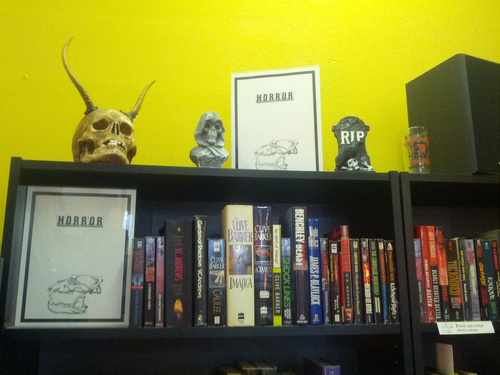 Those who love books must also, by the rule of logic, love bookstores. And Chicago has some of the best independent bookstores in the country, at least as far as I'm concerned. It looks like I'm not the only one -- there is, in fact, a Tumblr account dedicated entirely to becoming "a comprehensive list of experiences at the 100+ small and independent bookstores in the city of Chicago."
 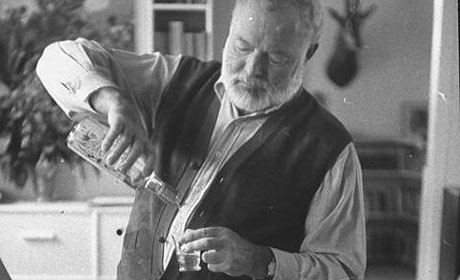 The late-season warmth means it might just be possible to squeeze in one last barbecue or two... why not make it a literary barbecue? In addition to his harem of
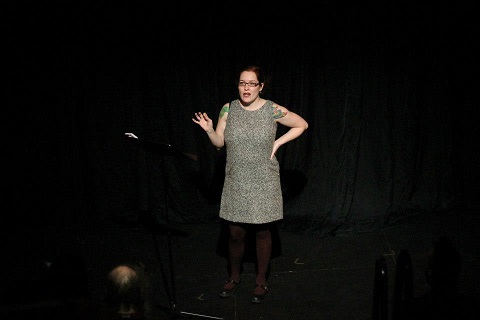
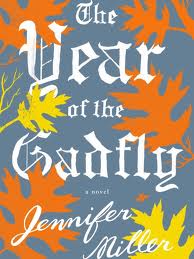 Ever been in the middle of your latest read and wondered, “What was the author thinking when they wrote that?” Well, now
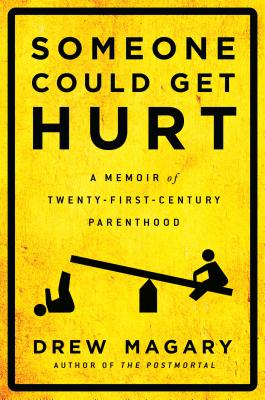
 bit
bit 
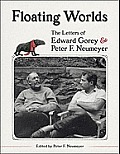 Can't get enough of the strange and macabre illustrations of Chicago native Edward Gorey? Author and Gorey-collaborator Peter F. Neumeyer is publishing a book of his correspondence with the artist.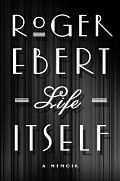
 Interested in expanding your knowledge and reading a few highly acclaimed nonfiction books? You could do worse than visit Time Magazine's list of