Gapers Block published from April 22, 2003 to Jan. 1, 2016. The site will remain up in archive form. Please visit Third Coast Review, a new site by several GB alumni. ✶ Thank you for your readership and contributions. ✶
This is Goldberger's eighth book, but his first on an individual architect. I had a chance to review his book and interview him recently. Goldberger spent 4.5 years and many hours in conversation with Gehry and his clients and colleagues in writing the book, published last month by Alfred A. Knopf.
Mark Dengen leans back in his chair and looks out the row of windows lining his office wall. Outside, on the first chilly day of October, the operations of the largest film studio complex this side of LA hum along. Dengen, Cinespace's CFO, smiles as he looks out at the work being done on NBC series "Chicago Fire" and "Chicago PD" and reflects on how much has changed here over the past decade--not only on the Cinespace campus, but in the North Lawndale community at large.
"This was vacant. Completely vacant," he says. "Saw this completely go south, and then to tumbleweeds, and then from tumbleweeds back to 4,000 people working on this campus."
North America's longest-running competitive film festival, the Chicago International Film Festival, begins tonight, Oct. 15 with the Chicago premiere of Mia Madre, the latest film from Italian director Nanni Moretti (Caro Diario, The Son's Room, We Have a Pope), which premiered at this year's Cannes Film Festival and stars John Turturro as an obnoxious American actor starring in an Italian drama. The screening marks the first time the CIFF has held an opening night event at The Auditorium Theatre; all other festival screenings will be held at AMC River East theaters.
After last year's more festive leanings, with CIFF celebrating its 50th anniversary with the help of returning favorites (film and directors), festival organizers were more interested in seeing this year's 51st proceedings as a way to reboot the franchise, as it were. With everything from a worldwide contest to design the 2015 poster to a shift in some programming features, Programming Director Mimi Plauché, founder and Artistic Director Michael Kutza, and their team set a mission to not only distinguish themselves from other festivals around the world but also from their own history. It remains a festival that focuses on new and established directors — the number of filmmakers coming in from around the world is impressive.
Signal Ensemble company portrait, 2009. Photos by Johnny Knight.
Tonight I witnessed the beginning of the end. Signal Ensemble Theatre, the company whose productions I've photographed more than any other, announced that this season will be their last.
Over the past 10 years I have taken production photos during dress rehearsals for 25 of their shows. That's 25 times in my life I have shown up at their space (on a quiet corner on Berenice Avenue near Ravenswood) and been their first audience, watching the show through my lens as they performed it. Besides the production photos, I've done 27 of Signal's PR/poster photo shoots, 13 headshot sessions for their ensemble members, and five weddings that involved at least one member of their artistic family.
Artists like Jon Rafman or Paolo Cirio, who work primarily with Google Street View as a medium, have created images that are evocative and disturbing, often blurring the line of legal privacy issues. While capturing the individuals who fill the streets, alleys and lawns of the world is captivating, these artists have drawn on the public and an additional tool to conceptualize the public sphere. Since 2007, the launch of the panoramic technology featured on Google Maps and Google Earth has become an eccentric and often easy way to view places one may never go or places one desires to see.
Paul Natkin sat on a stool Saturday and told us about his life for an hour. His life as a rock and roll photographer, shooting concerts and backstage portraits and touring with some of the iconic rockers of the 20th century. Then he said, "Yesterday I shot eight basketball games and I have two to shoot tonight after I leave here."
That's the arc of Natkin's life and 40-year career, as he told his story surrounded by his "Superstars" photography, now on exhibit at the Ed Paschke Art Center in Jefferson Park.
The walls inside the Tail Sticks Casting office (the official extras casting department for NBC's "Chicago P.D.") are plastered with headshots. As the NBC drama enters its third season, extras casting director Adrienne Lewis will analyze hundreds of these hopeful faces each day searching for the extra with the right look. On the rare occasion that she finds exactly what the directors are looking for, she must then ask some uncomfortable questions: "Are you comfortable being half-naked in a strip-club scene?" "Do you ride a BMX bike?" "Is your pinky broken at a 45-degree angle?" For this extras casting director, there is no such thing as a realistic expectation. (Season 3 of "Chicago P.D." premieres Wednesday, Sept. 30.)
Is it difficult to find extras for "Chicago P.D."?
It's not very difficult finding extras. The difficulty is finding the number of extras that we need sometimes. Like 40, 50, 60, 70 -- even 100 extras -- it's fairly doable. It's when we need like 500 extras and are searching for really specific things like, "we need an extra that looks like the guy from the Dos Equis commercial" and really really weird, specific things like that is when it gets really hard. We've had two shoots now where we've had to find two African-American kids that were not minors, that were 18, but looked younger, who also had BMX bikes. We didn't find those kids. We found a different version of what they wanted. Or having girls who are comfortable being half-clothed on national television for everyone to see in a room full of 100 men -- that can be a little bit difficult.
Mallory Sohmer is a freelance documentary filmmaker from Chicago and a Columbia College alumna. She co-directed the new film, Drum Beat Journey, the story of four inner-city youth who travel to Petit Mbao, Senegal, to participate in a drumming workshop. The program used music as a vehicle to capture and connect with the young men in an engaging and original way. But this is not just a film about drumming; it's about stepping into another culture to learn about oneself.
Sohmer's first film, The Living Documents (2009), a call for social justice, told the story of Nicaraguan indigenous rights attorney Maria Luisa Acosta and the circumstances around the murder of her husband Frank Garcia. It aired on the Documentary Channel (now Pivot) and resulted in a hearing with the Inter-American Commission on Human Rights in 2013.
Ana Sekler: Drum Beat Journey, what phase are you in with this project?
Mallory Sohmer: We're currently in post-production and have been working on the film for a long time, since 2011. I'm co-directing it with my friend Kate Benzschawel.
The commotion (and borderline hysteria) over the recent David Bowie exhibition [PDF] at the Museum of Contemporary Art in January has ceased -- the elaborate costumes and platform boots have bid adieu to Chicago and are traveling across the ocean into another realm of dreaminess and glamor.
The aura, subsequently, has changed. Visually powerful, elegantly arranged, and rich with conversation, the museum has welcomed sculptor Doris Salcedo in a retrospective that spans her 30-year career. The Colombian artist's exhibition opened Feb. 21 and will be on view until May 24.
Salcedo, a public-works artist, has transformed the fourth floor of the MCA into an installation that urges viewers and visitors to slow down, meditate, and remember the lives that she chooses to commemorate. Each death and each disaster draws Salcedo into a creative process involving found objects, every-day materials, and findings from the earth. While her works are created due to specific events, each piece acknowledges universal loss and bereavement. Salcedo urges viewers to never forget; the reminder is crucial.
"Pushing the paint around -- it's always in an attempt to get at something: something true, powerful, good. Paint is pure, innocent...it holds the potential to become an image that captures a facet of the elusiveness that is one's experience of being alive. In this way, the practice of art-making honors both the love and the suffering by keeping a record while always remaining vulnerable," states Rebecca George, founder of The Art House, a studio workshop and gallery based in Chicago.
The Art House, located at 3453 N. Albany, offers artist residencies, innovative coursework, advanced support for artist's professional practice, and above all, an environment to flourish as a creative individual. The studio/gallery offers instructional courses for the development of personal momentum and a meaningful connection to one's work while expanding and strengthening the technical language of material and method.
As a global city, Chicago is home to many languages besides English. Chicago Speaks profiles speakers of these languages, and shares some of their personal stories along the way.
As a student at the National Technical Institute for the Deaf at the Rochester Institute of Technology, Peter Cook was a graphic design major who wrote poetry on the side, composing his poems in English and translating them into American Sign Language. Then, in 1984, he attended a poetry workshop Allen Ginsberg gave at the school with the Deaf poet Robert Panara.
"Allen was reading from Howl, and there was a sign language interpreter," Cook recounts. "He got to the words 'hydrogen jukebox' and he stopped."
Some 7,550 miles separate Chicago from Ethiopia's capital, Addis Ababa.
For the 10,000 Ethiopians living in Chicago, that distance seems a lot smaller due to the Ethiopian Community Association of Chicago (ECAC), a nonprofit refugee resettlement agency, in Rogers Park.
The familiar smells of incense and coffee linger through the hallways of the center, but the real sense of Ethiopia is felt in a small room, 600 square feet, on the second floor. This is the place where the ECAC is trying to build a museum showcasing Ethiopia's diversity and history, a symbol of their strong community.
"We want the museum to transfer information to children and share our rich history with the mainstream American community," said Dr. Erku Yimer, the executive director and one of the founders of ECAC.
North America's longest-running competitive film festival, the Chicago International Film Festival, begins Thursday, Oct. 9 with the Chicago premiere of Miss Julie, the latest film from actor-turned-director Liv Ullman (and based on the play by August Strindberg), who has had all of her last three features as a director screen at CIFF and will be in attendance at the opening night at the Chicago Theater (all other festival screenings will be held at AMC River East theaters). Her appearance in the Chicago is only fitting since CIFF will be celebrating its 50th anniversary this year, and has a great number of special events, screenings and appearances to mark the occasion, which means even more work and coordinating for Programming Director Mimi Plauché, founder and artistic director Michael Kutza, and their team.
More than 20 films have been selected as part of a retrospective of highlights from CIFF's 50-year existence, including 1971 Silver Hugo winner Family Life, to be presented by the director, acclaimed Polish filmmaker Krzysztof Zanussi; Lars von Trier's Academy Award-nominated Breaking the Waves; Roger and Me (with director Michael Moore in attendance); and three films which received their world premiere at past festivals: One Flew Over the Cuckoo's Nest (1975), The Idolmaker (1980) and White Nights (1985) — the latter two directed by Taylor Hackford, who will appear at both screenings. Several longtime festival friends will present special editions of their favorite films, including director, writer and producer Oliver Stone, showing the Director's Cut of Natural Born Killers and the recently released to Blu-ray Ultimate Cut of Alexander. Other retrospect films will include 101 Reykjavik, Fanny and Alexander, Here's Your Life, a restored print of Alfred Hitchcock's Jamaica Inn, George Cukor's version of A Star Is Born, and a restored version of the silent film classic Why Be Good?, featuring the final on-screen performance of CIFF cofounder Colleen Moore.
I'll have a full-fledged CIFF preview piece this Friday in my Steve at the Movies column, but a couple of interesting programming notes I wanted to highlight include a spotlight on Scandinavian films, that includes 20 feature works and a program of eight shorts from Denmark, Finland, Iceland, Norway and Sweden. The festival is also honoring the great French actress Isabelle Huppert by screening four of her recent great films at the Music Box Theatre, three of which will be shown as 35mm prints.
I had a chance recently to sit down with Plauché, who has been working for CIFF since 2006, to talk about the highlights and special events of this year's event. As always, Plauché is a great guide though the nearly 200 films from more than 50 countries. Take notes, and don't be afraid to see something to haven't heard of — that's the point of a film festival, isn't it? Enjoy.
Hairy Who exhibition at the Corcoran Gallery, 1969.
If you missed the year's greatest art film in June, The Hairy Who and the Chicago Imagists is coming back. The 109-minute documentary about the lurid and outrageous Chicago art movement of the '60s and '70s will be shown at the Siskel Film Center from Friday through Oct. 9.
Director Leslie Buchbinder will be on hand at the 8:15pm Friday show. On Sunday, the six original Hairy Who artists will appear at the 5:30pm show.
The film was shown here a few times in June and we reviewed it for Gapers Block then.
As a global city, Chicago is home to many languages besides English. Chicago Speaks profiles speakers of these languages, and shares some of their personal stories along the way.
Charif Hachim's home, where he lives with his wife and three children, might be the only one in Chicago where people speak Comorian. Comorian? It's the language of Comoros, a group of islands located in the channel between Mozambique and Madagascar.
Hachim knows of only one other local Comorian family, and they live in the suburbs. He would know best. He has lived in Chicago for more than two decades and since last year has been the honorary consul general of Comoros in Chicago.
Consider for a moment the single most impressive ingredient one can add to food or drink, or really anything for that matter. It is readily available, though seemingly scarce, and most often wasted.
We'll play the sphinx no longer and tell you it is the ingredient of time. It suffuses products with nuance and richness otherwise absent from that made in haste, resulting in tender, smoky briskets and deep, complex scotches. Or the reward is more valuable for the time taken to attain it, offering release as warring patience and hunger are reconciled. That first bite of Hot Doug's or Kuma's is made sweeter by the waiting.
In art, time adds value and gives opportunity for reflection. Temporal remove has helped even our initial reactionary responses to practically every major epochal shift in the arts. Taking time to sit with a work and one's thoughts can greatly broaden the experience of the piece. The brain becomes flush with considerations of time and place, of semiotic interpretation versus emotional reaction.
Oli Rodriguez is an interdisciplinary artist working in film, photography, and performance. His art often queers notions of family, desire, and collaboration. I recently attended two of his exhibits, Love to Love You at Roots and Culture with Sara Condo and I want something more than my husband and my house with Jovencio de la Paz at Chicago Artists Coalition. His latest exhibition, The Human Space with Andy Karol, opened at Beauty & Brawn Art Gallery and Think Space this weekend. I sat down with him to find out more about his relationship to Chicago, the city's queer history, and how it impacts his artmaking.
Oli Rodriguez
You were born and raised in Chicago, right? In Humboldt Park specifically?
We moved around a lot but it was Humboldt Park first and then I moved to West Town, which didn't exist as West Town then. It was around the Grand section. I'm considering Grand Avenue as this invisible barrier where literally, it was like a racial line. So if you follow Grand, all the way west from Western to Harlem, there's this division that exists. It's a line of division with black folks south of Grand.
For some of us the Grid is as useful as a blank piece of graphing paper. Sure, finding your way someplace should be a matter of connecting the dots. But since addresses on the North Side don't come in coordinate form, they don't give you the whole picture.
You could use Google Maps to find where someplace is, but do you really want to walk the streets like a lost tourist in your own city? And what if your phone dies?
Luckily, I found a way (thanks to this book) for us hopeless wanderers to finally conquer the Grid: an ancient memorization technique called "the Method of Loci."
This method works on the theory that as hunter-gatherers, humans evolved with great spatial memories but lousy memories for numbers and other things useful to modern life.
By building a "memory palace" we can tap into our brain's strengths and memorize anything, from phone numbers to roads. You make a memory palace by visualizing a physical location you are familiar with and placing images of things you want to remember within that memory.
There's a bit more to it, but take a stroll through my memory palace and see if you can figure out what streets these images help me remember.
34th and State: It's the corner where one grand Chicago era ended and a new one began. It's the place where modernism took root in Chicago.
The block on 34th Street between State and Dearborn streets was the site of the Mecca Flats, a square-block-size apartment building constructed in 1892 and demolished 60 years later. The exhibition Mecca Flat Blues at the Chicago Cultural Center tells the story of the Mecca in large-scale historic photographs that show the building's interiors and tell stories of the building's residents.
The Mecca Flats exhibit was curated by Tim Samuelson, Chicago's cultural historian. He presented a gallery talk in March about the Mecca and Thomas Dyja gave a lecture last week on the battle to save the Mecca in the 1940s and '50s. (Dyja is author of the cultural history The Third Coast: When Chicago Built the American Dream, now out in paperback. The book won the 2013 Heartland Prize for nonfiction.) Both events had large turnouts.
Comedian Robin Harris made you laugh -- uproariously -- whenever he touched a microphone. His unapologetic "blue collar" comedic style, comprised of an effortless and expert blend of "signifying" and anecdotes, turned him into a household name.
Harris, a native of Chicago's South Side, put in major work in comedy clubs across the country, eventually landing in L.A.'s famed Comedy Store; however, it wasn't until 1985 when he became the house emcee for the Comedy Act Theater that people really began to take notice.
Lauren Trifunovich is one of three winners of the 27th Annual Playwrights Festival - photo by Ilesa Duncan
Sometimes, procrastination pays off. Lincoln Park High School senior Lauren Trifunovich wrote one of the best original student plays of the year in a mere 20 minutes.
Ms. Kosari, Trifunovich's creative writing teacher at Lincoln Park, asked her students to write an original one-act play for class. She encouraged everyone to submit their best work, so she could enter the scripts in the 27th Annual Young Playwrights Festival competition. Trifunovich -- a self-proclaimed procrastinator -- started her piece on the day of the deadline and completed it in less time than it takes most high school students to eat lunch. Little did she know that the characters she penned would come to life in several months -- and she would be sitting in the director's chair.
The 18-year-old is one of three winners; she was awarded both $500 and the chance to work alongside a theater professional to put on a full production of her play at Preston Bradley Center, 941 W. Lawrence, for a month-long run.
"I was speechless, it took me a while to wrap my head around actually winning something," Trifunovich says. "I haven't won many competitions or anything of that sort ever."
Editor's Note: This is part of an occasional series of columns from former GB contributor Sheila Burt, who lived in Japan for three years before recently returning to Chicagoland. "Letters from Japan" will discuss social and urban issues Chicagoans face and how the Japanese do it differently. Previously: Life in a Japanese School; America & Chicago, as Seen from Japan; Biking in the Countryside and City.
In October, I returned to my home town after living in Japan for three years. While it's been a strange adjustment in a lot of ways, so much about being back in Chicago feels familiar — good pizza, blistering winter weather, the potent urine-stench of certain El trains, and perhaps most evident to me, transportation woes.
Within the first few weeks of my return, I constantly heard not only about the Ventra debacle but also continuing debate about high-speed rail. Having lived in a country that built the world's first high-speed rail line and prides itself on precision in every aspect of life, I say with ease that when it comes to transportation, being in Japan spoiled me.
My first taste of Space Club HQ was a night of karaoke where I scream-sang Kid Rock and sipped PBR tallboys from the liquor store across the street. Between dancing and singing my heart out that night, I grew to admire the people behind Space Club for opening their own artistic venue on top of working full-time jobs -- something many of us only dream of doing.
Space Club HQ, 3925 N. Elston Ave., is best described as an art space operated by a group of friends who originally came together in pursuit of a sizable venue to practice their own art -- theatre, visual art, performance art, you name it. As is the case with great ideas, they soon realized its potential and began to host public events. In addition to hosting a series of karaoke nights cleverly dubbed "In Space No One Can Hear You Sing," the venue has played host to a series of "Freak Show" circus performances by Thom Britton, screened the 1945 British anthology classic film Dead of Night in 16mm and showcased Bogumil Bronkowski's artwork in an exhibit titled "Oh, the Horror!", among several other events. Lucky for us, they're knee deep in programming ideas -- a pinewood derby seems to be in the works.
Amber Robinson, Evan Chung, Alan Callaghan and Bart Pappas are the "official board members," or the organizers, behind Space Club HQ. I chatted with Amber and Evan via email to learn more about why they opened the space, what makes Space Club different than other venues and what you should expect on the calendar in the coming months.
Jim and Debbie Gallo own Shangri-La Vintage, 1952 W. Roscoe Ave. in Roscoe Village. Their store has a great selection of vintage clothes and lots of other fun items. But few people know that the Gallos are also the creators of the "Sloth Family Portrait," a photograph that has made the rounds on the web for years. Debbie Gallo explains how the viral photo came to be.
~*~
Let's see. I'll start with finding the sloth. Went to an estate sale probably early 1990s. It was the worst estate sale ever. They had no control, no numbers, no list, no honoring anything. By pure luck, Jim and I were still on the porch after everybody signed the list and took off to go to other sales. We just happened to be on the front porch when they all returned. The estate people said they were not honoring a list. It became a fistfight, a brawl of people throwing and hurtling themselves into the doorway. The company didn't let in just a few. There were 50 people trying to get through a small door at one time. A glass coffee table broke under the crush of people.
The sloth was there on the mantle. Jim goes, "Debbie, get that thing." I was leaning, trying to reach it and somebody else goes "yank" and they got it. I was like, "Ohhh so close." Afterward someone goes, "Oh Ed. Ed bought that. He's a nice guy, he'll sell it to you." So later I contacted Ed and he was like, "Sure I'll sell it to you." We met in a parking lot and money was exchanged. The sloth was handed over. So we brought it home and put it on our shelf.
A photo by Vivian Maier, courtesy of Ron SlatteryVivian Maier found fame after her death through the efforts of the collectors who own most of her prodigious work. But depending on how U.S. copyright law is interpreted, the ultimate benefactor of Maier's fame may turn out to be the state of Illinois.
Born in 1926 in New York City to a French mother and an Austro-Hungarian father, Vivian Maier was a nanny by trade. She worked for several families in the Chicago area, and was known to be an extremely private person who her charges say seemed to bask in the shroud of mystery surrounding her. Although she was rarely without a camera, snapping photos while on duty and on her off days, her employers knew little about her talent as a photographer.
The sale at auction of her unpaid storage lockers in the fall of 2007 was the key to her discovery as an artist, but it wasn't until just before Maier's death in April 2009 at age 83 that her identity was learned. Her photos were soon electrifying the art world with their gritty depictions of life on the streets of Chicago and other cities.
Editor's Note: This is the latest in an occasional series of columns from former GB contributor Sheila Burt, who now lives in Japan. "Letters from Japan" will discuss social and urban issues Chicagoans face and how the Japanese do it differently. Previously: America & Chicago, as Seen from Japan; Biking in the Countryside and City.
MATSUYAMA, JAPAN -- Toyama Prefecture, my former home in Japan before I moved south to Matsuyama, is part of Japan's yukiguni, or snow country. Every winter, snow falls almost endlessly in the country's central and northern prefectures facing the Sea of Japan, blanketing open rice fields and capping nearby mountains.
As much of a nuisance as it was to bike around my seaside town and walk to my junior high and four elementary schools in knee deep snow and black ice, the snow was also the setting to one of my favorite stories from Japan.
Here I was, on the South Side of Chicago at an old decrypted warehouse surrounded by a bunch of nutjobs. Gathered at the massive space was the lackluster circus known loosely as the Born Ready Films crew.
In full character, here were the yacht-club yuppies, hood-ass rappers, hardcore metal freaks and white-trash weirdos. Hours prior I was told that these strangers were supposed to play each other in a tournament of dodgeball. Uncertain of everything but surprised by nothing, I the objective bystander was supposed to interview them for a film.
Ian Abramson, Tim Barnes, Melody Kamali and Marlena Rodriguez are a comedic quartet not unlike "Captain Planet," as Barnes points out. The four can be seen doing stand-up frequently all over Chicago, as well as huddled in dark corners around the city editing films on their laptops. Recently, they had a joint realization. "We looked at the Chicago comedy scene and saw that there were a lot of people who enjoyed both film and stand-up, but there wasn't much that brought them together," said Abramson. In an attempt to foster collaboration and showcase a variety of Chicago talent, the four comedians decided to create and produce Double Feature, a new showcase combining film and stand-up, which will debut on April 24 at the Den Theatre. "We're calling it a 'Stand Up Comedy Film Festival,' Barnes said. Through film and performance, the producers hope to include all of the comedic genres and communities. "Double Feature" will "serve as a melting pot for Chicago comedians," Rodriguez says, "whether they [are] filmmakers, sketch writers, improvisers, or stand-ups." While stand-ups will have new, broader audience to cater to, Double Feature presents filmmakers with "rare opportunities to hear a live audience react to their work," says Barnes. I talked to the producers about what makes Double Feature different and why you can't afford to miss it.
Coming of age during the Great Recession presents all kinds of problems for Millennials/Gen Y-ers/twentysomethings. A lack of full-time employment. Useless college degrees. Growing a beard.
"Funemployed," an independent web series returning for its third season on March 31, is both a product of and a funny take on the "new normal" facing new adults today.
Set and filmed in Chicago, the series follows a group of friends as they graduate from college and begin their search for fame, love and glory. What they find is a series of temp jobs and complications.
Just after the new year, I started making a list of people I'd like to interview in 2013. The first person who came to mind was Brad Bischoff. Having just watched his latest film, he was fresh on my mind, but Brad's an auteur I've admired and respected for years. I met him in 2008 at Columbia College Chicago during the screening of his student film, Eyelids, and have watched his films (and progression as a storyteller) ever since. Most recently, I got involved in Brad's work as a Kickstarter funder for his latest project, Where the Buffalo Roam.
Where the Buffalo Roam was really great, man. I actually watched it for the first time with my parents and sister over the holidays. As a family, I think we all got something special and deeply personal out of it. I'm sure our familial, shared experience had a lot to do with the intimacy and sincerity you used while writing, directing (and acting in) it. According to IMDb, Buffalo marks your fifth film as writer and director. Besides a few commercial exceptions, you seem to prefer playing both roles on projects. Are they one in the same? How would you characterize the two?
Writing is a very isolated thing. And I like it that way because there's no one around telling you how weird it all sounds, or nonsensical it is. You have permission to dream and you can stay there for however long you want. Directing is a very different thing. At least, for a while it was. I always felt there was a certain way you had to act. A certain angle you needed to point your finger to get the crew thinking that you're not an idiot. But, I'm learning that was all wrong. That's why certain films are wrong. And it's getting much more beautiful for me. I don't pretend to have all the answers when I write, and I try to do the same when I direct. I choose to write and direct because I want to keep the dream dreaming. They were very beautiful to me when I was in my cave painting them, and I want people to see them that way.
On April 20, 1999, when I was 9 years old, I arrived at my elementary school in Lakewood, CO early like I always did. I liked to play outside on the blacktop with my friends before class began. It was such a normal morning. By the end of the day, all of the doors to the school would be locked and none of us would be allowed to leave the building until our parents came in to get us.
On April 20, 1999, Colorado changed forever. At 11:19am, 10.3 miles south of my elementary school, Dylan Klebold and Eric Harris began the massacre that claimed the lives of 12 students and one teacher, and injured countless others at Columbine High School. Before Columbine, a school shooting had never been heard of in Colorado. Since 1999, there have been many.
The shooting happened 13 years ago, but I woke up this morning feeling as though it was yesterday. Last night, I was a guest at the American Theater Company's performance of Stephen Karam and PJ Paparelli's Columbinus, a three-act "theatrical discussion" of the tragedy based on old and new interviews with survivors and their parents, and one of the best productions I have ever seen.
Editor's Note: This is part of an occasional series of columns from former GB contributor Sheila Burt, who now lives in Japan. "Letters from Japan" will discuss social and urban issues Chicagoans face and how the Japanese do it differently. Previously: Biking in the Countryside and City.
MATSU YAMA, Japan — After more than two years in Japan, I've become a sort of unofficial ambassador for not only my country but also my hometown.
Although my main job here is to teach English, I also view it as my duty to teach others about America. I enjoy breaking down stereotypes and teaching my students about unique aspects of American culture, in particular the diversity of our population and land. In a mountainous country that is 98.5 percent homogenous and roughly the size of California, it comes as a shock to some of my students that walking down a street in a big city, you're likely to encounter Americans of different races, religions and sizes. America's diverse geography and spaciousness also surprises many of my students. The sheer size of my family's middle class house with a backyard elicits a series of ooohhs and ahhhs from my students, and whispers in Japanese that my family must be very rich.
They're also sometimes amazed that I don't eat McDonalds every day, prefer tea over coffee and am slim.
People are strange. They can be such idiots, and so violent. American culture is so ass-backward, yet so sickeningly appealing. Paul Perkins knows this all, and thinks about it, maybe a little too hard, as he cuts up tiny pieces of cellophane and construction paper in his carnivalesque basement studio on the South Side.
As part of an ongoing "Studio Visit" series for Gapers Block, I visited him in his studio back in July and asked him a few questions about his work. Perkins has a solo exhibition up at Peanut Gallery (1000 N. California Ave.) through this Saturday, January 12.
Susan "Sue" Duncan is losing her life to Alzheimer's. At the same time, Melina Kolb is racing to make a documentary about her legacy.
Duncan is the founder of the Sue Duncan Children's Center, a year-round after-school program, (and the mother of U.S. Secretary of Education, Arne Duncan). Kolb, 28, is a former employee of Duncan's who launched a Kickstarter campaign on October 1 to produce Remember Me Sue.
Halloween is by far the best holiday for many reasons. It exists purely for fun. It is not partial to particular religion, culture, race, or what have you. Anybody can celebrate Halloween by dressing up as anything his or her heart desires. It's the one day of the year that it's socially acceptable to walk around looking like a freak show.
If you take Halloween seriously, boy do I have the place for you.
Fantasy Costumes, at 4065 N. Milwaukee Ave., certainly does Halloween justice with its impressive selection. The 18,000-square-foot store occupies an entire city block and boasts "over one million items in stock."
A sense of smell is paramount to a true food-tasting experience. Earlier that day, what began as a tickle in the back of my throat developed into a full-blown cold, one that challenged my enjoyment of the Chicago Artists' Coalition annual Starving Artist benefit. For the event, local celebrity chefs team up with local artists to craft works and eats inspired by each others' vision. Despite my own physical ailments shaping my experiences of the food, as a benefit in support of the visual arts, 2012's Starving Artist event was a success.
What does it take to run a worthwhile and eclectic artist-focused event? Well for one, the ability for guests to view and interact with a variety of different artistic practices. Rather than load the space and the evening with in-cohesive artworks, the event's organizers gave guests room to breathe and interact with the art on their own.
In case you haven't heard by now, EXPO was good -- really good, and filled with museum-quality work. Little-seen gems by established icons hung next to ambitious new works by burgeoning talent. The overall quality of the work was astounding, as well as level of organization and class of the fair itself. I was left unimpressed by very few booths, and my only quibble is that the fair was only up a few days and I only made it there for one of them. Granted, the smell of commercialism wafted through EXPO, just like the rest of Navy Pier -- this was an art fair, after all, and it seemed that sales were ubiquitous on opening night. I enjoyed rubbing elbows with stylish, important-looking well-to-dos, and picking the goofy artists out of the crowds of goofy collectors. Make no mistake, this is great news for Chicago, and I for one am happy as hell to welcome EXPO (and the rest of the world, for that matter) to the city. We know we're awesome, but until last weekend, I don't think everyone else did.
Seven years ago Wes Perry moved to Chicago so he could attend Columbia College and become a professional actor. He started taking classes at iO during his sophomore year of college and was performing at the theater by his junior year. He quickly fell into the improv and comedy scene and decided that's where he wanted to be.
Perry was on an iO Harold team for about a year-and-a-half. Through Columbia, he was also able to do the Second City Comedy Studies program. For the past three years his quote-unquote comedy home has been The Annoyance Theatre, where he's performed in such shows as Glitter in the Gutter (which ran for 14 weeks!) , Flames and Blazes, a puppet show called Frienz Finds It, and most recently his one-person-show, Don't Act Like a Girl.
After his performance in a variety show on Monday, Perry and I found a nice, quiet alley, sat on the curb, and he dished about being a queer-comedian, doing comedy he likes, and what his mom thinks about it.
Alex Nall is a recent college graduate, an emerging local comic artist and a self-described dork. Nall is impressively prolific -- every day, after coming home from his full-time day job at Lakeview Sport and Fitness, he spends the rest of his night in his studio at his apartment in Logan Square working on his colorful and succinct autobiographical comics. I sat down there with him a couple weeks ago to learn more about what makes him tick and why he chose to take root in Chicago.
How did you get into drawing?
I've been drawing all my life. I guess I got into cartooning and telling stories with pictures in first grade when I made my first book called Alex the Snake's Birthday Party. It was about Alex the Snake, who was green. He wore a red shirt, blue pants, and he had arms and legs. So he wasnt really a snake at all, and basically the entire plot was copied from a Mercer Mayer critter book. So yeah, basically it just came from a love of looking at pictures while reading in school and thinking, 'Ooh I could do this, I like doing it', and as the years went on, most of my school notebook's margins were covered in doodles -- those were the things I ended up studying more than more notes for school. I didn't pursue drawing or art in college. I went to Monmouth College -- a small liberal arts college. I did English and theater mostly and I kept drawing on the side. It wasn't until last year when I went back for my senior year that I started submitting a weekly comic strip to my school newspaper and sending out editorial cartoons to the town paper.
Rowland got started in comedy about six years ago after he saw a show at the Chicago Improv Festival called "MADtv's Writers on Hiatus." He liked the show so much that he looked into taking writing classes at Second City. From those classes -- and improv classes at both Second City and iO -- Rowland's comedy career has snowballed into him performing all over Chicago at places such as iO, Second City, the Playground and Chemically Imbalanced Comedy.
The first thing that I remember hearing about Rowland was that his impersonation of Barrack Obama was going to make him famous. Last May at Chemically Imbalanced Comedy I saw his show Barack All Night -- where he plays the POTUS in a late-night talk show format with special guests and "house band" -- and his performance more than lived up to the hype.
Coming off his recent trip to New York where he did a one-night show of Barack All Night at People's Improv Theater (The PIT), Rowland sat down with me and talked about flying hamburgers, performing in front of Lorne Michaels, and why performers should try to write their own material.
Humor Me Podcast is what happens when you get one comedy nerd and her friends together before, after and during shows and events. Each month, I will crash my talented friends and peers and force them to talk with me about, well, whatever I want. Listen to us nerd out about comedy, music, entertainment, life, and everything in between. Because forcing people to Humor Me is fun.
For my first podcast, I hung out with Kelsie Huff in the bathroom backstage at Comedy Sportz after 100 Proof Comedy. She headlined that night, and her bits about troll dolls and Moms resonated with me -- so much so that we called my own mother to talk about her new cookbook. We also talked about her new short film, Lucy, her frozen yogurt addiction, and her long-running, all-female show the kates. Listen below, or download the mp3.
Themesong by the Swimsuit Addition. Post-production by Cold Bones at Swingset Sound. Special thanks to ComedySportz for the use of their bathroom.
Celebrating its 15th anniversary, Anime Central (ACen), the Midwest's largest anime convention, does not so much arrive as it does engulf. Even in the convention-prepped, O'Hare-adjacent village of Rosemont, where hotel rooms outnumber residents, a noticeably odd blood type runs through the city's veins for three and a half days as it receives a transfusion of 24,000+ niche hobby fans of all ages, heights, weights, costumes, handicaps and weapons.
River Road's adjacent lineup of Stephens Convention Center/Hyatt/Rosemont Blue Line/McDonald's is Anime Central's chief corridor, a mile-long stretch of costumes and con-goers spilling off sidewalks and into police-managed traffic, tromping to and from restaurants, cars and area hotels, many of whose convention-dedicated room blocks sold out months ago.
The Portage Theater Building at 4050 N. Milwaukee Ave. is built with bricks and history. You can never perfectly record a building's history in an essay or article. You can participate in it, live in it, or sample it, but the building itself can't be presented in words alone. When it's gone; when it's demolished or stripped of presence and purpose, its story is over.
Presently, both the Portage and its story are threatened. Last September, 45th Ward Alderman John Arena was visited by members of the Chicago Tabernacle Church, who asked for his support in pursuing the purchase and conversion of the historic theater. They wanted to remove the theater's snazzy marquee; alter the auditorium for worship services; evict current tenants living or operating out of the building's storefronts and apartments in order to build classrooms and offices; and end all current film programming. Arena declined, and suggested alternate locations. Likewise a large, audible faction of the local community — including the Six Corners Association, the Portage Park Neighborhood Association, and the Old Irving Park Association — said no, thank you, citing the theater's importance to the area as an economic anchor and a cultural landmark. Both alderman and associations welcomed the church to the community...only elsewhere. As yet, and despite mounting opposition, the church seems intent on buying and changing the property.
On April 6, the Commission on Chicago Landmarks gave the theater preliminary landmark status, but the fight isn't over. On Friday, April 20, at 9am, the matter will finally be brought before Zoning Board of Appeals at City Hall. While there's still time, perhaps it's best to revisit the theater's background, and discover what we stand to lose should the church remake the Portage into its own image and likeness.
Every day, people face the constant struggle for approval - from superiors, peers, even strangers - and fear of reprimand. It's basic psychology; we seek reward and avoid punishment. This process, though, can be detrimental to an individual's creative outlet.
The concept of the Open Studio Project is an oasis in a dry desert of criticism. The only rule in the small Evanston art studio is that there is to be no comment. The classes held here aren't about learning technique or drawing a perfect circle. They are truly about self-expression -- which is a lesson that can be learned time and time again. Neither the facilitators nor class members are allowed to make a comment on someone else's work -- positive or negative, and the result is a liberating environment full of opportunity.
Introducing some of the people playing chess at the "Touch and Go Chess Party" on Michigan Avenue.
Click the icon at the bottom right of the slideshow to expand it to full screen; press the esc key to exit full-screen mode
For more comic journalism from Darryl and Erik, visit comjourn.com.
~*~
This feature is supported in part by a Community News Matters grant from The Chicago Community Trust and the John S. and James L. Knight Foundation. More information here.
A documentary about "the most blacklisted author in the history of Iowa," Zielinski toes the line between black comedy, government conspiracy theory, and poignant portrait of the artist as an old man. The film's directors, Ryan Walker and Chase Thompson, embarked upon the film after meeting John M. Zielinski in Columbia, Missouri. I caught up with Ryan to find out more about public access television, conspiracy's funny side, and the man behind the rhetoric.
Amanda Rountree has been performing, teaching, directing and producing comedy in Chicago since 2007. Her one-woman show, The Good, The Bad and The Monkey, is running this week and next, in a very short but very anticipated re-launch. I recently chatted with her about all things comedy, and monkey. Here is what she had to say.
Diane Christiansen has been working as an artist in Chicago for decades, with an evolving body of work that incorporates drawing, painting, music, video, animation and more. Most recently, her collaboration with Slovenian artist Shoshanna Utchenik has yielded an intense and sprawling body of interconnected drawing, painting and sculptural work conceived as a totalizing installation for an exhibition last year, "Notes to Nonself," at the Hyde Park Art Center. Christiansen's works displays a wide array of evocative imagery, stunning for its sheer degree of inventiveness and ability to incorporate the internal logic of her own personal experiences into visual motifs that recur throughout. The Octopus of Attachment, her recurring Cocoon Girl character (which recalls fellow Chicagoan Archer Prewitt's Sof' Boy character comics), all add to a lush, illustrious imagined world of sacred ritual and psychic attacks from the so-called "reality" that confronts us daily. Briefing Room recently visited Christiansen in her Wicker Park studio to get a handle on it all in advance of the opening of her newest show at Kasia Kay Projects Gallery(information on the show and image credits appear at the end of the interview, please scroll down for these details).
Let's start off by talking about your collaboration with Shoshanna Utchenik, how that evolved and developed.
She would say to me, that she thought I had figured out how to be an artist and a mother and she desperately needed a connection because she was out in the middle of nowhere. She asked if I'd do some therapy sessions with her. You know where Slovenia is, it's out in the middle of nowhere. It's beautiful but it truly is not near anything else. So we did a few sessions and I said, I don't really want to be doing this. Because I think you're my friend and I think you should be making art. I think that's the antidote here. And so we started sending each other back and forth little notes. They're everywhere. This is one of the first notes, this blue blob and she sent me back this map of these little different parts of one's mind, because we were both reading the same Buddhist texts at the time. I'm a Buddhist and she was interested in Buddhism. So, that was one of the first notes but they became like...we'd only touch them once.
Elizabeth McQuern producing at Chicago Underground Comedy. Photo Credit: Tripp Watson
When I was given the opportunity to write about women in Chicago comedy, I knew exactly whom I wanted to feature. These five women were my first choice, not because they are better or more deserving than any other women in comedy, but because each of them has had a significant impact, in some way, on my own experience. Some of them are performers, some producers, some teachers, but they are all equally important, to me and to comedy as a whole. This is my homage to them.
Elizabeth McQuern
Elizabeth McQuern was one of the first people I met after moving to Chicago. If not for her, I wouldn't have met most of the people that I did the first year I was here. She co-produces Chicago Underground Comedy, one of the longest running and most popular stand-up showcases in Chicago and freelances as a video editor, among other things. As a producer, writer, photographer and filmmaker, she is one of many unsung heroes of Chicago Comedy.
We consider it a sort of genre-bending -- journalistic reporting with comic books. Graphic journalism.
Our first story follows one Chicago woman through her marriage at the Cook County courthouse to her fiancé, an inmate at the county jail who will eventually be tried for first-degree murder. His next court date is Oct. 13, 2011.
All illustrations and narrative are pulled from a flow of events during this year's annual Department of Corrections ceremonies. All of the words spoken by people in this story are actual words spoken by actual people. Everything else is up for interpretation.
Click on the icon at the bottom right corner of the slideshow to view full screen.
This feature is supported in part by a Community News Matters grant from The Chicago Community Trust and the John S. and James L. Knight Foundation. More information here.
Last Friday several galleries around the city kicked off their fall programming with opening exhibitions featuring work by their crème de la crème. A/C writers Natalie Edwards and Kelly Reaves each spent the night frantically hopping from show to show, trying to absorb as much of it as they could, with their powers combined. Here are their impressions:
Kelly: This is an engaging, quality group video show in a cool, new(ish) space. The first piece that confronts you upon your entering the gallery is chopped up footage of Whitney Houston from The Bodyguard. She is on two "battling" monitors, which you can stand between, walk between, or awkwardly squeeze around. I believe one Whitney is only singing "I" and the other is only singing "you". I thoroughly enjoyed it and it looked like other people were enjoying it, too. I would have liked to stand between the monitors but, at least on the opening night, the amusement proved too popular for my tight schedule.
Brian Posehn, best known for his involvement in The Comedians of Comedy, is performing at the Cubby Bear this Saturday, Sept. 10. I recently had the opportunity to talk with him about comedy, fatherhood, the Insane Clown Posse and pot smoking. Here is what he had to say.
I was just re-listening to your most recent album, Fart and Wiener Jokes, in preparation for our call, and I was literally crying.
Nice. Out of laughter, right?
Definitely laughter, not sadness or regret or anything like that.
A burlesque dancer at "Starving Artist". Photo by Andrew Huff.
The Chicago Artist's Coalition hosted a swanky event last Thursday called "Starving Artist" -- essentially a benefit for the CAC -- where eight Chicago's top chefs and artists were paired up to create a "unique sensory experience," inspired by each other's work. One sixtyblue pastry chef Hillary Blanchard-Rikower was paired with Lauren Brescia, avec's Koren Grieveson was paired with Tim Anderson, The Girl & The Goat's Stephanie Izard was paired with Richard Hull and Province's Randy Zwieban was paired with Judy Ledgerwood.
The results were delicious, both gastronomically and visually. Between finger foods and swigs of champagne, I spoke with each of the artists about their experiences working on this project. (Read interviews with the chefs over in Drive-Thru.)
In 1987, a few Alliance Française de Chicago students started meeting for drinks after their business French course. When the course ended, they continued to meet. Now, almost 25 years later, the weekly tradition continues to thrive, transformed from a private gathering into a virtually public entity that has by this time hosted, according to its organizers' rough estimates, several thousand participants from across the globe.
"We've had Haitians, Canadians, Romanians, Russians, Moroccans, Tunisians, Algerians, Vietnamese, people from Cote d'Ivoire, Belgium, Switzerland — people from all over," said Sheri Ard, the only remaining original member of the group, who serves as its unofficial leader. "Though I don't think we've ever had someone from Luxembourg."
One recent Wednesday evening, the first person to arrive hailed from Bosnia. Jasmina Popaja, who came to the United States 10 years ago and now studies law at the University of Iowa, was in town for a summer internship and had searched the Internet to find a fill-in for the group of friends with whom she practices French in Iowa City. She found the Wednesday gathering listed at Meetup.com and, around 7pm, walked up to the second floor of the Portillo's restaurant at Ontario and Dearborn, where participants have been meeting for several years (the group has outlived more than one of the other restaurants that have hosted it over the past two and a half decades). Soon after Popaja sat down at the row of checker-clothed tables the group always occupies, others started to arrive, unleashing a series of bonsoirs and ça vas. Though there weren't any native French speakers among the 20 people who came and went during the next two and a half hours, they broke into English only rarely, usually to utter a single, difficult-to-translate phrase or proper noun: "crowdsourcing," say, or Rogers Park.
Music mural at Prescott Elementary School. All photos by Alan Lake unless otherwise noted.
Chicago is well known for dynamic architecture, but many of our public spaces are also transformed by expressive works of art -- some rock for our solid. "Cloud Gate" and interactive video fountains hold court at Millennium Park. Just across Randolph Street, a sound sculpture resides. As the wind blows, so hum long metal wheat-like reeds that sway in a faux field as if an aeolian harp.
Chagall's "Four Seasons" mosaic mural dominates a plaza nearby. Picasso and Miro face off at Daley Plaza while Dubuffet watches from the Thompson Center as Claes Oldenburg bats clean up. The list is long and impressive. Frank Gehry, Sir Henry Moore, Richard Serra, Isamu Noguchi and Frank Stella to name a few.
When violence goes viral, as happened most notably in some of the raw video footage depicting and sharing with the world the outpouring of protests during the Middle East's Arab Spring earlier this year, it can be difficult to accept the images we see and the sounds we hear as reality. Our mind chooses to resist the Hollywood tendency to place ourselves in the lead "character's" shoes and we distance ourselves from those living another life, speaking a different language and living in a foreign land. We retweet and move on to the next slice of scandal, society or, if we're lucky, substance amongst the digital deluge.
But once one watches the video depicting the violent April 18 attack of 22-year-old trans woman Chrissy Lee Polis in a Baltimore area McDonald's, it's hard to forget the sound of her screams amidst a backdrop of ambivalence, at best, and egging on, at worst. It's difficult to erase the image of Polis' hair being pulled and her body being dragged along the floor by her teenage assailants, who leapt on her in the restaurant's restroom. It's impossible to un-cry the tears that may shed upon watching the attacks coming to an end only after an older woman interjected -- and the restaurant's employees warned the attackers that police were, finally, en route to the scene.
In a sparsely-furnished office in the Merchandise Mart, five recent graduates of Tribeca Flashpoint Media Arts Academy are striving to write the next chapter in Chicago's film history. With their independent movie Chicago Rot, currently in pre-production, they're determined to change the perception of their hometown among film-goers and filmmakers alike. And by partially funding the project via the crowd-sourcing website Kickstarter, they're inviting Second Citizens who share that vision to chip in.
Chicago Rot is the brainchild of Brant McCrea, Dorian Weinzimmer, Jeremy Vranich, Ryan Berena, and Sam Fell. All five were part of the 2009 inaugural graduating class of Flashpoint, the school for digital arts and media studies, which opened downtown in 2007. Rather than following the film student's stereotypical path straight to Los Angeles or New York, however, they're committed to proving Chicago can rival its coastal competitors as a hub for successful artists. Only fitting, then, that their first feature-length project should be what Weinzimmer calls "a personal love letter to the city - a dark love letter."
There are many ways to a teenager's heart; you just have to know where to start. Co-op Image Group started with a few video cameras and has kept the kids interests by adding stencils, samplers, molten glass and hot sauce.
It all began in 2002 when Mike Bancroft (who was working for Street Level Youth Media at the time) and his sister, Bridget, were working on a project with the SLYM kids called "Post Our Bills." The idea was to use boarded up buildings as exhibition opportunities -- rather than looking at plywood-covered windows, wouldn't you rather look at paintings? Although they didn't get a lot of cooperation from the city, they attracted a lot of volunteers and positive attention from the neighborhood, and before they knew it they received a donated building and a community garden -- now the Campbell Co-op Garden (1357 N. Campbell St.).
Well, ready or not, he's here and said he wants to go as loud as he can to tell stories through his work in a non-traditional way.
"You have to have a home base to blow up," said Brantley. "I've been blessed and fortunate enough to build a base here and now I'm ready to conquer the rest of the world."
The Chicago native said this city is the best place to establish that home base. Brantley said his recent solo exhibition, Afro-Futurism: Impossible View, served as a major stepping stone in his young career, as the first African-American under the age of 30 (at the time) to be featured at the Zhou B. Art Center in Bridgeport-- not far from his stomping ground of Chicago's Bronzeville neighborhood. In this exhibit, his illustrations depict stories surrounded by his creation of a superhero named Flyboy and other goggle-eyed creatures--children specifically--and their emotions from today's socioeconomic times and a group of World War II unsung heroes-- The Tuskegee Airmen.
This article was submitted by freelance writer John Greenfield.
When I was choosing the next roadway to tackle as part of my project to walk the lengths of all of Chicago's major thoroughfares, Pulaski Road sprang to mind as one the city's iconic streets. So far I'd hiked Milwaukee, Western, Halsted, Archer, Grand, 63rd, Kedzie, Belmont, 79th, King and Lawrence, discovering a wealth of tasty eats, historic sights and friendly folks.
Named after Casimir S. Pulaski, the Polish-American hero of the Revolutionary War known as "the father of the American Calvary," Pulaski Road stretches 21.7 miles across this city, said to have more Poles than any town but Warsaw. But the street was originally named Crawford Avenue after early Chicago pioneer Peter Crawford, and the name change created a controversy that lasted almost two decades.
This is the story of Chicagoans Mohamed Ali Kabba and his sister Fatima, refugees from Sierra Leone.
Every year thousands of refugees migrate to the United States. In 2009, the Chicago area accepted around 2,500 new refugees alone. Organizations like Interfaith Refugee and Immigrant Ministries here in Chicago support them for three months. In that time refugees work fast to learn English, find a job and assimilate before their funding ends and they make the leap into American culture.
Portage Park's gorgeous Patio Theater opened in January 1927, what was then a mid-sized movie palace, with a mere 1500 seats. Designed by Rudolph G. Wolff in the Spanish Renaissance style, its atmospheric canopy is dotted with twinkling "stars" and projected moving clouds, like the 850-seat Music Box's, which opened two years later.
At the time, the Chicago movie theater business was largely controlled by large, national chains Lubliner & Trinz, Balaban & Katz and Essaness, but the Patio was started by three Greek immigrants — William, John and George Mitchell (originally Michalopoulas) — at a cost of $750,000. Its first film was The Blonde Saint, an adaptation of a Stephen French Whitman novel.
The Patio flourished for decades as a first-run theater, until television started to eat away at the movie business. John Mitchell, who took over in 1942 after his brother William died, reluctantly allowed the building to fall into disrepair. To save on taxes, a vertical section of the marquee — like those seen on the Music Box or the Davis — was removed. In 1970, the Patio turned into a second-run movie house. In 1976, after the death of George Mitchell, the Patio was turned over to outside management. After John Mitchell passed away in 1981, the Mitchell family put the theater (along with the rest of the building) up for sale.
The stretch of 26th Street that makes the heart of Chicago's Little Village neighborhood is vibrant on a Friday night. The smell of taco stands is warm and inviting in the cold, as people bustle amongst the colorful stores -- joyerias and a chain of boutiques named, curiously, Brazilian Seduction Jeans. In the midst of this is a bar with no sign. But locals know this is La Cueva, a Spanish speaking-only bar where women with false eyelashes and hair like exotic birds writhe and lip-sync to Mexican pop music.
La Cueva is an LGBTQ historic site -- it is known as the oldest Latino drag bar in the country. This is a bit of a misnomer, as the performers are women -- male to female trans women. La Cueva has been around for 30 years, providing a place for trans Latinas to work and gay Latinos to belong. But the bar has recently been the center of controversy: in September, Little Village residents began protesting for La Cueva to close. Opponents say the bar has become a site for drug dealing and "transgender prostitution."
This story was submitted by freelance journalist and author, Ted McClelland.
At six o'clock on a Friday night, there are no lights on at the Vivekananda Vedanta Society temple, a Prairie-style building on a dark crossroads in rural Homer Glen. But the door is open, so you go inside, slip off your shoes, and follow the intensifying scent of incense, up the stairs, to the sanctuary, where a little man in an orange robe is sliding blue velvet slipcovers over framed photographs of Hindu mystics, which repose on burnished mahogany thrones.
Swami Varadananda does this every night, at the end of prayers.
The Vivekananda Vedanta Society's temple is only two years old, but its roots in Chicago go back over a century, longer than any non-Judeo-Christian religion. The society traces its origins in the 1893 Parliament of Religions, a sideshow to Chicago's Columbian Exposition. The Raja of Khetri provided a wandering monk named Vivekananda with a first-class steamer ticket from Bombay to Vancouver. When he arrived in Chicago, without an invitation, he knocked on doors in the Gold Coast until a wealthy society matron gave him breakfast and introduced him to the Parliament's president.
Vivekananda's appearance at the Parliament was an important moment for both the United States and India. The Hindu monk introduced yoga and meditation to the Americans, who would adopt both practices, although as self-improvement disciplines, not spiritual undertakings. In Vivekananda's homeland, his journey is remembered as the first time the West seriously acknowledged Indian culture.
It's all about the details. A great outfit is comprised not only of fashionable, quality clothing, but also the personal touches-- a perfectly folded cuff, a slew of gold buttons-- that distinguish one pretty young thing from the rest. On her popular street style blog, Chicago Looks, Brazilian-native Isa Giallorenzo hunts down the stylistically distinguishable Chicagoans roaming the galleries, music festivals, and vintage fashion sales that litter the neighborhoods. In one photograph, a young Black man's hair is wrapped and tied in a brown turban. He leans against a stone wall, hands stuffed within the pockets of loose army green pants as his chest, covered in a salmon pink t-shirt and thick suspenders, is thrust out proudly. In another snapshot, a twenty-something woman stays warm in a dramatically long blue coat seemingly cut to compliment the white-blonde bangs that nearly cover her eyes. Each photograph is a portrait of Chicago, a moment of time documenting one person in a city of millions.
Giallorenzo works not unlike a documentarian. She takes not only full-body shots but also close-ups of the little details that make an outfit pop. It is no surprise then to learn that the photographer comes from a journalism background. The role of a street style photographer entails investigating a look. The image is a form of storytelling as well as the answer to an abundance of questions: Why does this outfit work when others don't? Does the person make the style, or vice versa? Can anyone really pull off that look?
It's a snowy December night on the South Side and the ballroom has filled up quickly. There are guys in tailored suits, girls in red-heeled Louboutins. There are pop-gothy capes and futuristic glasses. The crowd is gathered around a catwalk -- and everyone is young, black and queer.
This is a ball. An underground LGBTQ contest where participants compete by "walking" -- showing off themed outfits and voguing -- a stylized house dance that continues to evolve. They are competing for trophies and the hope to become "legendary" -- famous not only in Chicago but the entire community, which now spans the globe. Balls found fame with Paris is Burning, a documentary about the New York scene, but Chicago's had its own ball circuit for as long as New York -- one that has its own trends, culture and history. And as the Internet popularizes the community, Chicago is seeing another wave in the resurgence of balls.
"It would be pretty cool if mermaids were real, because I could stop fucking all these manatees."
-Kevin Hogan
Schubas
3159 N. Southport
773-525-2508
First Sundays of the month, 8pm sign-up, 9:30 show
"You're not funny," says the skinny, lisping frat spud. He breaks into my birth control joke. This guy is not a comedian. Normally, open-mic comedians love "civilians," real audience members who show up just to watch. Civilians are few, and they're a better litmus test for material, for many complex reasons, than fellow comedians.
But this drunken asswipe has been antagonizing us all night. I first noticed him downstairs, after I signed up and during the long wait before showtime. His voice carried as he shouted at his friends about "bitches." Now, he's breaking into everyone's set and refusing to leave or shut up.
And after he breaks into mine, everyone else finally wants blood. Another group of civilians lays into him about his striped shirt and wallet chain. He offers a fist bump, as though it's all good and we're all buddies. His fist bump is declined. Another comedian tells him to go choke himself. It is now the heckler versus everyone else in the room. I've lost the room's attention. My set is totaled.
A self portrait by Vivian Maier; photo courtesy of Ron Slattery
By now you may have heard about Vivian Maier, the secretive North Side nanny with a French accent and bad manners whose astonishingly prolific habit of taking really good photographs has earned her posthumous fame. Her story was featured in Chicago Magazine, on "Chicago Tonight," the Suntimes and dozens of blogs just in the past two weeks. Since her death in April 2009, her work has been exhibited around the world, with an exhibition opening at the Cultural Center this Friday.
Maier is not the only one getting famous off her photographs, though, because the story of their discovery is almost as exciting as the photographs themselves. According to legend, a young real estate agent and third-generation flea market seller named John Maloof stumbled across a box of Maier's negatives at an estate auction at the RPN auction house in 2007, put in an absentee bid, and won it for $400 with the hope of using some of the images for a book he was putting together about Portage Park. After a swift run-through of his winnings, he found nothing he could use for the book, so he stashed them away for a few months. Later, when he was able to spend some quality time with the photos, he found himself captivated.
"I thought at first that my interest in her work was just an unusual obsession," he said. "People who were much bigger experts in the field told me that there was nothing unique about this work. Given that I was a real estate agent, I initially took them at their word."
One person Maloof was in contact with, however, shared his passion for the photos. And this is where the legend gets a little weird.
On Chicago's Southwest side stands a community enriched with Mexican influences from its restaurants, businesses and well-known art district. Through efforts from its community, Pilsen showcases its cultural pride and works to assist neighbors and new residents from Chicago and the surrounding areas. Casa Aztlan, a community center and nonprofit organization in the heart of the neighborhood, at 1831 S. Racine Ave., offers those services to help residents in the area and people who relocated to the United States from another country.
Carlos Arango, executive director of Casa Aztlan, said although the center focuses on the Pilsen community and the Southwest side of the city, some residents travel from all over the state of Illinois and as far as Indiana for services. The organization helps about 12,000 people year in various capacities, said Arango.
Casa Aztlan is an established figure in the Pilsen community that celebrates its 40th anniversary this year and is one of the oldest organizations that fights for social justice. Its roots stem from 1970 when Mexican immigrants migrated in large numbers and settled in Chicago. Originally, Casa Aztlan served as a Bohemian settlement house in the late 1800s. From the Howell Neighborhood House to the Neighborhood Service Organization, the community organization made a shift and changed its name to Casa Aztlan, reflecting a part of the community's Mexican and Aztec heritage.
Bobbie Henry, of Chicago, began selling handmade jewelry and art pieces at the original Maxwell Street Market in 1976. She relocated to the new Maxwell Street Market, on Canal, in 1994. Today, she has a booth on a prime spot at the market's latest location, on Desplaines, just north of Roosevelt.
Henry's next move is a commentary on the market's current, diminished state and its uncertain future.
"Another thing that's fading me out of this," Henry explained, "is I'm going on eBay with most of my art."
The present Maxwell Street Market is open Sundays, from 7am to 3pm, on a short stretch of Desplaines Street north of Roosevelt Road. But many of the people who bought and sold goods at the original market say that its current incarnation, sanctioned and organized by the City of Chicago's Mayor's Office of Special Events, hardly measures up.
"I was selling leather clothes and bags [on Maxwell, and on Canal]. I would make $3,000 every Sunday." Henry said, "Now, I only make $200 or $300."
I've hiked the lengths of many Chicago streets over the years: Milwaukee, Western, Halsted, Archer, Grand, 63rd, Kedzie, Belmont, 79th and King. So it's surprising that it never occurred to me to hike Lawrence, with its wildly varied strips of shops and restaurants, representing countries from all over the world.
But recently, on my way back from staying in a shack by the Wisconsin border, I took Metra south to the Ravenswood stop and then bicycled west on Lawrence at night. I needed to visit Flo's Algiers Lounge, a dive at 5436 W. Montrose with a flashing Vegas-style sign and support pillars disguised as palm trees, for a magazine blurb. On the way I was dazzled by the neon along Lawrence in Albany Park, with signs in Spanish, Arabic, Korean and maybe a dozen other languages. The street definitely deserved a closer look.
Sometimes the fashion shows take place in abandoned warehouses on the West Side or in third floor fledgling art galleries in Wicker Park. Occasionally, someone will clear out the knick knacks and sketch pads they normally scatter across the battered love seats of their first apartments in the city. The point, it seems, for a new crop of young designers, is to prove that there is some form of community (albeit smaller and certainly less competitive) in Chicago in a similar vein to more established design cities like New York or Los Angeles. If there are designs to be shown, a venue can be found--or created--to showcase a young designers work.
Every fall, the events of Chicago Fashion Focus primarily take place in the Macy's on State Street or in elaborately constructed tents in Millennium Park. The number of shows, usually less than 10, are a far cry from the fashion week events in smaller cities such as Miami or Minneapolis, and in no way compare to the extravaganza known as New York Fashion Week. With the demise of GenArt, the opportunities for local emerging designers to showcase their work during Fashion Focus is even less than during the event's first fledgling years in the early aughts. The results of this post-Gen Art era in the Chicago fashion scene has been ignored, or largely disjointed. For young designers obtaining their degrees from local art colleges such as the School of the Art Institute of Chicago, Columbia College, and the Illinois Institute of Art, the disconnect between their academic pursuits and the communities or opportunities available has been a wake-up call and the inspiration to pursue more DIY-generated opportunities for exposure and experience.
In the spirit of this DIY-ethos, Carmen McGhee and Aris Sergakis, two fashion design students from the Illinois Institute of Art, came together to produce "UNEARTHED," an evening dedicated to the young emerging fashion designers of the city.
It's the mid-nineteenth century, Normandy, France. Claude Monet is still just a young boy with dreams of being a singer when one day, he happens upon a swirling cluster of water lilies. Maybe he doesn't realize it then, but the moment marks him in an indelible way.
Jump 130 years later. Ben Spencer is an average American kid, growing up on a steady diet of cartoons and action figures. He, too, doesn't realize the impression that will inspire him years down the road, how He-Man, Thundercats, and Go-Bots are shaping his sensibilities.
The point here is that, at times, part of the enigmatic process of creating art is a reflection of the culture one grows up in. Claude Monet grew up to create a series of water lily paintings; Ben Spencer just recently designed his first toy, Galaxxor, a figure that blends Spencer's love of early-80s toys with his own design aesthetics. Yet the gap between the two sensibilities-French Impressionism and toy design--and how they are perceived as art couldn't be wider.
As the temperature plunged and the winds kicked up in the Loop just past 5pm on Saturday, Nov. 20, a gathering of more than 100 people stood outside the Thompson Center, candles in hand, under a large teal, pink and white flag while 14 names were read aloud.
The names belonged to the 14 known individuals murdered last year in the U.S. due to their gender identity or expression. While these peoples' lives may have included happy moments like birthdays and first kisses, parties and joyrides, this night their entire existences were condensed into only a few short sentences describing each of their lives' tragic final moments: Strangled. Stabbed. Punched repeatedly and grabbed by the neck. Shot in the chest.
Sparkling Christmas tree ornaments, nativity characters, sock monkeys and fake vomit have popped up on Montrose Avenue at Hazel Holiday Store.
The pop-up shop is owner David Vail's spin-off of Hazel, a charming Ravenswood gift shop. Offering seasonal décor and children's toys, the holiday pop-up opened Nov. 1 just a few doors west of the original boutique. Vail is getting ready to open a fashion boutique next spring and thought a pop-up, the catchy name for a short-term sales space, was a great way to make use of otherwise unused space.
"We're not trying to bring people in from the Gold Coast," Vail told me. "It's more for our existing customers." Hazel can get crowded during the holiday shopping season, so the additional space makes the store more comfortable.
Temporary space makes sense not only for seasonal retail, but also for artists, fashion designers and restaurateurs to market themselves and reach new audiences. The pop-up idea is not new -- artisans have long embraced the low-overhead and mobility of festivals and markets -- but pop-ups in Chicago have morphed into more individualized and substantive forms. After Target popped-up in Chicago with its Bullseye Bazaar in 2009, with behemoths like Carson Pirie Scott and Calvin Klein following suit, independent businesses are trying it out for themselves.
Paula Treichler just got back from her high-school reunion. "If I would have been braver, I would have taken surveys," she says. Treichler is a researcher and professor at University of Illinois at Urbana-Champaign. And she apparently finds the condom-use of her graduating class of 1960 important. While most of us probably haven't considered the history and meaning of rubbers, Treichler has made her life's work from studying the history and future of condoms.
On Saturday, Nov. 6, you can hear her talk at the Chicago Humanities Festival, where according to the website, listeners are invited to "use the condom as a prism to reconsider the history of sexuality and its representations, including cartoons, jokes, lore, legends, and references to pop culture."
Here, Treichler gives us a history of the condom in the United States — from sexual prohibition to the gendering of birth control to the condom backlash when AIDS first broke. And of course, predictions on the future of "gentleman's rubber products."
Everyone knows the story of gentrification. Artists and other progressive people move to low-income neighborhoods looking for a good deal on a big space in the city. This attracts investors and developers, and the next thing you know, the original occupants of the neighborhood — including small businesses, families and even the artists themselves — are priced out of their homes to make room for culturally bankrupt replacements. The charm of the neighborhood is beaten out of it.
Because of the housing market crash, along with foreclosures, the gentrification process has pretty much come to a halt in many parts of the city. A classic case of this in Chicago, for better of worse, is Garfield Park. Real estate in the neighborhood was highly sought after during the real estate boom because of its proximity to downtown and to the CTA and Metra trains, as well as the beloved Garfield Park Conservatory and the sprawling park itself, but has since been given up on by many developers. Now it is home to clusters of vacant lots and buildings, but what a lot of people don't realize is that a surprising number of the buildings that are occupied are occupied by artists. Not just any artists, either. Artists who aren't afraid to take risks, who dance to the beat of their own drums, who make some of the most engaging work and eclectic work around.
"For many whites, a street sign that says Martin Luther King tells them they are lost. For many blacks, a street sign that says Martin Luther King tells them they are found." So writes Jonathan Tilove in his book Along Martin Luther King: Travels on Black America's Main Street, about his two-year project to document many of the more than 650 streets across the country named after the civil rights hero.
Our town played an important role in Dr. King's career. In 1965 he joined the battle to integrate Chicago's public schools and in 1966 he moved his family into a run-down apartment at 1550 S. Hamlin in Lawndale to draw attention to the city's segregated slums. That summer King led marches through all-white Chicago neighborhoods to demonstrate for open-housing laws.
During an August 5th march through Marquette Park, whites showered the marchers with rocks, bottles and fireworks. A rock struck the reverend on the neck and he stumbled to the ground, but got up and kept walking. He later commented, "The people from Mississippi ought to come to Chicago to learn how to hate." By the end of the month Mayor Richard J. Daley announced that the city leaders would support fair-housing laws in exchange for an end to the marches.
Chicago's King Drive, renamed from South Park Way less than four months after the reverend's assassination, was probably the first roadway in the nation to be dedicated to the martyred leader. But when Daley and City Council voted for the name change, many people noticed an irony: the street they picked to honor the champion of racial integration ran only through the South Side, almost exclusively in African-American neighborhoods, as it still does today.
This history's in the back of my mind as I ride the Red Line south from the North Side to start my walk down the length of King Drive on a crisp September morning. It's the latest in my series of strolls down entire Chicago streets, including Milwaukee, Western, Halsted, Archer, Grand, 63rd, Kedzie, Belmont and 79th in search of memorable sights and experiences.
This story was submitted by Gapers Block Book Club and Drive-Thru writer, Ruthie Kott. All photos in this article were taken by Louis Terry.
The Chicago Temple's Dixon Chapel was packed for the July 23 open mic the night before the seventh annual Chicago Disability Pride Parade, and the food at the back of the room was just crumbs by the time Eli Clare got up to the microphone. His was the last performance of the night, and people were excited to hear him speak. When he introduced one of his poems, "How to Talk to a New Lover About Cerebral Palsy," the audience laughed. "I know that I'm home when people laugh," said Clare, a writer and speaker who was born with CP. When he shares the poem with more able-bodied audiences, he said, they just look sad.
He started to read: "Tell her: Complete strangers / have patted my head, kissed / my cheek, called me courageous." And when he got to the part about the woman asking about the difference between CP and MS--"refrain from handing her an encyclopedia"--the audience in the room laughed again. Clare briefly interrupted the poem. "Yeah, I'm home," he said, smiling.
Clare, a disability-rights and LGBTQ activist, was the 2010 parade's grand marshal. Living in Vermont's Green Mountains, he says, "I've made home in the disability community for nearly 25 years, and to be honored by that community in this way is bigger than I can express in words." It's a burgeoning community, one that's only recently begun to discover its voice, and Chicago, with the first disability-studies PhD program in the world at the University of Illinois at Chicago, is a center for disability-rights activism. People come from all over the region to participate in the parade, also the first of its kind in the world--in the past, there have been groups from Norway (they've since started a disability pride parade in Oslo), and this year there was a contingent from Korea.
This feature was submitted by freelance writer J.R. Williams. All photos are by the author, unless otherwise noted.
Chicago Avenue used to have it all -- shops, theaters, department stores and restaurants. People used to hang out on the stretch of road between Damen and Ashland to catch dinner and a movie and to do some shopping afterward. It was a 1960s urban oasis if you will.
Over the years, the area began to change. Businesses closed down, residents moved out and condos moved in. In a sense, it was like a death to the 'hood. But there is still a strong presence, a scent in the air that smells like a mix between leisure and fun with a hint of old school hard work. This is an area in limbo, trapped between beauty and grit, between no money and new. There's an evolution going on. And you can see it, in the eclectic shops and eateries that stand in the shadows of deserted storefronts and rundown brick buildings. But like many neighborhoods in the city, its charm lies in the unchanged.
Errol and I are in the car. He's been to The Sins Center before and I, well, I have never been to a BDSM club. "So tell me again about the last time you were there," I ask. He shakes his head. "So I walk in, checking out the place and I notice there are a lot of older people. I sit down and this little old lady comes up. Gray hair, you know someone's Grandma, here to pick them up. Then this guy starts tying her onto the equipment, pulling out crops and paddles. And she starts taking a beating. She's got age spots... this guy is whipping them."
We laugh, but Errol says he felt like he needed to watch to make sure that she was OK, and didn't have a heart attack.
The Sins Center is spacious and clean. Saint Andrew's crosses hang against the walls, empty sex slings sag in the corner. An older man with a beard flogs a graying submissive — a naked and bulbous woman bent into doggy style. Her purple posterior takes each of his toys: leather flogger, plastic cane, studded paddle.
The Back of the Yards Fiesta last June. Photo courtesy of BYNC.org
If you haven't been to the Back of the Yards neighborhood, then you should visit it, not because it's fancy, but because it has a long history, most famously described in Upton Sinclair's book The Jungle (you can also read the entire book here), which linked the area to the grim stockyards. It's a dynamic area where various immigrants have lived, and currently houses a largely Latin American population. Most of the people are from Mexico, and many other residents are from Central America, including Honduras and Guatemala.
But the neighborhood that's been described in various books and articles throughout the years looks different today. It's not a grimy, dirty neighborhood, but has a lot
of space, wide streets, houses, and even trees. The main commercial area is 47th street, where you can go to discount food stores, chain stores, and get fast food. (The larger area is called New City, which includes Canaryville). There are a few gangs and people who are struggling to pay their bills, but it's not an entirely sad, hopeless place.
[This story was written by freelance journalist John Greenfield.]
Over the years I've enjoyed strolling the entire length of major Chicago streets as a way to take in the scenery at a fraction of my usual bicycling speed. In fall of 1994 I walked Milwaukee Avenue, and a few years later I hiked Western, the city's longest street at 23.5 miles. In recent years I've gotten back in the habit, strolling Halsted, Archer, Grand, 63rd, Kedzie and Belmont. The legwork pays off since I always discover good places to eat, interesting sights, cozy dive bars and friendly folks along the way.
Recently my bike buddy and sometime-Reader contributor Kristen Ostberg asked about joining me for the next excursion. After discussing the relative merits of 47th, King and Pulaski we settle on 79th, an east-west street with plenty of retail, running 10 miles across the heart of Chicago's South Side.
Early in the morning on a gorgeous summer day, I take the O'Hare Line downtown from my home in Logan Square, transfer to the Orange Line and ride to Midway, catch a Pace bus to Ford City Mall and walk a couple blocks south to meet Kristen at Mabenka Polish restaurant, 7844 S. Cicero, near where 79th crosses the border into the suburb of Burbank.
[Editor's note: This article was submitted by freelance writer Michael Moreci.]
All photos courtesy of Ag47
Reaching out to children, as a mentor, is never an easy thing. But the difficulty of finding a common ground works both ways. Often, children have trouble communicating fully with adults; they feel that their voices aren't heard, their opinions not appreciated, or they simply aren't comfortable opening up in the first place. The women who run Ag47, a Logan Square arts mentorship program catering to pre-teen and teenage girls, never take these communication gaps for granted.
"All the girls come because they love the idea of being listened to, being heard by an adult," Executive Director Virginia Killian Lund said.
Ag47 is more than a mentorship program. The foundation of reaching out to children on a creative level is what fosters an environment of expression and the idea that everyone has a story to tell, everyone has a unique perspective on the world. Having just wrapped up its first six-week session, the program is off to a quick start. And the result of this inaugural run? An inspiring collection of photographs, paintings, and poems that is currently touring the city.
The women who started Ag47, including Lund, had all worked together before, with a different mentorship program. When that program closed, the big question was, what next?
"This is what I hope my theater work does for people: it takes them inside worlds they're curious about but have no real access to; it bears witness to truths that many folks -- both government leaders and lay people -- try aggressively to distort or to ignore; it makes beauty and meaning out of sometimes ugly, sometimes confusing strands of human experience; it is a creative act that, while often standing in for a memory, can actually become a new memory, can become a new truth -- that, while telling one story, can actually become a new story and inspire the creation of yet other stories."
- Laura Wiley, Albany Park Theatre Project co-founder
If anyone ever asks you to play Cat Needs a Corner, wear elbow pads; bring Gatorade--at least if you're playing like Albany Park Theatre Project (APTP). Despite the heat of this muggy June evening at APTP, Artistic Director David Feiner and a circle of 30 teenagers are playing for keeps. The game, essentially a high-stress version of musical chairs, requires one unlucky player to stand in the center of a circle of seated players, begging for a chair, while everyone else tries to switch seats at random. (No actual cats or corners are involved.) During just half an hour, the teens survive several giggle-filled collisions with each other and many battles for chairs won by desperate scooching. The game ends with a roar of cheers when Feiner loses his seat at last.
I'm sitting on the edge of the bed. The room is dark, filled with the sound of flesh smacking flesh and throaty "ahhhhhs." Next to me are huddles of middle aged men, standing, pants-off, half-hard. I'm sitting upright, purse in lap feeling a bit overdressed.
In front of me is a triple set of couples, all in the doggy-style position, fucking in front of a mirror. Guy on girl, guy on guy, guy on girl. The earthy smell of anal sex filters the air.
It's a swinger party. Or "lifestyle party" if you prefer. But something here is different. This party, Private Encounters, is Chicago's first and only all bisexual lifestyle party. Usually, guy on guy sex is sort of not allowed.
Diane Patterson tells a story at Webster's Wine Bar, photo by Julie Sadowski.
Storytelling in Chicago has a long and rich history, with notable champions including Studs Terkel, who recorded the experiences of every day people's lives in books like "The Good War": An Oral History of World War II, and Hard Times: An Oral History of the Great Depression, which won him a Pulitzer Prize; and Ira Glass, who made storytelling hip with This American Life. One of the most visible storytelling organizations around is The Moth, which began in New York 13 years ago, and has since found anchor in L.A., Detroit and Chicago. Martyr's has become the Chicago home to The Moth's StorySlam, and since last November fills to capacity on the last Tuesday of every month for live storytelling. Each StorySlam has a theme, prospective storytellers drop their names into a hat, and if their name is called they have five minutes to wow the judges and the audience. Stories must be told from memory (no notes allowed), and are recorded for possible airtime on The Moth Radio Hour. As storytelling goes, it's fairly high pressure for readers -- those lucky enough to have their names pulled from a hat stand above the audience on a raised, spotlit stage, the proceedings are recorded, and storytelling hopefuls must wait in anticipation as names are called one by one. Teams of judges dole out scores that range from 1 to 10, and at the end of the night a winner is declared.
Just south of the intersection of Ogden and Chicago is a stretch of Milwaukee Avenue where, if the wind blows just right, you can smell the chocolate being made at the Blommer Chocolate Company a mile or so to the east. Located across the street from CVS, behind a green door at 756 N. Milwaukee is a gallery that you'd walk right past unless you were looking for it -- Intuit: The Center for Intuitive and Outsider Art. This morning Dan Galemb, a local artist and sculptor, is leading a workshop entitled Build Your Own Treasure, part of a series of lectures and workshops based on the current exhibit: The Treasure of Ulysses Davis, which includes over 100 pieces of wood sculpture made by a self-taught barber and sculptor who lived in Savannah, Georgia. "I like to stand around and pontificate, but I wouldn't call myself an art history teacher," Galemb said when asked if he was an art historian.
It is this disarmingly un-stuffy approach to art that makes Intuit so accessible. Exhibitions in recent years have included Least Wanted: A Century of American Mugshots, The Mark Michaelson Collection, which covered the walls of the entire space in mug shots dating from the 1870s to the 1960s; Freaks & Flash, an exhibition of archival tattoo art; and on permanent display are the mantle, objects and Vivian Girls portraits from Henry Darger's room at 851 W. Webster, where he lived as a recluse and created copious amounts of art detailing the fantasy world in his head.
Through modeling and acting in feature films and television, Chicago-born actress LisaRaye is used to being in the spotlight; however, in the midst of a high-profile marriage that ended in scandal, that light became dim. For this outspoken and determined South Side native, the light is beginning to shine again, even brighter than before.
Here, LisaRaye talks about her new reality television show (currently airing on TV One) and other projects that are helping her get back on track to reclaiming her place in Hollywood.
How is the show doing? What has the reaction been like from fans?
The reaction has been totally phenomenal, awesome and exciting! "LisaRaye: The Real McCoy" is the highest-rated TV show in TV One's history, with over a million viewers. I'm riding high right now and looking forward to riding this momentum.
You're on the path now to being back in Hollywood full time -- are things different now since your hiatus?
Yes, they are; now, there are less roles and opportunities for black actors. When I came back, there were no black sitcoms on the air, except for Tyler Perry's shows. Even all the black films that come out are his; I mean, we can't all fit into his stories. But they say when you get older, the acting jobs are few and far between. I haven't really felt that, though -- I don't feel older. I don't look older.
You do keep things very real in the show. Was that conscious on your part?
Many feel that the "real" is missing from most "reality" shows. There are so many reality shows out now that have the fights, outrageousness, and all that. I've got a grown reality show; I've got a message to get out there to all the women that want to be married, and I don't want them to go through the same thing I went through. I want to be able to share my story of learning how to bridge that gap and empower each other. I hope the show allows people to understand my journey and really know how to accept it and encourage me to move forward and to see the newfound strength I have. It's refreshing to have TV One on my team because they really believe in me and my story.
[Editor's note: This article was submitted by freelance writer Thea Liberty Nichols.]
As its logo suggests, Rumble Arts Center's name is taken from a specialized trait of elephants — the contact rumble. Used like Morse code, the elephant's system of rumbling the ground with their feet sends out low frequency signals that reach other elephants miles away. It's become a metaphor for the way Director Brook Wolfe hopes word about Rumble Arts travels, radiating out from their North Avenue epicenter to other friendly, like-minded listeners across the city.
Rumble's mission as an all-ages, donation-based multicultural community arts center has expressed itself, in its first year and a half, by hosting dozens of classes, ranging from drawing to martial arts, pop 'n' lock to puppetry, yoga to DJing. The lean and nimble paid staff is composed solely of Wolfe; Edwin Perry, who serves as co-director; and Bree Johnson, Rumble's administrative assistant.
A painter and spoken word artist herself, Wolfe was born and raised in Chicago, and lived the same Humboldt Park neighborhood as the Arts Center. After changing majors four times at a total of five different undergraduate art schools she left Chicago for Oakland, accepting the fact that her exposure to multiple teaching methods and styles was a good enough education in and of itself. After moving back from her transformative stay out west, Wolfe took inspiration from the arts program called Art Esteem she had worked with in California, and used it to guide her development of Rumble itself.
[Editor's note: This feature story was submitted by reader A.Jay Wagner.]
Between Chicago and Division streets, just east of Clark sits an unassuming square of green, at its center sits a weathered fountain, its yellow paint flaking away. Spokes of sidewalk radiate from the fountain to the edges of the park. It marks the home of the majority of the trees in the neighborhood and also houses a handful of snowed over flower beds.
The park sits just south of the hulking Gothic mass of the Newberry Library, a privately owned research library that houses awe-inspiring special collections. The northeast corner of the park sits adjacent to the aqua accented spires of the now shuttered Scottish Rite Cathedral. The eastern and southern sides are bordered by modern office towers and tony apartment complexes.
A motley collection of folks occupy the park on a weekday afternoon. A trio of aging Polish women sit chatting on benches. A few business men clad in ties and khakis enjoy the unseasonably warm weather while having their lunches. A pair of homeless men have docked their shopping carts side-by-side and carry on an animated discussion. But Washington Square Park's current tranquil appearance belies it past as a home of kooks, communists, and everything in between.
On Sundays, after the main service at the First Free Church in Andersonville has ended and the congregants have filed out and made their ways home down Ashland, or to brunch somewhere on Clark, a smaller congregation files in. They make their way down mostly from the north, from Albany Park and Rogers Park and Edgewater, where they move anonymously among the swarms of Asian immigrants, pushed between the embrace of something universal and the isolation of anonymity. A grinning, thin-framed boy of 17 named Ha Tha Thing hands an outline of the week's service to each as they stream in, one page of printed paper folded back on itself like a book jacket.
This is where the congregation of the Chin Baptist Church of Chicago--in all, about 70 or so of the 150 Chin living in Chicago, Christians of a variety of denominations that fled forced labor and religious discrimination in Burma--meet (under the Baptist banner for the sake of cultural unity and preservation) to praise the Lord. Conspicuously among them this past Sunday was a reporter, whom Ha Tha welcomed as he would anyone, with a smile and a handshake, then walked him down the chapel's aisle insisting he sit in the front row. This was the service following Chin National Day--February 20, the date the Chin people established democracy in the far western frontiers of Burma, though it's been largely ignored by the ruling military junta.
Chin National Day celebrated in Haka, capital of Chin State, February, 2007. (Photo: myatthura.blogspot.com)
Chicago's comprehensive history of community organization and social justice make it an optimal city for arts-based not-for-profits. The first inception of arts education began in Chicago at Jane Addams's Hull House in the late 1800s and in the past few years, education was one of only two job sectors to experience growth (the other was healthcare). Everything suffers in a weak economy and when it is difficult for people to meet their most basic needs, the arts can become a second priority. Chicago arts-based not-for-profits like Open Books and Marwen are reviewing their business plans, reevaluating their spending and committed to providing a creative haven for underserved youth.
Most theater companies define themselves by what they want. Jeremy Menekseoglu, artistic director of Chicago's Dream Theatre Company, knows exactly what he doesn't.
No fourth wall. No superfluous roles. No poor roles for women. No living rooms. No boundaries of realism. By articulating these rules, Dream Theatre is more efficiently able to arrive at what it is they do desire, a destruction of the barrier between actor and audience.
It began in Russia. As students at the Moscow Art Theatre in the late 90's, Menekseoglu and three friends started the company to explore this tricky relationship.
"We wanted a theatre in which the audience became a part of the story," Menekseoglu says. "A real part."
Originally dubbed the Theatre for Humanity, the company was interested in personal psychology over politics. In the midst of his struggle to find a common ground, a place where everyone could relate, Menekeseoglu had a dream. It turned out to be his revelation. "No matter who we were or how different we were, we all could relate to one another in our subconscious."
I met street artists Viking and Goons for an interview a few weeks ago at a dive in Logan Square that is adored by loyal locals for its warm, Cheers-ey spirit. Viking is probably best known for his skulls and anthropomorphized wind-blowing clouds. Goons is known for his stylized, teethy portraits. Their work is scattered all over the city, much of it rather large and very detailed. Viking and Goons are sort of second-generation street artists, hailing from a tradition popularized by the likes of Basquiat, a grassroots art movement, not to be confused with graffiti. Grafitti is more complicated in the sense that it involves more street politics and violence, and less complicated in the sense that it is basically a spray-painted human version of a dog peeing on a fire hydrant.
Chicago native Morris Brent has always had music on his mind; with over 15 years as a music professional, he has written songs, managed artists, and has even fronted his own band. He has now added to his passion for "music and life" by creating CounterPoint, a positive outlet for teens who are interested in pursuing a career in music. When it comes to providing positive opportunities for teens, Brent gets "the point."
Tell us about CounterPoint.
The CounterPoint Music and Life Workshop is an eight week program that is also an after-school arts program for kids who are interested in pursuing music. It is designed to bring out the positive aspects of music as it relates to life.
What are the criteria to join?
Only one: They must be passionate about music. Once they're in the program, they are required to improve in at least one of three key areas--attendance, grades, or behavior.
Why did you decide to create the program?
There are kids who want to be hip-hop artists, DJs, poets, singers, etc. I noticed that there really isn't a specific platform for this in high schools today; to be involved with music, you have to basically be either in the choir or in the band.
The book is the first major monograph about Edgar Miller (1899-1993), who was internationally heralded for his organically modern reinterpretations of Victorian-era Chicago buildings beginning in the 1920s. In his transformations, Miller used painting, glasswork, woodwork and other fine art techniques to construct wholly new environments.
In the American cultural landscape, tap dancing has fought hard to be regarded the same as other dance forms. Lane Alexander, founder and director of the Chicago Human Rhythm Project (CHRP), explains tap's global impact, and why it is finally being recognized as an equally integral part of American dance culture.
Why was CHRP founded?
I went to a tap dance festival in Portland, Oregon, but before that, I was in a tap repertory company. At this festival, there was a different kind of tap dance, taught by the masters like Charles "Honi" Cole and Eddie Brown. What they were doing was what I know now is "rhythm tap," which is more African-based. It had lots of syncopation and rhythmic complexity, as opposed to the more European tradition, (e.g., Rockettes) which was more about presentation rather than rhythmic complexity. I fell in love with these masters and this art form and said, "Why doesn't Chicago have something like this?" Now I was aware of both the Sammy Dyer School of the Theatre and Mayfair Academy on the south side, but I realized that most of the tap dancers in Chicago didn't know each other. For reasons like this, the Chicago Human Rhythm Project was founded to bring people together, using tap to create relationships.
Making your own stencils for artwork and decoration is a relatively easy thing to do -- it just takes a bit of time and patience. A stencil is a form of template used to draw or paint identical shapes and patterns and is usually made of a thin sheet of material such as wax-coated paper, cardboard, vinyl or mylar. What is perhaps most important about the material is it does not allow moisture to pass through.
There are several ways to make stencils, as well as different uses for each. Here, I'll cover how to make my favorite one-time-use and reusable stencils.
It is no secret that Chicago has experienced a major upsurge in youth violence; recently, I sat down with Messiah Equiano, filmmaker and founder of Operation Safe Passage, to find out what he and his organization are doing to address this issue.
Tell me about Operation Safe Passage.
Messiah Equiano: Operation Safe Passage was incorporated in June 2009. I'm also a filmmaker, and I did a documentary about a little girl who was killed in the Englewood neighborhood at her own birthday party. I've been following this youth violence issue for about three years now, which obviously, is continuing to be a problem, especially with hundreds of young people having been shot in Chicago the last two years. Seeing this devastation, I wanted to be a solution to the problem. I would see marches, rallies, etc., but in my opinion, with this generation, those things weren't necessarily working.
You came up with the idea to address this ugly reality through the theatre -- how do you hope to connect to youth in ways the marches and rallies have not?
No offense to anyone, but I wanted to try to reach them differently -- through scholarships, mentoring programs, and life-changing media productions, which is what drove my decision to write a stage play, Dreams Deferred. Also, people like to be entertained, so I wanted to create a message through entertainment.
Mike Bancroft is an interdisciplinary community artist from Chicago and the founder and executive director of Co-op Image, a Non-Profit youth arts organization.
Gapers Block interviewed Bancroft at the site of his newest art installation, Stolen, which re-creates the claustrophobic space of a pawnshop out of a 3 car garage, executing a caustic aesthetic with ill installed faux wood paneling, low dropped ceilings, and mismatched fluorescent lighting.
No stranger to comics, movies, or Chicago, it seems only natural that Gordon McAlpin would create Multiplex, "a comic strip about life at a movie theater." The Peoria native's knowledge of and deep affection for the webcomic's prevailing topics is evident: characters and dialogue have an easy familiarity to them, movement and expression coming through surprisingly well given the strip's slightly static, cartoonish aesthetic. Recently, Gordon filled me in on his history, Multiplex's backstory, and the next step in its evolution.
How did you get into comics in the first place?
I always loved superheroes from watching cartoons, specifically Super Friends. My older brother read a few comics, horror comics, he had the most copies of Gru. He was never really into it. He was more into D&D and heavy metal. In 4th or 5th grade, I got the DC Heroes roleplaying game. They kept referencing this series called Crisis on Infinite Earth, so I saved up more allowance, trucked on over to a comic book store, picked up the old Crisis books. I started hanging around Metropolis, a comic book store, then Acme, its competitor. A chain-smoking, curmudgeonly guy named Jim would recommend stuff to me. Eventually, he would introduce me to slightly more grown-up stuff, he knew I wasn't going to run and show it to my mom. I hung out there for years. Fell in love with the medium, and I always liked to draw.
If you were at the West Loop gallery openings on Sept. 11, you may have noticed a girl walking around with a dead cat on her head. As it turns out, the girl is an artist, an MFA student at UIC, and her name is Rebecca Beachy. The cat hat is one of her new pieces. I paid her a studio visit last week, and we talked about her work.
Kelly Reaves: Did you know that if you google "West Loop gallery openings," one of the first things that comes up is Alicia Eler's post on Chicago Now about you and your taxidermied cat hat?
Rebecca Beachy: Yeah, I saw that but I didn't know that it comes up when you google the art openings.
KR: Yep. You were at number three the first time I checked it but today you've moved up to the top. And your hat was also mentioned in an article on Art Talk Chicago about the openings. So I think it was a hit. How did you come up with the idea to make the hat?
In 1971, when parts of the Chicago Board of Trade building were about to be remodeled, a manager asked me, a young and green photographer, to take some pictures of the construction. The trading pit wasn't slated for renovation and was generally off-limits to visitors, but he got me in and allowed me to take some pictures.
Have you ever wondered what Walter from The Big Lebowski (the angry Vietnam vet played by John Goodman) would look like wearing pasties? Well, how about if Walter were played by a burlesque professional by the name of Wham Bam Pam? Titillating, perhaps?
The new storefront space heralds the continuation of button-filled bliss. (Photo by Diane Alexander White)
Chicago's own Busy Beaver Button Company just moved to a shiny new storefront in Logan Square, where it will continue cranking out pinback buttons for the masses. The company began as the brainchild of Christen Carter, who fostered its growth from the early days (parents' house, mom poised over the manual button maker) to fledgling independence (basement of Christen's Logan Square home) to real, live, grown-up company (now, now, it's happening now!). Busy Beaver received a Small Business Improvement Fund grant from the City of Chicago to cover half the costs of building out their remodeled storefront location, and doors officially opened in early August.
Editor's Note: Chicago Revenant is a new occasional feature by Gapers Block writer Dan Kelly examining some of the less well-known neighborhoods of Chicago -- or as he likes to put it, "shambling through the Second City." This is the first in the series, visiting Dunning and Schorsch Village on the Northwest Side.
The neighborhood of Dunning is a perfect place for a horror film — and I mean that in the nicest way.
Situated on the northwest side, Dunning (and its next-door neighborhood Schorsch Village), will charm your pants off with gingerbread houses, neighborhood stores and pleasant parks. Simultaneously, the place hosts three graveyards, a mental health facility, a semi-abandoned troubled children's facility and a camouflaged potter's field. It's a pretty place, and I met some nice folks, but it's ripe for a cinematic boogyman.
Naturally, I took my 19-month-old son Nate with me. Blithely unaware of anything beyond fire trucks and giraffes, Nate offered little commentary during the three hours we drove around Dunning. Mostly he babbled in the car seat, or tried to outrun me on his stubby little legs whenever we made a stop. I didn't bother with explanations. I didn't need to. Nate's world consists of home and the playground, with little elaboration. It made no difference to him if the Kentucky bluegrass and dandelions he ran across covered the bones of the insane dead or not — especially if a puppy was nearby.
Dada knew better. Dunning is the name of community area 17, bordered by Cumberland, Irving Park, Narragansett, and Belmont and containing the neighborhoods of Irving Woods, Belmont Terrace, Belmont Heights, Schorsch Village and Dunning proper. The place dates back to when the Northwest Side was still a rural area on the city's outskirts. The name came from Andrew Dunning, a speculator who bought 120 acres of land there not too long after the Civil War. First Dunning built a nursery. Then, assumably fantasizing about naming a village after himself, he set aside 40 acres for future settlers. But Mr. Dunning failed to consider the effect his peculiar neighbors might have on potential homesteaders.
The pavilions for the Burnham Centennial join the ongoing list of dynamic and engaging exhibits that have been displayed at Millennium Park. The pavilions were commissioned to Pritzker Prize winning architect Zaha Hadid and UNStudio's Ben van Berkel. While there was some tension in the architecture community about chosing two foreign (to Chicago, that is) designers, a global city, much like the one Burnham envisioned, should integrate different sensibilities with ease. The true struggle, however, is not whether Chicago will accept the company of two talented designers, but will the designers allow Chicago to inform their own design process.
Sisters everywhere steal from each other's closets, and when Brenda and Billy were growing up as part of a big family outside of Rockford, Illinois, they were no exception. "When we were kids I'd 'borrow' a hairbrush or a favorite shirt," younger sister Brenda says. "Billy would get so mad."
Growing up a year and a half apart in the Klaman family: Billy (bottom left) and Brenda (bottom right) with siblings (left to right) Teresa, Syd and Bryan Klaman.
Now both in their late 40s, Brenda Rowe lives in Los Angeles and Billy Goeke lives in Davis, Illinois. But these days, they work together more than ever. When Billy and her husband Dale needed renters for their two wilderness cabins, Brenda proposed a very wired solution: a web site specifically designed to entice Google, and a Threadless-style contest, where entrants could write a short essay, collect votes from their peers and win a weekend in the cabin.
About a month ago, there were sightings of a film crew lurking around the Bridgeview Bank in Uptown, shooting scenes for what was rumored to be a new "Green Hornet" web series connected to the film being developed by Seth Rogan. We tracked down that film crew to find out what's going on.
The Green Hornet web series turns out to be produced by local indie producer Eric Neal. He and Pek Pongpaet, who plays the Hornet's sidekick, Kato, were nice enough to answer a few questions.
So, first things first: Is this directly tied to the Green Hornet film?
Eric Neal: Absolutely not. We've been very careful to let anyone and everyone involved know that we're in no way connected with the film. In fact, we'd only referred to the show by a psuedonym title until just recently, to keep those lines from crossing. Our show has been in the works for some years and it's just coincidence -- or fate? I don't know -- that both versions are congealing at the same time.
Max Grinnell knows if there's one thing that makes a city great, it's its walkability. An urbanologist and Chicago historian (he literally wrote the book on Hyde Park), his latest book chronicles 24 of Chicago's greatest walking tours -- and it's not just for tourists. I asked him recently about how he chose the walks in his guide, how walkability can be measured, and what Chicago's greatest neighborhood is.
How did you go about selecting the routes that appear in these walking tours? What makes a "great walk"?
I knew I wanted to take people into some of the city's less well-known neighborhoods, and I wanted people to have a sense of the historical and architectural milieu in each place. More than a few travel books consist of the well-worn troika of "Buy This," "Eat Here," and "Go to Hackneyed Attraction That Everyone Else Has Already Seen And Buy The Same 'Made in China' Schwag I Could Find Back Home." Pretty formulaic stuff for the most part, and I can imagine that 100 gibbons punching away on laptops could come up with the same stuff, provided they had access to the Internet and strong coffee to stave off utter boredom. This I knew I could not do.
To answer your second question, a great walk is pedestrian-friendly, first and foremost. Two of America's greatest walkers, John Muir and Henry Thoreau, didn't have to contend with these details, as neither of them were big fans of cities. These days, a good sidewalk with relatively few concessions to strip malls (which don't belong in cities in the first place) and high-end condo owners who must have their cars close by at all times, is a must. Jane Jacobs, chronicler of the urban condition and contrarian spirit, always championed this in her books, and she liked to talk about the "ballet of the sidewalk."
Think you could fill a Soldier Field-size stadium with people interested industrial furniture design? Well, you can. For the next three days more than 50,000 people will be descending upon the Merchandise Mart for NeoCon, the National Exposition of Contract Furnishings. It's the largest exhibition of "contract furnishings for the design and management of the built environment" in North America. In other words, a trade show for people looking to furnish (mostly) public spaces.
And it is massive. With over 1200 exhibitors featuring everything from readymade classroom murals to hospital waiting room chairs, the conference will occupy 1.2 million square feet inside the Mart from Monday the 15th through Wednesday the 17th.
In a small two city blocks, two architectural giants expressed their sensibility into two masterworks of building. Gehry utilized technology to create a new, overtly dynamic form, appropriate for the extroverted performing arts. Across the street to the south, Renzo Piano has created an antonymous response of transparent spaces that inspire self-awareness. Even in the smallest of galleries, a view of the city always seems to creep in, reminding one of its presence, even in the most otherworldly of exhibits. Unlike Gehry's explosive sculpture or Anish Kapoor's mirrored blob-like form, Piano relies firmly on a theory of spacial organization that is highly legible, if not outright familiar to the Gothic era.
My thinking may not tend much toward New Age philosophy, but I do try to cultivate a belief in cosmic serendipity. As a doctrine it doesn't require much discipline beyond keeping my eyes open, alert to whatever portents or talismans may cross my path; I make a point of reading flyers on telephone poles. On a spring afternoon on the north side of Chicago, one of these catches my attention. "Weekend With the Wizard," it reads, "Oberon Zell-Ravenheart in Chicago." His photograph is especially striking: posing in front of a bookshelf, sporting the requisite flowing, white beard, Zell-Ravenheart gives the impression of a low-budget Dumbledore. His purple robes and wizard's wand seem decidedly costume-shop. But there's a peculiar intensity to his gaze, something almost perversely otherworldly -- the man is obviously on a weird trip, and the opportunity to join him for the weekend seems less an invitation than a challenge.
Every once in a while I look at that big bin of scrap wood in the shop and think I should do something with them. Obviously, most are odd shaped pieces and relatively small, but it would be a waste to just through them away, so why not make some toy cars?
Kids like toys, kids like cars. Toys can be expensive, so making some toys is a no-brainer. Making toy cars isn't really hard: a piece of wood is cut into a car-like shape, and some wheels are put on to make the toy functional. Not hard at all. What I'm going to do is show how easy this can be and show some different interpretations of the idea of moving toys.
This week in Washington, Chicago filmmaker Gordon Quinn and other advocates prepare for the next battle for filmmakers' right to quote from their culture. Mass-produced DVDs often encrypt films so that they can't be copied, and filmmakers can't excerpt them without circumventing the copy-protection. Right now, cracking into these DVDs is a crime -- even if it's legal to use the media behind the locked door. Quinn and others argue that filmmakers should be exempt from this law, the Digitial Millennium Copyright Act.
Back when I lived on the South Side and hadn't explored Chicago much, Belmont Avenue was an exotic destination. One night a friend who grew up here had the blues. We hopped in her car and zoomed up Lake Shore Drive to revisit her teenage haunts near Belmont and Clark: The Alley rock and roll gear store; Scenes, a coffee shop that sold theatrical scripts; and the "Punkin' Donuts" at Clark where wild-looking street kids hung out.
Nowadays that strip of trendy shops, clubs and eateries is a nostalgic place for me, but there's a lot more to see along Belmont. At just under 11 miles it's the longest east-west street on the North Side. According to Streetwise Chicago by Don Hayner and Tom McNamee, the avenue was named after the Civil War's Battle of Belmont, in which Ulysses S. Grant took 3,000 Union soldiers down the Mississippi River and unsuccessfully attacked the town of Belmont, MO.
Recently I've been walked the length of several of the city's major streets in order to check out the sites at a slower pace than my usual 12-mph cycling speed. My biking buddy Jonathan agreed to meet me at Belmont Harbor on an unusually warm April morning to hike the avenue to the city's western boundary at the Des Plaines River.
The SKETCHBOOK Festival is celebrating its 9th year with the introduction of a new element: photography. SKETCHBOOK paired one photographer with each of its 14 plays to initially create a photograph to be incorporated into the festival design and then to take a residence with SKETCHBOOK to document the play throughout the festival's run.
On January 30, an Illinois appellate court ruled that Chicago's Landmark Ordinance is "unconstitutionally vague," attracting national attention. Since then, the city of Chicago has filed an appeal to the Illinois Supreme Court, while cities from around the state and preservation groups from around the country have spoken out and filed documents supporting the appeal.
We contacted Jonathan Fine, Executive Director of Preservation Chicago, to help make sense of what the current challenge could mean for architectural preservation in Chicago.
The Encyclopedia Show is a monthly mash-up of performance -- stories, poetry, music, comedy, tragedy and all the rest - centered on a topic. Each month's topic (bears, explosives, the moon) binds together an otherwise eclectic showcase of the city's sharpest tacks and brightest bulbs. Launched in December by Robbie Q. Telfer and Shanny Jean Maney, a new show premiers each month at the Chopin Theater in Wicker Park.
Telfer graciously emailed back and forth with me about the production -- plus bearcats, beauty, and saving us all from this insane world.
Robbie Q. Telfer and Shanny Jean Maney at the Encyclopedia Show Photo by Elizabeth McQuern
Recently I decided that making simple furniture is something I should do more often, and in doing so, I should make some items others could do at home with a little knowledge and simple tools, or access to some other bigger tools.
This project is something that I've been thinking about for the past few months, a Slatted End-Grain Side Table with storage. I like plywood, I like it a lot, and multiple layers of wood stacked up just looks cool. Keeping with the theme, the project I had in mind was something that someone could make with limited tools and -- importantly -- stuff one could get at the local home center.
Like the image the lone cowboy that quickly took to the romantic imagination of Anti-communist Poland, Andrzej Wajda's Man of Marble from 1976 is inseparable from the popular conception of the Polish Solidarity movement of the 1980s. Wajda, a former Senator of the republic of Poland after the fall of communism says, "the socialist climate succumbed also because I made films and Wałęsa and future members of Solidarity movement watched them." And surely no other films have made such a lasting impression on the Polish romantic consciousness. In comparison with pre-war international commercial cinema, and the formulaic films of the social-realist post-war decade, Wajda's work was an unmistakable commitment to films of historical and social relevance.
On January 15, Christopher Hiltz started a photographic installation at the Museum of Contemporary Art in conjunction with the Court Theatre's production of Henrik Ibsen's The Wild Duck. The installation is comprised of predominately unposed portraits of theater patrons as they waited in the lobby for the play to begin. Each night, Hiltz photographed his subjects and then structured the processes, prints and frames so the finished images were displayed by the time the patrons exited the theater. Although every night the crowd was different, Hiltz created a unified body of images that reflect the contemplative nature of the subjects.
I arrive to 30 shrieking teenagers and my friend Gihad Ali, shushing and reminding them to write. She gives me a look that says it is out of her hands. They are freewriting - writing whatever comes to mind - and the topic is "dead fish." I ask who selected it. She raises her eyebrows and points to a skinny guy with a goatee and a baseball cap, sprawled across a salvaged white loveseat. He looks young and I assume he is one of the students, until she introduces him as her co-instructor, Zeid Khater. He looks at my notebook and deadpans, "I have no aspirations to help anyone but myself."
Zeid Khater runs the AAAN after-school writing program for youth with Gihad Ali - Photo credit: Ayman Hussein
This is the Arab American Action Network's after-school creative writing program for teens. The Arab American Action Network (AAAN), known informally as the "Triple-A-N," and affectionately as the Merkaz, Arabic for "center," sits at 63rd and Kedzie, between brightly painted taquerias and tailor shops.
"No Kedzie is known to have been arrested as a violator of the civil law, to have been intemperate, or dependent on charity, or to have paid less than one hundred cents on the dollar," claim family records, as quoted in Chicago: Its History and Its Builders.
Chicago's Kedzie Avenue, which runs about 23 miles from the city's southern border to its northern limit, is named after one of the family's favorite sons, John Hume Kedzie. The son of Scottish immigrants, he developed parts of the North and West Sides and several suburbs, and spoke out against slavery as an early member of Illinois' Republican Party, according to the book Streetwise Chicago.
Geoffrey Baer is writer, producer and narrator for several documentaries taking viewers on tours of Chicago's neighborhoods and characters. He sat down with GB to discuss his most recent program, "Chicago's Lakefront."
Josh Elder is the Chicago-based author of several graphic novels, including Mail Order Ninja, which was named one of the 25 best graphic novels for children. Here he talks about his love-at-first read relationship with comics and how to make it as a working artist.
Jennifer Gage has been dancing ballet, jazz, hip-hop, and everything in between for decades and hit the Chicago dance community in 1991. She has performed with numerous Chicago companies, including the great Joel Hall Dancers, and started her own dance company, GI Alliance. She loves listening and choreographing to Metallica, got significant inspiration from a giant cast on her foot, and can touch the back of her head with her knee. GB managed to catch up with her at midnight just after she had finished performing a ballroom number in a contemporary dance company's concert.
When and how did you start dancing?
I started dancing because I was a complete clutz when I was a child and had zero coordination. My mom decided to take control and enroll me in dance classes to give me a bit of grace. I teased her when she came to see me do some professional shows when I was in my 20s. That's when it dawned on her that I'm really a professional dancer and that's what I do. She said, "I didn't know what that meant until I saw it. My daughter always had 15 little jobs and was dancing on the side. Now I can tell people my daughter is a professional dancer!"
Chicago has no shortage of small theatre companies. Of this fact The Plagiarists are well aware. But when the ensemble-based company formed in early 2007, the members (Casey Adams, Kaitlin Byrd, James Dunn, Layne Manzer, Ian Miller, Gregory Peters, Justine Turner, and Lindsay Verstegen) hoped to bring some dynamic new ideas to the scene. This might sound like somewhat of an ironic mission, given that they're called The Plagiarists, but the company's approach is utterly original.
Amy Elizabeth Wiggins is a designer and graduate student at the School of the Art Institute. She took some time out from creating some of the beautiful things you see below to talk with us about design and the real purpose of a beautiful object.
Who We Were is a snapshot history of the United States that spans from the birth of relatively simple, expensive cameras in 1888 through the placement of a snapshot on the moon in 1972. We caught up with Chicago-based coauthor Richard Cahan just as NPR selected it as one of their books of the year.
PrescottTolk is one of those guys in a creative scene who binds the rest together by setting a strong example through his own professionalism and natural giftedness, and by actively encouraging up-and-comers. His laid-back manner, on stage and off, belies his powerful comedic work ethic, which, after years of refinement, has yielded a solid and confident comic, who clicks with audiences sometimes before he's gotten the first joke out. His relaxed banter fools you into thinking maybe he's just being who he is, and just happens to be on stage. But make no mistake - Prescott Tolk is a exceptional comedian.
Tonight, Tuesday, November 11 at 9:30, Chicago Underground Comedy (ChUC) presents a special free show, Prescott Tolk Unlimited at the Beat Kitchen (2100 W. Belmont).
The special show spotlights Tolk in a rare extended stand-up set and CD release show for the Chicago comedian's debut album "I Can Complain." Thick with incisive one-liners and sometimes painfully honest anecdotes about the post-graduate pratfalls of a slacker, the album showcases the sharp material that earned him a spot on Comedy Central's Premium Blend, the Critic's Choice in The Chicago Reader, and a "Don't Miss" in Time Out Chicago.
The usual disclaimer: the author of this post is inextricably intertwined with Chicago comedy. Think of her as a wartime embedded comedy journalist who probably couldn't be 100% objective if she tried, but who sincerely vouches for the creative talent of the people she writes about.
Emily Harris is Executive Director of the Burnham Plan Centennial and the program director for early learning for Chicago Metropolis 2020. As part of GB's continuing coverage of the yearlong celebration, Ms. Harris was kind enough to spend some time discussing Burnham, Burnham and more Burnham...
John Pierson writes, directs and performs original work for The Neo-Futurists, a twenty-year-old theater company that's most well-known for its late-night show, Too Much Light Makes the Baby Go Blind, 30 Plays in 60 Minutes. Here he talks about taking risks, embracing flaws, prioritizing process over product, and recognizing the allure of live performance.
When I asked Joey D. about interviewing in Gaper's Block, he warned me that, though he'd try to answer my questions as best he could, he wasn't "so great with words." Silver-tongued or not, Joey's skills are undeniable as he incorporates everything from acrylics to stop signs in his eye-popping art. One of Chicago's most prolific 'urban' artists, Joey's work has been seen everywhere from State Street's You Are Beautiful mural to Juxtapoz magazine. His latest show, the group effort We Need Each Other, opened last week and runs through November. Joey was gracious enough to set his descriptive doubts aside and share with us his thoughts on process, labels, and his plans for Halloween.
Johnny Szymanski, 28, calls Chicago home -- and it's a place where all his creative pursuits can simultaneously collide and live in harmony. He's a recording engineer, DVD editor/producer, musician and fringe theater performer who finds his way from one gig to the next, like a lot of Chicagoans searching for a life in the arts.
Misty Tosh, a 34 year-old filmmaker (and self-described hustler, schemer and dreamer) has made a life for herself on the road - maybe you'll find her in a vintage trailer that she remodeled herself, or in the sailboat she bought for a song, or helping babies with cleft palates in Indonesia, or chowing down on tamales in Rogers Park. Wherever she goes, she brings the same creativity to her lifestyle that she brings to her artmaking.
Scrappers is a feature-length documentary that tells the stories of three Chicago men who comb the city streets in search of people's discarded-yet-valuable resources, such as iron and aluminum. Still in production, the film is the focus of a benefit being held Friday, Sept. 12 from 6-10pm at The AV-aerie, 2000 W. Fulton. In addition to scenes from the film, there will be video installations, words from the filmmakers and subjects, and musical performances by Scrappers composer Frank Rosaly, the Jonathan Crawford/Frank Rosaly/Michael Zerang percussion trio and the Friction Brothers.
Dan Telfer, co-producer of Chicago Underground Comedy, stand-up, writer and so forth, will be staging a reading of a spec script of "The Office." Performing will be a host of strong local comedy talents, ranging -- or, "ranging" depending on your point of view, I guess -- from stand-ups to improvisers and actors to fellow writers. Telfer is a veteran of stand-up and theatrical comedy in Chicago, a description that can sound like an insult in the wrong context, or if said with quotes around veteran. But I don't mean it that way; I mean that he has written, performed in and produced well-received shows, and helps propel one of the best stand-up nights in the city.
Many people know Eric Bartholomew as "that potato guy," or some variation thereof, thanks to Uber Tuber Enterprises: his potato-focused craft business. However, Bartholomew has many other interests, including collecting valuable items from people's trash -- documented in his "Junk Days" zines. Recently GB asked Bartholomew to discuss his curbside adventures.
Located at 3327 N. Broadway in Lakeview, and open since early July, Homeboy is a design store and art gallery that promotes only Chicago-area artists, designers, and businesses. Featured artists include photographer Barry Wolf, designer Amanda Vance and metal sculptor Beth Kamhi. Recently GB stopped by Homeboy to talk to owner Ripley Worthy about his dual role as proprietor and curator.
Based in Evanston, artist Lauren Levato expresses her fascination with insects by incorporating real-life specimens into her work -- as well as bones, horse hairs, and other organic materials. Recently we caught up with her and asked her about her critter-based creations, which she calls "insect assemblages."
This Friday, Aug. 1, 32 & Urban hosts Framed: A 59-person show featuring the work of designers, photographers, illustrators, graphic designers, painters, collage makers, muralists, installation-based artists, street artists, printmakers, graffiti artists, comic book artists, and other art makers. Gallery curator Peter Kepha gave participants frames of various sizes, then gave them two rules to follow: 1) leave the wooden frame alone and 2) produce work with the idea of presenting "great, affordable art." Recently we asked Kepha about Framed, and about his other work.
Last week, the press got a sneak-peek view of Benin -- Kings and Rituals: Court Arts from Nigeria, which opened July 10 at the Art Institute of Chicago. The 220 works in the exhibit span six centuries and represent a collection amassed come from several continents. The Art Institute is the only U.S. venue to host the exhibit, which runs through Sept. 21.
Artist/designer Matt Maldre advertises his Website with the tagline, "A new idea every day" -- and he's not exaggerating. From leaving little plastic treasure chests containing messages in public places, and posting prayers on pay phones, to photography and straight-up painting and design, Maldre's pretty much a creataholic. We caught up with him to ask some questions about his many projects.
A native of Rochester, N.Y., painter Aaron Delehanty creates brightly colored, detailed landscapes that feature elements of humans' attempts at progress -- for example, factories and rock quarries -- against the backdrop of nature. His work has been featured in New American Paintings and in shows in San Francisco, Rome and Chicago, among other cities. Recently, Delehanty took a break from teaching his painting class at the Caro d'Offay Gallery in Bucktown to talk to us about his work.
Jeremiah Ketner's dreamy compositions incorporate clean lines, a muted color palette, and fanciful scenes featuring flowers and fairy-like people. Ketner's currently got a show at TAG Galleries in Baltimore, and has also recently shown at the DVA Gallery's Gala Tiki and Splat Flats' Lumbart all-day festival, among other places. Ketner took a few to tell GB about his work.
Even though his space, Gallery 40000, closed in January, gallerist and curator Britton Bertran has not stopped presenting art to the masses -- he's just moved his activities over to Bertran Projects, his online gallery. Recently Bertran received a grant from the Richard H. Driehaus Foundation, where he has been consulting for the last five years, to do a feasibility study investigating the possibilities of opening a new, Chicago-based contemporary art gallery under the Foundation's auspices. He took some time out of his busy schedule to share some of the art biz wisdom he's accrued over the past few years.
Visitors to The Crooked Art of Lana Crooks won't actually find too much that is crooked, at least in the literal sense. Her plush pieces -- of animals, armies of little men, frogs, and other delights -- are soft and round, and a bit more huggable than angular. We recently spoke to Crooks about her craft.
For the past six years, Dolan Geiman has practiced his unique breed of Southern-influenced mixed media art in Chicago. While he's surely one of the most active artists in the city, we caught up with Dolan and Ali Walsh, his business partner and girlfriend, via email amid a much needed pause during their art fair season.
Recycle Your Ideas is a two-year-old project by Chicago artist Miguel Cortez that explores the concept of recycling -- a hot topic these days, in case you haven't noticed -- through various media. Portions of the project are on display at the Krannert Art Museum in Champaign until July 27 as part of the show "Landscapes of Experience and Imagination: Explorations by Midwest Latina/o Artists." Cortez recently answered a few questions about his project for us.
Oh, the life of a professional beat boxer: bookings in the UK, filming commercials in Australia, performances in Long Beach -- and daddy duty in Chicago? Such is the life of Yuri Lane, a performer whose vocal gymnastics defy easy classification. Internationally known as a harmonica-playing beat boxer, Lane is also a professional actor and the star of "Soundtrack City" and "From Tel-Aviv to Ramallah," beat box plays written and directed by his wife, Rachel Havrelock. Lane was kind enough to find a few moments to let GB know how he does it all, what he's doing next, and why he prefers bananas to shawarma.
Rosetta Magdalen has expressed herself as a flamenco artist through her dancing, teaching and choreography. Five years ago she founded and became artistic director of Flamenco Chicago, located at 2147 W. Belmont. Flamenco Chicago holds its Spring Student Showcase on Sunday, May 18 at the St. Patrick Performing Arts Centre, with its next six-week class session the week of May 26. We caught up with Magdalen to ask her about her school and her passion for dancing.
Have you heard about Lumetype but don't know what it is? An easy way to learn more about this printmaking process is to visit the Caro d'Offay Gallery between now and June 6, where "Cascade-Shatter-Flow" -- an exhibit of the work of Columbia College Professor Friedhard Kiekeben -- is on display. Or you can attend a free Lumetype lecture on May 7 given by Lumetype inventor/patent owner and gallery owner d'Offay, with a special intro by Kiekeben, or enroll in one of the gallery's classes. Recently we spoke with Kiekeben and d'Offay about the Lumetype process and its origins, and learned a bit about quantum physics as well.
Residence first, gallery second, Get Knifed is a Pilsen-based artist collective project that holds shows and workshops based around themes thought up by its founders: painter Max Bare, photographer Nate Bettinger and "other" Chris Cowgill. Get Knifed held its most recent event, "Returns," in conjunction with this past weekend's Artropolis mega-event, and will host its next show -- featuring works by Bettinger and Bare -- as part of the Chicago Arts District 2nd Fridays Gallery Crawl on May 9. Recently Bettinger spent a few minutes telling Gapers Block about his home/gallery's m.o. and upcoming activities.
Based in Humboldt Park, the Finch Gallery is one of the many Chicago arts spots featured in Artropolis, an arts extravaganza taking place April 25-28 at the Merchandise Mart. As part of its participation, Finch put out an open call for submissions of essays and writings on the arts, independent actions, and commentary, the fruits of which will be published and distributed to the public and reprinted on the gallery's website. (The deadline for submissions is April 23; send entries to info@finchgallery.com.) Finch Executive Director Nicholas Freeman recently spoke to GB about his vision for the publication, his gallery's upcoming goings-on, and his positive spin on "money laundering."
Is Illinois getting stingy in its arts funding? On February 20, Governor Rod Blagojevich unveiled his proposed FY2009 budget, which sets state funding for the Illinois Arts Council at $15.2 million -- 23% less than the amount of arts funding granted in FY2007 (but the same amount granted in FY 2008). What gives? Leading the charge for the restoration of lost arts funding is the Illinois Arts Alliance/Foundation, a statewide arts advocacy organization based downtown. IAAF Executive Director Ra Joy recently took a few minutes out of his day to explain the funding situation.
Fields of grapes, race cars, wildlife, Baroque-style cherubs: Chicago muralist Augustina Droze has painted these subjects, and many others, for both commercial and individual clients that have included princes, the poor of India, a family in Naperville, and even President Bush. A Detroit native and former student at the Art Institute of Chicago, Droze has also lived and/or studied in India, Cincinnati, and Barcelona, and in her travels has adopted a style that is reminiscent of the Renaissance era. Recently she took some time out of her travels and projects to answer a few questions about her craft.
A native of Scotland, Sara Schnadt moved to the United States in 1986 with her American mother and sister, and came to Chicago in 1995 to earn her masters degree in fine arts (MFA) at the Art Institute of Chicago. By day, she serves as Webmaster for the Chicago Artists' Resource, part of the City of Chicago's Department of Cultural Affairs. By night, weekends and other free moments, she is an innovative performance and installation artist whose work incorporates body movement and dance, found objects and themes drawn from Schnadt's wealth of personal experiences. You can catch her next performance on May 2 at Looptopia 2008 from 5-10 p.m. at Macy's State St. windows (111 N. State St.), where she will be representing the Museum of Contemporary Art's 12x12 series.
On Saturday, March 29, trudge your unwanted garb on over to the Chicago Swap-O-Rama-Rama (SORR), a clothing swap and series of do-it-yourself workshops that promotes clothing reuse and recycling. In exchange for a $20 donation and a bag of clothes, participants can root through the big collective pile of duds and take an unlimited amount of whatever they find -- whether it's 17 cotton Old Navy shirts, or just one Balenciaga bag. Chicago SORR organizer Katie Hawkey is a "lifetime crafter" who moved here a few years ago to jump into the theatre scene, but ended up pursuing a career in marketing and Web development. She took a few minutes from organizing and coordinating with volunteers to answer a few questions about thrifting fashion and the Chicago SORR, which takes place at the AV-aerie, 2000 W. Fulton (*310), from 10 a.m.-5 p.m.
Medicine Park, located at 2659 W. Chicago Ave., is a brand-new gallery space featuring work by Chicago artists of all mediums. Run by Amy Cargill and Jackie Keothavy, the space opened on Feb. 15, 2008 with a reception hosted by pop culture painter Derek Erdman and photographer Jim Newberry. The gallery's next show, Henbane: Dialectics of the Feminine Sublime, features a mixed-media menu of drawings, photo, video, sculpture by Jenny Kendler, Meg Leary, Molly J. Schafer, Amber Hawk Swanson and Stacia Yeapanisopens. The show opens March 21 with a reception from 7-11 p.m. (Video screening at 8 p.m.) Recently A/C had a brief chat with Cargill, a friendly Oklahoma native who considers her new venture "a gift."
As photo sharing websites such as flickr and SmugMug increase in popularity, their coupling with daily urban life is becoming more apparent. Kevin Eatinger, a Chicago-based photographer, has been particularly involved with bridging the online and offline worlds. We caught up with Kevin after the 7 on 8 Group Show at Cafe Latakia to talk about his work and the way his photographic practice has been affected by flickr.
Erik Newman, a 43 year-old Chicago-based artist, lives alone in one of the city's last cheap loft spaces, hidden in a nook of a warehouse on the near West Side. To enter, you'll need to call him on his cell phone and then wait for him to come downstairs and open the mechanized gate topped with barbed wire. Once inside the warehouse, you'll step into a workshop crammed full of tools, the remnants of old projects and wood waiting for a purpose. Just beyond the shop area, Newman has crafted a living space that's cheap, eco-friendly and chock-full of storied objects, including furniture he built himself, pieces of a boat he's constructing, a collection of screen-printed posters, and a fake leg (it came with a used car he once bought). The cozy, eclectic interior belies the fact that it was once a raw warehouse space.




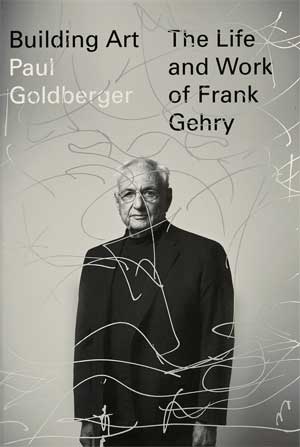 Paul Goldberger, former architecture critic of the New York Times, will receive the Architectural Journalism Award from the Society of Architectural Historians here Friday night. The award ties in to the release of Goldberger's new book, Building Art: The Life and Work of Frank Gehry.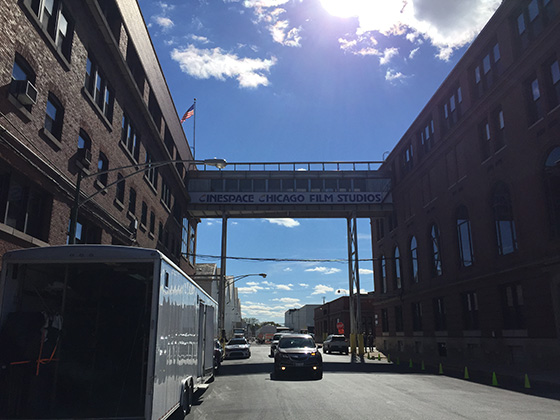
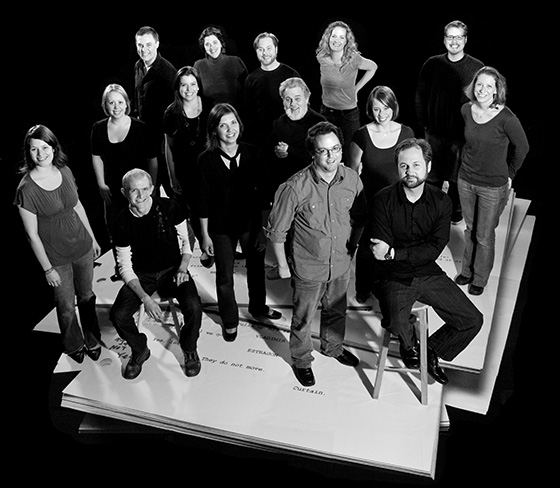
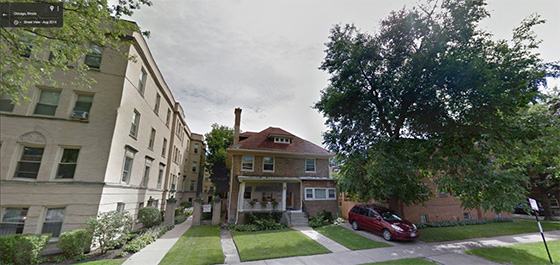
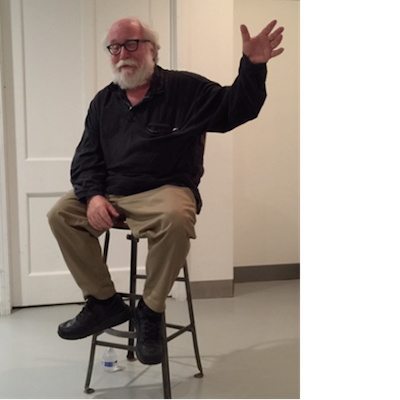
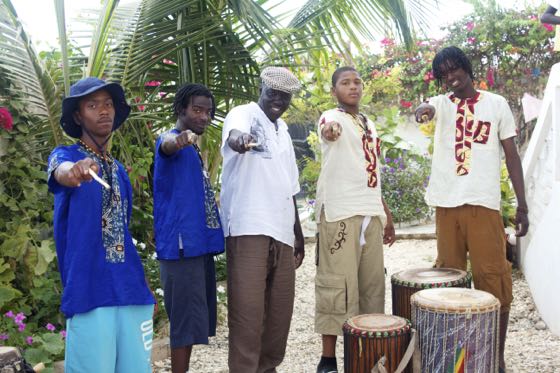
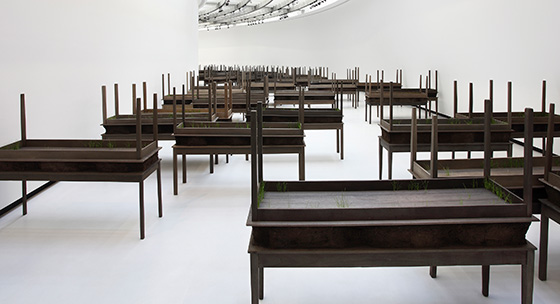
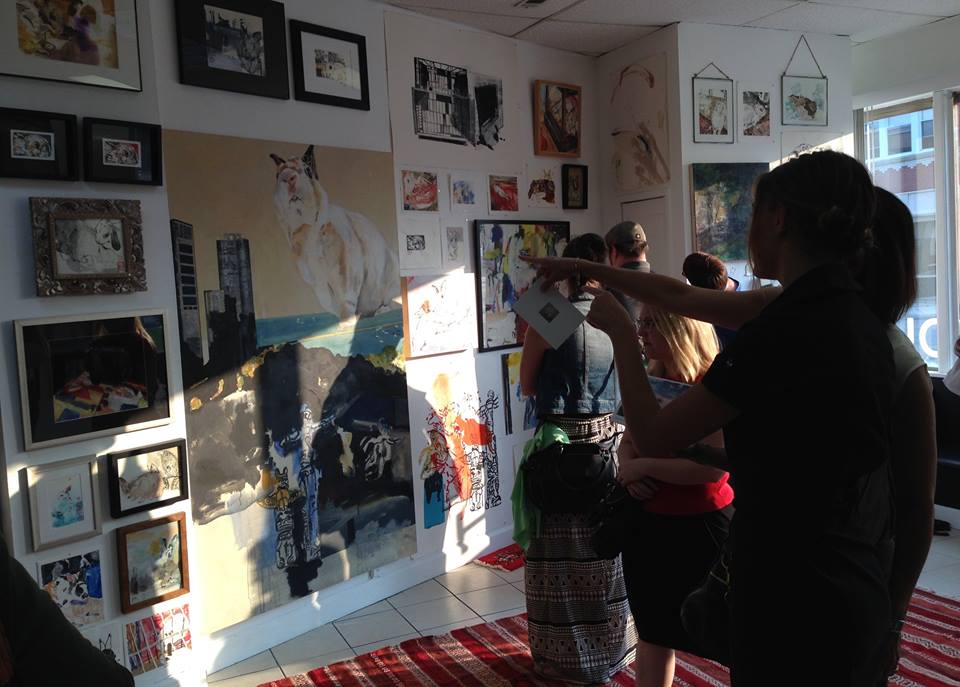
 As a global city, Chicago is home to many languages besides English. Chicago Speaks profiles speakers of these languages, and shares some of their personal stories along the way.
 North America's longest-running competitive film festival, the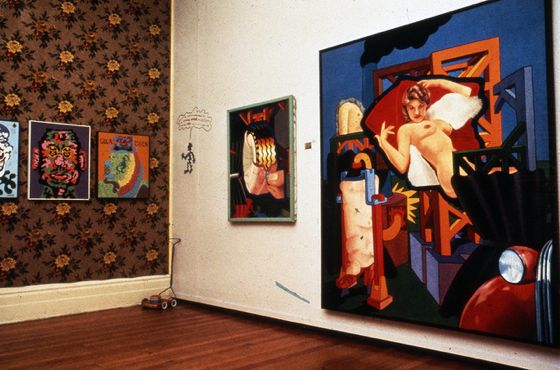
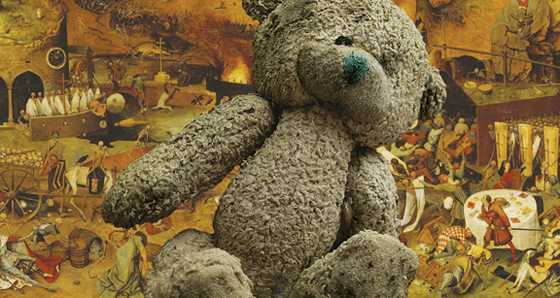
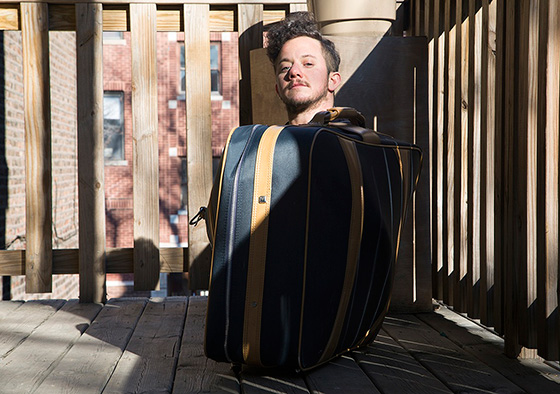
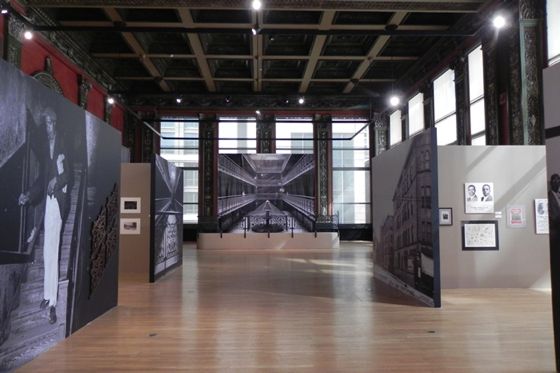 34th and State: It's the corner where one grand Chicago era ended and a new one began. It's the place where modernism took root in Chicago.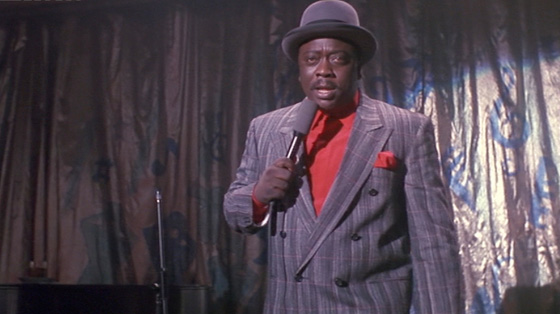
.JPG)
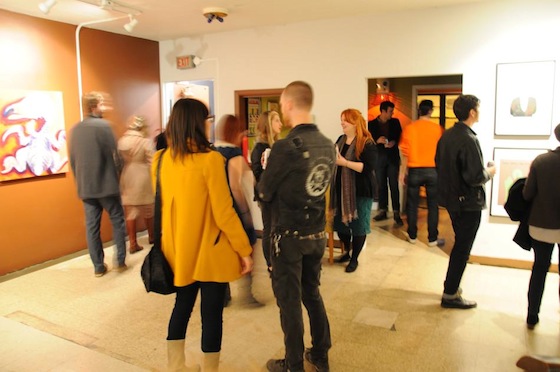
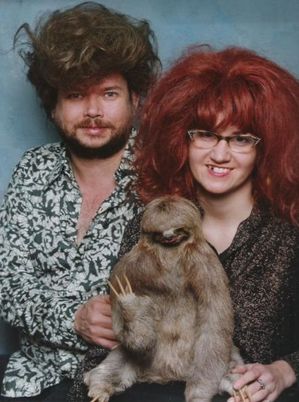
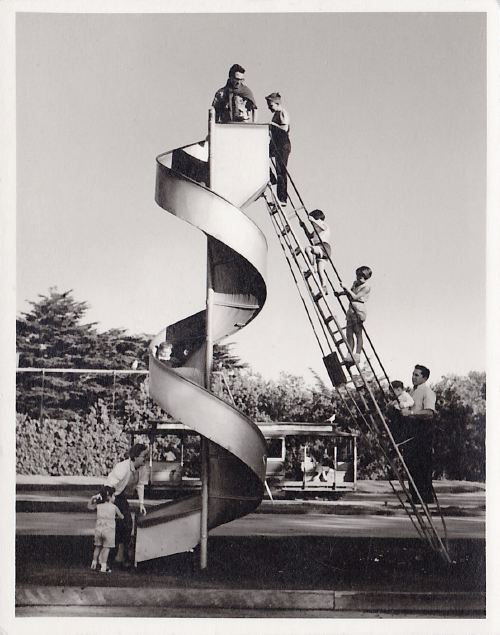
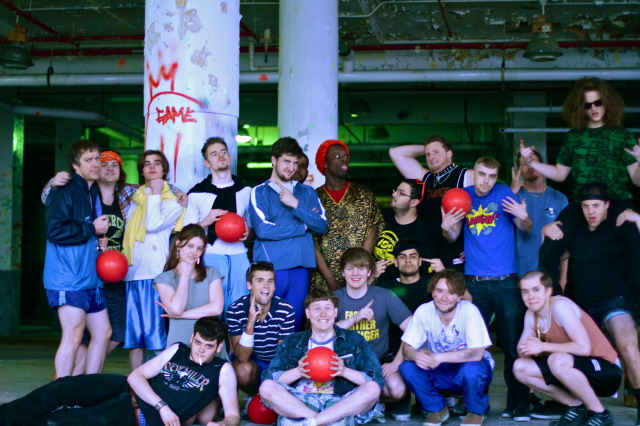

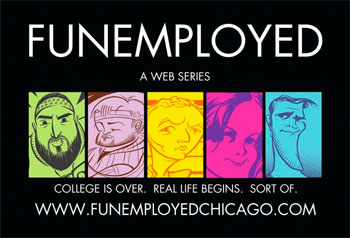 Coming of age during the Great Recession presents all kinds of problems for Millennials/Gen Y-ers/twentysomethings. A lack of full-time employment. Useless college degrees. Growing a beard.
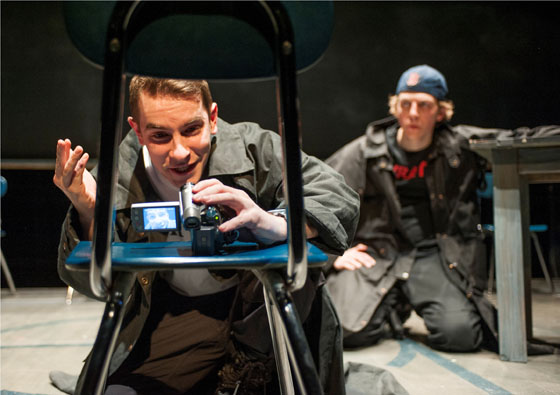
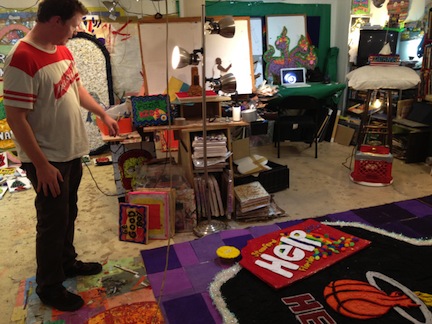
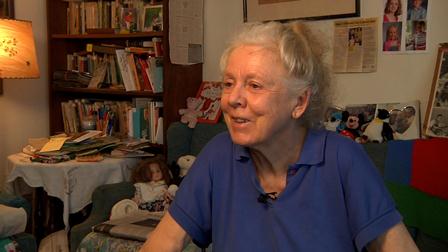 Susan "Sue" Duncan is losing her life to Alzheimer's. At the same time,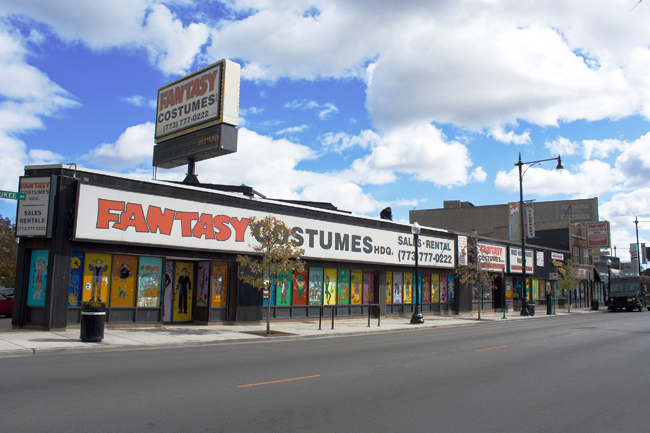
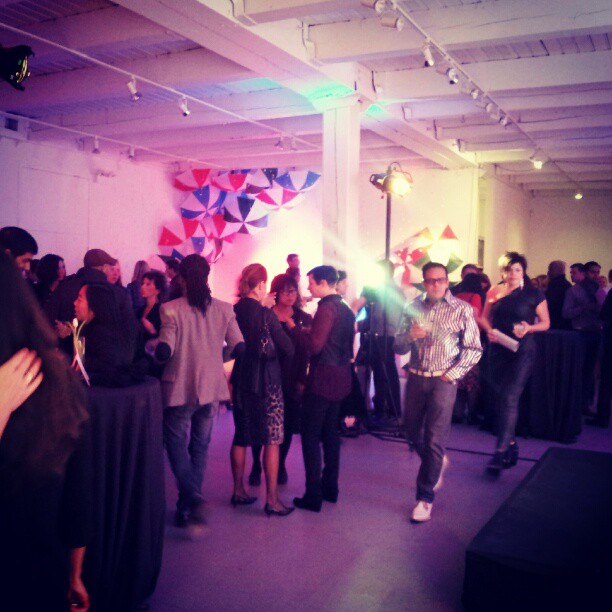
 In case you haven't heard by now, EXPO was good -- really good, and filled with museum-quality work. Little-seen gems by established icons hung next to ambitious new works by burgeoning talent. The overall quality of the work was astounding, as well as level of organization and class of the fair itself. I was left unimpressed by very few booths, and my only quibble is that the fair was only up a few days and I only made it there for one of them. Granted, the smell of commercialism wafted through EXPO, just like the rest of Navy Pier -- this was an art fair, after all, and it seemed that sales were ubiquitous on opening night. I enjoyed rubbing elbows with stylish, important-looking well-to-dos, and picking the goofy artists out of the crowds of goofy collectors. Make no mistake, this is great news for Chicago, and I for one am happy as hell to welcome EXPO (and the rest of the world, for that matter) to the city. We know we're awesome, but until last weekend, I don't think everyone else did.
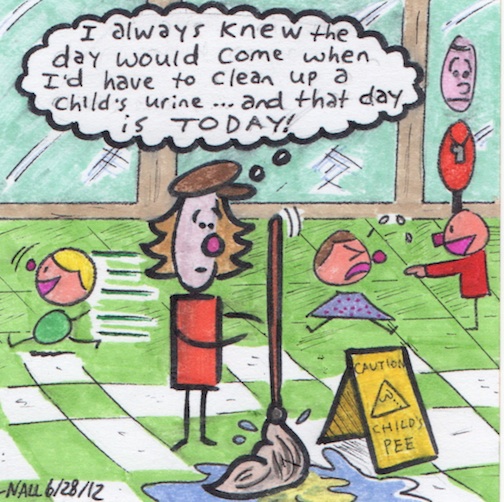
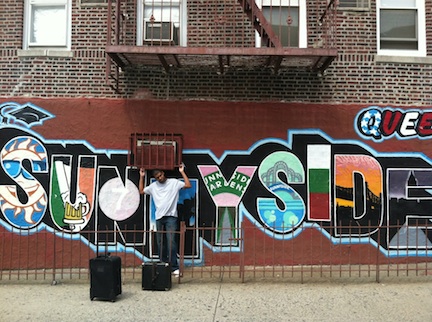
 Celebrating its 15th anniversary,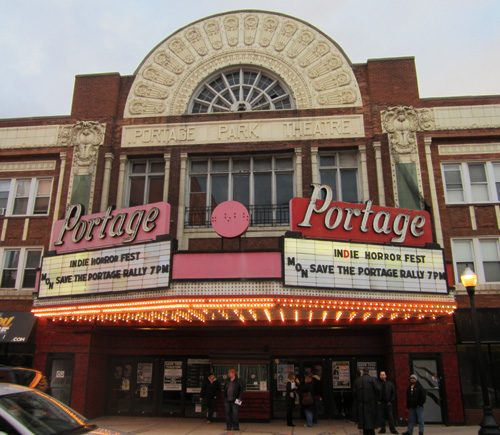
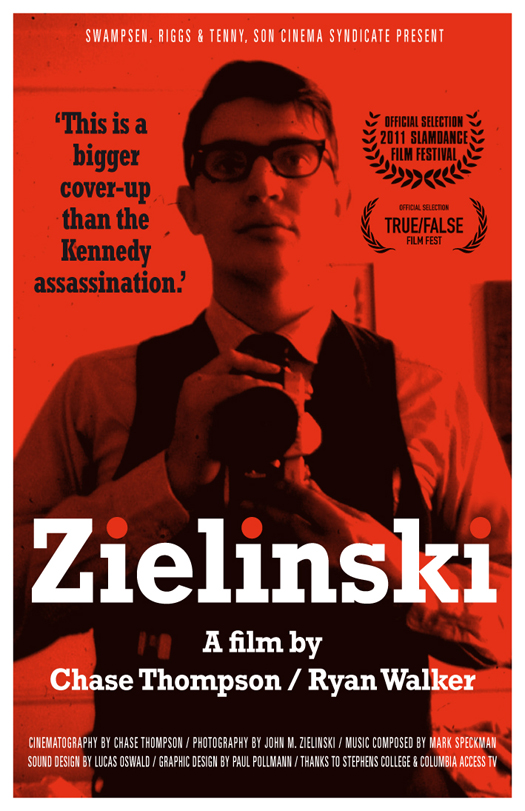

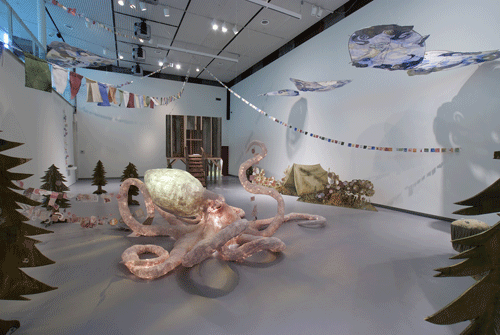
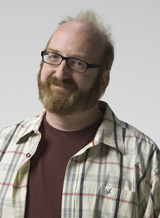
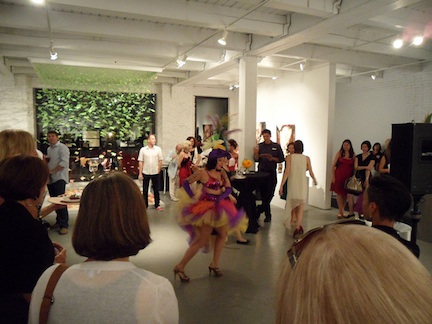
 In 1987, a few Alliance Française de Chicago students started meeting for drinks after their business French course. When the course ended, they continued to meet. Now, almost 25 years later, the weekly tradition continues to thrive, transformed from a private gathering into a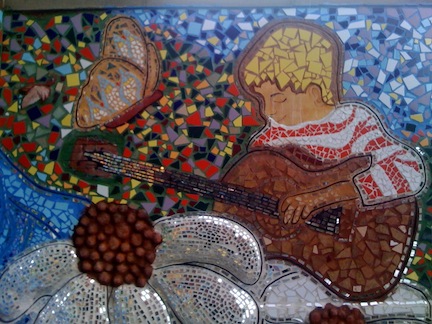

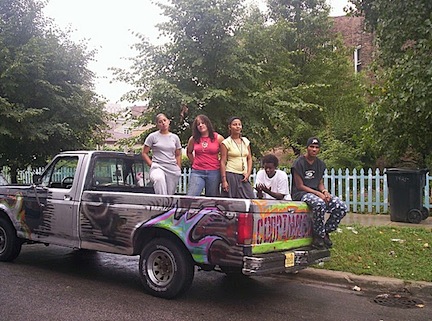
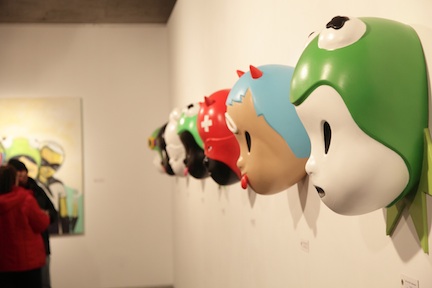
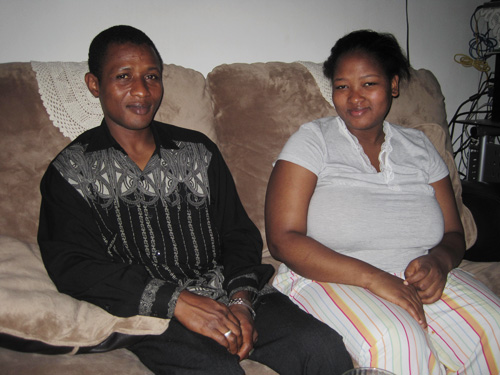
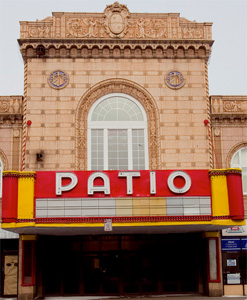
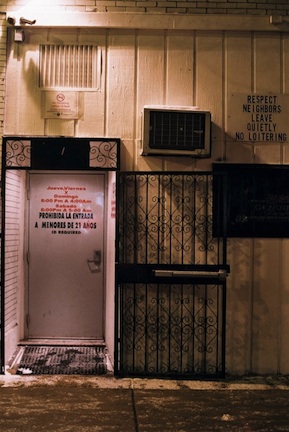
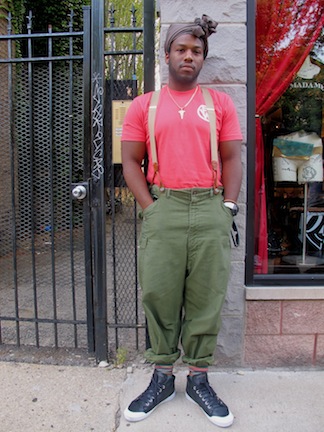
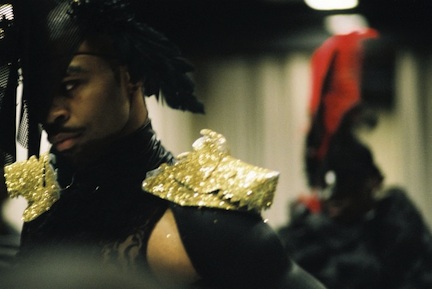
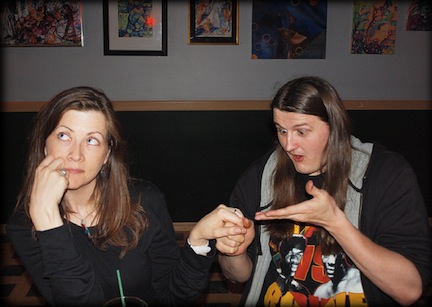
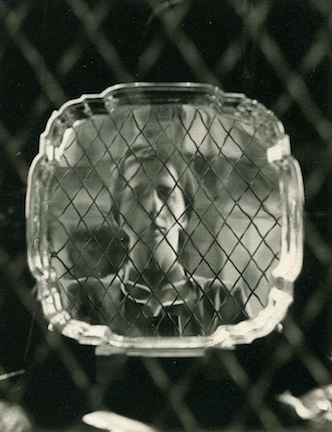
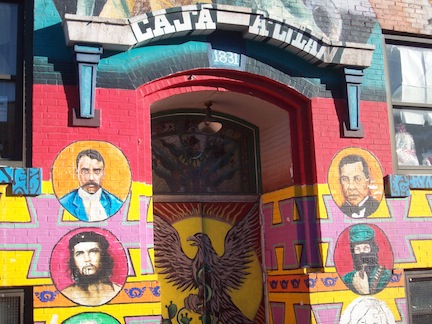

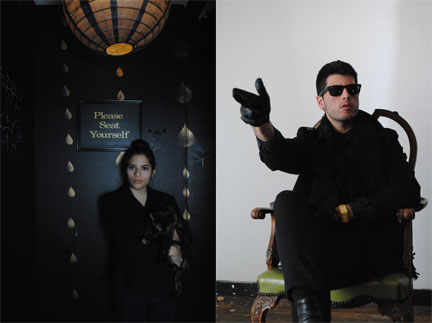
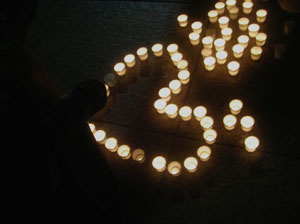 As the temperature plunged and the winds kicked up in the Loop just past 5pm on Saturday, Nov. 20, a gathering of more than 100 people stood outside the Thompson Center, candles in hand, under a large teal, pink and white flag while 14 names were read aloud.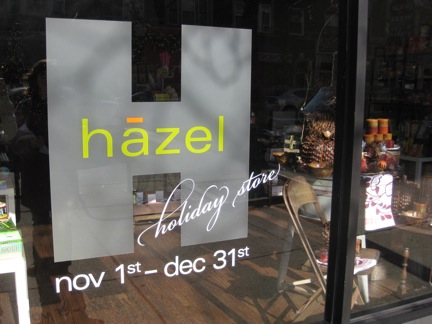
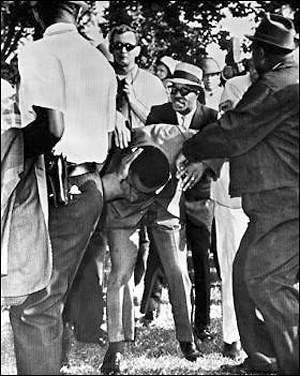 During an August 5th march through Marquette Park, whites showered the marchers with rocks, bottles and fireworks. A rock struck the reverend on the neck and he stumbled to the ground, but got up and kept walking. He later commented, "The people from Mississippi ought to come to Chicago to learn how to hate." By the end of the month Mayor Richard J. Daley announced that the city leaders would support fair-housing laws in exchange for an end to the marches.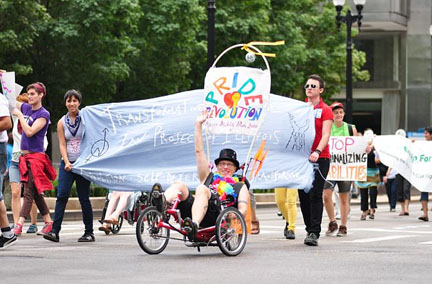
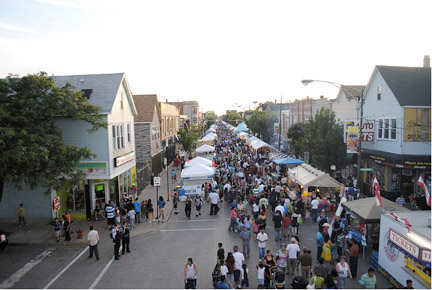
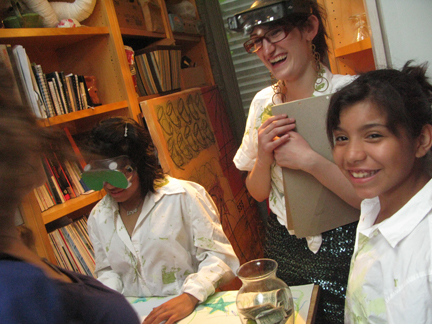
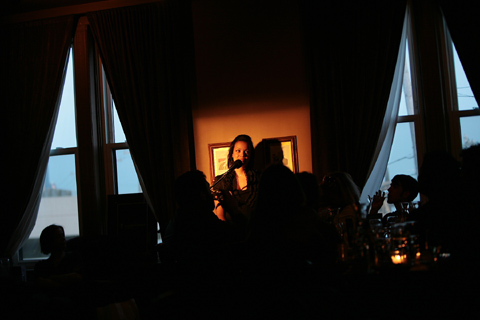
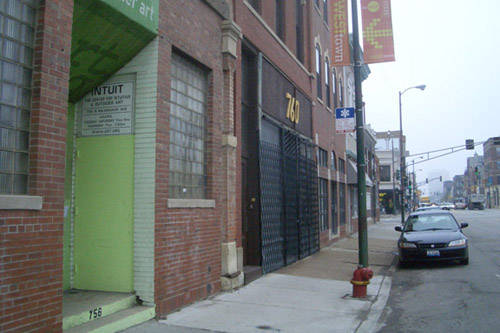

 As its logo suggests,
 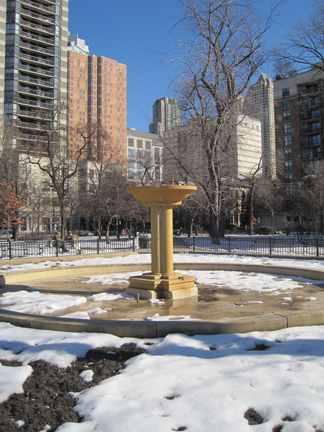 Between Chicago and Division streets, just east of Clark sits an unassuming square of green, at its center sits a weathered fountain, its yellow paint flaking away. Spokes of sidewalk radiate from the fountain to the edges of the park. It marks the home of the majority of the trees in the neighborhood and also houses a handful of snowed over flower beds.
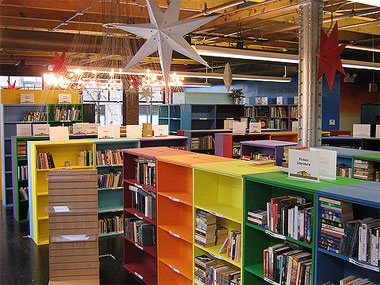
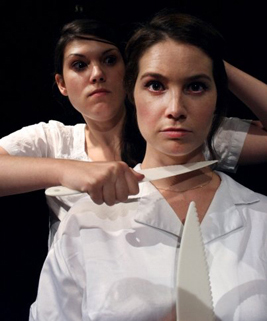
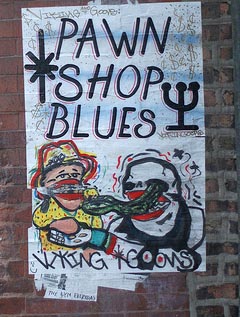
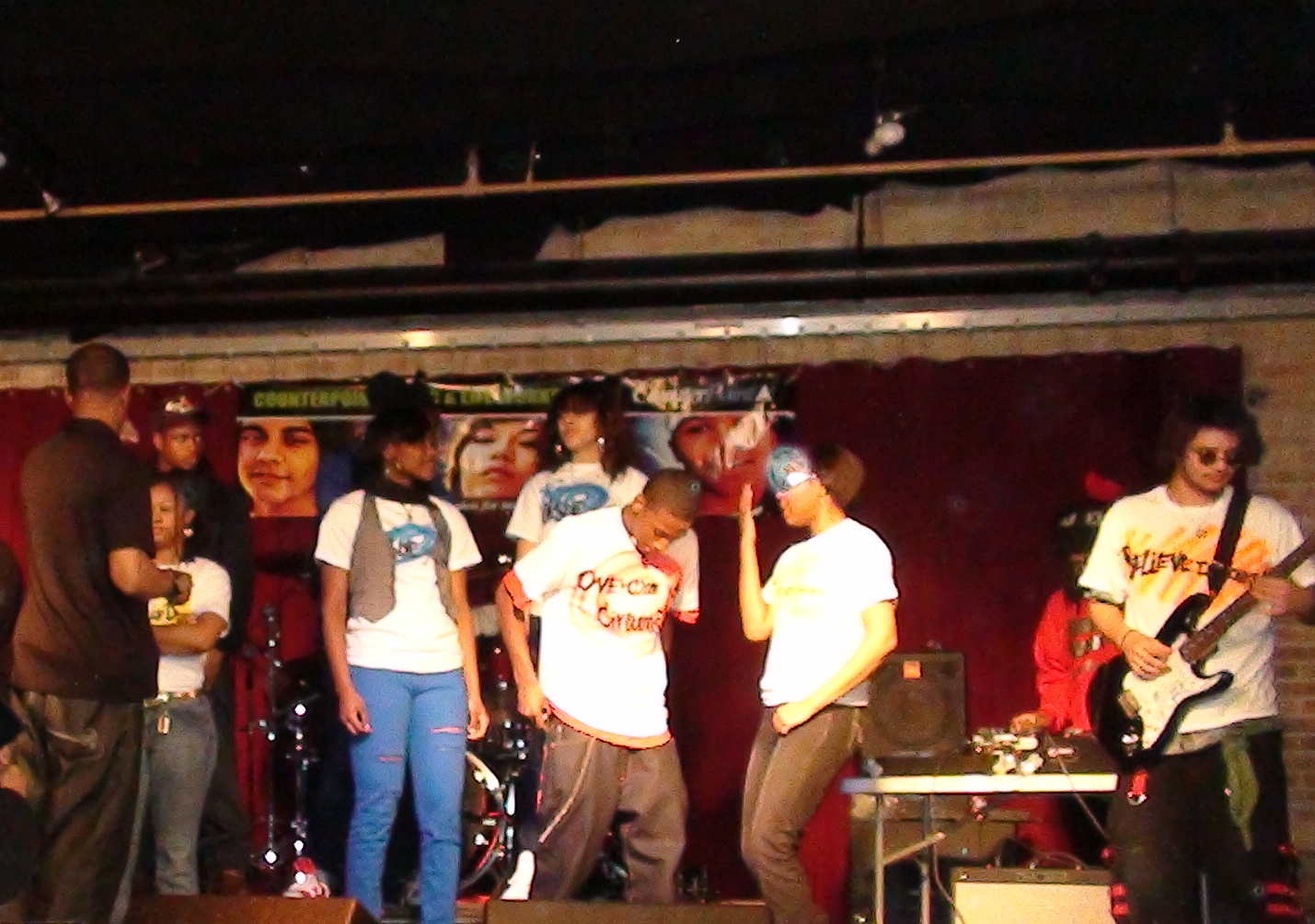
 Local publishing house

001.jpg)
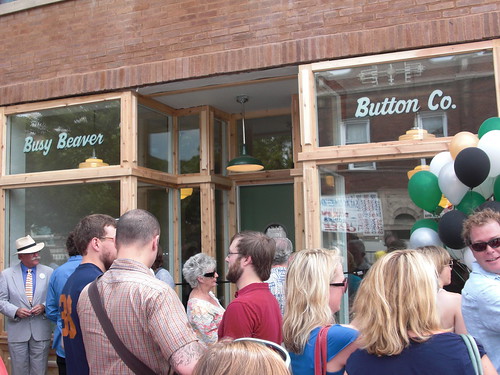

 About a month ago, there were