Gapers Block published from April 22, 2003 to Jan. 1, 2016. The site will remain up in archive form. Please visit Third Coast Review, a new site by several GB alumni. ✶ Thank you for your readership and contributions. ✶
So, the day we have wanted life to slow down for has arrived, much to our dismay. Tomorrow, Gapers Block will be going on hiatus. Before this happens, we wanted to share some of our most cherished memories and moments from our time spent writing for Gapers Block's Transmission section. To all of our readers: thank you, thank you, thank you. We are so proud to have shared concert reviews, previews, interviews, festival coverage, and more with you over the years. Here are our thoughts during our final Transmission days.
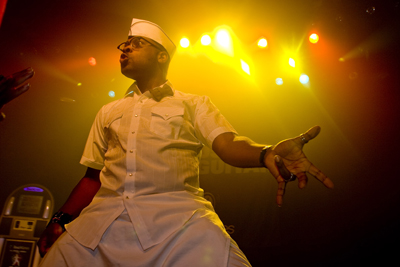
Chicago rapper Clinton Sandifer, who is known to most by his stage name "ShowYouSuck," traces the origins of his rap career ten years ago back to his time at the Illinois Institute of Art in Schaumburg. The connections he made at school landed him a job at a skate shop where he met some kids from Northern Illinois University in Dekalb who started booking him for shows, and through those shows, he met his best friend, who later started Artpentry in Bridgeport with Sandifer's help.
"Most of the things I'm around now, I've been there since the beginning, and from all of that, I was able to launch my music," he said.
Lately Sandifer, who is now 30, has had the luxury of turning certain down opportunities that don't fit the vision he has for his career, like that time Domino's asked him to star in an ad campaign as a pizza delivery man -- but didn't want to use his name or music in the commercials. It's clear that the things Sandifer has been working on lately are things that he is genuinely excited to do: from playing local shows almost every other week, collaborating with Chicago's Celine Neon for a remix in October, to releasing two EPs in the next few months. The first of the EPs, titled Alf Fan 420 (which is also his current Twitter handle), will be released by Mishka Records on December 28th.
I spoke with Sandifer at Filter Cafe in Chicago's Wicker Park neighborhood about pizza and strange Lays chip flavors, writing songs inspired by both his imagination and his real life, sobriety, and that time Wicker Park Fest booked him for the kid's stage because they hadn't actually listened to his music.
When you're mulling over your options of how to ring in 2016, there are plenty of spots where you can shout "happy New Year!" that are complemented by stellar music performances. We've rounded up our favorite venues to celebrate the New Year at, which include an electrifying festival, intimate soul shows, and endless rock riffs in a packed concert hall.
On Facebook, David Cohen is pretty outspoken, and he's never concerned about being "politically correct." The 27-year-old Buffalo Grove native has figured out a sure-fire formula for his clever statuses, which involve a little self-deprecation, a hint of sarcasm, and a touch of an artist's narcissism.
The result: likes on likes on likes. It's all in good fun, of course. As a part of a generation fueled by their news feed, a healthy serving of honesty in a simmering pot of crass can go a long way.
In person, Cohen puts a pin in his online persona. He isn't shy, just observant. Behind his long dark locks lie a pair of eyes barricaded by square, black-rimmed glasses. An unkempt beard traces his thin lips that wait for the perfect moment to speak. An engineer by trade, he is wired to think critically and respond accordingly.
A month ago, I wrote about The Empty Bottle's Free Mondays as a paragon of everything that rocks about rock music: the rabid energy, the underground feel, the democratic vibe that comes with a free show. The Ukrainian Village bar combines aspects of the DIY aesthetic with the trappings of a professional venue, a line that most of its acts ride sonically. Crown Larks looks at that line, considers how to make it bend, squiggle, and eventually shatter entirely, then goes out on stage and accomplishes that with a jolt of experimental energy that commandeers listeners' wildest trains of thought.
The quartet just wrapped up a quick tour out east in support of its most recent album, Blood Dancer, and now looks to draw a big hometown crowd this Monday at the Bottle. I've had the chance to see Crown Larks live twice at Schubas--once with Buke + Gase and Landlady, and again with Yonatan Gat and The Avantist. Their vicious, spontaneous, almost improvisational style, plus a conversation with frontman Jack Bouboushian about Friedrich Nietzsche, interested me in telling their story. It involves, among other things, a frigid first jam experience, an exploration of Chicago's post-industrial bleakness, and a dead man's baseball references.
Seventeen of the brassiest brass players (and two percussionists, because why not?) hit the stage for a blowout led by Fulcrum Point Artistic Director Stephen Burns. Burns's own Fanfare for Freedom kicks off the program, followed by Timpani Symphony in Brass by the late jazz/classical fusion visionary Gunther Schuller. Eric Ewazen's Symphony for Brass and Michael Daugherty's Motown Metal complete a show of bells, spit valves, and suds. Oh, and your ticket includes a pint of Belgian Tongerlo. Tickets are $15/advance, $20/door. Tuesday, Oct. 6, 7:30pm. 1st Ward, 2033 W. North Ave.
The Spektrals are back at it, blowing away any preconceived ideas of what it means to be a string quartet in the 21st Century. SQ opens an unapologetically provocative season with a weekend of audience-centered performances. Featuring modular seating, the quartet spreads out across the room to create a surround-sound experience of recent works by Ryan Ingebritsen and Lee Weisert, along with a new commission by Morgan Krauss. SQ's treatment of older repertoire crackles with the same energy as modern works, and you'll be treated to John Cage's String Quartet in Four Parts, Schubert's Quartettsatz, and Beethoven's super-awesome Grosse Fuge. General Admission, $10. Saturday, Oct. 10, 7pm. Curtiss Hall, Fine Arts Building, 410 S. Michigan Ave. Sunday, Oct. 11, 3pm. Mana Contemporary, 2233 S. Throop St.
The Throne Room on Broadway is a pretty dark venue. The walls are black, the décor is black, there's a black curtain behind the stage to block the windows that look out on the street below. But into the darkness bubbles an energy from the only glowing part of the room: the stage. On this stage, the four members of Audiobakery prepare for the evening's ceremony. Lead singer and guitarist Brad Bacci takes the mic and beckons to the crowd. "You're about to hear six songs we've never played before," he shares. "This is the first half of the concept album we're recording. It's about the seasons, and tonight we're going to take you from March to August."
"Get up and dance! Bring it in!" shouts bassist Jon Nadel, beaming exuberantly.
And with that, the band leaps into "March," the first track off its upcoming album Perennial Bloom, set for release on next year's spring equinox (you can hear a sneak preview here). Drummer Brett Schomer is a wildman behind his kit, eyes closed with passion as his whole body flails. Guitarist Zak Sprenger is his antithesis, standing perfectly still as his fingers fly through a set of complex runs. Bacci and Nadel stare out at the crowd, singing in harmony and conducting their audience with their facial expressions. The song plays out like a storm--March, they say, comes in like a lion--but if this is a storm, players and listeners are uniting in a spectacular rain dance. There is the sense that everyone in the room has become a singular organism, throwing off light into the surrounding gloom. This is the point of Audiobakery's existence and of its music: bringing people together, opening minds, creating a cosmic event here on Earth.
It's 7:30pm on a Monday night, and I've arrived far too early at the Empty Bottle. Besides me, the only people here are the bartender, a young couple engaged in giggling conversation over their beers, and the evening's entertainment: Lee Bains III and the Glory Fires, Pujol, and Chicago's own Flesh Panthers, who are sound checking.
"It'll start picking up around doors, which is at 8:30 or 9," the bartender assures me as I solitarily sip on a Revolution Rosa. Of course, she turns out to be right. It's a Free Monday, after all. This is the Bottle's weekly time to shine in the vibrant Chicago live music scene.
Throughout the month of September, there are an array of classical music offerings located throughout Chicago, promising to be an unforgettable experience.
Collaborative Works Festival
The Collaborative Arts Institute of Chicago (CAIC) kicks off its season with the fourth annual Collaborative Works Festival, now a staple of Chicago's vocal music scene. The four-day festival brings some of the finest recital singers in the world to town for a series celebrating the oft-overlooked genre of art song. Italian bass-baritone Luca Pisaroni headlines in the opening solo recital of songs by Franz Schubert, Vincenzo Bellini, Stefano Donaudy, and Paulo Tosti. In two salon concerts exploring American art song, sopranos Nicole Heaston and Laquita Mitchell, and Tenor Nicholas Phan, perform music by Charles Ives, Ned Rorem, Aaron Copland, Samuel Barber, and Leonard Bernstein. You won't get closer to better singing all year.
September 9 - 12, various locations. Tickets are $35/general, $30/seniors, $15/students. September 10 recital is free.
The J. Parker Rooftop at the Hotel Lincoln is packed at 6 o'clock. On an ordinary Tuesday evening, you'd probably see a few 20-somethings stopping by after work to drink up a stunning view of Lincoln Park, the lake, and the Near North Side skyline as well as a cocktail. But on this occasion, a PA system and a slew of microphones invade a square space at the east end of the roof, and people cluster in a semicircle around them, keeping up a garrulous chatter between glances at the makeshift stage.
At 6:30, a woman in a black top and floral skirt and a man with long dark hair, a massive beard, and denim from head to toe step up to the mics with acoustic guitars in hand. And after a quick introduction from the mustachioed event manager and some enthusiastic cheers, Brooklyn-based indie folksters Widowspeak smile and launch into an eight-song set with the greatest of the Great Lakes providing a stunning backdrop.
Before the main music season kicks off in the next two months (and it will be a good one), here are three ways to spend the remaining dog days.
CAIC: Lieder Lounge
Ahead of its 4-day Collaborative Works Festival in September, the Collaborative Arts Institute of Chicago is teaming up with Lyric Opera's Ryan Opera Center for a summer installment of its popular Lieder Lounge series. Ryan Center members Lindsay Metzger (mezzo-soprano), Anthony Clark Evans (baritone), and Mario Marra (piano) will present a recital of songs including pieces by Gerald Finzi. Get a closeup concert experience in one of the best small venues in the city - and that Fazioli piano isn't too shabby, either. Tickets are $35/general, $30/seniors, $15/students. Saturday, August 15, 7:00pm. Pianoforte, 1335 S. Michigan Ave., Chicago.
Escape the heat and giant crowds during these dog days and check out some intimate chamber music with some of Chicago's best locally-based artists.
Lincoln Trio
As part of the University of Chicago's Chamber Music Intensive program, the Lincoln Trio present a public performance and discussion of Beethoven's "Ghost" Trio — that's the D-Major, Op. 70, No. 1 if you're keeping track. Written during the composer's so-called Middle Period (1802-12) when he was expanding the scope and scale of his musical output while simultaneously confronting his looming deafness, the music was said to have conjured images of Hamlet's father. The work is gripping and tense, particularly through the slow movement; the outer fast movements are more joyous, brightly colored, and energetic. If you haven't experienced a chamber performance at the Logan Center's 9th-floor penthouse, this would be a good chance: excellent acoustics, expansive views of Hyde Park, and a close-up look at one of the city's best chamber ensembles. Admission is free. Friday, July 17, 6:30pm. Logan Center Performance Penthouse, 915 E. 60th.
Special edition double month column to kick off the summer's music!
Third Coast Percussion: Wild Sound
TCP hits the MCA with an explosion of Glenn Kotche music, including the Wilco drummer's "Wild Sound." Composed for the TCP, "Wild Sound" incorporates field recordings from nature and urban life; during the performance, the ensemble constructs and performs on instruments designed by Kotche. The program includes works by Steve Reich, Joao Gilberto, and pieces performed by Kotche himself. Get tickets fast to to the May 21 performance — the May 22 concert is already sold out. Tickets are $28 nonmembers, $22 MCA members, $10 students. Thursday, May 21, 7:30pm. Museum of Contemporary Art, 220 E. Chicago Ave. (Photo: Saverio Truglia)
All kinds of crossover this month as ancient to contemporary music blurs together and crosses boundaries, and the apparent lines between classical and pop disintegrate. Go hear it!
Fifth House Ensemble and Baladino: Nedudim
Fifth House's season blazes ahead with Nedudim, a collaborative program with Israeli folk band Baladino that explores Middle Eastern, European, and American cultures through ancient and contemporary sounds. The program includes updated arrangements of Ladino and Israeli folk melodies, as well as contemporary pieces by Americans Robert Beaser and Dan Visconti that feature Baladino soloists. In their mission and approach to music, both ensembles emphasize creativity through collaboration, and Nedudim illustrates the fluid and shared nature of music through diasporic cultures. You won't hear anything else like this concert on the calendar the rest of the year. Tickets are $20/general, $15/students. Friday, April 17, 7pm. Instituto Cervantes, 31 W. Ohio St., Chicago. Monday, April 20, 7pm. Mayne Stage, 1328 W. Morse Ave.
Lots of big works downtown this month. But do you also know about New Music Chicago? Check 'em out for up-to-date listings of all things in the contemporary music scene.
Hubbard Street Dance's Spring Series brings 300 years of music together in another round of solid and intriguing programming. HSD reprises two works by Jiří Kylián: "Sarabande," which Bach's Second Partita for Solo Violin with electronic manipulations, and "Falling Angels," set to Steve Reich's "Drumming" performed live by Third Coast Percussion. Alejandro Cerrudo's "Cloudless" is set to two short works by Nils Frahm, while Owen Belton's music accompanies the HSD premiere of Crystal Pite's "A Picture of You Falling." Finally, HSD gives the world premiere of "I am Mister B," choreographed by Gustavo Ramirez Sansano as an homage to George Balanchine, and set to Tchaikovsky's Third Suite for Orchestra. Pretty sure you'll want grab up some last-minute tickets, which start at $25. March 12-15, Harris Theater, 205 E. Randolph, Chicago.
Fifth House Ensemble: Verklärte Nacht
Arnold Schoenberg composed Verklärte Nachte (Transfigured Night) in the closing months of the 19th Century, a single-movement work inspired by Richard Dehmel's poem of the same title. Through the poem and music runs the theme of conflict, impending upheaval, and change. In its ever-deepening cross-media exploration, Fifth House expands Schoenberg's music and Dehmel's stark and beautiful language and adds experimental visuals by Chicago animator Buki Bodunrin. The program includes music by Kevin Puts and Guillaume Connesson. Tickets are $15-$25. Tuesday, February 17, 7pm. Mayne Stage, 1328 W. Morse.
In memory of my friend, colleague, and arts publicist extraordinaire, Eric Eatherly. He was one of the good ones.
Ian Maksin and Goran Ivanovic Trio
Cellist Ian Maksin returns to City Winery after a round of international touring and album releasing to collaborate with guitarist Goran Ivanovic, bassist Matt Ulery, and drummer Pete Tashjian. Maksin's never-ending ability to find new realms for the cello has taken his music from his native St. Petersburg, Russia, to American jazz, and he has an uncanny ability to shift styles. Maksin and Ivanovic will perform music of Bach, Bartok, Piazzolla, and original works in what promises to be a lively show. Tickets $15-$22. Sunday, January 11, 7pm. City Winery, 1200 W. Randolph.
Bluebeard's Castle at Thalia Hall
If you see only one psychologically bizarre, and fantastically creepy opera this month, make it Bartok's Bluebeard's Castle. The one-act opera opens as Bluebeard and his new wife, Judith, arrive at the castle following their elopement. Faced with seven doors, Judith discovers her new husband's dark, horrific past. This visually-arresting opera features acclaimed soloists Andrea Silvestrelli (bass) and Kara Shay Thomson (soprano) in Bartok's gripping score. Francesco Milioto conducts the New Millennium Orchestra. Tickets start at $10. Thursday, December 4, 8:30pm. Thalia Hall, 1807 S. Allport.
Fifth House Ensemble's Favorite Things
5HE's holiday party is as close as I'll get to recommending a holiday-themed concert, mostly because some of their favorite things include Shostakovich, Miguel del Aguila, and Marc Mellits. Enjoy cookies and booze and the potential for an audience kazoo-along. Proceeds benefit 5HE's music programs in Chicago schools. Tickets start at $12. Saturday, December 6, 7pm. Constellation, 3111 N. Western Ave.
In honor of #Movember, here is British composer Edward Elgar:
And now, on to the recommendations for this month.
Fonema Consort
With its home in Chicago, Fonema Consort has built an international fan base as it builds a reputation in the new music world for adventurous programming. The artists that make up Fonema are constantly thrown from traditional styles of playing, forcing them to add rhythmically and physically complex vocalizations into their playing. And they're really good at it, as you'll see during their appearance as part of the Latino Music Festival. The program includes unusual instrumental combinations, such as Pablo Santiago Chin's Como la leyenda de Tlön for soprano and percussion. The program also includes works by Gustavo Leone and Francisco Castillo Tigueros. Thursday, Nov. 13, 7pm. University of Chicago, Fulton Hall, 5845 S. Ellis, Chicago. Free admission.
"Classical music is dead. Long live classical music!" - The Internet.
The lesson: Read less internet. See more music.
Spektral Quartet: Sampler Pack
If you haven't seen the Spektrals by now, then I just don't know. Do yourself a favor and check out their latest Sampler Pack concert to get a distillation of their entire outlook on music. n one performance, SQ offers small bits of works from Ligeti's manic Quartet No. 2 to Beethoven's melancholic Opus 132; from brooding Philip Glass to nostalgic Dvorak. Hear string players sing and recite poetry while playing during David Reminick's The Ancestral Mousetrap, and hear selections from SQ's Mobile Minis ringtone project. The ever-evolving quartet will welcome violinist Clara Lyon to the group, in place of the departing Aurelien Pederzoli. There will also be alcohol. Tickets are $12. Saturday, October 25, 8pm. Constellation, 3111 N. Western Ave.
Collaborative Works Festival
The Collaborative Arts Institute of Chicago (CAIC) presents its annual Collaborative Works Festival: four days of vocal chamber music in some of the city's most comfortable and intimate venues. The 2014 festival explores the personal and musical relationships between Robert and Clara Schumann and Johannes Brahms with a lineup of some of the nation's best voices. The opening and closing concerts feature soprano Susanna Phillips, mezzo-soprano Kelley O'Connor, tenor Nicholas Phan, and baritone Joshua Hopkins accompanied by Myra Huang. Renowned mezzo-soprano Michelle DeYoung gives a solo recital of works by Brahms, R. Schumann, Manuel De Falla, Edward Elgar, and Joseph Marx. Tickets and venue info available at www.caichicago.org. September 11-14. Poetry Foundation, Cindy Pritzker Auditorium at Harold Washington Library, Pianoforte, Logan Center for the Arts.
Before the main classical season kicks into gear in the next month or two, take advantage of these local artists and ensembles playing throughout the city.
Chicago Q Ensemble: Living Loop Festival
Loop workers: get out of the office and go hear Chicago Q Ensemble play Mozart in one of the Loop's few open-air respites. The trio — whose recent performance at Constellation was nothing short of magnetic and intense — plugs in and performs the E-flat major Divertimento. You don't need to be Einstein to enjoy Mozart, but Einstein himself really loved Mozart. Of this particular Divertimento, he wrote, "Every note is significant, every note is a contribution to spiritual and sensuous fulfillment in sound...the finest, most perfect trio ever heard." Admission is free. Friday, August 8, noon. 1 South Dearborn, Chicago.
It's not enough to just say you're going to three days of music in Grant Park, you really have to plan your attack. After years of Lollapalooza experience, here are our fresh takes on how to best rock the fest.
Where does a year go? It seems that we were just getting over sunburns and rubbing the baseball diamond dust from our eyes as we stumbled to work on a misty Monday morn in late July. But no, it has come around again: the last days before the Pitchfork Music Festival.
Thankfully, it seems that Mother Nature got all the rain out of her system last weekend, and we're settling in for a lovely few days in Chicago. Come on and see what we're most excited to hear with our staff's picks for Pitchfork sets you won't want to miss.
At the festival, don't forget to stop by and say hi at our table at the CHIRP Record Fair! We'll have buttons, posters, I ✶ Chi shirts and more!
All of a sudden it's the middle of summer and the weather is consistently warm. Head outside with a picnic and plenty of wine and listen to some big ol' classics.
Ravinia: Chicago Symphony Orchestra plays New World
Dvořák's Ninth Symphony is a perfect match for the CSO's famous brass section and rich strings. The "New World Symphony" — written in 1893 while the composer was living in the U.S. — may or may not have been influenced by Native American and African American music, though it somehow sounds quintessentially American. The extended English horn solo is worth the price alone. Pianist Dejan Lazić performs Chopin's lush and stormy Piano Concerto No. 2 in f minor. Stravinsky's Suite from The Firebird rounds out a program of large-scale symphonic music. Krzysztof Urbanski conducts. Pavilion tickets start at $25; lawn is $10. Thursday, July 10, 8pm. 200 Ravinia Park Road, Highland Park.
To the woman sitting behind me at the symphony who said, "No offense, but you're tall" - I'll try to be shorter next time. If you're sitting behind me at any of these concerts, I apologize in advance.
Chicago Q Ensemble: No Exit
Chicago Q Ensemble is emerging among a groundbreaking crop of chamber ensembles. With its second musical/dramatic production, NO EXIT, Q reimagines the traditional violin-viola-cello trio format as a theatrical concert beyond instruments. As Sartre's classic novel explores hell as other people, Q will examine what happens when Mozart's Divertimento in E-Flat comes in contact with Giacinto Scelsi's String Trio. Tickets are $10; admission is age 18 and older. Sunday, June 1, 8:30pm. Constellation, 3111 N. Western Ave.
Adventures in new music this month. Three hometown ensembles present three vastly different approaches; go hear something unfamiliar and exotic!
Chicago Composers Orchestra: Deep Listening
The far-reaching CCO closes its fourth season with music by some of the top female American composers of our time. In Four Meditations for Orchestra, Pauline Oliveros focuses on heightened awareness of sound and silence as the musicians of the orchestra improvise without a conductor. Olivia Block's Voyager Golden Record explores the world of sound design — white noise, indecipherable voices, and tape loops. Marita Bolles incorporates varying and overlapping tempos in In Due Time from individual pulses to expanded rhythms. Composer/performer Nicole Mitchell's Flight for Freedom weaves jazz, pop, and African elements into a work that celebrates African American figures. Tickets are $15 general, $8 student. Saturday, May 10, 8pm. St. James Cathedral, 65 E. Huron.
Love fugues? Dig counterpoint? Get your fix this month as the music of J.S. Bach fills the city. Plus, don't miss a Chicago debut and all five Beethoven cello sonatas.
Chicago Bach Project: St. Matthew Passion
The fourth installment of the Chicago Bach Project returns as acclaimed conductor John Nelson leads Bach's St. Matthew Passion, one of the most loved and stirring sacred works ever written. In this one-night-only engagement, musicians from the Chicago Symphony Orchestra, Lyric Opera, and Grant Park Orchestra are joined by soloists Nicholas Phan, Stephen Morscheck, Lisette Oropesa, Lawrence Zazzo, Colin Ainsworth, Matthew Brook, and Tobias Greenhalgh. It will be one big night of Bach. Friday, April 11, 7:30 p.m. Tickets start at $25. Harris Theater, 205 E. Randolph.
Big names and big works come to town this month in formats small and large. From Bach and Beethoven to Bruckner, hear music that celebrates every bit of life.
Murray Perahia
A towering figure among concert pianists of the last 40 years, Murray Perahia has performed on every major stage and with every major orchestra in the world. Don't miss his intimate recital at Northwestern's Pick-Staiger Concert Hall. The program includes Bach's French Suite No. 4, Beethoven's "Appassionata" Sonata, and various works by Chopin. Tickets are $22 general, $10 students. Sunday, March 2, 7:30pm. Pick-Staiger Concert Hall, 50 Arts Circle Drive, Evanston.
We at Gapers Block try to cover the SXSW Music Festival in Austin as if it were a local festival -- because every March, Chicago sends dozens of acts and hundreds of fans down to Texas, making sure our city's music scene stays well represented. This year's festival runs March 11-16, and will feature a broad swath of Chicago acts both young and old.
This month's column is dedicated to the memory of Deborah Sobol, a pioneering champion of the arts who believed that music is as essential to living as air and water. Her vision was limitless, her energy infectious. She was a friend, colleague, mentor, teacher, and advocate for countless musicians, students, and arts professionals around the city. Debbie changed the classical music experience in Chicago and her legacy will be heard for years to come. No doubt she now has a front row seat watching Brahms and Schubert perform piano music for four hands. In Debbie's memory, here are some of her favorite ensembles appearing in Chicago this month.
Chicago Chamber Musicians
Oboist Anne Bach replaces Alex Klein and joins brass and woodwind members of CCM in a beautiful program of music by Mozart and Mahler, and recent works by Stacy Garrop and James Stephansom. Tickets are $35 - $45; students $10. 7:30pm. Sunday, February 9, Pick-Staiger Concert Hall, 50 Arts Circle Drive, Evanston. Monday, February 10, Gottlieb Hall, Merit School of Music, 38 S. Peoria St., Chicago.
While many record label companies struggle to fight against their listeners who try to get music for free, a new Chicago-based company has decided to stop fighting against the current. Maek is the world's first free music record label, and there's no catch.
"We believe there's a bridge between music being available and free for fans but musicians still making a living, actually making more money, off of their art than they would just trying to title it to fans," said Jason Sizer, president of the company. Sizer originally studied to work as an architect, but decided to tailor his background in graphics and art development to music.
Sizer spoke with a mentor about his idea for a free music record label back in 2011 when the company was first founded, and people thought he was crazy. The company continued making progress and was officially established in September 2013.
Yes, it's cold. Put on the big furry hat and go hear some stellar small ensembles this month.
Schola Antiqua of Chicago
In this sacred season of high-stakes football, one will surely hear every quarterback and wide receiver thank his divine maker for bringing victory at the expense of the faithless opponent. But back in the 13th Century, B.E. (before ESPN), an "athlete" referred to a "champion of Jesus," as is the case of Thomas Becket, Archbishop of Canterbury. Hear Chicago's acclaimed early music vocalists perform songs from Medieval England that celebrate the martyred Becket. Schola Antiqua's concerts are always historically informed by its expert director, Michael Alan Anderson, and the singing is a musically fulfilling experience. Miley Cyrus performs at intermission.* Tickets are $25 for adults, $10 for students. Friday, January 10, 7:30 p.m. Rockefeller Memorial Chapel, 5850 S. Woodlawn, Chicago. Saturday, January 11, 8pm. St. Clement Church, 642 W. Deming Place.
'Tis the season for long underwear and glögg. And bars with fireplaces. And brass. Lots of brass.
Dame Myra Hess Concert Series
If you find yourself hankering for brass music this time of year, get a taste of something beyond traditional. The adventurous Gaudete Brass Quintet explores the breadth of brass repertoire in a program that alternates between contemporary and Renaissance composers, including Jonathan Newman's Chicago-inspired "Prayers of Steel." Wednesday, Dec. 11.
Follow that with the lush Brahms Piano Trio No. 2 and Piazzolla's "Spring" from his Four Seasons of Buenos Aires as violinist David Bowlin, cellist Si-Yan Darren Li, and pianist Spencer Myer set up under the Tiffany dome. Wednesday, Dec. 18.
Before you overdo it at Thanksgiving (you know you will), fill up on these small-format concerts. Hear familiar and new music while getting right up close to some of Chicago's finest ensembles. Then pass the pie.
If you're like me, you could hear a month's worth of music during the nine-day Beethoven Festival and still want more. Fortunately, you can. It's gonna be a great month.
In 1934, the Hideout originally opened as just a dive bar, in an isolated location where those in the know knew precisely where to find it. Decades later, in 1996, founders Tim and Katie Tuten and Mike and James Hinchsliff transformed the burgeoning establishment into a dynamic hub for artistic creativity and innovation that will hopefully span many years to come. Often featuring fledgling local artists looking to get their start from its founding and packed-to-the-brim crowds, it's the place where creative relationships form, Chicago musicians band together, and creativity flourishes. It's the venue where bartenders often end their shifts only to get up onstage themselves. It not only features concerts, but film screenings, trivia nights, community events built around free bowls of soup and eccentric outlets for creative expression. After 17 years of live music and illuminations of art at The Hideout, we emerge in 2013 with the 17th annual Block Party & A.V. Fest.
If you haven't been to The Hideout yet or its annual Block Party, it's hard for those of us who are veteran attendees to explain just one thing that makes it so special: because honestly, it is everything. It's the emphasis on local musicianship and paying homage to a city so wonderful. It's listening to a new band that you haven't heard yet, only to fall in love with each song that they play. It's seeing Andrew Bird return to his city and play an unbelievable set. It's watching Mavis Staples sit in a throne designed especially for her arrival. It's listening to Wilco play a hometown show under the stars.
Unlike years past in which we Gapers Block staffers told you readers why we love Hideout Block Party & A.V. Fest, it's time for a new voice to take shape, as Hideout staffers themselves share their opinions; what do they most look forward to at this year's Hideout Block Party & A.V. Fest? Read on, and hopefully we will be seeing you out in the crowd soon.
As the big festivals continue to roll through town, some wonderfully intimate performances take place this month. Three recitals highlight overshadowed instruments and their diverse repertoire. The best part: you can see all three concerts for just $10.
Another long weekend in Union Park is upon us, and excitement bubbles over an eclectic Pitchfork Music Festival lineup which includes legends as well as up-and-comers. Whether you're planning to chill out under the trees or dance on the grass, the three days' planned entertainment has a little something for everyone. Our eager Transmission staff have chosen acts to highlight which will lead us to head down Ashland this weekend.
And there's more than just music to entertain you this weekend. While you're at Pitchfork, don't forget to stop by and say hello to Gapers Block staff manning our table at the CHIRP Record Fair tent, bid on autographed memorabilia at the Rock For Kids charity tent, browse the crafty wares at Coterie, visit the Book Fort, The Creative Lounge or shop for sweet posters at Flatstock.
Some of Chicago's longest running concert series are also the least expensive. Save your money this month and check out these free concerts in some architecturally and acoustically beautiful spaces.
I love a grand concert hall — and Chicago has some good ones — but this month, the classical scene offers some alternative ways to experience the music from a different perspective: Tchaikovsky under the stars, intimate chamber music in the early evening, and contemporary music across from the City of Chicago Fleet Management Facility. Even if the weather never warms up, it will be a great summer.
As Argentina has found itself in the news recently, it's a fitting coincidence that several programs this month celebrate the country's significant contributions to music while reflecting on a complicated and painful history. In the center of this flurry of programs is the great tango composer Astor Piazzolla, whose music bridges the worlds of Bach and the bandoneón.
Sure, I love the big symphonies, but in no other form can you see the music work than in chamber playing. Designed for intimate spaces and played among friends, chamber music began in a user-friendly format. After 200 years of chamber music writing, the best way to experience a performance is up close. Three concerts this month show off the variety of chamber forms and the limitless possibilities of the music. So get a seat down front.
Edgar Allen Poe lived — and died — in Baltimore. The Baltimore Ravens are named after Poe's famous poem. To celebrate the Ravens winning the Super Bowl, check out Chicago Opera Theater's production of The Fall of the House of Usher. My prediction: it will scare the bejesus out of you, but there won't be any confetti.
It's time once again to survey the SXSW Music Festival schedule for Chicago acts to catch if and when you're down in Austin, TX March 12-17. There's a good range of local artists heading down this year, representing everything from hip hop to folk to retro soul. We've also rounded up acts from neighboring states, to give an idea of the attention given to the broader region. Special Thanks to Eamon Daly for technical assistance putting together this list.
The range of concerts this month guarantees that you will start 2013 by 1) hearing something you've never heard before, or 2) experiencing an old favorite performed with new energy — likely on the same program. See them all, or close your eyes and pick one. You won't go wrong.
The year's almost over, and some of the Transmission staff have taken a moment to reminisce about their favorite (or at the very least, memorable) moments in Chicago music over 2012. With the cold and dreary weather upon us, we're warming our hearts with thoughts of the ways that music in Chicago can inspire and excite us, and we're definitely looking forward to what 2013 will bring.
Recently, I forayed into Chicago's musical wilderness in search of some of the more gripping record stores this city has to offer. It took some sifting; I wasn't accepting any vintage-bookstores-that-also-sell-Bonnie Raitt-records, nor on the opposite end of the spectrum, hitting up all the Reckless locations and calling it a day. I aimed for somewhere in-between, hoping to simply unearth some fine, browsable shops. I think the record stores that offer the best selections are ones that devoted vinyl shoppers probably already frequent but that are still relatively unknown to the masses. In search of this ideal record shop, I headed out to three stores — Logan Hardware, saki, and Dusty Groove — that I knew from previous experience have stocked shelves, fewer crowds, and consequently are easy to get lost in for hours.
I traveled first to Logan Hardware (2410 W. Fullerton Ave.). Logan Hardware's retro vibe is evident even from across the street. The outside looks like a '70s bowling alley what with its jaundice-tinged, brick façade and rusty-red, angular sign. The inside is a little unkempt, but very charming, akin to the neighborhood kid who always had dirt on his cheeks but a smile on his face. The unkemptness does not apply to the organization of the upper-echelons of its selections though. Sure, the bargain albums are shoved beneath the prettier records in a cramped, un-labeled heap, not visible to the level eye, but isn't this how it usually is? What's more important is that Logan Hardware was the only store of the three I visited that actually labeled their albums by artists. This is likely because they were also the only store I visited that had enough albums of a certain artist that warranted doing so.
Take a breather from all the running around this month and check out some unusual performances. Tickets are affordable, so you still have enough cash to drop in the Apple store. Happy Whatever!
Since its founding in 2007, The Chicago Independent Radio Project (or CHIRP) has offered a locally-curated and volunteer-based radio alternative to the otherwise mostly commercial stations that play music over the city's radio waves. But don't try looking for it on your car radio.
Current regulations under the Federal Communications Commission have prevented CHIRP from obtaining an official broadcast license, so the "station" has instead relied on Internet streaming as a way to bring independent-minded music and arts content to Chicago listeners. So it's no minor announcement when an entirely Internet-based radio station unveils a complete reworking of its website.
Tonight, CHIRP celebrates the official launch of its new and improved website with a party at Lincoln Hall featuring live music from four of the station's favorite local bands. Over a year in the making, the website brings together previously separate CHIRP-related sites under one confusion-free URL. But most importantly, the site features a brand new user-friendly interface geared towards maintaining an online community around CHIRP's programming.
I spoke with CHIRP founder and general manager Shawn Campbell about the need for this new website, as well as some more potentially big news on the horizon for the web-only radio station.
Thanksgiving is a time to be thankful. Not only for good friends and family, but also for live music. Every year this delectable holiday provides a long, wonderful weekend filled with fun. The festivities begin on Black Wednesday, the biggest party night of the year. Since many people return to their hometowns for the holiday, it is a common time of reunion that is apparently best celebrated with binge drinking.
On Thanksgiving Day you can sleep off your hangover and then later refuel with a massive turkey dinner. Whether you choose to continue the party after grandma and grandpa go home is entirely up to you. Many people choose to get a good night's rest so they can wake up at the crack of dawn for some notoriously American shopping on Black Friday, but this year you might want to consider spending your money on memories instead of material objects. There are plenty of deals at local bars and venues that will help you do so.
Here's a preview of a few of your many musical options before and after Thanksgiving.
Plenty of great music this month, but my favorites happen within a five-day span. Just like Thanksgiving, there is something for everyone — you can even bring booze.
Around 11pm last Saturday night, it started to rain on the line of people waiting to get in to the Empty Bottle, the dive already jumping inside with an at-capacity crowd. I was out there attempting to conduct some interviews about the city's soul music scene when the weather arrived. The rain was unexpected, tacked on to the end of a long, cool day that felt like the first of fall. After five minutes, the rain turned into a mini-monsoon. But nobody in line budged.
They stood out there getting wet, waiting for a few people to leave, so they'd have their chance to dance to obscure old soul records, a throwback phenomenon sweeping Chicago that's straight out of the mod scene from 1960s London. Dressed in vintage shirts and pleated skirts, those in line were willing to brave the elements in order to experience the music of their parents' generation. It's nights like Saturday that seem to suggest the rebirth of soul music in Chicago is here to stay. Most of the people in line knew perfectly well that these days, another opportunity to attend another venue's soul night is right around the bend, but nobody budged.
Inside the Empty Bottle, the four DJs who make up Windy City Soul Club had been spinning records for hours, working the packed house into a sweat. WCSC accounts for one half of the major Chicago soul music DJ outfits. The other half is called Soul Summit, and their soul night is held at the Double Door in nearby Wicker Park. A week before last Saturday's show, I sat down with the WCSC DJs to get a better idea of what they were doing, how it compared to Soul Summit's soul night, and how all this soul came about.
Dancers pack the floor at a previous Windy City Soul Club event (Photo by Jordan Cinco)
Music is like drugs — really, it's science — and if you're like me, you're itching for concert season to start up again. Luckily, it's September and your options are plentiful. Head to Millennium Park for one last outdoor hurrah, or have the elevator operator take you to the eighth floor of the Fine Arts Building. A woman on the Lawrence bus once told me "Bach is better than Xanax," and who am I to argue?
You've got a lot to choose from this weekend at Lollapalooza. Here's our Transmission staff's picks for some of the best sets to catch (or skip) at the festival this weekend. And don't forget to keep an eye here later on for reviews from Grant Park.
Friday, August 3, 2012
2:15pm-3pm - The War on Drugs vs. Dr. Dog vs. The Black Angels
Maybe Philadelphia is the City of Brotherly Love, but two Philly bands at Lollapalooza will be battling for your attention as the festival gets its momentum started in the early afternoon on Friday. The War on Drugs with their keyboards, harmonicas, and earnest drumming (served with a side of Springsteen comparisons) and Dr. Dog, with their (for the most part) happy-go-lucky DIY lo-fi recording prowess, will perhaps be happy to split the difference of mellower rockers in attendance. Afterall, they'll be up against the neo-psych rock of Austin's Black Angels in the same time-slot Friday afternoon. The Black Angels' gritty fuzz is so thick and syrupy, you'd think you were drinking hot motor oil, not water, as the sun beats down on that free bandana you just tied around your head. Basically, here's how it breaks down: if you're toting your own hula hoop, head for Dr. Dog. If you'd rather pogo around and do some head bobs with alternating fist pumps, head over to The War on Drugs' set. But if you wanna see how that first taste of rock tastes after you've thrown your tie in the trash, kicked off your shoes in the grass, and nodded knowingly at some band new best friends, then by all means, head over to The Black Angels and let them blow your hair back a bit. -Anne Holub
August: the dog days. As major music ensembles gear up for the next season, the Grant Park Music Festival and Rush Hour Concerts forge through the late summer heat with a final month of great concerts and intriguing programs. It's all free, so check out the schedule and these selected shows.
While the weather looks downright seasonal and pleasant this weekend, it wouldn't be a Pitchfork Music Festival 2012 line-up if there wasn't a little something in store for everybody. Read along and check out the Transmission staff's best picks for sets to catch on each day of rock, rap, and thrash.
And hey, while you're around Union Park this weekend, don't forget to stop by and say hello to Gapers Block staff manning our table once again at the CHIRP Record Fair tent. Get yourself a cool free button, some free stickers, or buy a sweet I (star) Chi tee. While you're there, browse some record bins from indie labels and record stores/sellers, shop the Coterie craft fair, or just escape the sun for a while.
Fun fact: The 1812 Overture, which you will hear on the Fourth of July, was written by a Russian (Tchaikovsky) to celebrate Russia's defeat of Napoleon at Moscow. The Overture begins with a Russian Orthodox hymn and includes the Russian national anthem, God Save the Czar; the French national anthem, La Marseillaise, is very clearly blown to smithereens. The Overture entered the American patriotic songbook in 1974 as a brilliant publicity stunt by Boston Pops conductor Arthur Fiedler, and cannon fire in classical music was here to stay, if only for one performance a year. For other musical offerings in July, see below.
June kicks off a great summer for music: loads of free concerts indoors and out, and Riccardo Muti returns to conduct the Chicago Symphony Orchestra in its final concerts of the season. But if you're just too busy enjoying the hot weather, street festivals, and local bands, take a few minutes on June 21 to find your nearest live performance during the city-wide Make Music Chicago. There is no excuse this month — did I mention free concerts?
A raucous band of cellos. A tuba concerto. A double bass concerto. May is Low Register Month (you didn't know?), and the deep-voiced instruments are full of surprises and rare appearances. Plus, the Chicago Symphony Orchestra kicks off its Keys to the City piano festival. If you survive the NATO summit and Mother's Day Brunch, come back for June.
Funding creativity isn't always easy. It's usually not cheap either. As money and the economy are a near daily worry for many Chicagoans, it's no surprise that music labels of all shapes and sizes are also pinching pennies. More musicians and music industry professionals are turning to the kindness of friends and fans to advance their artistic endeavors. These appeals are seeing a much better response thanks to the online crowd-sourced funding site, Kickstarter.
Kickstarter, if you're not familiar, allows musicians and artists (and indeed, any creative thinkers) of all types to create online campaigns asking fans to help fund creative projects, such as a book, an art installation, or even a new album. Each campaign has a set number of days to reach a predetermined monetary goal through donation pledges. Chicago alternative rockers State and Madison turned to Kickstarter last fall when they found themselves with an album's worth of recorded songs and not enough money to produce that albuma physical product (an expensive endeavor that includes mixing, mastering and pressing CDs).
The band's experience was one of the many Kickstarter success stories. On April 3, 2012 State and Madison released their new full length record Tar & Feather. The album is a product of both the band and its dedicated fans thanks to the band's Kickstarter campaign. After first pooling all the money that the band members could contribute, State and Madison estimated they still needed more. They set a campaign goal of $5,500, and by January 2012 had accrued donations from 106 people amounting to $6,200.
Let's skip the small talk: Yo-Yo Ma will perform Dvorak's Cello Concerto with the Chicago Symphony Orchestra on May 5 and 6, 2012. I could list all the reasons why you should see this concert, but that would waste time. Simply put: whether you're into this classical music stuff or not, everyone should see Yo-Yo play the undisputed giant of the cello repertoire. But if you can't get tickets to the Dvorak concerts, try May 10 or 11, 2012 when Yo-Yo plays the Haydn concerto; or April 29, 2012, when he joins longtime collaborators guitarists Sergio and Odair Assad and pianist Kathryn Stott in a concert of Brazilian music. Frankly, it doesn't matter if he's performing with Elmo or hanging out with a wombat, Yo-Yo is one of the most magnetic performers of any genre and always worth the price of admission. So call the Symphony (312-294-3000) for tickets.
It must be pretty strange to see someone else portray you in a cover band, but Greg Norton, bass player from the influential Minneapolis punk trio Hüsker Dü, was a good sport about it.
Best known for his iconic handlebar moustache, Norton has kept a relatively low musical profile since Hüsker's demise in 1988. Instead, he pursued his interests in the culinary arts and, after many years in the restaurant business, currently works as a sales rep for a wine broker. However, in recent years he's been playing bass in The Gang Font feat. Interloper, an oddly named supergroup with members of The Bad Plus and Happy Apple.
Last Saturday Norton and his girlfriend Tobi Severson traveled from their home in Red Wing, MN, to Chicago's Quenchers Tavern to celebrate his 53rd birthday at a gig by Hüsker Düdes. Possibly the world's only Hüsker Dü tribute act, the band, featuring bassist Geoff Greenberg (Mr. Rudy Day), guitarist Dan Fanelli (Land of the El Caminos) and drummer Eric Mahle (Sunken Ships, Sybris) formed in early 2010. That fall the rhythm section played a few tunes with notoriously erratic Hüsker Dü drummer Grant Hart on guitar during his solo appearance at Quenchers.
Hüsker Dü bassist Greg Norton sings with the Hüsker Düdes. (Photo by John Greenfield)
The WHOevers; Dotkom (left) and J.Arthur (right) by Stephen Klapko
To the casual listener, Chicago hip-hop is heavily defined by the works of Kanye, Common, Lupe Fiasco, and maybe Twista, if they know a thing or two. Beneath the surface, however, sounds from artists on the up-and-up like King Louie, Chief Keef, Chandler London, and The WHOevers, stay reserved for those savvy to the young and dynamic scene. From local stage shows to web videos, these artists have succeeded in developing a following based on each of their own unique styles; creating sub-genres within the culture.
The problem is, while diversity in style and content can be a good thing, a segregation has developed between the artists and the groups of people particular to their sound. This complicates the concept of hip-hop as a unifying movement in the city.
This month, music comes from such far-flung places as Antarctica, South America, and outer space in performances that will be full of visual and sonic surprises. Women composers, long neglected, also get the spotlight, and a Japanese virtuoso will play the best Mozart piano music of the year. So venture out into the misery of March in Chicago; besides, when was the last time you went to the Planetarium?
Hear a great concert recently? Have a tip on an upcoming show? Talk about it in the comments.
We at Gapers Block have made it a tradition to cover the SXSW Music Festival in Austin as if it were a local festival. That's because every year, Chicago sends tons of acts and hundreds of fans down to Texas in March, making sure that our city's music scene stays relevant and prominent.
SXSW has finalized its official showcase list, and Chicago acts are well represented. As we do every year, we've compiled a list of all the Chicago-based official showcasing acts, as well as groups from around the region, showcases and parties by local labels, and even "unofficial" shows by Chicago bands. If you're planning a trip down to Austin March 13-18, give these folks your support.
February offers mind-bending music and behind-the-scenes access to those who write and perform it. Meet a real live orchestral composer who moonlights as a DJ. Sit in on a rehearsal at Symphony Center or a master class in Evanston. Impress your friends by mentioning "the blackbirds" (really). This month, the boundaries of music are stretched into previously unexplored realms; bring an open mind, but for the love of all that is good and holy, turn off your phone or risk eternal shame.
Hear a great concert recently? Have a tip on an upcoming show? Talk about it in the comments.
Do your 2012 resolutions include hearing more live music? You have a variety of options this month, some of them free, and all of them excellent ways to fight the dark onset of a long Chicago winter. Plus, you can go to Symphony Center for music you are sure to hear during the NFL playoffs.
Note for Philip Glass fans: tickets for his recital on April 1 at the Art Institute go on sale January 5.
Hear a great concert recently? Have a tip on an upcoming show? Talk about it in the comments.
Finding a show to go to on New Years Eve isn't hard, but deciding exactly which show, out of dozens of offerings, might be more of a task. To help you out, we've compiled a list of entertainment options for those who want to rock, mosh, noodle, polka, or just stand in the corner and bob your head. No matter what you want to spend, there's an event going on in Chicago (and nearby) that can suit your taste and your budget. However, we'll leave the task of finding someone to kiss at midnight up to you.
An ambitious few weeks of Mahler and modern music will take us into the depths of December. The Chicago Symphony Orchestra continues its cycle of Mahler symphonies, and contemporary programs will make for some very un-silent nights. So if you're burned out on fa-la-la-la-las, buy some concert tickets for an early gift or check out the sales at Cedille Records (a Chicago classical music label). See you next year!
Hear a great concert recently? Have a tip on an upcoming show? Talk about it in the comments.
England, Austria, Mexico, Bolivia—this month's music comes from faraway places. Whether composed by the Viennese demigods of Beethoven and Brahms, or cultivated among indigenous populations of South America, each piece is rooted in its own time but alive and vibrant among contemporary audiences. Old favorites and rare offerings from touring and local artists promise to make for memorable concerts. Go check them out for something different to discuss over turkey and stuffing.
Hear a great concert recently? Have a tip on an upcoming show? Talk about it in the comments.
I love October in Chicago: pumpkin ale on tap, no more Cubs games jamming up the Red Line, and classical music returns to stages all over the city. The classical scene in Chicago covers the range of the genre, from the Baroque style of the 1600s to brand new pieces performed on laptops; all of this music can be heard in intimate venues or grand concert halls--and all of it is affordable (and sometimes free). If you love the music like I do, if you've always wanted to attend a performance but needed some direction, or if you just want to know what a harpsichord sounds like, the following is a short list of my recommendations for the month. If you have other suggestions, please add them in the comments.
On August 26th, a leather-clad, Viking-esque man named Nordic Thunder took to a rain-slicked stage in Finland and showed the world how a Chicagoan rocks the fictional guitar at the 2011 World Air Guitar Championship. Despite a valiant effort that included one monumental slide off the stage, the U.S.'s 2011 champion lost by 0.3 points to Germany's The Devil's Niece.
On the other side of the world, I, along with many of my Rotary coworkers, watched Nordic Thunder, who we knew as that video guy, Justin Howard, flip sweat-drenched hair and jam his imaginary ax. It was hard to believe that guy on stage was the same quiet guy from the elevator.
Nordic Thunder (aka Justin Howard) (photo by Alyce Henson)
It got me thinking, who is this Nordic Thunder fellow and just what makes him rock? Luckily, the air guitarist had some free time between photo shoots and signing autographs to sit down for some tea.
With the last day of the North Coast Music Festival came the sigh of disappointment heard round the city; it was the end of summer music festival season. But while our sweat-filled days of grooving and boozing along side of thousands of like-minded music junkies have come to an exhausted and satisfying end, there is still plenty of music to love left for fall.
Fortunately for Chicagoans, when temperatures dip the Chicago music scene just moves indoors to the lovely hearths of Lincoln Hall, the Empty Bottle and the Riv (just to name a few favorites). Think of it not as an end to your music-saturated summer days spent flirting with five or more bands a day, but rather the opportunity to settle down with that one special band in intimate quarters...at least for one night.
Check out who the Transmission staff will be cozying up with over the next few months.
If you're feeling a little overwhelmed with your typical street festival, look no further for something truly original and enchanting. The Brilliant Corners of Popular Amusements held in Chicago's Eckhart Park seems like it will provide just about everything to concert goers and thrill seekers alike. The weekend festival boasts a delightful and eclectic lineup musically as well as rides, games, circus acts, a farmer's market and the Renegade Craft Fair (which on its own typically draws a large amount of traffic). The Brilliant Corners website states, "Some might say that Brilliant Corners of Popular Amusements hopes to reinvent the traditions of Vaudeville for a 21st century audience..." and considering what it's offering, this sounds quite accurate. Plus, if you're still on the fence, the festival has partnered with local non profits including Girls Rock Chicago to make this truly a feel good experience in all ways.
Quick quiz: Which musician spoke of this auspicious start to her career in music? "A radio station in Atlanta dared to put [my song] in rotation, and someone burned the station down. Strangers walked up to me in restaurants and spit in my food... one [fan] letter would thank me for speaking out, the next would have razor blades taped to the envelope so I'd shred my fingers opening it... People threatened to burn down the venues I worked in, to run me over in the street, to shoot me while I was on stage."
Hint: she was only 15 at the time.
Janis Ian (Photo by Peter Cunningham)
Janis Ian's "Society's Child" brought heat from all directions. Stations bold enough to play it were rewarded with equal doses of accolade and venom from listeners. A sensitively wrought portrait of a doomed interracial relationship, "Society's Child" is compelling enough on its own merits, but in a culturally abraded year like 1965, it was spark applied to powder. Read that first paragraph again: Razorblades. Fire. Guns. This isn't cowardly internet dweebs railing against Rebecca Black's auto-tuning; "Society's Child" brought out primal conflicts in the hearts of people who felt that the civil rights struggles throughout the U.S. represented the end of civilization as we know it, and they pushed back with all the violence and bile they could muster.
To no avail. "Society's Child" was a bona-fide radio hit, gaining country-wide acceptance following a glowing review of her music on Leonard Bernstein's one-hour TV special Inside Pop: The Rock Revolution. The respected orchestral composer's stamp of approval made Ian's music safe for timid radio programmers - KRLA in Los Angeles even took out a full-page ad apologizing to Ian for previously blacklisting her music. Far from a time-capsule piece that requires historical context, "Society's Child" still retains its literary and emotional power to this day, and it made Janis Ian a star at 15.
Lollapalooza's three days of ten hours of music on eight stages is more than any one person could completely experience all by themselves. It all comes down to key decision-making and planning. We've spent the last week running down all of our picks for some of the hardest match-ups over the weekend, and what follows is a full list of our picks for who to see and who to miss. Keep an eye on Transmission all weekend and next week as we review choice sets and after-parties around town.
There's truly one festival in Chicago which has consistently worked to cram as much as possible into the confines of one block-long city park. Sure you could stumble for a mile or more around that other big festival later on in August, but it wouldn't nearly be the same as the cozy confines of Union Park with the Pitchfork Music Festival. With the sun on our heads, we'll carry on like kids (well, some of you are kids) scampering between the music stages (now named with the colors Red, Blue, Green), food and beer stalls, porta-potties, Flatstock music posters, the CHIRP Record Fair (where you'll find our Gapers Block table), tons of non-profits, and the Coterie arts and crafts fair. In between all that, you might even catch a set of music or two while relaxing on a blanket. (We'll have live reviews and artist interviews you can catch up with later.)
So smear on some zinc oxide, grab a bottle of water and your hula hoop and see what Transmission staff have to say about every single act this weekend.
I first met Michael McDermott, a local singer-songwriter with a dedicated fan base across the country, at a photo shoot in a Chicago graveyard six years ago. For a college magazine class assignment, I wanted to follow around two bands and/or musicians — one more established, but still trying to break through, the other just beginning its journey.
After a few weeks of searching, I received separate e-mails from McDermott and the Mannequin Men, a spirited Chicago punk band still making great music, saying that I could follow them around if I wanted.
I spent the next two months at gigs and occasionally in bars with McDermott, talking about music and listening to his stories.
I found McDermott charming, talkative and very open. I wrote my piece and decided to separate Mannequin Men's and McDermott's story, because they were unique in their own way. I held on to each story, waiting for the right moment to pitch it to a publication. It just never felt complete.
Until now.
McDermott will be performing his first album, 1991's 620 W. Surf, and its follow-up Gethsemane, in their entirety at Lincoln Hall on Saturday. This year marks the 20th anniversary of 620 W. Surf, which referred to McDermott's Lakeview address at the time. The album brought McDermott some fame 20 years ago, but the lifestyle that followed the newly-found fame also introduced him to the darker sides of life. Mark Caro also profiled him recently in a great piece for the Tribune.
In 2003, I saw Andrew Bird debut his latest album, Weather Systems, at the Old Town School of Folk Music. It was an incredible show, and afterward I wished I'd had a recording of it. A couple years later, I was searching for something on the Internet Archive when I stumbled into its Live Music Archive, a vast collection of recording of concerts from all over the place, much of it downloadable in multiple formats. I did a quick search, and there was my coveted concert, free for the taking.
As I revisited Andrew Bird's listing on the LMA to see if his Gezelligheid show was available (it's not), I got to thinking recently about how much local music there is available in the archive, and how hard it is to sort through. One of the easiest ways to approach it, in my mind, was to break it down by venue. So that's what I did. Here's an exhaustive list of links to recordings made at bars, concert halls, theaters and pavilions in Chicago and the suburbs. I've also included the few music festival recordings I could find. There are a handful of stragglers and outliers that I didn't include here, mostly single shows at marginal venues; search Chicago for an unfiltered list.
Marc Ruvolo isn't the type to take it easy. With ventures in music, literature and art, Ruvolo is always looking for his next creative outlet. His latest and most notable undertaking presents itself as Chicago's only genre bookstore, Bucket O' Blood Books and Records, which also offers customers an impressive vinyl and CD selection.
Ruvolo's name might sound familiar because he's the co-founder and now sole owner of Johann's Face Records, a label that helped spawn the careers of some of Chicago's best known punk acts like Alkaline Trio and The Smoking Popes. Obviously, he's acquired quite a bit of music over the years. That collection, paired with a lifelong passion for science fiction and fantasy literature, led to the idea for Bucket O' Blood. The store opened June 4, 2010.
"I'm a collector at heart," Ruvolo confessed. "I like to collect things...so [Bucket O' Blood] is my collection now. And when a customer buys something, then I get to buy new things, so I get that part of the collecting. I don't get to keep it, which is fine with me. I don't really care anymore."
Bucket O' Blood Books and Records owner Marc Ruvolo (photos by Katie Karpowicz)
When it comes to hyping a crowd, David Krueger's a pro. "Are you ready for music?!" he asks the roomful of students at Chicago's Vaughn Occupational High School, as the Arts of Life Band (of which the charismatic Krueger is a member) prepares to take the stage for an afternoon performance.
The answer is yes.
"All right, let's boogie!" he shouts, eliciting laughter from the students. If anyone was a little sleepy, post-lunch, they're awake now. Krueger takes his place onstage among the group and they launch into their opening number, "Get This Band Going."
"Let's get this band going...get this band going," they sing, slowly picking up tempo. A drumbeat kicks in. One member, Jean Wilson, sporting an eye-catching sequined jacket, adds her own propulsive percussion. Then bass, guitars, and keys join in, filling out the sound and building a palpable energy. Reaching a crescendo, the instruments suddenly pull back and vamp while bandleader Ryan Shuquem introduces everyone: vocalists David Krueger (Davey Ray), Mike Marino (M-Dog), Christina Zion, and Christianne Msall; vocalist/percussionist Jean Wilson; lead guitarist Andrew Martinec; rhythm guitarist/vocalist Matt Dohnal (Dr. Matt); multi-instrumentalist/vocalist Miranda Stokes. The band also includes singer Kelly Stone (not present for the Vaughn HS show), drummer George Lawler, and bassist Taylor Hales, and occasionally other local musicians fill in for the rhythm section.
If you've ever had the privilege of seeing the Arts of Life Band live, you know that once the ensemble has gotten going, they're a veritable locomotive of energy and enthusiasm barreling down the tracks. Their original songs, including those featured on the new album Around and Around, traverse genres--rock, rap, disco (etc.)--reflecting both the songwriters' divergent musical tastes and the group's willingness to experiment. How do they put it all together? "Magic," says Martinec.
(left to right) Greg Ginn (Black Flag), David Krueger, Christina Zion, Andrew Martinec at Glenwood Ave. Arts Fest (photo courtesy Arts of Life Band)
Lisa White posted a partial list last Sunday, but thanks to some computer wizardry, we're now able to share a much more complete list of the Chicagoland acts on the South by Southwest Music Festival -- as well as those from Indiana, Iowa, Michigan, Missouri, Wisconsin and the rest of Illinois. We've also put together an expanded list of showcases hosted by local labels, venues, publications and others. Consider this your clearinghouse for Chicago at SXSW 2011.
It's been a big month for Punch Brothers' banjo player and Chicago native Noam Pikelny. As if his current bands' two Grammy nominations weren't enough, Pikelny also appeared on Letterman to receive the Steve Martin Prize for Excellence in Banjo and Bluegrass. When I spoke to him this week over the phone he was gearing up for a U.S. tour with the Punch Brothers, which stops in Chicago this weekend, December 11th and 12th.
"I think it's a great thing for the banjo and for bluegrass music," Pikelny told me about the award. The banjoist found out he'd been selected as the award's inaugural recipient via a letter signed by the board of professional players and musicologists involved in the decision process, several of whom Pikelny described as musical role models. The board consisted of Earl Scruggs, Pete Wernick, Tony Trischka, Anne Stringfield, Alison Brown, Neil V. Rosenberg, Bela Fleck and, of course, Steve Martin.
It's hard enough thinking of the best holiday gifts for your friends, but when they're music lovers, like our Transmission staff, it can be an even harder task, as we certainly like to share our opinion about just about everything. So we've compiled a list of our favorite picks for Chicago music lovers, and we hope you'll spread the love locally this year as well.
The weather's turned mittens-optional, and our pumpkin chais are getting changed out for peppermint lattes, so of course we're starting to get the itch to make plans for the holidays. For music lovers, there's often an maddening abundance of great shows at local venues at a variety of ticket prices. The Transmission staff has started a New Year's Eve show roundup here, listing our favorite club's plans for the night where everyone rides free, er, cheap. You still have time to get tickets to almost all of these concerts, and we even mention some great, though sold out, shows, just in case you happen to get a pair of tickets as a gift for the holidays. What follows is those Chicago venues that have announced their December 31st entertainment. Check back as we add additional lineups.
[This piece was submitted by freelance journalist Leor Galil.]
The music industry is dying, and Ice Age Records founder Kris Di Benedetto couldn't care less. For the 20-year-old Do It Yourself record label head and musician, the well publicized issues affecting many an established record label exists in an entirely different universe.
"The people that don't buy music aren't in my audience," Di Benedetto said. "In the DIY punk scene, people will support bands." Di Benedetto is a DIY punk through and through. The tattoo below his collarbone reads "FLEX YOUR HEAD," which happens to be the title of a popular '80s DIY hardcore punk compilation that features one of Di Benedetto's favorite tunes: Minor Threat's cover of Wire's "12XU." Di Benedetto (pictured below, at home) lives with six people in a Logan Square house dubbed Summer Camp: Every so often, the housemates turn their basement into a venue for small touring bands eager to perform in Chicago. Di Benedetto also plays bass in Parrhesia, a heavy, aggressive punk band he's been a part of since December 2007.
Of course, Di Benedetto isn't simply regurgitating DIY style for the sake of fashion or cool points. His passionate dedication to the local punk community grew from his upbringing in Glenview. "In eighth grade, my sister sat me down and played Alkaline Trio, and took me to shows at the Fireside Bowl," Di Benedetto said. Though the Logan Square bowling alley shuttered its doors to all-ages concerts in 2004 — that is, until recently — Di Benedetto's interest in punk continued to grow.
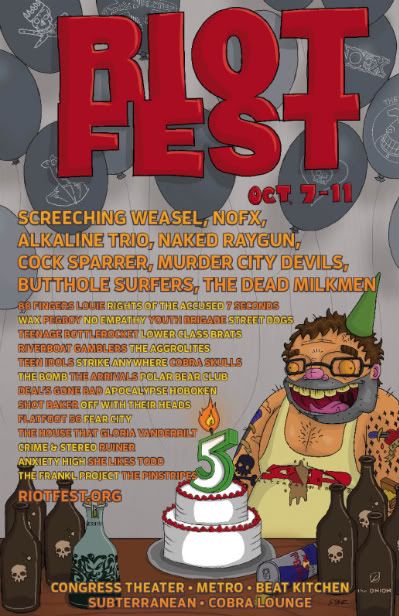
We have no shortage of music festivals here in Chicago, but Riot Fest stands out from the rest by bringing in punk acts spanning generations, reuniting legendary bands, and supplying a plethora of "secret" shows around the city. I had a blast at last year's festival, and this year they've really outdone themselves with an over-the-top line-up.
Before Pandora, Hype Machine, and even Last.fm, the best way to discover new independent music was through a site called Epitonic. Founded in 1999, Epitonic was one the first sites to offer free (and legal) mp3s from independent bands and labels from around the world. Music fans would spend hours digging through the site's recommendations and discovering bands they would have completely missed without the site. Epitonic lasted until 2004, but has remained dormant since. However, one of the original founders and co-owner of the site, Chicagoan Justin Sinkovich (The Poison Arrows, File-13 Records), is being the site back is a big way, and the support has been overwhelming. He has started a Kickstarter page for fans to help and show their support, and is planning a launch event to be held when the new site is ready. We recently had the opportunity to ask Justin a few questions about Epitonic, why it is coming back, and what we can expect.
The first thing Michael Zerang wants to talk about, following our initial chit-chat and coffee orders, is his new xylophone. "It's the thing that's most obsessing me right now," he says. Zerang rattles off numerous details about the instrument: made in the '30s, blonde with rosewood bars, four octaves — few xylophones made these days are that large. "It's an unforgiving instrument. It doesn't have a 'give' the way a vibraphone or a marimba does. It's like a bagpipe — it's either on or it's off," he laughs. He's practicing it for a performance he'll give today (September 2) at noon, as part of the Michael Zerang Organic Unit, a sextet accompanying a Butoh dance troupe at the Jay Pritzker Pavilion as part of the Chicago Jazz Festival.
Of course, xylophone is not the only tool in Zerang's arsenal. Neither, for that matter, is music his only outlet for his love of rhythm.
Casual followers of Zerang's music know him as a master jazz/free improvisational percussionist, a rock-solid base from which all manner of musical forms can spring. Whether thundering behind the well-oiled jazz compactor that is the Peter Brotzmann Tentet or grounding the transmissions of gentler musical aliens like his trio with Mats Gustafsson and Jaap Blonk, Zerang is an ensemble's lightning rod. Unlike many free improvisers, Zerang possesses a rare gift — fearlessness in the face of silence. He's just as comfortable with negative space as with filling the frame.
Every year it becomes harder and harder to decide what band to see during a particular hour at Lollapalooza, partly because the bands are so great, partly because choosing a band on one end of the vast Lollapalooza empire means you just won't have time to hoof it to the other end for another's set. Here's our full preview of what to hit and what to skip at the festival.
What is music like when you can't hear it? It's a question that sounds like a philosophical debate on par with trees falling in the woods and single hands clapping, but this is not a question for rhetorical amusement, it's something that audiophiles as well as hearing people in love with signed languages and Deaf culture have thought about in depth. What is the deaf person's experience with an art form that is seemingly only valued by those with fully functioning cochleas?
There is a notion that music is only heard and thus, can only appreciated by the hearing. However, deaf people have a unique and challenging perspective to music that has seldom been explored outside of deaf communities. With in the deaf and hard of hearing world, there are people not only creating music, but people who love and make music a part of their lives. In this world, the various shades of gray are celebrated as the spectrum of deafness, from slightly hard of hearing to "stone deaf" are all part of this community. The experience of sound can be different for many people who's abilities with hearing are not clearly identified in terms that hearing people are used to. it is never an either/or experience, and definitely not something that the hearing world can understand completely. Most assume deaf people enjoy music solely by tactile sensations, but going beyond feeling vibrations, what is the experience of music like for someone who doesn't hear or least least like we do?
[Editors note: Our own Michelle Meywes spent the weekend racing from stage to stage in Union Park, trying to take in as much music as possible, of course, she wasn't alone, and we have a few thoughts interjected from James Ziegenfus and Andrew Huff at some opposite stages. There are also even more photos by George Aye coming soon. In case you missed them, please also enjoy Lisa White's interviews with artists from the weekend.]
Blu Blockers, Ray Bans, mustaches, headbands, skimpy clothes and sweat... ah, it must be Pitchfork weekend in Union Park. This indie music festival has certainly turned more mainstream over the past several years of its existence, selling out quicker each year, making those beer lines ever longer, but at it's heart it's still about the music.
The theme for the weekend was definitely the heat. Temps were in the 90s all three days (with the refuge of a single thunderstorm that rolled through early Sunday, but actually left things even more humid). Day one knocked the price of waters down from two dollars to one, and by day three were two-for-one. Every band's introduction included reminders to stay hydrated and keep an eye on your neighbors, pointing out the location of the first aid tent. Festival organizers were nice enough to hand out free waters to those camped in the first few rows for the evening headliners, with only one request: "Please do not throw them." LCD Soundsystem's James Murphy even thanked everyone working the fest, commenting, "You're really nice, giving people water and shit." Almost all the bands seemed to comment on the heat, including Liars' Angus Andrew, "I know you wanna look cool, but you should stay cool." One day I even walked into Glenn Frey's "The Heat Is On" on the speakers before the bands started.
Alright already, enough about the heat. If you were there, you're well aware of how hot and steamy it was. Let's get talking about the music, there was a ton of it!
Our staff is pretty excited about the upcoming Pitchfork Music Festival. We'll will be in the mix, with an ear on the stages, along with a table at the CHIRP Record Fair tent. (We fall under "other delights." Come on over and say Hi, buy a GB t-shirt or one of our fabulous anniversary party posters.) Remember to check out all the other non-performance activities this weekend including Flatstock, the Rock for Kids' auction booth, the Coterie craft fair, and more. Transmission writer Lisa White be bringing you daily coverage, as well as a festival wrap-up after the weekend's over from Michelle Meywes (all paired with photos by George Aye), but for now, here's our thoughts on what you can hear in Union Park on Friday, Saturday, and Sunday.
[This story was submitted by freelance journalist Evan Minsker.]
Chicago is the home of jazz and the blues. That's no secret. Going back to Jelly Roll Morton and eventually giving the world Chess Records and the Bo Diddley beat, the foundation of Chicago's music history is built almost entirely by the "blues people" who came up from the South.
But Chicago has a less-advertised but storied history with an unlikely genre — bluegrass. Yes, the mandolin and banjo-laden music often associated with backwoods Kentucky and the Tennessee hills had some roots right here.
In 1924, around the time when Louis Armstrong was making waves on the South Side, the WLS National Barn Dance started up in the Sherman Hotel in downtown Chicago. The show is often cited as "second only to the Grand Ole Opry" in its time and was an outlet for Southerners who had recently migrated north. In 1929, Bill Monroe moved to East Chicago, IN, to join his two brothers, Birch and Charlie, who were working at an oil refinery. That year, The Monroe Brothers became members of National Barn Dance. Monroe later became "The Father of Bluegrass," and the rest, of course, is history.
Today, blues bars are spread out all over the city, but there isn't a single "bluegrass bar" in the strictest sense of the term. And while Bloodshot Records mixes roots music with punk sensibilities, there isn't a bluegrass label here in town, either. But there's certainly a "scene." It's not easily defined by a single location, considering the city's bluegrass bands play all over the place. And it's not an easily defined genre, considering bluegrass is split up by subgenres and factions. But there's a number of musicians in town — young and old, suburban and inner-city — playing bluegrass to an enthusiastic audience. Here's a look at three of Chicago's major players in the bluegrass scene and a guide for seeing the music around town.
[This article was submitted by freelance writer Emi Peters.]
With the 27th annual Chicago Blues Festival kicking off Friday, and Eric Clapton's sold-out Crossroads Guitar Festival right around the corner, it's important to take a look at how much one of Chicago's top tourist attractions has changed since the musical genre's heyday in the 1950s and '60s. The Chicago blues sound is equal parts electric and soulful. It has inspired countless numbers of musicians and gave birth to rock 'n' roll. The blues is one of the purest forms of American music, and Chicago became the place to turn it on its head and make the blues its own.
Some 60 odd years ago, it was pretty customary to be able to drive through Chicago's South and West sides and see an immense number of blues clubs and juke joints, such as the Flamingo Lounge, Gatewood's Tavern and The Flame Club. Inside, one could find patrons dancing and singing along to some of the rawest, grittiest and sweatiest music the city has ever known. Smoke-filled, dimly lit rooms overcome with loud electric guitar and soulful crooning could carry on until the wee hours of the morning. Chicago blues wasn't just another sub-genre of music, though -- it was also very much a release for African Americans looking to escape the hardships and discrimination encountered in daily life.
Today, the number of blues clubs in the predominantly African-American neighborhoods of the South and West Sides has dwindled significantly. Many of the establishments that once played host to iconic blues men and women such as Howlin' Wolf, Muddy Waters, Little Walter, Junior Wells and Koko Taylor now cease to exist, as well as the aforementioned legends that frequented them.
Junior Wells c. mid-1960s (photo by Raeburn Flerlage courtesy Delmark Records)
[Editor's note: This article was submitted by freelance writer Jon Graef.]
If one could close their eyes during Chicago-based dance-pop shoegazers Panda Riot's set at the Empty Bottle one late Sunday night in April, they'd swear that they heard the second coming. Not of the Stone Roses, or the King of Kings himself, but of a wave of British psychedelic music that saw its artistic zenith in the late 1980s and early '90s. Slowly, but surely, a shoegazer revival has come to dominate national critical discourse, with widely known groups like Serena-Maneesh, The Big Pink and A Place To Bury Strangers all recently releasing new material and playing Chicago shows. What isn't so known is that, based on a wealth of new material from several local up-and-comers, a revival of the aesthetic is occurring locally as well.
But it's not necessarily a scene, per se. In fact, many Chicago-based participants question the premise of a shoegazer revival in the first place. As they explain it, they simply aren't interested. Sitting in the Bottle's basement lounge before their show, Brian Cook, Panda Riot's guitarist makes a key distinction. "I mean, I'm definitely a fan of shoegaze and dreampop bands. I wouldn't say that I'm a fan of the genre. But I think traditional shoegaze is kind of...stagnant. Is that too negative?"
For a beat, Cook thinks about the answer to his own question before saying in a matter-of-fact, yet cautiously self-deprecating tone that "I think loud guitars and buried voice is just dead in the water. I mean, it is. [Laughs]."
A hundred and eighty miles west of Chicago, the Mississippi River wraps around Arsenal Island and cuts through Iowa and Illinois. Towering over this river, Centennial Bridge connects these states. A few steps in from shore is the Great River Trail. One can move along it slowly and savor it for miles. A few more steps in is the small city of Rock Island. There are streets and people. At night — voices and lights. There are bars, restaurants, businesses. There is Huckleberry's Pizza, SEO Copywriters. Up above them both, there are engineers and magicians at work. In one room a magnificent sound is created. In another it is nudged gently onto BASF 468 1/4" analog tape. This is done 15 inches and one second at a time. Seven times a week, for several hours a session, for over four years this has been done here. The tape collection has been growing. And now, one can move along it slowly and savor it for miles. Welcome to Daytrotter.
Sure you know about Chicago jazz venues like the Green Mill, Andy's and Fred Anderson's Velvet Lounge, but what about Hungry Brain, Hideout, or even Skylark? Chicago has a rich history of jazz, from the speakeasies of the '20s, to a thriving community of innovators that exists today. Ratchet, taking place Monday nights at the Skylark in Pilsen, is a jazz series in the vein of Umbrella Music, Immediate Sound, and Elastic Arts, which are collectives and series in this small, but visionary creative music community.
The name Ratchet is a reference to a "machine or mechanism that can only move forward, relentlessly — like the tradition of creative music and art in general," says Ratchet founder Frank Rosaly. The tradition of jazz has always been to push the line. While traditional standards from the "jazz age" of the twenties may sound like tame oldies to us now, at the time it certainly pushed the boundaries of what was acceptable, both musically and socially. Jazz in those days was widely considered immoral and vulgar due in part to the fact that most jazz clubs doubled as speakeasies, not to mention its connotations with sex.
Since forming in August of 2009, The Blind Staggers have played countless shows in and around the Chicago area with notable bands such as Deals Gone Bad, Split Lip Rayfield, The Devil Makes Three, and the Siderunners. This four-piece, alt-country band consists of Damien Christian (vocals, guitar), Laura Loo (vocals), Shrek (bass), and Swede (drums). Under no circumstance should one delay in checking out The Blind Staggers — their enthusiasm and determination about their music is sure to make this outlaw-country band explode.
Reckless Records in Wicker Park on Record Store Day 2010 (photo by Kirstie Shanley)
Our intrepid staff of audiophiles headed out on Saturday, April 17, 2010 to our favorite record stores in Chicago to see what we could find. If you've got your own experiences to share, please let us know in the comments or drop us a line. Don't forget you can share photos from Record Store Day in our Transmission Flickr group.
Laurie's Planet of Sound on Record Store Day 2010 (photo by Kirstie Shanley)
A holiday for us audiophiles, Record Store Day is once again upon us. This Saturday, April 17, 2010 your favorite local record store is likely dusting off the promotional posters, putting out a brand new stack of special 7" releases, and throwing open its doors wide to a horde of eager music scavengers waiting outside the doors. Many of the Transmission staff have been eagerly anticipating this day all year, along with many of you. There are oh, about a gazillion potential limited edition gems out there to be found, and your local shopkeeps have been working hard to obtain them from the record labels. Keep an eye here on Sunday with a recap and snaps of sweet sweet finds at our favorite Chicagoland music shops. If you're headed out on your own, here's a rundown of some of the events and goings on. Have fun, be polite, and always tip your hat.
Here's Chris Brown of indie chain Bull Moose giving you the scoop on exciting new releases to be had:
"What have I gotten myself into?" It was only minutes after I committed myself to covering a week-long stretch of open mic nights that I began asking myself this very question. Of course it was my idea, but still, the question came. That's when I knew I was in for a strange and beautiful ride. That's always the first sign.
Music can be made in any setting, but music made on open mic nights demands the presence of strong drink, and a certain disregard for sleep. This is true for all parties involved. I knew that going in and realized some self-inflicted rules would be absolutely necessary prior to taking the plunge. One: In the interest of coherence, only one of these high-powered drinks would be allowed to enter my body and mind each night. Two: I would go alone and sit in the darkest corner I could find, among only the table-scattered essentials: audio recorder, pen/paper, camera and drink. And three: Before it was all over, with a blatant disregard for all things sacred and good, I would also perform.
That is the purpose of all this, isn't it? A free pass to perform without the burden of any shadowy shame, a sort of musical absolution — mercy for the awful, praise for the average, and an all-out adulation for the few capable of riding that high and mighty wave — the highs and lows on the open mic.
Although seemingly inauspicious words, this would prove to be the last utterance of the band Japanther before they left the SXSW showcase they were scheduled to headline. Heads down, avoiding eye contact, they made their way out of the venue with gear in hand, off to the van to continue their tour. Left behind was the entire staff of the label who'd organized the showcase, who had brought them on for star power, who had re-arranged their running order so that they could open instead of close, and who'd also been trying to get one of the other showcase bands to show up early with a drum kit due to Japanther's lack of one. But even with the would-be opener gone and the temperature having dropped some 30 degrees outside, the students chose to carry on and make the best of it. They had a label to run — not to mention their professor had come along as well, and this would probably factor into the grade.
In the world of sports, we might be rivals. In the world of industry, we're colleagues. On the world's stage, we're close relatives, but in dance music Chicago and Detroit are the kind of sister cities that finish each others' sentences. But in light of the ever-increasing ability to connect with people of the other side of the planet, Chicago's been neglecting regular contact with our own next door neighbor. There was once a time when music, artists and energy traveled freely between the two cities, and this Friday, March 12th at Smartbar, D3: Deconstruct, Discover Detroit Art and Music Series hopes to revive this exchange of ideas. Put together by local techno promoter VOLATL, house label D'Lectable Music, and art collective Prak-sis, D3's opening night features Detroit native and second-wave techno innovator Stacey Pullen, D3 founder Lady D and locals Max Jacobson, Max Loomis and Jay Cho, as well as multimedia art and performances. Friday's kickoff event is only the first in the quarterly series, and Gaper's Block sat down with organizer Darlene Jackson, aka DJ Lady D to discuss her vision and Detroit's influence on dance music.
On a nippy Monday evening in late February, about 125 young musicians are sitting inside a small room at the Chicago Cultural Center. With no instruments in the room or anywhere in sight, the artists aren't here to perform or write new songs. Instead, they're all waiting to learn the key answer to one question — How the heck do I get a gig booked outside of Chicago?
Sponsored by the non-profit Chicago Music Commission, Musicians at Work forums are held six times a year as a way to introduce artists to different ideas in the music industry. Past panel guests have included Nan Warshaw of Bloodshot Records, music critic Jim DeRogatis of the Chicago Sun-Times and Bettina Richards of Thrill Jockey Records. This particular panel -- about how to book out of town gigs when you're a local act -- brings together six industry experts: Brian Keigher of the Chicago Department of Cultural Affairs, Scott Schaefer of Bloodshot Records, Brian Mazzaferri of the recently-signed band I Fight Dragons, Mo.Billionaire of The Movement Worldwide, Bruce Iglauer of Alligator Records and moderator Joanna Quargnali-Linsley of Misery Loves Co. The Department of Cultural Affairs co-hosts the forums.
Twenty-one year old Dave Cohen, who lives in Crystal Lake, takes a seat near the front row. Cohen wants to learn about the mechanics of touring because his three-piece pop-punk band — They Go Up — will be finishing their first record shortly. He heard about the event from his producer.
"We've played a couple open mic stuff but we're waiting to get our disc so we have something tangible to hand out after shows," he says. "We're trying to see if we can make a buzz."
The first time I heard Tinariwen was on a hot July night in 2005 at the Old Town School of Folk Music's annual Folk & Roots festival. I approached Welles Park from the west, and as I got closer the sounds of what I now know as desert blues reached my ears for the first time and enveloped my senses. The air was full with the vibrations of electric guitar, drums, and deep vocals pierced occasionally by the trill of women ululating. Western psychedelic '60s rock of the Jimi Hendrix variety mixed with West African rhythms to create a trance-like mood, the park was filled to capacity with revelers, and outside the gates people stood on sidewalks and CTA bus benches, swaying to the music. The sun had just begun to set, and the quality of the light hitting Western Avenue at dusk added to the feeling that I had just stepped into another dimension. On stage men and women in blue robes and dark turbans, some with their faces obscured by swaths of fabric, played guitars and drums and sang in a language I didn't understand. The open air of the summer concert captured all who came within earshot, and I was completely mesmerized. Determined to get as close to the source as possible, I paid the modest $5 entrance fee at the gate and slowly weaved my way to the front of the captivated crowd.
Observation: Over and over again, Sam Cooke would attribute his success to the art of observation. He wrote of what he saw and heard. He listened to it and spoke to it. Effortlessly and instinctively, he turned it into music. He sang the songs that brought relief to the civil rights movement. He sang the songs that formed a bridge. He sang the songs that healed. His furious will and feral tenor brought people to their knees, and lifted them to their feet. Then, at the height of his success, he was shot and killed. It was 1964. He was only 32.
Where there are people, there is music. It makes us feel the things we need to when we don't already. It enhances them when we do. It carries us backward and pushes us forward. It can be found in every known culture and has been performed in public since the time of antiquity. It should come as no surprise to find it being performed just a few steps beneath the ground. After all, there are fantastic acoustics and 24-hour audiences to be found in the tunnels below.
The tunnel musicians of Chicago can be heard amid the roar of trains. Depending who you ask, there are only four performance-permitted stops: Jackson and Lake on the Red Line, and Jackson and Washington on the Blue. Some will tell you about these four. Some will tell you there are only three. I'll tell you what time already has: where there are people, there is music.
I recently spent three nights walking through the tunnels for a closer listen. These are the sounds, and the people I heard.
The 2010 Tomorrow Never Knows Festival gets a split personality this year with the introduction of a second venue in addition to Schubas, in the form of its sister (brother?) club, Lincoln Hall. Featuring five days of comedy, indie rock, girl rock and soul, this little winter festival is one of the (extremely affordable) entertainment highlights of a very dark month each year. Check the site for ticketing, read up on some of our picks, pull on your boots and get on out there. The festival starts Wednesday night, the 13th, and runs through Sunday the 17th. Most tickets are $15 or less and you can also still pick up a 5-day pass to all events for $75 which includes a host of freebies including Zipcar shuttles between venues.
What follows is a brief preview of some of the acts you can catch each night. More on each act and full ticketing at Schubas website.
We decided that there was too much going on in Chicago music for a simple Top 10 list. Therefore, what follows (in no particular order) is a compilation of superlatives we'd like to award to our favorite, or at least most memorable, Chicago music tidbits of 2009. Enjoy, and have a safe and happy new year!
For the third article in an occasional series on long lost music venues in Chicago, Transmission takes a look at the Lounge Ax, a gritty bar and music venue in Lincoln Park that attracted some of the most popular underground bands in the late 1980s and until it closed in 2000. See our previous look at Off The Alley here and our look at Medusa's here.
In 1987, Chicagoans Jennifer Fisher and Julia Adams opened the Lounge Ax, a tiny club in Lincoln Park at 2438 N. Lincoln Ave. An unassuming, bare-bones entertainment venue, the club was located across the street from the famed Biograph Theatre, where John Dillinger met his fate 53 years earlier. When the Lounge Ax first opened its doors, Fisher and Adams had simple, yet noble ambitions: book live music that they liked, mainly indie rock, and some comedy shows.
The Biograph Theatre
Twenty-two years later -- and 10 years after it closed its doors forever -- the Lounge Ax has solidified its place in Chicago history. Seven-hundred eight members reminisce about the "late, great Chicago club that booked the greatest bands in the world," on the Facebook group "I Miss the Lounge Ax;" the club plays a key role in the 2000 film High Fidelity; and the Chicago History Museum is currently asking for any objects or pictures from the club in order to document its history.
While the Lounge Ax didn't do anything completely revolutionary, it did nearly everything exceptionally well -- booking some of the best upcoming indie bands and becoming known as the club that treated all musicians with respect, even if you were just starting out.
Let's face it, the thought of listening to children's music can be pure hell. The daunting ABC's, the patronizing, boring lessons and let's not discount the numerous Raffi flashbacks that one might go through while trying to find music to groove to that is also appropriate for little ones. Even though children's music has some shining gems, they can be hard to find and if you have children, who has the time? Chicago based musician Justin Roberts is something a bit different. He stands out in the sea of xylophone chimes and overzealous demands to count to ten as the adult experience of kid's music can be. His gentle voice has been compared to James Taylor, his songs make you want to dance and he never underestimates the intelligent beings that children are all while nurturing the sense of wonder that many of us lose once we are too cool for play dates.
[This week's feature was submitted by reader Jane Haldiman.]
Scott Free is an artist putting the P — performance — in Chicago's LGBTI community, and putting the LGBTI in the area's music scene. His Homolatte is a gay community event created to give opportunities for queer writers and musicians to gain exposure and showcase their talents. Bringing performers of all genres and genders to the stage for a decade, Homolatte is the longest running queer performance series in the country.
A bi-monthly, all-ages, queer music and spoken word series, Homolatte happens on the first and third Tuesday of every month at 7:30pm. After ten years and a variety of venues, the series is currently housed at Big Chicks/Tweet a popular staple in the queer community. Although primarily a gay men's bar, Big Chicks, like Homolatte, welcomes people of any gender or orientation. As Free states, "Performers are from the LGBTI community, but the event is open to everyone!"
A few weeks ago, we looked at the current situation of interns in the Chicago music scene. While their optimism and good cheer seemed to bode well for the state of things, we realized that we'd need to see what the result of these many hours of free labor would provide. Did blood, sweat and promo e-mails pay off for everyone who put them in? Do the ones who end up with unsexy day jobs regret their fate, or did they still gain something? We started an open discussion with several former interns — some more forthcoming than others. Some are now successful entrepreneurs of their own, some are still finding their way. Some negative experiences were not elaborated on, and the juiciest stories had to be left out to protect the innocent/the storyteller's own hide. But short of inviting this gang out for a drink at the neighborhood watering hole and hearing them yourself, here are the tales fit for print from the intern veterans of Chicago.
When talking musical influences with Helen Money, it's easy to forget her instrument of choice: cello. She references Bob Mould's Beaster, with its wall of sound and intense, thought-obliterating guitar work. She speaks of The Who and all the crazy rock bands she was exposed to in the '80s. "The stuff I like sounds like life or death," she reasons. And this coming from a woman with a picture of Jimi Hendrix taped to her cello case like he's a saint.
The music industry primarily runs off of the hopes and dreams of millions of kids wanting to be in a rock and roll band. Its slightly lesser known secondary source of fuel is the hopes and dreams of kids who at least want to work in a rock and roll business. All over Chicago, businesses large and small find interns knocking on their door — students, career-changers, hobbyists, and more. Transmission sits down to talk to some of them about where they're coming from, where they want to go, and what fun manual labor they've performed along on the way.
Like, duh: Anyone who's paid attention to the music industry over the past five years knows that it's changing. Last year, Trent Reznor offered up two Nine Inch Nails albums for free download under a Creative Commons License, while more notably, Radiohead self-released its 2007 album In Rainbows for a price that was chosen by each individual customer--an approach so famous that it is now simply called "The Radiohead Model."
The model, it seems, works for those bands whose fans number in the millions and the number of albums they've sold add up to even more. But in the not-so-much-a-news-flash department, even indie bands are feeling the pain of a post-label music industry: your favorite music stores continue to get steamrolled by big box retailers in smaller cities; you can now count the number of major independent distributors on one hand; and indie labels are cautiously operating.
In Chicago, there's at least one musician who is trying to navigate the future of the music industry, while cultivating a label-type community of artists. Casey Meehan, who performs under the name of Jitney, started the "netlabel" Rock Proper last November after realizing that he and his friends were putting lots of time and money into recording albums, but had few ways to get it the music out there. "[Rock Proper] started out as a connection of our friends' networks--we were in this lucky and unlucky place that we realized there were all these great records that professionally recorded and needed to be released," Meehan said.
Alex Perkolup is a musician who currently plays bass and guitar in the critically acclaimed progressive rock band, Cheer-Accident. Originally formed in 1981, Cheer-Accident has maintained an impressively fresh and interesting sound, oscillating between noise and pop, refusing to be categorized. The music is moody, complex, and highly composed, but never muddy. Perkolup has been one of the three mainstays in their ever-evolving lineup for six years. He has also played in Bobby Conn, Lovely Little Girls, and The Flying Luttenbachers, among others.
Do you have formal music training?
I started lessons at eight and went on until I was about nineteen. I had one guitar teacher for nine years of that time who was a big influence on me. I started playing because of Eddie Van Halen. I came out of the metal school of musicianship. I was really into difficult playing and my guitar teacher recognized that. He introduced me to King Crimson, Mahavishnu Orchestra, Gentle Giant and some progressive rock bands, so he was very instrumental in my influence.
Grab your Chuck Taylors and safety pins, kids -- Riot Fest 2009 is coming to Chicago October 7th. The festival that brought us reunions by the Blue Meanies and Naked Raygun, among many, many others, is back at it again with more reunited punk heroes and local talent. Besides the five days of punk music spanning generations going down at venues around the city, they've also got a bowling tournament and film screenings planned for the week. This year marks Riot Fest's fifth year in Chicago, and each year they've only been expanding and bringing in more and more exceptional acts.
For the second article in an occasional series on long lost music venues in Chicago, Transmission takes a look at Medusa's, an all-ages music and dance club that was one of the first New York-style nightclubs to open in Chicago. See our previous look at Off The Alley here.
"you wouldn't believe me if I told you..15 going on 25......favorite color? BLACK! smoke cigs? yup. gotta square? a clove? 13 and drunk? i don't remember...beat up? fucked up? knocked up? new wave, house, industrial, hip hop slam dance, dirty disco, techno, this acid life..ahhhhh the memories...." —Description of the Facebook page MEDUSA'S on SHEFFIELD in CHICAGO
In Greek mythology, if you stared directly at Medusa, the legendary female Gorgon with mesmerizing snake-hair, you turned to stone. In Chicago mythology, if you hung out just long enough Medusa's, the famed nightclub at North Sheffield Avenue and West School Street, you sure as hell didn't turn to stone.
Opened in the early 1980s, Medusa's on Sheffield was one of the defining nightclubs in Chicago's house music scene throughout the '80s and early '90s. "Dark, thumping, alive" and a melting pot with blobs of gum covering the sidewalk of the front entrance, Medusa's was the setting for several legendary Chicago stories: Billy Corgan and company wearing black velvet capes during one of the Smashing Pumpkins' first live shows, the late Studs Terkel saying, "Thanks for a great night. Is that Billy Idol?" and punk rocker GG Allin telling the crowd he was going to kill himself but instead, cutting his body and lighting equipment on fire.
Former site of Medusa's at 3257 N. Sheffield, Chicago
Upon first hearing about this new venue up in Evanston, I immediately wrote it off because, well, it's in Evanston, and that's too far from the city, right? Even the name SPACE, an acronym for "Society for the Preservation of Art & Culture in Evanston," sounds stuffy and official. Then I heard that there was something very special happening there, that it was a sort of co-op for artists and doubled as a recording studio. This piqued my interest. I contacted General Manager Jake Samuels and he invited me to the Buckwheat Zydeco show a few weeks back so I could check the place out and talk with him about the concept. We were lucky to also be joined by Owner/Partner (and musician) Stuart Rosenberg for the conversation where we talked about everything from archaic liquor ordinances, to the abstruseness of jazz, to of course SPACE itself and the concept behind it. Turns out there's a lot going on under the hood.
Our dear old local label Bloodshot Records is turning 15 this year and they've been partying across the country like Paris Hilton. Setting up this weekend in their sweet home Chicago, you can catch some of the best acts from Bloodshot's roster (past and present) for a measly ten-spot. Plus, there's food, drink, art, activities for the kids, and yes, belt sander races. What follows is our run down of some of the best fun to be had between noon and 10pm Saturday out in front of the Hideout.
"It's no wonder that Chicago has inspired hundreds, if not thousands of songs, each with a unique perspective that reflects Chicago's incredible energy. Chicagoans have a special pride for their city. Why not sing about it?" That quote comes from Alarm Magazine publisher and editor Chris Force, and that is exactly what the Chicago Public Library wants you to do for their Sound Off music contest. The contest invites local musicians to write an original song composition inspired by our fair city.
Editor's Note: Please enjoy this guest post from Chicago area-based writer, and former radio personality, James VanOsdol. He is currently seeking backers to help fund the publishing of his book about the Chicago music scene in the 1990's, Chicago Rocked.
"New York and L.A. are like the girls you want to fuck; Chicago's like the one you want to marry"
– Mat Devine, Kill Hannah
So much for spoilers. That quote is the final thought of my book, Chicago Rocked. I suppose I'm not really spoiling too much; the book technically doesn't exist yet, and there's a chance it might stay that way. More on that in a bit.
Whenever I followed a trail of empty PBR cans to Wicker Park for a local band's set in the '90s, I thought, "Someone really should write a book about this era of Chicago music. Someone should commit the stories of these amazing bands to print. Hey, wait, that someone should be me."
Reviews of this past weekend's festival are slowly coming in over the wires as our staff recuperates and adjusts our eyes from the glare of the sun to the gleam of the computer screen. Nevermind the blisters, here's our look back at Lollapalooza 2009 (with further updates as bulletins arrive).
Ding Ding! Imagine this: It's Sunday night at Lollapalooza. You're tired and sweaty and dirty and yet totally charged up and ready to rock. Our team of writers has the picks of which what stages will be bliss and which stages are best to miss. Read on for more.
Our fourth round of coverage gets you through the all-important early hours on the last day of this weekend's entertainment. It's a true test of the passionate festival-goer, who by that point is soggy, tired, and maybe not-just-a-little-bit sunburned. You'll need to muster all their strength to get up out of bed before noon and head down to Grant Park, but if you do, you'll be kindly rewarded. Read on for more.
Day three in our previews of what to hit and what to quit at Lollapalooza this weekend. The forecast is looking hot and steamy, and so are some of these bands! Keep reading for more on our favorite upcoming stage clashes on Saturday night.
Here we go with the second installment of our set-to-set matchup of Lollapalooza's bands. Today's battles rage on as Friday and Saturday's music starts to heat up. Keep reading for our picks on what to hear when.
I've often said that music festivals are a marathon, not a sprint, and should be eased into with much pre-festival calf stretching. That being said, we're going to give you a full week of Lollapalooza performer previews, each geared to help you choose which stage to spend your time during which set. We're not going strictly chronological here, but we're kind of teasing it out each day this week so check back often.
OK, here we go: It's Lollapalooza 2009: Band vs. Band!
Attitude: whatever your feelings about the music of The White Stripes, The Raconteurs, The Kills and Queens of the Stone Age; their members are covered in it. It is gritty and will not wash off. When holed-up in a room together, the resulting mixture becomes that much more abrasive, that much more piercing, that much grittier. Over three weeks in early-2009, a musical gathering took place in Nashville; what emerged was The Dead Weather. With their still-warm debut album, Horehound, released through Jack White's Third Man Records on July 14, The Dead Weather are set to move through a two-night offering at the Vic Theatre next week. Prior to their arrival, a closer look is in order.
So once again, the dust has settled on another long weekend of music in Union Park. With bass still thumping in our ears, and soy ice cream still staining our shoes, we take a look back on what the past three days held for music lovers at the Pitchfork Music Festival.
For once, the weather forecast looks positively delightful for mid-July (well, really, it's been nice all summer). And it's a good thing, too, because it's once again time to head down to Union Park and enjoy a long weekend full of band after band after band at the Pitchfork Music Festival.
Don't forget that the park will also play host to the Flatstock poster show, Coterie Chicago (the new craft fair on the block), the CHIRP record fair (where Gapersblock will have a table), auction items benefiting Rock for Kids donated by many of the artists playing Pitchfork, and a host of food vendors and other booths.
Keep reading for our staff's picks for the best way to squeeze the most fun out of the fest. (And keep an eye out this weekend as we have some exciting coverage from the Fest and after the weekend's over.)
Summer festival season is picking up, and with Pitchfork and Lollapalooza on the horizon, thousands of fans will pour into festival gates as the sun beats down, carrying along their sealed water bottles, blankets, and sunscreen. But one key item will save you from boredom as you stand around waiting for your favorite band to hit the stage.
A good book is a wonderful friend when your packed into a sweaty concert waiting for a show to start. Make it a book about music and you've got yourself a double dose. This week Gapers Block: Transmission writers are bringing you a selection of some of their favorite books about music to read this summer. So lather up with the SPF 45, leave the counterfeit booze at home, and don't forget a good book.
A midlife crisis is not quite the same as it used to be. While the Boomers were fine and dandy to find someone half their age plus seven and revisit the muscle cars of yore right around their 40th, generations X through Y seem to be looking at a much longer grace period of socially acceptable decadence. Cougars roam free, clever t-shirts are now bought for baby instead of packed up in anticipation of, bands of all sizes tour a decade after their prime, drawing out their also decade older fans.
On the other end of the spectrum, Clint Mansell was right — Pop is eating itself, and retro is approaching parody so fast that nostalgia is being wistfully revisited by people younger and younger. Whether due to an increasingly fragmented pop landscape, the completely soulless progression of mainstream music in label's quests to maximize profit, or just the fact that we're a little short on hot jamz right now, young 20-somethings who should be pushing forward in the prime of their life can't help but take a backwards look at the pop hits of yore.
A DJ duo by the name of TTTTotally Dudes has formed, intentionally or not, to address these grave issues of the day. Perhaps by satiating the nostalgia needs of those in their quarter-life crisis, the need to painfully dig up the past will be alleviated before it manifests as potential social stigma. Or even better, perhaps it will create a transitional nostalgia bridge, making a non-stop party across the generations where anyone can hop on in the name of remembering good old times or discovering new ones — a seamless blend of partying for all ages for all time!
Can you do all that with *NSYNC and Biggie tunes? We find out from the Dudes.
The Greek contemporary classical composer Iannis Xenakis (1922-2001) is sometimes written off (in the manner of Karlheinz Stockhausen, John Cage, Morton Feldman, et al) as a composer who has contributed great ideas and concepts to the dialogue of music, but who composed music that "regular people" don't actually enjoy listening to. Fortunately, the International Contemporary Ensemble (ICE) breaks through this false barrier like the Hulk through a rice-paper wall. Listening to the 75-minute performance on June 4 at the Museum of Contemporary Art felt neither like a superhuman test of endurance, nor like aural homework that was "good for us" but unpleasant. Instead, we were treated to music that was vibrant, passionate, and almost visible in its spatial movement throughout the concert hall. Far from a stuffy evening of "abstract" music, the group was more than happy to frame its work in the language of modern rock, experimental, and noise bands, describing what it does, gleefully, as "an aural assault on the Windy City."
A brand spankin' new street festival takes place this weekend on Milwaukee at Armitage and Western, and lucky for us, the focus is mainly on the music. Metronome Celebration puts Logan Square in the spotlight with all your classic Chicago street fest stuff including food, beer, and booths from local merchants, artisans and non-profits; but boasts five stages featuring over 40 bands. The stages, separated by genre, include: a Rock Stage (curated by Empty Bottle), a Punk Stage (curated by MP Productions), an Electro Stage (by the Congress Theater), and a Folk Stage (booked by The Chicago Bluegrass & Blues Festival). There will also be a Local Stage featuring local talent from the Logan Square neighborhood and from Chase and Goethe Elementary Schools.
Metronome's other big focus is on being "green". The festival's goal, following in the footsteps of Lollapalooza, is to leave the neighborhood better off than when they came by promoting recycling, using biodegradable products and encouraging use of public transportation. Organizers also hope to inspire innovation with the Sustainable Project Award which will "fund a project to improve recycling, composting, energy efficiency, green space development or any other project that will help reduce the burden of the local community on the environment and improve the lives of the citizens of Chicago."
But, let's get back to the music. Here we take a look at some of the artists hitting Metronome's stages this weekend.
For an occasional series in Transmission, we'll be revisiting the legacy of old music venues in the Chicago area that have since closed down — places long gone, boarded up and turned into condominiums or shiny storefronts. The places that once contained the voices of the passionate few who crammed themselves in compact spaces night after night to see their favorite underground band play that first chord. Starting off the series, Transmission looks at Off the Alley, an all-ages club in south suburban Homewood that was one of the first venues to host several influential punk bands, including The Queers, Alkaline Trio and Winepress. E-mail suggestions about clubs you would like to see featured to smburt@gmail.com.
The deeper I delve into the Chicago music scene the more fascinated I become with all of the various aspect of our self-contained industry. From the bands, to the venues, to the labels, to the recording studios, and even the duplication services, all aspects are represented in our city. A studio that has worked with some of the best up-and-coming acts around the city is Gallery of Carpet. Their client base includes the likes of Snowsera, Bailiff, Pet Lions, Color Radio, Sars Flannery, The Academy is...,The Hush Sound, The Rikters, and many more. I recently had the pleasure of chatting with the producer/engineer and owner of Gallery of Carpet, Brian Zieske.
Hometown hero Steve Albini may have pegged "The End of Radio" with his band Shellac a few years ago, but thriving in Chicago is a group of music fans and faithful volunteers that are championing one station as the future of independent radio. CHIRP, the Chicago Independent Radio Project, is a dedicated organization working to secure a broadcast license for a new community radio station in Chicago.
I like my rock music a bit rough around the edges. Give me gritty guitars, give me a foot stomping beat, and add in some smooth vocals and I'm over the moon. So it's no surprise I thoroughly enjoyed Ha Ha Tonka the first time I saw the band and checked out their debut album Buckle in the Bible Belt on Bloodshot Records. The quartet from Missouri make rock music with an alt country twang, and their lyrics possess a slice of Americana storytelling at it's finest. I was fortunate enough sit down with lead singer Brian Roberts and talk about recording, touring, and being on an independent label. And get ready as the boys headed back up to Chicago this weekend to bring along their earnest and soulful brand of rock 'n' roll.
Damon Locks knows a thing or two about communication. In fact, as a visual artist, freelance writer, and former publicist for local music promotion company Biz3, you could say that information sharing is in his blood. That's why his new Web site, The Population, makes perfect sense: the site allows Locks to unleash all the interesting tidbits that are rattling around in his noggin, and in turn it gives readers a public forum and, ideally, a community.
As we previewed last week, the second annual Record Store Day rolled through Chicago's independent merchants of music, and a whole gaggle of Transmission staffers headed out into the beautiful spring weather to score some deals, and celebrate the day.
Conceptualized by a group of like-minded friends in 2007, the very first Record Store Day didn't take place until last year, when Metallica (they are, if nothing, big fans of all music purchased in stores, not online, afterall) kicked off the inaugural day at Rasputin Music in San Franscisco. Now, each year, we can mark our calendars on the third Saturday of April with a sharpie and proclaim "Huzzah for the shopkeep!"
On the first day of April in Chicago, it's a chilly afternoon and Ann Scott is sitting next to the fireplace at Uncommon Ground in Wrigleyville with her iPod in her lap. The Irish musician, one of the most talented singer-songwriters to emerge from Dublin's indie-rock scene, is just settling into the city she will call home for the next month.
Chris Sloan has a daily schedule that would make your head spin, and yet also sounds about for par with most new label heads. He's working by day, attending school by night, and finding an extra half of a day in there somewhere to build up his fledgling label, Rainbow Body Records. For their first release, they've put out the debut EP from locals Golden Birthday, Infinite Leagues. The album is a solid collection of hazy, '80s-leaning pop that you can almost picture John Hughes asking the record store clerk the name of in some alternate universe. Gapers Block: Transmission sat down with Mr. Sloan and a cheap bottle of white wine to discuss monks, the recession, and how to get off on the right foot with your first record label.
In times of economic stress and uncertainty, there's a natural tendency for people to play it safe, avoid taking risks, and hedge one's bets. But throughout the course of its 16-plus year history, the Thrill Jockey label has never been one to straddle the middle of the road. With it's eclectic roster, the label has long provided listeners with works by adventurous artists from various points on the stylistic map — covering everything from the amniotic glitch symphonies of Oval to avant-jazz albums by members of Chicago's AACM tribe, and numerous points in between. Thrill Jockey's release schedule for this season shows no deviation from that tradition, and below we offer a roundup of some of the label's latest offerings.
But then, most cassette connoisseurs have been hip to this for years. Plustapes, a relatively new Chicago-based music label, is just one of a handful of groups that deal nearly solely in cassette tapes, hiss and all.
When I first heard of the Chicago International Music and Movies Festival, I was a bit surprised no one had thought of this sooner. Considering our thriving music scene and numerous successful film festivals, Chicago seems like a prime location to showcase the bridge between these two art worlds. The inaugural festival is taking place March 4th–9th at various venues around the city, with several guest speakers and live music performances. I had the opportunity to preview a handful of the films before the festival, and there are many gems to be found screening during these six days.
In addition to being the sharpest-dressed band in Chicago, JC Brooks & the Uptown Sound have been taking the city by storm with their unique brand of raw power soul.
Despite the awful winters, the corrupt politics, and the rising unemployment rate, Chicago is one of the best cities in the world, especially for live music. With numerous acts constantly stopping in Chicago, it's no surprise that important events happen in our fair city. So it was definitely no surprise when seminal 1980s British rock band The Godfathers announced their return to the U.S. for the first time in 20 years would happen at the Metro in Chicago this Valentine's Day. And that the show would be the first St. Valentine's Day Massacre show (a tradition of theirs) outside of London ever. Gapers Block: Transmission had the chance to chat with lead singer Peter Coyne about the upcoming show, music, and what it's like being in a groundbreaking band like The Godfathers.
You've likely already heard one of the tracks off of their new album, Only By The Night, whether it's on the radio, in a bar, or while shopping your local apparel store. Kings of Leon are bigger than big in the UK, selling out arenas and topping the charts, but are still climbing in popularity at their home here in the States. However, they have celebrated some mainstream and commercial success here since their last album, Because of the Times, and due to the popularity of OBTN. Also adding to their cred, they have been nominated for three Grammy awards, including Best Rock Album, and Best Rock Song for the single "Sex On Fire."
Controversy erupted on the internet earlier this month when Scott Masson of the Chicago band OFFICE released the band's latest album Mecca as a free download online. We were lucky enough to get a chance to talk to Masson about the current state of this once buzzing band, the mysterious free album release, and where he plans to go from here.
What is music but focused energy? If you have ever seen Naked Raygun perform then you will know this to be true. Formed in 1980, the band has seen its share of success and change, but with a loyal following their upcoming tour and album are both highly anticipated. The album, their first first studio recording since 1990's Raygun...Naked Raygun LP, is currently being recorded and is the culmination of the band efforts over the last two years that they have been together. Riot Fest Music Co. was responsible for their reforming back in 2007, and has been a factor in their path ever since.
We're passionate about music here at Gapers Block: Transmission, and we decided to give you a couple of different perspectives (well, more than just a couple, really) on what we heard in 2008. On the one hand, we love new releases by bands far and near, and on the other hand, we love hitting live shows in Chicago. Some of our favorite things this year included festivals, unique collaborations and those special small venue performances you just want to bottle up and save for your greyest days. Keep on reading to get a little dose of nostalgic sunshine, courtesy of your friends at Transmission.
As has been written many times before, Chicago is, at its heart, a jazz and blues town. Delmark Records, along with a very select few independent labels in the city, have taken it upon themselves to keep releasing and promoting jazz and blues with one foot firmly planted in Chicago.
For their 55th anniversary, Delmark has released their 55 Years jazz and blues compilations. Each set is contained on two discs; one a music CD and the other a video DVD.
A change has come to the band that inspired the phrase "beard rock", and now the Brooklyn foursome are now a trio. Akron/Family's discography has found them collaborating with Michael Gira of Swans and his Angels of Light project, as well as master percussionist (and Chicagoan) Hamid Drake, swaying back and forth between the yelping jammy joy of freak-folk and experimental jams utilizing their musical chops. With the departure of Ryan Vanderhoof, the band is adjusting to new dynamics and enjoying the ride. We sat down with Dana Janssen from the band to discuss the influences for the new record, last-second Chicago venue changes, killer Scrabble moves, and our predictions on how exactly the band will sell out to the man.
In the second season of The Wire, Baltimore's dockworkers are often found in between shifts at Delores' — a rowdy watering hole that also served as a venue for the city's blue-collared bar bands. In Chicago, there's no doubt there's a Delores in every neighborhood, serving drinks nightly to second shifters, while a band readies to take the make-shift stage at the back of the room. But as neighborhoods change, the rock dive is becoming a rarer breed: Though it's now better known as one of the city's premier music rooms and hipster enclaves, The Hideout served as a third-shift hangout for the city's garbagemen and snow plowers (it's blue-collar attitude is still part of the club's charm, though). And before its yuppy makeover, The Blue Light welcomed off-duty cops from the 19th District with a "Police Navidad" during the holidays, while a metal band would play place on the stage in the back room. There are still plenty of rock dives that are quintessentially Chicago to be found-most of which are still run by their namesakes (or a family member). Just ask yourself, "Would Frank Sobotka drink here?" and you've got your answer as to whether you're in a rock dive.
"We've come tonight to bring you some joy, some happiness, some inspiration, and some positive vibrations," Chicago's own Mavis Staples begins her latest album, Mavis Staples Live: Hope at the Hideout. With a three piece band and three back-up singers, the disc is over an hour of rollicking gospel and R&B.
Recorded this summer and released on Election Day, this is every bit what live albums should be; raucous, rollicking, and full of the soul a performance veteran and legend can bring. Her repertoire includes gospel songs and the secular, but every note her unique voice goes over sounds like she wants you to get it, to understand, and to hum along. The goal of any singer is to get the crowd involved, to make them feel what they themselves are feeling, and Mavis has years of experience at it. You never get the feeling she's going through the motions or she doesn't take it all seriously.
Production quality on a live album can vary wildly, as the challenges of live sound recording can make a great show in person not translate very well to the LP or to mp3, and this disc is really no different. A kinetic performer, who moves around a bit and not always at the mic full-throat is great for the people in attendance, but not really for the folks on the train listening to the iPod or the Walkman. Mavis moves around quite a bit, judging from some of the tracks, but luckily the levels are up high enough or the microphones positioned in such a way to still pick up enough of her ad-libs and verse exclamations to not hurt the feeling of the songs.
The crowd, at standing room only for the recording session, sounds sparse, though. Perhaps one of the challenges of recording live sound at the Hideout is keeping that small-room feel while emphasizing that a few people in said small room can still get loud and be involved.
One of the beauties of live renditions is that the artist is largely free to re-arrange songs, to approach them differently than previous studio attempts. While this throws off the people who memorized the studio version, it is a joy and delight to hear new directions helmed by the artists themselves. In this facet, the album is a mixed bag. Some live versions sound pretty much exactly as their studio counterparts do, while she seems to take more liberty with the standards, bringing them up tempo and funky. "Down in Mississippi," a studio track from last year's We'll Never Turn Back, sounds pretty much the same, including the same ad-libs and exhortations. "This Little Light," however, is a gospel standard that she amps up and, with the able help of Rick Holmstrom on guitar, makes it rock a little more than usual.
A note about one standard in particular, though. "I'll Take You There" was done as an encore, and she's pretty content to let the audience sing it. This isn't an overly bad thing, but if you're just interested in buying the single track from somewhere online, you may not get what you'd expect when you've listened to a 30 second snippet. "Let me take you there," she calls, and the audience, probably realizing that the show is about to be over but wants to delay the inevitable, nonetheless responds with enthusiasm. "I'll take you there."
Oddly enough, Rick Holmstrom, the man whose creativity on the guitar would warrant more than two solos on the entire album, doesn't get a chance to shine much. I know it's Mavis' album, but when he gets down and funky, it's a welcome diversion and a chance to showcase his skills. With a three piece bad and so much room to improvise, particularly in a live setting, I am somewhat surprised that some soloing wasn't included on the album.
Fans of gospel and of the Staples' extensive catalog probably own this already. Fans of live albums would not do themselves a disservice by picking this album up. What makes a good live album; energy from the performer and the crowd, good acoustics, clear effort from the artist — all comes into play here, and another of Chicago's own grows her legend.
About the Author:
A creative trapped in a techie body, Troy Hunter came to Chicago from Southern Cali for proper schooling. More than 10 years, four worn keyboards, and numerous sheets of Bristol paper later, he's still here. He and his wife reside in Edgewater and coordinate activities at UrbanTherapy.
If you haven't been following Hanson since the "MMMBop" days, you'll be happy to know the adorable tween blonde threesome from Tulsa grew up to be profitable, passionate and extremely savvy business men and musicians. They've released numerous albums and DVDs, toured all across the globe, and somehow fit in enough time to all get married and spawn a few Hanson kids of their own.
Isaac, Taylor and Zac Hanson are currently on The Walk Around The World Tour, a cross-country expedition that landed in Chicago at the House of Blues November 3rd and 4th, 2008. They're promoting a new book and EP Take The Walk, the second of which tells stories of individuals taking action to fight poverty and AIDS in Africa. The unique thing about this tour is that before each show, Hanson walks a mile with fans, and for each mile a dollar is donated on each walker's behalf-by the band-to one of five causes the walker can choose from. The causes range from building a school in Africa to a partnership with TOMS shoes to provide 500 pairs of shoes to African children, all on behalf of Hanson and their fans. They also have a site where you can donate, learn more about each cause, and also register to host your own walk to help raise funds.
Zac on drums (photo by Lisa White)
While many of the fans showing up at the House of Blues were active in helping Hanson with their amazing social efforts, they were first and foremost there for the music. Openers Everybody Else served up catchy west coast style pop music similar in sound to Rooney or early Phantom Planet, while second act Dave Barnes delivered a more soulful performance (like a cleaner cut John Mayer with an affinity for funk music). It was Barnes last night on the Hanson's tour, so at the end of the set Hanson came out for good old fashion pranks with Barnes and his band. It was all in good fun, and the audience could feel the camaraderie between Hanson and the artist they take on tour, giving a feeling of a family affair.
And then it was time for Hanson. Talking to the fans you could sense the excitement and joy of seeing this band, even though they may have seen Hanson 20+ times live before. When the band took the stage and opened with a cover of Sly & the Family Stone's classic "I Want to Take You Higher." The entire room bounced in unison with their hands in the air, and the floor of the House of Blues quaked under my feet. They launched directly into a song off their album Underneath called "Dancin' In The Wind" and their trademark harmonies shined. While their voices may have changed and evolved since their days in the spotlight, Hanson still has some of the best vocal harmonization in the music industry today.
Taylor on keys (photo by Lisa White)
Hanson went on to cover a broad range of their work, including an acoustic set with the song that introduced them to the world. Love it or hate it, that song was a bonafide pop hit, and it still elicits rapturous joy from their fans every time it's played. The set was a bit heavy on covers, but it's a forgivable offense since Hanson does a great deal of justice to the original. And the vocal talents of each brother really is exposed when they play songs that are not their own repertoire and style.
The show ended with an encore cover of AC/DC's hit "It's a Long Way to the Top (If You Wanna Rock 'n' Roll)." Everyone sang along, Taylor Hanson couldn't stop jumping up and down despite looking like he ran a marathon from the looks of the sweat he was producing, and there wasn't a fan or a band member without a huge grin on their face.
Isaac Hanson (photo by Lisa White)
Hanson is a band that like others I found interesting in their prime, but started to fade into my memory as the years went by. But after my night spent at the House of Blues I was not only impressed with their new spin on their old materials but also intrigued by their solid mix of soul, rock, and pop music that they are putting out these days. Hanson is a band that regardless if you enjoy their music or not, you have to respect for their longevity, their talent, their commitment to their fans, and their overall drive and passion for their music and the causes they champion in their careers and lives.
You can truly tell that Hanson loves what they do, and are gracious to the main people that give them the opportunity to still be thriving in a rough and failing industry. I'm talking about the Hanson fans. There are fans that still camp out for 12+ hours at a show and groups of girls that follow the band from city to city on tour. There is a bond between all of these people packed within the House of Blues, and it goes deeper than music. As Hanson graciously thanks all their fans at the end of the night, Isaac exclaims "It's been 15 years guys, here's to 15 more," and the crowd responds with a resounding roar of approval. Many musical acts will come to life, bear fruits of their labor, and fall to the wayside. But will Hanson still be standing 15 years from now? There is no doubt in my mind they will. They will still be releasing music, still be selling out shows, and the same fans will come together on tour, this time probably with their own children (and a new generation of Hanson fans) in tow. The Hanson community will continue to feverishly support a group of artist they dearly care about. It's the success and fandom of artist like Hanson that really make the music industry shine in a dark hour, and shows the world that music will always matter.
About the Author:
Lisa is a born and raised Midwestern girl who's had numerous adventures and escapades all in the name of music. She's spent time working at labels, venues, in publicity, touring, and of course writing about music. You can usually find her at a show jumping around and encouraging others to dance, and if you ask nicely, she'll probably make you a mixtape.
We all know what they say about idle hands, but I believe the concept can easily apply to an idle mind, or perhaps it applies more to the theory of perpetual motion. Regardless, I feel that if you set out to be involved in music your enjoyment and involvement will continue to grow, but if you don't get actively involved you will continue to remain idle. A mind focused on music will continue to be focused on music, and opportunities will begin to present themselves.
Minnesota's Ian Anderson is by no means idle in any way. He runs a record label, a PR company, plays in a successful band, and a writes a music blog. Starting Afternoon Records back in 2003 (the year he gradated high school), Ian has released and help record albums by some of the most talented musicians in Minnesota. Through all of his musical endeavors, Ian's passion has always been hitting the road with his band One for the Team. This past year the band signed with California's Militia Group and released their second album Build It Up.
No matter where Ian is one the road he is consistently working and always assessable. This past week we chatted on-line in preparation for his arrival in Chicago to play The Abbey Pub on November 2nd with Poison Control Center, Goldcure, and indie darlings Dressy Bessy.
Gapers Block: Your tour preparation has to be more complicated then most, how are you preparing for this upcoming 23 stop tour?
Ian Anderson: To be honest, tour has become my life. So, prepping for tour is just like anything else: do laundry, go grocery shopping, buy another season of Battlestar Galactica so I can watch in the van, and so on. My work definitely makes things hard. However, I have internet in the van, so I can do a lot of work from the road. Plus, I have a lovely staff at home doing my evil bidding.
GB: Your life is right, One for the Team has been on the road most of the last five months. Is there anything the band has added to their stage performance or learned from being on the road?
IA: Actually, a lot has changed. We are now a four-piece and I'm playing out of two guitar amps, which is pretty cool. Our set has sort of evolved into a real presentation of what we do rather than a series of songs; we rarely stop and we tend to blend our songs together. Its fun, I like it.
GB: You have played Chicago several times over the years, what has been your favorite venue?
IA: Good question. I've played at Schubas, the Beat Kitchen and Reggie's Rock Club. I like them all quite a bit, Chicago has some of the best clubs in the nation.
GB: This past Spring you signed to Militia Group. What has your experience been like with them? Do you feel your perspective is different then most since you also own a record label?
IA: Signing with Militia Group has been a learning experience. I think I give them a harder time than most, simply because I run a label as well and have high expectations. I continue to hope that working with them leads to greater exposure for One for the Team.
GB: How are things with Afternoon Records? It sounds like a big week for Now, Now Every Children. How did their recording sessions turn out?
IA: Things with Afternoon Records have never been better. We're all very excited for the new Now, Now Every Children record. I am particularly biased because I had the privilege to produce and record their album. I love it. They worked very hard and it's awesome — I'm very proud of them. It will be out digitally on 11/11, physically 12/9. Another great record to look forward to is the new Spiritual Mansions full-length, which is a beautiful pop record.
GB: I love the look of the new NNEC cover. Who is responsible for the overall artistic direction of Afternoon Records? Each of your albums are pretty unique, is there a specific AR aesthetic? How much input do the bands have?
IA: Actually, Brad Hale, the drummer in Now, Now Every Children, is one of two awesome designers we have — the other is Katie Evans. Most bands bring in their own favorite artist to work with on each release, however, Brad and Katie handle the artistic vision and image of the label.
GB: How much input did you have on the cover for Build It Up (Militia, Aug. 2008)? It is very different from the cover of One for the Team's debut album?
IA: Bradley Hale of Now, Now Every Children, does all of the art for One for the Team as well. He is crazy talented and we love everything he does. Basically, we gave him an iPod with the record on it, some headphones, and told him to have fun. It turned out great and I am very proud of the art.
GB: Writing music reviews yourself, do you read the reviews of your albums?
IA: I do read reviews of the record, but I always take them with a grain of salt. It's fun to know what people think of your work, but you can't let it get to your head positively or negatively. You just have to keep being yourself and make the music that comes naturally.
GB: After this upcoming tour, what next for Ian Anderson and One for the Team?
IA: One for the Team's big tour will round out about Feb 1. At that point, I'll start to write and demo our new record and hopefully get into the studio to record April/May. We'll have the new record out in August or September again. My first ever real book will be out in June or July, which will be fun too. I might have the opportunity to tour a bit on the book and go around the country and talk to music business students, which would be beyond cool. Beyond that, Afternoon Records will keep on releasing records!
One for the Team will be appearing at The Abbey Pub on November 2nd. Doors open at 8pm and tickets are $10 at the door and $8 in advance.
About the Author:
Jason Behrends has lived in the suburbs of Chicago his entire life. He is the creator of the arts & culture blog What to Wear During an Orange Alert. As a natural extend of the blog, Orange Alert Press was born. The first novel, Most Likely You Go Your Way and I'll Go Mine by Chicagoan Ben Tanzer can be found here (link). His interviews have been published by Rural Messenger Press and Tainted Coffee Press, and he is involved with three different on-line literary journals. He has been a music nerd since birth.
Aaron Brink (ABX) and Steve Reidell (STV SLV) just want you to dance. They're not a band, and they're not really DJs either. Rather than wasting time trying to classify themselves the duo has concentrated on utilizing their keen ears and technological savvy to create booty-shaking music on their laptops. Together, they're known as the The Hood Internet, a self-certified internet platinum duo that specializes in creating catchy mashups of hot indie rock songs fused with hip hop jams. They've garnered praise from Blender and New York Magazine's Vulture Blog, as well as scored high-profile gigs at the South by Southwest (SXSW) and Monolith music festivals. Through it all, they've retained their internet sensation status by being refreshingly prolific and posting all music on their website: thehoodinternet.com. I spoke to The Hood Internet about their music, the blurring of lines between musical genres, and how wild David Banner is.
GapersBlock: Where did the idea for the mashups come from?
STV SLV: It kind of started as a joke. We had heard some mashups of equally silly proportions to the ones that we do and we thought we could do just as well or better. So, we just decided to go for the gold.
ABX: I did one of them on a whim. I had some free time and remixed a Clap Your Hands Say Yeah track with a Clipse track just for fun. Steve had this blog that he wasn't doing anything with and we decided that we would post mashups for our friends to download. It sort of took off from there, but it was supposed to be a here and there type of thing as a joke. But, it expanded pretty quickly.
GB: When making these mashups, do you feel like you are re-arranging songs, or do you feel like you are creating a whole new sound?
STV SLV: It's just more of a re-imagination. Like a different take or a different idea. It's not re-establishing it or making it better, it's just a different thought behind it. There are a lot of hip hop remixes and a lot of remixes in general nowadays. This is just another angle, another way of hearing things.
GB: All of your songs are categorized as one artist or group "versus" another artist or group. Is there any competition between the two of you?
STV SLV: No, no, no. There's no competition. We a team.
ABX: Good question. I don't think we really get competitive with all the stuff because we're doing this together. It's not like we make a big deal about whose tracks are whose, or that when we play live we only want to play our own tracks because the stuff that he does feels like the stuff that I do. It's all pretty similar stuff. We're working together, so I would say no, there's no competition.
GB: How about The Hood Internet vs. Master P? What are the chances of that happening?
STV SLV: [Laughs.] In terms of New Orleans, No Limit is alright, but Cash Money is my New Orleans stuff. I would be more likely to go after the CMR angle than the No Limit Soldiers. No disrespect, and rest in peace to Soulja Slim, but it's Cash Money till we die, baby.
ABX: There aren't any immediate plans. I'm thinking of this one Master P a capella track, but it wasn't one of his popular songs. It was something that was really bad. I'm trying to remember what the song title was. Yeah, I don't know about that. Are you a big Master P fan?
GB: No, not particularly. I find him to be extremely amusing.
ABX: Yeah, he is amusing. The thing is, with some artists that are so funny, there's kind of no way to improve on that. He might be so over that top that we just couldn't do anything with it.
GB: How do you feel about people criticizing DJing as more of a synthetic, rather than organic, form of music? Some people feel like DJing is not authentic because the DJ is not playing an actual instrument.
ABX: I think I can relate to that feeling about DJing. For a long time, I wasn't into going to see someone DJ because it didn't feel like a real performance to me. In some ways it still doesn't. I get much more excited about musicians performing and actually playing instruments than I do about seeing someone spin records or play stuff off the computer, which is totally what we do. I think what I enjoy is...There's something about DJing well and playing music that people want to hear and the whole crowd atmosphere that I think is cool. If it's a dance party, it's a dance party and that's fun. I think that's more of what we try to do. More than putting out something artful, we try to play stuff that people are going to like. It seems like there's less art to it, but I don't think that's necessarily a bad thing.
STV SLV: Well, with computers nowadays and things like Ableton Live, Serato, and Traktor, it's like "are you really just up there pressing play?" It's kind of about the end result. It's about making people dance and enjoying the party. You can do that with a live band, but you can also do it with DJing because people like to hear songs that they know and they like to dance to that kind of stuff. There's obviously the question, as I mentioned before, of whether people are just pressing play. I'll tell you what, I saw Justice and I'm pretty sure their whole set was canned, as they say. From start to finish, they may have applied some affects along the way, but...If it is or it isn't, that's not the question because the end result is what counts for people. What they hear and what they want to respond to and dance to. They're two different worlds.
GB: What did you grow up listening to?
STV SLV: Everything. I was growing up listening to The Beatles. My parents were really into The Beatles so I listened to a lot of that. I kind of graduated from that into alternative rock. Being from Minnesota, I listened to a lot of Sigur Rós and Hüsker Dü and The Replacements. I got into all sorts of avenues like punk rock and hip hop and jam bands. I really listened to a lot of everything.
GB: Is hip-hop dead?
STV SLV: That's a ridiculous question. How can anyone even answer that? Nas is the only person you could ask this question. I hereby defer this question to Nas, who is not present.
GB: What do you think of the current hip-hop scene in Chicago?
STV SLV: Clog the shit in Chicago right now. The Cool Kids, Hollywood Holt, Mic Terror, Kid Sister. There's obviously a lot of excitement about that, but there's still a lot of people that have been around for only a minute. Like Dude 'N Nem or Do or Die. Of course, Kanye West is a superstar. We all know that. You got up-and-comers like Yea Big and Kid Static. It's a really good scene.
GB: How was SXSW (South by Southwest) this summer? (Note: The Hood Internet graciously blogged a tour diary from SXSW 2008 for GapersBlock Transmission, check it out here.)
STV SLV: SXSW was a really good time. We played a lot of good shows, met a lot of good musicians, got wasted. There's pretty much the standard stuff. The highlight is that we met Lance Armstrong. Live Strong.
STV SLV and ABX meet Lance Armstrong
ABX: It was great. That was my first time there, in Austin. We got to see a lot of cool bands, do a lot of DJ sets the three days that we were there. It was busy but lots of fun. A lot of cool people come down to that stuff. The wildest thing that happened was we caught a set by David Banner, and he was out of control. [Laughs.] He spent half the show in the audience. He was putting girls up on his shoulders, talking about how much he loves white people, getting out of control. He was taking people's chains off their neck and wearing them around. That was the highlight I think, about as wild as Austin got for us.
David Banner at SXSW 2008 (photo by The Hood Internet)
GB: Do you think people living in the hood access your site on the internet?
STV SLV: [Laughs.] Yeah, I'm sure. We got a lot of friends on MySpace and the Facebooks. That's plural. There are people from all over that are into it. I guess it's hard to say. We appeal mostly to the internet. There are probably hood portions of the internet.
GB: Do you feel like you're riding the wave of mix tape artists like Lil' Wayne right now?
STV SLV: We've gotten a lot of press and a lot of love from the internet. We wouldn't exist if it wasn't for the internet. We throw a lot of stuff to the wall, see what hits, what people like, what people don't like. Our site definitely posts a lot of tracks. We have a lot of quality, we have a lot of quantity, and there's a fine line between the two that we teeter on.
GB: ABX, you reside in New York and STV SLV is from Chicago. Is it difficult creating music or coming out to shows sometimes?
ABX: Not for the most part. We're pretty much in constant contact through email or talking on the phone. It doesn't necessarily take a lot of staying in touch. Pretty much on a day-to-day basis, I'll make my track, and he'll make his. There really hasn't been an issue of us using the same stuff or anything like that. For the live shows it's maybe a little more difficult. Obviously, we have to be in the same place to do the shows, so this means a lot of time spent in airports and flying around just to do a show. Other than that, it's not like we have to have practice or anything like that. I think it goes pretty easily.
GB: Back in 1981, Grandmaster Flash and The Furious Five opened for The Clash, and they got booed off the stage. Do you feel like we're kind of past that, or do you think a lot of people are against hip hop and rock merging together?
STV SLV: I don't know, music is progressing in a lot of ways since Grandmaster Flash and The Clash toured together. I don't think that kind of thing happens anymore. There are audience members who can ruin that sort of thing. They want to hear one thing and they have no tolerance or patience for anything else. No, I don't think that animosity exists any more. It might in small pockets, but on the whole...it's more of an open-minded world nowadays.
GB: Is that similar to how rappers love Fall Out Boy?
STV SLV: Well, that's a Roc-A-Fella thing. Def Jam. That's a Jay Z thing. But, that's it. Before loving Fall Out Boy, a lot of rappers, you would see them on late night television shows saying they were into John Mayer. The boundaries are being shattered. It's not about being into only one style of music anymore.
ABX: Yeah. I think that's been going on for a while. I think the dialogue between the two genres has gotten better. There was rap rock and stuff like that. But, I think that there are definitely people who are opening up to different kinds of music like rock, hip hop, dance music, all those things. I think there's more room to like a variety of things and people are diversifying their interests. I think that's a good thing. I don't know if it necessarily means that something's going to continue to a point where there's too much overlap between those worlds, and I think that's fine. I think most people like to keep them separate. The indie rock stuff I listen to and the hip-hop I like—I like to keep them separate. So, I think combining the two isn't something that will overtake that. But, I also think that many people like to combine things that they like, and that's basically what we do.
GB: Do you feel like you appeal more to the hip-hop crowd or the indie rock crowd?
STV SLV: That's hard question. We play to both, you know. Like a Saturday night at Subterranean is definitely a hip-hop crowd. At the Hideout it's probably more of an indie rock set. People seem to respond to it on both levels. So, the answer is C.
ABX: I'm going to guess more to the rock listeners. I think we appeal most to people who like both. That would be my first answer. But, if I had to pick between the two, I would say that...I think on both sides there are people that feel pretty strongly about whatever they're into and don't like people messing with their songs. Some people might not be into that. I think with the rock listeners, we're changing the songs pretty drastically. So, I think there's less for them to have beef with what we do, and maybe not so much with hip hop.
GB: Where do you see The Hood Internet in a year from now?
STV SLV: It's a fun form of music, but mashups are already a genre that is looked upon with a raised eyebrow. That's okay. We're having some fun with it playing these shows. In a year, it's hard to say. People could just be like "oh my God, it's done," and that could be it. The backlash could have already begun. Hopefully, we'll progress onto different things, like making more remixes for people and doing more production work. It's hard to say, I don't know.
GB: Are there any plans in the future for an album that would hit the stores?
STV SLV: Probably not. Unless we got a whole lot of clearance, it would be pretty hard to do. We're sampling very large, if not entire, portions of people's work to create what we do. I don't think we would be able to get away with charging money for that. Everything will continue to go up on the site for free, as it always has.
GB: Do you guys have street cred?
STV SLV: I would like to defer this question.
ABX: [Laughs.] No, not at all. At least I don't think so. I don't know, I can't say I've been on the street to find out, but next time I'm on the street I'll check it out.
The Hood Internet dropped their third big mixtape earlier this week. You can download it from a variety of sources listed on their website along with past mixes. They're also hosting BOOTIE CHICAGO (a bootleg mashup party) tonight, 10/23 at Sonotheque, 1444 W. Chicago Ave. Tickets are $8 at the door and special mix CDs will be given away all night.
Raf Miastkowski is a graduate of Loyola University Chicago and a former intern at The Onion's A.V. Club. He enjoys obsessing over the White Sox, kung-fu movies, and chicken wings.
The duo Aleks and the Drummer is comprised of Aleksandra Tomaszewska (vocals/keyboards) and Deric Criss (drums). They released their debut EP, May a Lightning Bolt Caress You, earlier this year. The album is a dark carnival of melodic organ synthesized tracks punctuated by Criss' stampede percussion and Tomaszewska's lyrical eerie operatic voice. It's difficult to describe what Aleks and the Drummer sound like exactly, but singer Tomaszewskas doesn't keep her music influences a secret. Between the band's ensemble compositions Tomaszewska threads in a dark and lyrical cover of "Co mi Panie Dasz," an early '80s hit from a Polish pop band, Bajm.
Bajm and Maanam were among the first Polish bands to make the switch from strictly acoustic to electronic sound. In fact, experimental and electronic music came to Poland much later than the rest of Europe. Even as late as the 1970s when Germany and France were experimenting with synthesizers, Poles tuned in on "Piwnica Pod Baranami", a cabaret founded by Piotr Skrzynecki located in the basements of a palace in Krakow.
Sung poetry and strong female vocalists like Ewa Demarczyk (who sang both in Russian and Polish) are symbolic of era. It was only later, that pioneers of Piwinica Pod Baranami, musicians like Czeslaw Niemen introduced a more experimental sound, tinkering with layering and the synthesizers. The introduction to psychedelic rock enraged the Socialist authorities with its Western influence, but Polish experimental bands like Gudonis Komendarek came to the light and there was no stopping them in the early '80s when bands like Maanam and Bajm took the plunge into electronic music.
Aleks and the Drummer's Tomaszewska invited me to peek at her record collection and reminiscence about the early days of Polish '80s bands. She sifted through the records at her apartment, pulling out classics like Maanam, Bajm, synthesizer experimentalists like Klaus Mitffoch, Kora Pudelski, synth-organ players like Gudonis Komendarek, and bands like Madam or 1984, packaged in the standard dull socialist cardboard slip that many Tanpress records sported at the time. This is Polish music at its best, she tells me, before the melodic synth riffs fill the room. Tomaszewska has been tracking these records for years. "I found old Polish mix tapes that my mom had been erasing over with English lessons when we immigrated here from Poland." Tomaszewska explains, "the cassettes had band names penciled in on the label." She searched them out in record stores in Krakow and London.
May a Lightning Bolt Caress You (photo by Aleksandra Tomaszewska, drawing by Nathaniel Murphy)
"I always wanted to play music," Tomaszewska answers when I ask about her background. "When I was really young I used to hide in the closet with the blanket over my head and record myself singing but then listened to it and erased it right away." Her first break came in 2005 when she performed at "Polonia Star," (a Polish version of the American idol organized by Polvision TV). She was hesitant at first, but her cover of solo "Do Lezki Lezka" won her a second place for best voice. "It was a good experience to get out in front of a large audience," she explains, "I had to train my voice in a way I hadn't before; I won a ticket to Poland and the prize money I ended up spending on a PA system for the band."
"My initial idea for the first album, was to do covers of Polish bands, it was a good place to start from. I was rehearsing with a band, we didn't have a name, and only a few unfinished songs, people come and went and took what songs we had with them. I had to move for a job to San Francisco for a few months and realized that if I had my own songs at least I could take those with me. Polish covers gave me a good place to start from and a base of listeners who I knew would be interested in what I was doing."
Tomaszewska kept close to her roots and her vision. It's only been four months since the release of their debut EP, but Tomaszewska is already planning for their next two albums. Her plan she says is to confirm the sound they've been working on, but also bring in more layers to the music. She elaborates jumping into an inspired array of visuals, "I always imagine different things when I hear music. I used to love the Beethoven tape I got from my father. I heard the trumpet and thought 'Here is when the queen enters. '"
"On our last album," she explains, "we worked with New York producer Dave Sitek who's also known for working with bands like the Yeah Yeah Yeahs. I'm interested in experimenting more with the process, working in the studio and bringing in more sounds," Tomaszewska adds, "like the sound of a dog barking". She jokes, "and I want to bring in a French horn with a steady synthesizer base." Then with a smirk after a moment of contemplation, "I want to find that Polish construction worker with incredible accordion skills who's floating around Chicago somewhere. I met him. He showed me his hands and said, 'see how rough they're getting?'"
Aleks and the Drummer perform at the Empty Bottle (1035 N. Western) as part of the Underground Film Festival's 9th annual Jukebox of the Dead featuring on October 31st at 9:30pm. Tickets are $12 adv. $15 day of show. Also appearing are Detholz! and The Hood Internet.
About the Author:
Beatrice Smigasiewicz moved to the States in the '90s. She studied art in Berlin and Krakow but is now happy to be in Chicago, working on a Soviet documentary archive.
This year Chicago had numerous corporate sponsored tours come through town. Each tour had its own headliners and advertising and high ticket prices and service fees, and so on. We, as fans, attended these tours not because we wanted to support the advertisers, but because we hoped that we were in someway supporting the musicians. However, we never know how much of our money is actually filtering to the bands. If this bothers you then Baltimore's Dan Deacon has come up with an interesting solution.
The Baltimore Round Robin Tour is a completely unique concept, and has equally unique individuals participating in it. The basic principle is that a collection of bands will set up around the perimeter of the venue with the audience standing in the center. Each band will perform one song per round until the show is completed. It's a live mixtape unfolding right before your eyes. There is no headliner, no front row, no back row, essentially a community of musicians playing together.
Not only are they playing together, but they are also traveling together in "Veggie Powered" bus. That is a bus that operates on waste vegetable oil, you know the stuff that restaurants have used in their fryers. In fact, they have put Jana Hunter in charge of oil management. She has recently put out a call for oil, "For those of you interested in attending the Round Robin performances, there is this definite opportunity to get in sans paid ticket. We need oil to power our school bus. Bring us oil, get in free". You can contact Jana for details (jana [@] whamcity.com).
Each stop of the tour will feature two separate performances. The first being the "The Eyes Night", a night of a mixture of folk, noise, theatrics, improvisation, music that is spiritual, dreamy, and peaceful. This night will feature Beach House, Creepers, Ed Schrader, Jana Hunter, Lesser Gonzalez Alvarez, Lexie Mountain Boys, Nautical Almanac, Santa Dads, Teeth Mountain, and Wzt Hearts. This night's fall on Fridays and are a nice way to unwind from a stressful week. Saturday night is a different story, and a night filled with dance and foot stomping energy. This night is called "The Feet Night", and features Adventure, Blood Baby, Dan Deacon, The Deathset, DJ Dog Dick, Double Dagger, Future Islands, Height, Lizz King, Nuclear Power Pants, Smarthgrowth, and Video Hippos. Also, mixed in through out each night will be bands dubbed as "Weird Round".
As an added bonus the members of the tour have put together a compilation CD that can be downloaded for free from their website.
The veggie powered bus rolls into Chicago this Friday, Oct. 10th, at The Epiphany Episcopal Church (presented by Empty Bottle) located at 201 S. Ashland Ave. As with most shows held at Epiphany this is a rare All Ages show. Tickets are $8 each night and the show begins at 6pm.
For over 12 years, Calexico have been traveling a dusty border of music, one foot landing on rock and the other on any number of styles — mariachi, waltz, tarantella, alt-country, and any number of other styles Joey Burns and John Convertino wanted to dip their toes into. Now having even made their way into outer space. Their most recent effort, Carried To Dust, finds them globe-trotting from their backyard, exploring Russia, Chile, New Orleans and elsewhere with a pack of international guest stars (including Chicago's own Doug McCombs). On September 25th, they'll be playing at Millennium Park. We caught guitarist Joey Burns in the studio in Tucson and talked with him about the new album, politics, cell phone trees and traveling soul bands.
Calexico (photo by Aubrey Edwards)
Gapers Block: What's up at the studio?
Joey Burns: I'm At Waveland Studios, doing some work on a score for a film called "Mustang Ranch". It stars Joe Pesci and Helen Mirren as the owners of the first legal brothel, and about their own relationship. I'll be here for a few more days before we head off to Europe.
GB: Are you excited for the trip?
JB: Yeah — we'll be heading to the U.K., Norway, Spain, and elsewhere doing some promo work. Travel always inspires music, and general experience in my opinion. Just being down there, hearing first-hand accounts of families in exile, their perseverance, the remarkable monuments, stories of legend — those are invaluable.
GB: Songs like Project Mika and Victor Jara's Hands — with a focus on Russia and Chile — seem to show some of that...
JB: Yeah, Victor Jara was definitely one we were inspired by — he was a playwright, a singer, a guitarist, and used all of those things to be a political activist. Project Mika is a little different in that I've never been to Russia — its just more imaginative, a good vehicle. People need that...whether you're a writer or a musician, you have to get out there. You have to see the world and know what you're trying to work with first.
GB: Any favorite places you've visited in your travels?
JB:: Honestly, Tuscon is a great place — it's remote, but not congested. It's close to the border, so you get this mix of cultures — it's very European in a way.
GB: Any thoughts on the current election?
JB: Well, Garden Ruin was definitely our political frustration record. It had a general theme of dislocation — a study of characters who were down and out. I guess all our records do that at some point or another. Some of this album focuses on the environmental concerns of man — is man inherently good? "Man Made Lake" particularly mentions cell-phone trees — have you heard of these? They take these big transmission towers for cell phone service and disguise them as palm trees. It makes you wonder why we have to do this. What are we trying to accomplish by covering these up? Is it a way to feel less guilty about progress? It's just kind of a fascinating behavior on our part.
GB: The album also supposedly has the story of an L.A. writer traveling through it.
JB: The L.A. writer subplot doesn't really run all the way through the album. "Sarabande in Pencil Form" and "Writer's Minor Holiday" have some elements of it but...It was more of a way to see who is paying attention in interviews. If there was a theme throughout, this album is more about internalized frustration. The ability to speak out — lyrics are abstract, and you can't control the interpretation. "Crooked Road and the Briar" is a song based loosely off of "Knoxville Girl" by the Louisville Brothers. It's basically a song about the demise of a girl, this very dark tale of murder and loss. And somehow, when we played it, this woman came up to me afterwards and told me it was an inspiring piece — that it gave her hope. I'm glad she found that in there somewhere, but it makes you wonder.
GB: Aside from story and theme, this album also seems to be a return to your usual style of production.
JB: Well, Garden Ruin definitely confused some. We put the vocals a lot higher up in the mix than we usually do, and refined the sound a lot. And with the way we added on musicians for that album, it was definitely a diverse palette. It's important to mix up how you do things, to see what you've made, and how things will change when you play them on stage.
GB: Do you have anything planned for the show in Millennium Park?
JB: I think we'll try to focus on the world music aspects in honor of the festival. We'll save the more rock-oriented stuff for our next venue appearance. We'll have Salvador Duran with us, who was with us for the "In The Reins" tour with Iron and Wine. He's a big inspiration. He's very innocent, open...but then up on stage you get this stomping, thrashing energy, and it's just a joy. We'll also have the Mariachi Luz de Luna, who have played with us a few times and are fantastic as well. And then Doug McCombs, Pieta Brown, Hiero Zavala — they'll all be there for their parts. We've never played Millennium Park before — we're looking forward to the "Hairnet".
Calexico (photo by Gerald von Foris)
GB: And we're looking forward to seeing you play with this expanded group.
JB: I wish we could do it all the time, but expenses make things difficult. Gas prices alone have pretty much shut down a lot of smaller tours, and I wonder what will happen as that problem progresses. Maybe in the future, it'll just be an artist going solo on tour, and picking up backing bands from locale to locale — like they did with soul singers and bands back in the day.
GB: So Joey Burns and the Maxwell Street Band next time, then?
JB: (Laughs) Maybe. It could force people to be creative, which is never a bad thing.
Calexico plays tonight at the Pritzker Pavilion at Millennium Park as a part of the Chicago World Music Festival. Zazhil opens with traditional Mexican music at 6pm. The concert is free and runs until 8pm.
About the Author:
Dan Morgridge is a cell phone tower disguised as a music writer from Ukrainian Village.
You know what they say: it takes a village to raise a pyramid. Feeling, I suppose, that 40 or 50 guitarists is a good start, but nothing to be content with, Steve Krakow will attempt to pull together a society of 100 guitarists and let them have at the celestial guitar chord (which happens to be "E," as if you didn't already know that) until the spaceships come and take us away from all the stupid drama and pettiness of this world, or your mind is reduced to an orange, syrupy liquid puddling up around your shoes. Whichever comes first.
-Chris Sienko
Giant Sand - 1:45pm
Howe Gelb was born of the same Southwestern desert brain-frying dead zone that gave us the Meat Puppets, Green on Red, the Sun City Girls, and (spiritually, anyway) Neil Young's Zuma album. His long-running project Giant Sand has been compared to all these and more, songs containing equal parts rock power, gee-gawsh melodicism, and absurd levels of distortion. His albums are known for a proliferation of special guests, and with album names like Giant Sand is All Over the Map, it should be readily apparent that the only guarantee is no guarantee.
-Chris Sienko
Plastic People of the Universe - 4:30pm
Keep this band in mind the next time you get all touchy about someone on the brown line tsk tsk-ing your pink mohawk: Plastic People played loud, abrasive, downer psychedelic rock (We're talking Zappa/Mothers and Velvet Underground psych, not Byrds psych) in Communist-controlled Czechoslovakia at a time (1968-1986) when the deviance of rock and roll was punished not with non-payment for gig, or the occasional eye-roll by an authority figure, but with random beatings by the secret police, imprisonment, interrogation, and exile. And yet, no matter how many times a farmhouse on the edge of the wilderness used for Plastic People shows was "mysteriously" burned down, or how many times the members stood trial for "public obscenity" or "negativity in music," no matter how many decades of collective imprisonment (we're not talking 30 days in the hole here, people) members of the band received, they just kept coming back; stronger, more determined, and more sure that what they were doing would change history. Sure enough, it did — their pounding, Velvets-derived rock mantras inflamed the future leaders of the post-Soviet Czech Republic, among them Vaclav Havel, who turned the Plastic People into the Czech cultural ambassadors they were always meant to be. It's a heady story, really — read more about it here, or check out their Myspace, where you can hear three very long (and very powerful) modern-day live tracks from the band, which has grown to include extended family — nieces and children of former members. Fans of the Ex, Crass, Velvets, etc. absolutely positively 100% do not want to miss this.
-Chris Sienko
Monotonix
Monotonix - 5:30pm
Legend has it that Captain Beefheart would routinely tell the members of his Magic Band to "Hit it to hell in a breadbasket and fingerfuck the devil." Over the years, many aspiring musicians have since taken this maxim to mean, "Play every note or show as if it were your last." And it seems that no other band has taken that ethos more their hearts than the members of the Tel Aviv-based punk trio Monotonix. In the course of a typical gig, lead singer Ami Shelev might be found howling and yarbling while hanging by his knees from overhead pipes, with drummer Ran Shimoni pummeling away while both he and his kit are being hoisted aloft by the crowd. The band's recent Body Language EP on Drag City is spread thick with heavy, bluesy proto-punk riffage — the sort that speaks of stoner youth nurtured on a musical diet of vintage Blue Cheer, the Stooges, early Black Sabb, with the odd bit of strut-y glam-rock fare popping up now and again. And while the trio's recorded output is sufficiently amped and energetic, it barely hints at the havoc and catharsis of their live shows. How their set might translate to a festival setting remains to be seen; but chances are they'll be among Saturday's most talked-about appearances.
-Graham Sanford
Vieux Farka Toure - 7:15pm
As a musician it's never easy to live in the shadow of a famous parent. Ask Ravi Coltrane, Jakob Dylan, or any number of famous offspring how hard it is to carve out an identity as an individual when all anyone does is compare you to your famous mom or dad. So let's get that part out of the way: Vieux Farka Toure is indeed the son of the legendary Malian singer and guitarist Ali Farka Toure, who passed in 2006 just as Vieux was emerging as an artist on the international scene. Given the stature of his father, Vieux Farka Toure has done an impressive job of carving out his own niche in a short period of time since his father's death. His sound embraces a decidedly broader aesthetic, embracing elements of reggae, rock, and more modern vocal stylings. He has made Chicago a regular stop after being brought in for a past World Music Festival, and he always puts on a great show, full of danceable, trancey grooves, and great melodies.
-Daniel Melnick
Neko Case - 8:15pm
Neko Case's Alt-Country stylings have long been a favorite of music fans in search of a red-headed angel to worship. Case, a onetime Chicagoan and Bloodshot recording artist, has wowed concert goers in town over the years in venues ranging from the Metro to the Chicago Theatre, and I'm sure the back lot at the Hideout will be no less of a stunning setting to hear her let loose. Falling somewhere between confession and absolution, Case's lyrics ring forth a sense of having traveled a long, hard road and come out wiser, but not cleaner. As Saturday's closing act for the Hideout Block Party this will be the first of two chances to hear Neko Case's powerful pipes rise up over the rapt crowd on Wabansia Avenue. Also a member of the New Pornographers, festival-goers will be thrilled that Neko will also step up to the mic when the band hits the stage on Sunday at 7:30pm.
-Anne Holub
Sunday, September 21
The Ugly Suit
The Uglysuit - 2:30pm
You know that band you formed your freshman year in high school, and all of those basements and backyards you played? Well, what if you hadn't drifted apart or went to separate schools and actually stuck with your musical aspirations? Do you think you would be signed to Chicago's Touch and Go/Quarterstick Records? Every high school has those garage bands with wacky names and hand drawn CD covers, and that is exactly where this flower-eyed sextet from Oklahoma called The Uglysuit is coming from. Having played together since they were in their early teens, these early twenty-somethings are now ready to explode onto the national scene. Their self-titled T&G debut finds them exploring light and bouncy melodies not unlike those of The Shins or Midlake. Their lead single is aptly named "Chicago" [mp3], and is piano rocker about buying a ticket to the big city.
-Jason Behrends
Tim Fite
Tim Fite - 3:30pm
The music of Tim Fite has always been hard to classify. Frequently slipping between sing-along folk and sample-based hip hop, Tim has the ability to do just about anything he wants. In fact, my favorite project of his 2006 was intimate collaboration with Danielle Stech-Homsy called "The Water Island". However, regardless of the genre there are a few facts about Fite that will always ring true, he loves guns, hates the establishment, and is not afraid to try something new. His latest album, Fair Ain't Fair (2008, Anti Records), stands in contrast to his free on-line release in 2006 Over The Counter Culture. Counter Culture was intentionally heavy on hip hop and political commentary, but served a fine purpose. However, in May he returned to form and again blending southern folk (although from Brooklyn) and flashes of hip hop aesthetic. Said to be eccentric, expect Fite to be in nice suit, perhaps seersucker, with a video scene projecting images of hand drawn guns behind him as he takes the stage at the block party.
-Jason Behrends
Dark Meat - 4:45pm
When a band like Dark Meat plays, the audience is forced to take notice. Five minutes into their sets, there aren't many people still in the back with their arms crossed. The ensemble collective based out of Athens, GA creates what sounds like a bizarro mix of Creedence Clearwater Revival and Sun Ra that couldn't turn down new bandmates. (At the Empty Bottle in April, they had 12 people, including 3 guitarists, 3 drummers, a violinist and bassist, and 4 on various brass instruments. In May at the Bottle, they had 16.) Frontman Jim McHugh doesn't lead as much as take the reins during the shows that are heavy on audience participation. Their latest album, Universal Indians, is a hodgepodge of influences with southern rock leanings. Their wild stage presence will make them one of the weekend's most fun sets.
-James Ziegenfus
Hercules & Love Affair
Hercules & Love Affair: DJ Set - 9:45pm
Beyond its ensemble cast of vocalists and musicians, Hercules & Love Affair is primarily the work of producer and DJ Andy Butler. The group's self-titled debut from earlier this year finds Butler (with assistance from DFA's Tim Goldsworthy) steering the groove into the deep, vintage disco territory — back past disco's "mutant" and mainstream manifestations and to its queer-culture roots. It's sleek and luxurious at first listen, but beneath that veneer lies a parallel world of emotional tension — tales of nightlife tainted by feelings of yearning, desperation, and regret. Admittedly, most of the album's richest moments are thanks to the guest vocals supplied by Anthony & the Johnsons frontman Anthony Hegarty, who's never sounded more perfectly in his element than here. Unfortunately, Hegarty's erstwhile obligations have kept him from touring with the band, which is one of the reasons why Butler's headlining tonight in DJ mode. Given the Hideout's history with its Saturday night soirees, this one's slated for the dance crowd.
-Graham Sanford
The Hideout Block Party takes place September 20-21 at the Hideout, 1354 W. Wabansia Ave. Tickets ($25/day or $45 for a 2-day pass) are available online or at the boxoffice on the day of the show.
Saturday
11:30 - Plastic Crimewave Vision Celestial Guitarkestra
12:30 - Wee Hairy Beasties
1:15 - KatJon Band
1:45 - Giant Sand
2:45 - Little Cow
3:45 - Dan le Sac vs. Scroobius Pip
4:30 - Plastic People of the Universe
5:30 - Monotonix
6:00 (inside) - Neil Hamburger's Drunken' Spelling Bee
6:15 - Black Mountain
7:15 - Vieux Farka Toure
8:15 - Neko Case
Sunday
1:00 - Jon Rauhouse Sextet
1:45 - Honey Boy Edwards & Devil in a Woodpile
2:30 - The Uglysuit
3:30 - Tim Fite
4:15 - Mucca Pazza
4:45 - Dark Meat
5:45 - Robbie Fulks
6:45 - Rhymefest
7:30 - New Pornographers
8:45 - Ratatat
9:45 - Hercules and Love Affair DJ Set
This year's Adventures in Modern Music series at The Empty Bottle once again promises to showcase exciting bands from across the sea as well as across town. International influences range from Finnish to Japanese to French, while local tastes collaborate and cultivate new relationships (like Chicagoans do so well). All will satisfy your musical palate like some delicious auditory buffet. Head down Western Avenue this week, and you'll walk away from the five days of music pleasantly full. A bargain by any measure, tickets are just $15 per night (for 4 performances), or $60 for a 5-day pass.
Wednesday, 9/10
Keiji Haino
It's the other other Man in Black; not Johnny Cash, and not Roy Orbison, either. Keiji Haino is a dark-shaded, long-haired, all-black-wearing Japanese electrified hunger artist who rides into town with six strings that draw blood (and feedback) and a keening wail that makes Yoko sound like Ray Coniff. Although he's also known for plucking a mean koto and has cut several albums on solo hurdy-gurdy (!!), here he'll be plugging his Gibson SG into four amps...one for each hemisphere of your brain (with an extra to clean up the mess afterward). Expect something between Japanese Kabuki, a ritual bloodletting, and a condensed history of Blue Cheer, minus "Summertime Blues" or requests from the audience.
-Chris Sienko
These Are Powers
These Are Powers
With 2007's Terrific Season, the Brooklyn trio These Are Powers offered one of the most impressive off-the-radar debuts of the year — a writhing, heady brew of psych-tinged no-wave skree. Sure, a number of outer-edge aficionados took note because the guitars sounded like power tools leaning into a hard day's work. But with their recent Taro Tarot EP, the band demonstrated that their sound is still an intriguingly open equation. These days they're moving into spookier, more hypnotic terrain; with the addition of Chicago percussionist Bill Salas (aka Brenmar) tinting the travelogue with shades of pan-cultural tribalism. With each turn, it's making more and more sense why the band calls what they do "ghost punk." Their appearance tonight — playing an early slot in the evening's billing — marks the end of the group's summer sabbatical in Chicago before they head out on a national tour.
-Graham Sanford
Thursday, 9/11
Black Month Super Rainbow
Black Moth Super Rainbow (BMSR) is really a band of two opposing sides. On one side you have the strange album covers and mysterious names (Tobacco, The Seven Fields of Aphelion, Power Pill Fist, Iffernaut, and Father Hummingbird), and then you have the childlike innocence and pure summer haze of their music. Their 2007 release, Dandelion Gum (on Chicago's Graveface Records), sounded like a swarm of cicadas sizzling in the sun, and transported you instantly to fields and playgrounds. The group has been releasing albums on their on imprint The '70s Gymnastics Recording Company since 2003, but it was the collaboration with the like mind Octopus Project that brought them national attention in 2006. This year BMSR has rereleased Dandelion Gum on vinyl with a Scratch n Sniff cover, and they have also released a limited edition Scratch n Sniff EP called Drippers.
-Jason Behrends
Evangalista
Evangalista
Evangelista is the latest project from former Geraldine Fidders frontwoman Carla Bozulich, who's now putting the name of her prior solo album toward her new musical partnership with bassist and co-songwriter Tara Barnes. With the help of numerous friends and former collaborators (including members of Thee Silver Mt. Zion and an appearance from Fibber alumn/Wilco member Nels Cline), the band's recent debut Hello, Voyager is an exceptionally stunning affair. Dark, heavy, sometimes rippingly cathartic, at others desolately beautiful — it's an emotionally raw mix of heavy gothic folk-blues that earns the description easily. Reviews have been unanimously amazed, and it isn't difficult to see why. After some 20-plus years of making-music, Bozulich still has lots of surprises up her sleeve.
-Graham Sanford
Friday, 9/12
Henry Flynt
The original back-porch shaman, the raga-billy, Henry Flynt's story reads like the stories of all the great bluesmen of yore, shifted up fifty years. Originally playing in the '60s with Yoko Ono, John Cale, LaMonte Young, the Velvet Underground and others, Flynt spent the next 30 years in musical isolation, recording only for himself and his kin. His style mixes country-blues stomp with modal improvisation and Indian raga discipline, and sometimes he just goes into full meltdown, as is the case with his band Nova-Billy, a '70s hillbilly No Wave group. Flynt's myriad styles have been well represented by various releases on the Locust Music label here in Chicago, and his live appearances are as rare as the proverbial hen's teeth. Best not to wait, in case another 30 years slip by.
-Chris Sienko
Saturday, 9/13
Flying Lotus
Steven Ellison (a.k.a. Flying Lotus) was born with music in his blood. The great nephew of the innovative Alice Coltrane, FlyLo has every reason to combine the pureness of jazz with cloudy, hazy and lazy beats like he does. In an interview he did following he death of Ms. Coltrane last year he had this say, "I lost more than a musical mentor. I lost more than an aunt. I lost my spiritual guide." He took that sense of loss and created the album Los Angeles (Warp, 2008) which shows considerable growth from his 2006 debut 1983. His beats are really unlike anything I have ever heard combing jazz with ambient drones, and then adding subtle nods to the tropics and of course electronic music. With off tempo percussion and casual hip hop beats, he has created an organic sound that fans of many different genres have found appealing.
-Jason Behrends
Blues Control
Some tastes are made to go together naturally...who can imagine a time before chocolate and peanut butter? Others seem like they wouldn't work, such as pineapple, peanuts, and chili sauce, but they can really boogie down if you just put a little heat under 'em. The mixture of Lea Cho's Terry Riley-esque electric piano, full of drone lines and hammered, arpeggiated chords, with Russ Waterhouse's pedal-effected acid-blues guitar sounds like a study in intentionally mismatched contrasts, but it's not. Blues Control is a new musical flavor like you've never tasted before, like Wasabi ice cream, or chocolate chip tortillas. They wowed an audience at Northwestern's "Sonic Celluloid" series back in May with their tightly composed and imagistic film score, but this performance is more likely to be what they do best — hazy, drumless-but-not-beatless psychedelic riffing.
-Chris Sienko
Lau Nau
Inspired by the birth of her son, Finland's Laura Naukkarinen (a.k.a. Lau Nau) released an album this past May that plays more like a dream then a folk album. In fact the title of the album, Nukkuu is Finnish for sleep. This, her sophomore album, was released on Chicago's Locust Music label and was conceived in tight attics & vacant dens on off hours when her young son Nuutti was fast asleep. I picture the sounds and words slowly seeping into his dreams and painting a world that is both folklore and fantasy — calming any beasts that may be present. Since Laura sings primarily in her native tongue the non-Finnish listener can allow his or her mind to drift through the ambient spaces and steady drone of her sound. A sound that is highlighted by, what seems to be exotic, instruments like baby phones and Russian candy bird flutes.
-Jason Behrends
Sunday, 9/14
Daedelus
Daedelus
It seems to have taken a number of people a while to realize that experimental beatmaking doesn't have to be a stolid, clinical exercise; but when he first appeared on the scene about eight years ago, it appears that Daedelus was far ahead of the learning curve. The L.A. producer's most recent release Love To Make Music To (Ninja Tune), finds him hop-scotching around the stylistic board, soaking things down in watercolor washes of analog keyboards and cheekily dipping into some stock '90s rave effects. Still, throughout much of it, he's still maintained the surreal storybookish charm that made his early work so distinctly refreshing. Were someone to make a feature-length animated version of Winsor McCay's Little Nemo in Slumberland, Daedelus would be the best person to provide the soundtrack. He appears at the Fest Sunday night, performing just prior to the headlining set by polyglot prog rhythmatists Icy Demons.
-Graham Sanford
The Adventures in Modern Music Festival, 2008 at The Empty Bottle
Wednesday, 9/10
Keiji Haino
Tussle
These Are Powers
Paul Metzger
Thursday, 9/11
Black Moth Super Rainbow
Evangelista
Colourmusic
Agathe Max
Friday, 9/12
Busdriver
Henry Flynt
Ecstatic Sunshine
Musket
Saturday, 9/13
Flying Lotus
Shugo Tokumaru
Blues Control
Lau Nau
Sunday, 9/14
Icy Demons
Daedelus
Arnold Dreyblatt and his Orchestra of Excited Strings
Dead Machines
The old Bottom Lounge on Wilton was a small space with a bar, music room (with poles to the side of the floor), and upstairs lounge. The new Bottom Lounge at 1375 W. Lake is a large space with a bar and restaurant, music room (with poles to the side of the floor), and upstairs lounge — and more. It may have taken a while for the new Bottom Lounge to open after CTA expansion forced the old one to close, but they really got it right, even down to being next to the El again. However, now it faces the tracks, which makes it just a little difficult to hear anything outside when a Green Line rumbles by.
Perhaps the first thing that everyone will notice about the Bottom Lounge is that it's huge. The front room with the bar and restaurant has high ceilings, lots of seating and open space. It's ideal for pre-show and even during one if, say, a certain opener isn't really having a good set. The bar has been expanded, as well. Clearly they are trying to draw a significant non-showgoing crowd.
But this is about a music venue. And this one's been put together very well. First of all, it's a large space that attributes itself well to even a small crowd. But being with a few hundred other fans doesn't make it terribly cramped either. And the A/C works like a charm. Even on a muggy summer evening it was comfortable. Sightlines are generally good from all over, as it has a setup similar to Metro, in which the low-lying stage is along the long side and the back wall isn't further than 40 feet from the stage. The room isn't as wide and there's no balcony, so the room isn't as large as Metro; it seems it'll accommodate bands who are between the Empty Bottle and Metro, popularity-wise. (Based on recent and future bookings, it appears it'll take over where Double Door once did.)
The sound is some of the best in town. It's mostly loud and crisp. Any band should sound decent through the massive system. The lighting rig on and around the stage looks like it should be in a much larger venue, but can work well for some flashy bands who need to distract the audience. Yet at the same time the room is dark. The walls are all black and, other than a hallway to the left, there is hardly any light away from the stage. (Speaking of that hallway, though, I was impressed with it as a bulletin board for upcoming shows. It's splattered with posters and flyers.) So far, the room doesn't have much character. It's still pretty clean, but that should work itself out in the next few months as they host some gritty acts that'll bring out their gritty fans.
Even being next to a train, it's still about three blocks from the Ashland station for Green and Pink lines. There is a parking lot next door, appropriate since the building was apparently a taxi repair shop in a former life. Street parking isn't particularly hard to find, especially north or south, like on Randolph. Unfortunately, bicycle parking is pretty much confined to metal fences along the sidewalk. When I was last there, that fence was full of locked bicycles for a quarter-block.
Overall, Bottom Lounge is shaping up to be a premier rock music venue in Chicago. With experienced management, talent booking and a good-looking and sounding room for shows, it won't be too long until you end up there. After a long wait, the finished product is definitely worthwhile.
We always remember the person in our lives that first introduced us to the album that has stayed with you for the rest of your life. The parents who always played The Who in the morning. The high school best friend who insisted you immediately start listening to The Doors. That lifetime pal who casually brought up last year (don't be ashamed), "You know, I'm surprised you don't listen to more Rolling Stones."
Lance Barresi talks of his last two years as if he stumbled upon it like someone making him listen to Abbey Road for the first time. While it was of course not as simple as popping in what looks and feels like any other album, Lance treats it like waking up to a dream come true, rising with his first cup of coffee to find he is co-owner of both a record store and a budding new independent label, both sharing a name that makes you want to hug it for its sincerity, Permanent Records.
Permanent Records the store opened in October 2006 in its now prominent spot in Ukrainian Village. Co-owners Barresi and Liz Tooley stock the shelves with a range of everything a fan like them would want to see in their friendly neighborhood record store, from the newest indie releases no one else has to strange underground psychedelic that, well, you've been waiting for a friend to introduce you to. It's almost as if they treat the store as the reincarnation of the first time they stumbled upon The Wall, a tireless effort to ensure everyone who walks in actually enjoys the results of their time spent there as much as they do.
Permanent Records the label was coupled with the original idea of the store, and came to life only shortly after in the beginning of 2007. Their first release was a vinyl edition of a self-released CD by Warhammer 48K, a dark psychedelic group from Lance and Liz's hometown of Columbia, Missouri. The album, An Ethereal Oracle, was "something we really loved, and wanted to see it on vinyl," says Lance with child-like sincerity, more the passionate music savant with a skill than the entrepreneurial maven taking a snatch at an opportunity.
As real fans of the scene, Lance and Liz take their active role both seriously and appreciatively. The store and the label are the manifestations of their desire to not just accept what is released in the music world, even the small indie one, but instead actively ensure that what they want to hear and what is being released and sold are one in the same. Since before the label's inception, they have been driven by a desire to both document the local scene as well as bands they thought deserved a pressing. "You know, we sell bands from all over the world. There are great bands here we should be selling," Lance says of how it all came to be.
The label's projects come about with a smoothness of the "Come As You Are" bass intro that nonchalantly undertones Permanent Records' daily activities. The bands are less chosen as they are run into as the right project. The local aspect is invaluable to the owners, who meet with their bands anywhere from bars after hours to right in the shop itself. "When you're dealing with something as important and personal as an album," states Lance, working face-to-face with the artists means everything.
Current and future releases as of now all come from recent Chicago transplants from Columbia, Missouri, much like the label heads themselves. The label's second release from Cave, who already earned a 12-inch pressing from the label, is a split 10-inch with California Raisins, simply called Cave/California Raisins Split EP. It's set to be released early this fall. September also holds in store a special 10-inch EP with etching on the back from the band Cacaw called Get A Brain.
The store itself has grown from its beginnings to become more than just a store, but a self-described "community space," holding movie screenings and weekly in-store performances by both local and touring bands. Liz and James try in everything they do to provide outlets that don't already exist for the community. "The shows are early and all-ages, which is great because a lot of these bands play 18+ shows and bars." Every April the store hosts a listening party for Zaireeka, the four-disc set by The Flaming Lips intended to be played all discs simultaneously while a "crazy" video component is shown in the background. "We always love that," laughs James. And the in-house cat that shares its name with the album? Zaireeka is as chill as the store and its owners. "People can browse records here, listen to records, you know, shoot the shit, chat about music, records, politics... whatever."
And of course, the store itself helps with distribution. Permanent Records sells "a pretty big chunk" of their label's releases through the store. "The store gives us more credibility as a label, and the label makes the store more legitimate," Lance muses as he brings up other significant store/label combos such as Rough Trade, 99 Records, and formerly Reckless Records.
James and Liz come off as very content with their current position, not pushing too hard and not taking anything for granted, either. On where their sights are set for the future, Lance says, "We continue to keep an eye out for anything we think deserves a vinyl pressing," but they continue to love their sister projects equally. "That's like asking me which one of your children you love more." Always ready to roll with the next new chance that comes, if the label ever does take off and "if we started selling 10,000 records?" contemplates Lance. "Well, it'd be like any job promotion. You don't turn that down."
Permanent Records' next in-store is this Saturday, Aug. 23, featuring Partee Shark. That show is free, all ages, and starts at 5pm.
Permanent Records is hosting their second anniversary party Saturday, Sept. 6, at the AV-Aerie, 2000 W. Fulton, Ste. 310, featuring Black Ladies, Cacaw , Bellafea, Three Eyed Skull and Lazer Crystal.
Over their 29-year history, the Dutch anarcho-punk collective The Ex have covered a lot of musical ground -- from liberatory agit-punk to scabrous free-form tangents to collaboration with a diverse range of inventive, like-minded artists.
Along the way, they've also established a strong Chicago connection -- attracting a large and dedicated cult following in the local underground music scene and forging an alliance with the Touch & Go label for stateside distribution of its recordings. This weekend, the Ex are returning to the Windy City to play two shows on their new U.S. tour, and this time they'll be bringing along their latest collaborator and musical kinsman, veteran Ethiopian jazz saxophonist Getatchew Mekuria.
The Ex have long explored influences from the folk music of various countries and cultures. Their 2004 double-CD album Turn showcased the band's affinity for the music of the Northern African region, and was soon followed by Moa Anbessa, an album that resulted from sessions that The Ex recorded with Mekuria and a host of other musicians. Gapers Block had a chance to speak with Ex guitarist and composer Andy Moor to discuss the band's excursions to Africa, the unique allure and beauty of Ethiopian music, and how the band came to work with the venerable Ethiopian reedman.
For several years now the summer months have been filled with music festivals and traveling tours. In Chicago alone, this past weekend, we had both Lollapalooza and the Warped Tour. There is no way the average fan (or any fan) could attend every festival that comes to town in a given summer. So what might set one fest apart from the other, the bands? The venue? The vendors? Cost? All of those are factors, but there is a festival taking place in Western Springs this weekend that has done something unique, and it is not as much of a move to drawn a crowd, as it is a decision to benefit everyone involved.
Local musician/promoter Toby Foster and fellow musician Patrick LaBahn have gathered 35 local and touring musicians for what they are calling the Southwest Folk Festival II. Starting on Friday, August 8th, and ending on the 9th, the fest costs only $7 each day. Half of this goes to the touring bands, and the other half is going to the Working Bikes Coop. The Working Bikes Coop will also be taking donations of used or unwanted bikes, so if you have one (or several) of those that you want to donate, bring them to the fest. They are also encouraging everyone to ride their bikes to the fest. In addition, there will be various workshops and discussion groups on topics such as animal rights, gender issues, a presentation from Working Bikes Coop and more. Attendees are also encouraged to bring a vegan dish to pass.
Beside all of these, what truly sets this event apart is it DIY attitude, and lack of corporate nonsense that has really polluted and diluted the bigger festivals. Recently, organizer and participating musician Toby Foster was kind enough to answer a few of my questions.
Gapers Block (GB): Southwest Folk Fest II takes place 8/8 & 8/9, what can you tell us about the origin of the festival?
Toby Foster (TF): Last year, the fest was sort of an accident, I guess. I do a fair amount of touring, as do a lot of my friends, and it just so happened that 7 different touring bands asked me for a show on the same day. It was a Monday, but I decided to turn it into a fest anyway, and starting asking more of my friends to play. In total, last year, we had 12 touring bands and nine local bands. It was a really, really awesome day, so we decided to do it again this year, but with two days this time.
GB: How did you select which bands would be playing this year? Are there any bands that you were hoping could play, but will not be appearing?
TF: Patrick, the guy helping me with the fest, and I started by asking a lot of the same people who played last year, and the people that we have known the longest and played several shows with across the country. That would be bands like Jenny is a Boy, Wabash, Dustin & the Furniture, and Super Famicom. We also have a friend, Eddie, who was helping with the booking, and he brought some people that we had not heard of before, which is kind of cool. We also asked a lot of our friends from around the Chicago area to play. Essentially, the Southwest Folk Fest is more so about building community and building relationships than it is about bands, and we tried to keep that in mind when deciding who should play. It is unfortunate that not everyone who wanted to, or who we wanted to, could play, but I guess that is sort of what happens with a festival this big. As for bands I was hoping could play: Real Live Tigers was supposed to play, but he is not going to be able make it after all. That is a bummer, because Real Live Tigers was probably my favorite set from last year.
GB: I love the idea of promoting Working Bikes Coop, and bike riding in general at the fest. How did you select this cause, and what was their response?
TF: We tried to donate some of the money to them last year, but there was some miscommunication. Our friend, Sarah, mentioned this year that she talked to someone from Working Bikes and they still needed the money, so we decided to do that again this year. I think it's a cause that most people can get behind, and will feel good about their money going to. Also, on a personal level, I try to ride my bike as much as possible, and to promote bike awareness. One thing about a fest that can be conflicting is that a lot of people are going to use a lot of gas to come here, so the bikes thing is an effort to try and keep that to a minimum, and encourage people to get to the fest in more environmentally-friendly ways.
GB: Are there any other vendors or sponsors involved with the fest?
TF: Not so much vendors or sponsors. There will, however, be some artists who will have their work on display, or for sale, and I think a small zine library. Also, on Saturday morning, starting at 10am, there will be some workshops and discussions on things like animal rights, gender issues, "DIY," and politics.
GB: The venue, Church of Rock, what do you like about holding your events in this location? Western Springs seems to be a where it is at for upcoming musicians. What are your thoughts on the Western Springs scene in general?
TF: The Church of Rock is nice because Dean, the pastor (it is a Methodist Church in real life), is really supportive of what we are doing. He is very willing to let us be in charge, and trusts us, I think, to not let things get out of control. We have done some pretty crazy shows there... As for the 'Western Springs scene,' I'm not too sure what to say. Patrick/Redbear. and Evan/Nice and Friendly were doing show there way before I was, and I'm really lucky that they started bringing touring bands like Captain Chaos, Paul Baribeau, and Christians and Lions to our area. Now, when I am home, I usually set up about two shows a month, and I'm lucky that there's a fair amount of kids who are interested in coming to shows and having a good time and dancing and singing. I think it's a really positive thing. I hope it is, at least.
GB: You are also in a band called Arkansas?, what is the latest with them and your music in general?
TF: Arkansas? hasn't been able to play since the beginning of June, since Patrick and I have both been doing solo tours, but we'll be playing a show at the Church of Rock on August 29th with Best Friends Forever, an awesome band from Minneapolis. I think once the school year starts (we are both starting a new colleges, and Victor is going to be a senior in high school) and things start to slow down, we will be able to play more. We are also putting out a CD on Sidejar Records sometime before the end of the year. In terms of my solo music, I have been on tour since June 18th, and am probably going to take some time off of that when I get home to focus on school and to focus on Arkansas?
Southwest Music Festival kicks for Friday August 8th at 4pm at the Church of Rock in Western Springs. For more information on both days events and a list of bands visit their website.
2/2:15-2:30/3:15 - The Terrible Twos vs. The Go! Team
Though the kids could get into The Go! Team's dance-pop and rah-rah cheers, there's no way you can compete with a band whose latest album features a song called "Great Big Poop" (which, as some parents may know, earns its own kind of rah-rah cheer!). Headed by former New Amsterdams member Matt Pryor, The Terrible Twos are one of kiddy pop's rising stars — the band's new album, Jerzy The Giant (out this week on the pop-punk label Vagrant), is a charming collection of songs about letters (consonants, specifically), funny creatures and, of course, poop. It ain't so terrible being two, after all, and all kid's music doesn't have to be terrible, either — along with the Twos, this year's Lolla Kidz stage could also entertain those not toting tots. The Terrible Twos, "Math Stomp" [mp3]
-JP Pfafflin
2:30-3:30 - Jeff Tweedy / Rogue Wave vs. Holy Fuck
The rock band / kiddie act crossover is more and more common these days, with moms and dads in bands entertaining their own lil' guys with family-friendly music that won't have you teeming with road rage after hours in a car with Radio Disney on the dial. One such band making the leap from clubs to cribs is darling indie-rockers Rogue Wave, who recently contributed to the comp, For The Kids Three. Wilco frontman Jeff Tweedy is also no stranger to the kids' circuit — he's played shows to support The Old Town School of Folk Music's Wiggleworms, the school's program for wee ones, of which Tweedy's children are former students (they've since gone on to start their own rock band). And while Holy Fuck is probably the most family-unfriendly name at the festival, they're an electro-party rock force not to be missed, and play earlier in the day at the AT&T stage at 1:15pm. So, you can have your cake and eat it, too, Mom and Dad.
-JP Pfafflin
3:15/3:30-4 - Tiny Masters of Today vs. Louis XIV
Memorable Pitchfork reviews aside, it's probably true that the dudes in Louis XIV couldn't hold their own court against the (pre-) teens in the Brooklyn-based duo of Tiny Masters of Today. The siblings of Ivan and Ida — 14 and 12 years old, respectively — made their debut in 2005 with the basement single and anti-Bush ode, "Bushy" [mp3] (See also: Midwestern 'tween punks Old Skull who ranted against Reaganism in the '80s) and gained the attention of Jon Spencer Blues Explosion drummer Russell Simins, who toured with the band last year. The band released its debut album, Bang Bang Boom Cake, in 2007, and featured collaborations with Kimya Dawson, the B-52's Fred Schneider and Yeah Yeah Yeah's Karen O and Nick Zinner.
-JP Pfafflin
4:15-5:15 - Black Keys vs Gogol Bordello
The two-man Akron-based garage rock band and the 10-person self-described gypsy punk group from New York don't have a whole lot in common. One is a lo-fi blues-influenced rock duo with no gimmicks. The other is a cacophony that's only really worthwhile when seen. If you want to see and hear efficiency in music, you will see the Black Keys, who have the distinction of playing Lollapalooza back-to-back years now. These two men produce a sound so thick you'll swear there're more than just two of them. Unfortunately, as good as they are, they're not much to look at. Gogol Bordello, on the other hand, puts on a very entertaining show and you won't walk away feeling like you missed out on anything once they're done. (In a strange coincidence, both bands are headlining post-Lollapalooza shows. So if you miss one at the festival, try to see them at Metro.)
-James Ziegenfus
5:15-6:15 - Cat Power vs. Grizzly Bear
Grizzly Bear are riding strong after a slot on David Letterman last week and as we speak an opening gig for Radiohead on the rest of their tour this summer. Oh Grizzly Bear, how you've grown since that one album two years ago. The ironic thing, however, is that they haven't grown much (they've only added one EP to their catalog since that 2006 album Yellow House). Instead, people have just started noticing. The album itself is a bit lazy, the songs take their whole life to develop, but that's one of the better reasons to go watch them get created and killed right in front of you. Cat Power has not had the best reputation for live performances as of late. Her songs tend to lose their air as she flits around the stage. The blues band she's been touring with, luckily, is spot on for themselves, and it's great as a satisfier for your own personal interest to hear some of her older songs transformed with this new style. Neither of these bands are set out to wake you up, incase you were looking for that. Instead, take a late afternoon nap in the grass circling these performers, chill out to the tunes, and rest up for Radiohead later that night. And for this purpose, choose Cat Power, she's simply more talented.
-Emily Kaiser
5:15-6:15 - Mates of State vs. Million $ Mano
So here’s a hipster dilemma: do you go for the tried and true harmonies of the adorable pair that make up Mates of State, or do you settle in at the DJ stage to hear Chicago son and up-and-comer Million $ Mano? The Mates, hopefully enjoying a broader fan base after their national tour with Ira Glass and "This American Life" last year, are favorites with the head bobbing, foot shuffling set, while M$M is the darling of the bustling Chicago electro/hip-hop scene. This set will likely come down to how mellow or amped you want to be heading into Friday night. Do you want to pace it with the delightfully talented husband and wife team jamming away on their drums and keys? Or do you want to get a little funky over at Perry's tent with some Daft Punk-influenced beats and a hometown flava?
-Anne Holub
6:15/7-7:45/8 - The Raconteurs vs. CSS vs. The Cool Kids vs. Stephen Malkmus & The Jicks
"Returning" to lollapalooza are last year's no shows, CSS from Sao Paulo. With Brazilian flair, punk attitude, and an electro-clash style, CSS will bring an energetic and wild sound to the lolla crowd. Their sophomore album, Donkey, was just released on July 22nd. Back in 2006, they played a small side tent at Pitchfork and the lead singer Lovefoxx got so wild and out of control, she jumped off the stage and broke her arm. Expect random, crazy, raw, and without question the best performance of the day.
Mickey Rocks and Chuck Inglish (aka The Cool Kids) are two of the hottest names in Chicago right now, and being from Chicago means they will be back through again. So why pass up another band to catch them? However there is nothing like feeling that wave of bass in your face, and some of my favorite acts of all time have been hip-hop acts. Also, I am interested in seeing what these two will be wearing. If there is one thing that this new era of hip-hop brings it is some of the craziest retro fashions around. Yet, just like with Kid Sister you make have to pass on these hometown boys.
Stephen Malkmus, two words, legendary and rejuvenated. Stephen has somehow survived the weird and awkward electro phase and has found new life with The Jicks and his latest release, Real Emotional Trash (Matador Records, March '08). If you are a hardcore pavement fan, as many are, I may not be able to sway you, but if you are looking for energy and excitement this set may disappoint.
Jack White can do no wrong. Is that an accurate statement? He certainly has put together an impressive catalog with The Raconteurs and The White Stripes. Over the years both he and Brendan Benson have become accomplished performers and always play with passion and energy. Their latest album Consolers of the Lonely was surprisingly released last March, and it has only worked to expand their fan base. This is the main reason why you may need to take a pass on Jack White and the boys. The crowd may limit how enjoyable the performance will be for you. For the smaller crowd and an energetic performance I would recommend checking out CSS.
-Jason Behrends
Saturday
12:30-1:30 - Does this Offend You vs. The Postelles vs. The Ting Tings
When I first heard The Ting Tings first single "Great DJ" I was really impressed. It was catchy, dancy, fun and it made me want to scream-along. Then I heard their second single, "That's Not My Name", and I bobbed my head with a half smile and a puzzled brow. Not that it was identical, but the formula was the same. We are not even going to talk about "Shut Up and Let Go". So does this band have staying power? Will you look back next summer and say, who was that band that I saw on Saturday morning? What ever happened to them? Yes, they are fun danceable pop, but outside of the three above tracks their album, We Started Nothing, is pure fluff.
Also playing Saturday morning are New York's The Postelles, no not The Fratellis that was last year, although the two bands are similar. They play that speed-up fifties crooner brand of pop music. Yes, much like The Strokes, and no they are not as good as The Strokes. However, Albert Hammond Jr. did produced one of their single. They are a fun and aggressive young band playing in an earlier spot with something to prove. All of those factors could result in a very entertaining set.
There is nothing not to love about UK electro freaks Does it Offend You, Yeah? Their sound may not be unique, but it is extremely fun to listen to. From the pure glitch and big beat of "We Are Rockstars" to the distorted vocals of "Doomed Now", their music will make you move. Besides any band with a song called "Attack of the 60 Ft Lesbian Octopus" has to be witnessed live. Taking their name from the British version of The Office and a line delivered by Ricky Gervais, Does it Offend you, Yeah? mixes organic instruments with their electronic beats to create a forceful sound and a more enjoyable live performance. This band is the reason you should get out of bed early on Saturday morning.
-Jason Behrends
1-2/1:30-2:30 - Devlin & Darko vs. Mason Jennings
Okay, so Mason has a few more people citing his critical acclaim — the Minnesota City Pages named him the "Artist Picked To Click", the Boston Phoenix named him "Best New Band" from Hawaii, and he's toured with this summer's unexpected festival must-have, Jack Johnson. But check it out: this is Chicago, what the hell does Boston know about Hawaii? and this thread should answer all of those points nicely.
Now lets look at the alternative, because oh baby, is there one: Devin and Darko, the boys behind the fat, Crisco-covered beats that had you all banging heads and otherwise over the past year or two. Now its not like you can't see the whole enchilada of Naheem and the Gang later on in the fest, but as of late, D&D have been making some absolutely s%#$-hot remixes that are tearing up dance floors so grimy they're not even level anymore. Lollapalooza is not exactly known for drawing the most elite music snob crowd, and the daylight and extreme heat will cramp the club-kids style. But if you push up front and get that ba-donk-a-donk of yours moving along with what they're spinning, you may find it all very worth it.
-Dan Morgridge
3:30-4:30 Devotchka vs. MGMT
Devotchka is that band that plays all the eastern European songs that wrenched your heart out during Little Miss Sunshine. MGMT is that band that you are waiting for your friends to pronounce out loud first just incase you've been saying it wrong in your head. MGMT has had a huge year already, with Oracular Spectacular storming into our 2008 surrounded by hype, most of it deserved. From afar their blinding live acts looks like the biggest party around, but get a bit closer and you sense an underlying hollow-ness, a fault of the music itself more than anything else. Devotchka plays the exact opposite, storming in solitude from a single spot on stage while they produce a slightly foreign (might be the accordian) but personally touching string of songs. They might not be as fun as MGMT, but that's the price you pay for trying to say something. Substance over showmanship hands this favor to Devotchka.
-Emily Kaiser
4:30-5:30 Brand New vs. Explosions in the Sky
The first image that comes to mind when I think of these two bands in a death match involves a case of PBR and a Halo showdown. While they are certainly not as "Bro"-ed out as the picture I just painted, they are probably asked to hold down that demographic more often then they'd like. For Explosions in the Sky, they can thank the Friday Night Lights soundtrack they are so wonderfully responsible for. For Brand New, it's their ability to write the lyrics you wished you could (or did) sing to your high school girlfriend. Either way both these acts rise above any image you'd like to have of them the second they start playing. Explosions dominates all sensory perception with their doomsday-instrumental jams. Unfortunately the bigger the space, the more Explosions are unable to fill it, and at such a huge festival in such a wide open outdoor space, you'll probably end up noticing just how small the band actually is and once again bedisappointed by reality. Brand New has skyrocketed this last year or so since 2006's The Devil and God are Raging Inside Me showed how much they matured and began to earn them some real credibility. Thought to be plagued by beach angst and a pledge to "stay 18 forever", Brand New is still angry, but expresses it with such a desperate fury that their jams whip you around before you have time to confirm where you're going. Victory here goes to Brand New for their ability to translate and transform their music expertly to the live stage.
-Emily Kaiser
6:30-7:30 - Battles vs. Lupe vs. Broken Social Scene
Whatever the Lolla powers were thinking when they arranged this set is beyond me. Sure, BSS is a little "safer" and Battles is a littler "nerdier" and Lupe is a little more "a rapper", so you could conceivably separate the massive crowds along such gray lines. But god damn, does nobody win here. Lupe is the hometown favorite, and has the most recent release - but it's still been half a year, and The Cool didn't really bring the hits to further flesh out his (admittedly stellar) live act. Battles also had an explosive year last year, breaking onto the scene with Mirrored and capturing critical acclaim like they'd re-invented music (they only partially did this). Meanwhile, The 'Scene have theoretically been stagnant the longest, letting their various solo outings take precedence since their last full-length. But what if some of those songs make an appearance? What if the band gets Emily Haines to sing "Anthems for A Seventeen Year Old Girl"? What if, OMG, they got FEIST!!! to come out! What if her and Amy got into a fist-fight with Amy Millan? Or better, Amy Winehouse? You can't discount the drama factor here, and that pretty much leaves all these bands as must-sees — for shame, organizers!
-Dan Morgridge
7:30-8:30 - Sharon Jones & The Dap Kings vs. The Toadies
You, me, your brother, your mother, the football team, the nerds, and hopefully one hell of a wedding reception somewhere in the world are all in agreement: they would treat you well, my sweet angel — so help them Jesus. Yes, it's been 14 years since the Toadies tore up the charts with "Possum Kingdom", and damned if there's not a better song to get tens of thousands of people to scream along to in Grant Park.
Unfortunately, as much allure as that single shining moment holds, Todd Lewis's excellent vocals just don't hold a candle to the bar Sharon Jones has set time and time again with her work-a-holic Dap-Kings. The purist retro funk of the Dap-Tone label and the all-star cast of musicians performing simply cannot be missed — especially given that Jones, 52, might concievably slow down in the next few decades (although its not likely). Skip only if the summer heat has severely dehydrated you — Sharon's gonna make you sweat buckets out there.
-Dan Morgridge
Sunday
Sunday 12:15-1:15 - Wild Sweet Orange vs. Kid Sister
Wild Sweet Orange plays roots rock with soul and a sweet honest zing. These Birmingham boys are right in the middle of touring in support of their debut album, We Have Cause to be Uneasy (Canvasback Music July, 29th). Their primary draw is the thoughts and energy of Preston Lovinggood. With outstanding single like “Ten Dead Dogs” and “Wrestle With God” the crowd will be singing and swaying. Even though this is their debut album the band has been together and touring for the last four years. They have refined their live sound and as Preston says “taking all of our experiences and bringing them onstage every night”. I have a rule to never watch folk music at a festival, but Wild Sweet Orange add just enough rock to pass the test.
Kid Sister also has zing, but she is not all that sweet. Her hit song “Pro-nails” has made hardcore hip-hop fans cringe, but her beats and attitude are solid. There have been so few dominant and successful female rappers in hip-hop that I am happy to make it. She has sure aligned herself with the right name, and just as Ice Cube had done for Yo-Yo, Kayne has elevated her game. The question is now will she deliver? I am sure she will put on a fine show, and hip-hop is always great live, but I would recommend Wild Sweet Orange for the simple fact that Kid Sister in from Chicago will be in town more frequently.
-Jason Behrends
3:15-4:30 - Amadou & Miriam vs. Black Kids vs. Chromeo
Let's eliminate Black Kids right away. They're touring again in October with an off day in this region literally three days after Lollapalooza's radius clause expires. (Read: They'll be back around soon.) Despite the excellent "I'm Not Gonna Teach Your Boyfriend How to Dance With You", they're still really raw and kinda shoddy live. The Montreal/New York electrofunk duo Chromeo has experience on big stages and always puts on a fun show with heavy grooves. (Fun fact: Singer David Macklovitch's little brother is Kanye West's DJ.) They're not a bad choice for the electronic-minded. However, Amadou & Mariam bring the goods and this is one of only two US shows for them in 2008. The blind Mali-based duo play African blues tinged with rock riffs, reggae hooks, Latin horns and even some electronic influence (thanks in part to their recent work with Manu Chao). Lollapalooza's always done a pretty good job with international bookings and this year is no exception. Take advantage of it.
-James Ziegenfus
4:15-5:15 - Iron & Wine vs. G. Love & Special Sauce
If you're into Lollapalooza as trip down memory lane festival experience, than surely the mid-'90s hits of Philadelphia-born G. Love & Special Sauce will be the right place for you Sunday afternoon. Known by old and young for their laid back anthems "Baby's Got Sauce" and "Cold Beverage" from their self-titled 1994 release, G. Love has been crafting college radio hits for over a decade. This is certainly one set where you'll want to raise your beer and cry "woo!" alongside the masses.
An equally chill stage this hour will be that occupied by lo-fi rocker Samuel Beam (aka Iron & Wine). You might have first been thrust against Iron & Wine's soothing tunes if you had the soundtrack to the movie Garden State where he covered the otherwise dancy Postal Service song "Such Great Heights", or you might have been lucky enough to catch his collaborative album and tour with southwest indie collective Calexico a few years back. Now working hard under the wing of the Sub Pop label, Iron & Wine isn't so much putting out the lo-fi tapes that brought him notoriety back in the day, but instead is putting out lush, brooding albums like 2007's The Shepherd's Dog. Alternately, if you're into beards, this is the set for you.
-Anne Holub
5-6:15 - Saul Williams vs. Blues Traveler
Pros: Blues Traveler have a frontman (John Popper) who is, to use the vernacular, tanned, rested, and ready. Saul Williams, on the other hand, is a man in a perpetual fighting stance. Blues Traveler just released Cover Yourself in 2007 — it's an album's worth of alternate re-workings of the band's classic songs. That could make their set fun - watch folks all around you screaming for "But Anyway" for five minutes, before realizing that the band is playing "But Anyway." Williams' 2007 album, the brilliantly named The Inevitable Rise and Liberation of Niggy Tardust pretty much tells you whether you need to see this rapper/poet/heir to Gil-Scott Heron and the Last Poets or not. Plus, the album features a baker's dozen of big-name acts, including Trent Reznor, who, ahem ahem, will be playing the fest as well ("unexpected" cameo appearance, anyone?).
Cons: If you go see Blues Traveler, you're going to have to watch a bunch of kids 10 years your younger hopping around to "Runaround" with the same "classic rock" reverence that you reserve for the first four Elvis Costello albums. Similarly, Saul's message-raps may make you feel like you're attending school on the weekend.
Verdict: Unless your mom didn't let you go to H.O.R.D.E. way back when and you're still sore about it, Williams seems a bit fresher.
-Chris Sienko
6:15-7:30 - Love and Rockets vs Girl Talk vs Gnarls Barkley
It's difficult choosing between the post-Bauhaus band, the biomedical engineering mashup DJ and the ex-Goodie Mob vocalist's group with that guy who mixed The Grey Album. Each brings so much to the table. On one stage, you could see a classic '80s alternative rock band. On another, there's... a guy pushing buttons on a laptop while sampling, like, every song that's charted in the US since 1983. And on the other is an inevitable costume party. Love and Rockets may not have the draw that they once did (but neither does Rage and they're even headlining a night), but that won't matter to the fans who've either never seen them or not seen them in 20+ years. Girl Talk will be mixing a hodgepodge of everything, probably a lot from his recent Feed the Animals that's still only available digitally. And even though Gnarls Barkley hit a bit of a sophomore slump with The Odd Couple, they're wonderful entertainers that won't let a few not great songs get in the way of putting on a true performance. You want the classic? Love and Rockets. You want to dance? Girl Talk. You want something to look at? Gnarls Barkley.
- James Ziegenfus
6:15-8 - The National vs. Flosstradamus vs. Mark Ronson
Pros: The National sports two sets of brothers in its five-person lineup, allowing for the possibility of some solid bro-down. Flosstradamus met each other at a party and have been spinning together for almost four years, so you know they're tight like bros. Mark Ronson's last name implies that he's the son of Bowie's A#1 bro from the Ziggy Stardust days, Mick Ronson, but it's not true (though his mom did marry Mick Jones…not of the Clash, but of Foreigner!). The National can break your heart with any number of emotionally wrenching terse strummers from its recent Boxer album. Flosstradamus will break your con-sti-pat-ed no-shuns with its ultra-bumpy club-thumpers, getting your rump muscles warmed up for Kanye (or Trent). Ronson got Ghostface to camero on his first album, and produced Amy Winehouse's Fade To Black, so you know he's got the hookup. Plus, his most recent album, Version, contains re-workings of Brit-Pop hits, the type of which you'd spend $198.73 if you tried to acquire them all individually. Might be a good investment.
Cons: The National's music is created "for those little moments," moments that you might not care to relive when trying for the ecstatic abandon of a three-day rock festival. Flosstradamus could be of limited interest to Chicagoans at the show, as they can see 'em any given weekend around town (if not with a speaker system of this magnitude). Ronson's Britpop revival act may leave you cold if the names Kirsty MacColl or Fun Boy Three don't ring any Pavlov-ian bells.
Verdict: Whether you're finishing off with Trent or Kanye, you're going to be getting a musical talking-to at the end of the festival. I recommend Ronson's generally sunny soul-pop for some pre-catharsis levity.
-Chris Seinko
Anyone who has cared about adventurous and outward-bound sound in the past 22 or so years has probably drooled after some portion of the Atavistic Records catalog. I first remember them from ads in magazines like Option in the late '80s, hawking videotapes by bands I had only heard and been forced to imagine in my mind — The Butthole Surfers, Einsturzende Neubauten, Big Black, Foetus, Savage Republic, the crème de la crazy at the time. For a home-bound teenage suburbanite with big ears and no close towns, the idea of a label which put out videos by bands as shockingly uncommercial as this was a strong enough pull to drag me into a new city and a new life. Not that I based my decision to pull up stakes and move on state over on some ads in a magazine, mind you.
Early records by the label included multiple recordings by planet-heavy NYC composer Glenn Branca (he of the "100 Guitar Symphony" and the like). Like their logo, a huge satellite dish pointed up into the sky, Atavistic seemed to be pulling in transmissions from the deep black unknown. I knew of Atavistic then as a rock label in the day, but now, even though the label still releases reissues of bands like the Flesh Eaters and 8-Eyed Spy, their first priority is jazz. Modern jazz, free jazz, "Fire Music" to use the vernacular. Not only modern works by new and established acts here, Atavistic also reaches its tendrils into the discographically fraught past with its long-running Unheard Music Series, pulling long-lost gems of free music into the present, for the benefit of those us who were never within 300 miles or 35 years of "being there" the first time around.
Atavistic seems to be reproducing by cell division lately, as their catalog explodes every few months in numbers that other labels must save up for a whole year to accomplish. Enclosed, please find reviews of six modern and classic Atavistic jazz recordings to get you started.
Sun Ra: Some Blues, but Not the Kind That's Blue (reissue)
First off, Atavistic unearths some very rare small-group Arkestra recordings, mostly focusing on covers/standards in a warm, intimate, though ultimately odd, setting. As the first few minutes of the title track unwind, the busy percussion, abstract basslines and all-around confusion could lead one to the conclusion that this will be a weirdy in the realms of Cosmic Tones for Mental Therapy. However, only a few minutes elapse before the group (including his legendary tenor player John Gilmore, trumpet Akh Tal Ebah, alto and flute from Marshall Allen & Danny Davis, James Jacson on flute and bassoon, Eloe Omoe on bass clarinet, Richard "Radu" Williams on bass, Luqman Ali on drums, and Atakatune on conga) launch into a much jauntier theme.
Like another jazz titan currently obsessed over by this reviewer (Rahsaan Roland Kirk), Ra's concept of jazz knows no genre or chronological constraints, and his jaunty, rollicking piano on this track, as well as on "I'll Get By" are so buoyant, it's almost easy to forget that this is the same man who cut your head into fives with The Helicocentric World of Sun Ra. Especially illuminating is the group's take on "My Favorite Things," finding still more layers of deep melancholy in the original while acknowledging and respecting Coltrane's own epoch-defining rendition. Gilmore works a similar modal field without ever sounding like a copycat, spiraling bluesy, melancholic lines through a minor-chord undertow. As mentioned, the disc contains three renditions of "I'll Get By," a 1928 standard by Roy Turk and Fred Ahlert, and popularly sung by Ruth Etting. This might sound at first like the usual jazz-nerd demand of "having to hear every take in the session," but it's not. The final two versions were recorded four years earlier, with an even smaller band, including Ra on organ, Gilmore on tenor for one version, Akh Tal Ebah on flugelhorn for the other, and Ronnie Boykins on bass. Each take, one featuring Ebah's Miles Davis-under-a-blanket horn line, the other Gilmore's plaintive love cry, more than justifies the multiple versions on display. And listen to the way the group twist the cover of "Black Magic" within an inch of its life without ever really betraying the ghost of the original. Percussion, as usual, is pushed absurdly forward in the mix, a tendency that makes even Ra's most inside performances sound just a little, well, spacier. This disc might not be for you if your only version of The Man From Saturn is Heliocentric Worlds or The Magic City, but for Ra fans down with Jazz In Silhouette or Sun Song, to say nothing of the R&B turns exhibited on the 2-CD singles collection, these blues will be completely essential.
Clifford Thornton - Freedom & Unity (reissue)
Thornton's name might not even raise an eyebrow on casual free-jazz fans, despite his heavy inclusion in Valerie Wilmer's seminal book As Serious as Your Life. Before this reissue, the valve-trombonist's (that means a trombone that's played like a trumpet) name seemed to have disappeared from the mouths of free jazz fans, if not the history books, and why not? Without any available recordings to hear, what's there to talk about?
Finally, this reissue of Thornton's 1969 LP on Third World rectifies the situation. Mastered from a scratchy vinyl copy (the original tapes are no doubt long gone), the fidelity shouldn't upset any but the most hard-to-please fidelity hounds. The amount of awesome in this disc is almost absurd in its relation to the obscurity it has languored in all these years. Everything tried here is an amplified version of its contemporaries — the swinging stuff swings that much harder than most, the bass player is more melodic, the compositions more detailed…everything is revealed in deeper colors. The group is capable of executing intricate, beautiful compositional pieces (shades at times of Charles Mingus, or someone as grandiose as, say, Oliver Nelson) that can jump the tracks in an instant, turning into squared-circle improv chest-bumping. The lineup on the primary tracks (trombone, alto sax, vibes, bass, and drums) are as subtle and sharp at MJQ, but can get as wooly as New York Eye & Ear Control. The bonus tracks add more bassists, including the legendary Jimmy Garrison, as well as some swell, quasi-regimental cornet from Edward Avent on a few tracks (shades of Don Ayler on Love Cry).
With any luck, this reissue will bring Thornton out of the land of obscurity and into the light, much like the reclamation of Noah Howard from a few years back.
Vandermark 5 - Beat Reader
Saying you're a fan of jazz in Chicago but that you're not really up on the Vandermark 5 is like saying you're a big Chicago literature buff but haven't read The Man with the Golden Arm yet. It's a patently absurd statement that indicates a huge hole in one's big picture, and it's a confession I make to you now.
Like many other Chicago landmarks, I made the mistake of postponing a date with the Vanderrmark 5 and their long standing nearly-every-Wednesday session at the Empty Bottle. For years. I promised myself I'd go "one of these weeks," kind of like the way you'd take your parents to see the Art Institute when they're in town, but wouldn't think to go yourself, even though it's cheap (free sometimes) and endlessly rewards multiple visits. Sure, I've heard all of these musicians (Vandermark, baritone sax and clarinet; Dave Rempis, alto and tenor sax; Fred Lonberg-Holm, cello; Kent Kessler, bass; Tim Daisy, drums) in numerous large and small groups and admired their invention and musical dexterity. But the Vandermark 5 gigs just seemed like they'd always be there, the way you expect to turn on your tap and have water come out every time. Now, of course, Vandermark's all MacArthur Genius Grant, and he gets offers for gigs all over the world. There's no reason for him to stand around on the street corner, waiting for me and people like me to deign to rouse ourselves from the easy chair for a night of incredible music — he's moved along. Good for him, and bad for me.
If you're listening to Beat Reader, and the band who created it, for the first time, you may feel a sick feeling in the stomach, as a horrible realization dawns that an amazing thing has been going all around you for years, years that you won't get back. The band spins, jabs, and glides over Vandermark's compositions with the easy rapport of a band that have spent so much time together, they could probably approximate the exact way that each person takes a shit. The fluid improvisations, nested inside clear, dexterous composition reminds me not a little of Tim Berne's legendary Bloodcount group (themselves influenced by Julius Hemphill). The NY/Chicago connection is further reinforced on track four ("Signposts (For Lee Friedlander)"), where Vandermark starts spiraling and shrieking on the clarinet like a Klezmer musician with rabies.
The band can change gears facilely, knowing when to get off a certain mode before it's run into a 45 minute rut (unlike Bloodcount), but aren't so quirky about their changes as to suggest something as blocky and cartoony as, say, Naked City. For all his considerable instrumental skill, Vandermark is a man who was born to write — his compositions stand out in all live situations, especially with the expanded reins he's been given when working with the Peter Brotzmann Tentet and other large-group situations.
Make no mistake, though — despite this disc's close proximity to a number of free jazz reissues and the members' dedication to the "one jungle, one machete, no survivors" school of improvisation, this is a jazz record, not a free jazz record. Each track is scripted to a fault, full of rumble-tumble changes and flash-points set ups to change gears on a dime, and, apart from individual solos, could be replicated again and again on stages all over the world. The best compliment I can give Beat Reader is that it is not made up of pieces, but of songs.
Gregg Bendian's Interzone - Requiem for Jack Kirby
Knitting Factory regular Bendian (vibes) has conducted his Interzone Orchestra as a functioning entity for over a decade, but in that time, only a handful of recordings have surfaced. This one, an 80 minute "chamber-prog-jazz epic" dedicated to Jack Kirby, the legendary Marvel Comics writer/illustrator whose artwork graces the fold-out liner notes/mini-poster, features an uncommon jazz lineup — Bendian on vibes, Nels Cline (of Wilco fame and other, far more significant accomplishments) on electric guitar, Alex Cline on percussion, and Joel Hamilton on bass. It's 80 minutes of smooth, flowing jazz-like composition, improvisational sputters, and occasionally chaotic instrumental interplay. Sonic/tonal palette could be compared to Bill Frisell's trio from the early '90s with Kermit Driscoll and Joey Baron. Despite its considerable running time, the album doesn't make much of an impression, as each track sounds rather similar, and the pattern of amiable chatter devolving into aggressive gestures becomes rote very quickly. Also, apart from the gushing liner notes (including remembrances of Kirby from other Marvel illustrators and writers) and allusions to Kirby's influence among musicians (Paul McCartney was a fan, it seems), it's hard to find the point of the whole thing. If you've ever pined for the glory days of Knitting Factory second-stringer bands like Joey Baron's Barondown or Samm Bennett & Chunk, Mr. Bendian would like you to put your email address on his mailing list for future updates.
Fire Room - Broken Music
A strange trio lineup, with Ken Vandermark on reeds, Paal Nilssen-Love on drums, and Lasse Marhaug on electronics. Marhaug's electronic sounds, while sonically rich and varied, sometimes feel like a fifth wheel here. Vandermark and Nilssen-Love lock tightly together like Olympic skaters in the opening "Broken Music 1," the drums pounding out an endless array of chattering breaks over which Vandermark spits melodic, fiercely syncopated (I hesitate to use the word "funky") riffs. Meanwhile, Marhaug's spastic electronic bursts do add atmosphere, much in the way that Alan Ravenstine's sounds colored the fringes of all of the best Pere Ubu songs, but he doesn't really "solo" in the strictest sense, and there's plenty of moments where he sounds like he just doesn't know what his role is in the big picture. Elsewhere, Marhaug rips out beastly noise tonalities, during which the other two fall into uncomfortable silence, or maybe rapt attention. And never the twain shall meet.
More fruitful approaches to free music + noise electronics can be found in the group Death Unit (recordings on Important, aRCHIVE, and Hospital Productions), or on the Red Edge CD (Gameboy Records), which also features Marhaug with saxophonist Frode Gjerstad. Broken Music is a fine record of searching, intriguing improvisations, but at the end of it, it suffers from that common feeling you get after hearing an unexpected, but not altogether successful collaboration: "This was good, but I bet their next recording will really nail it."
Peter Brötzmann - For Adolphe Sax
Like being stuffed with a raven into a sack and being rolled down a steep hill, this reissue of Peter Brötzmann's debut record offers nothing but desperate squawking and ceaseless pecking, and that is a very good thing indeed. For Adolphe Sax, apparently an homage to the inventor of Brötzmann's preferred weapon, the tenor saxophone, was first released in 1967 on his own Brö label (sold essentially out of the trunk of his car), and is, even in this day and age when everything is louder, fiercer, and heavily influenced by records like this one, still kind of hard to take. Because it is a significantly pared-down lineup from his more infamous creation, the Brötzmann Octet recording Machine Gun (also re-released by Atavistic in a 2-CD edition), Adolphe Sax may have been unfairly overlooked in history (its scarcity for several decades didn't help). Even with only three principals (four, including pianist Fred Van Hove on the previously-unreleased bonus track), the nervous, skin-peeling tension produced is enough to wear down even the hardest noise maniac (I raised the white flag a few times while listening to this; those that care for the joys of abrasion will likely take that as an invitation, rather than warning).
Occurring just around (or maybe just after) legendary large-band free jazz masterpieces like Coltrane's Ascension and Ornette Coleman's Free Jazz, Brötzmann and his compatriots (Peter Kowald on bass and Svan Åke Johansson on drums) managed to throttle the spiritual qualities of the new free music, strip them off like a hide, and hang them over the door of the workshop, creating a tin-roof racket that feels almost entirety bereft of generosity or the possibility of ecstatic reverie. It's not unlike the way the heavy metal kids of Norway absorbed Venom records from UK distributors without knowing the group's reputation at home as a bunch of hard-drinking party-boys who think that Satan is "A bad lad," adopting the goats and the pentagrams with no sense of fun or catharsis, just steel-eyed determination. Brötzmann's European vision seems so stupendously detached from the soul-derived free jazz movement in the States as to be grown from a different type of music entirely. If Coltrane, Ayler and Shepp's groups were a Black Power army descending on the forces of bigotry and oppression and grounded in gospel and the blues, then Brötzmann's trio were a squad of German Panzers, ready to unload molten death into all that crossed their path, friend or foe. Yet, for all this, moments within the 20 minute firestorm of the title track indicate that Herr Brötzmann was not entirely averse to sentiment or beauty. One can almost imagine him sniffing a single tear of regret as he executes Polyhymnia, then salting the ground on which she once walked. Get this and the Thornton CD above, and you have heard the two farthest points on the continuum, and two of the very best.
You can stream selections from many of these albums including the Sun-Ra reissue Some Blues But Not That Kind of Blues, Vandermark 5's Beat Reader and Fire Room's Broken Music at Atavistic Records' download site.
About the author:
Chris Sienko isn't impressed by jazz musicians — they're just making it up as they go. Anyone can do that.
Having listened to their singles collection, 03/07-09-07, (out July 22nd on Thrill Jockey) over the last week I could tell that the duo of Robert Barber and Mary Pearson (aka High Places) had a complex sound and I wound how they could possible translate to the stage. The stage they played on Sunday (Stage B) was running a half-hour behind, and I want to say that it took these two maybe five minutes to set-up for their performance. They stood in front of a folding table filled with electronics and cables and shells and bells. I would have loved to take a look inside the case that they had spread over table, and witness the various homemade instruments that contribute to High Places unique beats and noises. Robert focused mostly on percussion, while wearing a t-shirt that read "Support The Scene", and Mary sang and added extra sound. She several bracelets made of bells, and smiled and sang with the same joy and innocence as her songs would suggest.
The second to last slot of summer music festival is a challenging one to play. The crowd is a mixed bag of the exhausted, drunk, burnt, stoned, and the dedicated. When Dinosaur Jr. took the stage J must have made the same observation because the small grin cracked the normally stoned-faced and silent Mascis. He stood there in front of the six stacked Marshall amps and quietly said "Thank You" before tearing into "It's Me" from last years album Beyond. When the band first reformed back in 2005 they vowed they would only play the songs they had written when they were together which limited them to four albums worth of material. However, they have now opened up the entire catalog and performed classics like "Out There", "Feel The Pain", and "Wagon". The set was filled with body surfing, nostalgia, and a surprising amount of energy. As it progressed both the crown and the band heated up, J's solos shifted from structured and album ready to wild and roaring by the time they closed the set with 1988's "Freak Scene". The crowd demanded an encore, and they got their wish as the band came back and continued to rock for just one more song.
HEALTH (photo by George Aye)
Pitchfork weekend was a weekend of t-shirt slogans, and Jacob Duzsik of the Los Angeles noise band HEALTH really took it to heart by wearing a white t-shirt with the words "If it's illegal to rock then throw my a** in jail" scrawled across in red marker. Yet, it wasn't just a clever saying, he did rock. The four member band was spread around the stage and thrashed and dance violently to the brutal noise they created. Burying the rhythm and melody deep under a raw blanket of what had to be freestyle noise, the band jolted the crowd. Most remarkable was the way Jacob held one mic for screaming and used the mic on the stand for hushed Radiohead-like singing. He would switch fluently through out different songs. Towards the end of the set the band looked almost to be in pain from all of the high energy banging and dancing. Each movement felt labored, but they finished strong and drenched in sweat.
-Jason Behrends
Saturday morning got off to a nice, slushy start with overcast skies and intermittent rain, which just meant the hipsters got to break out their galoshes. The Balance Stage was where it was at, and kicking off the first set of the day was Serbian ten-piece gypsy brass ensemble Boban I Marko Markovic Orkestar. The lengthy warm-up left a few listeners cold, but once the party started — boy howdy! Led by father/son team Boban and Marko, the band burst into one quick 'n dirty song after another, even inciting the crowd to dance to a rousing "Hava Nagila." Luckily, the Boban set was one instance where it was really apparent that the Pitchfork sound system had been upgraded: Instead of last year's squelches and slurriness, the horns came off as bright and crisp. In case your lazy self missed the set, you can check the group out again tonight at Martyr's .
Following in Boban's Balkan footsteps, the similarly inspired A Hawk and a Hacksaw played a more subdued, though no less musically complicated, set. The Albuquerque-based duo added two more multi-instrumentalists to the mix, filling out their Eastern European-inspired set. Violinist Heather Trost is nothing short of amazing, and accordionist/drummer/singer (all at the same time, mind you) Jeremy Barnes managed to draw a sizable crowd despite Jay Reatard's rival set across the way. Unfortunately, AHAAHS suffered from some technical setbacks — the mixing was slow on the take, and as a result many of the instruments were lost, particularly the drumming.
Icy Demons experienced the same mixing-based messy unevenness that befell A Hawk and a Handsaw (particularly with the vocals). The maybe-kinda Chicago-based group seemed to have some personnel changes in the group. Most notably missing was Man Man drummer, Pow Pow, who was replaced by someone who looked an awful lot like him. Anyway, as much as I appreciate that Icy Demons can play a zillion styles of music &mdsah; switching from bass-booty '80s beats and Latin grooves to squiggly jazz and electronica — their method of using every single song to showcase another style just made the performance feel like a sampler platter. It was hard to get a real sense of what the band was about. My favorite descriptor came from my cohort, Arpad, who summed up one of their more rock numbers: "It's as if King Crimson got commissioned to do a song for a Super Mario game."
Dizzee Rascal (photo by George Aye)
A break from the B-stage was needed, as well as a break from heady world music. London's own Dizzee Rascal provided a good hip-hop escape. Mr. Rascal deftly ran through his singles, including "Fix Up, Look Sharp," "Sirens," and "Where's Da Gs." As the sun came out, off went his shirt (Dizzee's really cut — who woulda thunk?) and up with the hands in the ay-yer. Overall, his set went fairly without incident, and though his performance was missing some of the vocal flips that usually make his albums a lot of fun, Dizzee's quick double-dutch rhymes made up for it.
Singer/Barber Tim Harrington of Les Savy Fav (photo by George Aye)
Finally, and oddly, one unexpected (but nonetheless well attended) performance was to be found by a clutch of trees. A hand-scrawled sign advertising "Haircuts $2" hung over a fast-working barber who had customers lined up and waiting (see some pics of the barber in action in our Detour photo feature). It turns out the beardy barber was Tim Harrington, the singer for Les Savy Fav. Rogue haircutting! It just doesn't get better.
- Kara Luger
A diverse lineup of bands and a steady fashion parade made for an interesting three days at the Pitchfork Music Festival this past weekend. Add to that rain and mud, treacherous humidity, long lines at the port-a-potties, plenty of shirtless, bearded dudes, girls in hippie-hipster garb carrying gleaming i-phones or designer handbags, and you've got the picture.
For me, the whole thing felt akin to summer camp with the grown-up privilege of beer, as I was there for the whole shebang, soaking up the music and the crowd, and talking up this fine website at the Gapers Block table. I traipsed across muddy fields, braved scary toilets, made new friends, ate unfamiliar food, sat in the sun, eyed cute male creatures, watched the bands come and go, said hello and goodbye. I arrived home on Sunday with boots caked in mud, and fond memories of a distinctly summer-like Chicago weekend.
Friday night the folks slowly trickled in, gathering around the stage to see Mission of Burma, still intense and visceral after twenty years as punk rock veterans. The crowd at this point was a bit mellow (no wild dancing or bodies floating on hands in the audience) as things were just gearing up. After the show I walked through the crowds and was confronted with an overwhelmingly white demographic, which sitting around on the grass looking bored appeared to be living up to its reputation as disaffected youth. Yet nothing cures a case of apathy better than alcohol and pot (which you could smell everywhere), and several hours later the crowd was properly soused and happy.
Flava Flav (photo by George Aye)
Just the right moment to go see Public Enemy, which swooped down to rescue Pitchfork from being a festival of predominantly white artists playing to a white audience. Being the prima Donna he is, the dynamo known as Flava Flav was late arriving on stage, as apparently he had trouble getting his "family" past security. Sporting his trademark oversized clock of a sparkling white and black variety around his neck (along with several heavy golden chains) he bounced and rapped across the stage, reminding all that it's not good looks but charisma and talent that make a man popular with the ladies. He didn't hesitate to promote his latest reality TV concoction, "All Under One Roof," to which the audience responded with resounding boos. Apparently Mr. Flav is a bit sensitive, as he heatedly retorted by calling everyone who booed him "motherfuckers who should be booing their spouses not him." In the end, it was all part of the Flav schtick, which added an entertaining element to an overall solid performance from these old-school rappers.
My favorite show on Saturday was Jay Reatard, who I saw for the first time. Memphis-born, Reatard has the je ne sais quois element of no holds barred performer. Reatard didn't waste time chatting with the audience; he simply took to his guitar like a bat out of hell and ripped out a half hour of an explosive, heady set. Reatard and his band is garage punk with a heavy dose of Southern sensibility: no frills and super-charged.
A couple of shows on Sunday caught my attention: High Places, Health, and another Southern wonder, King Khan and the Shrines, but the big draw for me was UK space rockers Spiritualized. Although I was right up front I still couldn't see the elusive Jason Pierce, who clad in white and big sunglasses stood towards the back of the stage (conspicuously out of close reach of the audience) next to the two gospel singers. Space rock amped up to the highest degree mixed together with gospel-soaked blues makes for a transcending experience. The music blared through with me with unabashed emotion and deep layers of sophistication that I can only describe as one part symphony and the other part David Bowie and Iggy Pop fused together on steroids. The band played songs from their new album, Songs in A and E, and at the end of a set that brought three electric guitars to a frenzy, Pierce threw his own guitar in hard rock fashion and walked off stage. Not one to indulge in overkill he came out again not for an encore but to say goodbye with a wave and yes, no words.
-Marla Seidell
A good argument could be made that none of Friday's Don't Look Back participants were performing their best release. (Seriously, Bubble and Scrape?) But that certainly didn't deter a large crowd, even with an early afternoon rain, or keep the acts from owning albums featuring songs that they admitted to not touching in more than a decade (if ever) in some instances.
Since reforming in 2002, Mission of Burma has shown that they have not lost the aggression or work ethic that built their reputation in the early 1980s. Considering Vs. was their only full-length release during their first run, it was the obvious choice to be played, even though it doesn't have what're probably their two most-recognizable songs. Highlighted by "Trem Two" and "That's How I Escaped My Certain Fate", MOB kicked off the festival the only way they seem to know how - loud and abrasive. Perhaps the best sight of this set was away from the stage when I spotted a 3-year old girl headbanging with her dad. (Far too many children were without ear protection. C'mon, parents.)
Headlining Friday was Public Enemy playing It Takes A Nation Of Millions To Hold Us Back. Once Sebadoh finally finished (after "Sebadoh sucks" chants from the PE audience), the Bomb Squad opened with a short set showcasing their talents as premier hip-hop producers for 20+ years. As soon as they ended, the crowd began humming the sirens that begin the legendary hip-hop album. Since Nation of Millions had never been performed in the US, it was the first time many had heard some of the tracks live. And aside from fouling during "Bring the Noise", Flavor Flav proved to many that the parody he's become on television is mostly an act. Even though Chuck D was the star, Flavor was on his game, except when trying to plug his latest reality show. Once they wrapped up the album, they performed a few other monster hits for the crowd that, especially far back from the stage, was dancing like it was their business. Even in the mud.
Jarvis Cocker (photo by George Aye)
Again the crowds were not deterred by heavy rains on Saturday as the grounds filled with people toting blankets and chairs to wildly inappropriate spots. (Between the soundboard and stage should be standing room only for obvious reasons.) Coming off Thursday's tight preview show at Pritzker Pavilion, Fleet Foxes drew a large crowd for a mid-afternoon set that sounded sublime as the sun parted the clouds and relieved everyone bracing for more storms. Near the merchandise booth during Vampire Weekend's humdrum set, Les Savy Fav's Tim Harrington drew a sizable crowd by cutting hair for $2. (This makeshift barbershop had many people wondering how much Les Savy Fav was getting paid for what was one of the weekend's most entertaining hours.) Later in the day !!! turned in a set heavy on their keen musicianship and the three dance moves that Nic Offer's been getting by on for at least five years. Nonetheless, they were definitely one of Saturday's highlights. However, when it came to showmanship, no one topped Jarvis Cocker. The Pulp singer split his time almost equally between songs from his first solo album and the rockers that'll be on the followup still being recorded. Even though he didn't play any of the songs that made people adore him in the first place and he talks a bit much between songs, he was terrific. It's doubtful he made many new fans since he was clearly performing for the already converted. Although, to ingratiate himself with the crowd, he did cover the Chicago house classic "Face It" by Master C & J. Closing out Saturday was Animal Collective with a spectacular light show that kept the interest of those who've previously never had any desire to hear more than two minutes of their music.
Ghostface and Raekwon (photo by George Aye)
Unfortunately, the weekend's two biggest disappointments were both on Sunday. In the afternoon, the Japanese power trio Boris were plagued with power supply issues and forced to cut their thunderous set at a half-hour. But in that time, they put on a
performance worth remembering by everyone. And Australian electro group Cut Copy were caught in flight delays that got them to the festival in time to play just four songs before the 10pm curfew. (When traveling intercontinentally, I usually go a day before I have plans. But I guess not everyone thinks that's necessary.) Their short set dominated the faithful crowd that spurned Spoon and withstood a horrendous jam session from various musicians. However, there was much else to like - such as Apples in Stereo playing their indie psychedelic pop in the beating sun, HEALTH
wowing with an energetic set and Ghostface getting huge cheers split between genuine and ironic.
King Khan (photo by George Aye)
Sunday's 4pm hour created a situation where the 40,000+ audience was split between two of the most potentially entertaining acts of the weekend — King Khan & the Shrines and Les Savy Fav. Neither choice was wrong. King Khan put on one hell of a show that was mightily influenced by Screamin' Jay Hawkins. From the wardrobe to the freakouts to telling people to throw trash (and there was a whole lot of it), it was raw and dirty like any good rock'n'roll performance should be. Across the field, Les Savy Fav's hour was a whole mess of insanity. While the band flew through a good mix across their albums, Tim Harrington was clearly the show, as usual. When watching him perform, it's hard to not try to imagine him away from the stage because he couldn't really be all an act, right? Maybe.
Spoon (photo by George Aye)
Now, a few days ago, I realized that Spiritualized would be playing in daylight and something about that didn't seem quite right. They just don't come across as a band that'd perform well with the sun out. Somehow J. Spaceman pulled it off with a tremendous "Come Together" and a wall of sound that may or may not have been unplugged in its final seconds. (The sound cut; the band kept playing; the sound came back; Spaceman smashed his gear.) Shutting down the festival were Dinosaur Jr and Spoon. J Mascis and Lou Barlow rolled through a predictably loud set (3 Marshall stacks for Mascis?!) that even delved into the post-Barlow years with "Out There" and "Feel the Pain." The sound was a bit muddled and the play was sloppy, but it was quite tolerable. No one sees Dinosaur Jr because they're concerned about precision anyway. Later in the evening, Spoon contrasted their predecessors by recreating a note-perfect mix of their music in front of an enormous crowd stretching all the way out to the gates. As they wrapped it up (and Cut Copy put the finishing touches on their abbreviated set), everyone who'd stayed was more or less pleased with the weekend. Yet on the way home I heard two people wondering who'll play next year. How about savoring this year for a day, ok?
-James Ziegenfus
Mission of Burma / 6pm (C) Mission of Burma have a difficult legacy to live up to. The anthemic bombast of early tunes like "Academy Fight Song" and "That's When I Reach For My Revolver" would eventually earn them the reputation of being American punk rock titans and godfathers of the '80s indie-rock movement. Nonetheless, Burma had their share of artier inclinations. While their 1982 album Vs. lacked some of the overt hookiness of Burma's earlier material, it revealed the group was expanding its sonic palette to cover more moody and experimental material. Still, when the band launched into high gear, they played with an unbridled fervor that at times suspensefully teetered on the edge of collapse. Considering that Vs. is the only full-length the band recorded during its initial run in the early '80s, its candidacy for Friday night is pretty much a no-brainer. Since Mission of Burma reunited in 2002, reports of their live performances describe them as being about as flatteningly loud and ferocious as one could hope for.
-Graham Sanford
Sebadoh / 7:15pm (C)
It's always interesting when the side project overshadows the original band, and regardless of how you feel about Dinosaur Jr, it's hard to argue that Lou Barlow's Sebadoh hasn't managed to eclipse his original band in both popularity and influence. Pitchfork has Barlow and original collaborator Eric Gaffney reunited to perform the band's landmark fourth album Bubble and Scrape, an effort which spawned a million lo-fi imitators since its release in 1993. Flannel shirts and high-waisted jeans optional.
-Nilay Patel
Public Enemy / 8:30pm (A)
It's easy to forget how hard Public Enemy used to be now that Flava Flav is some kind of cartoon pimp, but the pioneering hip hop group was responsible for bringing political consciousness to mainstream rap, and DJ Terminator X elevated scratching to an entirely new level. The 'fork has booked the boys for a straight-through performance of It 1988's It Takes A Nation Of Millions To Hold Us Back, and while you already know "Don't Believe The Hype," chances are you'll be familiar with every other track as well — every hip hop artist since has been ripping them off.
-Nilay Patel
Saturday, July 19
Boban I Marko Markovic Orkestar / 12:30pm (B)
A left-field choice for the festival that seems to be without precedent for Pitchfork or any other western news media source, the choice of Yugoslavian master of the flugelhorn Boban Markovic and his 20-year-old co-band-leader son Marko are strong bets to win over a few stray Beirut fans who showed up early. With a lively, worldly, and multiple-award winning brass section, the band should have everyone fired up immediately, no matter what part of the set their audience shows up for. Get a sneak peak at the band's fist-pumpingly good anthems Thursday night at the Pritzker Pavilion with Extra Golden, A Hawk and a Hacksaw, and Fleet Foxes.
-Dan Morgridge
A Hawk and a Hacksaw / 1:25pm (B)
Dig this: Balkan is the new black. This year, Pitchfork gets into the current trend of gypsy- and klezmer-influenced bands, including Boban I Marko Markovic Orkestar (a bit more authentic than the others on the bill) and A Hawk and a Hacksaw. Featuring violinist Heather Trost and former Neutral Milk Hotel drummer Jeremy Barnes, the Albuquerque-based group will be especially interesting to watch, particularly just how they pull off such lush, emotional music with so few people (assuming they perform as a duo, per usual, of course).
-Kara Luger
Jay Reatard / 1:30pm (A)
If the name Jay Reatard rings any bells with you, chances are good that you've spent some amount of time perusing (or living) the Goner Records catalog. The Memphis-based label has prided themselves for years — decades! — on promoting and revering all blends and flavors of real honest-to-hell rock and roll, with none of the sickening rock-and-roll-never-forgets wedding dancefloor safety-valves, and Jay was one of their original poster-children. He has fronted the Reatards, the Final Solutions, the Lost Sounds, Angry Angles, Terror Visions, and others. Now, Jay returns to his own name, sounding like a person who lives in a perpetual state of rock readiness. His output ranges from anthemic sing-along blasters to detached post-punk (he's no more afraid of keyboards or tricky changes than he is a fist to the face) to tracks that resemble the hardier side of glam — Bowie/Ronson, Slade, that lot. Daniel DiMaggio of Home Blitz has recently followed a similar path of open-faced rock and roll devotion, and received near-immediate (and warranted) recognition for his work. Here's hoping Pitchfork will help Jay catch up for lost time — this man deserves the rock and roll life if anyone does.
-Chris Sienko
Caribou / 2pm (C)
It's completely cool to play a recorder again. Caribou and I firmly believe this. Anyone else? Changing his name from Manitoba after a lawsuit too unnecessary to actually go through with, Daniel Snaith has been releasing his airy psychedelic worlds as Caribou since 2004. 2007's Andorra moved him beyond the niche world and is earning respect among a more widespread indie fan base. He earned an opening spot for math-rockers/ass-kickers, Battles, last fall with a live show that engulfs you with lights, videos, and of course, music. He moves beyond the expected show experience to deliver a spectacular performance that leaves you with absolutely no idea where you've just been and an uncontrollable desire to go back immediately.
-Emily Kaiser
Icy Demons / 2:20pm (B)
The terms "eclectic" and "uncategorizable" get lobbed about pretty frequently these days, but Icy Demons earn the distinction moreso than any other local band. A restless entity, their five-plus member roster is made up of musicians who each play in at least two other bands. The band's current line-up is heavy on percussion and keyboards, with plenty of instrument switching occurring throughout (sometimes in the span of a single tune). With their new album Miami Ice, Icy Demons juggle genres and strip stylistic gears in a brilliantly brilliant and elegant manner. Live, however, they're a much hungrier and more agitated beast. Since their around-town appearances are pretty infrequent, here's your chance to catch one of Chicago's best off-the-radar acts.
-Graham Sanford
Dizzee Rascal / 4pm (C)
Mix meaty beats and a East Ender mouth full of marbles and you got yourself a certain Dizzee Rascal. Backing up his latest album, the Mercury Prize-nominated Maths + English, Mr. Rascal has been wooing audiences since his (Mercury Prize-winning, bitches) 2003 Boy in Da Corner brought grime into college radio stations the world over. Check his single "Sirens" for his trademark mash of synth bleeps and gut-punch vox.
-Kara Luger
Vampire Weekend / 5pm (A)
Bringing a preppy sound to your indie rock channel is much-hyped Vampire Weekend. Not the goth band that their misnomer of a name might lead you to believe, this group is actually part of the more parent-friendly end of the festival's lineup. Their self-titled debut LP met with mad air play (including many a rotation in Chicago bar jukeboxes) and a rush on tickets at their spring show at the Metro. Don't fear though, this isn't any kind of easy-going bubblegum pop music. Vampire Weekend's songs are filled with excessively smart lyrics (some might say too smart... a song about commas? For real?), afro-pop melodies and are topped off with a little bit of that unfamiliar thing called happiness. It's pretty darn upbeat stuff, and you just might like it, or at the very least get up and boogie.
-Anne Holub
Elf Power / 5:20pm (B)
Pitchfork will play host to three relatives of the Elephant 6 collective, Apples in Stereo, A Hawk and a Hacksaw and certainly the most musically buoyant of the bunch at the moment, Elf Power. What may be the only reason to love Athens, GA, these veterans have worked with members of the impressive collective for years such as Neutral Milk Hotel's Jeff Magnum and Of Montreal's Kevin Barnes. Their 2008 release, In A Cave, is no stranger to the characteristic lo-fi sound and spacey lyrics. It oozes with a classicism that makes you want to simultaneously dance and cry, much like being confronted with Jack Nicholson's 1989 (not Dark Knight) Joker bombing your restaurant/city street to a Prince soundtrack. Elf Power is for lovers and children, except not at all.
-Emily Kaiser
Extra Golden / 6:25pm (B) Extra Golden's origins trace back to Kenya, but their sound spans the globe. They have a unique history, having lost one of their original members to liver disease during the early stages of the band, a fact which actually spurred the remaining members to action to make sure their music was heard. Since then, they've released two fantastic releases on Thrill Jockey, and the band has developed a sound that incorporates many familiar textures and feels of rock and roll while retaining a distinctly international flavor. Their sophomore effort from 2007, Hera Ma Nono, made many top 10 lists for the year, and their live show consistently lives up to the promise of their recorded output, not to be missed.
-Daniel Melnick
The Hold Steady / 7pm (A)
With a powerhouse album released in 2006, Boys and Girls in America, The Hold Steady finally started to make their well-deserved named among the Pitchfork crowd. These crooners call Brooklyn home but rock with a force that is unmistakably southern, yet dominants anything the region could hope to put out. They're latest offering, Stay Positive, released only days ago on Vagrant, overflows with feeling as well as talent. "Sequestered in Memphis" slams with that classic piano jam we love the Hold Steady for, while darker tracks such as "Both Crosses" show a musical maturity in the new album. "Lord I'm Discouraged" transcends the sum of its parts and literally becomes the intense melancholy that is lead singer Craig Finn's acid-washed voice at it's best. There's also a few Northside/Southside references. Perhaps they've been spending more time in Chicago then they're letting on? At least we know they'll be here once, and you'll be sorrily mistaken if you're not there, too.
-Emily Kaiser
Jarvis Cocker / 8pm (C)
There are not many performers in the music industry who've spent as much time languishing in mediocrity as Jarvis Cocker before breaking big. From the late 1970s through the early 1990s, he led different versions of Pulp through lineup changes, red tape and indifference. In 1992, with a new lineup and new perspective, Pulp finally began to show signs of their forthcoming greatness. Over the next ten years, they'd release four revered albums and achieve stardom before going on indefinite hiatus. In 2006, Jarvis released a self-titled album that was clearly a step in a new direction. Jarvis showcased a more sedate and domestic side than Pulp while still keeping the wit. Now he returns to the Midwest for the first time in 12 years hopefully to make up for lost time (and maybe even preview some cuts from the Jarvis followup supposedly in progress).
-James Ziegenfus
Animal Collective / 9pm (A)
Avery Tare, Panda Bear, Geologist and Deakon are four of the weirdest pseudo-stars of the indie world. Constantly threading disparate howls, yelps, and, well, animalistic energies that veer from serene to spasm, the boys of Animal Collective find new nooks and crannies or caves and pits that you want to follow them into. Their latest, — the mildly new Water Curses EP — features a brief but promising tour through where the band could have gone with last year's excellent Strawberry Jam, and where they're heading to now with it under their belt.
-Dan Morgridge
Sunday, July 20
Mahjongg / 12:30pm (B)
With the arrival of their freshman album Kontpab this past February, Mahjongg moved beyond the punk-funk trappings of their prior output and steered their sound percussion-heavy West African territory. While a fair number of artists of opted for the Remain In Light move in the past year or so; but Mahjongg throw themselves into the groove with unmatched abandon. To top it all off, they wrap all this polyrhythmic ping-ponging around plenty of synth-punk bubble and throb in what makes for a brilliant tug-of-was between hot and cold. In its best moments, Mahjonng's music often verges on a deliriously unhinged energy that vaguely recalls the Butthole Surfers in their brain-scrambling heyday.
-Graham Sanford
Times New Viking / 1pm (C)
Best known by some as the band that brought Tom Lax and his Siltbreeze label out of retirement, this ramshackle, crappier-than-thou-fi band from Columbus, Ohio share a sonic affiliation, if not a similar sound, with projects like Sic Alps and Home Blitz. All three bands play within standard rock forms, yet somehow manage to avoid any major comparisons with their musical influences (coincidentally, all three have seen their earliest recordings explode into Ebay fetish objects). While mention has been made of the Vikings' association with Mike Rep, thereby connecting them, six degrees style, to those other fidelity skanks Guided By Voices, TNV are comfier amidst comparisons to another, earlier Mike Rep collaboration, St. Louis' favorite sons the Screamin' Mee Mees, whose "Live From the Basement" 7-inch still shines as a beacon to all who would walk the path of willful scuzziness and intelligent abandon. Times New Viking's Dig Yourself LP will hopefully fill the same role for the next generation of high-octane trash-strutters.
-Chris Sienko
High Places / 1:25pm (B)
Oh the joys of indie pop. Formed in 2008, this boy/girl duo consisting of Rob Barber and Mary Pearson combine playfulness with tribal rhythms to pleasantly weird effect. High Places are Brooklyn-based artists who released their debut self-titled EP on Chicago's own Thrill Jockey in 2008. How they got noticed began with a Chicago connection. A familial relation with Pitchfork Media (Pearson's sister used to work there) led to a review of their self-titled debut EP by critic Mike Powell, sealing them as confirmed members of the indie universe. They blend Hawaiian music with Chinese pop and hardcore, which, strange as it sounds, is danceable, in a jumping around type of oddball fashion.
-Marla Seidell
Boris / 2pm (C)
A few years ago one of my friends saw Boris in Atlanta and wrote the next day, "It was like standing in front of a jet engine. My brain is complete jelly today." That was actually a rousing endorsement. Over the last sixteen years, the trio that emerged from Japan's hardcore scene has stayed out of genre niches by regularly altering their sound. They've played all sorts of metal and even released experimental albums, as well as notable collaborations with Merzbow and Sunn O))). Even though their latest, Smile, is more in line with drone metal, expect an eclectic set from Boris. Turning brains into jelly is just the beginning of what they have to offer. (Plus, they have tremendous equipment for the gearheads to gawk at.)
-James Ziegenfus
HEALTH / 2:20pm (B)
I will never forget the night, standing right in front of a small stage in a café in Dekalb, IL, my ears were brutally assaulted at the hands of the Los Angeles noise band HEALTH. You see my first experience with HEALTH was listening to a few tracks through the tiny speakers of my work computer at a low volume. I wasn't sure what to think and basically wrote them off and moved on. This was is until they opened for Crystal Castles one night in May. I moved close to the stage when I saw some one taping a keyboard to floor. There were electronics and pedals and cables everywhere. Anticipating the sound that all of this might make I moved a little closer to the left speaker, and suddenly the room exploded. This young band plays with so much energy it only amplifies their raw sonic output. The word of the night among the shocked concert goers was "primal". HEALTH released their self-titled debut album last September (Lovepump United), and in May they also put out a fantastic remix album (Lovepump United).
-Jason Behrends
The Apples in Stereo / 3pm (A)
You may not know it, but you probably know Apples in Stereo. Does their "Signal in the Sky" from the Let's Go! EP sounds familiar? That's because it appeared in the Powerpuff Girls movie, you stoner. Does guitarist/singer Robert Schneider look familiar? That's because he introduced the infamous shred-off between The Decemberists and Stephen Colbert. Check out their so-sunshiney, sugary-sweet indie pop as the Denver-based Apples make their Pitchfork debut.
-Kara Luger
King Khan & The Shrines / 3:15pm (B) King Khan arrived in The States late last month for his first American tour already carrying with a reputation of putting on wild and dangerous performances. He has been noted for combining the erotic and the soulful, and the results are often chaotic. Forming in Germany in 1999, at the age of 22 Kahn started to gain a reputation for his understanding of soul music and his ability to perform. The band, a super bad 10 piece soul inferno which includes Chicago-born Ron Streeter, has been touring Europe with Kahn for the last eight years. Recently signed to Vice Records, the band released a greatest hits collection just last month, and will be tearing up stages across America through August 3rd.
-Jason Behrends
Les Savy Fav / 4pm (C)
Anyone who's seen Les Savy Fav probably doesn't need added incentive to see them again. The energetic Tim Harrington is one of the best frontmen of this era and the band he leads sounds far more dynamic on stage than on any record. Whether it's rolling out slip'n'slides, crawling underneath floorboards, cutting hair or kissing audience members, Harrington manages to be both entertaining and borderline insane at all times. While he provides the visuals, the band nullifies the awkwardly varying production levels on its albums by delivering a chunky post-punk rock sound that they can only seem to pull off live. Even non-fans should make a point to experience the inevitable spectacle.
-James Ziegenfus
The Dodos / 5pm (A)
Meric Long (vocals/guitar) and Logan Kroeber (drums) are two musicians from San Francisco who have been playing together since 2006. The remarkable thing is that it is just two men walking on stage to an acoustic guitar and a worn drum set, and they create the most electric, energetic, sound I have heard in years. With rhythmic strums, graceful vocal tones, and inventive drum play, The Dodos released their second album (first as The Dodos, formerly Dodo Bird) on March 18th via Frenchkiss Records.
-Jason Behrends
Occidental Brothers Dance Band International / 5:20pm (B) OBDBI is one of the hidden gems of the Chicago music scene, representing an international conglomeration of first rate musicians playing some of the most joyous, danceable music around. Formed by local guitarist Nathaniel Broddock, the band also features Ghana natives Kofi Cromwell and Daniel "Rambo" Asamoah, and local jazz scene stalwarts Greg Ward and Josh Ramos. The band started out as a cover project, playing classic Ghanian highlife and Congolese rumba, but as time has gone on they've developed their own unique compositional voice and style. The result is an infectious mix of African grooves and blistering improvised passages that lives up to the band name's promise to get everybody dancing.
-Daniel Melnick
Ghostface Killah & Raekwon / 6:25pm (B)
At the dawn of the Wu-Tang dynasty, when each of the initial participants started ripping out their own solo records, Ghostface (then Ghostface Killah) and Raekwon (the Chef) established themselves as having the albums that you had to check out first... after you, y'know, checked out Method Man, Old Dirty Bastard, and the GZA. Lacking attention-getting novelties like dope, insanity, or being the head when the group "forms like Voltron," Ghost and Rae had to depend instead of tight, inventive, fluid raps and unique flows (Ghostface's urgent, high-voiced machine gun vs. Raekwon's deeper, duskier noir narratives), as well as solid word-of-mouth from hip-hop fanatics, who know skills when they hear 'em. Looking back now, time's been kinder to the catalogs of these two than just about anyone in the original stable, save perhaps for the GZA. Expect nothing less than sweat, intensity, hand-raising and skills... from the artists, that is. What the crowd will do during this is anybody's guess.
-Chris Sienko
Spiritualized / 7pm (A)
UK psychedelic/experimental Spiritualized counts over twenty-six years of music history under its belt. Members have come and gone as often as the many looks of Madonna, yet front man Jason Pierce remains the steady driving force. Hailing from Rugby, England, the vocalist/guitarist formed the band back in 1990 out the ashes of Spacemen 3, ensuing controversy over the band's breakup. In 1999 Pierce completely stripped the band, hiring brand new members. It's this type of risk taking and unwillingness to compromise that typifies the music of Spiritualized, which has continued to evolve over the years. The band's trademark spacey minimalism is present in Songs in A & E, the band's sixth album, yet the heavy layers of gospel and blues exhibit a new depth of emotion. It took Pierce two years to finish the album, during which time he was hospitalized for double pneumonia. It's not called Songs in A & E for nothing, as A &E is a reference to the UK terminology for ER (accident and emergency), where Pierce spent considerable time on the verge of death. So yeah, if you want to hear what back-to-life music sounds like, go see this band.
-Marla Seidell
Dinosaur Jr. / 8pm (C)
J Mascis is a rock god! I have contended for many many years that he is the greatest guitar player of all time. You may or may not agree, but the fact remains that no other musician take a pop melody and insert a roaring yet majestic guitar solo quite like J. Forming in 1984, Dinosaur Jr. release three studio album before the departure of bass player (and Sebadoh frontman) Lou Barlow. J continued on as Dinosaur Jr. releasing four more albums between 1991 and 1997. In 2005, the original line-up finally reunited and they haven't looked back since. Last year, the band released their first studio album in over ten years, Beyond, and the sound is just as fresh and raw as it was back in '84. It is well documented that the live performance of Dinosaur Jr. are some of the most sonically impressive and loudest shows around. Just to witness the stacks of amps and microphones the J plays in front of is worth the price of admission.
-Jason Behrends
Cut Copy / 8:25pm (B)
While last year's laughingly bad sound problems caused many to flee the Balance Stage early, the final, late, aggro set from the Klaxons put a nail gun to the coffin and let it rip. So it would be unfair to say that Cut Copy have bid shoes to fill — rather, they could do nearly anything they wanted to and top last year's Sunday finale with ease. Yet, the men of Melbourne have proven to be a dance-floor inducing live show even for kids standing around at a rock concert, and thusly do they deserve the honor of finishing off the night for those who want to head home when the dancing stops. With great hipster limb movement power comes great responsibility, so expect the band to push only the best of their classic material while they milk the cohesion and energy of their astounding In Ghost Colors.
-Dan Morgridge
Spoon / 9pm (A)
With the release last summer of Ga Ga Ga Ga Ga, Spoon confused many a tongue-tied radio deejay and delighted most critics who raved about the latest efforts of this Austin, TX-based indie group. Classified as some sort of "gentleman punk" or a lo-fi indie romp, Spoon defied conventions once again with their latest work. At only 36 minutes, Ga Ga... is a whirlwind trip through lyrical mazes, production dubs and crafted percussion — but in a good way. As an album that has been labeled "a grower" and "one to be revisited" by the critics, I wonder how well it'll go off live on Sunday night. I'm not entirely sure why this Texas-bred group seems to have so much trouble getting their energy level up when playing summer festivals, but after watching them play a steamy Lolla set and an equally hot and lazy Pitchfork performance over the past couple years, you got the feeling they just didn't have their hearts in it — maybe a headliner slot is what they craved (and finally received). As it is, my fingers are crossed that Britt and the boys are out there somewhere, taking it easy, getting hydrated, and maybe getting a neck rub, because if the weather holds out with this hazy, hot and humid business, I'm not sure that they're going to make it through the weekend. And hey, it's not the first time you'll hear it, but take a chance on a winner of an encore, boys, and give the fans a little something from the past and play "Chicago at Night" (after all, it will be Chicago... at night).
-Anne Holub
Pitchfork Festival Schedule 2008, Union Park, Chicago, IL
Friday, July 18 (in conjunction with All Tomorrow's Parties/Don't Look Back):
6:00 - Mission of Burma performing Vs. (C)
7:15 - Sebadoh performing Bubble and Scrape (C)
8:30 - Public Enemy performing It Takes a Nation of Millions to Hold Us Back (A)
Saturday, July 19:
12:30 - Boban i Marko Markovic Orkestar (B)
1:00 - Titus Andronicus (C)
1:25 - A Hawk and a Hacksaw (B)
1:30 - Jay Reatard (A)
2:00 - Caribou (C)
2:20 - Icy Demons (B)
3:00 - Fleet Foxes (A)
3:15 - Fuck Buttons (B)
4:00 - Dizzee Rascal (C)
4:15 - The Ruby Suns (B)
5:00 - Vampire Weekend (A)
5:20 - Elf Power (B)
6:00 - !!! (C)
6:25 - Extra Golden (B)
7:00 - The Hold Steady (A)
7:30 - Atlas Sound (B)
8:00 - Jarvis Cocker (C)
8:25 - No Age (B)
9:00 - Animal Collective (A)
Sunday, July 20:
12:30 - Mahjongg (B)
1:00 - Times New Viking (C)
1:25 - High Places (B)
1:30 - Dirty Projectors (A)
2:00 - Boris (C)
2:20 - HEALTH (B)
3:00 - The Apples in Stereo (A)
3:15 - King Khan & the Shrines (B)
4:00 - Les Savy Fav (C)
5:00 - The Dodos (A)
5:20 - Occidental Brothers Dance Band International (B)
6:00 - M. Ward (C)
6:25 - Ghostface Killah & Raekwon (B)
7:00 - Spiritualized (A)
7:30 - Bon Iver (B)
8:00 - Dinosaur Jr. (C)
8:25 - Cut Copy (B)
9:00 - Spoon (A)
Hyde Park's First Coat was probably the most beloved of all the bands that came up during the University of Chicago's music renaissance early this decade, combining solid songwriting, experimental flourishes and the instantly-memorable voices of singers Conor Loughridge and Becky Stark to achieve pop-rock-folk perfection.
After starting out as the Shifty Men of Business and then Drexel, the band's lineup solidified for their first proper recording as First Coat in 2003 with Loughridge, Stark, guitarist Will Long, bass player Sean Mahan, and drummer Tom Gaulkin. (Fair warning: Long and Mahan, as well as eventual drummer Paul Brannon were all also in my band during this time, but let's face it, First Coat was infinitely better.) That record, Great Lakes Disorder, stands as the definitive document of this version of the band, with a folkier, rootsier sound that particularly comes to the forefront on Loughridge-penned tracks like Nobody Loves You and Lime, and a bluesier shift on Becky's contributions like Mermaid and Weatherman, which stands as one of the most popular songs in the band's repertoire.
Nestled within and between these relatively straightforward tracks, however, are hints at the more experimental direction First Coat would eventually take, and the record ends with the mild pop of "Money On You" devolving into the cinematic, ethereal opening of "Planets and Stars," which itself resolves into something else entirely — twice over.
With the departure of Stark for California and a new drummer in Paul Brannon, the newly all-male First Coat settled into Chicago's Semaphore Recording to produce 2006's Move Like Sparrows, released on Loud Devices. Fusing rock elements with Loughridge's newfound love of unconventional song structures and deeply personal lyrics, the album is just 8 tracks long, but manages to present itself as a complete whole, as somber tracks like "Drunk Online Shopping" merge seamlessly with the seemingly cheery Britpop of "Listen To Your Kids".
More disclosure: I shot a video for Artichoke, which is here:
After another year or so of shows, graduations and jobs and wanderlust took their toll, and the band dissolved.
There's much more to this story, of course — the band continuously played raucous live shows during its entire run, at venues from U of C basement parties to Martyrs'; and as with all the Hyde Park bands, the First Coat story is really the story of every band on the Mr. Hyde label, and of a moment of inspired creativity that captured an entire group of musicians. But that's all unimportant now — you missed it. What remains, however, are two records that are among the finest ever put out by anyone in Chicago.
(Oh, fine, one more disclosure: Will Long is in the Heaven Seventies with me, but we make dance music, not folk pop makeout songs. So there.)
-Nilay Patel
Breaking Circus, 1983-1988
Breaking Circus circa late 1987. (L-R: Todd Trainer, Steve Björklund, Flour, and fill-in guitarist Phil Harder.)
"Vital and vibrant." That's how Steve Björklund describes the Chicago punk rock scene of the early 1980s. "During that period, I saw the Ramones play twenty-five times," he tells me. "There was a different cool gig to go to 4 times a week, equally balanced between UK/Euro bands, touring US bands and local bands."
By the mid-'80s, however, that scene had begun to wane and unravel. Bands broke up and reconfigured, with a number of the community's key players and musicians started to work on new ideas and develop new sounds as a means of moving on and pushing the music forward into fresher terrain. The blast-furnace minimalism of local punk titans The Effigies still proved a formidable influence in the years that followed. But in taking stock of the expanded musical landscape, certain artists started to look beyond the limits of three-chord punk — particularly taking inspiration from the post-punk racket being made by the likes of UK outfits such as Gang of Four and The Three Johns.
Björklund, who started the band Breaking Circus with bassist Bruce Lange in 1983, was one such figure. Previously, he'd been the frontman for one of Chicago's premiere early-'80s punk outfits Strike Under; as well as having briefly passed through the ranks of the band Terminal Beach (which also featured future Naked Raygun and Pegboy guitarist Jon Haggerty). As he began working on new songs and material, he dubbed his new music project Breaking Circus, and — with he and Lange supported with the rhythmic backing of a Roland TR-606 drum machine — set about recording the band's first EP, The Very Long Fuse.
The resulting EP was released in 1985 on Gerard Cosloy's independent label, Homestead Records. As demonstrated on the college-radio favorite "(Knife In The) Marathon," Björklund was moving into slightly more melodic territory with some songs — branching out to write tunes that involved something akin to conventional rock-ish riffs and hooks. Still, other tracks evidenced the crafting of a sound that would soon be specifically associated with the Chicago underground scene &mdsah; a bulldozing and noisy "industrial" rock sound that was also being pioneered by Steve Albini and his band Big Black. (Björklund had, incidentally, known Albini very well at the time, and had even worked the soundboard for Big Black when the band toured the East Coast.)
By the time The Very Long Fuse was released, Bruce Lange had exited the picture, leaving Björklund as the group's only remaining non-mechanical member. When it came time to turn Breaking Circus into a viable, proper band, Björklund packed up and relocated to Minneapolis. There he eventually hooked up with drummer Todd Trainer and bassist Flour (aka Pete Conway), both of whom were then working as the rhythm section for the band Rifle Sport. With a full trio lineup in place, the Circus roared into peak creativity mode, touring and recording at every opportunity. They quickly recorded and released their debut full-length album Ice Machine in early 1987, and followed it up with the Smoker's Paradise EP by year's end. Both releases showed the band honing their sound -- tightening it up into a triple-time assault of serrated guitar gnaw and jackhammering rhythms. Lyrically, Björkland howled and muttered about the omnipresence of danger, trouble, psychic shocks and turbulence, at one point croaking something to the effect of feeling like "a piece of burned-black toast threaded on a rusty wire." All such bombast and bloodletting aside, the band also proved pleasingly adept at lateral stylistic moves — from the sinister swagger of Ice Machine's "Song Of The South" to the sardonic lounge-ish swing of "Shockhammer 13."
Despite having a couple of impressive new records and a fair amount of highly positive indie-press attention to their credit, Breaking Circus soon unraveled and ceased activity in 1988. Todd Trainer and Flour both continued to play in Rifle Sport — the latter eventually releasing solo albums on the Touch & Go label, while Trainer would later record under the moniker Brick Layer Cake and also man the drumkit in Shellac. Steve Björklund briefly played in a couple of other bands before eventually turning his attention to electronic music. He currently resides in Chicago.
Breaking Circus's discography was only printed once on its initial vinyl run on the Homestead label, and has yet to be reissued on CD.
-Graham Sanford
Tom Spacey, late '90s-2001
Tom Spacey was a five-piece spacerock act formed in the late '90s, with Cory Osborne on bass, Hammond organ, and vocals; Adam Thompson on guitars, vocals and piano; Daniel Cline on guitars; John Meseke on drums; and KC Saint John on synthesizer and theremin. They started out as The Gnomes, but it was immediately obvious to the group that the name needed to go. They wanted a name that evoked time and space. So why not...Tom Spacey? The name fit their sound well, and also brought to mind Pink Floyd, an obvious influence and touchstone for the band.
On their only recording, 1998's mars is eden, My Bloody Valentine came through loud and clear as an influence as well, with swirling guitars and built-up walls of sound forming aural landscapes for the listener to explore — this was definitely an album to listen to with headphones on. The first two songs, "silly things," "drone" and "the lost dutchman," flowed into each other on rafts of synth, theremin and guitar feedback. The interplay of echoes and ethereal vocals added to the sense of weightlessness and space the band strived for as well. It all combined for a very trippy experience, perfect for chilling out in a darkened room with the recreational drug or drink of your choice.
Not to say their live shows weren't any good. But they were different. In person, the wall of sound was at the forefront, occasionally drowning out Osborne's sometimes flat vocals, while the synth, theremin and oscillator battled it out with the feedback loops. But the band suffered from a lack of exposure and a relatively infrequent performance schedule. Tom Spacey managed to perform at the Metro and Double Door a couple times (helped by the fact that Saint John worked at the former while in the band), but never as a headliner. The band finally broke up in 2001 (ironic, no? Space, 2001? Never mind.)
While researching this piece, I discovered that Saint John, Thompson and Meseke have continued on together as American Cosmonaut, with guitarist/vocalist Jesse Evans and Lee E. They play more straightforward guitar-driven rock, and released a three-song EP in 2003.
-Andrew Huff
A Special Mux
To hear a sample of tracks from each of our three missed bands this week, head on over to Muxtape and stream our very first Bands You Missed Mux.
About the Authors:
Nilay Patel is a guitarist / producer in The Heaven Seventies, as a well as a video designer and writer. He previously wrote about Millimeters Mercury in a Bands You Missed feature.
Graham Sanford is a writer, editor, and former radio DJ who lives and works in Chicago. He's never been in a riot or ever owned a skateboard, but has sometimes had occasion to feel like a piece of burnt-black toast threaded on a rusty wire.
Andrew Huff works deep into the night at his West Ridge two-flat, writing and editing and playing with the cats. He spends more time online than is healthy; follow along at me3dia.com. He is the Editor and Publisher of Gapersblock.com.
Situated in a converted warehouse loft space on the Near South Side, the Shape Shoppe serves as a cozy and highly-active hub for local fringe-defining musical activity. Owned and operated by bassist and producer Griffin Rodriguez, who first moved into the space back in 1999, the Shoppe operates as a recording studio, a rehearsal space and a revolving-door residence for various Chicago musicians. For a time, it also provided a venue for infrequent parties and musical events. The Shoppe's role as a performance venue, however, came to a sudden halt last Spring after overflow from one event attracted the ire of neighbors and the police. In the months that followed, Rodriguez undertook an extensive renovation of the studio portion of the space, upgrading it with the aim of turning it into a full-fledged recording facility.
In recent years, the Shape Shoppe's attracted its fair share of inter-city traffic, as well. The clangorous beasties in Philadelphia's Man Man recorded a good chunk of their recent Rabbits Habits LP there last year; and the likes of Akron/Family, Beirut, various members of Baltimore's Wham City collective and numerous others have also played and recorded there. As far as the local music scene is concerned, the Shoppe has become a point of convergence for a diffuse, citywide network of musicians that includes such bands such as Michael Colombia, Bird Names, Mass Shivers, Killer Whales, Chandeliers, The Diminisher, and Rodriguez's current outfit Icy Demons. With the renovation and upgrade recently completed, the studio has been ramping up its recording schedule, and this season sees the arrival of a trio of albums by some local artists who are closely allied to the Shoppe and its activities.
Bird Names want to know if you can draw Petey.
Bird Names are a Chicago quartet that we've talked about here before, and they've recently released their third longplayer, Open Relationship on the Portland-based Unsound label. This time around, the band recorded with the Shape Shoppe's Griffin Rodriguez manning the boards, which means that Open Relationship is the one of the band's tidier-sounding audio sojourns to date.
Granted, "tidy" proves a wildly relative term in this instance, because the music of Bird Names is an animal that isn't so easily domesticated. Why's that? Because Bird Names specialize in joyous, celebratory bang-on-a-bucket styled primitivism of the finest sort. This much is clear from the first few seconds of the album's opener "Referents," which evokes the feeling of a late-night campfire jamboree where everyone's huddled — flailing at their instruments of choice and howling to their hearts content — around the light of the flames, with a host of miscellaneous beasts and benevolent spirits hovering in the dark just beyond the trees all joining in to sing along in wordless polyphony.
By the time you get to the cryptic "Regretting Our Fathers" and the dizzy fairground romp of "Shadow Government," you might suspect that Bird Names are supplying the audio accompaniment to some obscure anthology of The World's Most Abject and Dysfunctional Stories for Children. But despite all their caterwauling and apparent looseness and rough-hewn edges, there's a wagonload of primordial pop savviness holding the songs together. Case in point, check out "Discontent Being Men," which strikes the ear like the sound of Hoagy Carmichael, Brian Wilson and Galaxie 500 all getting friendly at a luau in Hawaii after an extended layover in Little Rock.
Admittedly, the regressive, faux-naïf Wild Things act has always been a staple of the leftfield music set, especially lately. But Bird Names' music and energy is exceptionally direct and honest. The fact that they seem to come by this quality innately, without any fussy contrivances or self-conscious artiness, is what makes the arrival of Open Relationship so welcome. Depending on your own preferences, you might find this quality either unnerving or refreshingly delightful. Meaning that the fort they've built is open to all, but you might have to check some of that grown-up baggage before you can fit through the entrance.
Pablo-cruisin' on the third coast: Bronze
The Chicago ensemble Bronze is an ambitious project, so ambitious that its full lineup boasts 18 members — including a full horn section, a flank of backup vocalists, a cellist or two, and the Shape Shoppe's Griffin Rodriguez on bass. It's also a side-project for the most part, with Dylan Ryan (of Michael Columbia, Icy Demons and Herculaneum) and Scott McGaughey (currently of Chandeliers) acting as helmsmen. Given its unwieldy size, Bronze doesn't take the act on the road, and — when they can locate a venue where the stage can accommodate the full band — their around-town appearances are fairly infrequent. If you haven't had a chance to see them, then you can at least hear them, thanks to the release of their debut CD Calypso Shakedown, which also recently arrived by way of the Unsound label.
Bronze work in a semi-ironic, semi-serious retro-schtick mode, reviving a somewhat schmaltzy, formerly zeitgeist-defining sound from days gone by. The music that Bronze has taken to their collective bosom is what some have referred to as "West Coast cocaine music" — specifically that mellow, quasi-jazzy subdivision of the Yacht Rock canon that connects the dots between Chicago VII, the latter efforts of the Doobie Brothers and the blandest offerings from Jackson Browne's early-to-mid '80s output. Meaning that to the degree that Bronze "rock," they do so in an idiom that positively reeks of the sort of Burbank adult-contemporary sophistication that pervaded the post-Nixon years.
Calypso Shakedown has its generous share of impeccably-crafted moments. The kickoff "Jezebel" perfectly sets the tone for many of the album's highlight moments -- it's breezy, offhandedly plush, filled with fuzak-y minor-chord progressions via the electric keyboards, and coasts along on hornwork that soothes rather than swings. Schmoove, in a word. The band kicks it up into an amusing wonderbread boogie mode of "Chinatown" (as in: "What happens in Chinatown / stays in Chinatown"), before setting things back into a more downtempo cruise control with some ballad-like fare. Admittedly, the slower material may not be the band's strongest suit, but things take a turn with the short segue "Artist Of The Beautiful," a languid pastoral that drifts by on some weightless vocal harmonizing reminiscent of a Smile outtake, before kicking up into a more assertive mode with "Only In The Morning" and the bouncy audience-pleaser "On The Clock."
The Bronze guys claim Michael Mann as one their primary influences; but beyond the band's predilection for a certain type of headwear, it's hard to nail down how said influence figures into their music. Judging from how much the piano motif on the bridge of "Jezebel" sounds echoes the theme from "Hill Street Blues," I'm inclined to instead call the key source of inspiration in favor of TV composer Mike Post.
Devils in the deep freeze: Icy Demons
Speaking of Michael Mann, Icy Demons have titled their new album Miami Ice. It's their third LP since bassist Griffin "Blue Hawaii" Rodriquez and Man Man percussionist Chris "Pow Pow" Powell formed the band after their prior outfit Need New Body called it quits a few years back. Whereas the Demon's 2004 debut, Fight Back!, suggested that the band might be little more than a scrapbook side-project for Rodriguez and Powell's other efforts — leftover scraps from Bablicon's prog-y jaunts mixed with the Waitsian clatter of Man Man — they've since moved in their own direction, and have been behaving more and more like a focused, cohesive entity ever since. They've largely smoothed out all the creases and the fits of hububbery, aiming instead for a cooler, more even-handed style and fully-crafted songs.
On Miami Ice, Icy Demons are once again playing five members strong, additionally bolstered by a variety of friends and guest players like Jeff Parker and Josh Abrams. Like the band itself, the album's a shapeshifting affair, one that makes all sorts of moves across the stylistic checkerboard. There's still a restless, agitated quality to the Demons' music; but these days it’s more subdued, its antsier elements cushioned and sheathed under plenty of slick melodies and clever arrangements. As a whole, the album amounts to an astute balancing act — the playing off of bubbling tensions against polished surfaces — from the lurching psychedelia of "1850" to the gliding Brazilian rhythms of "Summer Samba" to the minimal, Kraftwerkian pulse of "Centurion."
As with the Bronze LP, Miami Ice exhibits Rodriguez & company's increased gravitation toward certain sonic affinities and nuances — particularly for lush, in-the-round arrangements held together with subtle, semi-jazzy rhythmic shifts, foregrounded keyboards (be it Fender Rhodes or, in the case of Icy Demons, Farfisa organ), and plenty of rich vocal harmonizing à la Sean O'Hagan and Stereolab's prior excursions into Brian Wilson's endless summerscapes. In the end, it's an intriguing mixture, a combination which — theoretically — shouldn't make for a viable equation. Yet somehow it falls together so seamlessly that everything ends up making its own sort of brilliant and beguiling sense in the end. And what that "somehow" comes down to is how local music is being shaped in the Shoppe these days.
Click here to listen to a Muxtape mix of tunes from the new albums by Bird Names, Bronze, and Icy Demons.
Upcoming Chicago Dates:
July 6 – ICY DEMONS @ Ronny's
July 10 – BIRD NAMES @ Mr. City (in West Town)
July 19 – ICY DEMONS @ Pitchfork Music Festival
Bird Names' Open Relationship and Bronze's Calypso Shakedown are both available on the Portland-based Unsound label. Icy Demons' Miami Ice will be released on the band's own recently-launched Obey Your Brain label on July 12. A fourth Shape Shoppe-related album, Chandeliers' The Thrush, was recently released in the U.K. on the Pickled Egg label, and will be available in the U.S. via Obey Your Brain some time in September.
About the Author:
Graham Sanford is a writer, editor, former radio DJ, armchair musicologist and incessant doodler who live and works in Chicago. He contributes to a number of publications such as Creative Ennui, The Proletarian Gourmet, and Gronk. He is currently fielding publishers for an offer on his recently compiled anthology The World's Most Abject and Dysfunctional Stories for Children.
Currently, Chicago is home to three of the "hippest" bands in the country. In rock we have The Russian Circles, in hip-hop The Cool Kids, and in dance music we have Walter Meego. Justin Sconza (vox) and Colin Yarck (beats/synthesizers) grew up in Beverly and Park Ridge respectively, and first met while attending the University of Illinois back in 2003. Self-releasing their self-titled debut ep in 2005, they began to gaining national attention through the support of blogs and a growing number of fans.
However, it wasn't until 2007 that things really started to heat up. The band released its second EP, Romantic (Brilliante Records) and blew crowds away at the SXSW festival. In July 2007 they signed a big multi-album deal with Almost Gold Records, a label that has helped the careers of acts like Bjork, The Arcade Fire, and recently Peter, Bjorn & John. The band began working on its first full-length studio album, which was fittingly titled Voyager (released May 27th, Almost Gold Recordings), as it has launched these Chicagoans into a whole new orbit. In last two month, their music has been heard on ABC's Ugly Betty, and been the focal point the latest Heineken beer commercial. Their music is a combination of infectious pop dance beats, live guitar, synths, and unique vocals.
Recently, Colin Yarck of Walter Meego was kind enough to answer a few of my questions.
Gapers Block: Transmission: You are being billed as dance music from Chicago, but do you think the location of the band plays a role in their musical development or sound? Are there specific sounds or scenes in different cities? Does dance music in Chicago sound different then LA or Detroit?
Colin Yarck: I definitely think wherever we are located at any given time will have an effect on our music. I don't, however, think that wherever that may be will necessarily make us sound like other music from that region. And yea there are specific sounds in different cities. Wherever people are getting together to create will also create like patterns and movements. Although, the speed with which information can now be transferred really shortens the distance between disparate places and scenes.
GB: I read that you guys now live in LA. What prompted that move?
CY: Yea we're in sunny SoCal now. We're born and raised in Chicago. It was just time for a change. We were entertaining the idea of going to various other places and LA is the one we settled on.
GB: Speaking of moving, you seem to be transitioning away from pure dance music into more of a rock hybrid with your live guitar work. Is this a conscious effort on your part to move away from dance music?
CY: It's a conscious effort to pave the way for a future of making whatever we may feel like at the time and not be pigeonholed into one specific genre.
GB: Did you ever think your music would be the sound of a national ad campaign or played during a national broadcast television show? Are there limits to what you are willing to endorse?
CY: No. We didn't imagine anything like that but it seems pretty cool. And yes, there are limits to what we might endorse.
GB: The title "Voyager" represents the launch of your career. Keeping with that theme where would you like the shuttle to land?
CY: I don't think we feel like landing quite yet...
GB: What's next for Walter Meego?
CY: Recording, remixing, pool parties, tanning (not in a booth), recording, the occasional mint julep, and tour in the fall.
Walter Meego's first full-length album, Voyager, is currently out on Almost Gold Recordings.
Everybody knows air guitar, yet U.S. Air Guitar (usairguitar.com) is its own animal. A combination of rock and performance art, air guitar is a creative outlet--a chance to be a rock star for a few minutes. Anybody can do it, no equipment or lessons necessary, making it one of the few truly democratic art forms around. Tonight in Chicago, locals compete for the regional championship--the winner going on to compete in San Francisco Finals on August 8. The U.S. champion of that event gets the big prize of the deal--the chance to represent the U.S. and compete in Finland at the Air Guitar World Championships, the Olympics of Air Guitar.
Skeety Jones (2007 Chicago winner). (photo by Tien Mao)
Strange as it sounds, Air Guitar as a competitive "sport" was founded in Finland, not in the U.S., the birthplace of rock-n-roll. A group of Finnish students initiated the championship in 1996, with the ideal of promoting peace as a motto. They believed that if everyone played air guitar, nobody would hold a gun. The championship came stateside in 2002, with the help of New York branding representatives Cedric Devitt and Kriston Rucker, now the co-commissioners of U.S. Air Guitar. Having read about the Finland event in the Wall Street Journal, Rucker immediately told his buddy Devitt about the typically American event that appeared to be excluding Americans. "I was shocked that the U.S. was not represented," says Rucker. The two friends headed to Oulu, Finland to investigate then returned to set up the U.S. version in 2003.
In just five years, U.S. Air Guitar developed its own eclectic flavor. Past judges include author Malcolm Gladwell, Rachel Dratch of Saturday Night Live, and Jason Jones from the Daily Show. A motley crue of people are attracted to Air Guitar, from punk rockers to accountants and doctors. "I've seen old men, 16-year-old girls, architects from London," notes Bjorn Turoque (Dan Crane), a second place N.Y. winner who became MC and ambassador of U.S. Air Guitar, author of To Air is Human, and star of the film, Air Guitar Nation. "All walks of life are welcome."
Bjorn Turoque (MC and air ambassador, star of Air Guitar Nation and author of To Air Is Human). (photo by Tommi Kohonen)
The democratic element is perhaps the biggest appeal of Air Guitar. No specific background in necessary. "There is no type of person who wouldn't be a good at air guitar," says Rucker. How it works is simple. Contestants sign up for any number of regional championship by going to the website, picking a city and signing up. Many have never learned been in a band or learned how to play an instrument. They pick out a killer costume, prepare a song and get sixty seconds to rock out on stage. If they make it to the second round they get two minutes on stage.
Although it sounds simple enough, competition is fierce and preparation is essential. "Originally I didn't train at all," notes Turoque. "I got drunk and went on stage, ended up in second place." In subsequent years, however, Toroque learned the importance of training, spending several weeks before a championship working on his moves. The bigger Air Guitar gets, the higher the level of performance is required. Contestants often watch videos of past shows to prepare. "The more people do it, the more they train and work harder," says Rucker.
And Air Guitar is growing. Last year U.S. Air Guitar championships occurred in fifteen cities; this year they're up to twenty-three. There have been two American World Champions: C. Diddy (David Jung), in 2003, and Sonyk Rock the following year. According to Rucker, winning is about exuding a certain combination of charisma and air guitar style. "You gotta be able to rock a crowd on stage. You gotta have that je ne sais quoi weirdness that's kind of hard to define."
It's not easy to be good at Air Guitar, but there are perks for those who manage to win. Winners get to be a bit of a star for a while, travel around the world, go on talk shows, etc. In the words of Bjorn Toroque: "I would say in no uncertain terms Air Guitar has changed my life, for the better. I entered this competition, the very first in U.S., on a whim in 2003, since then I've logged countless air miles, met lots of air groupies. I've been around the world, all in the in pursuit of an enviable art form."
For Devitt and Rucker, Air Guitar is a sport that belongs up there with the other American greats—baseball, basketball and football. "We're trying to create America's fourth sport," notes Rucker. "Soccer is trying to but we don't think its' going to work out." As Rucker points out, Air Guitar is more American than soccer. "Almost everybody does it, whether they realize it or not. Arguably, this is the home of rock-n-roll."
William Ocean (current U.S. Champ) - (photo by Dan Eckstein)
Without a background in music or knowing how to play the guitar, Air Guitar provides unknowns the opportunity to perform at some of the country's biggest venues, like the Bowery Ballroom in New York, or the Roxy in LA. And for the audience, the show is immensely appealing. "I've had people come up afterward and say it was the best concert they've seen in fifteen years," says Toroque. "It's like great rock combined with a great piece of performance art, and then put into a sports environment, where it's competitive, so it's a bit of everything," says Rucker.
Open to all, Air Guitar is like American Idol yet without the necessity for extensive training and exceptional musical talent. "People expect air guitarists to be losers with mullets who live with their parents, and often that is the case. But often there are some spectacular performers out there," says Toroque. For the Chicago regional, eyes are on Nordic Thunder, the 2006 Chicago winner.
Rucker sees Air Guitar becoming more commonplace. "I think it's the kind of thing that bigger it gets the better it gets. With Air Guitar, you feed off the crowd, who legitimates you being up there. Every year its getting bigger so the more the merrier."
“cllct.com is great because it is founded on the same fundamental principle that the DIY scene is founded on: the desire to share.” – Patrick Ripoll (Chicago Musician and cllct.com member)
The acronym D.I.Y. has come to represent many different ideals, concepts, and people over the years. It may mean one thing to Home Depot and something completely different to the desktop publisher folding and stapling on his/her bedroom floor at one in the morning. However, there is one universal truth when it comes to D.I.Y., and it is the idea of sharing, of not only the product but of the process.
In an era of myspace, blogs, and hype machines, you would think it would easy for a young musician to gain an audience. Well it is not as easy as you think. Even the smallest self-released projects have representation to send out e-mails and cds, following-up, promote tours and events. Where can the bedroom musician go to be heard, to share ideas, and to find validation in what they are doing? Last fall, 19 year-old musician Luke Morris (a.k.a. Secret Owl Society) of Shreveport, Louisiana felt he had something he wanted share, he was offended that the musician industry made it so difficult to simply give your music away, and he thought there might be other out there who felt the same way.
"To have a home for all these amazing musicians, who view music not as commodity, but as art, is something that is an absolute joy to be a part of." – James Eric (Chicago Musician and cllct.com member)
Since it's inception a mere six months ago, The Collective has featured 198 different musicians and house 289 releases. All are available to be streamed or downloaded for free. The collective's core contains several Chicago musicians, and is well promoted at several local shows. As a young site, Luke is still modifying the presentation, but the idea of sharing and the passion for music will never change.
Recently, Luke was kind enough to answer a few of our questions.
Gapers Block: Transmission: Where did the idea of the collective come from, and how long has it been in existence?
Luke Morris: The Collective website has only been around for a few months; November/December of 2007. The concept? That's been around for as long as I can remember. You can say that the counter-culture movement of the sixties made the idea popular, but they didn't quite invent it either. To answer that would be a philosophical question, something like: "Is a man taught generosity, or is he born with it?". Generosity and greed are two conflicting emotions that we all have, yet our lives are completely dominated by wealth and the acquisition of it. Somewhere along the line, the generous people must've lost some sort of battle with the greedy people. What I call 'the collective family' is the spirit of giving that lives on through all of us and unites us through a common bond, something given to us through the smiles of our grandfathers and the gifts of our uncles.
But, if you don't feel like being philosophical, the idea came around directly through the actions of the RIAA and the music industry. If they really don't want us sharing their music, then why should we? They can go to hell; we'd much rather be sharing music that wants to be shared.
"Luke really came out of left-field; one day, I had never heard of him, and before I knew it everyone I play music with was talking about him and the CLLCT...or the 001 Collective...or whatever it's called." – Redbear. (Chicago Musician and cllct.com member)
GB: What is the ultimate goal of the cllct? Is it unique to each musician involved?
LM: I'd have to say that it's definitely unique to each musician - some of them just want to get their music heard, some of them have less noble aspirations, and some of them are completely involved in the whole scene and contribute immensely (there are so many that I can thank, but a few major players are James Eric, Russ of Tinyfolk, Steven Morris of Existential Hero, and Patrick Ripoll, just to name a few).
The ultimate goal, my ultimate goal, is to usher in some sort of new golden age for the music industry. A new business model for the art that doesn't focus on the business, as just the word leaves a bad taste in my mouth. Everything is changing with the internet, and everyone knows it — even major artists are jumping on the free-music-bandwagon by the assload. CLLCT, by itself, won't really usher in anything — but a thousand websites doing the same thing as CLLCT will. And I'm glad to be a part of it.
"[cllct.com] is a lot more appealing than the traditional sort of top-down model that places such a big separation between people who are making music and people who are interested in it and writing about
it." – Tinyfolk (cllct.com member)
GB: Have you been surprised by the response?
LM: Part of me, definitely. When the website was only a babe, I had no idea that so many people would champion it like they have - after the support of so many wonderful people, though, I felt like the family could conquer the world if it wanted to. In a way, it already has...who doesn't like free stuff?
GB:The Roaring Nineties compilation is a great idea and long over due. Are there more projects like that in the works?
LM: I got involved in CLLCT because a friend of mine asked me to. The music is free because it doesn't cost us anything to make it. The current media market pushes the idea that art is a consumable like anything else; that the purchaser should feel privileged for being able to purchase it. To me, the privilege lies with the artist, who is privileged to have the time and resources to be doing something she loves.
That being said, I'm also selling my latest album at shows, because I did put a significant amount of money into it. I wouldn't have a problem with people downloading it, though.
A lot of people blame sites like myspace for helping to create a culture of musicians who care more about how many people they can get out to their shows than they do about making music — for creating the idea that everyone should think that they can "make it." I don't think the problem starts or ends with myspace — I think it goes much deeper — but a site like CLLCT is a remedy of sorts — an electronic safe space of sorts where you can maintain total control over how your art is presented, and where anyone with an internet connection can download a significant body of work, instead of just streaming four or five songs at a low-quality bit rate.
The family voted on it and that idea came out triumphant, so I can't take any credit. I'm definitely happy with the turn out — so many people sent in songs that I had to use two CDs.
This was my first time really selling a CD, even though it's only to pay for the upkeep of the site. I don't think I'm going to do it again; I'm debating with myself whether to just put the whole thing online right now and continue to have the option to buy it until it's sold out. A bi or tri-monthly compilation is definitely in the works, but there's no way any of them will be for sale, only up for free download.
GB: Have you thought about turning cllct in a record label?
LM: The 001 Collective (the forefather of cllct) actually started as a netlabel, but that didn't last any longer than a few weeks. CLLCT will never be a record label, however. Even if I wanted to, the logistics of trying to sell that many albums would give me a heart attack pretty damned fast. We're trying to move the industry forward, though, so I've been brainstorming on ways we can do that. Having an etsy-like site where bands can put up merch for sale is one option, figuring how to get the cllct music on movies and television shows is another. It's hard trying to find an option where the money aspect doesn't overshadow the art, and that's what we're trying to do.
"…an electronic safe space of sorts where you can maintain total control over how your art is presented, and where anyone with an internet connection can download a significant body of work, instead of just streaming four or five songs at a low-quality bit rate." – Porches (Chicago Musician and cllct.com member)
GB: How has the collective helped you as a musician?
LM: Oh, in so many ways! I'm only nineteen and it helps a lot knowing that there are other artists out there like me. Some of my favorite artists are on CLLCT, and the beauty of their songs is entrenched in the emotion of the songs and not in the mixing or mastering.
I didn't think I would be doing so many collaborations, either. The collective community has been really fun to work with, and I love them all.
For more on cllct.com and the listen to any of the 198 musicians visit their website.
Commercial music compilations have jumped the shark about eight times over at this point. Who on earth is clamoring for the 20th Century Masters: The Millennium Collection: The Best of Max Webster? When is someone looking for a classic TV theme song going to pick up this in lieu of googling it? And even when the label is doing something noble with the re-issue (like Hip-O's reissue of every single Motown 45), filesharer's guilt is even smaller when the potential buyer thinks the rewards are just going to the archivists instead of the artists.
Chicago South-siders, The
Numero Group, has a novel answer to this — make the archivists (only one of many titles applicable to this versatile crew) worthy of your dime. By finding artists, labels, and sub-genres that have been otherwise forgotten by time and telling the whole story in their meaty booklets, Numero manages to dig up a very rare find indeed — a steady customer base. The label's latest collection, Soul Messages From Dimona, dropped on May 6th, and Gapers Block: Transmission sat down with Ken Shipley and Rob Sevier to figure out how many Seversons it takes to find just the right song.
Soul Messages from Dimona
Gapers Block: So what are the current stats on Numero?
Ken Shipley: We’re committed to doing about six releases a year. We finished Soul Messages about a month ago. This Tragar project we have coming out has taken so long (we did the licensing around last September) that we had to fudge our numbering system a little. It’s really tough to make these records — it’s not like recording a band and getting one of their friends to put some shitty artwork together — Twinight took us almost two years to finish.
GB: It almost sounds like a movie in of itself sometimes — scouring record shops in foreign countries for the one pristine copy of a record.
KS: It’s some of that — but we’ve really only done three records outside the U.S. And for Israel, we had a sister community of Chicagoans there that allowed us to work from here on it. And when Rob came back from Belize, he had zero records — maybe a couple cassette tapes, but we found out that most of the masters were in New York all along.
Rob Sevier: One of the biggest obstacles for us is often format — there was a situation where we had to have an 8-track 1-inch tape machine and a DBX noise reduction converter. And no place in the world has all three of those things — DBX is an esoteric noise-reduction that was a competitor of Dolby, but Dolby won.
KS: Think like Betamax. The guy we were recording with was barely familiar with it, and we had to import a ProTools system in just to get it done. We get all these old cassettes and it’s a thin line - sometimes we put a lot of effort into converting these and they’re just total crap.
Becky Severson
GB: I’d heard some wild stories about hunting down artists — that you had called every Becky Severson in Minnesota just to find one track, for example.
RS: Actually I think I called all the Seversons, period. There was no Becky, but the 23 out of 24 Seversons in St. Cloud happened to be the father of Becky. Darnell Glover was another ridiculous one — we sent letters to him for years and years, and I’d wait and do news searches. One year he finally wrote back and I went to his place in the projects on the lower South Side. I go in and it’s a tiny, narrow duplex. The walls are completely bare… except for one thing: my first letter to him, in a frame. But he’d never responded to it! And I’d written many other letters to him since then, and he hadn’t responded to any of them for years. But that’s the advantage of writing a letter — at least it sticks around.
KS: People don’t understand that maybe twenty percent of this work is fun. Most of what we do is make a list of names and call people to narrow it down, or pack boxes of records in the back here. Sometimes I think people have this idea that we’re this kind of international team of that goes around with guns — there was an interview with the guy from select frequencies where he said one of the things he carries around with him is a gun. It sounds clever, but in reality… that’s not what we do. We’re ethnomusicologists from the armchair. It’s not that we don’t do any work in the field, — it’s just not even that easy to do work in the field.
RS: But there’s some things you have to do in the field.
Marion Black
GB: Certain items you have to physically hunt down?
RS: The best example of that is the Marion Black story. We went and visited him to see if he had any old pictures of himself, something to represent him from 1970-72. So we get there, and the only photo he has is of him in an armchair, drinking a beer, from the late '80s. And he was old when he made the recordings to begin with, so this picture just makes him look like someone’s grandpa. But he’s cool, and we talk with him and his wife for a while, taking notes. And eventually I have to use the bathroom, so I walk upstairs…and right on the wall on the staircase is his old promo glossy from when he was performing! So I brought it down, and said: "This is what we were looking for." And his wife said that they completely forgot about that — they just walked past it everyday and never even thought about it. Or other times we go to old addresses and people have left a filing cabinet that the new owner never opened…That’s why you have to at least show up. Those are the kind of things you can’t get anywhere else.
GB: How do you guys go about organizing a record where there’s not a label’s set output? Do you have a set list of songs you must have, or do you just add as you go?
KS: Well, for example the Kid Soul record was a pet project of mine, Gospel Funk was Rob’s… you just say I think I have enough tracks, let’s go out and see what we can do. With some of these micro-genres, there’s not a lot of records to choose from — more than you think, of course, but probably only 100, 200 tracks total. Even still, we’ve got enough to do a second version — of each of those, actually. There’s about 30 tracks that we wanted, and we tried to grab as many as we could. After the release, we can still have other tracks come in, and maybe do another after the fact — but for the most part we’ve exhausted the source material, and then they’re like the labels releases — you tell as much of the story as possible, and you close the book. there’s not going to be another Deep City, another Soul Messages, another Tragar. We just can’t.
GB: But some of these remnants are getting put up on the web store now — they’re still finding their way out to the public in one way or another.
KS: We’ve started this digital dig project, and it’s still a budding concept, it was originally supposed to be like from the cutting room floor, but now we’ve got all of the tracks available — someone can just go to the site and make their own "Best of Numero" — "Best of Eccentric Soul". We can’t be opposed to downloading, because it helps the music get out there — but if you download the music, you’re kinda missing out on a lot of what we do — to me the music is only half the story. We spent a lot of time on the booklets — there’s a reason we don’t just put a birthday card in there with the track listing inside. We want to go further in and tell a story — frame this, present it — and you really can’t do that digitally. You can make great mix tapes, but that’s about it.
GB: It seems really hard these days to establish yourself as a tastemaker — you really have to have a little extra oomph" or vision to make it. There are so many outlets to find any number of niche records and genres, you need to set yourself apart somehow.
KS: It’s like a gallery — anyone can put a gallery in their house, put whatever they want on the walls, whether its line drawings or finger painting by a three-year-old, or electric bulbs, or whatever — but it’s the vision of the people running that gallery, of this label to be something that is quality. We look at this as if we’re the Folkways of the 21st Century — we’re picking up where they left off. This is the Harry Smith gathering recordings. It’s bigger than a blog. And there’s nothing wrong with that, as a hobby. But at a certain point its more interesting to have a one-of-a-kind acetate or someone’s master tapes, than some album there’s hundreds of copies of. Syl Johnson came and sang a record to me the other day — how many people can claim to that? He came and sang over an instrumental that had been released, but the vocal had never been released. He made something that publicly never existed before. And even though our core listeners are a mostly younger crowd, we’re drawing from history that is dying — these people are literally dying. We have to do this now — you may be around in sixty years, but these artists won’t, and you’ve gotta get this stuff down while you can.
GB: So if Numero were to continue for ten, twenty years down the line, how would you progress into the modern historical era? Your format right now focuses on a period where everything was just barely still there — how will you progress as history becomes better archived?
RS: Nothing is better archived — no matter what year. I’ve talked to people who were doing stuff in the '80s, and they’re still lacking all of their masters. So that part doesn’t change.
KS: We’re constantly getting into weird experiments — if you were to ask me if we would do a solo guitar record, I’d have said probably not — but here we have one, and it’s almost like the kind of music my mom would listen to. They’re pet records — we hear something we like, and it gets infectious — we have to spread it.
KS: I’m not really that worried about the future — I think there’s going to be so much more like bedroom music from the '90s — tons of people making 4-track recordings — that’s going to be something. A four-track in the 1960s was a heavy buy — in the '90s it was a couple hundred bucks. How many people worked a week at McDonald’s and bought one — it’s a different situation. We could find the next Michael Yonkers, people who are doing Lou Barlow-Sebadoh stuff … maybe the Beck of bedroom recordings. And people are going to flip out.
About the Author:
Dan Morgridge is waiting for a group to begin cataloging forgotten food, so that he can buy the first copy of Eccentric Meats: The Lost Vienna Beef Products.
Looptopia has spawned itself out of Chicago again, returning for a second time, hoping to outshine last year's inaugural event. A casualty of poor planning, non-existent promotion, and difficult weather, Looptopia was promised to be a 14-hour organized madness of celebration. Unfortunately it lost its air as venues closed early, Millennium Park was shut down, and the CTA was as reliable as it always is. The Chicago Loop Alliance created Looptopia in an effort to showcase what the Loop has become, with live music, street performances, and art using the city as its canvas. But the fizzling out of last year's event put ever the more pressure to pull up the Loop's reputation once organizers announced it would be returning. This year's reincarnation however has so far not shown promising signs of rejuvenation. The lineup of acts and music events compiles a strange mix of bands that don't precisely fit into the atmospheric goals of the evening, but do enough to keep people interested. Venues range from the downtown location of Reckless Records to Millennium Park to the Chicago Public Library, hosting a collection of quaintly underground Chicago local acts. Among the best of the bunch include some punk rock mainstays, some indie scarecrows, and one of the foundational electronic art collectives in the city. This week we're providing you with preparatory profile of some of the worthy Looptopia acts this year.
Bang! Bang! does this strange sort of thing: they play rock music. Like, actual rock music. It's loud, it's course, it's invigorating, and it's a load of fun. Called by NY Press "an explosive set of sex-charged rock and roll", the self-described gender dynamics are not as obvious as their appearance and bragging might seem, but this works out most certainly for the better. Only really noticed when the female/male vocals are interspersed with ease, the instrumentals are grinding guitars and etching bass lines as if from the original punks of Chicago. And with five studio releases under their belt, they are just about as professional and noteworthy as these originals. Their music certainly plays that way.
Their 2007 release, The Dirt That Makes You Drown knocks you over with the same force that attacks in their live set. It's a no holds barred melee of punk that's honest and damn good. What would result if the Hives grew a spine, they'll be performing in Daley Plaza from 5:00-5:30 PM. Looptopia takes pride in being weird, or so it seems from the lineup of artists. But hardcore kids can find solace amongst the ubiquitous avant garde-ism in Bang! Bang! They play in 4/4 time, they scream, they dance, and you won't see a MacBook anywhere near the set. Really, it's a beautiful thing to look forward to.
May or May Not plays out the thoughtful standard of indie rock. Playing around Chicago since 2003, they have toned the sound of sour fruit and the voice of last week's hangnail. They like Star Wars and Sesame Street and want to make you smile. They've got a solid three album catalog, their most recent release, 2007's A Kaleidoscope of Egos moving to reflect the clear new purchase of a synth machine. The new electronic sound scampers around the carpet of darkening beats, exploring a world that can only be accessed through a rickety door on squeaky hinges ominously swinging off a dilapidated house in rural Wisconsin. A delicately gruesome sound, they no less leave you with a nervous anticipation merely waiting for the next moment you will be most certainly satisfied. While the new album takes them to this place most decidedly not their original kit kat bar sound, the interspersing of the different tracks takes you through a wonderful swerving audile journey.
Attend this band for a break from the mob spectacle intended of the rest of Looptopia. Check them out from 7:20 – 7:50pm in Daley Plaza. A stand around show, May or May Not will give no riot, no trip, but 40 minutes to stop and smell the roses. In the "sensory playground" of our urban jungle, it'll be like one of those boulders that are really good to sit and think on.
On the other side of Looptopia, what is being dubbed "Club Macy's" is set up to host some of the better hip hop performances, visual arts and light show, and electronic improv. 0 + 1 = Everything suits up, (he wears a Tim Burton's Nightmare Before Christmas-esque skull during performances) to fill Club Macy's with a space cadet electronic soundtrack created by him, a guitar, and a drum machine. While the actual performance will not be the usual effort he puts into a set, check it out if not anything than to dance to the inner workings of a proverbial swamp-thing. He'll be playing at Macy's on the 7th floor from 6-9 PM.
0 + 1 = Everything is a part of the Chicago "open-source" art collaboration, MF Chicago, that brings together like minded Chicago visual and audio artists. Also appearing at Looptopia, the show projects intense visual imagery around the room through a gross amount of electronic good. DVD players, projectors, video mixers, and a live gamer or two are manipulated for hours in a mesmerizing manner. Mixed over this are the improvisations of hip hop DJs, psychedelic electric sound, and "emotronic". Acts of MF Chicago will be playing in the Honore Room of the Palmer House Hilton.
Perhaps not the most literal translation of what the Loop is all about, if handled correctly Looptopia can be an incredibly successful rendezvous with new, local music and bands you wish you had been hearing for years. It becomes a showcase of the softer heart of Chicago, the cultural underbelly given the chance to emerge for one night. Check out the schedules online before you head out to make up for any airy planning on the CLA's part. Bundle up if need be, grab a wristband to take advantage of the after hours events, and you'll arrive well prepared for the ultimate of rewarding diversions.
And for a bit of quick direction on the other bands performing, you may want to check out:
Fiction involves stories and stories don't just happen. They accumulate from the many aspects of lived experience. With truth interwoven into falsehoods and artifice, stories ultimately deal with the things that tie us all to together — the difficulties of daily life and relationships, the frailty and imperfectability of human nature, the triumphs and tumults of childhood and growing up, etc. Stories often instruct and illuminate, but they just as often merely amuse or entertain. But, most times, stories are much simpler. They are just "a bunch of stuff that happened." So enough with the Lit lesson, already; let's get to the story...
The Fake Fictions: (from left to right) Ben Bilow: drums / Sarah Ammerman: bass, vocals / Nick Ammerman: guitar, vocals
The Fake Fictions' own story is this: Nick Ammerman and Sarah Johnson (now married) first met when both were involved with WCWM, the radio station at the College of William and Mary in Williamsburg, Virginia. Having played in bands both separately and together, the two didn't waste any time trying to get one together after arriving in Chicago in 2004. Through Craigslist, they found drummer Ben Bilow and the trio quickly got to work with playing around town; and, by year's end, had already released their debut album Fact Friction.
With the release of their Experimental Cheerleading EP the following year, the band started to gain attention and the beginnings of a fan base; and their sophomore album Raw Yang generated enough enthusiasm to land them a spot on the roster for the 2006 CMJ Music Conference in New York. Each of these records defined what was, at the time, the characteristic Fake Fictions style: hooks-based pop songs, banged out with punky exuberance on guitar, bass, drum, and a little bit of keyboards; with Nick and Sarah trading off on the vocals, spinning narratives and observations that were always charming, joyous, occasionally bitter-sweet, and often hilariously clever.
The band's new album, Krakatoa, is out on April 18 on local label Comptroller Records. Nick and Sarah still take turns on the lyrics and the songs are still energetic, fun, and witty. But the one thing that'll strike those familiar with the Fake Fictions' prior records right off is how much less minimal and jangly, how much more loud, rollicking, and raucous the band sounds. As anyone who's seen them perform around Chicago can attest, this cutting loose in a more raw, free-swinging garage-ish mode suits the band just fine.
On a recent sunny Sunday afternoon, The Fake Fictions sat down to talk to Gapers Block: Transmission over a pre-practice meal at Handlebar in Wicker Park to discuss their recent activities, the new album, the use of literary devices in pop songs, and what it all has to do with some stuff that's happened to them.
GAPERS BLOCK: First off, the new albums rips a little harder than I was expecting.
NICK: Lately there's been something of a shift in the band. I think that comes from playing live, where we feel a lot more free to be obnoxious, and I have a lot of fun doing that. So yeah, a lot of the point of the new album was to go for a stripped-down version of our live sound.
GB: I'd wondered if that was because you'd missed playing noisier material as you had in some of your previous bands, or if that came from letting yourselves get more "live" in the studio.
NICK: There wasn't any discussion how to go about it or anything. I think it all started with the song "(I Cannot Get Any) Satisfaction," which starts out with a full minute of guitar solos — which is pretty ridiculous and stupid in a way, but we decided, "Well, let's just keep it." And that sort of became a principle: to just try different things and if we thought it worked, just let it go and do whatever we want.
SARAH: Finding a lot of freedom in just doing what was fun for us, what we believed worked. It was very much a project where we pretty much did everything ourselves. Like Ben did the cover…
NICK: We were doing everything ourselves. Right down to buying the tapes.
GB: Complete DIY mode, then?
NICK: Right. Which is an idea that's fallen out of favor a little bit, so it's not as common as it may have once been. But we did everything except the mastering.
SARAH: The guy who was mastering it asked us, "I'm hearing some tape-hiss here. Do you want me to clean that up?"
NICK: We're like, "No! No!"
SARAH: And he wanted to make sure. "Really? All I have to do is press a button to make it go away."
NICK: Not that we're analog purists or anything, but the matter with the tape hiss ties in with what a lot of the album's about. A lot of Krakatoa is about decay and things falling apart and being a little bit broken. It was about doing the best you can under a set of circumstances. And that theme sort of played out in what we were doing at the time — from the songwriting to the recording process. It's not like we were really trying to make a recording where everything sounded distorted or broken; but we were recording on tape and using $70 mics that we bought off Craigslist and some equipment that was duct-taped together. So, by nature, it's going to sound a little fucked-up. [Pauses] And that's okay. [Laughter]
GB: You and Sarah trade off on the songs, both with singing and with lyrics. How are the songwriting duties split up between each of you — or how much are they?
NICK: Sarah and I still each write our own lyrics. But other ideas for songs — or different parts of songs — are more of a band decision, a lot of times. It's a lot more collaborative now.
BEN: Each of us might have an idea for this song of that one, and we bring them to practice, toss them in to see what'll work best.
GB: On your website, you say the new album involves a bunch of 'rock songs about volcanoes.' But listening to the Krakatoa, I'm not hearing a lot of songs that actually have to do with volcanoes.
NICK: Well, it's not explicitly about volcanoes — it has more to do with a general apocalyptic theme. In the case of the Indonesian island of Krakatoa, it was the largest volcanic eruption in known history. When the volcano exploded people halfway around the world could hear it, and it shot so much ash up into the atmosphere that it changed the global climate. It also caused lots of deaths by drowning because it created gigantic tsunamis.
And we wanted to relate that to the bigger picture and how that connects to things of everyday life — to things that occur in people's lives on the smaller scale, things that are all mixed in with going to work everyday and dealing with people and various complications while trying to go about living their own lives.
SARAH: It was all sort of inspired by what happened to us, about when our practice space caught on fire.
GB: I remember when word went out about the fire that destroyed your studio last spring. How'd you end up dealing with that?
BEN: We fixed the things we could and bought some new stuff and kept going.
SARAH: We did, but at the time it was just so shocking. We all had this moment where we weren't talking about it but were wondering, "Does this mean we're not going to be a band anymore or play music anymore?" Which is ridiculous, because there's obviously nothing stopping you from playing music. It's just another obstacle you have to figure out how to get around. But at the time it seemed like it's the end of the world, y'know? Or a world, at least.
BEN: We didn't even know about it at the time until we showed up to practice, and the fire engines were still there. And we went up to the space and it was all white ash, everything melted and filled with water, with glass infused into all of the amps…
SARAH: From the fire hoses, because they had to blow through the windows.
GB: So you effectively lost all of your equipment?
NICK: We had to get a bunch of things repaired and cleaned.
SARAH: [Chuckles] And it wasn't inexpensive to get it all fixed.
GB: What sort of music were you making before Fake Fictions?
BEN: I played different instruments in different bands back in Madison. But each band I was in was a pop band of one sort or another.
NICK: My last band was more atonal and a little dissonant. Still a rock band, but less focused on the hooks. And then Sarah's band was really loud. Kind of like her songs in the band now, except much more loud and distorted. And the band we were in together in college…
SARAH: It wasn't like either of those.
NICK: Well, it was a college band, so it was fairly unfocused. There were three people in the band writing songs, and Sarah wrote all of the angry songs; which is funny because she doesn't write angry songs now…
SARAH: Because I'm not angry anymore! [Laughs]
NICK: She was writing all of the '90s alternative angry-girl songs. And I wrote all of the sassy, sarcastic songs. Which is what I still do.
SARAH: It was funny, because it was so obvious. It was the kind of band where you could tell that whoever was singing — that's who wrote that song. Then it'd be the next person's turn. Nick's songs were punky and sassy and mine were all angry. And the third songwriter wrote very political songs. He was very serious…
NICK:Very serious.
SARAH: That reminds me of when I was in this band with my best friend. At one point, we had this really serious talk in her kitchen one time about how famous we wanted to get — just to make sure we were on the same page. [Laughs] And I said I wanted to be in a band that was as famous as The Pixies; because while maybe some people haven't heard of them, they were pretty cool, pretty underground, but really, really good. And she got mad at me because she wanted us to be as big as Smashing Pumpkins — because everybody knew who they were at the time.
GB: She was mad at you for thinking too small.
SARAH: I know! And I had to tell her, "Oh, you don't want to do that. I mean, don't we want to keep the fun in the band?"
Krakatoa is out this week via Comptroller Records. The band is holding a record release party at the Empty Bottle this Friday evening, April 18, where they'll be playing a supporting set for The Death Set. Vote Regan open, hometown electronic psych-popsters Coltrane Motion follow, the Fake Fictions play third, and Death Set headlines. The show starts at 9:30pm and tickets are $8.
On Head of Femur's third full-length, Great Plains, (released late last month on Portland-based Greyday Productions) the Chicago-by-way-of-Omaha group starts things out quietly. Within the first few seconds, crickets chirp and horse-hoof percussion plods along — and you instantly know it's a road record. In fact, the entire album is written about time spent traveling through the US, as evident in Great Plains' songs about airports and covered wagons, but it's also a journey for the band itself.
Head of Femur (photo by Maggie Pedersen)
Already darlings of Chicago's vibrant pop scene — along with bands like The 1900s and OFFICE — Head of Femur was set to breakout as "The Next Big Thing" with the release of its 2005 LP Hysterical Stars. The band landed on the Brooklyn label spinART, home to Clem Snide and Frank Black; Hysterical Stars was well-received by critics online and off; and the band toured with marquee Chicago acts like Wilco and Andrew Bird, while landing a spot at the then Pitchfork-curated Intonation Festival. Yet, even with all the success, it just didn't seem to bring the group beyond "The Next Big Thing" to "Big Thing." Then, just as Head of Femur was preparing to record Great Plains, spinART folded and the band was left without a label.
"Of course we wish bigger things would have happened with [Hysterical Stars]," said HOF guitarist and songwriter Matt Focht, who, with fellow guitarist and co-writer Mike Elsener, makes up the core of a band that can swell to dozens of members. "But with [Great Plains], we feel like we've made our strongest record to date."
And he's right — Great Plains is certainly a contender for one of the best records released this year by a Chicago band, and should also find its way far beyond city limits. A lush pop-affair adorned with strings, brass and nods to '70s AOR, it's already landed the band on Chicago Sun-Times rock critic and Sound Opinions host Jim Derogatis' list of ten "new" Chicago bands to watch in 2008. And while it is kind of a weird list to be on since they are five-year veterans of the scene, Head of Femur is, in a way, a new band on Great Plains. While writing the record, Focht and Elsener decided to take a different approach to the songwriting — both musically and lyrically.
"We purposely wanted it to be more minimal — we wanted the orchestration in the right spots, instead of writing around the orchestration," Focht said. The result is a much more organic record, one that feels woodsy and warm. And on the album's stories about living and traveling in the West, as well as the exploration of ancestry that Focht said also served as inspiration, it's also the first time Head of Femur set out to write a record that's "thematic and conceptual."
After self-releasing an EP last year, Head of Femur found a home for Great Plains on Greyday, the label that also released the band's debut, Ringodom or Proctor. A handful of Midwestern tour dates to support the new album will follow next month, but first the band and its many supporting players will take its songs about traveling the Plains to the stage of Schubas on Friday night for a CD release party. Go Midwest, young men.
Head of Femur will celebrate the release of Great Plains on Friday, April 11, at Schubas, 3159 N. Southport. Kid Dakota and Darren Spitzer of The Changes also perform. 10pm. $10. 21+
Chicago's latest breakout band, Scotland Yard Gospel Choir, is just as eclectic as it sounds. Formed in summer 2001 by Ellen O'Hayer and Elia Einhorn, the Choir released a four-track album, Do You Still Stick Out in the Crowd?. Matthew Kerstein and Sam Koentopp soon joined the band, and the foursome released the catchy single, "Jennie That Cries," in 2002. The song played on XRT and immediately caught the attention of Jim DeRogatis and Greg Kot, who fell head over heels. Tours followed, including those with fellow indie pop darlings Of Montreal and Fiery Furnaces.
I Bet You Say That to All the Boys, the band's first album, was released in 2003. Five years later, the band compromises seven full-time members and a revolving door of musical talent. The Choir hooked up with local indie rock veterans Bloodshot Records in 2007, releasing a self-titled album on their label in October of the same year. Featuring 50 other artists, the music on this album is blithe chamber punk pop, wrapped around cheerless but bold topics like mental illness, sexual identity and drug abuse. Twenty-seven-year-old Einhorn is the band's front man, as well as the heart and soul of its paradoxical paradigm of pain and joy. Born in North Wales, Einhorn grew up in Chicago but spent his summers back home, where he gleaned the musical sensibilities of Manchester bands like the Happy Mondays and the Inspiral Carpets. He calls himself the Morrissey of the Choir, a reference to his favorite band, The Smiths.
This month, the Choir debuts new songs at Schubas, kicking off a month-long residency on Monday, April 7. The Choir performs on Monday evenings, along with a diverse array of local talent, from Scott Mason from OFFICE to Elizabeth Elmore of The Reputation. Proceeds from the residency go to charity, such as Urban Initiatives, a program that helps out kids from Cabrini Green, and the Valentino Achak Deng foundation, which aids the Sudanese in Sudan and the United States. Venus Zine, Reckless Records and Bloodshot are among the sponsors donating prizes for the event.
Gapers Block: Transmission recently caught up with Elia Einhorn over the phone, to talk about writing for sanity, kicking religion to the curb, and the Choir's new songs.
GapersBlock: There was a delay from the release of your first album in 2003, to the recent self-titled, label release in 2007. What happened in between?
Elia Einhorn: We were looking for a label, touring, building our name and getting our act together, we went through lots of personal changes, which is how the Choir tends to go.
GB: Have those changes affected the band in a negative sense?
EE: No I would say in a positive way. People take off for school or go on to play in an orchestra. I've got an excellent band right now, we're writing songs, and we're sounding so amazing. That's what we'll be doing in April, playing ten of our new songs each night.
GB: And now on to the Schubas residency, could you talk about that?
EE: The title is "Friends with Benefits." It's going to be Chicago-based bands, poets, comedians, and a variety show each Monday night in April, with charity going to different groups each time. Martin Atkins, founding member of Pig Face will be there, Scott Mason from OFFICE, and Darren [Spitzer] from the Changes, one of our best friend bands.
GB: How did the idea of a charity event come about?
EE: We'd been talking with Schubas for a while and, as it turned out April works and Schubas said you put the bills together. We thought why don't we try out the new songs to an audience who knows us, why don't we contribute to a good cause at the same time?
GB: You're something of a transatlantic hybrid, born in Wales but raised in Chicago.
EE: It's funny. I grew up spending the summer in North Wales. I didn't realize until a reviewer asked me, that my favorite authors--Sandra Cisneros and Hemingway--are American, but my favorite music is The Smiths. I grew up south of Manchester; I was ten years old wearing Doc Martens listening to The Happy Mondays and The Inspiral Carpets. They were big in the Manchester scene in the '90s.
GB: Does that play into your music?
EE: People say, is your singer British? I say I am half, and I'm very influenced by those early records. I enjoy Belle and Sebastian and the Pogues. My literary taste is more American; music is the UK.
GB: Did you regret paying homage to Belle and Sebastian on your first album?
EE: I would put it this way: they were very influential in changing me from a folk singer to who I am now. I am glad they are so much a part of my life and it was an expression for us, but I am glad I left it there. How I feel about them now is different from 2001. I would rather read Harvery Pekar American comics now.
GB: You have history of drug addiction but have been sober for over ten years. What role does your past play in your music?
EE: I just celebrated eleven years sober last month. Had sushi with the band and my sister. The way I look at song writing is sing your life—sing all the things that you love and hate. It's like a Morrissey song, I write about the good and bad. Have awkward sex, write about, feel like killing yourself, write about it. Feel like killing someone else write the whole next album about it. The songs we're doing in April is based around three major losses in life, and fallout of those losses, it sounds depressing, it's black humor but sad at the same time. I'm really looking forward to playing them live.
GB: There's a lot of darkness in your music, themes of alienation, and despair. There is also this upbeat optimism.
EE: Yeah! That's an accurate appraisal. I view life as very sad, very disturbing, often very hilarious. And I try to reflect that in my lyrics. I'm really just singing about my life and the people around me.
GB: There's a suicidal element in "There is No Place for Me in This World." What does this stem from?
EE: I've been diagnosed with free-floating anxiety disorder, and obsessive-compulsive disorder, and they are very difficult to deal with. Those words were written at a real emotional bottom period in my life, due to the emotional anxiety disorder. I would say that if killing yourself weren't such a selfish act, that causes pain for the people around you, I would have jumped on the bandwagon a long time ago. Instead I write sad, funny songs.
GB: In the song "Obsession" you talk about "whiting out the bible." Can you talk about that?
EE: Well, let's put it this way, as a teenager I was very proud to wear a Bad Religion t-shirt, with an image of a crossed-out cross. I have never felt comfortable with organized religion. The God I believe in does not oppose gay marriage, does not condone blowing yourself up, does not support being kosher. Religion is not for me.
GB: You have a full-time job and yet tour with the band and practice. How do you find time to write and be creative?
EE: I'm always writing. I carry a notepad, a pen, and a digital recorder at all times. I wrote a song on the way home form SXSW and we recorded it when we got home, we'll play it at Schubas. It's easier to play at home, but I have to write for own sanity so I'll write wherever we end up.
GB: Are you happy so far with what you have accomplished?
EE: No, I always want more, more, more.
GB: More what?
EE: More people to buy our records, more people to love our band. I love it when people send me emails or Myspace messages saying they love the band. I want to go to more countries; I want to put out a lot more records.
Marla Seidell is a journalist/writer who lives in Chicago. She moved back to her hometown in 2004, after living in the adult playground of Amsterdam for six years. Now safely repatriated in the homeland (efficiency and five weeks' vacation who needs it?) she enjoys hobbies such as underwater basket weaving, baking, and running away from office cubicles.
Chicago, one of the most diverse places on the planet, is home to hundreds of different ethnic and cultural communities. How many have you come into contact with? In this new, occasional Gapers Block: Transmission series, I'll travel far and wide — within the city of Chicago, of course — to discover the best of our city's rich musical diversity from all over the globe. To start off, I spoke with several local latin rock fanaticos to get their advice for "Rock en Español" newbies. This included Linda Tortolero, a lifelong Chicagoan of Mexican heritage and Hugo Romo, an alternative "rock en español" DJ at the Spanish language Radio Arte (90.5FM - WRTE) in Pilsen, which is where I interviewed him recently using my rusty Spanish (and with a little help from my Spanish-speaking friends). Latinos make up the largest immigrant population in Chicago, most coming from Mexico, so naturally a lot of the Latin music in Chicago caters to that group.
Don't call it Hispanic
First of all, learn what the music is actually called. "Never call it Hispanic," says Tortolero. "Most people prefer to call it 'Latino' music, but more specifically 'rock en español' or 'pop en español,'" depending on what you're talking about.
And just because music is en español doesn't mean that it attracts audiences from all Latin countries. Puerto Ricans, for example, tend to prefer salsa, meringue and reggaeton, and most people in Latin America are tuned in to their regional music, such as mariachi in Mexico. In addition, it turns out that Spanish-language rock usually comes from only one of four Latin countries: Mexico, Spanish, Columbia and Argentina, because those countries have large urban populations. In fact, many groups "make it big in Mexico City first" and then go on tour through North America, according to Romo of Radio Arte.
L.A. and New York also have large Latin rock scenes due to their large Latino populations, but groups coming to Chicago tend to already be well-established (which is no problem for those simply wanting to get their feet wet). Venues such as the Aragon have started to triple bill bands appealing to somewhat different age groups in order to appeal to larger audiences, and surprisingly it works, says Romo. As an example, he recommends checking out the "Fusion Pop 2008" concert coming up April 19 at the Aragon, which combines Gen X singer songwriter Aleks Syntek and rock group Moenia with the newer Latin Grammy-nominated Mexican synth-pop band Belanova.
Know where to go
Chicago attracts mostly larger acts, look for them in larger venues such as the Aragon, Riviera, House of Blues (check out Beto Cuevas from the disbanded Chilean group La Ley 5/21) and even the Allstate Arena, where Columbian pop sensation Juanes is performing April 2. The Congress Theatre has its fair share of Latin pop/rock concerts, including Camila ("known to little girls everywhere who would also like 'N Sync," according to Tortolero) on June 14. The Metro and Double Door also feature the occasional, more indie Latin acts.
Unfortunately, Chicago has few smaller venues that might feature lesser-known, up and coming bands. The closing of the Hothouse was a big blow to independent Latin music in Chicago, according to Tortolero, but it will begin organizing and promoting concerts at other venues such as the Viaduct Theatre starting in April. The Old Town School of Folk Music also presents occasional latin music concerts as part of its free "Peña" series and regular paid concerts in its intimate auditorium in Lincoln Square. Not surprisingly, the concerts skew towards more traditional folk music, but once in a while you'll see an up and coming DJ or even rapper come through.
Both Tortolero and Romo say that they rarely see non Spanish speakers at the concerts they frequent. Occasionally, groups like Café Tacuba or Manu Chao will attract a wider, non Spanish speaking audience, but otherwise expect much of the crowd to be ordering Cervezas at whatever venue you're at (and that's part of the fun). Café Tacuba, the deans of rock en espanol, recently performed at the Metro and tour in Chicago quite frequently. They've been around for a while and have been called "Mexico's answer to the Beatles" by NPR. Chao, on the other hand, who is a French/Spanish/multilingual sensation, rarely tours and was just here last summer.
Festivals
The Viva! Chicago Latin Music Festival occurs in Grant Park in August. Hugo also recommends checking out the Latin American Film Festival (April 4-16), happening around the city At the very least, check out of the soundtracks of the films playing, since they usually contain great up-and-coming music. The World Music Festival always contains Latin acts, and there are hopes that Lollapalooza will expand their Latin music programming this summer. Finally, the Old Town School's Folk and Roots Festival has features some great up and coming acts in the past.
Latin Music Media
Don't feel too bad for always skipping the Spanish language radio stations on your dial; Most people who know anything about Latin music skip them, too. Three of the four Spanish language radio stations in Chicago, La Kalle (103.1FM), Que Buena (105.1FM) and Pasion (106.7FM) are all owned by media conglomerate Univision and don't play anything interesting (sound familiar?). Pasion is entertaining, though, because its specialty is "old school romantic…[but eventually] I'm just like whatever," says Linda. Radio Arte is the best bet to learn about what's happening in the Latin music world and is an independent gem, but unfortunately has very limited signal strength.
While Chicago has no websites or blogs devoted to the local scene, some general websites are a good source of information about the global scene:
David Polk is a producer at 98.7WFMT-FM. Special thanks to Linda Tortolero and Hugo Romo who were interviewed for this article, and Gabriela Jirasek for translation help.
When Field Music made an announcement in 2007 that they were taking a break from being a band, but still existing as a group, many saw it as the end of things. Yet
with Sea From Shore, School of Language (né David Brewis) has made good on that statement, producing the first tangible product of this post-band phase — a labor of love featuring his musical talents almost exclusively. After pinning a Thrill Jockey pin to his coat for his North American label/distributor, David agreed to a special treat by playing the band's first stateside performance at the Thrill Jockey 15th Anniversary show. Several months later, with an album on the streets and his first official tour hitting our town, we caught Mr. Brewis via an unusually famous cellphone to chat with him about his time in Chicago, the inspiration for his songs, and his love for the Zep.
School of Language's David Brewis (Photo by Ian West)
Gapers Block:So Sea From Shore is out — how do you feel about the final result?
David Brewis: I feel good about the album — I feel as though the songs I've written are as good or better than songs I've written in the past, and that's always the main end.
GB: "Rockist" has done well — it was a bit ambitious to have a four part song section as the leadoff to your first album.
DB: Yeah…I don't think there's enough ambition in records. It's just what was keeping me occupied at the time, and one idea that tangents into different things…and this branched into four new songs. It didn't feel like a particularly ambitious thing. I'm always trying to do something new and interesting, so I hope it's that kind of ambition.
GB: Well it's certainly very catchy for a four-part song — not a lot of extended guitar solos or prog rock —
DB: Well there's quite a few guitar solos in there, actually —
GB: Well I was thinking more like ones you'd find on a Rush album.
DB: *laughs* Oh, and lyrics about demons and goblins and things — yeah, I try to avoid things like that.
GB: The beginning of the track starts with a series of vowel sounds that are returned to throughout the album — where did that idea come from?
DB: Like with so many things, I hear something and I think "oh, that's a good idea." But I tend to mishear what an idea was, and then when I try to rip it off, it comes off as something bloody different again. There is a Smog song — I think off Knock Knock — which has a final note with these vocal sounds in amongst that. (yep: listen closely to the ending of "Let's Move To The Country" and compare) The little bit of the song I had written at that point had a restricted harmony — there's not many notes that can work in any point in the song, so it really lent itself to going at one note all the way through. I like to use different sounds, things that sound odd — I think the voice is a really good instrument. You can neglect how important the sound of the human voice is — it's like a first point of connection, bands can be singing, but they're not doing it in such a blasé way — and that's a shame.
GB: So we see some influence from Smog here: are there any other bands that you look up to, or consider contemporaries?
DB: Yeah, I was ripping off Neil Young on a couple of those songs… and there are a few bits on there where I said, "I want this to sound just like Led Zeppelin". In terms of more contemporary things, there's not that much I get that kind of inspiration from. Most of the new music in the U.K. I find pretty appalling and very narrow-minded. I still get new songs from the first couple Roxy Music albums and the Beatles — there's so many ideas in there that could be taken further. I'm basically in the process of trying to make an entire career out of making copies of "Happiness is a Warm Gun". And I think that's going to keep it going for a really long time.
GB: Well you found yourself amongst a pretty diverse group on Thrill Jockey — have you had a chance to explore any of their other artists?
DB: Yeah, the line-up is incredible — one of the few things I've heard recently where it's made me want to make better records is the new Fiery Furnaces record. I feel like I'm in exalted company.
GB: So for the upcoming tour you've also got Tortoise's Doug McCombs on bass —
DB: Actually, he's driving me around town right now *laughs* (We are also talking on Doug's cell phone, since David still has a UK cell phone — now that's a friend.)
GB: So have you seen any concerts in town since you've been here?
DB: Absolutely not — the first two nights I was here, I was so completely out of it time-wise. Even now, I'm only about halfway across the Atlantic in terms of time zone.
GB: Well are you still having a good time with it, or are things getting stressful?
DB: Actually not stressful at all — I'm certainly having fun playing, and I quite enjoy driving. Although all we've seen much of is the road and snow. In the past sometimes we've tried to involve more touristy things, but it's so tiring to get up early for them — and then you don't enjoy the shows quite so much.
GB: We'll hope you're rested up for this show and have a good one. Oh, and tell Doug thanks for letting us use his phone.
DB: Thanks! *laughs * And I'll be sure to tell him.
The Acorn create lush, percussive indie-folk inspired by world rhythms. I came across this album (recorded in a rented house in Ottowa) via a press release promising a new album heavily influenced by Smithsonian recordings of Honduran folk songs from the '60s. It turns out that Glory Hope Mountain is actually much more than the result of spontaneous curiosity in other world music traditions; it’s a carefully crafted concept album that tells the life story of Acorn front-man Rolf Klausener’s Honduran mother.
According to the band’s description, the new album was “based on interviews recorded in 2006 and recorded over 9 months, the [album] follows both hope and tragedy in [Gloria Esperanza] Montoya's native Honduras — a mother dying in childbirth, flash floods, an abusive father — and an ultimately life-affirming move to Montreal in the 1970s.”
The Acorn (photo by Ben Welland)
Reflecting this woman’s life, the music on this album expresses highs and lows, sometimes with solo folk guitar and at other times with multi-layered tracks featuring various wacky instruments (the “optigan,” for example, which is apparently an “early electronic keyboard instrument”). The album’s single, “Flood Pt. 1” is one of the highs, and features lots of clapping and catchy string riffs accompanying Klausener’s gentle vocals. “Antenna” opens with the static-y sounds of someone tuning an old radio, and “Plateau Ramble” is a lighthearted track featuring some great finger picking.
If the below You Tube video from a concert in Toronto is any indication, seeing this group live should be a fun, participatory experience. As a bonus: you’ll get to see what an optigan looks like.
David Polk is a producer at WFMT-FM where he's working on a new radio show spotlighting young classical musicians (wfmt.com/introductions). In his spare time, he takes guitar classes at the Old Town School of Folk Music, goes to concerts and gets distracted in the wine aisle at Trader Joes.
Whenever an old friend, acquaintance or family member asks me about my life in Chicago, I always end up talking about the same thing: the neighborhoods. I delve into their evolutions, their personality and history, their bars and restaurants and, of course, their music venues. For a guy from the suburbs of Michigan, the neighborhood music club is a novel concept and being able to see a national touring band just around the bend from my apartment fills me with a unique sense of joy. I guess I like it when the music is easily accessible.
So for this installment of Transmission's Venue Reviews, I examine a few long-standing neighborhood venues in Chicago, ones that are new to this recent transplant but that are probably old friends to some of you.
Name: Empty Bottle Location: 1035 N. Western Website:emptybottle.com Types of music booked: All genres Owner: Bruce Finkelman First opened: 1992 Capacity: 400 Age Restriction: 21 and over Parking: Street Public Transit: #49 Western Bus Perks: Totally awesome
Outside the Empty Bottle (photo by Kim Morris)
We begin in Ukrainian Village, on a rather desolate stretch of Western Avenue, just north of Augusta. With its nondescript but "Friendly" exterior, the Empty Bottle is just a little hole-in-the-wall, a veritable hipster's paradise that features a pool table up front, the requisite photo booth, real cheap booze, and some of the finest bands on the planet.
The crowd at the Empty Bottle (photo by Kim Morris)
Sporting a history too storied and rich to account for in extreme detail, the Empty Bottle has been alive and kickin' since 1992, and consistently crafts some of the most innovative lineups of musical guests, everything from, according to the website, "Anti-pop Consortium to Trans Am, in the indie-rock, electronic, experimental, jazz; post-this and pre-that." You never know what you're gonna find on a week to week, day to day basis. That's not by accident. "We try to be both inclusive and selective," says booking agent Pete Toalson. "Driven by our own interests, we work with a wide variety of genres—what we feel are the most intriguing, at any given moment—and then try to bring in the very best artists from those genres. This approach allows us to cover a lot of ground, musically, giving us the opportunity to work with disparate groups of artists that might not otherwise work within a more narrowly defined programming mandate." It's nice to know that there's a method to the madness, because anybody who's been to one or two or seventeen nights at the Empty Bottle knows that things can get out of hand in a hurry; one only need to check out the Girl Talk footage from New Year's Eve a couple moons back. There's something about the place that induces you to drink heavily (and if you've been there, you know what I mean).
The bar at the Empty Bottle (photo by Kim Morris)
But the masterminds behind the Empty Bottle don't just want you to rock in their house; they created "Empty Bottle Presents" as a way to feature bands that have perhaps "outgrown the Empty Bottle or those that were looking for interesting and unique alternatives for performances in Chicago." Instead of making the trek to Ukrainian Village, fans can find Bottle performances at AV-aerie, the Congress Theater, the Lakeshore Theater, Logan Square Auditorium, Portage Theater, and Sonotheque, complete with the same low prices, killer lineups and better times that fans have come to expect.
And if that wasn't enough, just next door is Bite Cafe, one of the finest small neighborhood restaurants in this city. Serving breakfast, lunch and dinner (and brunch), with a menu that evolves seasonally and changes specials daily, Bite offers constant delights and surprises at an absurdly affordable cost (I've had meals there better than most found in River North at about a quarter of the price). It's laid back and casual and the perfect compliment to the adjacent rock club.
Name: Beat Kitchen Location: 2100 W. Belmont Website:beatkitchen.com Types of music booked: Indie rock Owner: Robert Gomez First opened: 1988 Capacity: 275 Age Restriction: 18 and over Parking: Street Parking Public Transit: #77 Belmont Bus
Outside the Beat Kitchen (photo by Nicholas Ward)
The Beat Kitchen is nestled on perhaps the quaintest stretch of Belmont Avenue. Located on the cusp of Roscoe Village and Hamlin Park, it's surrounded by a menagerie of antique shops, doggy day cares, spas, boutiques and even an upscale catering house--all of which is designed to cater to the growing population of upper-middle class condo residents. It's an odd location for a music club, but stepping inside the Beat Kitchen isn't exactly like traveling to another country. It's pretty quaint in there too.
The interior is broken up into two sections. Up front, you have a pretty classic pub/diner with a long mahogany bar, warm earth tones, comfy booths and rows of Christmas lights that adorn the now-standard chic piping. Doubling as a restaurant, the Beat Kitchen serves a full menu of surprisingly good, eclectic cuisine that is offered nightly from Monday through Friday and Saturday and Sunday for brunch. In back is where the music happens, in a long rectangular room that is vaguely reminiscent of an old dance hall and comes complete with shiny floors (for maximum sock sliding effect).
Booked exclusively by House Call Entertainment, the Beat Kitchen features a wide variety of local and international independent acts that, according to talent buyer John Benetti, "tend to fall into the following genres: garage rock, punk, indie, alt country, emo, rock and pretty much anything else that we like." To be certain, they're not casting a terribly wide net, but they look for "things that are good, fit with the feel of the room and things that are economically viable. It's greatly based on who is in town, but it is equally dependent on the local scene." You got all that?
See, the thing about the Beat Kitchen is that it's really charming and friendly and bland. Now I realize that this place probably had a hey-day of sorts well before I came on the scene, but I honestly struggle to find anything that is different and compelling with it currently. The acts booked aren't terribly diverse or really all that good; rarely do I get excited by any of the lineups. And sure, the food is fine, but it's a lesser menu than Bite or even the Harmony Grill. In short, the Beat Kitchen needs to get working to offer music fans something that can't be had anywhere else. Until they do that, they're going to remain near the bottom end of the totem pole.
About the Author:
Nicholas Ward produces and writes for 2nd Story, a hybrid performance series that features original storytelling, live music, and a severe degree of wine drinking. In his free time, he waits tables, goes to concerts, and drinks more wine.
You'd think that with all of the tour date and concert tracking sites that have popped up the last couple of years that Americans are having a hard time deciding between the Cat Power show at The Vic and the Cat Martino show at Schubas. What is it that these sites hope to achieve and how does Chicago play into their grand strategy? And why has it become so hard for residents of NYC, Chicago and LA to pick up their local arts weekly (or their local online webzine for that matter) and just check the concert listings in that?
The online ticketing business in all its various forms is a $9 billion business with music ticket sales accounting for a good chunk of that. The space is getting crowded though with companies like Eventful, Upcoming and Tourfilter all battling for market share. Still a small slice of revenue from such a large pie could start to add up. The business model for all these companies is primarily based around commissions from the ticketing company, although advertising and sponsorships could play a part as well.
I know it seems I'm painting this out to be an area of the internet run by Ticketmaster accounting interns and Live Nation flunkies, but for the two companies profiled below that is not the case. The founders of both Songkick and Oh My Rockness began their sites due to a love of live music and a need to organize their upcoming concert calendars so they wouldn't miss a show. And it's these two sites, which have chosen Chicago as one of their incubator cities, which are doing some of the most interesting things.
The two sites I chose to profile both have Chicago at the center (or at least on one of the inner rings) of their solar system. Songkick is based in the UK while Oh My Rockness is based in NYC. While they are ostensibly in the same business, they look at solving the problem of filtering tour info and concert listings slightly differently. One uses any number of bots and algorithms at their disposal to secure the most complete listings and the other hand selects each and every date they add to their database. Let's look at Songkick first.
Songkick was founded by Ian Hogarth, Pete Smith, and Michelle You. In their travels around the globe they realized there had to be a better way to get all their favorite concert listings together rather than using band sites, email lists, rss feeds and alt-weeklies. They go about solving this problem by aggregating all the listings from the 17 major ticketing agencies and then putting it into all into a readable format for the user. You can get email updates, send listings to friend, or even download a program called Songkicker which will scan your iTunes and email you when any band you like is on tour (except for The Beatles and Mozart too, I guess).
They've also devised a better way of ranking bands than simply tallying CD sales and radio play. Instead they look at blog mentions, compile MySpace data and Amazon sales figures to get a better picture of which bands are on the move. Using Songkick Rankings is a fun way to see which bands are hot and when they're coming to town. Songkick launched in 2007, but is already in the middle of re-design that promises to bring added features including the holy grail of interactivity.
When you order tickets through Songkick you won't pay any extra according to founder Michelle You, "I want to make clear that if you buy a concert ticket discovered on Songkick, you don't pay any more than if you buy a ticket from Ticketmaster directly."
Oh My Rockness is not going for comprehensive. You won't find any listings for Celine Dion, The Eagles or Bon Jovi, instead what you will find are the editors' hand selected choice picks.
Oh My Rockness also isn't in every market, if you live in Rockford, Duluth or Cleveland you can forget it, but if you live near the metro hub cities of Chicago, L.A. or NYC then this site might be for you.
Patrick and Claire McNamara founded Oh My Rockness in 2003 to try to get a handle on concert listings for their favorite bands coming to the city. In 2004 they launched Chicago's site and in 2007 L.A. (Ha! Take that L.A.). They also do an annual SXSW site.
In response to a question about the need for such a site Claire said, "There was no central resource for indie rock shows in New York City and we had grown frustrated visiting all the different venue sites each week to find out what was going on. We were constantly missing shows that sold out before we even knew about them. So we decided to create a website that would list select upcoming shows and profile the bands playing them."
Oh My Founders! — Claire and Patrick McNamara
Claire also said the need for a Chicago version was clear, "Chicago's music scene is thriving. We have been really excited by the number of amazing bands coming out of Chicago - bands like Chin Up Chin Up, Pelican, Maps and Atlases, The Narrator, Russian Circles, Bound Stems... we could go on and on."
Oh My Rockness has all the features that are now expected from a concert listing site. They call their email updates "My Rockness". By signing up you are able to add your favorite bands to your saved online profile and receive e-alerts when your favorite bands are coming to town. An additional feature allows readers to synch their favorite upcoming shows with either ICal or Outlook. Oh My Rockness is constantly tweaking the site and in 2008 plans to allow readers "to interact and utilize the show listings". Plus they add a bit of personality and curatorial aspect to the site by having a "Recommended Show", a feature called "Band We Like" and something called "Random Rockness". All three change weekly on all three city sites.
We all know Chicago has a tremendous music scene, but now anyone, anywhere in the world, can use sites like these to plan their upcoming visit, map out a weeks worth of rock shows, buy tickets, and get all types of info about venues, bands and recommended shows.
About the Author:
Craig is a transplanted Bostonian who chased a dream (and a girl) to come to Chicago over 10 years ago. He's done it all in Chicago including working at a neighborhood bar, as a valet parker, a hotel employee, a Chicago high school teacher as well as a life altering stint at two of the finest roots labels Chicago has to offer. Now he's a father of two boys and is attempting to make a life out of music. Of course he writes a blog or two.
Venerable Chicago music label Delmark has been putting out high quality music for decades and the variety of jazz styles that get released has always been a tonic for the label. This month's batch of modern jazz is no exception. And in case you missed them live, Delmark has also released DVDs of live sets by Ari Brown (Delmark 1577) and Nicole Mitchell (Delmark 1575 Jazz DVD). While Keefe Jackson's Project Project band doesn't have a DVD out yet, fret not because you can catch Jackson's large ensemble at their CD-release gig on Sunday, February 24th at the Hungry Brain, 2319 W. Belmont.
You know how it goes, when you get into a music rut and you just won't venture outside your normal routine for anyone, killer soundsystem or no. Well, hopefully after reading this week's feature, the first in an ongoing series of reviews of Chicago music venues, you'll make an effort to take that train (or bus or car) ride perhaps a few stops further just to hear some great tunes, in a space that might be new to you. This first batch goes up to Rogers Park's Red Line Tap, and to Lakeview favorite Schubas.
The eternal caveat of anyone going into the music business is that you'll work a long time to climb that ladder — and you might only make it halfway. Particularly under siege is the business model of the record label. There are more and more means of distribution, discovery, and devouring music — not all of them involving money flowing towards the artists, let alone their label. While major labels are splintering into vanity imprints in a frenzied rush to lose the stigma of their RIAA antics, small, truly independent labels have only their good name and tastemaking abilities to get them through the day. Flameshovel Records exists in a middle zone for record labels in Chicago. Although still years younger than some local labels (decades in the case of Delmark), they've moved beyond your usual "friends in bands" label. Thanks to a high profile addition of Tim Kinsella's Make Believe to the label in 2003, the fledgling label was able to attract several other larger acts beyond their previous scope and catapult themselves into the ranks of respectable indie labels in Chicago. Now that they've had artists grace the Lollapalooza and the Pitchfork Music Festival stages and consistently receive national press, it's safe to say Flameshovel is on the map. But in their tiny office, Jesse Woghin and James Kenler are still definitely working their way up the ladder.
Another year, another pile of pocket-creased ticket stubs from a set of shows we went to in Chicago. This time, instead of telling you what we thought the best albums of '07 were, we're taking a minute to reminisce about some of the best live shows that Chicago laid out for us.
The day I sat in on a taping session, a few weeks ago, Sound Opinions had a lot on their plate. While I'm unfamiliar with the medium of radio, it seemed like a generally hectic day around the studio as Greg Kot and Jim DeRogatis covered a number of segments for three different shows. They began by sounding off on both the new Wu-Tung and Ghostface Killah albums ("Burn" and "Trash" respectively, if you're familiar with their unique grading system) before interviewing reporters for two news segments, which then gave way to four callers discussing their year-end musical favorites, a healthy dose of station identifications before wrapping up by retrofitting the previous week's Tori Amos interview with intros and outros. And even though my head spun from the days' proceedings, the atmosphere around the control room was jocular enough for the two local critics to throw around a healthy dose of off-color jokes. "That one's off the record," one of the producers informed me after a particularly hilarious barb from Mr. DeRogatis. All in an afternoon's work, I supposed.
Fifteen years ago, for those keeping track, is an impossibly large amount of time in music. Fifteen years ago was also a rough time for music. Garth Brooks had another #1 album. A judge in Chicago approved a plan to give unlucky Milli Vanilli customers a three-dollar refund for their album purchase due to the lip-synching controversy. Whitney Houston topped the Billboard charts and forever soundtracked any moment where one person carries another. John Cage died, and Hanna Montana was born.
Yet the year saw the beginning of many good things — Billboard had just switched from phone surveys of record stores (who probably never got free tickets, CDs, or other schwag payola to influence their reports) to the current SoundScan system. One year into the change, Nirvana exploded onto radio and sales charts. Dr Dre dropped his solo debut and sparked the beginning of G-Funk, and Rage Against The Machine made a pretty good effort to convince us music was having a revolution.
Meanwhile in New York, Atlantic Records employee Bettina Richards was getting fed up with the way bands she dealt with were being shuffled around. She quit, formed her own label, and ran it from her apartment. A few years later she made the even more exciting decision to move herself and the label to Chicago.
Chicago label Atavistic has already released some dynamite Sun Ra reissues; my favorite is Nuclear War by Sun Ra & His Outer Space Arkestra (UMS222CD). But the label has really outdone itself with the unearthing of these latest two Sun Ra gems on their Unheard Music Series.
It's getting to be gift-buying season, and whether you're shopping for friends, loved ones, or just out to reward yourself for surviving the checkout line at the grocery store, don't forget to bring the retail love to your neighborhood record store. This week, we give you the skinny on Groovin High records, found on Belmont in the Lakeview neighborhood, and Hyde Park Records, found in...well...Hyde Park. (If you're looking for our past record store reviews, just click over to the archives. If you'd like to nominate your favorite place to find music, just shoot us an email.)
In the new, tauntingly-titled documentary, You Weren't There—A History of Chicago Punk 1977-1984, which premieres this Saturday at the Portage Theater, maverick bands like Naked Raygun and Articles of Faith are idolized, but according to the film's director, these bands, and the scene they came out of, haven't quite been given its due yet — until now.
In May of 1997, a young and talented musician by the name of Jeff Buckley waded into the Wolf River near Memphis and never returned. He left behind one finished album, limitless potential and legions of passionate and heartbroken fans. In the ten years since that tragic day, music lovers around the world have organized yearly festivals, tribute shows to honor and channel his spirit.
In Chicago, the warm and comforting Wrigleyville cafe, Uncommon Ground, carries the torch. On a cold and snowy night in February of 1994, Buckley played a legendary set there that was lauded "Best Concert of the Year" by Greg Kot and sparked a unique relationship between restaurant and music. At this time every year, to coincide with Jeff's birthday on November 17th, musicians and fans gather at Uncommon Ground to play songs, tell stories and remember him for everything that he left behind.
Rebis Records is run by Jeremy Bushnell and Chris Miller, who also happen to form the label's flagship act, Number None. The two of them recently (June of this year) hosted the two-day Fugue State Festival at the Empty Bottle, showcasing nearly a dozen bands that fall under the loose rubric "drone." And that's what Rebis is all about as well.
The Rebis sound is varied, but largely extended in nature. In fact, their ongoing compilation series features "long-form works," with contributors being given as much as 15 minutes (and never less than seven!) of playtime to work their ethereal, reverberating magic. At the same time, I can think of few discs that even push the 70 minute mark here, proving that even in such endless states, the work of a good editor and sequencer should never be overlooked.
I worked at the Fugue State Festival, and for two nights, I became the hand that collects the money at the merch table (read: card table and folding chair over by the Ms. Pac Man machine). In exchange, the fellas kindly hooked me up with copies of the complete Rebis back-catalog. Vowing to make something useful out of this transaction, I took these 10 CDs, seven of them comprising the backbone of the current label roster (one tour-only CDr, one out of print CDr, and one 3" CDr by Number None not released on Rebis were omitted for time and space reasons, and I'm not talking about Doctor Who re-runs), and worked them over in a public forum for your approval.
Sometimes the best things are born during a crisis.
The official shuttering of the original Velvet Lounge in April 2006 represented the end of an era. Chicago jazz, for all practical purposes, had lost one of its most beloved homes, ironically, to make way for new homes — a condo tower development. And the Velvet wasn't the only one to take the axe. The Empty Bottle, which had offered a jazz series since 1995, was pulling the plug on jazz, and 3030 was closing up shop. In response to this crisis, a group of seven jazz musicians, which had formed loosely in 2002, quickly consolidated and stepped up their efforts. "Suddenly the Hungry Brain was becoming the one place for jazz to have a regular home in Chicago, and musicians were understandably alarmed by this loss," says saxophonist Dave Rempis, one the original seven members. The collective found a name—Umbrella Music, and took Mike Orlove from the Chicago Department of Cultural Affairs along as adviser.
"Jazz can't be successful if there are no places to play," says Orlove, who explains his role in Umbrella as the one who helps connect the dots, in addition to providing guidance. As a result of Umbrella's efforts, now, more than a year later, a once waning jazz scene is now thriving. "We founded the new Elastic series and space, helped the Velvet Lounge move, established a new weekly series at the Hideout, and partnered with Gallery 37," says drummer and Umbrella member Mike Reed. Other Umbrella successes include a new Elastic series (formerly 3030) at Elastic Arts, and the rescue of jazz at the Empty Bottle. According to Reed, Umbrella now funnels between 130-170 shows per year, a sizeable chunk of solid jazz play.
If Chicagoans are familiar with the 48-year-old drummer Martin Atkins, it's probably for his traveling industrial rock collaborative ensemble Pigface, known for high-energy performances featuring a constantly changing roster of dozens of musicians playing at the same time both on stage and in the studio. Those familiar with punk history, however, know him first and foremost for his time in the early-'80s English punk band Public Image Limited, which was founded and lead by former Sex Pistols lead vocalist John Lydon (a.k.a. "Johnny Rotten"). In between, he has founded and collaborated with a multitude of bands including Brian Brain, Ministry and Murder, Inc. and also started the Chicago-based label Invisible Records to help push it all out into the music world.
This past year, Atkins has set his sights on the rock and pop scene in China, where he traveled in October of 2006 to record tracks and live shows from over a dozen bands performing at the D-22 Club in Beijing. Never before have the conditions been so favorable for Chinese pop: As the world's focus on China grows increasingly intense in the run up to the 2008 Beijing Olympics, government officials seem to be slowly loosening up their censorship.
Both praises and curses be to the internets. Yes, it's a tool. It's the greatest innovation since Gutenberg gave the world movable type. And it's a marvelous series of tubes that yields no end of enlightenment, amusement and (perhaps) onanistic diversions. But let's face it: there are many out there who still harbor mixed feelings about the thing. Big Media hates the Tyranny of the Cascading Style Sheet because it has unleashed a poisonous over-democratization of information culture and eroded the foundations of editorial gatekeeping, rigorous fact-checking and all other things traditionally journalistic. Major record companies and the RIAA hate file sharing because it may mean that they'll have to charge less for CDs. And your boss hates the internet and private e-mail because of lost productivity in the workplace.
We here at Gapers Block, on the other hand, have a tendency to savor all of the forbidden fruits listed above — and many of us do so fully, frequently, wantonly. And we suspect that you do, too. (Otherwise you probably wouldn't be reading this.) So with that in mind, and in keeping with our ever-continuing endeavor to corrupt the cultural Leviathan, we bring you another round-up of some favorite Chicago-related music blogs of note. Some are the results of a collective labor by groups of individuals, while others — like most of those listed below — are the work of a sole, passionate individual. What follows is a selection of a few local music blogs and websites worth bookmarking.
There's a series of books out there called 33 1/3 which dedicates each volume to a particular seminal album. Though the series is mostly authored by writers and music critics (names you might recognize from alt-weeklies and Pitchfork bylines), some notable music makers have also turned 25,000+ words on an album, including singer-songwriter Joe Pernice, who sold The Smith's Meat is Murder, and head Decemberist Colin Meloy, who took on the Replacements' Let It Be. Anyway, one of my music writer friends was writing an article about the 33 1/3 series last year (he's also on deck to publish his own 33 1/3 entry on Fleetwood Mac's Tusk in 2008), when he asked others what album we'd throw down 25,000 words. The answer for me is an easy one: It's Mekons Rock 'n' Roll.
We (and I mean Chicago) may not have Rachel Ries in our lives for long. On her new record, Without A Bird, she sings of either being in love with or at odds with her adopted hometown of Chicago. From one song to the next she's either coming or going depending on her level of heartbreak. In a city of millions, containing thousands of musicians, artists and writers, Rachel Ries stands out and apart. This is in part due to her unclassifiable style which contains elements of folk, jazz and swing. In part it's due to her unwavering aesthetic and the sheer beauty of her songs. All of these elements make her a bit of a musical outsider in the hyperkinetic, indie rock scene so prevalent in Chicago. Luckily "the city of big shoulders" has a number of world class venues where an artist with Rachel's unusual musical style and lyrical quality is made to feel at home. Rachel has been a recurring fixture at clubs like The Hideout, Schubas, Old Town School, Uncommon Ground and California Clipper over the last three years. Nationally she has played venerable clubs like Club Passim in Cambridge, Tin Angel in Philadelphia, Pete's Candy Store in NYC, and the famous Kerrville Folk Festival.
Rachel has had a pretty unconventional life to date. She was raised in Zaire and South Dakota by her Mennonite Missionary parents. She left Zaire at the age of 4 and moved to the plains of South Dakota. Life on the plains seems to be a fixture in her songs, as well as contributing to her MySpace motto of "prairie swing/city folk." She is a classically trained musician in voice, piano, violin and viola. Her 2005 debut record, For You Only, was picked up for distribution by Waterbug Records and left critics and fans a bit dumbstruck with its combination of early, stripped-down swing jazz combined with the folk blues of the American South, combined with her modern and contemporary lyrics. At the time Sing Out! proclaimed, "Without a doubt, Rachel Ries is one of the most talented young singer-songwriters of recent note. Lyrically, with her mostly-confessional, well-crafted, first-person songs, she reminds me of a young Joni Mitchell, but her inventive melodies seem much closer to older folk and jazz traditions." Acoustic Guitar Magazine said, "The album was recorded on vintage analog equipment, presumably to further capture a bygone sound. Some artists might need the boost in creating atmosphere, but Ries is well up to the task of invoking mood, memory, and nostalgia all on her own."
Rococo Records is a mash-note to the vinyl lover in you. Their discography presents a range of records, often quite cute and appealing in appearance, yet full of coarse audio molestations — frightful noise to hateful metal, flustery pop to whiskey'd garage gospel. The music often belies the package's cuteness, yet sometimes swallows it down. For example, the KK Rampage 7-inch tempers its hate with hand-drawn hearts. The Panicsville/Prurient collaborative 8-inch record (not a typo, it's 8 inches around!) allows some sexually-charged gallows humor to seep onto its black-on-black chipboard artwork. Records that might hurt the ears of the more frail can also soothe the eyes with their appealing designs: witness the stolid typeface and deeply satisfying silver ink on navy blue paper cover for the My Cat Is an Alien LP There's a Flame...Sometimes, looking for all the world like a wholly esoteric, long-lost CIA document about extraterrestrial felines. This week, a Transmission biathalon! Two halves of a feature spotlight the all-vinyl, all variety Chicago label Rococo Records. First, my thoughts on four of their locally-flavored records, and then Rococo co-founder Nicole Blaje's thoughts on the whole shebang.
In case you were wondering, that buzz in your ears is music industry folks all across the country talking about a dear little Chicago band named OFFICE. From stages at Lollapalooza down to SXSW and from coast to coast, the OFFICE has been making ears quite happy. The band (and yes, all caps is the preferred form there) first came together in 2005, but their dreamy, life-inspired pop music was churning through the mind of songwriter Scott Masson for years before then. The five-piece's lineup, as we know them now, includes lead singer/guitarist Masson alongside bassist Alissa Hacker, drummer Erica Corniel, keyboard/hand percussionist Jessica Gonyea and guitarist Tom Smith — and oh, what lovely pop they make together.
We love record stores (incaseyouhadn'tnoticed), and we especially love folks taking the plunge, and bringing their passion for vinyl to the people. New record stores, like the year-old KStarke on the Humboldt/Wicker line, is Transmission's destination this week for the sixth installment of our regular trip into brick-and-mortar purveyors of music.
Heading into this weekend's 2-day long Hideout Block Party you may be still wondering if it's worth it to leave the couch and head into the fresh air and sunshine for some musical types. Well, get off your duff! This year's fest proves once again that the Hideout is one of the best venues in Chicago, and they really know how to curate a couple of days of beautiful music. There are punk bands, marching bands, indie bands and country bands to tell you about, and Gapers Block: Transmission's happy to give you a wee bit of insight into the weekend's lineup.
If the name Gregory Jacobsen rings a bell, it's probably from one of two things: his cabaret-art-rock tea party Lovely Little Girls, or his intricate and colorfully upsetting visual art, perpetually on display throughout Chicago and the art world at large. Few, however, might remember The Ritualistic School of Errors, Jacobsen's alter-ego from over a decade ago. The project mixed music, dance, costumes, and audience-inflaming theatrics, serving retroactively as a signpost for all of Jacobsen's artistic endeavors for years to come.
Gapers Block: Transmission is looking for a few good Chicago music fans to join its staff. Whether you're into indie, hip hop, rock, jazz, blues, world or classical music (or any combination) and you'd like to write for our lil' ole music site, give us a yell. Details below.
It's really difficult to let old styles go. We expect our musicians to give us the same as last time, but get angry when they've deviated "too far" and antagonistic if they don't show growth by differing since the last time. Deep down, we want a return to the glory of what was before, or a departure from the past if its residuals taste like crap years later.
Hopefully, third time out, Lollapalooza will still charm Chicago with its 3-day weekend of rock, rap and general sun-drenched funky stuff. The festival has backed its trucks up to Grant Park and dumped out 9 stages, more than 150 acts, dozens of vendors and sponsors and spread it all out over 33 hours of non-stop rocking. Remember to hydrate, apply that sunblock, throw the horns on occasion, and, most importantly, read our ideas of a good time this weekend before you head out the door.
This week marks a year since Gapers Block: Transmission was born, and while we can't take up all your time telling you exactly how happy we are to be here, talking about Chicago's music scene each and every day, we would like to give you three reasons (x14 Transmission staff writers) why each of us love Chicago and all of its musical offerings.
One week ago, I prepared a feature for Gapers Block: Transmission detailing the goings-on of WLUW 88.7 — a listener-supported community radio station located on the north side of the city of whose senior staff I am also a member. While I had previously written a full disclosure introduction concerning my dual roles and my attempts to avoid conflict of interest, recent events concerning Loyola University's desire to terminate our operating agreement have changed the meaningfulness of the original article and also my desire/ability to remain impartial. I present below segments from the original piece interspersed with commentary from myself — a writer for Gapers Block as well as a deeply saddened member of the WLUW community.
We went, we saw, we listened. Here's some of the Gapers Block: Transmission staff's impressions in words and pictures of this year's Pitchfork Music Festival.
With a weather forecast that's for once not predicting heat stroke to coincide with the weekend of the now 3rd Annual Pitchfork Music Festival, and tickets already sold out well in advance, the crowds descending upon Chicago this coming weekend are going to be energized and ready to rock. Indeed, lucky are we that the tickets were (relatively) cheap for the festival line-up that is so wide and varied and worthy of our attention. There are Chicago bands, old bands, new bands, brass bands, DJs, and, oh yes, Yoko Ono all about to spill into Union Park at what's become a summer ritual for all true indie music fans. Below, Gapers Block: Transmission staff let you in on some of our picks for how to best spend a few days in the grass.
Mixing up a super-hypnotic mélange of hip hop, house, rap, electronica, pop and rock, Chicago's favorite and most famous DJ duo—Curt Cameruci and Josh Young, aka Autobot and J2K, otherwise known as Flosstradamus, is today hooking up with electro funk masters Chromeo for the start of what is the latter's Fancy Footwork nationwide tour. Things kick off tonight at New York's Hiro Ballroom, after which the foursome jettison across the country touring, ending their collaboration on July 26th in Los Angeles. Midway through the tour, Chicago has the privilege of seeing them perform at the Empty Bottle on July 14th.
Just like Andre Breton, who famously declared, "Beauty will be convulsive, or will not be at all," Andy Ortmann doesn't make records just so you can go and mindlessly enjoy them. His label is called Nihilist Records, after all, not "Let's Have a Friendly Chat over Cupcakes Records."
It seems that when the music press talks about Chicago labels they tend only to focus on the same handful: Touch and Go, Alligator, Delmark, Thrill Jockey, etc. etc. But there are many labels in Chicago that are flourishing today, releasing all kinds of music that you may have never heard about. Gapers Block: Transmission sits down with two of them today.
As spring temps rise, you might be wandering the streets in search of your new summer anthem. Here at Transmission, we hope to help you get those tunes between your ears as we steer you into yet another pair of our favorite local record shops. This week, we head out near Midway to the Record Dugout on W. 63rd Street and just down Broadway to Boystown and Borderline Music.
One of the downsides of having the largest free blues fest in the world is that there's hardly enough time to enjoy it all, and as frequently as not, scheduling conflicts force you choose among several great acts. This year's fest continues the trend in recent years to balance emerging local acts and regional stars at the afternoon stages, reserving the evening's main stage at the Petrillo Band Shell for national and top-tier home-grown talent. If you treat the festival as a musical adventure, and prepare like you're going on a 4-day camping trip, you can pack in a lot of music. Even if you work downtown, you can get in some serious bluesing at lunch and after work.
What if I told you something kind of intriguing, sort of weird, about something brilliant? What if I told you I knew of a place where we could go and watch a bunch of bands and musical artists play inside a big box? "You mean like a club." No, inside a giant stereo speaker. A giant speaker built by hand that looks like a treehouse, a giant speaker that you can peek or even walk into and hang out inside of. And that this thing is in an art museum. "Oh, okay…an art thing. Something arty. Ah, I get it." And then I'd tell you that some of the musicians playing inside the thing were local avant-jazzers and noisemakers, you'd say: "Definitely an art thing, then." But if I told you that we could go see bands like Tirra Lirra and Spires That In The Sunset Rise, and Philadelphia "party rap" pranksters Plastic Little inside the thing, or—get this—an unknown number of people lugging guitars and amps converge on the thing to play an improvised group jam, you might raise an eyebrow and ask me: "Where is this and when are we going?" Or you'd tell me to stop goofing on you.
Encased in concrete and carpeted with rows of folding chairs and a few couches, the not-for-profit organization Lampo has quietly welcomed its guests into new and challenging musical terrain for an entire decade as of this year. Through a combination of arts grants, member donations, and, of course, admission fees, Lampo has brought almost one hundred experimental sound artists and groups, many of them playing their very first concert in Chicago (or the Midwest, or even the U.S.) through the good graces of Lampo. Most shows happen at Odum (2116 W. Chicago Avenue), the aforementioned concrete womb.
Just like you, me, and most people we know, Blake Edwards wakes at the break of dawn, works a 9 to 5, skateboards, bikes, and bowls for pleasure once weekly in the early morning (that's when lane fees are cheapest). However, this straight-ahead routine belies his life's true passion — the creation, production, and distribution of edgy experimental sound. Blake's label, Crippled Intellect Productions (he prefers to use the acronym CIP), is a smorgasbord of musical styles featuring artists from beyond the fringe. His own musical project, Vertonen, has released a bewildering array of CDs, CDrs, tapes, 7" records, and split releases on labels based in all corners of the globe.
"Let's begin now." Remember those book and record sets you had as a kid? Well, maybe not some of you, but for many kids growing up in the '70s and '80s, the mini-LP story record and book set were the highlight of many an evening, where a comforting narrator, along with a helpful sound that would let you know when to turn the page, would guide you through the perils of a Scooby-Doo adventure or re-tell, while you listened with baited breath, the climactic hardware store scene in Gremlins. It's good to find The Narrator picking up where these childhood guides left off. Only this time, kitschy stories have been replaced by jangly guitars and anthemic choruses. It's a nice upgrade.
On March 2, after more than a year of hearing testimony from webcasters and SoundExchange (a non-profit organization created by the RIAA to collect and distribute royalties from satellite and online radio stations), the Library of Congress' Copyright Royalty Board (CRB) decided to increase the royalties paid to artists and record labels, effective May 15. It is a decision that could end online radio, as we know it, in the United States and it's a decision that has many webcasters wondering if they'll be silenced.
After 14 years together, and roughly two and half where you haven't played together, any relationship is bound to need some quality time. In this case, Sam Prekop, Archer Prewitt, John McEntire and Eric Claridge aren't your typical relationship, but the Sea and Cake aren't your typical band either. Originally a one-off collaboration between friends from fairly established bands (One should always be wary to apply the term "supergroup") the results were pleasing enough that they decided to make the band permanent. Now with an indie rock lifetime (or two) under their belts, critical expectations and shoehornings around them, and a handful of speculations that the band was done for good, Sam Prekop talks with Gapers Block: Transmission about everything and Everybody.
Chicago's blues roots run deep and wide. Here at Transmission, we do a lot more than just listen to the fine music coming out of the city's many blues venues. We now give you four reviews: two focus on new books about Chicago's blues culture recently released by two local publishers, and two take a look at the latest blues recordings put out by an institution of a local music label, Delmark. Enjoy!
This Friday the 13th, replace your hack and slash with some drums and Swedes. At the Metro, Sub Pop labelmates Loney, Dear and Low bring their new records to the stage for all of Wrigleyville to hear. Newcomer Loney, Dear brings a jazzy, European folk ensemble to town which, no doubt, will accent the deadly serious quietness of slowcore standard-bearers Low in stimulating ways. To keep you pumped and informed, here's an in-depth look at the two most recent records from these very different artists.
It should come as no surprise that some of Chicago's best jazz is being churned out at an astounding pace by both giants and newcomers alike. While some of what we like is brought into town for an infusion of our inner bop spirit, much of what's coming out from local labels like Atavistic and bands themselves, is really a sign that great improvisational music is alive and well in the city of big shoulders. This week, two Transmission reviewers give you their take on tasty licks they've heard both live and locally and direct from the studio. If our stuttering Chicago spring has got you reaching for the headphones and some new tunes, you'll definitely want to read on, then grab these five notable jazz albums.
The band Arbouretum (yes, spelled like that) hails from Baltimore, MD, and has been out on the road on one of its most extensive tours of the U.S. for many weeks now. By an odd twist of fate, one of the members of Gapers Block: Transmission happened to be in the right place at the right time to see this band form and grow up in Charm City several years ago. Now they're a Thrill Jockey artist, playing Chicago for the third time since the fall, and another staffer can't wait to hear them one more time in one of the intimate venues that Chicago so readily provides. There's something magnetic, amorphous and wonderful about this band that's quite hard to define, but we'll do our best to try.
This week's album releases calendar marks a special date for Chicagoans — on March 20th, Chi-town saw the release of five albums from either native sons and daughters of the Windy City, or artists whose labels had the good sense to set up shop here. From Andrew Bird's alternative to AAA to the Zincs' zeroed-in zeitgeist of wistful British pop revival, this group of Chicagoans, honorary or otherwise, showcase a diverse city as their backdrop. As such, while reviewing each album we'll also find their appropriate Chicagoland equivalent and explain what they have in common.
Is it a bird? A plane? No folks, it's one of Chicago's most charismatic DJs — DJ Major Taylor, the comic book inspired alter ego of Ralph Darden. Regular dude by day, DJ by night, the 33-year-old, Philly-bred DJ/musician moved to Chicago three years ago and has since firmly put down roots, best known for hosting infamously wild parties (where guests are granted free admission in exchange for arriving sans clothing [underwear only]) and for the faithful following he draws to his Friday night dance parties at the Ukrainian Village dive bar, Tuman's.
Here's a couple of record shops to add to your list of great places to visit for a wide variety of musical tastes. The first, George's Music Room, not only has been operating for nearly 40 years, but has a second location in Midway Airport that you may have missed each time you're looking to kill some time before a flight. The second shop, Permanent Records, isn't even a year old yet, but already has a ton of fans and some great plans in the works for some stellar community involvement. Read on, learn, and head on out there!
When asked to describe his music, David "Chainsaw" Dupont offers an old Southern saying to explain the inexplicable. "We just shimmy up the tree a little without going too much out on a limb — you can't pinpoint the feelings," he says over the phone, right before he's about to perform with his band at Lee's Unleaded Blues nightclub, 7401 S. South Chicago. The 50-year-old lifelong bluesman tells me that Lee's is a "the real thing — one of the best juke joints in Chicago." In his opinion, most of what claims to be blues in Chicago is really not. "Most guys cover blues songs," he notes. "Very few people are doing original work." Doing original work is Dupont's specialty.
Two new additions to Delmark's CD/DVD series by Chicago veteran performers demonstrate how the dual-release strategy can combine entertainment and education, and exploit the ability of jazz and blues to speak to both the heart and to the mind. In both instances, the DVD offers added value to the recording, and is more than just a mere visual record of live performance.
It's been three years since Bobby Conn's last studio release, Homeland, which was born out of contempt and fascination for this country's politics and popular culture. And now he, the Glass Gypsies, and guests from Detholz! and Mahjongg, among others, are responsible for King for a Day, a self-described Don Quixote that straddles and blurs the line between fantasy and reality. Even just a quick glance at the entirety of the album's artwork can give listeners a good idea of what they're in for throughout this concept album.
This time around, our record store reviewers take you to a couple of great establishments that you're probably missing out on, simply because they're not on the Red Line. Read about the service, selection and atmosphere at The Old School Records in Forest Park and Beverly Records (in Beverly, oddly enough) and then strap on your boots and get out there! Nothing beats the winter doldrums like some new music between your ears, and what better place to get it than at a couple of fantastic mom-and-pop record stores.
Unlike California's skate punk or the South's tendency toward all things dirrrty, Chicago has never been known for a particular "sound." Now, this is not to say there aren't many excellent musical acts that call the Windy City home — far from it. Instead, Chicago nurtures artists from many stylistic venues. Take The Eternals and Skybox: both pull from an eclectic mix of influences, reworking those into something that seems to elude easy definition. Is it indie or is it just odd? Is it reggae, rock, hip hop, or a spaceman freak-out? More importantly, does it even matter? Just enjoy.
Chicago's Atavistic label and producer John Corbett continue mining the seemingly endless treasure trove of obscure European jazz and improv recordings with four new releases in their on-going Unheard Music Series.
Margot and the Nuclear So and So's came together as a band in 2004. The setting where this story takes place is the gray landscape of early winter in the midwestern city of Indianapolis. Coalescing around the vocal talent and superb songwriting abilities of Richard Edwards, then just 21, the band eventually took on eight members, including a cellist, a trumpet player, a pianist, and a percussionist (adding to the band's extensive use of vocals and their music's often rough edges honed by the electric guitar). Yes, MNSS is an indie pop band—with startling honest lyrics and a stunningly beautiful musical arrangement that sets them apart from the crowd.
"This is a real 'pay your dues' kind of town," Steve Krakow tells me. We're in his darkened Ukrainian Village apartment, the divebombing guitars and skyward-straining vocals of Stray's "Jericho" tumbling from the speakers of his vintage stereo. "You gotta pay some dues here. Or at least that's what some people'll tell you. That you've got to cut your teeth doing things for a while before you get your props—before you get paid, get recognition or credit that's due."
It's pretty common to see some misty-eyed reminiscences come year's end, but here at Transmission, we'd like to share with you some of our favorite musical memories that Chicago has brought us over the past year. These are, in short, memories that rock.
Last month, the Chicago History Museum, which celebrated its 150th anniversary earlier this year with a name change and a significant renovation, unveiled "Chicago Roots Music," an exploration of the city's unique and vibrant musical roots. While what makes up "roots music" could be open to a number of discussions, Alison Eisendrath, the exhibit's curator and the museum's Senior Collection Manger, defines Chicago's roots scene as music brought to the city by migrants from other parts of the States.
We've taken some of the guesswork out of your gift list this holiday season, by applying our love of Chicago and all of it's musical offerings to some common (and not-so-common) gift giving situations.
Just in time to aid in your holiday web surfing (maybe while avoiding your family, maybe while avoiding your boss) here's Gapers Block: Transmission staff picks for just some of our favorite local mp3 blogs.
Utah Carol, the Chicago wife/husband duo of JinJa Davis and Grant Birkenbeuel have earned an international following with their two previous albums, Wonderwheel (1999) and Comfort For The Traveler (2002). Despite their popularity in Europe, they remain relatively underground in the United States. Their third release, Rodeo Queen, is poised to earn them the following they deserve.
Chicago, you're aware, has been the destination for blues and jazz musicians for decades. Labels like Delmark Records have been releasing recordings for half a century, while others, like 20-year old label Atavistic, are supplying fans with young artists and up-and-comers of note on a regular basis. This week, we bring you reviews of five of the latest offerings from these two stellar Chicago labels.
Even if you haven't heard of The Pernice Brothers, you've probably heard them, seen them, or even read them. In the last few years, their music has been featured in movies (the American version of Fever Pitch) commercials (for Sears) and, most recently, on the CW's Gilmore Girls, where frontman Joe Pernice appeared as himself.
Once again, as a part of our ongoing series, Gapers Block: Transmission brings you some of our picks for the best record stores in Chicago. This week, we take you to the much loved Dusty Groove and Reckless Records.
Not long into his band's current tour, Jamie Stewart of Xiu Xiu suffered what might be delicately described as a personal problem. A personal problem of a sexual nature. A personal problem that resulted from excessive friction. A personal problem that most people would keep under wraps.
But not Stewart. Instead, lying on the floor of a Motel 6 in Houston, Texas, he drunkenly narrated the details of his friction-induced personal problem: the cause and the symptoms and his faith that Neosporin would make it better. Sooner, hopefully, than later.
Darren, Rob, Jonny and Dave appear to be four young lads poised to capture the world on a string.
The first time I heard The Changes about a year ago I was delightfully entertained. I listened to the songs on their Myspace page —"When I Wake," "One A String," and "Her, You and I", and I was addicted to the positive, feel-good, '80s-sounding music with unabashed, heartfelt lyrics. Hearing them perform at the Metro was even better — Darren's pitch-perfect voice paired with infectious pop melodies that sounded familiar yet unique at the same time.
In the past I've turned to the British shores for that good ol' cheeky sensibility and lyrical cunning that only the Brits can supply. It's a musical world buoyant on sarcastic and bratty comments and salted by a perfectly poised Brit-princess and greasy Cockney-laden vocals that are intelligible to the ears — only if you listen really hard. Though the last big wave of fun got knocked out by boy bands and then emo kids that were too young to hail Morrissey, the fact that British posture is going ghetto-fab is a pleasant turn. Lucky for us, they've got a gal from the Grime movement to help lead the way to our ears: Lily Allen, and her debut album Alright, Still.
Everybody has a DVD; it's outrageous. I defy you to browse the dreaded “Music" DVD section of any big box store without direction. Have you ever seen a greater collection of things that, under any circumstances, you would ever watch? How could the perpetual chronicling of Paul Oakenfold, U2, Cannibal Corpse, Cypress Hill, and Insane Clown Posse possibly be worth producing? I like Cypress Hill, but it's just too much.
And somehow, even with all that, Chicago's own alternative to country (alternative to alt-country/country-country alty-alt/country-cum-punk) maverick label, Bloodshot Records, has coughed up a fascinating, shaky and oh-God-what-do-we-even-have-on-video retrospective. It's wild. Really, you don't see this stuff anymore. The DVD itself isn't particularly coherent; it's by no means a documentary. Bloodied But Unbowed: Bloodshot Records' Life in the Trenches is a menu: songs, stories, galleries, and credits, and it's best that way.
Remember record stores? We all do our share of downloading, but there are so many great stores in Chicago where you can interact with people who love music and love to talk about it; where you can thumb through the racks looking for some new treasure and walk out with your favorite new band in a brown paper bag. Each month or so, the folks here at Gapers Block: Transmission would love to share with you our picks for the best places to get music in and around Chicago. We'll bring you two at a time, along with some pictures and some basic store stats so you can get a feel for some of our favorite haunts. This week, we take you to Gramaphone Records in Lincoln Park and Laurie's Planet of Sound in Lincoln Square.
The Bound Stems, a band comprised, as so many often are, of friends turned roomates turned bandmates, is a tiny universe within Chicago. Each of the five members contributes to the collective sound of the group in a way that resembles an auditory turning out of the pockets. This is not to say that the mix is miscellaneous in nature, or that it's not treasured — it's quite the opposite. Because the band is so close, and their lives intersect in that same way that Chicago often resembles a small town with its shrinking degrees of separation, the end result is a vision of one object from neighboring viewpoints. Nearly every song is tagged with sound bites and tape playback gathered from train rides, cabbies, walks down the street and even a roomate's classroom. Their songs are densely layered with squeal and drum and poetry, with the pop and fade of outside sounds brought inside and with secrets thrown down on the page and read aloud. This is indie rock as it grows up. These songs stand up and take a look around at all that is bruised and beautiful in life.
It was just before closing time last Thursday at The Note, when THOR (a former bodybuilder who, just moments before, broke a tooth while attempting to bend a steel bar with his teeth) was brought back to the stage for an encore by Frank Mauceri, owner of Smog Veil Records — home to the rock warrior and recent arrival to the Chicago's healthy community of indie labels.
This year's Hideout Block Party will not only celebrate ten years of great music benefiting local non-profits (ticket sales profits will go to Chicago organizations Tuesday's Child, Literacy Works, and the Thomas Drummond Elementary School) but will also raise a frothy glass to Chicago music label Touch & Go/Quarterstick Records' 25th Anniversary. In just 2.5 days, 25 bands will perform in the area around the Hideout (at Wabansia and Elston) with reunions, only chances, and favorites filling the bill. Tickets are flying and you have until noon today (Thursday) to buy online, with 3-day passes and 1-day passes for Saturday already sold out. We're quite excited about what will surely be the perfect topping to an already overflowing plate of music festivals in Chicago this past summer. Continue reading below for some of our highlights for the weekend.
When I caught up with Gregg Gillis one Tuesday night a few weeks ago, he was driving home from the supermarket. He gets a lot of his chatting done in the car, and one has to assume his phone's been ringing a lot lately.
It is a rare thing indeed to be able to lay claim to the birth of a genre. When Chicago's Tortoise started to gain a wide audience in the mid '90s, they were doing just that. Often pigeonholed as "post-rock," Tortoise's multi-layered songs are precision crafted from a wide assortment of off-the-beaten track styles. Bass and horn lines owe a debt to classic dub. Subtle layering and loops pay homage to Stephen Reich. There is the angular composition of Can, and the cool of avant jazz. Somehow, out of a tangle of seemingly diverse styles, Tortoise made something new, and in many ways, more accessible than its diverse roots.
Pompeii, hailing from Austin, TX, is an emerging band that recently picked-up some notable attention at SXSW. Their debut record Assembly, will release in early October from Eyeball Records, a label more commonly known for launching My Chemical Romance and Thursday.
The sheer magnitude of last weekend's Lollapalooza music festival hit hard Monday morning when the first questions started being lobbed over by friends and co-workers. "How was it?" and "What was your favorite part?" were surprisingly hard to answer, or rather, they were hard to answer sufficiently. You found yourself rambling silently inside your head trying to suss out exactly how it was while your friend stared at you blankly, waiting for your response. There simply was too much to sort through for a quick answer so soon after the experience had ended. So, it's been a few days now, and I think we're finally ready to reply. Below are four Gapers Block: Transmission contributors' impressions, in words and pictures, of Lollapalooza 2006:
Though the weather shouldn't be much of a problem this year, with an expanded festival grounds rambling down Grant Park, Lollapalooza's three days will be an endurance test. No longer should there be constant sound bleeds from one stage to another harshing your buzz, but you'll likely rack up a few miles walking between all the events. The fest's new found space unfortunately means that unless you jog, you probably can't easily split sets this year, which means you're also in for some tough choices. It's going to be band vs. band (vs. DJ) this weekend — all of them vying for your attention. Gapers Block: Transmission contributors have looked at the 130 bands playing over 30 hours this weekend, and given you the breakdown of 25 sets you should hear:
This weekend's Pitchfork Music Festival brings the bundled joy of indie rock back to Chicago for what hopes to be a hot two days of shake your booty music. The best part is at $20 a day, you just can't beat the value of rock for your dollar. Here at Gapers Block Transmission, we want to make sure you don't miss something worth hearing because you chose that half hour to go get a funnel cake. While we all have our highpoints for Pitchfork, there really shouldn't be any low points. Below are just some of our top picks:




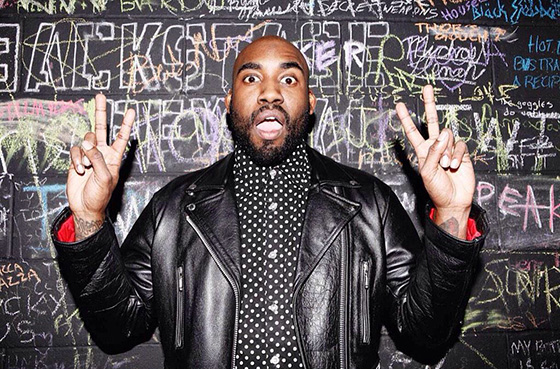
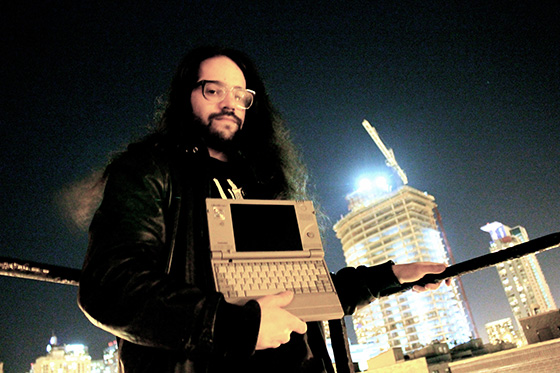
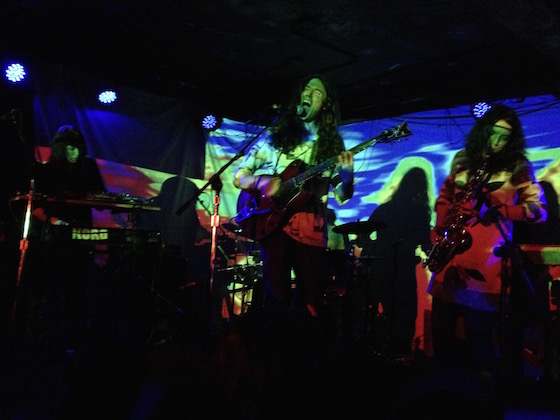
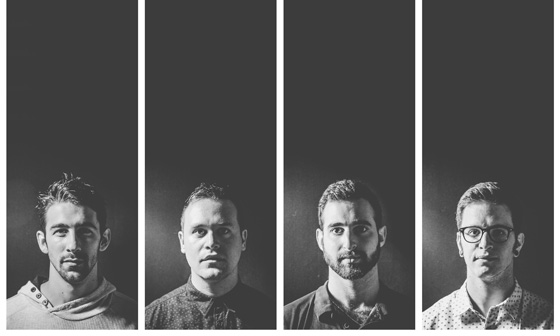
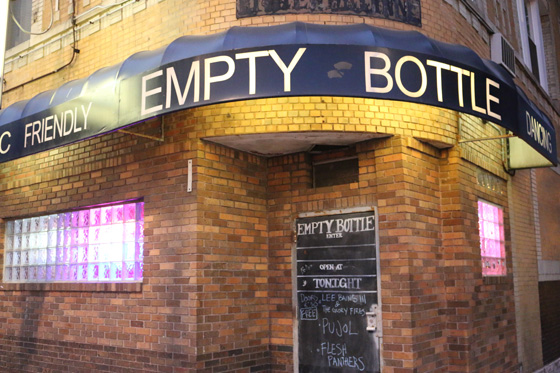
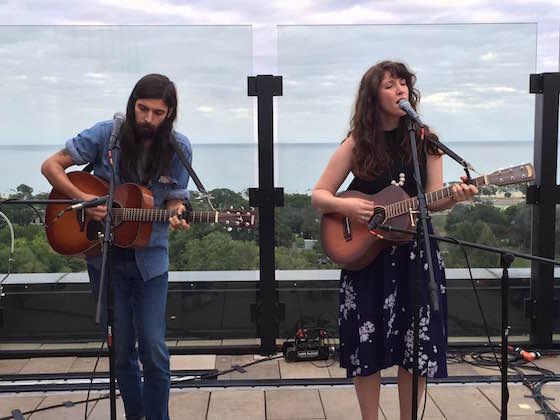
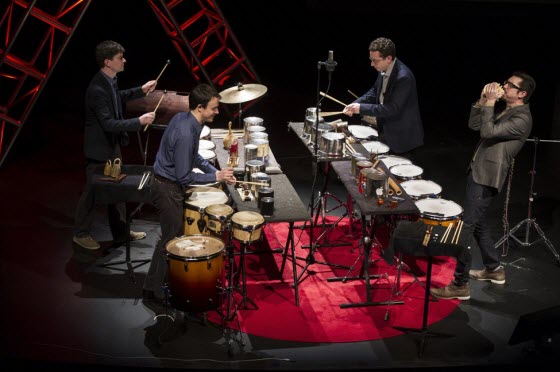
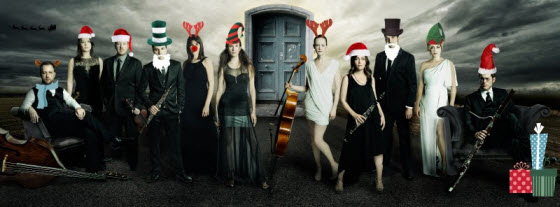
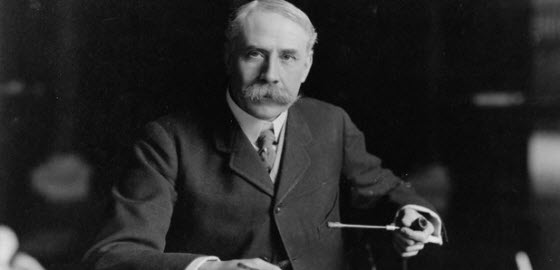
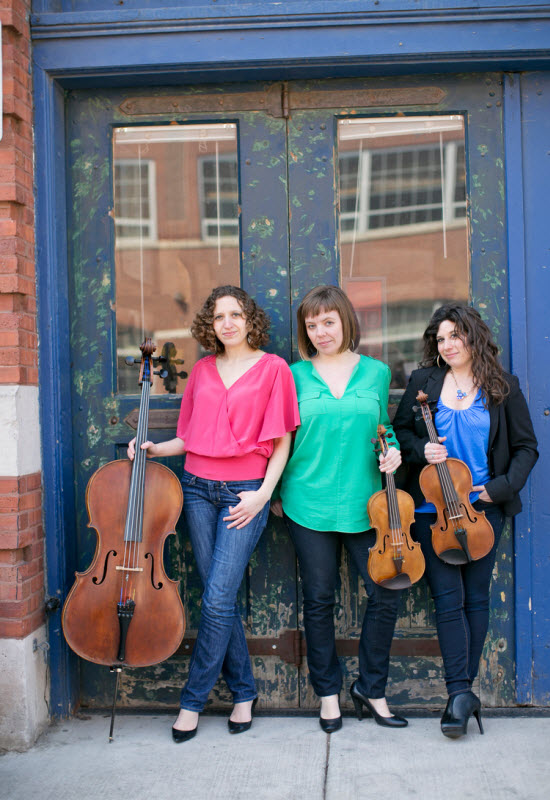
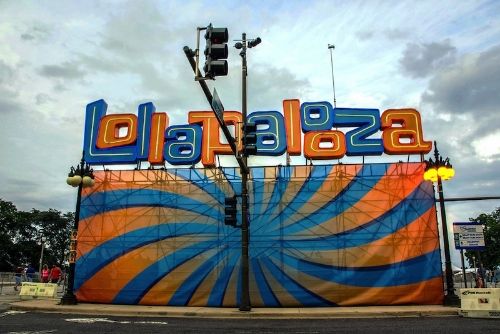
 Where does a year go? It seems that we were just getting over sunburns and rubbing the baseball diamond dust from our eyes as we stumbled to work on a misty Monday morn in late July. But no, it has come around again: the last days before the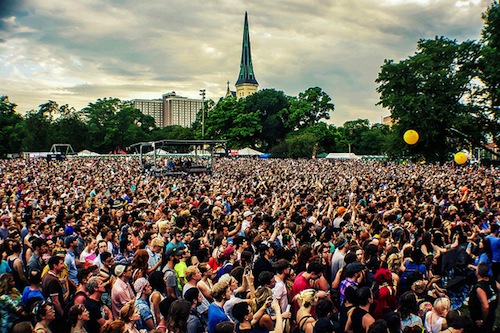
 While many record label companies struggle to fight against their listeners who try to get music for free, a new Chicago-based company has decided to stop fighting against the current.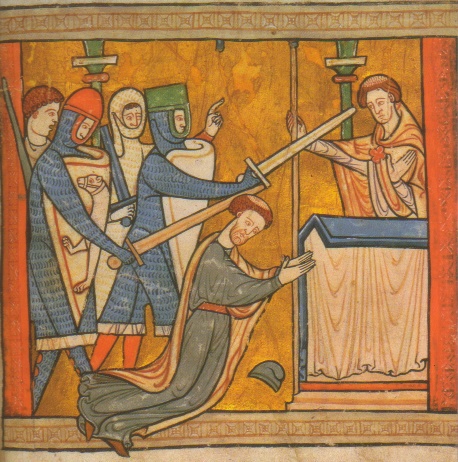
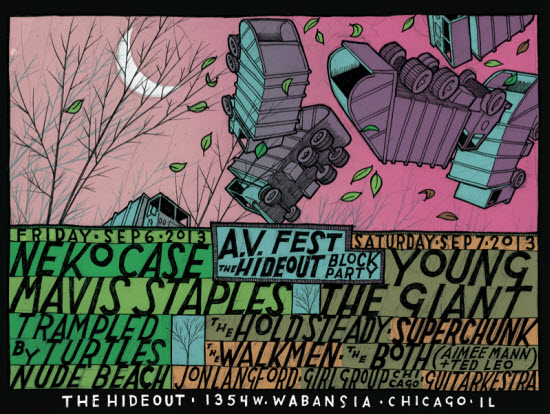
 Another long weekend in Union Park is upon us, and excitement bubbles over an eclectic
  It's time once again to survey the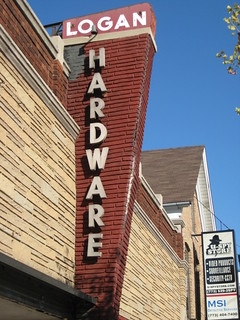
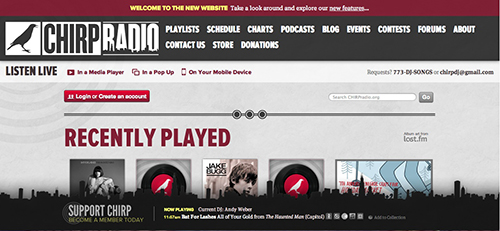
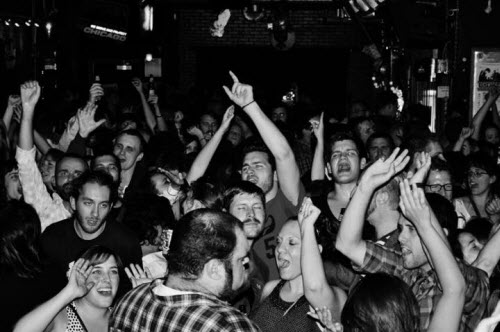
 You've got a lot to choose from this weekend at
  While the weather looks downright seasonal and pleasant this weekend, it wouldn't be a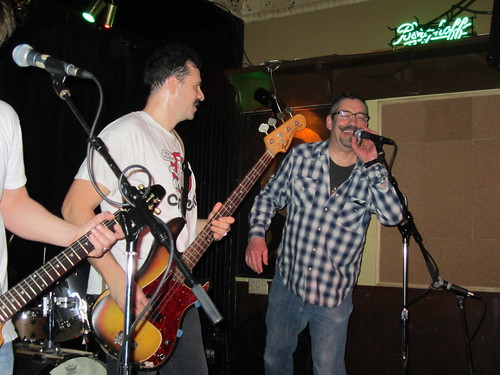
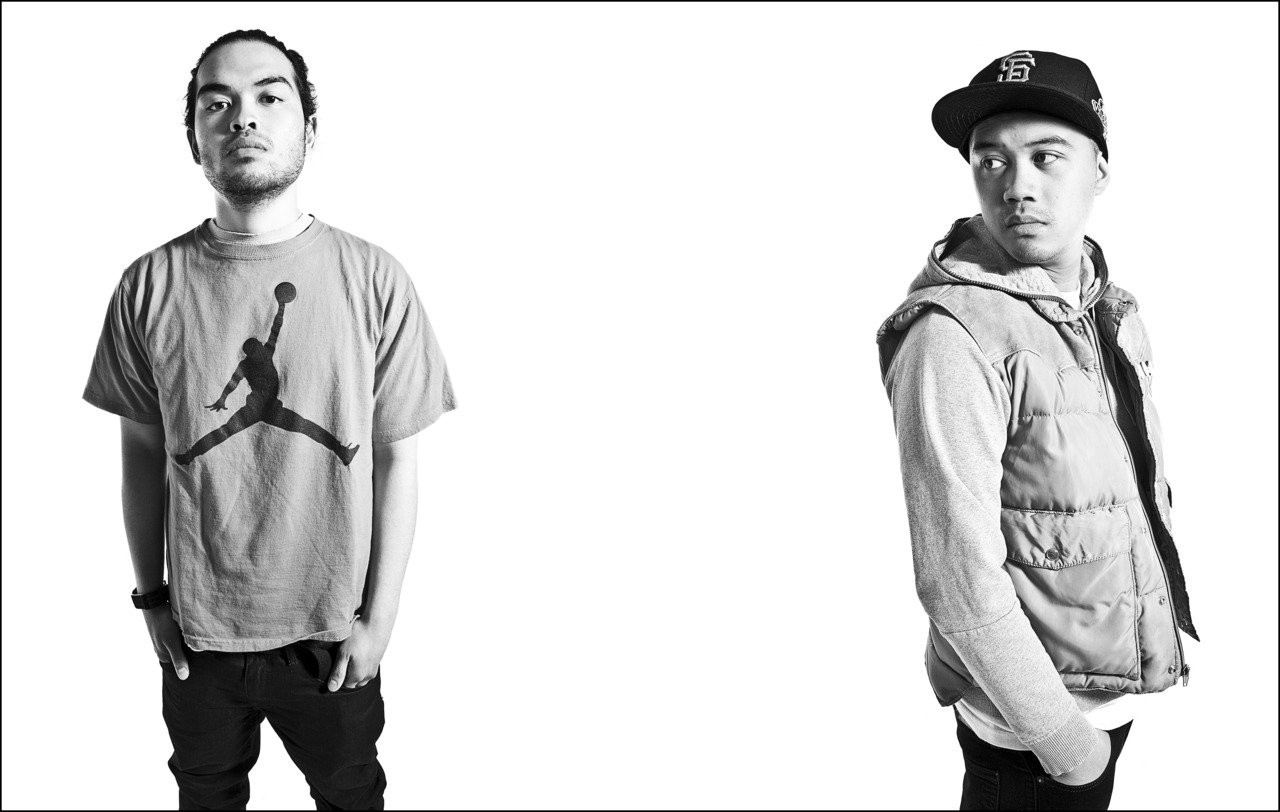
 We at Gapers Block have made it a tradition to cover the
 I love October in Chicago: pumpkin ale on tap, no more Cubs games jamming up the Red Line, and classical music returns to stages all over the city. The classical scene in Chicago covers the range of the genre, from the Baroque style of the 1600s to brand new pieces performed on laptops; all of this music can be heard in intimate venues or grand concert halls--and all of it is affordable (and sometimes free). If you love the music like I do, if you've always wanted to attend a performance but needed some direction, or if you just want to know what a harpsichord sounds like, the following is a short list of my recommendations for the month. If you have other suggestions, please add them in the comments.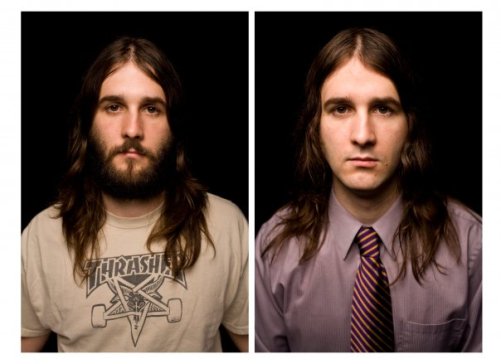

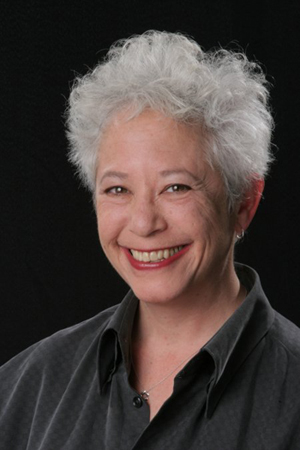
 There's truly one festival in Chicago which has consistently worked to cram as much as possible into the confines of one block-long city park. Sure you could stumble for a mile or more around that other big festival later on in August, but it wouldn't nearly be the same as the cozy confines of Union Park with the
 In 2003, I saw Andrew Bird debut his latest album, Weather Systems, at the Old Town School of Folk Music. It was an incredible show, and afterward I wished I'd had a recording of it. A couple years later, I was searching for something on the Internet Archive when I stumbled into its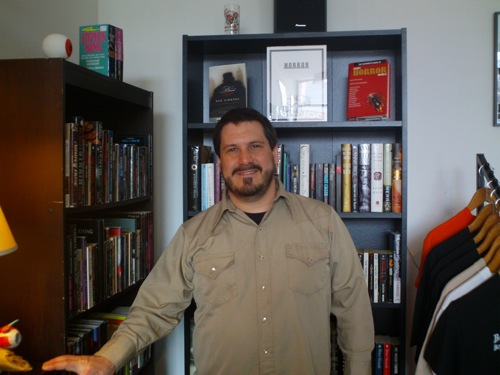
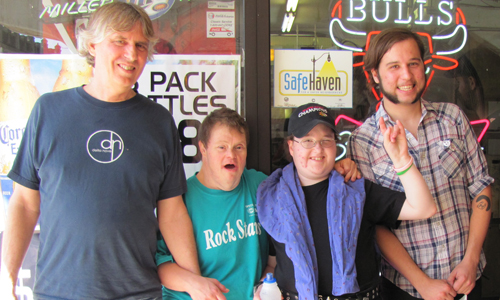
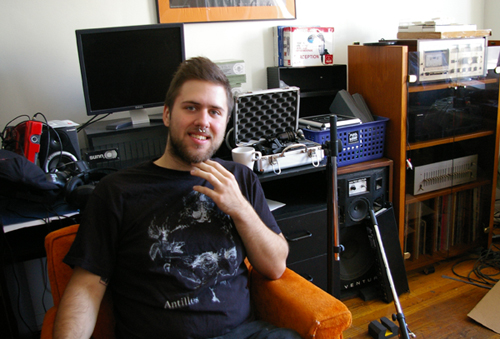
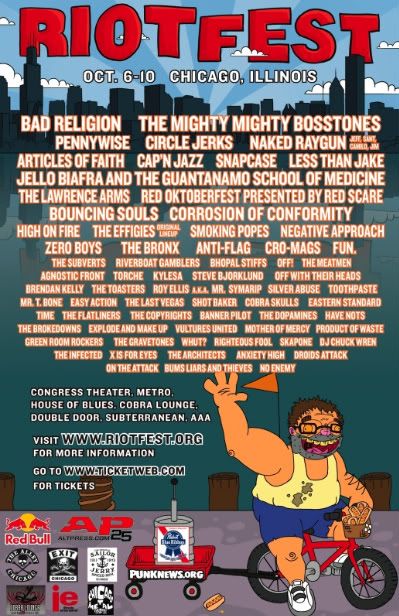
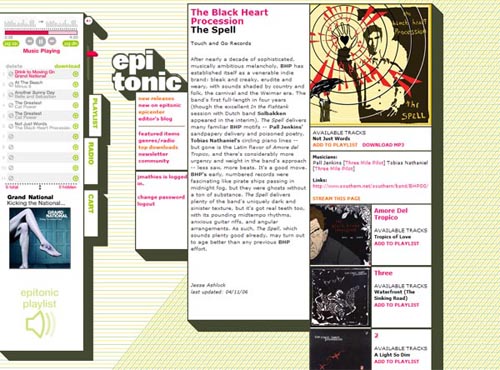
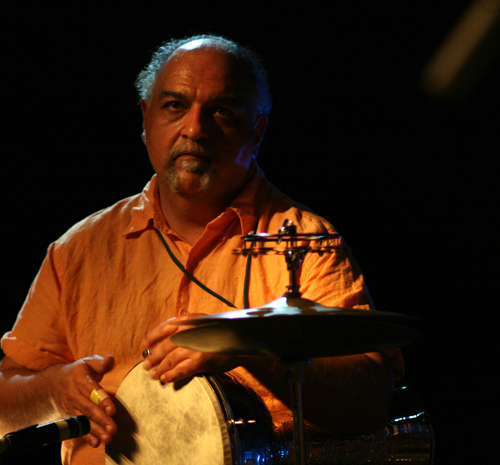
 Every year it becomes harder and harder to decide what band to see during a particular hour at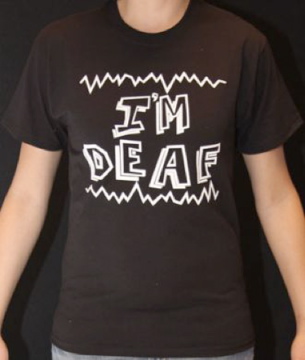
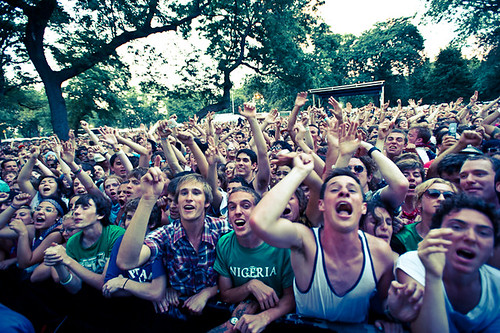
 Our staff is pretty excited about the upcoming